Backyard Fence Makeover Ideas That Add Privacy (Without Replacing a Single Post)

Your fence is fine. It’s just ugly, a little gray, and it stops your neighbor from seeing your yard about as well as a screen door stops a mosquito.
That’s the real problem nobody names. Most fence content treats this as a decorating question, so you get told to hang planters and paint a mural, and six weeks later you’re still eating dinner while somebody’s second-story window watches you do it. A backyard fence makeover that works starts somewhere else entirely: with where the sightlines actually leak.
Here’s the good news. Full replacement quotes on a standard suburban run start around $2,500 and climb past $7,000. Almost none of that spend buys privacy you couldn’t get for a few hundred dollars of stain, slats, and the right vine. I’ve done this on my own fence twice, badly the first time.
This guide covers nine backyard fence makeover moves, sequenced in the order that actually pays off, plus the height and ownership rules the other guides skip.
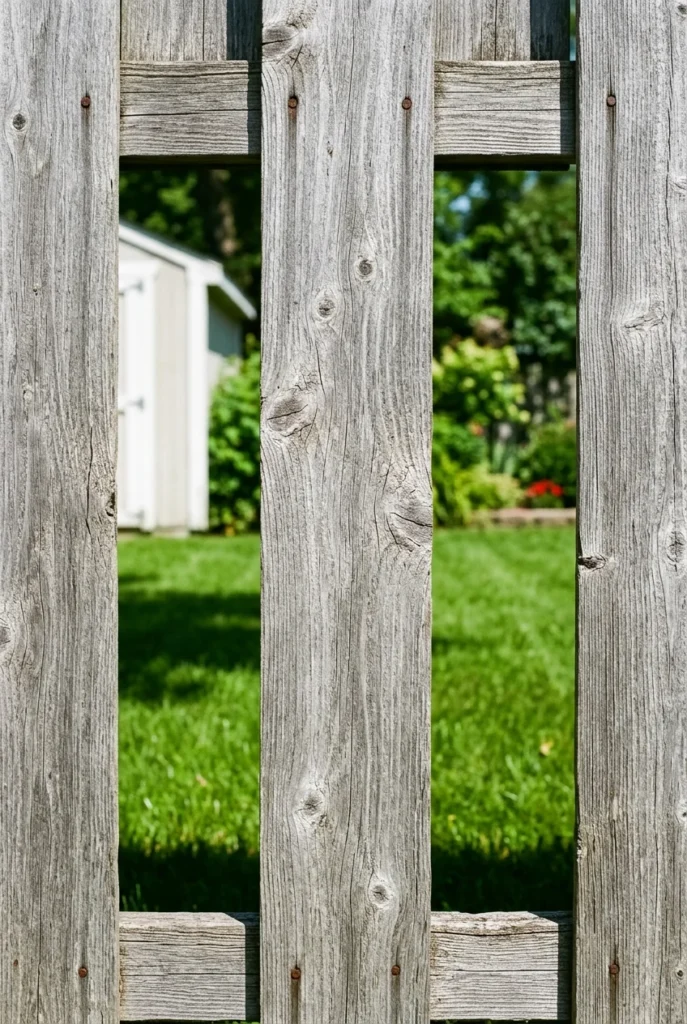
Start With the Three Line Privacy Check
Before you buy anything, sit down. I mean that literally.
Every backyard fence makeover I’ve seen go sideways started with somebody buying materials for a problem they never measured. So here’s the framework I use now, and it takes about four minutes.
The Three Line Privacy Check. You have three separate sightlines into your yard, and they fail in different places. Check each one from the exact spot where you actually spend time, not from the middle of the lawn.
| Line | Where you stand | What usually leaks | The fix that works |
|---|---|---|---|
| Sit line | Seated in your patio chair | Gaps between boards, the bottom rail gap | Slat infill, batten strips, a planted base row |
| Stand line | Standing at the grill | The top 8 to 14 inches over a 6 foot fence | Lattice or slat topper, tall grasses in pots |
| Second-story line | Look up at the neighbor’s windows | Nothing on the fence fixes this | Overhead: pergola, shade sail, tree canopy, umbrella |
That third row is the one that saves people money. If a second-floor window is the thing bothering you, no amount of fence work will help, and you should spend that budget overhead instead. Knowing which line is broken tells you exactly which of the ideas below to do first, and which to skip.
Write down which line fails. One sentence. That’s your whole brief.
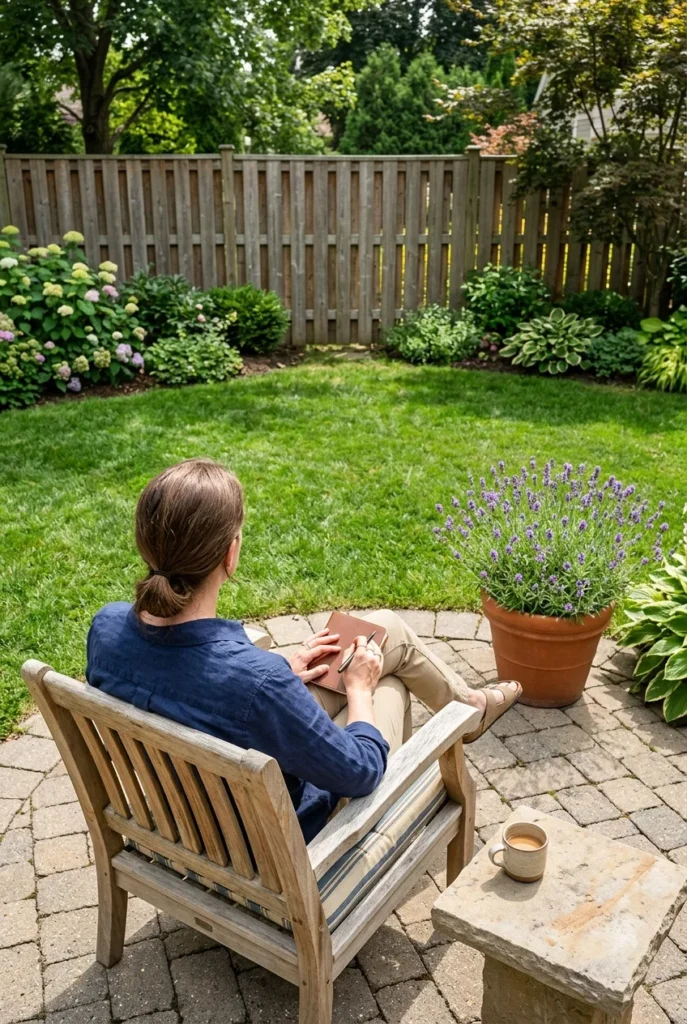
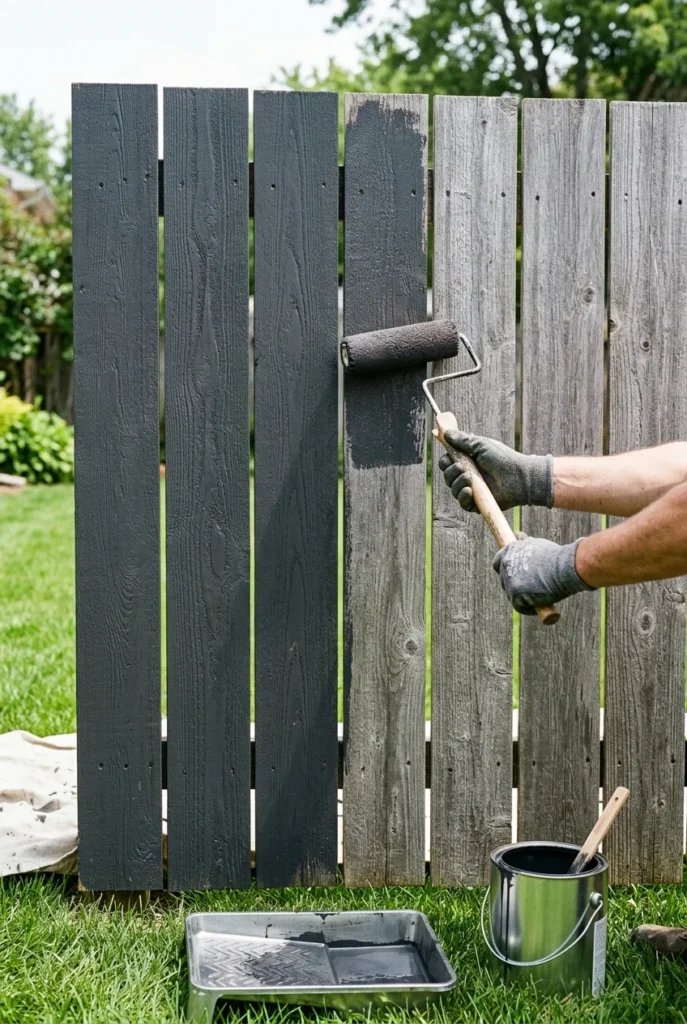
Stain It Dark, Not Light (This Is the Cheapest Win)
Here’s my contrarian take, and I’ll defend it: painting a fence a soft light color is usually a mistake.
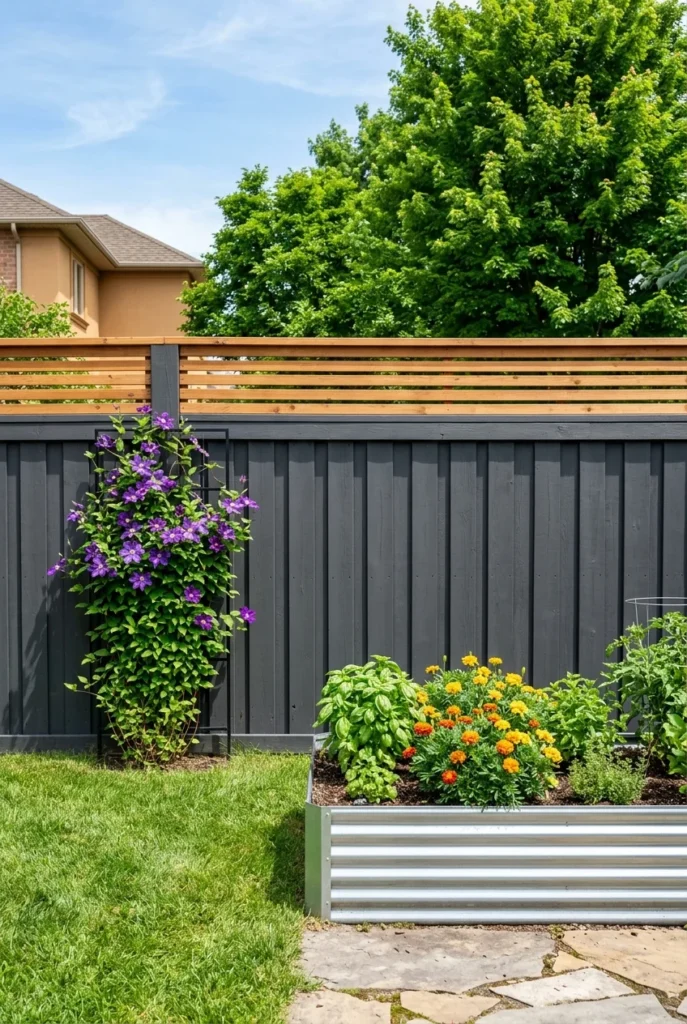
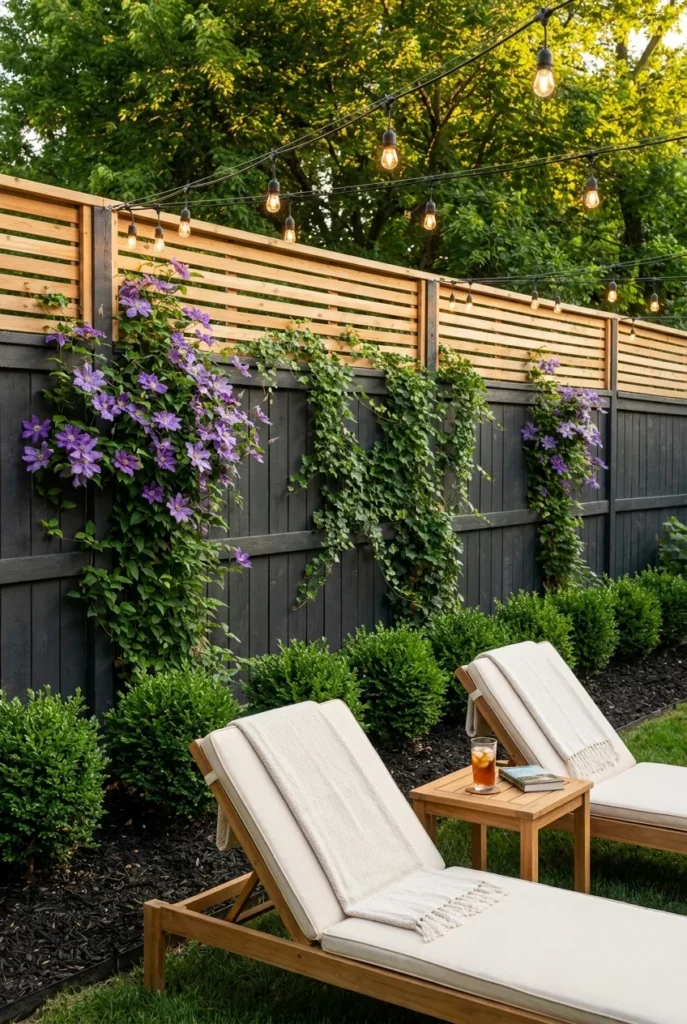
Light colors pull a boundary forward. Your eye stops at the fence, the yard reads smaller, and every water stain and knot shows through by August. Dark stain does the opposite. A deep charcoal, near-black, or dark bronze fence visually recedes, and suddenly the plants in front of it look like they’re floating against nothing. Landscape designers do this constantly. It’s the single highest-impact hour in any backyard fence makeover, and it’s also the cheapest.
I learned this the annoying way. My first pass was a soft sage green, chosen off a two-inch paint chip in a bright store, and it looked like a mint hospital corridor for a full season before I redid it in a near-black. Should have gone dark first.
Stain versus paint, quickly. Semi-transparent stain soaks in, keeps the grain visible, and fades rather than peeling. Solid stain gives near-paint coverage with better failure behavior. Exterior paint gives the most opaque color and the most future scraping. On a fence that already has some age, semi-transparent or solid stain is the lower-maintenance call almost every time.
What it actually costs. A gallon of exterior stain or sealer runs about $20 to $50 at Home Depot, Lowe’s, or Ace Hardware, and covers roughly 200 to 300 square feet per coat. Paint stretches further at 250 to 400 square feet per gallon. For a typical 150 foot run at six feet tall, budget 5 to 8 gallons plus supplies, which lands most DIY jobs somewhere in the $200 to $650 range all in. Hiring it out on the same fence runs roughly $2 to $14 per linear foot, with a national average near $1,700.
Do the math on that gap. That’s the whole makeover budget, sitting right there.
Two things that decide whether it lasts. Pressure wash first and let the wood dry a full 48 hours, longer if you’re anywhere humid. And check the forecast for a 48 hour dry window with temperatures between 50 and 90 degrees Fahrenheit. Staining damp wood is the number one reason a finish fails in year two.
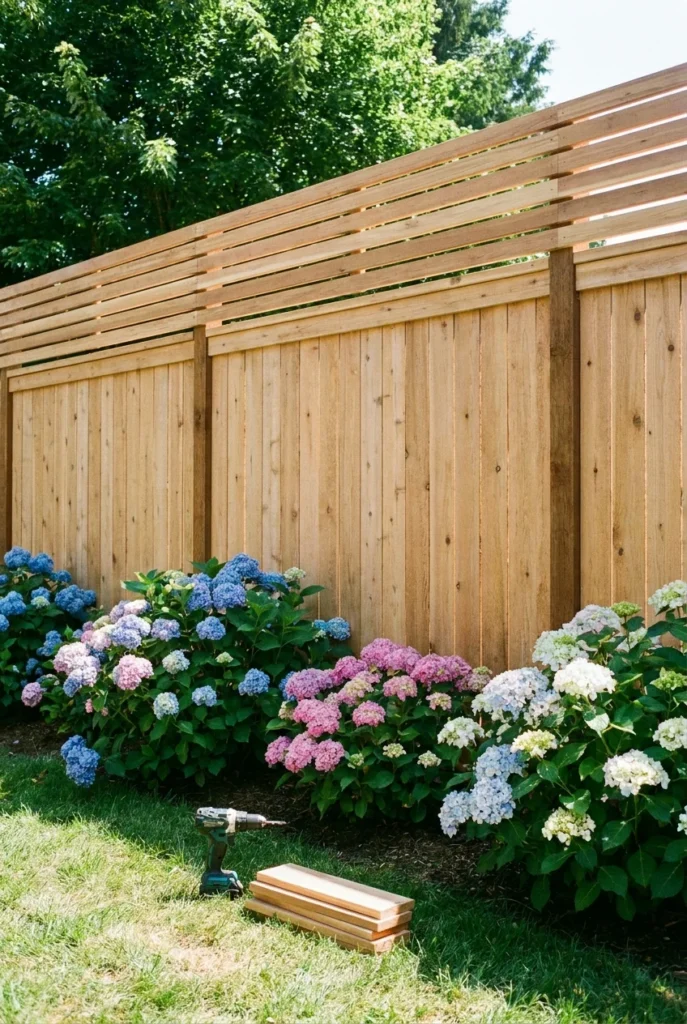
Add Height Legally With a Topper
A six foot fence hides a seated person and reveals a standing one. That extra 8 to 14 inches is what you’re missing, and a topper is the one backyard fence makeover move that buys it for a fraction of a rebuild.
Options, cheapest first: pressure-treated lattice panels, horizontal cedar slats spaced half an inch apart, hog wire panels in a cedar frame, or bamboo screen rolled over the existing top rail. Lattice panels at Home Depot or Lowe’s typically run in the $25 to $50 range each. Cedar slats cost more. They also look ten years newer.
Measure your post spacing before you buy. I bought eight lattice panels on a Saturday morning without measuring, discovered my posts sat at an uneven 7 feet 4 inches instead of a tidy 8, and returned three of them with the receipt still in my back pocket.
The legal part everyone skips. Residential fence height caps are set by your municipality, not by the internet, and six feet in the back with four feet in the front is the common default. Adding a topper can push you over that line. Many cities require a permit above six feet, and HOAs frequently cap height and dictate materials on top of whatever the city says. One phone call to your local planning or zoning office settles it, and it costs nothing.
Same goes for whose fence it is. If the posts are on the neighbor’s side of the property line, that is their fence, and painting or attaching to it without asking is a real dispute waiting to happen. A ten minute conversation and a photo of what you’re planning usually ends with them offering to split the cost. If your boundary situation is genuinely permanent, a garden wall does the same job permanently and is worth pricing before you commit to fence work.
Grow the Privacy Instead of Building It
Plants are the slowest fix and the best one. A fence covered in greenery stops reading as a boundary at all.
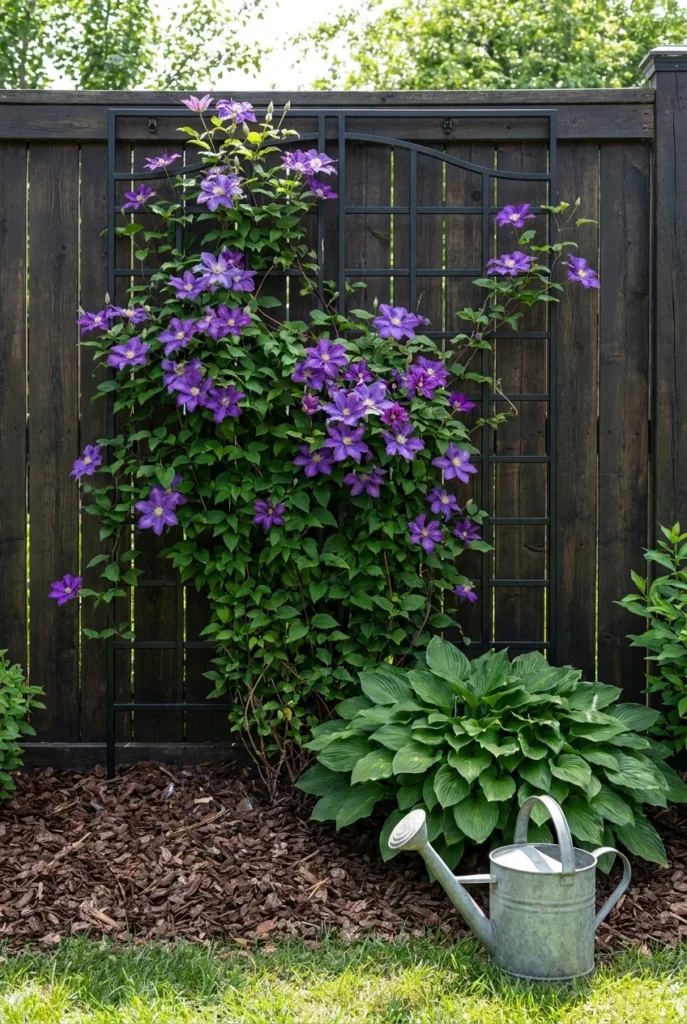
Fast movers for a single season: annual vines like hyacinth bean, black-eyed Susan vine, and morning glory will cover a trellis panel by midsummer from a $4 seed packet. Perennial workhorses take two to three seasons but then hold: clematis, honeysuckle, star jasmine in warm zones, and Virginia creeper if you have a lot of fence and no patience.
Two rules save you a lot of dead plants. First, look up your USDA hardiness zone before you buy a single vine, because a jasmine that thrives in Zone 9 is an annual in Zone 6. Second, match the vine to the support. University of Missouri Extension breaks down how different vines actually grip a support, and it matters more than people expect. Twining and tendril vines need wire or lattice to wrap around. Clinging vines like Boston ivy attach flat to a surface, and they take paint and mortar with them when you pull them off.
Skip English ivy and wisteria on a fence you like. Both get heavy. Both will eventually pull a panel down.
My clematis nearly died its first August because I planted it at the base of a south-facing fence with bare soil all around it and cooked the roots. Mulch heavy at the base, or tuck a low shrub in front to shade the root zone. The vine wants sun on top and cool feet, and nobody tells you that part.
If a full planted screen is more than you want to maintain, a staggered row of tall grasses in large planters gets you 70 percent of the effect. Feather reed grass or miscanthus in three big Bloem or terracotta pots, spaced with gaps rather than lined up like soldiers, breaks a sightline surprisingly well.
Close the Gaps: The Backyard Fence Makeover Step Everyone Skips
This is the step almost every guide leaves out, and it’s the one that fixes the sit line.
Look at your fence from a seated position again. If you can see feet, dog paws, or a strip of the neighbor’s driveway under the bottom rail, that gap is doing more damage to your sense of privacy than the color ever will.
Three fixes, from cheapest up:
- Batten strips. Nail 1×2 or 1×3 cedar strips over the seams between boards. Roughly $3 to $6 per strip, and it turns a gappy fence into a board-and-batten one that looks deliberate.
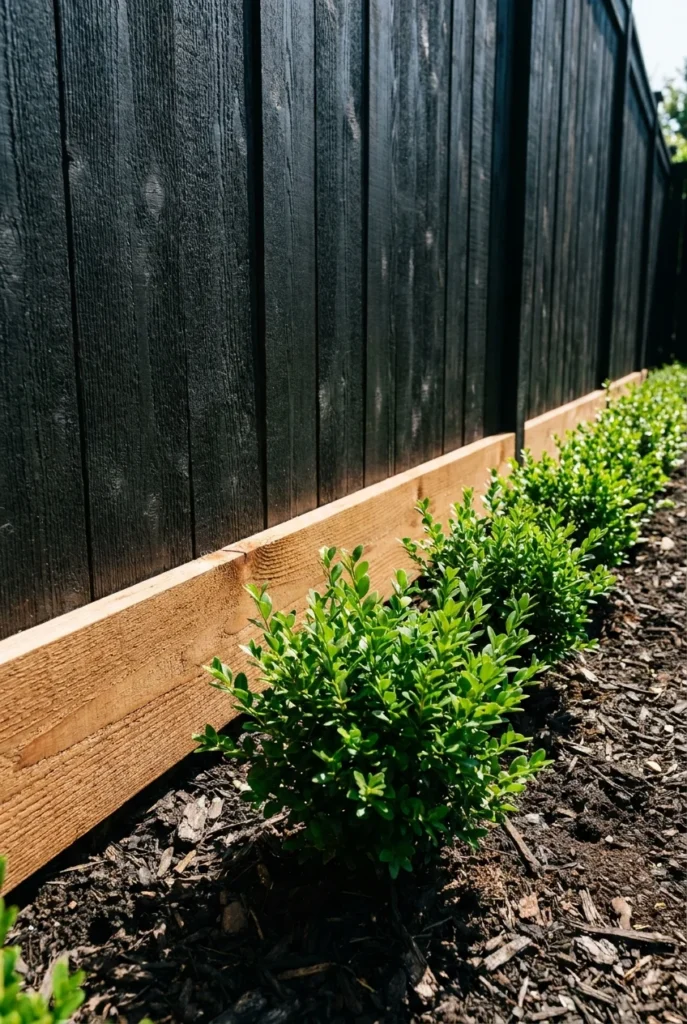
- A base board. Run a horizontal 1×6 along the bottom, sitting just above grade. Closes the under-rail gap and protects the board ends from soil rot at the same time.
- A planted base row. Boxwood, dwarf yaupon, or even a tight row of daylilies fills the bottom eight to twelve inches with something living. Slower, prettier, and it hides minor fence sins forever.
For chain link, the cheapest genuinely good-looking cover is reed or bamboo fencing zip-tied to the mesh, usually in the $30 to $60 range per roll at Home Depot or Amazon. Roll it on the side you look at, not the side you don’t.
Renter Friendly Fence Ideas That Leave No Marks
Renting, or dealing with an HOA that says no permanent modifications? You still have real options, and none of them involve a drill.
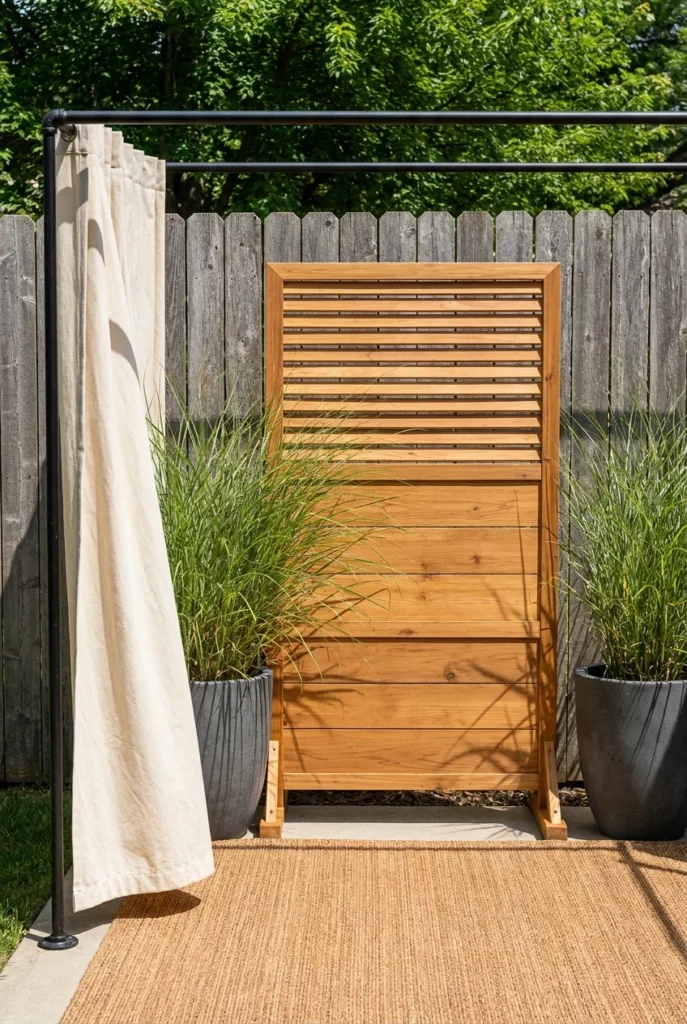
Freestanding is the whole trick. Nothing touches the fence. Tall planters with built-in trellis backs sit in front of it instead. Folding cedar privacy screens from Wayfair or Amazon lean or clip in place. Outdoor curtain panels hung from a freestanding pipe frame move air, soften everything, and pack away in October.
Canvas drop cloths are the quiet budget winner here. A 6×9 painter’s drop cloth runs about $15 to $25 at Home Depot, hems easily with iron-on tape, and hung on a simple frame it reads far more expensive than it is. That same buy-the-screen-first logic runs through my whole approach to small yards, and it’s why I always tell people to buy privacy before you buy furniture.
Zip ties and S-hooks are your friends. Everything above can come down in twenty minutes on move-out day.
Treat the Fence Like a Wall, Because It Is One
Once the privacy problem is solved, the fence becomes usable square footage. This is where the fun part of a backyard fence makeover lives.
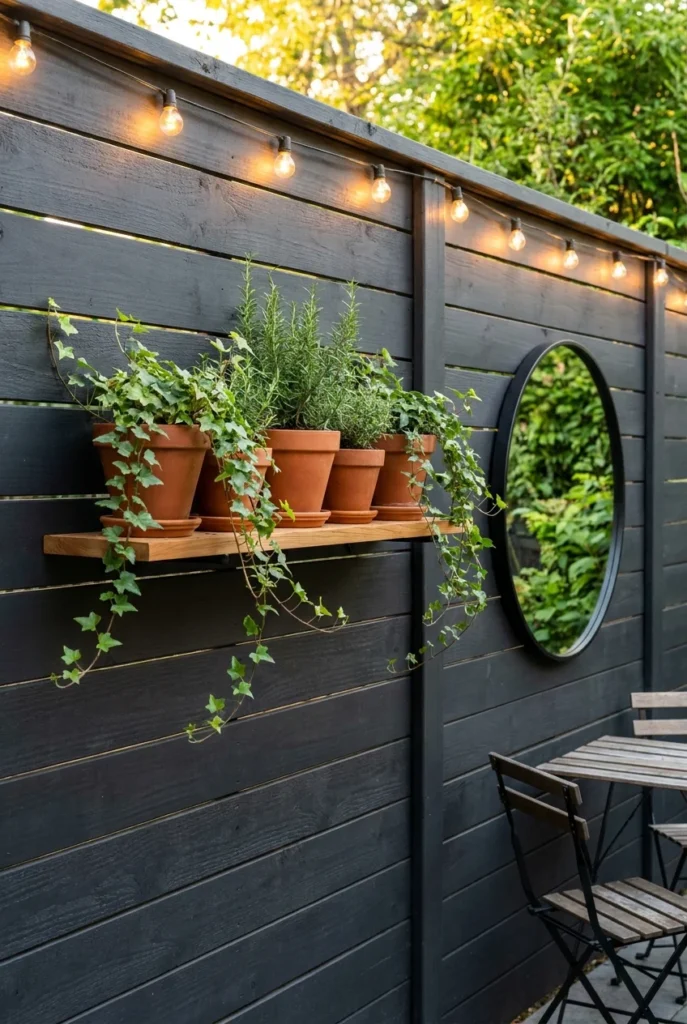
Mount a floating cedar shelf at 40 inches and line it with terracotta pots. Hang a weatherproof outdoor mirror to bounce light into a dark corner and fake depth (angle it so it reflects planting, never the back door). Bolt a vertical planter pocket panel for herbs within reach of the grill. Add a narrow drop-leaf bar top on brackets for a small patio that has nowhere to set a drink.
Lighting is what makes all of it read finished after 7pm. Warm white string lights run along the top rail, or three or four solar wall sconces from Brightech or Feit mounted at even spacing, usually in the $30 to $70 range per set. Keep the color temperature at 2700K or warmer. Cool white on a wood fence looks like a parking lot. Every time.
One restraint rule: pick two of these, not five. A fence loaded with shelves, art, mirrors, planters, and lights stops reading as a designed space and starts reading as storage. If you want more ideas at this price point, these budget backyard ideas that do not read cheap follow the same logic.
The Two Weekend Plan and What It Costs
You do not need to do all nine. You need to do them in order, and the order is what makes a cheap backyard fence makeover look expensive.
Weekend one, the structural weekend. Saturday morning: pressure wash the whole run and replace any rotted boards while it dries. Saturday afternoon: install your topper or your base board, whichever line failed the Three Line Privacy Check. Sunday: stain, working top down, one full coat.
Weekend two, the pretty weekend. Saturday: second coat if the label calls for it, then plant. Get vines and the base row in the ground while the soil is still workable. Sunday: shelves, lights, pots, done.
Rough all-in cost tiers, using current material pricing:
- Under $150: clean, one coat of stain on a short run, batten strips, a few thrifted pots.
- $150 to $500: full stain job on a standard run, lattice or slat topper, three to five vines, one string light set.
- $500 to $1,200: all of the above plus cedar slat toppers along the full run, large planters, mature shrubs, solar sconces.
Every one of those tiers sits below the low end of a replacement quote. That’s the argument for a makeover in one line.
Frequently Asked Questions
What type of paint or stain is best for outdoor fences?
Semi-transparent or solid exterior stain beats paint on most wood fences. Stain penetrates the wood and fades gradually as it ages, while paint sits on the surface and eventually peels, which means scraping. If the fence has never been coated, semi-transparent keeps the grain visible. If it already has paint on it, you’re committed to solid stain or paint from here on.
How do I make an old fence look better cheaply?
Pressure wash it, replace obviously rotted boards, and put one coat of dark stain on it. That sequence alone changes a fence more than anything else you can do for under $150 on a short run. Add batten strips over the board seams if the gaps bother you when you’re seated.
How can I add privacy to my fence without replacing it?
Add height with a lattice or cedar slat topper, close the gap under the bottom rail with a horizontal base board, and plant a screen in front. Those three moves together handle nearly every sightline a standard six foot fence misses, and they cost a small fraction of a replacement.
How tall can my backyard fence legally be?
Six feet in the rear yard and four feet in the front is the most common residential default in the US, but it is set locally and varies a lot. Many places require a permit above six feet, and an HOA can set a stricter cap than your city does. Call your local planning or zoning office before you add a topper, because the call is free and a teardown order is not.
Can I paint a fence I share with my neighbor?
Only the side facing you, and only if the fence is genuinely shared. If the posts sit on their side of the property line, the fence is theirs and you need permission. Ask first, show them a photo of the color, and offer to do both sides. Most people say yes, and a few even split the stain.
What is the cheapest way to cover a chain link fence?
Reed or bamboo screen rolls zip-tied to the mesh, usually $30 to $60 per roll. Privacy slats woven through the links are a close second and last longer, though they read more industrial. A row of arborvitae or a climbing vine on the mesh is the slowest and best-looking option if you can wait two seasons.
How long does a backyard fence makeover take?
Two weekends for a standard suburban run, split into a structural weekend and a planting-and-styling weekend. Staining alone on 100 feet of fence takes roughly three to four hours with a sprayer or a roller, plus a full 48 hours of drying time after washing before you can start.
Start With the Line That’s Actually Broken
A good backyard fence makeover comes down to one habit: diagnose before you decorate. Sit in your chair, find the sightline that fails, and spend your first hundred dollars there. Everything else on this list is optional and can wait until the yard already feels like yours.
Go run the Three Line Privacy Check this weekend. It takes four minutes and it will probably save you a few hundred dollars, and if you end up doing the dark stain, come tell me how much bigger the yard looks afterward. That part surprises everyone.