17 Wood Dog-Friendly Backyard Ideas That Wow the Neighbors
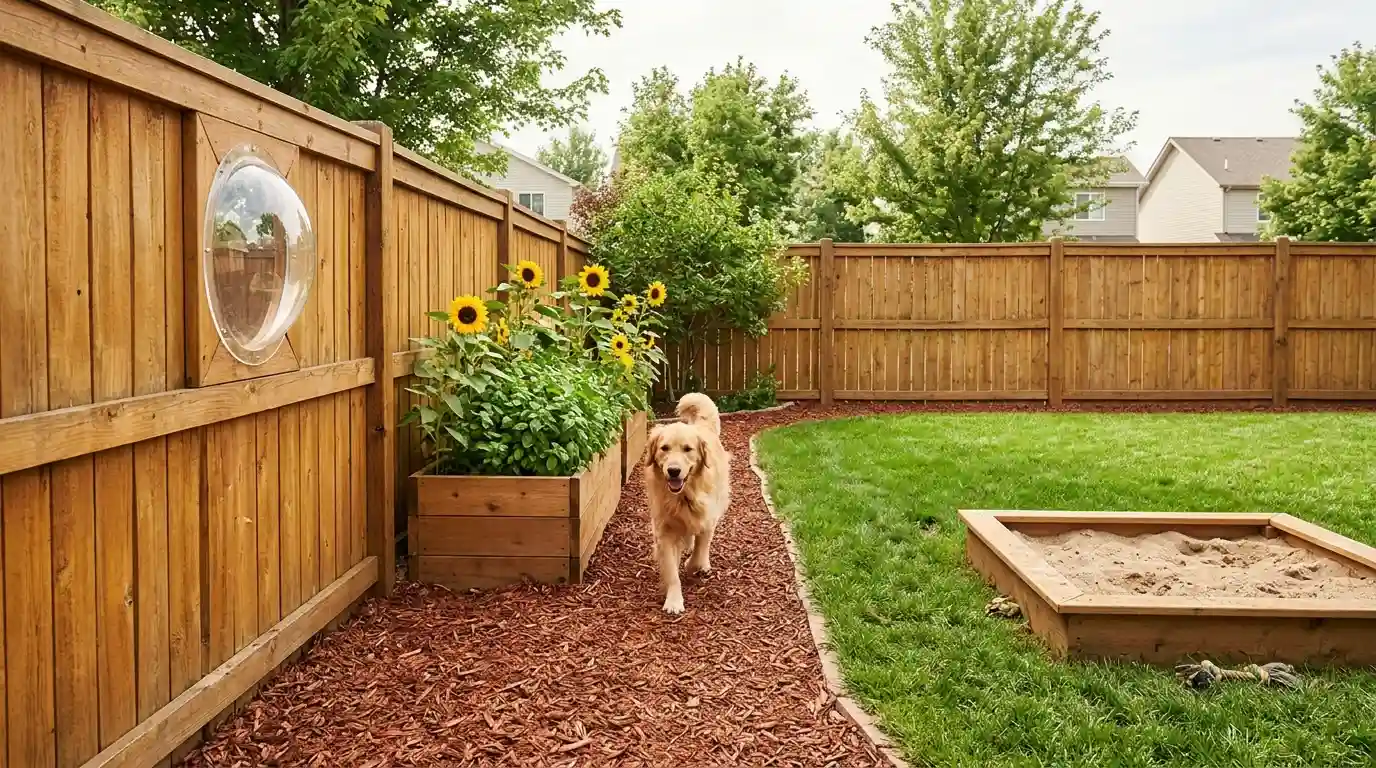
Dogs test every board in a backyard. These 17 wood dog-friendly backyard ideas are built for that test: the chewer, the digger, the fence runner, and the dog who bolts the second a gate opens.
Wood is a smart material for a dog yard. Cedar sands smooth, shrugs off rot, and stays cooler underfoot than a lot of the plastic options sold as pet friendly. It also looks good from the kitchen window, which matters when the yard is half dog zone.
The catch is that not all wood is safe near a dog’s mouth. An old deck, a free pallet, and a fresh cedar board are three very different things to a chewer. So before the ideas, you’ll find a quick reference we call the Paw and Jaw Lumber Check. Use it before you buy a single board.
After that come the builds: a potty corner, a fence window, a dig box, a patrol path, a double gate, and twelve more. Each one names the material, a ballpark price, and the spot in your yard where it earns its keep. Save the ones that match your dog.
The Paw and Jaw Lumber Check sorts the wood you’ll find at Home Depot, Lowe’s, or the curb by how risky it is around a dog that chews. Untreated cedar and redwood sit at the safe end. Pallets depend entirely on their stamp. Pressure treated lumber belongs where a dog can’t reach it. Any deck or fence built before 2004 most likely used an arsenic preservative, since manufacturers stopped making it for homeowner use in December 2003. Several ideas below point back to this chart.
This is general information, not professional advice. Check local codes and consult a qualified US professional before you build, wire, or change anything structural. If your dog chews or swallows treated wood, mulch, or a plant you aren’t sure about, call your veterinarian or the ASPCA Animal Poison Control Center at (888) 426-4435.
🪵 The Paw and Jaw Lumber Check
| Wood | Around a chewer | Splinter risk | Cost tier | Best job in a dog yard |
|---|---|---|---|---|
| Untreated western red cedar | Low toxicity; still stop heavy chewing | Low once sanded | Mid | Beds, dig boxes, fences, benches |
| Redwood | Low toxicity; still stop heavy chewing | Low | High | Deck boards, benches |
| Modern pressure treated (ACQ or copper azole) | Keep it out of chewing reach | Medium | Low | Posts in the ground, hidden framing |
| Deck or fence built before 2004 | Likely arsenic treated; stop chewing, seal on a schedule | Medium to high | Already paid for | Seal it, replace chewed boards |
| Pallet stamped HT | Fine once cleaned and sanded | High until sanded | Free | Small builds like a dog cot |
| Pallet stamped MB, or no stamp | Skip it | Skip it | Free | Nothing in a dog yard |
| Composite or PVC boards | Not wood; no splinters | None | High | Decks with afternoon shade, since it runs hotter in sun |
1. A Cedar-Framed Pea Gravel Potty Corner That Keeps the Lawn Green
Pick one back corner and give it a single job.
- Frame it with untreated cedar 2×6 boards. Around 4 by 6 feet is a good starting size for one medium dog.
- Dig out about 3 inches of turf, lay landscape fabric, and fill with pea gravel. It drains fast and rinses clean with a hose.
- Train it on leash for a week, every trip, same spot, until the corner becomes the habit.
- Keep it away from the patio and the veggie beds, but close enough that a rainy 6 a.m. trip still feels doable.
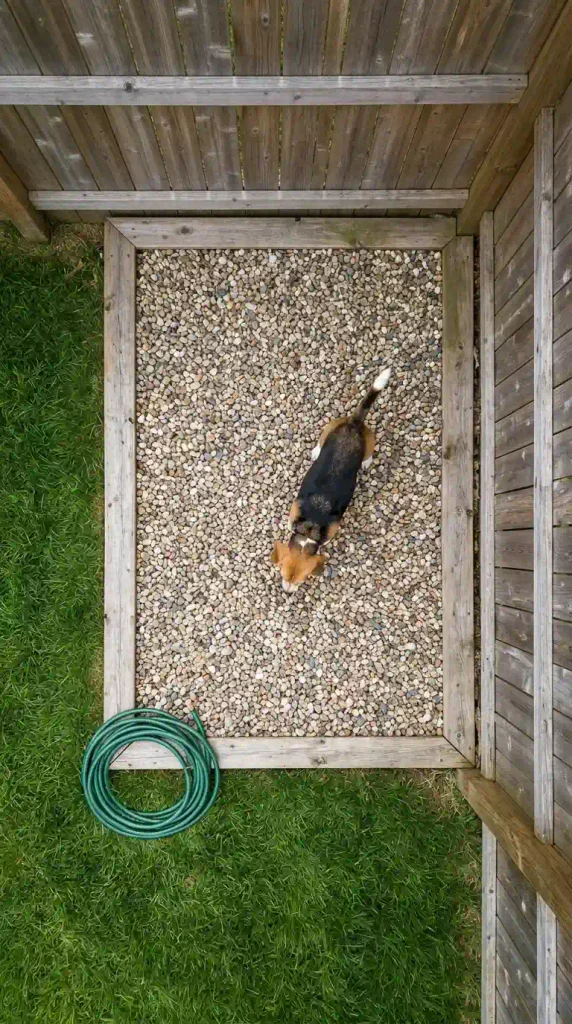
Dog urine browns grass because of its nitrogen and salt, so moving the traffic lets the rest of the lawn recover. Of all the dog run backyard ideas on this list, this one costs the least and fixes the most.
Tip: scoop daily and hose the gravel once a week in summer, and the corner stays fresh.
2. A $30 Bubble Window in Your Wood Privacy Fence
Solid privacy fences have a downside nobody mentions at the lumberyard. Your dog can hear the whole street and see none of it, so it paces and sniffs at the gaps.

A clear acrylic dome set into one fence board fixes that. Pet Peek style windows measure about 9.5 inches across and 5 inches deep, enough room for a nose and both eyes. Most models cost $20 to $40, and the H&B Luxuries Pet Peek in the large size was listing around $29 at Walmart. Installing one takes a jigsaw, a drill, and an afternoon. Cut the hole at your dog’s eye height while they’re standing, not at yours.
For a curious, friendly dog, the payoff is a calmer fence line and a new favorite spot. It’s one of the easiest dog friendly backyard ideas on a budget.
Just skip it for a reactive dog. Idea 17 covers that dog instead.
⚠️ Watch Out
Check before you cut. Many HOAs regulate fence changes, and a fence on the property line may be shared with your neighbor. Get a yes from both before a jigsaw touches it.
3. Elevated Cedar Garden Beds Set Above Leg Lift Height
Ground level beds and dogs rarely share a yard peacefully. A 7 inch bed is a step, a dig site, and a fire hydrant all at once. Here’s how the two cedar options compare.
| Ground level cedar bed, 7 inches tall | Elevated cedar bed, 31 inches tall |
|---|---|
| Dog access: easy to step in, dig, and mark | Dog access: above leg lift and digging reach |
| Example: Greenes Fence 4 x 4 ft x 7 in, around $67 at Walmart | Example: Greenes Fence 48 x 24 x 31 in Premium, around $143 at Walmart |
| Planting depth: 7 inches, fine for lettuce and herbs | Planting depth: about 9.6 inches, fine for herbs, greens, and compact peppers |
| Your back: kneeling to weed | Your back: waist height, no kneeling |
The elevated bed wins in a dog yard. Greenes Fence sells its cedar beds in two board thicknesses, 1/2 inch Classic and 3/4 inch Premium, and the thicker boards tend to hold their shape longer under wet raised bed mix. Prefer to build? Our cedar raised garden bed plans come with a real cut list, and you can raise the sides and add legs for a dog yard.

Tomato vines, onions, and garlic are on the no list for dogs anyway. Lifting them to waist height protects the harvest and the dog in one move.
4. Free Pallet Wood, but Only If the Stamp Says HT
Free pallets look like a gift. The usual mistake is grabbing whatever is stacked behind the store and building a dog cot from it that same afternoon.
Here is what works instead. Flip the pallet and find the stamp with the small wheat logo. HT means heat treated, with no chemical fumigant. MB means methyl bromide, a pesticide fumigant, and that board goes back on the pile. A faded or missing stamp gets the same answer, because you can’t know how the wood was treated or what it carried. That’s why the Paw and Jaw Lumber Check puts unstamped pallets in the skip row.
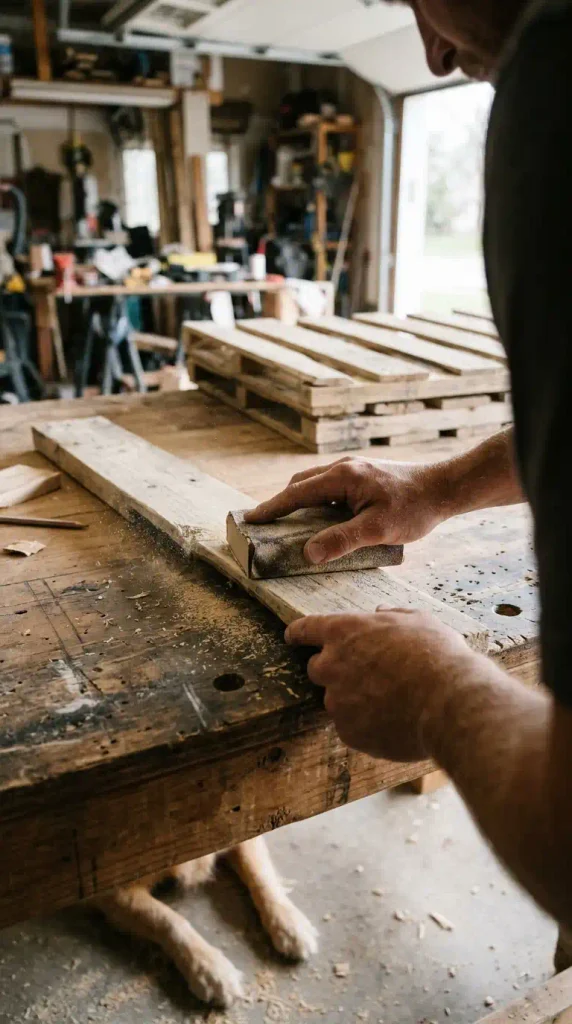
Old boards deserve the same suspicion. A deck or fence built before 2004 was most likely treated with an arsenic preservative, and the EPA’s guidance on older treated decks says a penetrating stain applied on a regular schedule may reduce leaching.
No stamp, no build.
Find the wheat logo stamp and look for HT.
Sand every face and edge until no fibers lift.
Wash off dirt and let boards dry a few days before you build.
Anything stamped MB.
Faded, missing, or unreadable stamps.
Boards with dark stains or oily patches from old cargo.
5. A Shaded Dog Nook Under a Cedar Deck Bench
Watch a dog on a July deck and it heads straight for the coolest strip of shade. Build that strip on purpose.

- Pick the side of the deck that gets afternoon shade from the house.
- Build a deep cedar bench there, about 18 inches high, and leave the front open so the space underneath becomes a den.
- Lay a washable outdoor mat underneath and park a steel water bowl at the open end.
- Finish the cedar with a water based exterior sealer and let it cure fully before the dog moves in.
Now the part most decking ads leave out. Composite boards get sold as the pet friendly upgrade, yet in full sun they usually run hotter than wood, and dark colors run hottest. Cedar and dense hardwoods tend to stay among the cooler boards underfoot. Refreshing an older deck? Our budget deck makeover ideas show where the money matters most.
Tip: test the boards in the middle of the afternoon, when deck surfaces peak, not at breakfast.
Press the back of your hand flat on the boards for 7 seconds. If you can’t hold it there, your dog’s paw pads can’t either.
6. A Cedar Dig Box That Saves Your Flower Beds
Digging isn’t a behavior problem. It’s a job your dog assigned itself, and the fix is giving that job a better address than your mulched border.
Cut two 8 foot untreated cedar 2x10s into four 3 foot sides and screw them to 4×4 cedar corner blocks.
Set the frame on bare, level ground. Skip landscape fabric, since dogs shred it and rain needs to drain.
Fill about 8 inches deep with washed play sand. A 3 by 3 foot box takes roughly a dozen 50 lb bags, and Quikrete Premium Play Sand was listing under $10 a bag at Tractor Supply.
Cap the top edge with cedar 1×4 so paws land on a smooth rim instead of rough end grain.
Put the box in partial shade near the potty corner, so the dog side of the yard stays in one zone. Dogs often dig to reach cooler ground, which is why a lightly damp box on a hot afternoon beats a dry flower bed.
Bury a toy a few inches down during the first week. Once your dog strikes treasure there a couple of times, the flower beds tend to lose their appeal.
7. A Buried Wire Apron Along the Bottom of Your Wood Fence
Escape artists come in three styles, and each one needs a different fix.
If your dog digs at the base, add a wire apron. Lay galvanized welded wire flat along the inside of the fence, about 1 to 2 feet wide, and fasten it to the bottom rail. Cover it with a few inches of garden soil or cedar mulch. Paws hit wire and give up.
If your dog squeezes under the panels, add a kickboard. A horizontal board along the bottom closes the gap. Ground contact rated boards last longest, so keep them behind the apron, or use cedar for a dog that chews (the Paw and Jaw Lumber Check explains why).
If your dog climbs or jumps, clear the launch pads. Benches, woodpiles, and trash cans parked against the fence work like stairs.
Walk the fence line once a month. Gaps open quietly after a wet spring.
8. A Cedar Mulch Patrol Path Where Your Dog Already Runs
Give most dogs one season with a fence and they’ll carve a bare strip along it. Spring starts the habit. A few weeks of patrols flatten the grass. By August the strip is a rut that turns to mud after every storm.
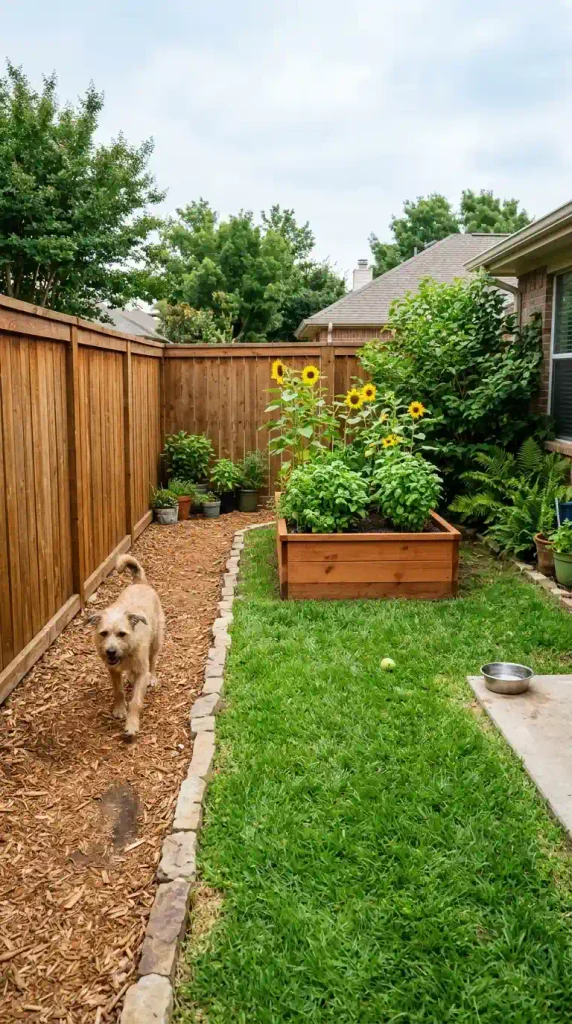
Fighting that route rarely works, so pave it. Edge a band about 2 feet wide with cedar 1×6 boards set on edge, then fill it with undyed cedar mulch about 2 inches deep. Timberline Natural Cedar Mulch was listing around $4 per 2 cu ft bag at Walmart, and Ace Hardware’s cedar bark mulch sat around $5.

The math is easy. One 2 cu ft bag covers about 12 square feet at 2 inches deep, so a 30 foot run takes about 5 bags. Of all the dog friendly backyard landscaping ideas, this one works with your dog’s route instead of against it. Skip cocoa bean mulch completely, since it contains theobromine, the compound that makes chocolate toxic to dogs.
Tip: rake the mulch back from the fence each spring and add a fresh bag where the turns wear thin.
A bare dirt rut a foot or two off the fence, muddy after every rain, with dead grass on both edges.
A 2 foot band of undyed cedar mulch held by cedar edging, clean paws, and green grass right up to the boards.
9. A Cedar Pergola With a Shade Sail Over the Dog Lounge
Shade decides how long your dog actually stays outside. A cedar pergola gives you shade you can aim, and a sail across the top makes it work at noon instead of only at sunset.

The Coolaroo Ready to Hang rectangle sail, just under 12 by 8 feet with an 85% UV block rating, was listing around $40 at Walmart. Tie it across the top beams at the corners and you have midday shade the same weekend. For a solid cover that also sheds rain, our patio roof ideas that block midday sun walk through the options.
Most permanent structures need a permit and have setback rules. Call your city building department before you dig footings or attach anything to the house.
Shade setup checklist
Get the shade right, and the dog stops asking to come inside at 1 p.m.
10. A Raised Cedar Dog Cot Right Next to Your Own Chair
Concrete patios soak up heat all afternoon. That’s reason one to lift your dog off the slab.
Reason two is rain. A slatted cedar cot drains in seconds, while a cushion stays soggy for a day.
Reason three is you. Set the cot right beside your Adirondack chair, and the patio turns into a spot you both use instead of one you take turns on. Most dogs would rather lie near their person than alone in the best shade in the yard.
Cut list for one medium dog cot
- ▸Cedar 2×4 frame about 24 by 36 inches, set 4 to 6 inches off the patio.
- ▸Cedar 1×4 slats across the top, spaced about 1/2 inch apart for drainage.
- ▸Exterior screws, with every edge sanded round.
- ▸Optional: an outdoor canvas pad you can pull off and hose down.
Your chair. Their cot. Same view.
11. A Cedar Slat Rinse Station by the Back Door
Muddy paws need a landing pad before the kitchen.
- Floor: a cedar slat platform over a bed of pea gravel, so rinse water drops straight through.
- Water: a coiled hose on a wall hook with a gentle shower nozzle, never the jet setting.
- Storage: a lidded cedar box for towels, poop bags, and the spare leash.
- Drying: two big hooks at shoulder height, out of tail range.
Put the station on the shortest path between the yard and the back door. Dogs head straight for the door, so a station off to the side gets skipped.
Tip: in winter, swap the hose for a bucket of warm water and a towel.
12. A Low Cedar Agility Set Built From Scrap Boards
Agility gear doesn’t need to be plastic or pricey. Three wooden pieces cover the basics: a plank walk, a jump bar, and a pause table for sit and wait practice. Build every piece from boards in the safe rows of the Paw and Jaw Lumber Check, since agility gear gets mouthed.
For the jump bar:
- Screw two cedar 2×4 uprights to flat 2×10 feet so they stand on their own.
- Drive cup hooks into both uprights every 4 inches.
- Rest a 1 inch wooden dowel loosely across the hooks so it falls when bumped.
- Start at ankle height and raise it one hook at a time, only after clean jumps.
Keep jumps low for puppies and senior dogs, and ask your vet before raising the bar for a young dog whose joints are still growing.
13. A Freestanding Cedar Lookout Platform Beside the Dog House
Some dogs want a job, and supervising the yard counts.
The problem is height. The only high spots in most yards are the patio table and the roof of the dog house. Kit houses like the TRIXIE natura line make decent shelters, at roughly $80 to $125 for the Cottage and Club House sizes at PetSmart. But they’re built from solid pine, and their roofs aren’t designed to carry a standing dog.
The fix is a low freestanding cedar platform right beside the house. Use four 4×4 cedar posts, a 2×6 frame, and 5/4 cedar deck boards on top, around 18 inches high, with a cleated ramp board for older dogs.
The payoff: a dog that can see the whole yard from one spot may stop running laps to check on it.
💡 Quick Tip
Park the platform well inside the yard, never against the fence. A lookout next to the fence is just a launch pad (see idea 7).
14. A Sniff Garden in Cedar Planter Boxes Stocked With Dog-Safe Plants
Dogs read the yard with their noses. A row of cedar planter boxes filled with safe, scented plants turns a dull stretch of fence into a sniffing route, and it gives a busy nose something to do besides your vegetable bed.
| 🌿 Plant this | 🚫 Skip this |
|---|---|
| Rosemary | Lavender |
| Basil | Chives |
| Sunflowers | Sago palm |
| Snapdragons | Hydrangeas |
| Nasturtiums | Azaleas |
One surprise: lavender shows up on plenty of dog garden lists, but the ASPCA lists it as toxic to dogs because it can cause nausea and vomiting. Check every new plant against the ASPCA list of toxic and safe plants before it goes in. Rosemary usually overwinters outdoors only in Zone 7 and warmer, so in Zones 5 and 6, plant it in a box small enough to bring in to a sunny window.
Watch for chewing during the first week. A sniff garden is for noses, and a dog that eats the basil daily needs the box lifted higher.
15. A Double Gate Entry So Your Dog Can’t Bolt Through the Side Gate
The riskiest second in a dog-friendly yard is the moment someone opens the side gate. Delivery drivers, guests, and kids rarely look behind them before they swing it wide.

Pick the gate your dog watches most, usually the side gate to the driveway.
Build a small cedar picket pen inside it, about 4 by 4 feet, with its own gate.
Hang both gates on spring hinges so they swing shut, and mount gravity latches high, above nose reach.
Make it a house rule: the inner gate closes before the outer gate opens.
Most dog parks use the same double gate entry, and for the same reason. There is never a straight line between the dog and the street. The whole build takes a few cedar pickets, a second set of gate hardware, and a Saturday.
Two latches beat one fast dog.
16. A Cedar Surround for a Hard Plastic Dog Pool
Soft dog pools usually fail at the rim, not the water. A dog steps on a soft edge, it folds, the water dumps, and claws finish the job.
What works is a rigid plastic pool with a low cedar deck surround built level with the rim. The boards take the paw traffic, the rim stays stiff, and a two board cedar step on one side lets your dog walk in and out instead of scrambling over. Dump and refill the water every day or two in summer so mosquitoes can’t breed in it.

A firm, level edge lets a tired dog step out on its own instead of scrambling over the side.
Tip: face the step toward the shade, so the wet dog flops down somewhere cool instead of on hot concrete.
17. A Slatted Cedar Screen Where the Barking Starts
Bubble windows help curious dogs. Reactive dogs need the opposite.
If your dog barks at one spot, like the corner by the sidewalk or the gap facing the neighbor’s dog, screen just that stretch. A horizontal cedar slat screen with narrow gaps blocks the view and still lets air through.
If the barking happens everywhere, a screen won’t solve it. That’s a training question, so a certified trainer is the better spend.
If your dog barks at the window you added in idea 2, take the hint and cap it with a cedar board.
Screen only the stretch where the barking starts.
Keep slat gaps narrow so a nose can’t push through.
Reward quiet, calm moments near the screen.
Boxing in the whole yard with solid screens.
Adding a bubble window to the same stretch.
Block the view, and the bark often goes with it.
Frequently Asked Questions
What is the best wood for a dog-friendly backyard?
Untreated western red cedar is the easiest all around pick. It resists rot without chemical treatment, sands smooth, and stays cooler underfoot than most composite boards in full sun. Redwood works the same way at a higher price. Save modern pressure treated lumber for posts and framing your dog can’t reach, and skip any pallet that isn’t stamped HT.
Is pressure treated wood safe for dogs?
Arsenic based treatment for homeowner lumber ended when manufacturers stopped making it in December 2003, and today’s treated lumber uses copper based preservatives instead. It still isn’t meant to be chewed, so keep it in posts, framing, and spots out of reach. Decks and fences built before 2004 likely used the older arsenic treatment. Sealing them regularly may reduce leaching, and chewed boards should be replaced.
What is the best mulch for a dog-friendly backyard?
Undyed cedar, cypress, pine bark, or plain arborist wood chips all work well in dog areas. Cedar is popular because it breaks down slowly and holds its color for a season or two. Avoid cocoa bean mulch entirely, since it contains theobromine, the same compound that makes chocolate toxic to dogs. Watch any dog that eats mulch, because large chunks can upset a stomach or cause a blockage.
How do I stop my dog from running along the fence line?
You usually don’t need to. Patrolling is normal dog behavior. Instead, give the route a surface that can take it, like a 2 foot band of cedar mulch or pea gravel edged with cedar boards. The lawn recovers, the mud goes away, and your dog keeps its patrol. A buried wire apron along the base also keeps patrolling from turning into digging.
What can I use instead of grass in a dog yard?
Pea gravel, undyed wood mulch, and artificial turf are the common swaps for high traffic areas. For a softer living cover, white clover and creeping thyme handle paws well, and clover shows urine spots less than standard lawn grass. Many dog owners mix them: gravel in the potty corner, mulch on the patrol path, and clover where the dog lounges.
What plants are toxic to dogs in a backyard?
Common backyard plants on the toxic list include sago palm, azaleas, hydrangeas, English ivy, and lavender. In vegetable beds, onions, garlic, chives, and tomato vines are the usual concerns. Safer picks include rosemary, basil, sunflowers, snapdragons, and nasturtiums. Before planting anything new, check it against the ASPCA dog plant list or ask your veterinarian.
How do I make my backyard more fun for my dog?
Give your dog jobs that match its instincts: a dig box for diggers, a sniff garden for scent lovers, a patrol path for fence runners, and a lookout platform for watchers. Add shade and fresh water so play lasts longer. A low wooden agility set or a cedar framed pool adds variety, and rotating buried toys keeps old spots interesting.
Where to Start This Weekend
Start with whatever your dog wrecks first. A digger needs the cedar dig box and the wire apron before anything pretty. A bolter needs the double gate. A pacer needs the patrol path.
Then run every board you buy through the Paw and Jaw Lumber Check, because the safest yard is one where nothing your dog can reach is worth worrying about. These wood dog-friendly backyard ideas work best in pairs, so pick two this weekend and add more as the seasons turn.
Save this to your dog yard board now, and the lumber chart will be on your phone the next time you’re standing in the lumber aisle.