Raised Bed Flower Garden Ideas: Planter Boxes That Bloom From April to Frost

My first flower box was a mistake I am still glad I made. Raised bed flower garden ideas planter boxes get pinned by the thousand every March, and almost none of them mention the part that actually decides whether yours looks good in year two. Depth. Not width, not the fancy corner brackets, not the stain color you agonized over at Lowe’s. Depth.
Here is what you get in the next ten minutes: a depth rule you can screenshot, seven layouts that hold up in a real yard, honest material tradeoffs, and the placement trick that makes a $90 box look like it cost $400.
Let’s get into it.
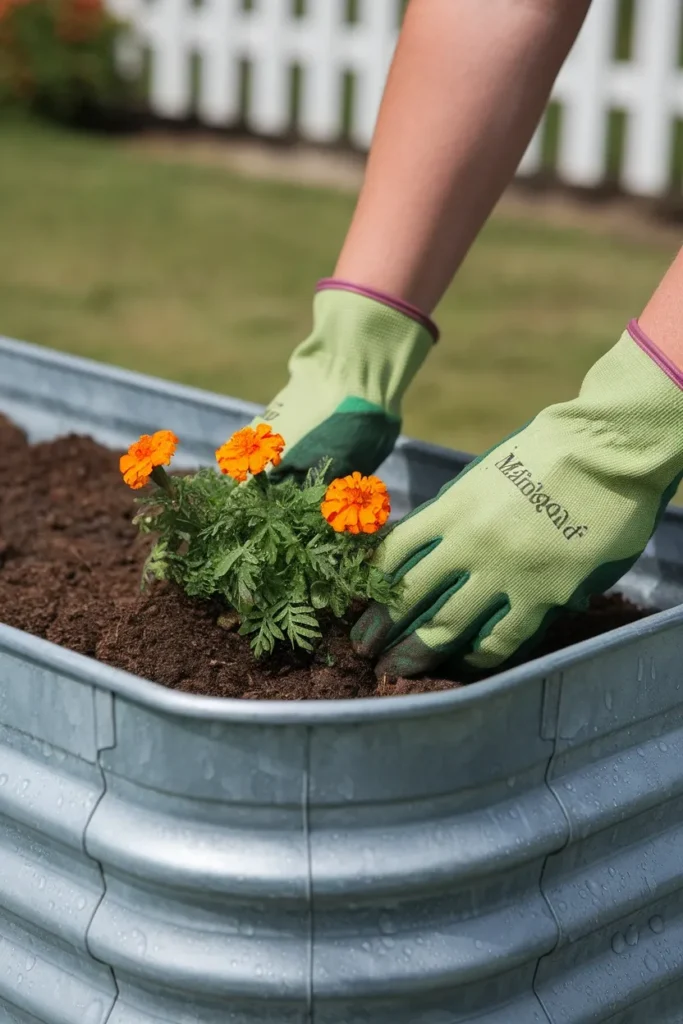
Why a Planter Box Beats a Flower Bed Dug Into the Ground
Ground beds fight you. The soil is whatever the builder scraped flat in 2004, the edges creep, and the mulch line wanders every spring until the whole thing reads as messy.
A box gives you a hard edge. That edge is doing more design work than the flowers are, honestly, because the human eye reads a crisp rectangle as intentional even when the planting inside is a little wild.
You also get three practical wins. Soil warms roughly two weeks earlier in spring, which pulls your first bloom forward. Drainage improves, which matters if your yard has clay. And you are not bending to the ground, so you actually deadhead instead of promising yourself you will.
One more thing nobody says out loud: a box contains ambition. A 4×2 cedar box tells you exactly how many plants you can buy. Ground beds have no such mercy, and that is how people end up with 40 six-packs of Bonnie Plants annuals wilting in a wagon.
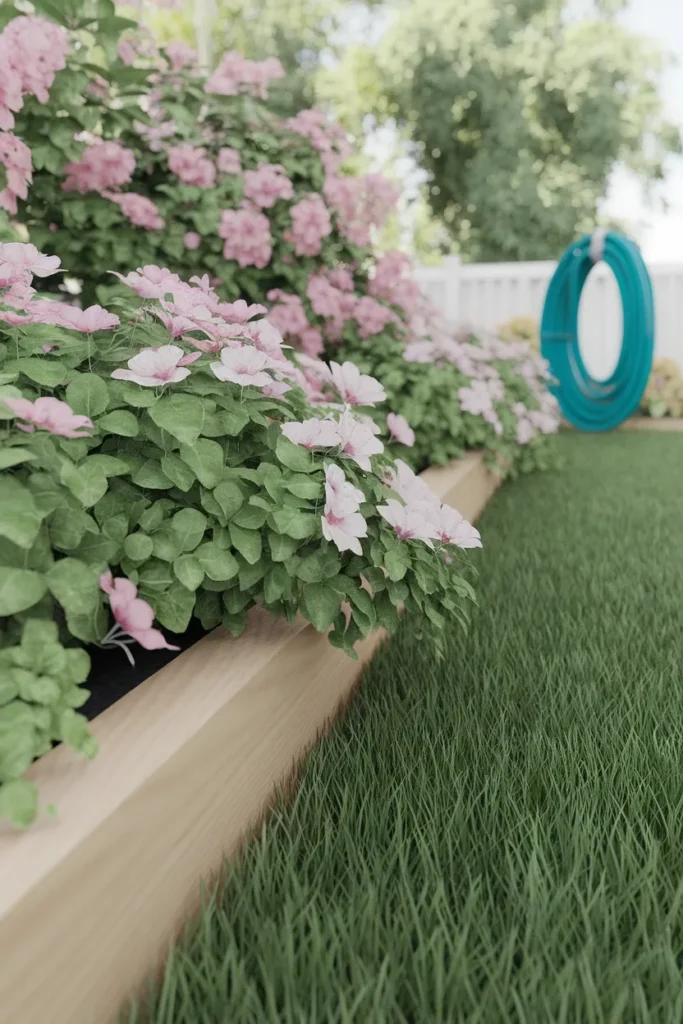
The 6-12-18 Bloom Depth Rule
This is the framework I use before I buy a single board, and it has saved me more money than any coupon.
The 6-12-18 Bloom Depth Rule says every flower you want falls into one of three root classes, and your box height must match the deepest class you plan to plant. Build for the deepest, then fill down. Guessing at height is the single most common reason a beautiful planter box underperforms by July.
| Box depth | Root class | Plant these | Skip these |
|---|---|---|---|
| 6 inches | Shallow | Pansies, alyssum, lettuce-leaf annuals, sedum, creeping thyme | Anything tuberous |
| 12 inches | Medium | Zinnias, marigolds, coral bells, salvia, cosmos, snapdragons | Peonies, deep tap roots |
| 18 inches and up | Deep | Dahlias, peonies, lilies, shrub roses, coneflower, hydrangea | Nothing, this depth grows almost everything |
Screenshot that. It is the whole article in one table.
The counterintuitive part: taller is not automatically better. An 18 inch box costs roughly triple the soil of a 6 inch box, and a bed of pansies in 18 inches of premium mix is money sitting unused underground. Match the depth to the ambition.
Here is my own expensive lesson. I planted six dahlia tubers in a 6 inch box the first spring I had a real garden, and they came up, flowered small, then flopped over sideways by mid-August because there was nowhere for the tuber to anchor. I moved them into an 18 inch Vego Garden bed the following April. Same tubers. Blooms the size of a salad plate.
7 Raised Bed Flower Garden Ideas Worth Copying
Search raised bed flower garden ideas planter boxes and you get a thousand pretty photos with almost no depth guidance behind them. These seven survive a real season.
Every layout below assumes the 6-12-18 rule is already set. Front-loaded, because idea one is the one I would build first in any yard.
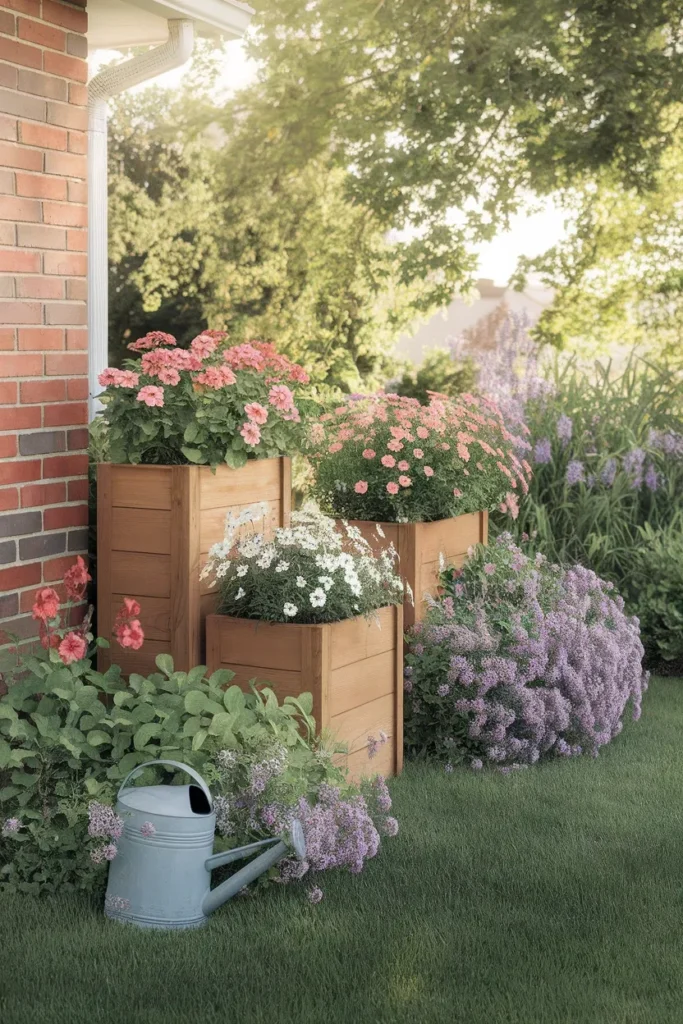
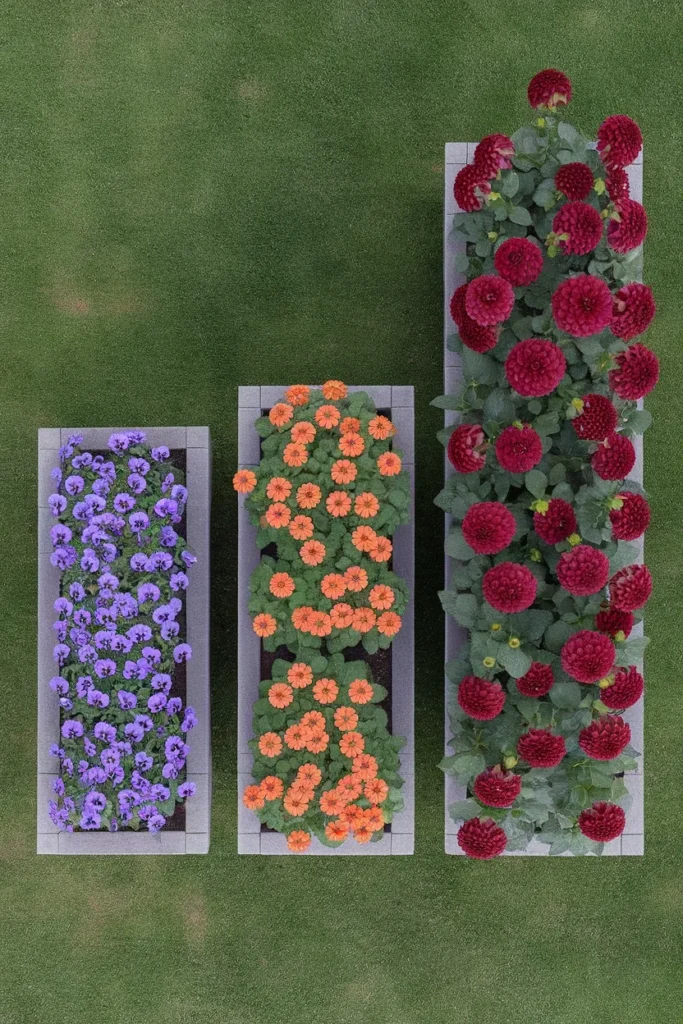
1. The staggered trio. Three boxes at 18, 12, and 6 inches, lined up with about 14 inches of walking space between them. Your eye climbs the heights and the bed reads as designed instead of dropped. Cheapest version uses cedar fence pickets from Home Depot at under $4 each.
2. The corner L. Two boxes meeting at a right angle in a yard corner, which turns dead space into the focal point. Plant the inside of the L with the tallest blooms so the corner looks full from the house.
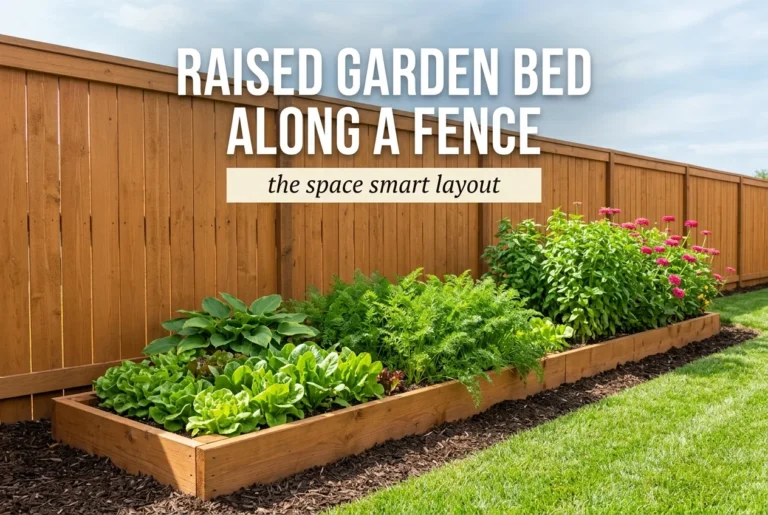
3. The fence-line runner. A long narrow box, roughly 8 feet by 20 inches, hugging the fence. Sun mapping matters enormously here. If you are working with a raised bed along a fence line, check how the shadow moves across the day before you plant a single thing.
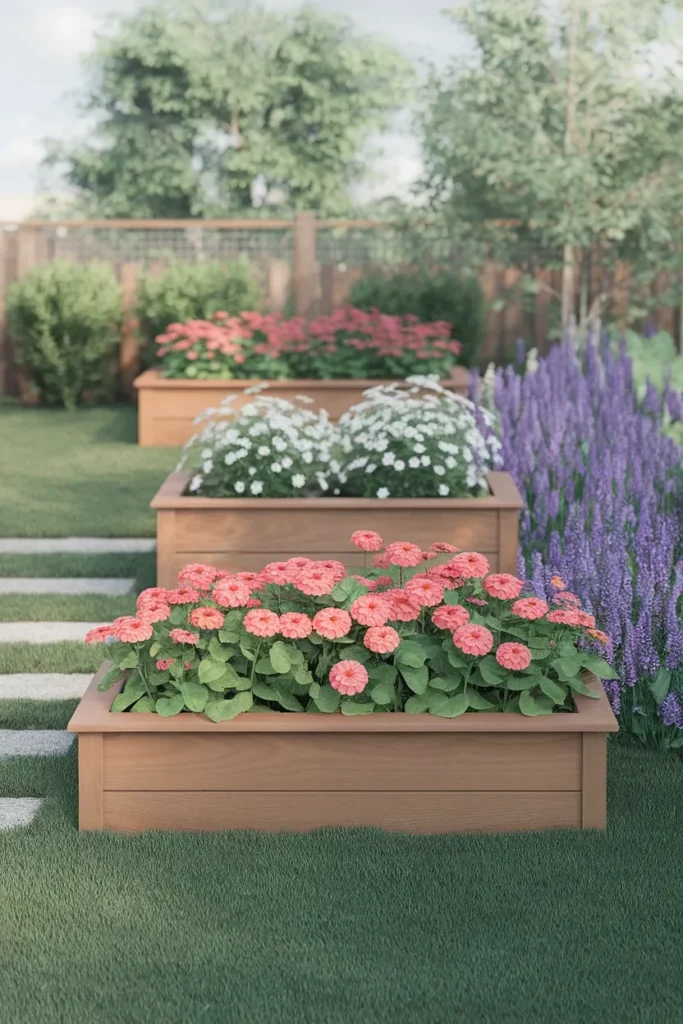
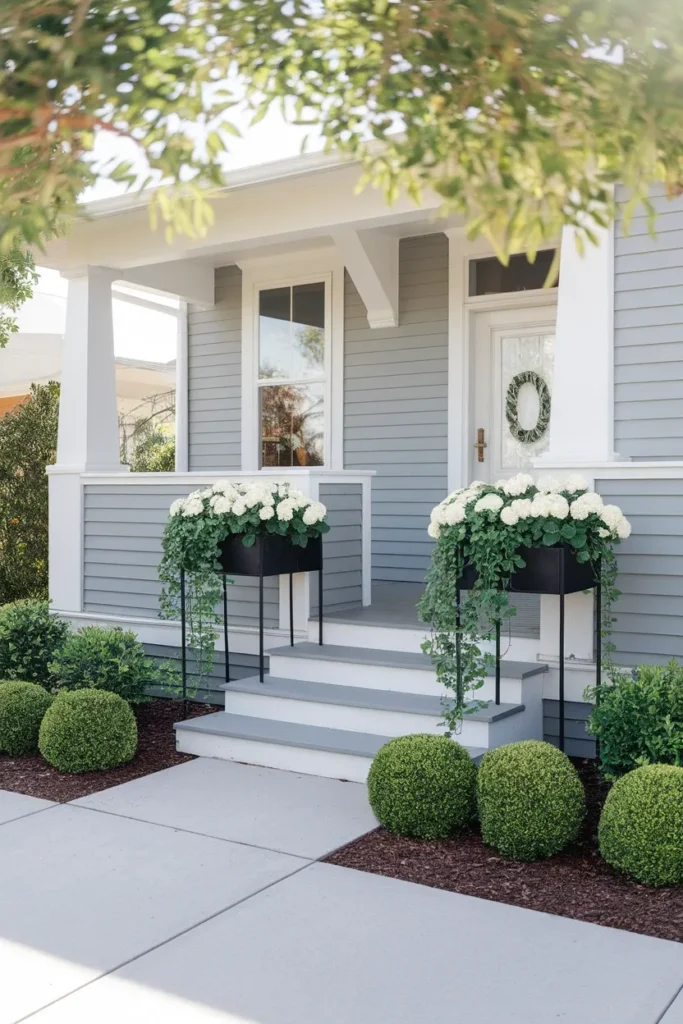
4. The porch pair. Two matching 12 inch boxes flanking the front steps, planted identically for symmetry. This one drives more curb appeal per dollar than anything else on the list.
5. The cut-flower grid. A single 4×8 box divided into four planting quadrants with jute twine, each quadrant a different cutting flower. Zinnias in one, cosmos in another, snapdragons, then dahlias. You harvest without wrecking the look.
6. The tiered slope box. Stepped boxes on graded ground, each one level even though the yard is not. Getting the levels right is fussier than it looks, and building raised beds on a slope takes a measured grade rather than a guess.
7. The single statement box. One oversized 4×4 at 18 inches, centered on a patio, planted like a container arrangement with a thriller, filler, and spiller. Small yards benefit more from one big gesture than four small ones.
Cedar, Metal, Composite, or a Kit: Pick Your Material
Four real options, four honest tradeoffs.
Cedar is the default for a reason. It weathers to a soft silver gray in about two seasons, resists rot naturally, and cuts with a circular saw. A Greenes Fence cedar kit runs under $70 for a basic 4×4, and untreated cedar boards let you build custom for less. Expect roughly 7 to 10 years before the bottom board goes soft.
Galvanized metal lasts longer and reads more modern. Vego Garden and Birdies both make modular metal beds in the $150 to $300 range depending on size and height. Metal heats faster in spring, which is a bonus in Zone 5 and a liability in Zone 9 where roots can cook against a south-facing wall.
Composite costs the most upfront and outlasts everything. Frame It All and similar brands sell snap-together systems that never need staining. If you plan to stay in the house 15 years, the math works.
Upcycled covers galvanized stock tanks from Tractor Supply, old dresser drawers, and cinder block frames. Cheapest path by far. Drill drainage holes, and check that whatever you found was not treated with something you do not want near roots.
Quick gut check before you buy anything. If this is your first box and you are not certain you will still want it in three years, build in cedar. It is forgiving to cut, cheap to replace, and it looks better at year five than it does on day one. Metal and composite are commitments. Cedar is an experiment.
A note on stain color, since this is a decor decision as much as a garden one. Pull your box color from your house trim, not from the plants. I painted a box a very confident sage green one April, and against warm red brick it looked like a mistake for four straight months. Repainted it in a warm greige from Behr that matched the shutters, and suddenly the whole corner looked finished.
Put the Box Where You Actually Look at It
Almost nobody does this, and it is the fastest upgrade in the whole article.
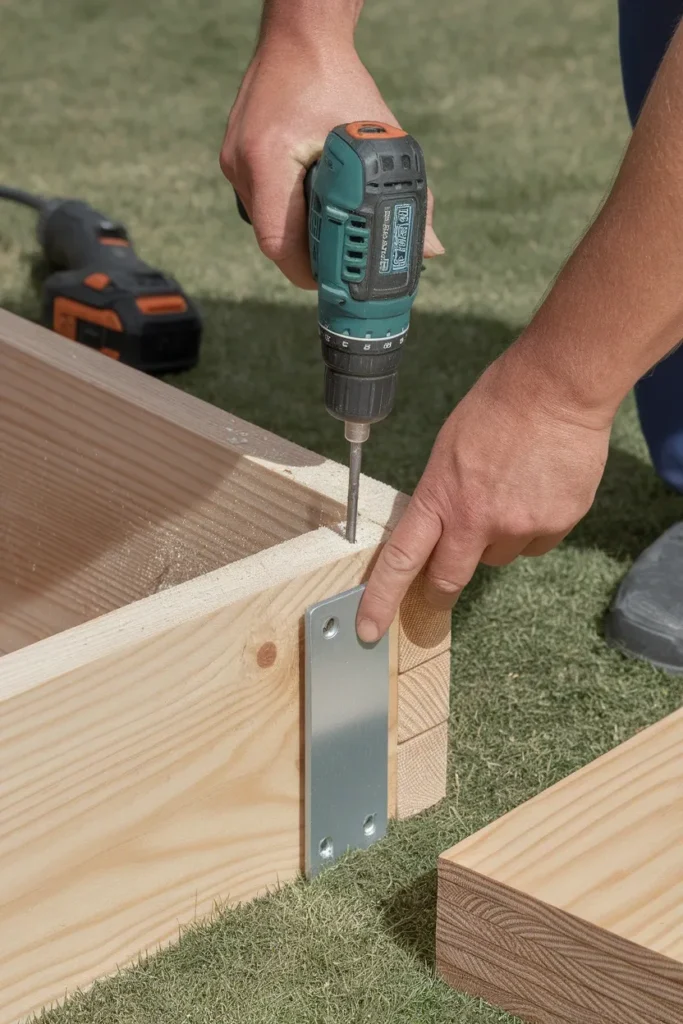
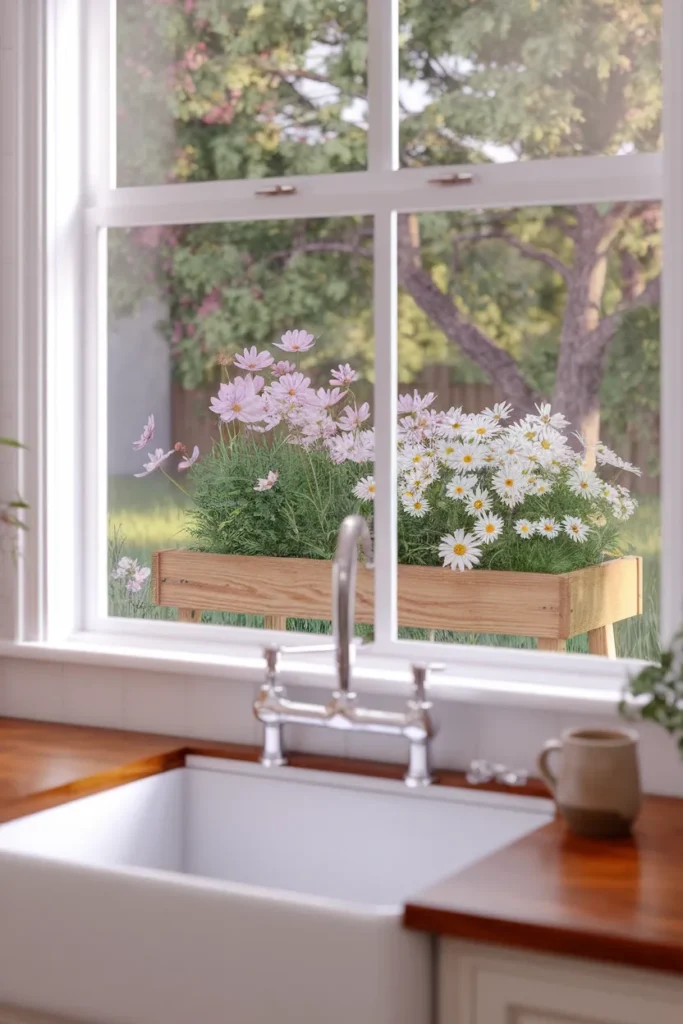
Stand at your kitchen sink. Look out the window. Whatever you see in that frame is the view you get 300 times a week, and it should be where the best box goes. Then walk to your front door and turn around, because that is the view every guest gets while you fumble with the lock.
Sun still rules the decision, obviously. Six hours of direct light is the working minimum for most flowering annuals, and full-sun performers like zinnias want closer to eight. But among the spots that clear the sun bar, pick the one with the best sightline, every time.
There is a decor argument here too, separate from the gardening one. A planter box is a piece of outdoor furniture that happens to grow things, and furniture gets placed in relation to a room. Treat your patio or lawn as the room. Anchor a corner, frame a doorway, or square the box up with the edge of the deck rather than floating it at a random angle in the middle of the grass.
Two more placement details worth 30 seconds of thought. Keep the box within hose reach, because a 60 foot drag kills watering habits by July. And leave at least 18 inches of clearance behind a box set near a fence or wall so you can reach the back row without stepping in the soil.
Fill It Right Without Spending $200 on Dirt
Soil is where budgets quietly explode. A 4×8 box at 12 inches deep swallows about 32 cubic feet, which is roughly 21 bags of the two cubic foot mixes sold at Lowe’s.
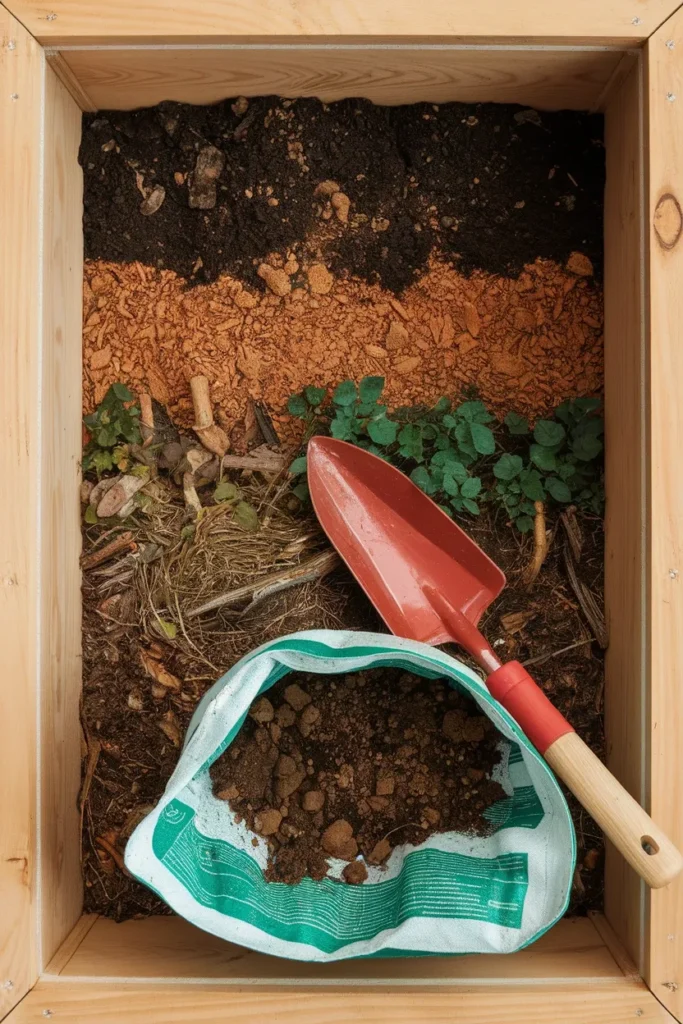
My first 4×8 cedar bed got filled entirely with bagged Kellogg raised bed mix, and I stood in the checkout line watching the total climb past $180 with a sinking feeling. The next one I built, I filled the bottom third with broken branches, leaf litter, and the sod I had stripped off the site, then topped it with 8 inches of good mix. Same plant performance. Roughly $80 less.
A working recipe for the top layer: about 50 percent quality topsoil, 30 percent compost, and 20 percent something that keeps it loose, like coarse perlite or pine bark fines. Miracle-Gro Performance Organics and Kellogg Garden Organics both work fine as the compost-rich component, usually around $12 to $15 a bag. For ratios and pH, the university extension guidance on filling raised beds from Maryland is the clearest free resource I have found. It puts the target pH between 6.2 and 6.8 for most flowers.
Skip the landscape fabric at the bottom. It sounds tidy and it works against you within two years, trapping a soggy layer and blocking the worms that should be moving up into your soil. Cardboard is the better bottom layer if you want weed suppression, since it smothers grass and then rots away.
Drainage holes are not optional in a bottomed box. Planters standing on legs need holes every 6 to 8 inches across the base, no exceptions.
Flowers That Earn Their Space From April Through Frost
A planter box has finite square footage, so every plant has to pull weight for more than three weeks.
Start by knowing your band. Most of the country gardens somewhere in Zones 5 through 9, and the practical difference is your last frost date. In Zone 5 the last frost usually lands somewhere between mid-April and mid-May, while Zone 9 gardeners are often planting in early March. Those are typical ranges, not guarantees, so check your USDA hardiness zone against your actual zip code before you set a planting weekend.
One combination has never let me down in a 12 inch box in Zones 5 through 7. Zinnias for July and August color, snapdragons for the cool shoulder seasons, coral bells for foliage that holds when nothing is blooming, and alyssum spilling over the front edge. Total cost from Bonnie Plants six-packs and a few perennials, usually under $60.
Perennials versus annuals is a budget question more than a taste question. Perennials cost more per plant and return every year. Annuals cost less and bloom harder. A 70 percent perennial and 30 percent annual split gives you structure with room to change your mind each May.
Want the overflowing romantic look instead of the tidy one? The plant list shifts toward taller, floppier things. Cottage garden flowers that bloom all season work beautifully inside a defined box, because the hard edge keeps the chaos looking deliberate.
Feed at planting with a granular starter like Espoma Bio-tone, around $15 for a bag that handles several boxes. Then leave it alone.
Keep It Pretty in January
Pinterest is full of raised bed flower garden ideas planter boxes styled for one perfect week in June. January is the honest test.
Nobody plans for this, and it is why so many planter boxes look sad from November to March.
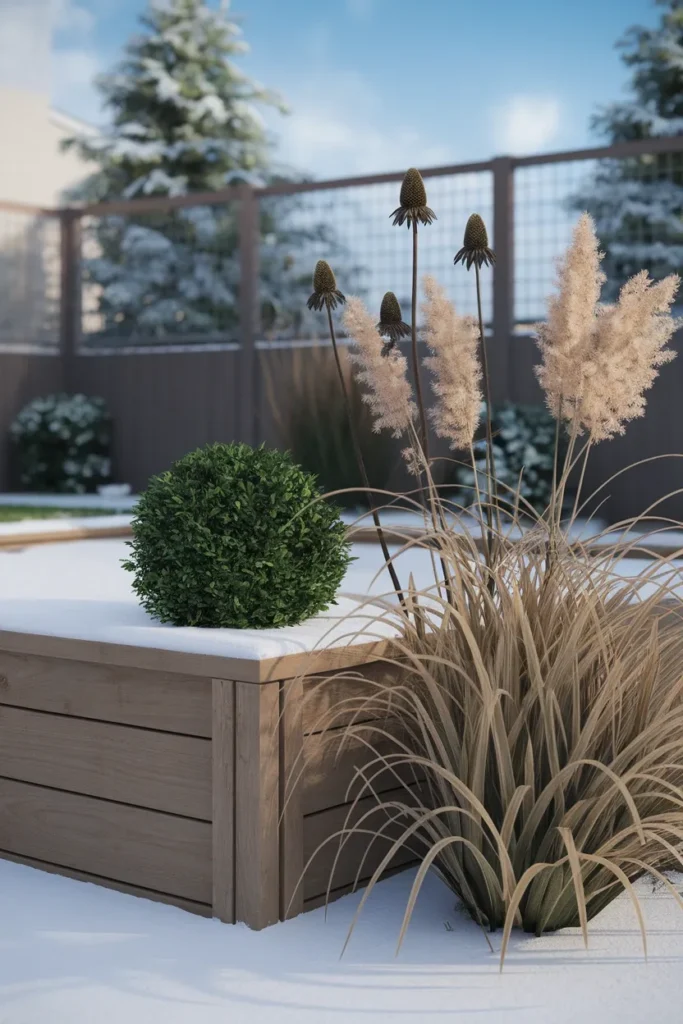
An empty box is a rectangle of dirt outside your window for five months. The fix costs almost nothing and happens at planting time, not in fall. Put one small evergreen or one structural woody plant in every box: a dwarf boxwood, a compact holly, an ornamental grass you leave standing through winter.
Grasses are the underrated pick here. Little bluestem or a compact miscanthus holds its shape under snow and catches low winter light beautifully, then gets cut back in March right before the annuals go in.
Leave your coneflower and rudbeckia seed heads standing too. Birds work them all winter, and the silhouettes look intentional against snow.
One box in my yard has a single dwarf boxwood in the back left corner. In July you barely notice it behind the zinnias. In January it is the only reason the corner still looks like a garden.
Frequently Asked Questions
How deep should a raised flower bed be?
Twelve inches handles the large majority of flowering plants comfortably. Go to 6 inches only for shallow-rooted annuals like pansies and alyssum, and step up to 18 inches or more if dahlias, peonies, lilies, or shrub roses are on your list. When in doubt, 12 inches is the safe default.
What is the cheapest way to make raised flower beds?
Cedar fence pickets are the budget champion, usually under $4 a board at Home Depot, and a basic 4×2 box comes together for around $30 in materials. Cinder blocks laid in a rectangle cost even less and need no tools at all. Then cut the soil bill by filling the bottom third with branches and yard debris instead of bagged mix.
What flowers grow best in a raised bed?
Zinnias, cosmos, marigolds, snapdragons, and salvia are close to foolproof in a 12 inch box with six or more hours of sun. Coral bells and hostas cover shadier spots. For deep boxes, dahlias and peonies reward the extra soil with the biggest visual payoff of anything on the list.
What do you put in the bottom of a raised flower bed?
Cardboard directly on the grass to smother weeds, then coarse organic material like broken branches, twigs, and stripped sod if the box is 12 inches or deeper. Avoid landscape fabric, which traps water and blocks worm activity. Gravel at the bottom is another myth worth skipping, since it raises the water table inside the box rather than improving drainage.
Do raised planter boxes need drainage holes?
Boxes sitting directly on soil drain through the ground and do not need holes. Anything with a solid bottom, including planters standing on legs, needs holes spaced every 6 to 8 inches. Standing water is the fastest way to lose an entire box of plants.
How long does a wooden planter box last outside?
Untreated cedar typically gives 7 to 10 years, pine 3 to 5, and composite systems 20 or more. Lining the interior walls with landscape plastic (leaving the base open) buys a few extra years on any wood box by keeping wet soil off the boards.
Can you put a raised planter box directly on grass?
Yes. Lay overlapping cardboard across the footprint first, then fill. The grass dies off under the cardboard within a season and the roots decompose into the bed. Digging out sod first is optional and mostly a waste of a Saturday.
Start With One Box
The best raised bed flower garden ideas planter boxes all start the same way, with one box you actually finish. Pick the depth from the 6-12-18 rule, pick the spot you see from your kitchen window, and build it. Not four boxes. One.
Get through a full season with it, learn what wilts in your particular yard and what thrives, then build the second box in fall when lumber is cheaper and you actually know what you want. The staggered trio I love so much started as a single 12 inch cedar box that I was not even sure I would keep.
Which layout are you building first?
r