Cottage Garden Flowers That Bloom All Season (The Three-Wave Method)

Most cottage garden flowers peak in June and then quietly quit on you.
That is the part nobody puts in the plant lists. You plant the peonies, the foxgloves, the delphiniums, everything the magazines told you to buy, and for about five glorious weeks your yard looks like the cover of a seed catalog. Then July arrives, the delphinium flops, the peony is a green shrub, and by mid-August you are staring at a bed that reads more “abandoned” than “romantic.” I have watched this happen in my own beds and in every beginner cottage garden I have helped rescue since.
The fix is not more plants. It is better timing.
This guide sorts cottage garden flowers by when they bloom instead of by what botanical category they belong to, because bloom time is the thing that actually determines whether your border looks full in September. You will get the three-wave plan, the plants that carry each wave, the ones that bridge two waves at once, and the layout rule that keeps everything from collapsing into a green blob. If your space is tight, pair this with our small backyard garden design guide, since the wave method scales down to a four-foot strip just as well as it scales up.
Grab a coffee. This one is worth reading with a notebook.
What Actually Makes a Flower a Cottage Garden Flower
Ask five gardeners and you get five answers. Here is the working definition I use, and it has held up across every bed I have planted.
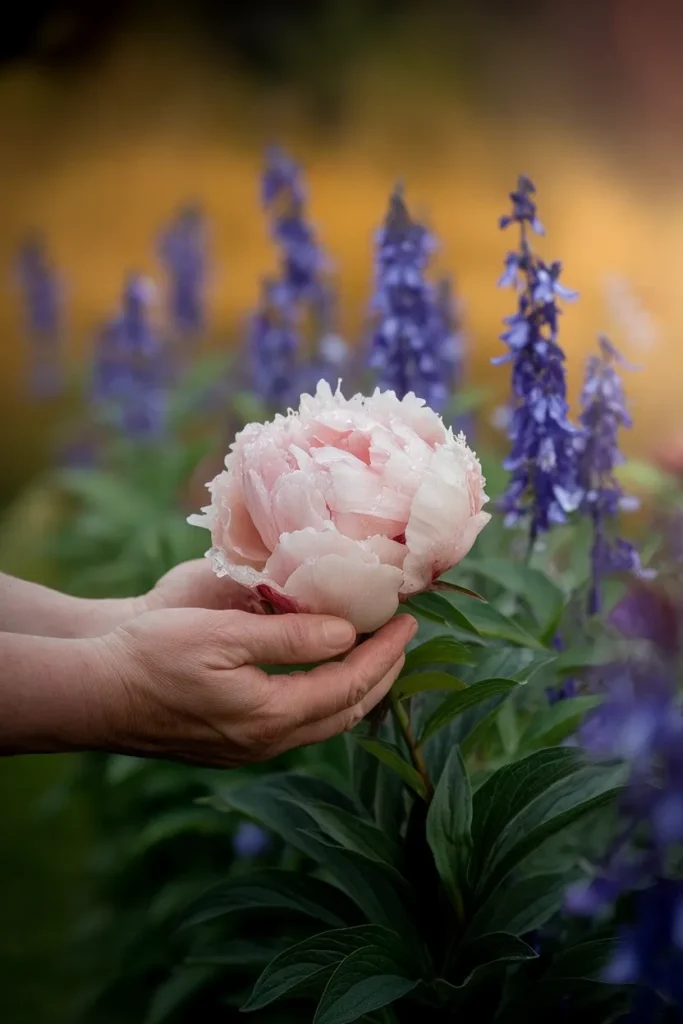
A cottage garden flower earns its spot by doing three things at once: it looks slightly untidy in a good way, it comes back or reseeds without much fuss, and it plays well pressed shoulder to shoulder with its neighbors. That last one matters more than people think. Cottage borders are planted tight, roughly 30 to 40 percent tighter than a standard perennial bed, so a plant that sulks when crowded is a poor fit no matter how pretty the catalog photo looks.
Three traits, then. Informal shape, easy return, tolerance for close quarters.
The structure nobody mentions
Here is the counterintuitive part. The looser the planting, the more structure you need underneath it. N.C. Cooperative Extension recommends building the beds and borders first, then amending the soil, then setting plants short in front and tall in back, and only then adding mulch. Skip the edging and the path, and within two seasons you do not have a cottage garden. You have a patch of tall weeds with roses in it.
A cottage garden is a controlled mess. Emphasis on controlled.
What does not belong
Anything that reads as engineered. Sheared boxwood cubes, single-species mass plantings, tightly spaced identical annuals in rows. Those are handsome in other contexts. They fight the entire point here, which is abundance that looks accidental.
The Three-Wave Bloom Relay
This is the framework the rest of the article runs on, and it is the single thing that separates a border that looks good for five weeks from one that looks good for six months.
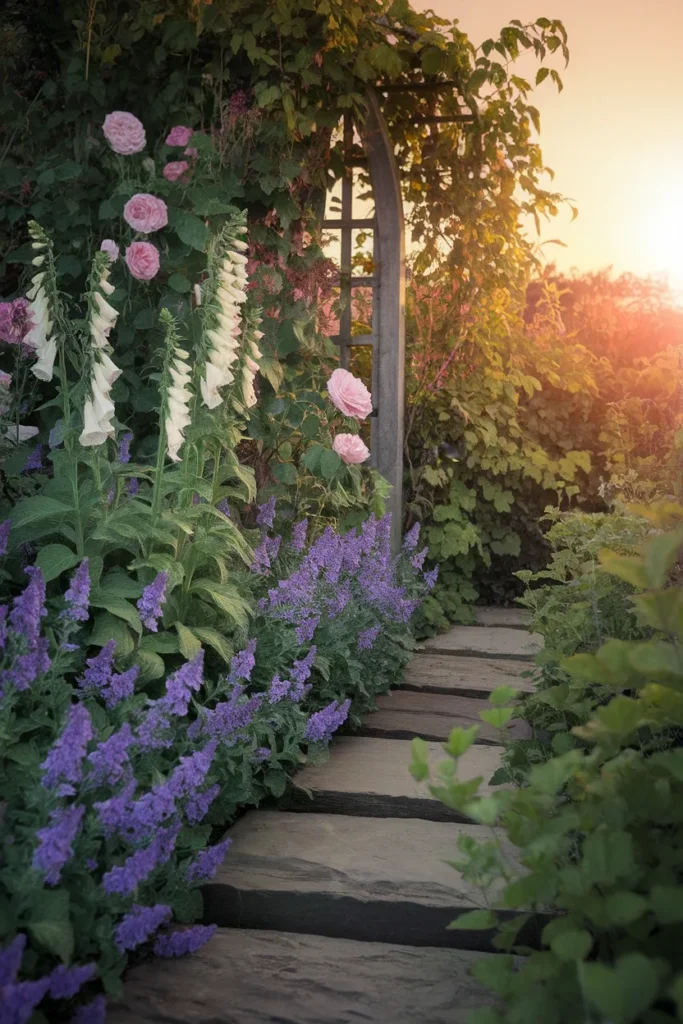
The Three-Wave Bloom Relay treats your bed as a relay race with three legs. Wave One runs from last frost through late May. Wave Two carries June and July. Wave Three has to hold from early August all the way to your first hard freeze. Every plant you buy gets assigned to a wave before it goes in the cart, and no wave is allowed to go understaffed.
The staffing rule is what makes it work. I call it the 3-4-3 split.
For every ten plants in a bed, plant three from Wave One, four from Wave Two, and three from Wave Three.
| Wave | Rough window | Share of the bed | Job it does |
|---|---|---|---|
| Wave One | Last frost to late May | 3 in 10 | Wakes the bed up, carries bulbs and early perennials |
| Wave Two | June through July | 4 in 10 | The peak show, the tallest spires, the roses |
| Wave Three | August to first freeze | 3 in 10 | Prevents the late-summer collapse, feeds pollinators |
Why four for Wave Two and only three each side? Because Wave Two plants tend to be the tall structural ones, and you need enough of them to build the vertical backbone. Cut it to three and the border reads flat in July.
Most people, left alone, plant a 6-3-1 split without realizing it. Six spring things, three summer things, one sad aster. Then they wonder why September looks bare.
Wave One: Cottage Garden Flowers for Spring
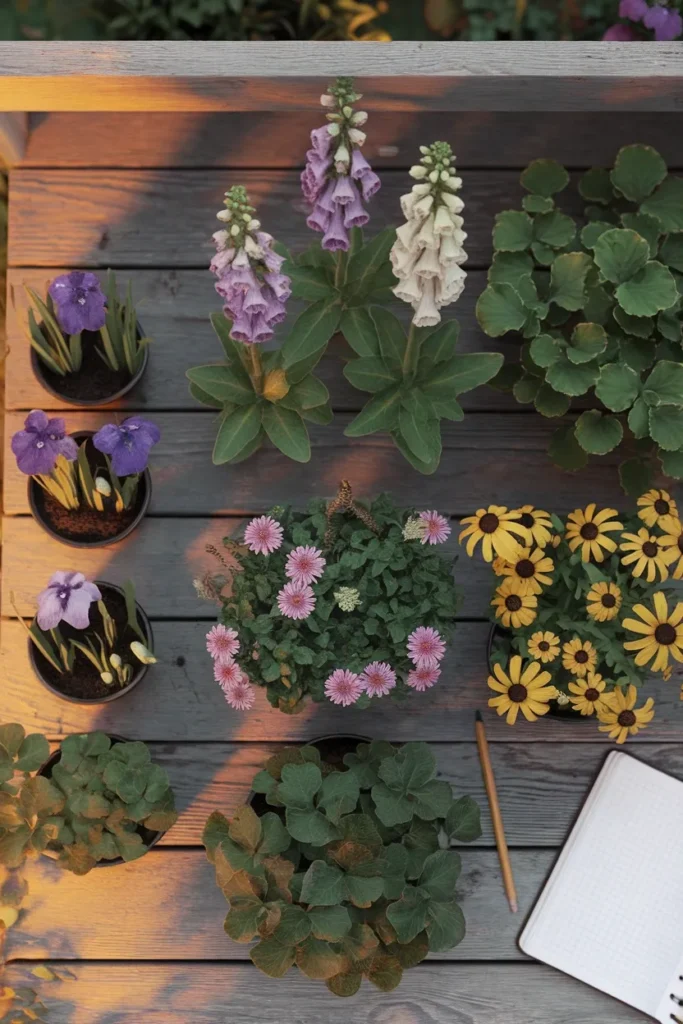
Wave One plants are the ones that make you believe winter is over. Most are bulbs planted the previous fall or tough early perennials that shrug off a late cold snap.
Your last frost typically lands mid to late May in Zone 5, mid-April in Zone 6, and late March in Zone 7 and warmer. Those are ranges, not promises. Your own yard will run a week or two off in either direction depending on slope and shelter. Wave One plants are the ones you can set out slightly ahead of that date without panicking.
The Wave One core list
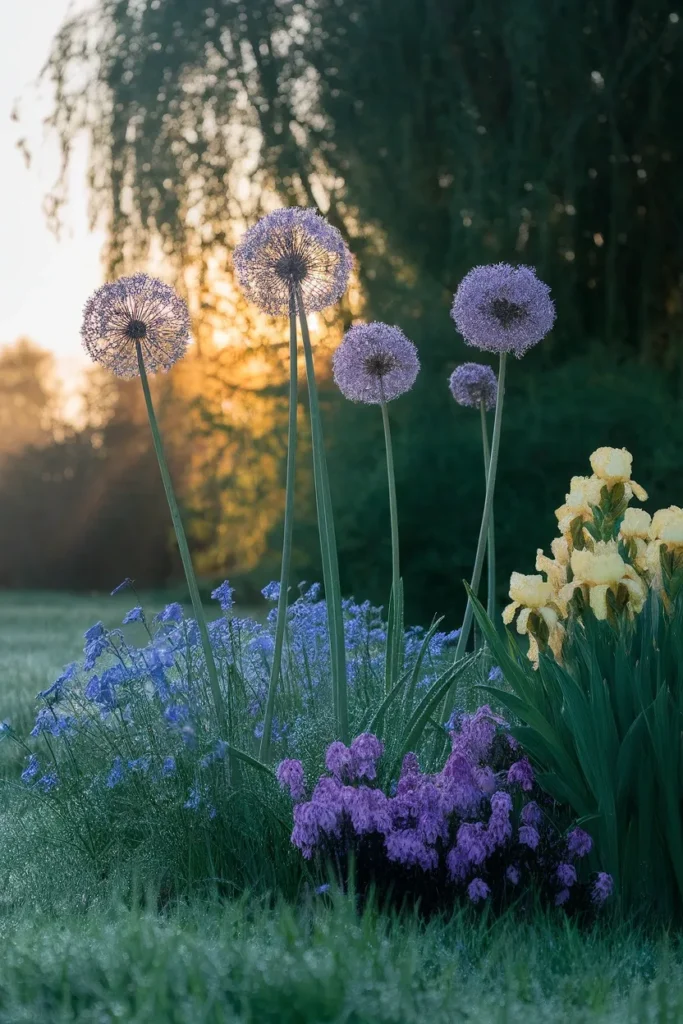
- Ornamental alliums. Purple globes on bare stems in mid to late spring, and the seed heads stay handsome into July, which is free structure. Plant the bulbs in fall, roughly three times as deep as the bulb is tall.
- Bearded iris. Rhizomes want to sit half-exposed at the soil surface. Bury them and you get leaves forever and flowers never. This is the most common iris mistake I see.
- Peony. Slow to establish, then functionally immortal. Plant the eyes no more than two inches deep in colder zones. A peony that never blooms is almost always planted too deep.
- Columbine. Self-seeds freely and cross-pollinates into odd new colors, which is very much the point.
- Bleeding heart. Arching pink lockets in part shade, then it goes dormant and vanishes by midsummer. Plan for the hole it leaves.
- Forget-me-not. A carpet of true blue under taller plants. It will spread. Let it.
- Hellebore. The earliest of the lot in mild zones, sometimes blooming while snow is still around the crown.
- Creeping phlox. A low mat of magenta or white that softens hard edges and path corners.
The Wave One trap
Bleeding heart and Oriental poppy both go fully dormant after flowering. They leave a bare patch right when the bed should be filling in. The fix is to plant a Wave Three perennial directly beside each one, so the later plant expands into the empty space instead of leaving a hole. Hosta, catmint or a young aster all do this job well.
I lost an entire square yard of border to this exact mistake before I figured it out. Two bleeding hearts, side by side, both gone by the first week of July, nothing behind them.
Wave Two: The June and July Bloomers Everyone Already Knows
This is the wave that sells the fantasy. It is also the wave people overplant, because these are the cottage garden flowers that show up in every photograph.
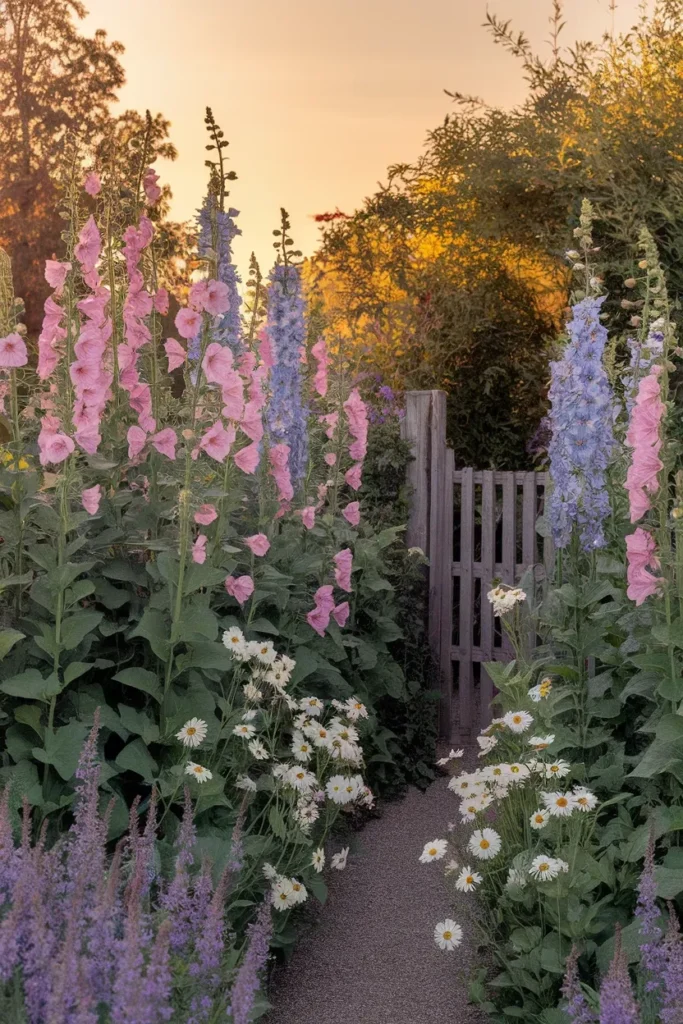
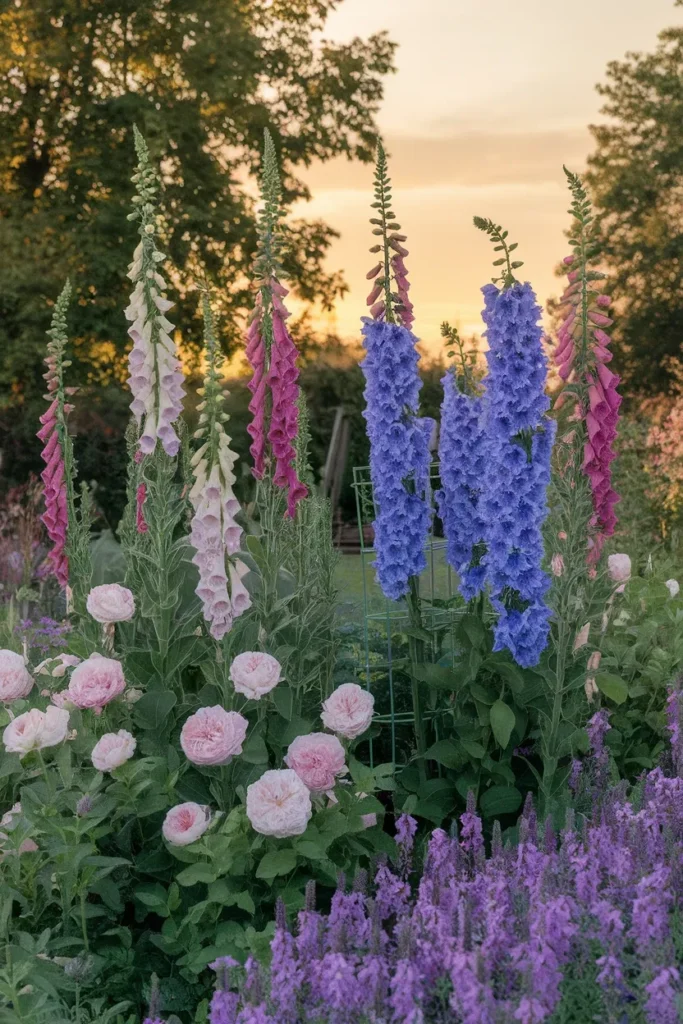
Wave Two is where the tall spires live, and vertical line is what makes a cottage border photograph well. Foxglove, delphinium, hollyhock, lupine. Get three or four of those going and the bed suddenly has architecture.
The Wave Two core list
- Foxglove. Two to five feet of speckled bells. Biennial in most cases, which matters enormously (see the year-one section below).
- Delphinium. The truest blue in the garden and the biggest diva. Needs staking, hates humid heat, worth it anyway.
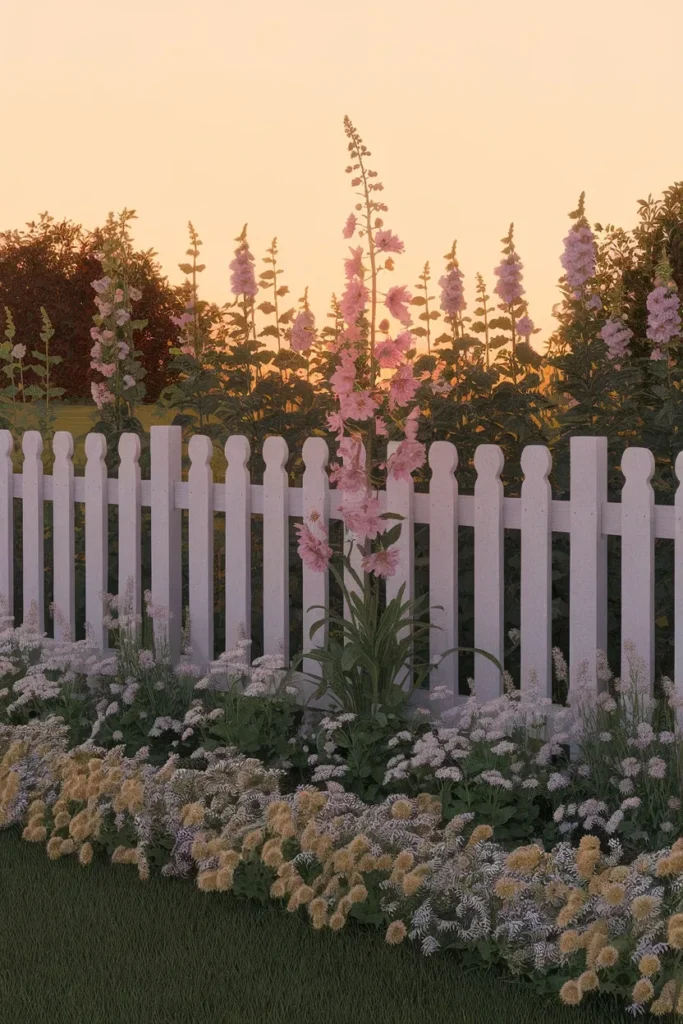
- Hollyhock. Six to eight feet against a fence or wall. Also usually biennial. Rust is the common problem, so water at the soil line and not overhead.
- Shrub and climbing roses. A modern repeat-blooming shrub rose technically belongs to Wave Two and Wave Three both, since it flushes again in late summer.
- Catmint (Nepeta). Shear it back hard after the first flush and it reblooms into fall. One of the best value plants in the whole border.
- Lavender. Wants sharp drainage far more than it wants rich soil. Kill it with kindness and it rots.
- Shasta daisy. White, cheerful, deadhead it and it keeps going.
- Sweet pea and larkspur. Cool-season annuals, direct sown, and they fade once real heat lands. Sow them early.
- Salvia and veronica. Purple vertical spikes, tough, and both rebloom after a shear.
One tall plant per three feet, no more
Here is a spacing rule that saved my borders. In a bed under five feet deep, plant no more than one over-four-foot plant per three linear feet of bed. Pack them tighter and the whole back row shades itself, gets leggy, and falls forward across the path in the first real thunderstorm.
Grow-through supports beat stakes. Gardener’s Supply sells sturdy grow-through rings in the twenty to forty dollar range depending on size, and you set them over the crown in early spring so the plant grows up through the grid and hides it. Bamboo stakes and twine work too, they just look like bamboo stakes and twine.
Wave Three: The Late Season Flowers Most Cottage Gardens Forget
Almost every cottage garden plant list you will find online is spring and early summer heavy. Count them yourself sometime. That imbalance is exactly why so many borders look tired by the third week of August.
Wave Three is the difference between a garden you enjoy for six weeks and one you enjoy for six months. It is also the wave that carries your pollinators through their hungriest stretch of the year.
The Wave Three core list
- Purple coneflower (Echinacea). Blooms July through September, then the seed heads feed goldfinches all winter if you leave them standing.
- Black-eyed Susan (Rudbeckia). Gold from midsummer into October. ‘Goldsturm’ is the workhorse.
- Garden phlox (Phlox paniculata). Fragrant clouds of pink and white in August. Choose mildew-resistant cultivars and give it air circulation.
- Japanese anemone. Tall pink or white saucers in September when almost nothing else is starting. Deeply underused.
- Sedum ‘Autumn Joy’. Broccoli-green heads in July that flush dusty rose in September and dry to russet. Three seasons from one plant.
- Russian sage. Hazy lavender-blue from midsummer to frost, and it wants poor soil and full sun.
- Aster and Joe Pye weed. The genuine finish line. Asters carry October in most zones.
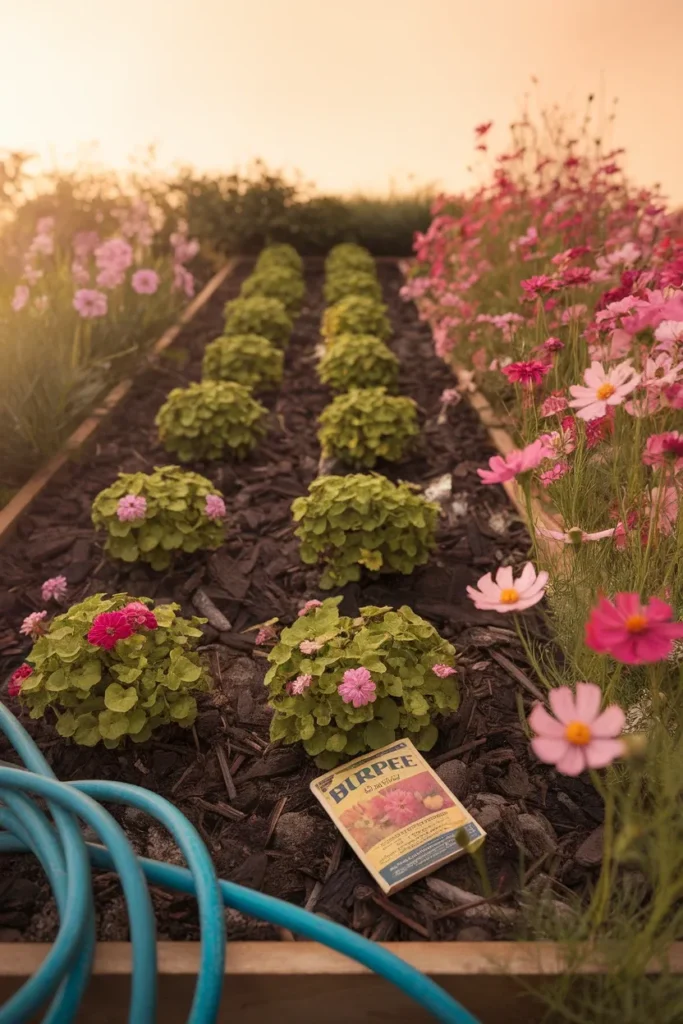
- Dahlia, zinnia and cosmos. Annuals that peak exactly when the perennials are fading. A Burpee zinnia packet runs about six dollars and will out-bloom almost anything else per dollar spent.
The August audit
Try this in year one. Walk your bed on August 15 with your phone and photograph anything currently in flower. If you count fewer than four things blooming, your Wave Three is understaffed and you should spend the fall adding asters, anemones and sedum rather than more spring bulbs.
It is an uncomfortable little exercise. It is also the fastest diagnostic I know.

Nine Bridge Plants That Cover Two Waves at Once
Some cottage garden flowers refuse to stay in one lane, and those are the ones worth paying up for. A bridge plant covers the seam between two waves, which is precisely where borders usually fall apart.
If your budget only stretches to a handful of one-gallon perennials this season, and at Home Depot or Lowe’s those run roughly fifteen to thirty dollars each, spend it here first.
- Catmint ‘Walker’s Low’. May into October with one hard shear in July. The most reliable bridge plant there is.
- Salvia ‘May Night’. Wave One into Wave Two, and it reblooms if you cut it back.
- Coreopsis ‘Moonbeam’. June to frost, pale lemon, threads through everything without bullying.
- Repeat-blooming shrub roses. Early summer flush, brief rest, second flush in September.
- Daylily. Choose a rebloomer like ‘Stella de Oro’ and you get flowers from June well into fall.
- Yarrow. Long flat flower heads that hold color for weeks and dry standing.
- Veronica ‘Royal Candles’. Blue spikes in June, again in late summer after a trim.
- Zinnia. Sown after last frost, it flowers from July until the first freeze kills it outright.
- Cosmos. Direct sow it, ignore it, get four months of bloom. Poor soil actually gives better flowers than rich soil.
Notice how many of those want a midsummer shear. That single chore, one afternoon in early July with a pair of hedge shears, buys you more late-season bloom than any fertilizer ever will. Espoma Bio-tone at planting time helps the roots settle in, but shearing is the lever that moves bloom time.
How to Lay Out Cottage Garden Flowers So Nothing Looks Bare
Plant selection gets all the attention. Arrangement is what people actually see.
Plant in odd-numbered drifts, not singles
Three of one plant reads as intentional. One of nine different plants reads as a collection. For beds under twenty square feet use threes, and go to fives and sevens as the bed grows.
Repeat one plant down the whole run
Pick a single mid-height plant, catmint and yarrow both work beautifully, and repeat it every four to six feet along the border. Your eye follows the repetition and reads the chaos as designed. This is the cheapest design trick in the entire hobby and almost nobody uses it.
Layer by height, then break the rule once
Short in front, medium in the middle, tall in back. Then pull one tall plant forward to the front edge, deliberately, once per bed. A single hollyhock or verbena bonariensis standing out of place is what keeps the border from looking like stadium seating.
Mind the shade
Most cottage garden flowers want six or more hours of direct sun, but the north side of a fence or the strip under a mature maple will not deliver that. Foxglove, bleeding heart, astilbe, hosta and hellebore all work in part shade. For the genuinely dark corners, our shade garden ideas walk through plants that hold up on three hours of sun or less.
Amend once, properly
Cottage borders are dense, so the soil works hard. Turn two to three inches of compost or a bagged garden soil such as Miracle-Gro Garden Soil into the top eight inches before anything goes in the ground. Doing it right one time beats top-dressing every spring for a decade.
Cottage Garden Flowers by USDA Zone, 5 Through 9
Zone is the first filter, not the last. Before you order anything, look up your USDA plant hardiness zone by zip code, because the 2023 map moved a great many US gardeners half a zone warmer than the version they grew up with.
| Zone | Works reliably | Struggles | Watch out for |
|---|---|---|---|
| 5 | Peony, allium, catmint, coneflower, aster, phlox, Siberian iris | Lavender in wet winters, some hydrangeas | Late May frosts on emerged growth |
| 6 | Nearly the entire classic list | Very little | Delphinium fades in a hot July |
| 7 | Roses, daylily, coneflower, salvia, Russian sage | Peony chill hours, delphinium | Humidity and mildew on phlox |
| 8 | Roses, salvia, yarrow, coneflower, Japanese anemone | Peony, lupine, most delphinium | Summer heat stalling bloom |
| 9 | Salvia, yarrow, roses, daylily, cosmos, zinnia | Anything needing winter chill | Treat spring bulbs as annuals |
Two zone-specific notes that catch people out. Peonies need a real winter, so in Zone 8 and warmer they often produce foliage and no flowers, and in Zone 9 they are effectively a lost cause without pre-chilled roots. And lavender fails far more often from wet winter soil than from cold, which is why Zone 5 gardeners on clay lose it while Zone 5 gardeners on gravel keep it for fifteen years.
What Actually Goes Wrong in Year One
Every guide shows you the finished border. Almost none of them tell you what year one looks like, which is honestly a bit thin and patchy and nothing like the photos.
The biennial trap
Foxglove, hollyhock, sweet William and Canterbury bells are biennials. Sown from seed, they make a rosette of leaves the first year, overwinter, and flower the second year. Every top-ranking cottage garden flowers list includes them without mentioning this, and it is the single most common reason a first-year cottage garden disappoints.
Two ways around it. Buy first-year plants in bloom from the nursery, Bonnie Plants and most garden centers carry them in four-inch pots from spring onward. Or sow seed two years running, so that from year three forward you always have a flowering crop and a rosette crop overlapping.
My contrarian take: skip the wildflower seed mix
Wildflower and “cottage garden” seed mixes are marketed directly at exactly this project, and I think they are the worst possible way to start one.
Three reasons. Most mixes are heavily weighted toward cheap fast annuals, so year two is mostly bare. Germination is uneven, which means you get dense patches and empty ones rather than the even froth on the packet photo. And you cannot tell a cottage flower seedling from a weed seedling at two weeks old, so you either weed out your own flowers or you let genuine weeds establish. I have done both.
Buy fewer plants as actual plants. Add seed later, once you can recognize what belongs.
Leave thirty percent empty
This one feels wrong and it is right. In year one, plant to about seventy percent of your bed’s capacity. Perennials roughly double in width by year three, and a bed packed full at planting is a bed you will be dividing and thinning by year two. Fill the gaps with annuals for the first two summers, zinnias and cosmos cost almost nothing, and let the perennials grow into their real spacing.
Patience is cheaper than division.
A Simple Season-Long Maintenance Rhythm
Cottage garden flowers ask for less upkeep than their reputation suggests. You do not need a schedule. You need four moments.
Early spring. Cut back last year’s standing stems, work in compost, set grow-through supports over the plants that will need them before they get tall. Doing this in March takes twenty minutes. Doing it in June takes an hour and damages roots.
Late spring. Direct sow your cool-season annuals, larkspur and sweet pea, as early as the soil can be worked. They resent transplanting and they resent heat.
Early July. The big one. Shear catmint, salvia, veronica, and any spent Wave One perennial back by roughly a third. Deadhead the roses and shastas. This single afternoon is what triggers the second flush that carries you through Wave Three.
Late fall. Leave the coneflower and rudbeckia seed heads standing for the birds and for winter interest, cut back anything that has gone mushy, plant next spring’s bulbs. Six weeks before your ground freezes is the window.
That is the whole calendar. Four touch points, and the border mostly runs itself in between.

Frequently Asked Questions About Cottage Garden Flowers
What is a cottage garden?
A cottage garden is an informal, densely planted flower garden that grows in the space between the house and the lawn, mixing perennials, annuals, biennials and often edibles with no strict spacing or symmetry. It originated with English cottagers who packed useful and pretty plants into small plots. The modern version keeps the abundance and adds a bit of structure, usually a defined edge and a path.
What are the best perennials for cottage gardens?
Peony, catmint, coneflower, garden phlox, salvia, shasta daisy, bearded iris, yarrow, daylily and Japanese anemone. Those ten cover all three bloom waves and are hardy across most of Zones 5 through 8. If you buy only three, make them catmint, coneflower and phlox.
What are the most cottagecore flowers?
Foxglove, hollyhock, sweet pea, delphinium, climbing roses, bleeding heart, forget-me-not and cosmos. They share the traits that read as storybook: soft colors, tall or nodding shapes, and an old-fashioned look that predates modern hybridizing.
What are the best low maintenance cottage garden plants?
Catmint, yarrow, coneflower, black-eyed Susan, sedum ‘Autumn Joy’, Russian sage and daylily. All seven tolerate drought once established, resist deer to varying degrees, and need nothing more than an annual cutback. Skip delphinium and lupine if low maintenance is the priority, since both need staking and replacement.
What colors work in a cottage-style garden?
Soft and layered rather than high contrast. Pinks, blues, purples, creams and whites are the classic core, with white doing the heavy lifting as a separator between stronger colors. Adding one warm accent, apricot or soft yellow, keeps the palette from reading cold. Pure primary red and orange are harder to place, though a single repeated pop can work.
How do I keep my cottage garden blooming all summer?
Balance your planting across three bloom waves using the 3-4-3 split above, add bridge plants that flower across two waves, and shear the rebloomers back by a third in early July. Most all-season failure comes from an understaffed Wave Three, not from bad soil.
How do you plan a cottage garden from scratch?
Define the bed shape and install the edge first, amend the soil, then choose plants by bloom wave rather than by plant type. Plant to seventy percent capacity in year one and fill the gaps with annuals. Repeat one mid-height plant along the whole length so the eye reads order underneath the abundance.
Start With One Bed, Not the Whole Yard
The gardeners who end up with the borders worth photographing are almost never the ones who tore out the entire lawn in April. They are the ones who did one eight-foot stretch properly, learned what their soil and light actually do, and then extended it the following year.
So pick your bed. Sketch the 3-4-3 split on the back of an envelope, then choose your cottage garden flowers by wave rather than by whatever happens to be flowering at the nursery that weekend. Buy three Wave Three plants before you buy a single tulip. And define the edge before you plant anything, because a clean edge does more visual work than any single flower. Our garden edging ideas are a good place to steal a look you can install in a weekend.
Then go stand in it in August. That is when you find out whether the plan worked, and that is the only review that counts.
Which wave is your garden missing right now? Have a look out the window before you answer.