The Beginner’s Cozy Backyard Lawn Guide
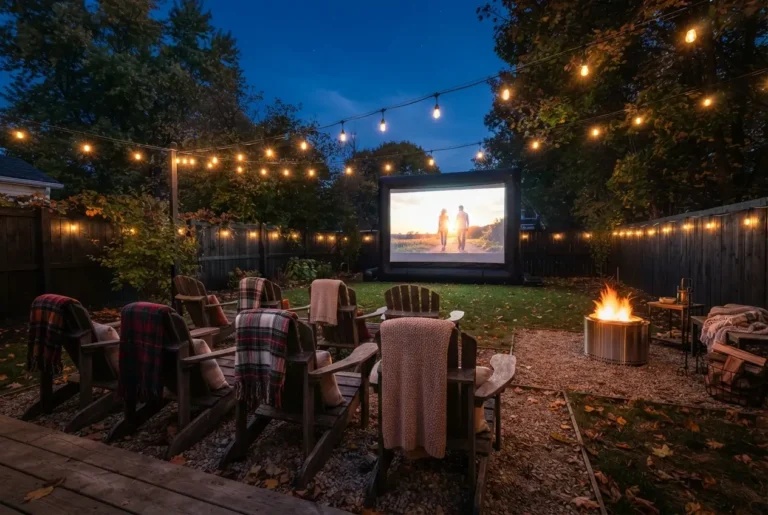
Most yards have a lawn. Very few have a lawn anyone wants to sit on after dinner. These cozy backyard lawn ideas start with the grass itself. Then they add the few things that turn an open green rectangle into a place people drift toward: a soft edge, one spot to sit, low warm light, and a reason to stay after sunset.
We kept it beginner-sized. No regrading, no irrigation trenches, no contractor. Most of it fits into two or three weekends, with a budget that starts around $35 for edging and tops out near $300 if you add a smokeless fire pit.
You’ll also get our layout rule, the 60-30-10 Lawn Split, which tells you how much grass to keep open and how much to hand over to beds and a gathering spot.
And because late September is prime seeding time for many lawns, there’s a zone-by-zone timing chart near the end. Start now and the grass looks its best right when fire pit season arrives.
The 60-30-10 Lawn Split: How Much Grass to Keep
A big, unbroken lawn reads as a field. Your eye runs straight to the back fence with nothing to stop it, so the yard feels exposed even when it looks tidy.
Rooms feel comfortable because they have edges and a place to land. Grass can do the same job with one simple ratio.
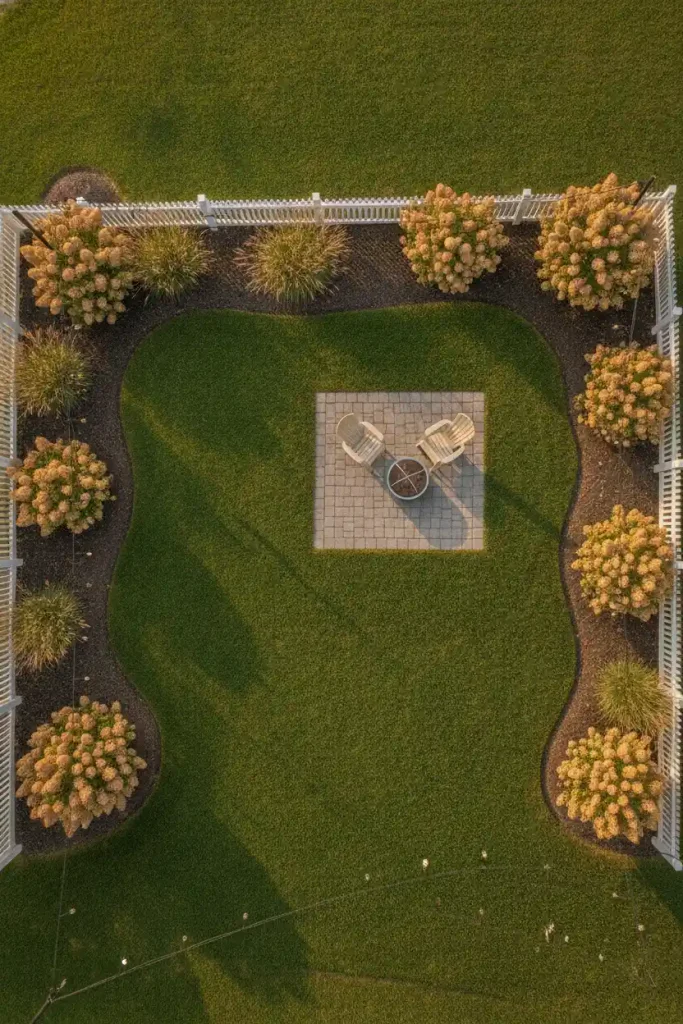
The 60-30-10 Lawn Split gives 60 percent of the yard to open grass, 30 percent to soft edges like beds, borders, and a path, and 10 percent to one anchor spot where people sit.
Here’s the math on a common 30 x 40 ft backyard (1,200 sq ft):
- 720 sq ft stays open lawn for games, dogs, and a spread-out blanket.
- 360 sq ft becomes curved beds and a path along the fence.
- 120 sq ft, about a 10 x 12 ft area, becomes the anchor spot.
Smaller yard? A 20 x 25 ft space works out to 300, 150, and 50 sq ft. That last number is roughly 7 x 7 ft, which still fits two chairs and a side table.
Plenty of small backyard lawn ideas online tell you to rip the grass out entirely. We’d hold off. A trimmed-down lawn costs less than pavers, feels softer than gravel, and gives kids and dogs room to run. Shrink the outline first and live with it for a season.
📏 The 60-30-10 Lawn Split
Example: a 30 x 40 ft yard keeps 720 sq ft of lawn, 360 sq ft of beds, and a 10 x 12 ft anchor spot.
Grow Grass You Actually Want to Sit On
No top-ranking backyard article talks about this, yet it’s the whole point. A lawn only feels inviting if it’s pleasant under bare feet and a blanket.
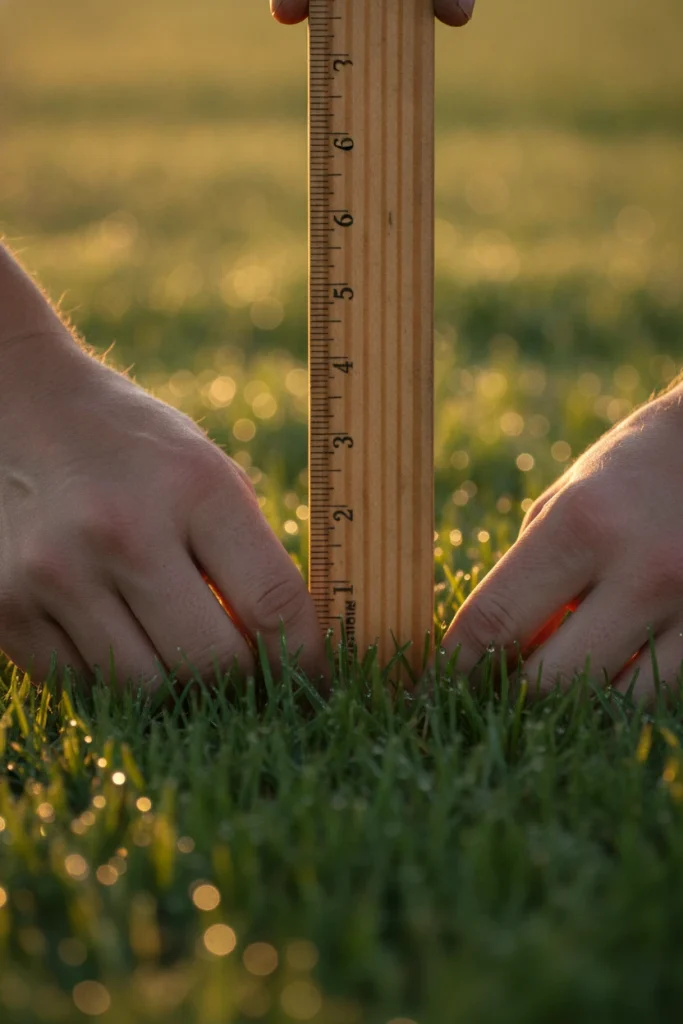
Height is the easy win. Taller blades feel softer, shade out weeds, and grow deeper roots. The mowing height recommendations from Illinois Extension land at 2.5 to 3 inches for most home lawns, and the same page explains the one-third rule: never cut off more than a third of the blade at once.
Now check your blade. A dull mower blade tears the tips instead of slicing them, and torn tips turn brown and scratchy. The whole lawn looks faded even when it’s healthy.
Run the barefoot test this weekend. Walk the lawn without shoes an hour after mowing. If it prickles, raise the deck one notch and sharpen the blade before the next cut.
Leave the clippings where they fall. Illinois Extension notes that they break down fast, return nitrogen to the lawn, and don’t cause thatch.
Your grass type sets the range, so find yours below.
| 🌿 Grass | Where it’s common | Mow height* | Feel underfoot |
|---|---|---|---|
| Kentucky bluegrass | Cool-season, northern yards | 2 to 3 in | Soft, fine blades |
| Tall fescue | Cool-season and transition zone | 2.5 to 3.5 in | Coarser, handles heavy foot traffic |
| Perennial ryegrass | Cool-season seed mixes | 2 to 3 in | Fine and glossy |
| Zoysiagrass | Warm-season and transition zone | 1 to 3 in | Dense, carpet-like |
| Bermudagrass | Warm-season, southern yards | 1 to 2 in | Wiry when kept short |
*Mowing heights from Illinois Extension’s turfgrass table. Set the deck at the top of the range for a softer lawn.
Water Deep, Water Early, and Skip the Evening Soak
Shallow daily sprinkling grows shallow roots. Shallow roots mean a lawn that crisps by August and feels like straw under a blanket.
Deep, less frequent watering fixes that. The EPA WaterSense watering tips put most yards at about 1 inch of water a week, counting rain, and they share a free way to measure what your sprinkler actually puts down.
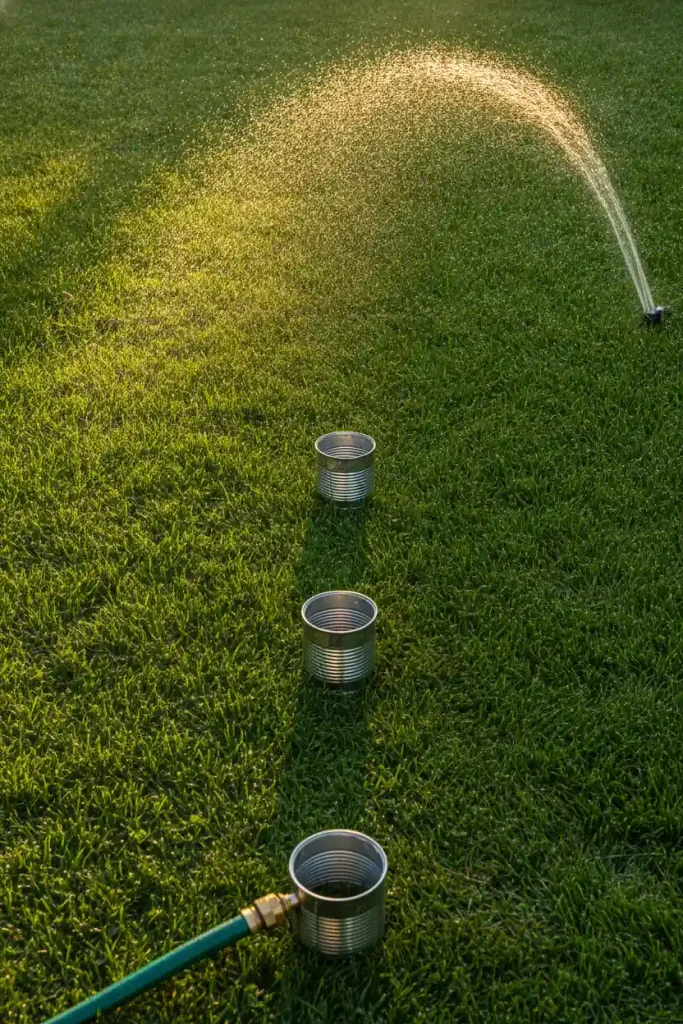
🥫 The Tuna Can Test
Set three or four empty tuna cans around the lawn, some close to the sprinkler and some near the edges.
Run the sprinkler and time how long the cans take to hold about half an inch of water.
Water for that long twice a week, then adjust for rain and heat waves.
Timing matters for hosting, too. Water early in the morning, since midday sun evaporates a lot of it before it reaches the roots.
Morning water also gets the whole day to dry. Nobody wants to spread a blanket on damp grass at 7 p.m.
If water starts to pool, turn it off. Clay soil and slopes soak water up slowly, and EPA suggests splitting the run into shorter rounds with breaks in between.
Simple Backyard Lawn Ideas for Softer Edges
A lawn with a clean, curved edge looks planned. Give the same lawn a ragged line into the weeds and it looks forgotten, no matter how green the grass is.
Pick one of three edges, cheapest first:
- Spade-cut trench edge. Free. Slice a 3 to 4 inch deep V along the bed line with a flat spade, then recut it a couple of times a season.
- No-dig plastic edging. The Dimex EasyFlex 40 ft kit was $32.99 at Walmart when we checked this month. It pins in with stakes, so there’s no trench.
- Brick or paver mowing strip. Set it flush with the soil so one mower wheel rides on top. It costs more up front, and you never hand-trim that line again.
Our garden edging ideas that sharpen any bed walk through each install with more materials to compare.
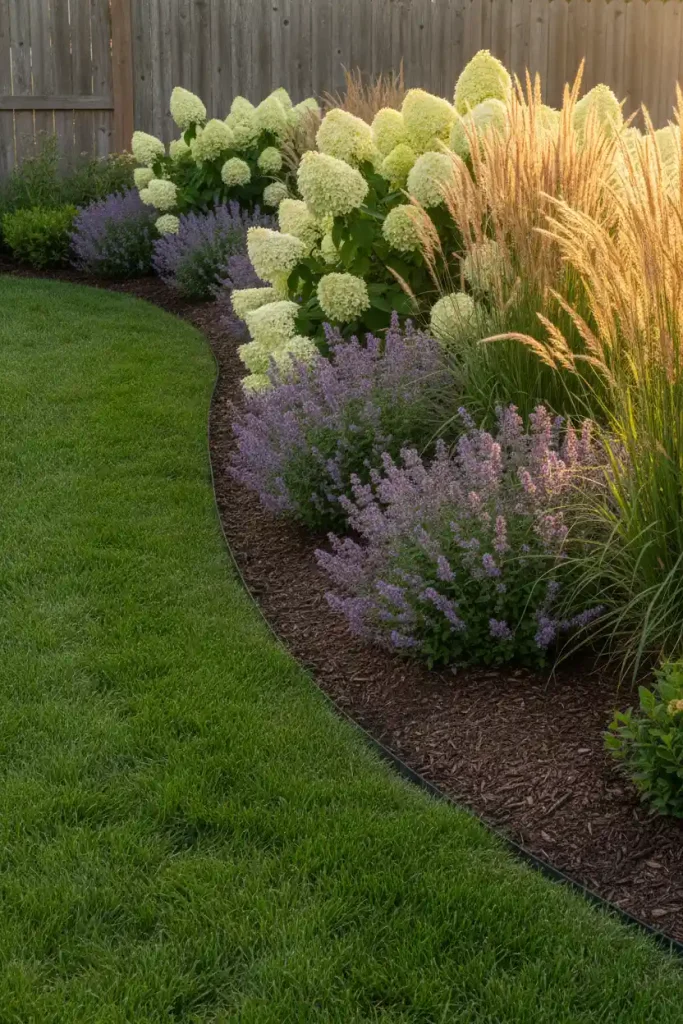
Next, plant your 30 percent. Choose three plants and repeat them down the border instead of buying one of everything. Panicle hydrangea, catmint, and feather reed grass make a strong trio across most of Zones 5 to 8. In Zone 9, read the tag for heat tolerance before you buy.
Keep bed lines in gentle curves. If the mower can’t follow a curve in one smooth pass, it’s too tight.
Draw wide, lazy curves the mower can follow in one pass.
Repeat three plants in groups down the whole border.
Lay out the bed line with a garden hose before you cut.
Tight wiggles that force you to hand-trim every visit.
One of every plant at the garden center.
Edging left proud of the soil, where it catches the mower blade.
Backyard Lawn Seating: Pick One Anchor Spot
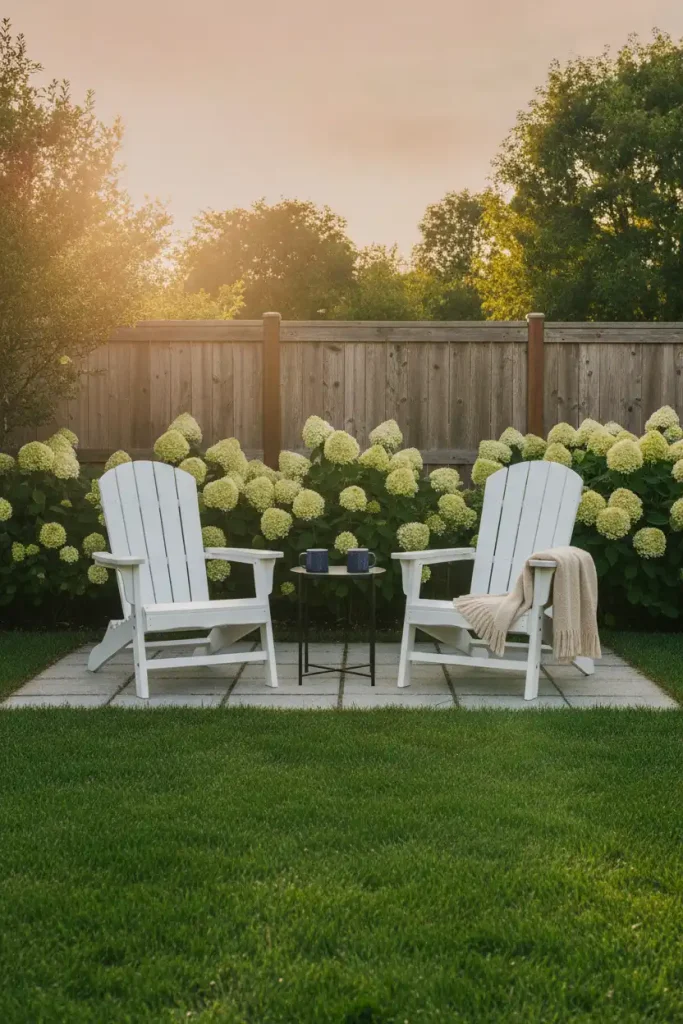
That 10 percent anchor spot does most of the work. It’s where people end up after dinner, so give it a back and a view.
Put it at the edge of the lawn, never the middle. A fence, hedge, or planted border behind the chairs makes the spot feel sheltered, and the open grass becomes the view.
Three ways to furnish it, by budget:
- Around $60: a waterproof-backed picnic blanket and two outdoor floor cushions with removable covers. You pack it all up at night.
- About $130: the Vivere 9 ft Double Cotton Hammock with its steel stand, listed at $129.99 on the brand’s site. It needs no trees and keeps you off damp grass.
- About $400 to $600 for a pair: POLYWOOD Classic Adirondack chairs run $199 to $299 each on polywood.com. They’re made from recycled plastic, so they can stay out through rain.
Chair legs sink into soft lawn and leave dents. Set the chairs on 16 x 16 inch pavers laid flush with the soil and they stay level all season.
For more low-cost ways to finish the spot, our roundup of cozy backyard ideas under $200 covers texture, scent, and sound.
🪑 Your anchor spot is ready when…
Light the Lawn Low and Warm
Overhead floodlights make a lawn feel like a parking lot. Warm, low, scattered light does the opposite. It lights the people and leaves the far grass in soft shadow.
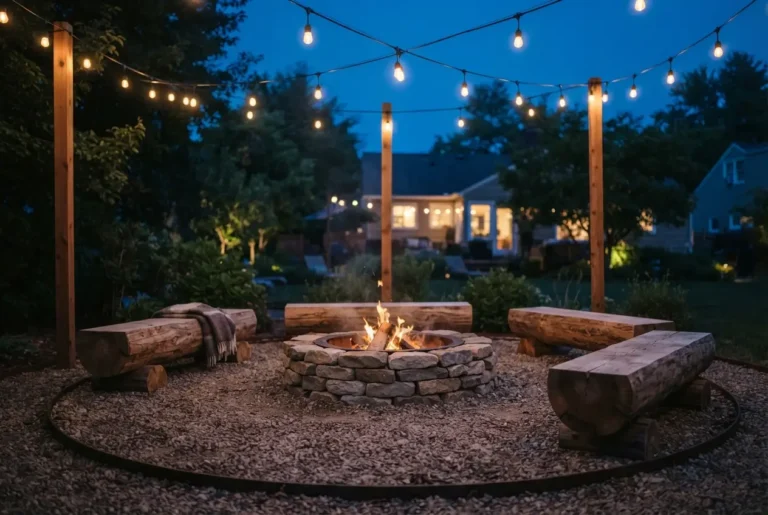
Start over the anchor spot, not the whole yard. One 48 ft strand of Brightech Ambience Pro LED string lights, usually $80 to $100, is rated 2700K soft white, a warm tone close to candlelight. Zigzag it above the chairs and the spot suddenly has a ceiling.
No trees or eaves nearby? Our walkthrough on how to hang string lights without any trees covers poles in planters, fence mounts, and guide wires.
Then trace the soft edge with solar path stakes set every few feet along the border. They need no wiring, and after dark they show everyone where the lawn stops and the beds begin.
Use outdoor-rated, UL-listed lights and cords on a GFCI outlet. Anything beyond plugging into an existing outlet is a job for a licensed electrician.
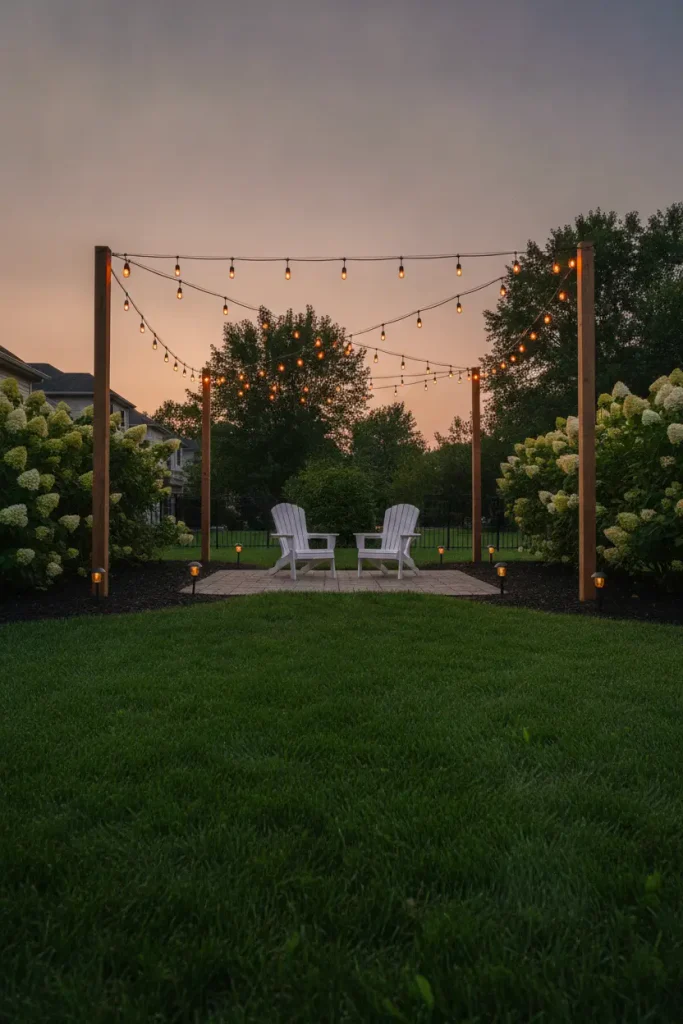
A Fire Pit on Grass Without Scorching It
A fire pit is the reason most people stay outside past 9 p.m. It’s also the fastest way to leave a dead brown circle in your lawn.
Direct heat cooks the grass and the roots under it. You have two fixes:
- Lift it. Solo Stove sells a stand designed to raise its fire pits off surfaces like grass and decks. The Bonfire 2.0 and Stand bundle was listed at $299.99 on solostove.com this month.
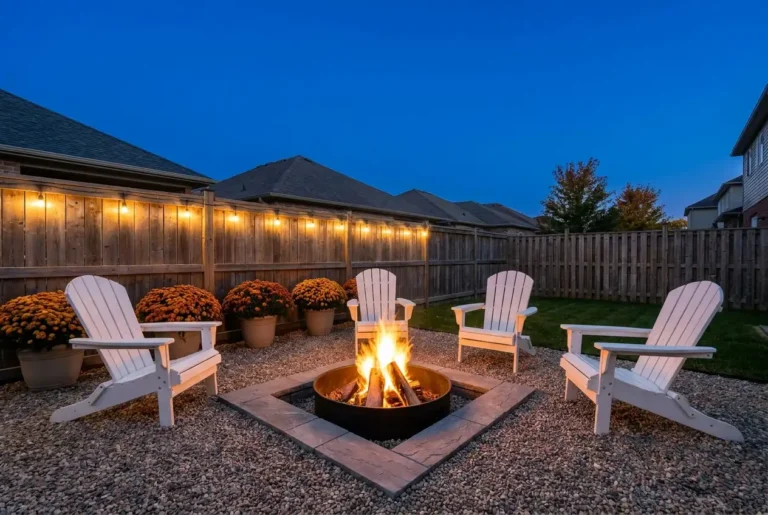
- Give it a pad. Build a small gravel or paver pad inside the anchor spot and keep the fire pit on it. Chairs can circle it on their own pavers.
Watch the border, too. Feather reed grass and other ornamental grasses dry to papery tan in fall, so keep the fire pit well away from the beds.
⚠️ Watch Out
Check your city’s burn rules before you light anything, keep the clearance from structures and branches that your fire pit’s manual and local code call for, and never leave a fire unattended. 🔥
Keep the Comfy Stuff From Killing the Grass
Here’s our contrarian take: skip the outdoor rug on the lawn.
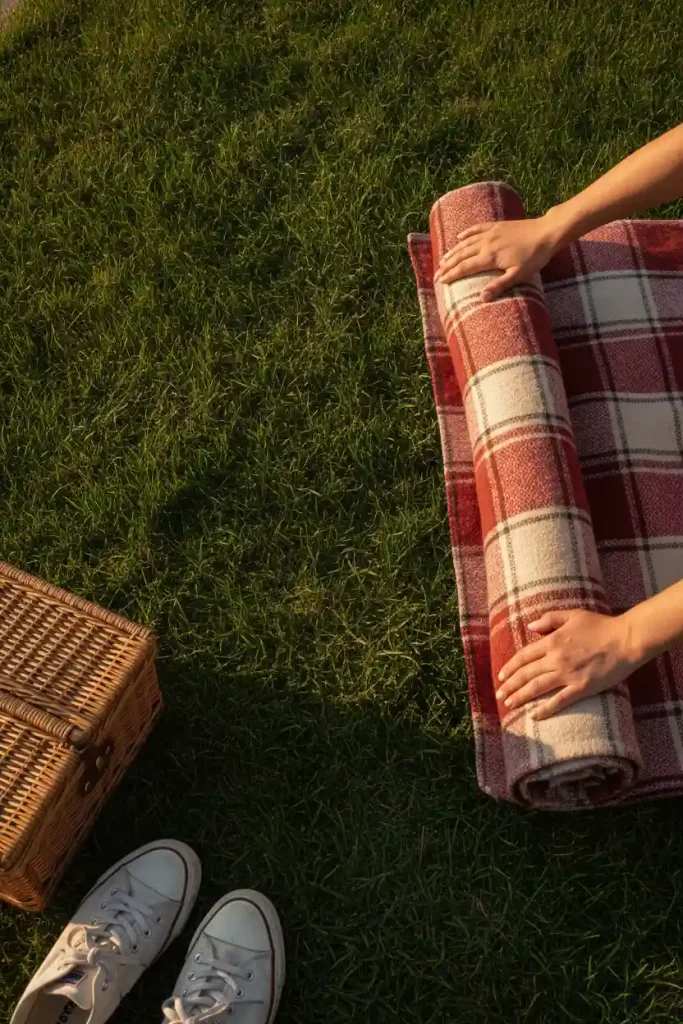
Rugs look great in photos. In real life, a rug left on grass blocks sunlight and traps moisture, and in summer heat the grass underneath can yellow within days. Lift it in August and you’ll find a pale rectangle that takes weeks to come back.
Put the rug on the fire pit pad instead. On the lawn, use a picnic blanket that gets rolled up every night.
Anything else parked on grass needs the same treatment:
- Slide chairs, hammock stands, and planters a foot or two every week, or give them pavers.
- Move kids’ play gear around the open 60 percent so no single patch takes all the traffic.
- Keep string light poles in planters or on the pad, not staked mid-lawn where the mower has to dodge them.
Rug and chairs parked in one spot all summer. By August there’s a pale, flattened patch right where everyone sits.
Blanket rolled up nightly, rug moved to the pad, chairs nudged weekly. The grass stays even and green into fall.
Fall Is the Best Time to Start
Late September is a smart time to begin. The heat is breaking, fire pit weather is coming, and for most cool-season lawns this is seeding season.
K-State Research and Extension calls early September the best window for seeding cool-season grass. By late September, yards in Zone 5 and the colder parts of Zone 6 are cutting it close, so patch small bare spots now and save big reseeding jobs for next August. Many Zone 7 lawns still have a few weeks.
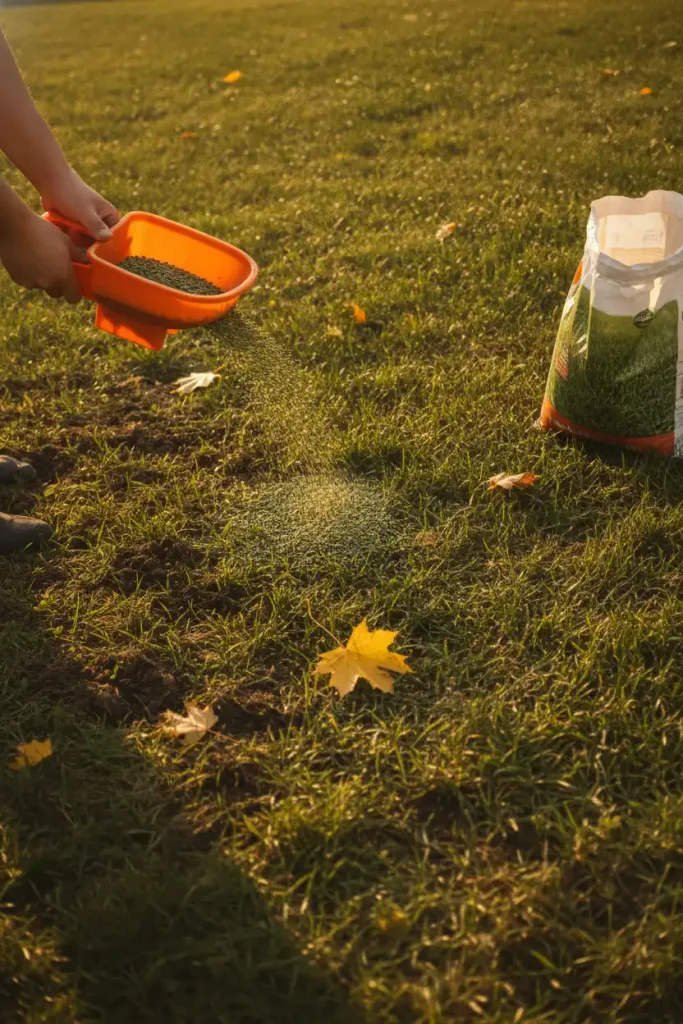
For thin patches, a 7 lb bag of Scotts Turf Builder Sun & Shade mix (under $60 at Walmart this month) handles a lot of small repairs. Rake the bare spot, spread the seed, press it in with your feet, and keep the soil surface damp until it sprouts.
Warm-season lawns follow different rules. Bermuda and Zoysia slow down and go tan after frost, so fall isn’t their seeding time. Some Southern homeowners overseed with perennial ryegrass for winter green, which is optional and needs regular watering.
First frost dates vary a lot by county. Before you pick a date, check the USDA Plant Hardiness Zone Map and call your county extension office.
| 🗺️ Zone band | Typical lawn grass | Your fall move | Payoff |
|---|---|---|---|
| Zones 5 to 6 | Kentucky bluegrass, fine fescue, tall fescue | Patch bare spots now. Plan big reseeding for late August next year. Keep mowing near 3 in until growth stops. | Thicker turf next spring |
| Zone 7 | Tall fescue, some Zoysia and Bermuda | Seed tall fescue through September. In many areas the window runs into early October. | Green lawn for fire pit season |
| Zones 8 to 9 | Bermuda, Zoysia, St. Augustine | Hold off on fertilizer and let it go dormant. Ryegrass overseeding is optional. | Winter color if you want it |
Typical ranges only. Confirm local dates with your county extension office.
Frequently Asked Questions
How do I make my backyard look cozy?
Give it edges, one place to sit, and low warm light. Frame the lawn with curved beds. Set chairs or a hammock at the lawn’s edge with something tall behind them, then hang 2700K string lights over that spot. Those three moves make a yard feel like an outdoor room instead of an open field, even before you buy anything new.
How do I make my backyard look nice for cheap?
Start with the free fixes: mow at about 3 inches, sharpen the blade, and spade-cut a clean edge along every bed. After that, a 40 ft no-dig edging kit costs around $33, solar path stakes are inexpensive, and a picnic blanket with two floor cushions furnishes an anchor spot for about $60. Crisp edges do more for looks than new plants.
What are some new backyard ideas for 2026?
Pinterest’s top search refinements for backyard ideas this fall center on budget and DIY builds, bohemian outdoor spaces, and fire pit areas. For lawns, “no grass” and “half grass” layouts keep showing up. A good middle path is to shrink the lawn with the 60-30-10 Lawn Split instead of ripping it all out.
How do I make my backyard whimsical?
Add a few playful, personal touches rather than a lot of decor. A stepping-stone path winding across the grass, a cotton hammock, mismatched lanterns, or a small bench tucked into the border all work. Keep the base tidy with sharp lawn edges, so the fun pieces look intentional instead of cluttered.
Can you put a fire pit on grass?
Yes, but not directly on the turf. Heat kills both the grass and its roots under the fire pit. Raise it on a stand built for that purpose, or set it on a gravel or paver pad at the edge of the lawn. Check your city’s burn rules first and follow the clearances in your fire pit’s manual.
What is the softest grass to sit on?
Kentucky bluegrass and fine fescues are known for fine, soft blades, and Zoysia grows into a dense, carpet-like turf in warmer zones. Mowing height matters as much as species. Most lawns feel softest at 2.5 to 3 inches, cut with a sharp blade, with no more than one-third of the blade removed at a time.
Should a small backyard keep its lawn or go no-grass?
If kids or dogs use the yard, keep some grass. It costs less than pavers and feels softer than gravel. Shrink it instead: leave about 60 percent as open lawn, give 30 percent to beds and a path, and pave only the small anchor spot. You mow less and still have somewhere soft to sit.
Your First Weekend on the Lawn
You don’t need a new yard. You need the one you have to feel finished.
Most of these cozy backyard lawn ideas cost little or nothing. Raise the mower deck, sharpen the blade, cut one clean edge, and choose the corner where your chairs will live. Do those four things this weekend.
As the evenings cool, add warm light over the anchor spot and a pad for the fire pit. By first frost, the lawn should look like a place people choose to sit, not just a patch of grass to cross.
Save this to your backyard board so the mowing chart and zone timing are handy next spring. 🌿