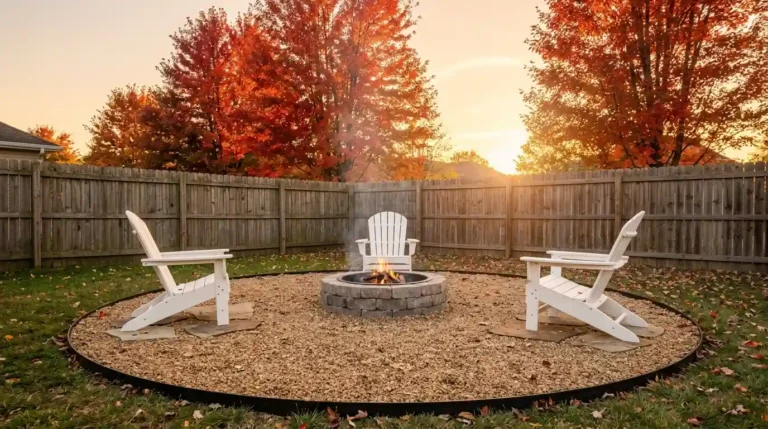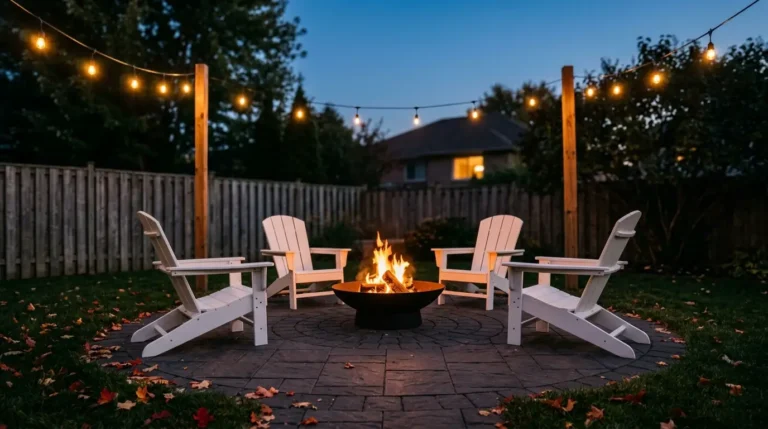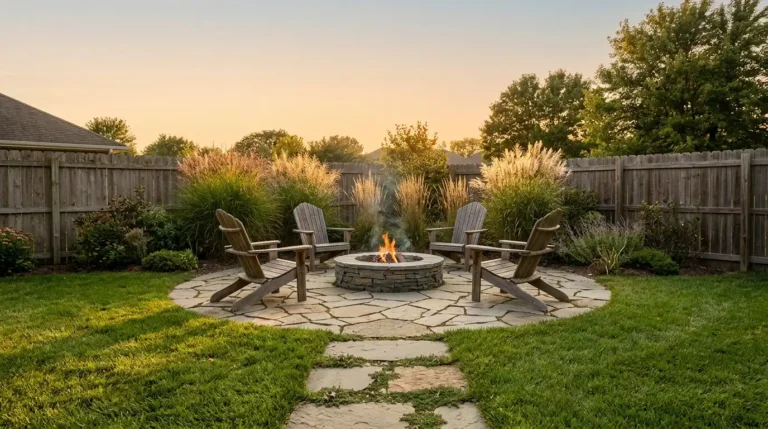
How to Create a Gravel Cozy Backyard (Step by Step)

Most gravel cozy backyard ideas look great in a photo and fall apart by July. Chairs tip. Stones wander into the lawn. Weeds pop up through a thin, patchy layer that never felt solid underfoot in the first place.
The fix isn’t fancier gravel. It’s what goes under it, and how deep.
Below, you’ll build a gravel seating corner the way it actually holds up. That means a firm crushed stone base, a thin top coat of pea gravel, and steel edging that stays put. Then you add warm light so you use the space after dark. You’ll get real quantities and prices for a 12 by 12 foot corner. You’ll also get a fast way to pick the right stone, plus a fix for the wobbly chair problem idea galleries never mention.
Plan on one long weekend. Digging is the hard part. Everything after it feels like decorating.
We’ll start with the one rule that decides if your gravel feels solid or like walking on a beach.
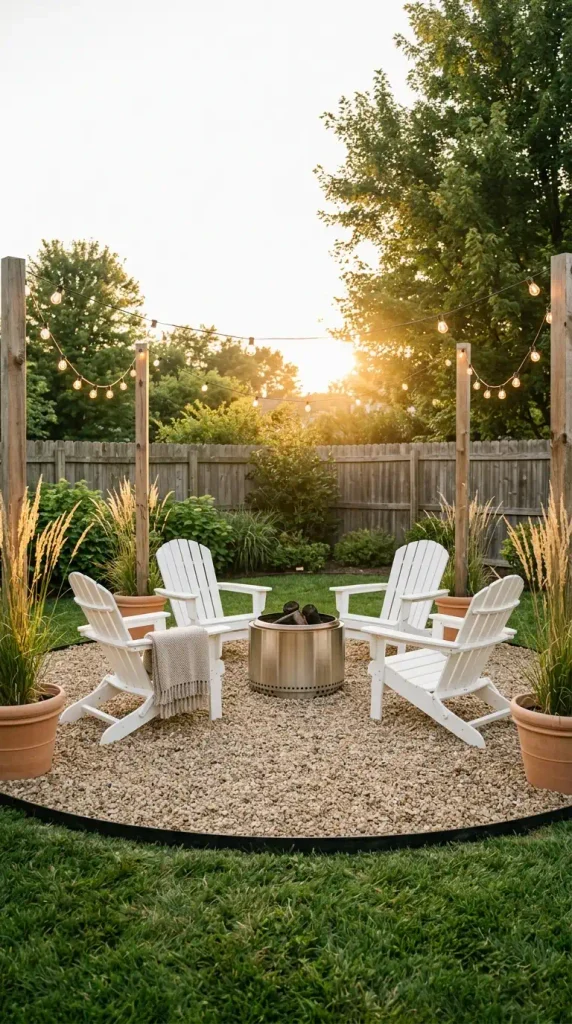
The 2 Over 4 Rule: Why Some Gravel Feels Solid and Some Feels Sloppy
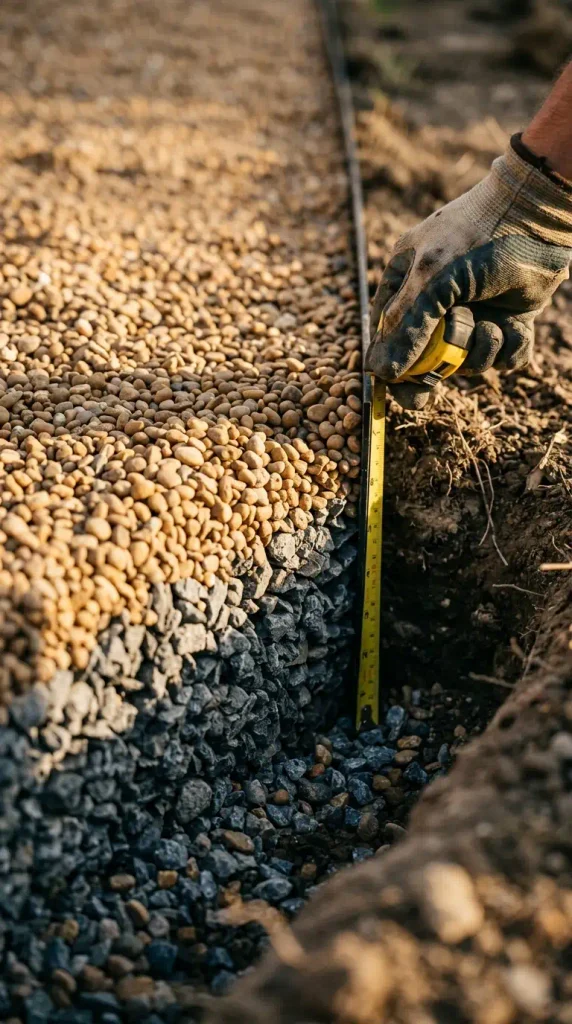
Here’s the highest-value tip in the whole build, so it goes first. Two inches of pea gravel over four inches of compacted crushed stone.
The base does the real work. Angular crushed stone locks together when you tamp it, so it carries feet, chairs, and a heavy fire pit without shifting. Pea gravel on top is just the finish coat. Gravel supplier Mulch Mound calls 3 inches about the upper limit for comfortable pea gravel, and Lowe’s install steps warn that anything past 3 inches gets hard to walk on. Go thinner than 2 inches and the base starts peeking through.
When a gravel patio feels like a beach, this ratio is usually flipped: thin base, thick gravel.
Two smaller numbers finish the rule. Set your edging about half an inch above the finished gravel so stones stay inside. Then slope the pad about a quarter inch per foot away from the house, so rain runs off instead of pooling by the foundation.
The 2 Over 4 Rule
Pick Your Stone: Pea Gravel, Crushed Stone, or Decomposed Granite
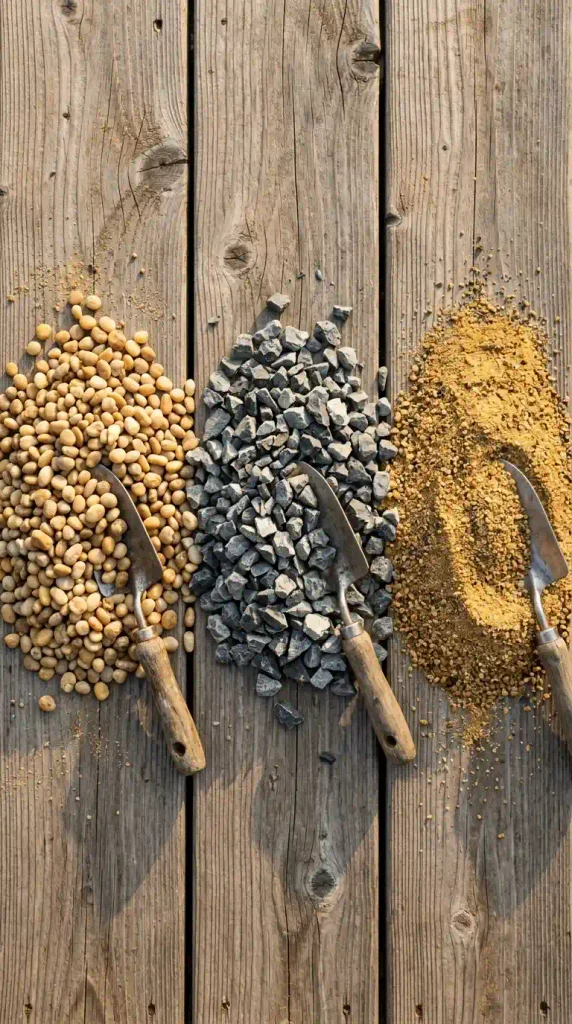
Pea gravel gets all the Pinterest love, and for a lounge corner it earns it. The stones are small, smooth, and round, and they feel good under bare feet.
Here’s the part the idea galleries skip. Round stones roll.
Under a dining table, where chairs slide in and out all evening, pea gravel shifts and the back legs dig in. For that job, 3/8 inch crushed stone (often sold as chip stone) is the smarter pick, because its sharp faces lock together and hold a chair steady. Decomposed granite sits at the far end: it packs down almost like a path, but the dry fines ride into the house on your shoes.
Our rule of thumb is simple. Lounge chairs and a fire pit, go pea gravel. A dining table, go crushed. For more texture, border either one with flagstone or reclaimed brick, like the stone ideas that pair well with gravel we rounded up earlier.
| 🪨 Stone | Pea gravel | 3/8 in crushed | Decomposed granite |
|---|---|---|---|
| Underfoot | Smooth, barefoot friendly | Firm, a little sharp | Firm and fine, path-like |
| Chair legs | Rock and sink | Stay put | Stay put once packed |
| Tracks indoors | Stones in shoe treads | Rarely | Dusty when dry |
| Best spot | Fire pit lounge corner | Dining table zone | Paths, tight courtyards |
Measure the Spot, Call 811, and Do the Gravel Math
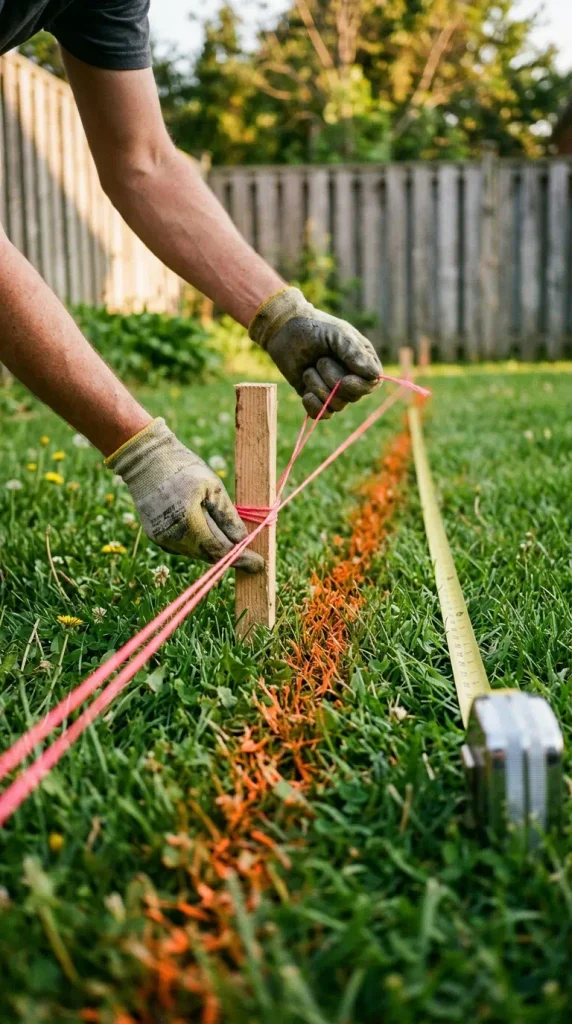
Start small. A 12 by 12 foot square fits four lounge chairs around a fire pit, with room to walk behind them. That’s 144 square feet, and it’s the size we’ll price out below.
Mark the square with wooden stakes and mason’s string. Then call 811 a few business days before you dig (the exact lead time depends on your state). It’s free, and crews will flag buried gas, power, and cable lines.
Pick ground that already drains. Gravel lets rain soak through instead of sheeting off, which is the same idea behind the EPA’s homeowner notes on permeable surfaces that let rain soak in. That only helps if the spot isn’t a low dip that holds water after every storm.
Now the math, using the 2 Over 4 Rule:
🛒 Shopping list for a 12 x 12 ft gravel corner
Bags or bulk? At Home Depot, a 0.5 cubic foot bag of Vigoro pea gravel runs about $5 and weighs 48 pounds. Your 24 cubic feet means 48 bags, closer to 53 with a little extra, which lands around $250. That’s also more than 2,500 pounds of stone to haul home in your car.
Bulk pea gravel typically runs $20 to $80 per cubic yard in Lawn Love’s 2026 price guide, plus delivery. For anything bigger than a small nook, get a bulk delivery quote before you load a single cart.
One Home Depot project write-up covered 524 square feet with just 105 bags, but that gravel went over an old concrete slab and only needed a thin coat. Over bare soil, plan on the full 2 inches.
Build It Step by Step in One Long Weekend
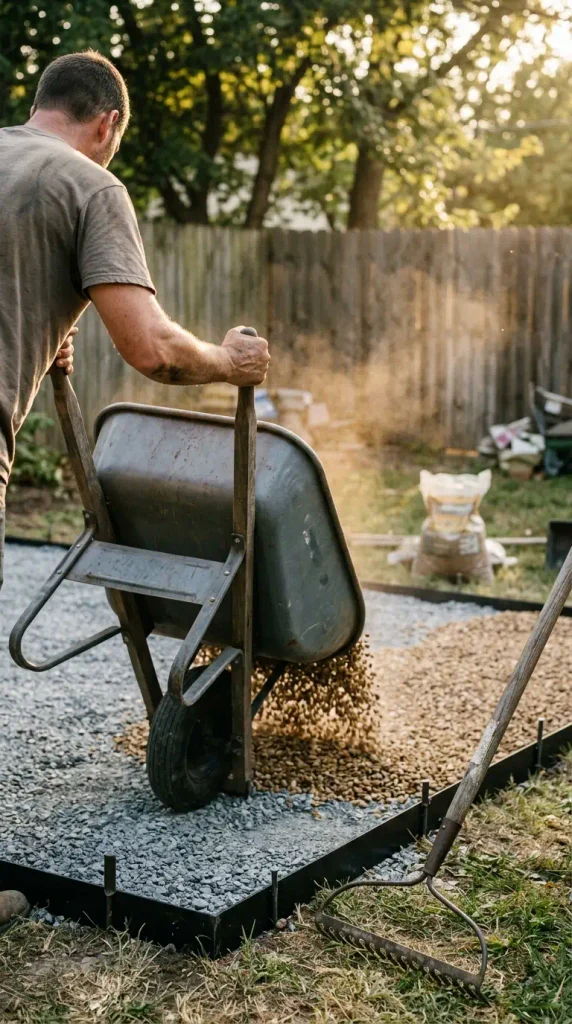
Here’s how to make a gravel patio that stays flat for years. Friday evening, the string lines are up and the 811 flags are in. Saturday is the heavy day: dig and compact. Sunday is base, edging, and the fun part, pouring gravel.
Two small habits make a real difference. Mist the soil and the stone lightly before you tamp, because damp material packs tighter and throws less dust. And do your last pass with the rake flipped over, dragging the flat back across the gravel for a smooth finish.
Dig 6 inches down. Cut out the sod, pull roots and rocks, and keep a ¼ inch per foot fall away from the house. Over 12 feet, that’s about 3 inches of drop.
Compact the soil. Mist it, then run the plate compactor in overlapping rows until your boot barely leaves a print.
Set the steel edging. Drive the stakes so the top will sit ½ inch above the finished gravel.
Lay landscape fabric. Overlap seams by a few inches and pin them with fabric staples.
Add the crushed base in two passes. Spread about 2 inches, mist, compact. Repeat for the second 2 inches.
Check it with a long level. Lay a 4 ft level on a straight 2×4 and fix high and low spots now. Pea gravel won’t hide them.
Pour and rake the pea gravel to 2 inches. Finish with the back of the rake.
Hose it down and wait a night. Rinsing washes off the dust and settles the stones before furniture goes on.
Weeds and Landscape Fabric: What It Can and Can’t Do
Landscape fabric won’t keep weeds out of your gravel forever. A University of Nebraska extension note explains that landscape fabric only slows weeds for a few years. Wind drops soil and seeds on top, and new weeds root right through the weave.
So why use it at all?
Under a gravel patio, fabric has a different job. It keeps your crushed base from pressing down into the mud, so 4 inches of base stays 4 inches. Think of it as a separator, not a weed shield.
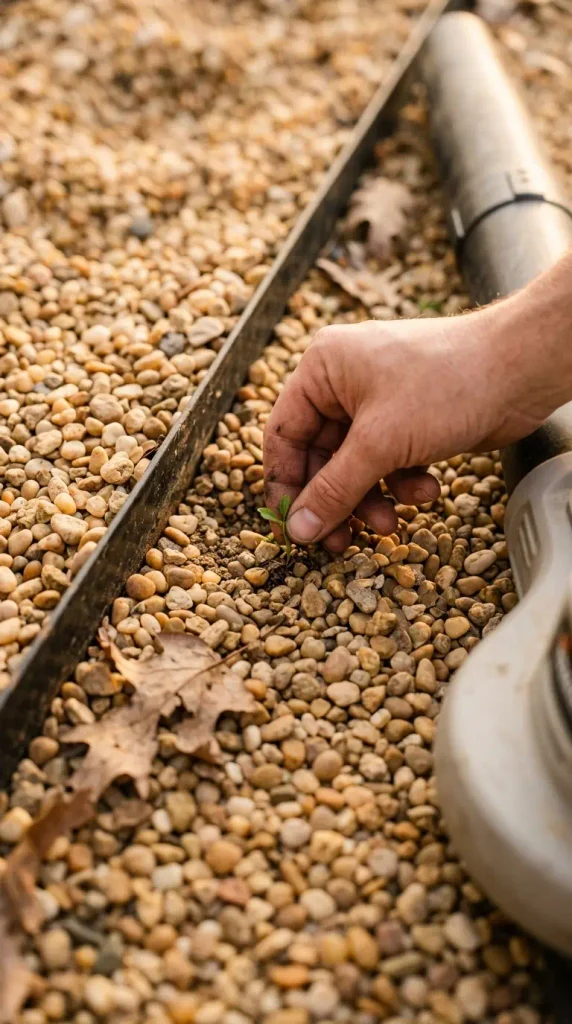
Weeds in gravel come from above, so fight them up there. Leaves and grass clippings are the real culprit: they break down between the stones into a thin layer of soil, and seeds love it.
Blow leaves and clippings off once a month, before they rot into soil.
Pull seedlings while they’re tiny, the day after a rain.
Top off thin spots so the pea gravel stays a full 2 inches.
Doubling up fabric and hoping it solves weeds on top.
Letting fall leaves sit on the gravel until spring.
A thin 1 inch coat that leaves gaps for seeds to settle.
Stop Chairs From Sinking in Gravel
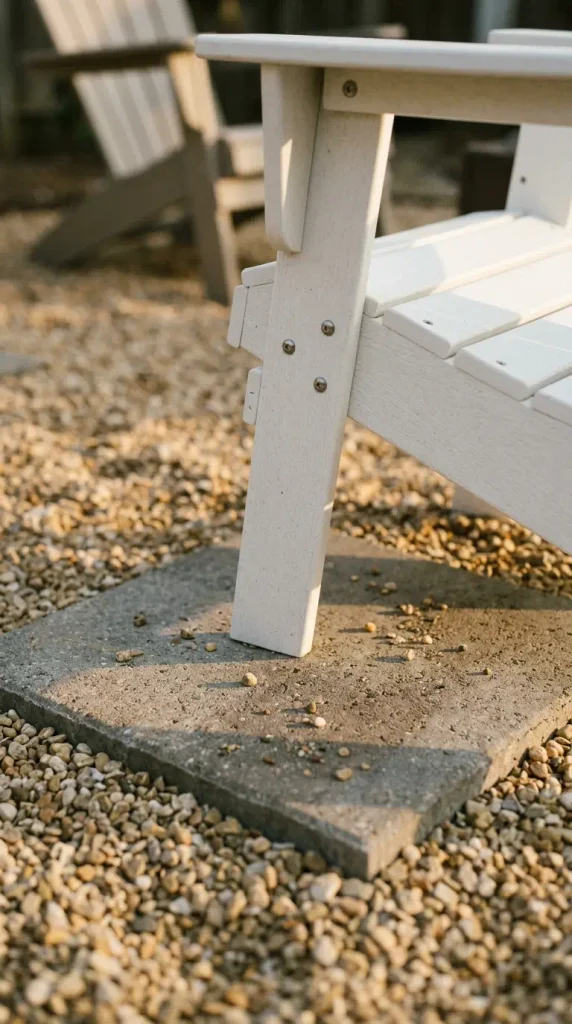
Loose stone and skinny chair legs don’t mix. Lean back in a metal dining chair on pea gravel and the back legs push straight down, a little more every time. TRUEGRID, a company that makes gravel grid pavers, lists rocking and sinking furniture among the top pea gravel complaints, and suggests flat pads where furniture sits.
Thin-legged chairs set straight onto pea gravel. Two back legs dig in, the seat tilts, and you’re re-leveling every evening.
Each chair sits on a flat concrete paver set flush into the base, with gravel raked right up to the edges. Nothing moves.
That paver trick is the cheapest fix. Set one 16 inch square concrete paver under each chair before the pea gravel goes on, bedded into the crushed base so its top lands flush with the finished gravel.
The second fix is the furniture itself. Chairs with wide, flat feet spread their weight. The POLYWOOD Classic Adirondack chair is a good example: heavy recycled plastic with broad board legs, listed at Walmart between about $249 and $309 depending on color.
Fix number three is for dining zones. Plastic permeable grid panels set into the base hold the gravel in little cells, so even narrow table legs stay put. It costs more, and it’s worth it under a table that gets used every night.
Warm Light That Keeps You Outside Longer
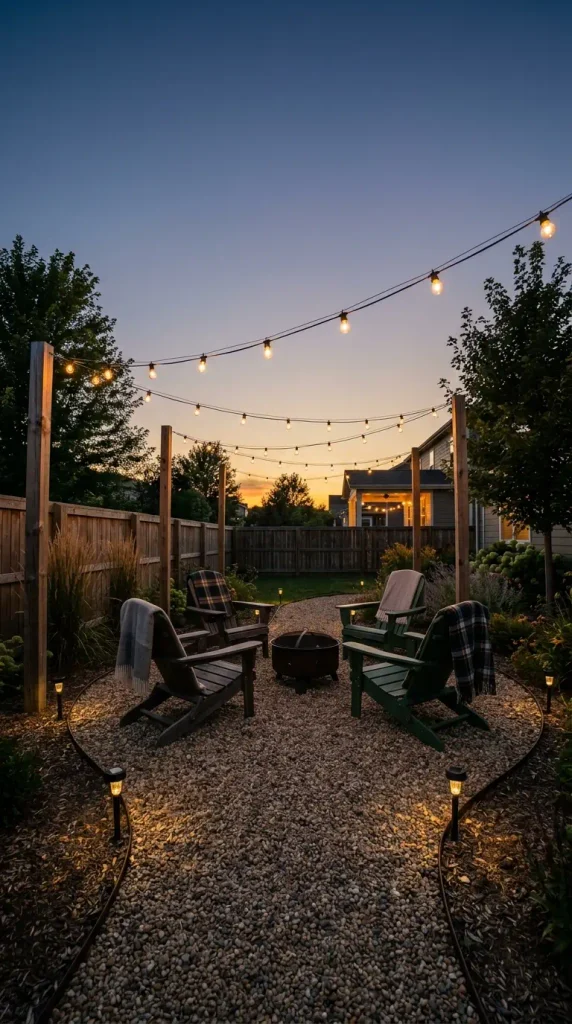
Daylight gravel is nice. Gravel after dark, with a few warm bulbs overhead, is where this corner earns its keep.
Start with string lights on two or three cedar posts set in buckets or sleeves outside the edging. A solar set skips the extension cord across the lawn. The Brightech Ambience Pro 48 ft solar string (15 bulbs) lists around $70 at Home Depot. That’s enough to circle a 12 by 12 square once, or cross it a few times with a gentle sag. If you go with plug-in strings, use outdoor-rated, UL-listed lights and cords on a GFCI outlet. Anything beyond plugging into an existing outlet is a job for a licensed electrician.
Then layer in low light so the edges don’t fall into darkness. We pulled together more fire pit lighting ideas for after dark if you want to go further.
- ▸Overhead: warm white cafe bulbs, around 2700K to 3000K, strung 7 to 8 feet up.
- ▸Edge: solar path stakes every few feet along the steel edging, so nobody trips off the pad.
- ▸Table level: one battery lantern on a side table or the ground beside a chair.
Set a Fire Pit on Gravel the Safe Way
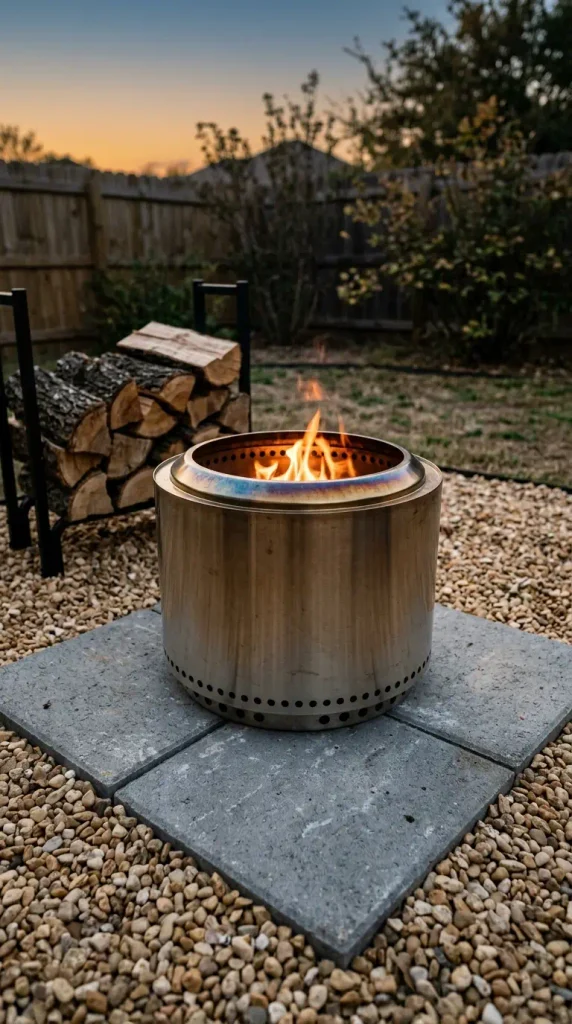
Gravel is a smart floor for a gravel seating area with a fire pit. Stone doesn’t burn, and a stray ember just dies on it.
⚠️ Watch Out
Check your city’s burn rules before you light anything, keep the clearance from structures and branches that your fire pit’s manual and local code call for, and never leave a fire unattended.
Two tweaks make it work. First, go deeper on the base right under the pit. Mulch Mound suggests 5 to 6 inches of base under heavy loads like fire pits, so dig that circle an extra inch or two before the crushed stone goes in. Second, set the pit on one or two flat pavers so it sits level and doesn’t settle at a tilt as the gravel shifts. If your model came with a stand, use it.
A smokeless steel pit suits a small square. The Solo Stove Bonfire 2.0 is a popular choice, and 2026 deal listings show it often dipping into the $150 to $200 range. Keep the chairs out of the smoke path and leave a clear lane to walk behind them. For tighter yards, our small fire pit ideas for tight yards show sizes that fit.
Soften the Edges So It Feels Finished
A gravel square with chairs on it still looks like a job site. This is where most gravel cozy backyard ideas win or lose in photos, and plants fix it fast.
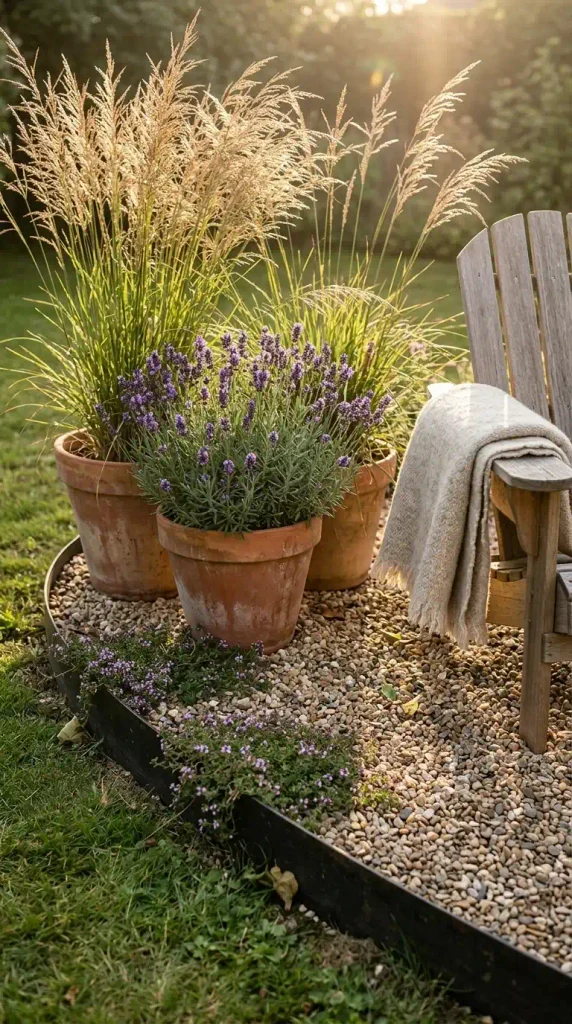
Group three big terracotta pots, around 18 to 20 inches across, at one or two corners. Feather reed grass and lavender both handle Zones 5 to 9 and look good next to stone. In the ground just outside the edging, a strip of creeping thyme or sedum softens the hard line where gravel meets lawn.
Keep blankets and pillows in a lidded deck box so they don’t spend the night damp. And skip the outdoor rug on pea gravel. It traps stones underneath and never sits flat.
Upkeep is light. Rake monthly, clear leaves, and plan to top off with a few bags each spring, since freeze and thaw cycles nudge the edges around.
Hard stone underneath, soft things on top. The base carries the weight and the weather. Pots, light, and blankets are what make you sit down.
FAQ
How deep should pea gravel be for a patio?
About 2 inches, laid over a 4 inch crushed stone base. Thinner than 2 inches lets the base or fabric show through. Deeper than 3 inches feels spongy, and chair legs sink. If you want a sturdier patio, add depth to the base, not to the pea gravel. The base carries the load, and the top layer is just the finish you walk on.
Do you need landscape fabric under a gravel patio?
It helps, though not for the reason most people think. Fabric under the crushed base keeps the stone from pressing into the soil, so your patio stays level for years. It won’t stop weeds for long, because seeds land on top of the gravel and root there. Clear leaves monthly and pull small weeds after rain.
How do you keep gravel from spreading into the lawn?
Use rigid edging, like powder-coated steel, staked every few feet with its top about half an inch above the gravel. Keep the pea gravel at 2 inches so it isn’t heaped against the edge. Rake stray stones back toward the center once a month, and expect a quick touch-up after hard rain or a winter freeze and thaw.
Is a gravel patio cheaper than pavers?
Usually, yes. Bulk pea gravel runs about $20 to $80 per cubic yard, and a 12 by 12 foot patio needs roughly one yard on top of its crushed stone base. You also skip the sand bed, the cutting, and the fussy leveling pavers need. The tradeoff is upkeep, since gravel needs raking and an occasional top-off.
Can you put a fire pit on a gravel patio?
Yes. Gravel doesn’t burn, which makes it a smart surface for a fire pit seating area. Build the base under the pit 5 to 6 inches deep, and set the pit on flat pavers so it stays level. Check your city’s burn rules before the first fire, and follow the clearance distances in your fire pit’s manual.
Can you make a gravel patio on top of grass?
Not directly. Grass and roots rot under the stone, leave soft spots, and send weeds up through the gravel. Cut the sod out, dig about 6 inches down, and compact the soil before fabric and base go in. Skipping the dig almost always means a lumpy patio and a weed problem by the second summer.
Your Next Step
A gravel corner that works is mostly invisible work. Four inches of tamped stone, two inches of pea gravel, and a steel edge that holds the line. Get those right and the fun part is easy: chairs that stay put, warm bulbs overhead, a small fire on a cool night.
Fall is a smart time to start. The ground is still workable across most of Zones 5 to 9, and the pad gets all winter to settle before spring.
Save this to your backyard board so the 2 Over 4 Rule and the shopping list are with you at the store. Then pick your favorite of these gravel cozy backyard ideas and stake out the square.