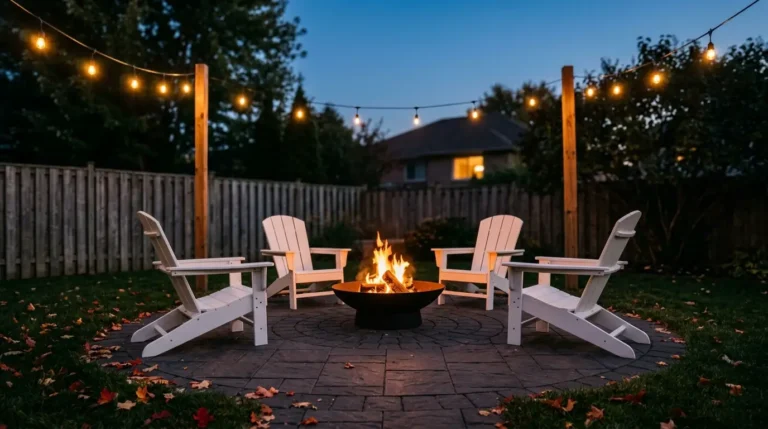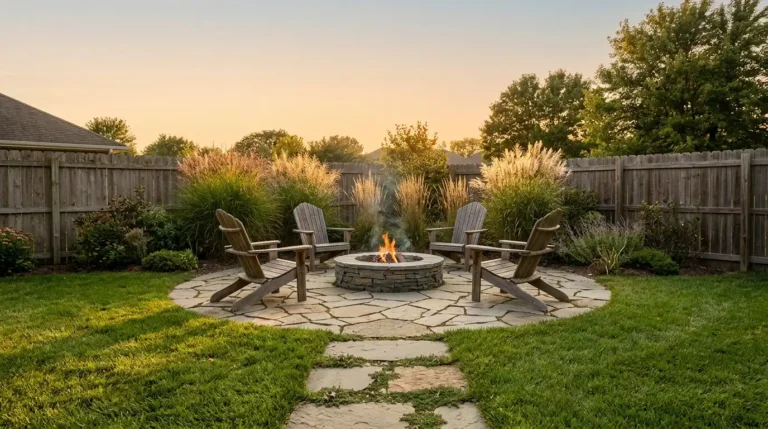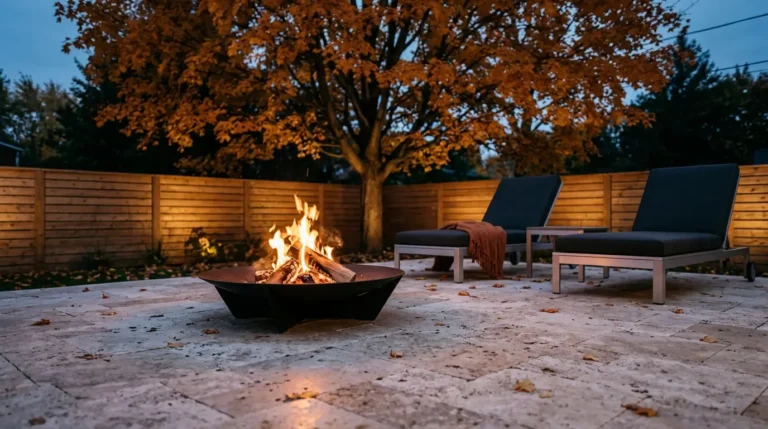
How to Build a Gravel Fire Pit for Fall (Plus 7 Gravel Fire Pit Ideas to Copy)

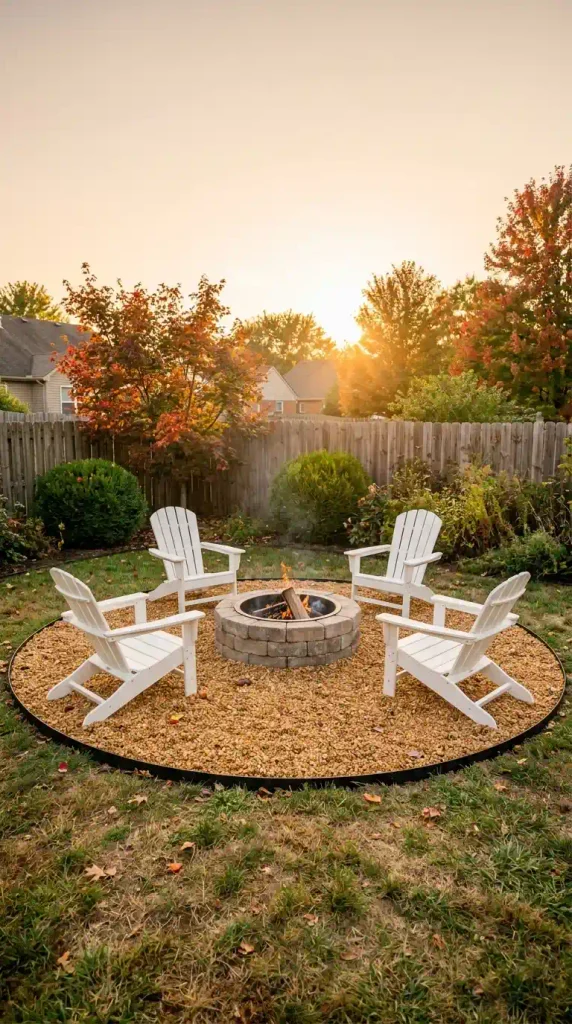
Most gravel fire pit ideas look alike in photos: a round pit, a ring of tan stone, chairs around the edge. What those photos never show is the base underneath. That hidden layer decides if your chairs sit level in November or slowly sink like boots in wet sand.
This build fixes that. We’ll cover where gravel belongs (and the one spot it never goes), which gravel to buy, how much of it, and how to edge it so it stays put. You’ll also get two rules worth saving. The In-Under-Around Rule sorts every stone by its distance from the flame. The 2+2 Gravel Stack is our base recipe for a pad that drains fast and holds a chair steady.
After the build come seven gravel fire pit ideas for different yards, plus a fall checklist for leaves, frost, and wet ash.
Fall is a smart season for this project. The ground still digs easily, the bugs are gone, and the first fire on fresh gravel feels earned.
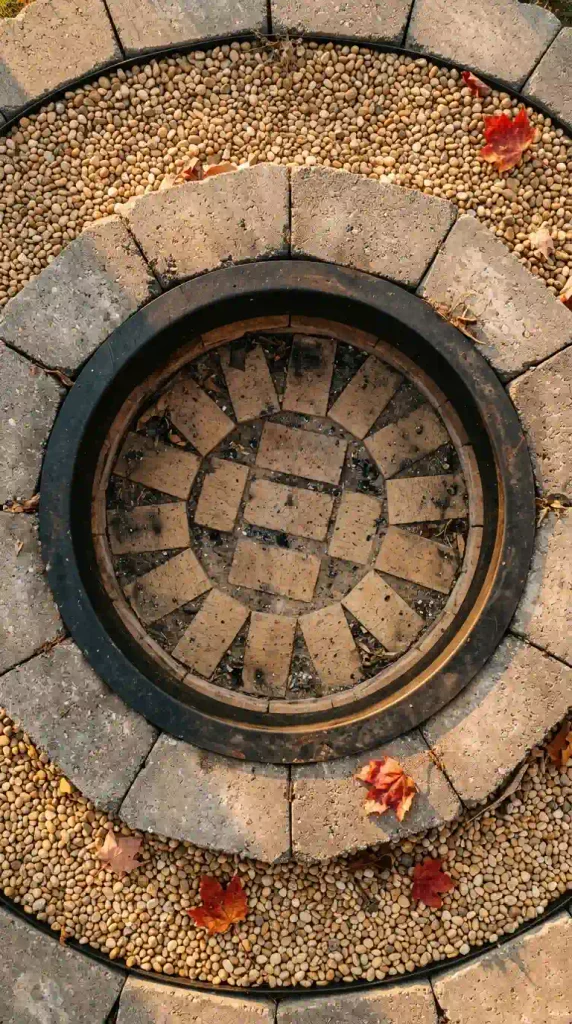
Gravel Goes Around the Fire, Never in It
Here’s the mistake that shows up in DIY fire pit builds again and again: leftover pea gravel shoveled into the bottom of the pit. It looks tidy. It’s also the one place gravel can hurt someone.
Smooth stones like pea gravel and river rock can hold water inside. When a fire heats them fast, that moisture turns to steam, and the stone can crack or pop and throw hot chips. Fall makes it worse, because October rain keeps the pit floor damp for days.
So we sort every stone by where it sits relative to the fire. Inside the burn zone, use only heat-rated material. Rutland fire brick, for example, runs $34.49 for a six-pack at Home Depot, and its listing rates it to 2,700°F. Under the pit, you want drainage. Around it, gravel finally gets to do its job.
Running propane instead of wood? Keep pea gravel out of the burner pan too. Gas fire pit makers point you to lava rock or fire glass for that spot.
Measure 10 Feet Before You Mark the Circle
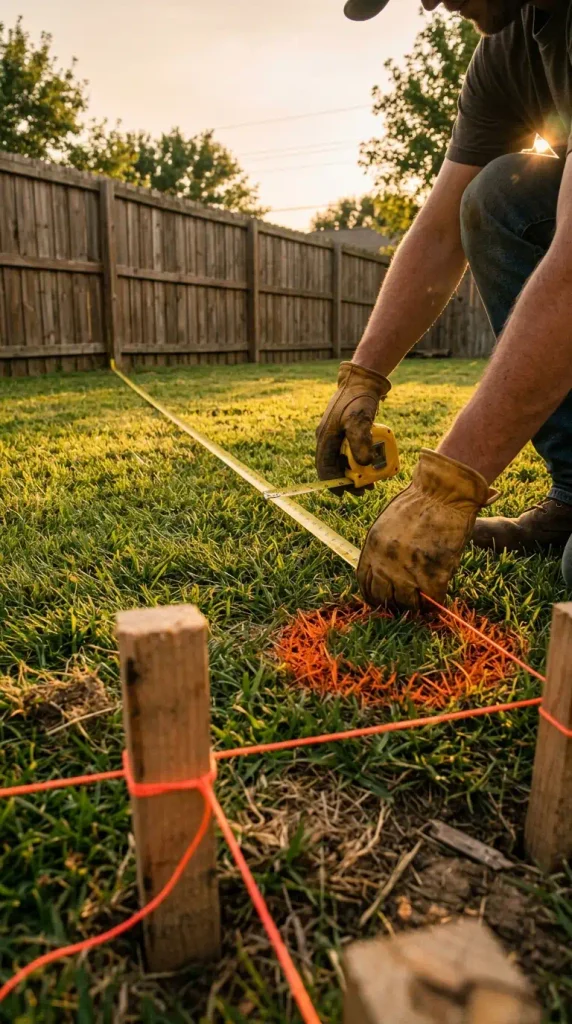
A gravel pad is easy to move before it exists and a real chore to move after. Spend ten minutes with a tape measure first.
Clearance comes before style. The outdoor fire safety tips from the U.S. Fire Administration say to use fire pits at least 10 feet away from your home or anything that can burn. They also recommend a metal screen over wood fires to keep sparks in. That 10 feet counts fences, sheds, wood decks, and branches hanging over the spot. Plenty of towns ask for more, and Home Depot’s in-ground fire pit guide uses 15 feet from shrubs, trees, and buildings.
Then size the circle. Most DIY pits land between 36 and 44 inches across. Give the gravel at least 4 feet past the rim on every side, and stretch it to 5 or 6 feet if you want chair legs fully on stone instead of half on the lawn.
Two last checks. Watch which way grill smoke drifts on a breezy evening, and put the pit where it blows away from the back door. Then look at the spot after a hard rain. A gravel pad drains well, but it can’t rescue a low spot that holds a puddle.
⚠️ Watch Out
Check your city’s burn rules before you light anything, keep the clearance from structures and branches that your fire pit’s manual and local code call for, and never leave a fire unattended.
The Best Gravel for a Fire Pit Seating Area
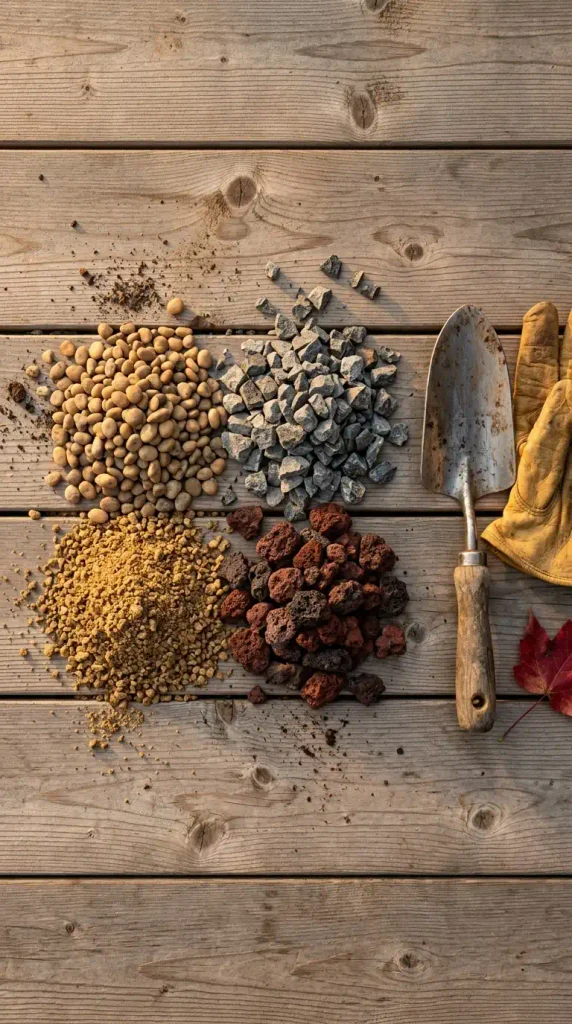
Five stones show up in nearly every gravel fire pit seating area. They behave very differently once chairs and feet get involved.
Pea gravel is the photo favorite: small rounded stones, roughly 1/8 to 3/8 inch, soft underfoot and quick to drain. The catch is that round stones roll.
Crushed stone has sharp, angular faces that lock together when you tamp them. It’s not as pretty, but it’s the reason a good pad feels solid.
Decomposed granite is granite broken down almost to coarse sand. Wet it and compact it, and it packs into the firmest surface gravel can give you. That matters if anyone in your circle uses a cane or a walker.
River rock looks great in a border. Underfoot it wobbles, and it belongs well away from the flame.
Lava rock is light and porous. Kept dry, it works inside a pit. Around the pit, it’s a dark accent, not a floor.
Our take on color: warm tan and brown gravel picks up firelight and hides ash better than bright white stone, which shows soot fast.
| 🪨 Gravel | Underfoot | 🪑 Chairs | Best job | 💲 Cost tier |
|---|---|---|---|---|
| Pea gravel | Soft, rolls | Sink if it’s deep | Top layer, 2 in. | Low |
| Crushed stone | Firm, locks | Stay level | Base layer, modern top | Low |
| Decomposed granite | Packs hard | Stay level | Firm floor, walkers | Low to mid |
| River rock | Wobbly | Tip and rock | Borders far from fire | Mid |
| Lava rock | Rough, light | Not a floor | Inside dry or gas pits | Mid |
The 2+2 Gravel Stack: Why Less Pea Gravel Works Better
Pile on more pea gravel and the pad feels cushier for about a week. Then the problems start. Round stones roll over each other, and the deeper the layer, the more room they have to move. Chair legs sink. Ankles wobble. Kids kick it into the lawn.
The fix sounds backward: use less pea gravel and put something firm under it. SitePrep recommends a gravel fire pit area at least 4 inches deep, and Hello Gravel suggests a compacted crushed base under a decorative top layer. We combine those into one recipe.
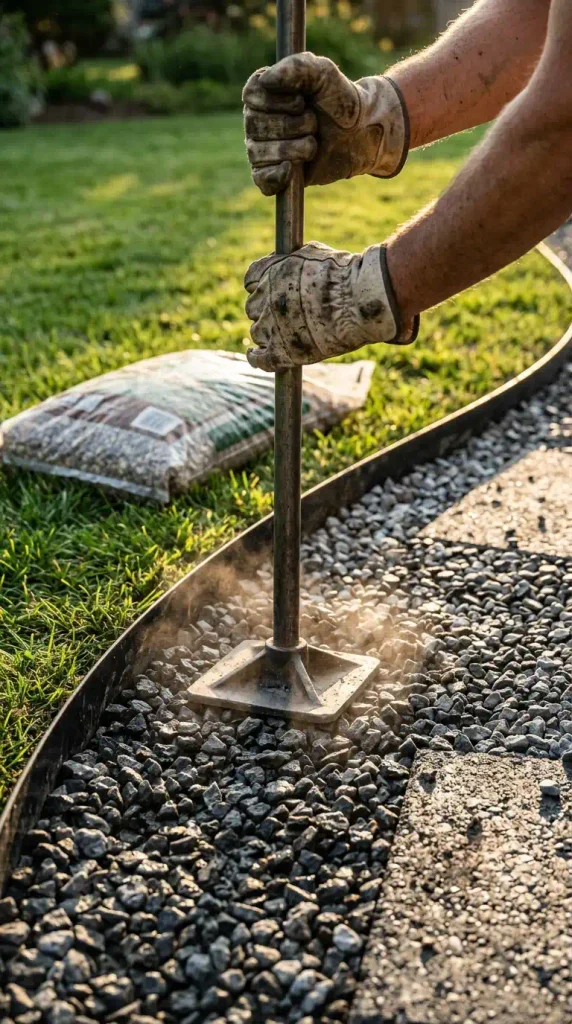
The 2+2 Gravel Stack is 2 inches of compacted crushed stone with 2 inches of pea gravel on top. Dig the pad 4 inches down and the finished surface sits flush with your lawn, so a mower wheel can ride right along the edge.
Two details make it work. Wet the crushed stone before you tamp it, because damp stone packs tighter. And cut the landscape fabric out of the pit’s footprint. Most woven fabric is polypropylene, a plastic, and it doesn’t belong under a fire.
If you’d rather sink the fire below grade, our in-ground fire pit build guide covers digging a deeper well and getting rain out of it.
📏 The 2+2 Gravel Stack
How Much Gravel to Buy: Bags or a Bulk Yard
Gravel math scares people off, but it’s three steps. Multiply the circle’s radius by itself, then by 3.14, for square feet. Divide that by 6 for the cubic feet in one 2-inch layer. Double it for the number of 0.5 cubic foot bags.
Because the 2+2 Gravel Stack uses two equal layers, you need the same volume of crushed stone as pea gravel.
Now the price. Recent cost guides from HomeAdvisor and LawnStarter put a 0.5 cubic foot bag of pea gravel around $4 to $7 in store. Delivery changes things. In October 2026, Home Depot listed a 64-bag pallet of 0.5 cu ft pea gravel at $836.04, which works out near $13 a bag, and Vigoro’s 32-bag pallet of pea pebbles at $399.
Bulk wins on bigger circles. Lawn Love’s 2026 cost guide puts pea gravel at $20 to $80 per cubic yard from a supplier, before delivery. Each bag also weighs about 50 pounds, so a 12-foot circle means carrying close to a ton of pea gravel by hand.
Our rule: under about 40 bags, buy bags. Over that, call two landscape supply yards and price a scoop of each layer.
13 cu ft per layer
26 bags of pea gravel
About 1 cu yd total
19 cu ft per layer
38 bags of pea gravel
About 1.4 cu yd total
26 cu ft per layer
52 bags of pea gravel
About 1.9 cu yd total
Gravel Fire Pit Build Steps for One Fall Weekend
Plan on Saturday for digging and Sunday for building. Gather a flat shovel, a hand tamper, a 4-foot level, a steel rake, wooden stakes, mason’s string, marking paint, and a garden hose.
Before a shovel touches the lawn, contact the free 811 before you dig service a few business days ahead. Utility crews mark buried lines with paint or flags, and shallow digs like this one still count.
For the pit itself, a basic 36-inch steel ring insert runs around $70 at Walmart, and retaining wall blocks from Lowe’s or Home Depot can stack around it. Prefer a no-cut kit? Pavestone’s RumbleStone 46 in. Round Fire Pit Kit No. 1 with a steel insert was listed at $679 on Home Depot’s site in October 2026.
Drive a stake at the center and swing a string to paint two circles: the pit’s outer edge and the outer edge of the gravel pad.
Strip the sod and dig the whole pad 4 inches deep. Inside the pit circle, keep going to about 8 inches.
Tamp the native soil flat. Roll woven landscape fabric over the pad, then cut it away inside the pit circle.
Fill the pit circle with about 6 inches of crushed stone in 2-inch layers. Wet each layer, tamp it hard, and check it with the level both ways.
Set the first course of blocks level on that base. Stack the next courses with staggered joints and masonry adhesive, then drop in the steel ring.
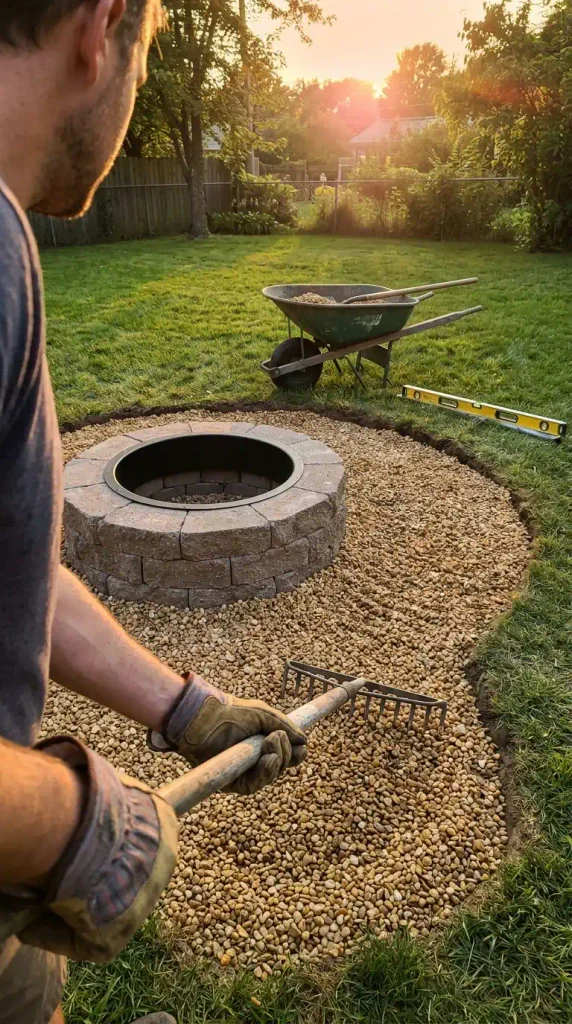
Install edging around the outer circle with its top just above the finished gravel line.
Spread 2 inches of crushed stone across the pad, wet it, and tamp it.
Rake 2 inches of pea gravel on top, working inward toward the pit. Finish the pit floor with sand or fire brick, never pea gravel.
Keep the first fire small. Watch the blocks and the ring as they heat, because a shifted block is a five-minute fix now and a rebuild after a winter of freezing and thawing.
Edging That Holds a Pea Gravel Fire Pit Area Together
Pea gravel wanders. Feet push it outward, rain nudges it downhill, and by spring a crisp circle starts to look like a spill.
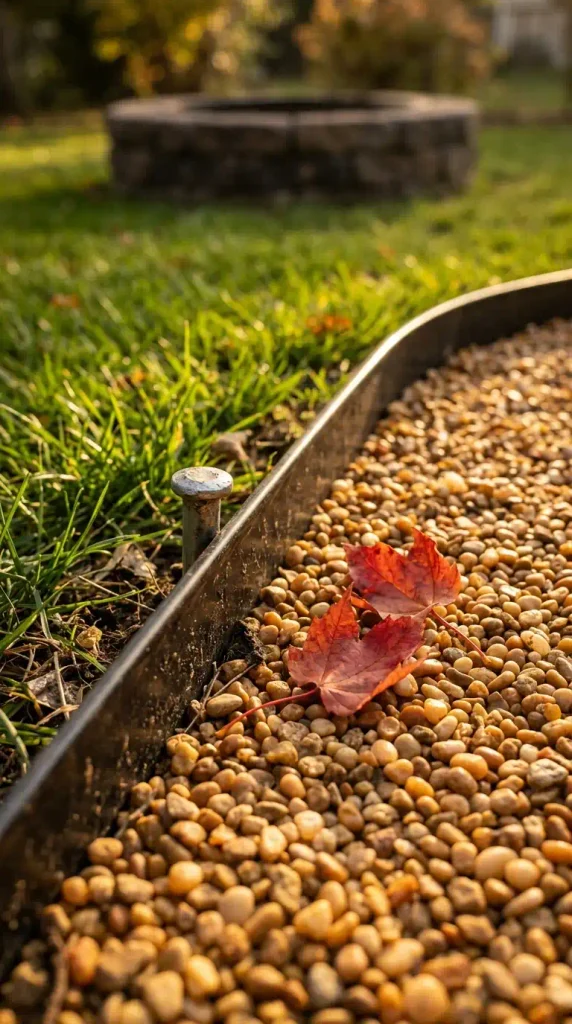
Edging stops that. Steel or aluminum landscape edging from Lowe’s or Home Depot bends into clean curves and stakes into the ground, which suits a round pad. A soldier course of brick or pavers set flush with the lawn gives you a mowing strip, so the trimmer never flings stones. Curved retaining wall block does double duty as edging and a low seat along one side.
Set the top of any edging just above the finished gravel line. A lip that sits even with the stones lets them spill right over it.
Here’s the contrarian part: skip the cheapest plastic roll edging. It’s soft, it heaves when the ground freezes and thaws, and after one winter it tends to wander as much as the gravel did.
Steel or aluminum edging, staked, with the top just above the gravel.
Brick or pavers set flush with the lawn for a mowing strip.
Curved wall block where you want a low built-in seat.
Thin plastic roll edging that heaves after a hard freeze.
Wood timbers within a few feet of the flame.
Edging set level with the gravel, which lets stones spill over.
7 Gravel Fire Pit Ideas for Different Yards
Same build, different finish. Each of these gravel fire pit ideas uses the steps above with one change.
1. The classic round pea gravel circle
A round block pit, steel edging, and tan pea gravel. It’s the version most people picture first, because it’s cheap, forgiving, and easy to DIY. Set chairs about 4 to 6 feet from the flame. Solo Stove lists a 4 to 6 foot heat radius for its 19.5-inch Bonfire, which makes a handy benchmark for any small wood pit.
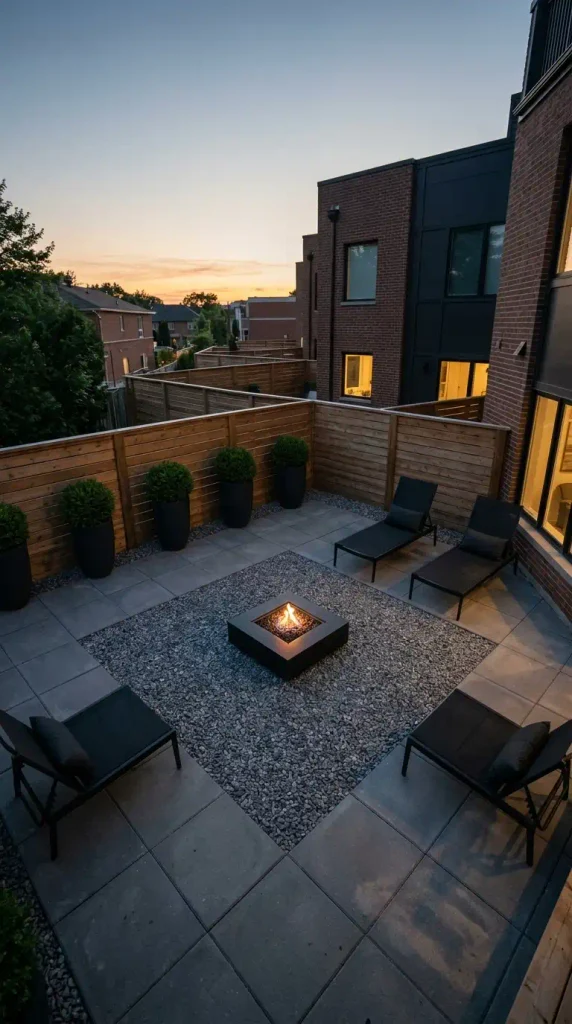
2. A square crushed stone pad with a square pit
Swap the circle for a square and the whole thing reads modern. Square pavers along the border need fewer cuts than a curve. Gray crushed stone also suits clean lines better than round pebbles do.
3. A decomposed granite floor
Compacted DG gives chairs a level floor and rolls smoother under strollers and walkers than loose stone. Plan on raking and re-wetting it each spring, since the top layer can loosen over winter.
4. Flagstone pads under every chair
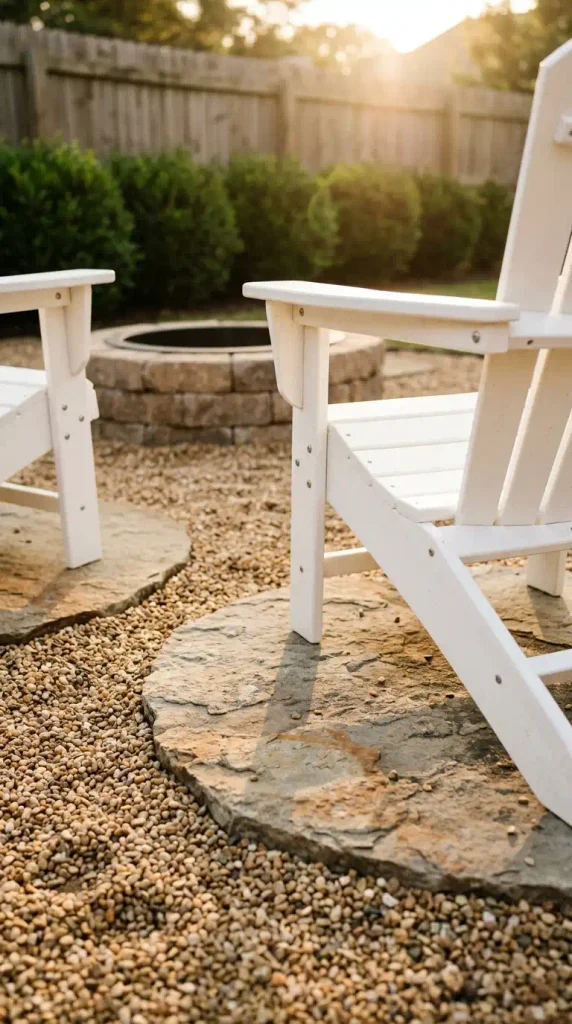
This one fixes sinking chairs for good. Set a flat flagstone flush in the gravel wherever a chair goes, so all four legs sit on stone. Polywood’s Classic Folding Adirondack Chair, listed from $239 on Polywood’s site, folds flat for winter storage.
5. A gravel path into the circle
Run a path about 3 feet wide between the patio and the fire circle, with the same edging and gravel. It ties the pit to the house and keeps guests off wet grass at night. For the beds along that path, our fire pit landscaping ideas with safe plants list what can grow near a fire and how far back to plant it.
6. A dark apron around the ring
Ash and soot stain pale pea gravel right around the pit first. A band of darker crushed stone or lava rock, about 18 inches wide around the ring, hides those marks and frames the fire the way a mat frames a print.
7. A curved seat wall on one side
Curve two or three courses of wall block along the windward side. It holds the gravel in, blocks the breeze, and seats several people without a single chair. On a sloped yard, the same wall can hold back the uphill side.
| 💡 Idea | Best for | 💲 Cost tier | 🪑 Chairs |
|---|---|---|---|
| Round pea gravel circle | First builds, most yards | Low | Fine on a 2+2 base |
| Square crushed stone pad | Modern yards, courtyards | Low to mid | Level |
| Decomposed granite floor | Strollers, walkers, canes | Low to mid | Level |
| Flagstone chair pads | Sinking chair fixes | Mid | Level on stone |
| Gravel path in | Pits far from the patio | Low | No change |
| Dark apron | Pale gravel that shows soot | Low | No change |
| Curved seat wall | Windy or sloped yards | Mid | Built in |
Keep the Gravel Clean Through Leaf Season
Gravel has one fall weakness: it collects leaves. Dry leaves on a fire pit pad are kindling, so clear them before every fire. A plastic leaf rake held lightly skims leaves without scattering the stone, and a leaf blower on its lowest setting works too.
Ash needs the same care. Let it cool completely, scoop it into a lidded metal can, and keep it off the gravel and out of plastic bins. After a storm, give the pit a dry day and scoop out wet ash before it cakes into gray paste.
Burn what’s actually dry. The EPA’s Burn Wise program recommends firewood at 20 percent moisture or less, and a General Tools pin meter runs roughly $12 to $44 at Walmart. Dry autumn weeks also bring burn bans, so check your county or fire department the day you plan to light.
When the ground starts freezing and thawing, edging stakes can creep upward. Tap them back down in spring and top off thin spots with a few bags of pea gravel.
Keep string lights and lanterns at the gravel’s outer edge. Our fire pit lighting ideas that skip the flames show where they work best.
🍂 Before every fall fire
Frequently Asked Questions
Can you put gravel in the bottom of a fire pit?
Not regular gravel. Pea gravel, river rock, and similar smooth stones can trap moisture, and fast heat can turn it to steam that cracks or pops the stone. Line the burn area with fire brick, a steel ring, dry sand, or lava rock kept dry. Save gravel for the drainage base under the pit and the seating pad around it.
What kind of gravel is best around a fire pit?
Pea gravel is the most popular top layer because it’s comfortable and drains fast. It works best over a compacted base of angular crushed stone, which keeps chairs from sinking. Decomposed granite is the firmest option and suits anyone using a cane, walker, or stroller. Skip wood mulch near the fire, since embers can smolder in it.
How deep should gravel be around a fire pit?
Plan on about 4 inches total. The 2+2 Gravel Stack uses 2 inches of compacted crushed stone with 2 inches of pea gravel on top, dug 4 inches down so it finishes flush with the lawn. Deeper pea gravel feels softer at first, but chair legs sink and the stones roll more.
Do you need landscape fabric under fire pit gravel?
It helps. Woven landscape fabric keeps gravel from mixing into the dirt below and slows weeds pushing up through the pad. Lay it over the tamped native soil before the crushed stone base goes down. Cut it out of the pit’s footprint, though, because most fabric is a plastic that has no place under a fire.
How much gravel do I need for a fire pit area?
A 12-foot circle at the 2+2 depths needs about 19 cubic feet of pea gravel and 19 of crushed stone, roughly 1.4 cubic yards in all. That’s around 38 bags of pea gravel. For other sizes, multiply radius by radius by 3.14 for square feet, then divide by 6 for each 2-inch layer.
Can you set a portable fire pit directly on pea gravel?
You can, but it may sit unevenly and slowly tilt as the stones shift. Set a flat paver or flagstone flush with the gravel and place the pit on that. Keep the spot at least 10 feet from your house and anything that can burn, and check the pit’s manual for any base it requires.
Your First Fire on Fresh Gravel
The best gravel fire pit ideas come down to a few decisions most photos skip. Keep gravel out of the burn zone. Build the pad as a 2+2 Gravel Stack so chairs stay level. Edge it with something that won’t heave. Then pick the look that suits your yard.
Start with the tape measure this weekend and paint your two circles on the lawn. You’ll see right away if your yard wants a 10, 12, or 14-foot pad.
Save this guide to your fall projects board so the gravel math and the In-Under-Around Rule are on your phone when you’re standing in the garden center aisle.