15 Easy Fire Pit with a Patio Ideas for Cozy Fall Nights

October is when a patio earns its keep. The air turns sharp right after dinner, the maples start dropping, and everyone suddenly wants to stay outside longer. These fire pit with a patio ideas are built for exactly that stretch of the year, and a weekend DIYer can pull off every one of them.
We didn’t stop at pretty pictures. Each idea comes with a real product or material, a price we checked this month, and the one detail that decides whether it works on your patio or only on Pinterest. You’ll find a $5.74 bag of pea gravel sitting next to a $1,000 stone kit.
Start with the Six Foot Ring Rule right below. It answers the question most people skip until the chairs arrive.
One safety line before the fun part. Check your city’s burn rules before you light anything, keep the clearance from structures and branches that your fire pit’s manual and local code call for, and never leave a fire unattended.
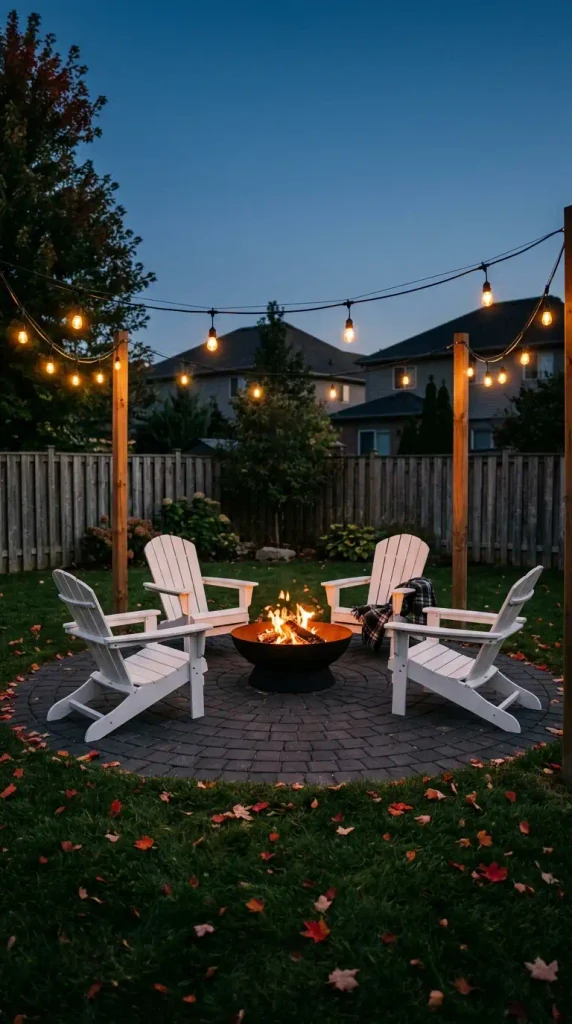
The Six Foot Ring Rule. Paver maker Unilock suggests leaving at least 6 feet of open patio on every side of a fire pit. We turned that into a quick fit check. Add 12 feet to your pit’s width and you get the smallest patio that works. A 3 foot pit needs about 15 feet across, which fits four to six chairs. Then set chairs at least 3 feet from a wood fire and 2 feet from a gas one, and pull them back to 7 feet when the wind picks up. Several ideas below lean on this rule, so keep it close.
🔥 The Six Foot Ring Rule: Pit to Patio Fit Chart
| Pit width | Smallest patio (pit + 6 ft each side) | Good to know |
|---|---|---|
| 2 ft | about 14 ft across | Smokeless bowls near 20 in land here |
| 3 ft | about 15 ft across | Room for four to six chairs |
| 4 ft | about 16 ft across | Most 46 in stone ring kits |
| 6 ft long table | about 18 ft across | Long gas tables need the extra length |
🪑 Chair gap: 3 ft from wood, 2 ft from gas, 7 ft back on windy nights.
1. A Smokeless Steel Bowl for a Small Patio Fire Pit Corner
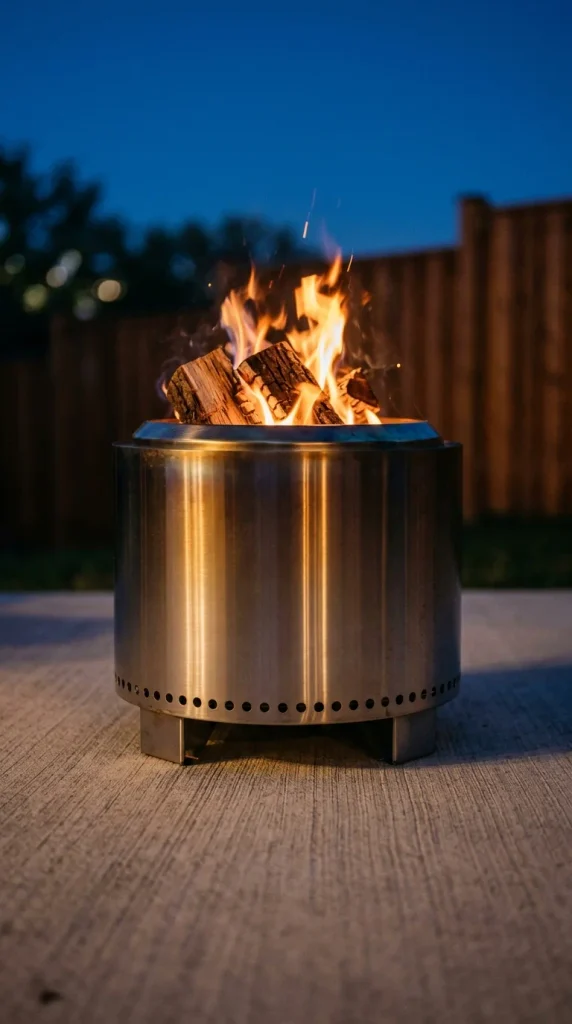
Twenty inches across. That’s roughly the footprint of a Solo Stove Bonfire 2.0, and it’s why this style works on patios that can’t spare room for a big stone ring.
- Why it suits a small patio fire pit plan: the double wall pulls air up and reburns much of the smoke once the fire is hot, so whoever sits downwind isn’t stuck squinting.
- Price check: it lists higher, but it has dipped under $200 on sale at Target and Amazon.
- Use the stand: set it on its stand, not straight on concrete. The stand lifts the hot base off your surface.
Run it through the Six Foot Ring Rule first. A 2 foot pit wants about 14 feet of open patio, which is less than most people expect when they start shopping.
Small bowl, small logs. Split anything long enough to poke over the rim.
2. A Pea Gravel Fire Pit Patio Priced Bag by Bag
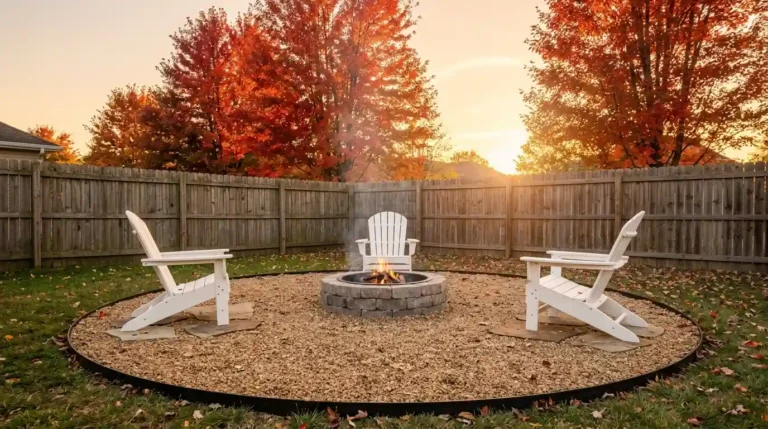
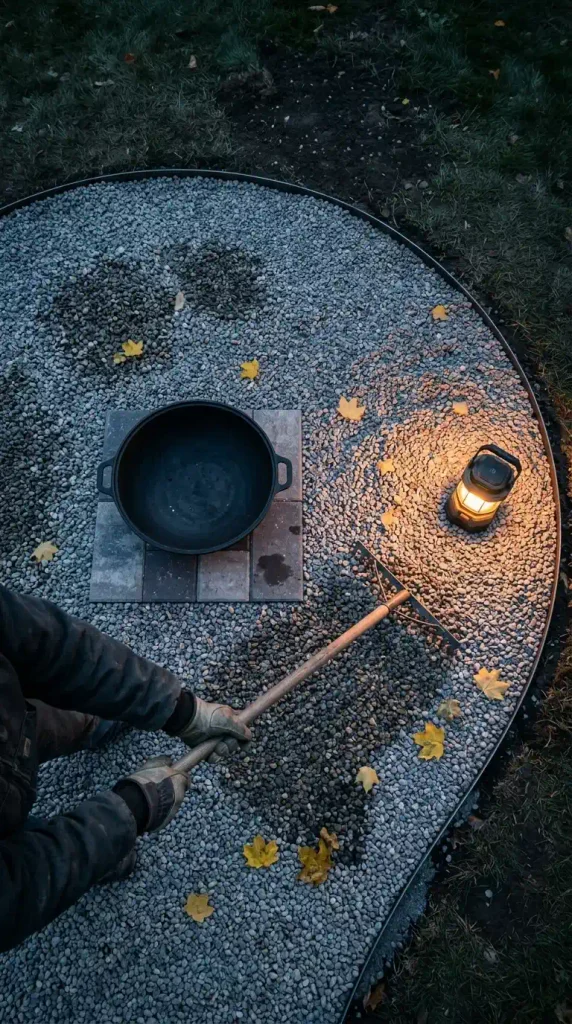
Gravel forgives almost everything. It drains, it doesn’t crack when the ground heaves through a Zone 5 winter, and a stray ember landing on it is a non-event.
Price it before you fall for it. Vigoro pea pebbles run about $5.74 per half cubic foot bag at Home Depot. A 14 foot circle poured 3 inches deep needs close to 1.5 cubic yards, which works out to about 77 bags and roughly $440 bagged. Bulk gravel usually runs $40 to $100 a yard before delivery, so call a landscape supply yard first.
Mark the circle with a stake and string, sized with the Six Foot Ring Rule.
Dig out about 3 inches of sod, tamp the base flat, and lay landscape fabric.
Set steel or paver edging around the rim so the gravel stays put.
Pour, rake level, and set the fire bowl on a few flat pavers in the center.
One warning. Pea gravel rolls underfoot, so keep it off the main path to the back door.
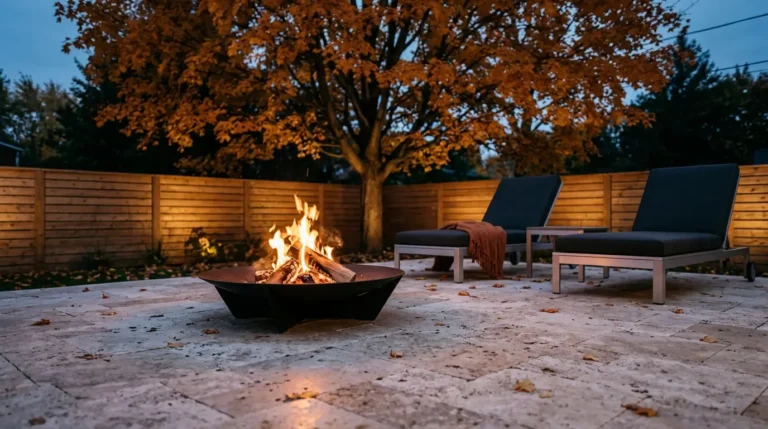
3. Skip Bare Sealed Concrete, Set the Fire Pit on a Rated Mat Instead
Concrete feels fireproof. It mostly is, which is exactly why people set a wood bowl straight on it and never think about it again.
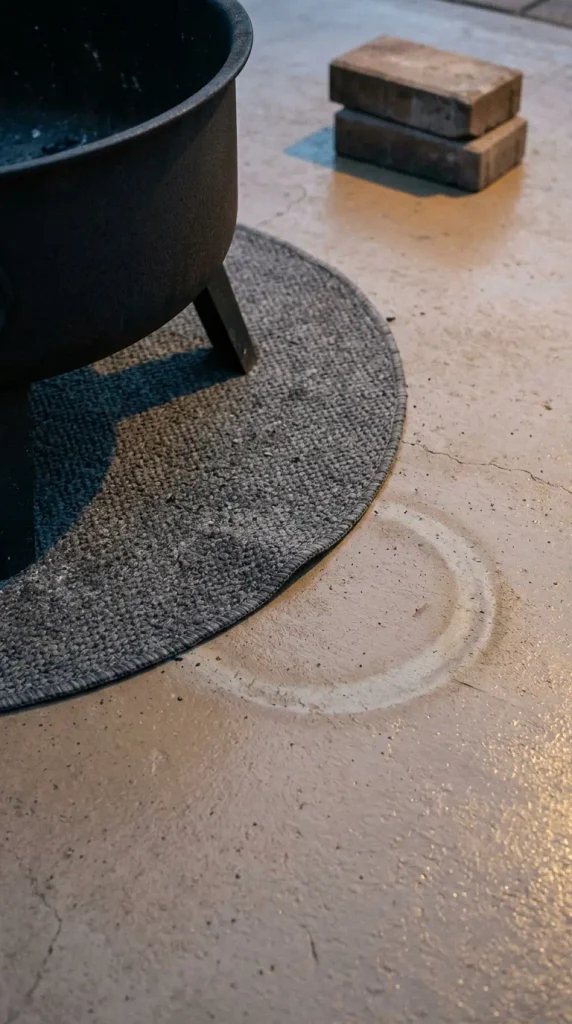
The trouble is moisture and sealer. Water trapped inside the slab can turn to steam under a hot base and pop flakes off the surface. That’s called spalling, and repeated heat cycles can crack the slab over time. Sealer is worse. Heat can cloud it or peel it, leaving a pale ring that won’t scrub out.
The fix is a buffer layer. Two or three pavers or fire bricks work, or a heat mat. Volcanic rock mats like the DeckProtect 36 x 36 are tested to 1,400°F and have listed around $270. Cheaper fiberglass mats exist, but read the temperature rating before you buy one.
Your sealed patio stays the color you paid for.
Keep the bowl on its stand plus a heat-rated mat or flat pavers.
Match the mat to the bowl’s width with a few inches to spare.
Let the pit cool about two hours before you cover it.
A wood bowl sitting flat on sealed or stamped concrete.
Rubber doormats or outdoor rugs as a heat shield.
A fresh slab that hasn’t fully cured yet.
4. A Paver Patio With Fire Pit Kit Built Around a Steel Insert
Kits cost more. On a paver patio, they’re sometimes the smarter money anyway.
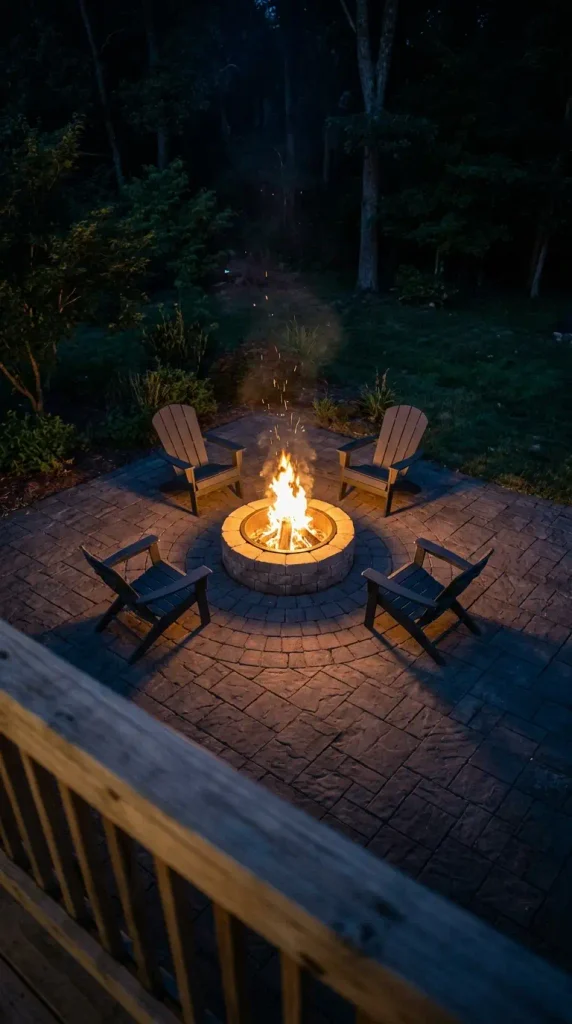
The Pavestone RumbleStone 46 inch round kit with a steel insert listed near $1,010 at Home Depot this October. That buys matched block, cap pieces, and a steel ring that takes the direct heat so the concrete block doesn’t. Loose retaining wall block from Lowe’s costs far less. Plain block isn’t made for direct flame, though, so line it with fire brick or a steel ring either way.
Two paths, then. Buy the kit for speed and a matched look. Buy loose block plus a separate steel ring to save money and accept a weekend of fitting. We cover the full build, apron and all, in our guide to building a paver fire pit from scratch.
The steel insert takes the heat so the block lasts for years. A 46 inch ring sits in the 4 foot row of the Six Foot Ring Rule, so plan a patio about 16 feet across.
5. A Propane Fire Table for a Covered Patio Fire Pit Spot
Covered patios change the math. Wood is out here, because sparks and smoke collect under a roof, and most wood-burning fire pit manuals rule out overhead cover.
Gas is the usual answer. A propane fire table from brands like Outland Living gives a steady flame, no flying embers, and a wide ledge for mugs.
⚠️ Watch Out
Gas tables list a minimum overhead clearance in the manual. Measure from the burner to the ceiling before you buy, and make sure the covered patio has open sides for airflow.
Keep the 20 pound tank in the table’s base or right beside it outdoors. Never store a propane tank inside the house or a closed garage.
Firelight, minus the smoke in your hair.
6. Fire Pit Seating Ideas That Keep Everyone in the Warm Ring
Chairs decide whether people stay past the first log. Sit too close and shins roast. Sit too far and the circle splits into side conversations.
Use the second half of the Six Foot Ring Rule here. Unilock’s guidance on chair distance from a fire pit puts chairs at least 3 feet from a wood fire and 2 feet from gas, then 7 feet back when it’s windy.
Recycled plastic Adirondacks earn their spot outdoors. Polywood’s Grant Park curveback has dipped to about $140 on sale, and it won’t rot after a month of October rain.
Leave one gap in the circle so nobody climbs over a chair to reach the cooler.
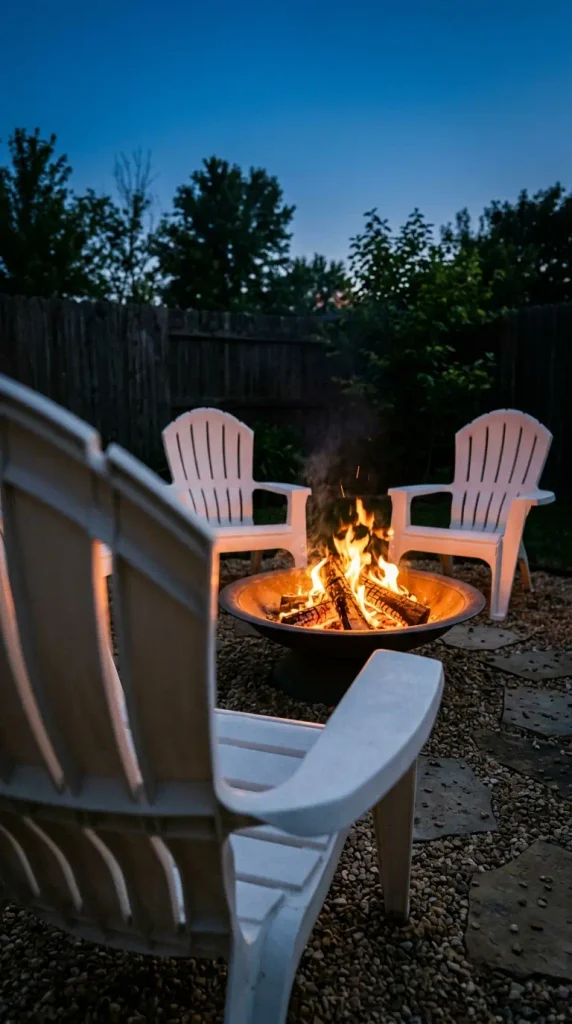
7. A Sunken Fire Pit Patio Two Steps Below the Lawn
The classic mistake with a sunken fire pit area is forgetting where the rain goes. Drop a patio below grade and it becomes the lowest point in the yard. Every October downpour then heads straight for your chairs.
Plan these before the first shovel goes in:
- ▸A compacted gravel base plus a drain or dry well at the low point.
- ▸A block seat wall that holds back the surrounding yard and gives you built-in benches.
- ▸Steps wide enough to carry a log rack down without turning sideways.
Sunken pits also block wind, which is the quiet reason they feel warmer. Check with your city about permits for any wall taller than a seat.
8. A Firewood Nook Built Into the Patio Edge
Wet wood is the reason most patio fires smoke, hiss, and die early. The EPA’s best wood-burning practices say wood burns best below 20 percent moisture. It needs at least six months to season, stored off the ground with only the top covered.
A storage nook at the patio edge handles all three and looks good doing it.
🪵 Build a nook that actually dries wood
Seasoned wood weighs less, looks darker, and sounds hollow when two pieces knock together.
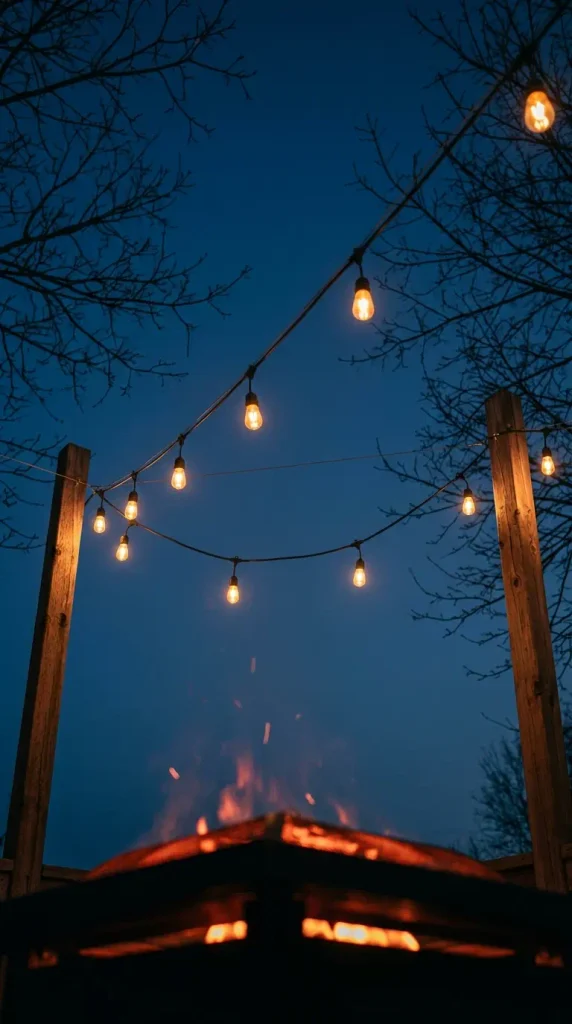
9. Café String Lights on Cedar Posts Over the Fire Pit Patio
Firelight stops at the chairs. Past them, the steps, the cooler, and the path back to the house all fall into the dark.
A canopy of café string lights fixes that without washing out the flames. Brightech’s Ambience Pro 48 foot strand of dimmable Edison-style LED bulbs is a common pick, and dimming lets you dial the bulbs down once the fire takes over.
- Set two to four 10 foot cedar posts at the patio corners, in footings or 5 gallon buckets filled with concrete.
- Run a steel guide wire first, then clip the strand to it so the bulbs don’t sag.
- Swag the strand around the edge of the patio, never straight over the flames.
⚠️ Watch Out
Use outdoor-rated, UL-listed lights and cords on a GFCI outlet. Anything beyond plugging into an existing outlet is a job for a licensed electrician.
Pick warm white bulbs. Cool white makes firelight look orange and flat.
10. A Curved Seat Wall That Doubles as the Patio Edge
Small patios lose a surprising amount of floor to chair legs. A curved seat wall built around half the fire pit gives you permanent seats and a finished edge in one move, with nothing to drag around.
Build it from wall block and caps from Home Depot or Lowe’s, about 18 to 20 inches tall, which is standard bench height. Keep the wall on the Six Foot Ring Rule line so knees stay out of the heat. Our small backyard patio ideas guide explains why a third of the floor should stay open, and a seat wall makes that easy.
| 🧱 Seat wall | 🪑 Loose chairs |
|---|---|
| Uses no floor inside the circle | Each chair eats patio floor |
| Fixed distance from the fire | Easy to pull back when it’s windy |
| Cost: higher up front | Cost: spread out over time |
| Nothing to store in winter | Needs garage space by December |
Best combo: a half-circle wall plus two loose chairs on the open side.
11. A Renter Friendly Fire Pit Setup You Can Take With You
Read the lease first. Plenty of rentals and HOAs ban wood fires outright but allow propane, and many apartment fire rules ban open flame on balconies entirely.
When gas is allowed, a portable propane bowl on a stand from Target or Walmart gives you a fire pit that leaves when you do. Run it through this test before you buy.
🧰 The take-it-with-you test
That last box matters most. An email from the property manager beats a verbal okay when move-out day comes.
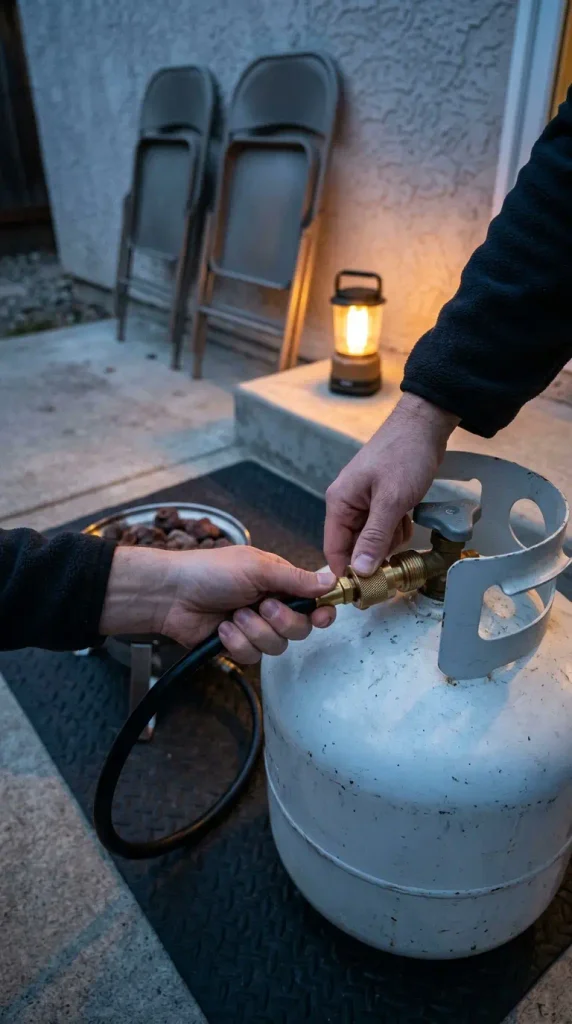
12. A Low Fire Table Set for a Fall Dinner Outside
Dinner and a fire rarely share a table well. Plates go cold beside a wood pit, and smoke drifts straight into the food.
A gas fire table at coffee table height solves most of that. Food sits on the ledge, the flames stay in the middle, and nobody leaves the circle to eat. For a full sit-down meal, keep a separate dining table close by and move to the fire for dessert. Our guide to setting up a fall dinner by the fire maps the spacing and the menu.
Enamel or melamine plates that shrug off heat.
Food on the ledge farthest from the burner.
A s’mores tray with long metal skewers.
Paper napkins near the flame edge.
Tall centerpieces that block faces.
Linen runners draped across the ledge.
Hot cider stays hot on that ledge, which might be the best argument for a fire table yet.
13. A Five Minute Fall Routine Before You Light the Fire Pit
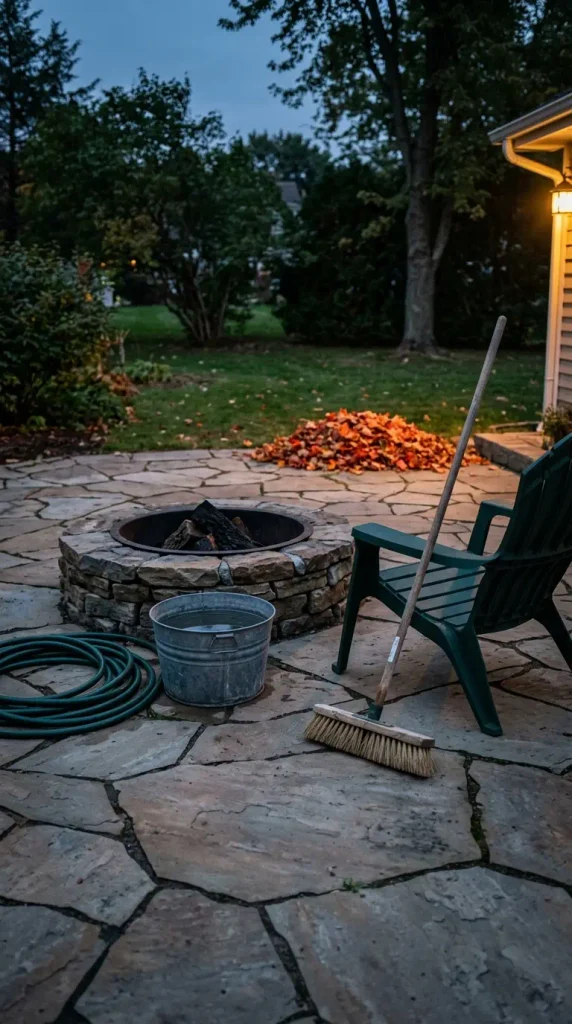
October brings free kindling you don’t want. Dry oak and maple leaves skate across a patio in the slightest breeze, and one ember is enough to start them smoldering under a chair.
Check today’s burn status. Fall burn bans are common in dry years, especially out West.
Sweep the patio and the first few feet of lawn edge.
Fill a metal bucket with water or run a hose to the pit before the match comes out.
After the last log, douse, stir, douse again, and wait about two hours before covering.
That’s the whole routine. It takes less time than finding the marshmallows.
Never run a leaf blower near a lit pit, either. It throws embers farther than you’d guess.
14. A Flagstone and Boulder Ring Edged With Fall Grasses
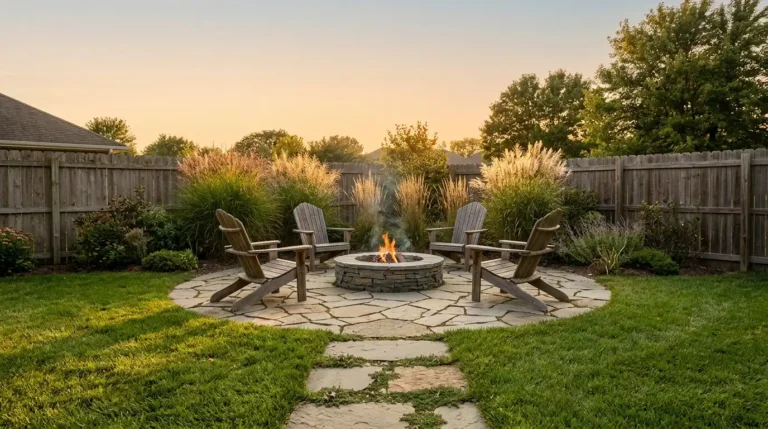
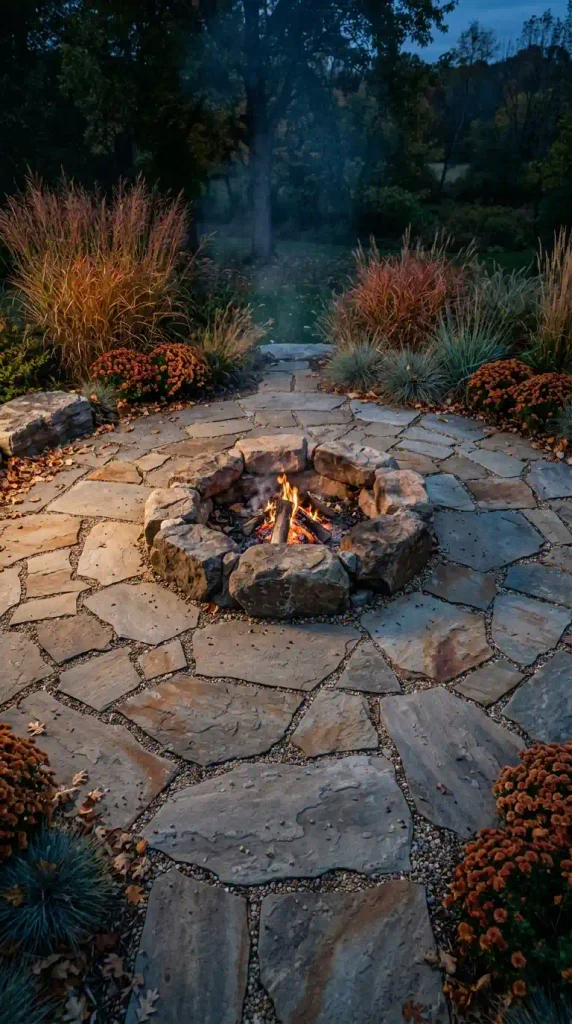
Flagstone reads older than it is. Irregular slabs set with pea gravel joints and a ring of fieldstone boulders around the pit make a patio look like it grew there.
Flagstone or pavers? Flagstone costs more per square foot and takes longer to fit. Pavers go down faster and stay flat. Flagstone wins on character, and pavers win on chair legs that don’t wobble.
Then plant the edge for fall. Switchgrass and little bluestem turn copper and stay standing through Zone 5 winters, and garden mums fill gaps across Zones 5 to 9. Keep every planting outside the clear ring, and cut grasses short on the side facing the pit, since dry stems burn fast.
15. A Tabletop Gas Fire Bowl for the Tiniest Patio
Not every patio has 14 feet to give. On a 10 x 10 slab, a tabletop fire bowl running on a 1 pound propane cylinder or gel fuel cans gets you real flame at coffee table scale.
The Six Foot Ring Rule is built for wood pits. Tabletop gas units list their own clearances in the manual, and those are the numbers you follow. Set yours on a stone or metal table, never on wood or untempered glass.
Small flame, small footprint, same ritual. You still get the glow, the warm hands, and a reason to stay outside one more hour.
Fire Pit with a Patio Ideas FAQs
Is it safe to put a fire pit on a patio?
Yes, with the right setup. Stone, pavers, gravel, and concrete don’t burn, so they make a good base. Keep the clearance your manual and local code require from the house, fences, and branches, and keep water within reach. Wood fires belong on open patios. Gas units are the usual choice under a roof, and only when the manual allows that overhead clearance.
Will a fire pit damage a concrete patio?
It can. Moisture trapped in concrete can turn to steam under a hot base and flake the surface, which is called spalling. Repeated heat cycles can also crack the slab, and heat clouds or peels sealer. A stand, a heat-rated mat, or a layer of pavers or fire brick under the bowl keeps the slab safe and the color even.
How big should a patio be for a fire pit?
Leave at least 6 feet of open patio on every side of the pit. That means adding 12 feet to the pit’s width. A 3 foot pit needs a patio about 15 feet across, which fits four to six chairs. A 2 foot smokeless bowl works on about 14 feet, and a 6 foot gas table wants roughly 18.
How far should chairs be from a fire pit?
Plan on at least 3 feet from the edge of a wood fire and about 2 feet from a gas fire. On windy nights, pull chairs back to around 7 feet, because wind pushes heat and sparks sideways. Recycled plastic and metal chairs handle stray sparks better than cushioned furniture, so save the cushions for the dining table.
How far should a fire pit be from the house?
It depends on your city. Some fire departments ask for 25 feet between a wood fire pit and any structure and 15 feet for portable outdoor fireplaces, while other codes allow less. Your fire pit’s manual also lists its own minimums. Call your local fire department and follow whichever number is larger.
Can you put a fire pit under a covered patio?
Not a wood-burning one. Smoke and sparks collect under the roof, and most wood pit manuals forbid overhead cover. A propane or natural gas fire table can work under a covered patio if the manual’s overhead clearance is met and the space has open sides for airflow. Measure before you buy.
Pick One Fire Pit Idea and Light It This Week
Start small and start soon. A steel bowl on a rated mat, two Adirondacks at the right distance, and a dry stack of oak will do more for your October evenings than a plan that never gets built. Live with that spot for a few weekends and you’ll know whether it deserves pavers, a seat wall, or a full ring kit. Run the Six Foot Ring Rule before you buy anything big, and that first fire pit with a patio will fit like it was always there. Save this list to your fall backyard board so it’s ready for the first cold night.