Cheap, Sturdy Cinderblock Raised Garden Bed Ideas That Actually Last
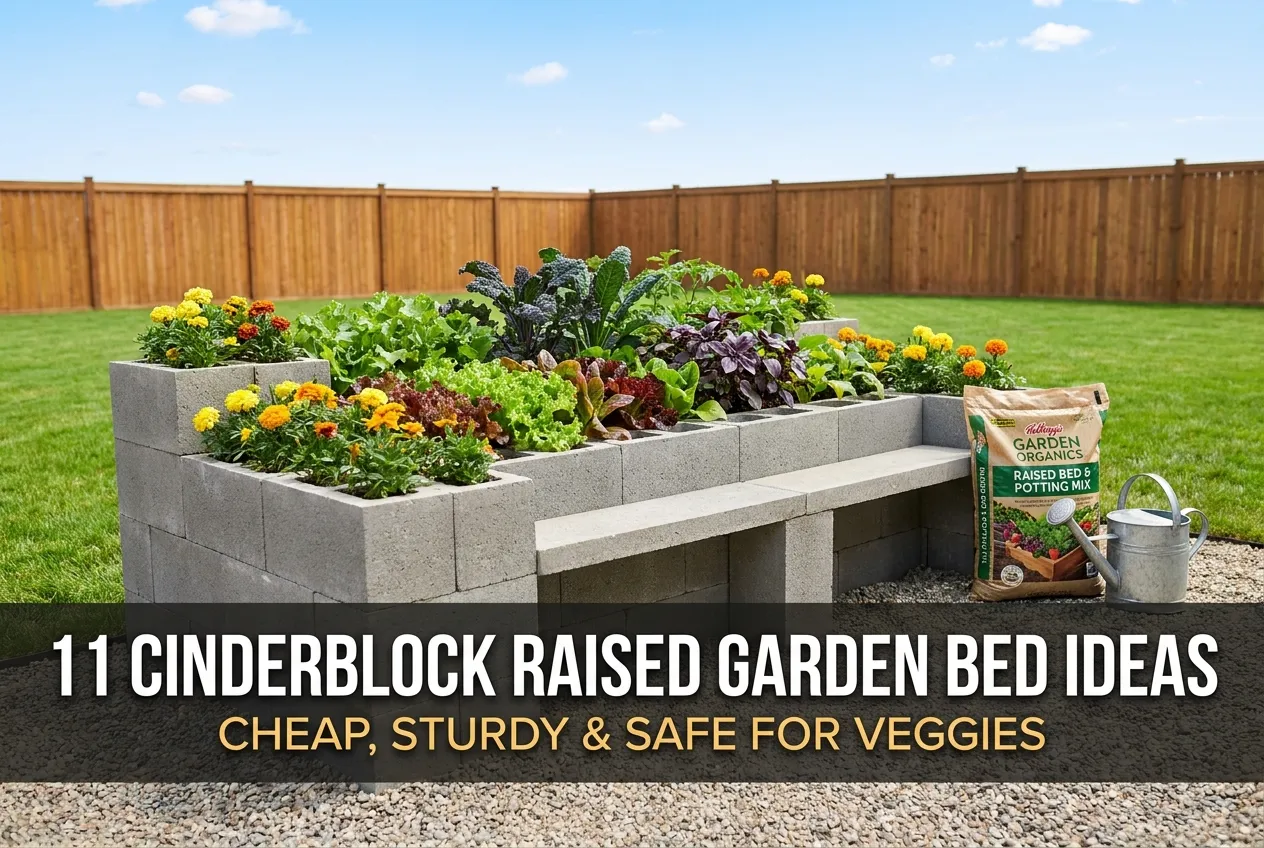
A cinderblock raised garden bed is the fastest way to grow more food for less money, and it holds up for years. No sawing. No rot. Just stack, fill, and plant. Here is the promise: by the end of this guide you will know exactly how many blocks to buy, how to keep the bed safe, and which layouts look great on a budget.
We love these beds for one honest reason. They are forgiving. Set a block crooked? Nudge it. Want the bed bigger next spring? Add a row. Most raised beds ask you to commit. This one lets you change your mind.
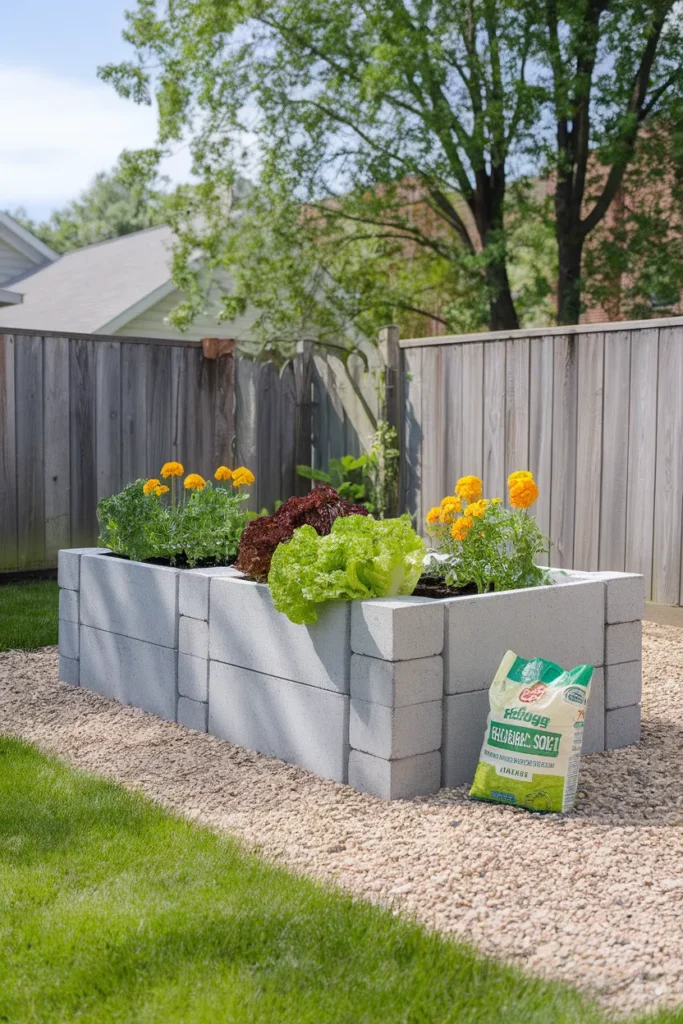
Why a Cinderblock Raised Garden Bed Beats Wood on a Budget
Wood is lovely until it warps. Cedar costs a small fortune, and cheaper pine can rot in three or four seasons. Concrete blocks skip that whole problem.
They are cheap. A single 8x8x16 concrete block runs around $2 at Home Depot or Lowe’s , so a starter bed lands well under the cost of a cedar kit.
They are heavy in a good way. Once stacked, they do not blow over, buckle, or float in a downpour. And the built-in cavities double as tiny planting pockets, which is a feature wood cannot offer.
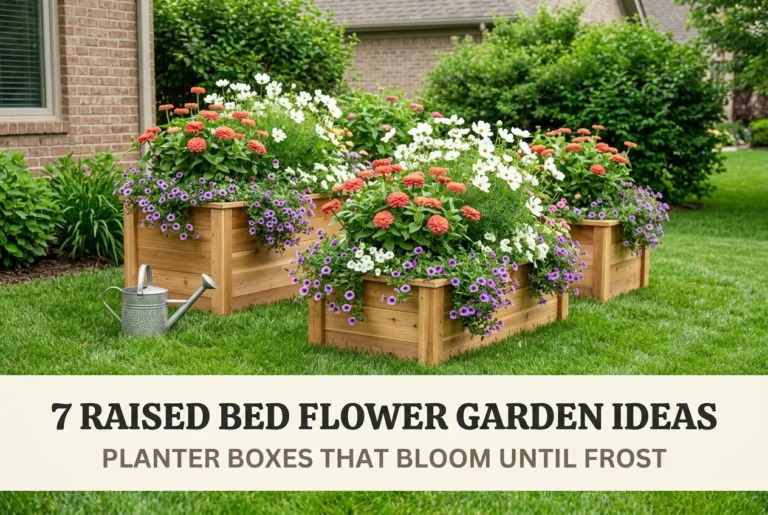
If you are torn between materials, it helps to compare notes. We broke down the softer, warmer look in our guide to the brick raised garden bed, and the trade-offs there apply here too: masonry lasts, but it costs more upfront than a quick pine frame.
The first bed we built was a 4×8 using 22 concrete blocks from our local Lowe’s, and stacking them two high took one Saturday afternoon plus a sore back the next morning.
Are Cinder Blocks Safe for a Vegetable Garden Bed?
Short answer: yes, with one easy precaution. This is the question everyone whispers, so let us clear it up.
Older cinder blocks were sometimes made with fly ash, a coal-burning byproduct that can carry trace heavy metals. Modern concrete blocks are mostly cement, sand, and aggregate, and university researchers note the risk is low and not well established. University of Maryland Extension covers this in its overview of raised bed material safety , and Virginia Tech Extension reaches a similar careful conclusion in its raised bed materials comparison.
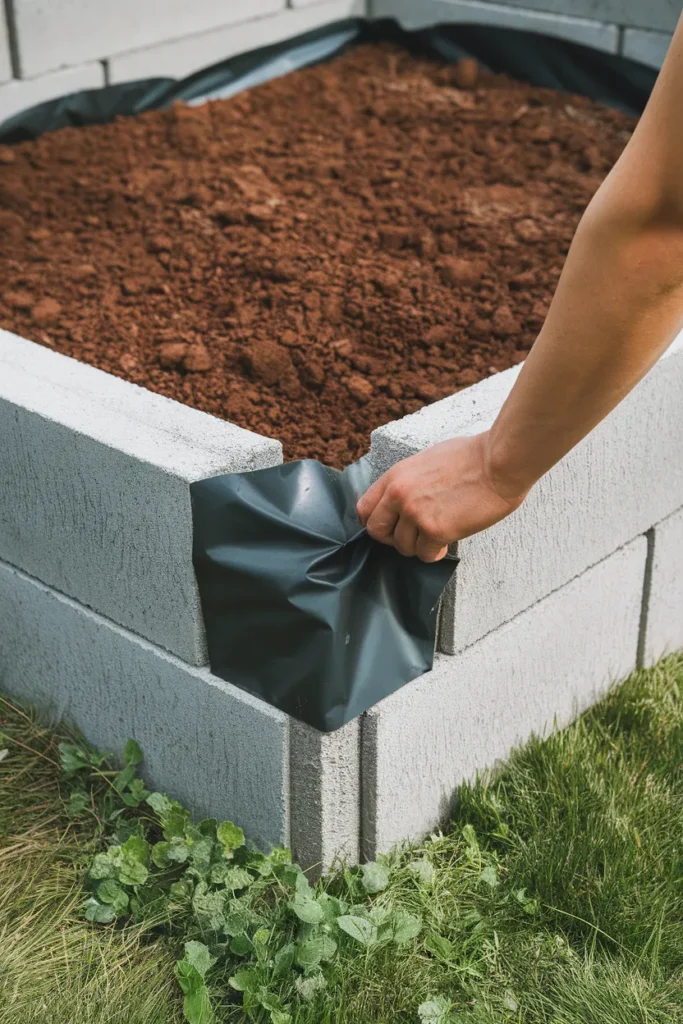
Here is the simple fix. Line the inside wall of the bed with heavy plastic or landscape fabric before you add soil. That keeps roots and soil from resting directly against the block face. Grow leafy greens and tomatoes in the center soil, and treat the block cavities as spots for flowers or herbs rather than root crops if you want extra peace of mind.
To be fair, plenty of gardeners skip the liner and grow beautifully for years. The liner just costs a few dollars and buys confidence.
How Many Cinder Blocks for a Raised Garden Bed?
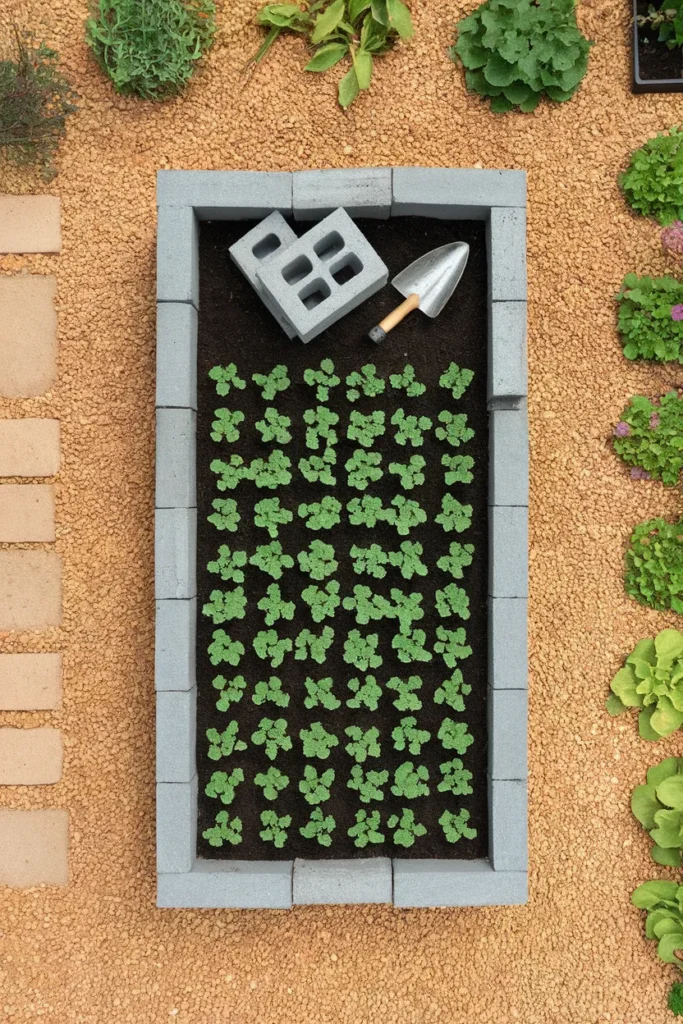
This is the math nobody hands you, so here is a clean cheat sheet you can screenshot. It uses standard 8x8x16 blocks laid end to end, one row high.
The 8-16 Block-Count Rule
We call it the 8-16 Rule because a classic 4×8 bed needs a count built around those two block dimensions. Here is how it shakes out for one row:
| Bed size | Long sides | Short ends | Blocks (1 row) | Blocks (2 rows) |
|---|---|---|---|---|
| 4 ft x 4 ft | 6 | 4 | 10 | 20 |
| 4 ft x 8 ft | 12 | 4 | 16 | 32 |
| 4 ft x 12 ft | 18 | 4 | 22 | 44 |
Numbers shift slightly depending on how you overlap the corners, so buy two or three extra blocks. You will use them. At roughly $2 a block, a two-row 4×8 bed sits in the under-$70 range for blocks alone, before soil.
Speaking of soil, do not guess. A 4×8 bed two blocks high needs a surprising amount, and running short mid-project is the classic rookie stumble. Our guide on what to fill a raised garden bed with walks through cheap layering so you are not buying bagged mix for the entire depth.
I filled my first 4×8 bed with bagged Miracle-Gro alone and blew my budget, when swapping the bottom third for logs and leaves the hugelkultur way would have saved me about $40.
Cinderblock Raised Garden Bed Ideas Worth Copying
Now the fun part. Sturdy does not have to mean boring.
Two-High Beds for Easier Reach
Stack blocks two rows high and your soil sits near knee level. Backs everywhere rejoice. This is the single best upgrade for anyone who finds bending painful, and it barely doubles the block count.
Cap-Block Bench Edge
Lay solid cap blocks flat across the top row and you get a built-in seat around the whole bed. Perch there to weed. Set your coffee down. It reads custom, costs a few dollars per cap, and looks far more finished.
Planting Pockets in the Cavities
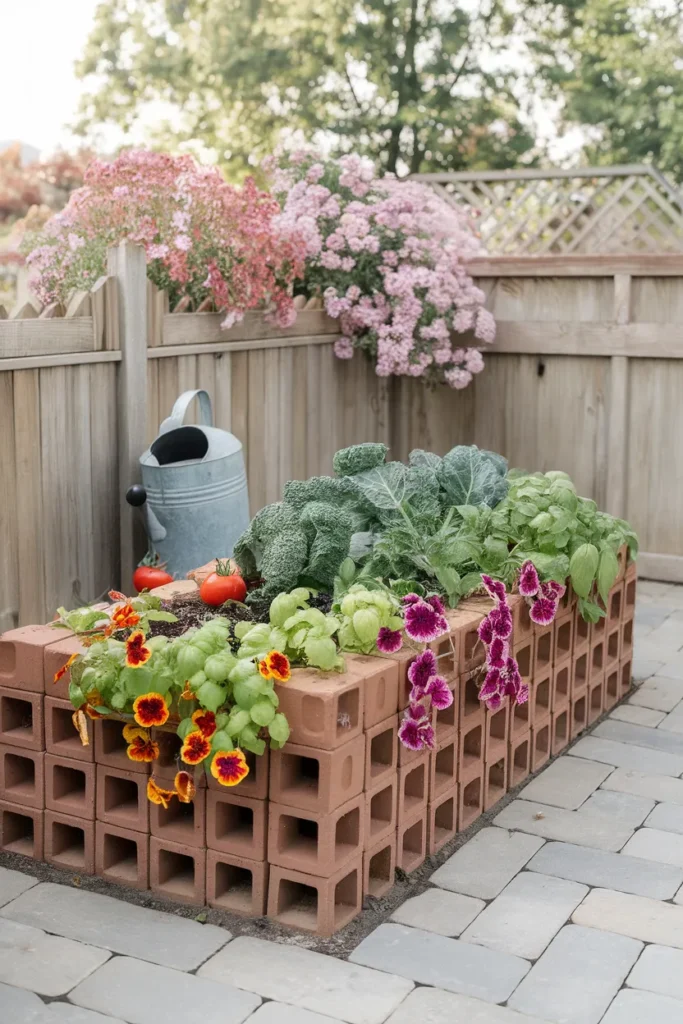
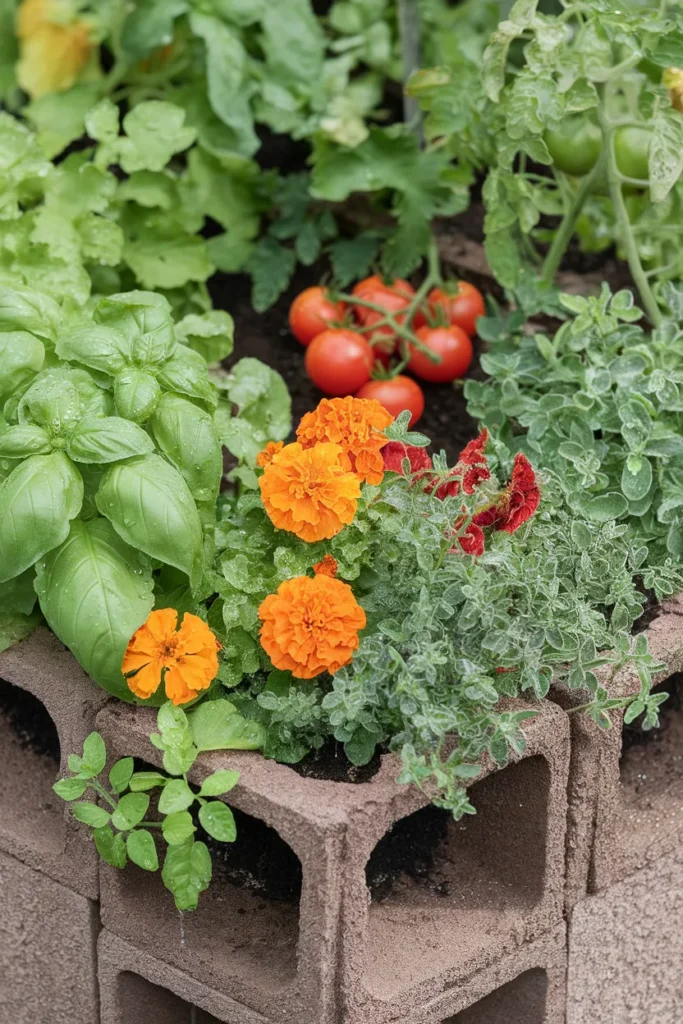
Fill the open block holes with soil and tuck in basil, thyme, marigolds, or trailing nasturtium. The bed edge turns into a living border. Keep edible root crops in the lined center if you followed the safety step above.
Blocks Plus Wood for a Warmer Look
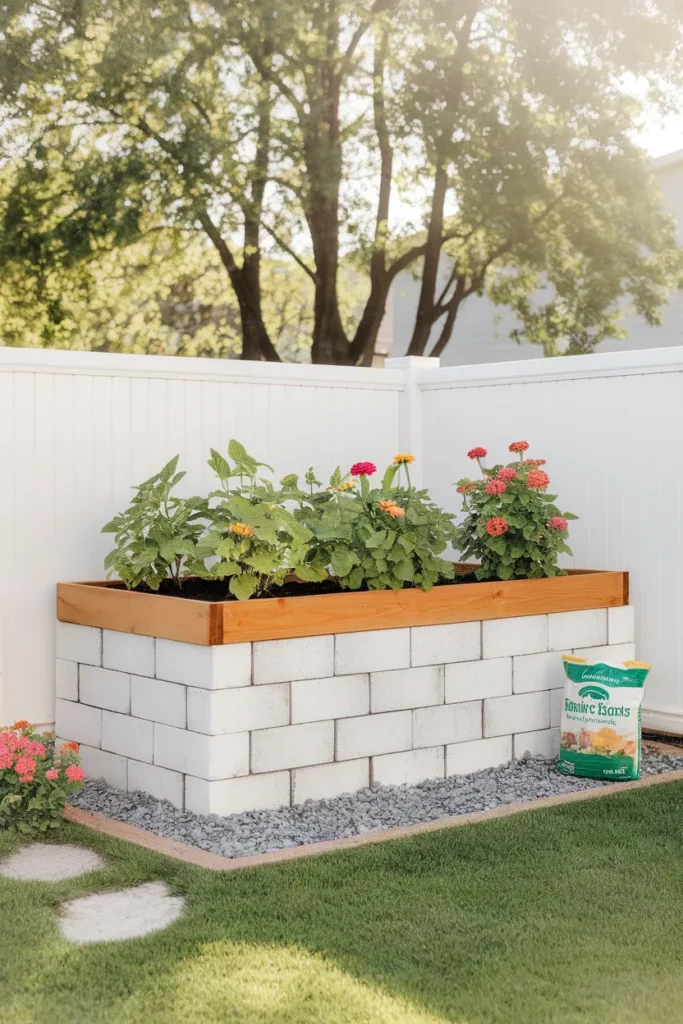
Not sold on all-gray? Cap the top with a simple cedar 2×6 rail, or alternate a wood-topped bed nearby. This mixed look is trending on Pinterest right now for good reason, blending masonry strength with softer texture.
Paint or Whitewash the Front
A coat of masonry paint (or a thinned whitewash) turns builder-gray into cottage-white or moody charcoal. The “Painted” pill is one of Pinterest’s own guided suggestions for this search, so plenty of gardeners are doing exactly this.
How to Build a Cinderblock Raised Garden Bed Step by Step
Five steps. One afternoon. Here is the whole build.
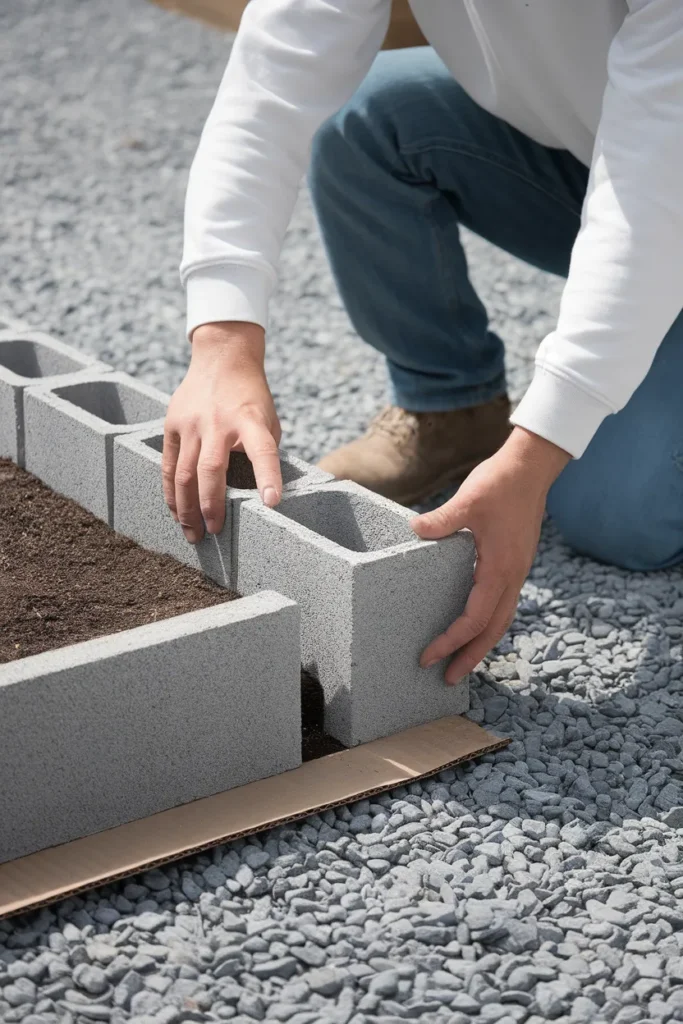
First, pick a sunny, roughly level spot. Six or more hours of sun is the sweet spot for vegetables. Sudden slope changes make blocks rock, so choose the flattest ground you can.
Second, mark the footprint and clear the sod. Skim off grass where the blocks will sit, or set them an inch into the soil so they lock in place and stop shifting.
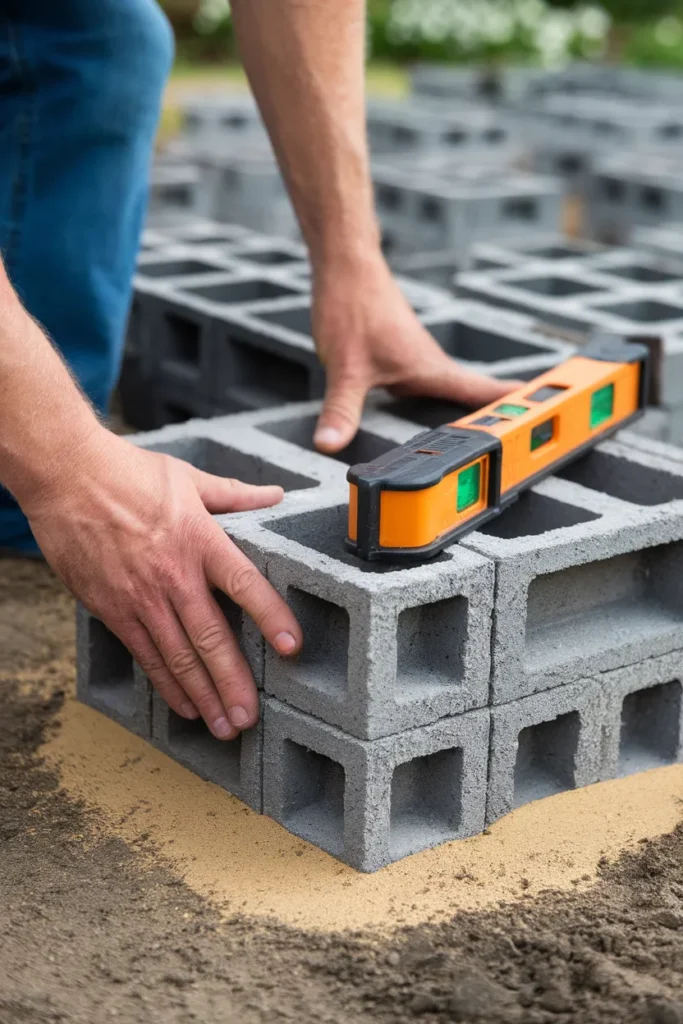
Third, lay the first row and check level constantly. Use a little sand under low blocks to bring them even. The bottom row sets the tone for the whole bed, so take your time here.
Fourth, add your second row, staggering the blocks so seams do not stack directly on top of each other. That overlap is what gives the wall its strength.
Fifth, line the inside, add cardboard on the base to smother weeds, then fill with soil. Water it, let it settle overnight, top it off, and plant.
Bed depth matters more than people expect, especially for carrots and tomatoes. If you are unsure how tall to go, our breakdown of how deep a raised bed should be gives target depths by crop.
We garden in Zone 6b, and our last frost usually lands around mid-May, so we build in April and plant the moment the soil warms.”
What to Plant in a Cinder Block Raised Garden Bed
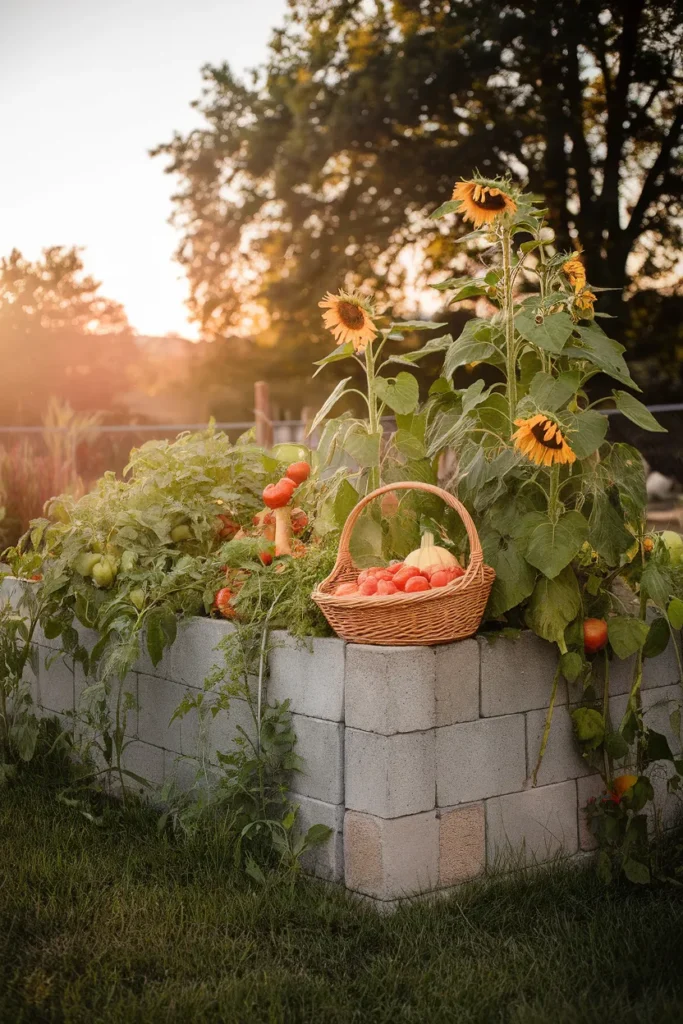
Almost anything you would grow in any raised bed. The center soil grows heavy feeders like tomatoes, peppers, squash, and beans. Leafy greens love the loose depth.
Match your timing to your USDA zone. In Zones 5 to 9, cool crops like lettuce and peas go in early spring, warm crops like tomatoes wait until after your last frost (typically mid-April to mid-May depending on your zone). Confirm your exact window against the USDA Plant Hardiness Zone Map or your local extension, since micro-location shifts frost dates by a week or two.
Use the block cavities for companions. Marigolds deter pests, basil pairs with tomatoes, and thyme spills nicely over the edge. Bonnie Plants six-packs make this cheap and beginner-friendly, usually under $6 a pack.
Finishing Touches: Paths, Edging, and Curb Appeal
The bed is only half the picture. A tidy surround makes it look intentional.
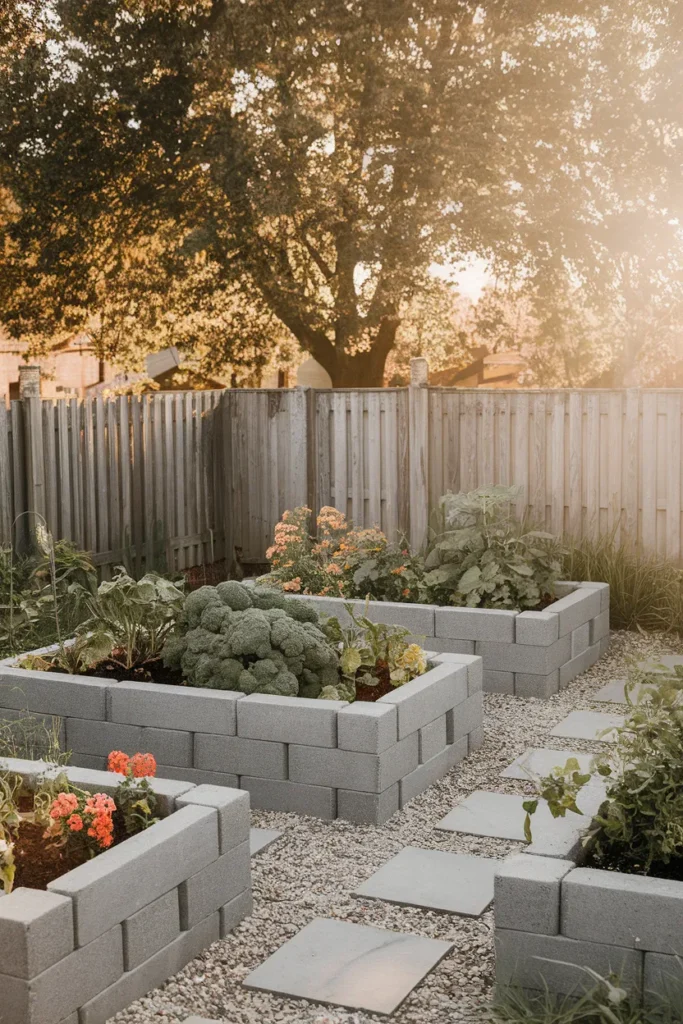
Pea gravel over cardboard is the cheap, popular choice, and it drains well. Lay cardboard to block weeds, pour gravel a couple inches deep, and edge it with a simple black border or, if the budget allows, a low brick trim.
Group two or three beds with three-foot paths between them. Plants sprawl more than you think, and a narrow two-foot path disappears by July.
Common Mistakes to Skip
A few small missteps cost people a whole season, so dodge these.
Skipping the level. A wobbly base telegraphs up the whole wall. Building on a slope without terracing. Water and soil slide to the low end. Forgetting the weed barrier. Grass pushes right up through the bed. Underestimating soil volume. This is the number one budget blowout, so measure before you shop.
Frequently Asked Questions
Are cinder blocks good for a raised garden bed?
Yes. They are cheap, heavy, and long-lasting, and they will not rot like wood. Modern blocks are mostly concrete, and lining the interior wall handles the small fly-ash concern with older blocks.
Can I use cinder blocks to raise my bed?
Absolutely. Stacking blocks two rows high lifts the soil close to knee level, which is easier on your back and improves drainage. Stagger the seams and check your level as you go.
Can plants grow in cinder blocks?
They can. The open cavities make handy pockets for herbs, marigolds, and trailing flowers. For extra caution with older blocks, keep edible root crops in the lined center soil rather than the block holes.
How many cinder blocks for a raised garden bed?
A 4×8 bed one row high needs about 16 standard 8x8x16 blocks, or 32 for a two-row bed. A smaller 4×4 needs about 10 blocks per row. Buy a few extra for corner overlap.
Are cinder block raised beds dangerous?
The risk is low. Older blocks could contain fly ash with trace heavy metals, but university extensions call the danger minimal and unconfirmed. A plastic or fabric liner is the simple, cheap safeguard.
What do you put in the bottom of a cinder block raised bed?
Cardboard or newspaper to smother weeds, then a cheap bulk layer (branches, leaves, or bulk topsoil) for the lower depth, topped with quality raised bed mix where roots live.
Can you paint a cinder block garden bed?
Yes. Masonry paint or a thinned whitewash covers builder-gray beautifully. Clean the blocks first and use exterior masonry paint so it holds up to weather.
Ready to Build Yours This Weekend?
A cinderblock raised garden bed gives you more growing space, fewer rotting boards, and a look you can dress up with paint, caps, or cedar. Start small with one 4×8 bed, line it, fill it smart, and plant what you actually eat. Save this guide for your build day, then come back and tell us which layout you picked. Your future tomatoes will thank you.