How to Start a Balcony Vegetable Garden in a Rental (Without Losing Your Deposit)
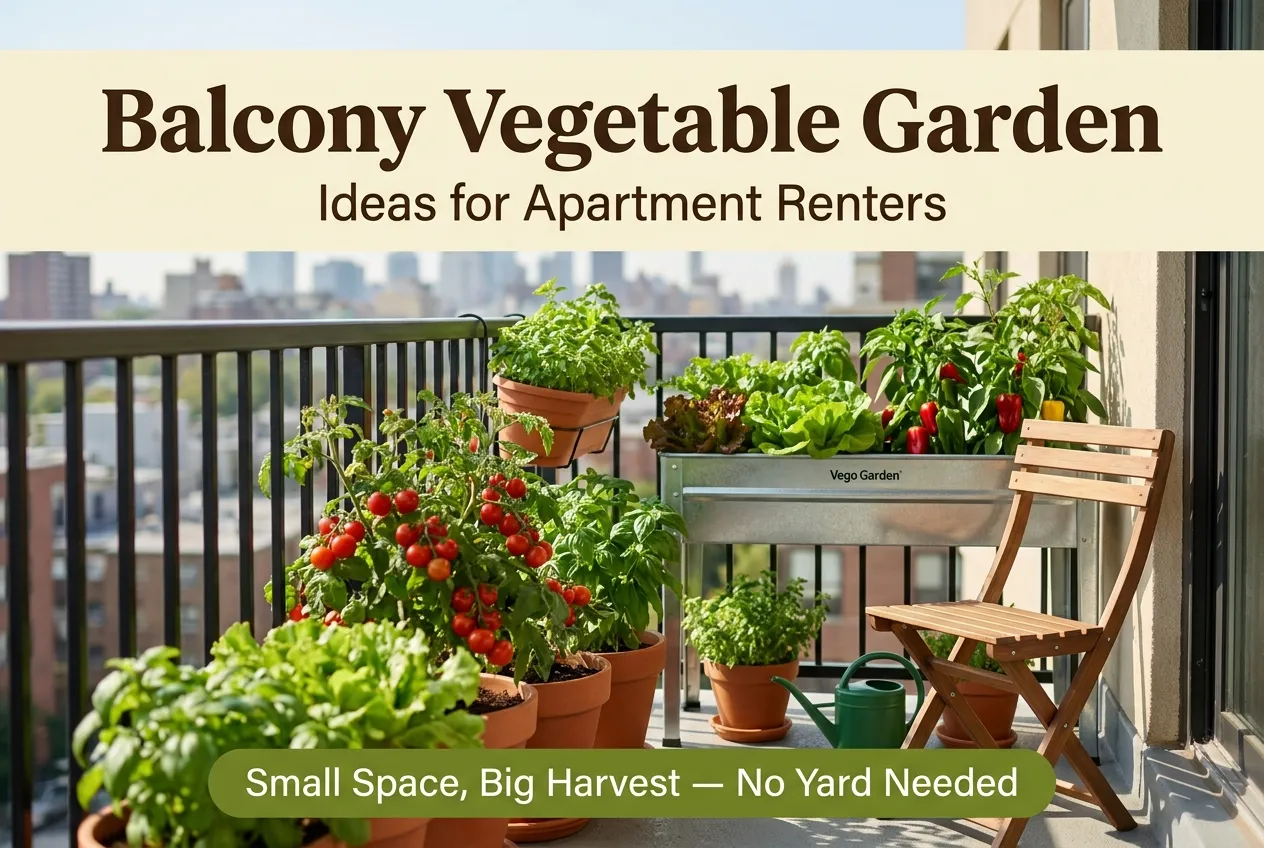
You signed a lease. No yard. Maybe a slab of concrete the size of a bath mat, one railing, and a view of somebody else’s air conditioner. And still, that itch to grow your own food will not quit. Good. A balcony vegetable garden is one of the easiest, prettiest wins a renter can pull off, and you can start this weekend with a trip to Home Depot and zero permission from your landlord.
Here’s the promise. By the end of this guide you’ll know exactly which crops thrive up high, how to set them up without drilling a single hole, and how to make the whole thing look like a styled corner instead of a pile of pots. We garden in small spaces too, so this is the practical version, not the dreamy one.
Our first balcony vegetable garden lived on a west-facing 5×8 rental balcony in Zone 7a, and I lost an entire basil crop to afternoon scorch before I figured out the shade cloth trick.
Can You Really Grow Vegetables on an Apartment Balcony?
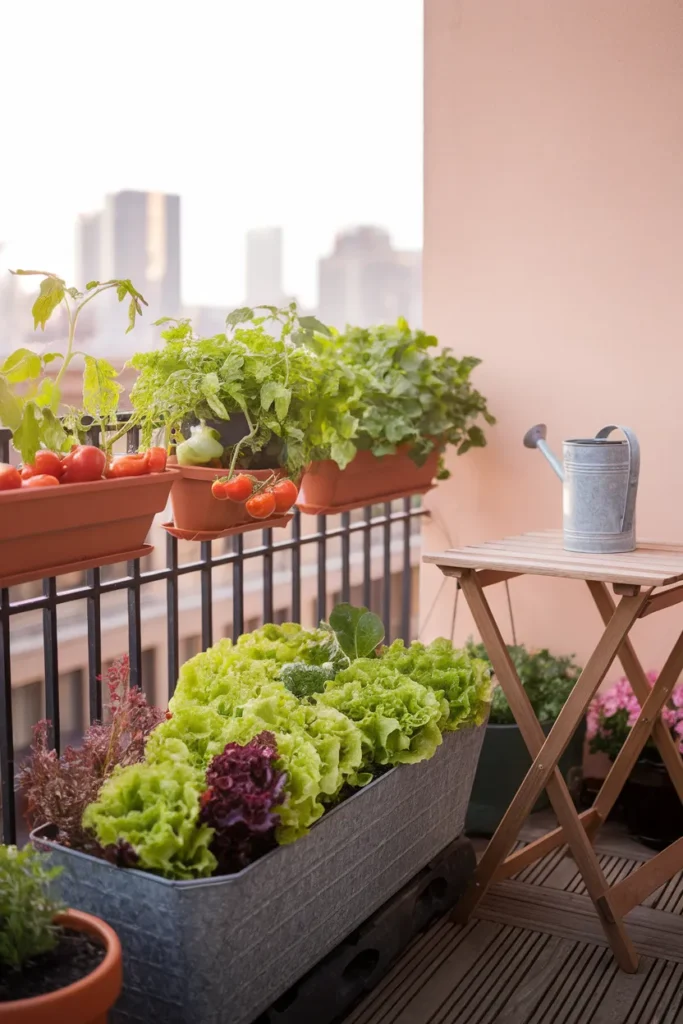
Short answer: yes, and better than you’d think. A balcony vegetable garden works because vegetables care about light, soil, and water far more than they care about being in the ground.
The catch is sun. Most fruiting crops want a lot of it. According to Penn State Extension, most vegetables need six to eight hours of sun a day to really produce, so before you buy anything, watch your balcony for one full day. Note when the light lands and how long it stays.
Three quick reads tell you what’s possible:
- Six-plus hours of direct sun: you can grow tomatoes, peppers, and strawberries.
- Three to five hours: lean into lettuce, spinach, kale, and most herbs.
- Mostly shade: you’re still in business with leafy greens and mint, just skip the tomatoes.
One thing renters forget: your hardiness zone still matters up on the fourth floor. Check your USDA plant hardiness zone so you plant at the right time and don’t set tender seedlings out three weeks too early.
What Counts as a Balcony Garden, Anyway?
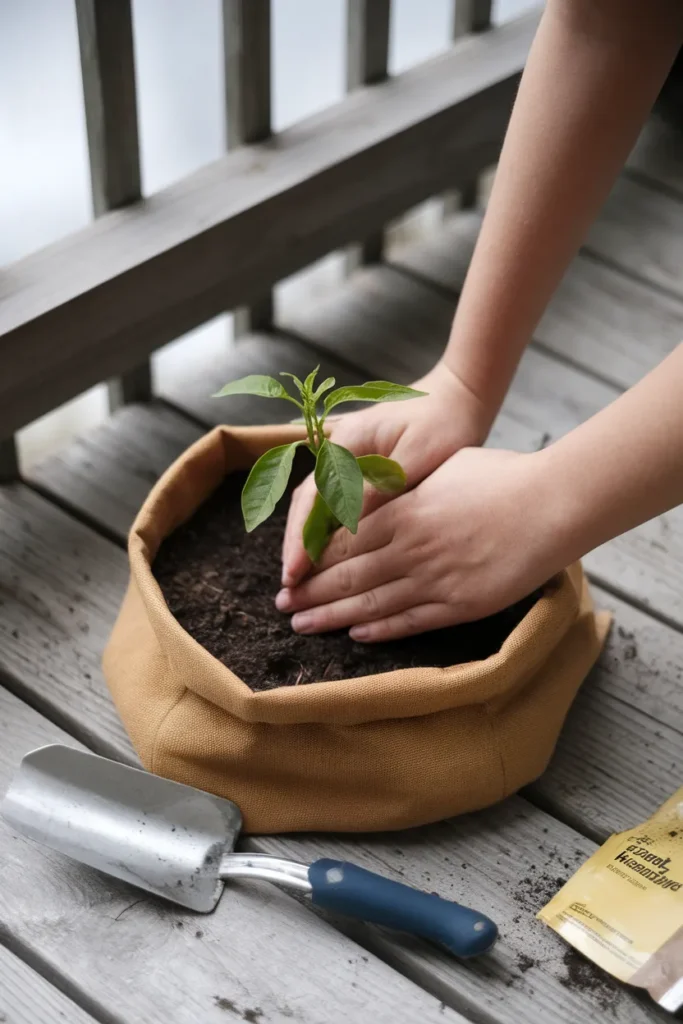
People overthink this. A balcony garden is just plants grown in containers on a balcony, railing, or wall. That’s it. Three pots of herbs count. So does a full railing of tomatoes. Start where you are.
The Best Vegetables to Grow on a Balcony
Pick easy wins first. Nothing kills momentum like babying a fussy crop that sulks all July. These are the reliable performers for an apartment balcony vegetable garden, and most of them shrugged off the heat when we tested small-space growing.
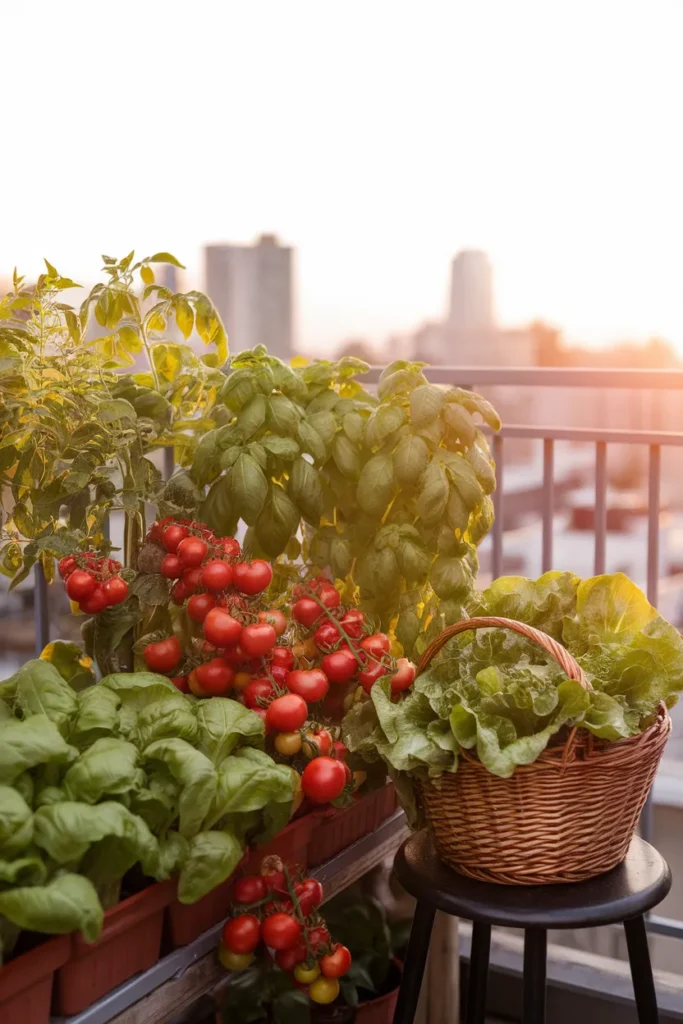
- Cherry tomatoes. The number one balcony crop, hands down. Dwarf and patio varieties like ‘Tiny Tim’ stay compact and fruit for months. Give them a big pot and full sun.
- Leafy greens. Lettuce, spinach, arugula, and kale grow fast, tolerate part sun, and let you snip a salad every few days.
- Peppers. Compact, heat-loving, and gorgeous when the fruit colors up. Great for a sunny railing.
- Herbs. Basil, mint, parsley, chives, and thyme. The best flavor-per-square-inch on any balcony.
- Radishes. Ready in about a month, perfect for impatient beginners and shallow pots.
- Strawberries. Trailing varieties spill beautifully out of a hanging planter or a Greenes Fence tiered bed.
Front-load your effort here: if you only plant one thing, make it cherry tomatoes in the sunniest spot you’ve got.
The 3-Layer Balcony Grow Wall (My No-Drill Framework)
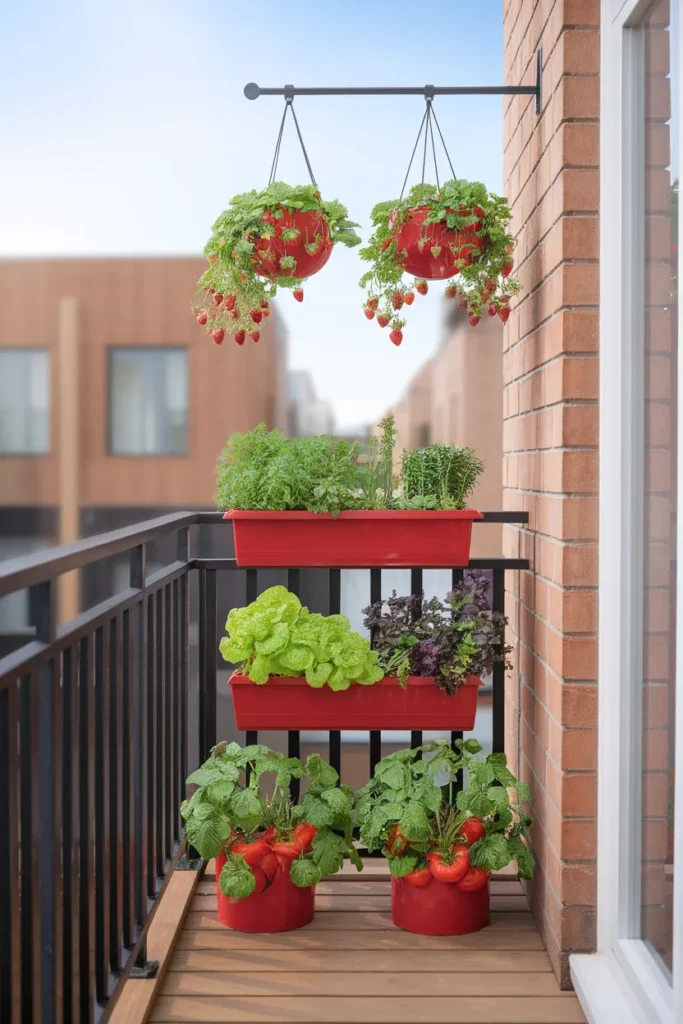
Here’s the framework I use to squeeze a real harvest out of a tiny space without touching a drill. Call it the 3-Layer Balcony Grow Wall. The idea is simple: you garden in three stacked layers so every inch of vertical space earns its keep, and nothing needs to be screwed into the wall.
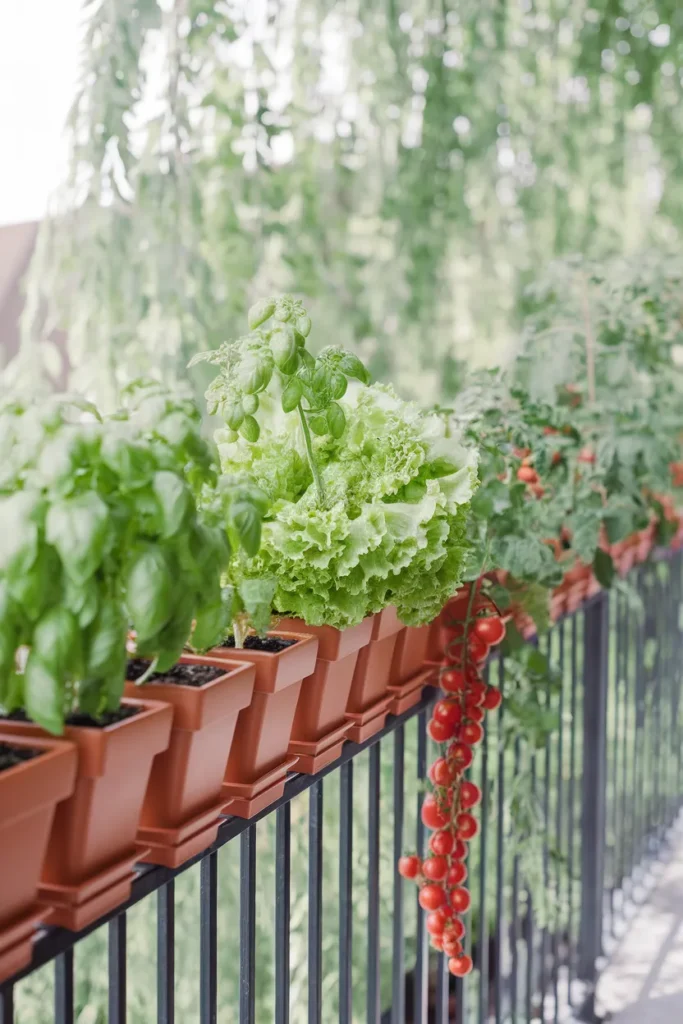
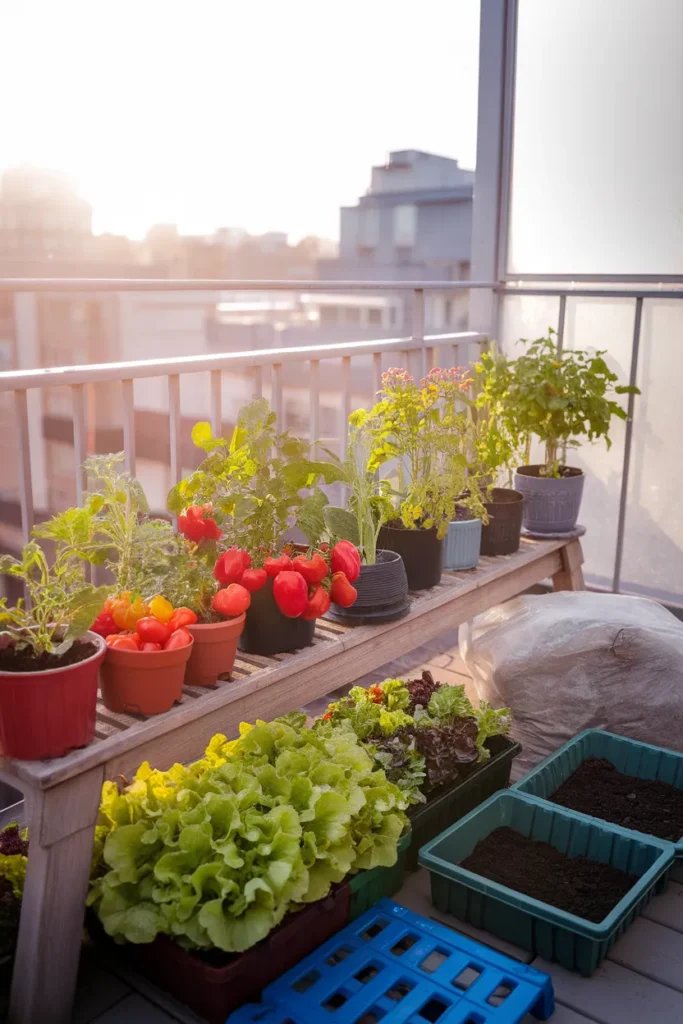
Layer one is the floor, where the heavy hitters live. Big pots of tomatoes and peppers sit low and stable, close to the building wall. Layer two is the railing, where clamp-on or straddle planters (think Bloem rail planters) hold herbs and greens at snacking height. Layer three is the air, where hanging baskets and a tension-rod trellis carry strawberries and trailing crops overhead.
Stack those three and a 4-foot-wide balcony grows what would normally sprawl across a small yard. For a deeper build with shelves and pocket planters, our full guide to a vertical balcony garden walks through the whole setup.
Renter-Safe Ways to Attach Everything
Keep your deposit. Every layer above attaches without a drill: railing planters clamp or straddle, hanging baskets use S-hooks or a tension rod between walls, and shelving simply leans. Skip the wall anchors entirely and you’ll never explain a hole to a landlord.
Containers, Soil, and Watering (the Part Beginners Skip)
This is where most balcony gardens quietly fail, so let’s get it right.
Containers. Go bigger than feels necessary. Tomatoes and peppers want at least a 5-gallon pot; greens and herbs are happy in something shallower. Fabric grow bags are a renter’s best friend because they’re cheap, they store flat, and they drain well. Just make sure every container has drainage holes so roots don’t drown.
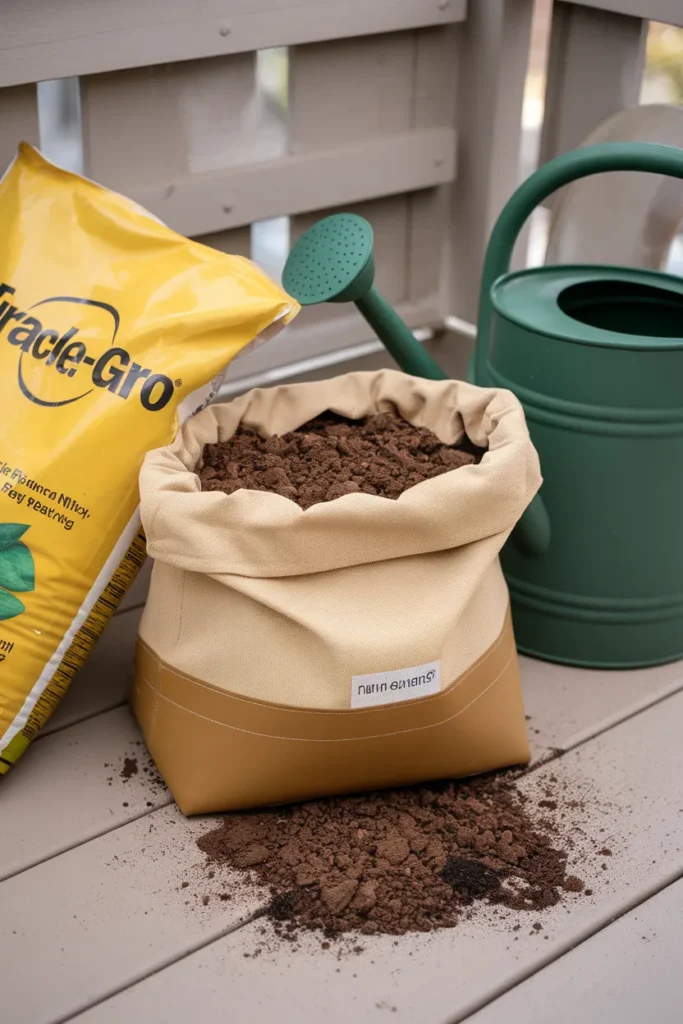
Soil. Never dig up yard dirt (you don’t have any anyway) and never reuse tired old mix. Buy fresh potting mix. A bag of quality mix like Miracle-Gro or Kellogg runs around $15 to $20 and fills a couple of medium pots.
Watering. Containers dry out fast up in the wind and sun. Penn State Extension notes that most container vegetable gardens need watering at least once a day in hot summer months, and balconies bake even faster. Stick a finger an inch into the soil; if it’s dry, water until it runs out the bottom. For anyone who travels or forgets, self-watering pots are worth every penny.
If you want the full breakdown of pot sizes matched to specific crops, our guide to container gardening vegetables lists the exact size each plant needs.
Reading Your Balcony: Sun, Wind, and Weight
Before you haul home fifty pounds of soil, read the space. Three forces decide whether your balcony vegetable garden thrives or topples.
Sun we covered: watch for a day, then match crops to the light you actually get, not the light you wish you had.
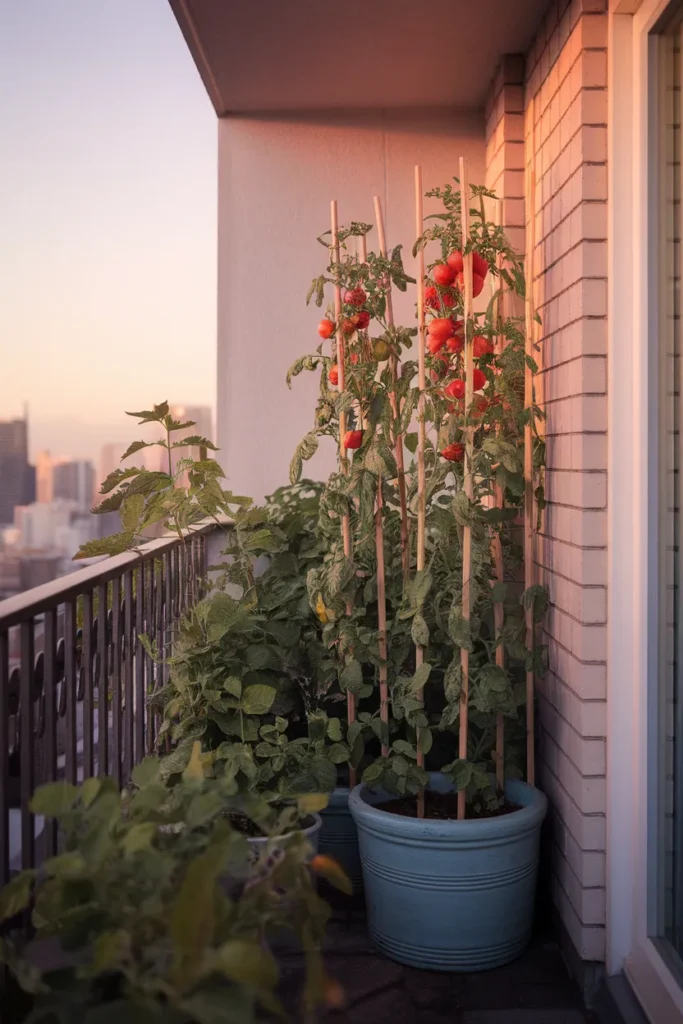
Wind is the sneaky one. Above the third floor, gusts dry soil out in hours and can knock a top-heavy tomato clean over. Keep tall plants staked and close to the wall, and choose heavier pots for the exposed edge.
Weight matters more than people realize. Wet potting mix weighs roughly 8 pounds per gallon once soaked, so a few big pots add up quickly. Spread the load, keep the heaviest containers near the building wall over the strongest part of the structure, and if your balcony is old or you’re unsure, check with your building manager. Local codes and load limits vary, so treat this as general guidance and confirm anything structural with a qualified professional.
How to Make a Balcony Vegetable Garden Look Good
Growing food and styling a space aren’t separate projects. The prettiest balcony gardens simply use plants as decor. This is the home-decor half of the equation, and honestly, it’s the fun part.
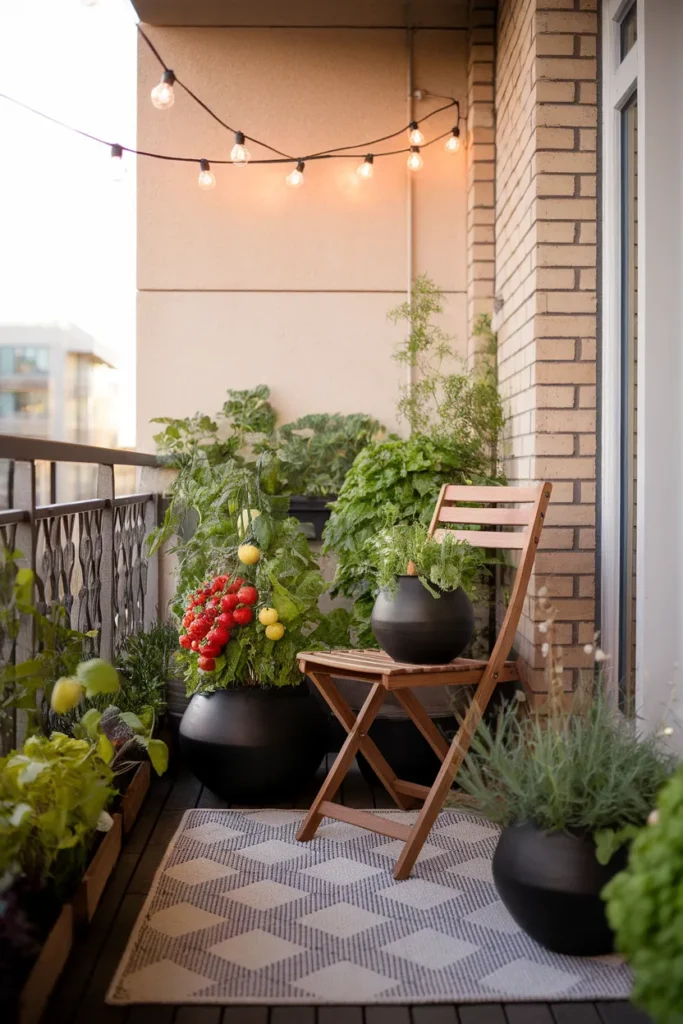
Stick to a container palette. Matching terracotta, or all matte black, or all warm wood, instantly reads as designed rather than accidental. Repeat one or two materials and let the plants bring the color.
Layer in a little comfort. A folding bistro chair, an outdoor rug that handles moisture, and a string of Brightech cafe lights turn a working garden into a place you actually want to sit. Tuck a small watering can and a stack of terracotta saucers into the styling so the useful stuff looks intentional.
I zip-tied a $12 bamboo roll screen to our railing behind the tomatoes and it hid the neighbor’s downspout while doubling as a warm backdrop for photos.
For more ways to dress up a rented outdoor nook on a budget, borrow ideas from our roundup of small patio ideas apartment renters love.
A Simple Weekend Setup Plan
You don’t need a whole season to start. Here’s the fast version.
- Saturday morning: watch the light, then shop. Grab potting mix, three to five containers, and easy starter plants (a tomato, a pepper, a six-pack of lettuce, one basil).
- Saturday afternoon: fill pots, plant, water deeply, and place the heavy ones near the wall.
- Sunday: add the styling layer, a rug, a chair, lights, and a railing planter, then step back and enjoy it.
That’s a living balcony vegetable garden in one weekend, no drill required.
Keeping It Alive Through Summer
The first two weeks are the make-or-break window. Water consistently, watch for the classic wilt of a pot that dried out at noon, and don’t panic over a few yellow leaves.
Feed lightly. Container crops burn through nutrients faster than garden beds, so a diluted all-purpose fertilizer every couple of weeks keeps them productive. Pinch herbs often to keep them bushy, and harvest greens from the outside in so the plant keeps producing.
The one summer I skipped feeding, my Zone 7 patio tomatoes fruited early then just stalled in August until I started a weekly Espoma feed.
Frequently Asked Questions
What vegetables can be grown on a balcony?
Plenty. Cherry tomatoes, peppers, lettuce, spinach, kale, radishes, strawberries, and nearly every herb do well in containers. Match the crop to your sun: fruiting plants for six-plus hours, leafy greens and herbs for partial sun.
What is a balcony garden?
It’s simply a collection of plants grown in containers on a balcony, railing, or wall instead of in the ground. It can be as small as a few herb pots or as full as a railing packed with vegetables.
How do you make a balcony vegetable garden?
Watch your light for a day, pick containers with drainage, fill them with fresh potting mix, plant easy crops like tomatoes and lettuce, and water daily in summer. Keep heavy pots near the wall and attach everything without drilling to protect your deposit.
Can you grow a garden on your balcony as a renter?
Absolutely. Clamp-on railing planters, fabric grow bags, hanging baskets, and leaning shelves all work with no drilling and no permanent changes, which makes balcony gardening ideal for rentals.
How much sun does a balcony vegetable garden need?
Most vegetables want six to eight hours of direct sun for a real harvest. With three to five hours you can still grow leafy greens and herbs successfully.
How often should I water balcony vegetables?
In hot summer weather, usually once a day, sometimes twice for small pots in wind and full sun. Check the top inch of soil and water whenever it feels dry.
Your Balcony Is Ready When You Are
Here’s the honest truth. You don’t need a yard, a green thumb, or your landlord’s blessing to grow real food this year. You need a sunny corner, a few pots, and one free weekend. Start with a single cherry tomato if that’s all that fits, because momentum grows faster than any plant.
Snap a photo of your balcony before you begin, save this guide, and come back to tell us what you planted. We’d love to see the corner you create.