Small Balcony, Big Harvest: Your Vertical Balcony Garden Playbook
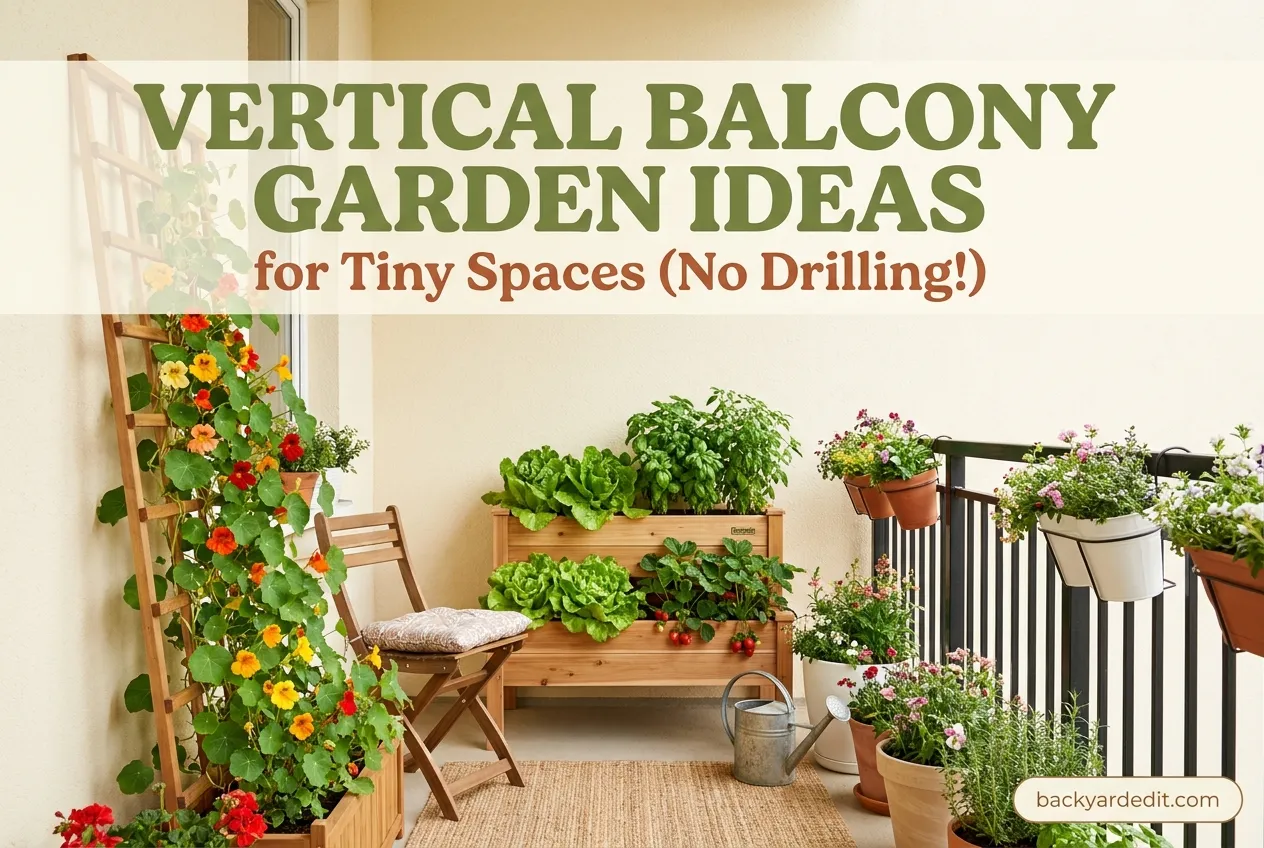
Your balcony is smaller than a parking space. We know. Ours is too. Here’s the good news though: a vertical balcony garden turns that skinny strip of concrete into a green, productive little pocket, and you do not need a yard, a landlord’s blessing for power tools, or a pile of cash to pull it off. Grow up instead of out, and suddenly herbs, strawberries, and trailing flowers all fit.
This is the setup we wish someone had handed us on day one. You’ll get renter-safe ideas, real plant picks, a simple build plan, and the safety stuff most guides skip (like what happens when wind hits a loaded planter shelf). If your balcony is currently holding one sad chair and a dream, that’s the perfect starting point. For a full before-and-after on a shoestring, our tiny balcony makeover walks through the whole thing.
Real experience here, e.g. “Our first vertical balcony garden lived on a north-facing 4×6 rental balcony in Zone 6b, and the shade nearly killed the basil before we swapped in mint and lettuce.”
Why a Vertical Balcony Garden Works So Well in Tiny Spaces
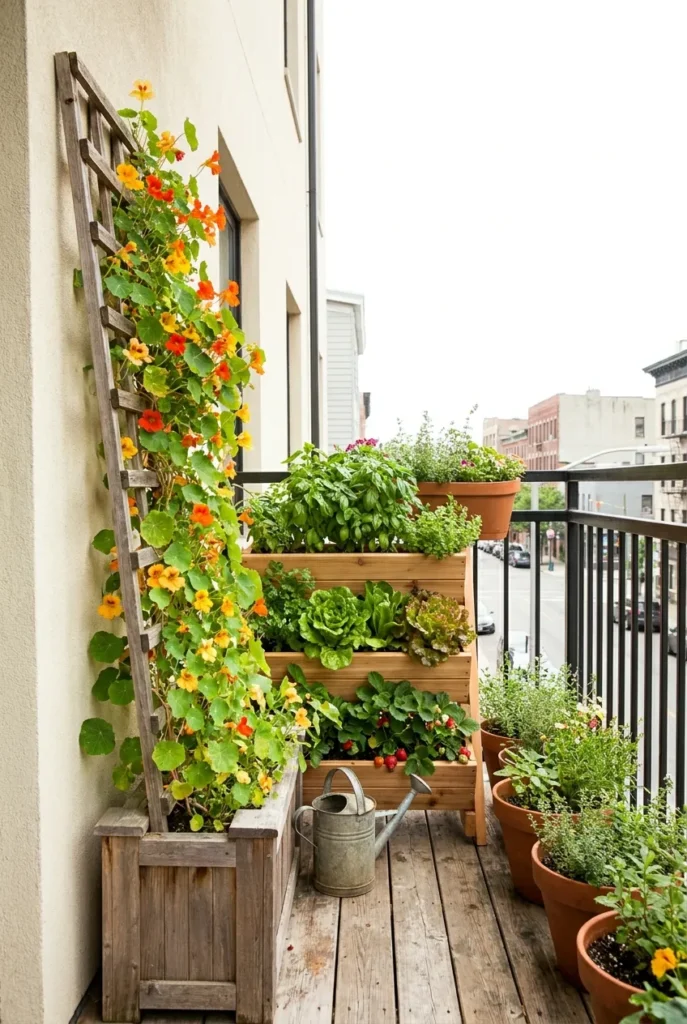
Floor space runs out fast on a balcony. Wall space and railing space? Usually wide open. A vertical balcony garden borrows all that unused height, so a 4-foot-wide wall can hold what would normally sprawl across ten pots on the ground.
There’s a comfort payoff too. Plants at eye level feel lush and immersive, and they screen out the neighbor’s window without a single fence panel. Air moves better through stacked planters, which cuts the mildew you get when pots sit crammed together on the deck.
Renters win here specifically. Most vertical setups clamp, hang, or lean, so you skip drilling and keep your deposit. That single idea shapes almost every choice below.
Read Your Balcony First: Sun, Wind, and Weight
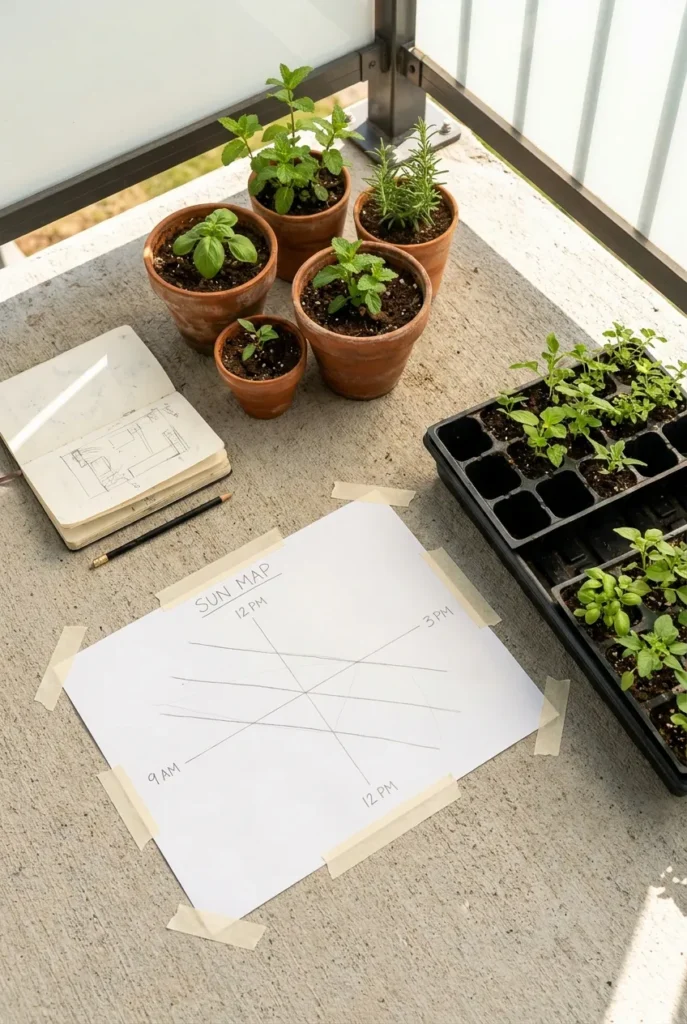
Before you buy a single planter, spend one day watching your balcony. Seriously, just watch it. Note when the sun actually hits and for how long. Most balcony disappointments trace back to someone planting tomatoes on a spot that gets two hours of light.
Sun matters most. Six-plus hours of direct sun means you can grow fruiting crops and sun-loving flowers. Three to five hours suits leafy greens and many herbs. Deep shade still grows plenty, just different plants (more on that below).
Wind is the sneaky one. Balconies, especially above the third floor, catch gusts that dry soil fast and can topple a top-heavy planter shelf. Keep the heavy pots low, anchor tall trellises to the railing, and skip flimsy shelving that racks in a breeze.
Then there’s weight. Wet soil is heavy, roughly 8 pounds per gallon of mix once watered. A loaded 5-tier planter can top 60 pounds, so spread the load and keep clusters near the building wall, not hanging off the outer rail edge.
Quick Sun-to-Plant Match (screenshot this)
| Daily direct sun | Grow these on your balcony |
|---|---|
| 6+ hours (full sun) | Cherry tomatoes, peppers, strawberries, dwarf sunflowers, petunias |
| 3 to 5 hours (part sun) | Most herbs, lettuce, kale, chard, calendula |
| Under 3 hours (shade) | Mint, parsley, ferns, pothos-style trailers, impatiens |
Real experience here, e.g. “We learned the weight thing the hard way when a rain-soaked stacked planter leaned into the railing overnight and cracked a terracotta pot below.”
The 3-Layer Balcony Wall Method (our simple framework)
Here’s the framework we use so a vertical balcony garden never turns into a cluttered mess. Think in three stacked layers, floor to ceiling, and assign every plant a home. It keeps watering logical (top drips down), keeps heavy things low, and makes the whole wall read like one designed piece instead of random pots.
Layer one is the floor zone: your biggest, heaviest containers sit here. A Vego Garden or Birdies-style low planter, or a couple of chunky pots with dwarf tomatoes and peppers. Heavy equals low equals stable.
Layer two is the eye zone: railing planters and a leaning trellis. This is your herbs, greens, and trailing flowers, the stuff you touch and harvest daily. Clamp-on railing boxes shine here (no drilling, remember).
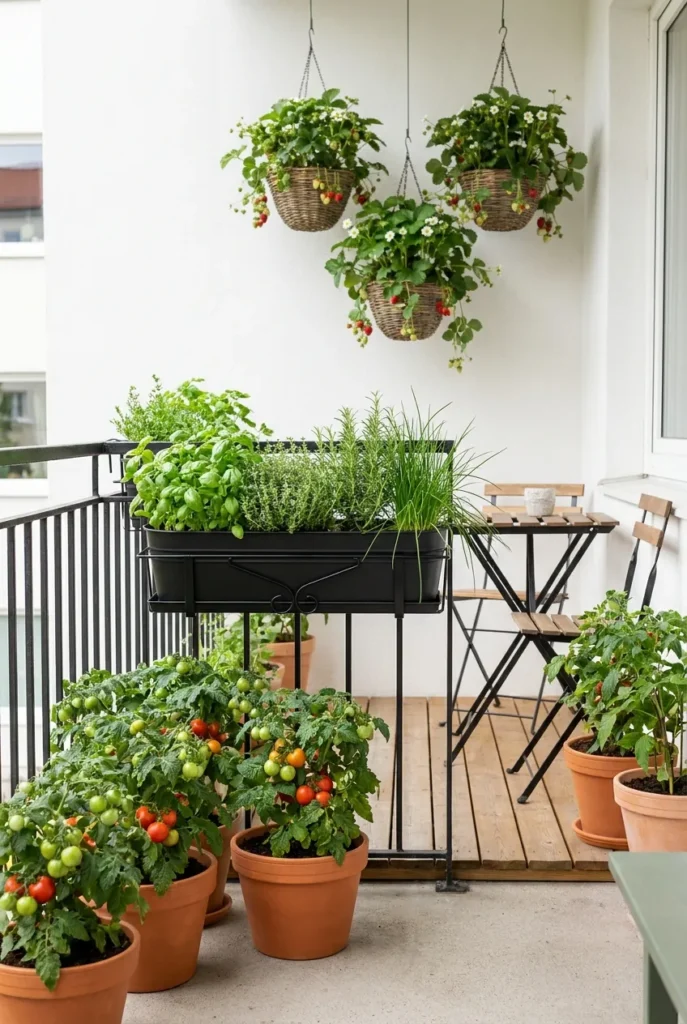
Layer three is the sky zone: hanging planters and wall pockets up top. Trailing strawberries, cherry tomatoes, and pothos spill down from here. Because water runs downhill, a good soak at the top zone helps feed the layers beneath it.
If you want the “living wall” look specifically, the felt pocket panels and modular grids we cover in our backyard plant wall ideas guide slot right into layer three of this method.
Best Plants for a Vertical Balcony Garden
Pick plants that like living upright and forgive a little neglect. Trailing and compact varieties beat big sprawlers every time up here.
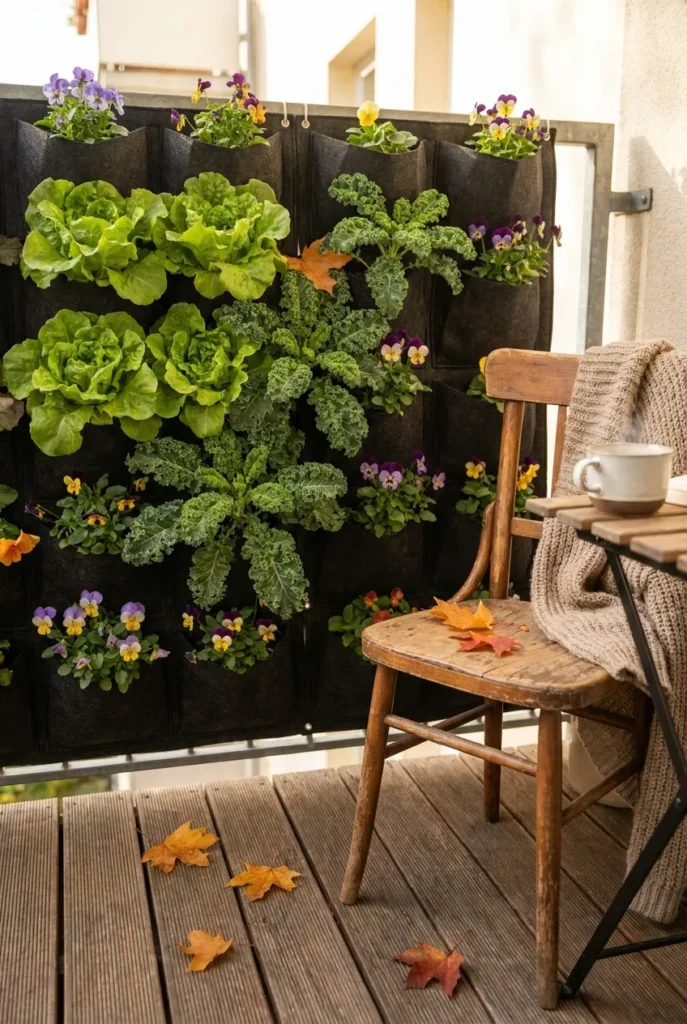
For food, start easy. Herbs are the gateway: basil, mint, parsley, chives, and thyme all thrive in shallow railing boxes. Leafy greens like lettuce and kale grow fast and shallow-rooted, perfect for wall pockets. For fruit, dwarf cherry tomatoes and everbearing strawberries were made for hanging baskets.
For flowers and screening, trailing petunias, nasturtiums, and calendula pour color down a trellis. Want privacy? A fast climber like a clematis or annual morning glory turns a railing trellis into a green screen in one season.
Match everything to your climate. Warm-season crops go out only after your last frost, and your growing window depends on your zone, so it’s worth a minute to check your USDA hardiness zone before you buy. In Zones 5 through 9, last frost usually lands somewhere between mid-April and mid-May, but that shifts year to year and by micro-location, so confirm against the USDA map or your local extension before you commit tender seedlings.
Real experience here, e.g. “In our Zone 7 setup, everbearing strawberries in a Mr. Stacky stacking planter out-produced everything and cost around $35 for the tower.”
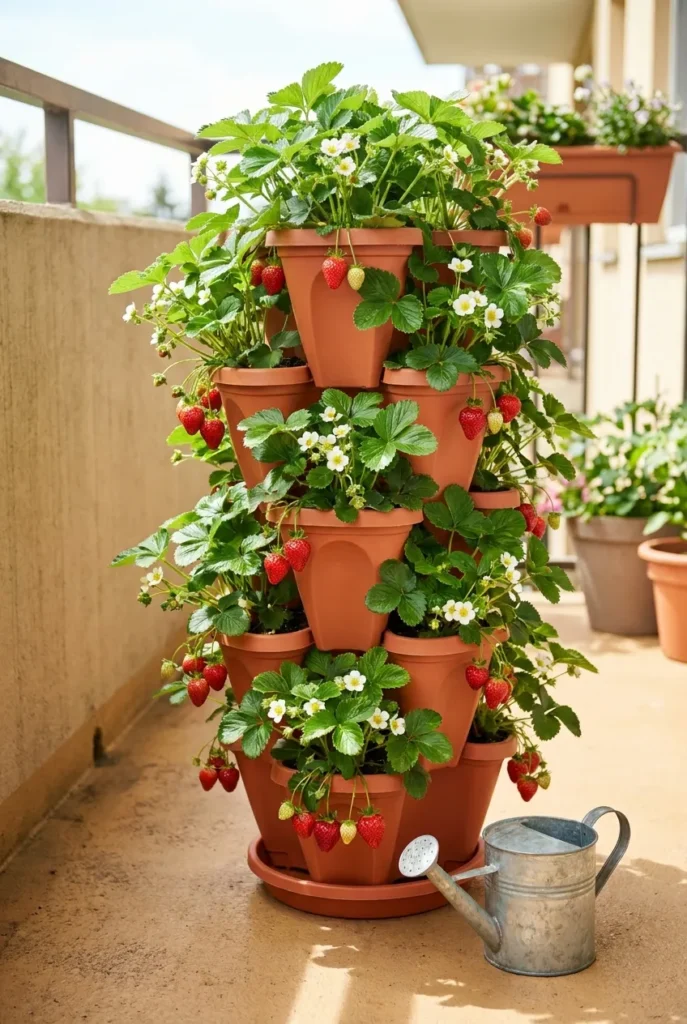
Renter-Friendly, No-Drill Setups That Protect Your Deposit
This is the section the big guides skip, and it’s the one renters need most. You can build a full vertical balcony garden without a single hole in the wall.
Lean, don’t mount. A freestanding A-frame trellis or a ladder plant stand leans against the wall and carries pots on each rung. Zero hardware.
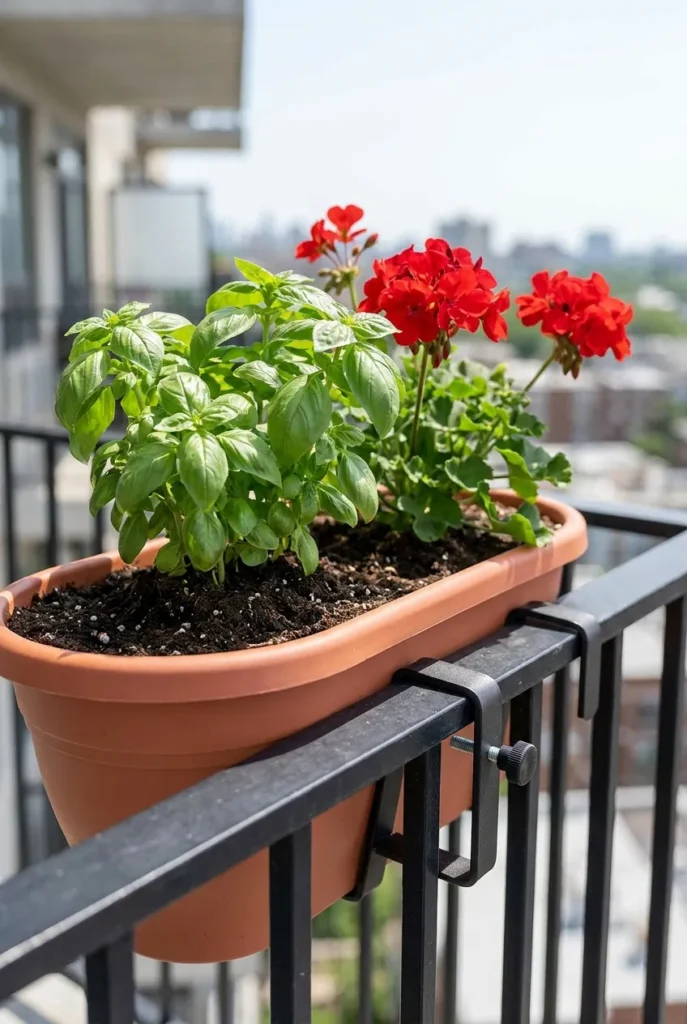
Clamp, don’t screw. Over-the-rail planter boxes hook onto the top rail and tighten with a thumb screw. Adjustable brackets fit most standard rails, and they lift off in seconds when you move.
Tension and hang. A tension rod between two walls (like a shower rod) holds lightweight hanging pockets. For overhead baskets, use rail-mounted swing arms or a freestanding plant hanger instead of ceiling hooks.
Budget-wise, you can start small. A basic over-the-rail planter runs around $20 to $30, a decent tiered plant stand lands in the $40 to $70 range, and Dollar Tree buckets plus a cheap trellis can get a starter wall going for under $25 total.
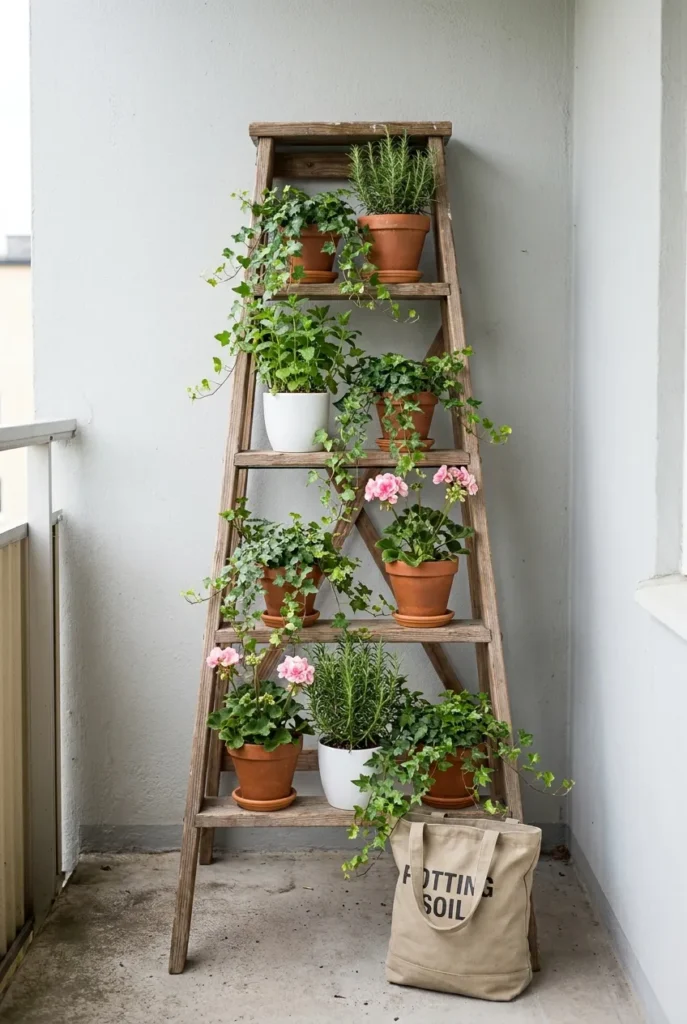
Soil, Watering, and Keeping It Alive Up High
Vertical setups dry out faster than ground pots. More surface area, more wind, gravity pulling water down and out. Plan for it and your garden practically runs itself.
Use a light potting mix, never garden soil, which packs down and gets too heavy for hanging planters. A quality mix like Miracle-Gro Potting Mix or an organic blend keeps roots airy. Mix in a handful of compost for a slow feed.
Water more often than feels normal, especially in summer, when top-zone pots may need a daily drink. Self-watering containers with a reservoir are a lifesaver for anyone who travels or forgets (guilty, honestly). Group thirsty plants together so one watering session covers them.
One neighborly note: runoff. Water dripping onto the balcony below starts feuds. Use drip trays under every planter, water slowly so nothing gushes over the edge, and consider a small saucer under railing boxes to catch the overflow.
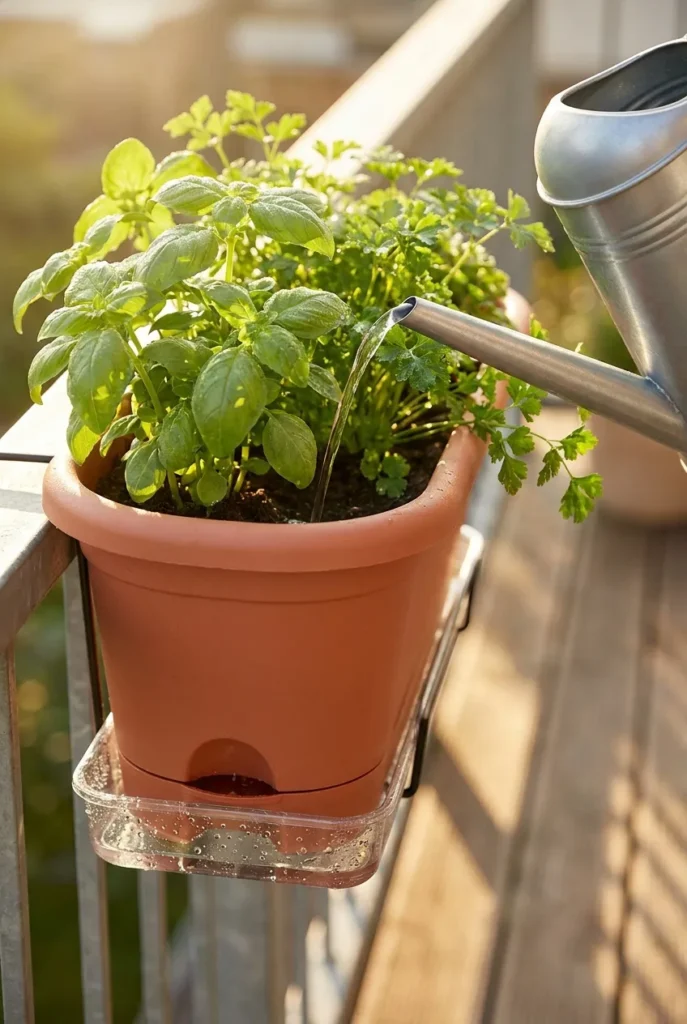
Style It Like a Room, Not a Storage Shelf
A vertical balcony garden should feel like an outdoor room. Small styling moves make it look designed instead of piled together.
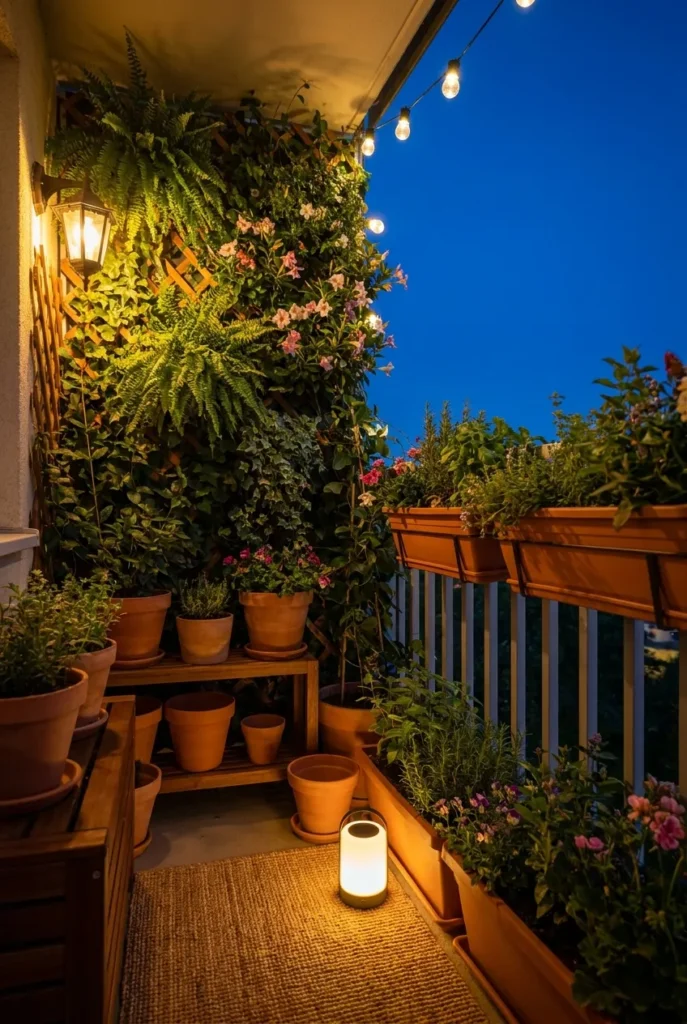
Repeat one or two pot colors for a calm, cohesive wall. Terracotta plus white reads clean and classic. Weave in a string of warm outdoor lights along the top layer, and the whole space turns cozy after sunset. Add one small folding bistro chair and you’ve got a reading nook wrapped in greenery.
Texture sells it. Mix leaf shapes: spiky, trailing, broad, feathery. That variety is what makes a wall of plants look lush rather than repetitive.
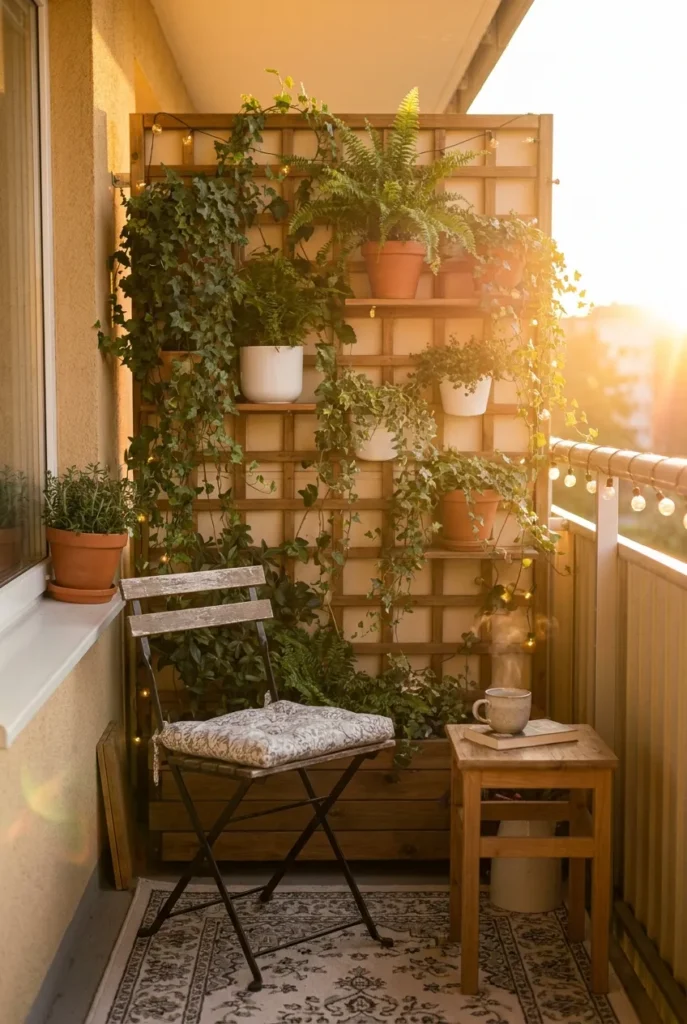
Seasonal Care Through the Year
A vertical balcony garden shifts with the seasons, and a little planning keeps it going most of the year.
In spring (March through May), start hardy greens and herbs early, then add warm-season crops once your last frost passes. Summer (June through August) is peak harvest, so stay on top of watering and pinch herbs often to keep them bushy. Fall (September through November) is perfect for a second round of lettuce, kale, and pansies as the heat breaks. Winter (December through February) is cleanup and dreaming time in cold zones, though gardeners in Zones 9 and up can keep cool-season greens going right through.
Real experience here, e.g. “Our fall lettuce round in a wall-pocket panel actually beat the spring one because the summer heat had stopped bolting it.”
Vertical Balcony Garden FAQ
Can you build a vertical balcony garden without drilling into the walls?
Yes, and most renters do. Lean an A-frame trellis or ladder stand against the wall, clamp over-the-rail planter boxes onto the railing, and use tension rods or freestanding hangers for anything overhead. No holes, deposit safe.
How do I stop my balcony vertical garden from drying out so fast?
Use a light potting mix, add self-watering containers where you can, and group thirsty plants together. Top-zone pots dry first, so check them daily in summer and water in the cooler morning hours to slow evaporation.
How do I keep water from dripping onto my neighbor below?
Put a drip tray or saucer under every planter, water slowly instead of flooding, and keep the heaviest, drippiest pots away from the outer rail edge. A small overflow tray under railing boxes handles the rest.
What’s the easiest vertical setup for a total beginner?
A tiered plant stand or a stacking strawberry tower filled with herbs. It stands on its own, needs no hardware, and gives you a full vertical look on day one. Start with basil, mint, and lettuce.
How much does a vertical balcony garden cost to start?
A starter setup can run under $25 with a basic trellis and budget pots, while a nicer tiered stand plus planters lands in the $40 to $70 range.
Which plants grow best on a vertical balcony?
Herbs, leafy greens, everbearing strawberries, dwarf cherry tomatoes, and trailing flowers like nasturtiums and petunias. Match them to how much direct sun your balcony actually gets.
Is a vertical garden safe on a windy high balcony?
It can be, with care. Keep heavy pots low, anchor tall trellises to the railing, skip flimsy shelving, and avoid hanging heavy baskets off the outer edge where gusts hit hardest.
Your Balcony Is Ready When You Are
A vertical balcony garden is honestly one of the most satisfying small projects you can take on. You start with bare concrete and a couple of clamp-on planters, and a few weeks later you’re snipping basil for dinner from your own green wall. Start with layer one, add as you go, and let it fill in.
If you want more crops in the same tight footprint, our small space container garden guide is the natural next step, packed with pairings that grow real food on a balcony. Now go claim that empty wall. Your future herb-snipping self will thank you.