Cut Flower Container Garden: Endless Bouquets on Any Patio
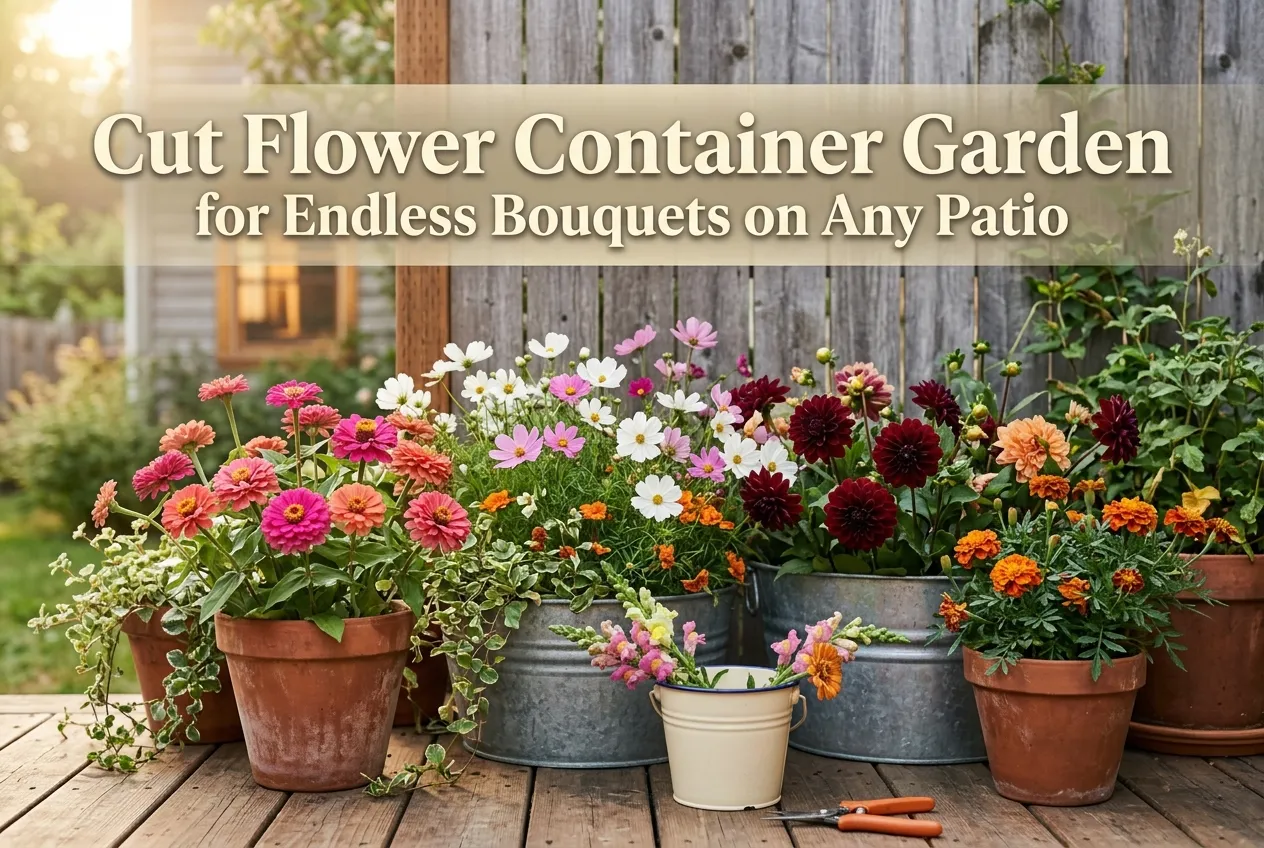
You want fresh flowers on the kitchen table every week. You don’t have a big yard, or the time to dig up half of it. Good news: a cut flower container garden gives you buckets of blooms from a patio, a balcony, or three pots by the back door. This guide walks you through the pots, the potting mix, the best cut-and-come-again flowers, and a zone-by-zone plan so you’re snipping stems from late spring until frost.
Let’s get your first bouquet growing.
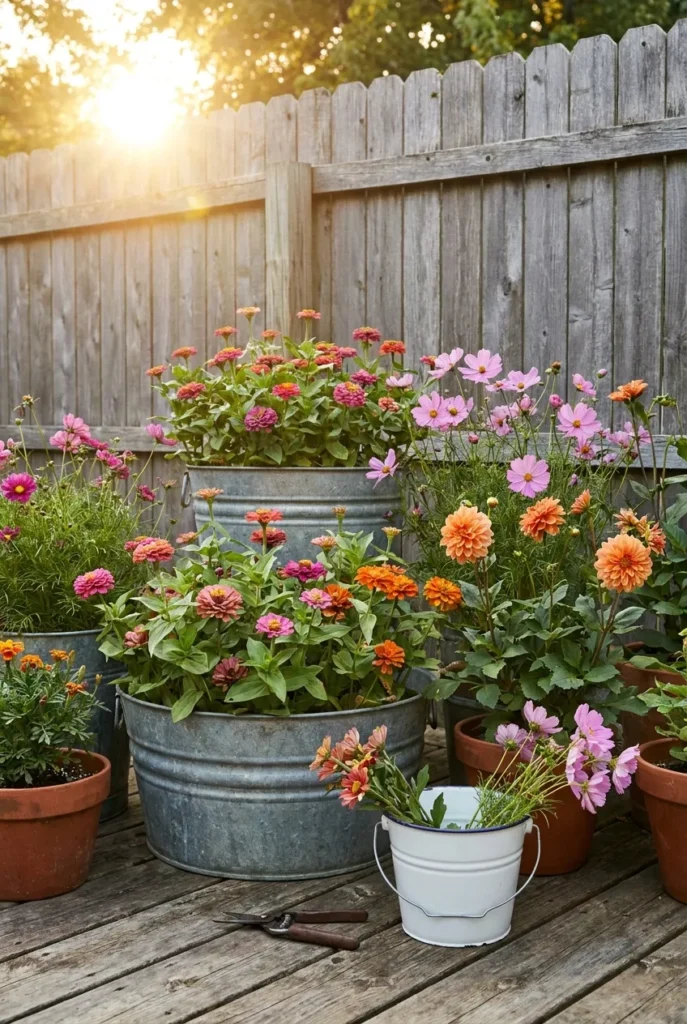
Why a Cut Flower Container Garden Just Works
Pots give you control that a garden bed never will. You set the soil, you move the containers to chase the sun, and you skip the weeds and the tilling. For anyone with a patio, a driveway, or a railing, containers turn a few square feet into a working bouquet garden.
There’s a money angle too. A single grocery-store bouquet runs somewhere around $12 to $20, and it’s wilting by day four. One packet of zinnia seeds costs a couple of dollars and pumps out flowers for months. Cut them, and the plant makes more.
Containers also let you gaze at your flowers up close. You’ll notice the first cosmos bud, the aphid you need to rinse off, the pot that’s drying out too fast. That daily contact is half the fun and most of the success.
If you’re still deciding what else to grow alongside your blooms, this roundup of the best flowers for container gardening pairs nicely with a cutting-focused setup.
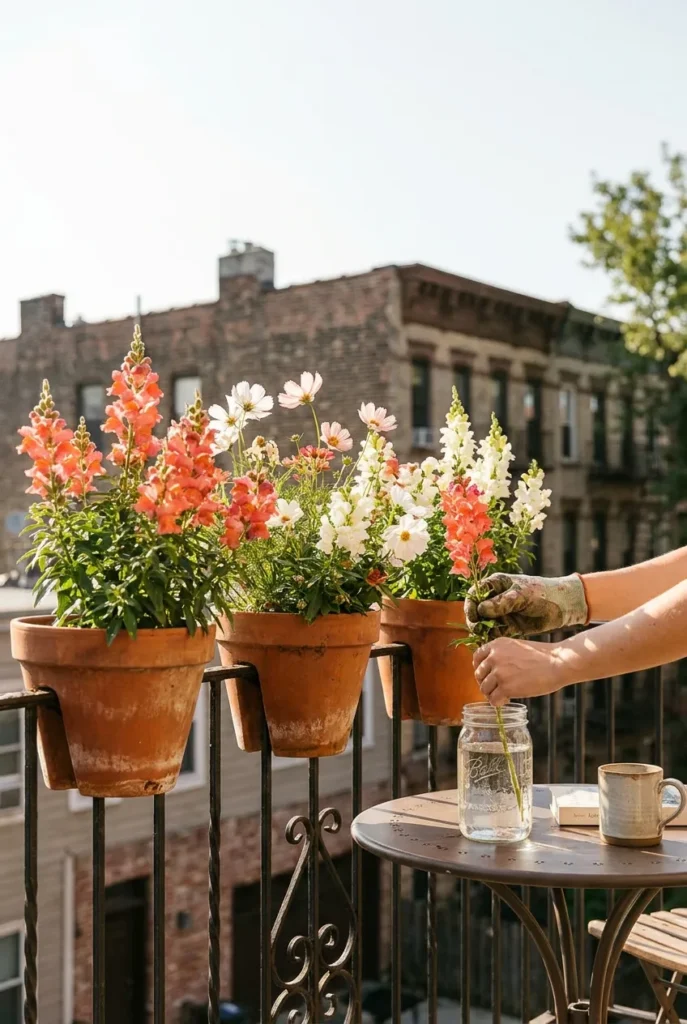
Choosing the Right Containers and Depth
Size matters more than looks. Deep roots need room, and shallow pots dry out fast and stunt your stems. As a rule, give most cut flowers a container at least 12 inches deep and 12 inches across. Tall or tuberous flowers like dahlias want 16 to 18 inches of depth.
Drainage is non-negotiable. Every pot needs holes so roots don’t sit in water and rot. If a pretty pot has no holes, drill a few or use it as a cover pot over a nursery liner.
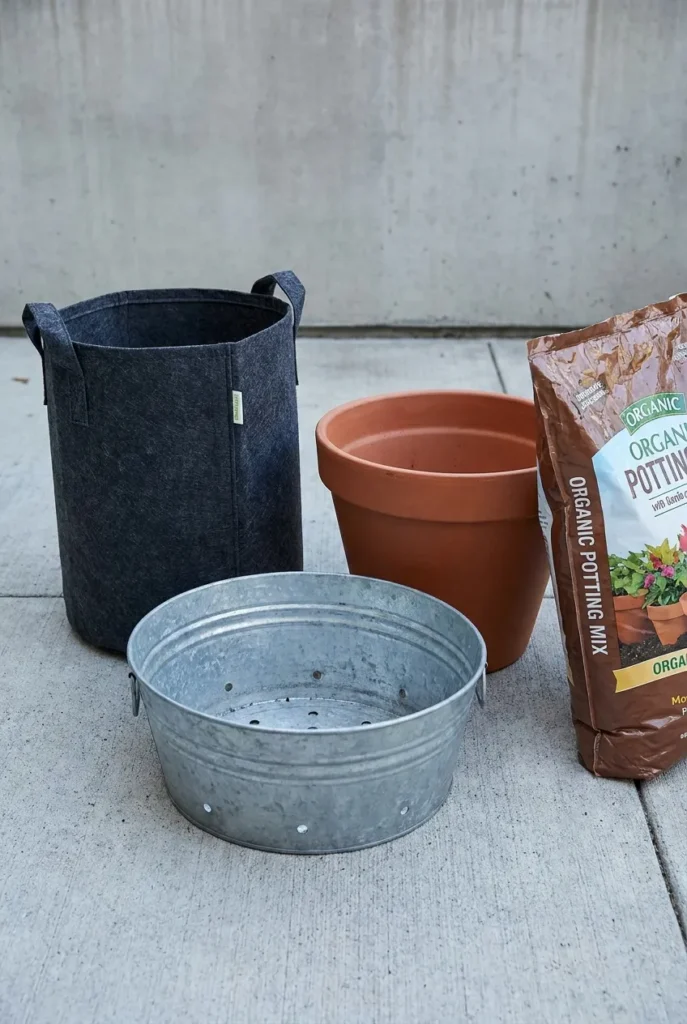
Material changes how often you’ll water. Terracotta breathes and dries quickly, so it’s thirsty in summer heat. Glazed ceramic, plastic, and metal hold moisture longer. Fabric grow bags drain beautifully and are cheap, usually under $20 for a multi-pack.
Here’s a container starter I lean on, call it the Deep-Pot Rule:
| Flower type | Minimum pot depth | Pot width | Blooms per pot |
|---|---|---|---|
| Zinnias, marigolds | 10 to 12 in | 12 in | 3 to 4 |
| Cosmos, snapdragons | 12 in | 12 to 14 in | 3 |
| Dahlias | 16 to 18 in | 16 in | 1 to 2 |
| Celosia, calendula | 10 in | 12 in | 3 to 4 |
For tight patios and railings, these small space container garden ideas show how to fit more pots into a footprint that looks impossibly small.
The Soil Setup That Feeds Nonstop Blooms
Skip garden dirt. It compacts in pots, holds too much water, and smothers roots. Reach for a quality potting mix instead, something light and fluffy that drains well. A bag runs somewhere around $10 to $15 at Home Depot or Lowe’s.
Cut flowers are hungry. They’re spending energy making blooms you keep cutting off, so they need steady food. Mix a slow-release granular fertilizer into the potting mix at planting, then feed every couple of weeks with a liquid bloom fertilizer once buds form.
A splash of compost or worm castings in the top few inches keeps the mix alive and holds moisture. Don’t overdo the nitrogen, though. Too much and you’ll grow a jungle of leaves with barely a flower in sight.
The first summer I cheaped out on a $4 bag of generic mix and my zinnias sulked all July; switching to a good peat-and-perlite blend the next year doubled my stems.
Best Cut Flowers to Grow in Containers
The secret word is cut-and-come-again. These flowers bloom harder the more you cut them, so a few plants keep a vase full for months. Zinnias lead the pack: fast, colorful, forgiving, and happy in a 12-inch pot.
Cosmos bring airy height and reseed themselves. Snapdragons give you spires and cool-season color. Celosia adds velvety texture that dries well. Marigolds and calendula are tough, pest-resistant, and bloom until frost.
Dahlias are the showstoppers. They need a deep pot and a little staking, but one tuber throws dinner-plate blooms all season. For fragrance, tuck in sweet peas on a small trellis.
The Cut-and-Come-Again Shortlist:
- Zinnias, the beginner’s dream, snip above a leaf node and watch it branch
- Cosmos, delicate and self-seeding, great for filler in bouquets
- Snapdragons, upright spikes, thrive in cooler spring and fall
- Celosia, bold texture, doubles as a dried flower
- Dahlias, the centerpiece bloom, worth the deeper pot
- Marigolds and calendula, workhorses that shrug off pests
- Sweet peas, fragrant climbers for a small trellis
Front-load your first buy with zinnias if you’re new. Bonnie Plants sells starts at most garden centers for a few dollars, or a Burpee seed packet costs even less. Either way, you’re blooming fast.
The One-Pot-Per-Job Layout Method
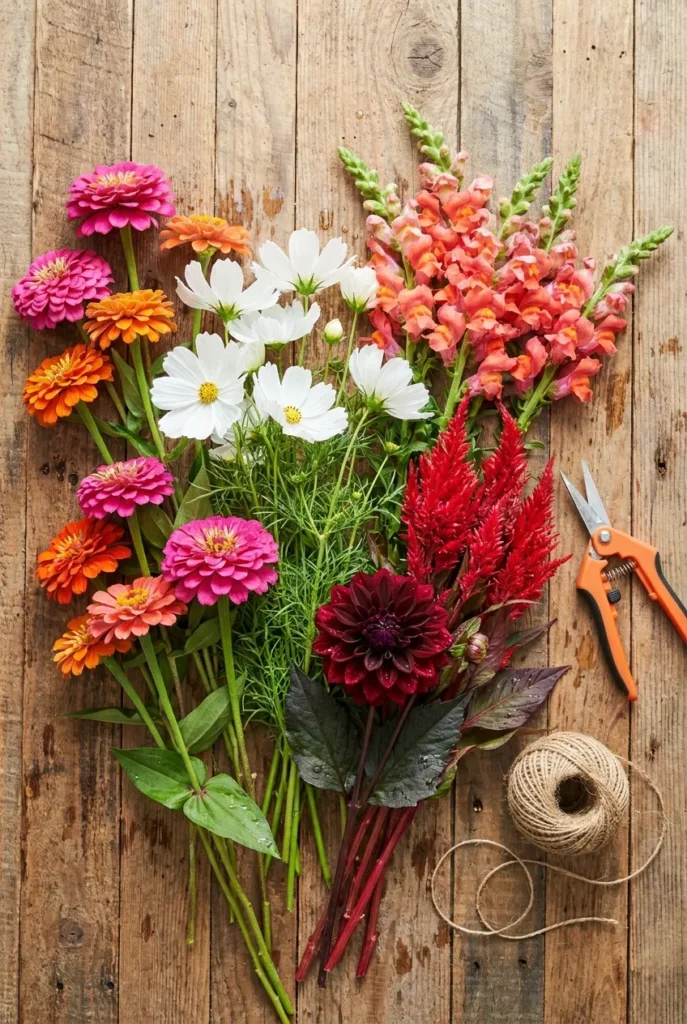
Here’s an original framework I use to keep a container cutting garden productive instead of pretty-but-useless, the One-Pot-Per-Job Method. Instead of mixing everything into one crowded planter, you give each pot a single role, then combine the harvest in the vase.
You run three pot jobs: a Focal pot for big blooms (dahlias or the largest zinnias), a Filler pot for airy volume (cosmos, calendula), and a Texture pot for spikes and interest (snapdragons, celosia). When you cut a bouquet, you take one or two stems from each, and every pot stays productive because nothing is competing for the same space.
This also makes care simpler. The thirsty dahlia pot gets watered more often, the tougher marigold pot less, and you’re not guessing.
| Pot job | Grow this | Bouquet role |
|---|---|---|
| Focal | Dahlias, large zinnias | The star stems |
| Filler | Cosmos, calendula | Soft volume |
| Texture | Snapdragons, celosia | Height and edge |
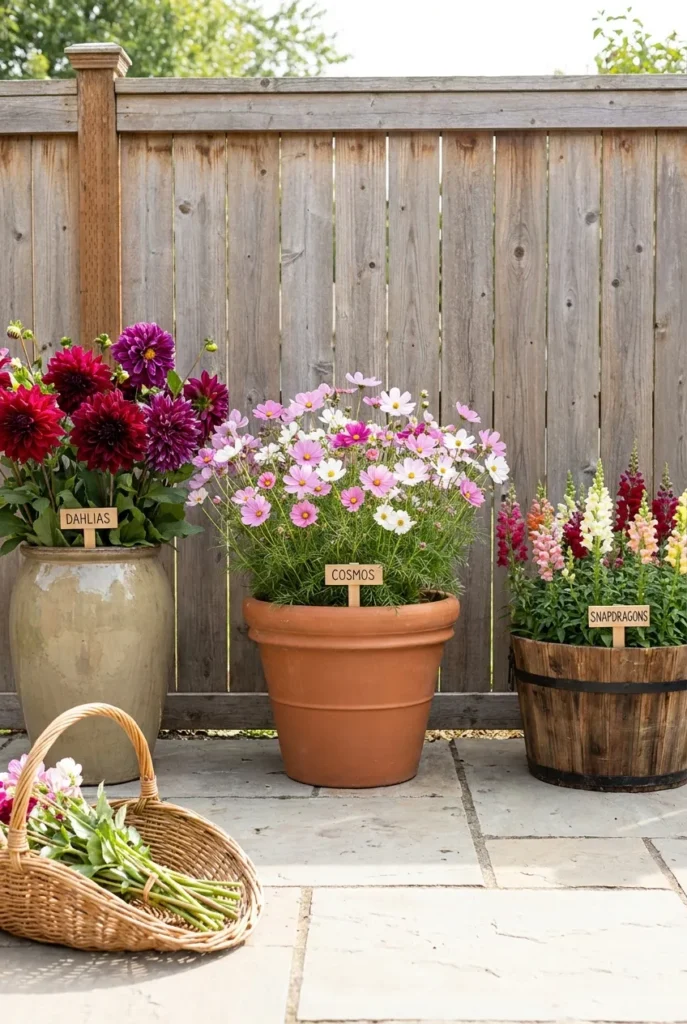
Watering and Feeding Without the Guesswork
Containers dry out faster than beds, especially in July and August. In peak summer heat, most pots need water daily, sometimes twice a day for small terracotta ones. Stick a finger an inch into the soil: dry means water, damp means wait.
Water deeply until it runs from the drainage holes, not a quick splash on the surface. Deep watering pushes roots down and makes plants sturdier.
If daily watering sounds like a chore, build a self-watering container setup with a wicking reservoir. It buys you a few days between waterings and evens out the moisture your blooms crave.
Feed lightly and often. A diluted liquid bloom fertilizer every 10 to 14 days keeps the flowers coming. Yellowing lower leaves usually mean it’s hungry or waterlogged, so check both.
Pinching, Cutting, and Getting the Longest Vase Life
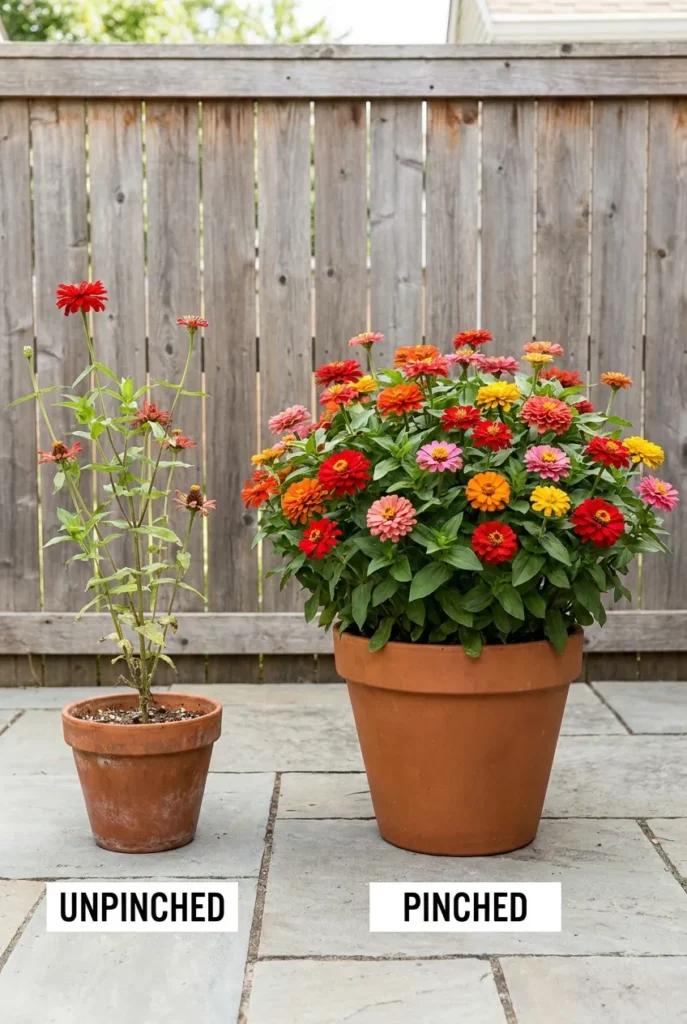
Pinching feels wrong, but do it anyway. When a young zinnia or cosmos is about 8 to 12 inches tall, snip the top inch above a set of leaves. The plant responds by branching into many more stems, which means many more flowers.
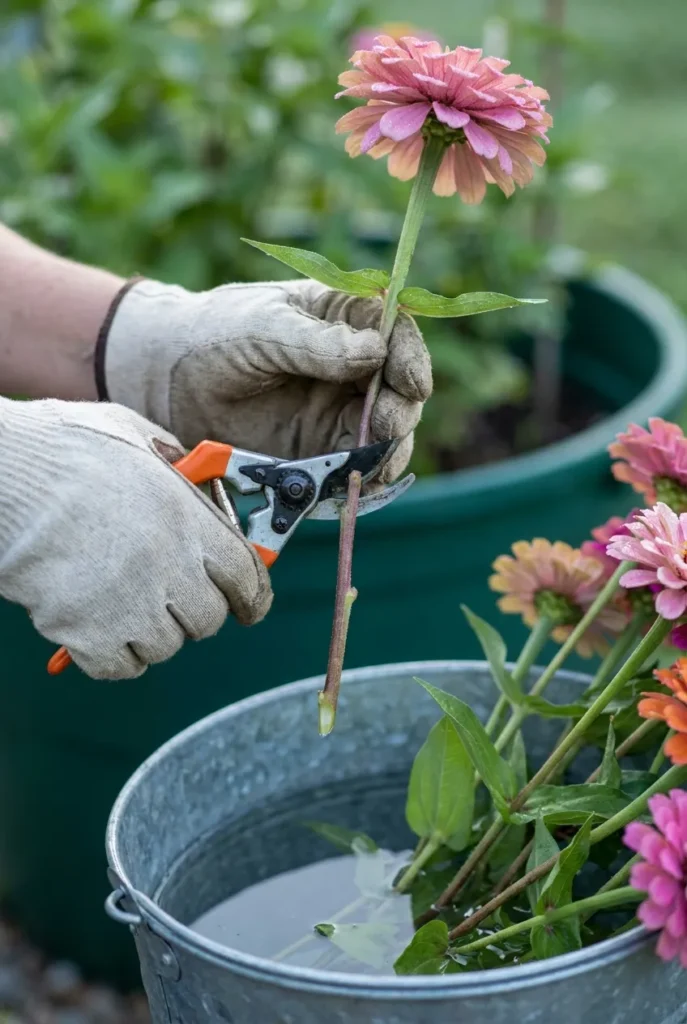
Cut in the cool of early morning when stems are full of water. Use clean, sharp snips, and cut deep, taking a long stem right above a leaf node so the plant branches again below the cut.
Strip the lower leaves before they hit the water, change the vase water every couple of days, and keep the bouquet out of direct sun. Most container cut flowers give you 5 to 10 days in the vase with that routine. For more on harvest timing, Penn State Extension’s guide to growing cut flowers for joy is a solid, research-backed read.
I keep a $6 galvanized bucket of water by the back step and cut straight into it at 7 a.m. before the heat hits.
Know Your Zone and Plant at the Right Time
Timing is everything with cut flowers, and it hinges on your last spring frost. Warm-season bloomers like zinnias, cosmos, celosia, and dahlias are frost-tender, so they go out only after your last frost date has passed and the soil has warmed.
In Zone 5, that last frost is usually mid-May. Zone 6 lands around late April to early May, Zone 7 around mid-April, and Zones 8 to 9 can start in March. These are typical ranges, not promises, so confirm your local timing against the USDA plant hardiness zone map or your county extension office before you sow.
Cool-season flowers flip the script. Snapdragons, sweet peas, and calendula actually prefer the chill and can go out a few weeks before your last frost, then again in early fall.
One perk of containers: if a surprise late frost threatens, you just carry the pots indoors for the night. Try that with a garden bed.
A Season-Long Bloom Plan for Endless Bouquets
Competitors tell you what to plant. Few tell you when, so here’s the Rolling Bloom Plan, a simple succession scheme that keeps stems coming from spring to frost instead of one big flush that fizzles.
The trick is sowing in waves. Plant a few zinnia and cosmos seeds, then sow another small batch two to three weeks later, and again after that. As the first wave tires in late summer, the next is hitting its stride.
- Early spring (before last frost): start snapdragons, sweet peas, calendula outdoors or on a windowsill
- Late spring (after last frost): plant zinnias, cosmos, celosia, and dahlia tubers
- Early summer: sow a second wave of zinnias and cosmos
- Midsummer: sow one more zinnia wave, keep deadheading everything
- Early fall: cool-season snapdragons and calendula get a second act
Keep deadheading spent blooms all season. Every faded flower you remove tells the plant to make another, and that’s the whole secret to endless bouquets.
Common Container Cut Flower Mistakes to Skip
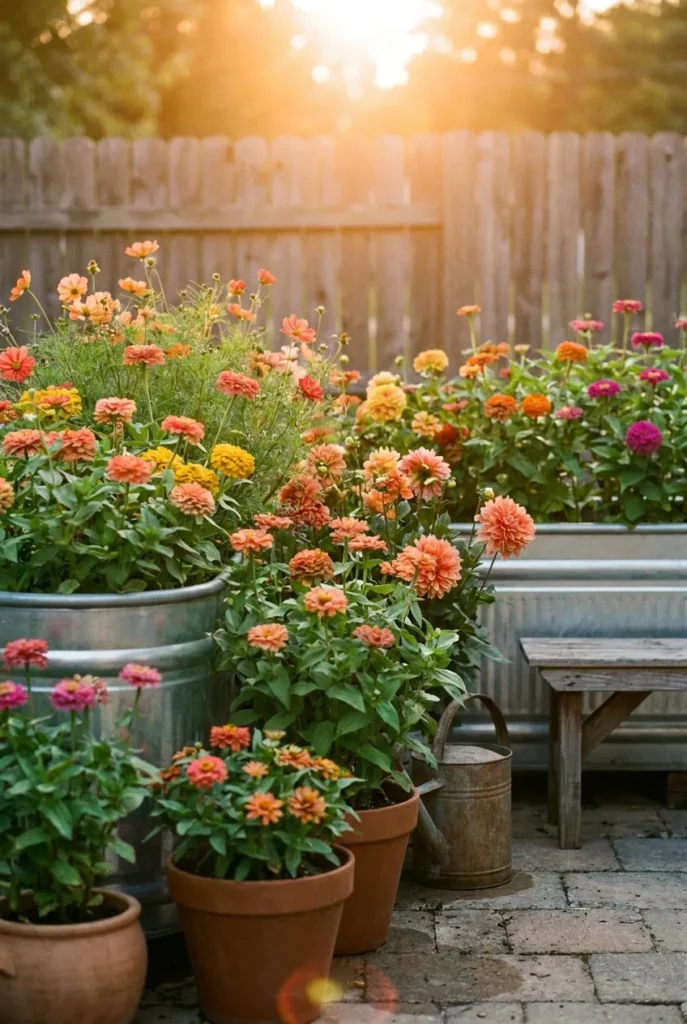
Most first-year flops trace back to a handful of fixable errors. Pots too small tops the list, since cramped roots mean stubby, stressed plants. Go bigger than you think.
Skipping the pinch is the second. Unpinched zinnias grow one tall stem and quit; pinched ones bush out into dozens.
Underwatering in a heat wave is the fast killer, and so is planting tender flowers before the frost date. Too much shade is quieter but just as deadly, because most cut flowers want six-plus hours of full sun. Set your pots where the light is, not where the pot looks cute.
Styling Your Homegrown Bouquets
Half the joy is the arranging. Start with your Texture stems for structure, add Focal blooms slightly off-center, then tuck Filler flowers to soften the gaps. Odd numbers look more natural than even.
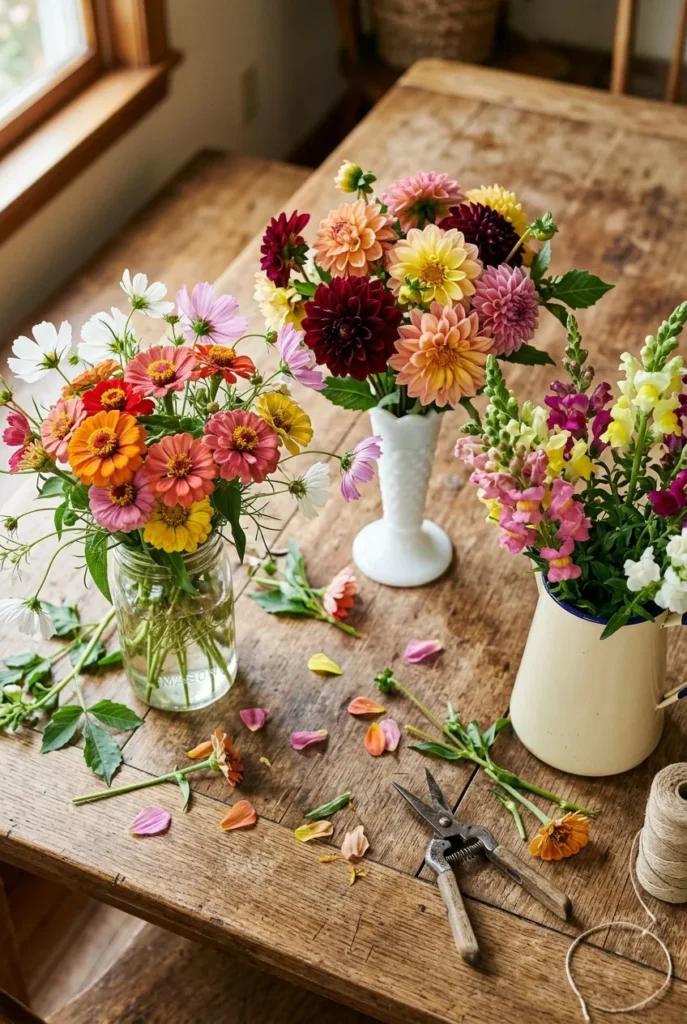
Reach for jars you already own. A wide-mouth mason jar, a thrifted milk-glass vase, or an enamel pitcher all cost next to nothing and photograph beautifully. Dollar Tree glass vases work in a pinch for gifting bouquets you’ll never see again.
Group small vases in clusters for a table, or hand a single-variety jar of zinnias to a neighbor. Homegrown flowers make ridiculously good, nearly free gifts.
Frequently Asked Questions
Can you grow a cut flower garden in pots?
Yes, absolutely. Most cut flowers grow well in containers as long as the pot is deep enough (12 inches for most, 16 to 18 for dahlias), drains freely, and sits in full sun. Cut-and-come-again types like zinnias and cosmos are especially productive in pots.
What is a cut flower garden?
It’s a garden grown specifically to harvest flowers for bouquets rather than just for display. You choose varieties with long stems and strong vase life, then cut them regularly, which actually pushes the plants to bloom more.
What are common mistakes in container gardening?
The big ones are pots that are too small, containers without drainage holes, using heavy garden soil instead of potting mix, underwatering during heat, and giving sun-loving flowers too much shade. Skipping the early pinch is another that quietly cuts your harvest in half.
What flowers are good for container gardening?
Zinnias, cosmos, marigolds, calendula, celosia, snapdragons, and dahlias all shine in pots. For cutting, zinnias and cosmos are the easiest starting point, while dahlias deliver the dramatic centerpiece blooms.
How deep should a pot be for cut flowers?
At least 12 inches deep for most annuals like zinnias and cosmos. Tuberous or tall flowers such as dahlias want 16 to 18 inches so roots have room and plants don’t topple.
How much sun does a cut flower container garden need?
Most cut flowers want at least six hours of direct sun a day, and more is better for bloom count. Containers make this easy, since you can move pots to follow the sunniest spot on your patio or balcony.
How often should I water container cut flowers?
Check daily in summer. In peak heat many pots need water once or even twice a day, while cooler stretches may stretch it to every two or three days. Water deeply until it runs from the drainage holes.
Your First Bouquet Starts Now
A cut flower container garden proves you don’t need acreage to fill your home with flowers, just a few good pots, the right blooms, and the habit of cutting often. Start with three pots of zinnias this weekend, pinch them early, and you’ll be handing bouquets to friends by midsummer.
Grab a pot, grab some seeds, and give it a try. Which flower are you planting first? Tell us, and happy snipping.