Container Gardening Flowers: Best Blooms for Patios and Balconies
Your patio looks a little tired. Last summer’s pots are still sitting in the corner with crispy stems poking out, the railing feels bare, and the concrete shows every crack. We’ve all been there, and the fix is faster than you think.
Container Gardening Flowers guide is built around one promise: you’ll walk away with a plant list, a design formula, and a shopping plan you can actually execute this weekend. We’re organizing every idea by sun exposure first, then by price tier, so whether your balcony bakes from noon to sunset or hides in dappled shade, you’ll find blooms that thrive instead of fizzle.
I’ve personally killed more petunias than I’d like to admit. After testing roughly a dozen container combinations across two rentals and one tiny city balcony, the patterns below are what actually works.
Who This Guide Is For
You’ll get the most out of this if you’re:
- A renter who can’t dig up a yard but wants real color
- A balcony gardener working with 30 to 80 square feet
- A homeowner refreshing a patio without a full landscape budget
- A beginner who has lost a plant or four and wants a foolproof list
- A Pinterest planner gathering ideas for spring and summer
If you’re a master gardener with a 200-foot perennial border, this isn’t your guide. Everything below assumes pots, time constraints, and a real budget.
The One Rule That Changes Every Pot You Plant
Before we get into specific flowers, you need this formula. It’s the design rule professional container designers use, and it’s why some pots look like a magazine cover while yours look like a sad bouquet.
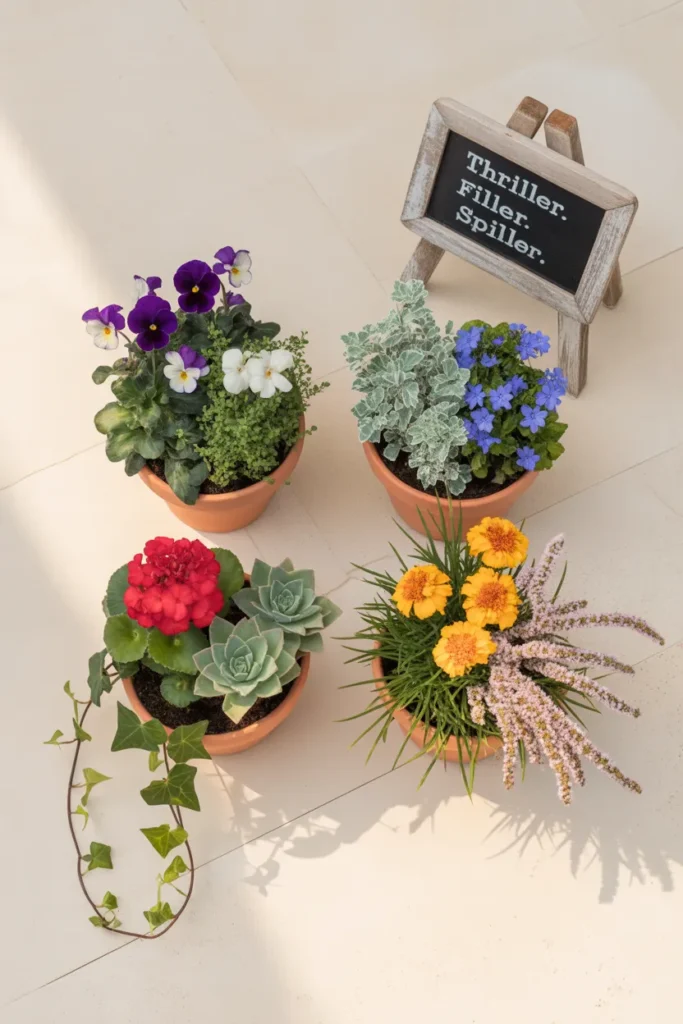
Thriller: One tall, dramatic plant in the center or back. Think height and architecture. Filler: Two or three medium, mounding plants that hug the thriller and fill the middle. Spiller: One or two trailing plants at the edge that cascade over the rim.
Why it works: your eye travels up, then around, then down. That movement is what makes a container feel finished instead of flat.
How to execute it: in a 14-inch pot, plant 1 thriller, 3 fillers, 2 spillers. In a 10-inch pot, scale down to 1 thriller, 2 fillers, 1 spiller. Plant tightly. Container plants are meant to look full from day one, not “grow into” the pot like a landscape bed.
Quick Pairing Cheat Sheet (screenshot this)
| Style | Thriller | Filler | Spiller |
|---|---|---|---|
| Cottagecore | Pink geranium | White alyssum, lavender | Bacopa |
| Coastal | Purple salvia | White petunia, blue lobelia | Silver dichondra |
| Modern | Canna lily | Coleus, white begonia | Sweet potato vine (lime) |
| Boho | Mandevilla | Marigold, lantana | Trailing nasturtium |
Best Container Gardening Flowers for Full Sun
Full sun means 6 or more hours of direct light. If your patio gets blasted from late morning through afternoon, these are your workhorses.
1. Geraniums (Zonal and Ivy)
What it is: A classic mounding bloomer with rounded leaves and clusters of red, pink, white, salmon, or coral flowers. Ivy geraniums trail; zonal geraniums stand upright.
Why it works: Heat tolerant, drought forgiving, and blooms from May through first frost without much fuss. They handle a missed watering better than almost anything else on this list.
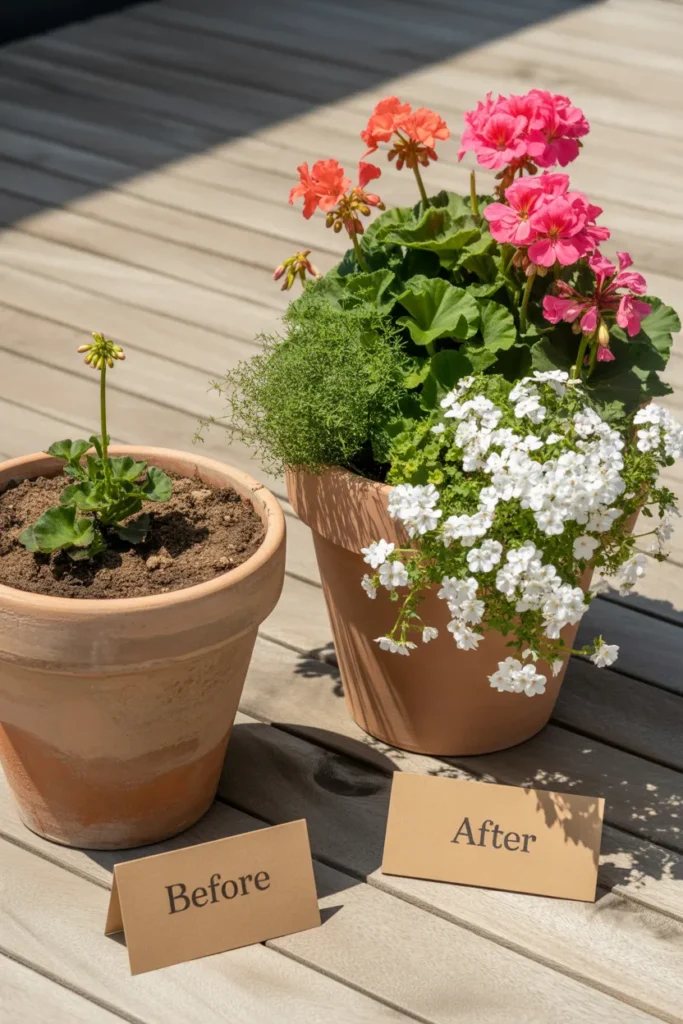
How to execute: Plant in well-draining potting mix. Deadhead spent blooms weekly to keep new ones coming. One zonal geranium per 10-inch pot, or pair with white alyssum and bacopa for the cottagecore combo above.
Price: $6 to $12 at Home Depot or Lowe’s for a 4-inch starter. Splurge: Anthropologie sells potted geranium-style arrangements for $80 and up.
2. Petunias (Wave and Supertunia varieties)
What it is: Trumpet-shaped bloomers in nearly every color. Wave petunias spread up to 4 feet; Supertunias are bred for vigor and self-cleaning blooms.
Why it works: They bloom hard, fill quickly, and Wave varieties cascade beautifully over balcony railings. The Supertunia line skips the deadheading step entirely.
How to execute: Full sun, consistent water, and feed every 2 weeks with a bloom fertilizer. They’re hungry plants. One Wave petunia covers a 12-inch pot in about 4 weeks.
3. Lantana
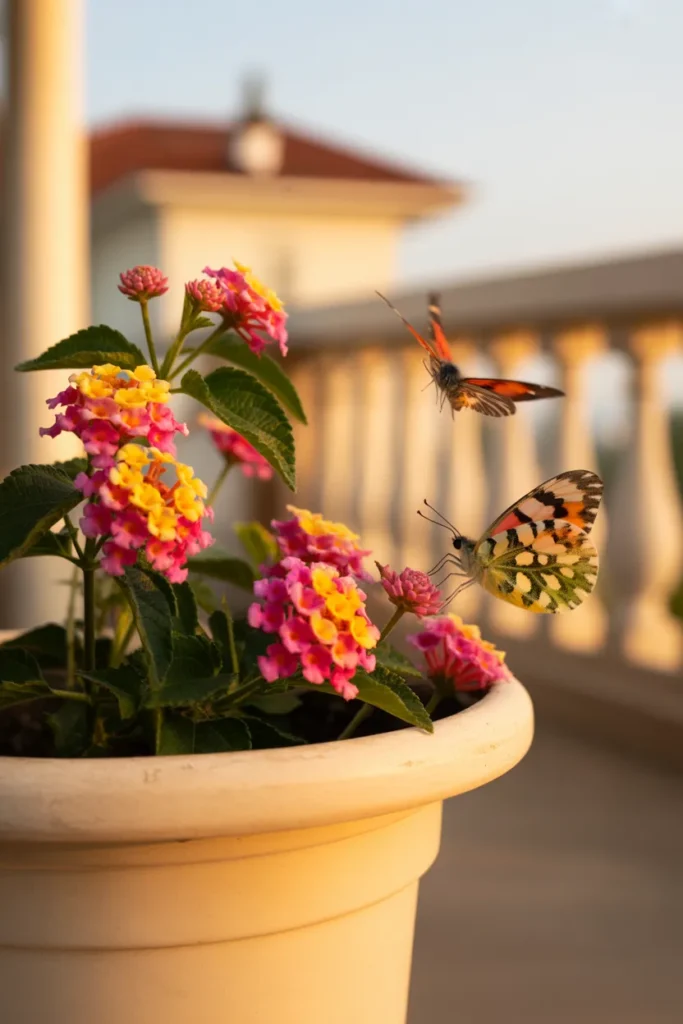
What it is: Tight clusters of tiny flowers that shift color as they age, often showing yellow, orange, and pink on the same cluster.
Why it works: Practically indestructible in heat. Pollinators love it. If you forget to water for two days during a heat wave, lantana shrugs.
How to execute: One lantana per 12-inch pot, or use as the thriller in a boho combo with marigold and trailing nasturtium.
4. Marigolds
What it is: Cheery yellow, orange, or rusty-red blooms with feathery foliage. French marigolds stay compact; African types grow taller.
Why it works: Cheap, fast, and they repel some pest bugs. A 6-pack costs less than a coffee.
How to execute: Plant 3 to 5 in a 12-inch pot. They peak in midsummer and look incredible against terracotta.
5. Zinnias
What it is: Daisy-style blooms in every shade except blue. Profusion and Zahara series are bred specifically for containers.
Why it works: Cut them, and they bloom harder. They’re the rare flower that thrives on being picked for the dinner table.
How to execute: Direct sow seeds in May for a $3 packet that fills three pots, or buy starters at $4 each. Plant in full sun, water at the base (not overhead) to avoid mildew.

6. Million Bells (Calibrachoa)
What it is: Looks like a miniature petunia, blooms in waves of pink, yellow, coral, purple, and bicolors.
Why it works: Self-cleaning (no deadheading), trails 12 to 18 inches over the pot edge, and blooms nonstop. The Superbells line is especially vigorous.
How to execute: Use as a spiller. Pairs beautifully with upright geraniums or salvia.
Best Container Gardening Flowers for Shade and Partial Sun
Shade means less than 4 hours of direct sun. Partial sun means 4 to 6 hours, usually morning sun and afternoon protection. North-facing balconies, covered patios, and tree-shaded corners all qualify.
7. Impatiens (and SunPatiens for hybrid spots)
What it is: Mounding plant covered in flat single or double blooms in pink, white, coral, red, and purple. SunPatiens tolerate more sun than classic impatiens.
Why it works: True shade bloomer. While everyone else sulks, impatiens explode in dim corners.
How to execute: Plant 3 in a 12-inch pot. Keep evenly moist, and they’ll bloom from May through October.
8. Begonias (Wax, Tuberous, and Dragon Wing)
What it is: Glossy leaves and waxy or ruffled blooms in white, pink, red, and coral. Dragon Wing types grow large and arching.
Why it works: Tuberous begonias have giant rose-like flowers that look expensive. Wax begonias are nearly impossible to kill.
How to execute: One Dragon Wing per 14-inch pot makes a stunning solo statement. For mixed pots, use wax begonias as fillers with coleus.
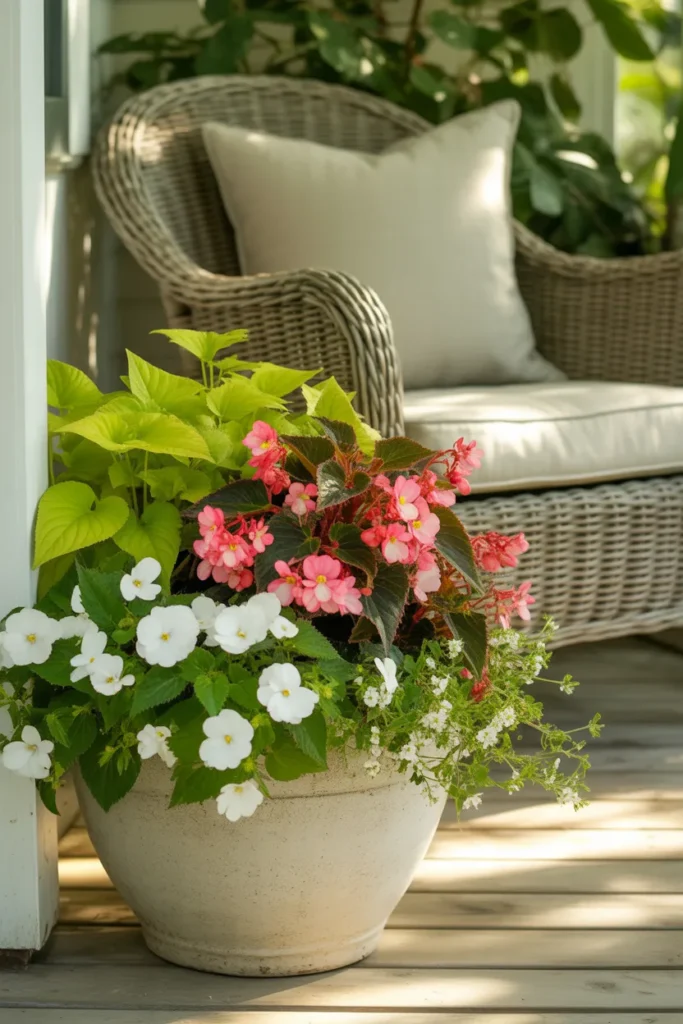
9. Coleus
What it is: Grown for its foliage, not flowers. Leaves come in burgundy, lime, chartreuse, hot pink, and variegated patterns.
Why it works: Adds drama where bloomers can’t. One coleus does the visual work of three flowering plants.
How to execute: Pinch the small flower spikes off when they appear so the plant focuses on leaves. Use as a filler or thriller depending on size.
10. Torenia (Wishbone Flower)
What it is: Trumpet-shaped purple, pink, or yellow blooms with a contrasting throat.
Why it works: True shade bloomer that trails. One of the few flowering spillers that actually performs in dim spots.
How to execute: Plant 2 per 10-inch pot at the edge, paired with begonias as fillers.
Budget vs Splurge: Real Numbers for Your Pots
Here’s where competitor articles fall apart. They list plants without telling you what a finished pot actually costs.
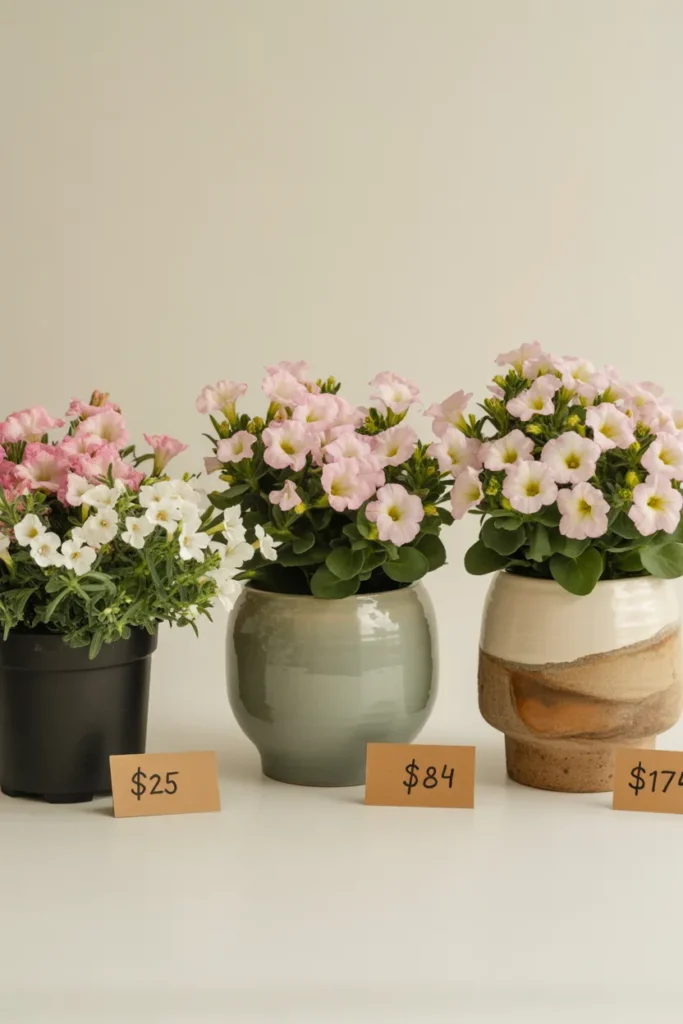
Budget-friendly version (under $25 total):
- 12-inch plastic pot from Dollar Tree or Walmart: $5
- 1 small bag potting mix: $6
- Geranium 4-inch starter from Home Depot: $7
- Two 4-packs of marigolds: $4
- Bacopa starter: $3
- Total: about $25
Mid-range version ($50 to $90):
- 14-inch glazed ceramic pot from Target or HomeGoods: $30
- Premium potting mix with slow-release fertilizer: $15
- Wave petunia: $8
- Two coleus starters: $10
- Calibrachoa Superbells: $9
- Liquid bloom fertilizer: $12
- Total: about $84
Splurge version ($150 and up):
- Glazed terracotta pot from West Elm or Crate & Barrel: $89
- Organic raised-bed soil mix: $20
- Mature 1-gallon perennials: $40 and up
- Self-watering insert: $25
- Total: $174 and up
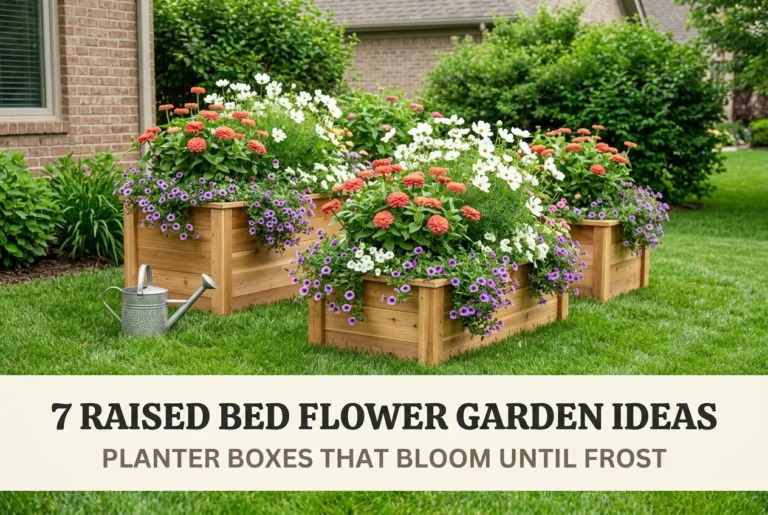
If you want to go bigger and skip pots altogether, a metal raised garden bed setup gives you the same flower-garden look with way more planting volume, and works on patios, balconies, or paved side yards.
Style-Matched Container Combinations by Aesthetic
This is where home decor meets horticulture. Your pots should feel like part of your patio styling, not random plants set down on concrete.
Cottagecore Patio
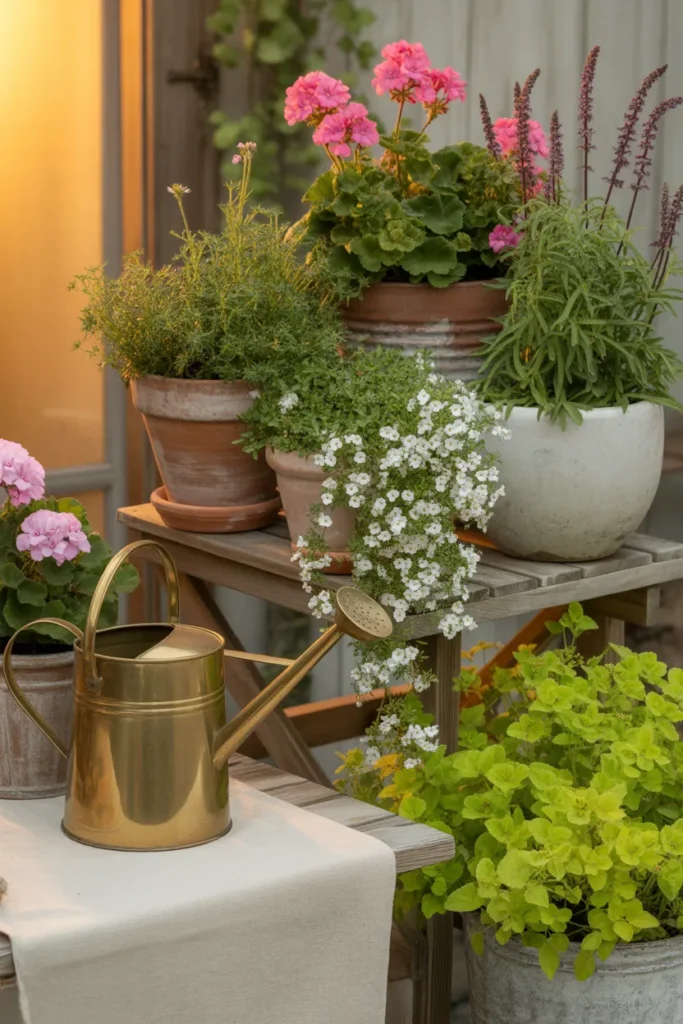
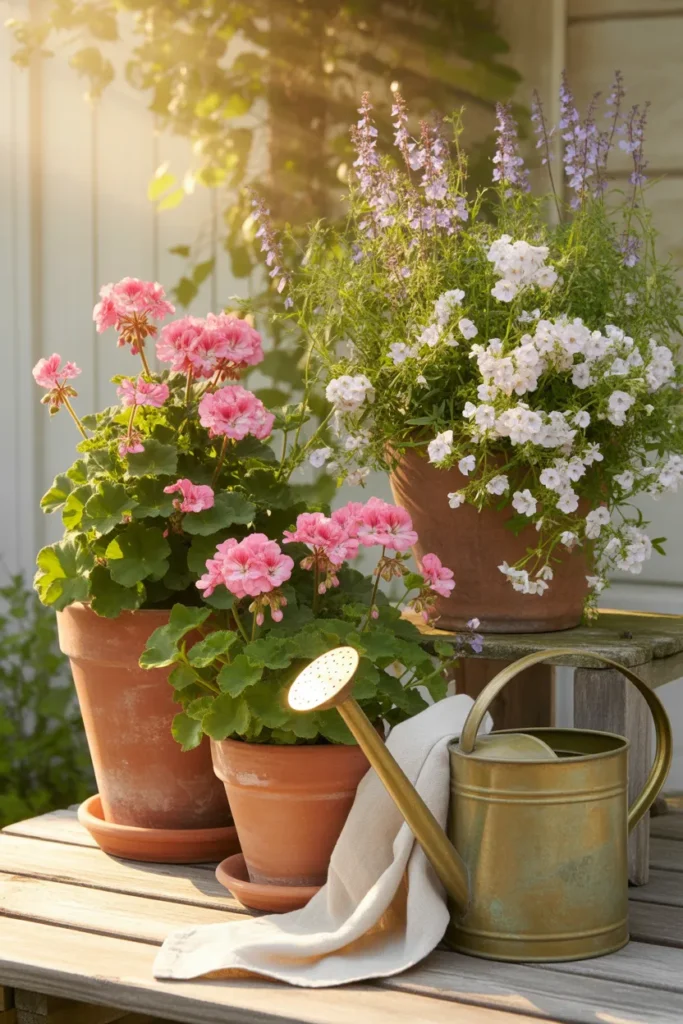
Soft pinks, whites, and purples in weathered terracotta or cream ceramic. Plant pink geraniums, white alyssum, lavender, and bacopa. Add a vintage watering can and a linen runner on the patio table. Reads romantic, slightly messy, very Pinterest-friendly.
Coastal Balcony
Cool blues, whites, and silvers in white-glazed pots. Plant blue salvia, white petunia, blue lobelia, and silver dichondra. Pair with a striped cushion and a rope-handle basket.
Modern Patio
High-contrast greens, whites, and one bold accent (lime or burgundy) in matte black or concrete planters. Plant canna lily, white begonia, and lime sweet potato vine. Sleek and sculptural.
Boho Corner
Warm oranges, magentas, and yellows in mixed terracotta and rattan-wrapped pots. Plant mandevilla, marigold, lantana, and trailing nasturtium. Layer in a kilim rug and brass lanterns.
Container Gardening Tips That Actually Matter
Skipping the obvious advice (yes, water your plants), here are the things I wish someone had told me three summers ago.
1. Pot size determines everything. A 6-inch pot dries out in a single hot afternoon. A 14-inch pot holds enough soil to forgive a missed day. Beginners should go bigger than instinct says.
2. Drainage is non-negotiable. Every pot needs a hole. If you fall in love with a decorative pot that doesn’t have one, drill it or use it as a cachepot with a smaller drilled pot inside.
3. Use real potting mix, not garden soil. Garden soil compacts in pots and suffocates roots. A 2-cubic-foot bag of premium potting mix ($15 to $20) fills two 14-inch pots.
4. Feed weekly during peak season. Container plants are like racehorses. They burn through nutrients fast. A water-soluble bloom fertilizer once a week from June through August keeps the show going.
5. Water at the base, in the morning. Wet leaves in evening sun grow mildew. Morning water means the plant drinks before the heat hits.
6. Group your pots. Three pots clustered look intentional. One lonely pot looks like an afterthought. Vary the heights using overturned crates or plant stands.
For a deeper foundation on the basics, our container gardening for beginners guide walks through soil, drainage, and starter setups in detail.
Balcony and Rental Specific Guidance
Most container articles ignore the realities of balcony living. Here’s what actually matters when your “garden” is hovering above concrete.
Weight limits: Wet potting soil weighs about 75 pounds per cubic foot. A 14-inch pot full of wet soil weighs roughly 30 pounds. Most apartment balconies handle this fine, but cluster heavy pots near load-bearing walls, not at the railing edge. If you’re stacking multiple large pots, check your lease for weight restrictions.
Wind exposure: Balconies above the third floor get windier than ground patios. Skip tall thrillers like canna lily and stick with mounding plants. Mandevilla on a small trellis works if you anchor the pot.
No-drill mounting: Over-the-rail planters with adjustable brackets are removable, no holes required. They start around $20 at Walmart and Target. Self-clamping window box brackets work the same way.
HOA-safe choices: Stick to neutral pots in white, terracotta, or matte black if your building has color rules. Avoid water-staining issues by using saucers under every pot.
Drainage on a balcony: Saucers are mandatory. Water that drips onto the neighbor below creates problems. Add 1 inch of pea gravel to the saucer to keep the pot bottom out of standing water.
If you eventually want to grow food too, the same balcony principles apply with a few extra notes for edibles. Worth a read: our container gardening vegetables guide.
Common Mistakes to Avoid
After watching friends and readers wreck perfectly good plants, these patterns show up over and over.
Buying tiny pots because they’re cheap. A 6-inch pot needs water twice a day in July. You’ll burn out by week three.
Skipping drainage holes. Roots rot in standing water. There’s no workaround. Drill or use a cachepot system.
Using leftover garden soil. It compacts, it drains poorly, and it usually carries disease. Always start with bagged potting mix.
Mixing sun and shade plants in the same pot. Petunias next to impatiens means one of them is unhappy. Match plants to the same light requirements.
Forgetting to fertilize. Potting mix has maybe 2 to 4 weeks of nutrients built in. After that, your plants are starving.
Planting too sparsely. Container plants are meant to look crowded. Plant double what your instinct says.
Ignoring the pot color in your design. Bright pink petunias in an orange terracotta pot fight each other. Match warm flowers to terracotta, cool flowers to white or gray, and bold flowers to black or matte concrete.
Seasonal Container Swaps
Containers don’t have to be a summer-only affair. Refresh them four times a year for continuous color.
Spring (March to May): Pansies, violas, ranunculus, English daisy. All cool-tolerant and bloom in 40 to 60 degree weather.
Summer (June to August): Everything in the lists above. Peak season.
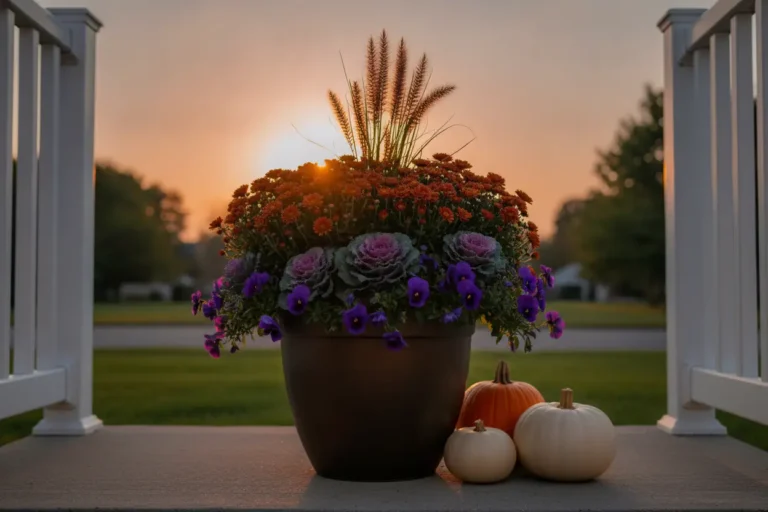
Fall (September to November): Mums, ornamental kale, asters, and dwarf grasses. Pumpkins as styling props.
Winter (December to February): Evergreen branches, red twig dogwood, hellebores in zones 6 and warmer, plus pinecones and seasonal lights.
Where to Shop: Honest Recommendations
Plants: Local independent nurseries beat big-box stores on quality but cost 20 to 40 percent more. Home Depot and Lowe’s are fine for common annuals. Avoid grocery store plants (sad and overpriced).
Pots: Dollar Tree for basic plastic, Walmart and IKEA for mid-range, Target for design-forward ceramics under $40, HomeGoods for one-off splurges, West Elm and Crate & Barrel for splurge statement pots, Home Depot for large terracotta in bulk.
Soil and fertilizer: Bagged potting mix from any big-box store works. For fertilizer, a bottle of Miracle-Gro Bloom Booster ($12) lasts an entire season for a small balcony.
Free expert resources: The University of Maryland Extension container gardening guide is one of the best free horticulture references online. The USDA Plant Hardiness Zone Map helps you confirm which perennials will overwinter in your area.
Frequently Asked Questions
What flowers grow best in pots all summer?
Geraniums, petunias, lantana, calibrachoa (million bells), and zinnias are the most reliable summer-long bloomers for containers. They handle heat, recover from missed waterings, and bloom from May through first frost. For shade, impatiens and begonias do the same job in low-light spots.
How many flowers should I put in one pot?
A solid rule: roughly one plant per inch of pot diameter, divided. So a 12-inch pot holds about 6 to 8 starter plants total. For thriller-filler-spiller arrangements, that’s typically 1 thriller, 3 fillers, and 2 spillers in a 12 to 14-inch pot.
How do I do this in a small space or rental?
Stick with over-the-rail planters (no drilling, $20 at Target), tabletop pots, and stackable plant stands. A 30-square-foot balcony can hold 4 to 6 pots without feeling crowded. Use vertical space with hanging planters and railing baskets to expand your growing area without taking up floor real estate.
What is the budget version of this idea?
A complete budget container costs about $25: a $5 plastic pot from Dollar Tree or Walmart, $6 potting mix, and $14 worth of starter plants from Home Depot or Lowe’s. Marigolds, zinnias from seed, and bacopa are the cheapest performers per pot.
What if I do not have a sunny patio?
Plenty of flowers thrive in shade. Impatiens, begonias, coleus, torenia, and fuchsia all bloom or show colorful foliage in spots with less than 4 hours of direct sun. Coleus alone can carry a shady container with no flowers at all.
How long does this project take?
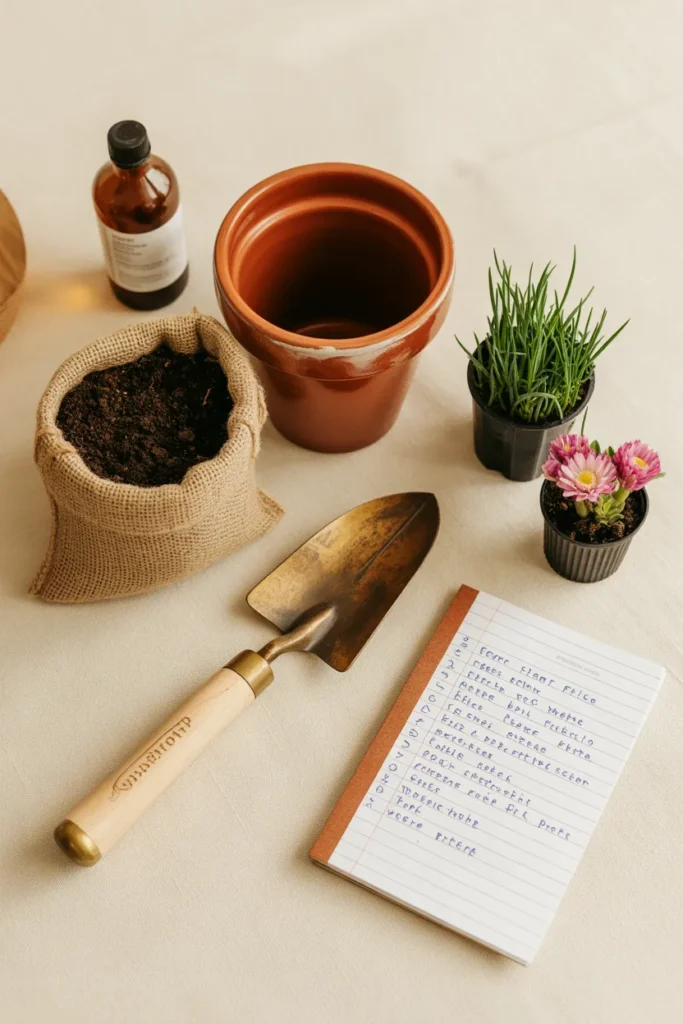
Setting up one container takes about 20 minutes once you have supplies. A full balcony refresh with 5 to 8 pots takes a Saturday morning. Plants take 2 to 4 weeks to fill in and start looking lush.
Do potted flowers need to be watered every day?
In peak summer with full sun and small pots (under 10 inches), often twice a day. Larger pots (14 inches or more) usually need water every 1 to 2 days. Stick your finger an inch into the soil. If it’s dry, water deeply until it runs out the bottom.
What flowers come back every year in pots?
True perennials that survive winter in containers are limited because pot soil freezes harder than ground soil. In USDA zones 7 and warmer, hellebores, sedum, and some salvias return reliably. In colder zones, treat container plants as annuals or move pots into a garage for winter.
Can I mix different flowers in the same pot?
Yes, and you should. Mixed pots look fuller and more interesting than single-variety pots. The only rule: make sure all plants in a pot have the same sun and water needs. Don’t mix shade-loving impatiens with sun-hungry petunias.
Bring It All Together
Your patio doesn’t need a designer or a thousand-dollar budget. It needs one solid pot, the thriller-filler-spiller formula, plants matched to your sun, and a Saturday morning.
Start with one pot this weekend. Buy a 12-inch terracotta from Home Depot, a bag of potting mix, and a geranium with two bacopa starters. Total investment under $25. By July, that single pot will have done more for your patio than a new outdoor rug.
Save this post and pin the thriller-filler-spiller cheat sheet so you have it next weekend at the garden center. And if you’re wondering where to take your container garden next, the beginner guide linked above is the natural next read.
What’s the first pot you’re planting this season?