Metal Raised Garden Bed Ideas That Actually Look Good (And Grow Better)
You stare out the back window at a tired patch of grass, a couple of cracked terracotta pots, and that wood raised bed your neighbor swore would last forever. It’s rotting at the corners. The whole space feels like a half-finished project nobody wants to claim. Sound familiar?
Here’s the good news. Metal raised garden bed ideas are quietly taking over backyards, balconies, and front yards across the country, and for solid reasons. They last decades instead of years. They look clean and modern without trying too hard. And they let you grow more food in less space than you thought possible.
I’ve personally installed three corrugated metal beds in my own yard over the last two seasons, and I’ve helped two friends plan theirs. So I know what works, what fails, and what nobody tells you upfront. Let’s get into it.
Who This Guide Is For
This article is for you if you fall into any of these buckets:
- Renters who want raised beds that come apart and move with you
- Homeowners ready to upgrade from rotting wood beds
- Small-space gardeners working with patios, balconies, or yards under 200 square feet
- Budget-conscious DIYers who want to compare a $40 stock tank to a $300 designer kit
- Style-driven gardeners who care that the bed actually matches the house
I’ve organized everything by design style and price tier, so you can skip to whichever section fits your situation. Use the headings as a menu.
Why Gardeners Are Switching to Metal Beds
Before we get into the design ideas, you deserve a real answer on whether metal is worth it. The short version: yes, with a few caveats.
Metal raised beds (galvanized steel, Aluzinc-coated panels, or cor-ten weathering steel) typically last 20 to 30 years compared to 5 to 7 years for untreated cedar. They resist termites, rot, and warping. They warm up faster in spring, which extends your growing season by 2 to 4 weeks in cooler zones. And the modern aesthetic plays nicely with Modern Farmhouse, Japandi, and minimalist landscape styles.
The trade-offs are real too. Metal heats up in peak summer, which can stress shallow-rooted plants. Some cheap unbranded beds use questionable coatings. And edges can be sharp during assembly. We’ll handle all of that below.Go through raised garden bed layout ideas that maximize every square foot to get started.
17 Metal Raised Garden Bed Ideas, Organized by Style and Budget
1. Modern Farmhouse Corrugated Bed (Mid-Range)
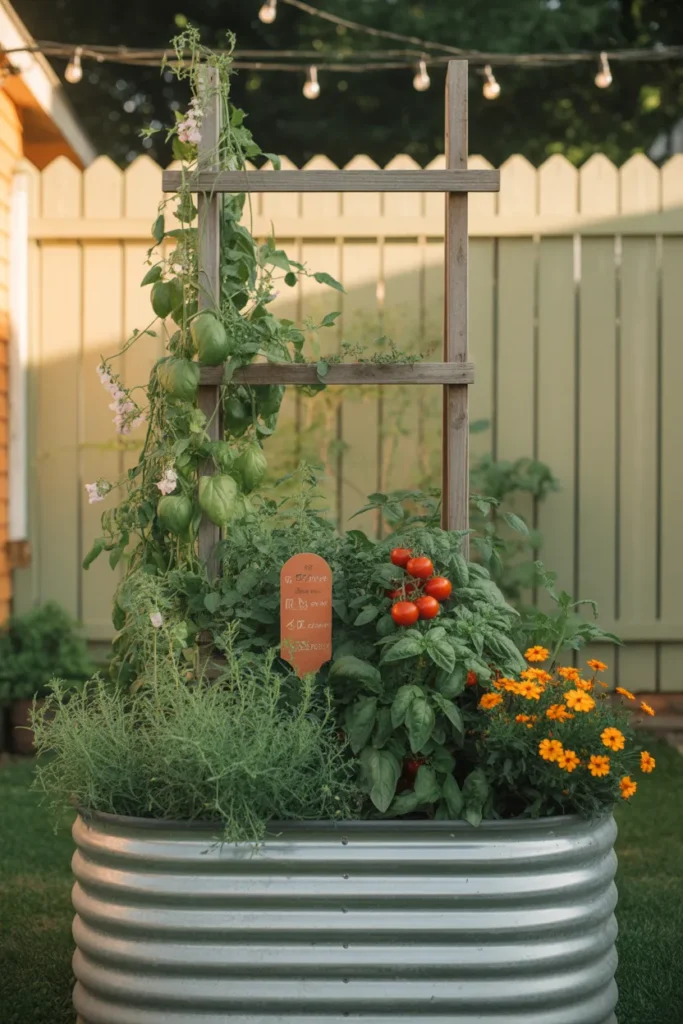
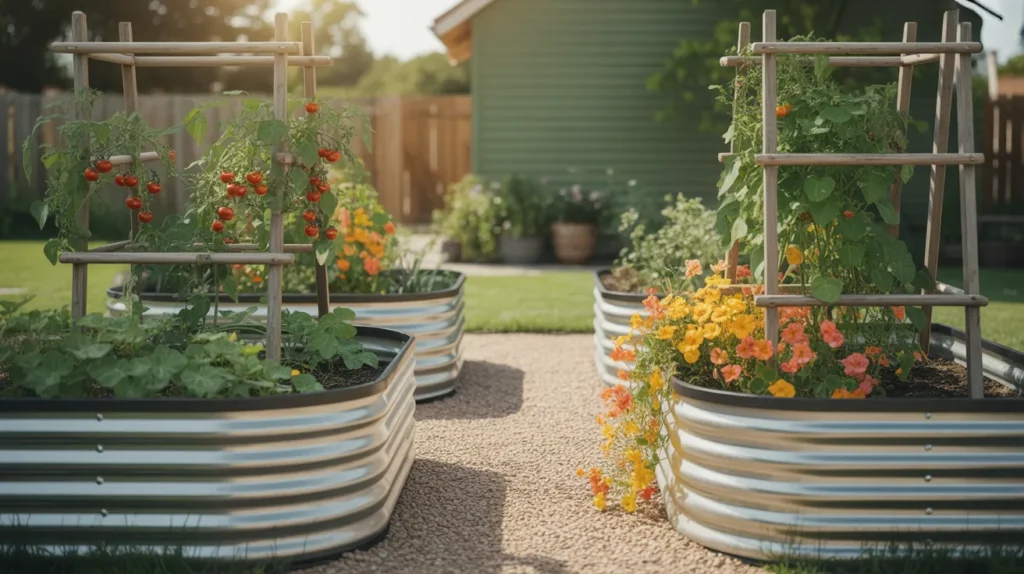
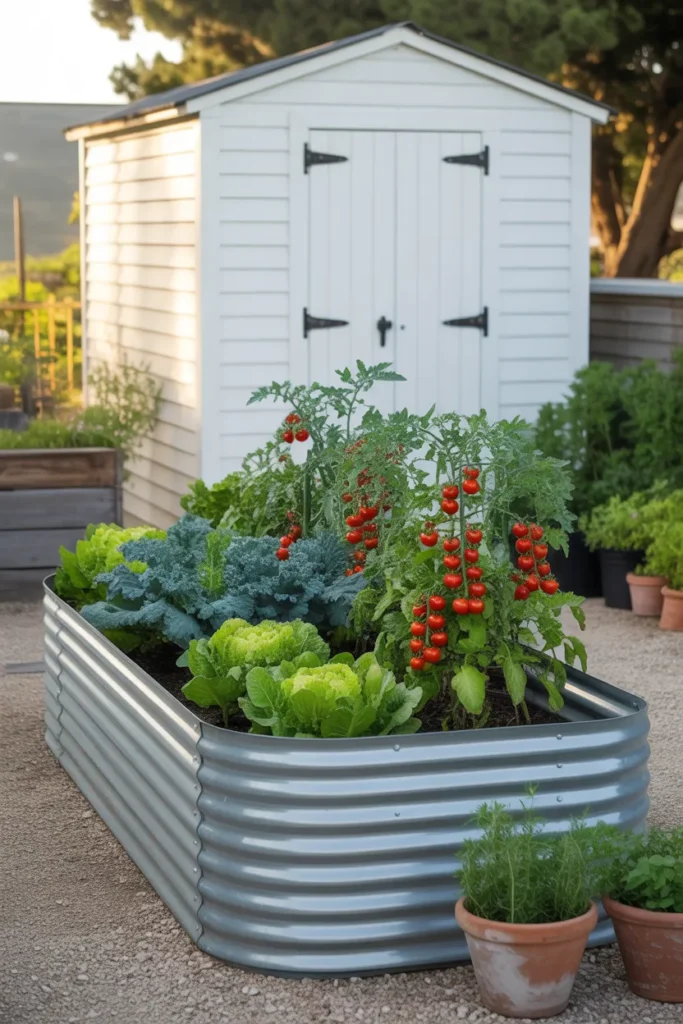
What it is: A galvanized corrugated steel bed, usually 17 to 32 inches tall, with visible ribbed paneling and a clean rectangular footprint. Vego and Birdies are the two most-trusted US brands in this category, both available on Amazon.
Why it works: The corrugated texture echoes the metal roof and farmhouse barn aesthetic without feeling kitschy. Pair it with a white shiplap potting bench and you’ve got cohesive Modern Farmhouse.
How to execute: Pick a 4 by 8 foot footprint at 17 inches deep for vegetables, or 32 inches if you want waist-height comfort. Place beds 3 feet apart so a wheelbarrow fits between them. Fill using the hugelkultur method (logs on the bottom, compost middle, premium soil top) to save on bagged soil.
Price range: $130 to $250 per bed at this size.
2. Japandi Cor-Ten Steel Bed (Splurge)
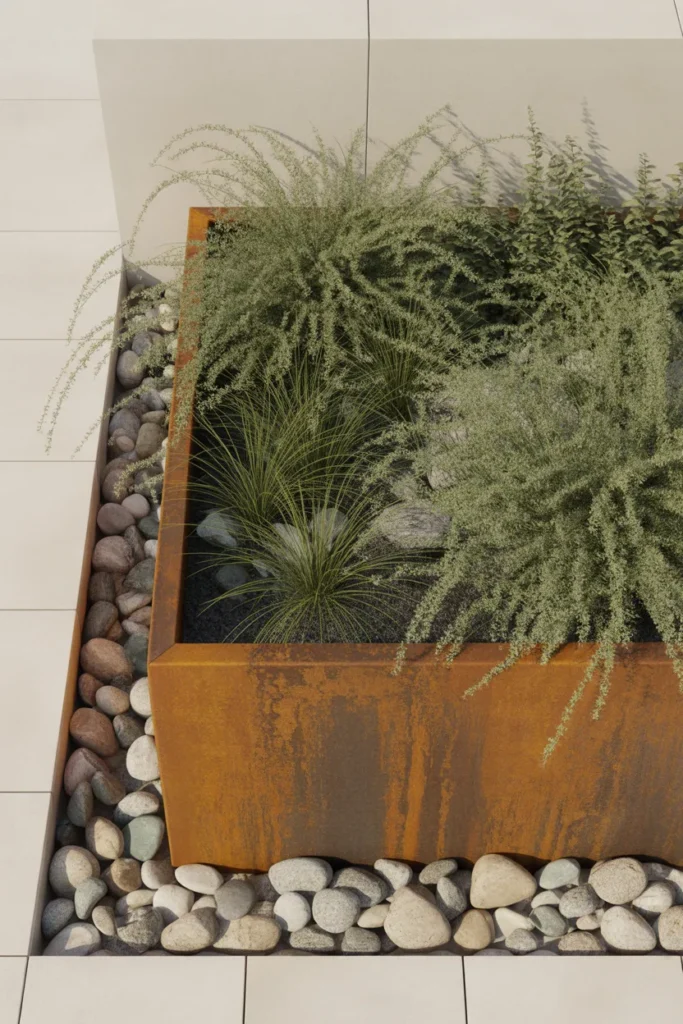
What it is: A weathering steel bed with a deliberate rust patina, typically rectangular or square, ranging from $300 to $800.
Why it works: Cor-ten’s warm rust tones bridge Japanese minimalism and Scandinavian warmth, the heart of the Japandi look. Set it against pale gravel and a simple bench and the whole yard feels like a quiet retreat.
How to execute: Order a single statement bed (4 by 4 feet, 16 inches deep) instead of multiple. Surround it with smooth river rock or pea gravel. Plant a single grass like Japanese forest grass with one accent perennial. Less is more here.
Price range: $300 to $800. West Elm and CB2 carry similar styled options seasonally.
3. Cottagecore Galvanized Stock Tank (Budget-Friendly)
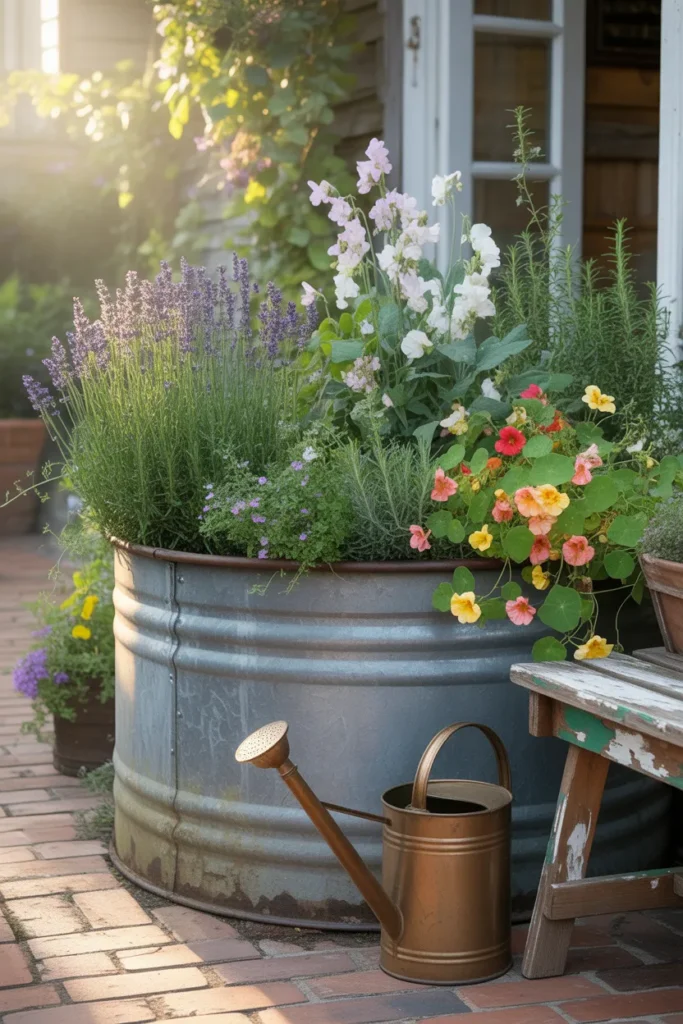
What it is: A repurposed livestock watering trough from Tractor Supply or Rural King, drilled with drainage holes. The 2 by 4 foot oval at 24 inches tall is the sweet spot.
Why it works: The vintage farm feel pairs perfectly with sprawling herbs, sweet peas, and chamomile. Cottagecore is having a real moment on Pinterest, and stock tanks are the easiest entry point.
How to execute: Drill 6 to 8 quarter-inch drainage holes in the bottom. Add a layer of landscape fabric, then 4 inches of gravel for drainage. Fill with a 50/50 mix of topsoil and compost. Plant trailing nasturtiums around the edges so they cascade over the rim.
Price range: $90 to $160 per tank at Tractor Supply.
4. Waist-Height Bed for No-Bend Gardening (Mid-Range to Splurge)
What it is: An elevated metal bed sitting on legs at 30 to 32 inches tall, designed so you garden standing up.
Why it works: It saves your back, keeps rabbits and most groundhogs out, and makes the whole bed feel like furniture rather than landscaping. Perfect for older gardeners, pregnancy seasons, or anyone with knee issues.
How to execute: Pick a bed at least 12 inches deep on top of the leg structure. Shallow-rooted greens (lettuce, spinach, herbs, strawberries) thrive here. Skip deep root vegetables like full-size carrots unless the bed is at least 16 inches deep on the planting side.
Price range: $150 (Amazon basics) to $400 (Vego, Olle).
Exactly how deep your raised garden bed should be for different vegetables
5. Curved or U-Shaped Modular Bed (Splurge)
What it is: A modular metal kit (Vego is the leader here) that lets you bend panels into U-shapes, L-shapes, or full keyhole gardens.
Why it works: Curved beds break up rectangular yards visually and let you reach the center of the bed from multiple sides without stepping on soil. Keyhole shapes are especially smart for kitchen gardens.
How to execute: Sketch your shape on graph paper first. Each panel is typically 2 feet long, so plan in 2-foot increments. Anchor the bed with rebar stakes if you live in a windy area.
Price range: $250 to $600 depending on shape size.
6. Triangular Corner Bed (Mid-Range)
What it is: A 3-sided metal bed designed to fit into a corner of your yard, fence line, or patio.
Why it works: Most yards have awkward corners that get wasted. A triangular bed turns a dead zone into a productive growing space without dominating the layout.
How to execute: Aim for sides of at least 4 feet so you have real planting area. Plant taller crops (tomatoes, peppers) at the back point near the fence and shorter crops at the front edge.
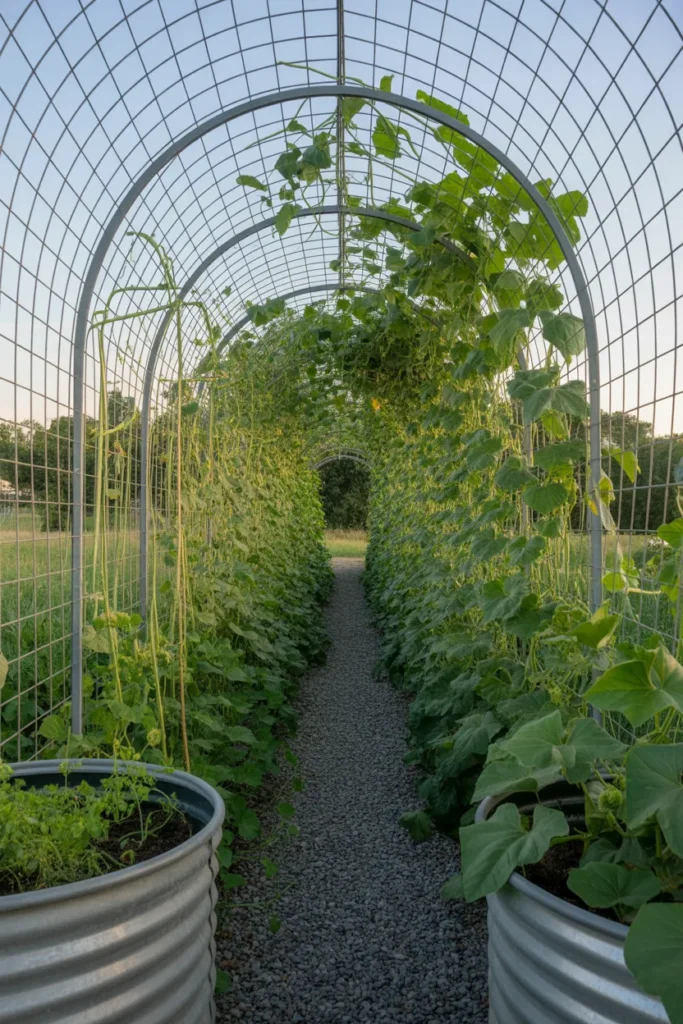
7. Metal Bed With Built-In Trellis (Mid-Range)
What it is: A standard rectangular metal bed paired with a wood or metal trellis attached to one long side, usually 5 to 7 feet tall.
Why it works: Vining crops (cucumbers, pole beans, indeterminate tomatoes, peas, even small melons) double your yield without doubling your footprint. The trellis also adds vertical interest, which Pinterest visuals love.
How to execute: Use cattle panel trellis (16 feet long, $30 at Tractor Supply, bent into an arch between two beds) for the highest impact-to-cost ratio. Anchor with T-posts driven 18 inches into the ground.
8. Front Yard Decorative Bed (Mid-Range)
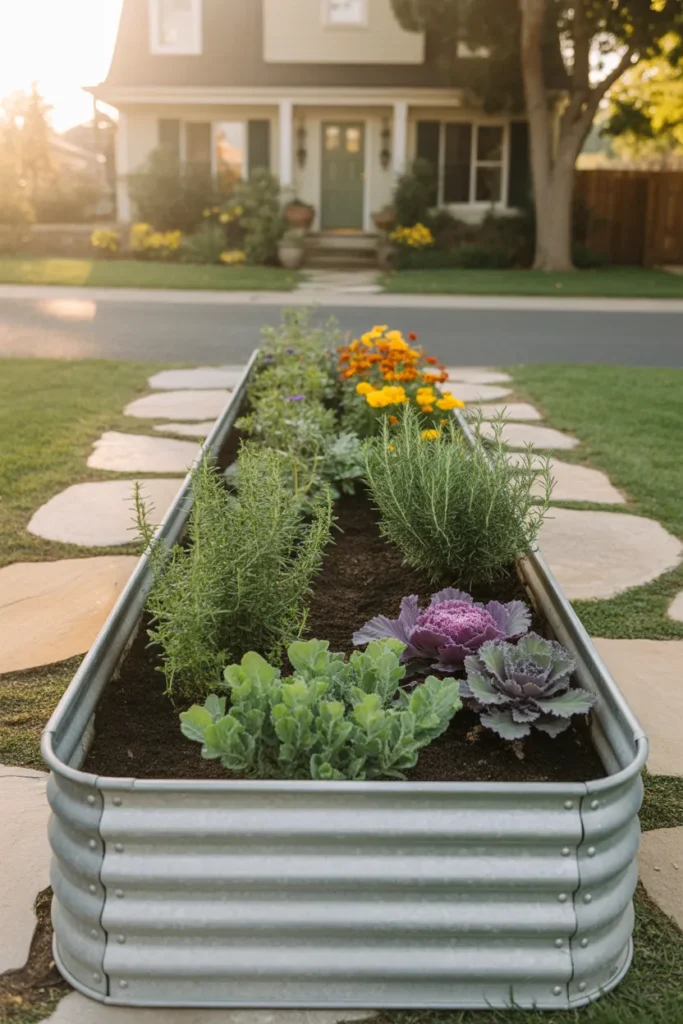
What it is: A metal raised bed installed in the front yard, planted with a mix of edibles and ornamentals so it reads as landscaping rather than a vegetable garden.
Why it works: HOA-friendly when done right. Front yards usually get the best sun. And edible landscaping is one of the fastest-growing gardening trends on Pinterest right now.
How to execute: Mix herbs (rosemary, thyme, lavender) with marigolds, zinnias, and a structural plant like ornamental kale. Edge the bed with mulch or river rock to make it look intentional. Stick to one or two coordinated bed colors.
9. Sloped Yard Tiered Beds (Splurge for Multiple)
What it is: Two or three metal beds stepped down a slope, each one acting as a retaining wall for the bed above it.
Why it works: Slopes are usually wasted space because nothing grows evenly on them. Tiering with metal beds turns the slope into a productive hillside that drains beautifully.
How to execute: Start at the top of the slope. Level each bed with paver bases or compacted gravel. Leave at least 2 feet of walking space between tiers. Anchor beds with rebar driven through pre-drilled corner holes.
This is one of the angles almost no other article covers, and Pinterest searches for “metal raised garden beds on a slope” prove the demand.
10. Window Box Style Narrow Beds (Budget-Friendly)
What it is: A long, narrow metal bed (12 to 16 inches wide, 4 to 6 feet long) installed against a fence, garage, or house wall.
Why it works: Works in pantries as narrow as 20 inches of yard space. Perfect for renters and small patios.
How to execute: Fill with herbs, salad greens, or strawberries. Skip anything that needs depth. A 12-inch deep bed handles all of these comfortably.
Price range: $40 to $90 at IKEA, Amazon, or Walmart.
11. Metal Bed with Integrated Cover or Cold Frame (Mid-Range)
What it is: A metal bed with a hooped frame and removable greenhouse plastic or shade cloth.
Why it works: Extends your growing season by 6 to 10 weeks on each end. The hoop frame also doubles as pest protection in summer when you swap to mesh.
How to execute: Use 1/2-inch PVC pipe bent into hoops, anchored into the bed corners with conduit clamps. Drape clear 6-mil greenhouse plastic in late fall and early spring. Swap to bird netting in summer.
12. Square Foot Gardening Grid Bed (Budget-Friendly DIY)
What it is: A 4 by 4 foot metal bed divided into 16 one-foot squares using thin wood lath or string.
Why it works: Maximizes harvest in tiny spaces. Each square holds a different crop in a scientifically calibrated quantity (16 carrots, 9 spinach, 4 lettuce, 1 broccoli, etc.).
How to execute: Buy a single 4 by 4 metal bed kit. Add a wood or string grid on top. Plant by Mel Bartholomew’s spacing chart.
13. Cattle Trough Mini-Garden (Budget-Friendly)
What it is: A small (50 to 100 gallon) galvanized cattle trough used as a single statement planter.
Why it works: Looks like an intentional design piece on a patio, deck, or balcony with weight capacity. Cheaper than designer planters and far more durable.
How to execute: Drill drainage holes. Add casters underneath if you want it movable (rental-friendly). Plant a single dwarf fruit tree or a curated herb collection.
14. Painted or Powder-Coated Color Pop Bed (Mid-Range)
What it is: A metal bed in a non-galvanized color (sage green, matte black, terracotta, navy).
Why it works: A color pulled from your house trim or shutters ties the garden visually back to the house. Vego, Olle, and Birdies all offer multiple colors now.
How to execute: Pick one color, repeat it across all beds. Multiple competing colors look chaotic. Sage green and matte black are the two safest choices for almost every house style.
15. Round or Hexagonal Statement Bed (Splurge)
What it is: A round (4 to 6 foot diameter) or hexagonal metal bed designed to be the focal point of a small garden.
Why it works: Geometry is one of the strongest visual tools in garden design. A round bed pulls the eye and softens otherwise rectangular yards.
How to execute: Center it on a patio, at the end of a path, or as the heart of a herb spiral garden.
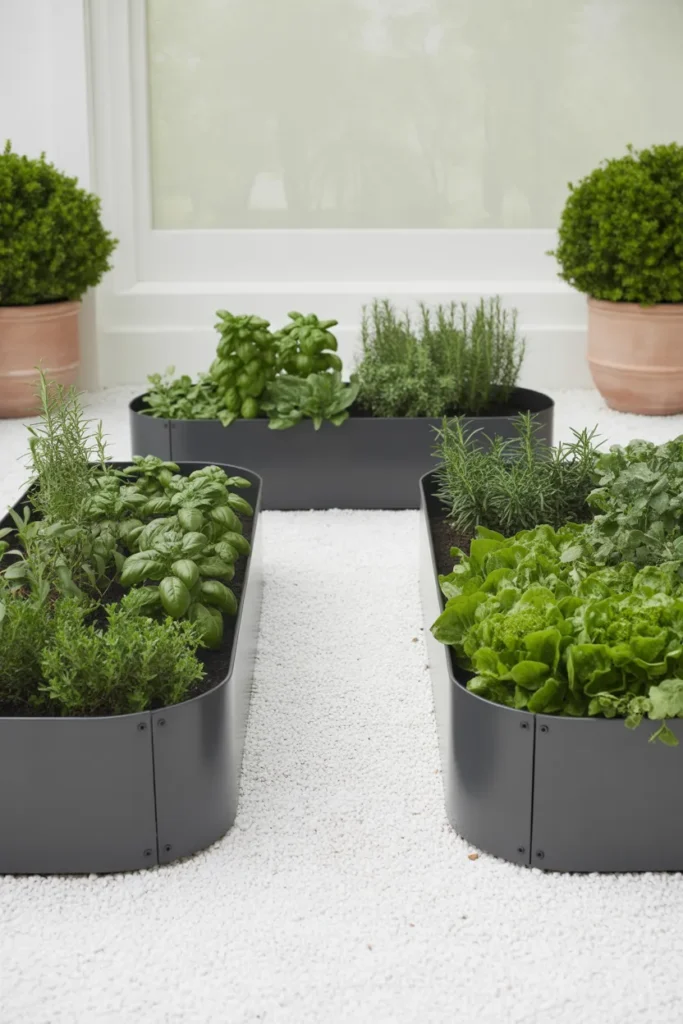
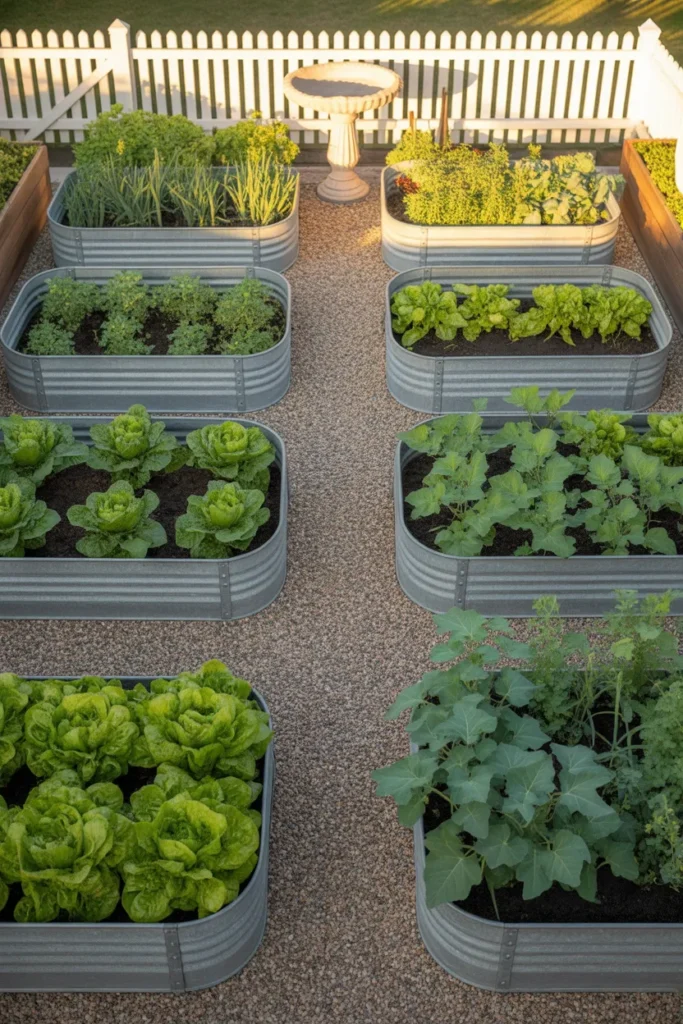
16. Multi-Bed Kitchen Garden Layout (Splurge)
What it is: Four to six matching metal beds arranged in a formal grid, French potager style, with gravel or paver paths between them.
Why it works: Looks like a magazine spread. Functions like a real kitchen garden. Adds serious property value.
How to execute: Aim for four 4 by 8 foot beds in a 2 by 2 grid with 3-foot paths between them. Edge the whole thing with a low picket or hedge for definition.
17. Rolling Metal Bed for Renters and Patios (Budget-Friendly)
What it is: A metal bed on locking caster wheels, usually 2 by 4 feet.
Why it works: Command-strip safe replacement for renters who can’t dig or modify the yard. Roll it for sun exposure or move it when the lease ends.
How to execute: Buy a small metal bed and 4 heavy-duty locking casters (rated for 200 pounds each minimum). Bolt them to the bottom corners. Done.

Budget vs Splurge: Side-by-Side Comparison
| Feature | Budget ($40 to $100) | Mid-Range ($100 to $300) | Splurge ($300+) |
|---|---|---|---|
| Brand examples | IKEA, Amazon basics, Tractor Supply stock tanks | Vego (smaller sizes), Birdies, Olle | Vego modular, custom cor-ten, West Elm |
| Material | Thinner galvanized steel | Aluzinc-coated steel | Cor-ten or premium Aluzinc |
| Lifespan | 8 to 12 years | 15 to 20 years | 20 to 30+ years |
| Coating safety | Check listing carefully | Food-safe certified | Food-safe certified |
| Best for | Renters, beginners, single bed | Most homeowners, multi-bed gardens | Statement pieces, full kitchen gardens |
| Assembly time | 30 to 60 minutes | 1 to 2 hours | 2 to 4 hours |
The 3-Layer Fill Method for Hot Metal Beds (Original Framework)
This is the part nobody talks about. Metal beds heat up faster than wood, and that heat travels into the soil at the edges. Here’s the layering method I use to keep roots cool:
| Layer | Material | Depth | Purpose |
|---|---|---|---|
| Bottom | Logs, branches, cardboard | 6 to 12 inches | Insulates from ground temperature swings, holds moisture |
| Middle | Compost, leaf mold, aged manure | 6 to 10 inches | Feeds plants, retains moisture, buffers heat |
| Top | Premium raised bed soil mix | 10 to 12 inches | Where roots actually grow, stays coolest |
Then mulch the surface with 2 to 3 inches of straw or wood chips. The mulch alone drops soil surface temperature by 10 to 15 degrees Fahrenheit on hot days.
For external reading on soil temperature impact, the USDA Climate Hubs publish region-specific guidance on soil temperature and planting that’s worth bookmarking.
Common Mistakes to Avoid
Skipping drainage. Metal holds water if you don’t drill or punch holes in the bottom (for stock tanks) or leave the bottom open to soil contact (for kit beds). Roots rot fast.
Buying mystery-coating beds. Cheap unbranded beds from random Amazon sellers sometimes use coatings that aren’t tested for food contact. Stick to Vego, Birdies, Olle, or stock tanks from major US farm suppliers.
Placing beds too close together. You need 3 feet minimum between beds for a wheelbarrow. 2 feet feels generous until you’re hauling 40 pounds of compost.
Ignoring sun mapping. Metal beds need at least 6 hours of direct sun for most vegetables. Walk your yard with a phone and track the sun for one full day before placing beds.
Filling with topsoil only. Topsoil compacts and starves roots. The 3-layer method above costs less and grows more.
Forgetting about heat. South and west-facing beds can hit 90+ degree soil temps in July. Light-colored beds, mulch, and shade cloth in peak summer all help.
According to the University of Maryland Extension’s research on raised bed soil temperatures, darker colored beds in full sun can run 5 to 10 degrees warmer than lighter colored beds, which directly affects which crops thrive.
How to Style Your Metal Bed by Garden Aesthetic
Modern Farmhouse: Galvanized corrugated, paired with white shiplap, black hardware, and a mix of edibles plus zinnias.
Japandi: Cor-ten or matte black, single statement bed, pale gravel surround, one ornamental grass.
Cottagecore: Stock tank or vintage galvanized, planted with sprawling herbs, sweet peas, and chamomile, brick or moss paths.
Boho: Mix of metals with woven jute path edging, terracotta accents, and trailing flowers.
Minimalist: Single rectangular matte bed, repeated material, no decorative props, all greens and one accent color.
Placement Tips That Most Articles Miss
Sun first, everything else second. Run your hand or a thermometer through the bed at 2pm on a hot day before you commit to a permanent layout. North-south orientation gives the most even sun across the bed length, which matters for tall crops.
If you have multiple beds, group them in a grid or U-shape for visual rhythm. Scattered beds look like accidents. Grouped beds look like a designed garden.
Leave a clear sight line from your kitchen window to at least one bed. You’ll harvest more from the bed you can see.
Frequently Asked Questions
What are the disadvantages of metal raised garden beds?
The main drawbacks are heat retention in summer (which can stress shallow-rooted plants), sharp edges during assembly, and a higher upfront cost than building a wood bed yourself. Cheap unbranded beds may also use questionable coatings. Stick to reputable brands and use the 3-layer fill method to manage heat.
Is metal safe for raised garden beds and growing food?
Yes, when you choose food-safe certified beds. Galvanized steel and Aluzinc-coated steel from brands like Vego, Birdies, and Olle are tested for food contact and won’t leach harmful amounts of zinc into the soil at normal pH levels. Avoid using galvanized panels coated with old-style lead-based primers, which were phased out decades ago but occasionally show up in salvage materials.
How long will a metal raised bed last?
A quality Aluzinc-coated steel bed lasts 20 to 30 years. Cheaper galvanized stock tanks last 8 to 15 years. Cor-ten steel develops a protective rust patina and can last 30+ years. Wood beds, by comparison, typically last 5 to 7 years for untreated cedar.
What vegetables should not be grown in a raised bed?
Sprawling crops like full-size pumpkins, watermelons, and corn don’t work well in raised beds because they need huge ground space and tend to overwhelm the structure. Deep root vegetables like long parsnips also struggle in beds shallower than 18 inches. Stick to leafy greens, herbs, tomatoes, peppers, beans, peas, carrots, beets, and bush varieties of squash.
Wood vs metal raised beds, which is better?
Metal wins on lifespan, pest resistance, and modern aesthetic. Wood wins on insulation (cooler soil in summer), lower upfront cost if you DIY, and traditional look. For most US gardeners in zones 5 through 9, metal is the better long-term value, especially if you live in a termite-prone region.
How do I do this in a small space or as a renter?
Look at the rolling metal bed (idea 17) and the window box style (idea 10). Both work on patios, balconies with weight capacity, and rental yards where you can’t dig. Stock tanks on locking casters give you a real garden you can take with you when you move.
What is the budget version of a metal raised garden bed?
A galvanized stock tank from Tractor Supply runs $90 to $160 and gives you a real, durable bed. For under $50, a small Amazon basics metal bed kit (2 by 4 feet, 12 inches deep) handles herbs and salad greens. Both options skip the designer markup of premium brands.
What if I do not have a power drill for assembly?
Most kit beds (Vego, Birdies, Olle) come with all hardware and require only an Allen key or screwdriver included in the box. Stock tanks need drainage holes drilled, but you can ask a hardware store like Home Depot or Lowe’s to drill them for you, or borrow a drill through a tool library or Buy Nothing group.
How long does a metal raised bed project take?
A single kit bed assembled and filled takes 2 to 4 hours. A full multi-bed kitchen garden with paths and edging takes a weekend. Stock tank conversions take about an hour once you’ve got drainage holes drilled.
Bring It All Together
Metal raised garden bed ideas have come a long way from the utilitarian stock tanks of decades past. You’ve got everything from $40 starter beds to $800 cor-ten statement pieces, and styles that fit Modern Farmhouse, Japandi, Cottagecore, and everything in between.
Pick the one or two ideas above that match your yard, your budget, and your style. Start with one bed if you’re new. Add more next season once you know what works. And remember the 3-layer fill method, because that single trick separates a thriving metal bed from a stressed one.
If this guide helped you plan your garden, save it to your “Garden Inspiration” Pinterest board so you can come back to the layout ideas when you’re ready to build. Then head over to my breakdown of the best soil mix to fill a raised garden bed with so you don’t waste a dollar on the wrong dirt.
What’s the first metal bed idea you’re going to try? I’d love to hear which one fits your yard.