
Garden Inspiration Ideas: 25 Trending Designs for 2026
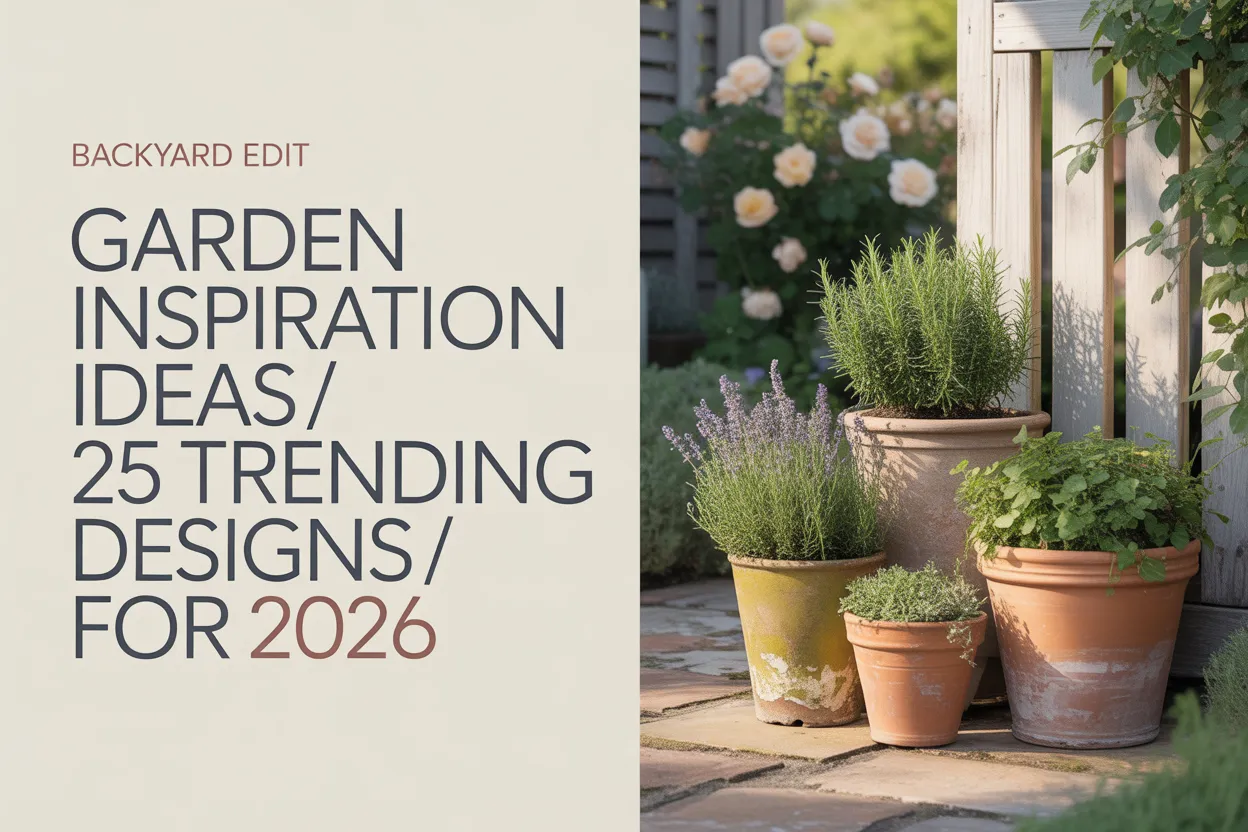
You walk out the back door with your coffee and there it is again. A patchy strip of lawn, two plastic pots from three summers ago, and one wobbly chair pushed against the fence. The yard is fine. It’s also doing nothing for you. You’ve saved a hundred pins of dreamy gardens and somehow yours still looks like a forgotten side project.
Good news. You don’t need a landscape designer or a fresh $5,000 budget. You need garden inspiration ideas that actually translate to real backyards, balconies, and rented patios, and you need them organized in a way you can copy this weekend.
This guide walks through 25 trending garden ideas for 2026, sorted by zone (entry, seating, beds, vertical, edible, lighting, finishing touches) so you can pick the section that matches the part of your yard that’s bugging you and start there. We’ll also cover the design rules pros lean on (yes, including the 70/30 rule and the rule of three), a budget vs splurge breakdown, and the small mistakes that quietly make a yard look unfinished.
Who This Garden Guide Is For
Pick whichever box you fit in. Most of these ideas work across all four.
- Renters and balcony gardeners with no permission to dig and a 4 by 8 foot patio.
- First-time homeowners staring at a blank yard and a Pinterest tab full of dreams.
- Small-space dwellers working with corners, alleys, or a 12 by 14 foot rectangle.
- Budget-minded gardeners who want the cottagecore look without the $400 plant haul.
I’ve personally tested most of these in two rentals and a 900 square foot starter home, so the suggestions skew practical over precious.
The Rules Pros Use Before They Pick a Single Plant
Before we get to the ideas, here are the four design rules that quietly do the heavy lifting in every garden you’ve ever stopped to admire on Pinterest.
The 70/30 rule: roughly 70% of your garden should be calm green foundation (shrubs, grasses, evergreens), and 30% should be the showy stuff that changes with the season (annuals, perennials, color accents). Yards that feel chaotic almost always have those numbers flipped.
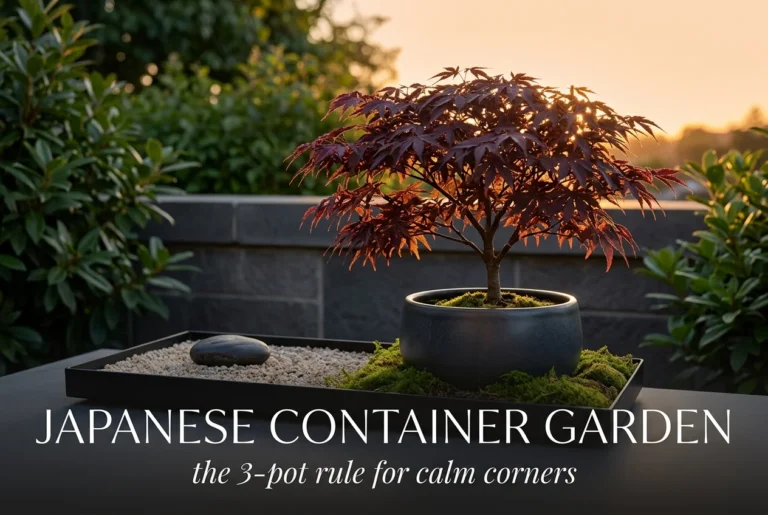
The rule of three: group plants, pots, and decor in odd numbers, ideally threes. Three terracotta pots beat two or four every single time. Our eyes read odd groupings as natural and even groupings as staged.
The 3-hour rule: if any plant in your garden needs more than three hours of weekly hands-on care, you’ll quietly start avoiding the yard. Pick varieties that fit the time you actually have, not the time you wish you had.
The “look classy” trick: classy gardens almost always limit the color palette to three plant tones (say, white, soft pink, and silver foliage) plus one neutral hardscape (gravel, stone, or warm wood). Random color = busy. Restrained color = magazine.
Entry and Pathway Garden Inspiration Ideas
The path is the first thing your eye lands on. It sets the entire tone.
1. Stepping Stones with Creeping Thyme
What: flat flagstones (about 12 to 18 inches across) set into a bed of creeping thyme.
Why it works: the thyme softens the hardscape, releases scent when stepped on, and stays under 4 inches tall.
How: lay stones spaced 18 to 24 inches apart (one comfortable stride), plant thyme plugs from your local nursery in the gaps, water for two weeks while it establishes.
2. Pea Gravel Garden Path
What: a 3 foot wide path of beige or warm gray pea gravel edged with steel landscape edging.
Why it works: drains well, costs a fraction of pavers, reads as both modern and cottage depending on your edging.
How: dig down 3 inches, lay landscape fabric, edge with metal strips, fill with gravel. A 10 by 3 foot path runs roughly $80 in materials at Home Depot.
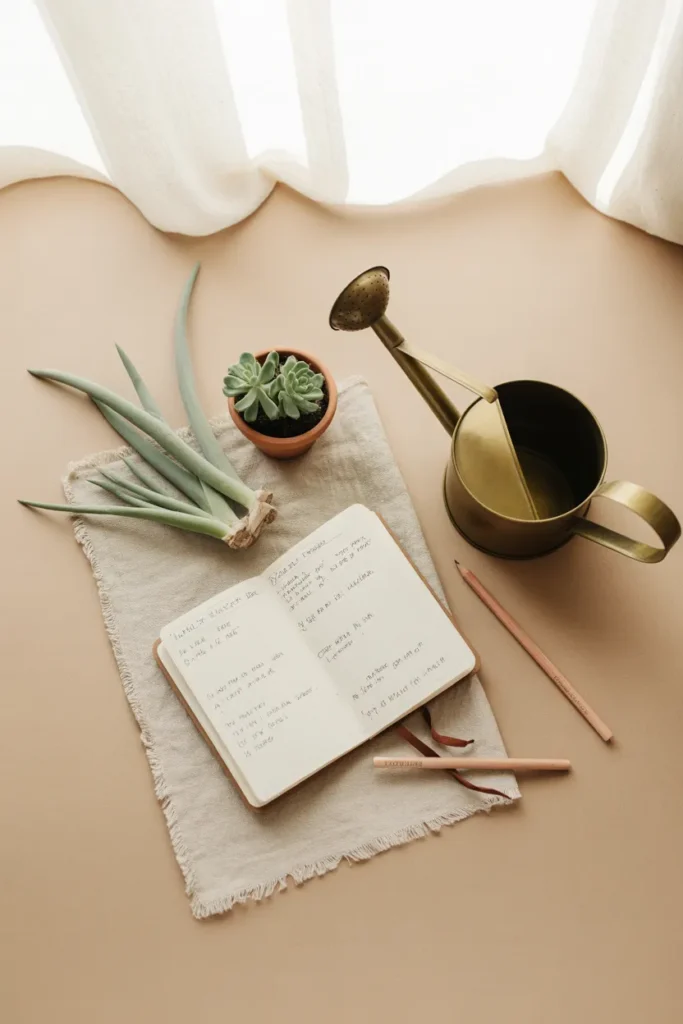
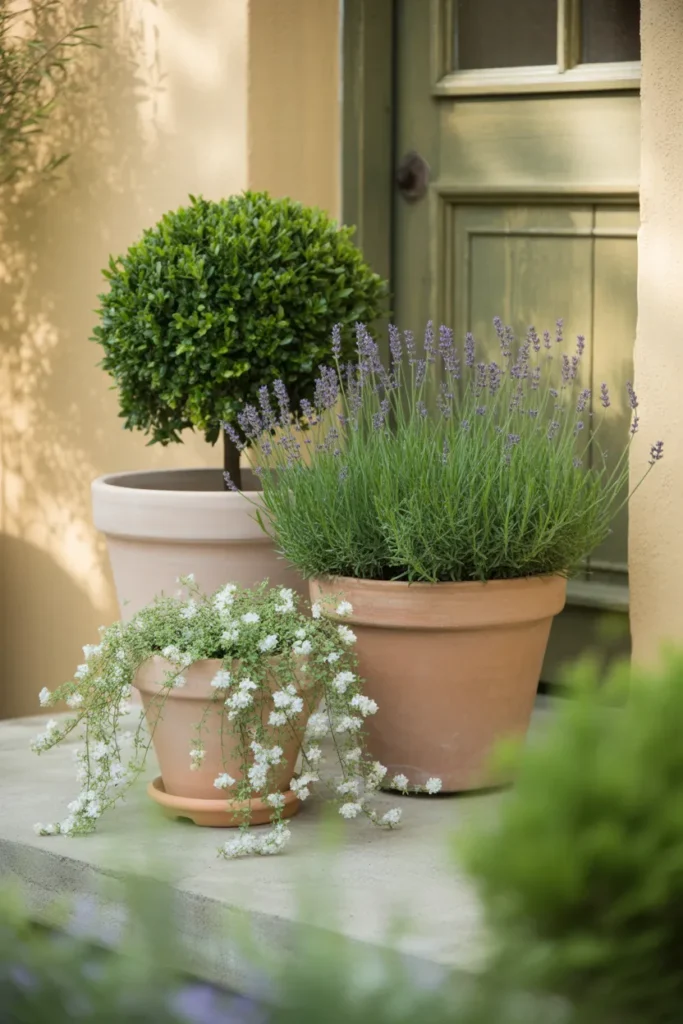
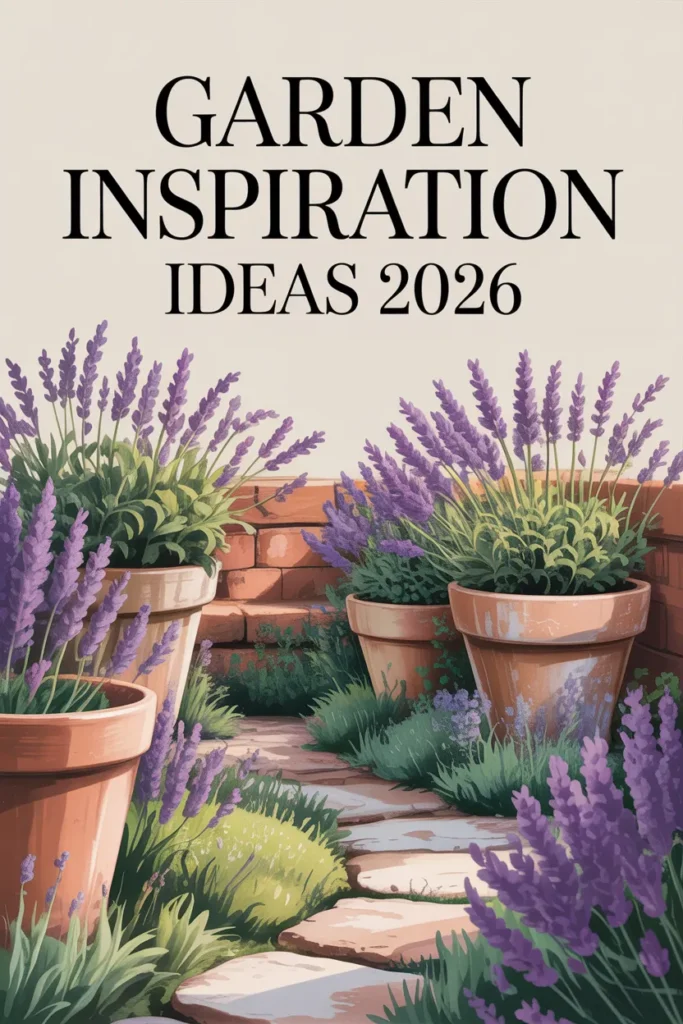
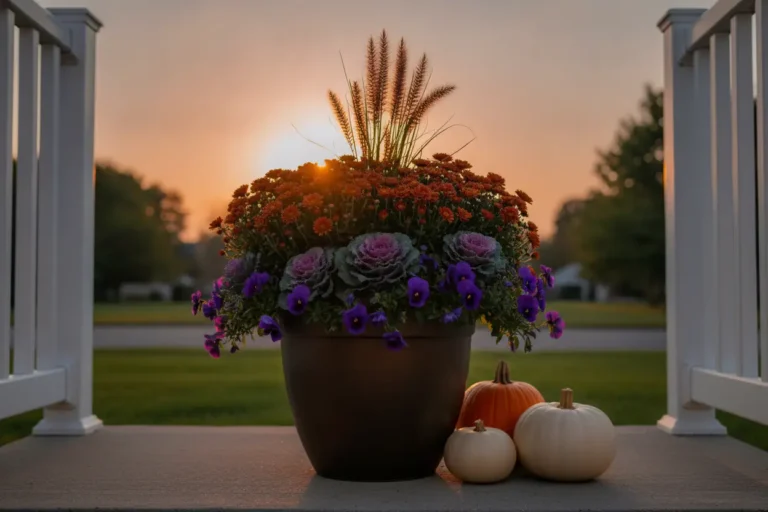
3. Container Cluster Entryway
What: three to five terracotta pots in graduated sizes (12 inch, 14 inch, 18 inch) flanking the back door.
Why it works: instant focal point, no digging, fully renter-friendly.
How: plant the tallest with a structural anchor (boxwood ball or ornamental grass), the medium with a mid-height filler (lavender or salvia), and the smallest with a trailing spiller (bacopa or sweet potato vine).
This pairs beautifully with our container gardening guide for beginners if you’ve never actually planted up a pot from scratch.
Seating Zone Garden Design Ideas
The seating zone is where you decide whether your yard is a place you actually use or just look at.
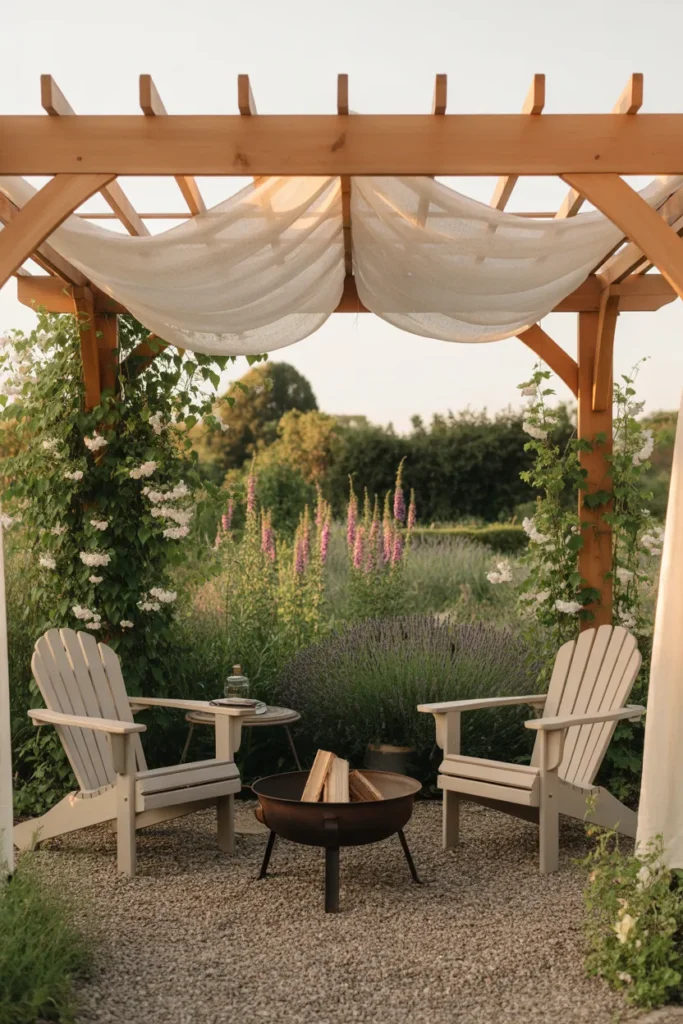
4. The Pergola Reading Corner
What: a 10 by 10 foot pergola anchored over a small bistro set, climbing jasmine on two posts.
Why it works: creates a defined “outdoor room” without building walls, the climbing plant turns it into a green ceiling by year two.
How: ready-to-assemble cedar pergolas run $400 to $1,200 at Lowe’s or Home Depot; plant jasmine or clematis in 3 gallon size for fast coverage.
5. Fire Pit Conversation Circle
What: a 36 inch fire pit (steel, stone, or concrete) ringed by four Adirondack chairs.
Why it works: stretches your usable yard time into the cool fall evenings, instantly anchors the back of the yard.
How: set the pit on a 10 foot diameter pad of crushed gravel for safety; chairs face inward at slight angles, never in a perfect square.
6. Hammock and Wildflower Mini-Meadow
What: a freestanding hammock stand parked next to a 4 by 6 foot patch of wildflowers (zinnias, cosmos, black-eyed Susans).
Why it works: turns an awkward back corner into the favorite spot in the yard, the meadow attracts pollinators all summer.
How: sow a wildflower seed mix from American Meadows or Burpee in spring, place the hammock so you face the flowers, not the fence.
Bed and Border Layout Garden Inspiration
The beds are where most yards either come together or fall apart.
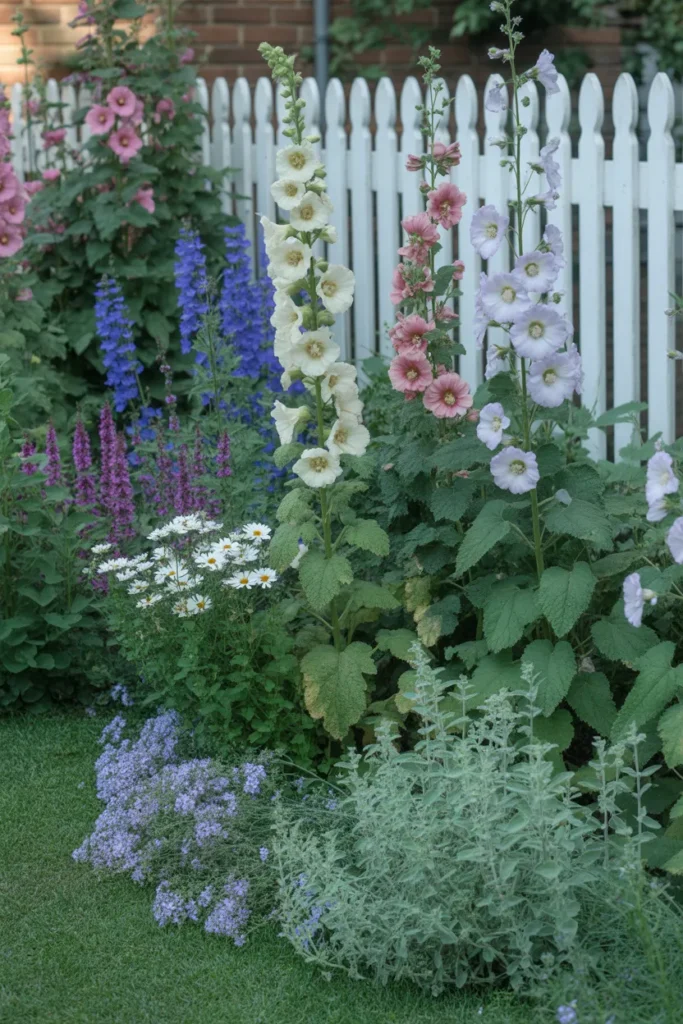
7. Layered Cottage Border
What: a 4 foot deep border with three height tiers (tall in back, medium in middle, low in front).
Why it works: every plant gets seen, no one-row monoculture, follows the rule of three by tier.
How: back row hollyhocks or delphinium (4 to 6 feet), middle row salvia and daisies (24 to 36 inches), front row catmint or alyssum (12 inches).
8. The Modern Three-Plant Border
What: a minimalist border using only three plant varieties repeated in waves.
Why it works: reads as modern and intentional, far easier to maintain than a 12-species cottage bed.
How: ornamental grass (Karl Foerster), one flowering perennial (Russian sage), one structural evergreen (boxwood). Repeat the trio every 8 feet.
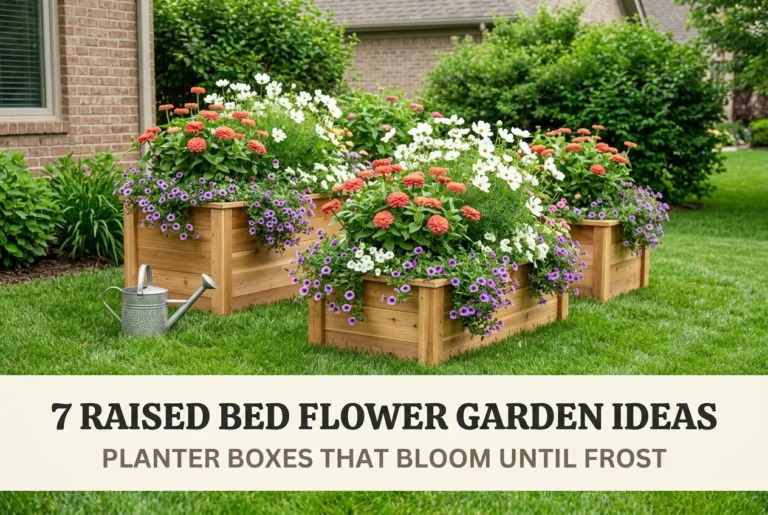
9. Raised Bed Kitchen Garden
What: two cedar or galvanized raised beds (4 by 8 feet, 18 to 24 inches deep).
Why it works: clearly defined edges, no bending, dramatically better soil control.
How: see the full layout breakdown in our raised garden bed layout guide for small backyards.
If you’re leaning sleeker and want the longevity, the metal raised garden bed roundup covers the galvanized options that hold up past 10 years.
10. Pollinator Strip
What: a narrow 3 foot wide strip along a fence line packed with bee balm, echinacea, milkweed, and native grasses.
Why it works: turns dead space into the most alive part of the yard, supports your local ecosystem.
How: check your zone first using the official USDA Plant Hardiness Zone Map so you pick natives that actually thrive in your climate.]
Vertical and Small-Space Garden Inspiration Ideas
Pinterest data screams small-space, balcony, and corner. These ideas are for plots under 200 square feet.
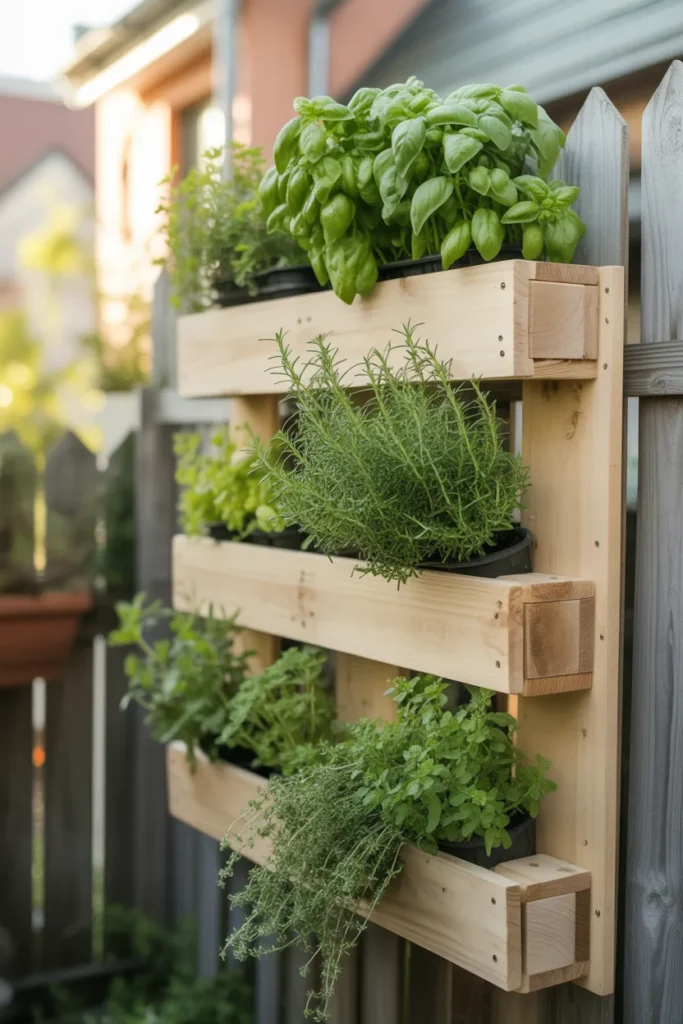
11. Vertical Pallet Herb Wall
What: a reclaimed wood pallet stood vertically against a fence, lined with planter pockets.
Why it works: turns 4 square feet of fence into 12 square feet of growing space.
How: staple landscape fabric to the back, fill compartments with potting mix, plant basil, parsley, mint, and oregano. Works in pantries as narrow as 20 inches.
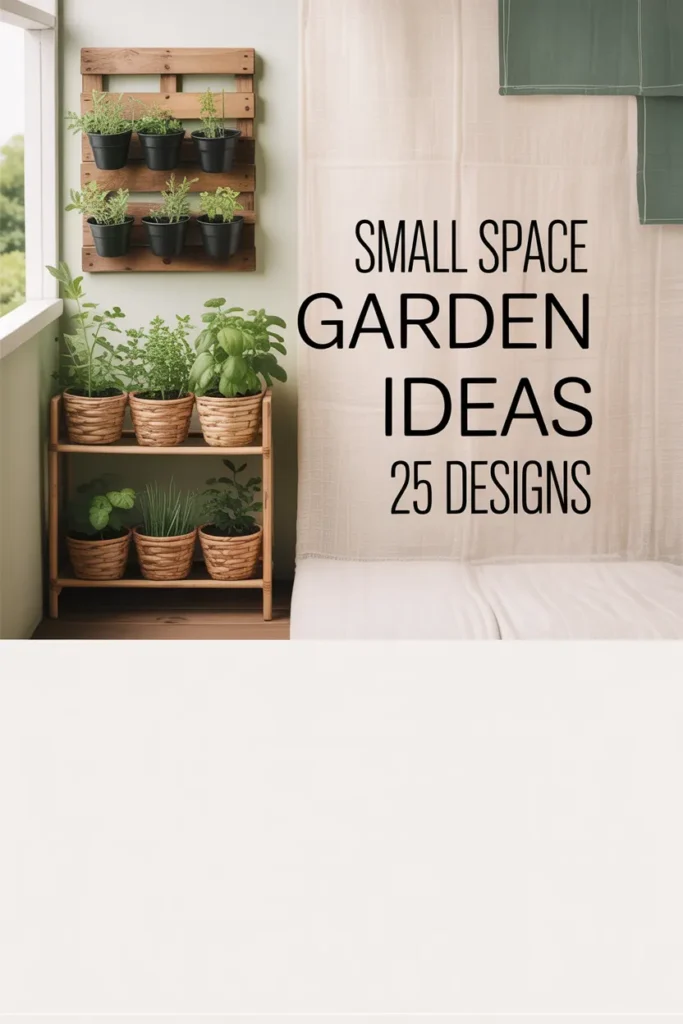
12. Tiered Plant Stand Corner
What: a 3 or 4 tier metal plant stand tucked into an awkward corner.
Why it works: uses vertical space the way the Pinterest top pins keep showing, completely renter-friendly.
How: load with mixed pot sizes, vary heights and trailing habits. Target and IKEA carry tiered stands in the $40 to $90 range.
13. Hanging Basket Trio
What: three hanging baskets at staggered heights along a pergola or eave.
Why it works: draws the eye up, fills airspace that’s almost always wasted.
How: plant with a thriller (geranium), filler (lobelia), spiller (ivy or sweet potato vine). Use S-hooks for command-strip safe rental setups.
14. Living Wall Panel
What: a single 24 by 36 inch felt-pocket living wall planted with succulents or ferns.
Why it works: modern, sculptural, requires no ground space at all.
How: mount on a fence with weather-resistant screws, plant with low-water succulents for sun walls or ferns for shade.
Edible and Kitchen Garden Inspiration
The vegetable angle is loud in the search data. These ideas keep it pretty, not just productive.
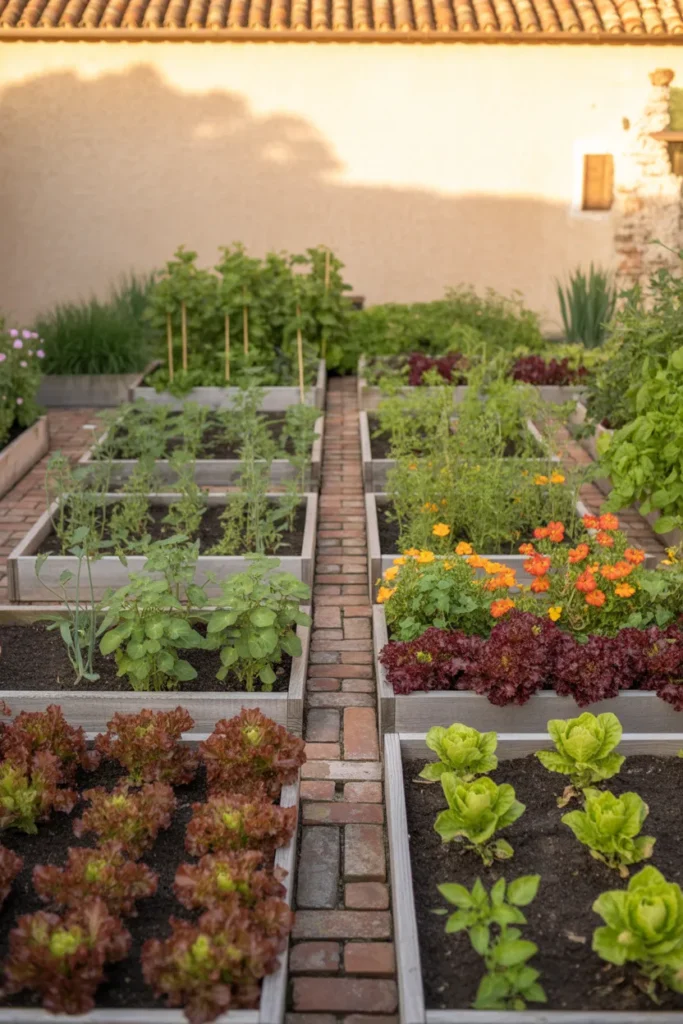
15. The Potager Layout
What: a French-style kitchen garden where vegetables are planted in geometric patterns mixed with flowers.
Why it works: edible plants double as ornamental, deters pests through companion planting.
How: quadrant layout with a brick or stone center cross, plant lettuce as edging, tuck nasturtiums between tomatoes.
16. Espalier Fruit Tree
What: a single apple, pear, or fig tree trained flat against a fence in horizontal tiers.
Why it works: produces fruit in a 6 inch deep footprint, looks intentional and architectural.
How: buy a pre-trained espalier from a nursery (about $80 to $150), tie to horizontal wires every 18 inches. Patient work, gorgeous result.
17. Salsa Garden Bed
What: one 4 by 4 foot bed planted exclusively for salsa: tomatoes, peppers, onions, cilantro, garlic.
Why it works: themed beds give beginners an easy yes-or-no on what to plant.
How: three indeterminate tomato plants in back, peppers in front, cilantro and onions tucked between. Harvest July through September.
Lighting and Ambience Ideas (Trendy Garden Ideas 2026)
Lighting is where 2026 gardens separate themselves. The trend is layered, warm, and low-key.
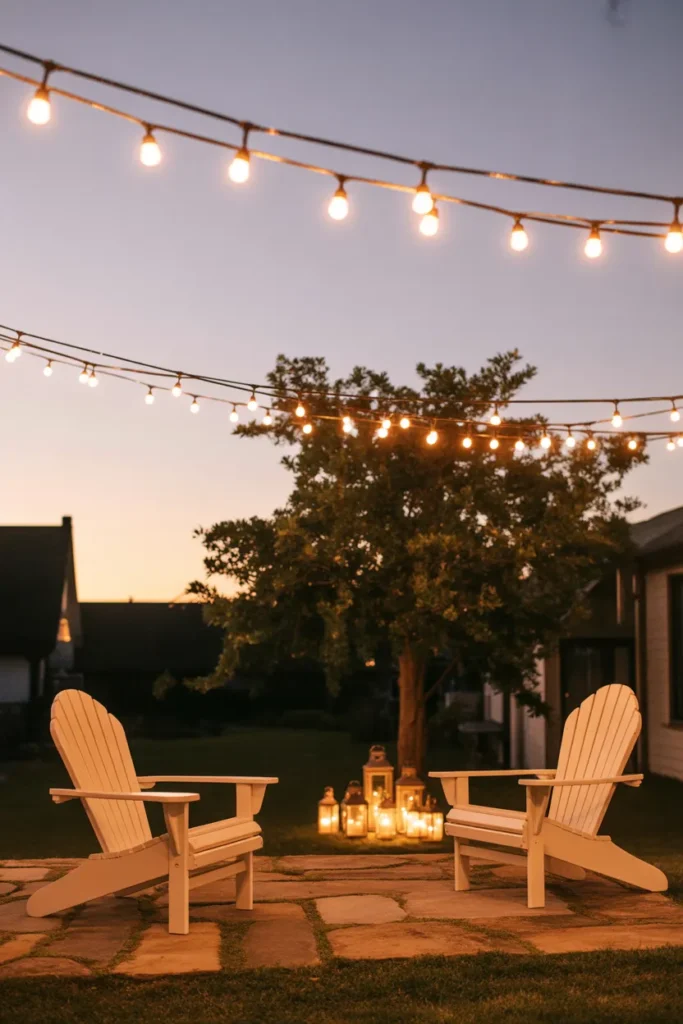
18. Bistro String Light Canopy
What: warm white bistro lights (G40 bulbs) crisscrossed over a patio or seating zone.
Why it works: creates a ceiling without building one, doubles your yard’s evening hours.
How: anchor between the house and a 12 foot wood post sunk in concrete, or a corner pergola. Solar versions from Brightech or Costco run $40 to $90 per 48 foot strand.
19. Lantern Cluster
What: three to five lanterns of varying heights grouped at the base of a tree or beside a bench.
Why it works: adds glow without requiring electrical work, follows the rule of three.
How: mix candle lanterns and battery-operated LED ones, vary heights from 10 inches to 24 inches. HomeGoods is the goldmine for under-$25 lanterns.
20. Path Lighting at Knee Height
What: low-voltage stake lights every 6 feet along a path, glow pointed downward.
Why it works: safety plus ambiance, doesn’t blind you on the walk back from the fire pit.
How: solar stake lights from Costco or Lowe’s, $40 to $80 for an 8-pack. Place lights on alternating sides of the path for natural rhythm.
Finishing Touches and Decor Garden Inspiration Ideas
This is where the rule of three earns its keep.
21. The Single Statement Object
What: one large, sculptural object (a vintage urn, a stone trough, a weathered olive jar) placed as a focal point.
Why it works: anchors the eye, gives the garden a “main character.”
How: thrift first (Facebook Marketplace, estate sales), splurge second (Anthropologie Home runs $200+ for similar). Place at the end of a sightline.
22. Outdoor Rug and Coffee Table Vignette
What: a 5 by 7 outdoor rug, a small wood coffee table, two throw pillows in linen.
Why it works: turns a patio into a living room, signals “this is a space, not a leftover slab.”
How: look for polypropylene rugs (Target, Ruggable) that handle rain. Cream and warm beige read calmer than busy patterns.
23. Corner Water Feature
What: a 24 inch ceramic bowl water feature with a small recirculating pump.
Why it works: the sound dulls neighbor noise, fits in a 2 foot square corner, requires zero plumbing.
How: pre-built kits run $80 to $200 at Home Depot or Wayfair. Add a few river stones and a single floating water lily.
24. Birdbath as Sculpture
What: a single tall birdbath (concrete, stone, or ceramic) placed as a vertical accent in a perennial bed.
Why it works: adds height where plants don’t reach, attracts daily wildlife, doubles as garden art.
How: look for 30 to 36 inch height. Fill with fresh water twice a week. The EPA’s WaterSense program has solid advice on water-smart yard practices if you’re scaling this up.
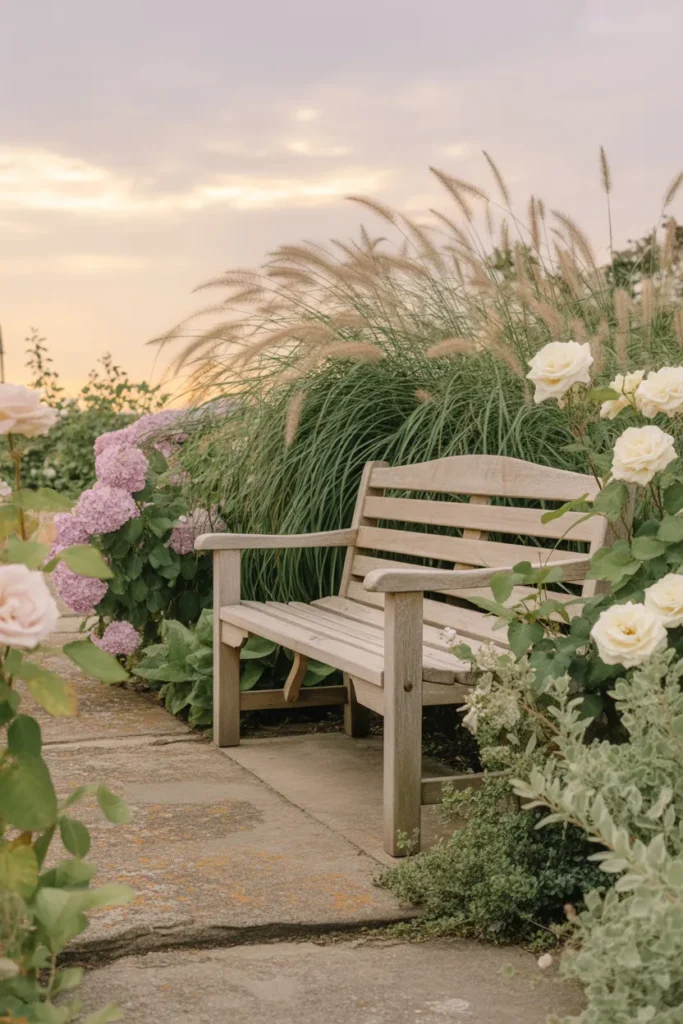
25. The Hidden Bench
What: a single weathered wood bench tucked at the far end of the yard, partially hidden by tall plants.
Why it works: gives the yard a destination, encourages you to actually walk through your own garden.
How: any cedar or teak bench in the $150 to $400 range works. Plant tall ornamental grasses or hydrangeas to soften the approach.
Budget vs Splurge Garden Inspiration: A Quick Comparison
Pick your tier per zone, you don’t have to commit across the whole yard.
| Zone | Budget (under $50) | Mid-Range ($50-$200) | Splurge ($200+) |
|---|---|---|---|
| Path | DIY pea gravel, Dollar Tree edging | Flagstone steppers from Lowe’s | Bluestone pavers from local stoneyard |
| Seating | Thrifted bistro set, Walmart cushions | Target Adirondacks, IKEA bistro | West Elm or CB2 outdoor lounge |
| Beds | Seed-grown annuals, Home Depot perennials | Galvanized raised beds + plants | Custom cedar beds + nursery shrubs |
| Lighting | Dollar Tree solar stakes | Costco bistro lights | Hardwired low-voltage system |
| Statement object | Estate sale urn ($15) | HomeGoods large planter ($60) | Anthropologie Home statement urn ($300) |
Common Garden Design Mistakes to Avoid
A few small errors quietly age every yard. Watch for these.
- Lining everything along the fence. This makes the yard feel like a hallway. Pull beds inward and create depth.
- Mixing too many plant varieties. A 12-species border looks chaotic. Cap it at 5 to 7 varieties repeated in waves.
- Skipping a focal point. Without one strong anchor (urn, tree, bench, water feature) the eye has nowhere to land.
- Planting too small. A 4 inch nursery pot looks like a twig in a 4 by 8 bed for the first season. Buy 1 gallon minimum for the structural plants.
- Ignoring sun direction. Note your sun pattern for one week before you plant. Full-sun plants in shade just sulk.
- Hardscape with no softening. Pure stone or concrete reads cold. Always tuck creeping plants into the cracks.
Frequently Asked Questions
What is the 70/30 rule in gardening?
Roughly 70% of your garden should be calm green foundation plants (shrubs, evergreens, grasses), and 30% should be the seasonal showstoppers (annuals, perennials, color accents). It keeps the yard from feeling chaotic in summer and bare in winter.
What is the 3-hour gardening rule?
If a plant needs more than three hours of weekly hands-on care, you’ll quietly start avoiding the yard. Pick varieties that match the time you actually have, not the time you wish you had.
What is the rule of 3 in landscaping?
Group plants, pots, and decor in odd numbers, ideally threes. Three pots beat two or four every time because our eyes read odd groupings as natural. The rule applies to plant varieties (three repeated species per bed) and to grouping decor.
How do I make my garden look classy?
Limit your color palette to three plant tones plus one neutral hardscape, repeat the same plants in waves instead of buying one of everything, and pick a single focal point per sightline. Restraint beats variety every time.
How do I do this in a small space or rental?
Lean entirely on containers, vertical pallets, tiered stands, and hanging baskets. None of them require digging, drilling, or landlord permission. A 4 by 8 foot patio can comfortably hold a herb wall, a tiered plant stand, two pots flanking a chair, and a hanging trio overhead.
What is the budget version of this whole guide?
Start with one zone (the entry container cluster is under $80 total), one statement object from an estate sale, and seed-grown annuals from a $4 packet. Add one tier of upgrades each season instead of doing it all at once.
What if I do not have full sun?
Most “garden inspiration” articles assume 6+ hours of direct sun. If you have part shade or full shade, swap to ferns, hostas, hellebores, astilbe, and impatiens. The layouts still work, just the plant list shifts.
How long does this whole project take?
A single zone (entry pots, container cluster, or one raised bed) can be done in a weekend. A full yard refresh using this guide realistically takes one growing season if you DIY, or one weekend with help if you’re swapping in pre-grown plants and ready-made hardscape.
Pin This for Your Spring Planning
Save this post to your Garden Inspiration board and pin the cottage border image, that’s the one most readers come back to. If you want the next steps, walk through the raised garden bed layout guide and start sketching your beds before the last frost. The yard you’ve been pinning starts the day you plant the first thing.
One Comment