Container Gardening Vegetables: 15 Easy Picks for First-Timers (Even If You Killed a Pothos Last Year)
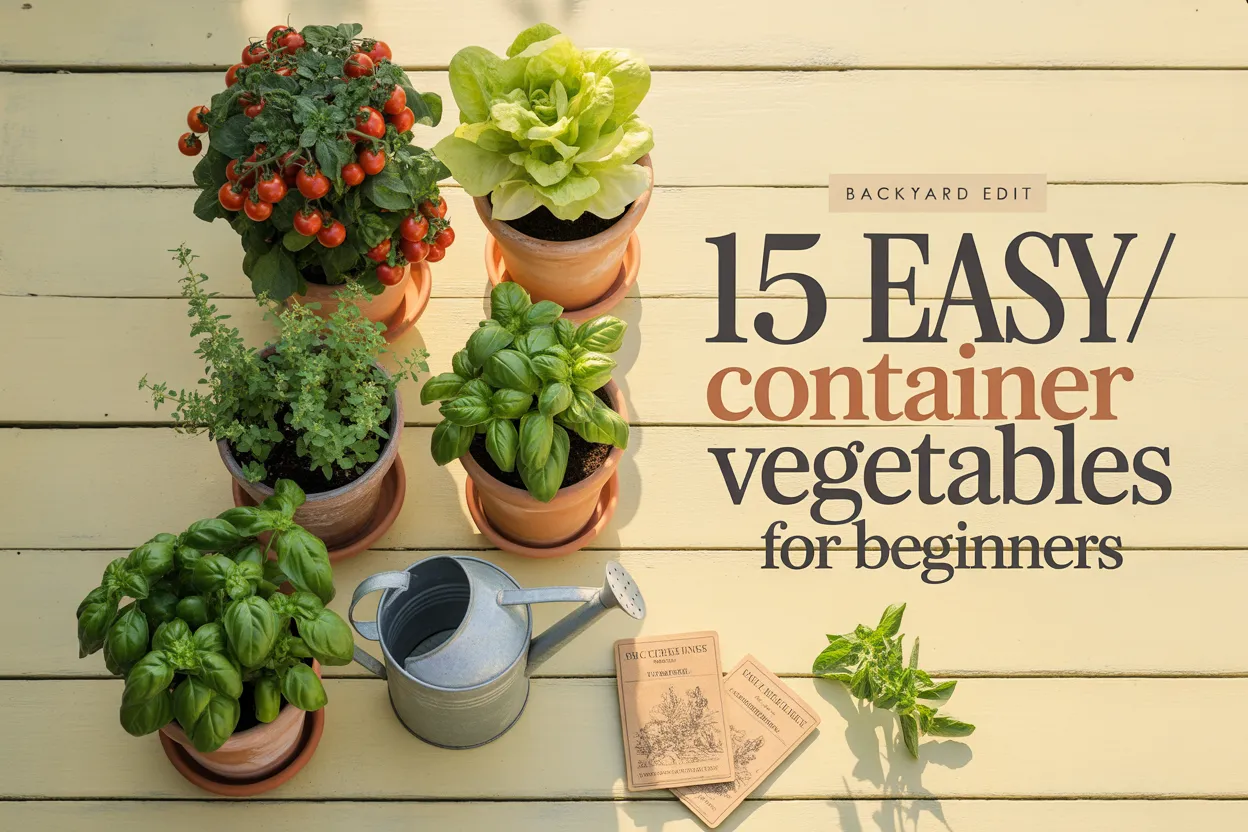
You stare at the bare patio. A sad plastic pot sits in the corner with last summer’s dried-up basil stems still clinging on. You scroll Pinterest and see other people harvesting cherry tomatoes off a sunlit balcony, and you think, okay, but how. That feeling, the one where you want a tiny edible garden but the whole project feels too complicated to start, is exactly why this guide exists.
Container gardening vegetables is the gateway. No tilling. No huge yard. No multi-year commitment. Just a pot, some good soil, a sunny spot, and a plant that wants to live. We are organizing this guide by difficulty, easiest plants first, and every pick comes with the exact pot size, sun needs, and a real reason it works for first-timers. By the end you will know which 15 vegetables to grow, what to plant them in, and the small-space tricks that keep them alive through July.
I have grown vegetables on three different patios over the years, including a 4 foot by 6 foot rental balcony in the south where the railing got blasted by afternoon sun. The plants on this list are the ones that actually produced food on that balcony. Not theory. Tested.
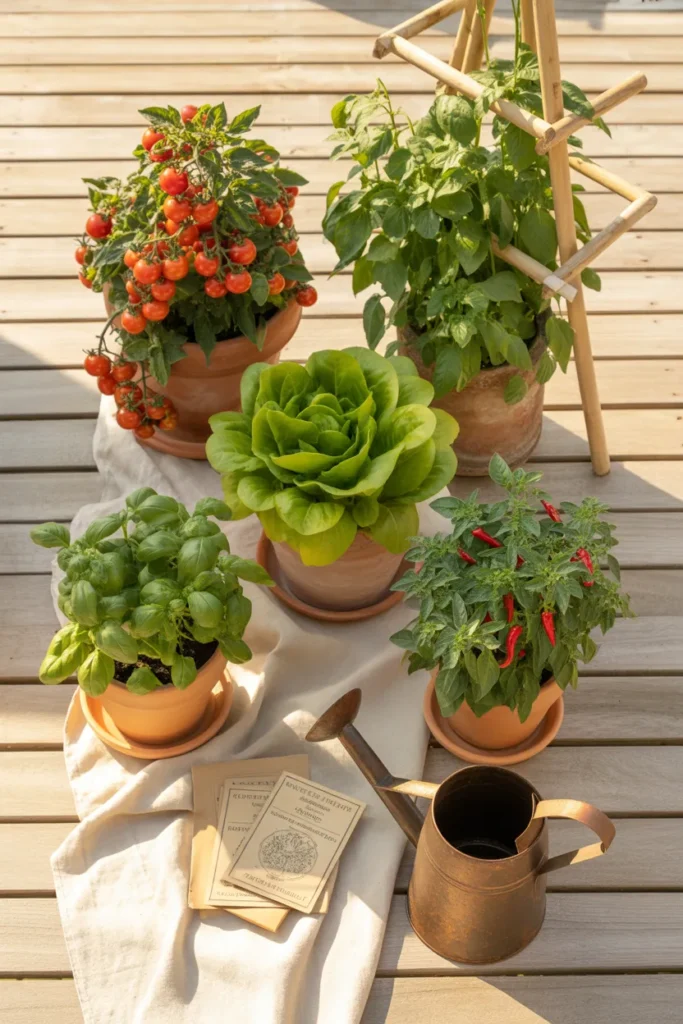
Who This Guide Is For
- Renters who cannot dig up a yard and need no-drill setups.
- Balcony and patio dwellers working with under 50 square feet.
- Small-space homeowners with a sunny driveway, deck, or step.
- Budget-conscious beginners who want to start under $50 total.
- First-timers who have never grown food and feel a little intimidated.
If you are a serious in-ground gardener looking for advanced soil amendments, this is not that post. This is the warm friendly starting line.
What You Need Before You Plant Anything
Before we hit the 15 picks, three quick essentials. Skip these and your plants will struggle no matter which vegetables you choose.
Pots With Drainage Holes
Every container must have drainage holes. No exceptions. Roots that sit in soggy soil rot within two weeks. If you fall in love with a pot that has no holes, drill three or four holes in the bottom with a 1/4 inch masonry bit, or use the pretty pot as a cachepot and grow inside a plain nursery pot you slip in and out.
The Right Potting Mix (Not Garden Soil)
Bagged potting mix is light, drains well, and holds moisture without compacting. Garden soil from your yard or a bag labeled “topsoil” is too heavy for pots and will suffocate roots. Look for a mix that says “potting mix” or “container mix” on the front. Miracle-Gro Potting Mix and Espoma Organic Potting Mix are easy US picks at Home Depot, Lowe’s, and Walmart. If you want a deeper dive into what actually goes into the bottom of any growing setup, our guide on what to fill a raised garden bed with breaks down the layering principle that also applies to bigger containers.
Sun, Real Sun
Most vegetables need 6 to 8 hours of direct sun. A spot that gets dappled light through a tree or sun for 3 hours in the morning is shade as far as a tomato is concerned. Stand in your chosen spot at 10am, 1pm, and 4pm on a sunny day before you commit. If you only have 4 hours of direct light, that is fine, you will lean toward the leafy and herb side of this list.

The 15 Easiest Container Gardening Vegetables (Ranked by Difficulty)
Each pick below tells you what it is, why it works in pots, and exactly how to grow it. Pot sizes are minimums, bigger is almost always better.
1. Lettuce (The Forgiving Starter)
What it is: Cut-and-come-again leafy greens like butter, romaine, oakleaf, and loose-leaf mixes.
Why it works: Shallow roots, fast growth (you eat the first leaves in 30 days), and tolerates partial shade with 4 hours of sun.
How to grow it: Use a wide low pot at least 6 inches deep and 12 inches across. Sprinkle seeds on top of damp potting mix, cover lightly, water gently. Snip outer leaves with scissors and the plant keeps producing for 6 to 8 weeks. In the South, grow in spring and fall, lettuce bolts and turns bitter when temperatures push past 80°F.
2. Radishes (The Instant Gratification Pick)
What it is: Crunchy peppery roots ready in 25 to 30 days from seed.
Why it works: Nothing else gives a beginner this much speed. You will harvest before you have time to overthink it.
How to grow it: A 6 inch deep pot works for round varieties like Cherry Belle. Sow seeds 1 inch apart, thin to 2 inches once sprouts hit 2 inches tall. Keep soil consistently damp or radishes turn woody. Cool weather only, plant in April or September across most US zones.
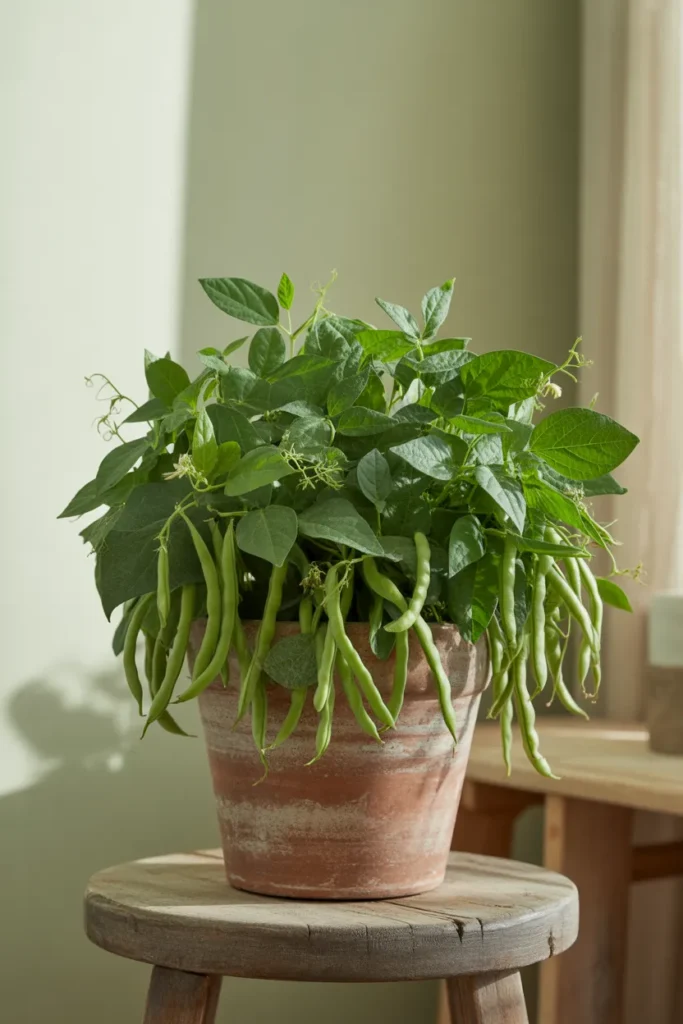
3. Bush Beans (The Set-and-Forget Producer)
What it is: Compact green bean plants that do not need a trellis.
Why it works: They make their own nitrogen, ignore heat, and a single 12 inch pot can give you handfuls of beans for a month.
How to grow it: Use a 12 inch pot, 10 inches deep minimum. Push 4 to 5 seeds in 1 inch deep around the edge of the pot, water in. Once they hit 4 inches tall, mulch with a thin layer of straw or shredded bark to keep moisture even. Full sun, 6 plus hours.
4. Cherry Tomatoes (The Crowd Pleaser)
What it is: Compact and dwarf tomato varieties like Tiny Tim, Patio Princess, and Tumbling Tom.
Why it works: Cherry types ripen earlier, crack less, and produce 100 plus tomatoes per plant in a 5 gallon container. Look-up regular slicing tomatoes need bigger pots and more drama.
How to grow it: Use a 5 gallon container (roughly 12 inches across and 12 inches deep) for dwarf varieties, 7 to 10 gallons for vining ones. Bury the seedling deep, up to the lowest set of leaves, the buried stem grows extra roots. Cage or stake at planting time. Full sun, 8 hours ideal. Water deeply when the top inch of soil feels dry, usually every 1 to 2 days in July.
5. Basil (The Tomato’s Best Friend)
What it is: Sweet aromatic herb that loves the same conditions as tomatoes.
Why it works: Pairs in flavor and growing needs, repels some pests, and gives you fresh pesto for the whole summer.
How to grow it: An 8 inch pot per plant or one big 14 inch pot with 3 plants. Pinch the top set of leaves once the plant is 6 inches tall, this triggers bushy growth. Pinch off any flower buds the second they appear or leaves turn bitter.
6. Green Onions / Scallions (The Regrow Cheat)
What it is: Mild slim onions you can grow from grocery store roots.
Why it works: Stick the white root ends from a grocery bunch into a 4 inch deep pot of damp soil and they regrow in 10 days. Free food.
How to grow it: Any pot 4 inches deep works. Cut the green tops as you need them, leave 1 inch above the soil and they keep producing for months.
7. Spinach (The Cool Weather Workhorse)
What it is: Tender leafy green that loads up on iron and grows fast in cool weather.
Why it works: Tolerates partial shade, ready in 35 to 45 days, and a single 10 inch pot feeds a salad-eating household.
How to grow it: Sow seeds 1 inch apart in a pot 6 to 8 inches deep, thin to 4 inches apart. Spring and fall only, spinach bolts the moment summer heat hits.
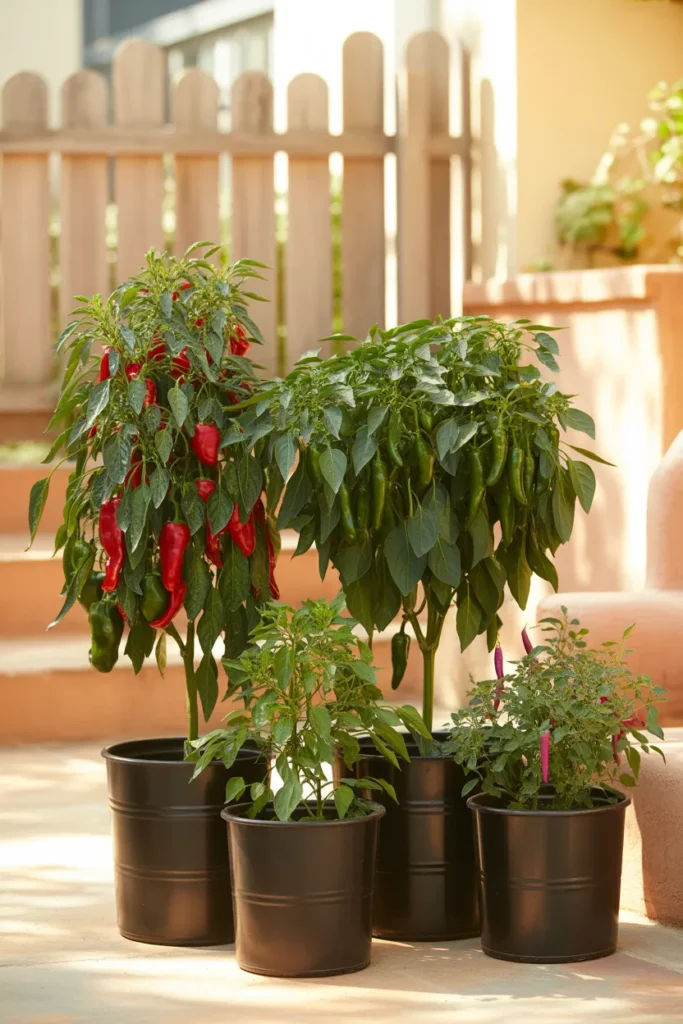
8. Peppers (Hot and Sweet)
What it is: Bell peppers, jalapeños, Thai chilis, and shishitos.
Why it works: Compact upright growth, beautiful glossy fruit, and one plant gives you 20 plus peppers across a season.
How to grow it: A 5 gallon container (12 inches across and 12 inches deep) per plant. Stake at planting because branches snap when loaded with fruit. Full sun, 8 hours. Peppers love heat, so a dark colored pot in a south-facing spot is a feature, not a bug.
9. Kale (The Almost-Indestructible One)
What it is: Hearty leafy green available in curly, lacinato, and red Russian types.
Why it works: Survives light frost, keeps producing for 4 to 6 months, and one plant gives you weekly harvests.
How to grow it: Use a 10 inch deep pot, 12 inches across, one plant per pot. Harvest outer leaves the size of your hand, leave the inner crown alone. Tastes sweeter after a fall frost.
10. Swiss Chard (The Underrated Beauty)
What it is: Leafy green with neon stems in pink, yellow, orange, and red.
Why it works: Decorative enough to use in a front-porch pot arrangement, tolerates heat better than spinach, produces from late spring through hard frost.
How to grow it: A 10 inch deep pot works for one plant. Cut outer stems 1 inch above the soil, the plant regrows from the center.
11. Cucumbers (Bush Varieties Only)
What it is: Compact bush cucumber varieties like Bush Champion, Spacemaster, and Patio Snacker.
Why it works: Vining cucumbers are container chaos. Bush types stay tidy and produce 10 to 20 cucumbers per plant.
How to grow it: A 5 gallon container, 12 inches deep minimum, one plant per pot. Add a small obelisk trellis at planting time even for bush varieties, they appreciate the support. Cucumbers are thirsty, water daily in peak summer.
12. Mint (In Its Own Pot, Always)
What it is: Spearmint, peppermint, mojito mint, chocolate mint.
Why it works: Mint is a takeover artist. In a container it cannot escape and you get unlimited mint for tea, cocktails, and lamb dishes.
How to grow it: Any 8 inch pot, alone, never mixed with other herbs. Cut stems back by half once a month to keep it bushy. Tolerates partial shade.
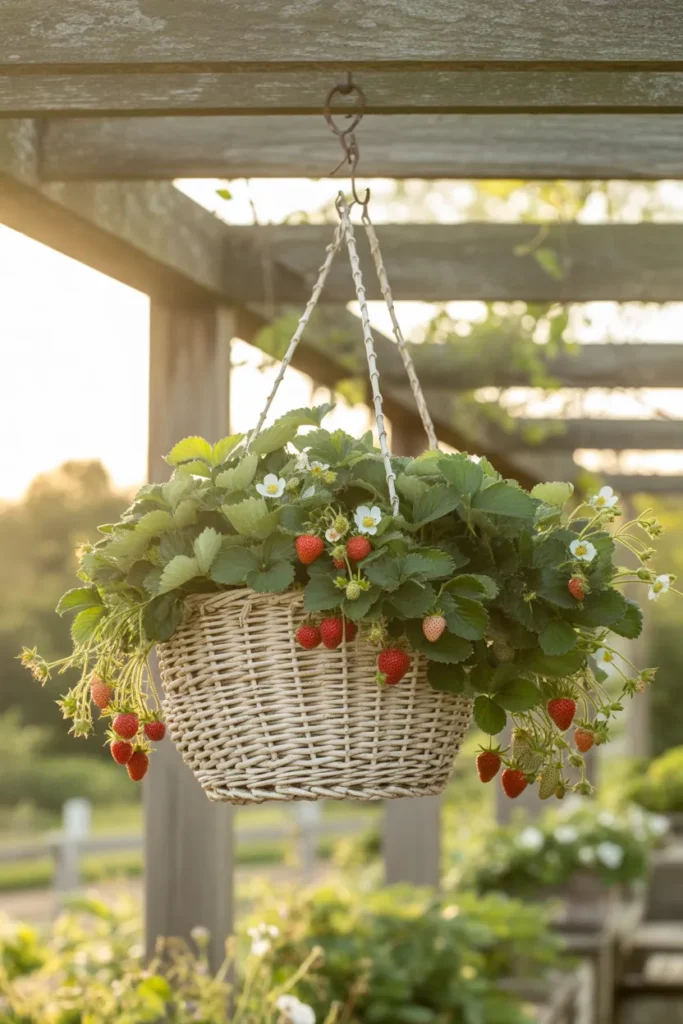
13. Strawberries (Yes, Technically a Fruit, We’re Counting It)
What it is: Day-neutral or everbearing varieties like Albion, Seascape, and Mara des Bois.
Why it works: Strawberries were practically invented for hanging baskets and tiered pots. The fruit hangs cleanly off the edge, slugs cannot reach.
How to grow it: A 10 inch deep pot fits 3 plants, a hanging basket fits 2. Fertilize every 2 weeks with a liquid tomato fertilizer once flowers appear. Pinch off the first round of flowers to send energy into the roots.
14. Carrots (Short Varieties Only)
What it is: Short stubby carrot varieties like Paris Market, Thumbelina, and Little Finger.
Why it works: Long carrots need 12 plus inches of loose soil, which is a lot in a pot. Short varieties top out at 3 to 4 inches and grow happily in standard containers.
How to grow it: A pot 8 to 10 inches deep, 12 inches wide. Sow seeds 1 inch apart, thin ruthlessly to 2 inches once tops are 2 inches tall. Carrots that are not thinned will not form roots. Cool weather only.
15. Zucchini (One Plant Is Plenty)
What it is: Bush type summer squash like Bush Baby, Eight Ball, and Patio Star.
Why it works: A single bush zucchini plant in a 7 gallon pot produces enough squash to make you start leaving them on neighbors’ doorsteps. One is enough.
How to grow it: Use a 7 to 10 gallon pot, 14 inches deep minimum, one plant per pot. Hand-pollinate by brushing the inside of a male flower with a small paintbrush, then brush a female flower (the one with the tiny squash behind the bloom). This solves the most common urban garden problem, low pollinator activity.
Pot Size to Vegetable Matching Chart (Screenshot This)
This is the chart I wish someone had handed me on day one. It is the original framework version of every “you need a bigger pot” comment buried in gardening forums.
| Vegetable | Minimum Pot Size | Pot Depth | Sun Needs |
|---|---|---|---|
| Lettuce | 12 inches wide | 6 inches | 4 plus hours |
| Radishes | 8 inches wide | 6 inches | 4 plus hours |
| Bush Beans | 12 inches wide | 10 inches | 6 plus hours |
| Cherry Tomatoes | 5 gallon (12 in) | 12 inches | 8 hours |
| Basil | 8 inches wide | 6 inches | 6 plus hours |
| Green Onions | 4 inches wide | 4 inches | 4 plus hours |
| Spinach | 10 inches wide | 6 inches | 4 plus hours |
| Peppers | 5 gallon (12 in) | 12 inches | 8 hours |
| Kale | 12 inches wide | 10 inches | 6 plus hours |
| Swiss Chard | 12 inches wide | 10 inches | 6 plus hours |
| Bush Cucumbers | 5 gallon (12 in) | 12 inches | 8 hours |
| Mint | 8 inches wide | 8 inches | 4 plus hours |
| Strawberries | 10 inches wide | 8 inches | 6 plus hours |
| Short Carrots | 12 inches wide | 10 inches | 6 plus hours |
| Bush Zucchini | 7 gallon (14 in) | 14 inches | 8 hours |
Container Companion Planting (Combos That Actually Work)
Pinterest searches for vegetable pairings are huge and Google barely covers this for containers. Here are four combos tested in real pots.
- The Italian Pot: One cherry tomato plant + 2 basil plants + 1 oregano in a 10 gallon pot. The basil shades tomato roots, the herbs season what you harvest, all three want the same water.
- The Salad Bowl: Loose-leaf lettuce mix + green onions + radishes in a 14 inch wide shallow pot. All cool-weather, all shallow-rooted, ready within 4 weeks.
- The Three Sisters Mini: Bush beans + dwarf cucumber + nasturtium flowers in a 10 gallon pot. Beans add nitrogen, nasturtium repels aphids, cucumber gets the trellis.
- The Pretty Front Porch: Rainbow Swiss chard + curly kale + parsley + a single bush zucchini in a 15 gallon trough. Decorative enough for the front of the house, edible enough to feed you.
What does not work in a single pot: mint with anything, big slicing tomatoes with anything, zucchini with anything (it hogs everything).

Budget vs Splurge: The Container Shopping Framework
You can build a 5-pot starter setup for under $40 at Dollar Tree and Home Depot, or you can spend $400 at West Elm. Both grow tomatoes. Here is the honest breakdown.
Budget-Friendly (Under $25 per pot)
- Dollar Tree 1 gallon nursery pots, $1.25 each, perfect for herbs.
- 5 gallon Home Depot orange buckets, $4.95 each, drill holes in the bottom and you have a tomato pot. They are also the workhorse of bucket gardening, which the Pinterest crowd loves.
- Lowe’s terracotta 8 to 12 inch pots, $4 to $15.
- 5 pack of 5 gallon fabric grow bags, $15 to $20 on Amazon, lightweight and renter-friendly. The OXO bin alternative of the gardening world, breathable and half the price of plastic planters.
Mid-Range ($25 to $100 per pot)
- Target Project 62 ceramic planters, $25 to $60, modern and balcony-friendly.
- IKEA SOCKER galvanized planters, $25 to $40, modern farmhouse aesthetic.
- HomeGoods seasonal pottery, $20 to $50, hit-or-miss inventory but big rewards.
Splurge ($100 plus per pot)
- Crate & Barrel large concrete planters, $150 to $300.
- West Elm Tuscan terracotta urns, $120 to $250.
- Crescent Garden self-watering planters, $130 to $400, worth it if you travel.
The truth: vegetables do not care about the pot’s price tag. They care about size, drainage, and soil. Spend on size, save on style.
Watering, Feeding, and Keeping Plants Alive in July
Watering Container Plants
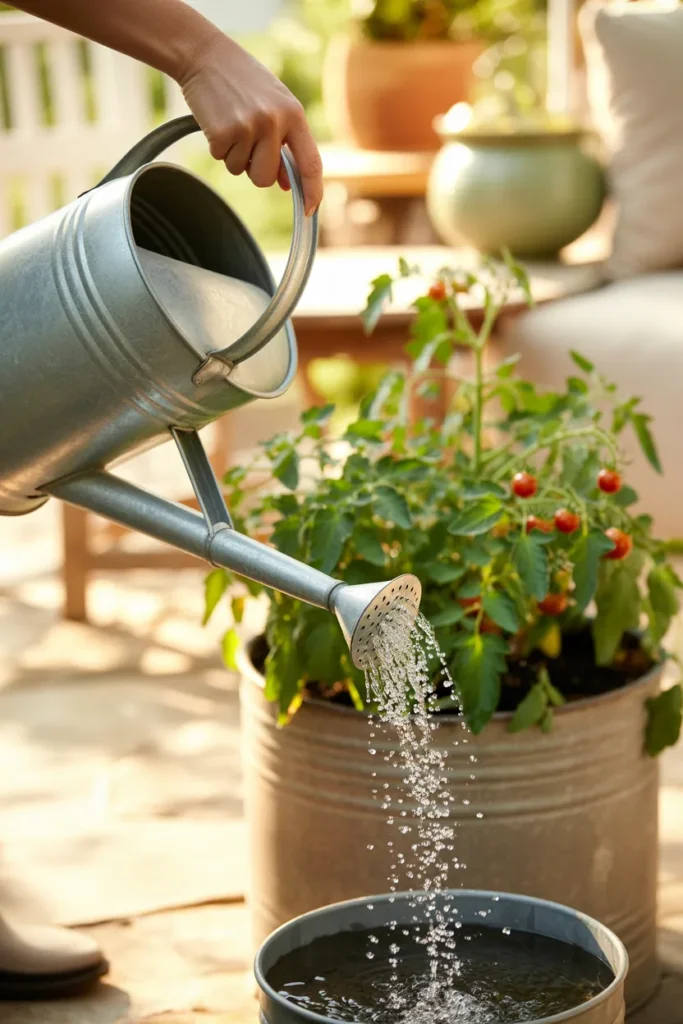
Containers dry out 3 to 5 times faster than ground beds. Stick your finger 1 inch into the soil. Dry? Water until it runs out the bottom. Wet? Wait. In July most containers need water once a day, twice for tomatoes and zucchini in heat waves. Self-watering planters or grow bags with saucer trays cut watering frequency in half.
Feeding Container Plants
Potting mix has only 4 to 6 weeks of nutrients built in. After that you feed. Two simple options:
- Slow release granules (Osmocote Plus) mixed into the soil at planting, lasts 4 months.
- Liquid fertilizer (Espoma Tomato-Tone or Miracle-Gro Performance Organics) every 2 weeks once flowers appear.
Skip both and your tomatoes will set fruit, then yellow, then sulk.
Mulching Containers
A 1 inch layer of straw, shredded bark, or even pebbles on top of the soil cuts water evaporation by 50 percent and looks tidier in photos. This is the small step that separates surviving plants from thriving ones.
Renter and Balcony Specific Tips (The Section No One Else Wrote)
Balconies and patios come with rules. These are the workarounds.
- Weight load: A wet 10 gallon pot can weigh 80 plus pounds. Most apartment balconies handle 40 to 60 pounds per square foot, so spread heavy pots near the wall, not the railing edge.
- Drip trays under every pot: Saves your downstairs neighbor from a brown rain shower. Plastic plant saucers, 12 to 16 inches across, $2 to $4 at any garden center.
- No-drill railing planters: Hook-over rail planters from Bloem and Bloomscape clip onto standard balcony rails up to 2 inches thick, no hardware required.
- HOA-friendly aesthetic: If your HOA limits “visible gardening,” stick to terracotta or cream pots. They read as decor, not farming.
- Wind: Tall plants on high balconies snap. Stake everything and group pots together for windbreak.
- Heat reflection: Concrete balconies and dark siding can push pot temperatures past 100°F. Use light colored pots, double-pot (a smaller pot inside a larger one with airspace), or shade with a cheap bistro chair.
For more on building a sturdy contained growing setup that works on hard surfaces, this rundown of metal raised garden bed ideas covers options that sit beautifully on patios and rooftops.
Common Mistakes to Avoid
These are the mistakes I made my first season so you do not have to.
- Pots that are too small. That cute 6 inch pot will not grow a tomato. Size up.
- Garden soil instead of potting mix. It compacts, suffocates roots, and stays soggy. Always use bagged potting mix.
- Watering on a schedule instead of by feel. Some days plants need water, some days they don’t. Stick a finger in the soil.
- Skipping fertilizer. Container plants run out of food in 6 weeks. Feed them.
- Crowding plants. Three tomato plants jammed in one pot give you three sad plants. One pot, one tomato.
- Ignoring sun. A “bright spot” with no direct light is shade. Verify with the 10am, 1pm, 4pm test.
- Pots without drainage holes. Roots rot. Drill holes or skip the pot.
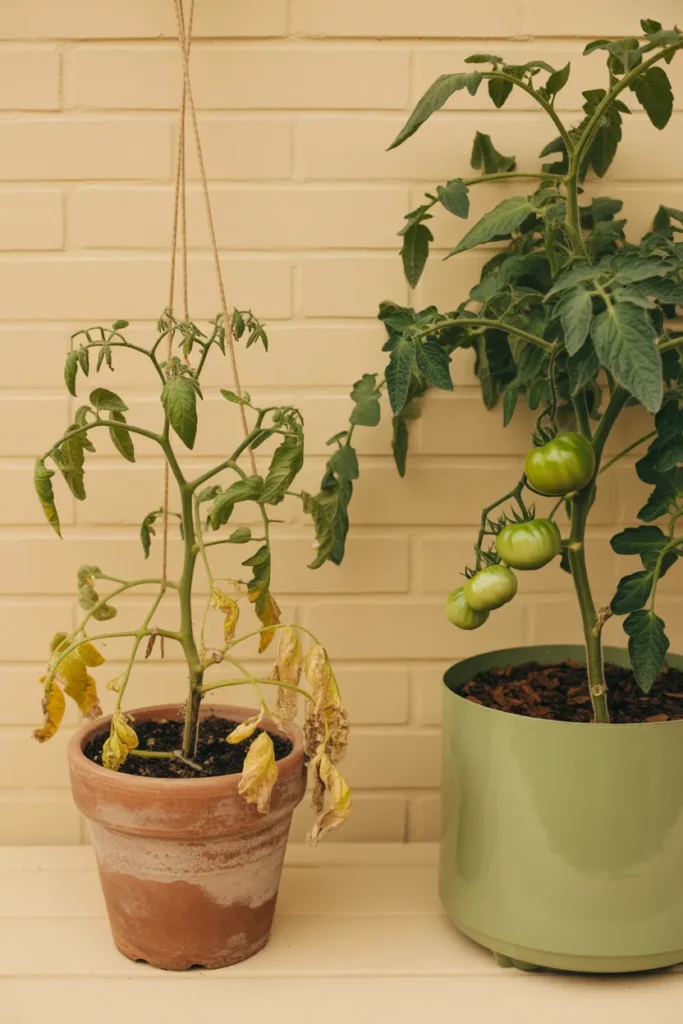
- Starting too early. Tomatoes and peppers in 50°F nights sulk for weeks. Wait until nights stay above 55°F.
If you are still not sure container gardening is right for you and want a fuller foundation before buying anything, our beginner container gardening guide walks through the absolute basics from pot selection to first harvest.
Seasonal Timing for the US Reader
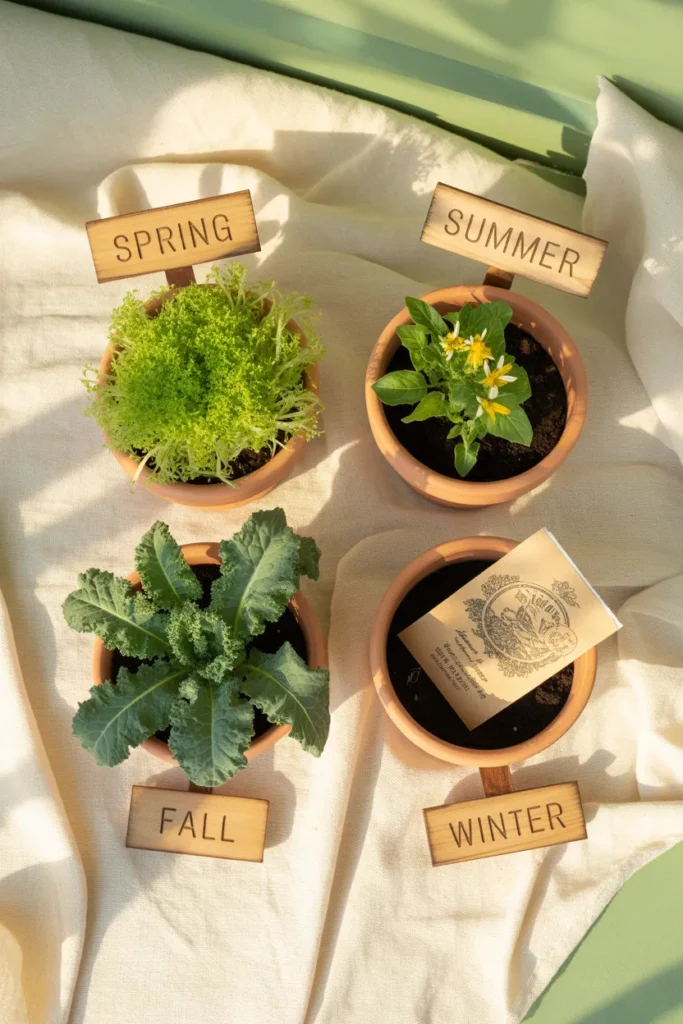
- Spring (March to May): Lettuce, radishes, spinach, peas, carrots, kale, chard. Cool-weather first.
- Late spring after last frost: Tomatoes, peppers, beans, cucumbers, zucchini, basil. Wait until nights stay above 55°F.
- Summer (June to August): Maintenance mode. Water, feed, harvest, repeat.
- Fall (September to November): Replant lettuce, spinach, kale, chard, radishes for a second harvest.
- Winter (December to February): Most US zones move indoors or take a break. Zone 9 plus can keep growing kale, chard, and lettuce.
The USDA Plant Hardiness Zone Map (find yours at planthardiness.ars.usda.gov) tells you your last frost date, which is the only date that actually matters for timing.
Frequently Asked Questions
What are the easiest container gardening vegetables for beginners?
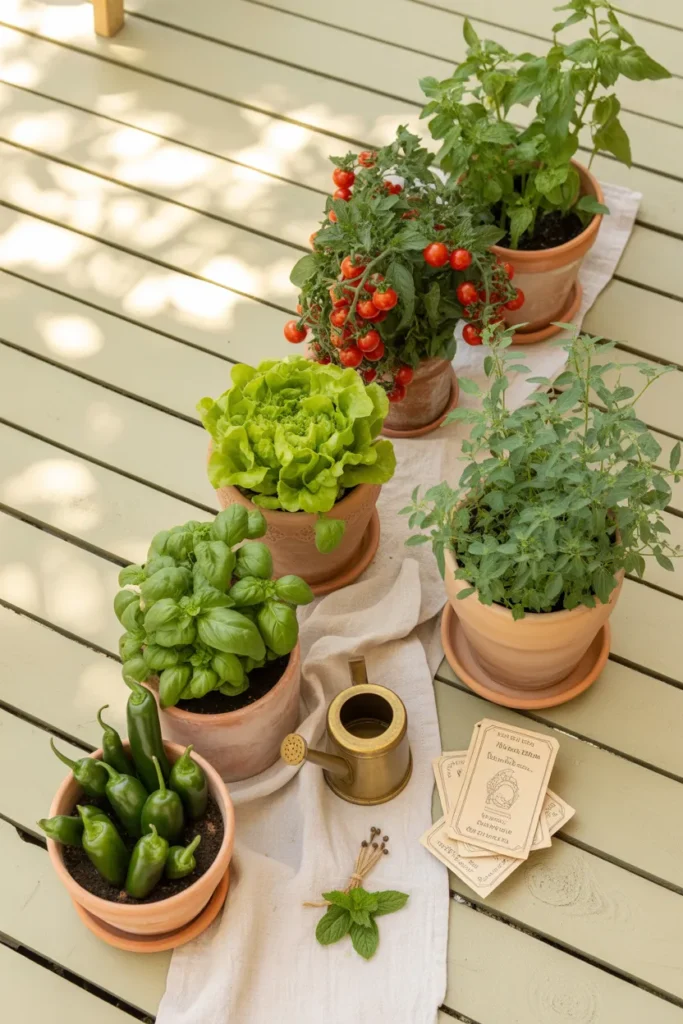
Lettuce, radishes, bush beans, cherry tomatoes, and basil. All five forgive watering mistakes, grow in standard 5 gallon to 12 inch pots, and produce edible food within 30 to 60 days.
How do I do container gardening in a small space or rental?
Use fabric grow bags (lightweight, foldable, no permanent fixtures), hook-over rail planters that clip onto balcony railings without drilling, and stack pots vertically on a tiered plant stand. A 4 foot by 6 foot balcony fits roughly 8 to 10 productive pots if you go vertical.
What is the budget version of a container vegetable garden?
Five gallon orange Home Depot buckets at $4.95 each, drilled with drainage holes, filled with bagged potting mix from Walmart at $8 per cubic foot. Total starter cost for 5 buckets, soil, and seeds: under $50. Buckets last 5 plus seasons.
What if I do not have full sun on my patio?
Stick to leafy greens (lettuce, spinach, kale, chard), herbs (mint, parsley, chives, cilantro), and green onions. They produce on 4 hours of direct light. Skip tomatoes, peppers, cucumbers, and zucchini, which need 6 to 8 hours minimum.
How long does container gardening take to see results?
Radishes: 25 days from seed. Lettuce: 30 days. Beans: 50 days. Cherry tomatoes: 60 to 75 days from transplant. You can harvest something within 4 weeks of starting.
Do containers need drainage holes?
Yes, always. Standing water rots roots within 2 weeks. If your pot has no holes, drill three or four 1/4 inch holes in the bottom or use the pot as a cachepot around a plain nursery pot.
How deep does a container need to be for vegetables?
Minimum 6 inches for shallow-rooted lettuce and radishes. 10 to 12 inches for tomatoes, peppers, cucumbers, kale, chard, and short carrots. 14 inches for bush zucchini. Deeper is always better, never worse.
Your Next Step
Pick three vegetables off this list. Just three. Buy three pots, one bag of potting mix, and the seedlings or seed packets at your local Home Depot or Lowe’s this weekend. By next month you will be eating something you grew on a windowsill, balcony, or patio that used to hold nothing but a dead pothos.
Save this post to your “Garden Plans” Pinterest board so you have the pot size chart when you are standing in the garden center wondering what fits a tomato. The chart alone has saved more first-time growers than any other thing in this guide.
General growing reference cross-checked against the University of Maryland Extension’s Vegetable Container Gardening guide and the USDA Plant Hardiness Zone Map.