15 Cheap Raised Garden Bed Ideas Under $50 (Beginner-Friendly and Renter-Approved)
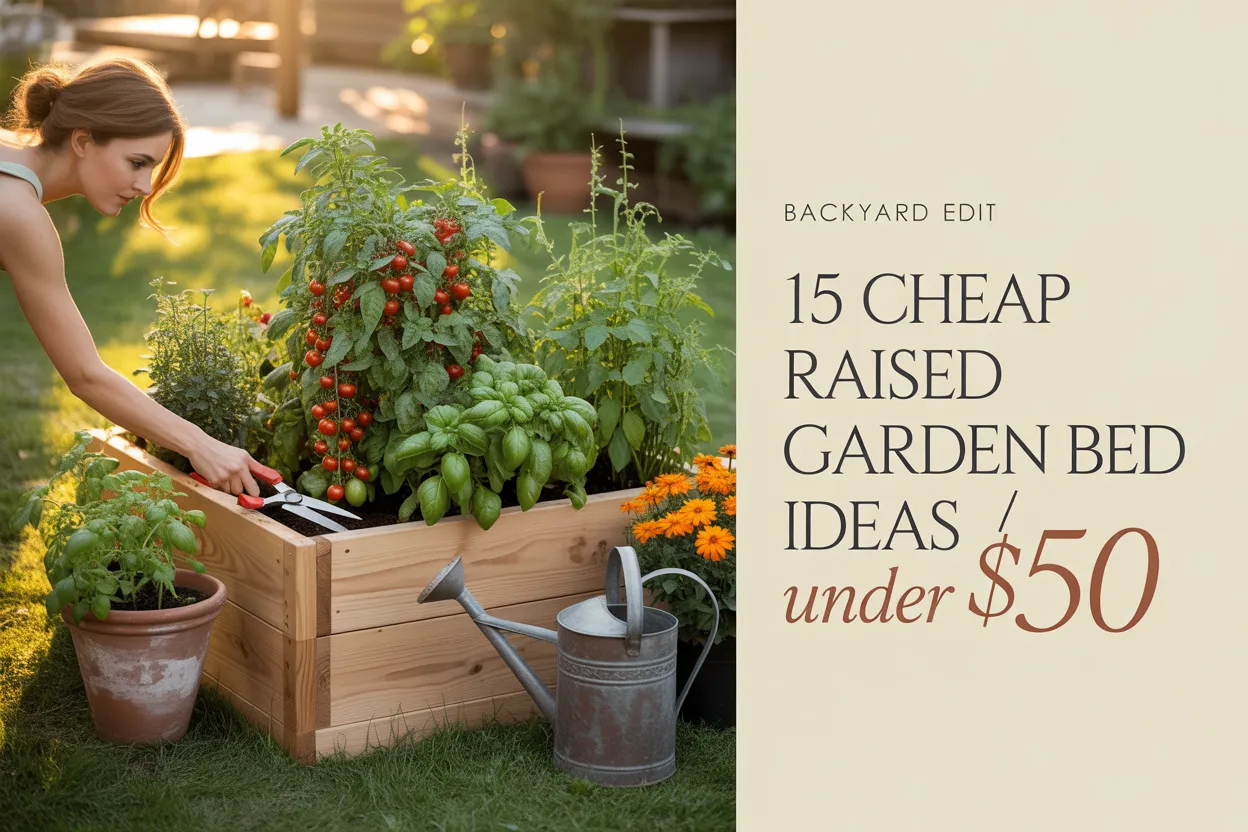
Last spring, my back patio looked sad. Cracked concrete, two dying basil pots, and a neighbor’s leaf blower as the soundtrack. Six weeks and about $38 later, I had a 2 by 4 foot cedar bed bursting with cherry tomatoes, marigolds, and bush beans, and the whole thing sat on cinder block legs I dragged home from a curbside pile.
If you’ve been pricing out raised beds lately, you already know the sticker shock. A pre-made cedar kit at the big box store runs $180 to $400 before you’ve added a single shovel of soil. The good news: you do not need that kit. These cheap raised garden bed ideas all come in under $50 per bed, most under $30, and several can be built in an afternoon with a screwdriver and zero carpentry experience.
Who This Is For
This guide was written for:
- Renters who can’t dig into the lawn (we have rental-friendly builds)
- First-time gardeners who don’t own a single power tool
- Small-space folks working with patios, balconies, or tiny side yards
- Budget-conscious homeowners who want results before they want pretty
If you’re a Maximalist with a pole barn full of saws and $500 to burn, this isn’t your post. Bookmark it for a friend.
How This List Is Organized (the Axis)
I sorted these 15 cheap raised garden bed ideas by build difficulty and total cost, easiest and cheapest first. So you can scroll until your skill level and budget match, then stop and start that one.
Quick reference table:
| # | Build | Approx. Cost | Difficulty | Tools Needed |
|---|---|---|---|---|
| 1 | Galvanized tub bed | $25 to $45 | None | Drill (for drainage) |
| 2 | Cinder block bed | $30 to $48 | None | None |
| 3 | Straw bale bed | $20 to $35 | None | None |
| 4 | Fabric grow bag bed | $15 to $30 | None | None |
| 5 | 5-gallon bucket cluster | $10 to $25 | None | Drill |
| 6 | Pallet bed (lined) | $0 to $20 | Easy | Hammer, staple gun |
| 7 | Single 2×6 cedar frame | $28 to $45 | Easy | Drill, deck screws |
| 8 | Concrete paver bed | $35 to $50 | Easy | None |
| 9 | Wine crate or apple box bed | $0 to $20 | Easy | Drill |
| 10 | Stacked log bed (free wood) | $0 to $15 | Easy | None |
| 11 | Rain gutter wall garden | $20 to $40 | Medium | Drill, level |
| 12 | Reclaimed brick bed | $0 to $30 | Medium | None |
| 13 | Bathtub upcycle bed | $0 to $25 | Medium | Drill |
| 14 | 2×4 elevated bed with legs | $40 to $50 | Medium | Drill, saw |
| 15 | Hugelkultur mound bed | $0 to $20 | Medium | Shovel |
Save this table. It’s the cheat sheet I wish I had two springs ago.
1. Galvanized Stock Tank Bed (Under $45)
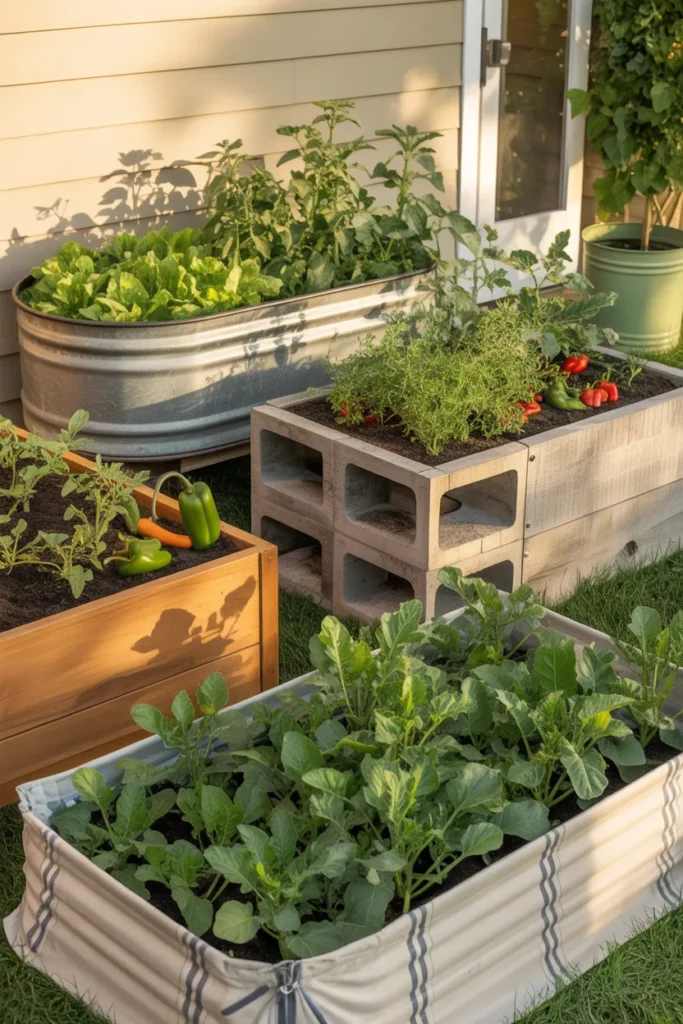
What it is: A round or oval livestock watering trough used as a planter. The 2-foot diameter size at Tractor Supply runs about $40 to $45 and holds enough soil for a full salsa garden.
Why it works: The galvanized steel finish leans Modern Farmhouse, holds heat to extend your growing season by two to three weeks, and the tank is heavy enough that wind, raccoons, and curious dogs leave it alone.
How to execute: Drill 8 to 10 drainage holes in the bottom with a metal bit. Set on a level patch of grass or patio. Fill the bottom third with cardboard and yard debris (more on that fill trick below). Top two-thirds with soil. Plant.
Rental-friendly: Yes. Drag it with you when you move.
2. Cinder Block Bed (Under $48)
What it is: A rectangular bed built from standard 8 by 8 by 16-inch cinder blocks at $1.80 to $2.50 each at Home Depot or Lowe’s. A 4 by 4 foot bed needs about 18 blocks, so $32 to $45 total.
Why it works: No tools, no carpentry, no rotting wood ever. The hollow holes in each block double as mini planters for marigolds, basil, or strawberries. Bonus: cinder blocks last decades.
How to execute: Lay blocks in a square or rectangle on level ground. Stack a second layer if you want a deeper bed (recommended for carrots and parsnips). Fill and plant.
One safety note: Modern cinder blocks sold in the US since the 1980s are made from concrete and coal fly ash. They are widely considered safe for vegetable beds. If you have older salvage blocks, line the inside with food-safe plastic to be cautious.

3. Straw Bale Bed (Under $35)
What it is: Two to four conditioned straw bales arranged in a rectangle, planted directly into the bales themselves. A bale at most farm supply stores runs $7 to $9.
Why it works: Zero construction. The bales decompose over the season and feed the plants. Perfect for the autocomplete phrase “cheap raised garden beds diy simple,” because nothing is simpler than this.
How to execute: “Condition” the bales for 10 to 12 days by watering daily and adding a sprinkle of nitrogen-rich fertilizer (blood meal works) every other day. This kicks off decomposition. Then plant seedlings directly into pockets you scoop out of the bale.
Best for: Tomatoes, peppers, squash, cucumbers. Skip root vegetables.
4. Fabric Grow Bag Bed (Under $30)
What it is: A 15 to 30-gallon felt or polypropylene grow bag from Amazon (look for the VIVOSUN 5-pack at around $24 for five bags). Each one is a self-contained mini bed.
Why it works: Lightweight, foldable, drainable, and the fabric “air prunes” roots so plants grow stronger. Renters love these because they collapse flat at move-out.
How to execute: Open the bag, fill with soil, plant. That’s the whole tutorial.
Cluster three or five together on a patio for the look of one larger bed at a fraction of the cost.
5. 5-Gallon Bucket Cluster (Under $25)
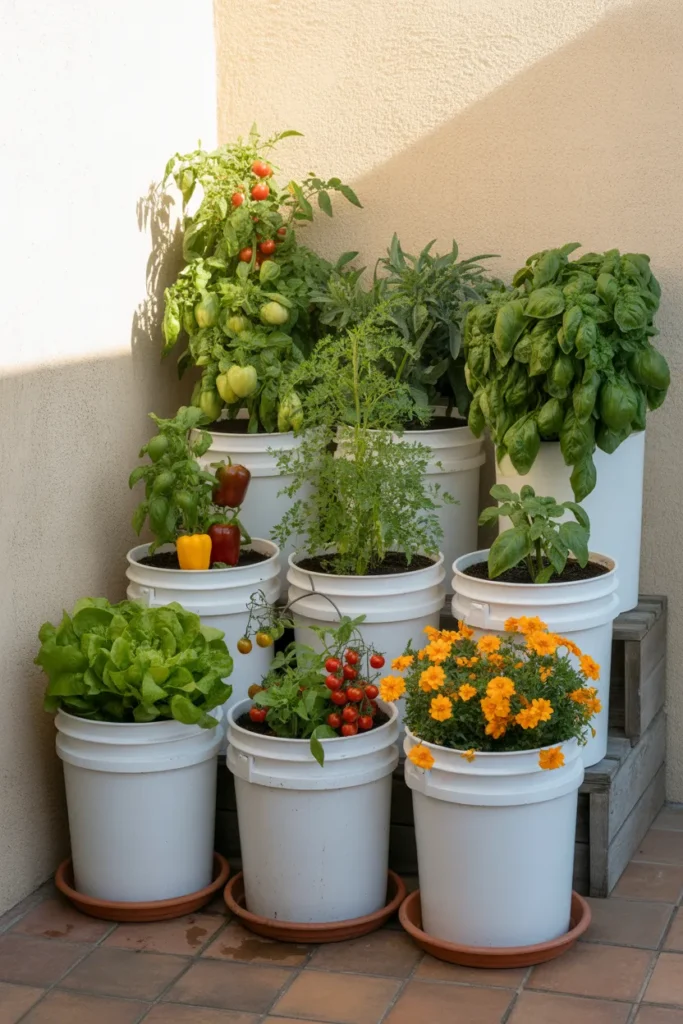
What it is: Four to six food-grade 5-gallon buckets ($4 to $6 each at Home Depot or free from bakeries and restaurants if you ask) drilled with drainage holes and planted.
Why it works: Cheapest entry point on this list. Each bucket holds one tomato plant, two pepper plants, or a small bush of greens. Stack them on cinder blocks for instant elevation.
6. Pallet Bed (Under $20, Often Free)
What it is: A wooden shipping pallet stood upright as a vertical bed, or laid flat as a shallow rectangular bed.
Why it works: Free pallets are everywhere. Check Craigslist, Facebook Marketplace, or behind any hardware store (always ask first).
How to execute: Look for the “HT” stamp, which means heat-treated. Skip any pallet stamped “MB” (methyl bromide treated, toxic for food crops). Line the inside with landscape fabric stapled in place. Fill, plant, and prop upright against a fence for a vertical herb garden, or lay flat for a shallow lettuce bed.
Rental-friendly: Yes if you keep it freestanding.
7. Single 2×6 Cedar Frame (Under $45)
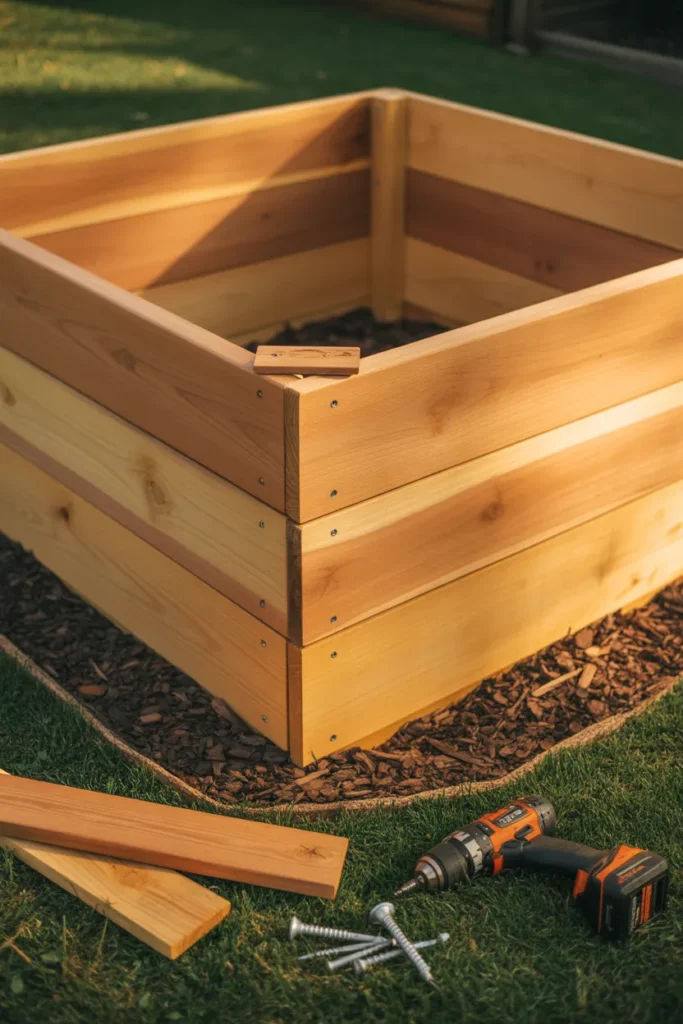
What it is: A simple rectangular frame made from four 2×6 cedar boards, screwed at the corners. This is the build I did on my patio.
Why it works: Cedar resists rot for 7 to 10 years untreated, no liner needed. The 2×6 dimension (actually 1.5 by 5.5 inches) gives you 6 inches of soil depth, enough for shallow-rooted greens, herbs, radishes, and bush beans.
How to execute: Buy four 4-foot cedar boards at Home Depot for about $9 each. Pre-drill corners. Drive 2.5-inch deck screws. Done in 25 minutes. Total: $36 plus a $4 box of screws.
Want it deeper? Stack two frames for 11 inches of depth, perfect for tomatoes and root vegetables. Cost roughly doubles.
8. Concrete Paver Bed (Under $50)
What it is: A bed walled with stacked concrete pavers or wall blocks, the kind sold for retaining walls at $1.50 to $3 each.
Why it works: Heavy, permanent, weed-proof, and the slightly textured surface reads Organic Modern. Pavers don’t rot, don’t warp, don’t need staining.
How to execute: Lay pavers in a rectangle on level ground. For a 4 by 4 bed two pavers tall, you need about 24 pavers, $40 to $50. No mortar required because the soil pressure holds them in place.
9. Wine Crate or Apple Box Bed (Under $20)
What it is: A wooden wine crate or apple box (free at most wine shops or grocery store backrooms) used as a single-plant container or grouped into a larger bed.
Why it works: Cottagecore charm, real wood texture, and the natural patina improves with age.
How to execute: Drill drainage holes in the bottom. Line with landscape fabric to slow rot. Fill and plant. Cluster three to five together for the look of a designed bed.
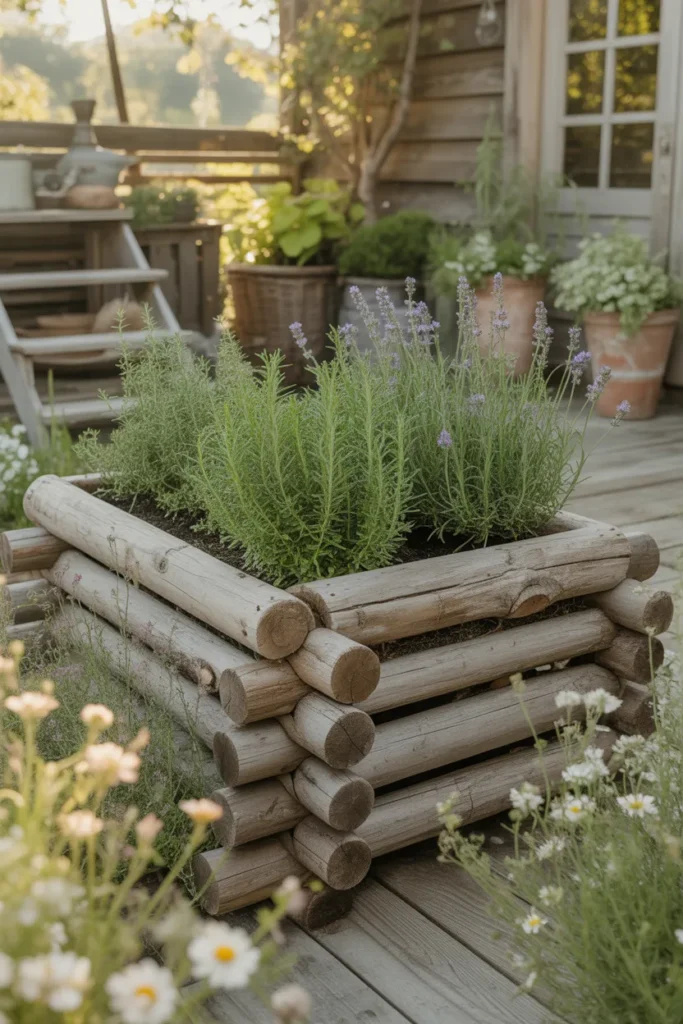
10. Stacked Log Bed (Under $15)
What it is: A rustic bed walled with logs from a downed tree (yours, a neighbor’s, or a tree service that drops them off free).
Why it works: Hyper-local, ultra-cheap, and the irregular log walls suit Cottagecore and Organic Modern equally.
How to execute: Stack logs in a rectangle, two to three layers high. The weight holds itself in place. Fill and plant. Logs slowly decompose over 4 to 6 years and feed the soil. Bonus.
11. Rain Gutter Wall Garden (Under $40)
What it is: Three to five 10-foot vinyl rain gutters mounted horizontally on a fence or wall, planted with shallow-rooted greens.
Why it works: Vertical = small-space friendly. Works in patios as narrow as 24 inches. The rental-friendly version uses Command outdoor strips rated for 5 pounds (only for empty light gutters) or freestanding plant hangers.
How to execute: Cap the ends, drill drainage holes every 6 inches, mount level on a fence with screws (or freestanding A-frame for renters). Fill with potting mix, plant lettuce, spinach, strawberries, herbs.
12. Reclaimed Brick Bed (Under $30)
What it is: A bed walled with salvaged red bricks, dry-stacked.
Why it works: Reclaimed bricks are often free on Facebook Marketplace from people demolishing chimneys or patios. Even bought new at Home Depot, bricks run $0.50 to $0.75 each. A 4 by 4 bed needs about 50 bricks for two layers.
How to execute: Level the ground. Stack bricks in a running bond pattern. The wall is stable up to about 3 layers without mortar.
13. Bathtub Upcycle Bed (Under $25)
What it is: A vintage cast-iron or porcelain bathtub used as a deep, beautiful planter. Often free on Craigslist from bathroom renovations.
Why it works: Deep enough (14 to 18 inches) for any vegetable. The clawfoot version reads Cottagecore and Grandmillennial. The freestanding plumbing hole acts as built-in drainage.
How to execute: Drag it where you want it (have helpers, these are heavy). Confirm the drain hole is open. Fill and plant.
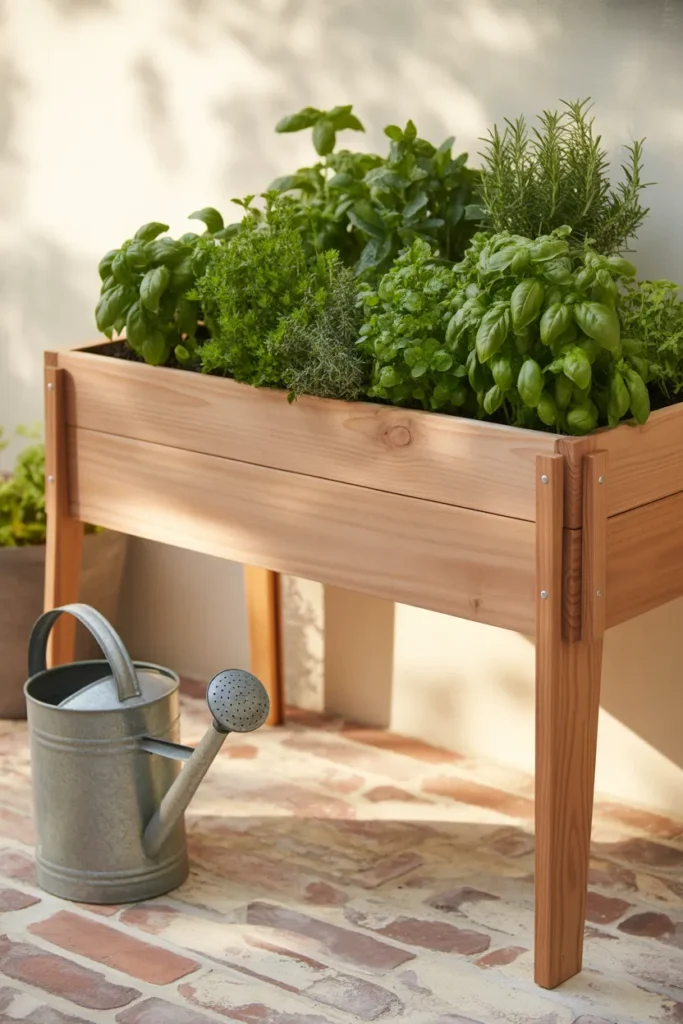
14. Elevated 2×4 Bed with Legs (Under $50)
What it is: A waist-high raised bed on legs, built from cedar 2x4s and 2x6s. This is the answer to the SERP query “how to build a raised garden bed cheap with legs.”
Why it works: Easier on your back (no bending), keeps rabbits and most pests out, and the elevation reads as a designed piece of patio furniture.
How to execute: Build a 2 by 4 foot box from 2×6 cedar. Attach four 30-inch 2×4 legs at the corners. Add a plywood or slatted bottom with drainage holes. Fill with a lightweight soil mix (legs can’t support full-weight wet soil in larger sizes, so keep this build at 2×4 max). Total cost: $42 to $50.
15. Hugelkultur Mound Bed (Under $20)
What it is: A raised mound built from buried logs, branches, and yard waste, topped with soil. The German technique that doubles as a way to use up downed branches.
Why it works: Solves the autocomplete query “cheap raised garden bed filler” because the wood IS the filler. As the wood decomposes over years, it releases nutrients and holds moisture, so you water less.
How to execute: Pile logs and branches in a 3 to 4 foot wide mound. Top with leaves, grass clippings, and compost. Cap with 6 inches of topsoil. Plant immediately.
The Cheap Fill Strategy Nobody Talks About
Here’s the trap: you build a $30 bed, then realize the soil to fill it costs $80.
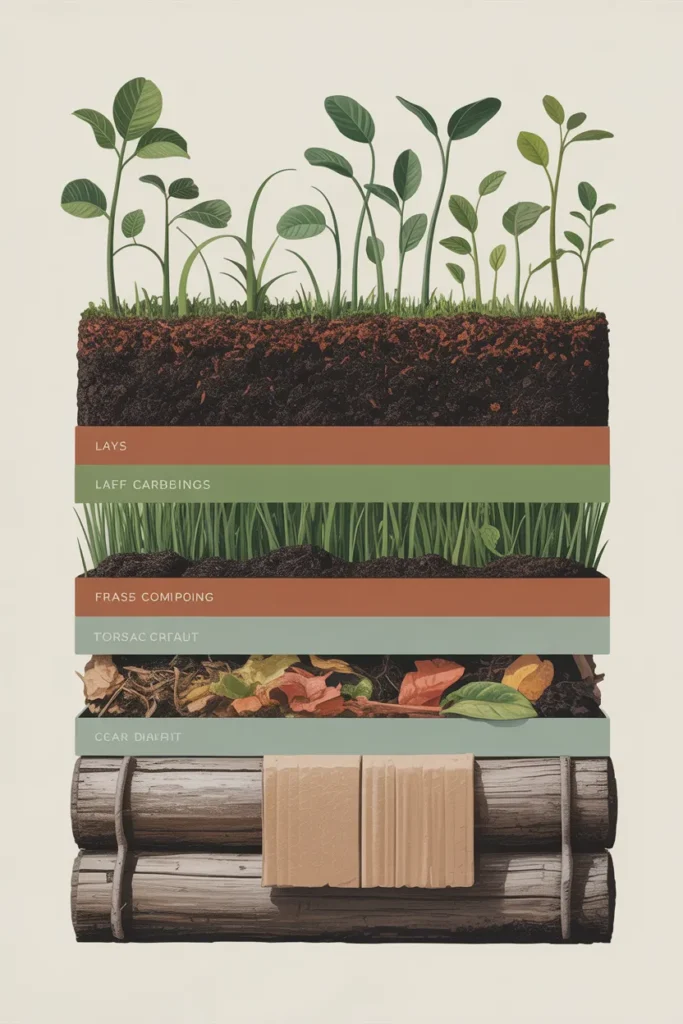
The cheap fix is a 4-layer fill (sometimes called the “lasagna method”):
- Bottom layer (50% of depth): Cardboard, branches, and small logs. Free.
- Second layer (20%): Grass clippings, fall leaves, kitchen scraps. Free.
- Third layer (20%): Bagged compost or aged manure. About $4 to $7 per cubic foot.
- Top layer (10%, the only part roots need at planting): Quality raised bed soil. $8 to $12 per 1.5-cubic-foot bag.
For a 4 by 4 foot bed at 11 inches deep, this strategy cuts your soil cost from $70+ down to $20 to $25. (Need a deeper dive into bed prep? Check our guide on how to start a backyard garden from scratch for the full step-by-step.)
Budget vs Splurge: When to Spend a Little More
| Element | Budget Pick | Splurge Pick |
|---|---|---|
| Wood | Untreated pine 2×6 ($6 each, 3-year life) | Cedar 2×6 ($9 each, 10-year life) |
| Soil | DIY 4-layer fill (~$25 for 4×4 bed) | Bagged Coast of Maine raised bed soil (~$80) |
| Liner | Free cardboard | Hardware cloth + landscape fabric ($18) |
| Hardware | Generic deck screws ($4) | GRK exterior structural screws ($14) |
Honest take: spend on cedar and skip the fancy soil. Cedar pays for itself in year four, and the 4-layer fill grows tomatoes just as happily as the bagged stuff.
For more budget-stretching tips, our DIY backyard ideas under $100 roundup pairs perfectly with this build.
Common Mistakes to Avoid
Building it too narrow. A 2-foot-wide bed sounds fine until you realize you can only plant a single row. Aim for 3 to 4 feet wide so you can reach the middle from both sides.
Skipping drainage. Every bed, every container, every bucket needs holes. Roots in standing water rot in 5 to 7 days.
Using treated lumber for vegetables. Modern pressure-treated wood (post-2003) is treated with copper-based preservatives, generally considered safe but still debated for food crops. Cedar, redwood, or untreated pine are safer choices.
Planting before “hardening off” seedlings. Move seedlings outside for 4 hours of shade the first day, building up over a week. Skipping this step kills 30% of new gardeners’ first crops.
Forgetting full sun. Vegetables need 6 to 8 hours of direct sun. Watch your yard for a full day before placing the bed.
Going too deep too fast. A 6-inch bed grows lettuce, herbs, and radishes beautifully. You don’t need 18 inches on day one.
Filling with all topsoil. It compacts, drains poorly, and costs a fortune. Use the 4-layer method.
FAQ
What is the cheapest way to make a raised garden bed? The cheapest functional raised bed is a cluster of 5-gallon food-grade buckets, around $10 to $25 total for four buckets. The cheapest in-ground style bed is a stacked log or pallet build using free reclaimed materials.
How deep should a cheap raised garden bed be? 6 inches works for greens, herbs, radishes, and bush beans. 11 to 12 inches handles most vegetables including tomatoes, peppers, and onions. 18 inches is needed only for full-size carrots, parsnips, and potatoes.
How do I do this in a small space or rental? Stick with freestanding builds: galvanized tubs, fabric grow bags, 5-gallon buckets, freestanding pallet beds. Skip anything that requires drilling into the ground or attaching to a wall. Fabric grow bags fold flat at move-out.
What is the budget version of a $300 cedar kit? The 2×6 cedar frame in idea #7 above. Same wood, same depth, $36 to $45 total versus $300 for the kit. The only difference is you screw four boards together yourself.
What if I do not have any tools? Choose a no-tool build: cinder block (#2), straw bale (#3), fabric grow bag (#4), stacked log (#10), reclaimed brick (#12), or hugelkultur (#15). All zero-tool, zero-carpentry.
How long does this project take? The fastest builds (grow bags, cinder blocks, straw bales) take under 30 minutes. The cedar frame takes about 25 minutes once your wood is cut. The most involved build, the elevated bed with legs, takes about 2 to 3 hours for a beginner.
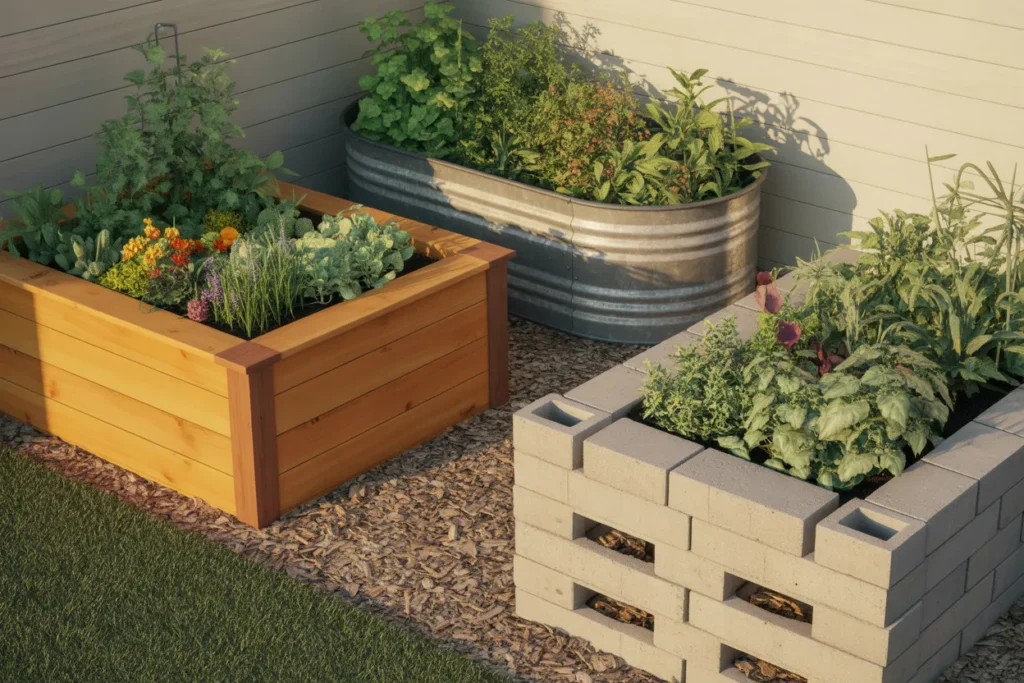
What can I use instead of wood for a raised garden bed? Cinder blocks, concrete pavers, galvanized stock tanks, fabric grow bags, 5-gallon buckets, salvaged bricks, or repurposed bathtubs. Six tool-free, wood-free options on this list alone.
Your Next Step
Pick one bed from the table above, the one that matches your tools (or no tools), your space, and your budget. Pin this post so you can come back to the build instructions when your supplies arrive. Then come tell me which one you tried, because I read every comment.
If you want a full backyard refresh to go with your new bed, our guide on small backyard makeover ideas on a budget walks through paths, lighting, and seating that pair with any of these builds.
For deeper soil science, the University of Maryland Extension guide to raised bed soil is the resource I send to friends, and the USDA Plant Hardiness Zone Map tells you exactly when to start your seeds.