How to Start a Strawberry Container Garden (Beginner Setup That Actually Works)
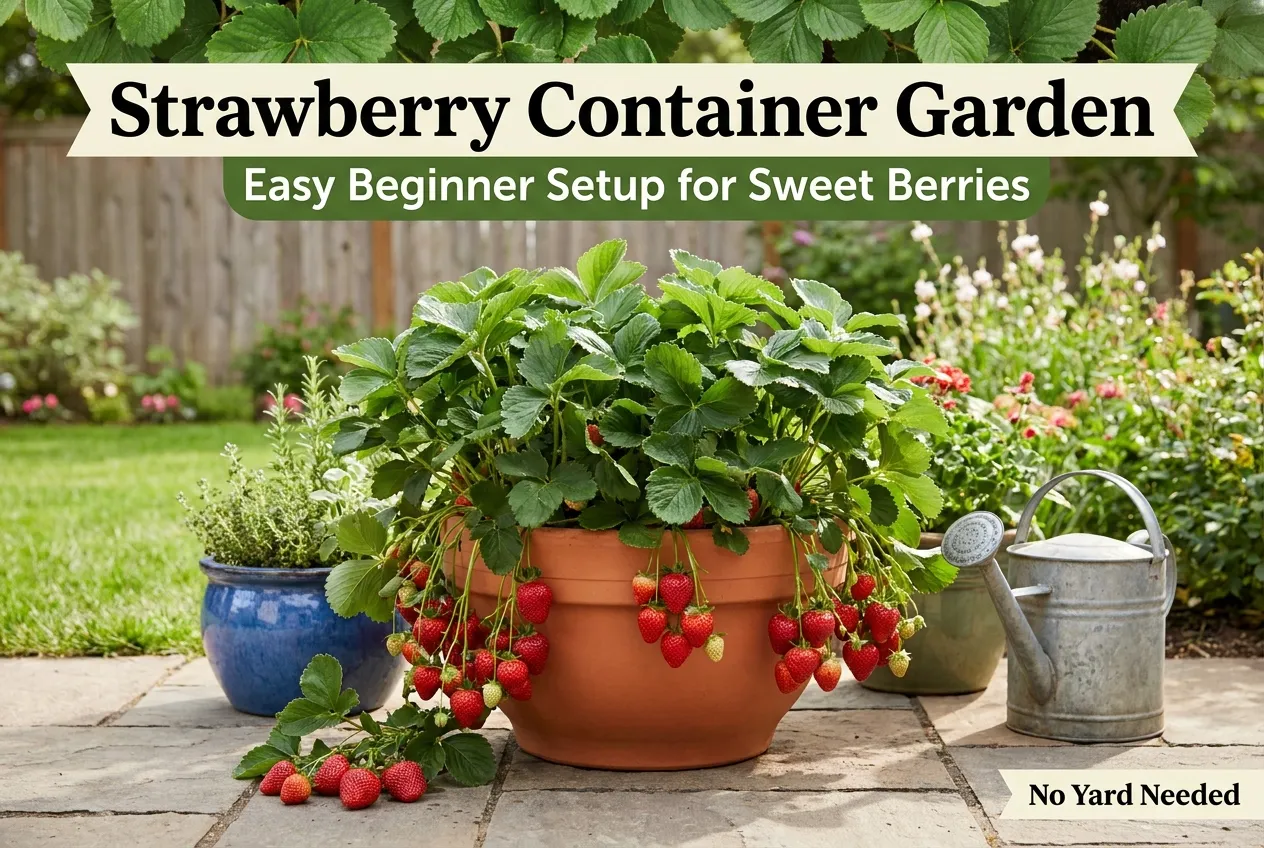
Sweet, sun-warm berries you pluck three steps from your back door. That is the whole promise of a strawberry container garden, and honestly, it is one of the easiest edible wins a first-timer can pull off. You do not need a yard. You do not need raised beds. You need a pot, good sun, and a plan.
Here is the promise for this guide: by the end, you will know exactly what to buy, how to plant it right the first time, and how to keep it alive through summer and winter. No guesswork.
Most guides assume you already know a little. This one assumes you know nothing, which is a great place to start.
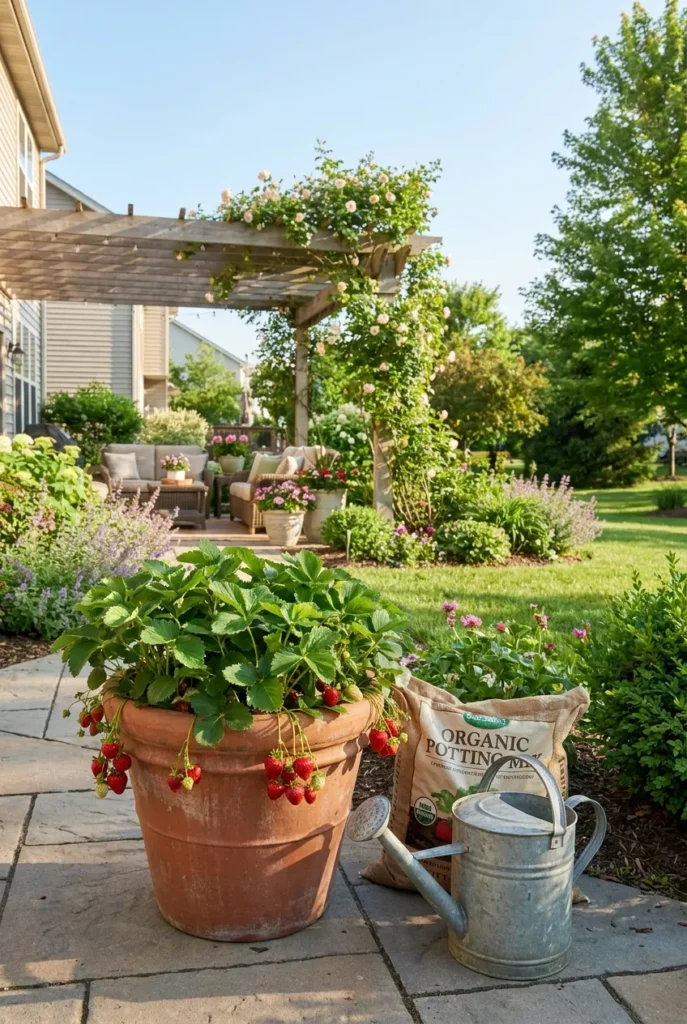
Why a Strawberry Container Garden Beats Growing in the Ground
Strawberries have shallow roots. That single fact is why they love pots. They do not need deep soil, so a container 8 to 12 inches deep gives them everything they want, according to the setup specs used by grower guides like EarthBox.
Containers also solve the two things that wreck in-ground strawberries: drainage and runners. In a pot, water drains fast and roots never sit soggy. And those aggressive runner shoots? Way easier to control when the plant lives in a bowl instead of sprawling across your yard.
You also skip weeds almost entirely. Fresh potting mix starts clean.
There is a real flavor payoff too. Berries that ripen in warm, well-drained containers in full sun tend to taste sweeter, and you can move the pot to chase the best light.
The first year I tried this, I planted six everbearing plants in a single 12-inch Bloem pot because I thought “more plants, more berries.” Rookie mistake. They choked each other out and I got maybe a handful all season. Two plants in that same pot the next year gave me triple the fruit.
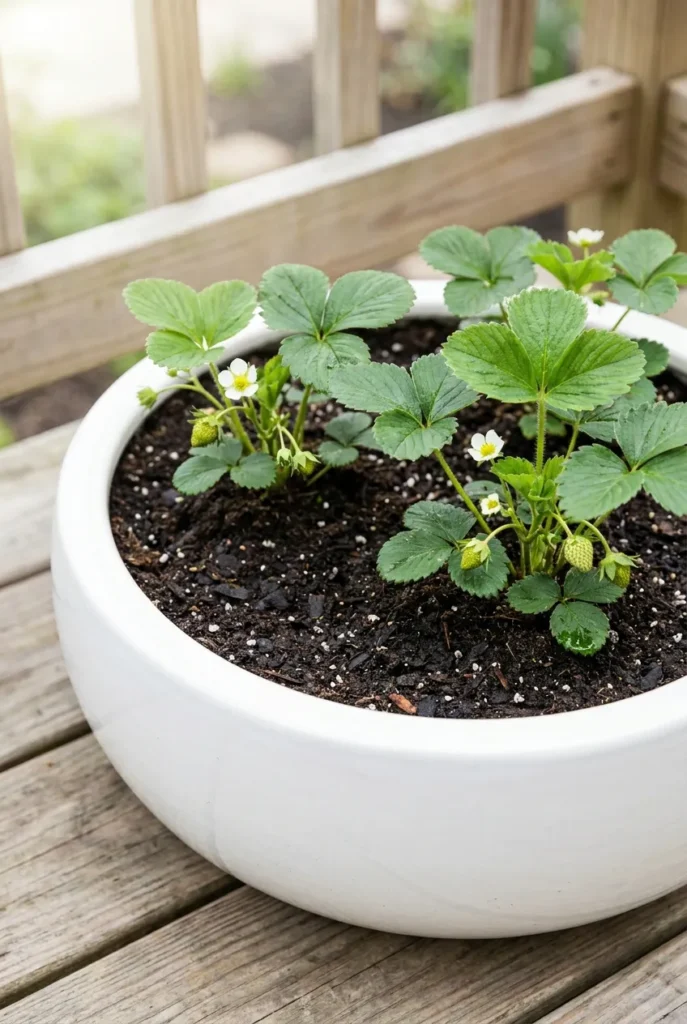
Pick the Right Strawberry Variety for Pots
Three types exist, and the difference matters more than beginners expect. The University of Minnesota Extension groups them as June-bearing, everbearing, and day-neutral.
June-bearing plants dump one big crop over two to three weeks in early summer. Great for jam, less great for snacking all season.
Everbearing gives you two or three smaller flushes, usually early summer and again in fall.
Day-neutral is the container champion. These keep fruiting steadily through the season as long as temperatures stay moderate, which is exactly what you want in a pot you walk past every day.
For a first strawberry container garden, start with day-neutral or everbearing. You will get berries you can actually enjoy across months instead of one short burst.
If you want the broader groundwork before you plant, our guide to container gardening for beginners walks through soil, pots, and light in plain language.
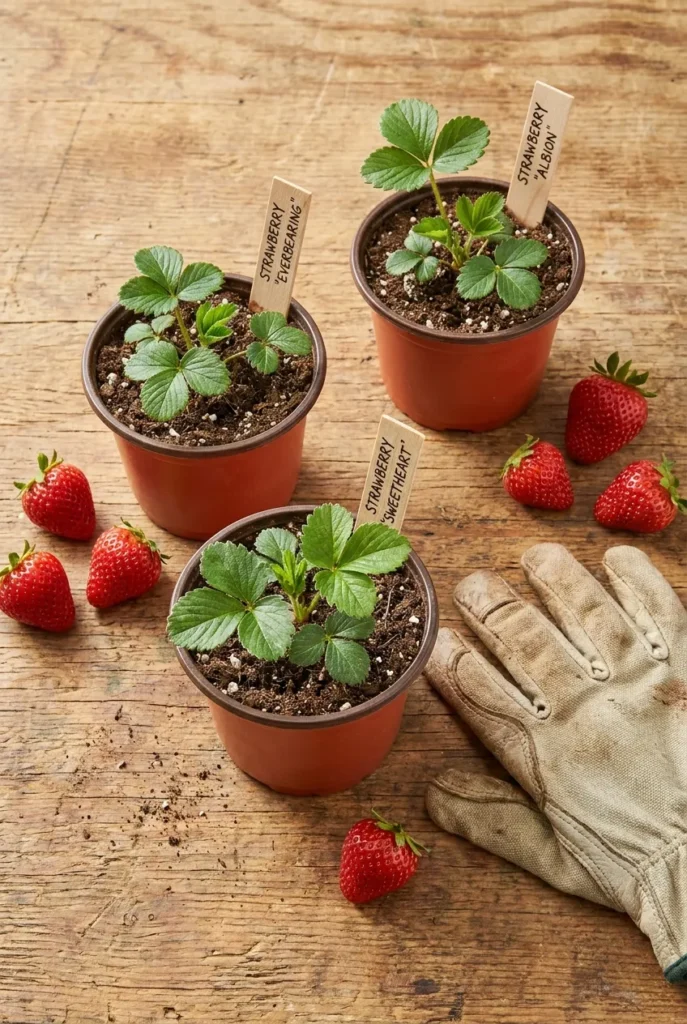
Choose the Best Container (Size, Type, and Drainage)
Bigger and wider wins. A container 8 to 12 inches deep and at least 10 to 12 inches across gives roots room and holds moisture longer, which matters because small pots dry out fast in summer.
Your good options, roughly cheapest to priciest:
- Fabric grow bags (a 247Garden 5-gallon bag runs around $10 to $15). Excellent drainage, light, easy to store.
- Terracotta or ceramic pots (a wide Bloem planter, under $25). Classic look, dries faster, so plan to water more.
- Hanging baskets (a Pri Gardens hanging strawberry planter, in the $20 to $30 range). Berries dangle clean and away from slugs.
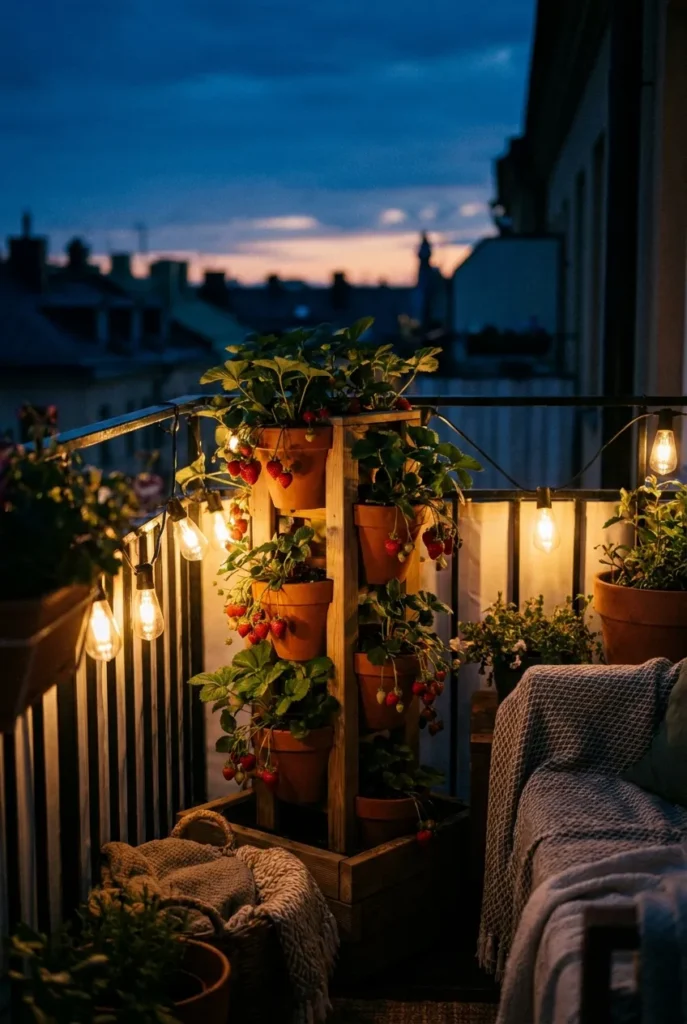
- Vertical strawberry towers (a Mr. Stacky 5-tier tower, in the $30 to $45 range). Best pick if you are short on floor space.
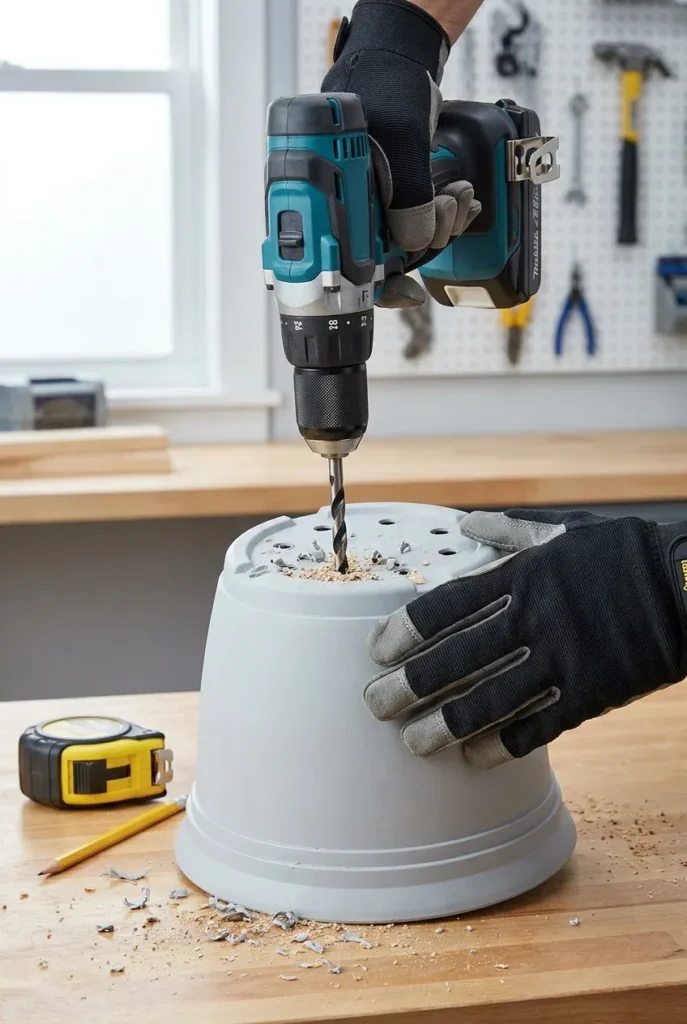
Whatever you choose, drainage is non-negotiable. Every container needs multiple holes in the bottom. No holes, no strawberries, it is that simple.
Working with a balcony or a tiny patio? A stacked tower or railing planter multiplies your harvest without eating your square footage. We break down more of those layouts in our small-space container garden ideas.
I grow on a Zone 6 patio, and my galvanized tub looked gorgeous for exactly one week before I realized I never drilled drainage holes. The mix turned to soup and the crowns started rotting. Ten minutes with a drill saved the whole batch.
The Right Soil and Sun (Get These Two Right and You Win)
Skip garden soil. It compacts in pots and drowns roots. Use a quality potting mix instead, something light and fluffy like Miracle-Gro Potting Mix or an Espoma organic blend. Strawberries like slightly acidic soil, roughly a pH of 5.5 to 6.5.
Sun is the other half. Strawberries want full sun, meaning 6 to 8 hours of direct light a day. Less than that and you get leaves, not berries. The easiest fix in a container garden is simply sliding the pot to the sunniest spot you have, a south-facing patio, deck edge, or balcony rail.
If you live somewhere with hard winters, your USDA zone shapes your timing and your overwintering plan. You can check yours on the USDA Plant Hardiness Zone Map. Most container strawberries do well across Zones 5 through 9.
The Weekend Berry-Start Method: Your First Setup in 6 Steps
Here is the original framework I use to get beginners from empty pot to planted in a single afternoon. Call it the Weekend Berry-Start Method. It is six moves, in order, and it removes every “wait, what do I do now” moment.
- Fill. Add potting mix to about two inches below the rim. Highest-value tip first: do not pack it down, roots need air.
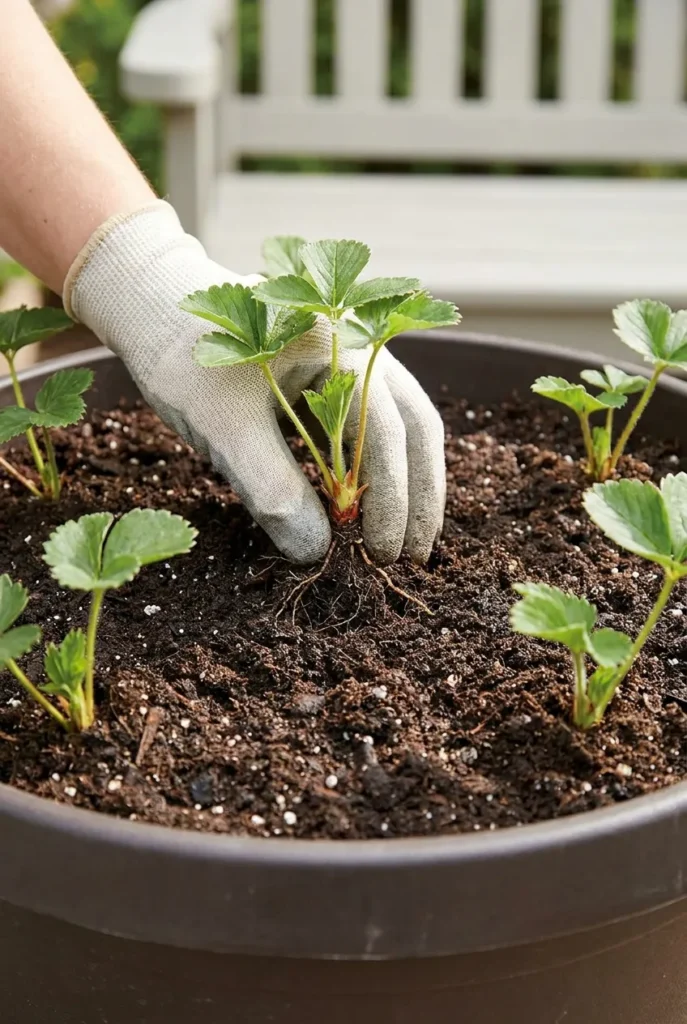
- Set the crown. Place each plant so the crown (that thick center where leaves meet roots) sits right at soil level. Buried crowns rot. Exposed crowns dry out.
- Space. Give each plant 8 to 12 inches. Two to three plants max in a 10 to 12 inch pot.
- Water in. Soak deeply right after planting until water runs from the drainage holes.
- Place in sun. Move the container to its 6-to-8-hour sunny home before it gets heavy.
- Mulch light. A thin layer of straw keeps berries clean and soil moist.
That crown-depth step is the one beginners blow most often. Get it level and you are ahead of half the internet.
Watering and Feeding Your Container Strawberries
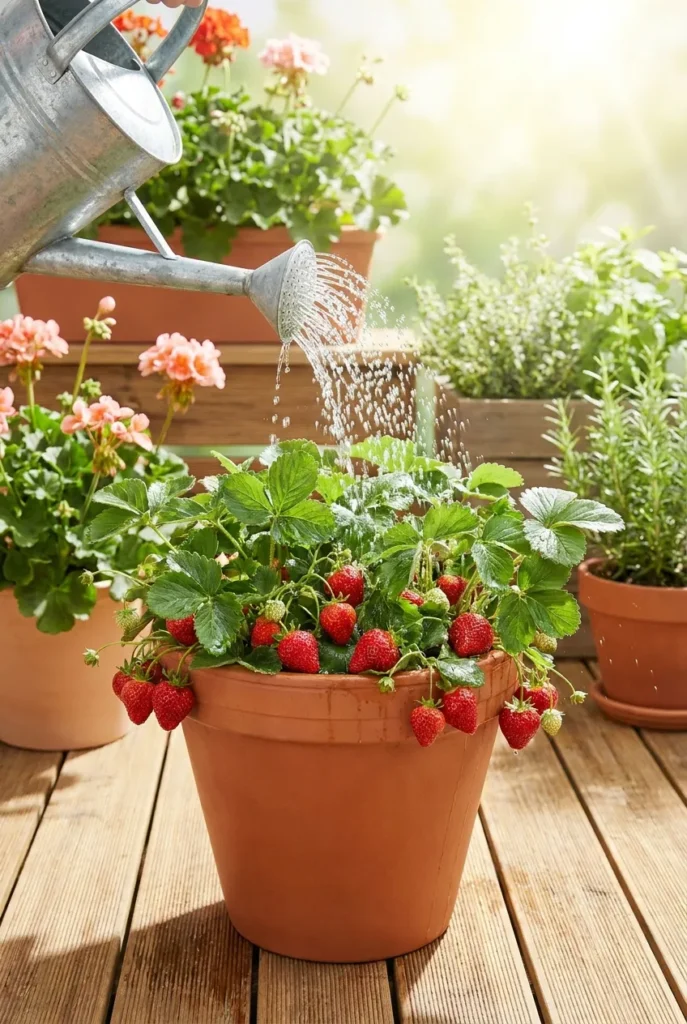
Pots dry out faster than ground soil, so watering is where most container strawberries live or die. Check the top inch daily in summer. If it feels dry, water until it drains from the bottom. In peak heat, that can mean a drink every single day.
You want moist, never soggy. Consistent beats heavy.
If daily watering sounds exhausting, it kind of is, which is why a self-watering setup is a game many beginners quietly love. Our walkthrough on building a self-watering container garden shows how to buy yourself two or three days between waterings.
Feeding is simple. Use a balanced or slow-release fertilizer and feed every two to three weeks through the growing season. A little Espoma Berry-tone worked into the mix at planting gives them a steady start.
Snip the Runners (The Step That Doubles Your Harvest)
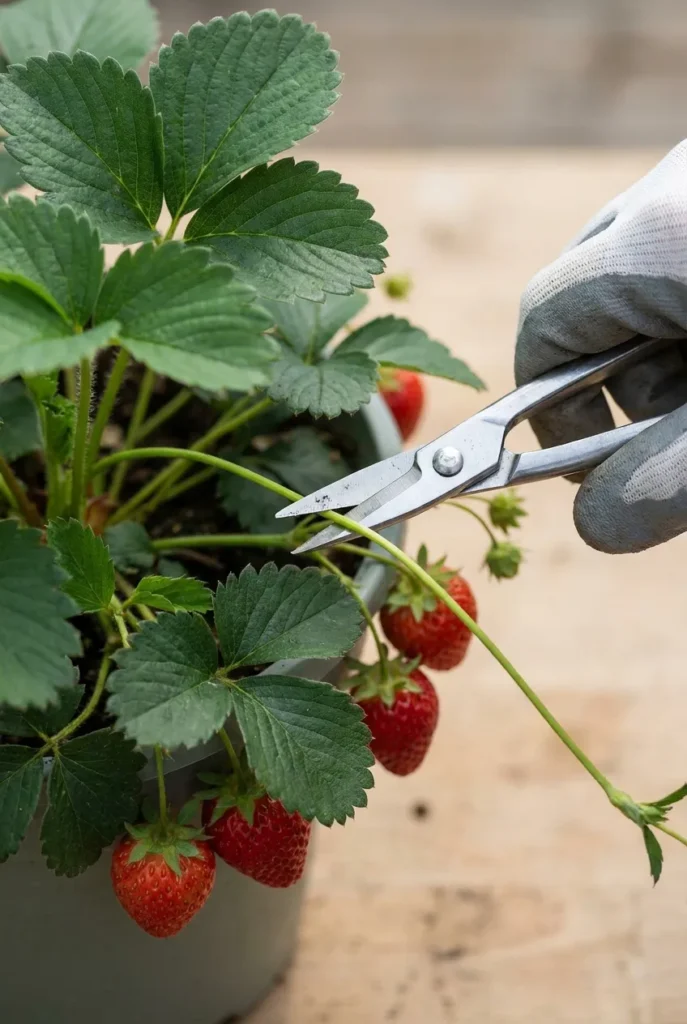
Strawberries send out long horizontal shoots called runners. Left alone, the plant pours its energy into growing babies instead of fruit. So snip them.
Cut runners off close to the mother plant whenever you see them, especially in the first season. Your plant redirects that energy straight into bigger, sweeter berries.
It feels a little ruthless. Do it anyway. This one habit is the difference between a decorative plant and a productive one.
Protecting Berries From Pests and Birds
Two things want your strawberries as badly as you do: slugs and birds.
Slugs love damp soil and hide under leaves. Growing in containers already helps because pots stay drier and higher. Letting berries hang over the pot edge keeps them off the wet surface too.
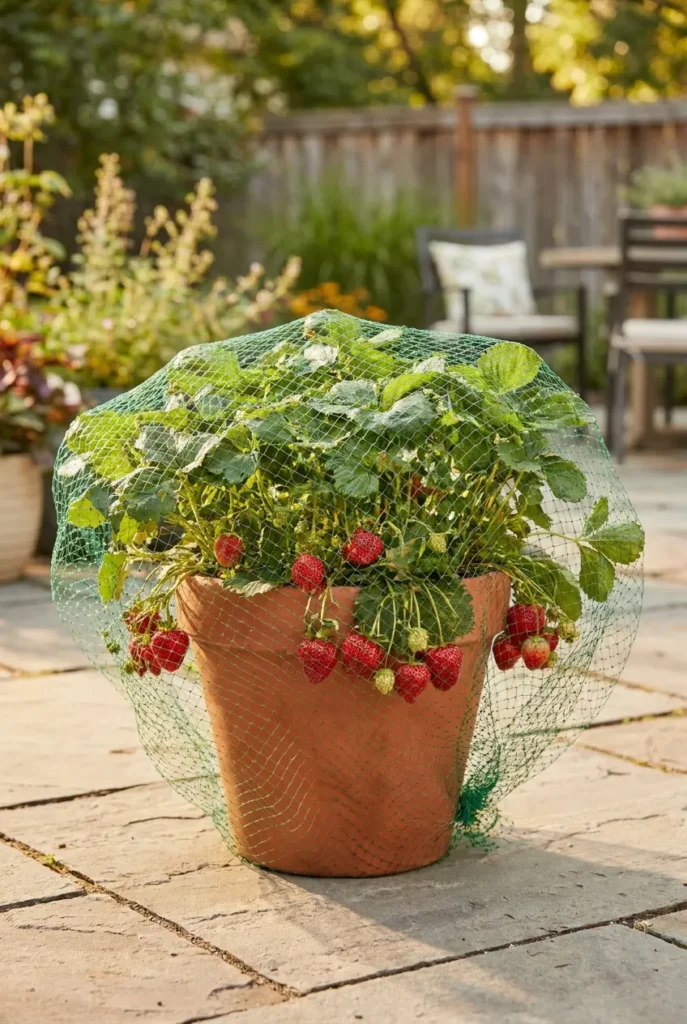
Birds are bolder. The simplest fix is draping lightweight garden netting over the container once berries start to blush red. Cheap, reusable, and it works.
Watch for root rot as well. It shows up when drainage fails or you overwater, which loops right back to why those drainage holes matter so much.
Harvesting and Overwintering Your Strawberries
Pick berries when they are fully red, all the way to the shoulders near the stem. Strawberries do not ripen after picking, so give them one more day if they look pale. Harvest every couple of days at peak season, ideally in the cool morning.
Winter care depends on your climate. In cold zones, container roots are more exposed than in-ground plants and can freeze. The University of Minnesota Extension notes that container strawberries can be overwintered by insulating them, and one home-garden approach is to bury the pot or tuck it somewhere sheltered with the crowns near ground level.
Practical version: move pots into an unheated garage or against a sheltered wall, then pile straw or mulch over the crowns. In mild zones (8 and 9), a thick straw layer outdoors is usually enough.
My first winter in Zone 6, I left my grow bags out on the open deck and lost every plant to the freeze. The next year I dragged them into the garage under a mound of straw and all but one came back in spring.
A Simple First-Season Cost Snapshot
You can start small and cheap. Here is a rough tier so you know what to expect before you shop.
| Setup tier | What you get | Ballpark cost |
|---|---|---|
| Budget | 1 fabric grow bag, 1 bag potting mix, 2 day-neutral plants | around $30 |
| Comfortable | 1 wide ceramic pot, quality mix, berry fertilizer, 3 plants | in the $60 to $80 range |
| Vertical space-saver | 5-tier Mr. Stacky tower, mix, 5 plants, netting | in the $90 to $120 range |
Prices are 2026 US ballparks and move with the season, so confirm current pricing at Home Depot, Lowe’s, or Amazon before you buy.
Frequently Asked Questions
Can strawberries really grow well in containers?
Yes, and often better than in the ground. Their shallow roots fit a pot 8 to 12 inches deep, and containers give you the sharp drainage and full sun strawberries crave.
What type of container is best for strawberries?
A wide pot at least 10 to 12 inches across with multiple drainage holes. Fabric grow bags, terracotta pots, hanging baskets, and vertical towers all work. Wider is better than deeper.
Should you let strawberries fruit the first year after planting?
With day-neutral and everbearing types you can usually enjoy first-year berries. Some gardeners pinch early flowers off June-bearing plants for a few weeks so the plant establishes stronger roots first.
Do strawberries in containers come back every year?
They can. Strawberries are perennials, but container roots are vulnerable to freezing, so in cold zones you need to insulate or shelter the pots over winter for them to return.
Do strawberries grow better in pots or garden beds?
For beginners, pots usually win. You control soil, drainage, sun position, and pests far more easily, and you can grow a full crop on a balcony with no yard at all.
How much sun does a strawberry container garden need?
Full sun, about 6 to 8 hours of direct light daily. Move the container to your brightest spot for the sweetest berries.
How often should I water container strawberries?
Check the top inch of soil daily in summer and water when it feels dry, sometimes every day in heat. Aim for moist, never soggy.
Ready to Plant Your First Pot?
A strawberry container garden is genuinely one of the friendliest ways to grow your own food, even if you have killed every houseplant you have ever owned. Start with two day-neutral plants, one wide pot with real drainage, and a sunny corner. That is the whole game.
Pick your container this weekend, get the crowns planted at the right depth, and you could be picking your first berries by early summer. Save this guide so you have the setup steps handy on planting day, and come back to tell us how your first harvest turns out.