Small Backyard Ideas for Kids That Actually Fit (and Still Look Good at 6pm)

Most small backyard ideas for kids fail for the same boring reason. The yard runs out of room before the fun does. You buy the playset, it eats the whole lawn, and by August the grass under it is bare dirt that walks straight into your kitchen.
Small yards are not the problem. Layout is.
We have watched plenty of 300 square foot yards outperform quarter-acre lots, because the small ones were forced to make decisions. So this guide starts with a zoning rule that fits play into a tight yard without surrendering it. Then a surfacing depth chart pulled from federal guidance, and nine ideas that genuinely fit under 400 square feet.
You also get the two things nobody else writing about kid backyards will tell you: how to build it so it uninstalls, and where all the plastic goes once dinner is called.
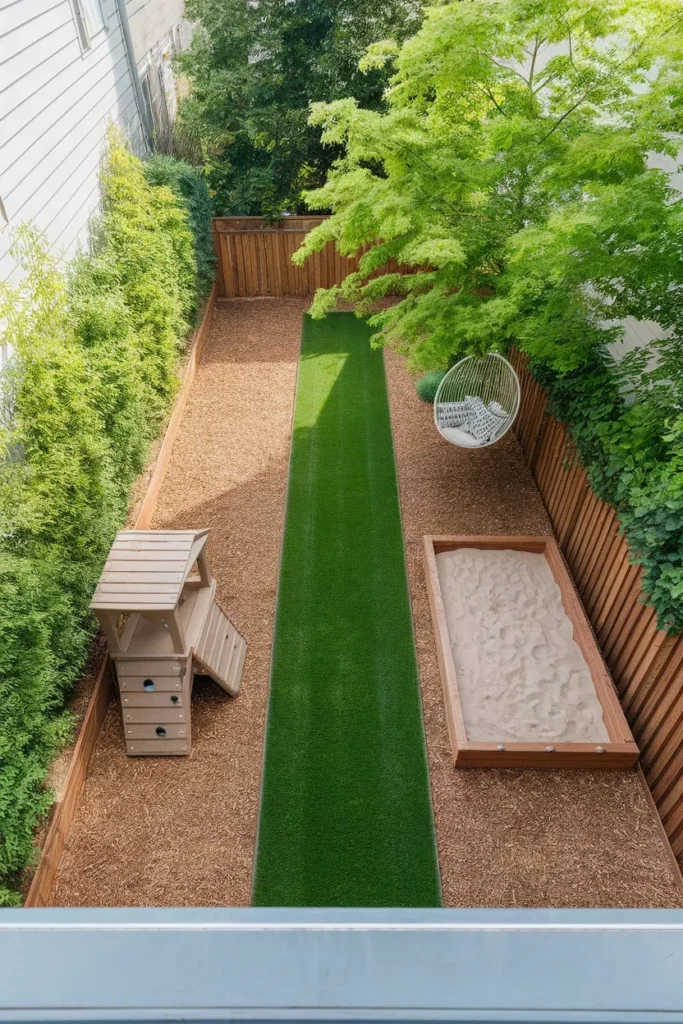
Start With the 60-30-10 Play Split, Not the Play Equipment
Here is the mistake almost everyone makes. They shop first and plan second, so the yard gets designed by whatever was on sale at Costco in May.
Flip it. Measure the usable yard, then divide it on paper before you spend a dollar.
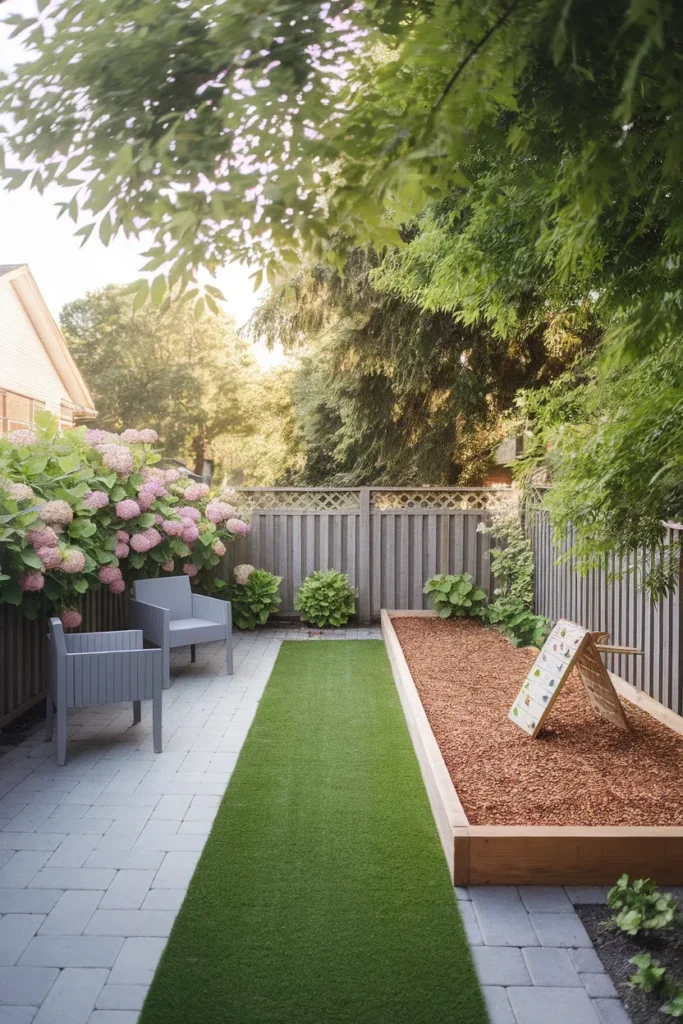
We call it the 60-30-10 Play Split, and it is the single most useful thing in this article. Sixty percent of the yard stays open and unbuilt. Thirty percent becomes the anchored play zone where the permanent stuff lives. Ten percent is a quiet corner, which sounds like a luxury right up until you have a seven-year-old who needs somewhere to sulk with a book.
| Zone | Share of yard | What lives here | What ruins it |
|---|---|---|---|
| Open run | 60% | Lawn or turf, nothing fixed, room to sprint and cartwheel | Filling it with “just one more” toy |
| Anchored play | 30% | Climber, sandbox, mud kitchen, swing, all on safe surfacing | Spreading it across the whole yard instead of grouping it |
| Quiet corner | 10% | Shade, a bench or hammock chair, a low planter | Putting it where you cannot see it from the kitchen window |
The open run does the heavy lifting. Kids need somewhere to move fast in a straight line, and a 400 square foot yard can still give them a 25 foot dash if you keep the middle clear. Federal activity guidance backs this up: the CDC recommends 60 minutes or more of moderate-to-vigorous activity every day for children ages 6 to 17, and most of that is running, not climbing.
Group the anchored zone against one boundary. Two boundaries at most. Scattering a sandbox in one corner and a climber in the other chops your open run into two useless slivers. The yard then reads cluttered from the back door, even when it is technically half empty. Same principle we use in small backyard patio ideas: one generous zone beats three cramped ones every time.
Pick Your Ground Cover Before You Buy a Single Toy
This is the step people skip, and it is the one that decides whether your yard survives. Most small backyard ideas for kids live or die right here, on a decision that costs less than the climber.
Grass under a swing lasts about six weeks. Then it is dirt. Then it is mud, and the mud is inside your house.
Worse, most families put a climber on bare lawn and assume it is fine. It is not, and the numbers are not close. The Consumer Product Safety Commission publishes minimum depths for loose-fill surfacing, and they are deeper than almost anyone guesses.
| Surfacing material | Depth when installed | Depth when compressed | Protects a fall from |
|---|---|---|---|
| Wood mulch (non-CCA) | 12 in | 9 in | 7 ft |
| Wood chips | 12 in | 9 in | 10 ft |
| Sand | 12 in | 9 in | 4 ft |
| Pea gravel | 12 in | 9 in | 5 ft |
| Rubber mulch | 8 in | 6 in | 10 ft |
Read that sand row again. Sand looks like the safe, soft, obvious pick, and it protects the least of anything on the chart. Loose-fill materials also compress by at least 25% over time, which means the 12 inches you spread in April is 9 inches by August, and you top it up. Full details are in the federal playground surfacing guidance from the CPSC.
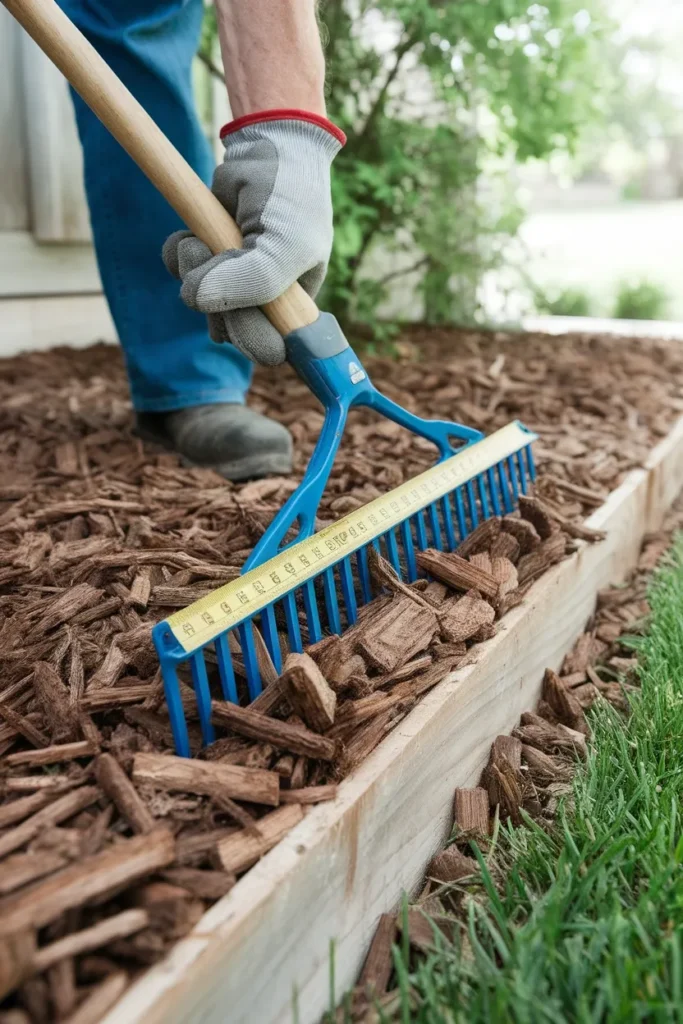
Our pick for a small yard is wood mulch, and it is not close either. It costs the least per square foot, it drains, it does not bake in July the way pea gravel does, and it reads as a deliberate landscaped area rather than a sacrifice zone. Pea gravel runs roughly $4 to $7 for a half-cubic-foot bag at Home Depot and Lowe’s, and covering a 10 by 10 pit a foot deep takes an alarming number of bags. Do that math before you fall in love with the look.
Contain it properly or it migrates. A 6 inch cedar or steel edge holds the depth and gives the play zone a clean line. That is the whole trick behind these garden edging ideas: a border is what makes a functional area look designed instead of accidental.
Honestly, the edge matters more than the mulch.
9 Small Backyard Ideas for Kids That Fit Under 400 Square Feet
Every idea below has been chosen against one filter: does it work in a yard where you can see every fence from the back door? Sizes are real. Nothing here needs a half acre.
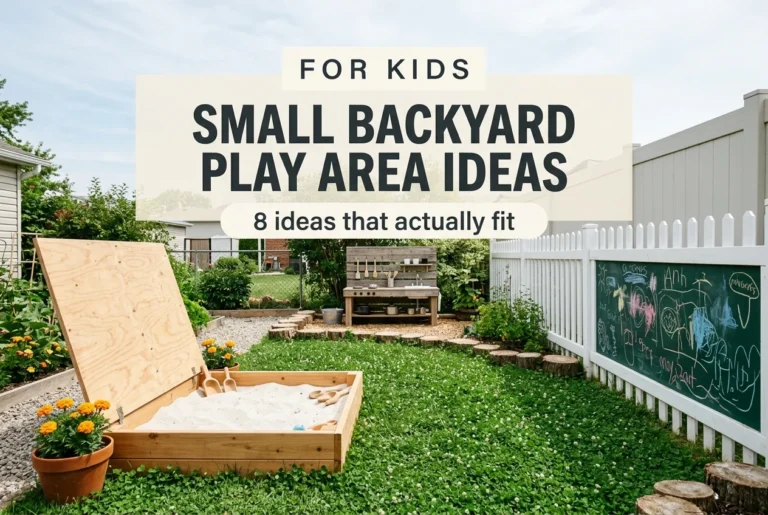
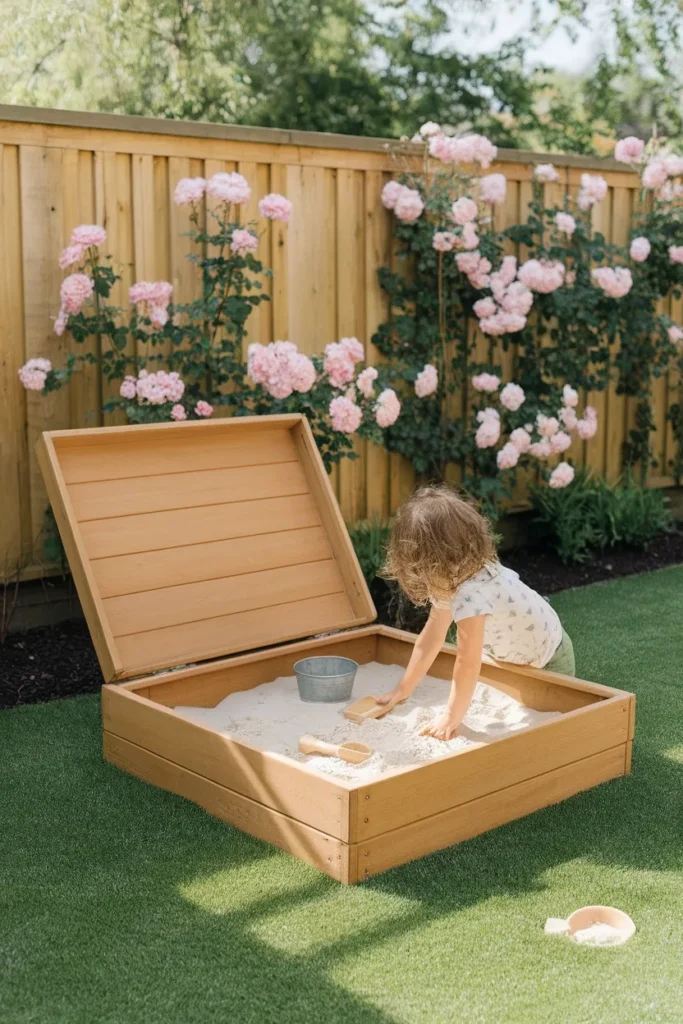
1. A lidded cedar sandbox, sized 4 by 4 rather than 6 by 6
Start here, because it delivers more play hours per square foot than anything else you can build. Four by four is plenty for two kids. Build it from western red cedar pickets, which run a few dollars each at Home Depot under the Outdoor Essentials label, and give it a hinged lid.
The lid is non-negotiable. Uncovered sand becomes a neighborhood cat box within a week, and you will never get that image out of your head once you have seen it.
Fill with washed play sand, not builder’s sand. Builder’s sand is sharper and dustier.
2. A mud kitchen on the fence line
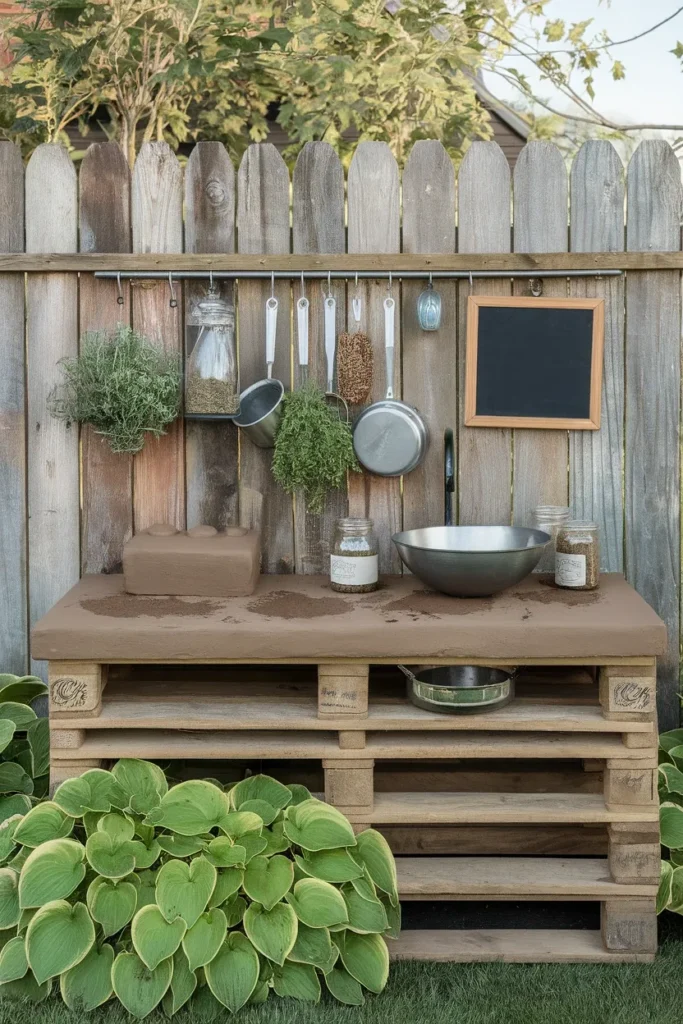
Mud kitchens are the highest return item on this whole list for kids aged two to seven. They take up about 4 square feet against a fence, they cost almost nothing if you use a salvaged pallet plus a thrifted stainless bowl, and they absorb entire afternoons.
Walmart sells ready-made versions from OLAKIDS and similar brands if you would rather not build. Either way, put it near a spigot.
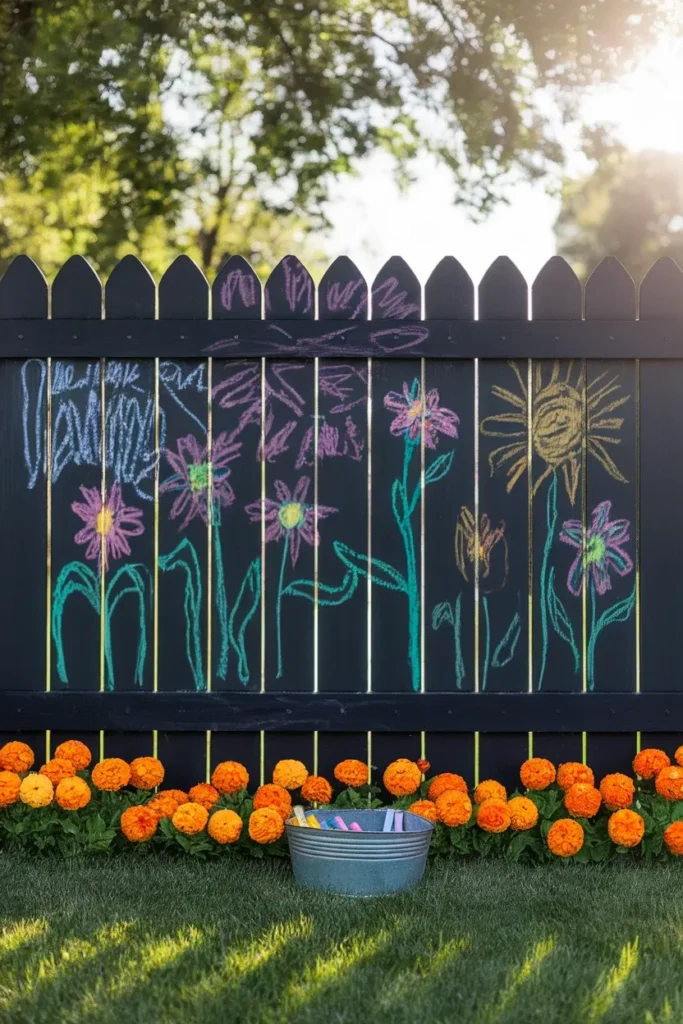
3. A chalk wall, painted straight onto the fence
One 30 ounce can of Rust-Oleum Specialty Black Chalkboard Paint costs under $30 and covers a fence panel with some left over. Two coats, four hours between them, cure for three days before the first chalk touches it.
Vertical play costs you zero floor area. In a small yard that is the whole point.
4. A stepping log balance run along the perimeter
Six cut log rounds, sunk halfway, spaced about 14 inches apart. They cost nothing if a neighbor has taken a tree down, they build real balance, and they follow the edge of the yard instead of eating the middle.
Grown-ups walk them too. Everyone does, eventually.
5. A 3 by 6 raised bed the kids actually own
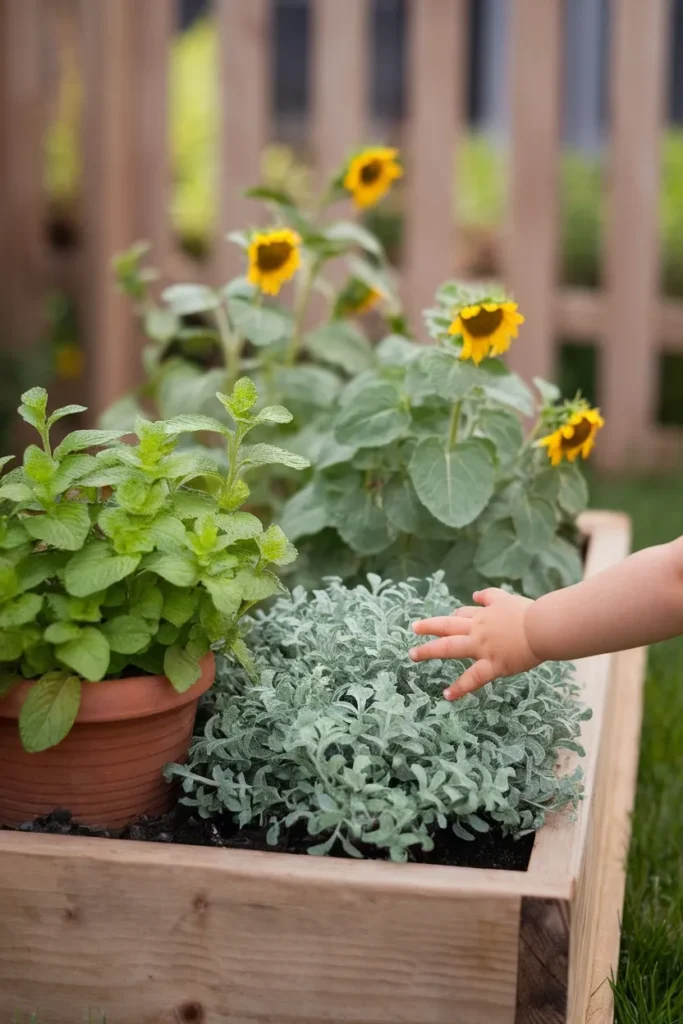
Give them the bed, not a corner of yours. Radishes germinate in four days and harvest in about a month, which matches the attention span of a five-year-old almost exactly. Sunflowers and cherry tomatoes work for the same reason: fast, visible, edible.
A children’s bed is also the cheapest way to make a play yard look intentional to adult eyes.
6. A sensory station on a low bench
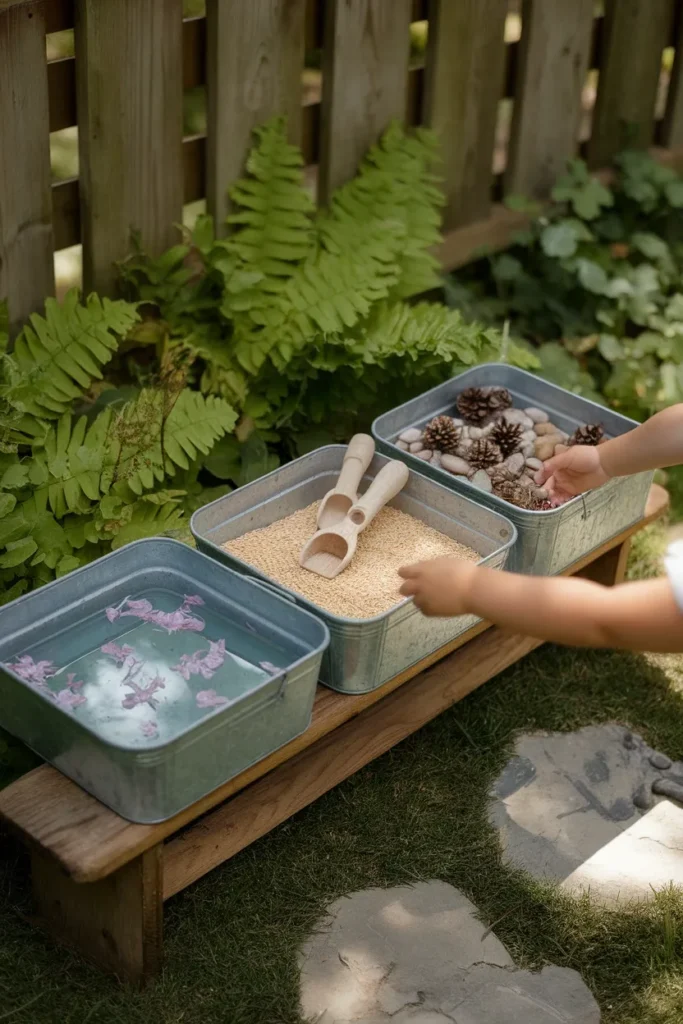
This is the one the data screams about, and we will get to why in a minute. Three shallow bins on a knee-height bench: one water, one dry rice or beans, one natural finds like pinecones and smooth stones. Total footprint, about 6 square feet.
7. A hopscotch run in paver stones or exterior paint
Ten numbered squares along a side path. Paint them on existing concrete with exterior porch paint, or set flat pavers into the lawn. Either way it costs under $40 and it uses the useless dead strip beside the house that was doing nothing anyway.
8. Movie night setup that packs away in ten minutes
A white flat sheet, two eye hooks in the fence, a portable projector on an upturned crate, and a stack of floor cushions. Pinterest logged “backyard movie night party” up 60% in its 2026 parenting report, and the reason is obvious: it converts a tiny yard into an event without a single permanent change.
Brightech Ambience Pro string lights, 48 feet, in the $50 to $80 range, run the perimeter and do double duty for adult evenings.
9. One good climber, bought small on purpose
Buy the smallest climber that still challenges your kid. Oversized playsets are the single most common small-yard regret, and they are also the hardest thing to get rid of later. Anchor it in the 30% zone, on 9 inches of compressed mulch, and leave 6 feet of clearance on the fall side.
Build the Sensory Corner Everyone Is Suddenly Searching For
Now the interesting part. Pinterest published its 2026 Parenting Trend Report this year, and one number in it is hard to ignore: searches for “sensory play ideas” rose 1070%. “Screen free activities” climbed 200%. “No phone summer” went up 340%.
Parents are not looking for another plastic slide. They are looking for the thing that holds a kid’s attention without a battery.
A sensory corner does that in about 6 square feet, which is why it belongs in a small yard specifically. Build it on a knee-height bench so kids stand rather than sit. Standing play tends to run longer, and a bench lets two kids share one bin without elbowing each other off a seat.
Three bins is the sweet spot. Water in one, a dry pour material in another, natural finds in the third. Rotate the middle bin weekly and the whole station feels new again for free.
Add a texture path if you have a spare 8 feet along a fence: a stretch of smooth river stone, then bark, then cool flat slate, then soft turf. Barefoot kids will walk it forty times. Adults will pretend not to.
One caution worth stating plainly. Water bins and toddlers need supervision, always, no exceptions, and standing water gets dumped at the end of every session rather than left overnight.
The Grown-Up Test: Building a Kid Yard You Still Want to Sit In
Nobody writing about kid backyards says this, so we will.
You are going to be in this yard for roughly fifteen years. Your kids will use the climber for four of them. Build for both timelines or you will resent the yard by year six.
Two rules cover most of it.
Rule one: everything anchored must be removable in a weekend. Bolt-down climbers, not concrete-set posts. A mulch pit with a cedar edge, not a poured rubber pad. A sandbox that lifts out and leaves a rectangle you can sod over. When the kids move on, you pull three things and you have a garden.
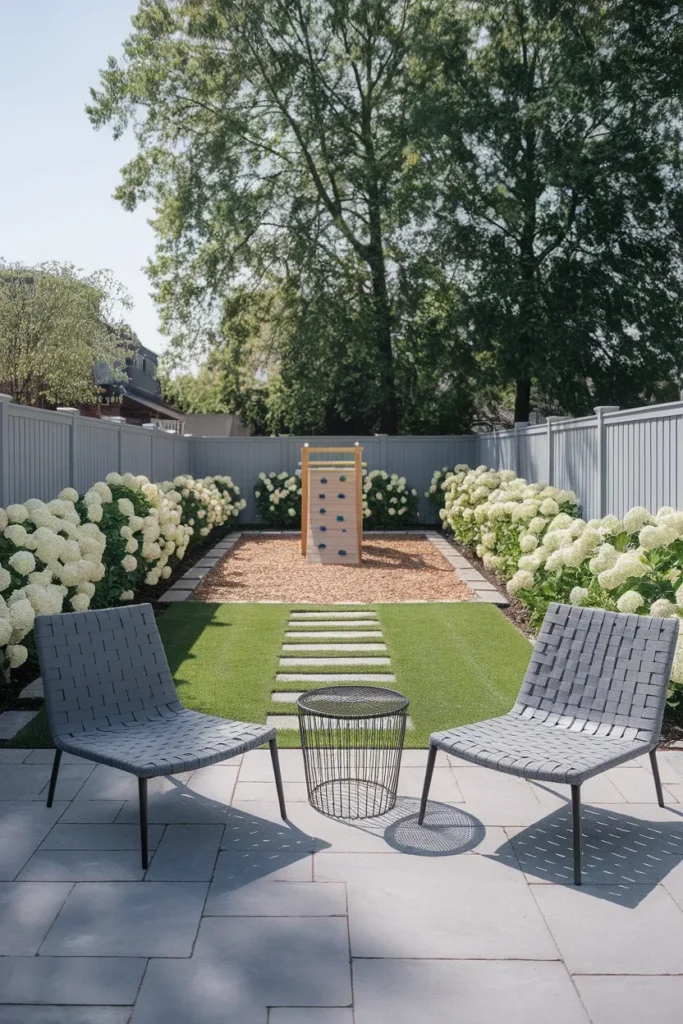
Rule two: the color palette stays adult. Primary-color plastic is what makes a yard look like a daycare from the kitchen window. Wood, black metal, natural mulch, green. Let the toys be the color, and let the toys go away at night.
That second rule sounds fussy. It is also the difference between a yard that photographs well and one that does not. Following it costs nothing, because the natural-material version of almost every item on the list above is the cheaper one anyway.
Keep the adult seating in the sightline. Two chairs and a small table at the patio end, positioned so you can see the whole play zone without standing up. Parents who can sit down stay outside longer, and kids who have a parent nearby play longer. That loop is the actual goal.
Of all the small backyard ideas for kids on this page, the dual-use rule is the one that pays off latest and longest.
Where All the Plastic Goes at 6pm
The failure mode of a small kid yard is never a shortage of ideas. It is clutter.
Twelve items scattered across 300 square feet reads as chaos. The same twelve items inside one bench box reads as a yard.
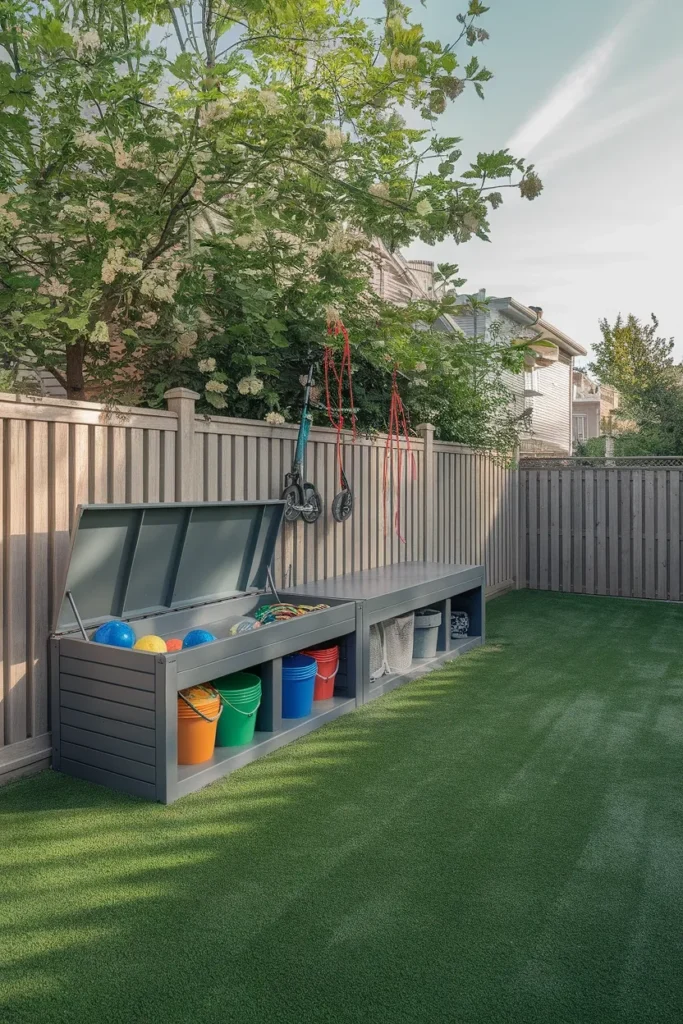
Buy or build one deck box that seats two adults and swallows everything loose. Keter and Suncast make weather-sealed versions at most big box stores, and IKEA outdoor storage benches work if you keep them under cover. Put it at the edge of the anchored zone, not the patio, so cleanup happens where the mess happens.
Then rotate. Keep about a third of the outdoor toys in the garage and swap them monthly. Kids treat a returning toy like a new one, and your yard carries a third less stuff at any moment. This one habit does more for a small yard than any purchase on this page.
Give every kid one bin and one rule: whatever is out at dinner goes in the bin. Five minutes, done, and the yard resets itself daily instead of degrading across a summer.
Hose racks and a wall-mounted rack for bikes and scooters clear the last of it. Vertical storage, same logic as the chalk wall.
Plants That Are Safe, and the Ones to Pull Out First
A kid-friendly yard is a planted yard. Bare fences and a rectangle of turf are boring, and boring yards get abandoned by everyone including the children.
Plant for touch. Lamb’s ear is the standout, soft as felt and hardy through USDA Zones 4 to 8. Ornamental grasses rustle. Mint and lemon balm survive being grabbed daily, and both grow happily in a container, which stops them from taking over the bed. Sunflowers give a five-year-old something taller than a parent by August.
Then check what is already there. Several extremely common landscape plants are genuinely toxic if chewed, and most people have no idea which ones they own. This toxic plant list from UC Master Gardeners is the practical version to work from. Their core advice is worth repeating word for word: “Teach children not to put any part of a plant in the mouth.”
Worth knowing that even ordinary vegetables have toxic parts. Tomato and potato foliage both make that list, which surprises most parents planting a first kids’ bed.
If you garden in Zones 5 through 9, timing is simple enough. Last frost typically lands mid to late April in Zone 5, early April in Zone 7, and February in Zone 9. Sow a kids’ bed around those dates and you get radishes by late spring, sunflowers by midsummer. Confirm your own date against your local extension office, since frost swings a couple of weeks year to year and micro-location beats the map.
What This Actually Costs, in Three Tiers
Numbers below are ballpark US pricing as of mid-2026 and will move, so treat them as planning ranges rather than quotes.
| Tier | Budget | What you get | Weekend hours |
|---|---|---|---|
| Starter | Under $200 | Chalk wall on the fence, log balance run, hopscotch painted on existing concrete, three sensory bins, one storage box | 4 to 6 |
| Core | $400 to $900 | Everything above plus a 4×4 cedar sandbox with lid, a mud kitchen, a 3×6 raised bed, and a mulch pit with edging | 10 to 14 |
| Full | $1,500 to $3,000 | All of the above plus a compact anchored climber, proper 9 inch compressed surfacing across the play zone, and perimeter string lights | 20 plus, or one contractor day |
The Starter tier is where we would tell most families to begin, and plenty never move past it. Kids under six get more out of a mud kitchen and a chalk wall than a $2,000 playset, which is the sort of thing you only believe after you have watched it happen.
If money is the constraint, spend it on ground surfacing first. It is the least fun purchase and the one that protects everything else. More ways to stretch a small budget across a whole yard live in our budget backyard garden ideas guide.
Frequently Asked Questions
How do I make my small backyard fun for kids?
Zone it before you buy anything, using the 60-30-10 split: 60% open lawn to run on, 30% anchored play grouped against one fence, 10% quiet shaded corner. Then add vertical play like a chalk wall that costs no floor area, and one high-engagement item like a mud kitchen or sandbox. Layout beats equipment in a small yard, every time.
What is the cheapest way to make a backyard fun for kids?
Under $200 gets you a chalkboard-painted fence panel, a log balance run from free cut rounds, a hopscotch grid painted on existing concrete, and three sensory bins on a bench. A 30 ounce can of Rust-Oleum chalkboard paint runs under $30 and covers a full panel. Salvaged pallets make a mud kitchen for close to nothing.
How much space do you need for a backyard play area?
Around 100 to 150 square feet of anchored play zone is enough for a sandbox, a compact climber and a mud kitchen, which fits inside a 400 square foot yard using the 30% rule. Leave 6 feet of clear fall space around any climber and keep the remaining open run at least 20 feet long so kids can actually sprint.
What is the safest ground cover for a kids play area?
Wood mulch is the best all-round choice for a home yard. CPSC guidance lists non-CCA wood mulch at 12 inches installed, compressing to 9 inches, protecting falls up to 7 feet. Sand protects only to 4 feet at the same depth, and pea gravel to 5 feet, so both are weaker than they look. Grass offers effectively no fall protection.
How deep should mulch be under a swing set?
Spread 12 inches and expect it to settle to about 9 inches, since loose-fill materials compress at least 25% over time. Top it up each spring and rake it back under the swing seat and slide exit, where it scuffs out fastest. Contain the whole area with a 6 inch edge so the depth stays where you put it.
How do I keep a small backyard from looking cluttered with toys?
One large storage bench at the edge of the play zone, plus a monthly rotation where a third of the toys live in the garage. Give each child a single bin with one rule: whatever is out at dinner goes in. Keeping permanent items to wood, black metal and natural mulch, and letting the toys supply all the color, does the rest.
What plants are safe for a backyard with young children?
Lamb’s ear, ornamental grasses, mint, lemon balm, sunflowers and cherry tomatoes are all good tactile, kid-durable picks. More important is auditing what you already have, since several common landscape plants are toxic if chewed, and even tomato and potato foliage make the list. Check your existing planting against a university extension toxic plant guide before the first crawling summer.
Start With One Zone This Weekend
You do not need the whole plan. Pick the 30% corner, mark it out with a hose or a length of rope, and just look at it for a day before you buy anything.
That is the honest version of how good small yards happen. One zone, decided properly, then the next one when you are ready.
Small backyard ideas for kids only work when the yard still belongs to everybody. Get the split right, put 9 inches of mulch where it counts, keep the palette calm. What you end up with is a yard your kids tear around in at four, and one you still want to sit in at forty.
Which zone are you starting with? Tell us in the comments, and if you are stuck on layout, describe your yard dimensions and we will suggest a split.