Propane Fire Pit Ideas for Low-Smoke Evenings
The best propane fire pit is the one you actually turn on. That sounds obvious. It is not. Most people buy for the photo, then find the thing takes four minutes of fiddling and throws less heat than expected. The tank sits beside it like a forgotten guest. This is a guide to skipping all three of those problems. You will get a setup that lights in seconds, hides its own fuel, and looks good enough to sit around on a Tuesday.
Wood is wonderful and we are not here to talk anyone out of it. But wood means smoke in your eyes, ash in the morning, and a fire that takes twenty minutes to become useful. Propane gives you the glow without the errand. Pair it with a patio surface that costs almost nothing and you have a finished outdoor room for the price of one nice chair.
Here is what actually decides whether yours gets used.
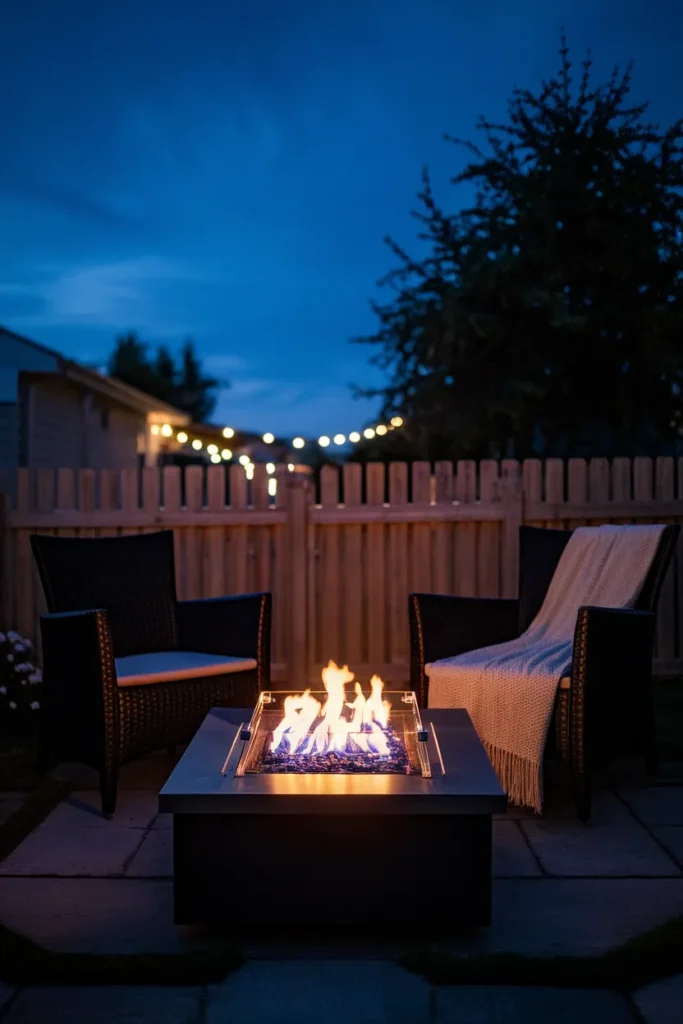
Why a propane fire pit gets used more than a wood one
Frequency is the whole argument. A wood fire is an event you plan. A propane fire pit is a switch you flip on the way outside with a glass of wine, which means it happens on ordinary weeknights instead of twice a summer.
The mechanics are simple. Most units run off a standard 20 lb tank, the same cylinder that feeds a gas grill, and light with a push button, a spark igniter, or an electronic switch. No kindling. No fire starters. No waiting for coals.
Cleanup is the other half. There is no ash to shovel, no soot on the patio, and nobody goes inside smelling like a campfire. Lava rock or fire glass sits over the burner and does not need replacing for years.
The trade is honest: you give up the crackle and the woodsmoke smell. Some people care deeply about that. If you are one of them, a masonry build is the better project. We would rather say so than sell you something you will resent.
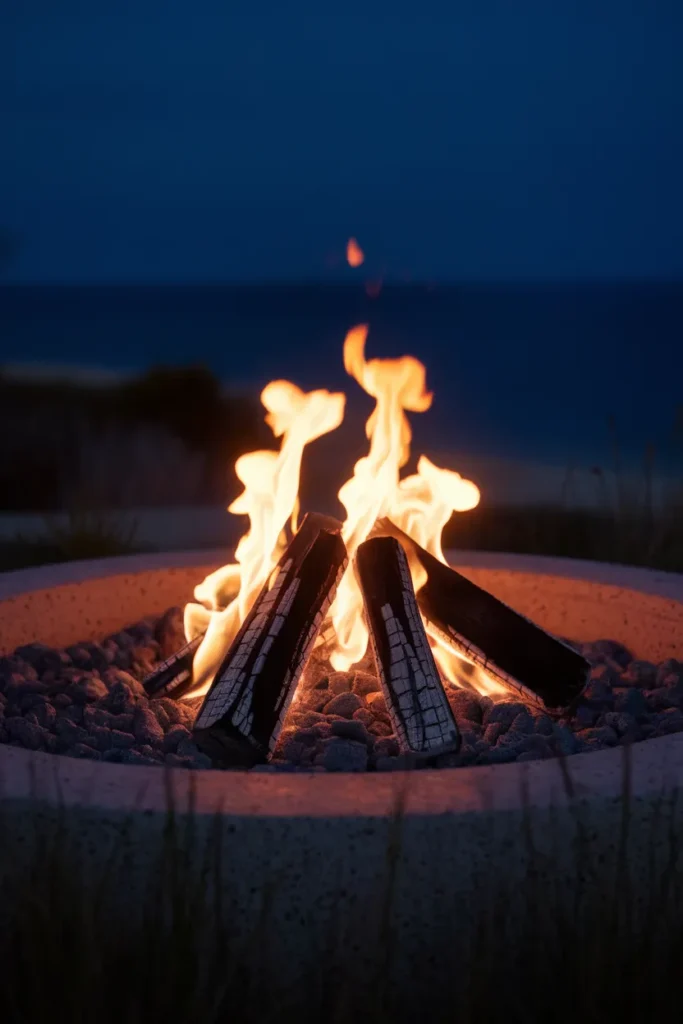
The Three-Layer Check
Almost every disappointing propane fire pit fails at one of three points, and always in the same order. We call it the Three-Layer Check: work through surface, then tank, then heat, before you look at a single product photo. Get these three right and the styling takes care of itself.
| Layer | The question | Why it decides everything |
|---|---|---|
| 1. Surface | What is directly underneath and above it? | Determines whether you can legally and safely use it at all |
| 2. Tank | Where does the 20 lb cylinder physically live? | Decides whether the finished setup looks designed or improvised |
| 3. Heat | How close will people actually sit? | Determines whether anyone stays outside past thirty minutes |
Most buying guides start at layer three and stop there, which is backwards. Heat output is the easiest thing to fix and the least likely thing to ruin your evening. Screenshot this table before you shop.
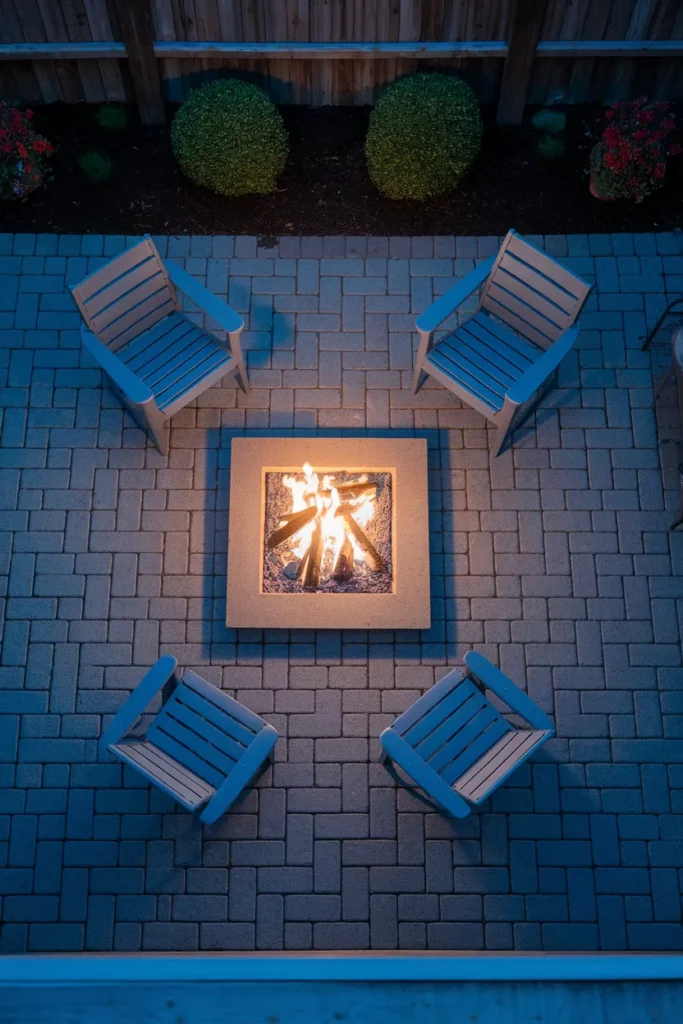
Layer one: what sits under your propane fire pit
Gas is the reason a fire feature can go on a deck at all. No embers, no sparks, no popping. Heat still radiates downward though, and that is where people get caught.
Composite decking is the sharp edge of this. Trex has stated publicly that its boards can begin softening around 176°F, and a fire pit can radiate roughly 400°F into the surface below. That gap is not a rounding error. A fire pit mat or a grid of pavers underneath is not optional on composite, and it is cheap insurance on wood.
Three surfaces hold a propane fire pit without much thought: stone pavers, poured concrete, and compacted gravel. Three that need a barrier first: wood decking, composite decking, and anything with a rug or artificial turf on it.
Clearance matters as much as the surface. Retailers commonly specify at least 36 inches clear on all sides, and roughly 80 inches of vertical clearance if you are putting a propane fire pit under a pergola or covered patio. Local codes vary a lot, and some municipalities set their own distances from structures.
The NFPA publishes plain-English outdoor fire safety guidance worth reading before you place anything permanently, and there is federal outdoor fire guidance covering placement away from siding, railings and overhanging branches. Check both, then call your local fire marshal if you are close to a property line. Codes are genuinely local here, and the distance your town requires from a structure may differ from what a neighbor two towns over was told, so verify rather than assume.
One more thing about the ground. If your yard slopes, a fire table will rock, and a rocking fire table with a gas line is a genuinely bad idea. Level the ground first, then place the pit.
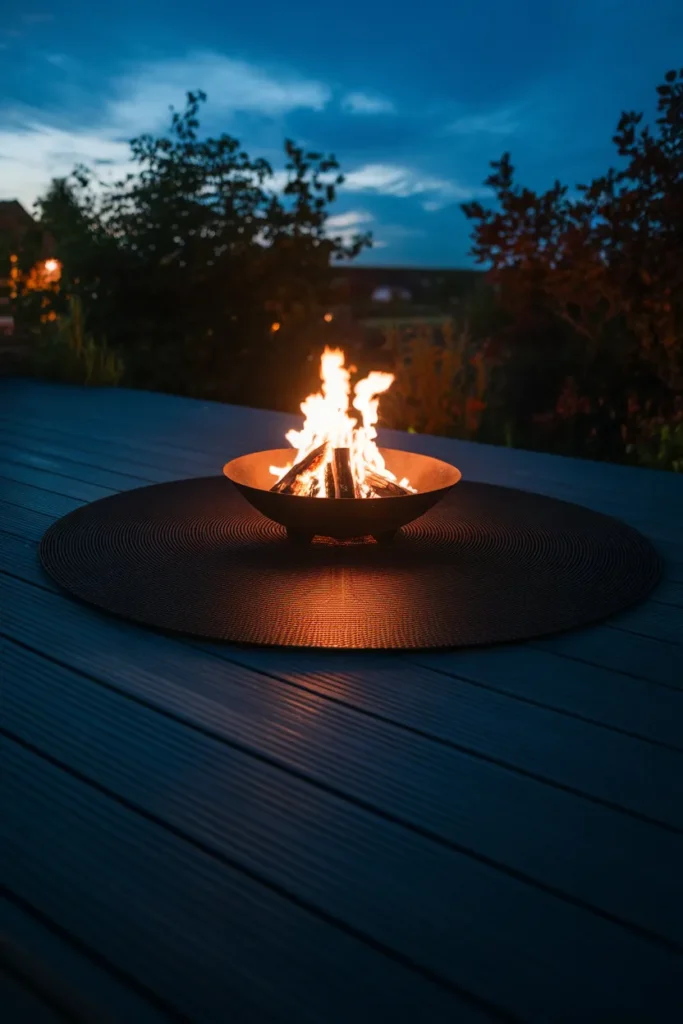
Layer two: the propane tank nobody photographs
Here is the gap in every roundup we read. They will rank thirteen products by BTU and finish, and never once address the beige cylinder that has to sit somewhere. Search Pinterest for propane fire pit ideas and “how to hide propane tank for fire pit” comes back as its own cluster of saved pins. People are clearly solving this alone.
Four approaches, roughly in order of how finished they look.
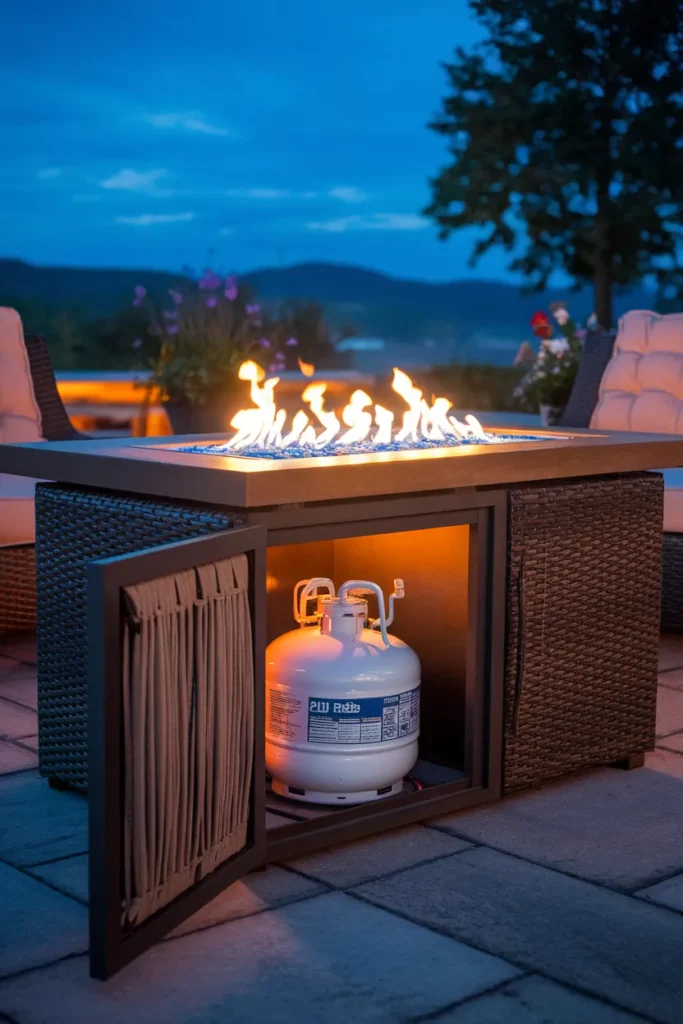
Buy the tank enclosure built in. Fire tables with a hinged door in the base are the cleanest answer, because the cylinder is simply gone. The Bali Outdoors square fire table hides a full tank and runs around $199 on Amazon. Walmart’s Mainstays steel fire pit table lands near $224. Better Homes and Gardens’ Rockport wicker table sits closer to $494 and doubles as a coffee table.
Use a long hose and put the tank behind something. The Outland Living Firebowl ships with a 10-foot hose specifically so the cylinder can live behind a planter, a bench, or the corner of the house. This is the cheapest fix and it works. Prices run roughly $130 to $215 depending on model and retailer.
Buy a matching tank cover. Most brands sell one shaped for their own pit. Elementi and several others include or offer covers that read as a side table rather than a cylinder in a sleeve.
Build a slatted box. Cedar fence pickets, four corner posts, no lid, roughly $40 in materials. It needs open sides for ventilation, which is not optional with propane. Ventilation is the part people skip, because a cylinder sealed inside a closed cabinet has nowhere to release pressure if a fitting weeps, which is the exact situation vented bases are designed to prevent. Never enclose a cylinder in a sealed cabinet, and always store spares outdoors and upright.
Pick one before you buy the pit, not after. The tank solution constrains which pits work, and reversing that order is how people end up with a beautiful bowl and a cylinder on a paving slab beside it.
Layer three: heat, honestly
Every roundup sells BTUs as a heat score. That is not what the number measures.
A BTU rating tells you fuel consumption per hour at full output. A 20 lb cylinder holds roughly 430,000 BTU. Divide that by your burner rating and you get burn time. A 50,000 BTU propane fire pit runs about seven hours on a full tank. A 100,000 BTU unit runs less than half that.
Burning fuel faster does not automatically warm you more. Most of that energy goes straight up as hot air and leaves. What actually reaches your body is radiant heat, and radiant heat depends on burner design and how close you sit, far more than on the number on the box. Push draw high enough and you hit a real problem. Pull too much propane too fast from a standard cylinder on a cool night and the tank can freeze off. Pressure drops. The flame dies with fuel still in the tank.
So the useful questions are not about maximum BTU.
- How close can chairs sit? Three feet beats six feet more than any rating does.
- Is there a wind guard? A wind guard is the cheapest upgrade most owners never make, and on an exposed patio it does more for perceived warmth than another ten thousand BTU of burner capacity.
- Is the flame wide or tall? A wide flame across a long burner warms more people than a tall column.
- Does it have a heat reflector? The Cuisinart Chimenea pushes heat forward instead of up, which is why it reads warmer than its 40,000 BTU rating suggests.
For most patios, something in the 40,000 to 50,000 BTU range with chairs pulled close will outperform a 100,000 BTU showpiece that everyone sits eight feet away from. Set expectations properly and nobody is disappointed. A propane fire pit is a warm, beautiful place to gather. It is not a patio heater, and blankets are still part of the plan.
Eight propane fire pit ideas by space
Now the fun part. Every propane fire pit idea below assumes you have already cleared the three layers.
- The hidden-tank coffee table. A rectangular fire table with a cabinet base, styled with a lid so it works as a real table when the flame is off. Best single choice for small patios, because it earns its footprint twice.
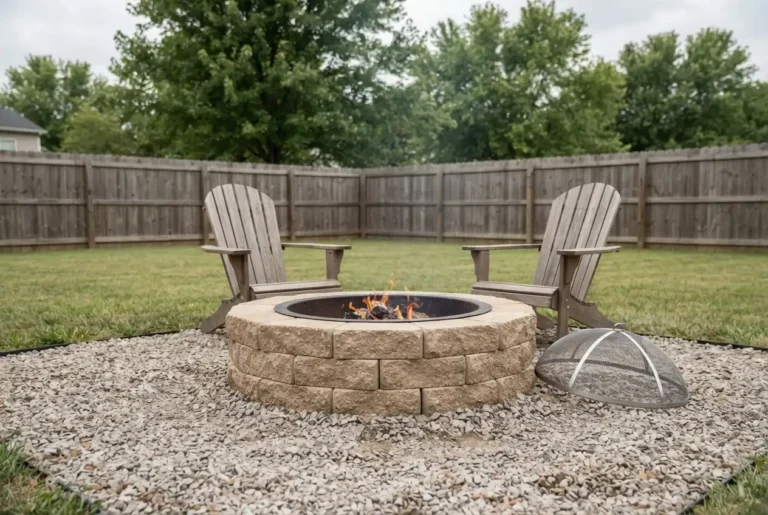
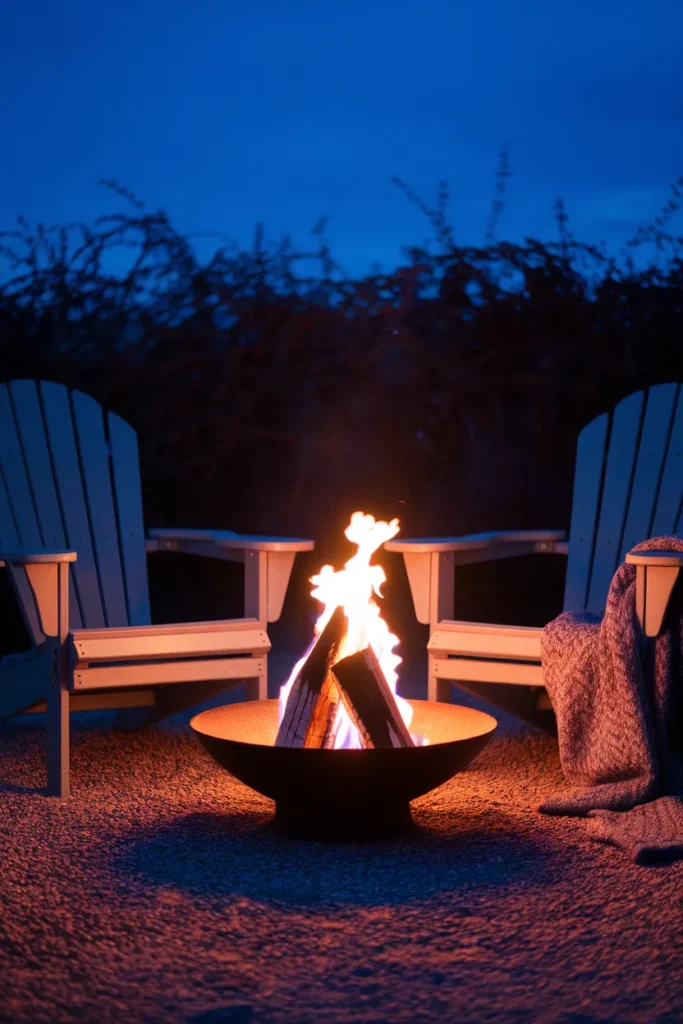
- The concrete bowl on gravel. A round fire bowl set on a compacted gravel pad reads intentional and costs less than hardscaping. Lava rock in charcoal grey, chairs at three feet.
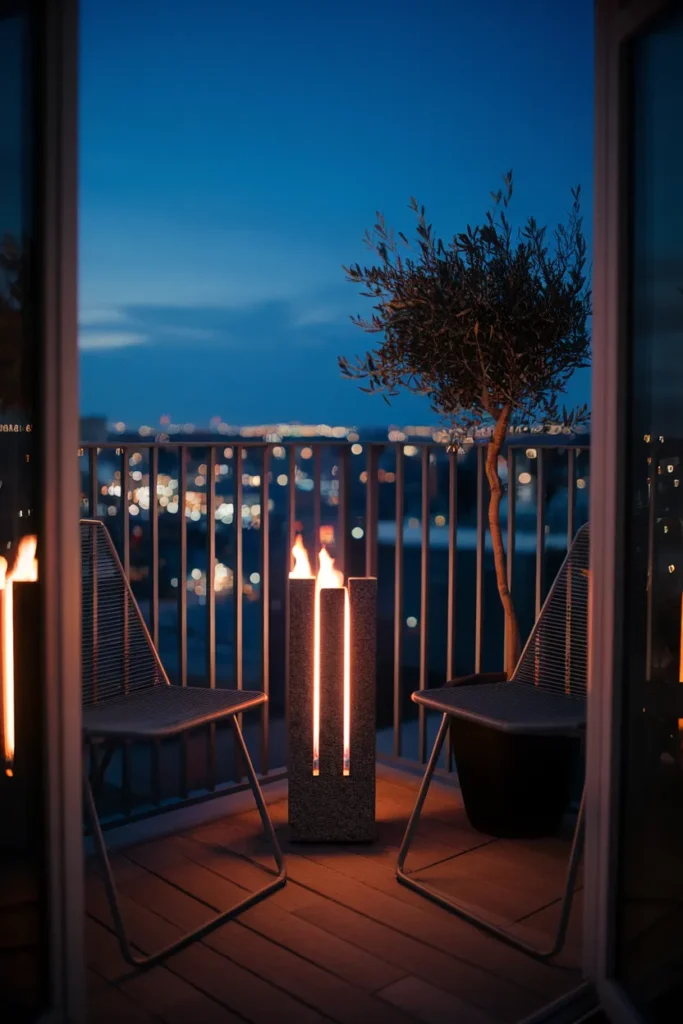
- The balcony fire column. Narrow vertical columns tuck between two chairs and take almost no floor. Target’s Room Essentials column runs about $100 and works where nothing else fits. Check your building rules first, since many apartments prohibit open flame entirely.
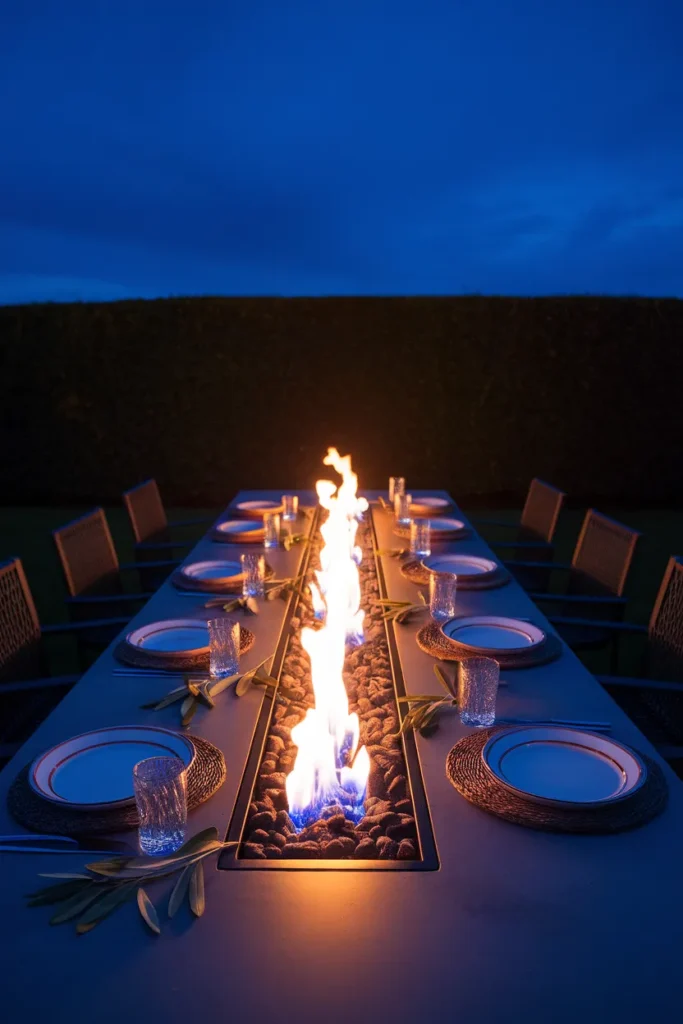
- The long dining fire table. A linear burner down the center of a dining table turns dinner into a two-hour event. This is the setup that photographs best and the one guests remember.
- The portable camp bowl. Lightweight, packable, and the reason propane wins during burn bans. The Outland Firebowl weighs about 34 pounds and stores in a garage corner.
- The corner conversation pit. Two benches at a right angle, fire table in the corner, planters closing the third side. Makes a small yard feel like a room.
- The poolside low bowl. Keep it low profile so it does not block sight lines across the water, and keep it far enough back that nobody walks past it wet.
- The chimenea-style reflector. Directional heat toward the seating instead of up. Ugly on paper, warmest in practice, and the Cuisinart version runs around $500.
Measure the seating footprint before the pit footprint, because a forty-eight inch table dropped into a twelve foot yard leaves nobody anywhere comfortable to actually sit. Front-load your budget on whichever of these hides the tank. That single decision changes how finished the whole yard looks.
Styling the circle so it photographs well
A propane fire pit does the lighting for you. Your job is everything the light lands on.
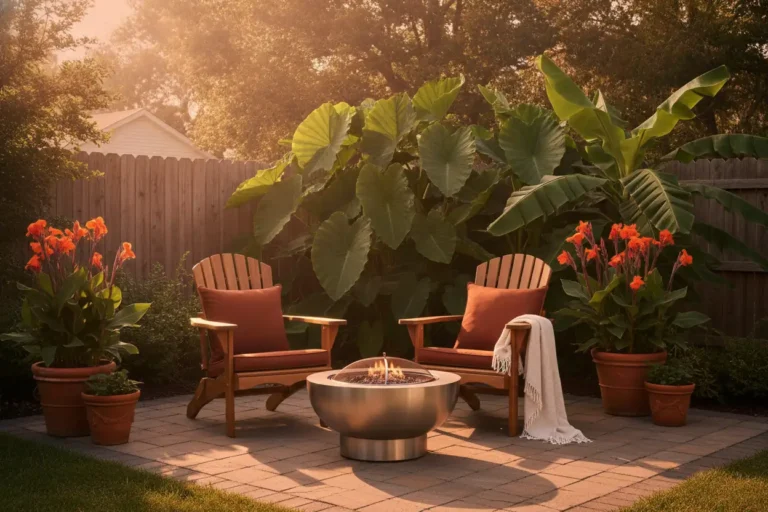
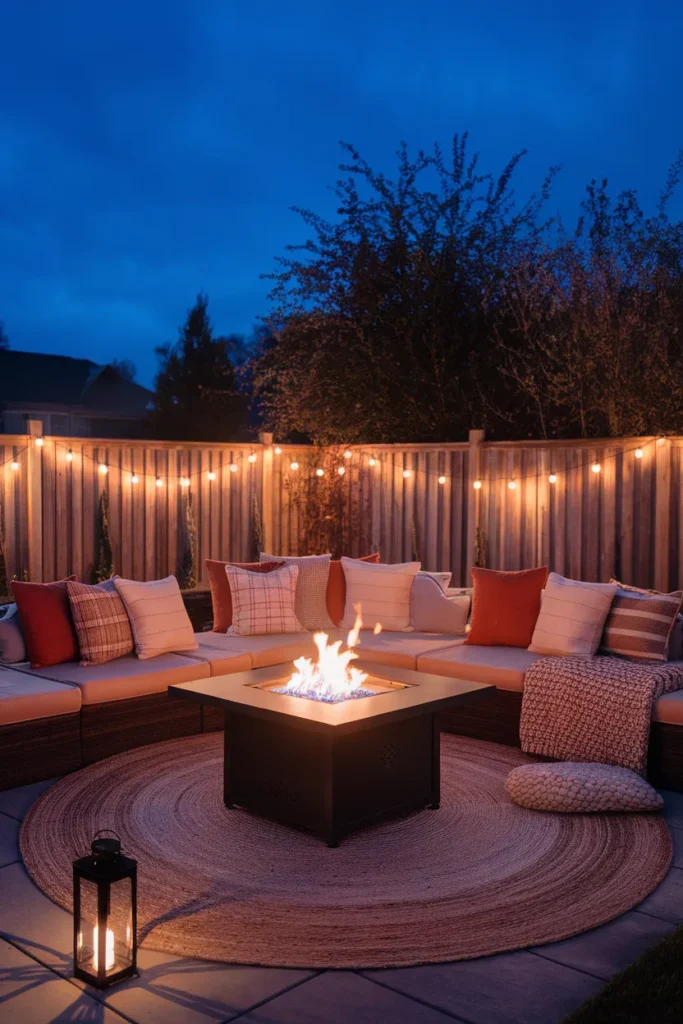
Texture reads better than color at dusk. Chunky wool throws, a jute rug well clear of the pit, a rough concrete planter, cushions in oatmeal or rust. Anything glossy just reflects the flame back as a hot spot. The reason is simple: firelight sits low and rakes sideways, so it finds every ridge on a rough surface, while a polished one throws it straight back at the lens.
Seating distance is a design choice, not only a heat one. Three feet feels like a conversation. Six feet feels like a waiting room. Pull everything in tighter than seems right, then add one small side table per chair so nobody is holding a drink all evening.
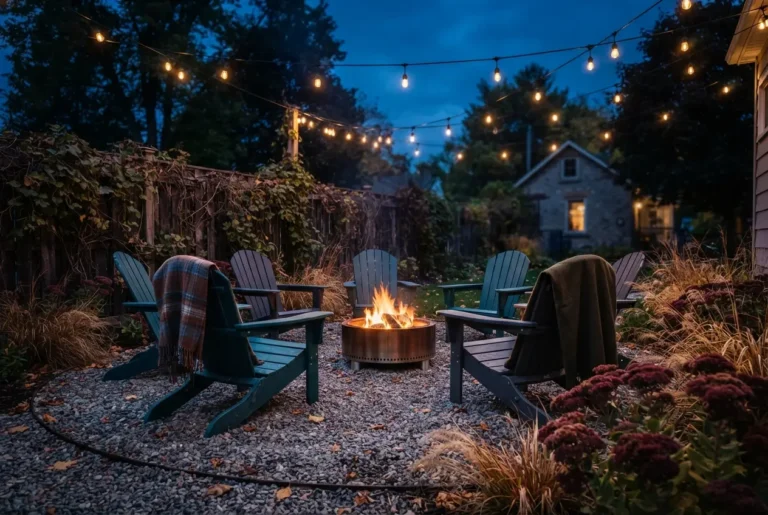
Light the edges, not the middle. String lights along the fence or a single low lantern behind the seating gives your camera something to hold onto in the background. The fire handles the foreground on its own.
Keep the lid nearby. Half the value of a propane fire pit table is the surface it becomes when the flame is off, and a lid that lives in the garage never gets used.
What it actually costs to run
Cheaper than people expect, and much cheaper than firewood at gas station prices.
Propane runs roughly $2.50 to $3.00 per gallon in most US markets, and one gallon holds about 91,000 BTU. A 40,000 BTU propane fire pit burns roughly a gallon every two to three hours. That puts a typical evening near $1 to $1.50 of fuel. Refills matter more than the pit price over five years, so a mid-range burner you run often beats a high-draw one you ration. Buying once matters more than buying cheap here, since a burner you trust gets lit on a damp Thursday in October while a bargain unit with a temperamental igniter quietly stops earning its space.
Two habits stretch a tank a long way. Run the flame at medium rather than full, which can nearly double burn time without changing how the fire looks from three feet. And keep a second cylinder filled, because running out mid-evening is the single most common complaint in owner reviews.
Prices quoted throughout are current as of July 2026 and move with the season. Verify before you buy.
Keeping it going into fall
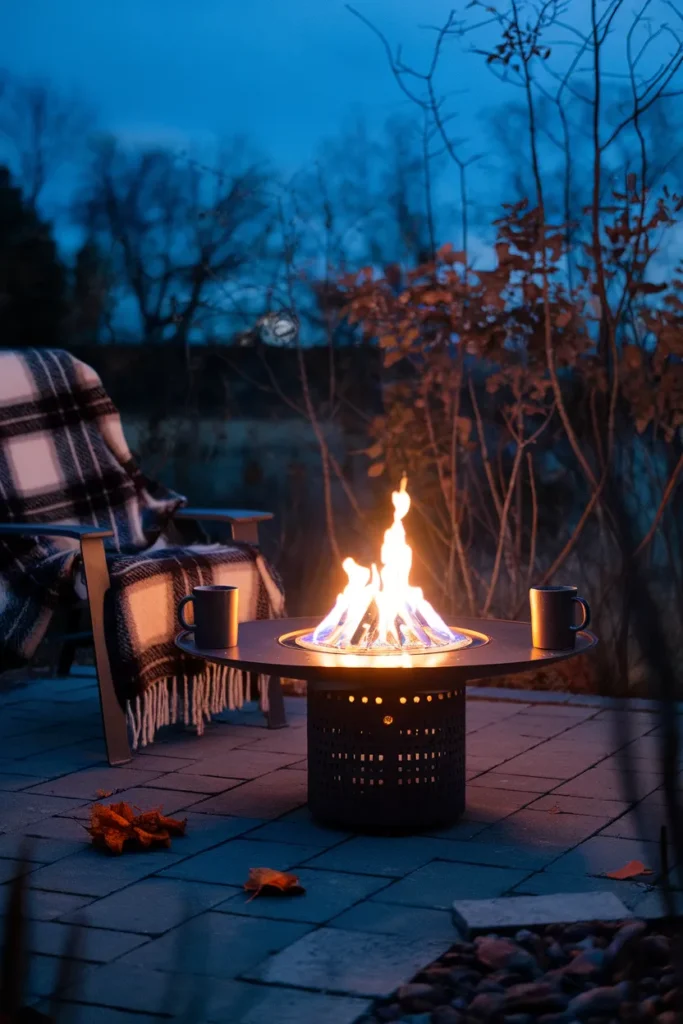
This is where propane quietly wins. Wood fires end when the season gets damp. A propane fire pit lights in November as easily as it does in June, which effectively adds two months to your outdoor year.
Cover it between uses. Moisture inside the burner assembly is the main reason a propane fire pit that worked in August refuses to light in October. Most units ship with a cover, and the ones that do not have one available for under $40.
Check the hose and connection once a year. A light soap and water solution brushed along the hose will bubble at a leak. If it bubbles, stop and replace the hose before the next use.
Clear the burner ports. Spiders genuinely nest in them over winter, which produces a weak yellow flame instead of a clean blue base. A quick pass with a soft brush in early spring fixes it. Spring is also the moment to confirm the regulator seats cleanly on the cylinder valve, because a loose connection there is the most common cause of a flame that burns low and refuses to climb.
Store spare cylinders outside, upright, never in a garage or shed.
Propane fire pit FAQs
How long does a 20 lb propane tank last on a fire pit? A full 20 lb cylinder holds roughly 430,000 BTU. Divide that by your burner rating for burn time at full output. A 50,000 BTU pit runs about seven hours, a 60,000 BTU pit closer to five. Running at medium can nearly double those figures.
Can you put a propane fire pit on a wood or composite deck? Yes, with a barrier. Gas produces no sparks or embers, which makes it the safest fuel for decks, but radiant heat still reaches the surface below. Use a fire pit mat or pavers underneath, especially on composite, and confirm your model is rated for deck use.
Do propane fire pits give off enough heat? Enough to be comfortable at three feet with a blanket, not enough to replace a patio heater. Burner design, wind protection and seating distance affect perceived warmth more than the BTU rating does.
Do propane fire pits smell? Not during normal operation. You may notice a faint odor in the first minute after lighting, which clears quickly. A persistent gas smell means you should shut it off and check the connection.
Can you roast marshmallows over a propane fire pit? Yes. Propane burns clean, so there is no smoky flavor. Drips onto lava rock are the annoyance, so a skewer and a steady hand help.
How much does it cost to run a propane fire pit per hour? Typically around $0.80 to $1.50 an hour for a mid-size residential burner at moderate flame, based on propane near $2.50 to $3.00 per gallon. High-output commercial units cost considerably more.
What does CSA approved mean? It means the unit was independently tested against recognized North American safety standards for gas-fired appliances. Worth looking for, particularly on anything going near a deck.
One last thing
The setup that gets used is never the most expensive one. It is the one where the tank is out of sight, the chairs are close enough to feel the heat, and lighting it takes three seconds instead of three minutes. Sort those three. A $200 propane fire pit will out-earn a $1,200 one every single week.
Start with the surface. Solve the tank. Pull the chairs in. Then go sit outside on a Tuesday, which was the whole point.
If you would rather have the crackle and the woodsmoke after all, a brick fire pit that ages well is the project to look at next. Either way, the yard gets used more. That is the only score that counts.