
Sunken Fire Pit Seating Ideas (The Cozy Conversation Pit)
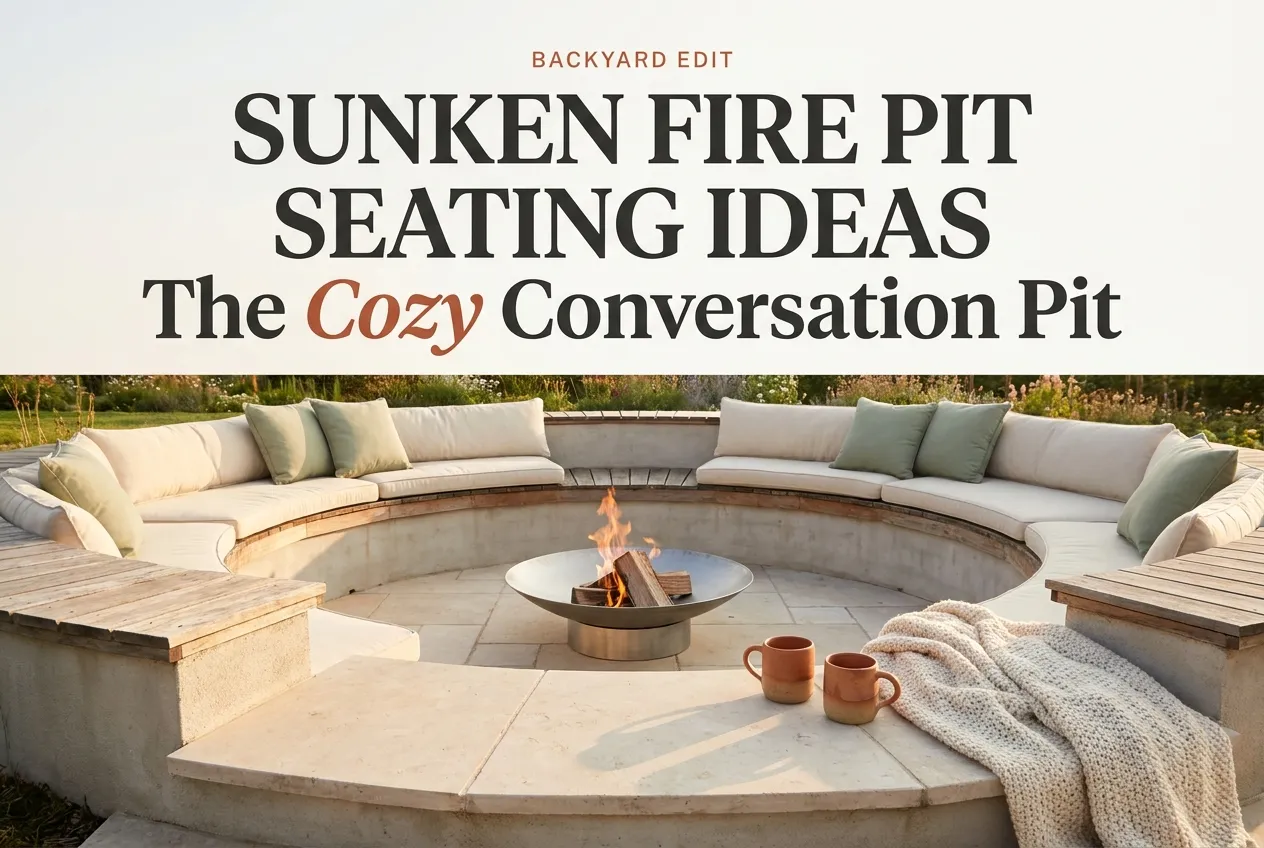
Sunken fire pit seating is the look that makes everyone stop scrolling. You drop the fire and the seats below grade, the whole circle tucks into the ground, and suddenly your backyard reads like a private little world. We fell for it hard. The first version we tried was a shallow scoop in clay soil, and after one September rain it held water like a kiddie pool for three days.
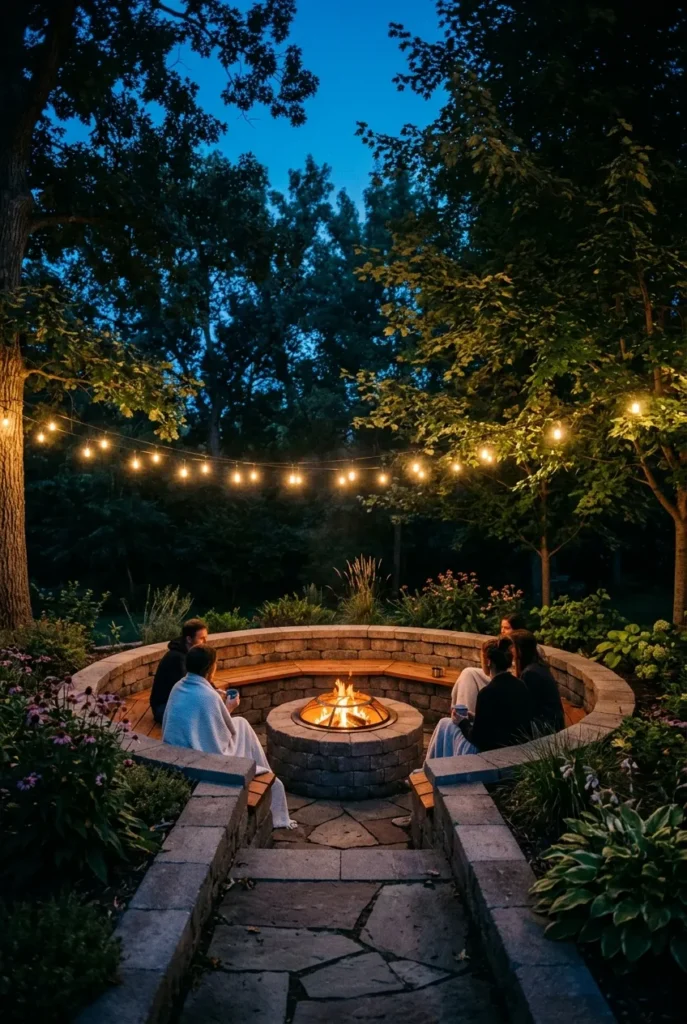
Lesson learned, and that lesson is exactly what the pretty pins never tell you. This guide covers the cozy ideas and the parts that decide whether yours works: drainage, dimensions, cost, and seating that people actually want to sit in. If you want the broader budget playbook first, here are the backyard patio ideas on a budget we lean on for the bones.
Here’s the honest promise. By the end, you’ll know which sunken layout fits your yard, what it costs at three budget tiers, and how to keep it dry. Let’s get into it.
What Makes a Sunken Fire Pit Seating Area Worth It
A sunken seating area does one thing a flat patio cannot. It wraps you. When the seats sit 18 to 24 inches below the surrounding grade, your sightline drops, the wind cuts lower, and the fire feels closer to everyone at once. That’s the cozy conversation pit effect people chase, and it’s real.
It also fixes a problem you didn’t know you had. On a normal patio, the fire competes with the rest of the yard. Sink it, and the fire becomes the only thing in the frame. Your eye has nowhere else to go.
Worth every shovelful? For most yards, yes. But not all. If you have a high water table, heavy clay, or no slope to drain toward, you’ll fight that hole forever. We’ll solve that in a minute.
Sunken Fire Pit Seating Ideas by Style
You don’t need a glass-wall mansion to pull this off. Pick the look that matches your yard and your budget, then steal the details.
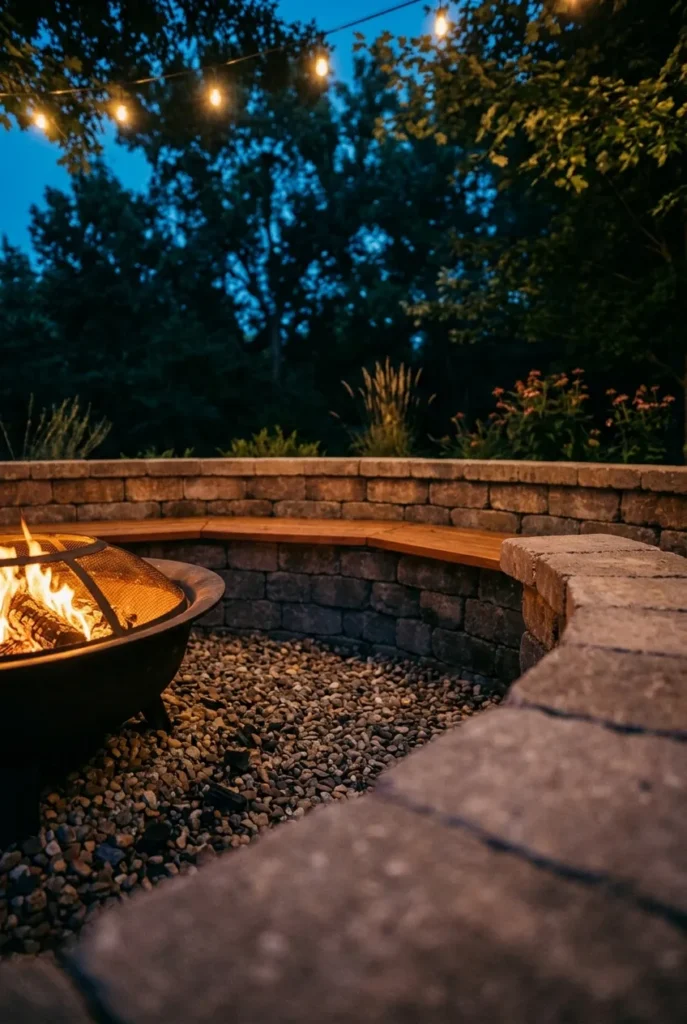
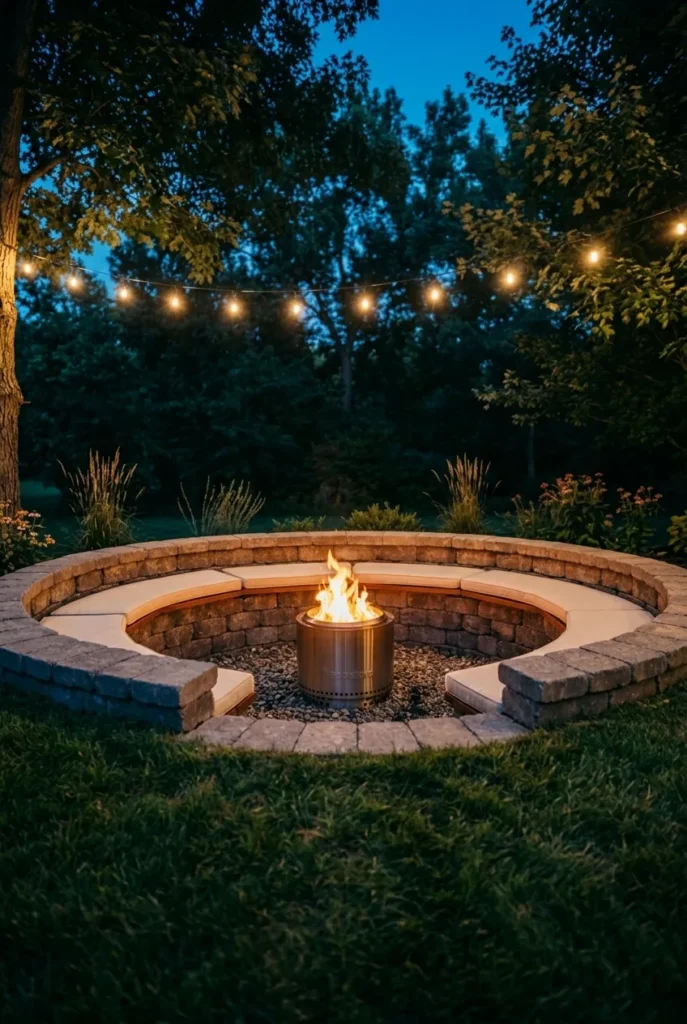
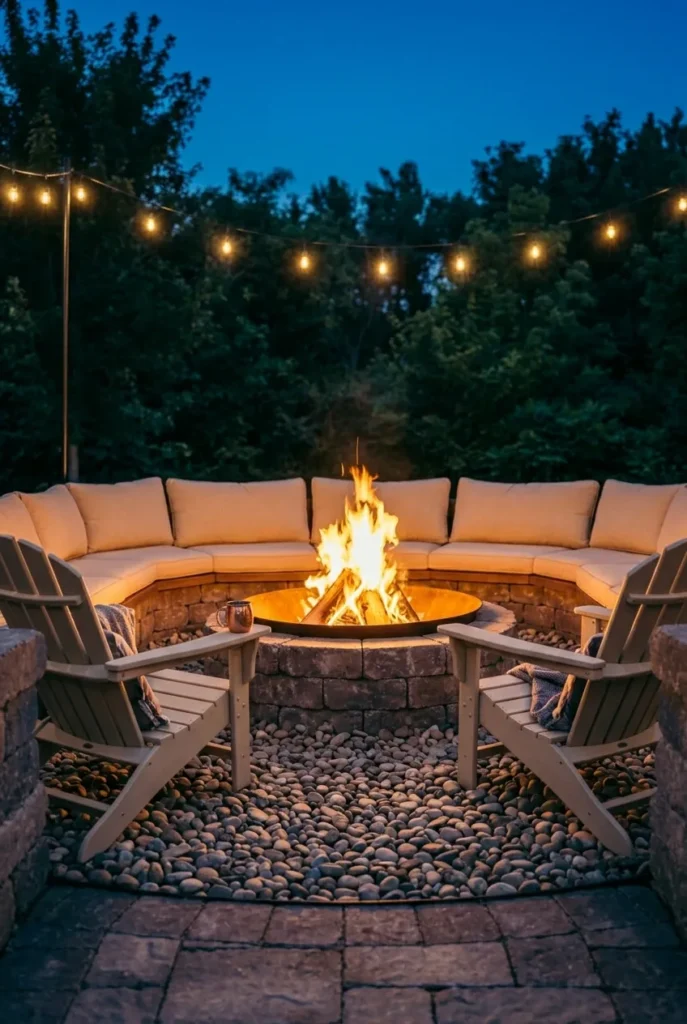
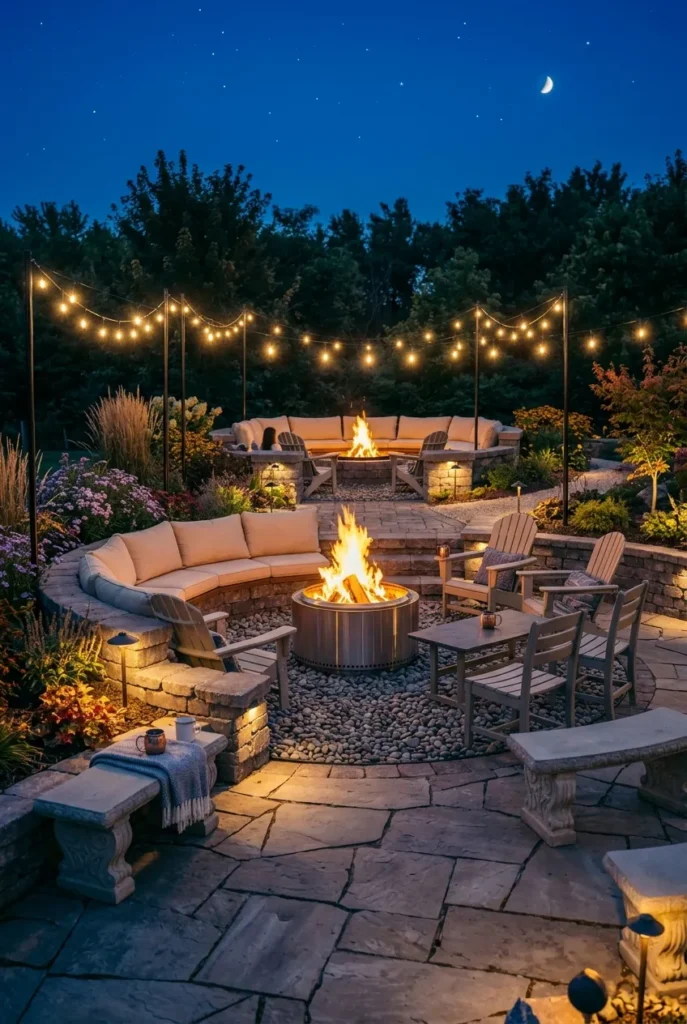
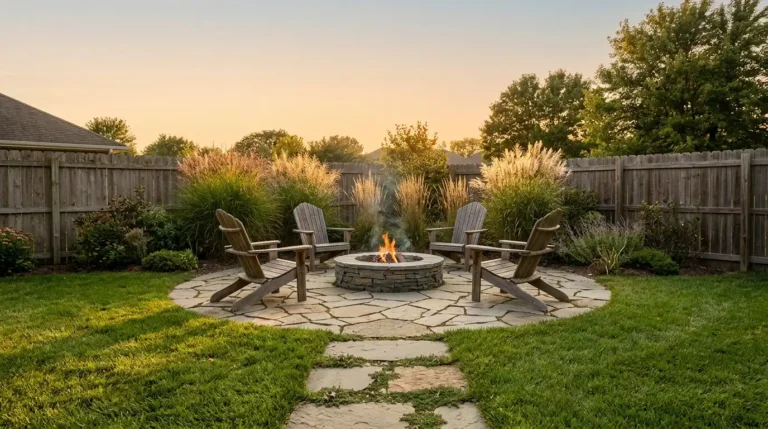
The round retaining-wall pit is the workhorse. A curved ring of Allan Block or Belgard wall stone, a gravel floor, and a steel bowl in the middle. It reads custom and forgives a beginner’s rough edges because the curve hides small mistakes.
The square concrete-and-wood hybrid suits modern yards. Poured or block walls, a cedar bench cap, and a clean linear flame. Sharp, minimal, a little architectural.
The natural planted-edge pit softens everything. You let ornamental grasses, creeping thyme, and low shrubs spill over the upper lip so the seating feels carved out of a garden, not built on top of one.
Here are the layouts pinners save most right now:
- Round sunken pit with built-in bench: one continuous curved bench wrapping 270 degrees, open on the view side.
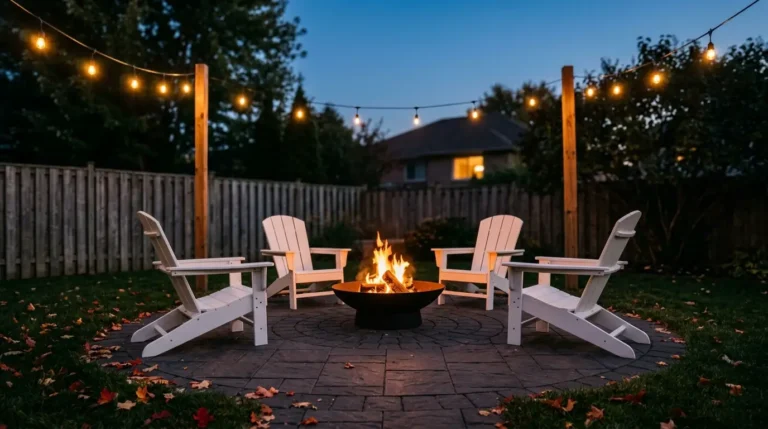
- Sunken pit with retaining walls and loose chairs: walls do the heavy lifting, then you drop in Polywood Adirondack chairs ($249 each, lifetime) for flexible seating.
- Deck-integrated sunken lounge: the pit recesses into a low deck so the bench backs double as the deck edge.
- Small sunken fire pit seating for tight yards: a 7 ft inside diameter that still fits five people knee-to-knee.
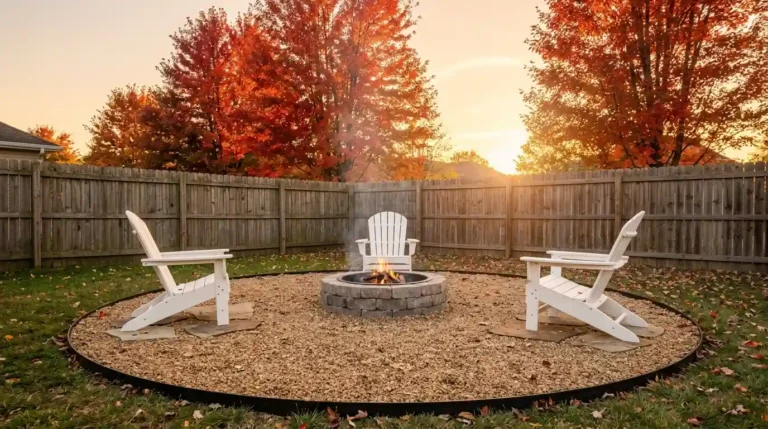
- DIY sunken pit on a gravel base: the cheapest entry, no mortar, fully reversible for renters with a landlord’s blessing.
For the seats themselves, our full breakdown of cozy fire pit seating and layout in the Solo Stove guide walks through spacing chair by chair.
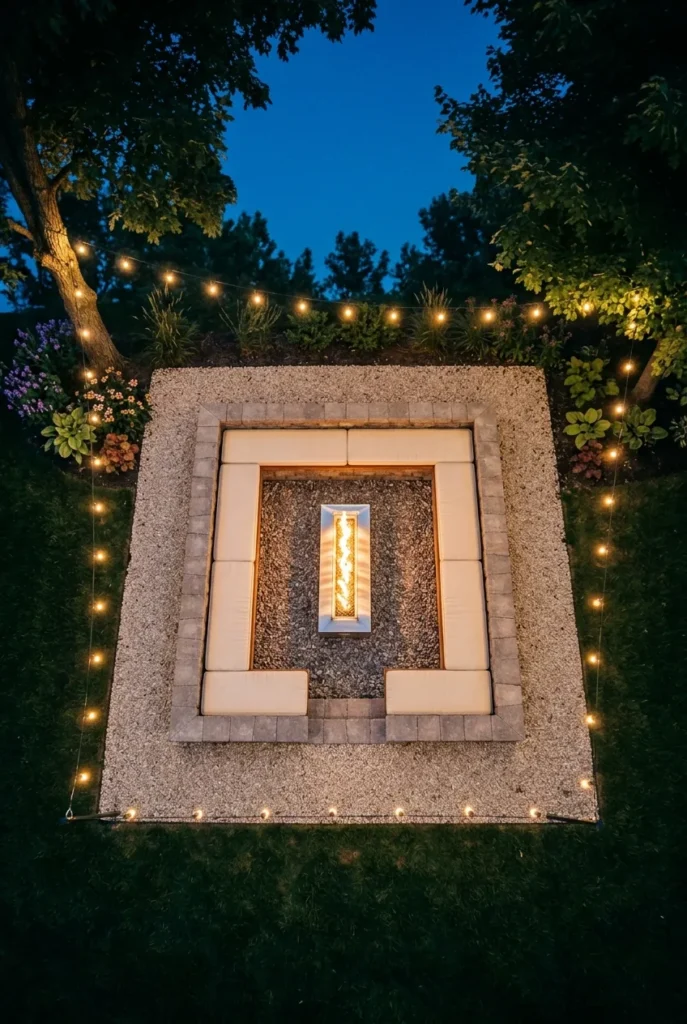
Sunken Fire Pit Seating Dimensions That Actually Work
Get the dimensions wrong and the cozy turns claustrophobic, or worse, too hot to sit. These are the numbers we use.
Keep the fire feature 36 to 44 inches across for a wood fire, smaller for gas. Then set your seating back. The inside face of the bench should sit about 24 to 30 inches from the edge of the fire. Closer than that and shins cook. Farther and you lose the huddle.
For the pit itself, plan an inside diameter of 10 to 12 feet for comfortable six-person seating. Tight on space? A 7 to 8 ft inside diameter still seats five if you use built-in benches instead of bulky chairs.
Bench height should land at 16 to 18 inches, same as an indoor chair, with a depth of 18 to 24 inches. Drop the floor 18 to 24 inches below the surrounding grade. Any deeper and you’re building stairs and dealing with serious drainage.
A quick gut-check on capacity: built-in benches buy you roughly 30% more seats than freestanding chairs in the same footprint. In a small yard, that 30% is the whole game. The budget paver patio base tricks here helped us get the foundation right before we ever dug down.
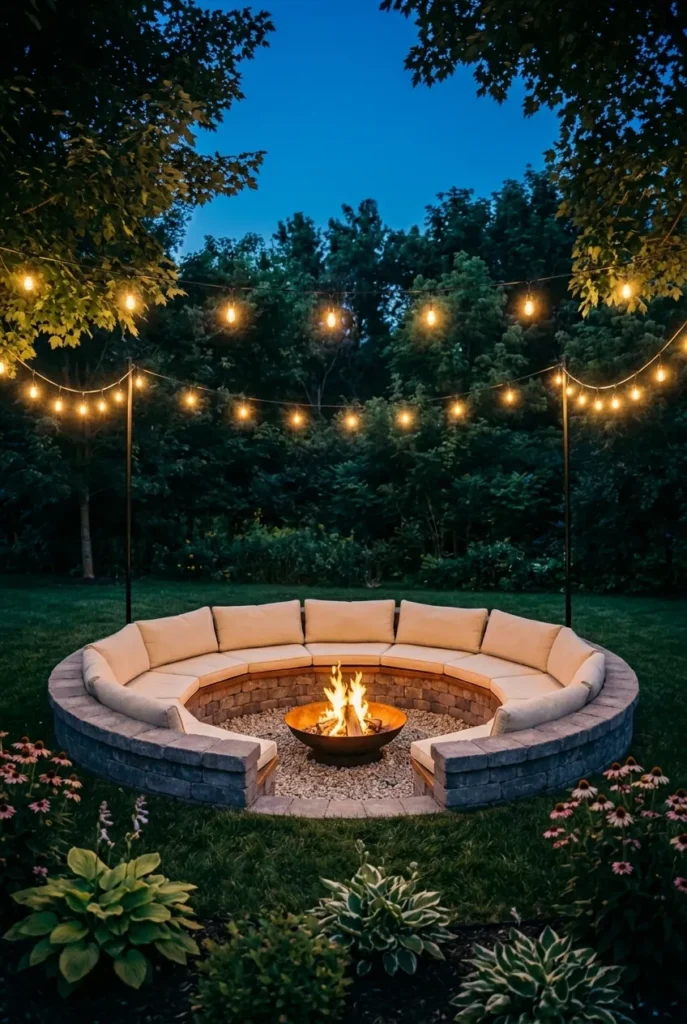
The Drainage Problem Nobody Warns You About
This is the section the top-ranking articles skip, and it’s the one that will save your build. A sunken pit is a bowl. Rain runs downhill, and you just dug the lowest point in the yard.
Solve it before you sink a single shovel deeper. Start with a gravel base at least 6 inches deep under the entire floor, using clean 3/4 inch crushed stone, not pea gravel and not sand. Water needs somewhere to disappear into.
If your soil is clay, go further. Dig a small dry well at the center, basically a 2 ft deep, gravel-filled hole that gives water a fast exit. In wetter yards, run a French drain from the pit floor to a lower point in the yard or a pop-up emitter near the property edge. Slope that drain pipe about 1 inch every 8 feet.
Two more habits that matter. Pitch the surrounding grade away from the pit so surface runoff never pours in. And leave weep gaps in any retaining wall so water trapped behind the blocks can escape instead of shoving them out of line over winter.
Skip all this and you get exactly what we got: standing water, a slimy gravel floor, and benches you don’t want to touch. According to the fire safety guidance from the National Fire Protection Association, keeping the area around open flame clear and stable also keeps it safer, and a soggy, shifting base is the opposite of stable.
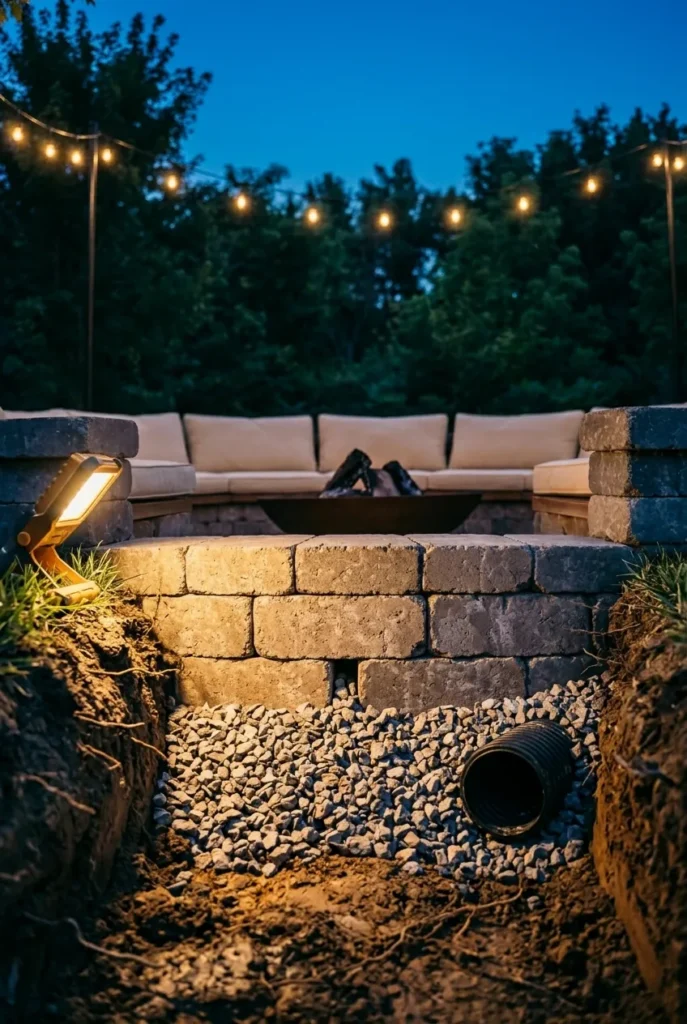
How to Build a Sunken Seating Area With a Fire Pit
Here’s the build in plain order, the way a confident weekend DIYer can actually follow it.
- Call 811 first. Free, required, and it keeps you from hitting a gas or power line.
- Mark your circle. Use a stake and string compass for a clean round shape.
- Excavate 18 to 24 inches deep for the seating floor, a touch deeper where the gravel base goes.
- Lay 6 inches of compacted 3/4 inch crushed stone and tamp it hard.
- Add drainage now: dry well, French drain, or both, depending on your soil.
- Build the retaining walls course by course, checking level obsessively, leaving weep gaps.
- Set the fire feature. A drop-in steel bowl, a gas insert, or a freestanding unit like the Solo Stove Bonfire 2.0 ($349).
- Cap the benches with cedar, paver coping, or bluestone for a finished edge.
- Backfill, grade away from the pit, and top the floor with a fresh gravel layer.
- Add cushions, a couple of Polywood Adirondacks, and warm string lights.
One contrarian take, and we’ll die on this hill. Don’t pour a solid concrete floor at the bottom of the pit. It looks tidy, but it traps water and turns your cozy pit into a pond every storm. A compacted gravel floor drains and ages better. Pretty loses to dry every single time.
This Old House makes the same structural point in its retaining wall and drainage how-to, where the whole job lives or dies on the base, not the visible stone.
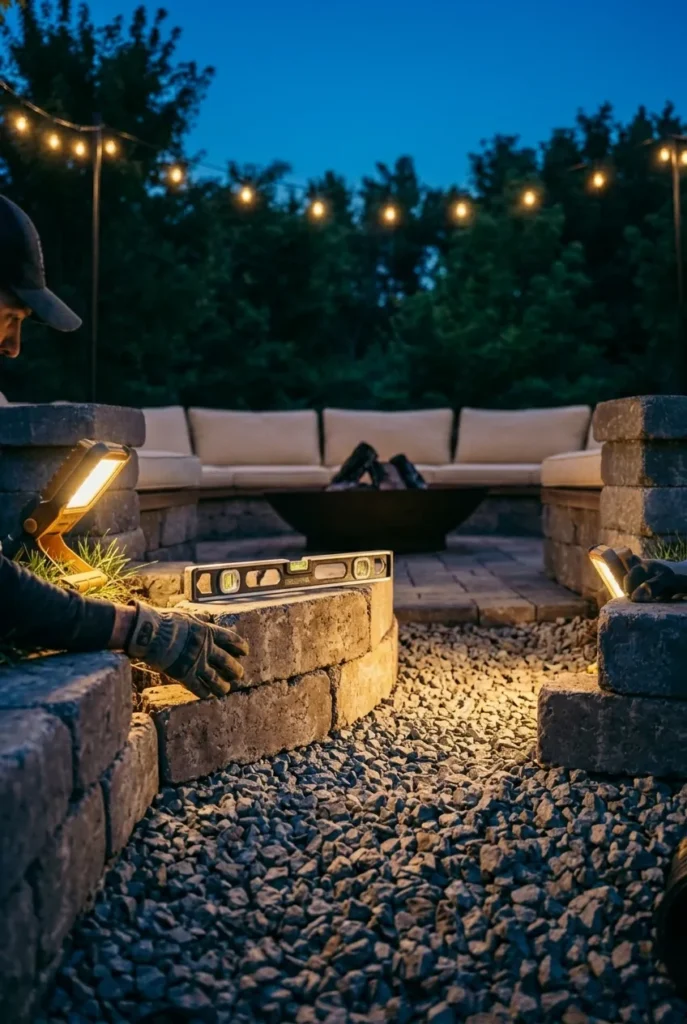
What Seating Works Best Around a Sunken Pit
The seats decide whether people linger or leave. You’ve got three honest options.
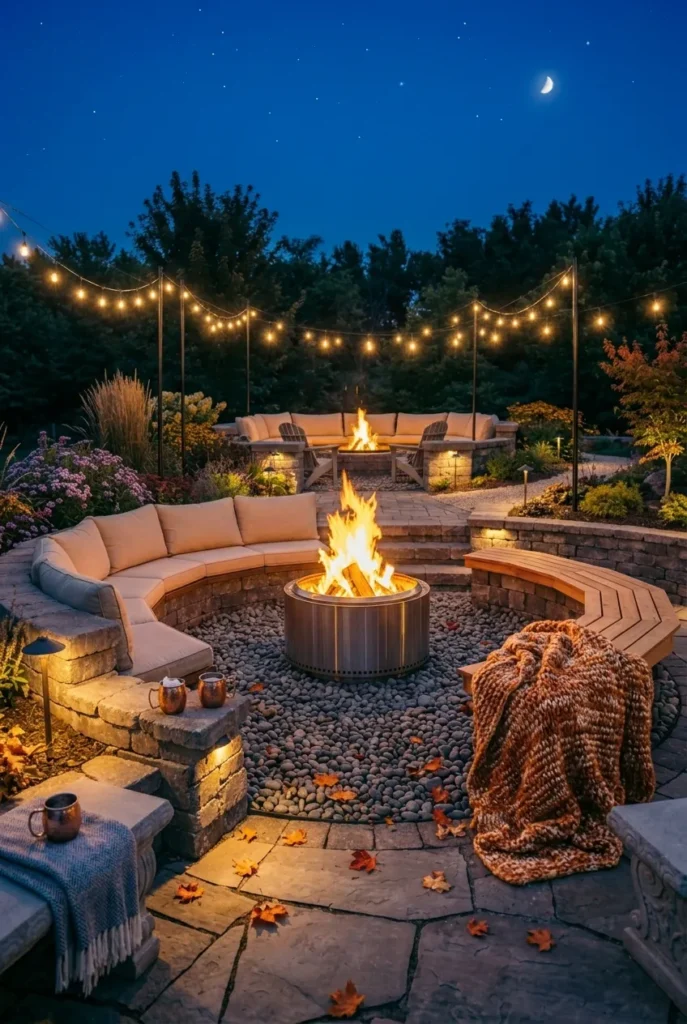
Built-in benches win on capacity and on the clean sunken look. They wrap the pit, never blow over, and double as the retaining wall cap. The tradeoff is permanence and a few cushions to store.
Freestanding chairs win on flexibility. Polywood Adirondacks ($249, US-made, lifetime warranty) hold up through hard winters and pull out for cleaning. We’ve run ours through four Wisconsin winters with zero warping.
A low sectional brings the lounge feel but needs a covered or dry pit and serious cushion storage. The Walmart Better Homes & Gardens Belle Haven sectional ($499) is a reasonable starting point if rain isn’t a constant threat.
Mix them. Two built-in bench runs plus two loose chairs on the open side is the layout we keep coming back to. It seats more and still feels casual.
Sunken Fire Pit Cost: The 3-Tier Breakdown
Here’s the part the inspiration galleries refuse to put in writing. Real numbers, three tiers, 2026 US ballparks. Screenshot this one.
Sunken Fire Pit Seating Cost by Tier
| Line item | Bare Bones ($350 to $700) | Mid Range ($800 to $2,000) | Splurge ($2,500+) |
|---|---|---|---|
| Fire feature | Walmart Mainstays 28″ steel pit, $69 | TIKI Brand smokeless, $299 | Gas insert + pro plumbing, $1,200+ |
| Walls / structure | DIY gravel ring, no walls, $60 | Retaining wall block, ~$500 | Poured concrete or natural stone, $1,500+ |
| Base + drainage | 6″ gravel + DIY dry well, $120 | Gravel + French drain, $300 | Engineered drainage, $500 |
| Seating | Two thrifted chairs refinished, $40 | Built-in cedar caps + cushions, $400 | Polywood set, $249 each |
| Ambience | Costco Feit 48 ft lights, $24 | Govee smart string lights, $70 | Integrated low-voltage LED, $400 |
The honest read: most beautiful DIY sunken pits land in that $800 to $2,000 mid range. Our own came in around $1,150, and the single biggest line was the retaining wall block, not the fire. People always guess the fire is the expensive part. It almost never is.
Want to go lower? The bare-bones gravel-ring version with refinished thrift chairs and $24 Costco lights is genuinely charming. We built a guest one for under $400 and nobody could tell.
Safety and Home Value
Two quick but important things before you build.
On safety: keep the pit a safe distance from the house and any overhang. A common rule of thumb is at least 10 feet of clearance from structures and low branches, and never sink a wood-burning pit under a covered roof without proper venting. Check your local codes and HOA too, since some towns restrict open flame entirely.
On value: a well-built sunken fire pit seating area tends to read as a finished outdoor room, and finished outdoor rooms photograph well and help a listing stand out. It’s not a guaranteed dollar-for-dollar return, so build it because you’ll use it, not purely as an investment. If resale matters, keep the materials neutral and the gas option on the table, since some buyers shy away from wood smoke.
FAQ
What seating works best around a sunken pit?
Built-in benches give you the most seats and the cleanest sunken look, since they double as the retaining wall cap and never tip over. For flexibility, add a couple of freestanding Polywood Adirondack chairs on the open side. A mix of both is our favorite.
How do you build a sunken seating area with a fire pit?
Call 811, mark a circle, excavate 18 to 24 inches, lay 6 inches of compacted crushed gravel, add drainage, build retaining walls with weep gaps, set the fire feature, cap the benches, then grade away from the pit. Drainage and the gravel base matter more than the visible stone.
How much does a sunken fire pit cost?
Most DIY builds land between $800 and $2,000, with the retaining wall block usually costing more than the fire feature itself. A bare-bones gravel-ring version runs $350 to $700, while a poured-concrete or gas-insert splurge climbs past $2,500.
Do sunken fire pits increase home value?
They can help a home show better by adding a finished outdoor room that photographs well, but it’s not a guaranteed return. Build it for how much you’ll use it. Keep materials neutral and consider a gas option if resale is a priority.
How do you handle sunken fire pit drainage?
Start with a 6 inch compacted crushed-gravel base, add a center dry well or a French drain in clay soils, slope surrounding grade away from the pit, and leave weep gaps in retaining walls. Never pour a solid concrete floor, since it traps water.
What size should a sunken fire pit seating area be?
Plan a 10 to 12 ft inside diameter for six people, or 7 to 8 ft for five using built-in benches. Set bench faces 24 to 30 inches from the fire, bench height at 16 to 18 inches, and floor depth 18 to 24 inches below grade.
Can you build a small sunken fire pit for a tiny backyard?
Yes. A 7 ft inside diameter with curved built-in benches seats five comfortably and still gives you the cozy huddle. Built-in seating buys roughly 30% more capacity than loose chairs in the same footprint.
Conclusion
Here’s the takeaway. Sunken fire pit seating is one of the highest-impact things you can add to a backyard, but it lives or dies on the parts the pretty pins ignore: drainage, dimensions, and an honest budget. Nail those and the cozy follows for free. Start with a clear circle, a deep gravel base, and a plan for where water goes, then layer on the seating and the glow.
If you’re still mapping out the whole space, our concrete patio makeover ideas that cover the ugly cheap are the natural next read before you pick up a shovel.
One Comment