Low Maintenance Front Yard Landscaping Ideas That Still Look Good in January

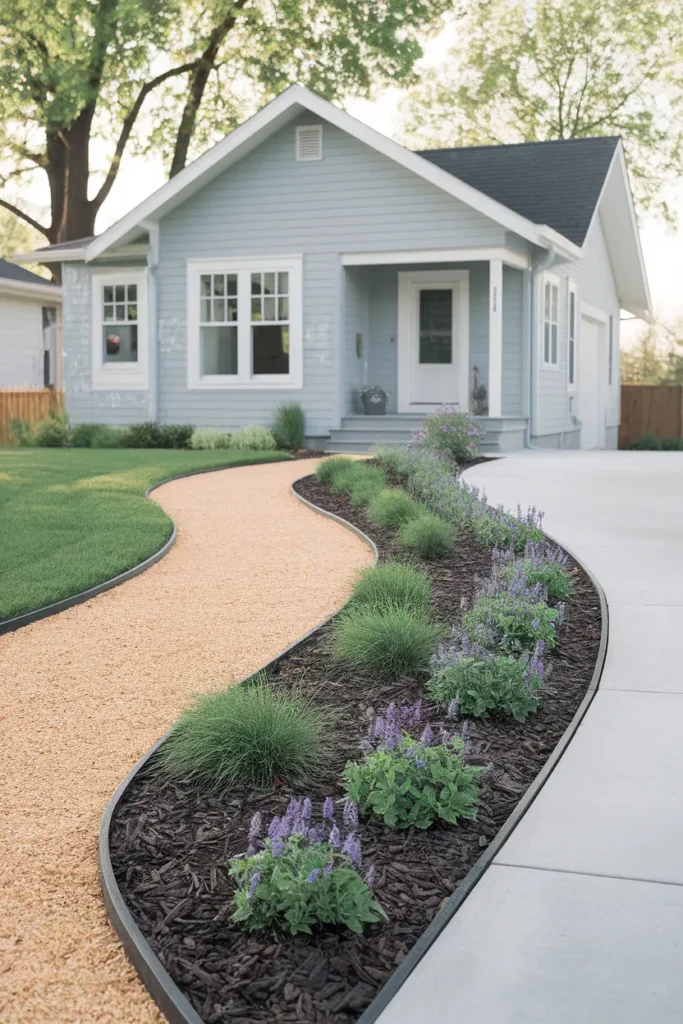
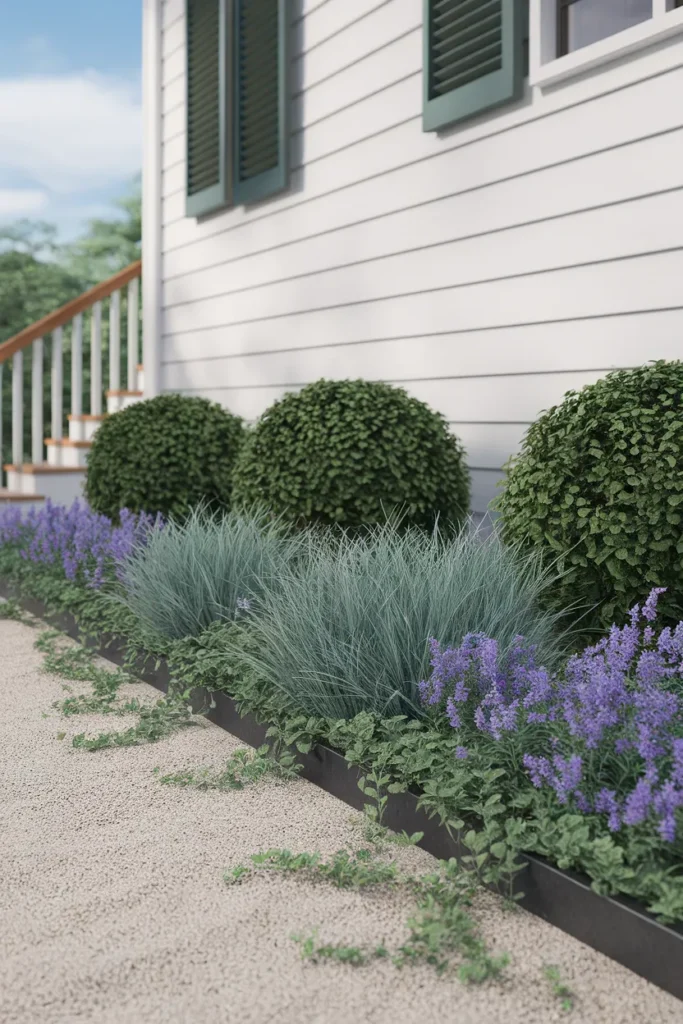
Low maintenance front yard landscaping ideas almost always get sold to you as a single photograph. Pale gravel, three tidy globes of boxwood, a walkway with no leaves on it. Gorgeous. What the photo will not tell you is how many minutes that yard actually costs its owner in a wet April. Or what it looks like the second week of January, when everything has gone the color of a paper bag.
That gap is the whole problem. We have watched people spend a full weekend and a few hundred dollars building the picture, then quietly go back to mowing because the thing they built needed more work than the grass did.
So this guide runs differently. Every idea here gets measured in minutes per month, not just in curb appeal. You will get the plant picks, the gravel math, and the honest warnings, plus the two seasons and the one strip of ground that nearly every article on this topic skips. If your budget is the tighter constraint, our front yard landscaping ideas on a budget guide covers the money side in more depth.
One number worth sitting with first. According to EPA WaterSense, residential outdoor water use in the United States runs close to 8 billion gallons a day, mostly on landscape irrigation. The average American household uses more water outside than on showering and laundry combined. A front yard that needs less water is easier to keep. It is also cheaper every single month.
Let’s get into it.
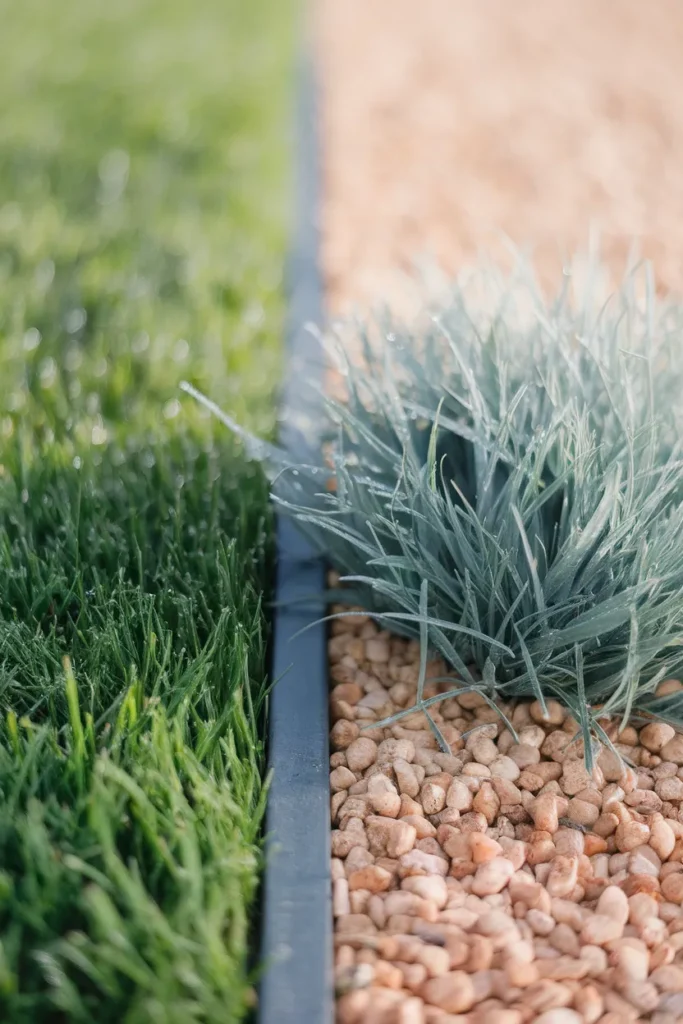
What Low Maintenance Front Yard Landscaping Actually Means
Low maintenance is not the same as no maintenance, and neither one is the same as cheap, yet those three ideas get blended together constantly in almost everything written about front yards.
A gravel yard with no plants at all is genuinely almost no maintenance. It also looks like a parking lot, and it will bake your front windows through July, because a wide field of pale stone throws heat straight back at the house. A cottage border stuffed with annuals is beautiful in June and a part-time job by August.
The version worth building sits between those. Think structure that never changes, plus a small number of plants chosen because they survive being ignored.
Here is the mental shift that makes the rest of this easier. Stop asking whether an element looks good, and start asking what it will demand from you in year three, once the mulch has thinned and the novelty has worn off.
Three things drive almost all front yard labor:
- Turf. Mowing, edging, watering, feeding, and the seasonal panic about bare patches.
- Anything annual. Plants that die every fall and need buying and planting again every spring.
- Bare soil. Every uncovered square inch is an invitation to weeds, and weeding is the chore people abandon first.
Reduce those three and the yard mostly runs itself, which is why almost every idea below is really just another way of shrinking turf, cutting annuals, or covering bare ground.
The 20-Minute Month Rule (Our Framework)
We built this after getting the same question over and over: how low is low? Vague answers help nobody. So here is a hard number to design against.
The 20-Minute Month Rule: your entire front yard should cost you 20 minutes of hands-on care per month, averaged across the growing season. Every element you add gets a minute cost. If the running total goes over 20, something has to come out.
That is it. Simple enough to hold in your head at the garden center, which is exactly where these decisions actually get made.
Use this table to audit what you already have and to price what you think you want, and screenshot it on your phone before you walk into a garden center.
| Front yard element | Minutes per month | Verdict |
|---|---|---|
| Gravel bed with steel edging | 5 | Keep |
| Evergreen foundation shrubs (dwarf, slow) | 5 | Keep |
| Native perennial border | 10 | Keep |
| Three containers on drip irrigation | 8 | Keep |
| Ground cover instead of turf strip | 4 | Keep |
| Turf lawn, 1,000 square feet | 90+ | Shrink hard |
| Annual flower bed | 60+ | Cut |
| Hanging baskets | 45 | Cut |
| Bare mulched soil, no plants | 25 | Plant it or gravel it |
Notice what jumps out. A thousand square feet of lawn eats four and a half times your entire monthly budget on its own, which means every other line on that list is close to rounding error by comparison.
Which tells you where to start.
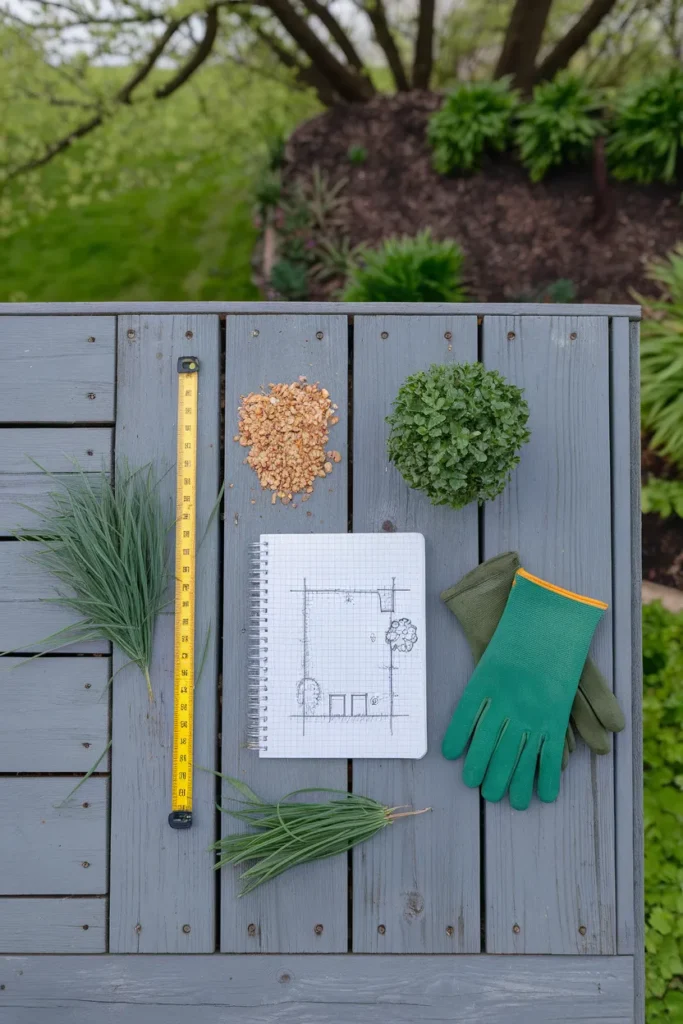
Shrink the Lawn Before You Buy a Single Plant
This is the highest-value move on the page, so it goes first.
Most front lawns are decorative. Nobody plays on them. Nobody sits on them. They exist because a builder rolled sod out across the whole lot in 1994, and no owner since has thought to question whether the grass was ever earning its keep. Meanwhile that turf is consuming the overwhelming majority of your yard time and most of your outdoor water.
You do not have to kill all of it. Cutting a front lawn in half often gets you eighty percent of the labor savings, because the piece you keep becomes one straight mowing pass instead of an obstacle course.
How to shrink it without renting equipment:
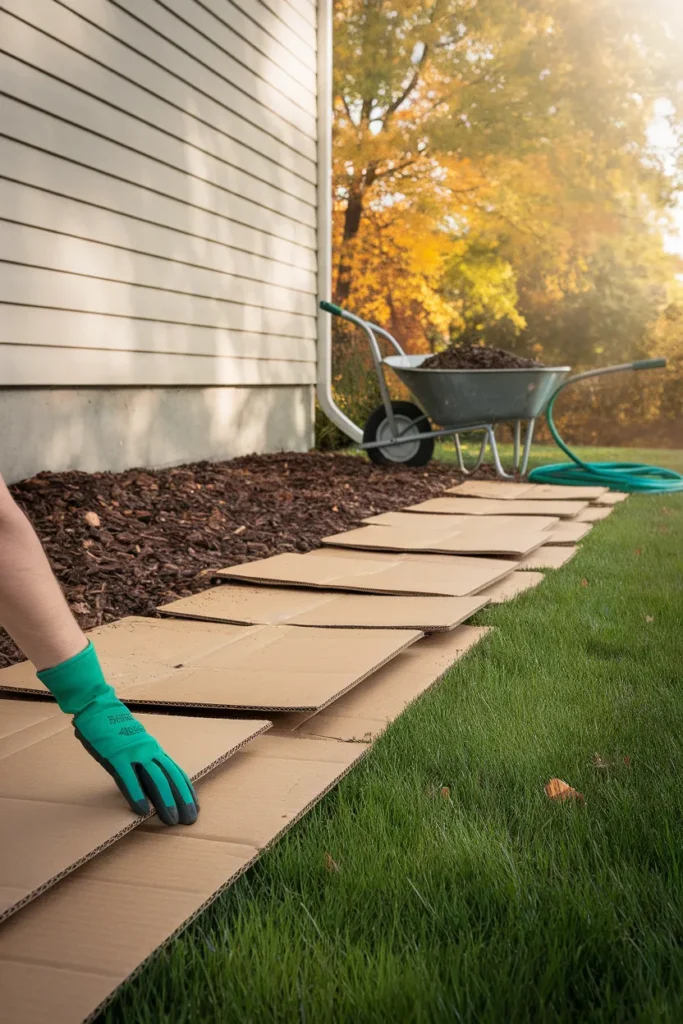
Sheet mulching is the low-effort method. Lay flattened cardboard over the turf you want gone, overlapping the seams by at least six inches so nothing sneaks through. Wet it thoroughly. Then cover with four inches of bark mulch or three inches of gravel. The grass dies underneath, the cardboard breaks down, and the worms get to work on soil that was compacted to concrete. Do it in early fall and the bed is planting-ready by spring.
Sod cutting is faster and more work. A rental sod cutter runs in the $80 to $120 range for a half day at most Home Depot or Sunbelt rental counters. It will strip a small front yard in a couple of hours. You then have to haul the sod away, which is the part people underestimate.
A few shapes that read as intentional rather than lazy:
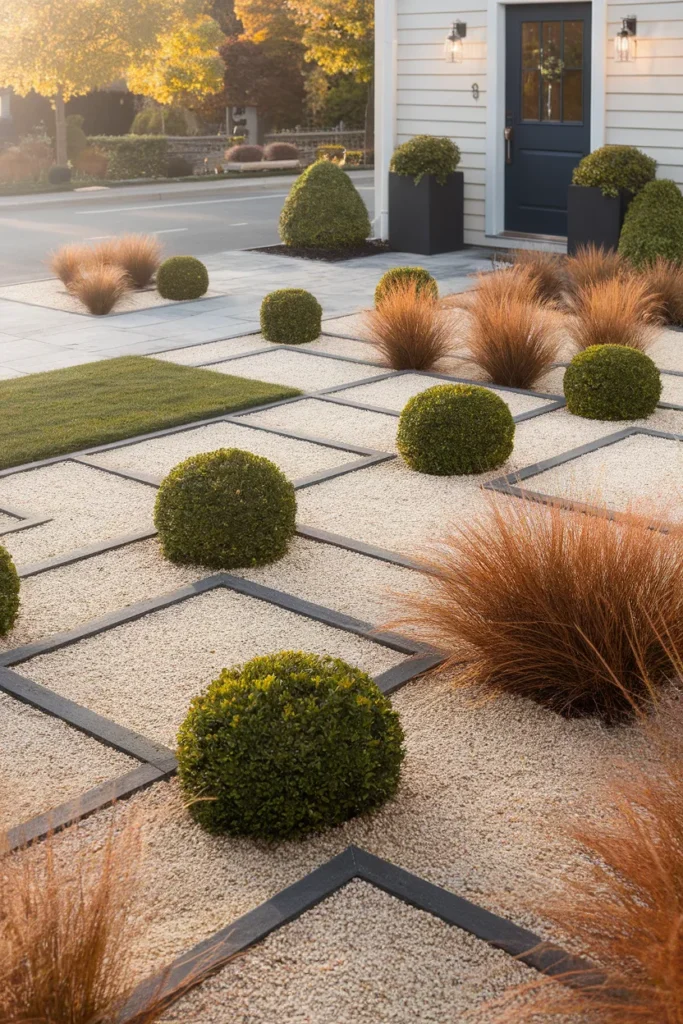
- The deep foundation bed. Push the bed line out from the house to six or eight feet instead of the standard skinny two. Instantly looks designed, and it removes the strip of grass hardest to mow.
- The island cut. Curve a bed around an existing tree and connect it to the foundation bed. Removes the mowing pinch point everyone hates.
- The full swap. Replace the whole lawn with gravel, ground cover, and beds. Highest impact, biggest weekend.
Whatever you cut, define the new line with real edging. Cheap plastic edging heaves out of the ground by the second winter, which is how yards end up with a wavy black ribbon lifting above the mulch and refusing to go back down. Steel or heavy aluminum edging costs more up front, roughly $30 to $50 for a 24-foot roll of the Dimex EasyFlex style at Lowe’s, and it stays put for a decade.
Give the Yard Good Bones: Gravel, Stone, and Ground Cover
Structure is what keeps a low maintenance yard from reading as a neglected one, because plants change with every week of weather while stone holds the same shape in every month of the year.
Gravel is the workhorse. Three-eighths inch pea gravel and quarter-inch decomposed granite both compact well underfoot and stay put on flat ground. River rock in the one to three inch range looks better in beds than underfoot, since walking on it is genuinely unpleasant. Bagged stone at Home Depot or Lowe’s usually lands around $5 to $8 a bag, which is fine for a small bed and financially painful for a whole yard. Once you pass roughly 200 square feet, order bulk by the cubic yard from a local landscape supply. Expect somewhere in the $60 to $120 per yard range depending on stone type and how far it has to travel.
The math you need: one cubic yard covers about 160 square feet at two inches deep, or about 100 square feet at three inches. Two inches is the working minimum in any bed, because anything thinner and you will be looking at bare ground through the stone by August.
We go much deeper on stone selection, bed depth, and what it all costs in our guide to front yard landscaping with rocks.
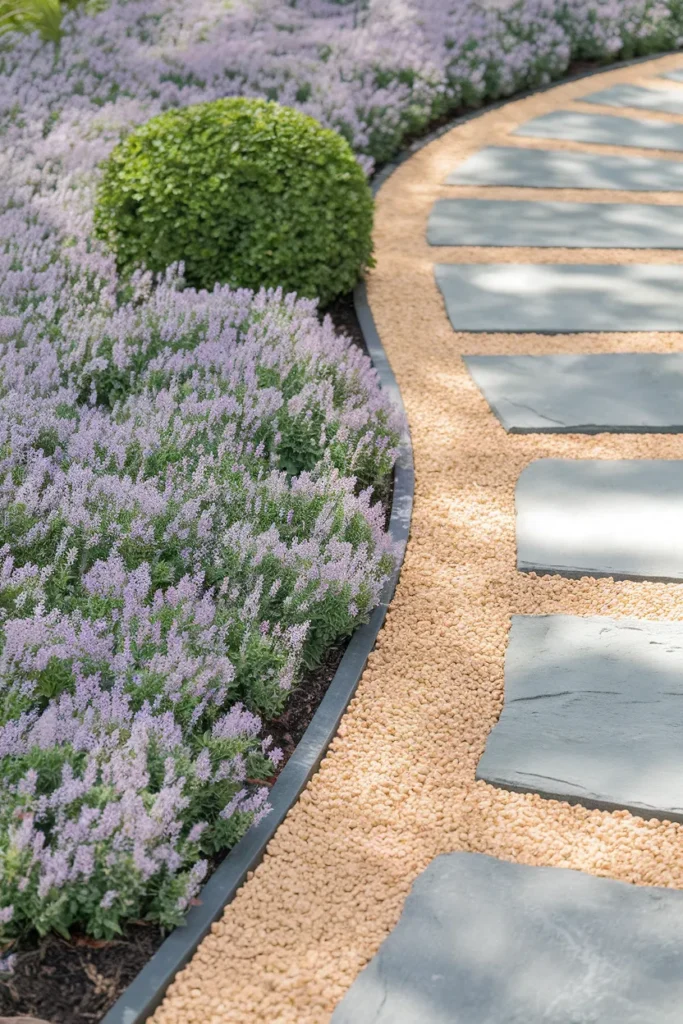
Ground cover is the underrated option, especially in shade where gravel looks harsh. Creeping thyme, sedum, ajuga, and dwarf mondo grass all spread to fill space and choke out weeds without ever needing a mower. They cost more than gravel in year one and less than gravel in year five, because they multiply instead of scattering.
Flagstone or paver stepping through a gravel field breaks up the monotony and gives you somewhere to walk to the hose bib without crunching. Irregular flagstone reads casual. Cut bluestone squares read modern. Both need a compacted base, and skipping the base is why stepping stones tilt.
One thing to resist: the urge to fill every square foot with a different material. Two hardscape materials, maximum. Three if one of them is the existing concrete walkway. Any more and the yard reads busy no matter how nice the individual pieces are.
Choose Plants That Thrive on Neglect in Your Zone
Plant selection is where most low maintenance projects quietly fail. The failure almost never comes from picking ugly plants. It comes from picking beautiful ones that need constant attention from a person who took on this project specifically to stop paying attention.
Before you buy anything, check your USDA hardiness zone. The current map is the 2023 version, and it is built on average annual extreme minimum winter temperature, broken into 10 degree zones and 5 degree half zones. A shrub rated to zone 7 will suffer in zone 5, and it will suffer slowly and expensively, dying back a little more each winter while you keep hoping.
The traits that actually predict low maintenance:
- Slow growth. Fast growers need pruning. A dwarf conifer that adds two inches a year will never need shearing.
- Evergreen or semi-evergreen. Structure that persists through winter, which matters more than you think and gets its own section below.
- Drought tolerance once established. Note “once established.” Almost everything needs regular water the first year.
- No deadheading required. Plants that drop spent flowers cleanly instead of needing you to snip them.
Reliable picks by role:
Foundation anchors (evergreen, slow, structural): dwarf boxwood, inkberry holly, dwarf Alberta spruce, compact yew in cooler zones, Indian hawthorn in the South. These are your permanent furniture.
Middle layer (texture and movement): blue fescue, dwarf fountain grass, little bluestem, Russian sage, lavender in well-drained soil. Grasses earn their keep because they look good dead, which is a strange sentence that happens to be true.
Ground layer (spreads and suppresses weeds): creeping sedum, creeping thyme, ajuga, hardy geranium, catmint.
Seasonal color without seasonal labor: daffodils and alliums planted once in fall come back for years with zero intervention. Coneflower, black-eyed Susan, and yarrow bloom hard and ask for nothing.
Buy natives where you can. A plant that evolved in your own rainfall pattern will usually carry itself through a normal year without supplemental water, and your county extension office keeps regional lists for free.
One planting rule that saves grief later: read the mature width on the tag and believe it. That two-gallon shrub sitting eighteen inches off the foundation will be four feet wide in six years, and by then you are either shearing it twice a season or digging it out. Space for the plant it becomes.
Skip the Landscape Fabric (Yes, Really)
Here is the contrarian one, and we will take the emails.
Almost every low maintenance guide tells you to roll landscape fabric under your gravel or mulch. It sounds obviously correct. A physical barrier stops weeds. Done.
It does not hold up. Horticulturists at University of Illinois Extension and Penn State Extension have both published on this, and the findings line up. Fabric suppresses weeds for roughly two years. After that, new weed seed blows in and roots happily in the mulch sitting on top of the fabric.
So you are weeding anyway, except now the roots have knitted into the fabric and pulling them tears the whole sheet up. The pores clog with sediment over time and stop passing water and air the way the packaging promised. Decomposing mulch cannot reach the soil below, so the soil never improves. And every time you plant something you cut another hole, until the Illinois Extension description fits exactly: Swiss cheese.
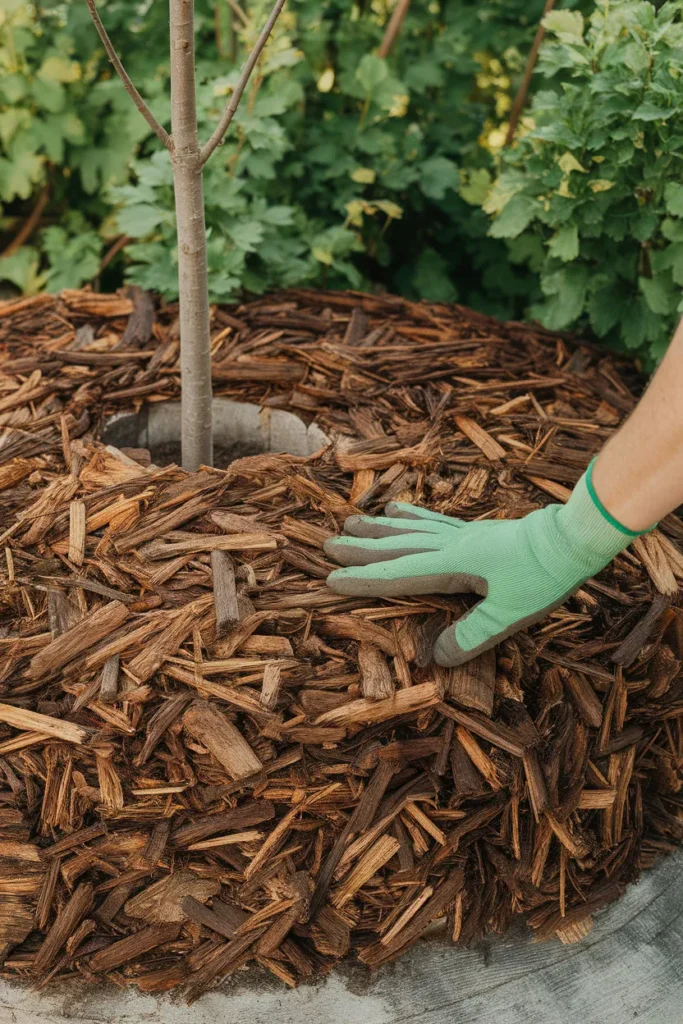
The alternative is boring and it works. Cardboard, or six to eight sheets of newspaper, under a proper depth of mulch. It smothers what is there, breaks down into the soil, and feeds the worms instead of blocking them.
For the weeds that arrive later, a pre-emergent like Preen Garden Weed Preventer applied in early spring stops seeds from germinating in the first place. A large jug runs around $25 and covers a lot of bed. Two applications a season, roughly two minutes each. That fits the 20-minute budget comfortably. Hand weeding a fabric-lined bed in year four does not.
Depth matters more than fabric ever did. Two to three inches of mulch is the range extension services consistently recommend for beds. Deeper does not suppress better, it just goes anaerobic. And keep it off the trunks. Mulch piled into a volcano against bark holds moisture against the tissue and slowly kills the tree, which is a genuinely awful way to lose a fifteen-year-old maple.
Plan for January, Not Just June
Scroll any collection of low maintenance front yard landscaping ideas and count the winter photos. There are none. Every image is peak June, everything blooming, grass impossibly green.
Meanwhile, in most of the country, the yard spends four or five months looking nothing like that. Design only for the photograph and you have designed for roughly half the year, leaving the other half entirely to chance.
Winter is the season when structure has to carry the entire yard by itself, with no flowers, no fresh growth, and no green turf helping it out. Here is what actually holds up:
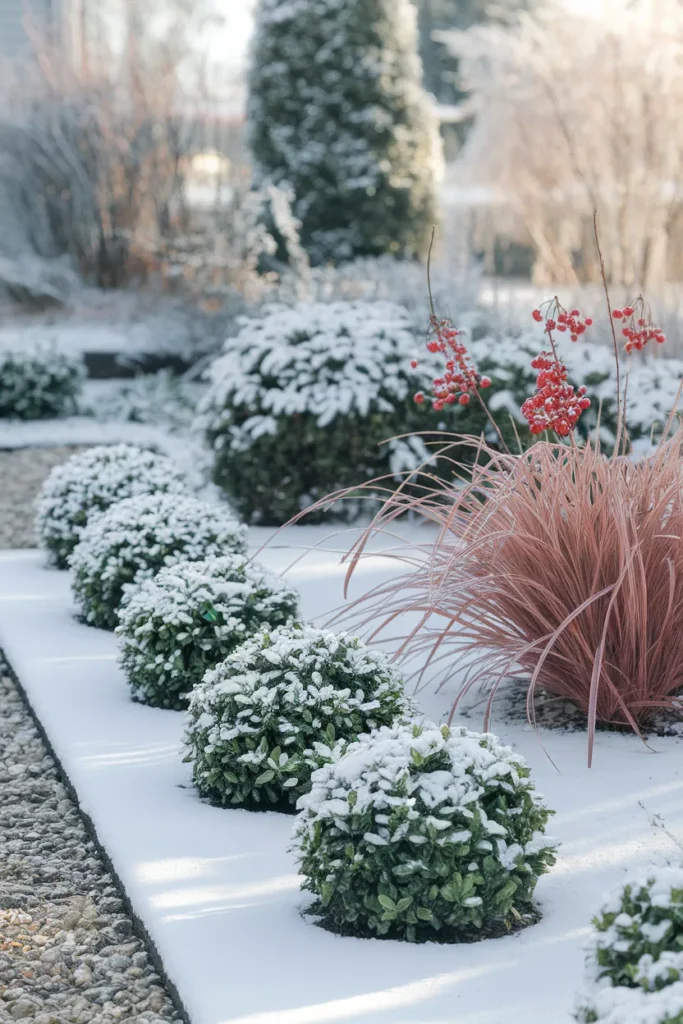
Evergreens do the heavy lifting. This is why the foundation anchors matter so much. Three dwarf boxwood globes that read as slightly boring in July become the only thing with shape in January. Aim for at least a third of your permanent plantings to be evergreen.
Ornamental grasses are winter assets. Leave them standing. Little bluestem turns a deep copper and fountain grass fades to wheat-blonde, and both catch low winter light and move in wind when nothing else in the yard is doing either. Cut them back in late February, not October. One cut, once a year.
Seed heads earn their keep. Coneflower and black-eyed Susan hold dark seed heads above the snow, and the finches will find them. Leaving them up is less work than cutting them down, which is a rare case of laziness being the correct horticultural choice.
Hardscape is season-proof. Gravel, stone, and edging look identical in every month. This is the actual argument for structure, more than the labor savings.
Bark and berries. Red twig dogwood glows against snow. Winterberry holly holds red fruit into January. Both ask almost nothing of you.
To be fair, if you live somewhere with a mild winter, this section matters less. Zones 9 and 10 stay green. Everyone from zone 8 north should take it seriously.
The Curbside Strip Nobody Warns You About
That four-foot band along the street, plus the apron beside the driveway, is the hardest ground on your property. Almost nothing written about front yards mentions it, and it is where a surprising amount of money goes to die.
What it deals with: road salt spray in winter, plow ridges dumped on top of it, reflected heat off asphalt all summer. Add dogs, delivery drivers cutting the corner, and soil compacted by decades of car doors. Plant a nice hydrangea there and watch it decline for two seasons before you figure out why.
What survives it:
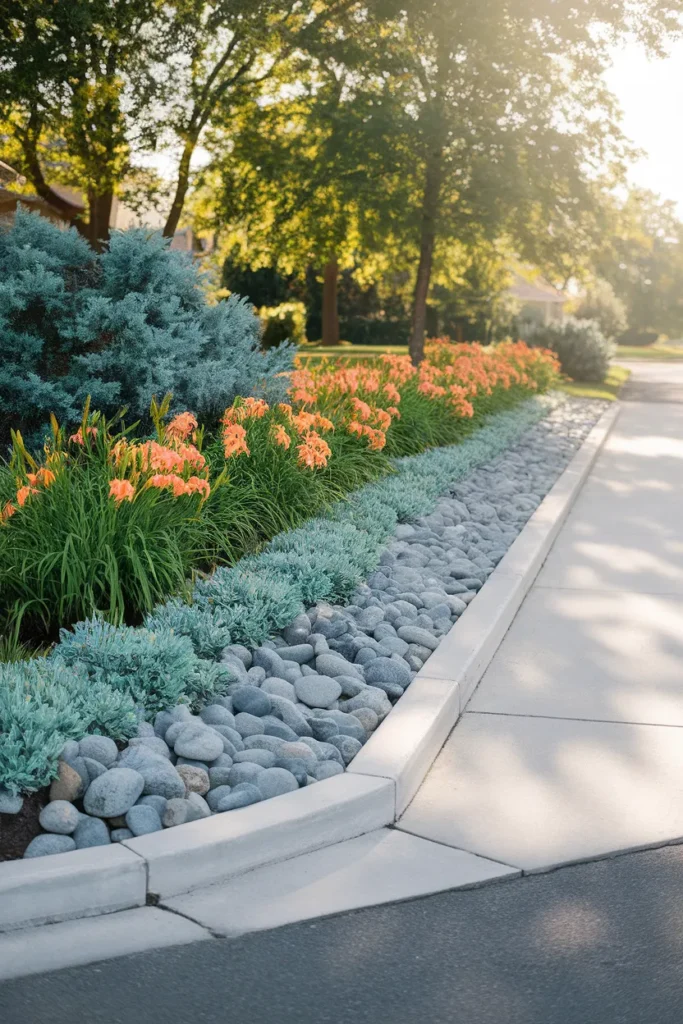
- Daylilies. Nearly indestructible, salt tolerant, come back forever.
- Little bluestem and switchgrass. Prairie natives built for exposure.
- Sedum, especially ‘Autumn Joy’. Shrugs off heat, salt, and drought.
- Creeping juniper. Ugly reputation, undeserved, and it handles road spray better than almost anything.
- Yarrow and catmint. Both take the heat and the neglect.
What to skip there: boxwood (salt burn turns it orange), hydrangea, azalea, anything you would describe as “delicate,” and honestly anything expensive. This is the zone for tough, cheap, replaceable plants.
Or hardscape it. A band of larger river rock, three to five inch stone, along the curb solves the problem entirely. Big stone does not scatter when a plow pushes past, it does not care what the salt truck drops on it, and it gives the blade something forgiving to ride over. Keep it below the curb line so it does not end up in the street.
One practical note: check your municipality before you build anything in the strip between sidewalk and curb. Many cities technically own that ground and have rules about height and material. A two-minute phone call beats a removal notice.
Small Details That Carry the Whole Front Yard
Once the structure is right, a short list of small upgrades does a disproportionate amount of the visual work. None of them add meaningful maintenance.
Path lighting. A run of six solar path lights lands in the $30 to $60 range. Low-voltage wired systems from brands like Brightech start higher, and they do not dim out in November when the days get short. Space them further apart than feels right. Lights every three feet reads like an airport runway.
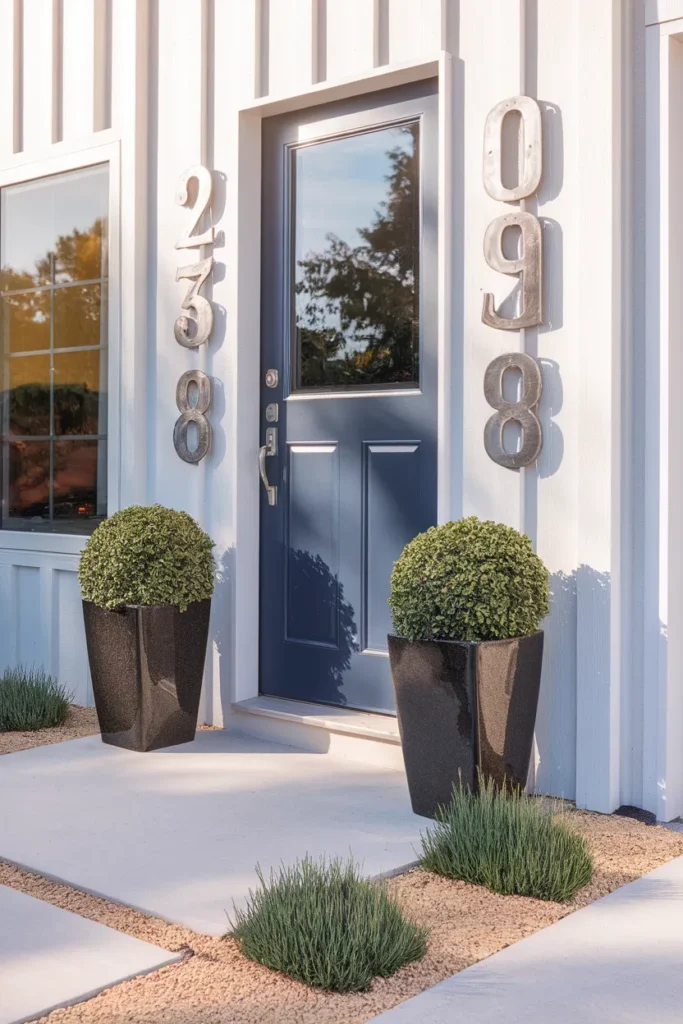
House numbers. Swapping builder-grade stick-on numbers for large modern metal numerals costs under $40 and changes the whole facade. Mount them where headlights hit them.
A mailbox that matches. The single most-photographed object in your front yard, and usually the most neglected. A post wrapped in the same stone as your bed edging ties everything together.
Two containers, not seven. Flanking the door with a matched pair of large planters reads intentional. Scattering seven small pots reads like a plant sale. Big containers also dry out slower, which cuts watering. Bloem and similar resin planters run under $25 in the large sizes, and unlike terracotta they will not crack apart on you during the first hard freeze.
A defined bed line. Already covered, worth repeating. The difference between a yard that looks maintained and one that looks abandoned is almost always the crispness of the line where bed meets everything else.
Drip irrigation on a timer. If you install nothing else mechanical, install this. A basic kit runs around $40 to $70, takes an afternoon, and it removes watering from your list permanently. It also waters at the root instead of the sidewalk.
Honestly, the containers-and-numbers combination is the cheapest before-and-after on this entire page. An afternoon, under $100, and the house looks different from the street.
Your Season-by-Season Rhythm
Here is what the whole year actually costs you once the yard is built. Total across twelve months: roughly four hours. That is the payoff.
Spring (March to May). Apply pre-emergent in early spring before soil warms. Cut ornamental grasses back to six inches if you did not in February. Top off mulch to bring it back to two or three inches. Check drip lines for winter damage. Call it three hours total for the season, front-loaded into one Saturday.
Summer (June to August). Almost nothing. Water new plantings through their first year. Pull the occasional weed the pre-emergent missed. Rake gravel back into place after heavy storms. Ten to fifteen minutes a month.
Fall (September to November). This is the single best planting window of the year, because roots get to establish themselves in cool moist soil at a point when the plant is not also fighting to hold onto its leaves. Plant shrubs and perennials now and they need dramatically less water than a spring planting. Put spring bulbs in. Second pre-emergent application. Leave the grasses and seed heads standing. Two hours.
Winter (December to February). Nothing. Look at it. Late February, cut the grasses down. Thirty minutes.
That is the year. Compare it to a mowing schedule.
Frequently Asked Questions
What is the lowest maintenance front yard landscaping?
A gravel or decomposed granite field with a small number of drought-tolerant evergreen shrubs and ornamental grasses, edged in steel, with pre-emergent applied twice a year. Realistically that lands near five minutes a month. Pure hardscape with no plants at all is lower still, but it looks institutional and it raises the temperature around your house.
What can I put in my front yard instead of grass?
Gravel or decomposed granite, ground covers like creeping thyme, sedum, or ajuga, mulched planting beds, native perennial meadow strips, flagstone or paver areas, or a mix. Most successful no-grass front yards use two or three of these rather than committing entirely to one.
How much does low maintenance front yard landscaping cost?
Enormously variable, so plan by square foot rather than by total. Doing it yourself, budget roughly $3 to $8 per square foot for gravel, edging, and modest plants. Hiring it out typically runs several times that. A realistic small front yard done over two weekends by the homeowner often lands somewhere in the $400 to $1,200 range depending on how much stone you need. Confirm current pricing with your local supplier, since stone and mulch costs move with fuel prices.
How do I keep weeds out of a rock front yard?
Skip the landscape fabric. Apply a pre-emergent such as Preen in early spring and again in early fall. Keep your stone at least two inches deep so seeds cannot reach soil, and pull anything that does appear while it is small. Weeds in gravel almost always come from seed blown in on top, not from below, which is exactly why fabric underneath does so little.
What are the easiest plants to keep alive in a front yard?
Daylilies, sedum, catmint, yarrow, coneflower, black-eyed Susan, ornamental grasses like little bluestem and fountain grass, and dwarf conifers. All of them tolerate poor soil, handle drought once established, and recover from being ignored.
Is gravel or mulch better for a low maintenance front yard?
Gravel lasts longer and never needs replacing, so it wins on labor. Mulch improves soil as it breaks down and looks softer, but it needs topping off every year or two. A common approach uses gravel in high-traffic and hot areas and mulch in planting beds where soil health matters.
How do I make my front yard look good in winter?
Build in evergreen structure, at least a third of your permanent plantings. Leave ornamental grasses and seed heads standing until late February. Add a shrub with winter interest such as red twig dogwood or winterberry holly. Lean on hardscape, since stone and edging look the same in every season.
Start With One Bed
You do not have to do all of this. Pick the single element eating the most of your time, which for almost everyone reading this is going to be the lawn, and cut that one thing in half sometime this fall.
Sheet mulch it in October. Plant in the spring. Then measure what the yard actually asks of you next summer against that 20-minute budget and decide what comes next.
The yards that stay beautiful are the ones that stopped needing a hero. Build for the version of you who is tired, busy, and out of town half of August, and it will still look good when you get back.
If the front is sorted and the back is the next problem, our guide to a low maintenance backyard picks up where this one leaves off.
Save this one for your next yard weekend.