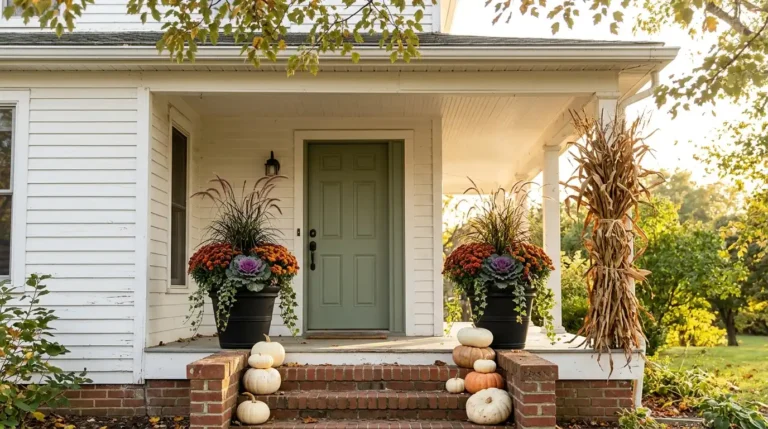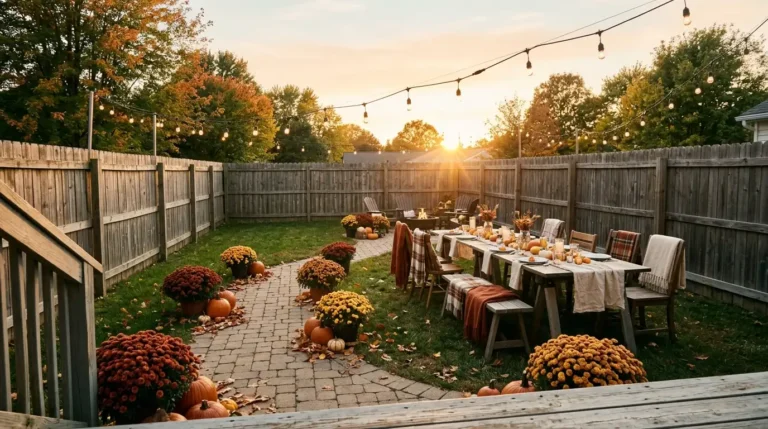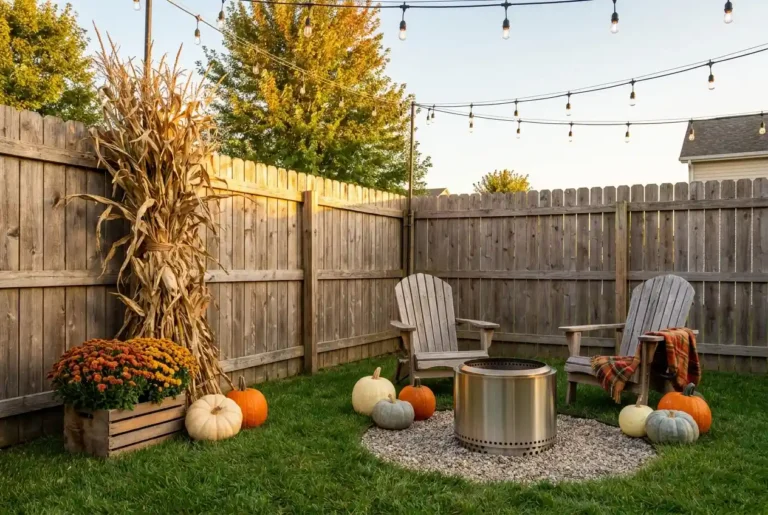
21 Fall Shade Decor Ideas That Add Instant Charm

Shade changes the fall decorating rules. The mums that glow on a sunny stoop sulk under a maple, real pumpkins go soft on damp ground, and the solar stakes you bought in July barely flicker. These 21 fall shade decor ideas are built for the porch, patio, or side yard that only sees a few hours of sun.
We sorted them the way a shady space actually works. First come plants that hold color without bright light, like caramel heuchera and gold Japanese forest grass. Next is decor that bounces light around: cream pumpkins, copper, pale rugs. Last is lighting that never waits on the sun.
Before you buy anything, run the Three-Check Shade Map below. It takes three quick looks at your space on one fall day, and it tells you whether you’re working with full shade, part shade, or dappled light. That one answer decides which plants on this list will thrive for you and which will sulk.
Most ideas here cost under $30. A few are plantings that keep paying off next fall.
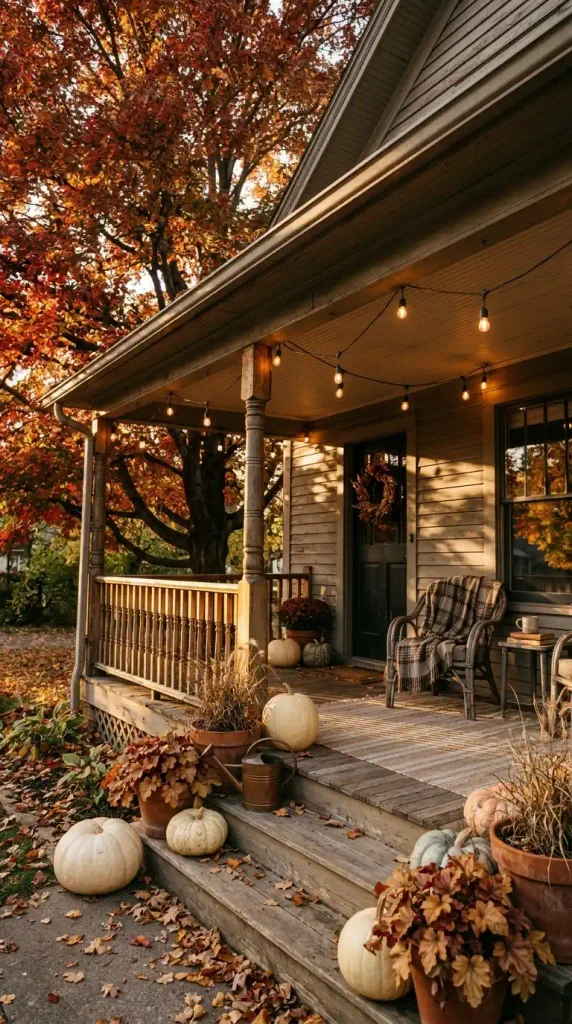
The Three-Check Shade Map
Fall sun sits lower in the sky than summer sun, so shadows stretch longer and your porch is probably shadier now than it was in July. Check your spot three times on one clear day: around 9 a.m., noon, and 3 p.m. Count how many of those checks find direct sun on the spot. It’s a quick read, not a light meter, but it’s enough to match plants and decor to the space you really have. Several ideas below point back to this map.
| Sun checks | Your shade type | Plants that keep fall color | Decor that reads best |
|---|---|---|---|
| 0 of 3 | Full shade, under 2 hours of sun | Autumn fern, Japanese painted fern, toad lily | Cream pumpkins, LED lanterns, pale rug |
| 1 of 3 | Part shade, about 2 to 4 hours | Heuchera, Japanese forest grass, pansies | Copper and brass, café lights |
| 2 of 3 | Bright part shade, about 4 to 6 hours | Ornamental kale, oakleaf hydrangea, coleus | Most classic fall decor works here |
| Flickering light all day | Dappled shade under trees | Heuchera, ferns, toad lily | Lanterns hung in branches, metal accents |
1. Swap Mums for Caramel and Burgundy Heuchera
Mums are sun plants. Garden-center mums are grown to bloom in bright light, so a pot parked on a shaded stoop often keeps its buds shut until frost. We’ve watched it happen on our own north-facing steps, and it’s the most common fall shade mistake we see.
Heuchera, also called coral bells, works the other way around. The leaves carry the color, so nothing has to open. Look for ‘Caramel’ for peachy amber or ‘Palace Purple’ for deep burgundy. A 1-gallon pot runs around $15 to $20 at Home Depot or Lowe’s.
After the season, plant it in the ground and it comes back in Zones 4 to 9. NC State Extension’s coral bells plant profile covers light and soil needs by variety.
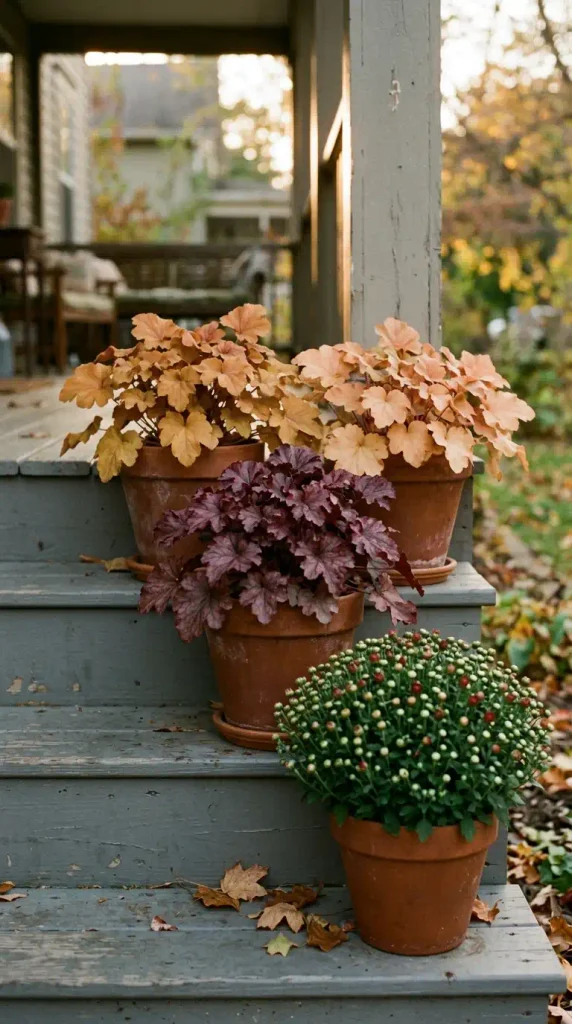
Pick heuchera with amber, peach, or burgundy leaves.
Group three pots of one color so it reads from the street.
Mums in tight bud on a porch with zero or one sun check.
Soggy pots. Heuchera has shallow roots that rot in wet soil.
2. Cream and White Pumpkins That Bounce Light Into Dim Corners
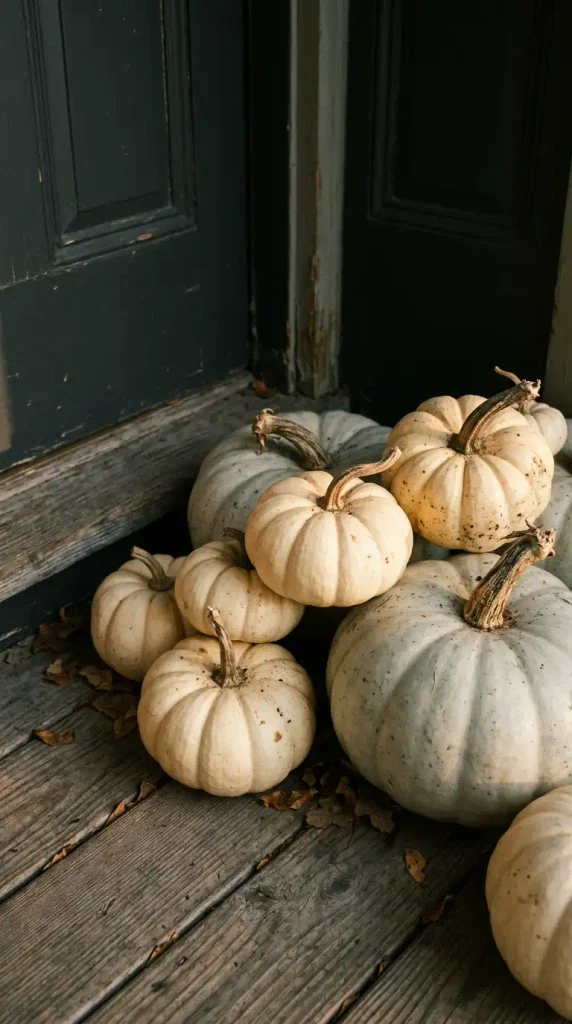
Orange pumpkins nearly vanish in deep shade. Dark colors soak up what little light there is, so a classic orange stack reads as a brown lump by late afternoon.
Pale pumpkins fix it. Varieties like ‘Casper’ and ‘Lumina’ have creamy white skins that catch indirect light and seem to glow at dusk. Real ones usually cost $5 to $10 each at grocery stores and farm stands. Foam versions from Dollar Tree cost a couple of dollars and can’t rot.
Put the biggest one where the shadow is deepest, not where the light already falls.
3. Japanese Forest Grass in a Tall Planter for a Gold Glow
Hakonechloa ‘All Gold’ looks like a small pool of sunlight spilling over a pot rim. The leaves stay bright chartreuse in part shade, then pick up warmer, coppery tints as nights cool. It’s hardy in Zones 5 to 9, and a 1-gallon plant usually runs around $20 to $30.
Pot it up in three steps:
Choose a 14 to 16 inch planter, like a Bloem Ariana self-watering pot (around $25 to $40), so the grass can arch over the edge.
Fill with Miracle-Gro Potting Mix and set the crown at the same depth it sat in the nursery pot.
Water until it drains, then let the top inch dry before you water again.
Move it into the ground before a hard freeze and you’ll have it for years.
4. Toad Lilies for Real Fall Flowers in the Shade
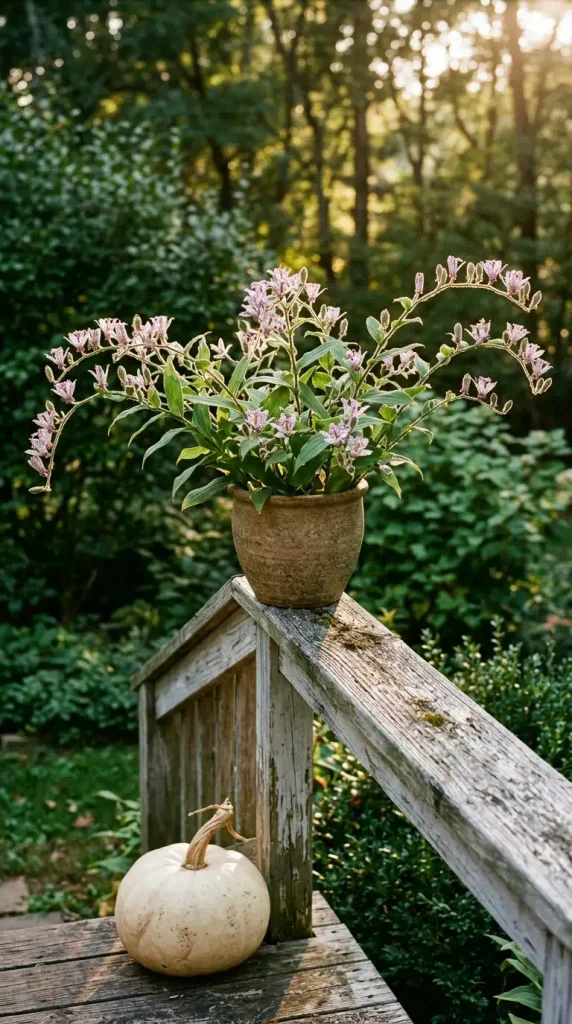
Toad lilies bloom when nearly everything else under the trees has quit. Small orchid-like flowers, speckled purple on white, open along arching stems in late summer and keep coming into October. They like moist, rich soil in part to full shade and are hardy in Zones 4 to 9.
Set a pot at eye height on a plant stand or porch rail. The flowers are small, and the speckles only show up close. A cream pumpkin underneath gives the stems something bright to stand against.
5. An Ornamental Kale Window Box on the Brightest Edge
Ornamental kale needs some sun to color up, so give it the brightest spot your shade map found. It handles part shade, and the purple and cream centers get richer once nights settle into the 40s and 50s.
If your porch gets more sun than shade, our fall planter decor ideas for sunny porches lean into mums and fountain grass instead.
Fill a 30-inch window box
Skip it on a porch with zero sun checks. The leaves stay plain green there.
6. An Autumn Fern and Pumpkin Stack Up the Porch Steps
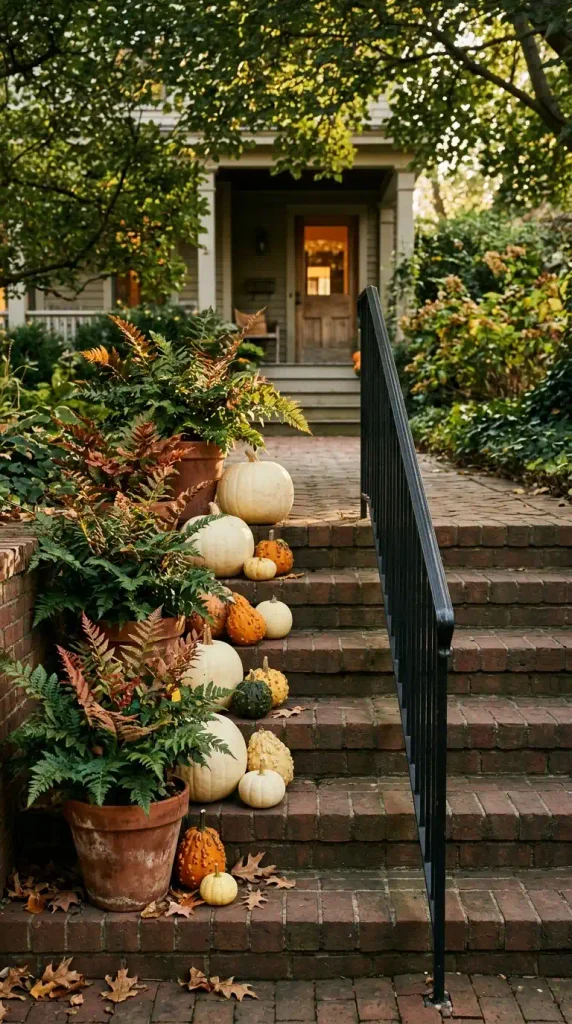
Steps are the spot every guest walks past, and in a shady entry they’re often the darkest part of the house. Autumn fern earns its name here. New fronds come in coppery red, then age to glossy green, and the plant is semi-evergreen in Zones 5 to 9.
The copper new growth repeats your pumpkin colors, so the whole stack looks planned even in low light.
Stagger it: a fern on every other step, with one cream pumpkin and one small warty gourd on the steps between. Keep the hand-rail side clear for walking.
7. Battery LED Lanterns on a Six-Hour Timer
Shady porches go dark early in fall, often before anyone’s home from work. Battery lanterns with built-in timers fix that without anybody remembering a switch. Set the timer once, and they glow for six hours every evening.
Target’s Hearth & Hand and Threshold lines usually carry them in the $20 to $40 range. Flameless pillar candles with timers cost even less and fit inside lanterns you already own.
Real flame near dry leaves, straw bales, and a coir doormat is a risky mix. If you still want candles, read this candle safety guidance from the state fire marshal before you light one.
⚠️ Watch Out
Check your city’s burn rules before you light anything, keep the clearance from structures and branches that your product’s manual and local code call for, and never leave a flame unattended.
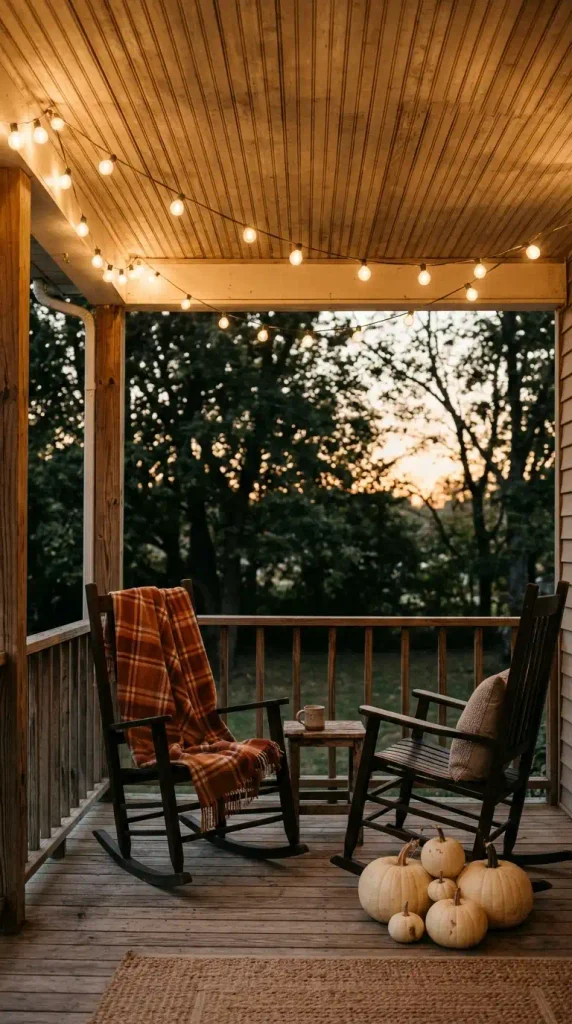
8. Warm White Café String Lights Under a Covered Porch
Café lights do a job the sun can’t on a covered porch. They light the ceiling, and the ceiling bounces that glow back down onto everything else. Pick bulbs rated around 2200K to 2700K for a warm, candle-like color. Higher numbers look cold and bluish next to fall colors.
Feit Electric’s 48-foot outdoor strands are a common pick and usually land in the $40 to $70 range at Costco or Home Depot. Use outdoor-rated, UL-listed lights and cords on a GFCI outlet. Anything beyond plugging into an existing outlet is a job for a licensed electrician.
| Shatterproof plastic bulbs | Glass filament-look bulbs |
|---|---|
| Survive a drop or a windy night | Can crack if a strand swings into a post |
| Soft, even glow | Sparkly filament you can see up close |
| Best for kids, pets, open porches | Best for sheltered, covered porches |
9. Copper, Brass, and Galvanized Metal That Catches Low Light
Shiny metal works like a small mirror. In a shady spot, a copper watering can or a galvanized tub picks up whatever light leaks through the trees and throws it back out.
Check thrift stores first. Old copper pots and brass candlesticks often cost a few dollars, and tarnish reads as warm, not dirty, from a few feet away. Fill a galvanized tub with gourds, or slip one heuchera into a copper bucket as a cachepot.
10. A Moss and Pinecone Wreath for the Shady Gate
Shade and moss belong together, so lean into it. A moss wreath looks right on a fence gate or shed door, where a bright harvest wreath can feel out of place.
Start with a 14-inch grapevine wreath form, around $5 to $10 at Walmart.
Hot-glue preserved sheet moss in patches, leaving some vine showing.
Wire five to seven pinecones in a loose crescent along the bottom third.
Hang it on an over-the-gate hook so nothing gets screwed into the wood.
Use preserved moss, not live moss. It holds its green all season with no watering.
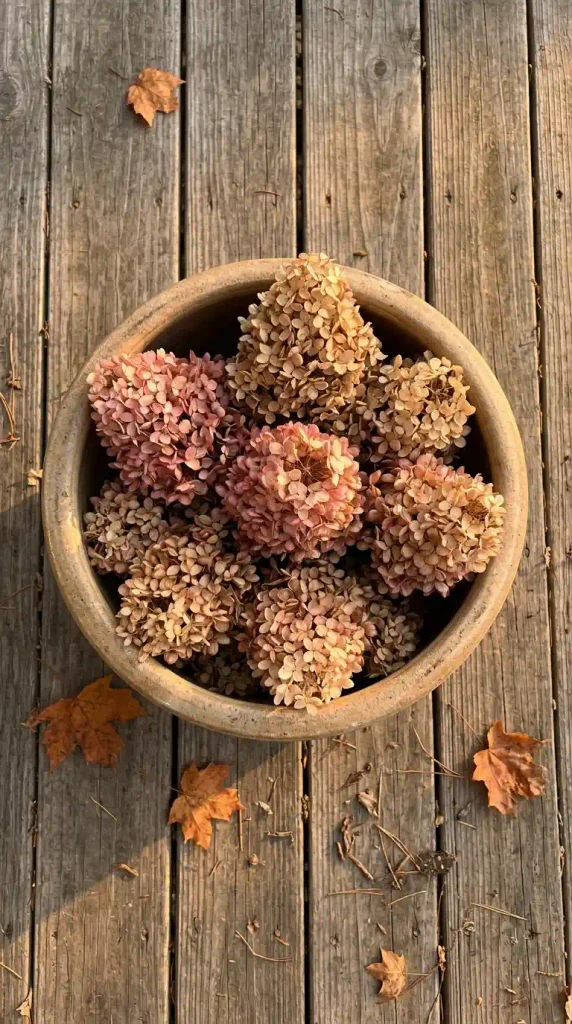
11. Dried Panicle Hydrangea Stems in a Stoneware Crock
Cut them before the first hard freeze. Panicle hydrangea flowers fade on the shrub to dusty pink, rose, and tan in fall, and they dry well right where they hang.
Clip stems 18 to 24 inches long, strip the leaves, and stand them in an empty stoneware crock. No water needed. The shrub doesn’t have to live in the shade, either. Cut stems on the sunny side of the yard and carry that color to your darkest corner.
html
12. A Throw Basket on the Shaded Bench
Shade feels colder than the forecast says. In fall, that chill is the whole reason people skip sitting outside, and a lidded basket of blankets beside a shady bench quietly fixes it.
- ▸Choose washable fleece or acrylic throws. Cotton holds damp air.
- ▸Bring the basket inside overnight so the blankets stay dry.
- ▸Add one outdoor pillow in rust or mustard for a spot of color.
A weatherproof bench like a Polywood model holds up to damp shade without rotting. Add a heat source and the spot works well past sunset; our fire pit with a deck ideas cover that next step.
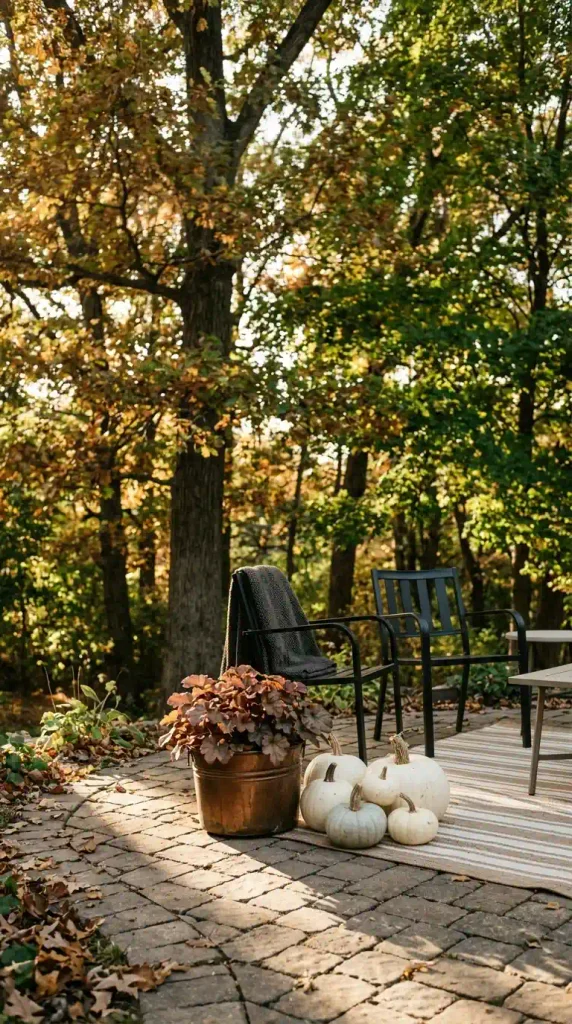
13. A Light-Colored Outdoor Rug That Brightens a Dim Patio
Dark pavers plus a dark rug turn a shady patio into a cave. A rug in cream, sand, or a pale stripe starts reflecting light upward right away.
Polypropylene outdoor rugs dry fast and resist mildew, which matters in damp shade. A 5×7 from Walmart or Target typically lands in the $30 to $80 range.
A brown rug on gray pavers. The chairs, pots, and pumpkins blend into one shadow.
A sand and cream striped rug. Every piece on top of it suddenly has an outline.
Hose it off once a month. Pale rugs show pollen and leaf stains faster.
14. Pansies and Violas Tucked Around Pumpkin Bases
Pumpkins look better when they sit in something, not on bare concrete. Cool-season pansies and violas fill that gap. They handle part shade, shrug off light frost, and in Zones 7 to 9 they often keep blooming through winter.
Recreate this look
The violas usually outlast the pumpkin. Swap in evergreen boughs when November ends.
15. A Lantern Cluster Hung From a Low Tree Branch
Got a tree that makes the yard shady in the first place? Put it to work. Hang three LED lanterns at different heights from one sturdy low branch, and the tree becomes your light fixture.
Use S-hooks or short lengths of jute rope so heights are easy to adjust. When branches sit too high, a pair of shepherd’s hooks does the same job at ground level.
Use battery LED lanterns only.
Keep the lowest lantern above head height over any path.
Real candles anywhere near dry leaves.
Thin or dead branches that could snap in wind.
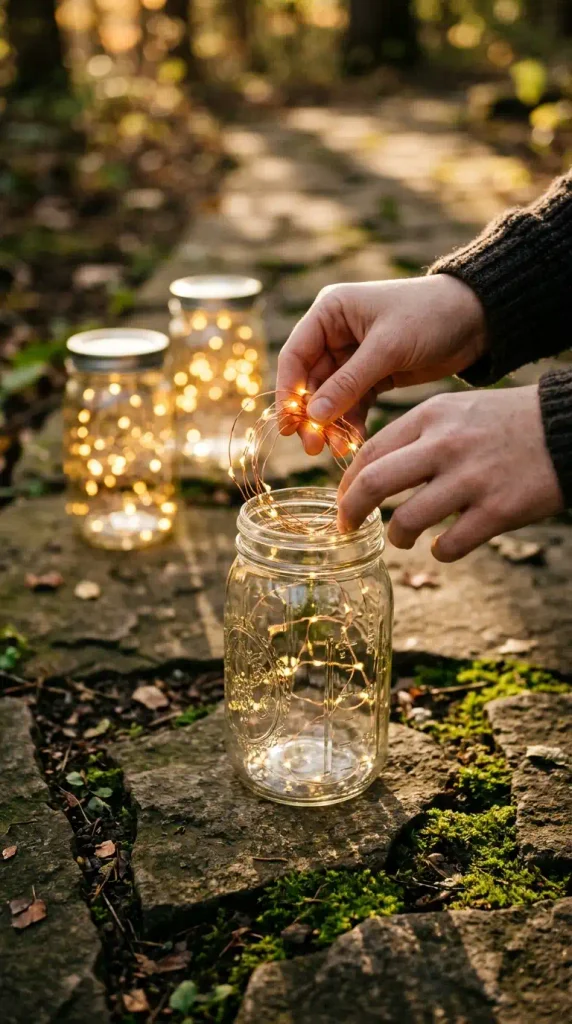
16. Skip the Solar Stakes, Use Fairy Lights in Mason Jars
Our first fall in a shady yard, we lined the path with solar stakes. By 7 p.m. they were barely glowing. Solar panels need direct sun to charge, and under a tree canopy in October they get very little.
Battery fairy lights in quart mason jars solve it. Drop a 10-foot strand into each jar, switch on the built-in timer, and line them along the path or steps. Timer strands cost a few dollars each at Walmart or on Amazon, and a set of AA batteries goes a long way on a six-hour cycle.
📌 Good To Know
Solar can still work in a shady yard if the panel sits in sun. Look for lights with a separate panel on a long cable, and mount the panel where your shade map found light.
17. Coleus as a Bargain Bridge Until Frost
Cheap color has a place in fall shade, as long as you know its expiration date. Coleus thrives in shade, and its rust, burgundy, and lime leaves match fall decor almost exactly. End-of-season sales often mark pots down to a couple of dollars.
A few marked-down coleus pots give you weeks of rich fall color for less than one mum costs.
The catch: coleus sulks once nights drop below 50°F and dies at the first frost. In Zones 8 and 9, that’s often late November. In Zone 5, it can be early October. Check your county extension office for your typical first frost date, enjoy the weeks you get, then compost it.
18. Raise Real Pumpkins Off Damp Ground
Shade keeps the ground damp, and damp ground rots pumpkins from the bottom up. We learned that when a pumpkin sitting straight on wet mulch went soft underneath in about two weeks, while its twin on the dry steps lasted until Thanksgiving.
Wipe each pumpkin clean and let it dry fully before it goes out.
Set it on a wood slice, a brick, or an upside-down terracotta saucer.
Never carry it by the stem. A broken stem lets rot in fast.
Tip it once a week and check the bottom for soft spots.
Foam pumpkins skip all of this, which is why we keep a few for the darkest corner.
19. Plant an Oakleaf Hydrangea Now for Color That Decorates Itself
Fall is planting season too. Roots keep growing in cool soil after the top goes dormant, so a shrub planted in October gets a head start on spring.
Oakleaf hydrangea is our pick for shade. It’s native to the Southeast, grows in part shade in Zones 5 to 9, and its big lobed leaves turn wine red and burgundy every fall. A 3-gallon shrub usually costs around $35 to $60 at Lowe’s or a local nursery. Next year, the yard does the decorating for you.
Plant it at least six weeks before your ground usually freezes.
20. A Woodland Vignette at the Base of a Tree
The base of a big shade tree is usually bare dirt and roots, because grass gives up there. Instead of fighting it, style it like a woodland floor.
Build the vignette
For trunk wraps and hedge garlands that pair with it, see our guide to styling fall tree and hedge decor.
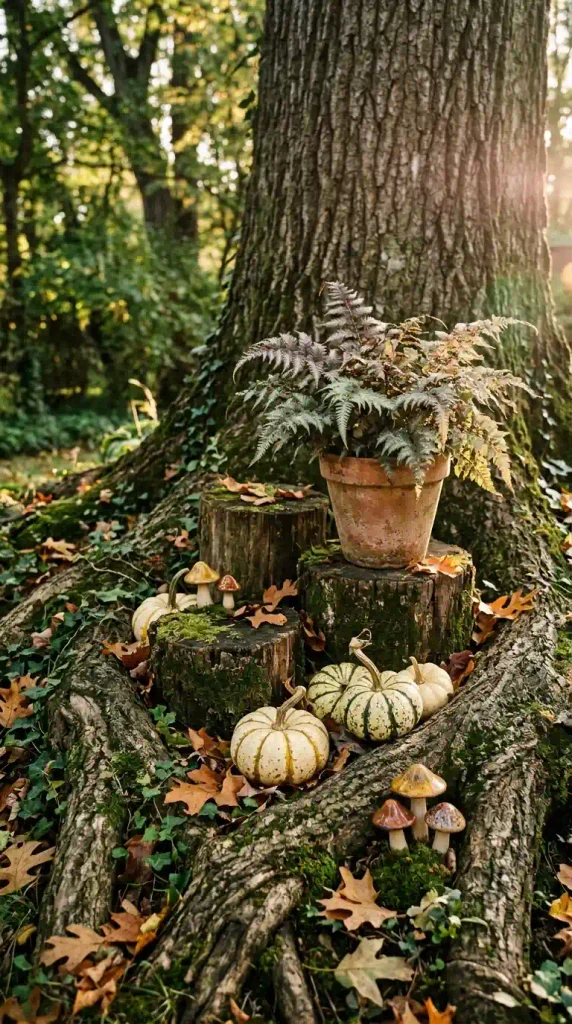
Don’t pile soil or mulch against the trunk. Set pots on top of the roots rather than digging in.
21. A Cream, Sage, and Copper Palette That Reads in Low Light
Saturated orange and deep red lose their punch in shade. There isn’t enough light to show them off. A palette built on cream, soft sage, and copper works the other way: cream reflects, sage blends with shade plants, and copper adds warmth without going dark.
Borrow the 60-30-10 split designers use indoors. Make most of it cream (pumpkins, rug, throws), some of it sage (ferns, kale, heuchera), and just a little copper (metal, rust pillows, autumn fern).
Keep one orange pumpkin for the front step. Against all that cream, it finally pops.
FAQ
What fall plants grow well in shade?
Heuchera, autumn fern, Japanese painted fern, toad lily, and Japanese forest grass all hold color with little direct sun. Heuchera brings caramel and burgundy leaves, autumn fern adds copper fronds, and toad lilies flower into October. For part shade with a few hours of sun, ornamental kale and pansies work well too. Match each plant to your spot by checking how many hours of direct sun it gets.
Can mums grow in shade?
Mums need full sun, about six hours a day, to open their buds and bloom well. In shade, a mum bought in tight bud often stays closed and fades early. If you love them, treat a shady mum as short-term decor and buy one already in full bloom. For color that lasts the whole season, heuchera is the better pick for a shaded porch.
How do I decorate a shady porch for fall?
Lean on things that reflect or make light. Use cream and white pumpkins instead of deep orange, a pale outdoor rug, and copper or galvanized metal accents. Add warm white string lights or battery lanterns on timers, since shady porches get dark early. Then fill pots with shade plants like heuchera and ferns rather than sun-loving mums.
Do solar lights work in shade?
Not well. Solar panels need direct sun to charge, so under trees or on a covered porch they often barely glow by evening. Battery lights with built-in timers are more reliable in shade. If you prefer solar, choose a model with a separate panel on a long cable and mount that panel where it gets several hours of direct sun.
How do I keep pumpkins from rotting outside?
Keep them dry and off damp ground. Wipe each pumpkin clean, let it dry, and set it on a brick, wood slice, or upturned saucer instead of wet mulch or soil. Never carry it by the stem, because a broken stem invites rot. Check the bottom weekly, and use foam pumpkins in the dampest, darkest corners.
What colors look best in a shady yard?
Light colors work hardest in shade because they reflect what little light there is. Cream, white, soft sage, and pale stone read clearly, while deep orange and dark red tend to blend into the shadows. Copper and brass add warmth without going dark. A good split is mostly cream, some sage, and a small amount of copper.
Bringing It Together
Shade isn’t a problem to decorate around. It just runs on different rules: plants that color up without bright sun, decor that bounces light, and lighting that never waits on the weather. Start with the Three-Check Shade Map, pick two or three of these fall shade decor ideas, and build on what works in your space. A caramel heuchera and one cream pumpkin cost about $25 together and fix the darkest corner on most porches. Save this list to your fall porch board so it’s ready on your next garden center run, and come back next October when that oakleaf hydrangea turns red.