Garden Ideas for the Front of the House That Look Finished, Not Fussy

Most garden ideas front of house fail in exactly the same place. Not the plant list. The layout. You buy good shrubs, you spread good mulch, you stand back at the curb, and the whole thing still reads as a row of green blobs stuck against a wall. Here is the fix, with the spacing numbers, plant counts, and rough costs that turn a bare strip of dirt into something that looks like a designer drew it. Nine layouts, one counting formula, zero guessing.
Front beds are the hardest thing in the yard to get right, and honestly, that surprised me. Backyards forgive you. There is furniture and shade and a fence to hide behind. The front of a house is one flat view, seen from one angle, at 15 miles an hour from a car window. Everything either lines up or it does not.
So we are going to line it up.
Before You Plant Anything, Get These Three Numbers
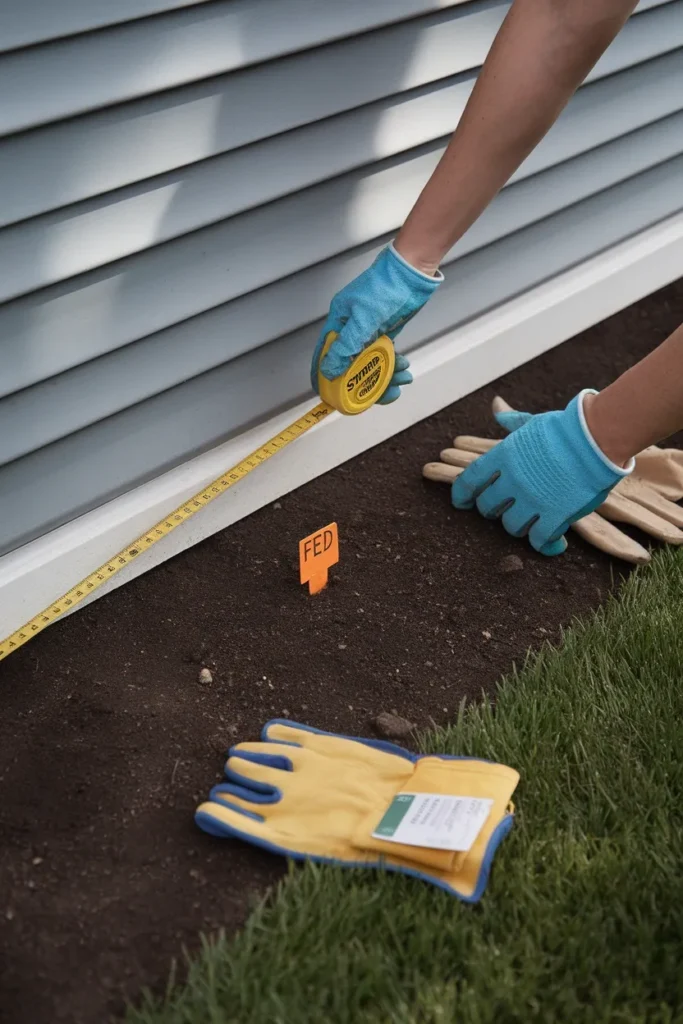
Skip this part and you will be moving shrubs in two years. I have done it. Get a tape measure.
Number one: bed depth from the wall out. Measure from your siding to where you want the mulch line to stop. Under 3 feet and nothing will ever look layered, because there is no room for layers. The sweet spot for a standard two-story facade is 5 to 7 feet deep. On a ranch or a small lot, 4 feet works.
Number two: the distance your shrubs need off the wall. This is the one nobody tells you, and it quietly ruins more front beds than bad soil ever will. According to Clemson Cooperative Extension’s foundation planting guidance, shorter shrubs want at least a 3-foot clearance between the plant and the house. Anything that matures past 6 feet tall should sit so its foliage lands at least 5 feet from the wall. Groundcovers and mulch stay 12 inches back from the foundation itself, which keeps you from building a termite bridge straight to your framing.
Read that again if you have ever planted an arborvitae 18 inches off the siding.
I have. The first fall in this house I put three of them in tight against the wall because they looked so small in their 3-gallon pots, barely knee-high. By the third summer I was pruning the back side of those things with a folding hand saw, wedged between wet branches and a hose bib, in the dark, because that was the only time it was cool enough. Moved all three that October. The holes they left took a full season to fill in.
Number three: your hardiness zone. Every plant tag is written against it. Take ten seconds and look up your USDA hardiness zone by zip code before you buy anything, because a shrub rated to Zone 7 planted in a Zone 5 front bed is a $60 annual with a fancy label. Most of the country’s front-yard sweet spot sits in Zones 5 through 9, and your last spring frost typically lands somewhere between mid-April (Zone 5) and mid-March (Zone 8). Your local extension office will have a tighter date than any national map.
One more thing to check while the tape is out: your grade. Soil should fall away from the foundation roughly 6 inches over the first 10 feet, which is the standard builders work to. If your bed slopes back toward the siding, no amount of good garden ideas front of house will save you, because you are quietly funneling rainwater into your basement. Fix the grade first with fill dirt, or terrace the bed with a single low course of block. Then plant.
Grade is boring. Grade is also the reason some beds look great for a decade and others turn into a wet, mossy trench by year four.
The 5-3-1 Front Bed Formula
Here is the framework this whole article runs on. Every competitor tells you to layer. None of them tells you how many to buy. So we count.
The 5-3-1 Front Bed Formula: for every 10 linear feet of bed, buy 5 of one low front-edge plant, 3 of one mid-height flowering shrub or perennial, and 1 anchor. The 5 repeat, the 3 repeat, the 1 does not. That is the entire rule.
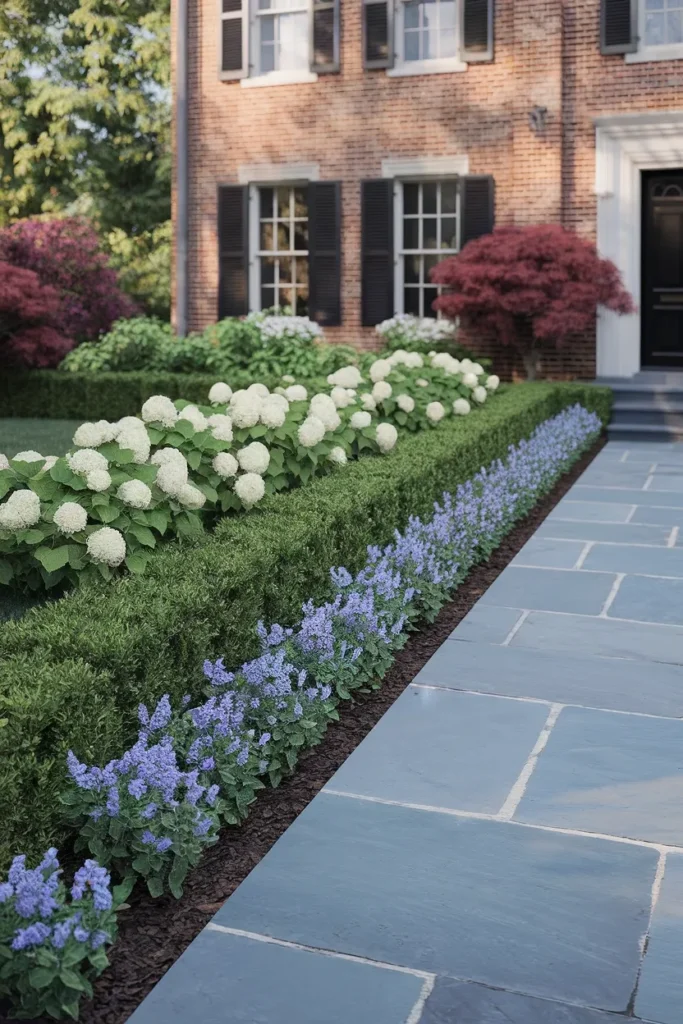
Why it works: repetition at the front edge creates a continuous line your eye can follow across the whole facade, which is what “designed” actually looks like. The 3 give you seasonal color without turning the bed into a plant collection. The single anchor (a taller evergreen, a small ornamental tree, a boulder) breaks the symmetry so the bed does not read like a hotel entrance.
And here is my one contrarian opinion, take it or leave it. The old advice to plant in threes is why so many front beds look scattered. Three of everything means nothing repeats enough to register from the street. Drifts of 5 or 7 of a single plant look far more expensive than a mixed bed of nine different things, and they cost less, because you are buying quart-size perennials in flats instead of one-off gallons.
| Bed length | Front edge (buy 5 per 10 ft) | Mid layer (buy 3 per 10 ft) | Anchor (buy 1 total) |
|---|---|---|---|
| 10 ft | 5 catmint or liriope | 3 dwarf hydrangea | 1 upright holly |
| 20 ft | 10 catmint or liriope | 6 dwarf hydrangea | 1 Japanese maple |
| 30 ft | 15 catmint or liriope | 9 dwarf hydrangea | 1 multi-stem serviceberry |
| 40 ft | 20 catmint or liriope | 12 dwarf hydrangea | 1 anchor plus 1 boulder |
Screenshot that. Take it to Lowe’s. It is the whole shopping list.
9 Garden Ideas for the Front of the House You Can Copy This Weekend
Each of these runs on the 5-3-1 formula. Only the plant swaps change.
1. The Classic Layered Foundation Bed
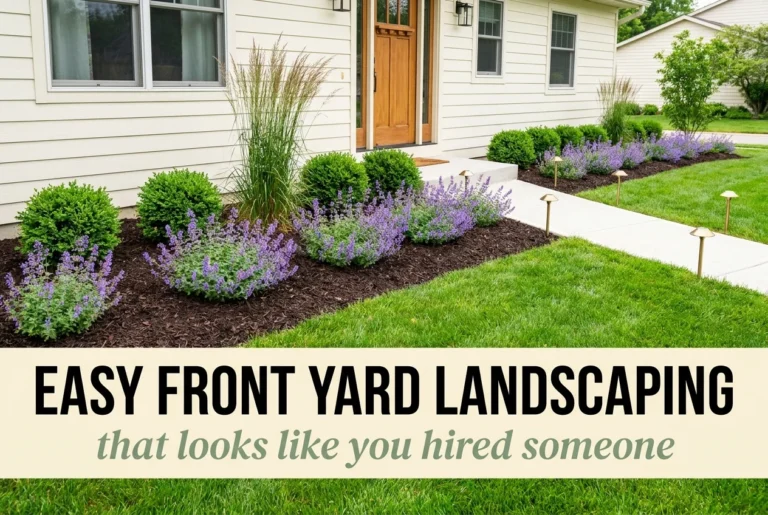
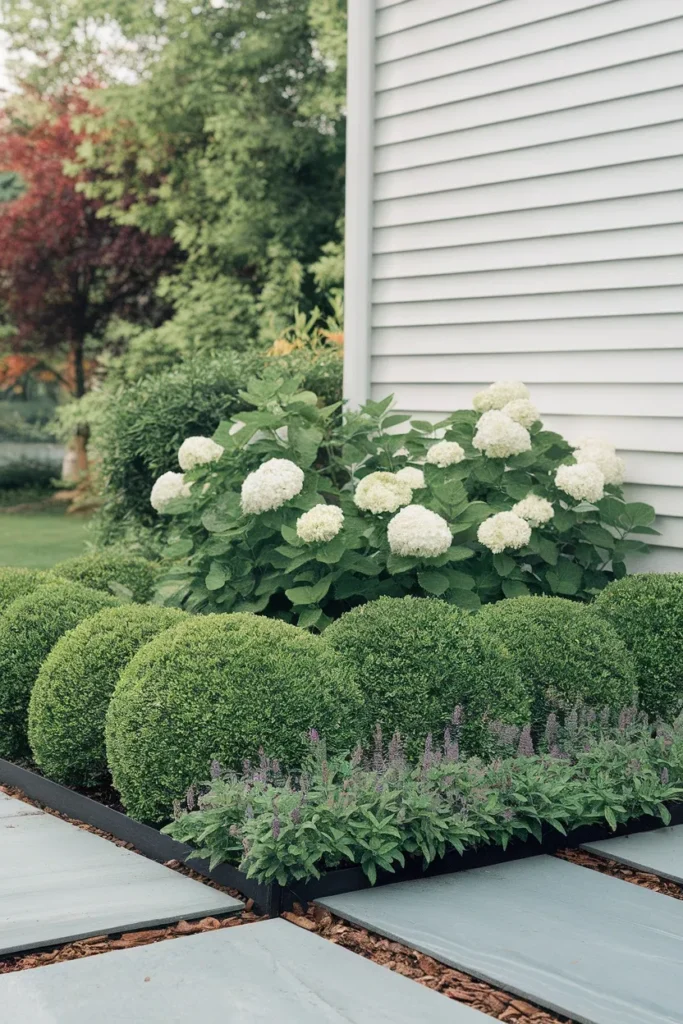
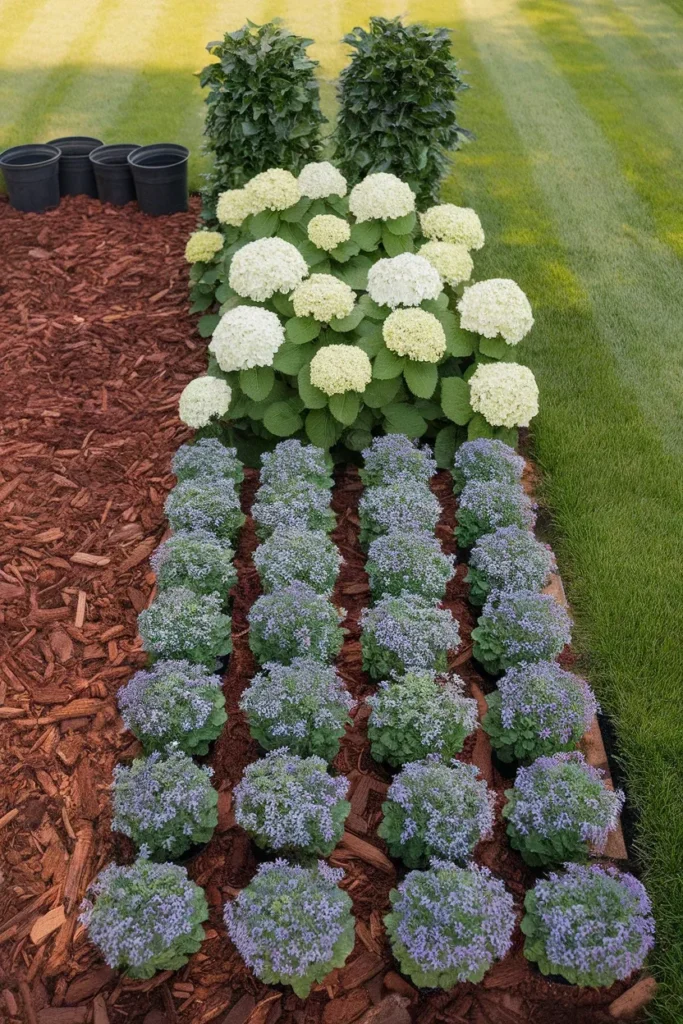
The one that never looks dated. Evergreen structure at the back, flowering shrub in the middle, a spilling perennial at the front edge. Boxwood, dwarf hydrangea, catmint. Done. Budget around $220 for a 20-foot run using 3-gallon shrubs from Home Depot and quart perennials.
The trick is holding your back row to one species. Five identical boxwood beats one boxwood, one holly, one euonymus and one thing you forgot the name of.
2. The Cottage Front Border
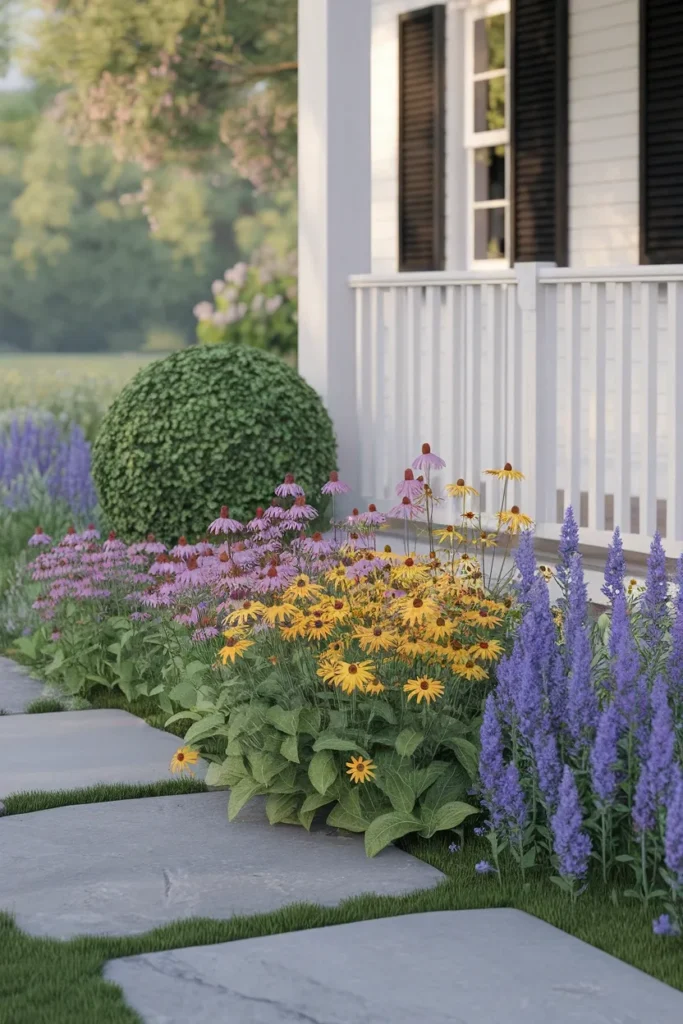
For anyone who wants the bed to look like it happened by accident. Coneflower, black-eyed Susan, salvia, and Russian sage, planted in drifts of 5 and 7, with one clipped shrub as the anchor so it does not turn feral. Bonnie Plants and Proven Winners both sell these in quart pots for a few dollars each, so a 20-foot cottage border comes in well under $150.
Cut everything back in late winter. That is the only real chore.
3. The Low Maintenance Evergreen and Gravel Bed
If you want your front garden to demand roughly nothing, this is it. Three or four repeating evergreen shapes, a base of decorative stone instead of mulch, and steel edging holding the line. No annual mulch refresh, no deadheading. We broke this style down in detail in our guide to low maintenance front yard landscaping ideas if you want the full plant list and the maintenance math.
One warning. Gravel over bare soil becomes a weed nursery within a season. Landscape fabric underneath, always.
4. The Rock and Boulder Front Garden
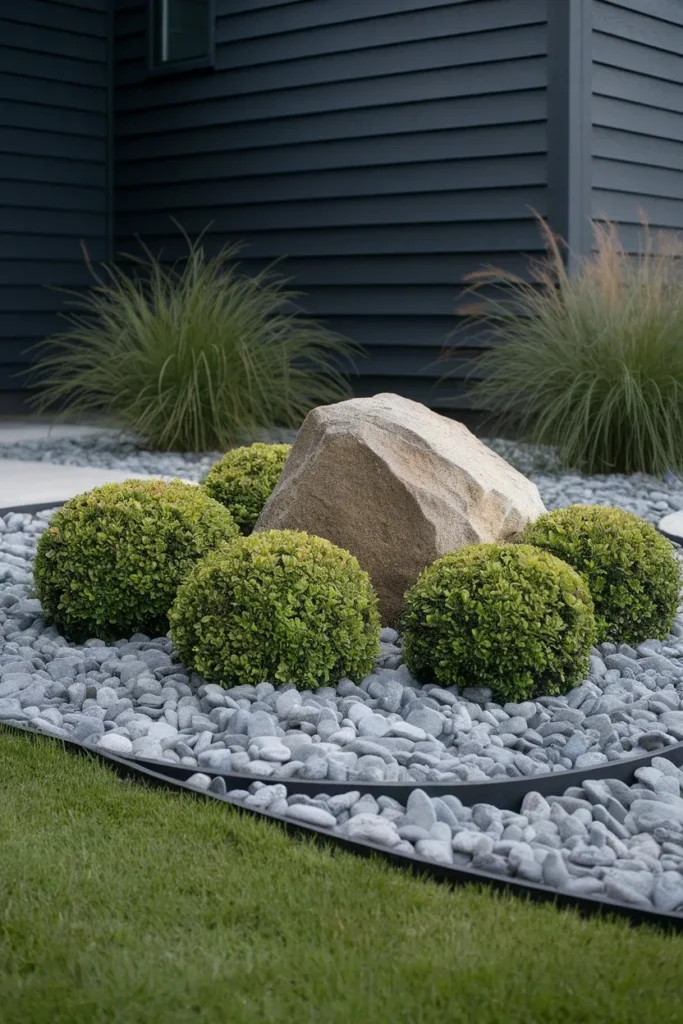
Boulders do something plants cannot. They give a young bed instant weight and permanence on day one, before anything has grown in. Set one large boulder at the anchor position, bury the bottom third so it looks like it grew there, and let plants soften the base. Our full walkthrough of front yard landscaping ideas with rocks covers stone sizing and how to keep it from looking like a parking lot.
5. The Small Lot Wraparound
On a narrow lot, a straight bed across the front makes the house look narrower. Curve the bed around the corner of the house instead and let it wrap 6 or 8 feet down the side. The eye follows the curve and reads the property as deeper than it is. There is more on this angle in our post on small front yard landscaping ideas, including the measurements for lots under 450 square feet.
6. The Walkway Runner
Instead of one bed against the house, run a narrow 2-foot planted strip along both sides of the front walk. Same 5-3-1 counting, scaled down. Liriope or dwarf mondo at the edge, dwarf boxwood behind, and a single container at the top of the walk as the anchor. This one punches way above its cost because everyone approaching the door walks straight through it.
Keep both sides identical. A walkway runner is the one spot where mirrored planting reads as deliberate rather than lazy, and it makes a plain concrete path look like it was designed alongside the house.
7. The Shade Bed Under a Big Tree
Front yards with a mature maple out front are the hardest assignment in gardening. Dry shade kills most things. Hosta, heuchera, Japanese forest grass, and ferns handle it. Skip the flowers and build the bed on foliage color instead: chartreuse next to deep burgundy reads from the street better than any bloom will in that light.
Do not build up soil over the tree roots to make planting easier. Even 3 or 4 inches of added soil over a mature root zone can slowly suffocate the tree, and replacing a 40-year-old maple is not a line item you want. Plant into the pockets between the roots, keep pots and hostas small, and let the tree win that argument.
Feed it. Espoma Holly-tone or a general organic fertilizer in early spring, because that tree is taking everything.
8. The Modern Block Planting
Three species. Massed. Nothing else. Ornamental grass, one repeating evergreen ball, one groundcover, in big rectangular blocks with hard clean edges. It looks severe on paper and expensive in real life. Works best on flat-fronted contemporary or midcentury homes.
The whole effect lives in the transitions. Where one block meets the next, the line has to be crisp, so set your blocks out with marking paint or a garden hose before a single plant goes in the ground. Feathered, blurry edges turn this look into an ordinary mixed bed with extra steps.
9. The Porch Container Setup
The renter-friendly one, and the fastest. Two matching large containers flanking the front door, one window box under the front window, and nothing planted in the ground at all. Bloem and Bloem-style resin planters run around $25 to $40 for a 20-inch size, and a bag of Miracle-Gro Potting Mix fills roughly one and a half of them.
Keep the container plantings identical on both sides. Symmetry at the door is one of the few places matching actually helps.
What Each Look Actually Costs
Prices move constantly and vary by region, so treat these as tiers rather than quotes. Every figure below assumes a 20-foot front bed, DIY labor, and a weekend.
| Tier | Roughly | What you get |
|---|---|---|
| Starter | Under $200 | Quart perennials in drifts, 8 to 10 bags of mulch, spade-cut edge, no hardscape |
| Middle | $200 to $500 | 3-gallon shrubs, steel or paver edging, bulk mulch delivery, one anchor plant |
| Finished | $500 to $1,200 | Mature 5-gallon shrubs, one specimen tree or boulder, path lighting, bulk soil amendment |
Two places the money is genuinely worth spending: soil and edging. Two places it is not: oversized annuals and decorative garden art.
Buy your mulch in bulk once you pass about 8 bags. A cubic yard covers roughly 100 square feet at 3 inches deep and usually costs less than half of what the same volume runs in bags, even after delivery. Most garden centers will dump it at the end of a driveway for a flat fee in the $60 to $90 range. Bring a tarp and a wheelbarrow, and plan on two hours of moving it.
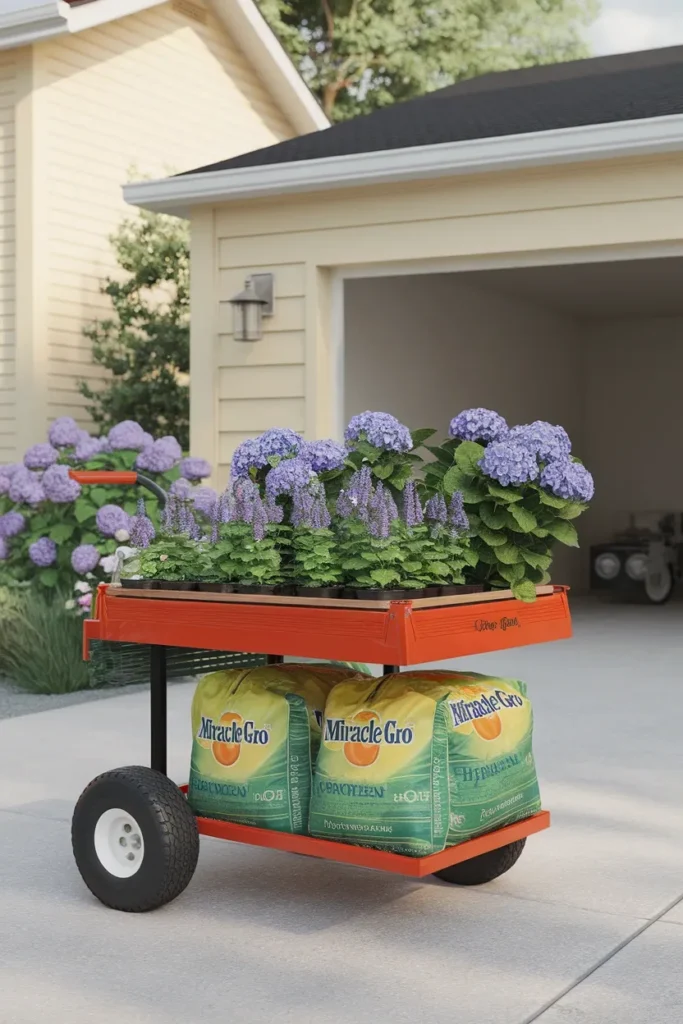
Speaking of soil. I bought eight bags of Miracle-Gro Garden Soil one April for a bed that was mostly clay, worked it in, felt very accomplished, and then watched that bed hold water like a bathtub through three weeks of spring rain. Two hydrangeas drowned. Now I cut a couple of inches of pine bark fines into heavy clay along with the bagged soil, and the drainage problem simply stopped happening. Bagged soil alone on clay makes a bowl.
The Edging and Mulch Trick That Fakes a Professional Install
This is the single highest-return thing on the list, and it is why the first list item in this section is not a plant.
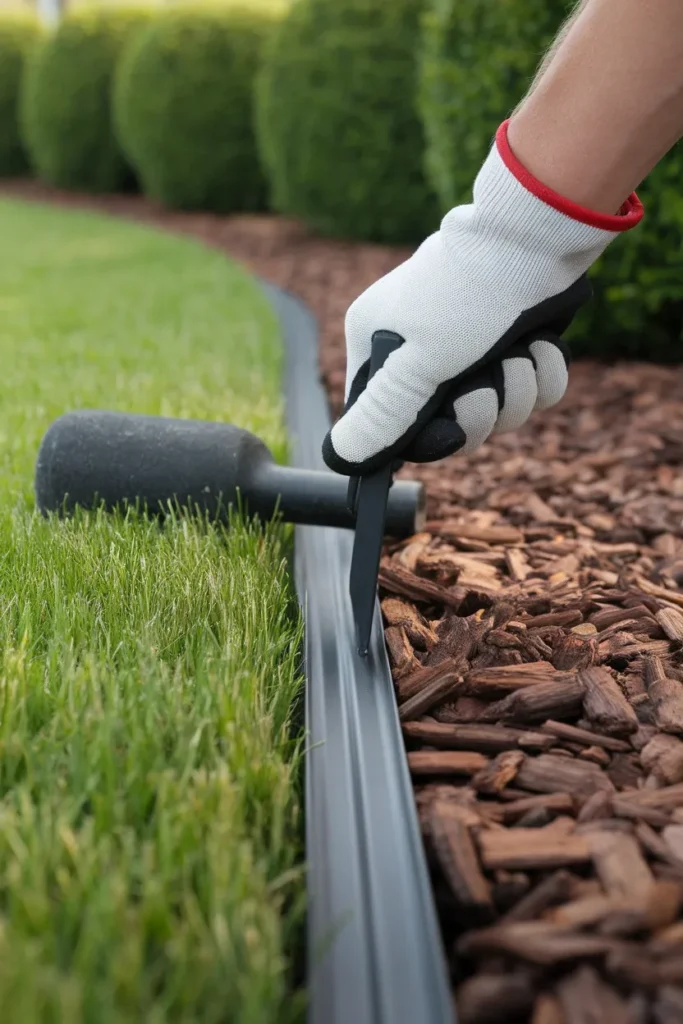
Cut a real edge. A clean, vertical, spade-cut trench between lawn and bed, about 4 inches deep with a slight V, does more for perceived quality than $300 of plants. It gives the bed a hard outline, keeps mulch off the grass, and reads as intentional from 40 feet away. A half-moon edger from Ace Hardware runs around $25 and lasts forever.
Or install steel. Powder-coated steel edging holds that line for years without re-cutting. Budget roughly $2 to $4 per linear foot at Home Depot or Lowe’s.
Then mulch 2 to 3 inches. Not 5. Deep mulch piled against stems suffocates roots and invites rot. Two to three inches is the number. Pull it back from trunks and keep it a hand’s width off the foundation, per that Clemson clearance guidance above.
Pick one mulch color and never mix. Dark brown hardwood makes green foliage pop the hardest. Dyed red fights with brick and with flowers, and it fights with itself.
Skip the plastic edging. The black coil kind heaves out of the ground with the first hard freeze and then looks like a snake escaping your yard every spring for a decade.
Walkway, Lighting, and the Front Door Details
A front garden is not just the bed. It is the whole approach.
Widen the walk. Standard builder walkways are 36 inches, which forces two people to walk single file to your front door. Forty-eight inches feels generous and costs one extra row of pavers.
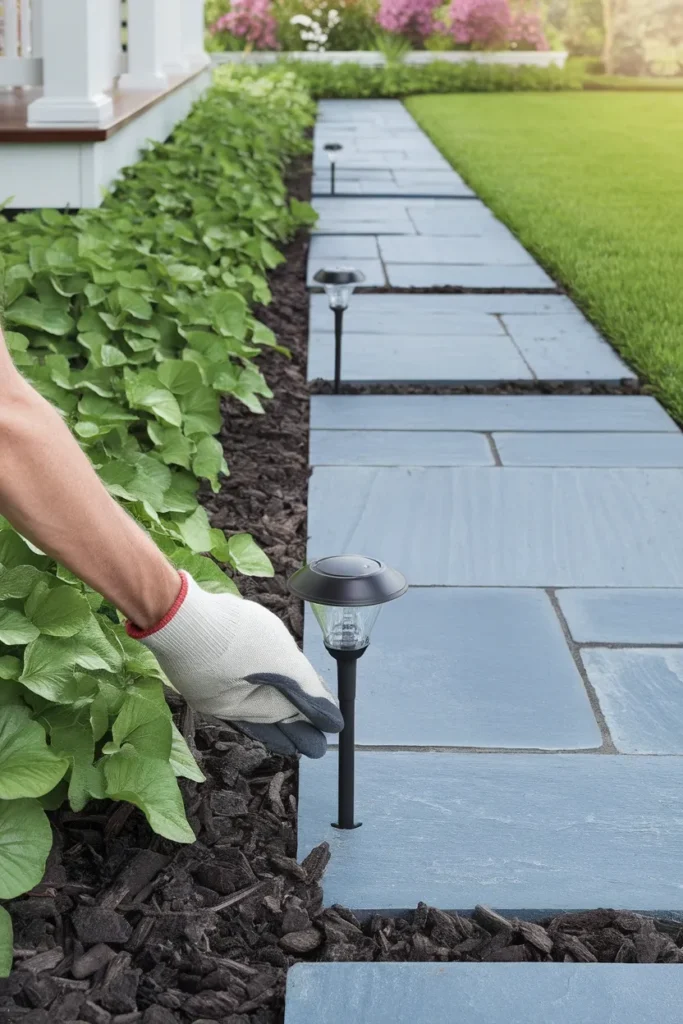
Light it low and warm. Path lights every 6 to 8 feet, staggered, never lined up like a runway. Warm white in the 2700K range. Solar path lights from Home Depot or Brightech landscape fixtures both work; solar runs around $8 to $15 per light and low-voltage wired runs closer to $25 to $40 per fixture with better output.
Uplight one thing. A single well light aimed up into your anchor tree does more after dark than eight path lights.
Replace the house numbers. Modern 6-inch brushed metal numerals cost around $10 each and change the front of a house more than most people expect.
Plant the mailbox. A curbside mailbox sitting alone in turf is the most overlooked square yard on any American property. Cut a small circular or teardrop bed around the post, roughly 3 feet across, and run the same front-edge plant you used at the house so the two beds speak to each other. Daylilies, catmint, or creeping sedum all shrug off road salt and reflected heat. Total cost is usually one flat of perennials and a bag of mulch, and it is the last thing a visitor sees before they pull into your driveway.
That repetition between mailbox and foundation bed is one of the quietest garden ideas front of house going. Nobody consciously notices it. Everybody feels it.
Front Garden Ideas That Still Look Alive in January
Roughly a third of the year, your front bed is doing its job with no flowers whatsoever. Plan for that up front or your yard looks abandoned from November to April.
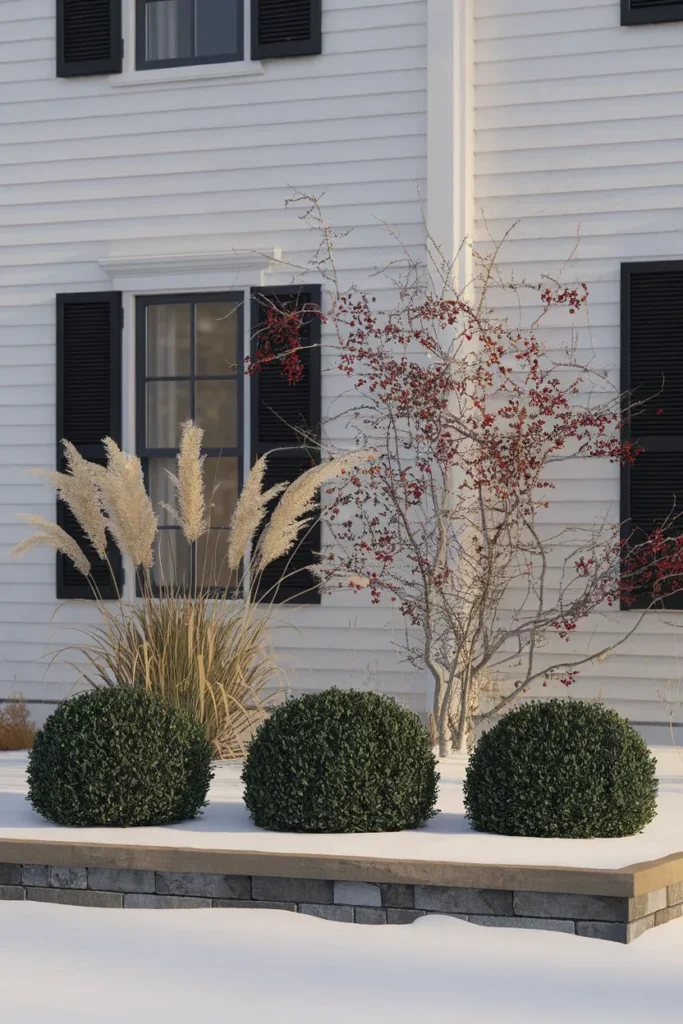
Hold 40 percent evergreen. Boxwood, dwarf holly, inkberry, or a compact conifer. If less than about 40 percent of the bed keeps its leaves, the winter view collapses to bare mulch.
Leave the grasses standing. Do not cut ornamental grasses back in fall. Tan seed heads over snow are the best thing in a Zone 5 or 6 front yard in February. Cut them in March instead.
Plant bulbs in October. This is the cheapest good decision available. One fall I grabbed about $30 of clearance daffodil bulbs at half price on a whim and shoved them along the walkway in one evening, sloppily, in whatever order I pulled them out of the bag. That April they were the best thing in the yard by a wide margin, and I have never once regretted it except for not buying triple.
Add one berry plant. Winterberry holly holds red fruit through hard freezes and gives the bed a color anchor when nothing else has any.
Mistakes That Make a Front Bed Look Unfinished
Fast list. Most front gardens are losing points on at least three of these.
- Shrubs planted tight against the wall (see the clearance numbers above)
- One of everything instead of drifts of one thing
- A bed too shallow to hold layers
- Mulch volcanoes piled up trunks
- Mixed mulch colors from different years
- No evergreen structure at all
- Annuals used as the main event instead of the accent
- A wavy, freehand bed edge with no clean line
- Solar lights spaced evenly like an airport runway
Fix the edge and the drifts first. Those two carry most of the visual weight.
Frequently Asked Questions
What should I plant in front of my house?
Work in three layers. An evergreen back layer for winter structure (boxwood, inkberry, dwarf holly), a flowering mid layer for seasonal color (dwarf hydrangea, spirea, dwarf abelia), and a low front edge that repeats (catmint, liriope, creeping sedum). Check the mature size on the tag against your bed depth before you buy, not after.
How far should shrubs be planted from the house?
Clemson Cooperative Extension advises at least 3 feet of clearance between shorter shrubs and the house wall, and enough room that anything maturing over 6 feet tall keeps its foliage at least 5 feet off the wall. Mulch and groundcover stay 12 inches back from the foundation to avoid giving termites a bridge. Those clearances also keep air moving so siding and foundation vents stay dry.
What is the best low maintenance plant for the front of a house?
Boxwood and inkberry holly are hard to beat for structure, since both keep their shape with one light trim a year. For the front edge, liriope and creeping sedum ask for almost nothing once established. Drought-tolerant catmint blooms for months and only needs a shear in midsummer.
How do I make my front garden look nice on a budget?
Spend on the edge, not the plants. A clean spade-cut border, 2 to 3 inches of one consistent dark mulch, and drifts of quart-size perennials will read as expensive for well under $200 on a 20-foot bed. Buy small and buy many. Perennials double in size by year two anyway.
What plants add the most curb appeal?
Anything that repeats. A single flowering tree at the anchor position (serviceberry, crabapple, redbud) plus one repeating front-edge plant does more than a dozen different specimens. Hydrangeas earn their reputation because the blooms are large enough to read from the street.
Should you plant flowers or shrubs in front of your house?
Both, but shrubs carry the structure and flowers are the accent. A bed that is only annual flowers looks empty for five months of the year. Roughly 60 percent shrubs and perennials, 40 percent seasonal color, is a ratio that holds up.
When is the best time to plant a front garden bed?
Fall is the best window in most of the country, because roots keep growing after the top goes dormant and the plant is established before summer heat. Early spring after your last frost is the second-best option. Last frost typically runs mid-April in Zone 5 and mid-March in Zone 8, though your county extension office will have a more accurate local date than any national map.
Start With Ten Feet
You do not need to redo the whole front of your house this weekend. Pick the 10 feet of bed that sits directly in front of your door, run the 5-3-1 formula on just that stretch, cut a real edge, and mulch it properly. That one section will make the rest of the yard look worse, which is exactly the motivation you need for the next 10 feet.
The best garden ideas front of house are almost never the most complicated ones. They are the ones with a clean line, a plant that repeats, and enough room between the shrubs and the siding that nobody has to fix it in three years.
Grab a tape measure and go look at your bed depth. If it is under 3 feet, that is your first project, and everything after it gets easier. Then tell us which of the nine you are starting with, because we are always curious which one people pick first.