European Backyard Ideas to Steal for a Dreamy Old-World Courtyard

You save a pin of some sun-washed courtyard in Provence, look up at your own yard, and feel the gap immediately. Cracked patio. A grill. The neighbor’s vinyl fence. The good news is that European backyard ideas are mostly a formula, not a budget, and you can build the bones of one this season. I rebuilt a 12 by 14 foot corner of my Zone 6 yard into a gravel courtyard for around $310, and the part that sold it was a single $8 terra cotta pot, not the expensive stuff. The look comes from texture, restraint, and one or two old-world moves repeated on purpose.
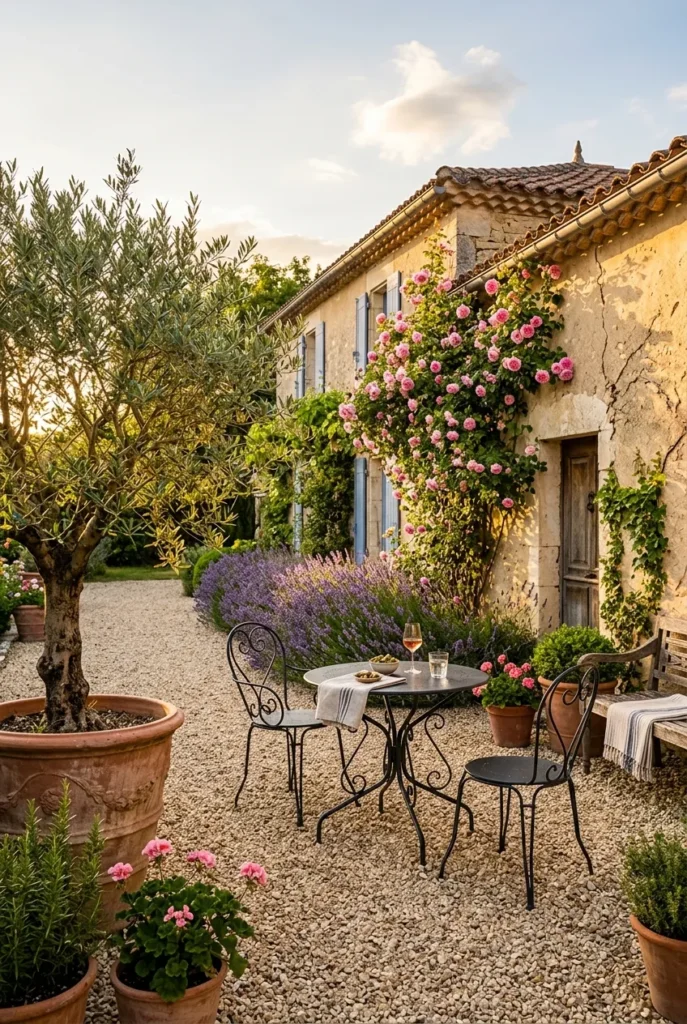
Here is what nobody pins: the exact same Italian-cypress-and-olive photo that made you swoon was shot in a climate where those plants survive. Drop them in cold clay and they sulk or die. So this guide does two things the dreamy pins skip. It gives you the formula, and it gives you the US-zone swaps so your yard actually looks like the pin in August, not like a plant funeral. If you love this cozy, lived-in mood, our dreamy cottage garden yard layouts share the same density-first thinking from a slightly softer angle.
What Actually Makes a Backyard Look European
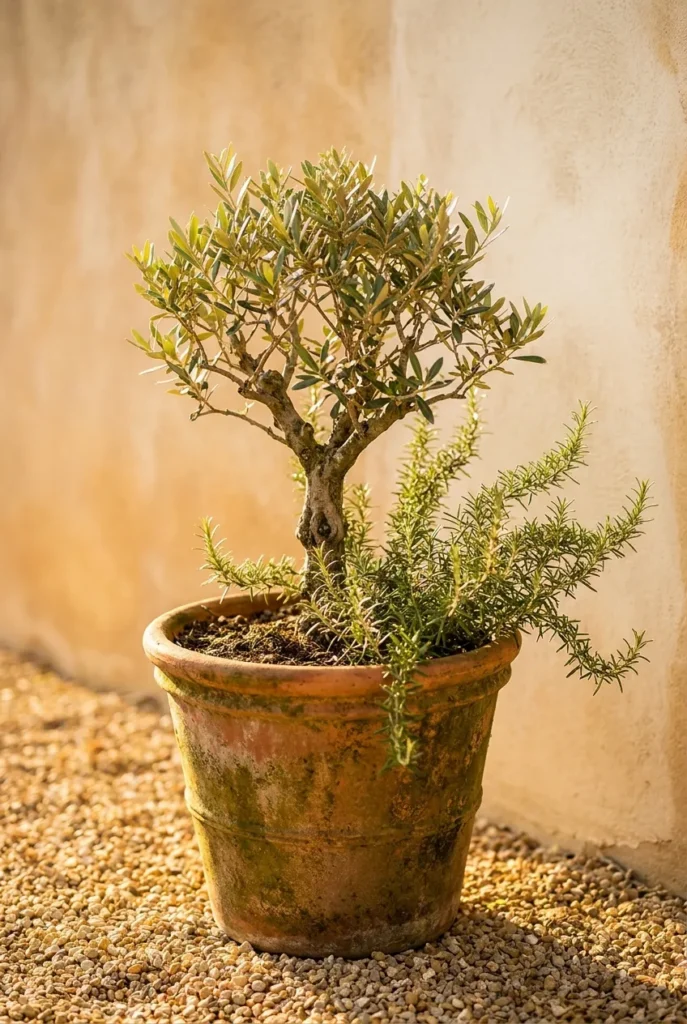
A European backyard is not a shopping list. It is three habits. You work in earthy hard materials instead of poured concrete. You keep the plant palette tight and silvery-green. And you enclose the space so it feels like an outdoor room, not a lawn with stuff on it.
That last habit is the one most people miss. The courtyard feeling comes from edges. A wall, a hedge, a pergola, a run of pleached trees, anything that says “this is a room.” Open it up to a wide lawn and the magic leaks right out.
Color stays quiet too. Think weathered stone, terra cotta, sage, olive, cream, and one dark accent. Skip the rainbow. The charm lives in the calm.
Start With the Floor: Gravel and Pavers Do the Heavy Lifting
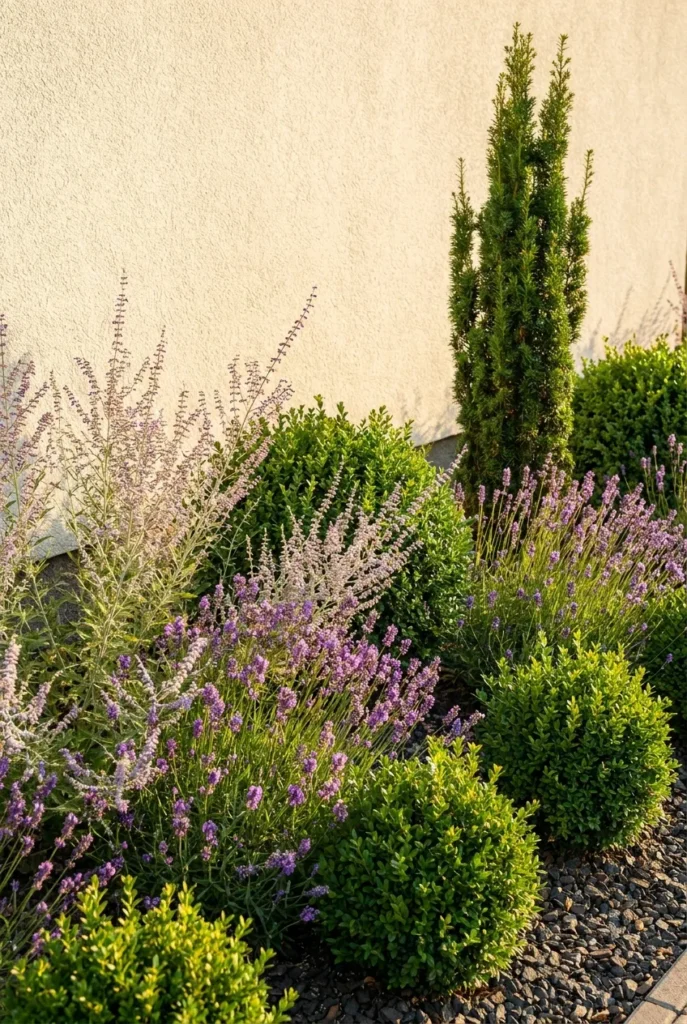
European yards live on their floors. Before a single plant goes in, the ground material sets the whole tone, which is why “european backyard ideas pavers” and gravel courtyards trend so hard on Pinterest.
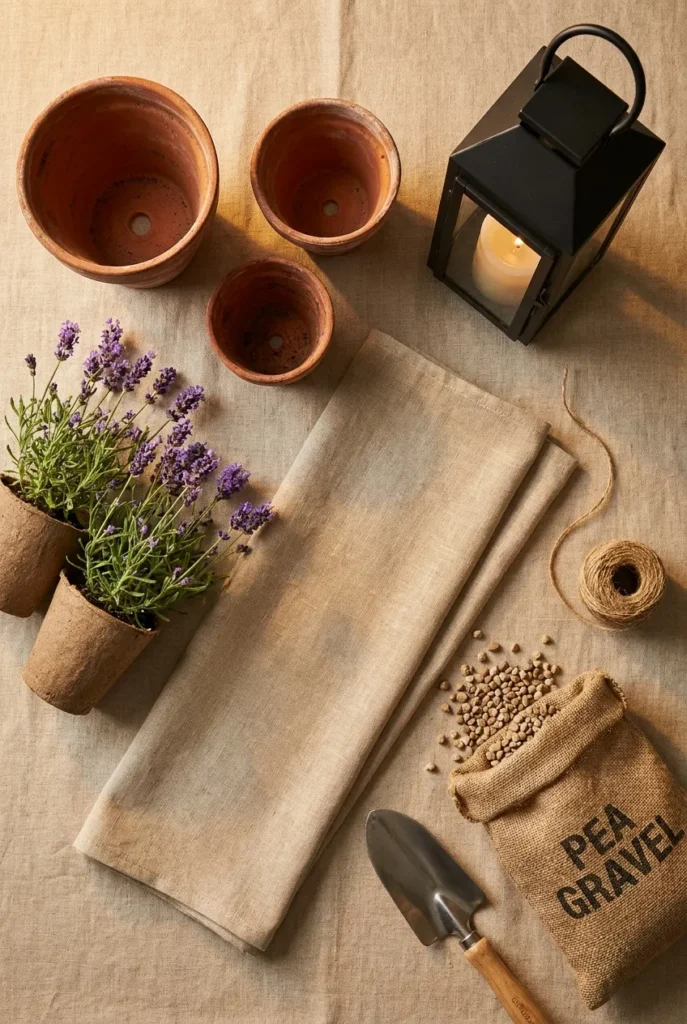
Pea gravel is the cheapest path to the look. A 10 by 10 foot pea gravel courtyard runs about $60 to $90 in materials from Home Depot or Lowe’s, including landscape fabric underneath. It drains beautifully, crunches underfoot like a Tuscan piazza, and forgives an uneven grade where pavers would crack.
Want something more permanent? Crushed limestone or tumbled concrete pavers in a warm sand or soft gray read as old-world stone for a fraction of real flagstone. Lay them on a compacted gravel base. I learned that base lesson the hard way: my first bargain paver patio heaved twice over two winters before I tore it up and laid 4 inches of compacted gravel in 2024. Zero movement since.
Here is the contrarian bit. Most US backyards default to a big rectangle of poured concrete or a wood deck, and both fight the European look. If you want the courtyard feeling, gravel beats a deck every time, even though a deck costs more. Spend less, get more atmosphere.
Enclose It for That Courtyard Feeling
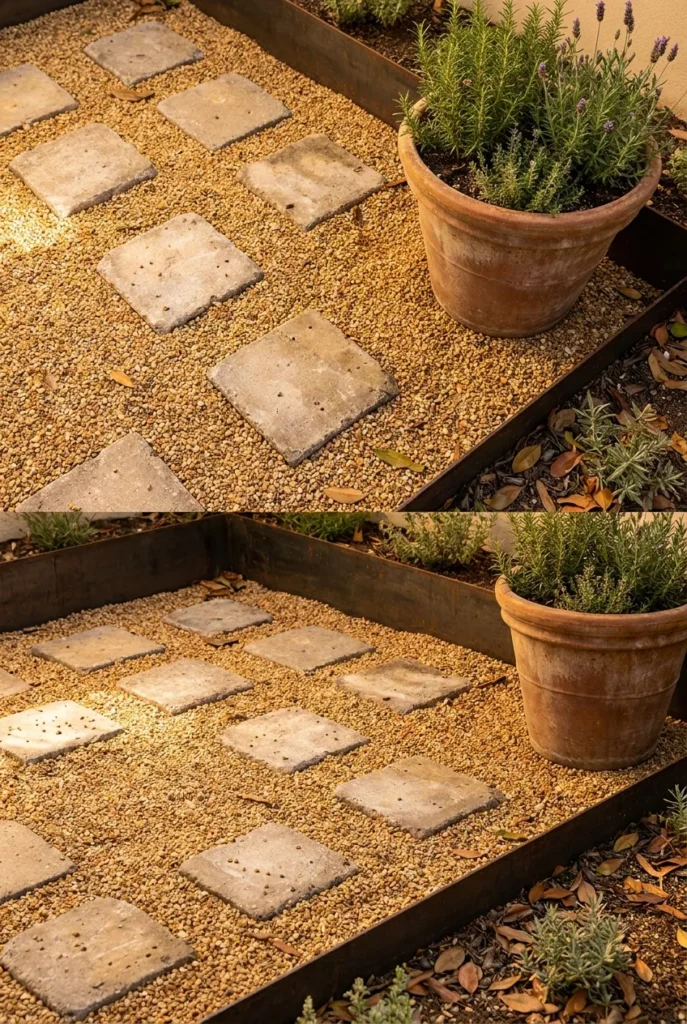
European courtyard backyard ideas all share one trick: walls. Real stone walls are pricey, so you fake the enclosure with greenery and structure instead.
A few ways to wrap the space without a mason:
- Plant a low boxwood or dwarf yaupon holly hedge along two edges to frame the floor.
- Run a cedar or steel pergola overhead, then train a climbing rose or grapevine across it.
- Stand two limewashed lattice panels against a blank fence and let star jasmine climb them.
- Line one side with tall columnar evergreens spaced 3 feet apart for an instant green wall.
The goal is a sense of “inside outside.” Even one wrapped edge changes how the whole yard feels. Our walkthrough on small backyard landscaping that needs no contractor uses the same zoning logic if your lot is tight.
Plant the European Palette (and the US-Zone Truth)
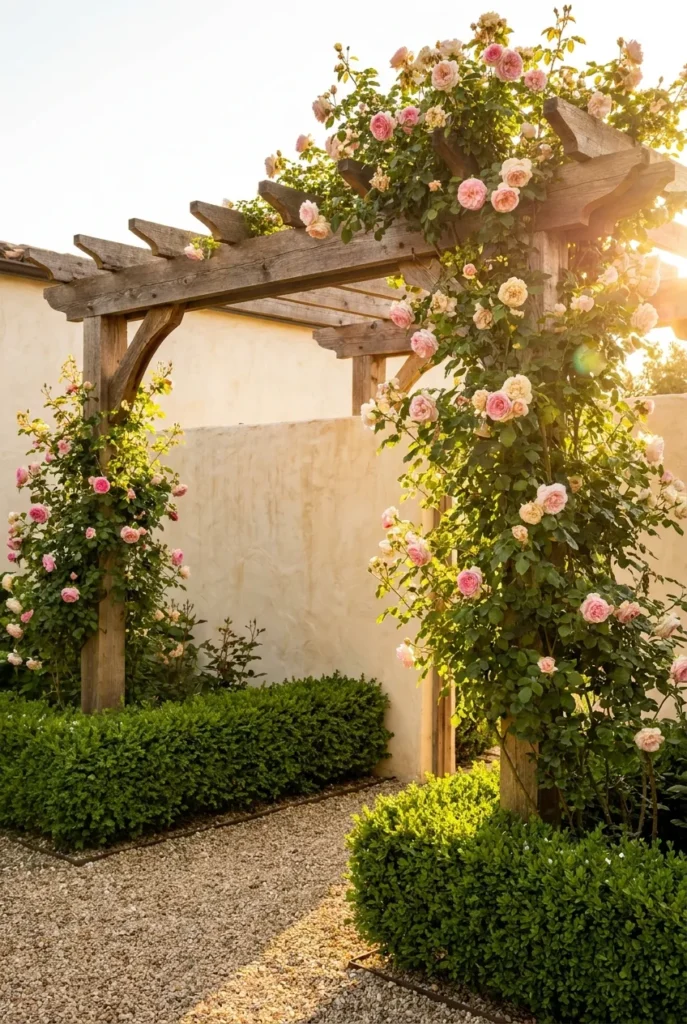
Olive trees, Italian cypress, and lavender are the holy trinity of every European garden pin. Here is the catch the pretty photos never mention. Olive and cypress are hardy only to about Zone 8, and lavender rots fast in humid, clay-heavy yards. Plant them cold and you are buying annuals by accident.
So before you spend a dollar, find your zone on the USDA Plant Hardiness Zone Map, then match the look to your climate with hardy stand-ins. You can get the same silvery, structured, Mediterranean feel in Zone 5 with the right swaps.
The European Look by USDA Zone (Screenshot This)
| Zone Band | The Classic (warm-zone only) | The Hardy Swap (cold-zone safe) | Gets You |
|---|---|---|---|
| Zone 9 to 10 (Houston, SoCal, central FL) | Real olive, Italian cypress, true lavender, rosemary hedge | No swap needed, plant the real thing | Authentic Mediterranean |
| Zone 7 to 8 (Atlanta, Dallas, DC) | Olive in a pot to overwinter, lavender on a gravel mound | Russian sage, ‘Sky Pencil’ holly, dwarf boxwood | Provence look that survives |
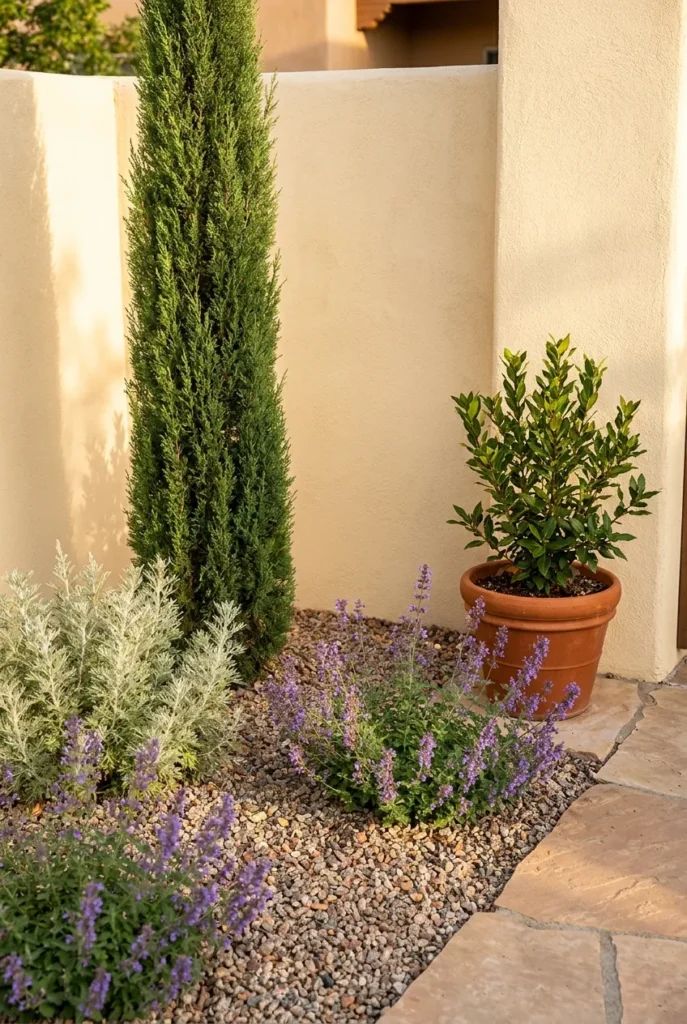
| Zone 5 to 6 (Chicago, Denver, Boston) | Skip olive and cypress in ground | Silver artemisia, columnar juniper, catmint, dwarf Alberta spruce | Tuscan feel, fully hardy |
| Zone 3 to 4 (Minneapolis, ND) | None survive winter in ground | Lamb’s ear, ‘Karl Foerster’ grass, weeping caragana, sea holly | Silvery old-world texture |
The trick across every zone is the same: silvery and gray-green foliage plus one tall vertical and one mounding herb. Repeat those three notes and the eye reads “European,” even with totally different plants. A potted olive that you drag into the garage for winter is a perfectly legitimate Zone 6 move, and I have one that is going on its fourth year.
Add Terra Cotta, Patina, and One Dark Accent
This is where a yard tips from “nice” to “European.” Texture and age.
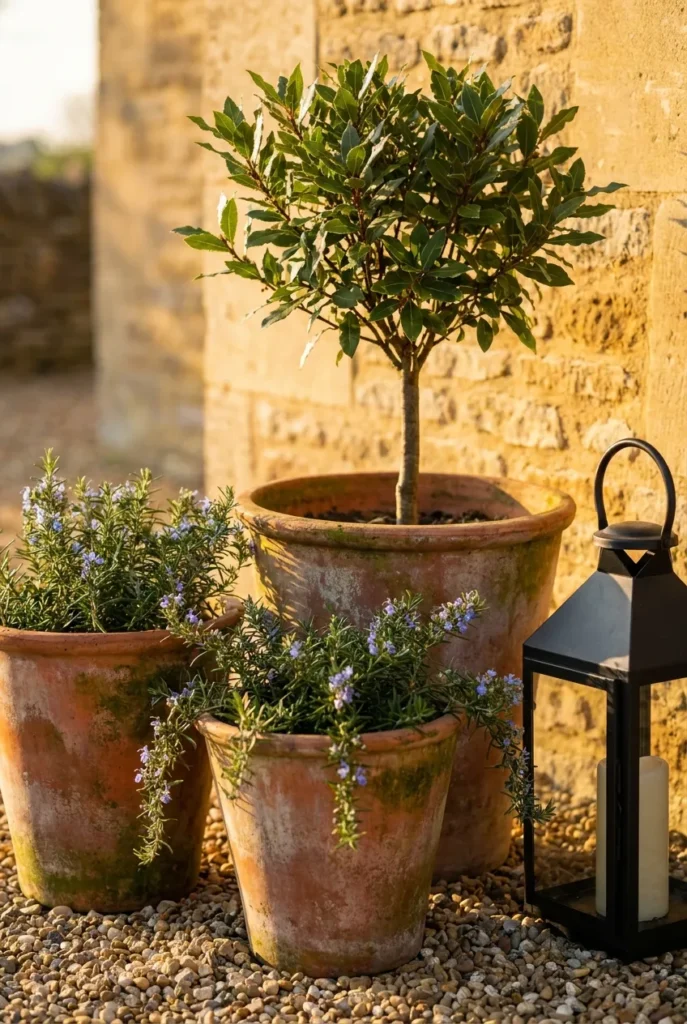
Terra cotta is the workhorse. A 10-inch classic terra cotta pot from Home Depot runs about $8, and a cluster of three in odd sizes by a doorway looks like you hauled them back from Italy. Unglazed clay also ages, growing that chalky white bloom that screams old-world. Buy new, let the weather do the rest.
That “touch of black” the top articles mention is real, and it works. One dark element, a black bistro set, a charcoal lantern, an inky stained door, makes all the warm tones pop. Restraint is key. One dark accent, not five.
Set the Dining Scene Like a Trattoria
Every European backyard is built around eating outside. The competitors all land on “a dining space that invites connection,” and they are right, but they skip the how.
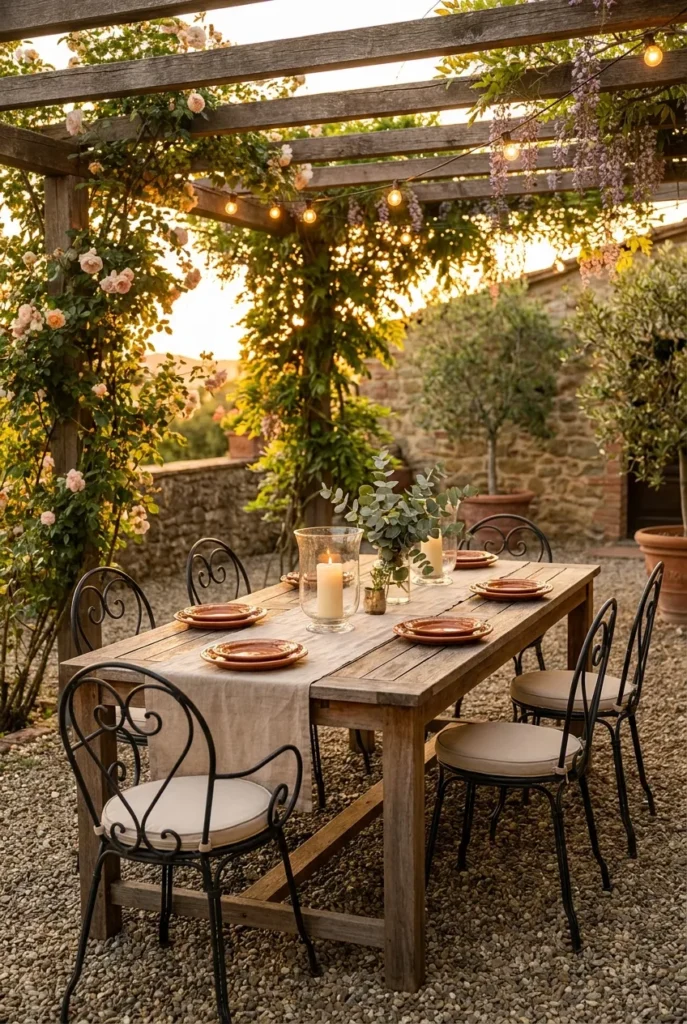
A wrought iron or acacia bistro set is the anchor. The IKEA Bondholmen acacia dining set runs about $499 and weathers to a soft gray that looks decades old in one season. On a tighter budget, a two-chair black metal bistro set from Walmart lands near $80 and seats the coffee-and-pastry crowd perfectly.
Then you dress it. A linen runner, a few terra cotta plates, a pillar candle in a glass hurricane, and a sprig of eucalyptus or rosemary cut from the yard. The first time I set a backyard table this way for a June dinner, three battery rattan lanterns and a $14 HomeGoods runner did more than the furniture did.
Add the Sound of Water (Just One Feature)
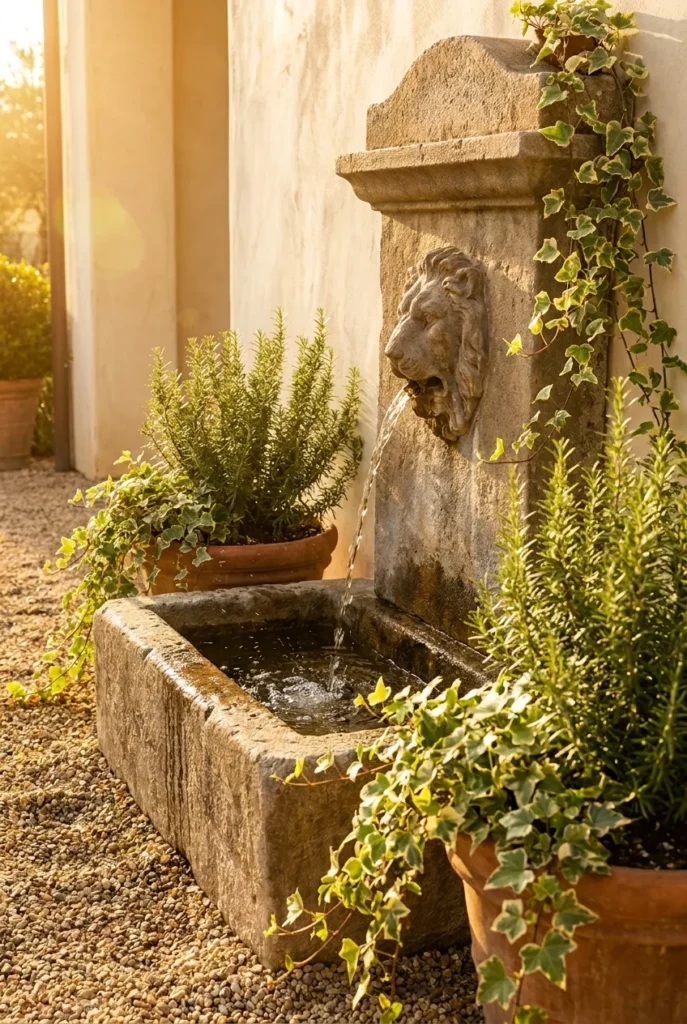
A water feature is the detail that makes a yard feel curated, and the European pins lean on it hard. Sound matters more than size here. A small wall fountain or a tabletop bubbler does more for the mood than a sprawling pond ever could.
You can fake it cheap. A solar fountain pump kit from Amazon runs about $20, dropped into a thrifted glazed bowl from HomeGoods for $15. Moving water masks street noise and pulls in birds, and it instantly reads as “this person knows what they are doing.”
One feature only. Two competing trickles in a small yard is the audio version of two playlists at once. The EPA’s WaterSense water-smart landscaping guidance is worth a read if you want the gravel-garden look that also sips water, which is exactly the Mediterranean ethos anyway.
European Backyard Ideas on a Budget: The 3-Tier Cost Map
“European backyard ideas on a budget” is a live search nobody answers with real numbers. So here is the breakdown I actually use, with stores and prices, before I touch a planter.
| Element | Bare Bones ($25 to $75) | Mid-Range ($75 to $200) | Splurge ($200+) |
|---|---|---|---|
| Floor | Pea gravel patch, $60 (Home Depot) | Crushed limestone + edging, $150 (Lowe’s) | Tumbled pavers on base, $450 |
| Plants | 3 terra cotta pots, herbs, $30 | Lavender + boxwood starter set, $120 | Potted olive + cypress, $300 |
| Dining | Walmart 2-seat bistro set, $80 | IKEA Bondholmen acacia set, $499 | Wrought iron set, $900 |
| Water | DIY solar bowl fountain, $35 | Smart Solar tabletop, $80 | Cast stone wall fountain, $400 |
| Accent | One black lantern, $20 (Target) | Black bistro + 2 lanterns, $130 | Pergola with vine, $400 |
You can stand up a believable European courtyard on the Bare Bones column for around $225. Pile on the Mid-Range column and you are near $900 and it looks like a small fortune. For more cheap-but-rich moves that pair with this look, our 27 budget backyard transformations under $500 has a whole tier system worth saving.
Light It for the Evening Like a Piazza
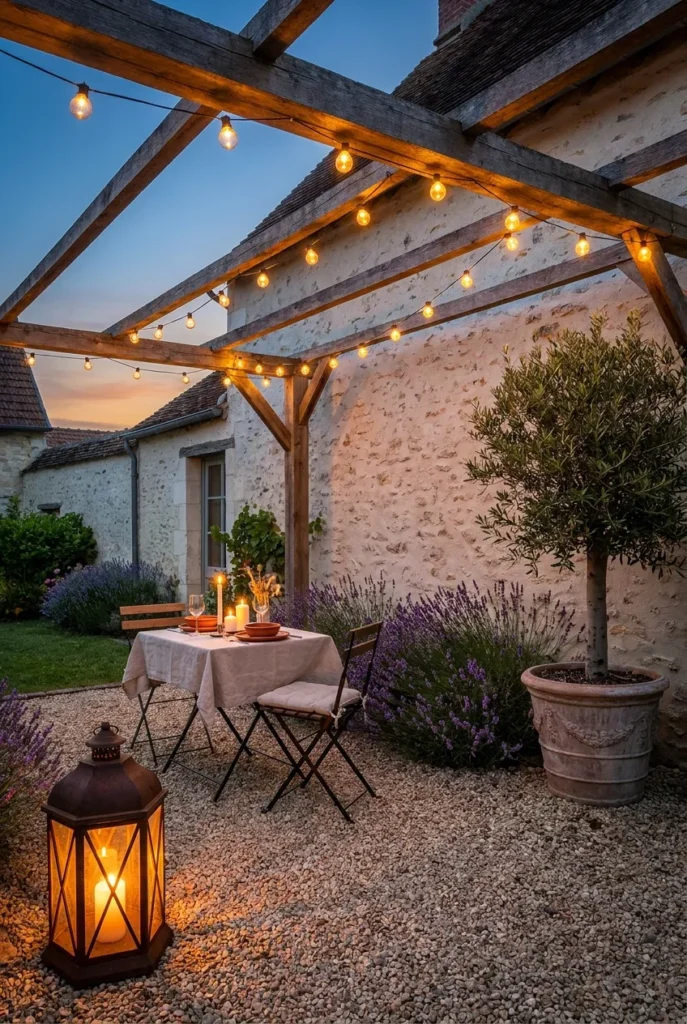
A European backyard earns its keep after dark. Warm, low, layered light is the whole game, and a single overhead floodlight ruins it instantly.
Hang warm-white globe string lights overhead first. A 48-foot strand of Brightech Ambience Pro G40 globes runs about $45 on Amazon and zigzags beautifully across a pergola. The first summer I hung globes, I screwed hooks straight into a cedar post and the strand sagged by Memorial Day. A 2 mm guide wire fixed it overnight, so run a wire if your span is over 12 feet.
Then layer down. A pair of black lanterns at eye level, a few Dollar Tree solar lanterns ($1.25 each) tucked into the beds, and the courtyard glows like a trattoria. Three light heights, never one.
Common Mistakes That Break the European Look
After redoing my own gravel courtyard twice, these are the slip-ups I see most:
- Planting warm-zone divas in cold ground. Olive and cypress in Zone 5 dirt is money set on fire. Pot them or swap them.
- Too many colors. European calm comes from a tight palette. Sage, terra cotta, cream, and one dark note. Stop there.
- Skipping the enclosure. A lawn with a bistro set is not a courtyard. Wrap at least one edge.
- Poured concrete everywhere. It fights the look. Gravel and pavers read older and cost less.
- Two water features. One trickle. Always one.
- Bright white string lights. Blue-white bulbs kill the warmth. Buy warm-white globes only.
Frequently Asked Questions
What is a European garden style?
European garden style is a loose family of old-world looks, mainly Mediterranean, French Provence, Italian, and English courtyard, that share earthy hard materials, a tight silvery-green plant palette, enclosed “outdoor room” layouts, weathered terra cotta, and a focus on dining and gathering outside. The feeling comes from texture and restraint, not from spending more.
How do I make my backyard look European on a budget?
Start with the floor. A pea gravel courtyard runs about $60 to $90 for a 10 by 10 foot area. Add three terra cotta pots with herbs ($30), one black metal lantern ($20), and a wrapped edge using a boxwood hedge or lattice. That gets you a believable European courtyard for around $225 before any furniture.
What plants are used in European gardens?
The classics are olive, Italian cypress, lavender, rosemary, boxwood, and climbing roses. In colder US zones, swap to hardy stand-ins that read the same: Russian sage, columnar juniper, catmint, silver artemisia, and dwarf boxwood. Match your plants to your USDA zone first, because olive and cypress only survive in ground around Zone 8 and warmer.
What is the difference between a European and a Mediterranean garden?
Mediterranean is one branch of the European family, built for hot, dry summers with drought-tolerant silver plants, gravel, and olive trees. “European” is broader and also includes lusher English courtyard and French formal looks with hedges, roses, and more greenery. Most Pinterest “european backyard ideas” actually lean Mediterranean.
Can I get a European backyard in a cold US zone?
Yes. Keep the formula, swap the plants. Use gravel floors, terra cotta, enclosed edges, and a tight palette, then plant cold-hardy silvery stand-ins like artemisia, columnar juniper, and catmint instead of olive and lavender. Pot up a single olive or bay tree and overwinter it indoors for an authentic accent.
How do I create a European courtyard in a small or rental yard?
Lean on movable pieces. Lay pea gravel over landscape fabric (it rakes back into bags when you move), use freestanding lattice panels for enclosure, cluster terra cotta pots instead of digging beds, and hang string lights with outdoor Command hooks. Everything lifts and comes with you, no drilling required.
What is the cheapest European backyard idea that looks expensive?
A cluster of three weathered terra cotta pots ($24 total at Home Depot) with rosemary and lavender, set on a small pea gravel patch beside one black lantern. Under $80, and it reads like an Italian courtyard corner. Let the clay age for the patina that sells the look.
Bring It All Together
European backyard ideas reward restraint and patience more than budget. Lay a gravel floor, wrap one edge to make a room, keep the palette silvery and calm, age your terra cotta, add one dark accent and one trickle of water, and light it warm and low for the evening. Match the plants to your actual zone instead of the pin’s, and your courtyard will still look like the photo in August.
Start with the floor this weekend. Pick your gravel, set three pots, and the rest grows in from there. If you want the softer, flowerier cousin of this look, our cozy cottage garden yard ideas with a zone cheat sheet is the natural next read.