Galvanized Raised Garden Bed Ideas That Look Good and Last for Years
A galvanized raised garden bed is the fastest way to make a backyard look intentional, and the good news is the rust-proof kind stays that way. Here’s the promise: by the end of this, you’ll know exactly which finishes hold up, how to lay them out so they look designed instead of dumped, and how to fill them without wrecking your budget. No guesswork.
We’ve watched cheap wood beds sag and rot in three seasons. Metal is a different story.
The reason people keep pinning these is simple. They photograph beautifully, they last, and they turn a patchy corner of grass into something that looks like a magazine spread. That’s the whole appeal.
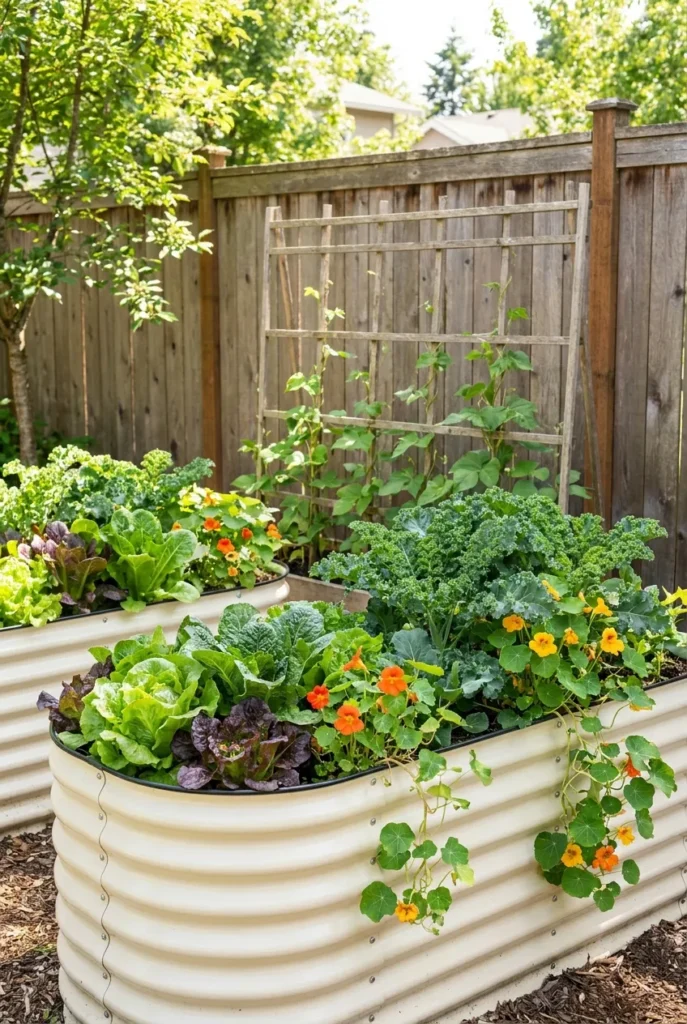
Are Galvanized Steel Raised Beds Actually Safe (and Rust-Proof)?
Short answer: yes, on both counts, with one caveat. Galvanized steel is regular steel dipped in a zinc coating, and that zinc layer is what stops rust and slows corrosion for years. It’s the same coating used on stock tanks that sit full of water for decades.
The food-safety worry usually centers on zinc leaching into soil. In practice, garden soil pH sits in a range where zinc movement is minimal, and zinc is a nutrient plants actually use in trace amounts. If you want the deeper science, it’s worth reading up on [research on galvanized bed safety] before you commit.
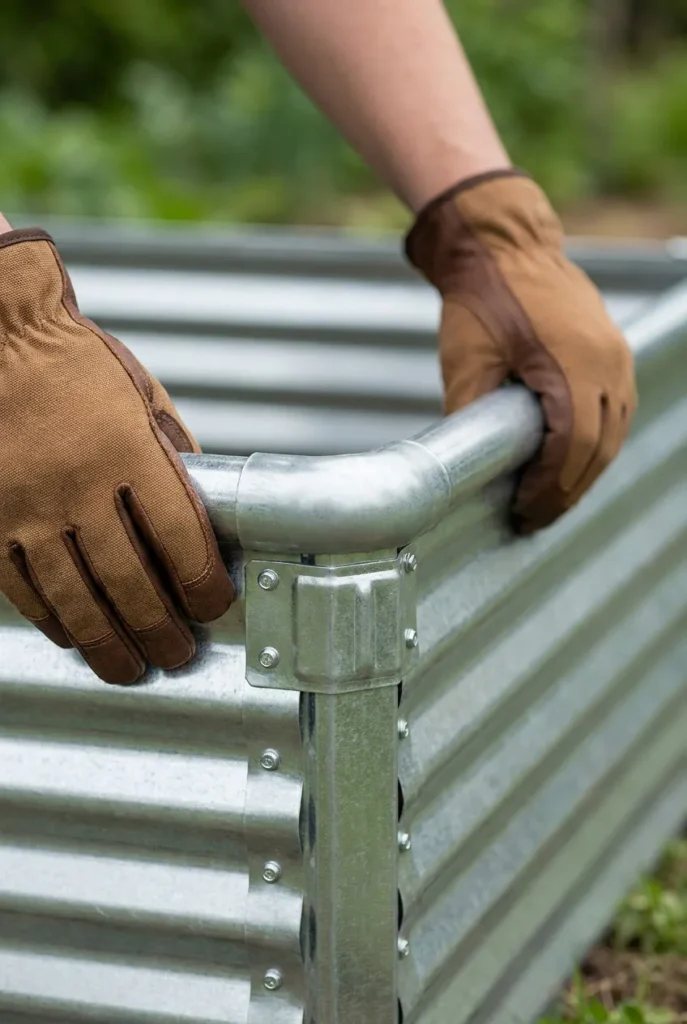
Rust shows up in two spots: bare cut edges and deep scratches. Buy beds with rolled or capped edges and corner protectors, and you sidestep most of it.
One honest caveat. In very acidic soil (think heavy pine-needle mulch or peat-heavy mixes), zinc breaks down faster, so a bed liner along the walls is a smart move there.
Corrugated Metal Raised Bed Colors That Photograph Beautifully
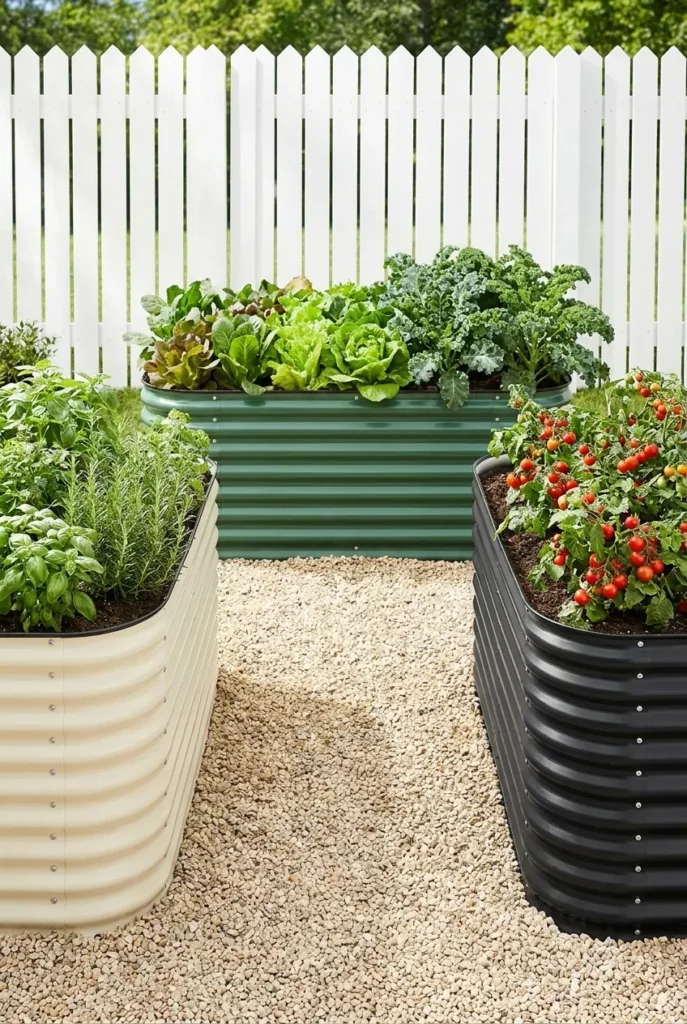
Color is where these beds go from “utility” to “pretty,” and it’s the single most-pinned angle. Three finishes dominate for a reason.
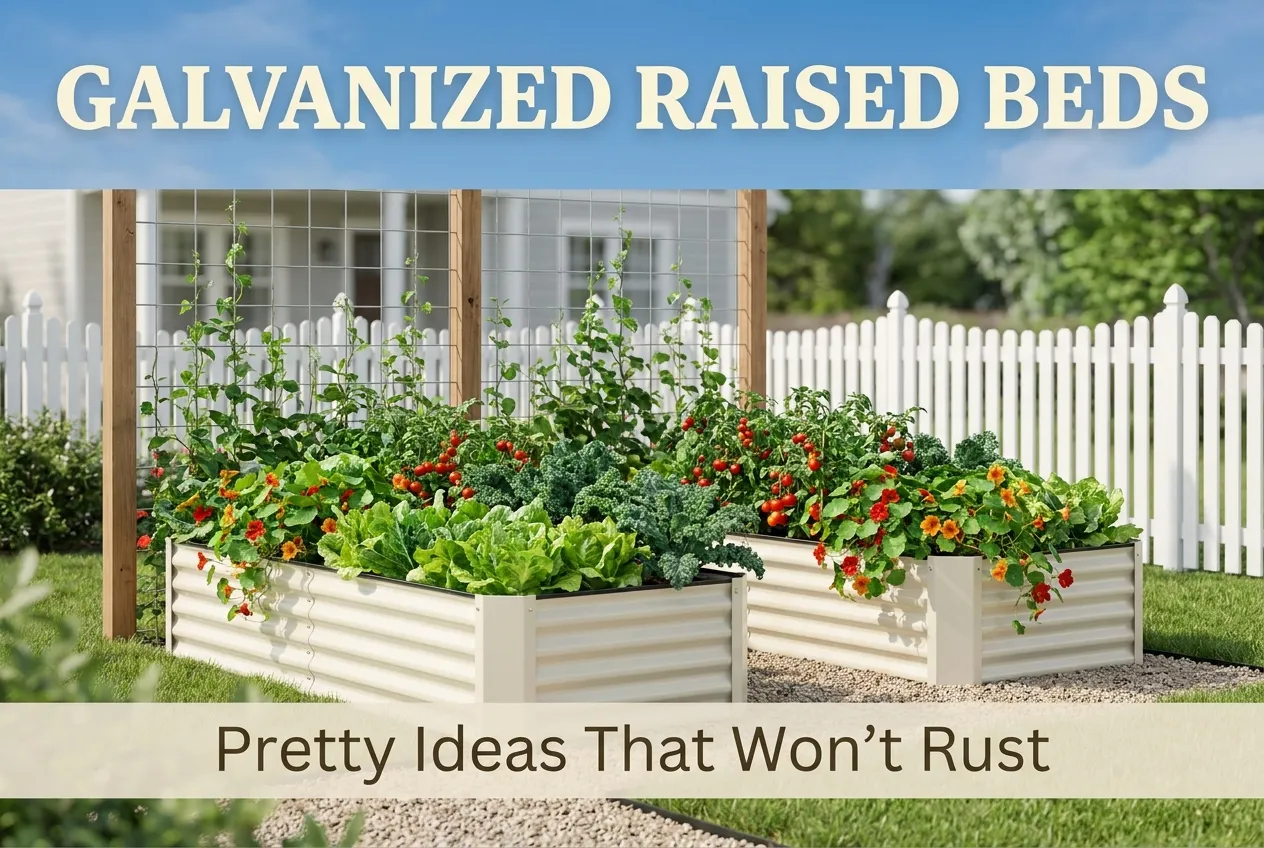
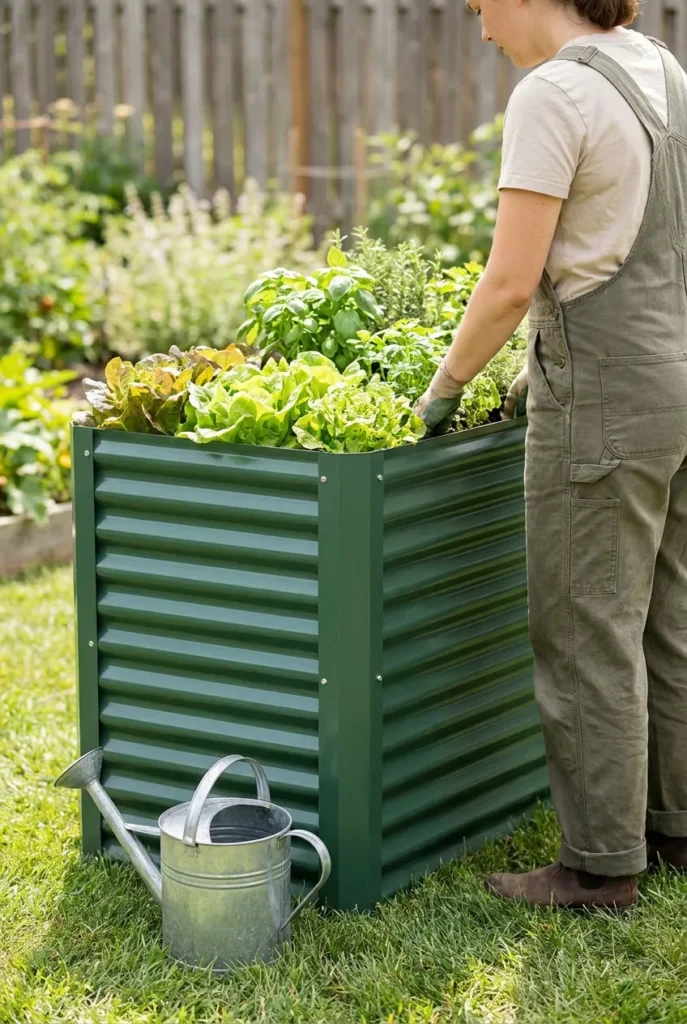
Cream reads soft and cottage-y. It bounces light, so it looks bright even in a shady corner. Forest green disappears into the plants, which makes the veggies the star. Black (or charcoal) is the modern-farmhouse pick and pairs unfairly well with white fences and gravel.
Real experience, e.g. “I went with forest green Vego beds along my north fence in Zone 6b, and honestly the green vanishes so well that visitors think the tomatoes are just floating.”
For a full breakdown of finishes and styling, our guide to[metal raised garden bed goes deeper on pairings.
The 3-Zone Bed Layout Rule (Our Simple Framework)
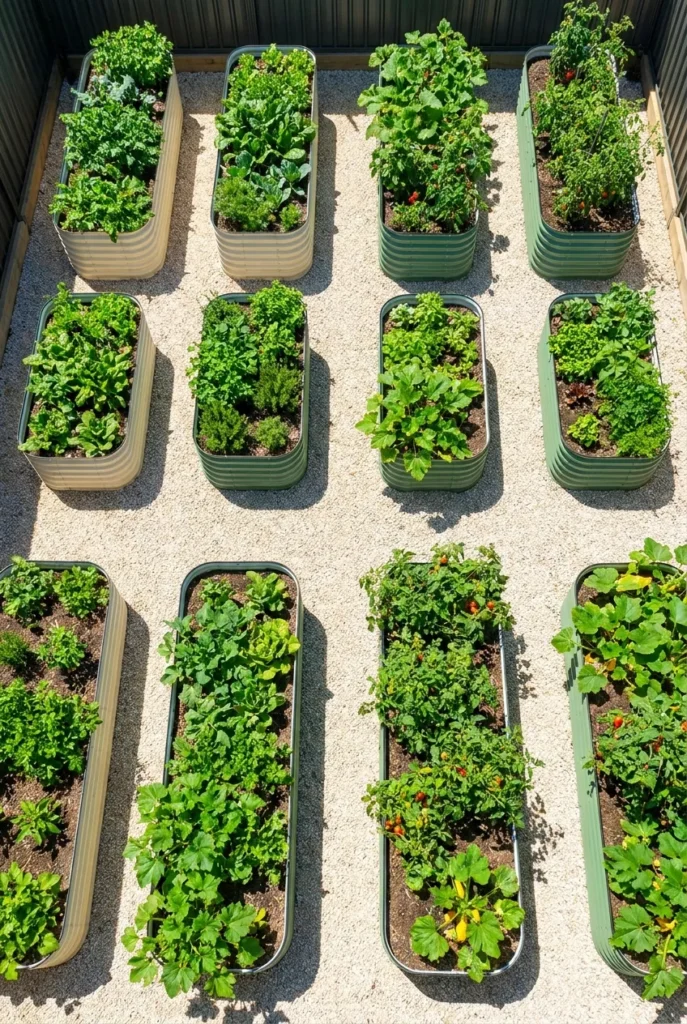
Here’s the original framework we use on every install. Call it the 3-Zone Bed Layout Rule. You split the growing space into three bands based on sun and reach, then place beds accordingly. It keeps the garden productive and keeps it looking curated.
Zone 1 is the full-sun band (6+ hours): tomatoes, peppers, squash. Zone 2 is the part-sun band (4 to 6 hours): leafy greens, herbs, root crops. Zone 3 is the access band, the walkable gaps kept at least 24 inches wide so a wheelbarrow fits and photos don’t feel cramped.
Map the sun first, then the beds. That order matters. Before you buy, it’s smart to check your USDA hardiness zone so your Zone 1 picks actually thrive where you live.
Screenshot this mini-table and take it to the store:
| Layout element | Our rule of thumb |
|---|---|
| Bed width | 3 to 4 ft (reach the middle without stepping in) |
| Path width | 24 in min, 36 in for wheelbarrow access |
| Full-sun bed | Tomatoes, peppers, squash |
| Part-sun bed | Lettuce, kale, herbs |
| Bed height | 17 in for roots, 24 to 32 in to save your back |
How to Fill a Galvanized Raised Bed Without Overspending
Tall beds are gorgeous, and they’re also soil-hungry. A 24-inch bed can swallow more bagged mix than you’d believe, and that’s where budgets blow up.
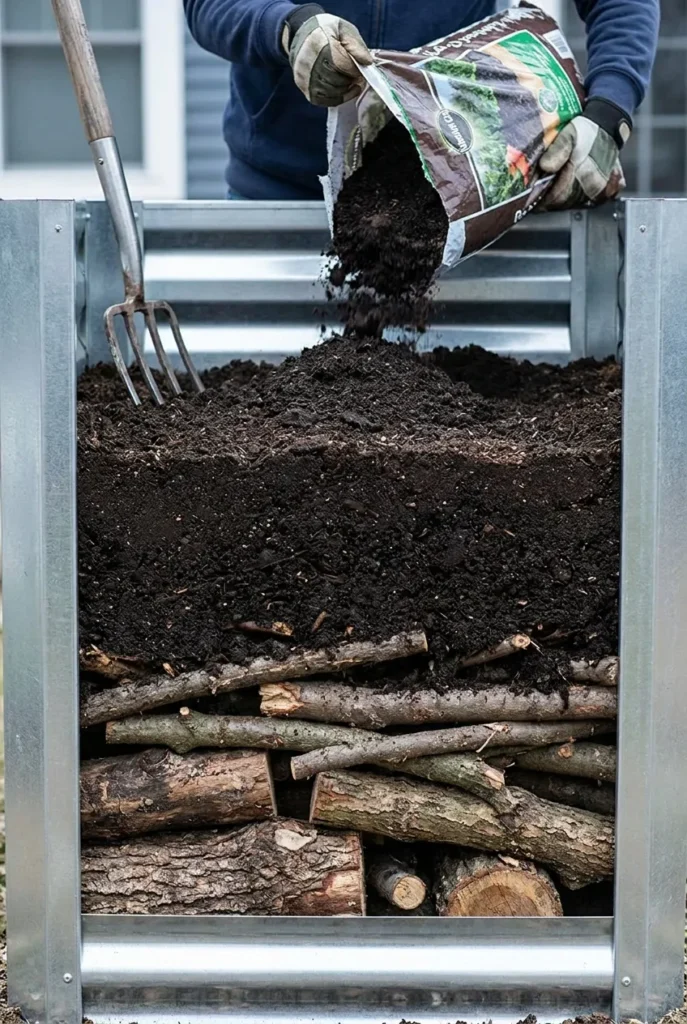
We layer instead. The bottom third gets logs, branches, and leaves (a hugelkultur-style base) that breaks down slowly and feeds the soil. The middle gets compost and native soil. The top 8 to 12 inches, the part roots actually live in, gets quality mix like Kellogg or Miracle-Gro Raised Bed soil.
Real experience, e.g. “My first 4×8 galvanized bed I filled with bagged soil top to bottom and spent close to it costing a small fortune. The next one I bottom-layered with fallen branches and cut the soil bill by roughly a third. “
That top layer is the only part that needs to be premium. For the full method, see our breakdown on what to fill a raised garden bed with.
Bed Depth: How Tall Should You Really Go?
Depth changes everything about comfort and what you can grow. Shallow beds heat fast and drain hard. Deep beds save your knees.
For most veggies, 12 to 18 inches of soil depth works. Deep-rooted crops like carrots and tomatoes want closer to 18. If bending over is rough on you, go for a 24 to 32 inch tall bed and enjoy gardening standing up.
Carrots want around 18 inches, and that number doesn’t change with trends. We break the whole thing down in our guide to how deep your raised bed should be.
Best Galvanized Raised Bed Kits and Brands to Know
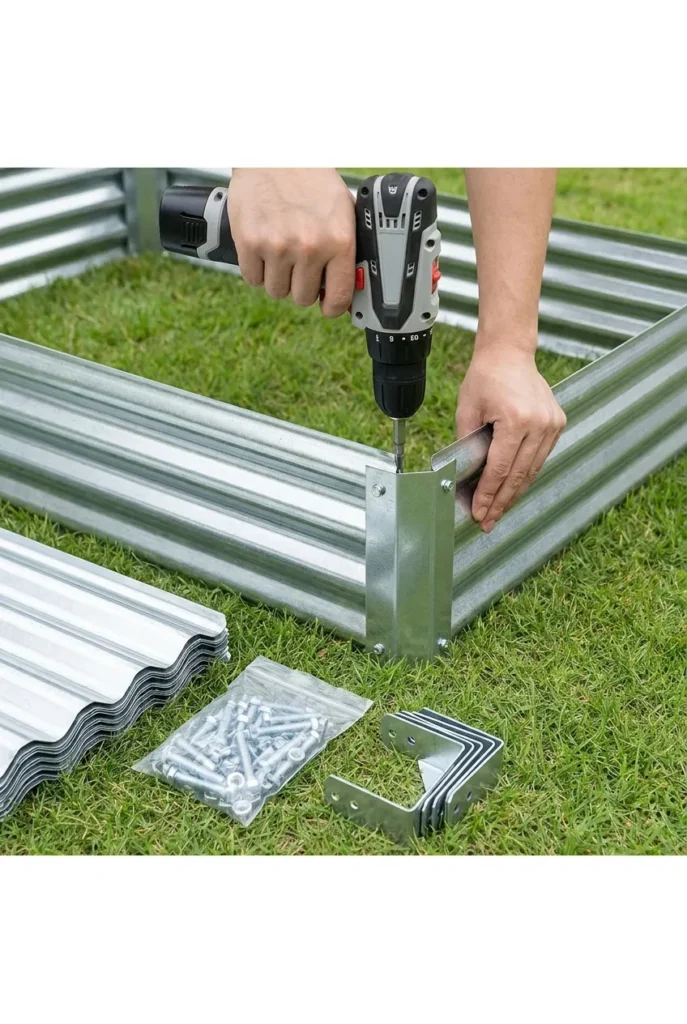
You don’t have to DIY. Plenty of ready-made kits assemble in an afternoon with a screwdriver.
Vego Garden and Birdies are the aspirational picks, modular and available in tall heights (expect the $150 to $490 range for larger kits) [VERIFY current price]. Land Guard and Sunnydaze cover the budget end, often under $40 for a small 4x2x1 bed [VERIFY current price]. Best Choice Products makes the elevated-with-legs style, usually around $100. Greenes Fence and Tractor Supply’s Veikous line round out the mid-tier, roughly in the $50 to $200 range.
Watch two things when buying: gauge (lower number equals thicker, sturdier steel) and whether corners are reinforced. Thin panels dent, and dents are where rust starts.
Real experience, e.g. “We assembled a 9-in-1 Veikous kit from Tractor Supply in about an afternoon, and the only annoyance was lining up the last panel solo.”
DIY and Stock-Tank Ideas for a Custom Look
Want something one-of-a-kind? Two routes get you there.
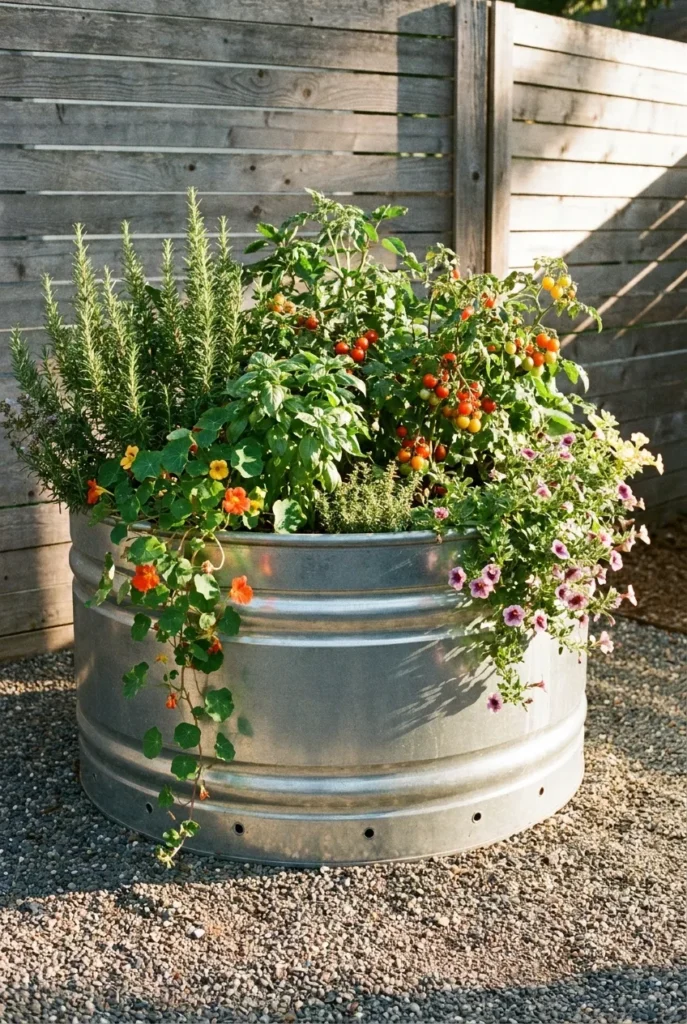
Corrugated roofing panels screwed into a simple cedar frame give you a custom-size bed for less than most kits. It’s a solid weekend build. The other route is a galvanized stock tank (the kind sold at Tractor Supply for livestock), drilled with drainage holes and dropped straight into place. Instant tall planter, zero assembly.
Stock tanks in the 2 to 3 foot range make gorgeous statement planters near a patio.
Styling Ideas: Trellises, Gravel, and Front-Yard Placement
This is the part competitors skip, and it’s exactly what makes a bed look designed. A few finishing touches do the heavy lifting.
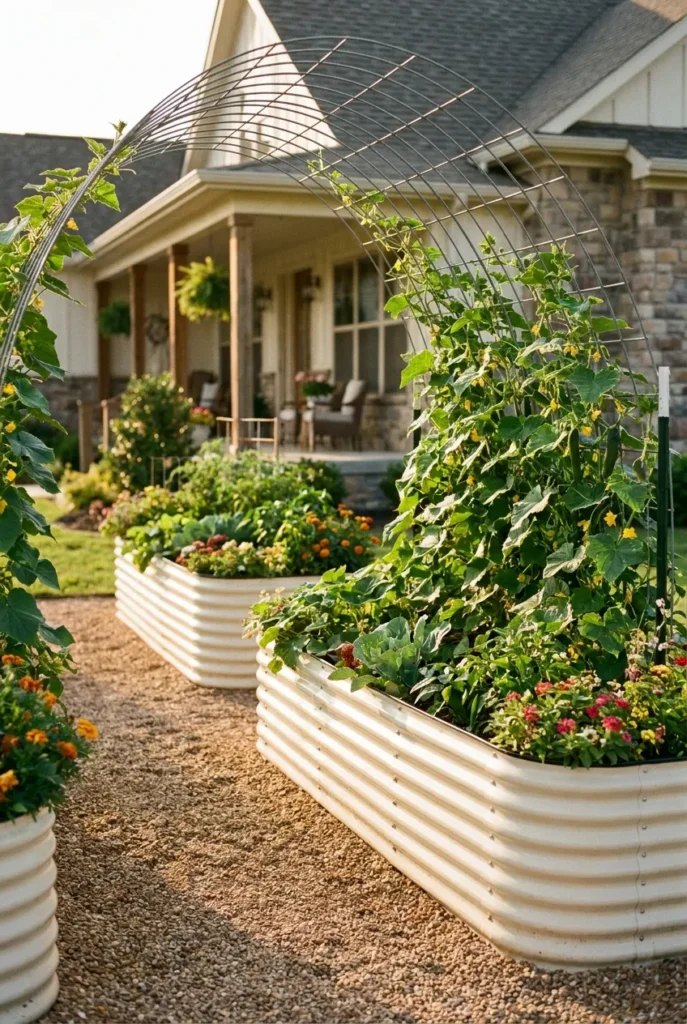
Add a wood or cattle-panel trellis for height and vertical growing. Surround beds with pea gravel or mulch for a clean, low-maintenance frame. And don’t hide these in the backyard only. A row of matching cream beds along a front walkway reads as landscaping, not a vegetable patch.
Repetition is the trick. Matching beds in one color look far more expensive than a mismatched cluster.
Season-by-Season Care to Keep It Rust-Free
Galvanized beds are low-maintenance, not no-maintenance. A little seasonal attention keeps them looking new.
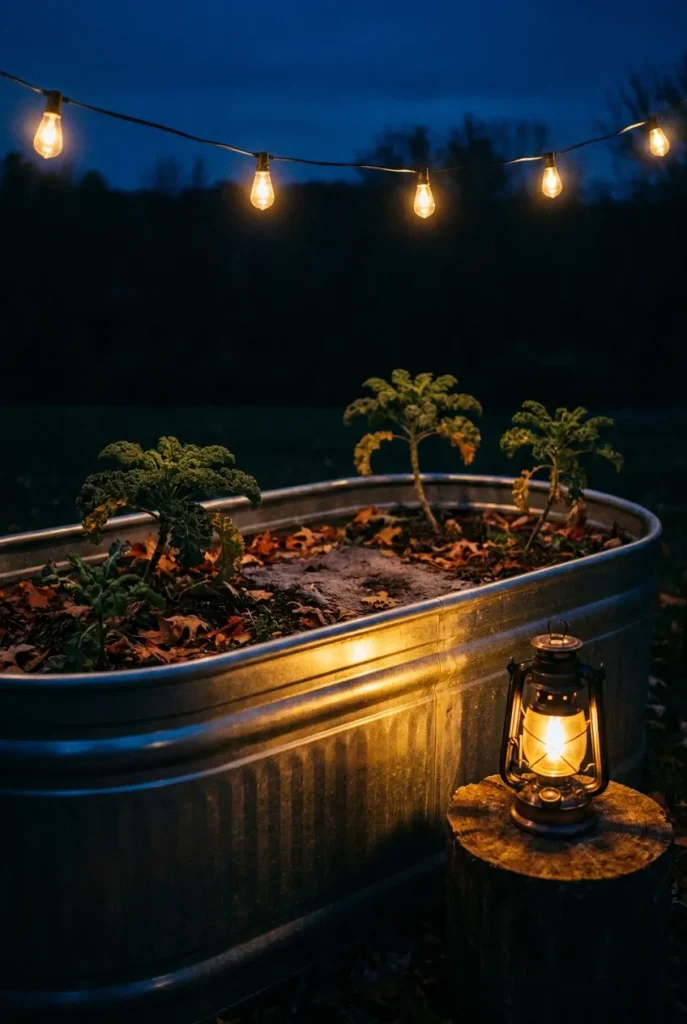
In spring, check corners and touch up any deep scratches with cold-galvanizing spray. Through summer, keep soil off the top rim where it traps moisture. In fall, clear plant debris that holds water against the metal. Winter is easy, metal beds shrug off frost, and in Zones 5 through 9 they overwinter outdoors without a fuss.
For a hard planting date, confirm your last frost against your local extension, since it swings by year and micro-location.
Frequently Asked Questions
Is galvanized steel good for raised garden beds?
Yes. The zinc coating resists rust and corrosion, so these beds routinely outlast wood. They heat soil earlier in spring too, which is a bonus for northern gardeners.
What are the disadvantages of metal raised beds?
The main ones are cost for tall kits, soil that dries faster in extreme heat (mulch fixes this), and rust at damaged edges if you buy thin, unprotected panels. Bare cut edges can also be sharp, so look for rolled or capped rims.
What material is best for a raised garden bed?
It depends on your priority. Galvanized steel wins on longevity and looks, cedar wins on natural warmth, and stone or brick wins on permanence. For a low-maintenance bed that photographs well, galvanized is hard to beat.
How long will a galvanized steel garden bed last?
A quality galvanized bed can last well over a decade, often 15 to 20 years depending on coating thickness, soil pH, and climate [VERIFY]. Thicker gauge steel and reinforced corners stretch that lifespan.
Do galvanized raised beds get too hot for plants?
In very hot climates the soil can warm quickly. A layer of mulch and consistent watering keep roots comfortable, and in Zones 8 to 9 a bit of afternoon shade helps.
Can I put a galvanized bed on a patio or deck?
Yes, if it has drainage and the surface can handle the weight when full. Elevated beds with legs are the cleaner choice for decks since they lift the metal off the boards.
Ready to Plan Your Own?
A galvanized raised garden bed gives you the rare combo of good looks, long life, and low fuss. Pick your color, map your sun, layer your fill, and you’re set for years of harvests. Pin your favorite layout from above, grab the mini-table for your next store run, and tell us which finish you’re leaning toward. We’d love to see what you build.