15 Cozy Backyard Flower Ideas That Wow the Neighbors

A yard with a few flowers in it looks nice. A yard wrapped in flowers makes you want to sit down and stay a while. These cozy backyard flower ideas are built around that second feeling: blooms that hug a bench, scent a path, glow after sunset, and keep color going for three seasons instead of three weeks.
Every idea is matched to USDA Zones 5 to 9 and sized for a regular suburban lot or a rental patio. You’ll get named plants like Little Lime hydrangea, English lavender, and ‘Goldsturm’ black-eyed Susan, plus the pots, beds, and price tiers that go with them.
You’ll also see the mistakes that quietly kill flower beds. Wet lavender roots. Tulips planted too shallow. Ornamental grass too close to the fire pit.
Timing matters here too. It’s early October, and fall is prime planting season for spring bulbs and most perennials. A weekend of digging now pays you back next May.
We’ll start with a simple planning tool we call the Three Season Bloom Relay. Then come fifteen ideas you can mix, match, and scale to your space.
The Three Season Bloom Relay
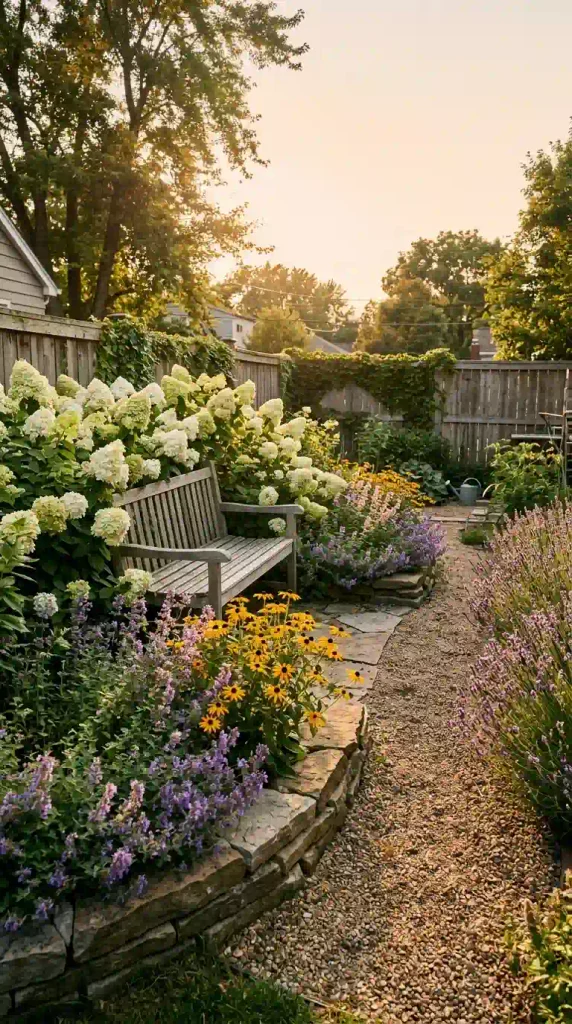
Most flower beds look great for one month and tired for the other five. The fix is a relay. Pick one star plant for spring, one for early summer, one for late summer, and one for fall. Plant them close enough that the next bloom opens as the last one fades. Put each star in a group of three so it reads from the patio, not just from the path. Shade gets its own team. Use the table as a shopping list, then check every tag against your zone before you buy.
| 🌱 Season | 🌞 Sun star | 🌙 Shade star | 📅 Plant it |
|---|---|---|---|
| Spring | Daffodils and alliums | Bleeding heart | Bulbs in fall, before the ground freezes |
| Early summer | Catmint ‘Walker’s Low’ and salvia ‘May Night’ | Astilbe | Fall or spring |
| Late summer | Black-eyed Susan ‘Goldsturm’ and purple coneflower | Hostas in bloom | Fall or spring |
| Fall | Sedum ‘Autumn Joy’ and New England aster | Japanese anemone | Spring, or fall with 6 weeks before frost |
1. Little Lime Hydrangeas in a Horseshoe Around a Bench
Enclosure is what makes a seat feel good to sit in. Three shrubs in a loose U shape behind and beside a bench do the job better than any fence panel.
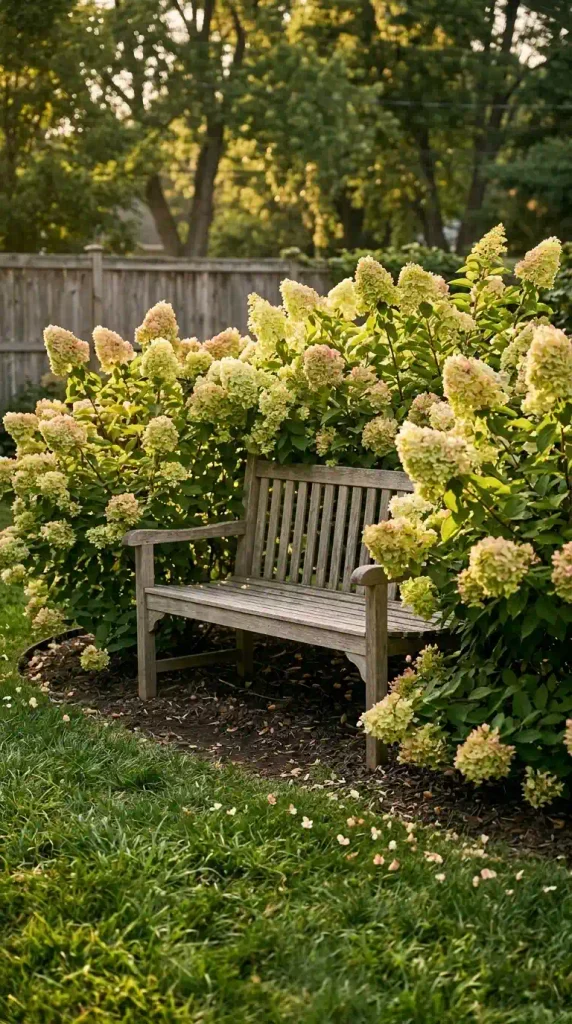
Here’s why Little Lime is our pick for this spot:
- Size: Home Depot’s listing calls it about one third the size of regular Limelight, so it frames a bench without swallowing it.
- Bloom insurance: panicle hydrangeas flower on new wood, so a late frost or an early spring pruning won’t cost you the summer show.
- Color shift: blooms open lime green in midsummer and blush pink as nights cool in September.
- Price: the 2 gallon Proven Winners pot lists at around $50 at Home Depot, so plan on about $150 for three.
If that bench faces a neighbor’s back window, the hydrangeas also work as one of the softer living screens and backyard privacy ideas for a small lot. Leave the dried flower heads standing through winter. They hold snow beautifully.
2. A Bulb Lasagna Pot You Plant This Weekend
Spring bulbs planted in one layer give you about one good week. Stack three kinds in a single deep pot and the blooms take turns for well over a month, which is the spring leg of the Bloom Relay in one container.
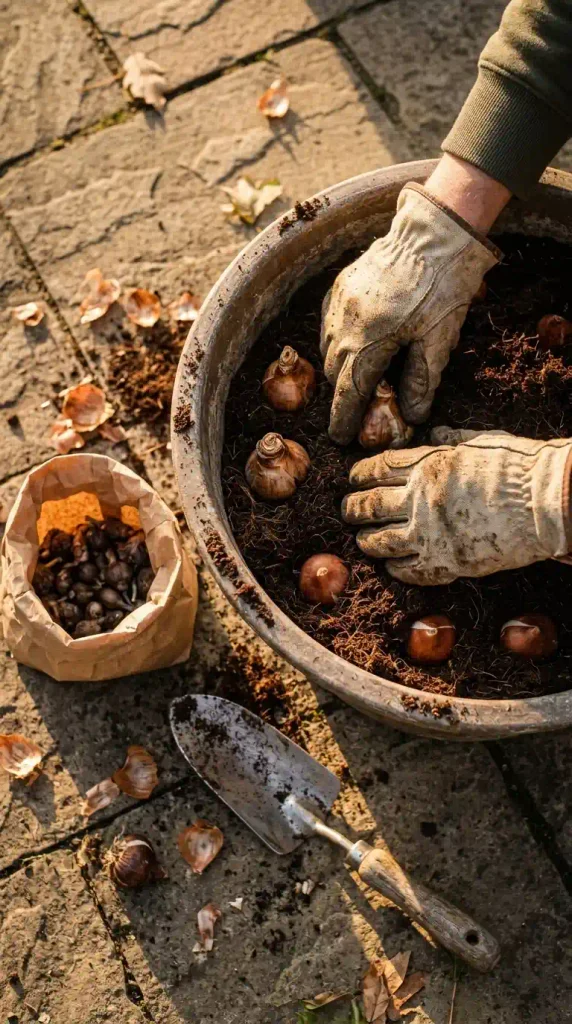
Depth is where most bulb pots go wrong. The rule from fall bulb planting guidance from Penn State Extension is to plant bulbs two and a half to three times deeper than the bulb is tall, so a 2 inch tulip goes 5 to 6 inches down.
Grab a frost resistant pot at least 14 inches wide and deep. Thick resin or fiberglass is safer than terracotta, which can crack in a hard freeze. A mixed bag of 25 to 50 bulbs at Lowe’s or Home Depot usually lands in the $15 to $30 range.
Add 4 inches of potting mix, then set tulips pointy side up, almost touching.
Cover with 2 to 3 inches of mix and add a layer of daffodils.
Cover again and finish with grape hyacinths or crocus near the top.
Water well, lay chicken wire over the top for squirrels, and park the pot against a sheltered wall.
One warning for Zones 8 and 9. Winters there are often too mild for tulips, so buy prechilled bulbs or chill them in the fridge for 10 to 12 weeks, away from fruit.
3. A Lavender Edge You Brush Past on the Way to the Patio
Scent is the part of a flower bed people remember. Plant lavender about 18 inches apart along the edge of a path, close enough that your legs brush the stems and release the oil every time you walk out with a coffee.
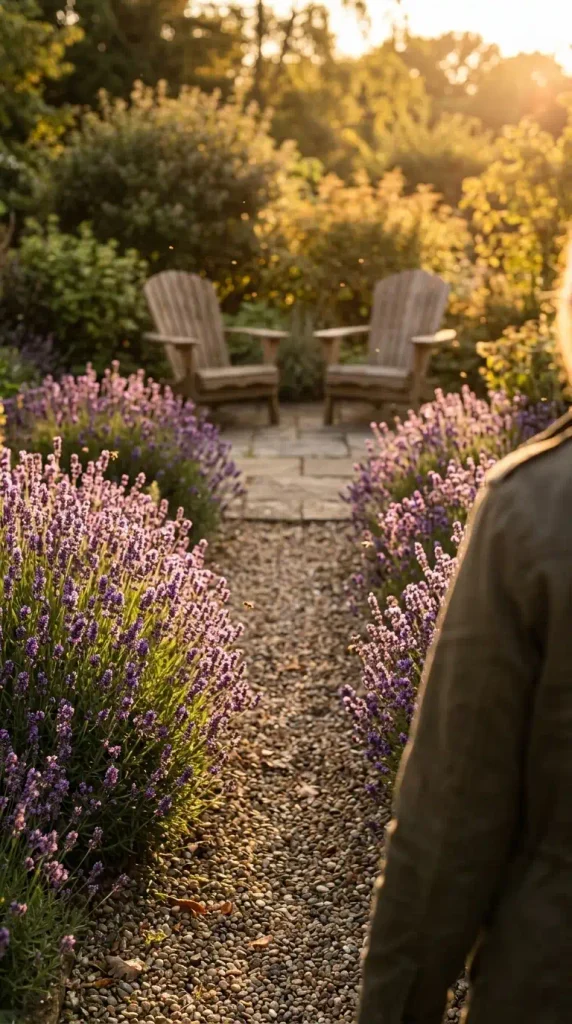
English lavenders like ‘Hidcote’ and ‘Munstead’ handle cold Zone 5 winters. In humid Zone 7 to 9 summers, a lavandin like ‘Phenomenal’ holds up better.
Plant on a slight mound or in soil mixed with pea gravel.
Mulch with gravel so the crown stays dry.
Shear by about a third after the first flush of blooms.
Wood mulch piled against the stems.
Rich compost or regular feeding.
A sprinkler zone that runs every day.
Wet roots in winter kill more lavender than cold ever does. Give it drainage and neglect, and it’ll outlive the patio furniture.
4. A White Moon Garden for Evenings on the Patio
White flowers keep working after sunset. When the purples and reds go dark, white petals catch the last light and the porch light, so the bed still reads at 9 p.m.
Several of the best evening bloomers are also the most fragrant. Plant them within a few steps of where you actually sit, not out at the back fence.
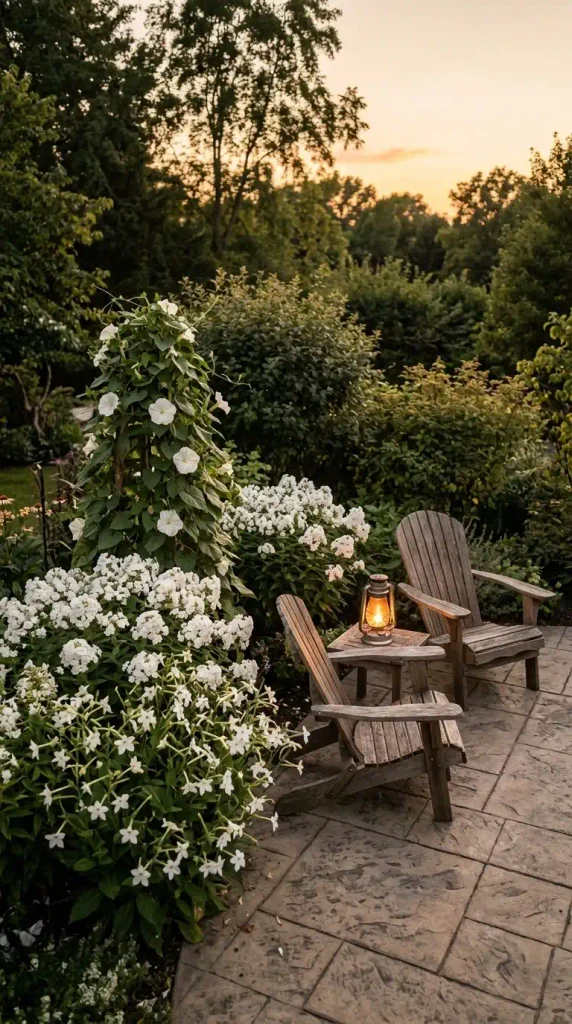
Moonflower seeds are hard coated, so soak them overnight before sowing after your last frost. They’re also toxic if eaten. Keep the seed packet away from kids and pets.
5. Window Boxes on the Fence, Not Just the House
Fences are the most wasted flower space in most backyards. A row of window boxes along the top rail turns a blank wall of boards into a bloom line at eye level, and it costs no ground space at all.
Bloem resin window boxes in the 24 to 30 inch size usually run $15 to $30, and they’re light enough for heavy duty fence brackets. Plant them now with pansies and violas. Both shrug off frost, and in Zones 6 to 9 they often bloom again in early spring. Swap in trailing calibrachoa and sweet potato vine after Memorial Day.
For more ways to stack color into tight spots, our guide to small space container garden setups covers rail planters and tiered stands.
🧰 Fence box shopping list
Shallow boxes dry out fast in July. Plan on watering daily once summer heat hits.
6. A Cottage Border Planted in Drifts of Three
Skip the flat of mixed annuals. One of everything looks like a plant sale table, and the whole bed has to be bought again next May.
Buy three of one perennial instead, then three of the next. Groups of three or five read as one big shape from the patio, 20 feet away, and that’s what makes a border look planned. These four cottage garden flowers cover the summer legs of the Bloom Relay and come back every year.
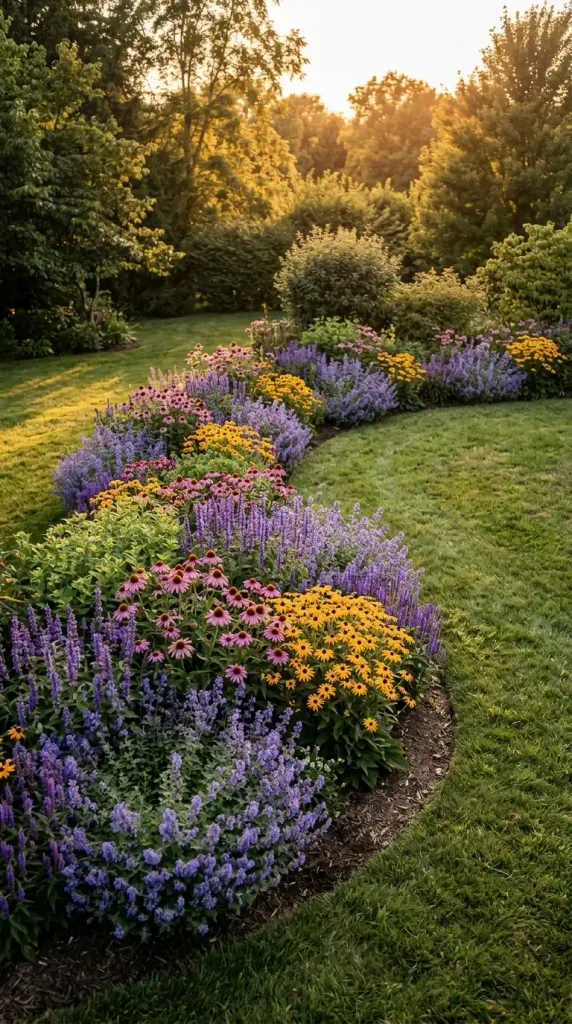
| Plant | 📏 Height | 🌸 Peak bloom | Place it |
|---|---|---|---|
| Catmint ‘Walker’s Low’ | about 2 to 3 ft | late spring, repeats | front edge |
| Salvia ‘May Night’ | about 18 in | early summer | front to middle |
| Purple coneflower | about 2 to 4 ft | mid to late summer | middle |
| Black-eyed Susan ‘Goldsturm’ | about 2 ft | late summer into fall | middle, in big sweeps |
Fall planting gives perennials a head start, as long as they go in about six weeks before your ground freezes. Check every tag against the USDA plant hardiness zone map before you buy, and confirm your typical first frost with your county extension office.
A 4 pound bag of Espoma Flower-tone, an organic 3-4-5 feed, usually costs under $20 and lasts a small border all season. Follow the product label exactly. The label is the law, and more is never better.
7. Clematis on an Arbor Over the Garden Gate
Walking under flowers feels different than walking past them. A metal or cedar arch at the side gate or the entrance to the patio gives you a doorway made of blooms, and clematis is the easiest vine to start with.
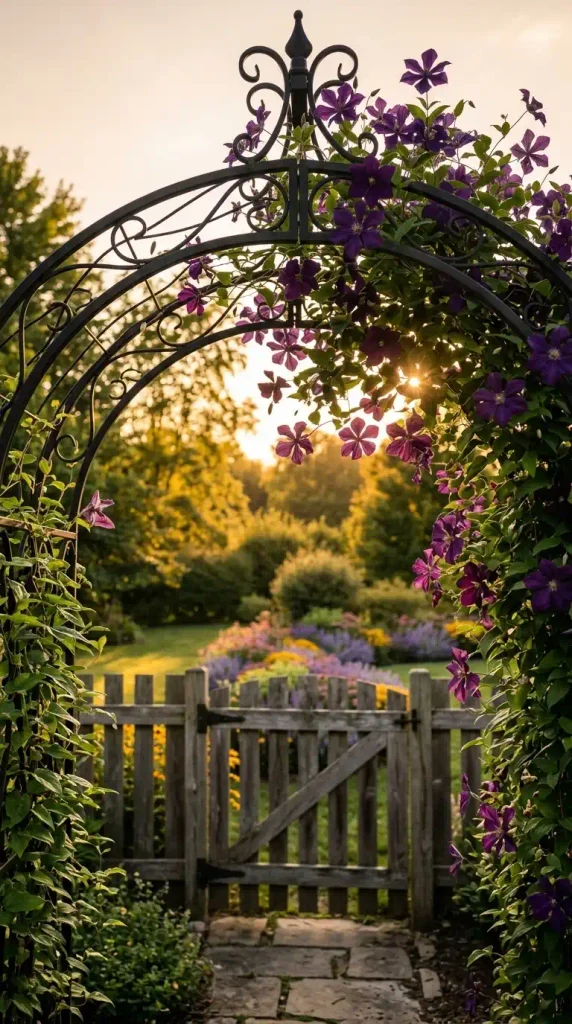
‘Jackmanii’ is the classic purple pick and handles roughly Zones 4 to 8. It wants its head in the sun and its feet in the shade, so plant a low perennial or set a flat stone over the root zone to keep the soil cool. Metal garden arches at Lowe’s, Walmart, and Amazon often fall in the $60 to $200 range. Anchor yours deep before the vine adds weight.
💡 Quick Tip
‘Jackmanii’ blooms on new growth. In late winter, cut every stem back to about 12 inches above the soil, right above a pair of fat buds. It looks brutal. It flowers harder for it.
8. A Pollinator Patch That Hums All Summer
Bees and butterflies add something no plant can: movement and sound. A small patch of native perennials near the patio turns sitting outside into watching something.
Start with three plants that cover different seasons:
Bee balm brings hummingbirds in midsummer. Pick a mildew resistant variety like ‘Jacob Cline’, since powdery mildew is the common complaint.
Swamp milkweed is a host plant for monarch caterpillars, and it handles heavy clay better than common milkweed.
New England aster opens late, right when bees are fueling up for fall.
Native flowers feed the insects that evolved with them, so a small patch draws more life than a big bed of showy imports.
Hold off on fall cleanup here. Leave the stems standing over winter, since many native bees nest inside hollow stems.
9. A Stock Tank Cutting Garden by the Patio
Galvanized stock tanks make instant raised flower beds with clean farmhouse lines, and a round 100 gallon Behlen Country tank from Tractor Supply typically falls in the $100 to $200 range. Drill six to eight half inch holes in the bottom first, or the roots will drown.
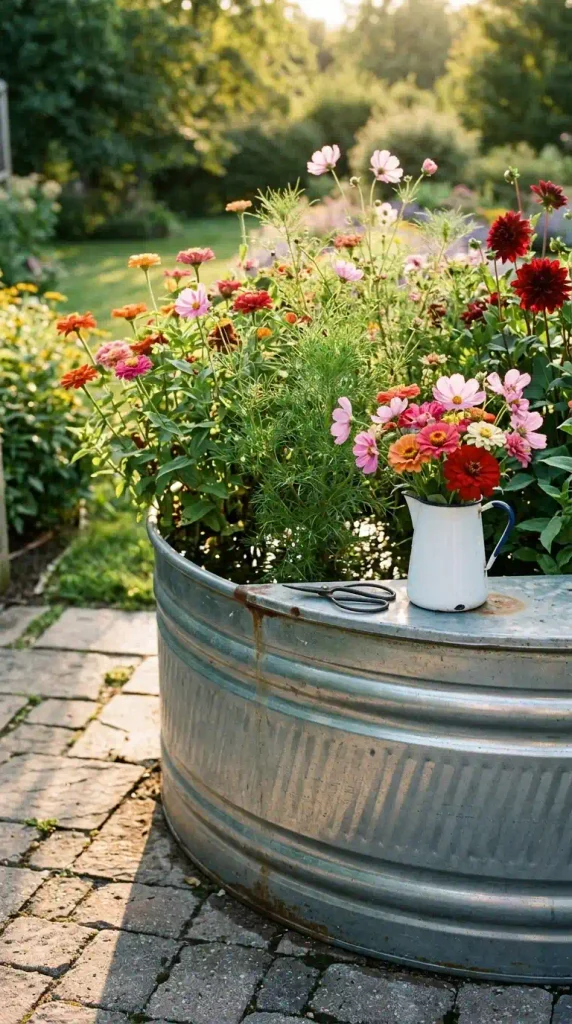
Soil is the real cost. Fill the bottom third with empty nursery pots turned upside down, then top with bagged raised bed mix. Then pick your cutting flowers by how much work you want:
| Flower | Start from | Effort | Best trait |
|---|---|---|---|
| 🌸 Zinnias | Seed after last frost | Low | More flowers the more you cut |
| 🌼 Cosmos | Seed after last frost | Low | Airy height, thrives in lean soil |
| 🌺 Dahlias | Tubers in late spring | Medium | Big blooms through first frost |
Burpee zinnia and cosmos seed packets usually cost a few dollars each, which makes this the cheapest bouquet supply on the list. In Zones 5 to 7, dig dahlia tubers after the first frost blackens the leaves and store them somewhere cool and dry.
10. Fall Pots With Ornamental Cabbage and Mums
Cold nights are what make ornamental cabbage and kale beautiful. Their centers turn deep pink, purple, or cream once nights stay below about 50°F, and they hang on well past the first light frosts. That makes them the fall leg of the Bloom Relay for anyone who planted the spring and summer legs in the ground.
Cabbage is having a moment on Pinterest too. Pinterest named “Cabbage Crush” one of its 2026 trends, mostly on the food side, and the ornamental kind brings that same ruffled look to the front steps.
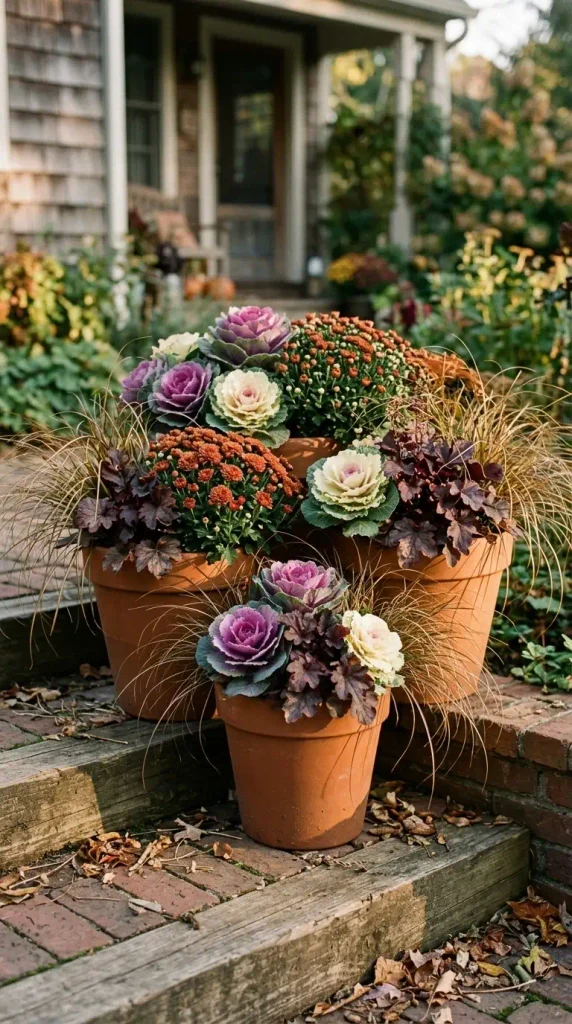
Budded mums in a 9 inch pot often run $8 to $15 at Lowe’s and Home Depot in October. A mum in full bloom on day one is half done.
11. Low Flowers Around the Fire Pit Ring
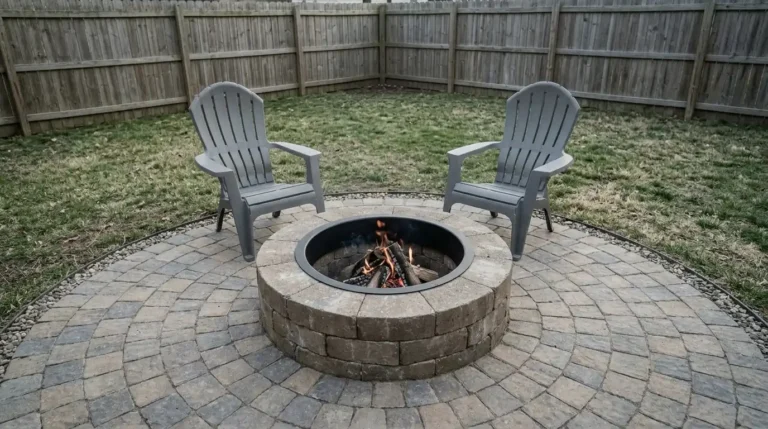
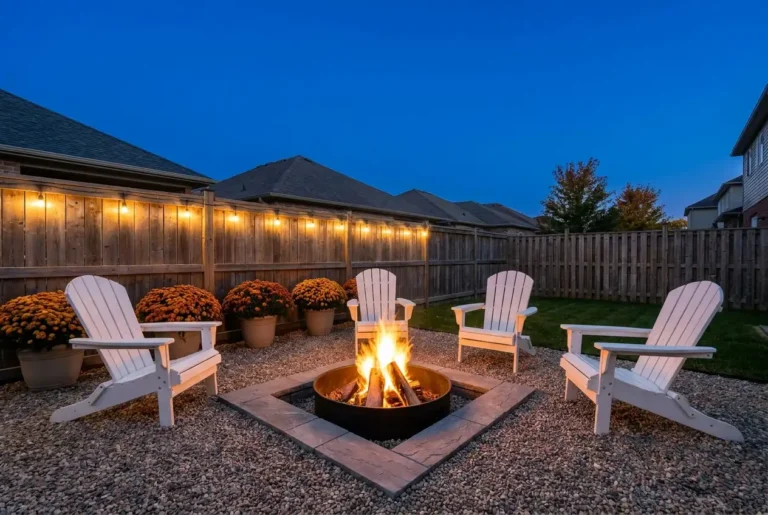
Fire and flowers can share a patio, but the plant list changes. Ornamental grasses look great around a fire pit in summer, then dry into tinder by October. Keep them well away.
Succulent, low growing plants are the smarter frame. Sedum ‘Autumn Joy’ stores water in its fleshy leaves and turns rusty pink just as fire pit season peaks. Creeping thyme tucked between pavers smells good when people step on it.
Keep every plant outside a ring of gravel or pavers, never right against the fire bowl.
⚠️ Watch Out
Check your city’s burn rules before you light anything, keep the clearance from structures and branches that your fire pit’s manual and local code call for, and never leave a fire unattended.
Dry plants near flame are the risk most people never think about.
12. Hanging Baskets on Shepherd’s Hooks Along the Patio
Hanging baskets bring color up to eye level when you’re sitting down, which is exactly where ground beds can’t reach. Double shepherd’s hooks let you line the edge of a patio or deck without drilling into anything.
Pick by light. Proven Winners Supertunia petunias pour over the sides of a basket in full sun. Fuchsias and begonias handle shade and pull in hummingbirds.
Choose 14 inch baskets or larger. Small ones dry out by lunch in July.
Push each hook about 12 inches into the ground so a wet basket can’t tip it.
Water until it drips out the bottom, every day in summer heat.
Space the hooks every 6 to 8 feet. Closer than that and the patio starts to feel crowded instead of framed.
13. A Renter Flower Corner in Fabric Grow Bags
Most renters skip flowers because nothing seems worth planting in a yard they’ll leave. Fabric grow bags fix that. They’re cheap, they breathe so roots don’t cook, and they fold flat for the moving truck.
Group three bags at three heights in one corner of the patio. A 15 gallon bag holds tall cosmos or zinnias, a 10 gallon bag takes salvia or coreopsis, and a 5 gallon bag up front can spill trailing verbena over the edge. A five pack of 10 gallon bags usually costs $20 to $30 on Amazon or at Walmart.
🪴 The renter test
Odd numbers and mixed heights make three bags look like a garden instead of a row of laundry.
14. A Shade Corner Under the Tree That Still Blooms
Shade under a mature maple or oak is the spot most people give up on. It shouldn’t be.
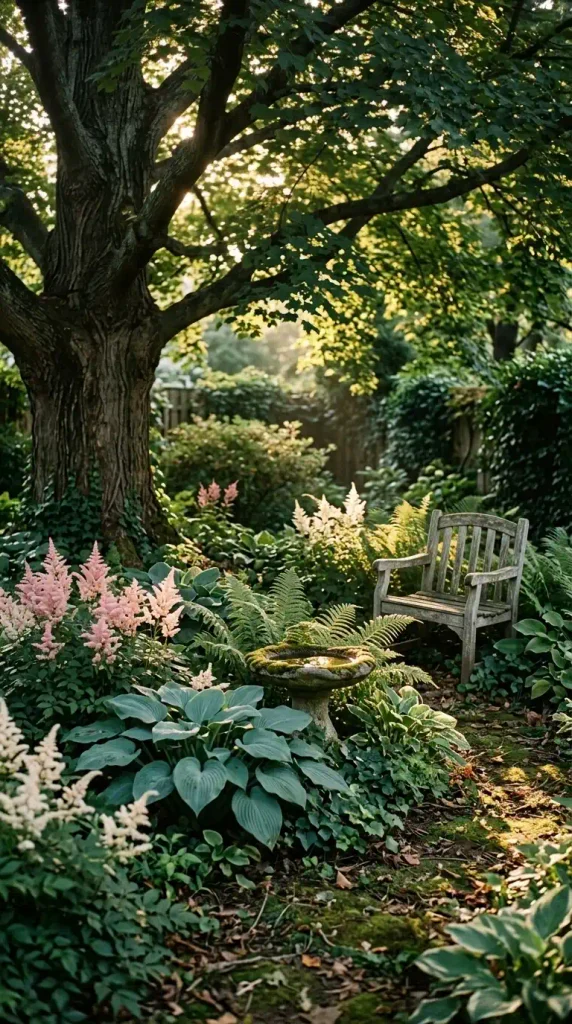
Astilbe sends up feathery plumes in early summer, as long as the soil stays moist. Japanese anemone takes over in late summer and fall. Fill gaps with impatiens or wax begonias for nonstop color, and lean on hostas for the big leaves that hold it all together.
Go easy on the tree’s roots. Don’t pile more than 2 or 3 inches of new soil over them, and dig small planting pockets instead of tilling the whole area. For more seasonal planting combinations, browse our garden inspiration ideas for every season.
15. A Curvy Bed Edge Spilling With Sweet Alyssum
Straight edges look like a parking lot. Curves look like a garden.
Lay a garden hose on the lawn and nudge it into a long, lazy curve until it looks right from your back door. Cut along it with a flat spade, then hold the line with natural stone or steel edging.
The finishing touch costs about one seed packet. Sow sweet alyssum along the front, and by midsummer it spills over the edge in a low white froth that smells like honey. In mild zones it often reseeds itself.
A straight bed against the fence, bare soil showing, a hard line where lawn meets mulch.
A deep, curving bed with a stone edge and white alyssum softening every inch of the border.
Make the curve deeper than feels natural. Beds always look smaller once plants fill in.
Cozy Backyard Flower Ideas Frequently Asked Questions
What flowers make a backyard feel cozy?
Flowers that surround a seat, smell good, or glow at dusk do the most. Compact hydrangeas around a bench create a sense of enclosure. Lavender and sweet alyssum add scent along paths. White flowers like garden phlox and moonflower stay visible after sunset, which keeps the yard inviting on summer evenings. Plant in groups of three near where you sit, not just along the back fence.
When should I plant spring bulbs?
Plant spring bulbs in fall, before the ground freezes. In most of Zones 5 to 7 that means late September through October, and gardeners in Zones 8 and 9 can often plant later. Set each bulb two and a half to three times as deep as it is tall. In the warmest zones, tulips usually need 10 to 12 weeks of chilling first.
Can I plant perennials in the fall?
Yes, and fall is often better than spring. Warm soil and cool air help roots grow while the plant isn’t pushing flowers. Aim to plant about six weeks before your ground usually freezes, water deeply until it does, and add 2 to 3 inches of mulch. Late arrivals can stay in their pots in a sheltered spot until spring.
What are the easiest flowers for a beginner flower bed?
Black-eyed Susan ‘Goldsturm’, catmint ‘Walker’s Low’, purple coneflower, and sedum ‘Autumn Joy’ are hard to kill in full sun across most of Zones 5 to 9. They handle dry spells and need little feeding. For annuals, zinnias and cosmos grow fast from seed and bloom until frost, which makes them an easy, low cost way to fill gaps.
How do I make a small backyard flower garden look full?
Repeat fewer plants in bigger groups. Three or five of one perennial reads as a single shape, while one of everything looks scattered. Plant a little tighter than the tag suggests, use vertical space with arches, window boxes, and hanging baskets, and layer heights with tall plants in back and trailing ones along the front edge.
What flowers bloom all summer long?
Zinnias, cosmos, Supertunia petunias, calibrachoa, and wax begonias bloom nonstop until frost when they get regular water. Among perennials, catmint reblooms if you shear it after the first flush, and ‘Goldsturm’ black-eyed Susan carries color for many weeks in late summer. Pairing a few long bloomers with seasonal stars keeps a bed from ever looking empty.
How do I keep a flower bed low maintenance?
Choose perennials matched to your zone and your sun, then mulch 2 to 3 inches deep to block weeds and hold moisture. Group plants with the same water needs together. A drip line on a simple timer saves daily hand watering, and a crisp stone or steel edge stops grass from creeping in.
Your Next Weekend in the Garden
You don’t need all fifteen ideas at once. Pick the spot you already sit in most and build outward from it. Start with a horseshoe of shrubs, a scented path, or a pot of layered bulbs.
Since it’s October, the bulb pot and fall perennials are the best use of this weekend. Plant them now and next spring does the rest.
Pin your favorite of these cozy backyard flower ideas to your garden board so you have the plant list ready when you hit the nursery. Then come back next spring and add the summer leg of your Bloom Relay.