Beautiful Garden Ideas That Look Like You Hired a Designer
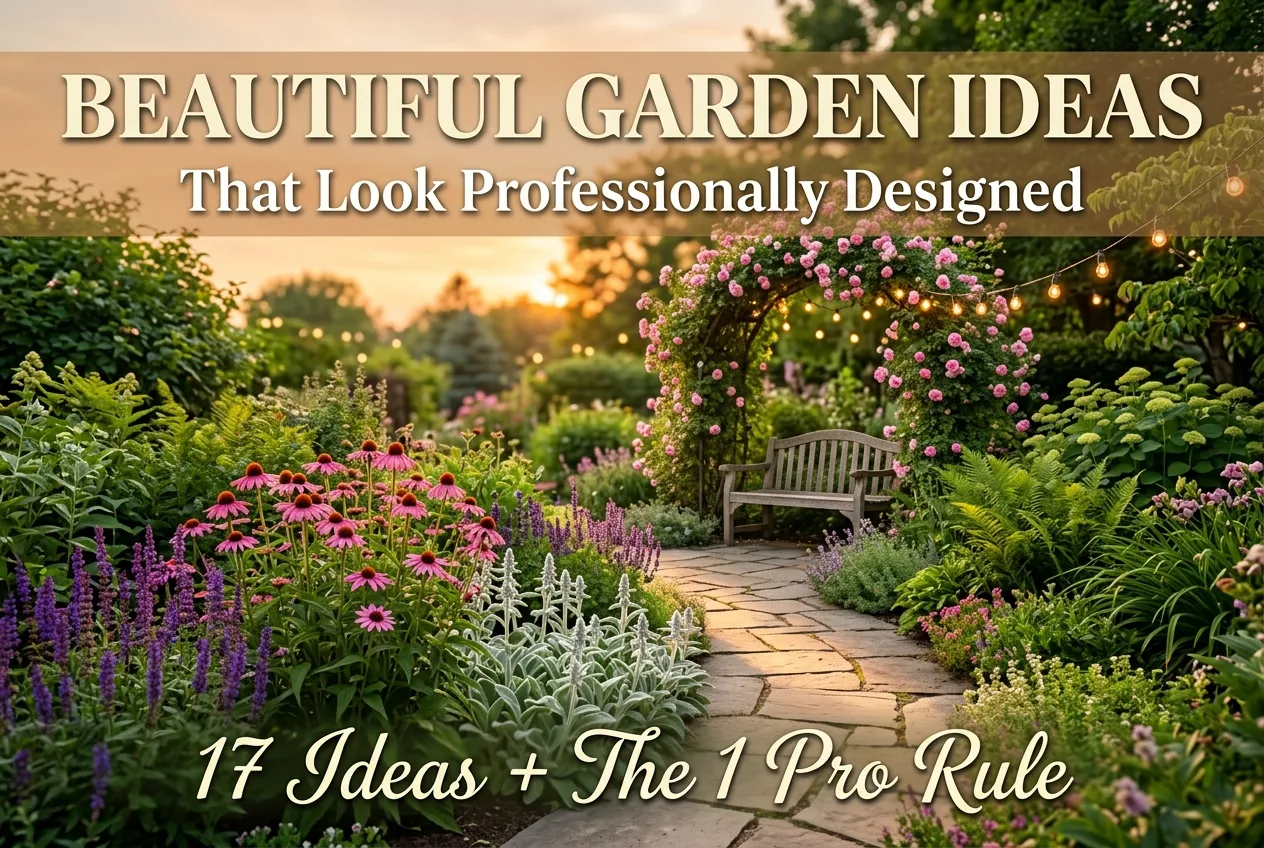
Okay, real talk. You don’t need a designer, a big budget, or a degree in horticulture to get a garden that makes the neighbors slow down. You need a few beautiful garden ideas and one simple rule the pros use without even thinking about it.
That’s what you’re getting here. Seventeen beautiful garden ideas, sorted from “do it this Saturday” to “save up and go big,” plus the trick that makes cheap plants look expensive. We garden in a real yard (with real weeds and a dog who naps in the salvia), so nothing here is stock-photo fluff.
Grab your coffee. Let’s make your yard look professionally designed.
The One Rule That Makes a Garden Look Professionally Designed
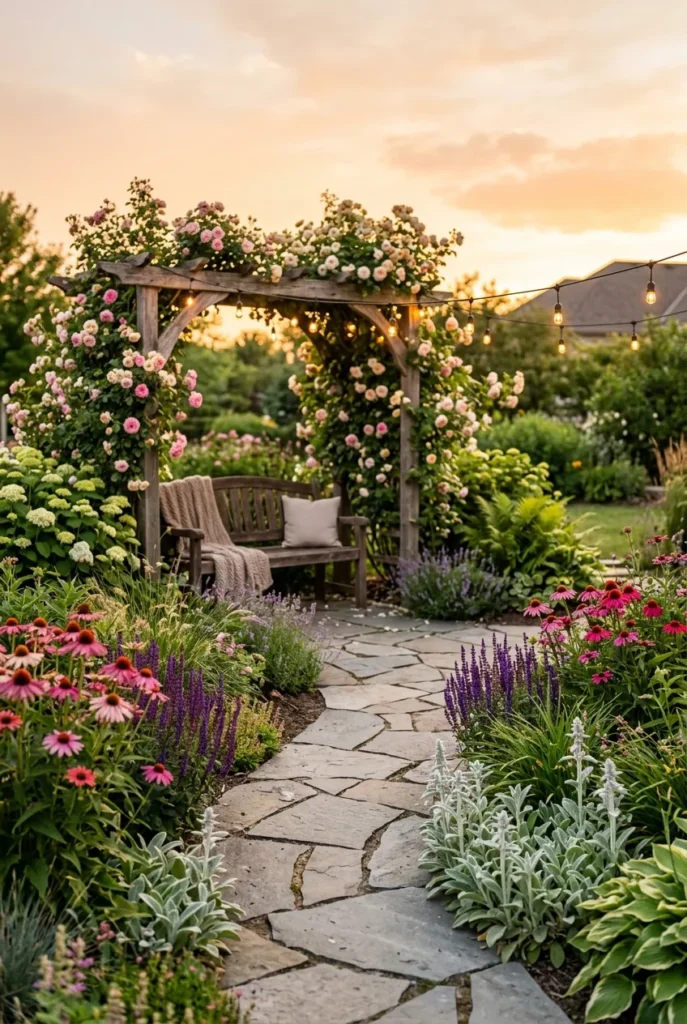
Here’s the secret pros won’t put on a plant tag. Beautiful gardens aren’t random. They follow a pattern your eye already loves, and you can copy it on purpose.
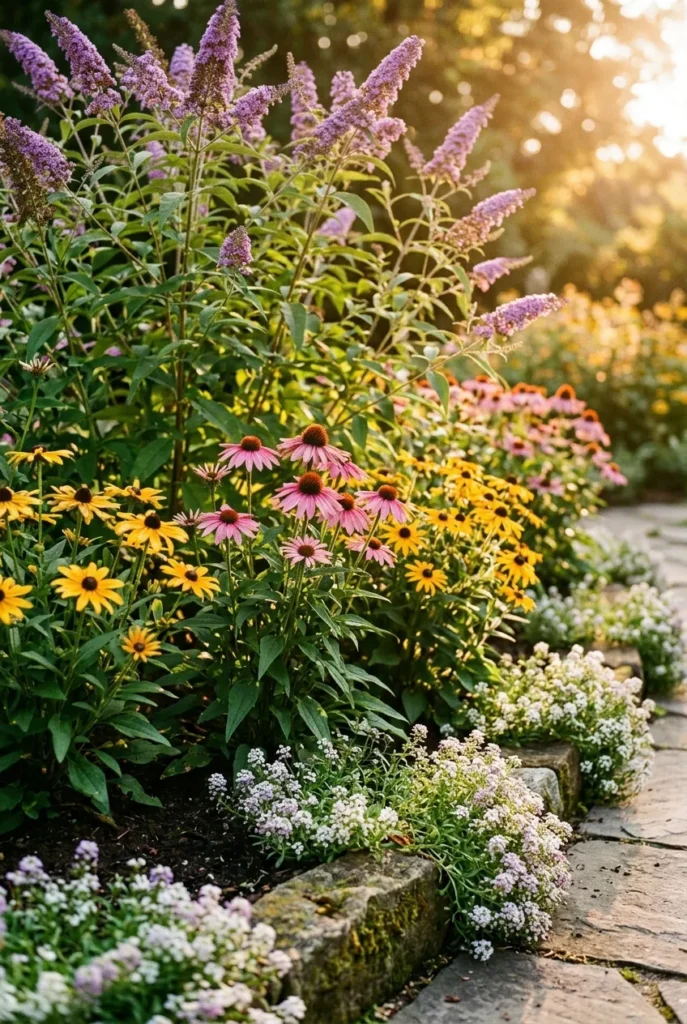
The Designer’s 3-Layer Look: a garden reads as “professionally designed” when your eye catches three heights at once. A tall anchor in back (a shrub, small tree, or obelisk), a soft mid-layer of perennials in the middle, and a low spilling edge in front. Skip a layer and the bed looks flat. Hit all three and even a $3 packet of seeds looks intentional.
Tall, medium, spilling. That’s it. Repeat it down the border and suddenly your yard looks like a magazine spread.
Every idea below is really just this rule wearing a different outfit. Want more of this angle? We break down whole yards in our roundup of garden inspiration ideas for 2026.
Beautiful Small Garden Ideas That Punch Above Their Size
Small yards can out-pretty big ones. Less ground to fill means every inch earns its keep.
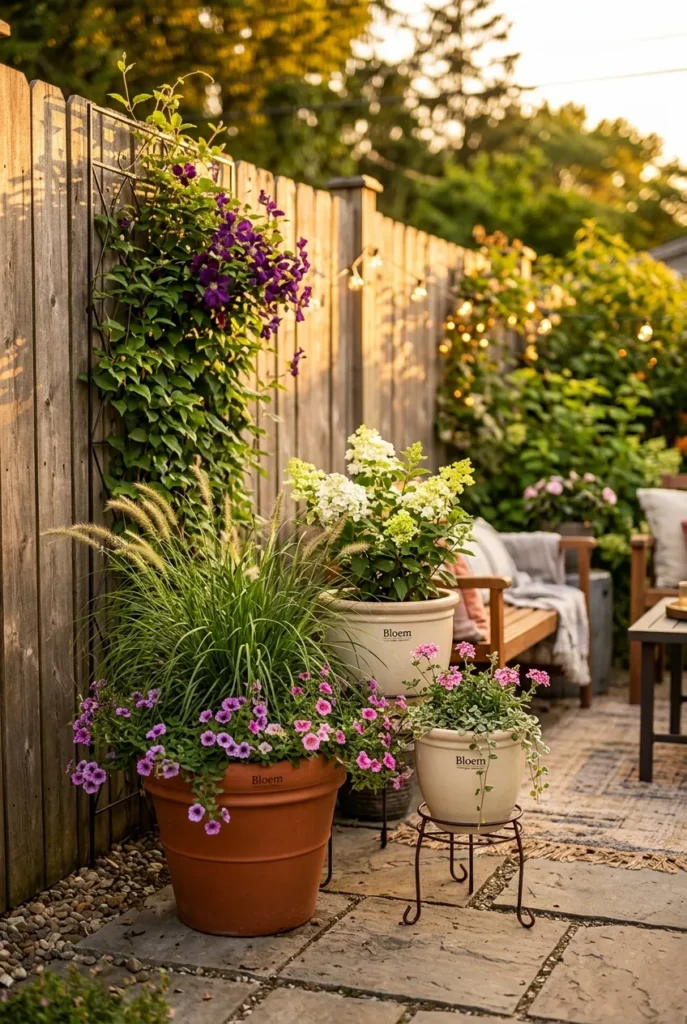
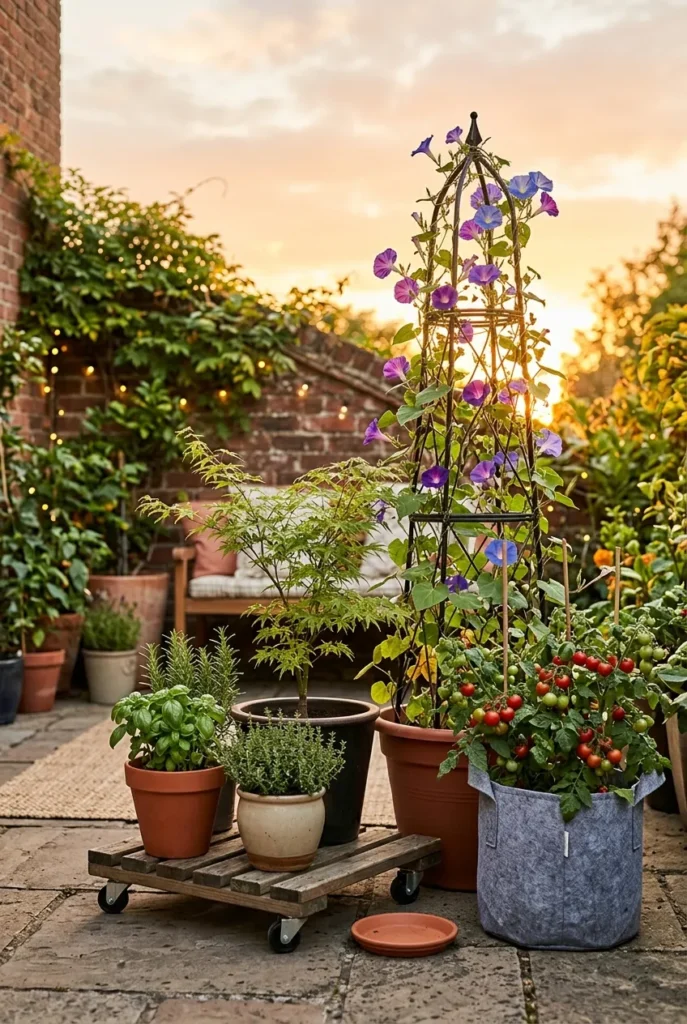
1. Go vertical before you go wide. A trellis of climbing clematis or a Vego Garden arch turns a boring fence into your back layer, zero floor space lost. This is the highest-value move for a tiny yard, which is exactly why it’s first.
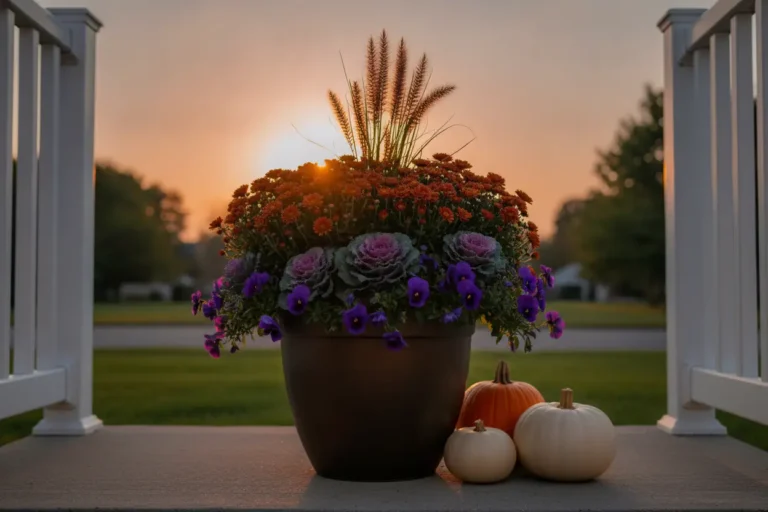
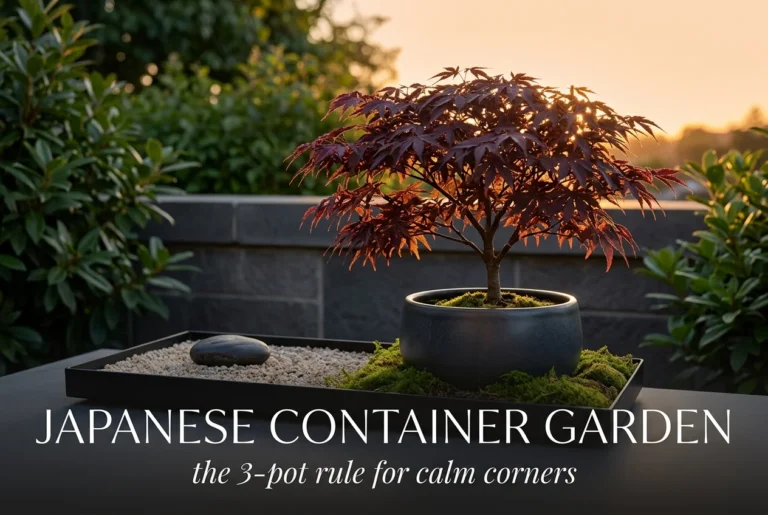
2. Group containers in odd numbers. Three Bloem pots at three heights read as a designed “moment.” Even numbers feel stiff and showroom-y.
3. Add one small water element. A half-barrel with a solar bubbler pulls the eye and the ear. Movement makes a small space feel alive and expensive.
Real experience, e.g. “Our first yard was barely 12 feet deep, so we ran three EarthBox planters along the fence with a cedar trellis behind them, and that skinny strip out-bloomed the big open bed we tried the year before.”
Need a full plan for a tight yard? We walk through it in our guide to small backyard landscaping ideas.
Renter-Friendly Versions
Renting? Keep everything out of the ground. Grouped pots, freestanding obelisks, and a rolling planter caddy mean the whole garden moves with you. Fabric grow bags fold flat when the lease ends.
Cottage Garden Ideas (The Look Pinterest Can’t Stop Saving)
The cottage look is the one people mean when they say “dreamy.” Loose, layered, a little wild on purpose, and very forgiving for beginners.
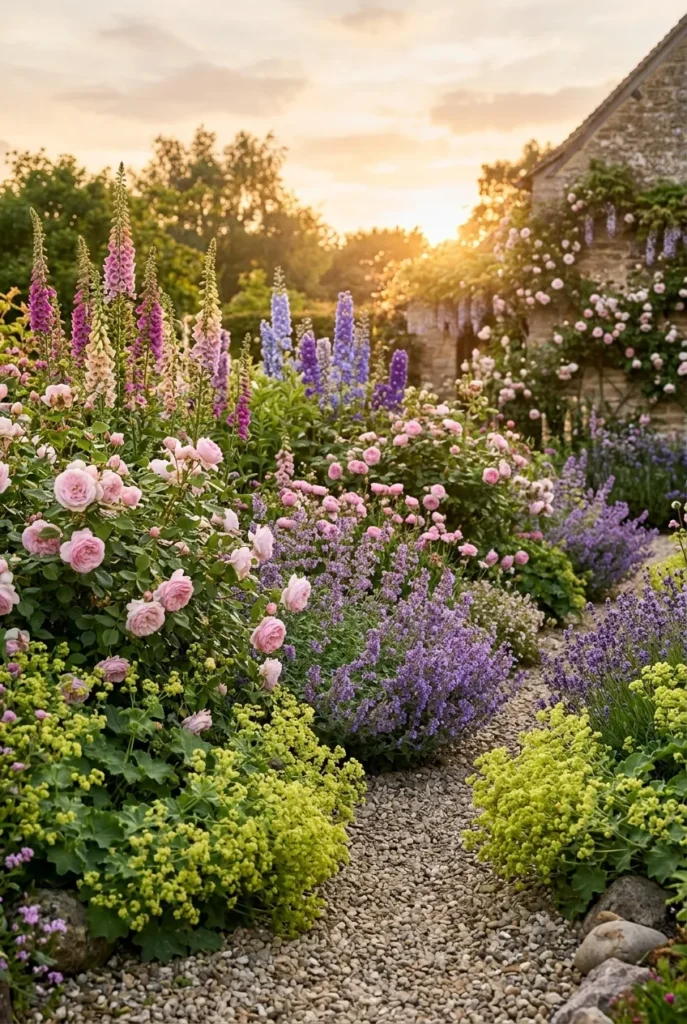
4. Pack plants tighter than feels right. Cottage beds hide bare soil, so space perennials to touch at maturity.
5. Repeat one or two colors down the border. A ribbon of the same soft pink or deep purple ties the happy chaos together. Repetition is what separates “cottage” from “messy.”
6. Let a few plants self-sow. Foxglove, larkspur, and calendula that reseed give you that happened-by-magic feeling every spring.
7. Add a hardworking rose. A disease-resistant landscape rose (Knock Out types are forgiving) delivers months of classic bloom without spraying.
Honestly, cottage is the easiest style to fake because “a little messy” is the entire point. Steal a full color plan from our dreamy cottage garden yard ideas.
Beautiful Garden Ideas on a Budget (Real Numbers)
You do not need deep pockets. You need a plan and a little patience.
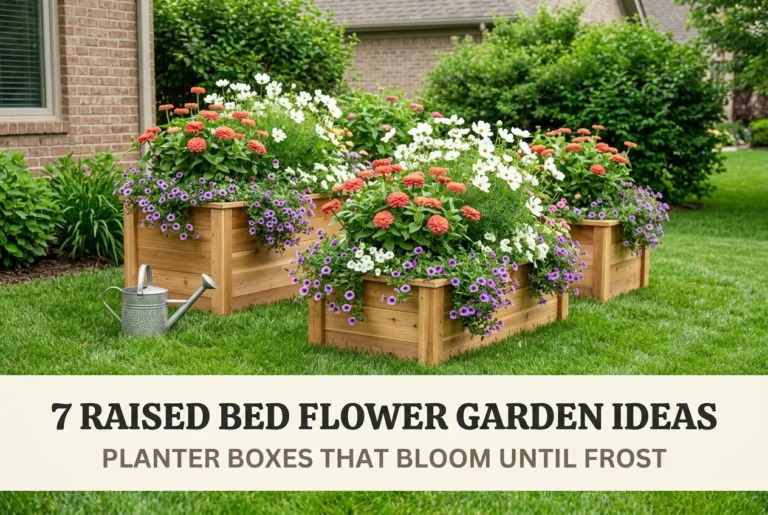
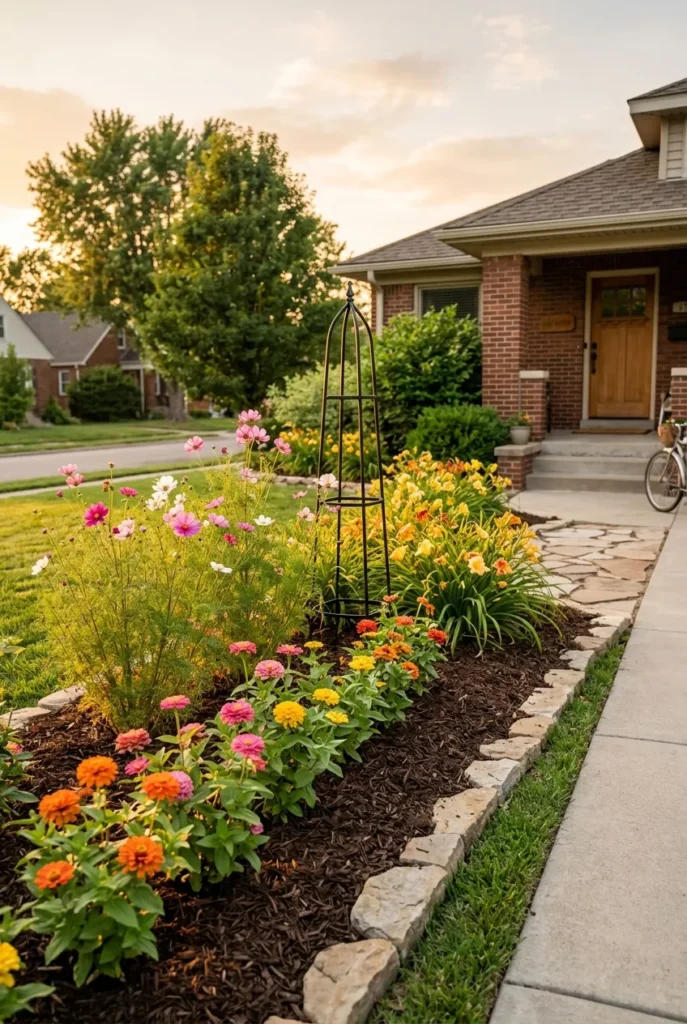
8. Start from seed and division. A packet of zinnia seeds runs around $3 and fills a whole border. Ask a neighbor for a hosta or daylily division (most gardeners love to share).
9. Mulch is the cheapest glow-up. A few bags of shredded hardwood mulch, usually under $5 a bag at Home Depot or Lowe’s, make any bed look instantly finished. [VERIFY exact price]
10. Buy perennials for the big spots. Annuals die in fall; perennials come back. You pay once and win for years.
Here’s the tiered spend we actually use, so you can pick your lane:
The Pro-Look-for-Less Spend Tiers
| Tier | Rough spend | What it gets you |
|---|---|---|
| Weekend refresh | around $50 | Mulch, one flat of annuals, one anchor perennial |
| Season starter | in the $150 to $300 range | A full 3-layer bed, a trellis, grouped containers |
| Full makeover | $600 and up | Multiple beds, a path, lighting, a small water feature |
[VERIFY — confirm current tier pricing for your region; these are 2026 US ballparks.]
The “professional” look never lived in the price tag. It lives in the layering.
Real experience, e.g. “We built our whole front border for right around $180 by starting cosmos and zinnias from seed and splitting a friend’s daylilies, and it looked pricier than the $600 bed the previous owners left behind.”
Choosing Plants That Stay Beautiful in Your Zone
The prettiest plant on the shelf is worthless if it can’t survive your winter. Match plants to your zone first, always.
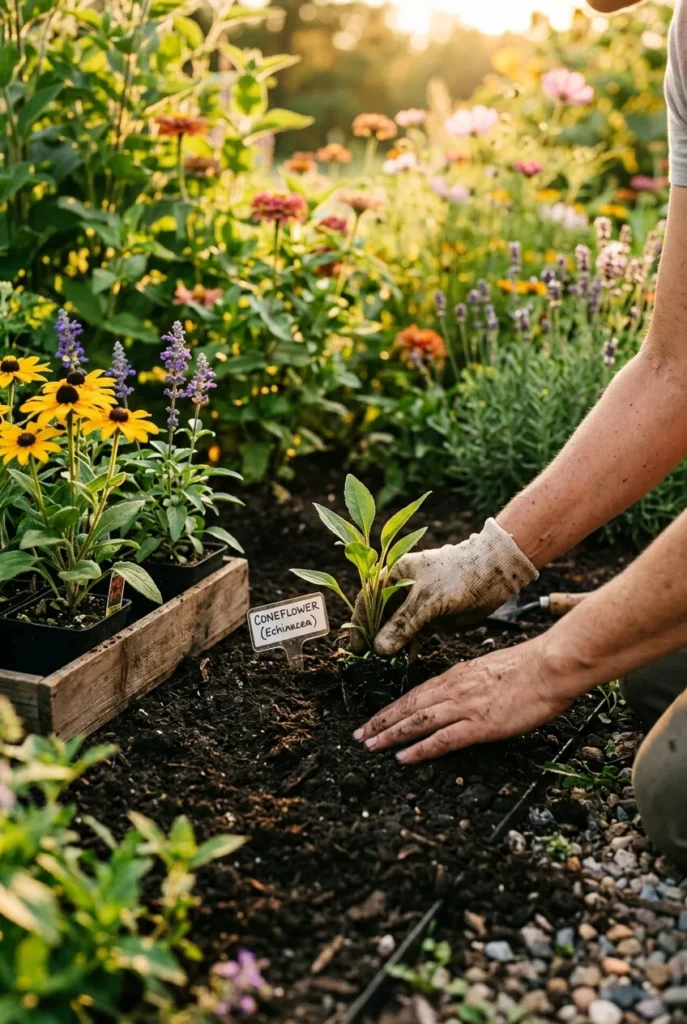
Across Zones 5 to 9, a reliable beautiful-garden backbone is coneflower (echinacea), black-eyed Susan, catmint, salvia, and daylily. They’re tough, they bloom for weeks, and pollinators adore them.
11. Know your number before you buy. A tag that says “hardy to Zone 6” may not make it through a Zone 5 winter. You can check your USDA hardiness zone in about ten seconds.
12. Plant after your last frost. In Zone 5 that’s usually mid-May; in Zone 8, often late March. Ranges shift every year, so look up your local frost dates before you trust tender plants to the ground.
Real experience, e.g. “I garden in Zone 6b and lost a whole flat of dahlias one May by planting a week too early, so now I wait for the soil to actually warm up.”
Right plant, right zone, right timing. Beauty follows on its own.
Beautiful Garden Lighting for Evening Ambience
Your garden should earn its keep after sunset too. Light is where “nice” becomes “wow.”
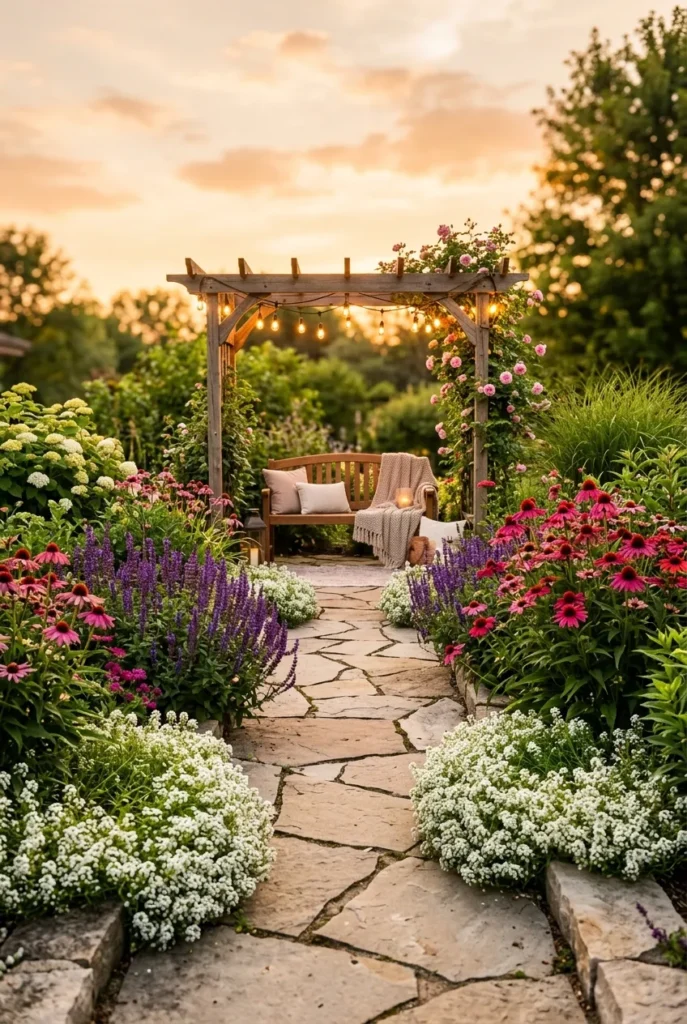
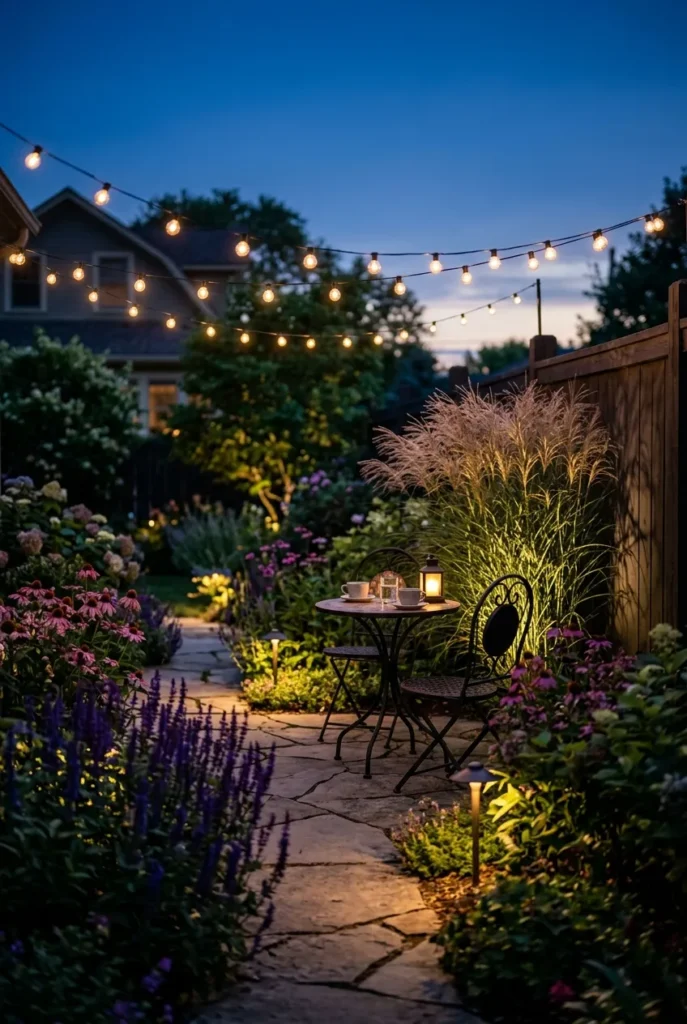
13. String lights over the seating. Warm-white Brightech or Feit café bulbs in a gentle swag turn a patio into a room. This is the top-saved evening look on Pinterest, and it’s an easy afternoon project.
14. Uplight one hero plant. A single solar spotlight aimed up into an ornamental grass or small tree throws gorgeous shadows on the fence.
15. Line the main path low. Soft path lights guide the walk and make the whole yard feel designed after dark.
Keep the glow warm, never blue. Blue reads like a parking lot; amber reads like a garden.
Two Pro Moves Most Garden Guides Skip
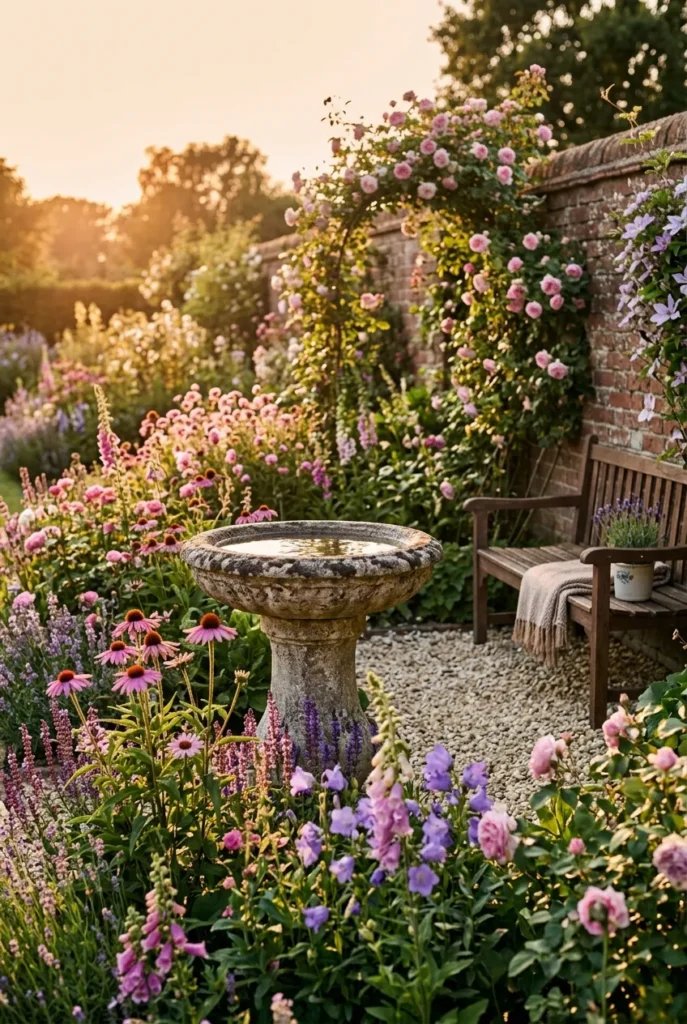
16. Give the eye a place to rest. Not every inch needs a plant. A patch of clean gravel, a simple bench, or a small lawn circle lets all that color breathe. Rest spots make the busy parts pop.
17. Give every view one clear focal point. Each angle should have one “star,” a birdbath, a bold urn, a flowering tree. Without a star, the eye wanders and nothing feels finished.
That’s the 3-Layer Look plus a focal point. Two rules, seventeen ideas, one very good-looking garden.
Frequently Asked Questions
How can I make my garden beautiful?
Start with the Designer’s 3-Layer Look: a tall back anchor, billowing mid-height perennials, and a low spilling edge, repeated down each bed. Add mulch to finish the soil, repeat one or two colors for cohesion, and give every view one clear focal point. Match every plant to your USDA zone so it survives.
What is the garden design for 2026?
Interest is leaning toward relaxed pollinator-friendly cottage planting, layered naturalistic borders, edibles mixed into ornamental beds, and warm evening lighting for outdoor living. [VERIFY — treat “2026 trend” as a hook, not a hard claim, unless you cite live trend data.]
What are some popular styles for beautiful gardens?
The most-saved styles are cottage (loose and layered), modern minimalist (clean lines, restrained palette), naturalistic prairie (grasses and natives), and classic formal (symmetry and clipped edges). Cottage is the most forgiving for beginners.
What are the latest landscape design trends?
Big themes: native and drought-tolerant planting, blurred lines between patio and garden (“outdoor rooms”), multi-season interest over one-time blooms, and low-voltage warm lighting. [VERIFY current trend sources before stating as fact.]
What are the easiest beautiful plants for beginners?
Coneflower, black-eyed Susan, catmint, daylily, and salvia are nearly impossible to kill across Zones 5 to 9, bloom for weeks, and feed pollinators. Start there, then expand.
How do I make a small garden look beautiful and expensive?
Go vertical with trellises and arches, group containers in odd numbers at staggered heights, repeat a tight color palette, and add one small water or focal element. Edit hard; small spaces punish clutter.
How much does a beautiful garden cost?
Anywhere from around $50 for a weekend mulch-and-annuals refresh to $600 and up for a full makeover with beds, a path, and lighting. Starting from seed and dividing perennials keeps it cheap. [VERIFY current pricing.]
Your Turn to Dig In
Beautiful gardens aren’t a gift you’re born with. They’re a rule you repeat: three layers, one focal point, plants that fit your zone, and a little warm light for the evening. Pick just one idea from this list, the trellis, the container trio, the string lights, and start it this weekend.
Save this page so the 3-Layer Look is in your pocket next time you’re standing in the garden center. Then come back and tell us which idea you tried first. We read every single comment.