27 Tropical Cozy Backyard Ideas This Fall

Most tropical backyard articles were written for July. They hand you a list of palms and a water feature, then go quiet the second the temperature drops. These tropical cozy backyard ideas are built for the other half of the year, the stretch from late September through the first hard freeze when the light goes gold at 6pm and the leaves are still huge and green.
Fall is actually the best season for this look in the US. Cannas and elephant ears hit their full size right now. Ornamental grasses finally have their plumes. Nights in the 50s mean you can sit outside without sweating through your shirt, and firelight against big glossy foliage is a better picture than anything a summer afternoon gives you.
Below are 27 ideas, sorted by what they cost and how long they take. Some are plants. A lot of them are not. And running through all of them is one simple sorting rule that keeps the whole yard alive into spring instead of turning to mush in one bad October night.
The 55 Degree Sort
Here is the rule the rest of this list hangs on. University of Maryland Extension puts the action point at the moment nighttime temperatures start regularly dropping into the mid to low 50s Fahrenheit. That is your signal, not the calendar. When it arrives, every tropical thing in your yard goes into one of three piles, and you handle each pile differently. Sort once, in one afternoon, and you stop losing plants you paid for.
1. Plant a banana leaf privacy wall along the worst sightline
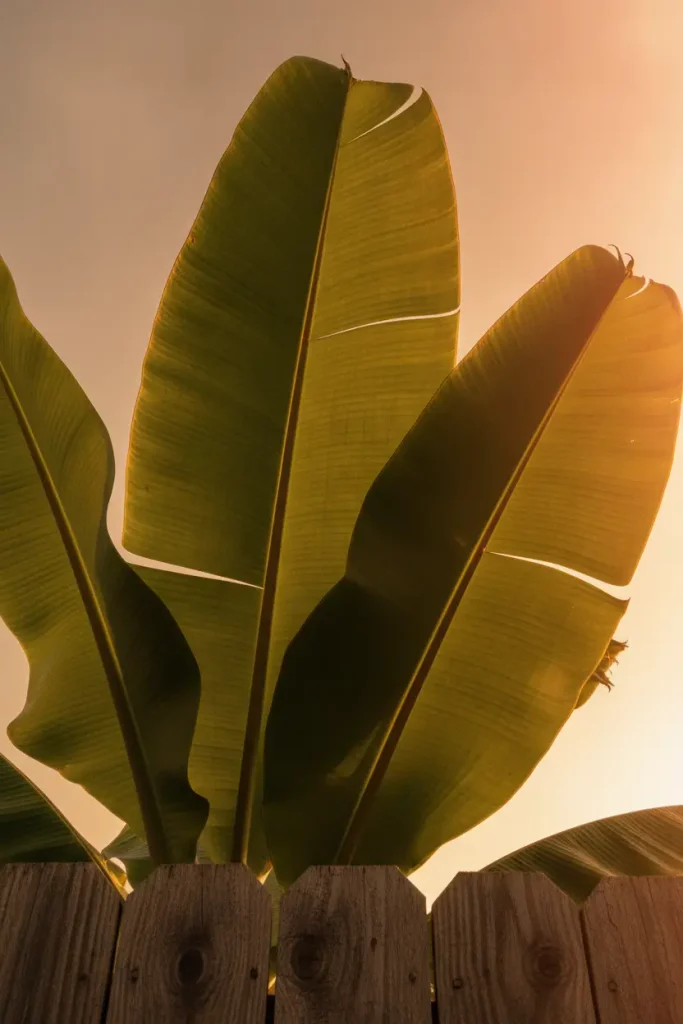
Nothing blocks a neighbor’s second story window like a leaf the size of a car hood. Musa basjoo is the one to use in cold country. Its rhizomes are cold hardy down to minus 10 degrees F, which means Zone 5 gardeners can grow a genuinely tropical looking screen and leave the roots in the ground.
Starter plants run roughly $25 to $50 at mail order nurseries, and they put on serious height in a single season.
- Plant three in a loose triangle, not a straight line, so the screen reads as a clump
- Give them the sunniest, most wind protected strip you have
- After frost blackens the leaves, cut the stems back to 2 feet and cage them with chicken wire packed with fallen leaves
Recreate this screen
2. Put a warm toned rug under the seating so the floor stops fighting you
Bare concrete kills the whole look. It reads gray in every photo, it holds cold, and it makes even good furniture look like it is waiting for a delivery truck.
A flat woven outdoor rug in rust, clay or ochre fixes three things at once. It warms the color temperature, it defines the seating as a room, and it gives bare feet somewhere tolerable to land on a 55 degree evening.
Size it so the front legs of every chair sit on it. A rug that floats in the middle with furniture ringed around the edge looks smaller than no rug at all, which is the same trap people fall into with budget backyard patio ideas generally. Go one size up from what feels right.
3. Group three oversized pots instead of scattering six small ones
Six small pots read as clutter. Three big ones read as design.
Scale is the single biggest tell between a yard that looks tropical and a yard that looks like a garden center parking lot. A 20 inch pot holds enough soil to grow a canna to full height, dries out far slower on a windy fall weekend, and photographs as furniture rather than accessory.
💡 Quick Tip
Odd numbers and three different heights. One tall canna, one medium elephant ear, one low trailing sweet potato vine, all clustered so the pots touch.
Bloem and Costa Farms both sell wide lightweight resin pots that a person can still move alone once they are full, which matters a lot in six weeks when the 55 Degree Sort says that pot is coming inside.
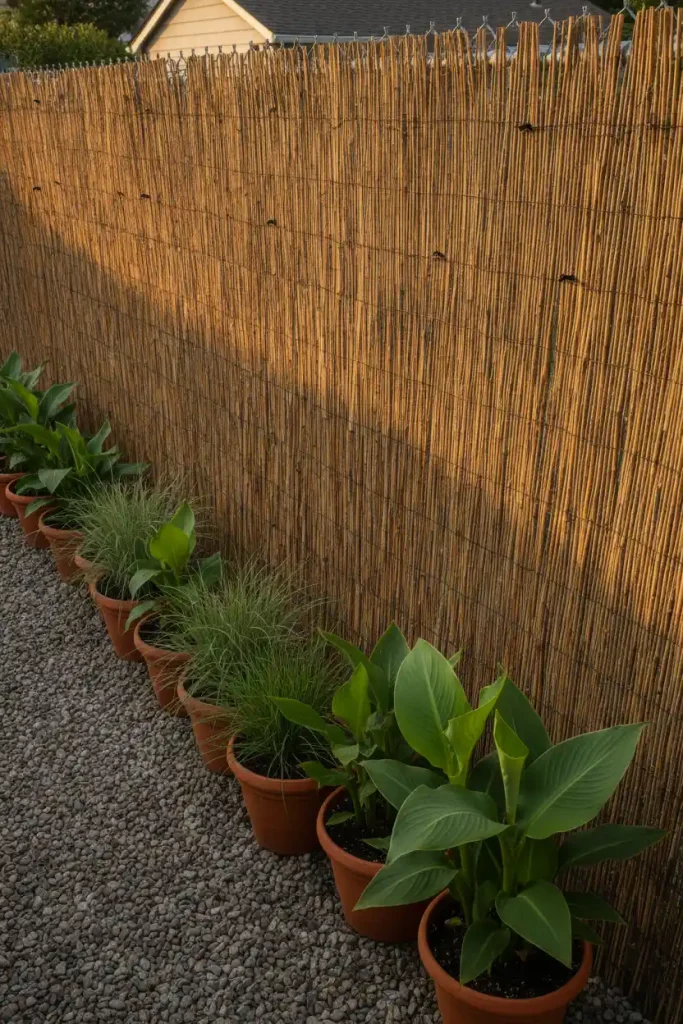
4. Roll bamboo reed fencing over the chain link and be done in an afternoon
Chain link is the fastest thing to fix and the most ignored. A single roll of bamboo reed fencing turns a silver grid into a warm textured wall that makes every plant in front of it look more expensive.
Backyard X Scapes sells 6 foot by 16 foot reed and bamboo rolls through Lowe’s and Home Depot, generally in the under $100 range per roll depending on the style and thickness.
Zip tie every 12 inches along the top rail, then the middle, then the bottom.
Cut with a fine tooth saw so the reeds do not splinter.
Stapling it to a shared fence without asking the neighbor first.
Wrapping the whole perimeter. One wall is a feature, four walls is a crate.
Renters, note the zip ties. Everything comes off in ten minutes.
5. Hang cafe bulbs on one guide wire, not on hope
Height is what separates a yard that glows from a yard with lights in it. Bulbs strung at roughly 8 to 9 feet put the light above eye level, which flatters everything underneath and keeps the glare out of your face.
Run a stainless guide wire first, then clip the string to it. The wire carries the tension, the light string just hangs.
Brightech Ambience Pro 48 foot commercial grade strands are the workhorse here, typically in the $50 to $80 range on Amazon depending on bulb type, and the LED version sips power if you are leaving them on every evening through October.
Fix two anchor points, house eave to a post or a tree, and tension a stainless guide wire between them.
Clip the light string to the wire every few feet so the cable never carries the load.
Leave a drip loop at the plug end so rain runs off instead of down into the outlet.
Use outdoor rated, UL listed lights and cords on a GFCI outlet. Anything beyond plugging into an existing outlet is a job for a licensed electrician.
6. Float elephant ears in a wide low bowl beside the door
Elephant ears do their best work at close range, where you walk past the leaf and register how big it actually is. Colocasia leaves can reach three or four feet across, which is absurd in the best way next to a back door.
A wide shallow bowl planter beats a tall narrow one here. The leaves arch out, the shape stays low and generous, and the whole thing reads deliberate instead of accidental.
- ▸Keep it consistently moist, these are bog plants at heart.
- ▸Part sun keeps the color deep, full blazing sun scorches leaf edges.
- ▸When leaves yellow, that is the plant telling you it is ready for the sleep pile.
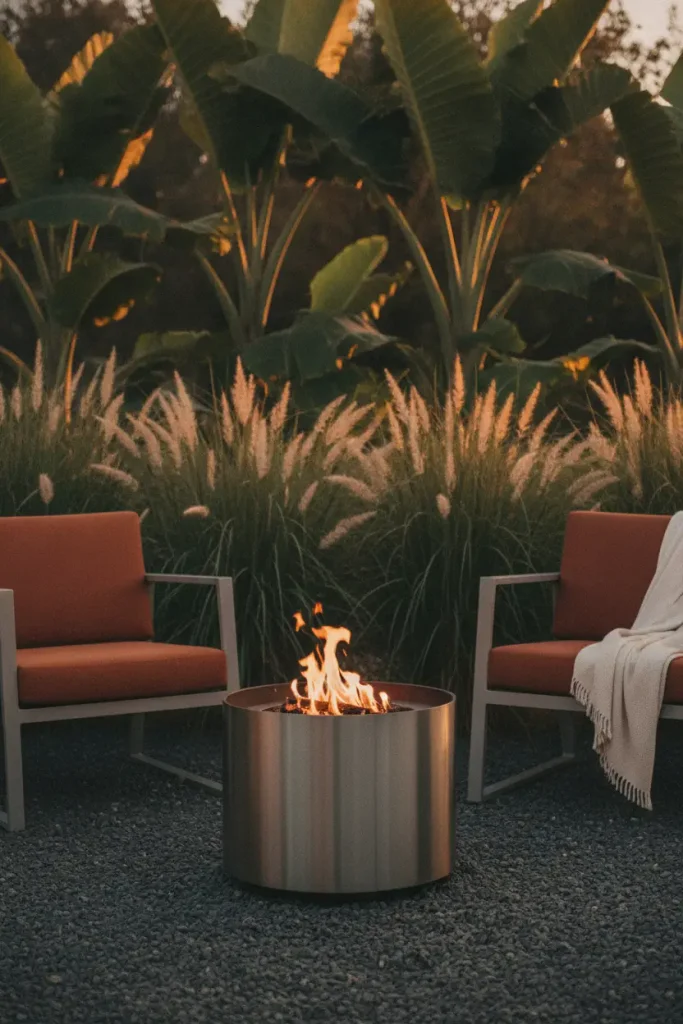
7. Make a smokeless fire pit the fall anchor, not a summer afterthought
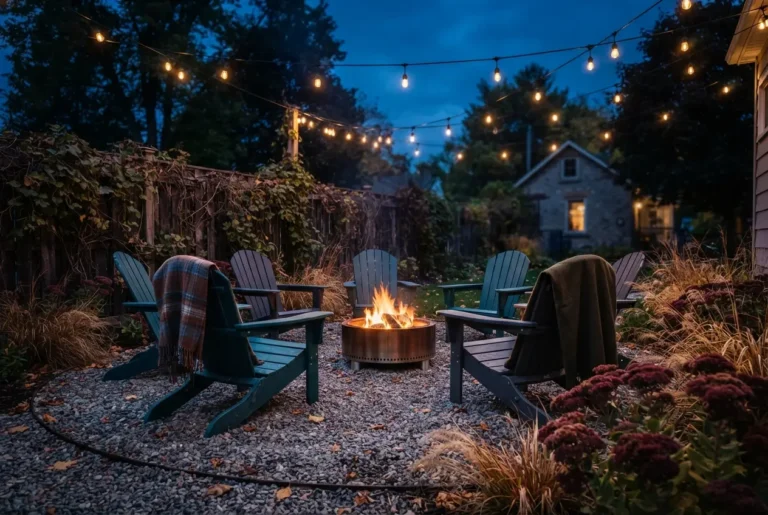
Fall is when a fire pit stops being decor and starts being the reason anybody goes outside. Firelight against big glossy foliage is the whole tropical cozy backyard idea in one frame, and it buys you six extra weeks of usable evenings.
Solo Stove’s Bonfire 2.0 is the common pick, carried at Home Depot, Target, Ace and Dick’s, and it generally sits in the $200 to $300 range depending on the bundle and the sale. The smokeless design matters more in fall than summer, because everyone is sitting closer in.
Warm light low to the ground throws leaf shadows up onto the fence. The plants you already own do twice the work after dark.
Check your city’s burn rules before you light anything, keep the clearance from structures and branches that your fire pit’s manual and local code call for, and never leave a fire unattended.
8. Let cannas carry the hot color into October
Cannas keep going long after the summer annuals have given up. The foliage alone earns the space, bronze and burgundy and striped, and the flowers come in exactly the oranges and reds that look right next to firelight.
They are also the cheapest big impact plant in this whole list. Rhizomes are inexpensive, they multiply every year, and one clump fills a 20 inch pot fast.
| Cannas in the ground | Cannas in a pot |
|---|---|
| Bigger clumps, taller stems by September. | Movable, which matters on sort day. |
| You dig the rhizomes after frost blackens the tops. | Cut back and store the whole pot, cool and frost free. |
| Better for a screen or a back border. | Better for a patio corner or a balcony rail. |
9. Build a gravel corner that reads like a resort nook
Gravel sounds cheap. It photographs rich.
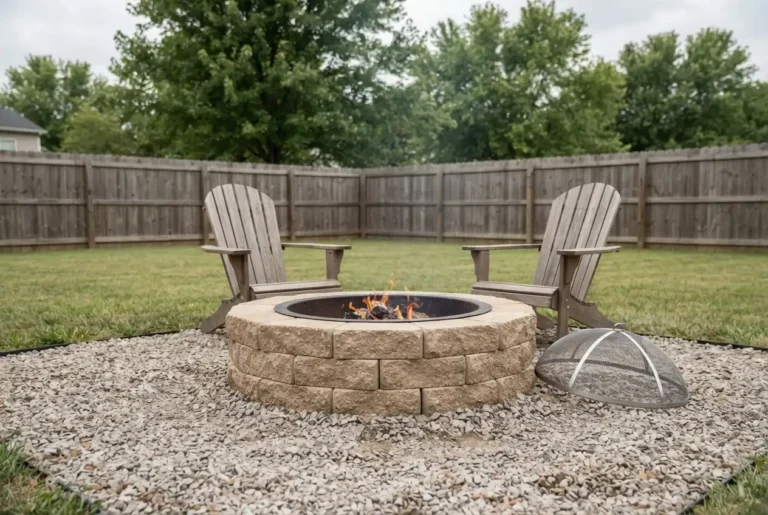
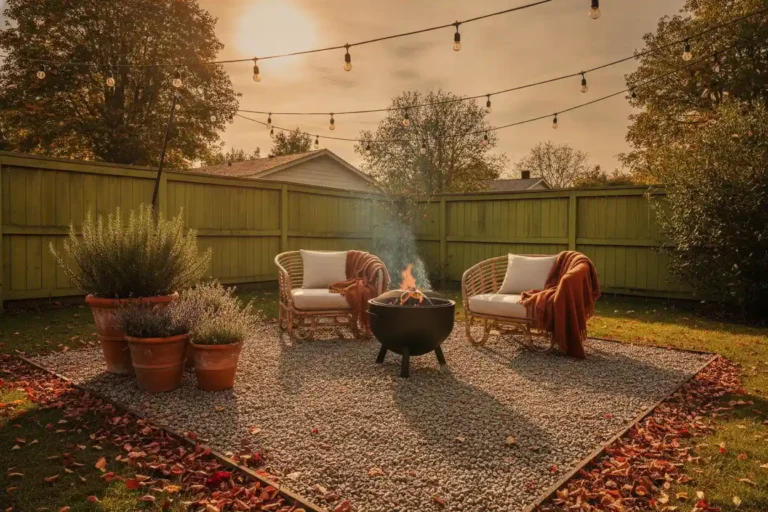
Take the least useful corner of the yard, the one that grows patchy grass and collects the hose. Lay landscape fabric, edge it with steel or cedar, dump in a few bags of decomposed granite or pea gravel, and set two chairs facing each other at a slight angle.
The sound is half the reason. Gravel underfoot on a quiet evening does something a lawn never does.
A bald patch of grass behind the shed where the hose lives and nothing grows well.
A gravel floor, cedar edging, two chairs and three big leafed pots crowding one side.
One weekend, and it costs less than a single piece of patio furniture.
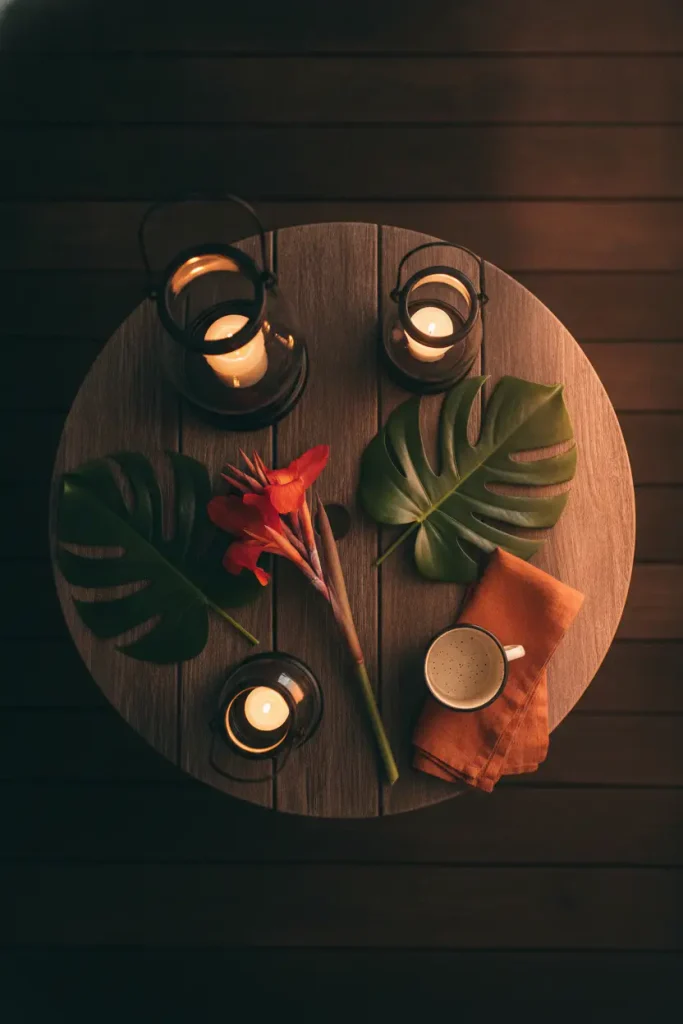
10. Use lanterns at three heights and skip the tiki torches
Here is where we disagree with almost every tropical backyard list you will read. Fuel torches are the default recommendation, and they are the wrong call for a fall yard.
Two reasons. Open flame on a stick sits at exactly the height of dry ornamental grass plumes and hanging foliage, which is the fire risk nobody mentions. And on camera they read like a rental party, not like a place somebody lives.
Lanterns give you the same warm points of light with none of that. Put one on the ground, one on a side table, one hanging from a hook, and the light finally has depth instead of a flat line of dots.
📌 Good To Know
Three heights is the rule that makes lighting look designed. Ground, table, overhead. Miss one and the yard goes flat after dark.
11. Keep throws outside in a lidded deck box
Comfort at 52 degrees comes down to one thing, and it is not a patio heater. It is whether a blanket is within arm’s reach or inside the house behind a sliding door nobody wants to get up and open.
A lidded resin deck box next to the seating solves it. Throws stay dry, they stay outside, and guests grab one without asking.
12. Convert a bar cart into the drinks station
Drinks need a home that is not the arm of a chair. A rolling cart parked near the fire keeps glasses, a bottle opener and a stack of enamel cups in one place, and it wheels back under the eave when rain comes.
What lives on the cart
World Market and Target both carry metal carts in the $80 to $150 range that survive a season outdoors if you bring them under cover in winter.
13. Know which hibiscus you actually bought
Most people buy the wrong hibiscus for their zone and then blame themselves in November.
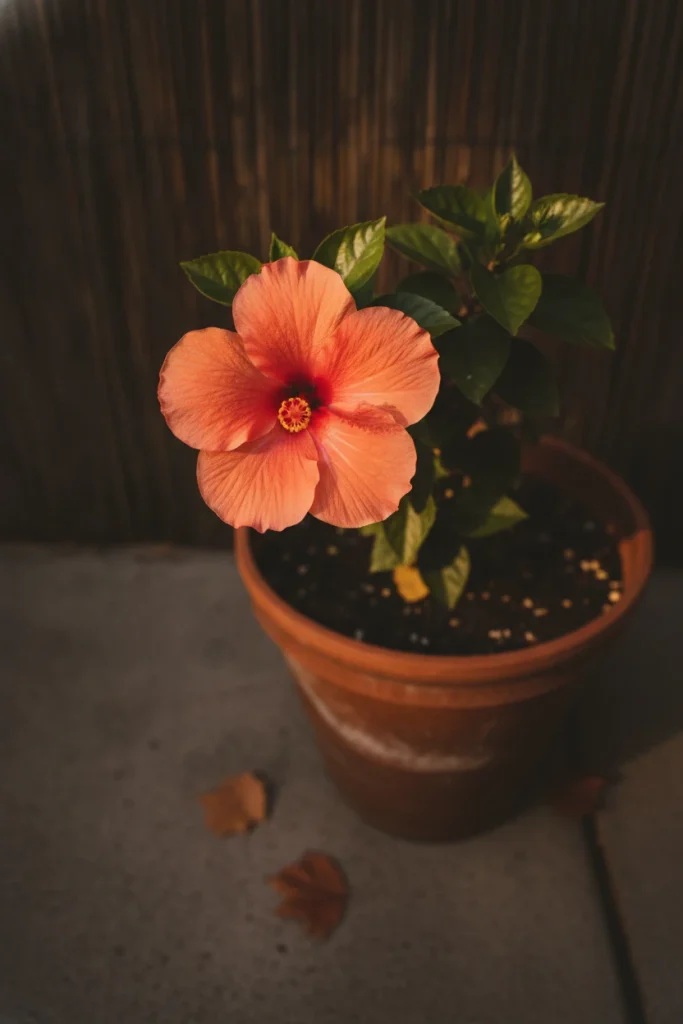
Tropical hibiscus, Hibiscus rosa sinensis, is the glossy leafed one with the enormous saturated flowers. It is a container plant almost everywhere in the US and it belongs in the comes in pile. Hardy hibiscus, Hibiscus moscheutos, dies to the ground and comes back, with dinner plate flowers and a much coarser leaf.
Check the tag against your zone on the USDA plant hardiness zone map before you buy, not after.
14. Let ornamental grasses take over the palm role
Ornamental grasses carry the tropical shape without any of the tender plant logistics. Arching blades, real height, and in fall they finally have their plumes catching low sun, which is the exact moment they look best.
Plant them where the afternoon light comes from behind. Backlit grass is the cheapest special effect in a yard.
Stand in your seating spot at 5pm and note where the sun sits.
Put the grasses between you and that light, not behind your shoulder.
Leave them standing all winter. Cut back in early spring, not October.
Pair them with big leaves rather than more grass. That contrast is where most fall garden inspiration ideas stop short, and it is what keeps the planting from reading like a prairie.
15. Add water you can hear, not water you have to maintain
Water noise does something to a small yard that nothing else does. It covers road hum, it pulls birds in, and it gives the space a center.
Skip the pond. A self contained recirculating bowl or a simple pump in a glazed ceramic vessel gives you the sound with a fraction of the work, and it unplugs and empties before the first freeze.
Sound fills space that plants cannot. In a yard under 400 square feet, moving water is worth more than another shrub.
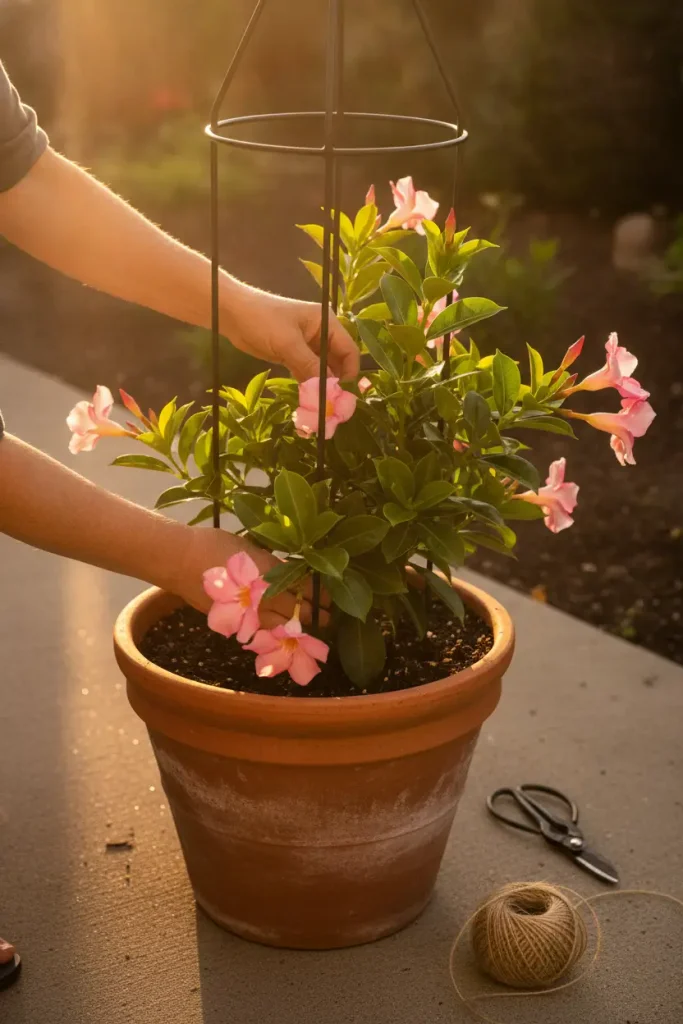
16. Grow mandevilla up an obelisk you can carry
Mandevilla climbs fast and flowers all season, and it is usually treated as a throwaway annual. It does not have to be. Grown up a lightweight obelisk set inside a pot rather than a trellis screwed to the fence, the whole thing lifts and walks indoors in one piece,
- ▸Prune it back before you move it, both to fit the space and to balance root loss.
- ▸Park it at a bright window or a slider door for the winter.
- ▸Mealybugs and spider mites are the two to watch for once it is inside.
17. Put every heavy pot on a rolling caddy in September
Moving a 40 pound pot across a patio in October is how backs get hurt and how good plants get abandoned outside. Caddies cost a few dollars each and they turn sort day into a twenty minute job.
Buy caddies rated above the filled weight, not the empty pot weight.
Slide them under in spring, before the pot is full and planted.
Plastic caddies on gravel. The wheels sink and snap.
Waiting until the forecast says 38 degrees to start thinking about it.
18. Swap the summer shade sail for something that catches light
Shade is a summer problem. By October the sun is low and weak, and a heavy shade sail overhead just makes the space darker and colder than it needs to be.
Take it down. If the posts feel bare, string a second run of bulbs across the same anchor points, or hang two or three lightweight lanterns where the sail corners used to tie off.
💡 Quick Tip
Wash the sail, dry it fully, and store it rolled rather than folded. Creases in shade fabric turn into split seams by next June.
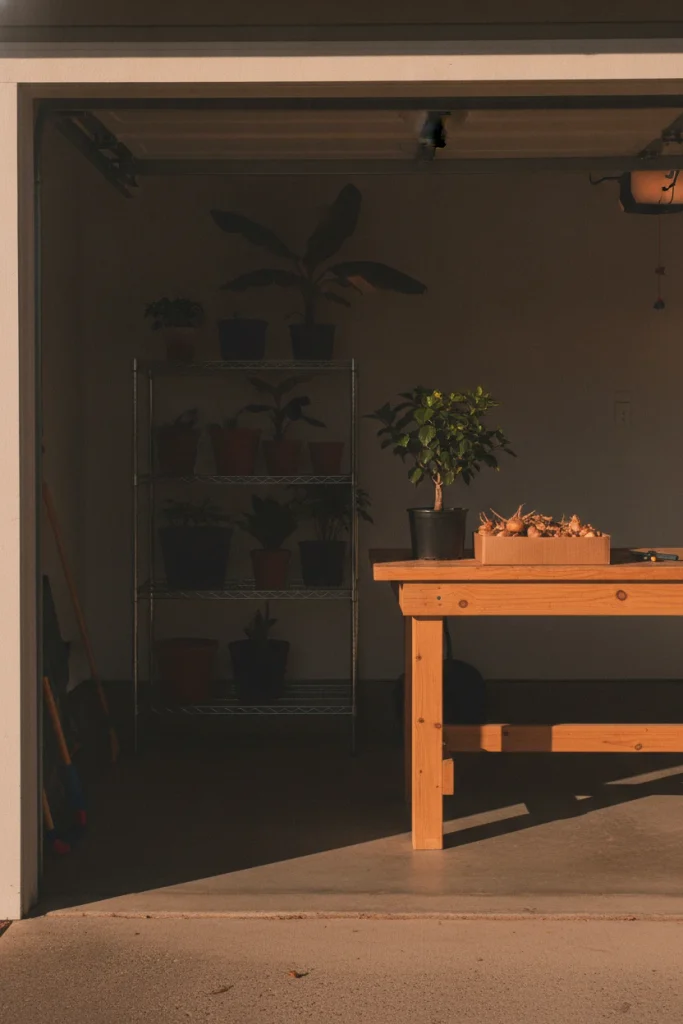
19. Stage the overwintering shelf before you need it
Garages become plant hospitals every fall, usually in a panic, usually at 9pm the night of a frost warning. Doing it on purpose a few weeks early is the single most useful thing on this list.
Clear one shelf or one wall. That is where the comes in pile lives. The sleep pile needs something different, a cool dry frost free spot, and a flat surface to cure tubers on for a week or so first.
The University of Maryland Extension’s overwintering guide is worth reading before sort day. One detail from it that most people skip: treat plants with insecticidal soap or a horticultural oil labeled for houseplants before they come inside, because outdoors the predators keep pests in check and indoors nothing does.
20. Upgrade cheap pots instead of buying expensive ones
Dollar Tree pots look like Dollar Tree pots for about four minutes, which is how long it takes to change that.
Two coats of a textured stone spray paint in a warm sand or terracotta tone, and a plastic pot reads as a heavy ceramic vessel from three feet away. Group five of them at different heights and nobody counts the receipts.
| Cheap pot, upgraded | Glazed ceramic pot |
|---|---|
| Cost tier: very low. | Cost tier: medium to high. |
| Light enough to move alone when full. | Needs two people or a caddy. |
| Repaint next spring if it chips. | Can crack if left out and full of frozen soil. |
More of this thinking lives in our roundup of Dollar Tree backyard decor finds, which is where most of these pot tricks started.
21. Block the wind before you buy a heater
Wind, not temperature, ends most fall evenings. Fifty five degrees and still is pleasant. Fifty five degrees with a steady breeze across your ankles sends everyone inside by 8pm.
Figure out which direction the wind comes from in October, then put something solid on that side. A reed panel lashed to two posts, a row of large pots, a folding screen, even the deck box from entry 11 placed with intent.
Open on all four sides. The fire throws heat straight past everyone sitting.
One solid wall on the windward side. The same fire now feels twice as warm.
It costs almost nothing and it is the difference between a yard you use in November and a yard you look at.
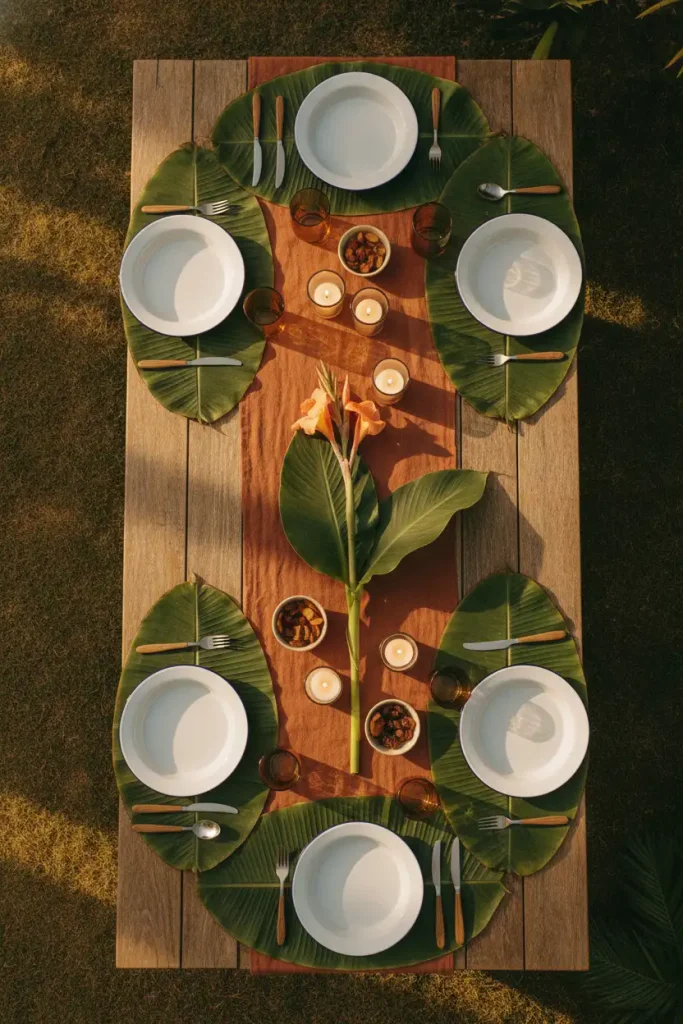
22. Set the table with leaves instead of buying chargers
Banana leaves make better chargers than anything sold as a charger. Cut one, wipe it, lay it flat under each plate, and the whole table shifts warm and green without a single purchase.
A fall tropical table in five pieces
23. Lift and cure caladium and elephant ear tubers properly
Caladium tubers are the cheapest thing in the sleep pile and the easiest to ruin. The mistake is washing them.
Cut the leaves at ground level once they yellow, or after frost knocks them down.
Dig carefully, then brush the soil off. Do not wash them, wet tubers rot.
Cure in a single layer on cardboard or a screen for about 7 to 10 days, turning them now and then.
Store in a ventilated box, not touching, covered with dry potting soil or shredded paper, somewhere cool, dry and frost free.
Check them a few times over winter. Mist lightly if they start to shrivel, and throw out anything soft before it takes the others with it.
24. Plant the last nectar of the season
Hummingbirds leave most of the country in fall, but the stragglers moving through are the ones that need a fuel stop most. Cannas, late salvias and tropical hibiscus all keep serving.
Movement is also what makes a yard feel alive in photos and in person. A still garden reads like a showroom.
25. Build a small tropical backyard with nothing screwed down
Renting changes every rule, and it rules out most of what other tropical backyard lists suggest. No digging, no fence hardware, no footings.
It still works. Everything lives in pots, the screen leans rather than mounts, and the lights clamp instead of bolt.
Freestanding planter boxes with a trellis built in.
Clamp lights and reed panels held with zip ties.
Interlocking deck tiles laid straight over concrete.
Anything anchored into siding, brick or a shared fence.
Open flame on a balcony, which many leases and codes prohibit.
Digging a bed into a lawn you do not own.
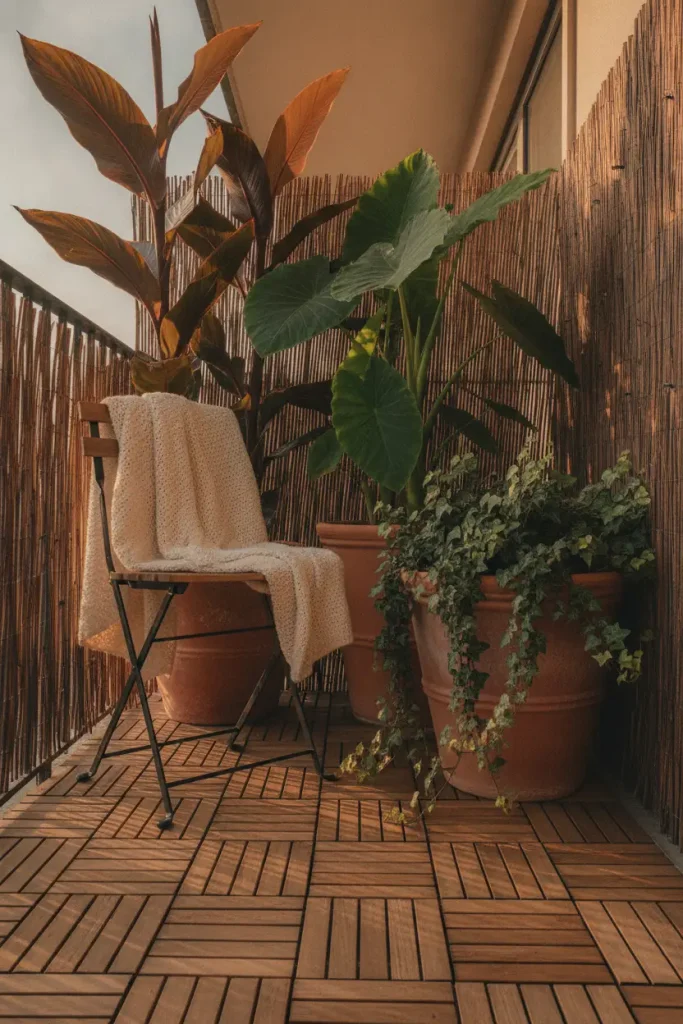
26. Commit to one warm color and repeat it everywhere
Green needs a warm partner or the whole yard reads flat and cool, especially under October light.
Pick one, terracotta or rust or ochre, then put it in at least four places. Cushions, rug, pots, a throw. Repetition is what makes a color look chosen instead of leftover.
- ▸Four touchpoints minimum, spread across the space, not stacked in one corner.
- ▸Let the plants supply all the green. Do not buy green objects.
- ▸Cream and unbleached linen are the neutrals that hold it together.
27. Decide now what stays out all winter
Winter does not have to mean an empty slab. Before the last pots come in, look at what is left and ask whether it holds a shape worth seeing from the kitchen window in January.
Grasses left standing, the cut back banana under its leaf filled cage, an empty glazed pot turned upside down so it does not crack, a lantern still hanging on its hook. That is a yard in rest, not a yard abandoned.
A yard built on pots, light and one warm color rebuilds itself in a single April afternoon. That is the real payoff of the 55 Degree Sort.
Frequently Asked Questions
How do I make my backyard look tropical in a cold climate?
Use shape, not hardiness. Big bold leaves and arching forms read as tropical regardless of what zone you live in, so combine hardy stand ins like ornamental grasses and Musa basjoo with a few tender plants in pots you can move. Add a warm color palette and low evening light, and the effect holds well past the first cold night.
What tropical plants can survive winter outside?
Musa basjoo is the standout, with rhizomes cold hardy to around minus 10 degrees F when mulched and caged. Hardy hibiscus dies back and returns. Ornamental grasses, hardy ferns and some bamboos carry the same visual weight year round. Everything else in a typical tropical planting is either a container plant or a stored tuber.
When should I bring tropical plants inside for the winter?
University of Maryland Extension points to the stretch when nighttime temperatures regularly drop into the mid to low 50s Fahrenheit. That is earlier than most people expect and well before the first frost date. Waiting for a freeze warning usually means losing something, because tender tropicals decline in cold nights long before ice actually forms.
How do I make a tropical backyard on a budget?
Spend on three things and improvise the rest. A privacy screen, one big statement plant grouping, and warm evening light. Bamboo reed rolls, cannas grown from cheap rhizomes, spray painted plastic pots and a 48 foot string of cafe bulbs cover all three. Skip the water feature and the furniture set until next season.
What is the best plant for tropical backyard privacy?
Musa basjoo for height and leaf size in Zones 5 and up, backed by a bamboo reed panel so the screen works before the plants fill in. Clumping bamboo suits warmer zones, though check whether the variety runs before planting. Tall ornamental grasses handle the same job at a lower height with far less winter work.
Do elephant ear bulbs come back every year?
In warm zones they can stay in the ground. Across most of the US they do not survive winter outdoors, so the tubers get lifted, cured for about 7 to 10 days in a single layer, and stored somewhere cool, dry and frost free. Handled that way, the same tubers come back bigger each season.
How do I make my backyard cozy for fall?
Block the wind first, since a breeze ends an evening faster than a low temperature does. Then add heat you can gather around, light at three different heights, and blankets stored outside where people can reach them. Those four moves matter more than any single piece of furniture you could buy.
Before You Close This Tab
Fall is the honest season for a tropical backyard. The leaves are at full size, the light is doing the work for you, and everything you own still looks alive. The only thing standing between this October and a bare slab next spring is one afternoon of sorting.
Start with the wind block and the lights. Both are cheap, both work the same night you do them, and both make every plant you already own look better after dark.
Save these tropical cozy backyard ideas to your fall board so the 55 Degree Sort is there when the forecast turns, because that week always arrives sooner than it feels like it should.