27 Mediterranean Cozy Backyard Ideas That Make Fall Evenings Worth Staying Out For

Fall is when a backyard either gets abandoned or gets good. Mediterranean cozy backyard ideas work right now for a reason most style posts skip: the whole look was built for low sun, long shadows, cool air, and a fire people actually gather around.
Southern Europe never fought the shoulder season. It layered for it. Terracotta soaks up the last heat of the day and gives it back after dark. Gravel drains October rain instead of turning to mud. Olive and rosemary go silver rather than brown. Candles take over the job daylight used to do.
What follows is 27 ideas sized for real US yards, patios, and balconies across Zones 5 through 9. A few cost under $20 and take one afternoon. Two are genuine weekend projects. Each one was picked for October and November instead of July, so nothing here collapses the first week nights drop into the 40s.
Start with the Terracotta Ladder below, then take the three ideas that fit the space you actually have.
The Terracotta Ladder
Three spend levels, three honest outcomes. Most people overshoot tier one and buy furniture before they buy warmth, which is backwards for fall. Heat and light change how long you sit outside. Furniture only changes how you sit. Climb the ladder in order and the yard reads finished at every rung instead of half-built until the last purchase.
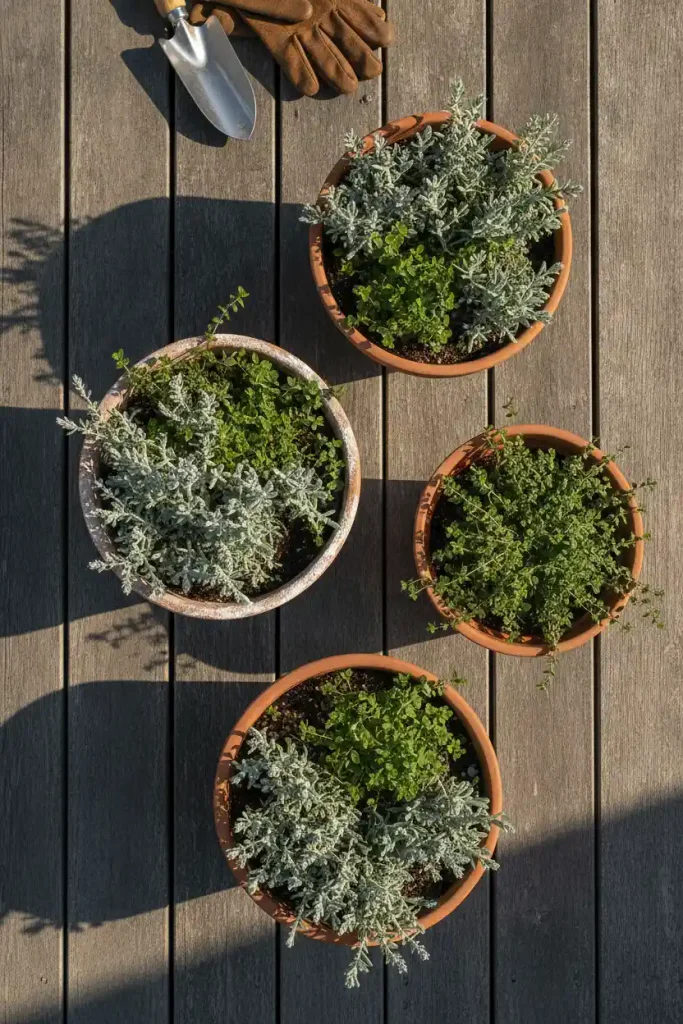
1. Terracotta Pot Cluster Right Where You Walk Out
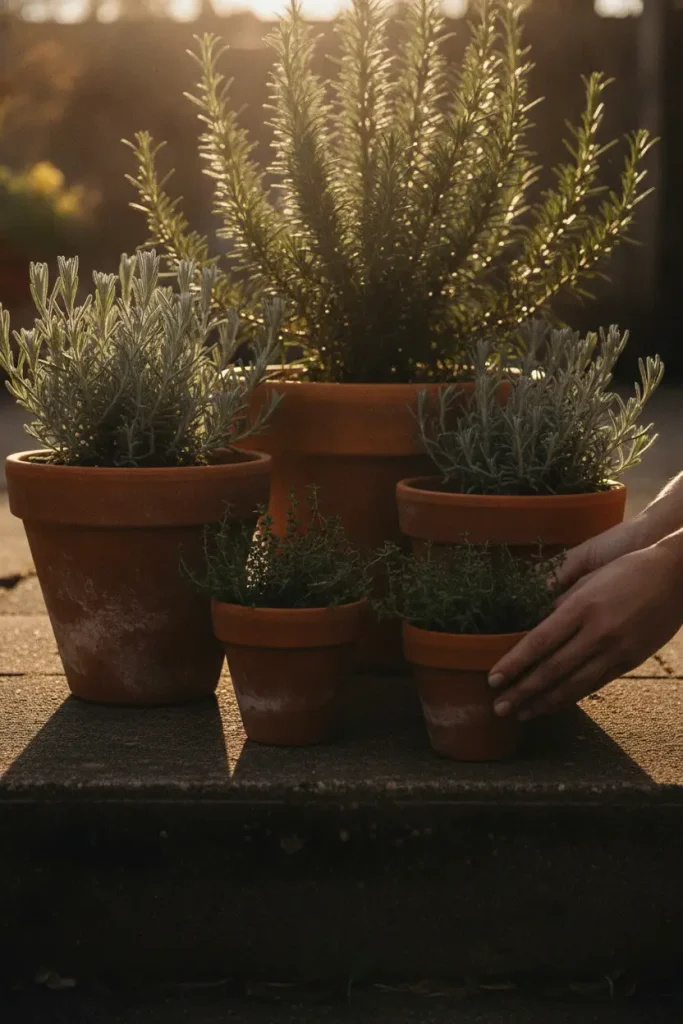
Terracotta earns its keep in October. Unglazed clay holds afternoon warmth and keeps releasing it well after sunset, which is why a cluster by the door feels different from the same pots out in the middle of the lawn. Group in odd numbers. Vary the heights hard, something knee-high next to something ankle-high, never a matched pair.
Cheapest route: standard terracotta from Home Depot runs a few dollars for a 6-inch and under $25 for a 14-inch. Fill with rosemary, trailing thyme, and one dwarf olive if your zone allows it.
Build the cluster
2. A Gravel Seating Square You Can Lay in One Saturday
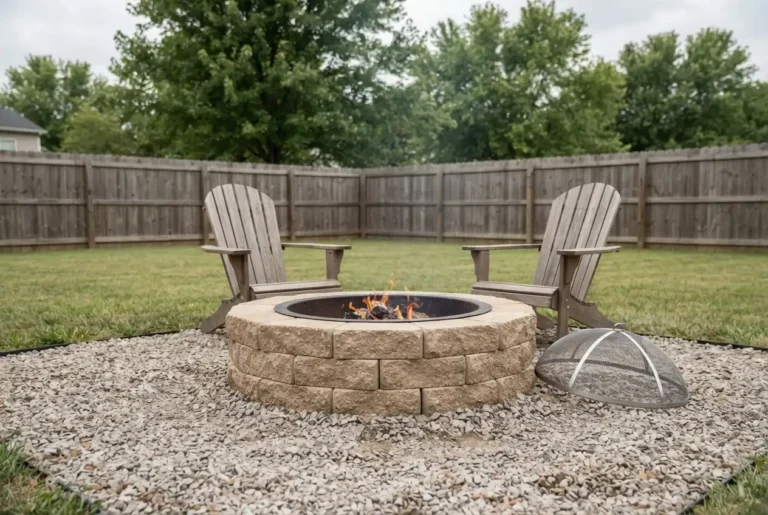
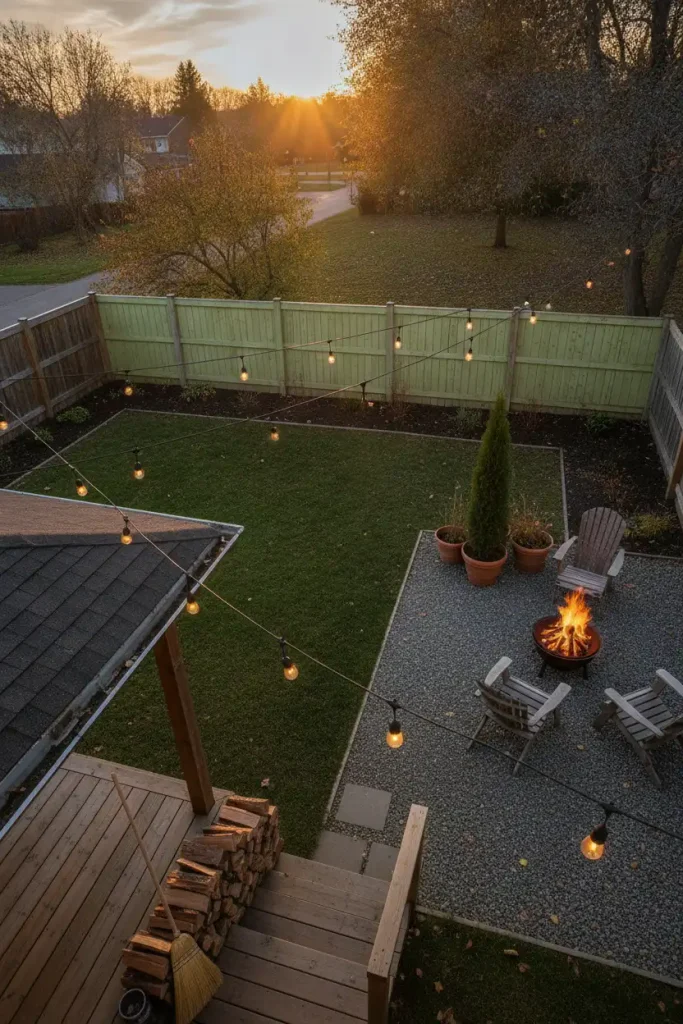
Gravel is the cheapest hardscape that still looks intentional. An 8 by 8 foot square of pea gravel or decomposed granite gives you a defined sitting area without pouring concrete, without a permit, and without waiting on a contractor. It drains, which matters more in fall than in July. It also makes that soft crunch underfoot that reads instantly as a courtyard.
Budget around $100 to $200 for materials at that size, bagged or by the scoop. If you want more ground-level options before you commit, our budget backyard patio ideas cover the paver and flagstone versions too.
Mark an 8 by 8 square with landscape paint, then strip the sod about 3 inches deep.
Lay landscape fabric, then set steel or bender board edging so the gravel stays put.
Spread 2 to 3 inches of pea gravel, rake level, then tamp it with a hand tamper.
Set chair legs on pavers or coasters so they stop sinking by November.
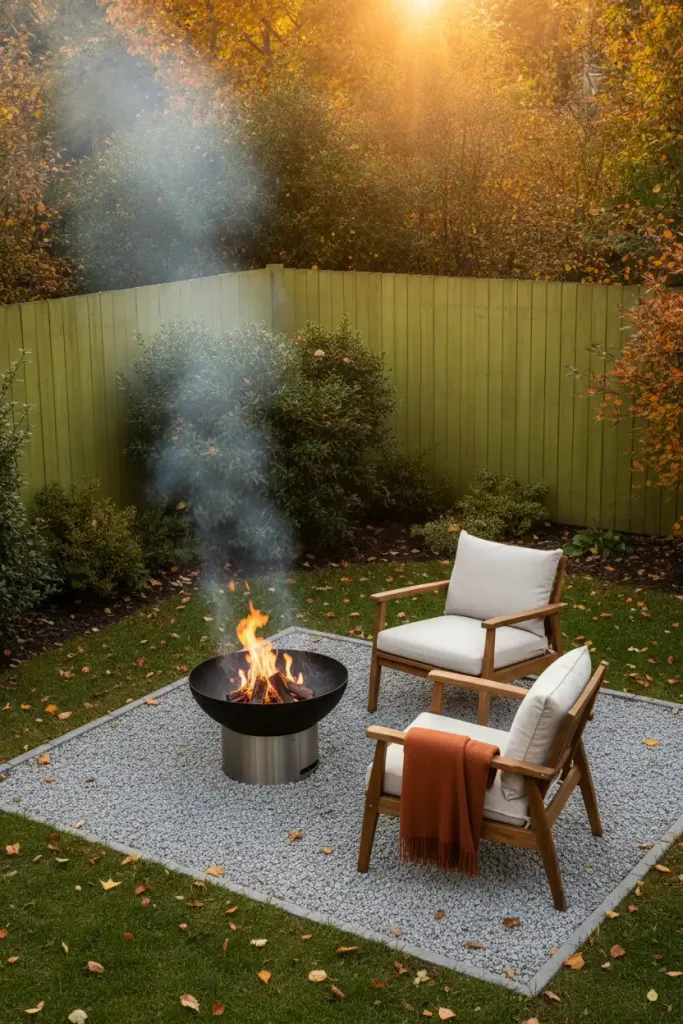
3. One Smokeless Fire Pit, Placed Off-Center
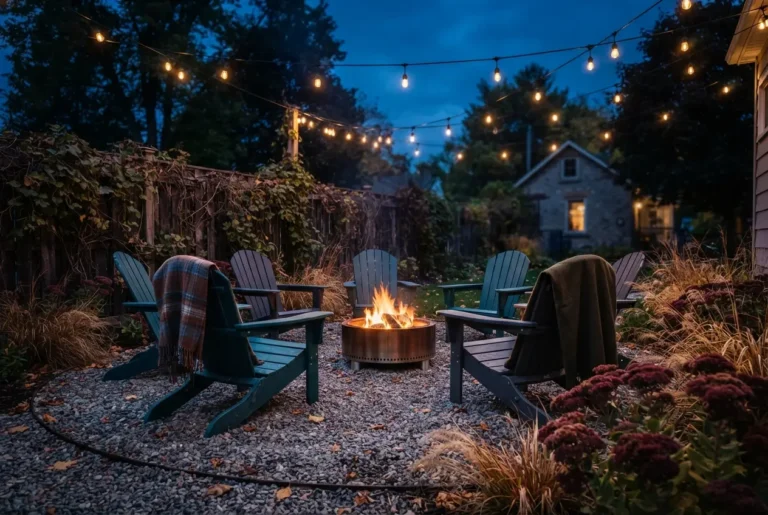
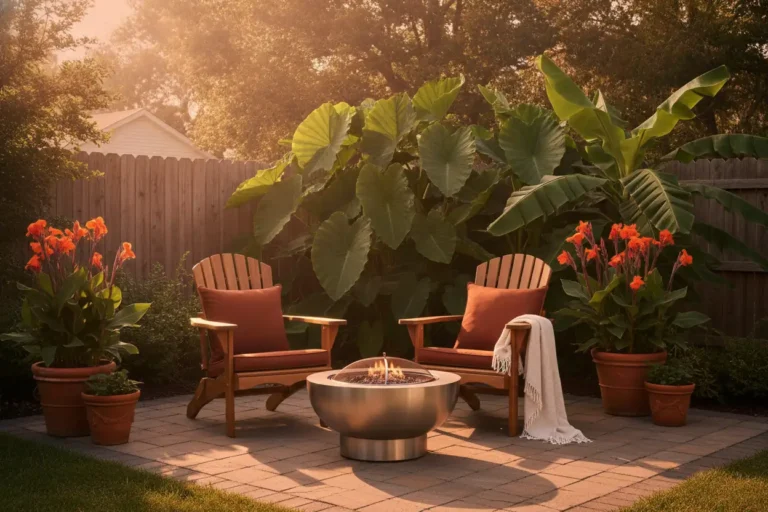
Heat is the whole reason people stay outside past 7 p.m. in October. A smokeless fire pit gives you that without the eye-stinging drift that sends everyone indoors, and the stainless models pack down small enough to move. Solo Stove and Sunnydaze both sit in the $150 to $300 range for the mid-size versions.
Place it off-center, not dead middle. Center placement forces a ring of chairs and the yard starts feeling like a meeting. Offset toward one edge and you get a warm corner plus room to walk past.
The first cool Saturday I ran mine, I learned the hard way that a full load of damp cordwood smokes like a wet campfire for the first twenty minutes. Kiln-dried, split small, and it burned clear in about four.
⚠️ Watch Out
Check your city’s burn rules before you light anything, keep the clearance from structures and branches that your fire pit’s manual and local code call for, and never leave a fire unattended.
4. Cafe Bulbs Strung on a Guide Wire, Not Straight Across
Cafe bulbs do more for a fall patio than any single plant. The trick almost nobody bothers with is the guide wire. Run stainless cable between two anchor points first, pull it tight with a turnbuckle, then zip-tie the light string to the cable. Your bulbs stop sagging into a sad droop by week three and the line stays crisp all winter.
Brightech and Feit both sell 48-foot outdoor-rated strands in the $35 to $60 range. Warm white only, around 2200K to 2700K. Anything cooler kills the whole effect.
Zigzag across the space so the light falls in pools, not one flat line.
Hang the low point around 8 to 9 feet so nobody ducks.
Cool white or color-changing bulbs. They read as a party store, not a courtyard.
Stapling the strand to siding. Use hooks so you can take it down.
Use outdoor-rated, UL-listed lights and cords on a GFCI outlet. Anything beyond plugging into an existing outlet is a job for a licensed electrician.
5. A Potted Olive Tree on a Rolling Base
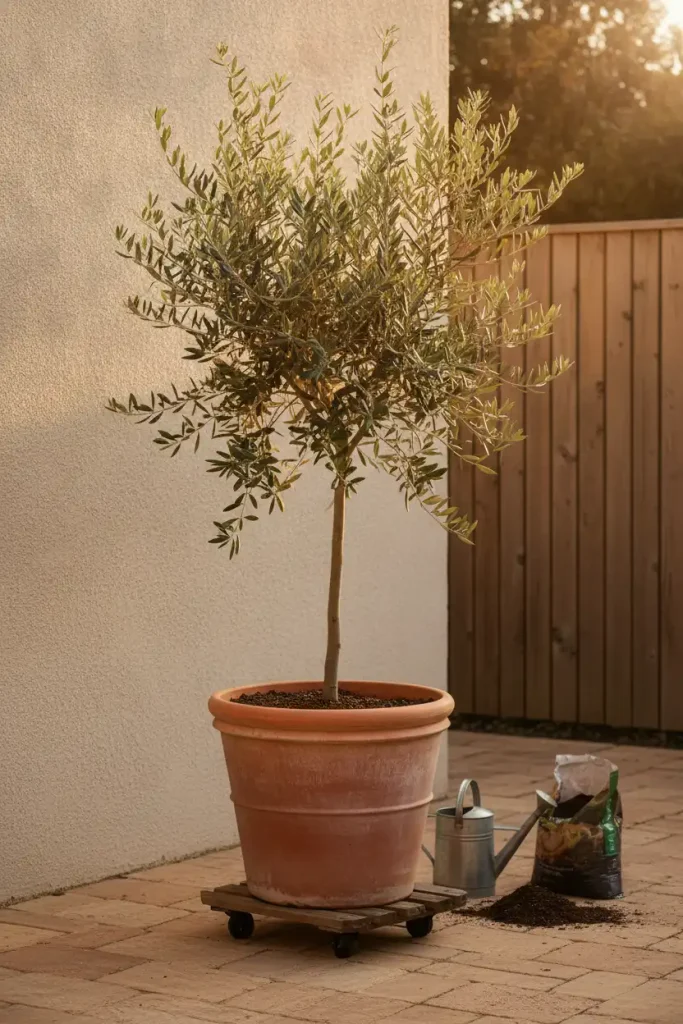
Olive trees are the shortcut everyone reaches for, and the one that wastes the most money. Arbequina, the variety sold in most US garden centers, is reliably hardy roughly in Zones 8 through 10. Below that it dies in the ground, full stop, no matter how good the mulch is.
Pot it instead. A 10 to 14 inch olive in a large terracotta or resin container on a $20 rolling plant caddy gives you the silhouette all fall, then rolls into a bright garage or a south-facing window before the first hard freeze. Check your band on the USDA plant hardiness zone map before you spend anything.
| Olive in the ground | Olive in a pot |
|---|---|
| Realistic in Zone 8 and warmer. | Works in Zone 5 through 9 with winter shelter. |
| Reaches full height and reads as permanent. | Stays 4 to 6 feet and moves where you need it. |
| One bad winter ends it. | Needs water year round, even indoors. |
6. Rosemary as the Hedge That Stays Green All Winter
Rosemary holds its color when everything else quits. Run three or four plants along the edge of a gravel square or in a long galvanized trough and you get structure, scent, and something to cook with, all from a plant that asks for almost nothing.
Hardiness varies by variety, which is the part most posts skip. Clemson’s extension service points growers toward cold hardy rosemary varieties such as ‘Arp’ and ‘Hill Hardy’ for colder ground, and notes that prostrate, trailing types are the least cold tolerant of the bunch. Same page: these Mediterranean herbs want at least six hours of sun a day and genuinely well-drained soil.
7. Lime-Washed Fence Panels Behind the Seating
Bare fence boards read as cheap no matter what sits in front of them. One panel of lime wash or exterior masonry paint in a chalky off-white changes the entire backdrop, and it is the single highest-impact afternoon on this list. Behind a fire pit corner it bounces warm light back at you after sunset instead of swallowing it.
Two gallons of exterior paint at Lowe’s covers a standard 8-foot panel with room to spare, well under $100 including a roller and a drop cloth. Leave the brush marks visible. The uneven finish is the point.
Gray weathered pine boards that eat every bit of evening light and make good furniture look secondhand.
A chalky off-white wall that throws candlelight back into the seating area and makes terracotta glow.
8. Low Seating, Because It Changes How Long People Stay
Low seating changes how long people stay. Standard dining-height chairs say eat and leave. Anything around 14 to 16 inches off the ground, paired with a low table, quietly says settle in, and that is the entire difference between a patio and a place people linger.
IKEA’s Bondholmen line, a pair of Polywood Adirondacks, or honestly a stack of floor cushions on a rug will all do it. Add one small side table per seat so nobody is balancing a glass on gravel.
- ▸Seat height 14 to 16 inches, table height 16 to 18.
- ▸Cream, oatmeal, or rust cushions. No navy, no gray.
- ▸One surface within arm’s reach of every seat.
- ▸Angle chairs at 45 degrees toward the fire, never a full circle.
9. Resin Lookalikes Where Winter Actually Freezes
Freezing zones break terracotta. Every winter, reliably. Water soaks into the clay wall, expands, and the pot flakes or splits, which is why the Mediterranean look gets abandoned by so many Zone 5 and 6 gardeners after one season.
Here is the contrarian part: buy the fake ones. Modern resin and fiberglass planters from Bloem or Wayfair copy the color and the rolled rim closely enough that nobody leans in to check, and they overwinter outdoors full of soil without a crack. Keep real terracotta for the pots you can carry into a garage, which on the Terracotta Ladder means tier one stays real and everything permanent goes resin.
I lost four 14-inch clay pots to one February thaw cycle before I switched the permanent ones over, and the replacements have gone three winters without a chip.
10. Pillar Candles in Glass Hurricanes on the Ground
Candles carry the hour between sunset and full dark, when the cafe bulbs alone feel a little thin. Hurricane glass keeps the flame steady in an October breeze, and setting them at ground level along a gravel edge or a step throws light upward across the seating instead of into everyone’s eyes.
Five or seven of them, mismatched heights, clustered rather than spaced evenly. Dollar Tree carries glass cylinders for about a dollar, and battery pillars from Target sit around $10 to $20 for a set of three if you have wind or kids.
📌 Good To Know
Drop an inch of sand or dry beans in the bottom of each hurricane. The pillar sits level, the glass stays cooler, and spent wax scrapes out in one piece.
11. A Small Recirculating Wall Fountain
Water sound covers street noise better than any fence, and it is the element that separates a courtyard from a patio. Skip the tiered concrete monsters. A wall-mount or freestanding recirculating fountain in the $120 to $250 range at Wayfair or Home Depot moves enough water to be heard from six feet away, which is all you need.
Mount it at the far end from where you sit. Sound travels toward you and fills the space instead of drowning out conversation at the table.
Pick the wall furthest from your seating and closest to an existing GFCI outlet.
Set it on a level paver so the basin does not rock and splash itself empty.
Top it off weekly in fall. Evaporation runs the pump dry faster than people expect.
Drain and store the pump indoors before your first hard freeze.
12. One Long Table With a Striped Linen Runner
Long tables beat round ones for a fall dinner. Everyone sees everyone, platters pass down the middle, and the shape itself is the thing every Spanish courtyard photo on Pinterest has in common. A plain folding table with a linen cloth over it does the job at a fraction of the cost of a teak set.
Natural linen, an ochre or faded red stripe, enamel plates, and a low row of candles down the center. World Market and Target both carry the stripe cheaply in fall.
Set the fall table
13. Reed Fencing Over a Cheap Pergola Frame
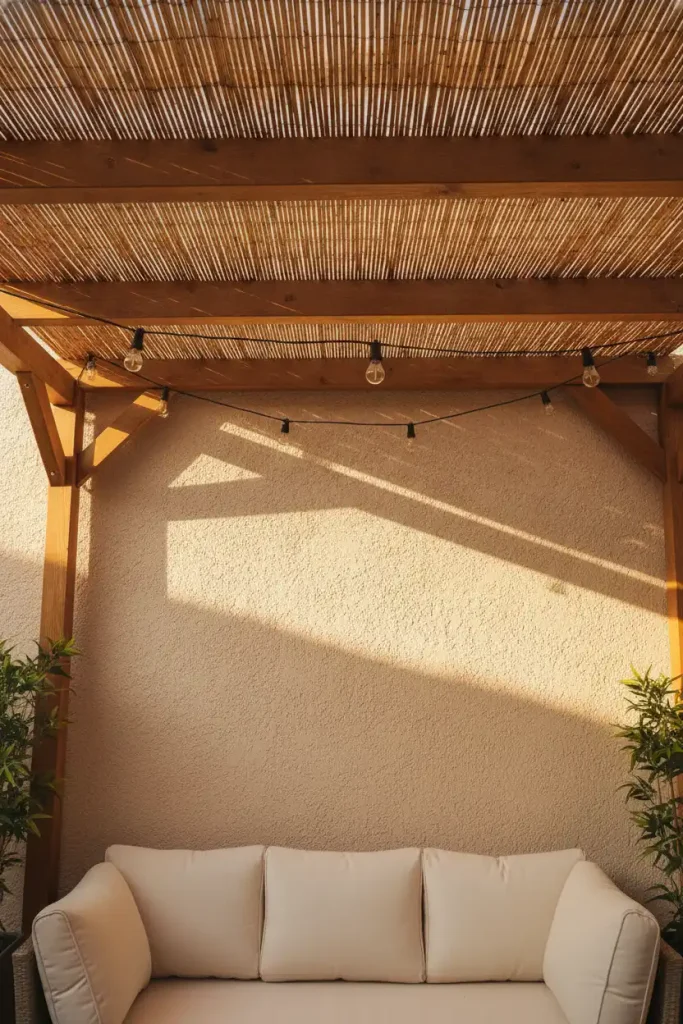
Shade still matters in October, just differently. You are not blocking heat anymore, you are making a ceiling, and a ceiling is what makes an open patio feel like a room once the leaves come down. Reed or bamboo fencing rolls run roughly $25 to $50 per 6 by 16 foot roll and zip-tie straight onto an existing pergola, awning frame, or even a run of conduit.
Light filters through in stripes at golden hour. That striping across a stucco wall is doing more visual work than any planter you could buy for the same money.
14. Cold-Zone Stand-Ins for Bougainvillea
Bougainvillea is a Zone 9 and 10 plant, full stop. Every Mediterranean roundup on page one puts it front and center without mentioning that, which sends a lot of Ohio and Pennsylvania gardeners to the garden center for something that will be dead by Thanksgiving.
What you actually want is the same job done by a hardier plant: hot color spilling over a wall or a rail. Below are the swaps worth making, all of them widely sold at Lowe’s and Home Depot in fall.
| Instead of | Plant this in colder ground |
|---|---|
| Bougainvillea spilling over a wall | Trumpet vine or a climbing rose on the same trellis |
| Lavender that sulks in humid heat | Russian sage for the same silver-purple haze |
| Citrus in the ground | Potted Meyer lemon that winters indoors |
15. A Mosaic Tabletop Made From Broken Tile
Mosaic is the detail that makes a patio look old, and it is the cheapest one here if you use cast-offs. Ask any tile shop for their broken box or grab a few $2 clearance tiles, break them inside a towel with a hammer, and set them into thinset on an old side table top. Grout in a warm sand color, never bright white.
One afternoon, one evening to cure. The wobbly hand-set spacing is what sells it.
Sand the old tabletop, then screw a thin cement board round on top for a stable base.
Lay your broken pieces out dry first and photograph the layout before you mix thinset.
Set the pieces, leave a rough quarter inch between them, and let it sit overnight.
Grout in warm sand, wipe twice, then seal it before the rain arrives.
16. Potted Citrus for Scent You Can Actually Smell
Citrus in pots gives you the fragrance without the zone problem. A Meyer lemon or a calamondin in a 14-inch container puts out that sharp green-sweet smell every time you brush past it, and it comes indoors for winter like a houseplant. Most garden centers sell them at 2 to 3 feet for somewhere in the $40 to $90 range.
Move it in before nights drop below about 50 degrees. Fruit drop and leaf drop both trace back to a plant that got chilled and then got overwatered while it sulked.
Place it where people pass within arm’s reach, by a door or a chair.
Use a fast-draining citrus mix and a pot with real drainage holes.
Leaving it out for one more nice week in November. That is how they die.
Watering on a schedule indoors. Check the top two inches instead.
17. The Balcony Version, Which Is Better Than People Think
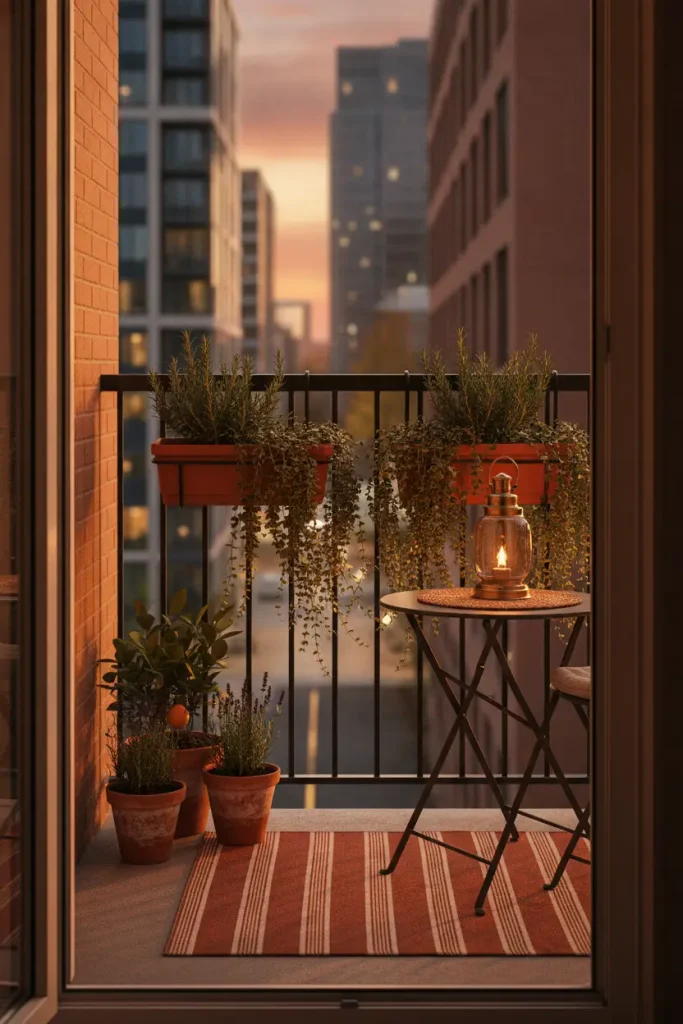
Balconies get the best version of this look, honestly. Small footprint, hard surfaces, one wall to work against, and a railing that doubles as a plant shelf. Everything southern European courtyards do well happens to be exactly what a 5 by 10 foot concrete slab needs.
Rail planters of trailing rosemary, two terracotta pots in the corner, a bistro table, a battery lantern, and one outdoor rug. That is the whole build, and none of it drills into anything. For more container-first layouts at this scale, our small space container garden setups go deeper on soil and watering.
Renter friendly checklist
18. Gravel Mulch on Top of Every Pot
Gravel on top of potting soil is a small move with three payoffs. It finishes the pot visually, it stops the soil surface from crusting and shedding water, and Clemson’s herb guidance notes that a 1 to 2 inch gravel mulch specifically helps gray-leaved Mediterranean herbs cope with humidity around their crowns.
One bag of pea gravel dresses six or eight pots for under $10. Push it right up to the stem, keep it level with the rim, and the whole cluster suddenly looks like somebody who knows what they are doing planted it.
The first fall I did this across a dozen containers I cut my watering runs roughly in half, and the lavender stopped rotting at the base the way it had the previous two years.
💡 Quick Tip
Match the gravel to your hardscape, not to the pot. Same stone underfoot and on top of the soil makes a mixed collection of containers read as one deliberate set.
19. A Basket of Heavy Throws by the Door
Throws are what turn a 52 degree evening into a long one. Not a folded stack on a chair where they get damp, but a lidded basket or a deck box parked by the back door so grabbing one takes two seconds and nobody goes inside for a jacket and quietly stays there.
Wool or chunky acrylic in rust, ochre, and cream. HomeGoods and TJ Maxx both flood the shelves with these around $15 to $30 every September.
- ▸One throw per seat, plus one spare. Running out kills the mood fast.
- ▸Lidded storage only. Open baskets collect rain and pine needles.
- ▸Warm earth tones, so they photograph with the terracotta instead of fighting it.
- ▸Machine washable, because they will end up on the ground.
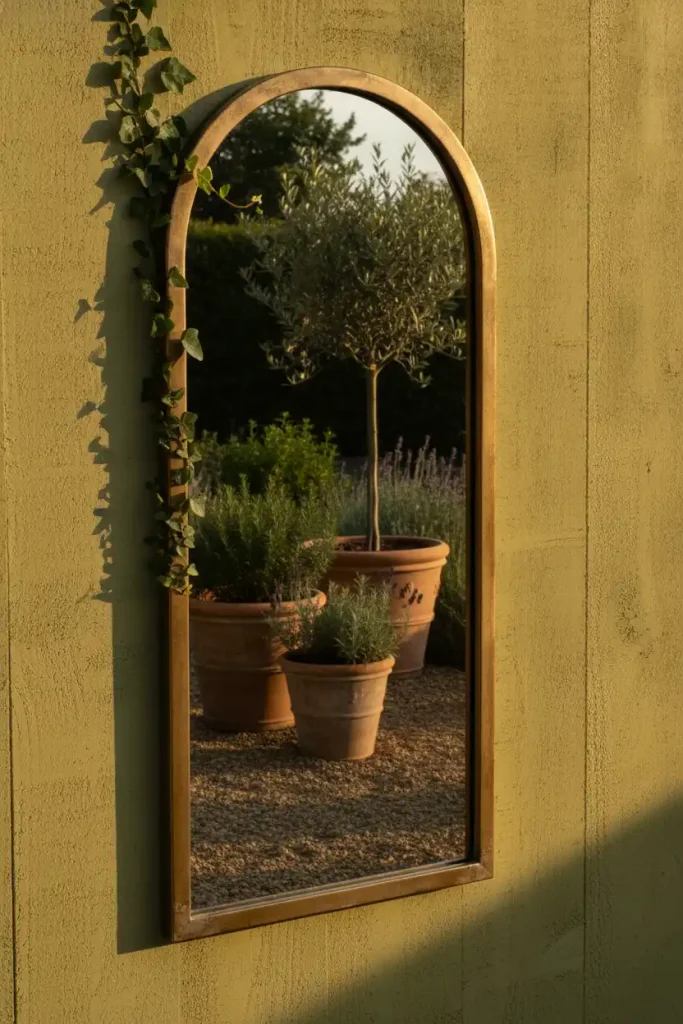
20. An Arched Mirror on the Fence
Arched mirrors fake a doorway into another courtyard, and the arch is doing all the work. That shape is the single strongest Mediterranean signal you can hang, which is why it shows up in nearly every high-saving pin on this topic. Outdoor-safe or simply cheap enough to replace, mounted on a fence panel or a garden wall.
Angle it slightly downward to catch plants and gravel rather than sky, and hang it where it reflects candlelight after dark. Target and HomeGoods carry arched versions between about $40 and $120.
A flat dead-end fence that stops the eye and makes a small yard feel like a box.
An arch that reads as a passage, doubles the greenery, and bounces candle glow back at the table.
21. Dollar Tree Saucers as Candle Trays and Pot Feet
Dollar Tree terracotta saucers cost about a dollar each, and they are the most useful single item on this entire list. Flipped upside down they become pot feet. Right side up with three pillars on them they become a candle tray. Stacked two high under a lantern they lift it just enough to matter.
Buy ten. That is a $10 spend that touches tier one of the Terracotta Ladder in about four different places. More finds at that price point sit in our roundup of dollar store backyard decor.
22. An Outdoor Rug in Rust, Ochre, or Faded Red
Rugs outdoors sound fussy until October, when the ground goes cold and bare gravel or concrete starts feeling like a parking lot under your feet. A flatweave polypropylene rug in a warm clay tone defines the seating area, hides ugly concrete, and hoses clean.
Size up. A rug too small is the most common mistake here, and it makes furniture look like it is floating. Front legs of every chair should land on it.
| Your space | Rug size that works |
|---|---|
| Balcony or two-chair corner | 4 by 6 feet |
| Four chairs around a fire pit | 8 by 10 feet |
| Six-seat dining table | 9 by 12 feet |
23. A Herb Trough Along the Rail or the Wall
Herb troughs on a rail feed you and screen you at once. A long galvanized trough, a cedar window box, or a row of three rectangular planters along the top of a low wall gives you a green line at eye level, which is the thing that makes a seating area feel enclosed rather than exposed.
Plant thyme, oregano, sage, and one rosemary per trough. All four are Mediterranean natives that want the same six hours of sun and the same sharp drainage, so they live happily in one box.
Drill drainage holes every 6 inches if the trough came without them.
Fill with a gritty mix, roughly two parts potting soil to one part coarse sand or perlite.
Set the rosemary at one end, not the middle, so it does not shade the rest by spring.
Top with gravel mulch and harvest hard through October to keep growth tight.
24. Fall Fruit as the Whole Centerpiece
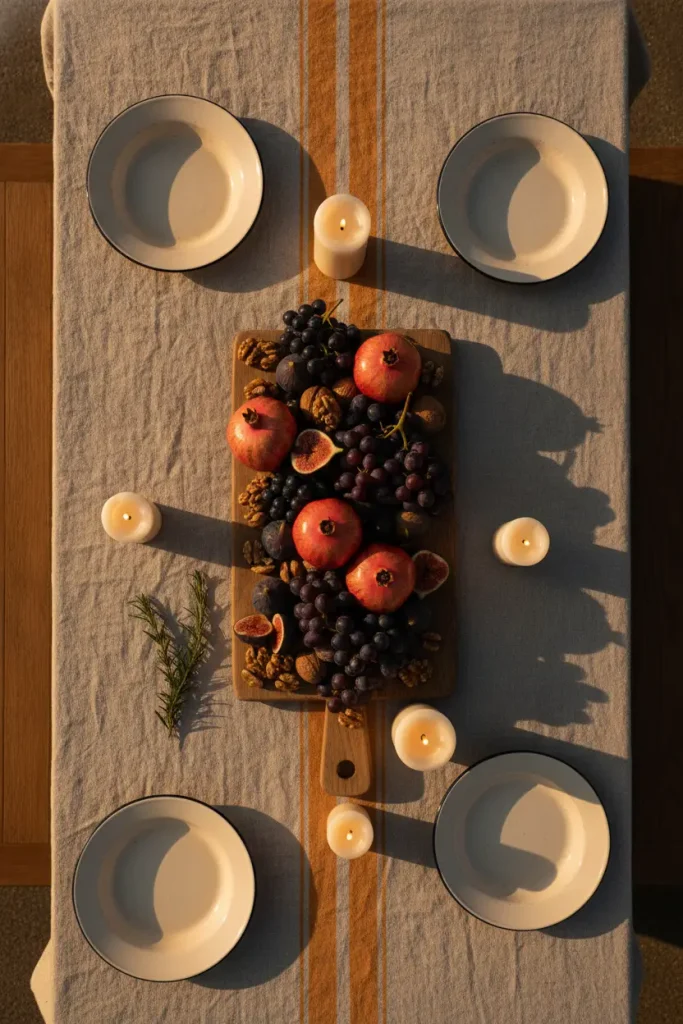
Fall fruit is the cheapest centerpiece you will ever buy, and it beats flowers for this look by a wide margin. Pomegranates, figs, dark grapes, quince, a few walnuts still in the shell, piled directly on a wooden board or a shallow bowl. No arranging. Genuinely just piled.
It costs whatever a bag of fruit costs, it lasts two weeks on the table, and afterward you eat it. Southern European tables have done exactly this for centuries because it was what was ripe.
Seasonal food on the table is the one decoration that cannot look staged, because it is the only one with an actual reason to be there.
25. Columnar Evergreens That Survive Your Winter
Italian cypress will not survive a Zone 5 winter, and it struggles in plenty of Zone 6 yards too. That narrow dark exclamation point is worth chasing though, because a pair of vertical evergreens flanking a door or a path is the fastest way to say Mediterranean without a single flower.
Swap in ‘Sky Pencil’ holly, a columnar juniper such as ‘Taylor’, or dwarf Alberta spruce trained narrow. Same silhouette, same year-round structure, and they shrug off cold that would flatten a cypress.
26. Chairs That Live Outside All Winter
Chairs that live outside all year change the math on how often you use the space. Every time seating has to be dragged out of a shed, the yard gets used less, and by November it stops getting used at all. Polywood, teak, powder-coated aluminum, or IKEA’s Bondholmen acacia with a yearly oiling all handle a real winter.
Expect $150 to $400 for a solid pair. That is tier three on the Terracotta Ladder, and it is the purchase most worth waiting for rather than buying cheap twice.
What to check before you buy
27. The Twenty Minute Fall Reset
Twenty minutes resets the whole space, and it is what separates a yard that gets used in November from one that quietly gets abandoned in mid-October. Sweep the leaves off the gravel. Pull the spent annuals. Wipe the hurricane glass. Refill the wood. Shake out the rug.
Do it the same afternoon each week and the patio never crosses the line where fixing it feels like a project. That threshold, not the weather, is what actually ends most backyard seasons.
Backyard seasons rarely end because of cold. They end the week the space starts looking like a chore.
Frequently Asked Questions
What plants make a backyard look Mediterranean?
Silver and gray-green foliage does most of the work: rosemary, lavender, Russian sage, santolina, and ornamental grasses. Add one or two dark vertical evergreens for structure and a single focal tree such as a potted olive or citrus. Choose by your USDA zone rather than by the photo, since several signature plants only survive Zone 8 and warmer.
How do I make my backyard look Mediterranean on a budget?
Spend on warmth and light before furniture. Cafe bulbs, a handful of terracotta pots, pillar candles, and a gravel seating square will change a yard for roughly $200 to $300 in materials. Lime-washing one fence panel costs under $100 and shifts the whole backdrop. Furniture is the last purchase, not the first.
Can you grow an olive tree in a pot?
Yes, and in most of the country it is the only realistic option. Arbequina and other common varieties are reliably hardy around Zones 8 to 10, so gardeners in colder areas keep them in a large container on a rolling caddy and move them into a bright garage or sunroom before the first hard freeze. Water sparingly indoors.
What colors belong in a Mediterranean backyard?
Warm terracotta, chalky off-white, sand, ochre, faded brick red, and deep olive green. Keep cool grays and true navy out of it. The palette works because it mirrors the materials themselves: clay, lime plaster, stone, and silver-green foliage, all lit by low warm sun.
How do I stop terracotta pots cracking over winter?
Freeze and thaw cycles crack clay when water soaks into the walls. Empty and store the ones you can carry, raise every pot off the ground on feet so the base never sits in standing water, and use resin or fiberglass lookalikes for anything staying outdoors in Zone 7 and colder. A gravel mulch on top also helps shed rain.
Is a Mediterranean garden low maintenance?
Mostly, once it is established. The plants are drought adapted and want lean, sharp-draining soil, so the common failure is overwatering and over-feeding rather than neglect. Container-heavy versions need more frequent watering than the same plants in the ground, especially through a dry fall.
What is the difference between Mediterranean and Spanish style?
Spanish style is one regional branch of the broader Mediterranean look. It leans harder on arches, wrought iron, red barrel tile, and patterned glazed tile. The wider Mediterranean category also pulls from Italian, Greek, and southern French gardens, which bring more gravel, cypress, olive, and plain lime-washed walls.
Ready for the First Cold Evening
Take three ideas, not twenty-seven. Light first, heat second, a few terracotta pots third, and the space will already feel different by the weekend. The rest can wait until spring, because the whole point of these mediterranean cozy backyard ideas is a yard that keeps working once the temperature drops rather than one that gets photographed in June and abandoned in September.
Save this to your fall patio board so it is there when you are standing in the garden center aisle wondering what actually survives your winter.
💡 Quick Tip
Start with entry 4 and entry 3 in the same weekend. Light and heat together change the space more than the other twenty-five ideas combined.