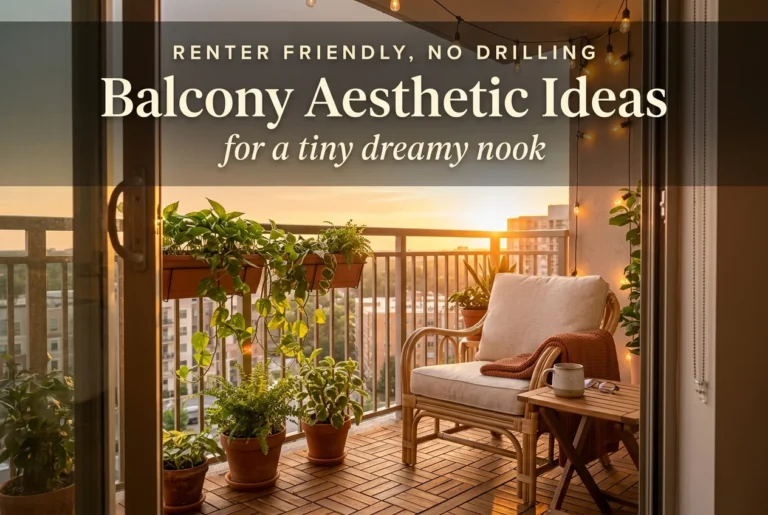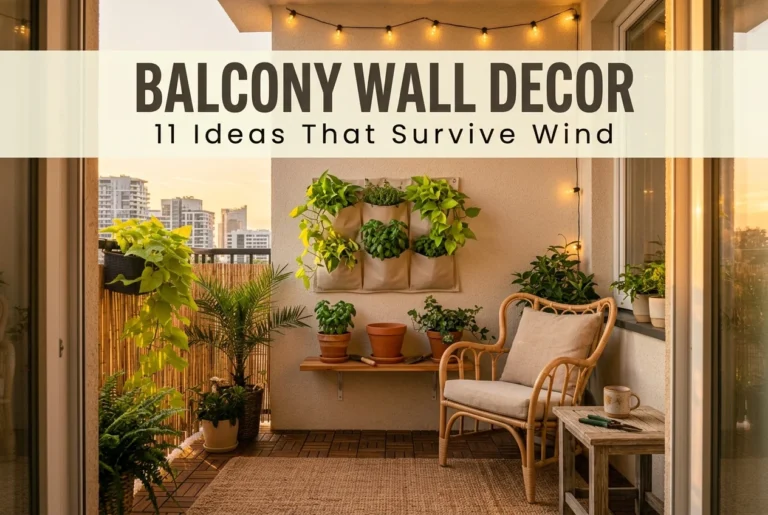
Balcony Railing Design Ideas for Modern Apartments

Your balcony railing is the one thing you see from every angle out there, and it is usually the ugliest object on the whole slab. Builder beige spindles. Chunky bronze tubing. Rust bleeding at the base. That powder coated green nobody has liked since 1998. Good balcony railing design modern enough to feel current does not always mean ripping the thing out, and that is the part most articles skip.
Here is what you get below: twelve looks that read expensive, the code numbers that decide what you are legally allowed to do, real 2026 costs per linear foot, and a full section of renter fixes that leave zero holes behind. I have restyled three apartment balconies now, two of them rentals where I could not touch the rail itself, and the cheapest one looked the best.
What Makes a Balcony Railing Read as Modern
Modern is not a material. You can build an ugly glass railing and a gorgeous wood one, so the finish is not doing the work here. Balcony railing design modern buyers respond to is really about proportion.
Three things actually separate a modern balcony railing from a dated one. Line weight comes first: skinny posts, thin caps, and infill that disappears at fifteen feet. Second is the horizontal bias, since vertical spindle repetition reads traditional to most eyes while horizontal runs read contemporary. Third is color discipline. One color, maybe two, and matte over gloss every time.
Look at any balcony you have saved on Pinterest. Count the visual elements in the rail. If it is more than two, it is probably a builder default.
Matte black is still the workhorse in modern balcony railing ideas, but bronze and warm charcoal have quietly taken over the higher end because they hide pollen and hard water spotting better. Honestly, that maintenance detail changed my mind faster than any mood board did.
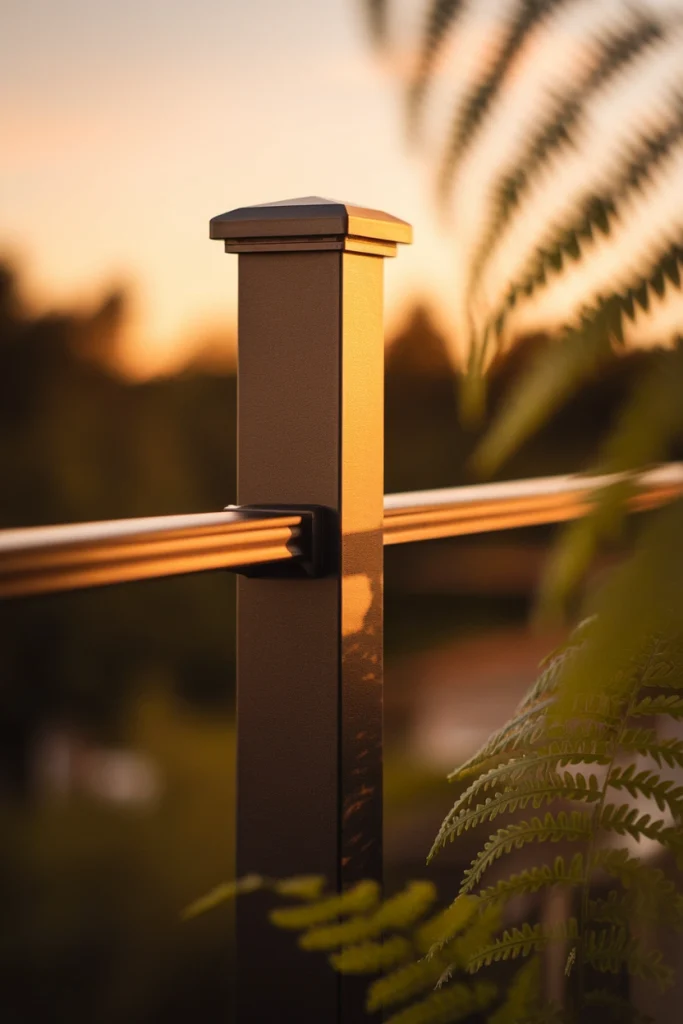
The Three Line Read: How to Judge Any Railing in Ten Seconds
Every balcony railing on earth is three horizontal lines stacked on top of each other. All of them. No exceptions. The cap line runs along the top where your forearms rest. The infill line is the middle band, whether that is cable, glass, slats, or spindles. The floor line is the shadow gap where the rail meets the slab.
Here is the rule: let exactly one line do the talking, and quiet the other two.
That is the whole framework. I call it the Three Line Read, and it is the fastest way to figure out why a railing you like online looks wrong on your own balcony. Nine times out of ten the problem is two lines fighting for attention. The railing is fine. The hierarchy is not.
| Railing type | Which line should dominate | What to do with the other two |
|---|---|---|
| Cable | Infill (the horizontal runs) | Thin the cap, tuck the base into shadow |
| Glass panel | Cap (the top rail) | No infill line at all, hide the base channel |
| Vertical slat | Infill (the vertical rhythm) | Match cap color to slats, float the base |
| Slim aluminum picket | Cap | Narrow the pickets, use a dark base |
| Perforated metal | Infill (the texture) | Cap and base in the exact panel color |
| Wire mesh | Infill | Frame it in one color, no contrast trim |
Screenshot that table before you order anything. It has saved me from two expensive mistakes, including a bronze cap I paired with black cable that never stopped looking like a repair job.
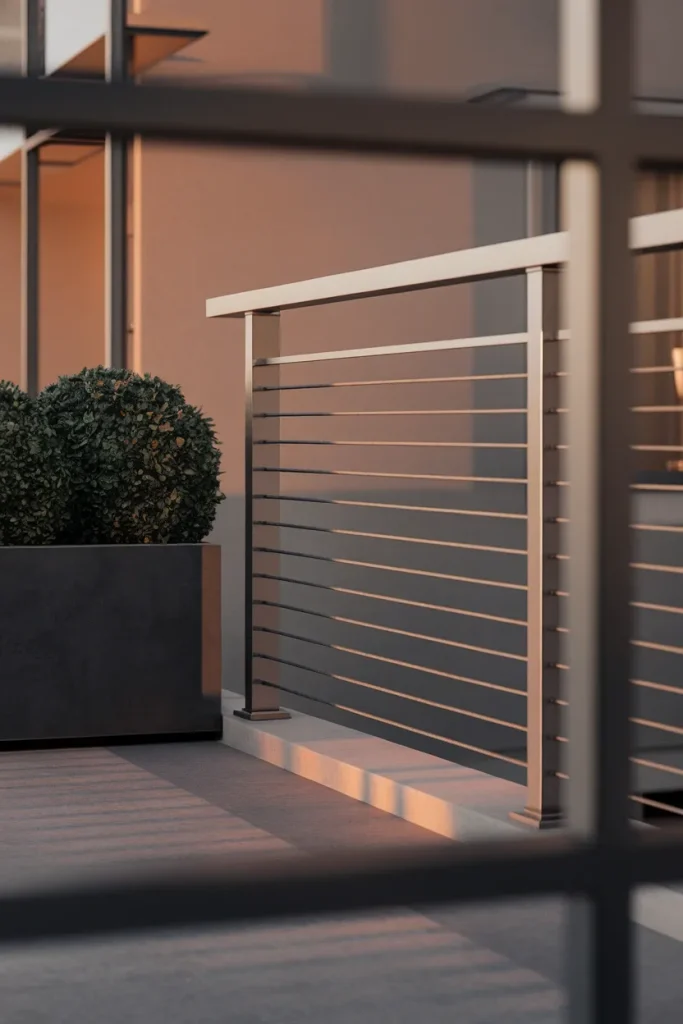
Cable Railing: Maximum View, Minimum Bulk
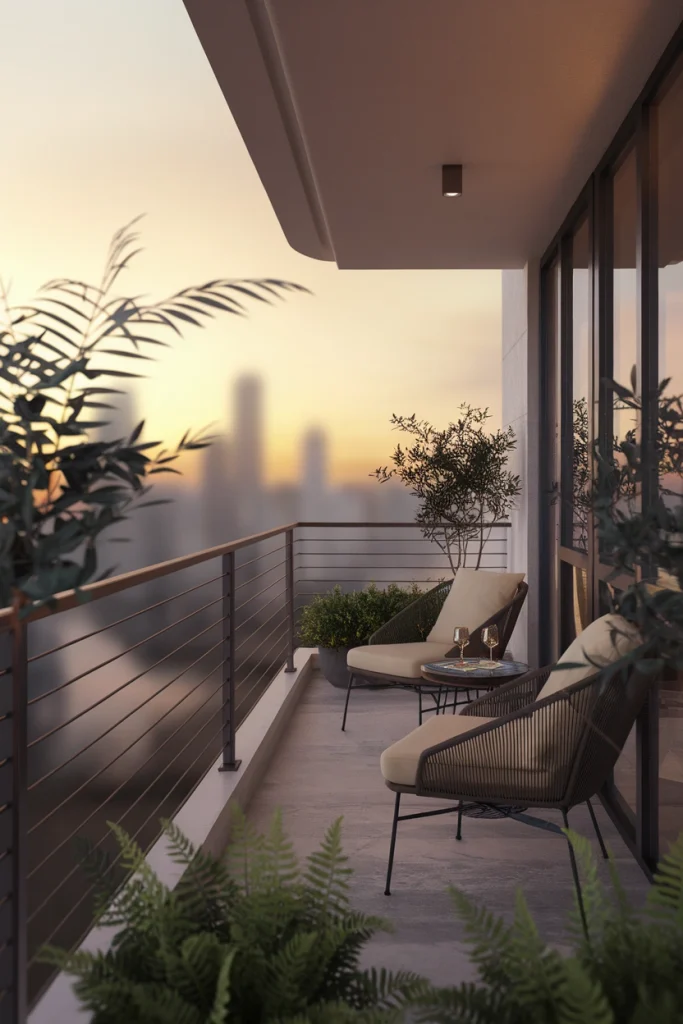
Cable is the default answer for balcony railing design modern buyers keep landing on, and the reason is simple. From ten feet away the cables vanish and you see the view instead of the barrier.
Stainless steel cable runs horizontally between posts, tensioned tight enough that it barely deflects. Feeney, Muzata, and Viewrail all sell residential kits. Cost runs roughly $75 to $260 per linear foot installed according to 2026 contractor pricing, with materials alone landing in the $55 to $210 range and labor adding about $20 to $50 per foot.
Two warnings nobody puts in the pretty listicles.
Cable stretches. You will re tension it in year one and probably year three, which takes about twenty minutes with an Allen key. And some jurisdictions treat horizontal cable as a climbable ladder for small kids, so if you have a toddler on a fifth floor balcony, call your building department before you buy anything.
Cable is also the look that pairs best with a plant heavy balcony, since the lines read as a grid behind foliage instead of competing with it. If you are working with a narrow slab, the same visual logic that helps you make a small patio feel twice its size applies out here: keep the barrier transparent and the eye keeps traveling.
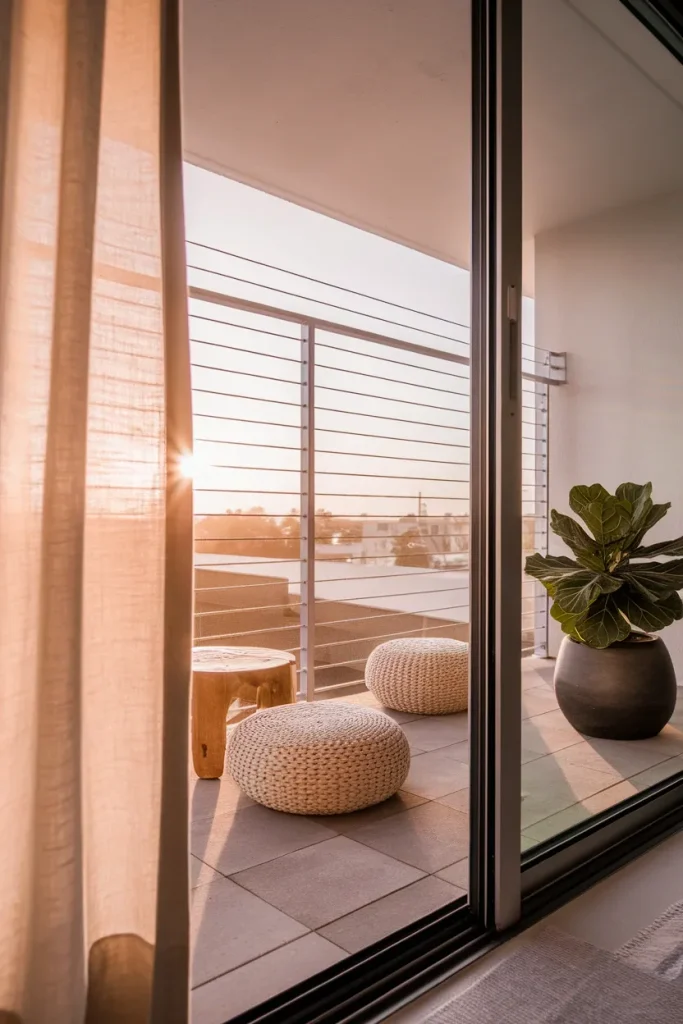
Glass Panel Railing: The Wind Block That Looks Like Nothing
Glass does something cable cannot. It stops wind. No other balcony railing material on this list comes close.
If your balcony faces a prevailing wind, and most upper floor units do, glass turns an unusable slab into a place you will actually sit in April. That functional win matters more than the aesthetic one, though the aesthetic one is considerable.
Frameless and top rail only systems are the modern choice. Full metal frames around each panel drag the look backward about fifteen years. Expect $100 to $600 per linear foot installed, which makes glass the most expensive option on this list by a wide margin.
The honest downside is cleaning. Tempered glass shows every water spot, every pollen film, every bird strike smudge, and a north facing panel in a humid climate will need attention every couple of weeks in spring. Frosted or reeded glass hides all of that and adds privacy, which is why I now recommend it over clear for anyone below the eighth floor.
One detail people miss: glass reflects. A clear panel on a sunny southwest balcony can bounce enough heat and glare back into your seating area to make the corner unusable at 5pm, so plan your furniture around it.
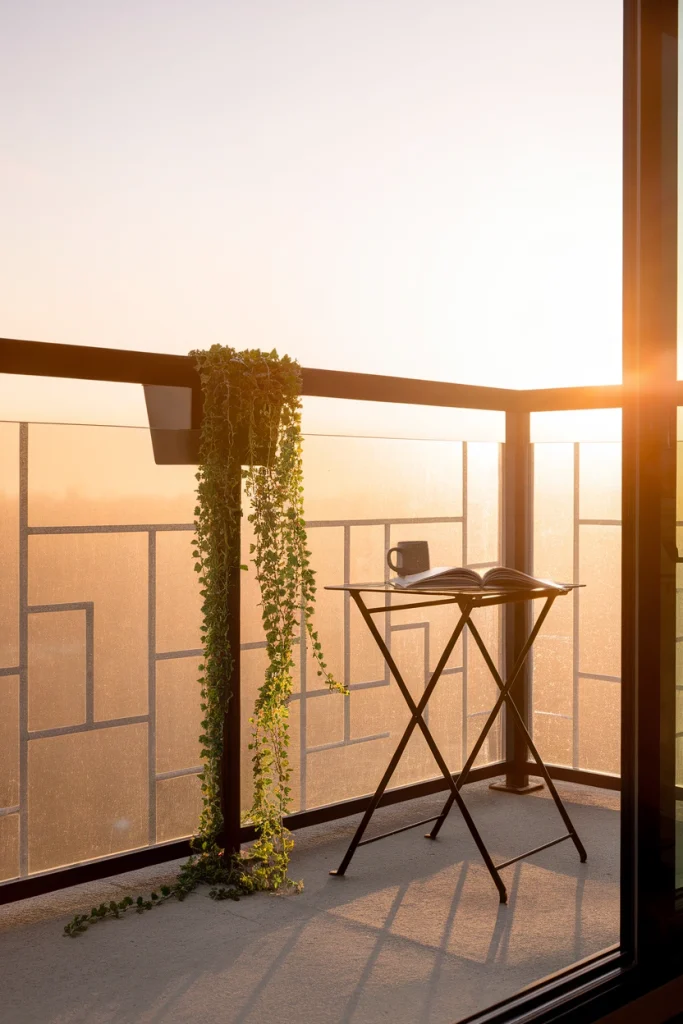
Slim Metal, Vertical Slats, and Perforated Screens
Three more balcony railing looks worth knowing, all cheaper than glass.
Slim aluminum picket. The budget modern workhorse. Powder coated aluminum in matte black or bronze runs about $50 to $200 per linear foot installed, resists coastal salt, and never needs painting. Pick the narrowest picket profile your supplier offers, because picket width is the single variable that decides whether this reads modern or reads apartment complex.
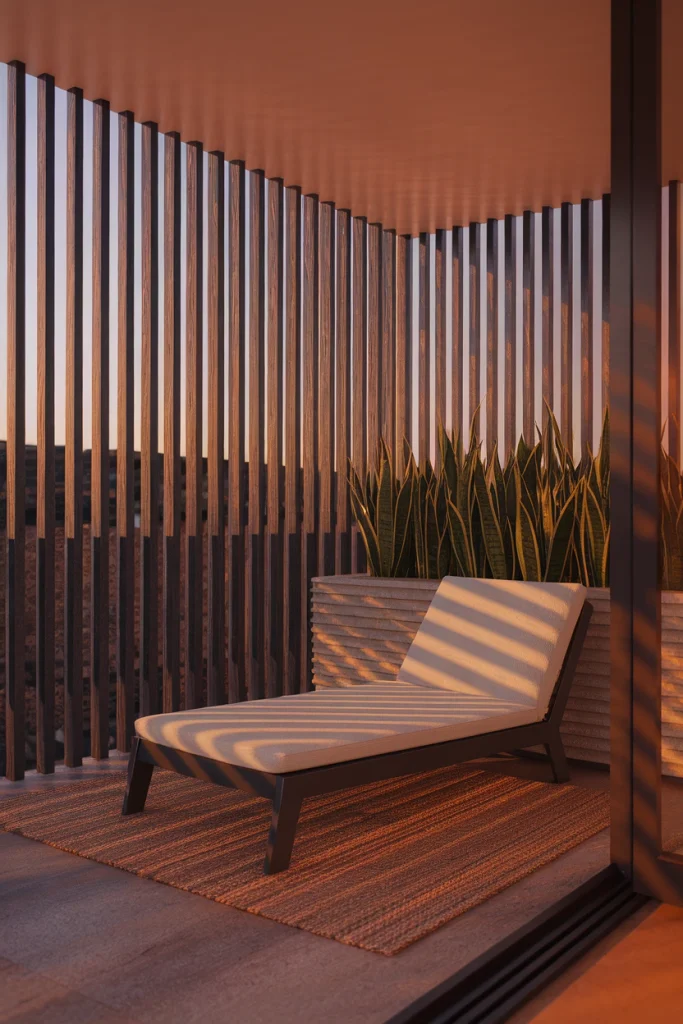
Vertical slat. Wood or aluminum slats standing vertically with tight consistent gaps. This one photographs beautifully and gives partial privacy without killing airflow. Thermally modified ash and dark stained cedar are the two finishes doing the most work right now.
Perforated metal panel. My favorite underrated option. A powder coated aluminum sheet punched with a repeating pattern, framed slim, giving you privacy, wind reduction, and a graphic shadow that moves across your floor all afternoon. It costs less than glass and hides dirt far better.
All three work with a planted balcony, and all three benefit from the same restraint I use on ground level projects. If you have ever read about small decks and the railing height that shrinks them, the principle carries straight up to the fourth floor: a solid barrier at chest height cuts your visual field in half, so keep something transparent above 36 inches wherever code allows.
Renter Friendly Balcony Railing Ideas That Come Back Off
Most balcony railing design modern content assumes you own the wall you are drilling into. Roughly a third of US households rent, and apartment balconies are where this keyword actually lives, so here is the section nobody writes.
You are not replacing the rail. You are covering it, softening it, or distracting from it. All three work. Renter balcony railing ideas live or die on one question: does it come off clean?
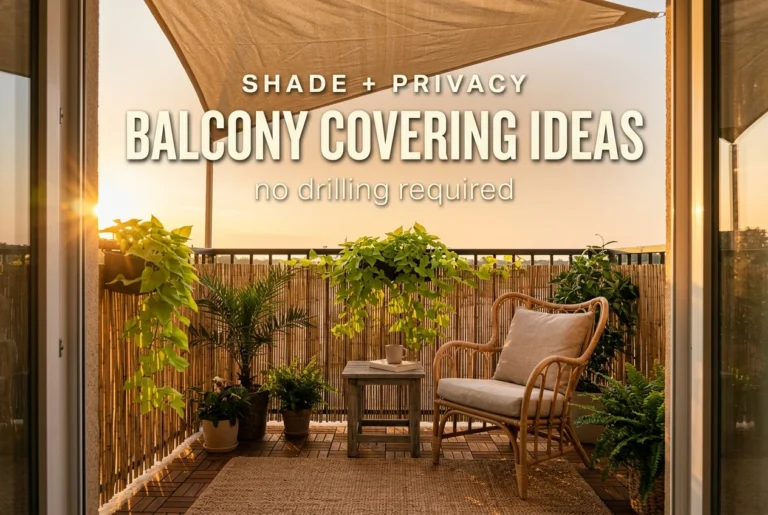
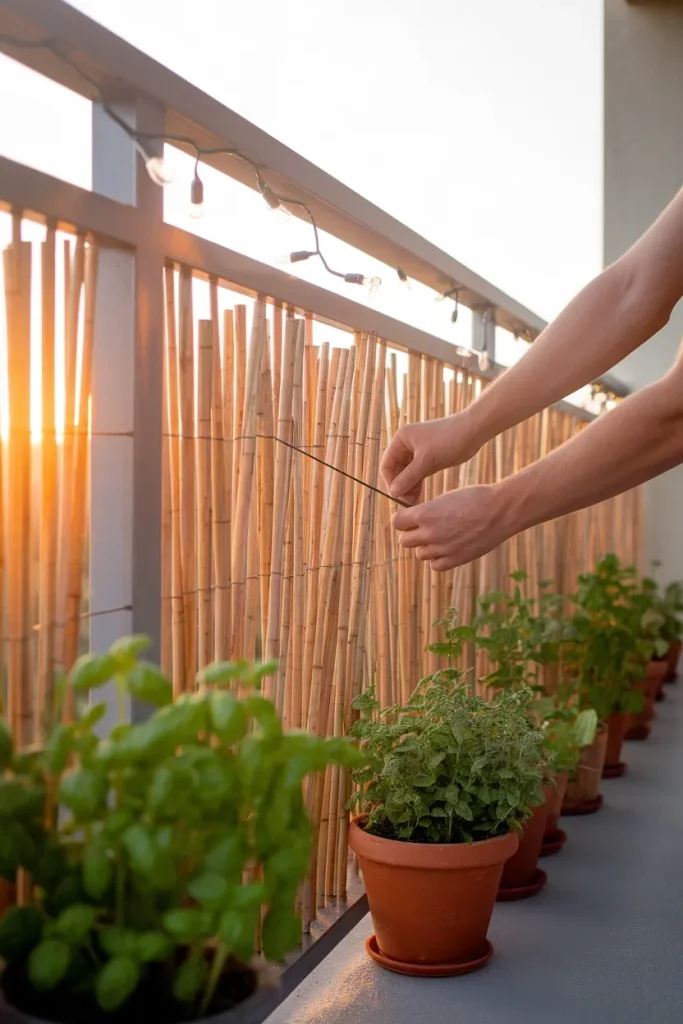
- Bamboo or reed roll fencing, zip tied on. The single highest impact fix. A roll from Home Depot or Lowe’s runs in the $25 to $50 range for 6 feet by 16 feet, black UV rated zip ties cost a few dollars, and the whole install takes about forty minutes. Snip the ties on move out day and nothing shows.
- Fabric privacy screen with grommets. Shade cloth or canvas in charcoal, cream, or olive, threaded with paracord through the existing rail. Around $20 to $45 depending on length.
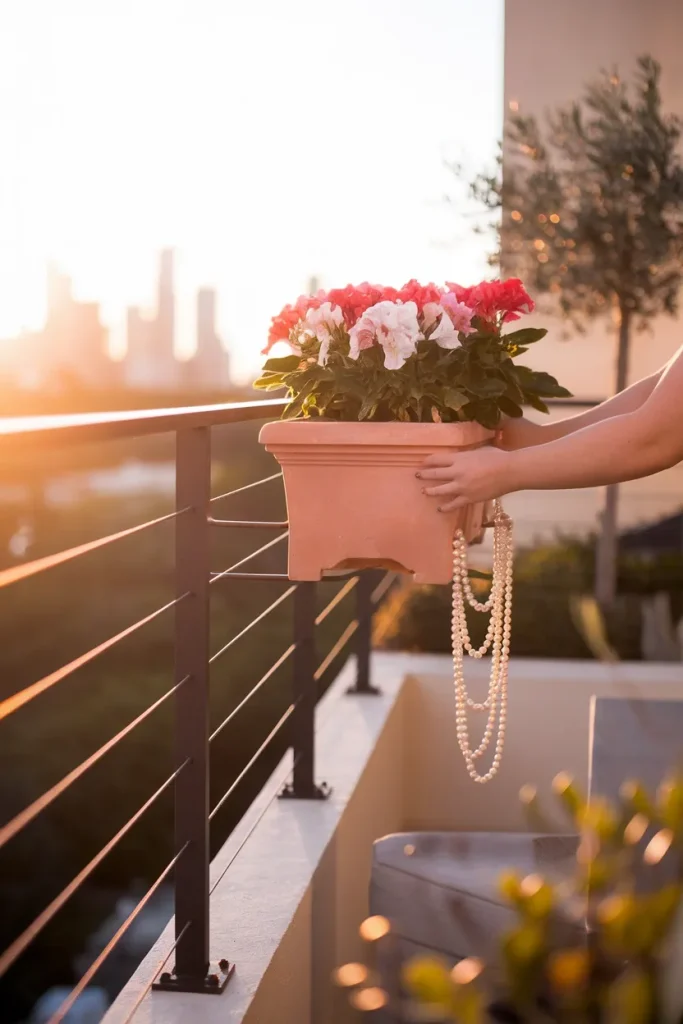
- Over the rail planter hooks. No drilling at all. Bloem and Home Depot both sell railing planters that saddle a standard 2 by 4 or metal top cap, usually under $20 each. Three across the front changes the entire read of a balcony.
- Reed screen plus solar caps. Dollar Tree solar stake lights at about $1.25 each, pulled off their stakes and set along a wide top cap.
- Peel and stick vinyl on the inside face. Works on flat metal panel railings. Matte black or linen texture, removable with a hair dryer.
- String lights zig zagged along the top rail. Brightech Ambience Pro runs about $30 to $45 for a 24 foot strand and instantly makes any rail look intentional after dark.
The full set of renter friendly outdoor upgrades that come back off goes deeper on the no dig side of this, and most of it scales down to a 40 square foot slab without much change.
One caution. Check your lease and your HOA rules before you attach anything to a railing, because plenty of buildings ban exterior facing screens outright for wind load reasons, and a few ban anything visible from the street.
Code, HOA Rules, and the Safety Check Most People Skip
Numbers first, because this is where people get hurt. Balcony railing code is not optional.
Under the International Residential Code, residential guards must be at least 36 inches tall measured from the walking surface to the top of the rail. California and several other jurisdictions push that to 42 inches, and commercial or multifamily buildings frequently sit at 42 as well. Openings in the infill cannot pass a 4 inch diameter sphere, and the sweep space between the floor and the bottom rail has to stay under 4 inches. Stair triangles get a 6 inch allowance.
Verify locally. Codes get amended city by city, and a rail that passes in Austin can fail in Sacramento.
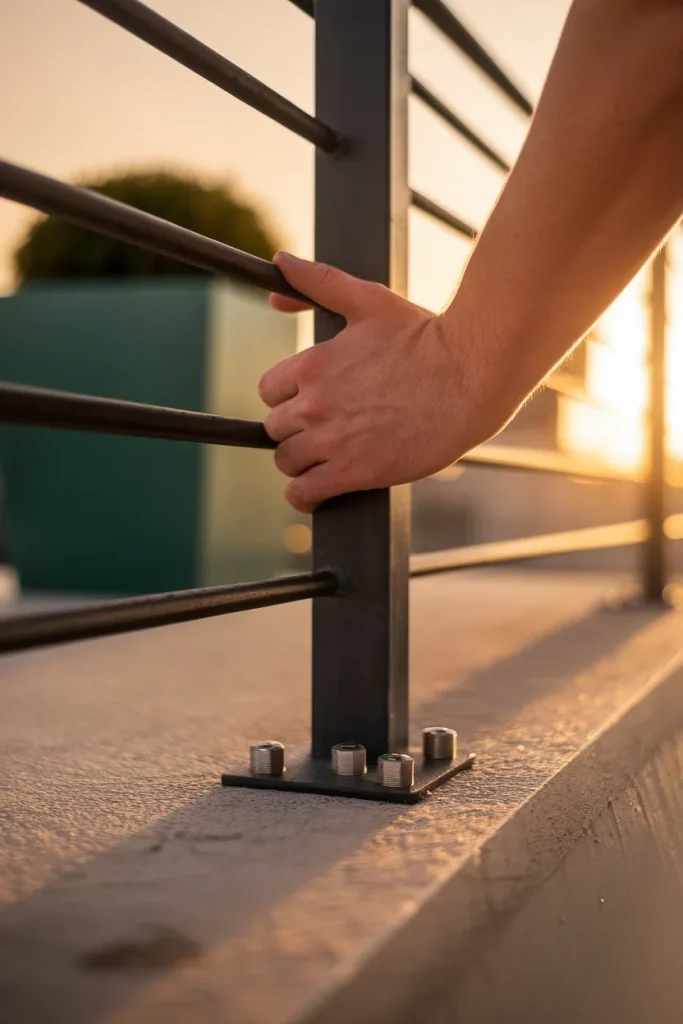
Now the part that matters more than the numbers. Railing failures are almost never about the rail itself, they are about the connection between the post and the structure, and that connection lives inside a wall or under a deck board where you cannot see it. The CPSC has recalled aluminum railing posts for a fall hazard before, which tells you the hardware is not automatically trustworthy just because it was installed by a builder.
Do this test today. Grab the top rail with both hands and push outward hard, then pull inward hard. Any give at all, any creak, any post that moves independently of its neighbor, and you stop using the balcony until someone qualified looks at it. This Old House publishes a full deck and railing safety inspection walkthrough that covers the fastener and ledger checks worth running annually.
If you are in a rental or a condo, that inspection is your landlord’s or your HOA’s legal problem, not yours. Report it in writing and keep the copy.
Styling the Rail: Planters, Lighting, and Soft Layers
A railing is furniture. Treat your balcony railing that way and the slab stops feeling like a fire escape.
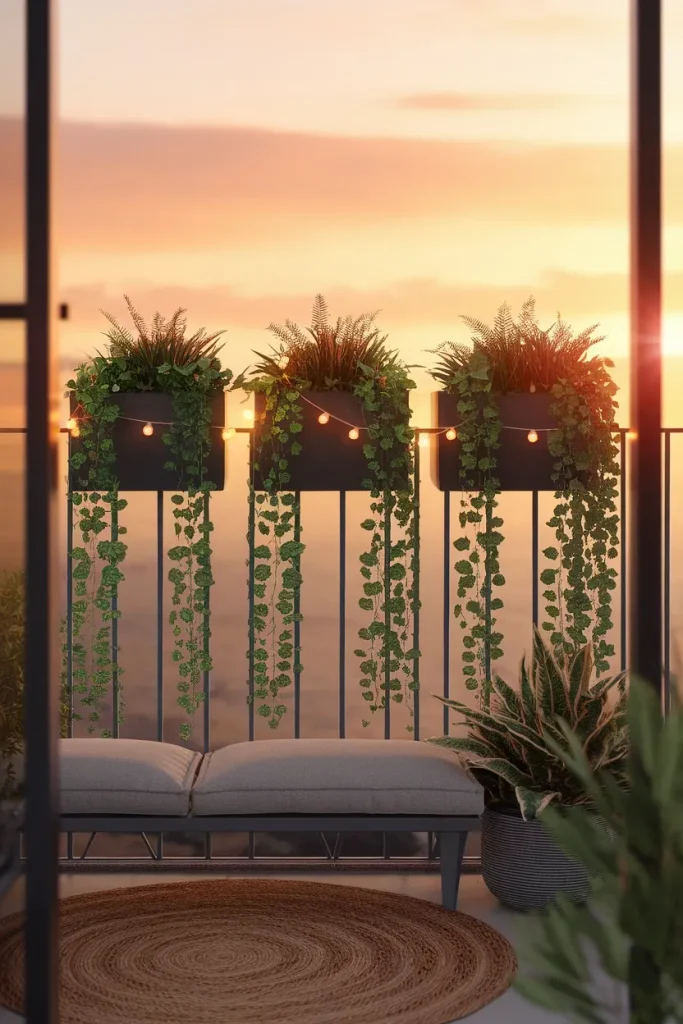
Planters are the highest return move. Hook three matching containers over the top cap at even spacing, plant one thriller and two trailers in each, and let the trailers spill down the outside face where they soften the entire silhouette from the street. Repetition is what makes this read designed rather than accidental. Same pot, same color, same spacing.
Lighting comes second. Run string lights along the underside of the top cap rather than over it, so you see glow instead of bulbs, and add a battery puck light in any dark corner. Warm white only. Cool white will make your balcony look like a parking garage.
Then soften. An outdoor rug pulls the eye down and away from a rail you do not love, and a linen or canvas panel on one side gives you a wind break plus a backdrop for photos. Two textiles is usually enough.
Skip the fake ivy panels. They fade to gray in a single summer, they trap water against the rail, and they are the fastest way to make good balcony railing design modern intentions look cheap.
What Modern Balcony Railing Design Actually Costs
Real 2026 installed balcony railing pricing, per linear foot, so you can budget before you fall in love with something. Prices move. Get quotes.
| Railing type | Installed cost per linear foot | Best for |
|---|---|---|
| Wood | $20 to $60 | Owners on a tight budget, warm looks |
| Composite | $25 to $60 | Low maintenance, matching existing decking |
| Aluminum | $50 to $200 | Slim modern profile, coastal climates |
| Cable | $75 to $260 | View preservation, plant heavy balconies |
| Glass | $100 to $600 | Wind blocking, premium builds |
A typical apartment balcony front runs 10 to 14 feet. Do the math on the low end of cable and you are already past $750 before permits, which is exactly why the renter section above exists.
Owners: get three quotes and ask each one specifically what they are doing at the post to slab connection, because that answer separates a real installer from a guy with a drill.
Balcony Railing Questions People Actually Ask
What is the best material for a modern balcony railing? Powder coated aluminum wins on value for most apartments. It gives you the slim profile that makes a railing read modern, it survives coastal salt and freeze thaw without repainting, and it lands around $50 to $200 per linear foot installed. Cable is better if the view is the whole point. Glass is better if wind is your real problem.
How high does a balcony railing have to be? At least 36 inches from the floor to the top of the rail under the International Residential Code. California and several other jurisdictions require 42 inches, and many multifamily buildings use 42 as standard. Openings cannot pass a 4 inch sphere. Always confirm with your local building department, since codes are amended locally.
Can renters change a balcony railing? Not the railing itself, no. You can cover it with zip tied reed fencing, hang a grommeted fabric screen, or saddle railing planters over the top cap, all of which come off cleanly. Check your lease and HOA rules first, because wind load restrictions on exterior screens are common in mid rise and high rise buildings.
Is glass or cable railing better for a balcony? Glass if you need a wind block or you are above the tenth floor where gusts are constant. Cable if you want the view with airflow and a lower price. Glass costs roughly two to three times more per linear foot and needs cleaning every couple of weeks in pollen season, while cable needs re tensioning about every two to three years.
How much does it cost to replace a balcony railing? Figure $20 to $60 per linear foot for wood, $50 to $200 for aluminum, $75 to $260 for cable, and $100 to $600 for glass, all installed. A standard 12 foot apartment balcony front therefore ranges from roughly $240 on the cheapest wood end to well over $3,000 for premium glass, before permits or HOA approval fees.
How do I make my balcony railing more private without drilling? Reed or bamboo roll fencing zip tied to the existing rail is the fastest and cheapest option at around $25 to $50 per roll. Grommeted shade cloth threaded with paracord is the next best. Both come off in minutes and leave no marks, which is what matters when your deposit is on the line.
Do balcony railings need a top cap? Structurally, no, though most systems include one. Visually it matters a lot: a slim cap in the same color as the posts is what gives a modern railing its clean top line, while a wide contrasting cap in wood or bronze tends to pull the whole design toward traditional.
Start With the Cheapest Change First
Go stand on your balcony and run the Three Line Read on the railing you already have. Cap line, infill line, floor line. Decide which one you want doing the talking, then quiet the other two.
If you own the unit, aluminum or cable balcony railing will get you the biggest visual jump per dollar and both will outlive the finish on your patio furniture. If you rent, start with reed fencing and three matching railing planters this weekend, under $100 total, and see how far that gets you before you spend anything else.
Either way, do the push and pull test on the rail before you style a single thing.
Tell me which look you are leaning toward, or send me a photo of what you are working with. I read every comment, and balcony puzzles are my favorite kind to solve.