
Ugly Backyard Makeover Cheap: Start With the Thing You Keep Apologizing For

An ugly backyard makeover cheap enough to actually start this weekend does not begin at Home Depot. It begins with you standing at the back door, looking at your yard the way a stranger would, and naming the one thing your eye lands on first. That thing is your whole problem. Fix it, hide it, or bury it under something better, and the rest of the yard stops looking bad by association.
Most budget backyard advice hands you a list of twenty five ideas and wishes you luck. That is why people spend $200 on mulch and still hate their yard.
We are going to do it backward. Diagnose first. Spend second.
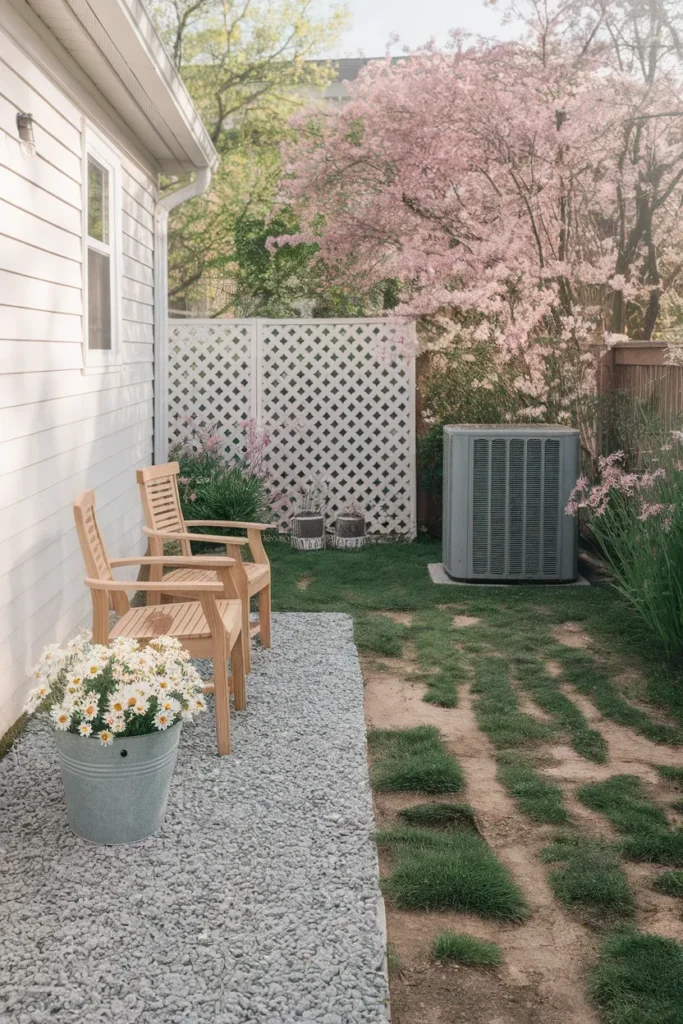
Why Your Backyard Reads as Ugly (It Is Rarely the Grass)
Here is the part nobody tells you. Yards almost never look bad because of one big flaw. They look bad because of three or four small unresolved things sitting in the same field of view.
Walk out and stand where you normally stand. Count what you see.
The gray AC condenser humming against the wall. The chain link fence with the neighbor’s blue tarp behind it. A trash can corner. Bald dirt where the dog runs the same line every afternoon. Two plastic chairs that faded from green to a color with no name.
None of those cost much to solve. All of them together read as neglect, and neglect is what your brain calls ugly.
I spent a full spring convinced my problem was the lawn. I overseeded twice, watered like a maniac, and the yard still looked rough in photos. The actual problem was a rusted utility box and a sightline straight into my neighbor’s carport. A $28 lattice panel from Lowe’s did more for that yard than two bags of Scotts seed ever did.
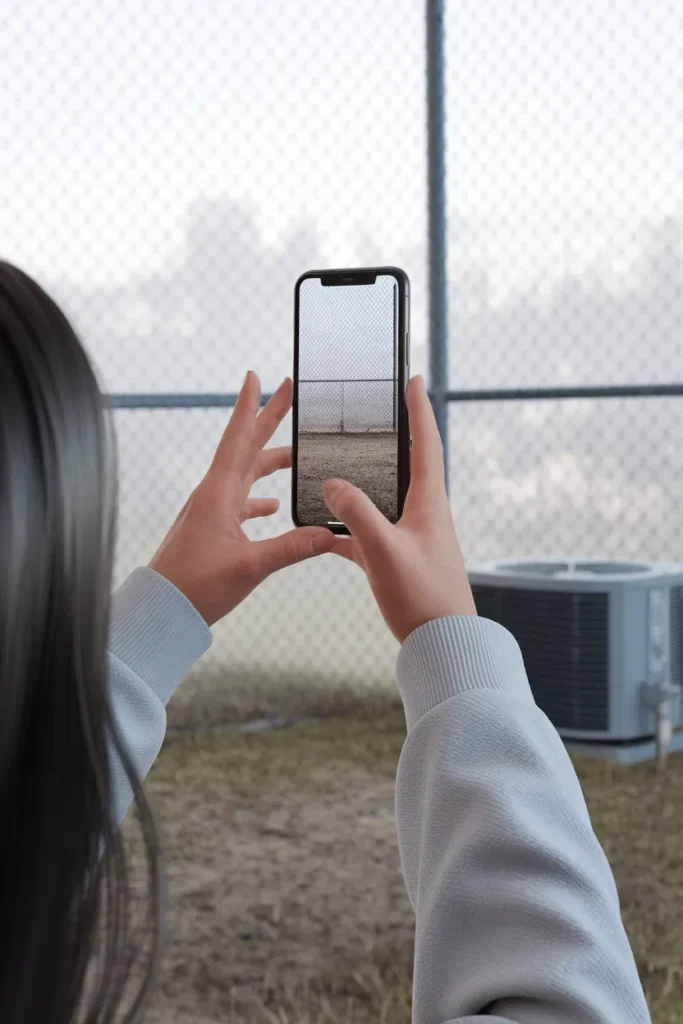
So before you buy anything, do the phone test. Take one photo from the back door. Look at it on a small screen. Whatever your eye snags on in the first second is what you fix first, and it is usually not the grass.
The Hide, Fix, Distract Triage
This is the framework I use on every rough yard, and it takes about ten minutes with a notepad.
Every ugly thing in your backyard belongs in exactly one of three buckets. Hide means the object is permanent, functional, and not going anywhere, so you screen it. Fix means the object is genuinely broken and screening it just delays the bill. Distract means the thing is fine but boring, and the cheapest answer is to give the eye something better to look at nearby.
The mistake almost everyone makes is putting things in the Fix bucket that belong in Hide. Fixing costs five times more.
| The eyesore | Bucket | Cheapest honest move | Rough cost |
|---|---|---|---|
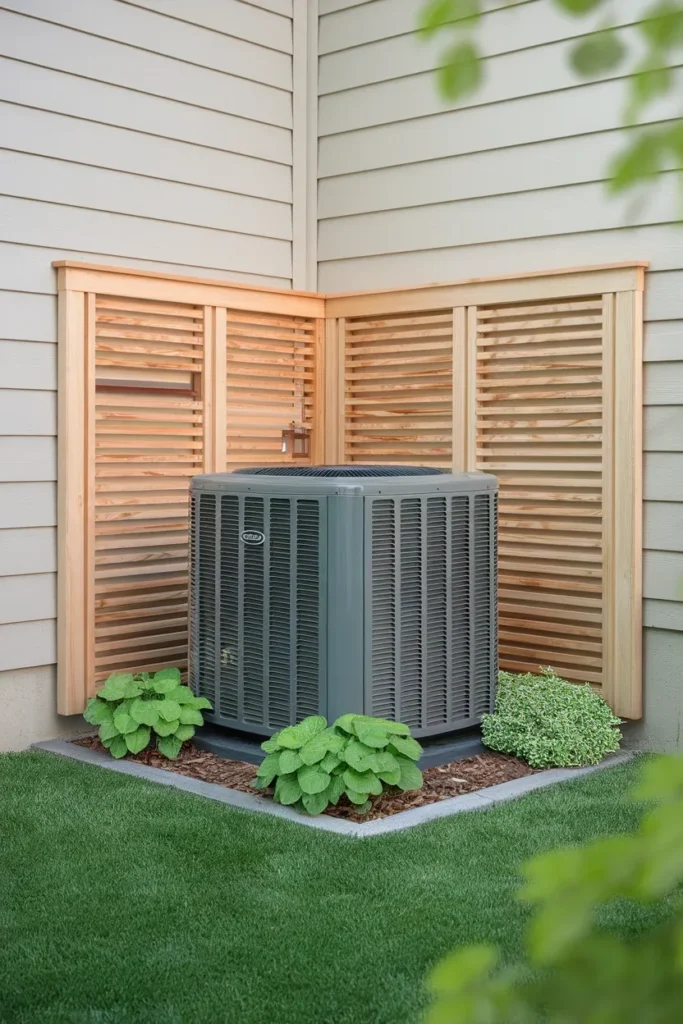
| AC condenser unit | Hide | Lattice or slat screen on three sides, 12 inches of clearance | $25 to $60 |
| Chain link fence | Hide | Reed or bamboo roll fastened with zip ties | $30 to $70 per panel run |
| Bald dog track | Fix | Stepping stones or gravel on the actual path | $40 to $120 |
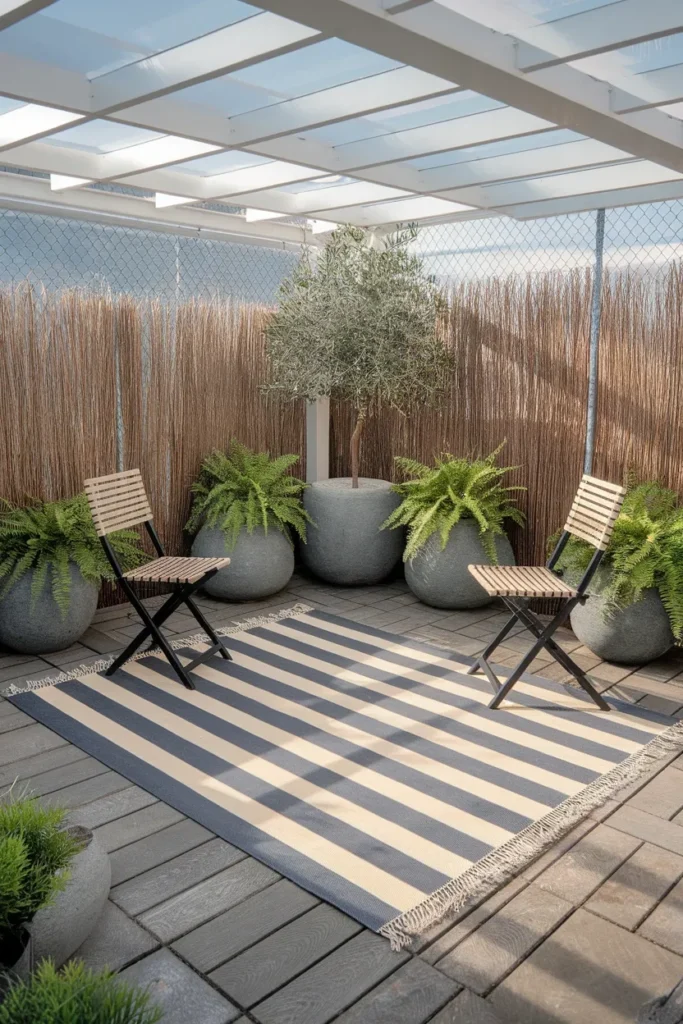
| Cracked concrete slab | Distract | Outdoor rug plus two containers at the crack | $50 to $90 |
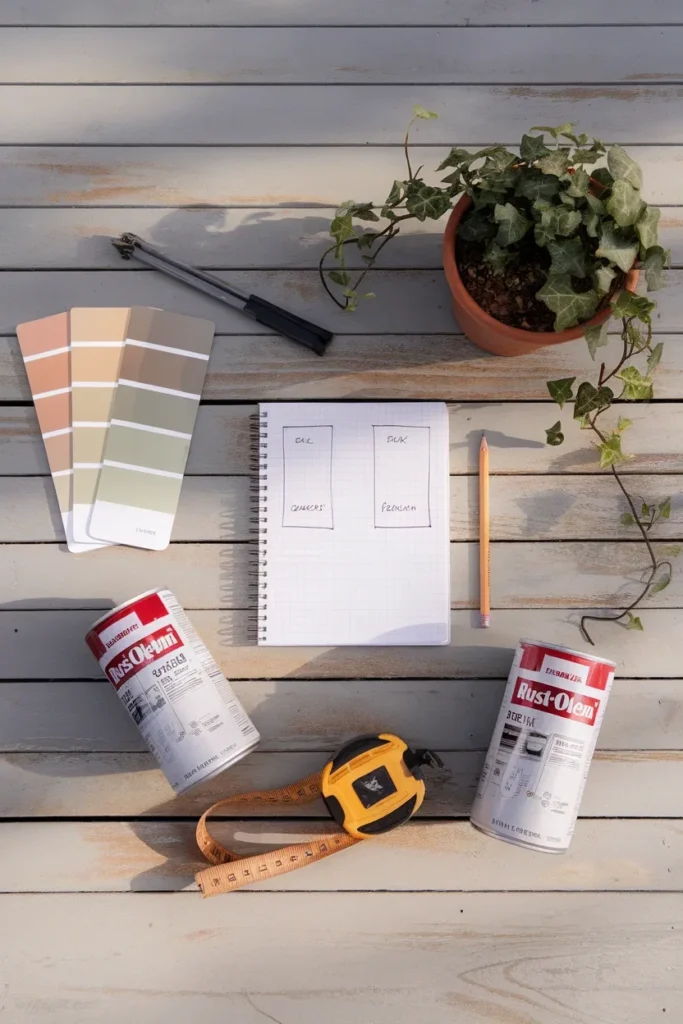
| Faded plastic chairs | Fix | Two cans of Rust-Oleum spray in one color | Under $20 |
| Trash can corner | Hide | Three cedar pickets and two hinges | $35 to $55 |
| Bare fence wall | Distract | One large container plant plus string lights | $60 to $110 |
| Thin patchy lawn | Fix | Overseed in early fall, not spring | $25 to $50 |
Screenshot that table. It is the entire article in one image, and it is the thing your Pinterest audience will save.
One rule keeps the triage honest: never spend Fix money on a Hide problem. A concrete crack does not need resurfacing at $400. It needs a $45 rug and a plant in front of it.
Spend a Free Saturday Before You Spend a Dollar
Every dollar you spend on a messy yard is wasted, because mess is what people actually see. Clean first. It costs nothing and it changes the photo more than mulch will.
Pull everything out that does not live there. The hose reel with no hose. The bag of concrete that hardened in 2023. The pot with the dead thing in it.
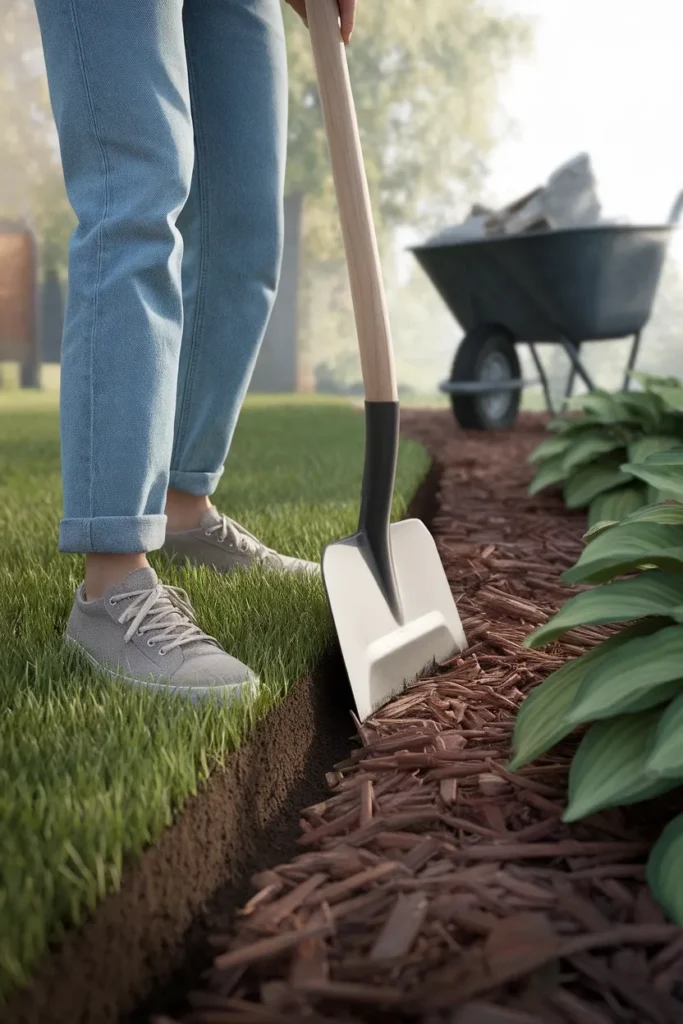
Then cut a real edge along every bed and every fence line with a flat spade. A crisp edge is the single highest value free move in a cheap backyard makeover, because a defined line reads as intentional even when the plants behind it are thin.
Mow, then string trim the fence line properly, then blow or rake the hard surfaces.
Now take a second phone photo. Nine times out of ten the yard already looks forty percent better and you have not opened your wallet. If you want the deeper version of this cleanup and edging sequence, the full walkthrough lives in our guide to backyard landscaping ideas on a budget.
Hide the Five Eyesores Nearly Every Ugly Backyard Has
Competitors write “add a screen to hide unattractive areas” and move on. Useless. Here is what to do with the five specific offenders.
The AC condenser. Screen three sides only and leave the service side open. Keep 12 inches of clearance minimum so airflow is not choked, and never build a lid over it. A vinyl lattice panel cut to height and set on two stakes runs about $25 to $40 at Lowe’s and takes twenty minutes.
Chain link. Reed fencing rolls are the cheapest transformation per dollar in the entire yard. Zip tie a roll to the existing links, cut it flush at the top with sharp shears, and the fence disappears. Budget $30 to $70 per run depending on length.
The trash can corner. Three cedar fence pickets, two cheap hinges, and one afternoon. Stain it the same color as anything else wooden in the yard so it reads as built rather than added.
Bare fence panels. A big empty fence is not a wall problem. It is an emptiness problem. One oversized container with something tall (a potted arborvitae, a clumping bamboo, an ornamental grass) breaks the plane and instantly costs less than painting the whole fence.
The neighbor’s roofline. You cannot lower their shed. You can raise something in front of it. A single fast growing shrub placed on the exact sightline between your seating spot and their roof does more than a whole fence upgrade.
Notice the pattern. Screening is always cheaper than replacing, and it is almost always reversible, which matters a lot if you rent.
Fix the Ground: Mud, Bald Spots, and the Dog Track
Ground problems are the ones you have to actually fix, because no amount of decorating hides a mud pit.
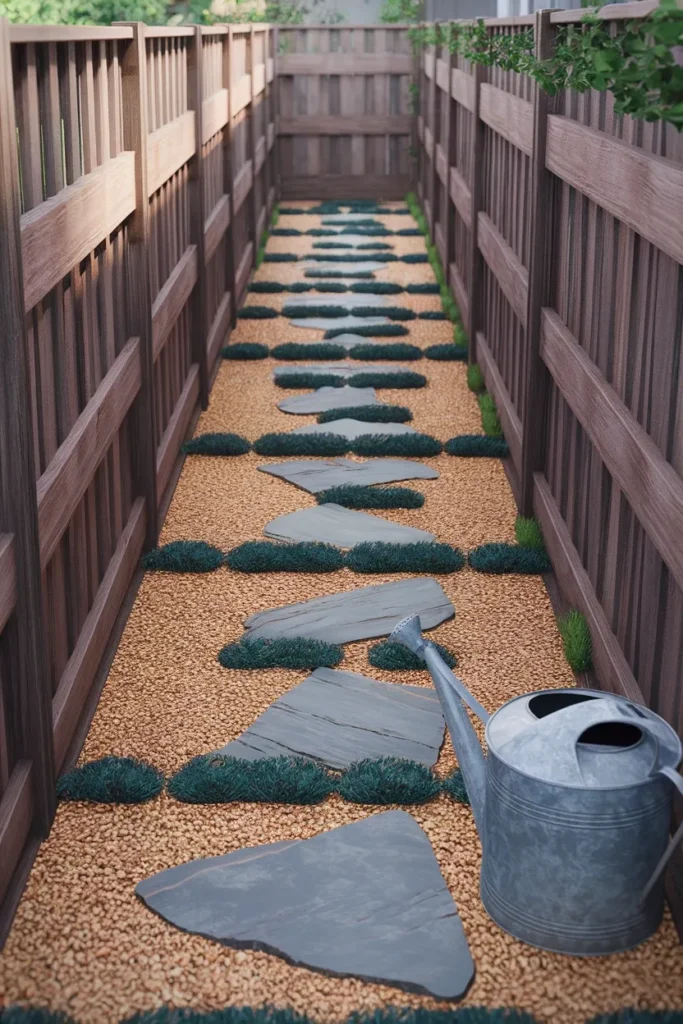
Start by admitting what the bare strip actually is. If your dog runs the same line along the fence every day, that is not a lawn failure. That is a path, and it has been telling you where it wants to be. Give in. Lay stepping stones or a narrow gravel run right on that line and the yard stops fighting you.
For genuine thin lawn, timing beats product every time. Cool season grasses take far better in early fall than in spring, when you are seeding into weed pressure and heat that is coming. Penn State’s lawn establishment and renovation guidance walks through renovation timing and seeding rates properly, and it is worth ten minutes before you buy a single bag of Scotts.
Now the contrarian part. Mulch is not the cheap fix everyone claims.
Bagged mulch at Home Depot runs roughly $4 a bag for 2 cubic feet, dropping to around $2 during the August promo window. Sounds cheap. Then you do the math: covering 200 square feet at 3 inches deep needs about 50 cubic feet, which is 25 bags. That is $100 at full price for something that fades by August and needs redoing next spring.
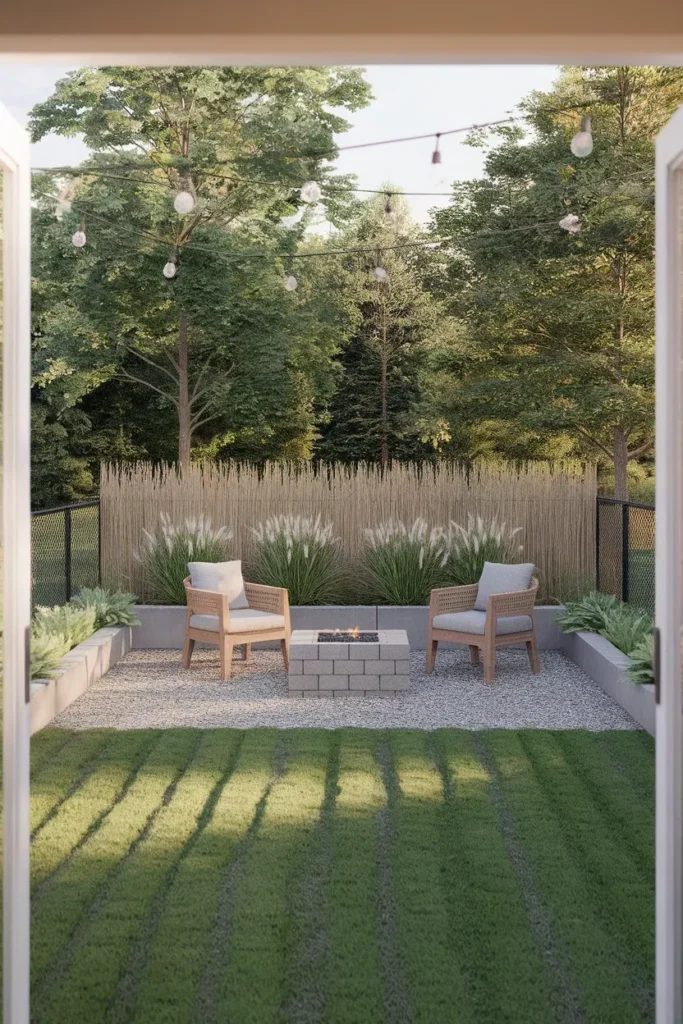
Pea gravel runs $45 to $80 per cubic yard in bulk, or $5 to $8 per half cubic foot bag. The bulk number is where the savings hide. One delivered yard of gravel covers roughly 100 square feet at 3 inches and lasts years instead of months. If your ugly zone is a permanent traffic area rather than a planting bed, gravel wins on cost per year, not cost per bag.
For the full ground layer breakdown including how to lay a gravel floor that does not migrate into the grass, we covered it in inexpensive patio ideas.
Give the Eye Somewhere Better to Land
Once the ugly things are handled, your yard is neutral. Neutral is not the goal.
A yard needs one place the eye wants to go. Without it, people look at whatever is left, and whatever is left is usually the fence.
The cheapest focal points that actually read as intentional:
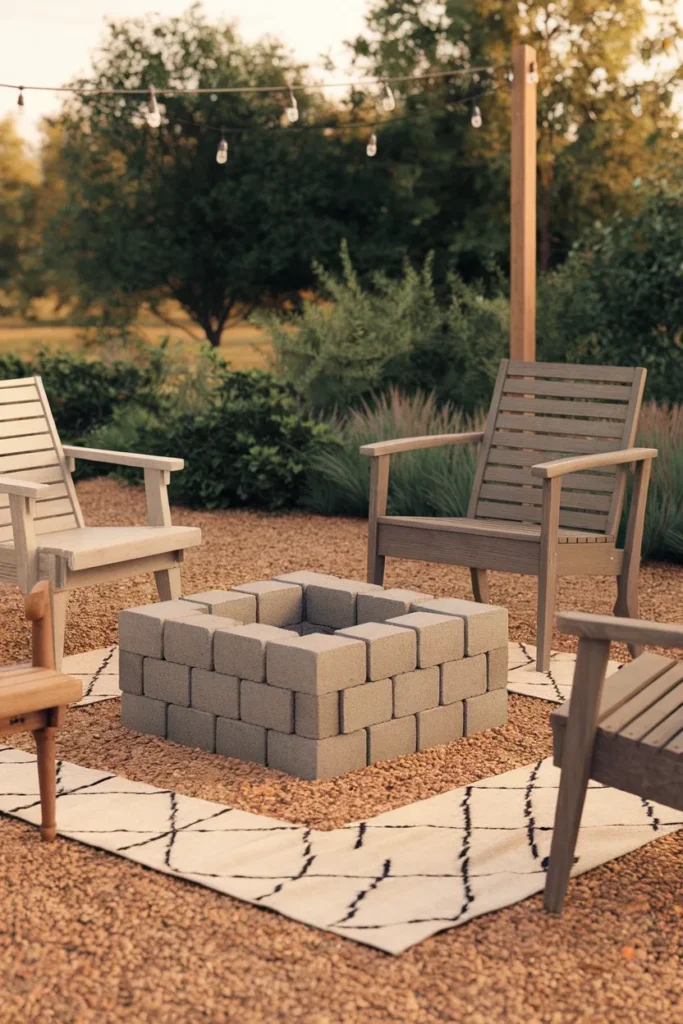
- A fire pit. Highest impact per dollar in the entire yard, full stop. A stacked block build lands in the $75 to $150 range in materials, and a proper stone or steel setup can run to $2,000 if you let it. Start cheap. Our full build guide for a cinder block fire pit covers the fire rated versus fire resistant question that trips most people up.
- One oversized container. Three small pots read as clutter. One big pot reads as design. Buy the biggest planter your budget allows and put one dramatic plant in it.
- String lights on a real span. Not draped along the fence. Run them from the house to a single tall post so they cross overhead and define a room. A 48 foot Brightech or Feit run sits around $30 to $45 and changes the yard more than any plant.
- A painted door or gate. Pick the one hard surface nobody looks at and make it the thing everybody looks at. Two coats, under $35.
Put the focal point where you will actually sit, not in the geometric center of the yard. Yards get decorated for imaginary viewers all the time, and then nobody uses them.
The $100, $300, and $600 Ugly Backyard Ladder
Budgets are not one number. They are rungs. Pick the rung you are actually on and finish it before you climb.
The $100 rung. Two cans of spray paint for the faded furniture, one lattice panel for the AC unit, one roll of reed fencing for the worst fence run, and a bag of grass seed for the bare patch. Nothing here is glamorous. All of it removes ugly, which is the job.
The $300 rung. Everything above, plus a cubic yard of delivered gravel for the traffic zone, one oversized container with a real anchor plant, and a 48 foot string light run. This is the rung where the yard stops being a problem and starts being a place.
The $600 rung. Everything above, plus a block fire pit, an outdoor rug, and three to five perennials sized for your zone so next year costs less than this year.
Perennials are the only line item on this list that gets cheaper over time, which is why they belong on the top rung rather than the bottom. Check your zone on the USDA plant hardiness zone map before you buy, because a plant that dies in January is not a bargain. In Zones 5 through 7, plant them in early fall so roots settle before the ground freezes. Last frost in Zone 5 typically lands somewhere in mid to late April, though your specific date shifts year to year and by microclimate, so confirm locally before you commit anything tender.
A note on the rungs: skipping to the $600 tier while the AC unit is still bare is how yards end up expensive and still ugly.
Renting? Six Moves You Can Take With You
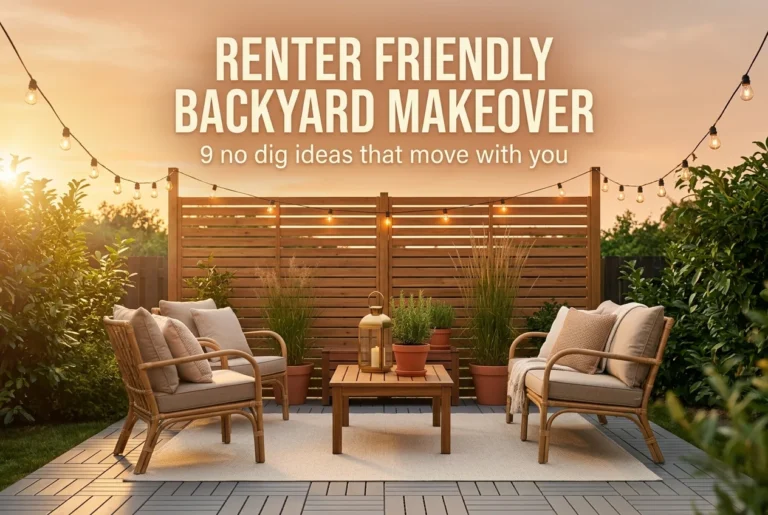
Nobody writing about cheap backyard makeovers separates the reversible from the permanent, and renters end up paying to improve someone else’s asset.
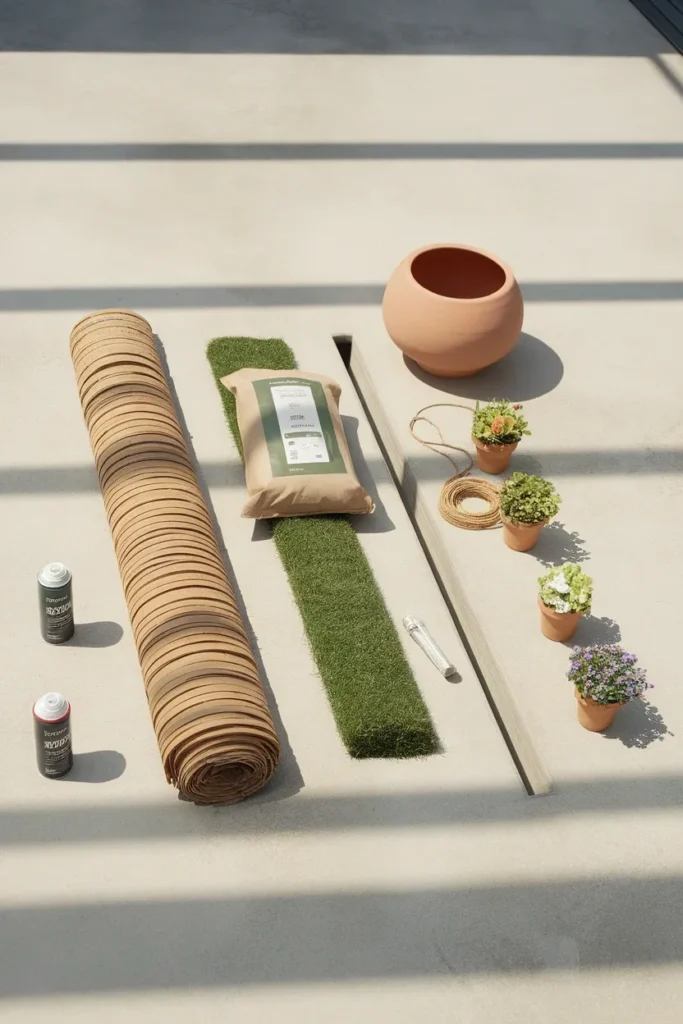
Everything on this list unclips, unzips, or rolls up:
- Reed fencing zip tied to chain link (cut the ties, roll it up, take it)
- Freestanding lattice screens on stakes rather than posts set in concrete
- Interlocking deck tiles over an ugly concrete slab
- Outdoor rugs, which hide more cracked concrete per dollar than anything else
- Large containers instead of in ground beds
- String lights on a freestanding post set in a bucket of concrete
Skip anything involving digging, permanent fasteners into siding, or grass removal. Ask before you touch a fence, even to attach something soft.
Honestly, some of the best looking rentals I have seen were entirely rugs, pots, and lights. Permanence is not what makes a yard look good.
Do It in This Order or You Will Pay Twice
Sequence is the invisible cost nobody prices in. Here is the order that has never let me down.
- Clear and clean
- Cut edges
- Screen the eyesores
- Fix the ground where it is genuinely broken
- Set the focal point
- Plant
- Light it last
Lighting goes last because you cannot place lights well until you know where people will sit. Planting goes second to last because plants get trampled by every step above them.
I learned this one the expensive way. I planted a whole border in June, then decided in July that the gravel seating area belonged exactly where the border was. Six plants, one wasted afternoon, and about $70 gone because I planted before I placed. Set the hard stuff first. Soft stuff fills in around it.
Ugly Backyard Makeover Questions People Actually Ask
What is the most affordable way to remodel a backyard? Clean, edge, and screen before you buy anything decorative. Those three moves cost close to nothing and remove most of what reads as ugly. After that, the cheapest real improvement per dollar is usually reed fencing or lattice screening, followed by a gravel zone in whatever area is already worn bare.
What is the cheapest way to build a patio? Compacted gravel over landscape fabric, with edging to hold the line. A delivered cubic yard of pea gravel runs $45 to $80 and covers roughly 100 square feet at 3 inches. Pavers set into that gravel later will cost more but can be added a few at a time, which spreads the spend across seasons.
What is a reasonable budget for a small backyard makeover? For a typical suburban yard, $300 handles screening, a defined gravel zone, lighting, and one anchor container. Under $100 still removes most of the ugly if you focus on paint, screening, and seed. Above $600 you are into fire features, furniture, and planting depth rather than problem solving.
How do I fix a backyard with no grass and just dirt? Decide first whether that dirt should be lawn at all. Compacted, shaded, or heavily walked areas will keep failing as turf. Gravel, mulched beds, or stepping stones are cheaper and more durable there. If you do want grass, overseed in early fall rather than spring, and fix the compaction first or the seed will not take.
Does a backyard makeover increase home value? Outdoor improvements generally help perceived value more than appraised value, and tidy usually beats expensive. A clean, defined, screened yard photographs better for a listing than a half finished high end project. Talk to a local agent about your specific market before spending with resale in mind.
How long does a cheap backyard makeover take? The cleanup and edging phase is one Saturday. Screening the eyesores is a second Saturday. Ground work and gravel delivery usually take a third. Most yards get to the “I would host in this” stage across three weekends of real work.
Can I do this if I rent? Yes, if you stay reversible. Reed fencing, deck tiles, rugs, containers, and freestanding screens all come with you. Skip anything that requires digging, concrete, or fasteners in the house or fence without written permission.
Start With the One Thing You Keep Apologizing For
You already know what it is. Everybody does. It is the thing you mention before guests walk out the back door, the sentence that starts with “sorry, we haven’t gotten to…”
Go handle that one thing this weekend. Screen it, paint it, or put something better in front of it.
Then take the photo again. That is how an ugly backyard makeover cheap enough to actually finish gets done: one eyesore at a time, in the right order, with the cheapest honest fix each time.
Save this one for when you are standing in the garden aisle wondering how many bags of mulch you need. Tell us which eyesore you are tackling first, because we are always curious which one wins.
One Comment