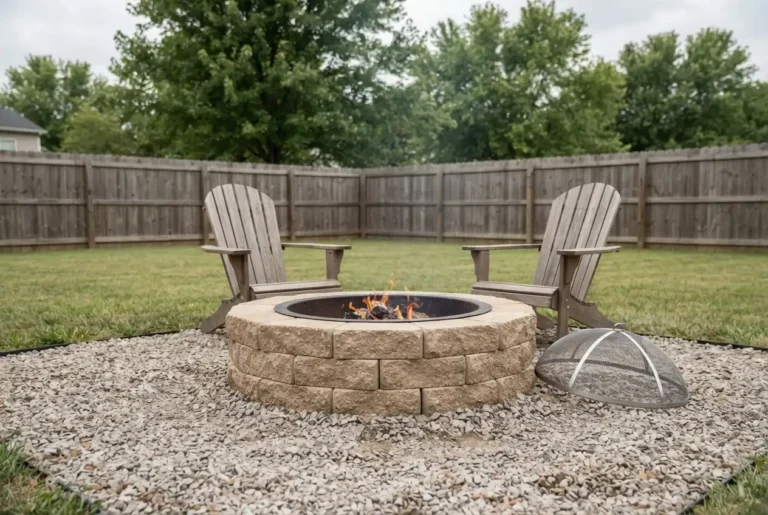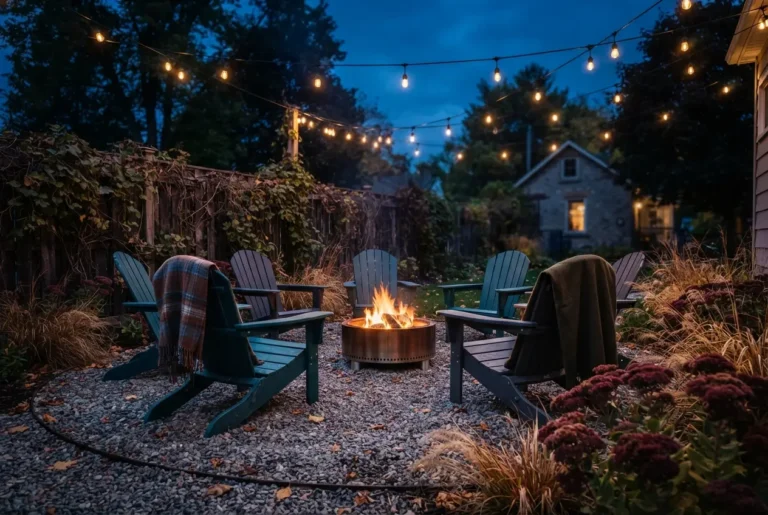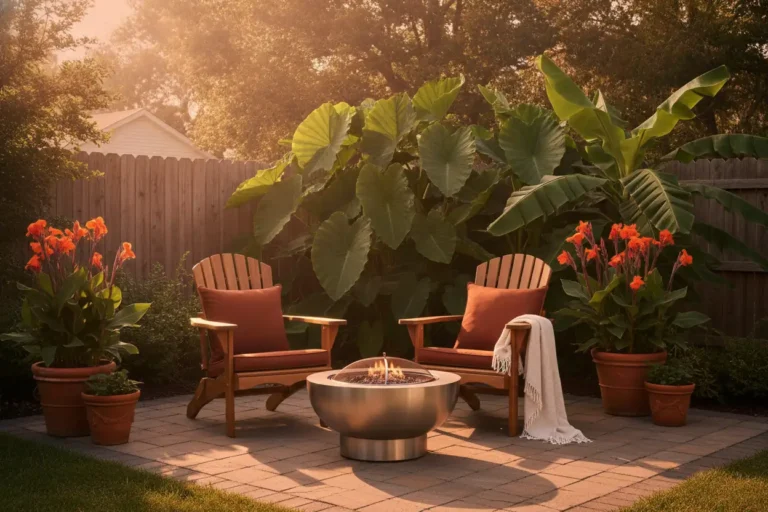
Deck Furniture Ideas That Turn Bare Boards Into an Outdoor Room

A deck with no furniture is just an expensive floor. The best deck furniture ideas fix that by treating those boards as what they really are: one more room of your house, the one with better lighting and zero drywall. So we’re going to furnish it like a room. The deck furniture ideas below run in the order a designer would stage them: our One-Room Rule (a four slot formula you can screenshot), real footprint math for 10×12 and 12×16 decks, shopping tiers that run from a $250 weekend refresh to a buy it once setup, and the materials that actually survive Zones 5 through 9. Grab a tape measure. Let’s furnish something.
Start With the One-Room Rule
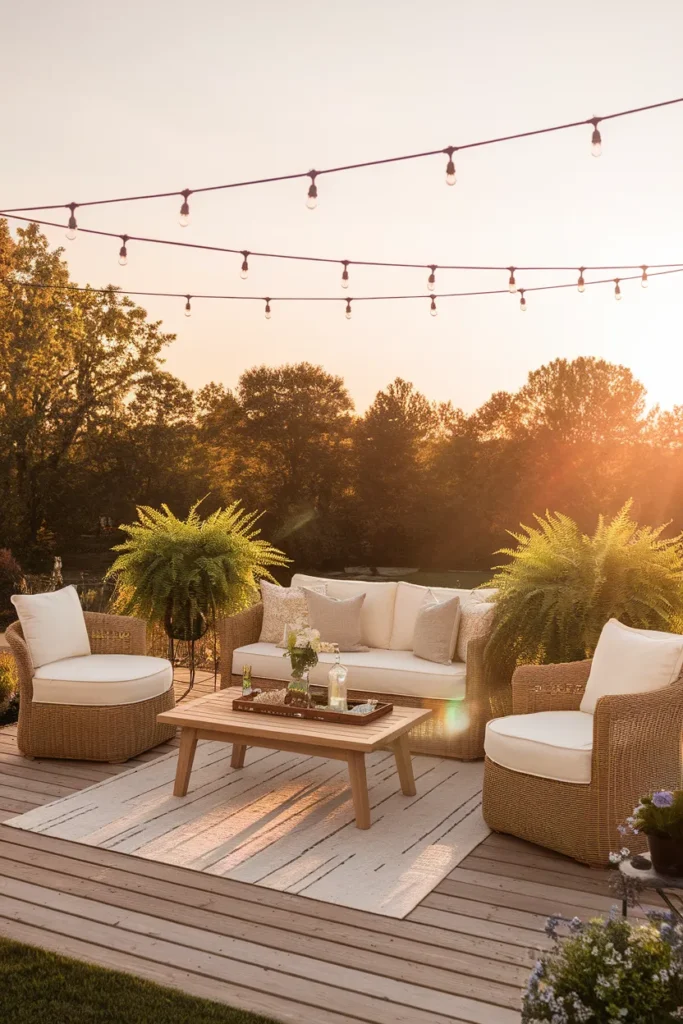
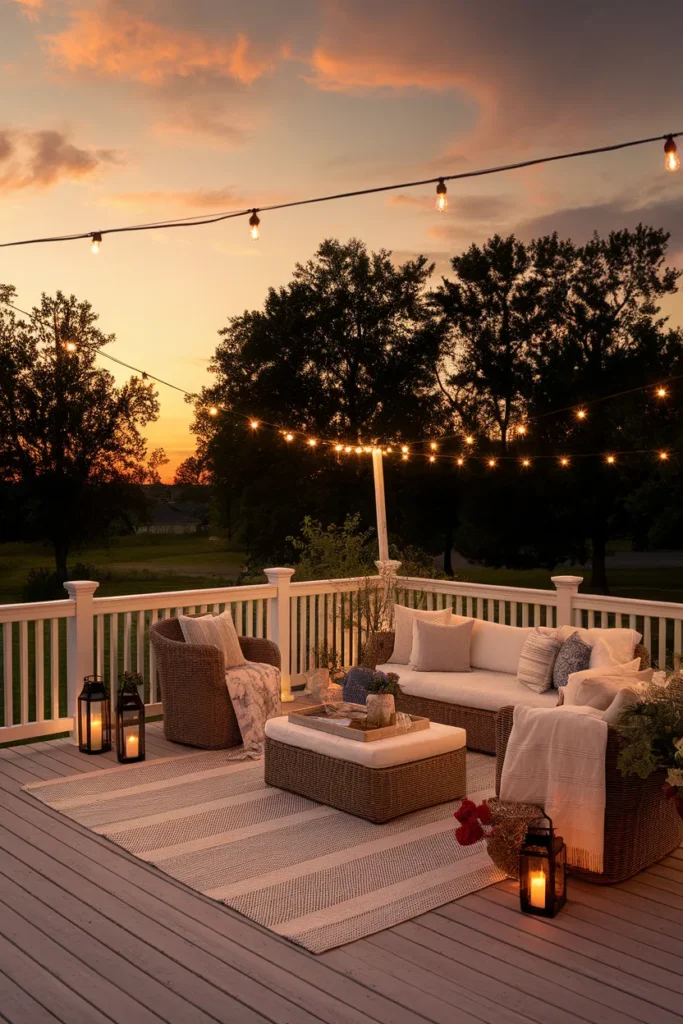
The One-Room Rule is our four slot formula, adapted from how designers stage a den. Every finished deck needs an Anchor (main seating), a Surface (a table within arm’s reach of every seat), a Glow (light that isn’t the porch bulb), and a Soft Layer (rug, cushions, throw). Fill all four slots, even cheaply, and the space reads as a room. Skip one and it reads as storage. Use it to filter every roundup of deck furniture ideas you save this year.
Here’s the rule priced out at three levels, all from US retailers. Screenshot this part.
| Slot | The $250 Weekend Room | The $900 Upgrade | The Buy It Once Room |
|---|---|---|---|
| Anchor | 2 folding Adirondack chairs (Walmart, under $60 each) | 4 piece resin wicker conversation set (Target or Amazon, under $500) | Polywood or acacia sectional (roughly $1,200 and up) |
| Surface | Side table from HomeGoods (under $40) | Concrete look drum table, about 21 inches across (around $150) | Teak coffee table (in the $400 range) |
| Glow | 2 solar stake lights plus Dollar Tree lanterns (under $15 total) | 48 feet of cafe string lights (around $40) | Low voltage deck rail lighting (a $200 to $300 project) |
| Soft Layer | 5×7 poly rug and 2 outdoor pillows (under $70) | 8×10 outdoor rug plus performance fabric pillows (around $200) | Sunbrella cushions and layered rugs ($400 and up) |
Notice what the rule does. It stops you from blowing the whole budget on one giant sofa and calling it done, which is the single most common way deck furniture ideas go sideways. Four slots. One room. Everything below plugs into it.
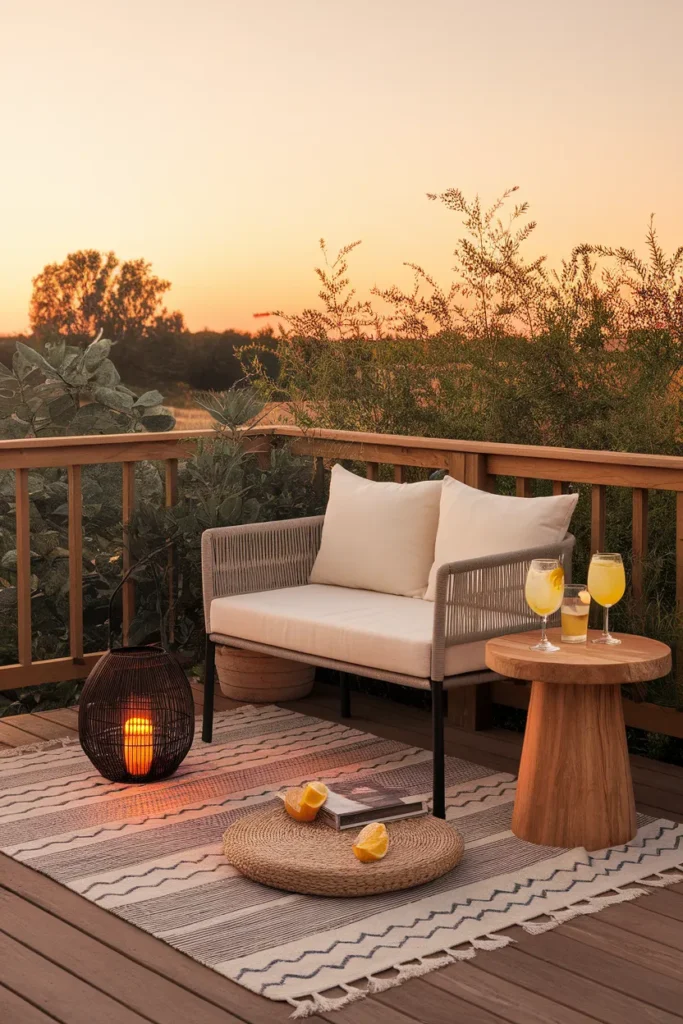
Measure Twice, Shop Once: Deck Furniture Layout Ideas by Size
Most deck furniture layout ideas fail at the tape measure stage, because nobody used one. It’s the least glamorous step in any deck furniture ideas guide, and the one that decides everything. So start with the honest numbers. An outdoor loveseat runs 52 to 58 inches wide. A three piece conversation set wants an 8×8 foot pocket. A corner sectional needs a 10×10 corner, minimum. A 48 inch round dining table with chairs pulled out eats a 9 foot circle.
Then protect your walking room. Keep 36 inches of clear path through the space, more if anyone in the house uses a mobility aid, and leave about 18 inches between the sofa edge and the coffee table. On a 10×12 deck that math allows exactly one seating zone. On a 12×16, you can split two zones with a rug seam down the middle.
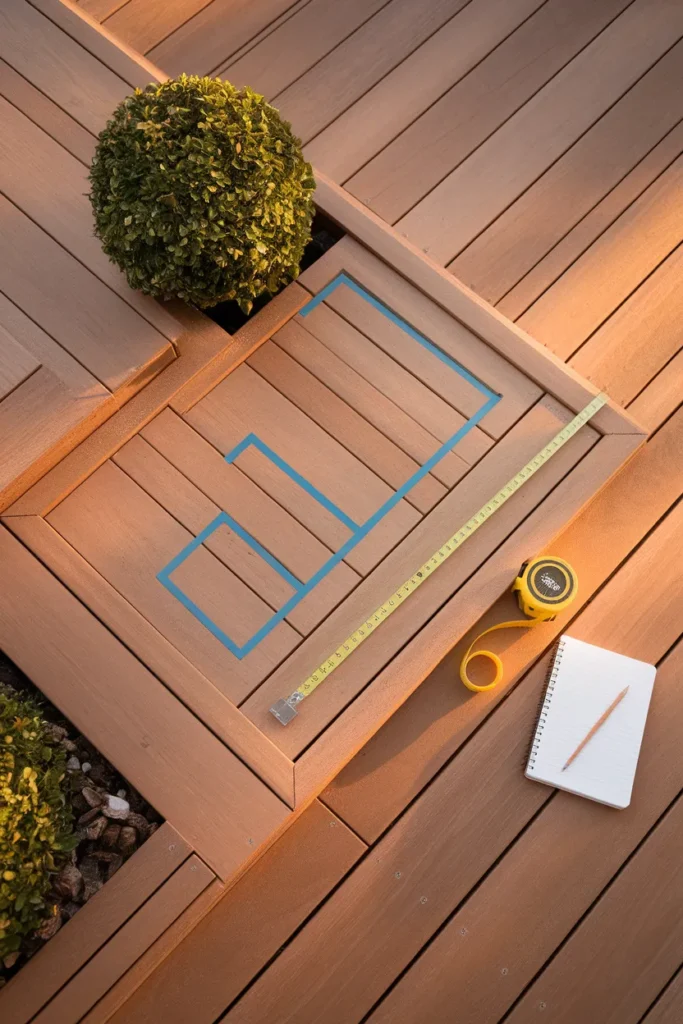
The free trick: outline every footprint in painter’s tape before you buy a thing, then live with the tape for a weekend. We’ve all seen the 110 inch sectional that swallowed a 10×12 deck whole, usually discovered in June with the boxes already open on the lawn. Tape is cheaper than regret. The same trick anchors our guide to arranging small patio furniture, where it makes an 8×10 slab feel twice its size.
The Anchor: Conversation Sets and Outdoor Sectionals
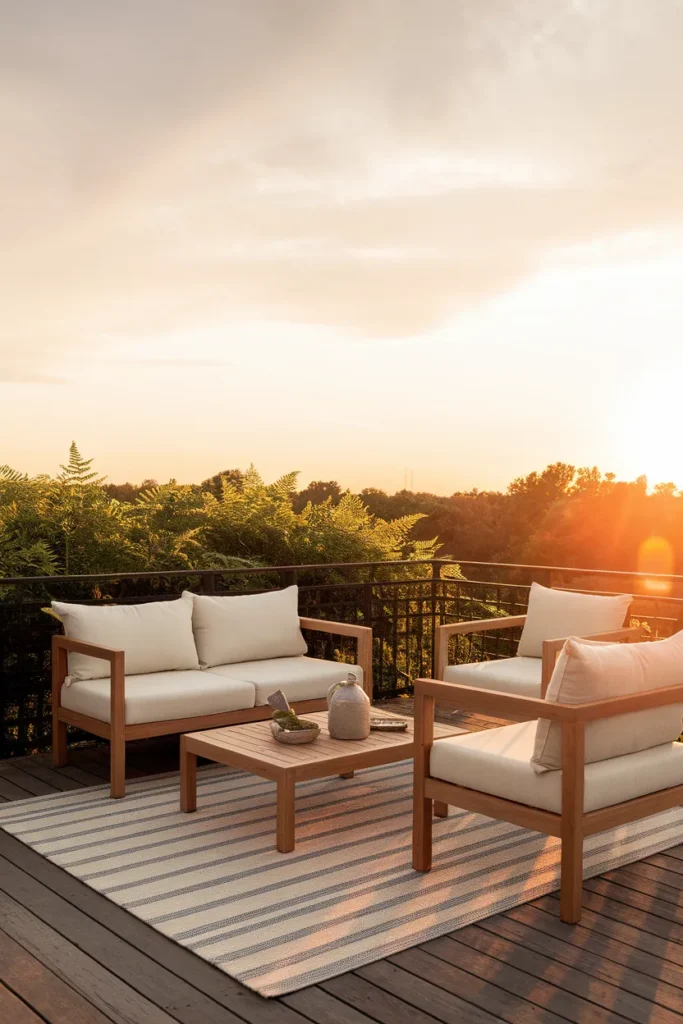
Every room needs one piece doing the heavy lifting, and on a deck that’s the conversation set. The classic sofa plus two chairs, arranged in a U that faces the view or the back door, still beats everything else for the way people actually gather. Most modern deck furniture ideas are really just variations on this grouping. Keep facing seats within 8 feet of each other. Farther than that and guests end up shouting across the boards.
Resist the beginner move of shoving every piece against the railing, seats lined up like a bus stop with everyone staring at an empty middle. Pull the sofa 12 to 18 inches off the rail, float the chairs, and let the rug hold the group together. The room instantly feels intentional.
On price, the middle tier is where deck furniture ideas get realistic. Christopher Knight’s four piece acacia conversation set was sitting near $485 on Amazon this week, resin wicker sets at Target and Walmart hover under $500, and either one carries you for years if you pick deep seats with cushions at least 24 inches across. Thin pads look fine in photos. Nobody sits on them twice.
Dining and Bar Seating That Earn Their Square Feet
Most deck furniture ideas roundups open with a giant dining set, so here’s the take that ruffles feathers: it should be the last thing you buy, and on many decks it should never arrive at all. Track one normal month and count. Most families eat out there twice and lounge out there twenty times, so handing 80 square feet to eight chairs is bad math dressed up as hospitality.
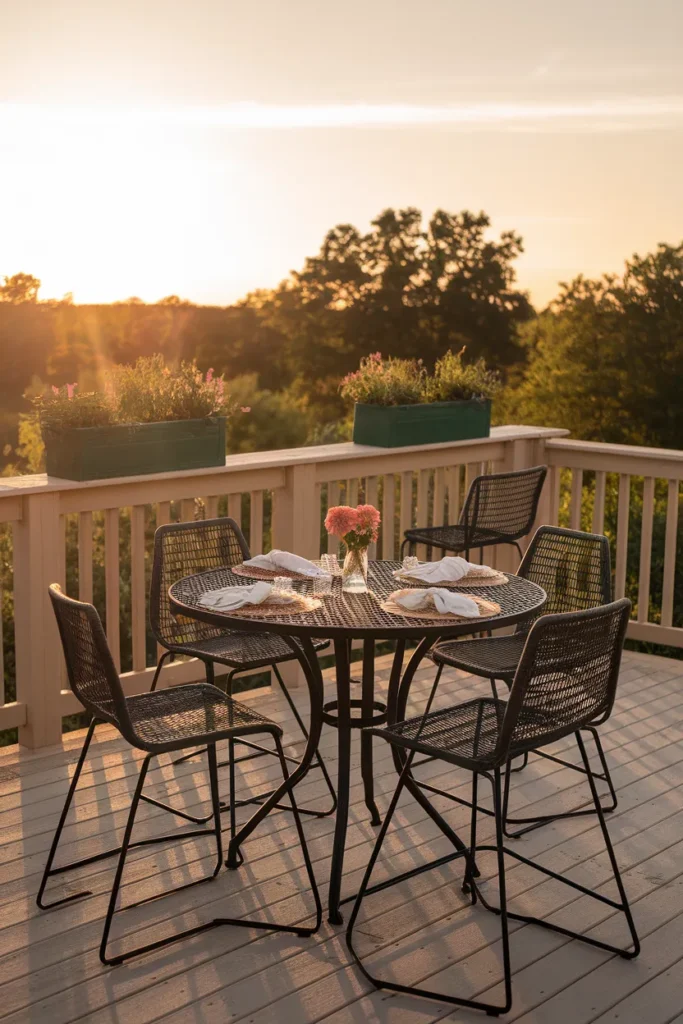
When dinner does move outside, smaller formats work harder. A 42 to 48 inch round table seats four without hogging a zone. A drop leaf table lives flat against the house wall until Saturday. And a bar height table along the railing is the sleeper pick, since standard deck rails run about 36 inches and bar stools lift your sightline right over them.
Budget wise, IKEA’s little folding bistro sets run well under $150, and Hampton Bay sets at Home Depot fill the $300 to $600 lane with solid frames. Buy the lounge first. Add dining once the deck proves it hosts dinner more than it hosts naps.
The Lounge Layer: Chaises, Daybeds, and Hanging Chairs
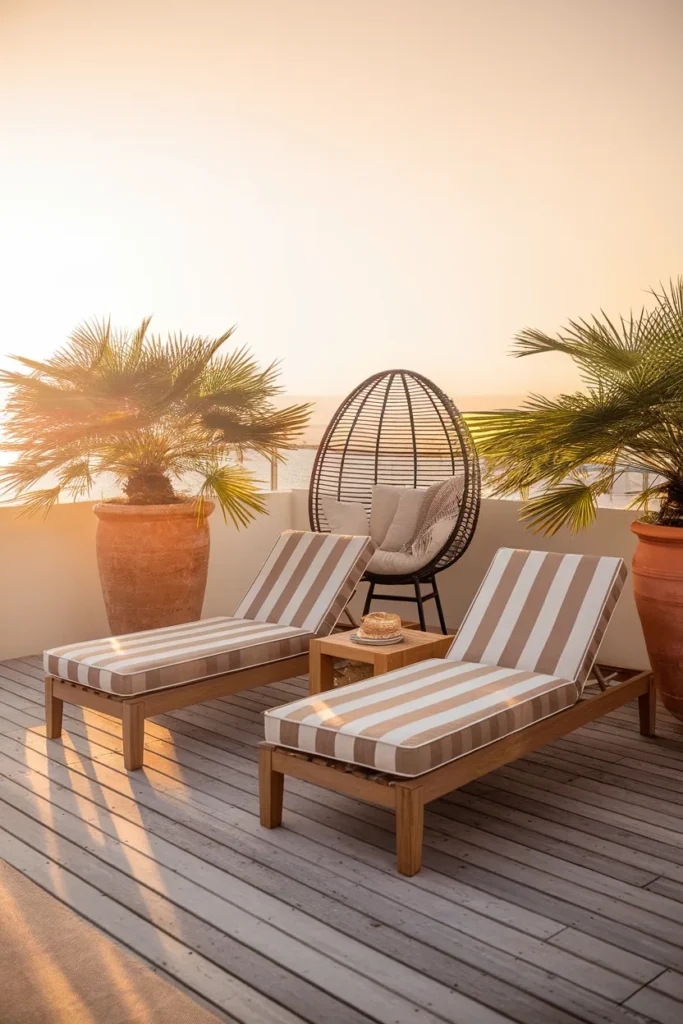
Once the anchor works, add the piece that exists purely for doing nothing. These are the deck furniture ideas nobody needs and everybody remembers. A pair of chaises with a 20 inch gap and one shared side table turns any sunny corner into a resort lane. Zero gravity recliners do the same job for under $100 a pair and fold flat by October.
Hanging chairs deserve their moment too, with one warning. An egg chair on a stand needs a clear 4 foot circle plus a frame rated well past 250 pounds, so measure the corner before you fall in love. Sunnydaze hanging chairs in the $200 to $300 range hit the sweet spot between cute and structural.
One placement tip that outranks every catalog photo: park the lounge where the 3 p.m. shade actually lands, and check in July, since the sun sits differently than it did in April. A chaise that looks perfect at 10 a.m. can be unusable by mid afternoon. Shade maps beat style boards.
Small Deck Furniture Ideas That Don’t Crowd the Boards
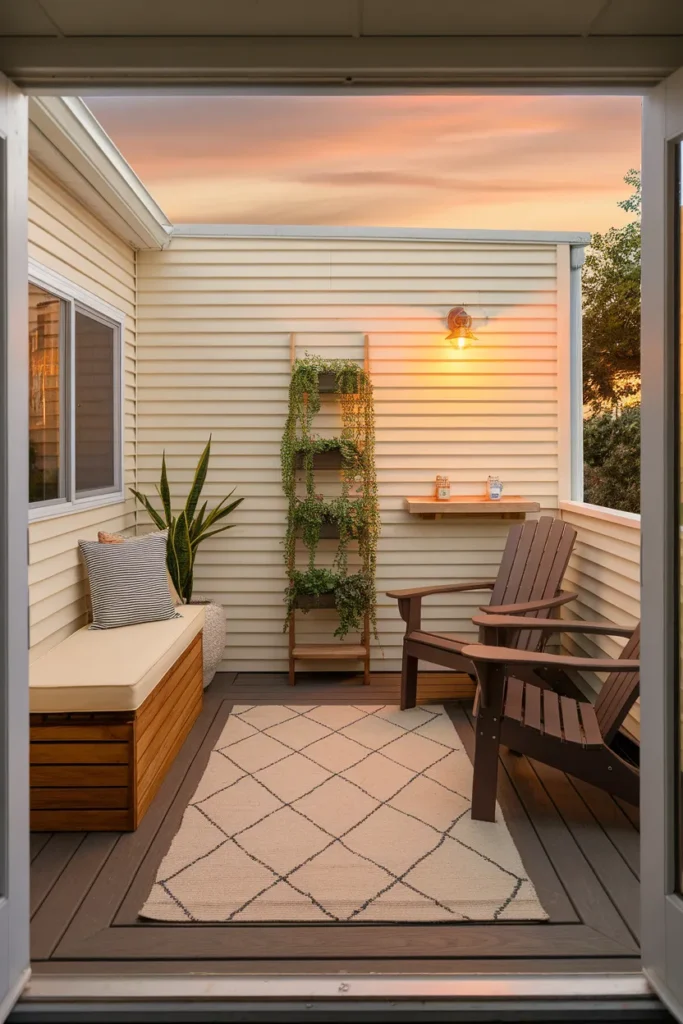
On a small deck, every piece has to hold two jobs or it doesn’t get to stay. A Keter storage bench, around $120 to $150, is the poster child: seating on top, a cushion garage inside. Nesting side tables split apart for guests and stack for Tuesday. Skip anything with a skirt or a solid base, since visual weight crowds a small deck faster than actual weight does. Folding Adirondacks hang flat on the wall all winter.
Go vertical next. A rail mounted drink ledge replaces an entire side table, a ladder shelf stacks plants and lanterns in two square feet, and Bloem wall planters pull the greenery up off the floor entirely. The floor you save is the room you feel.
Then zone what’s left. Even an 8×10 deck takes a 5×7 rug, and that one rectangle tells the eye where the room is. These small deck furniture ideas pair naturally with our deck ideas for small yards, which handle the boards and structure underneath, while this list handles everything that sits on top.
Materials and Weather: What Survives Zones 5 Through 9
Nearly every deck owner we know has bought the $150 big box wicker set exactly once. One season of full sun, and by the second August it’s shedding strands like a bad sweater. Sound familiar? Consider it tuition for the lesson below, because on an uncovered deck the prettiest deck furniture ideas die fastest in the wrong material.
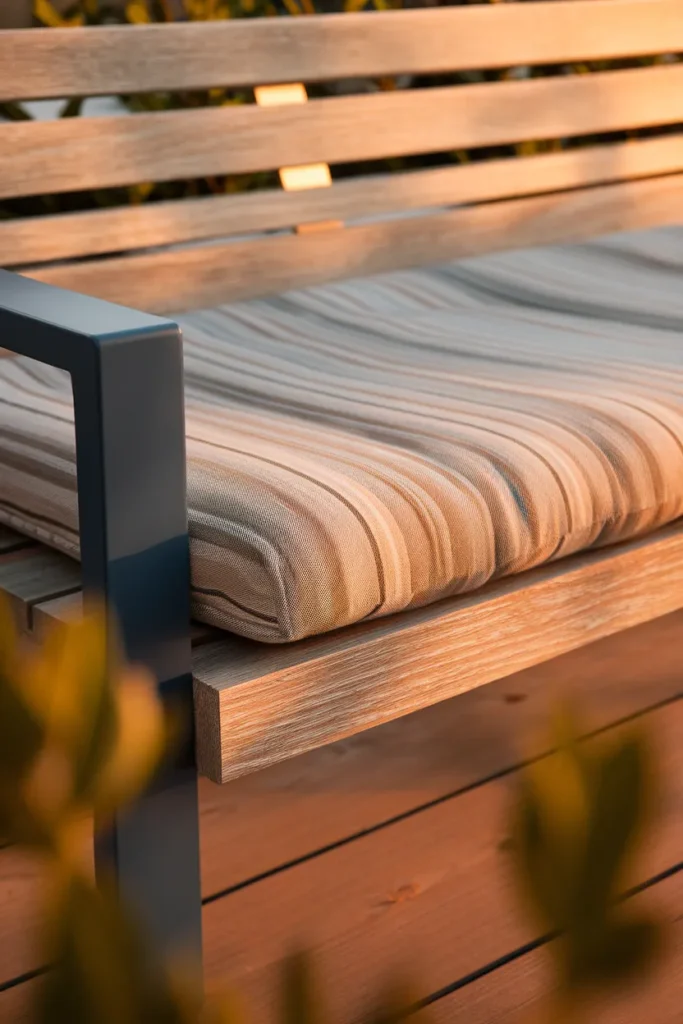
The survivors are a short list. HDPE poly lumber, the recycled plastic in Polywood Adirondacks that run around $200 to $300 each, shrugs off winters and never needs sealing. Powder coated aluminum stays light enough to rearrange one handed and won’t rust. Teak costs real money up front, then asks for nothing except soap and water while it fades to a silvery gray patina.
Natural wicker belongs indoors; if you love the weave, buy resin and steal the styling from our wicker patio furniture ideas. For a lab tested version of this rundown, Consumer Reports keeps a running set of patio furniture material shopping tips worth ten minutes.
Fabric is the other half. Solution dyed acrylic, Sunbrella being the famous name, holds color for years where bargain polyester goes chalky in one season. Your zone sets the schedule here: in Zone 5 the cushion season runs roughly mid May to early October between typical frost windows, while Zones 8 and 9 furnish nearly year round and fight UV instead of ice.
In Zone 6 that window is roughly mid May through mid October, and honestly, it always feels shorter. A 120 gallon deck box, around $150 from Keter or Rubbermaid, keeps cushions dry and doubles as a bench.
One safety note before the pretty stuff. Keep grills and fire features away from railings and foot traffic, never run one on a covered porch or balcony, and skim the U.S. Fire Administration’s outdoor fire safety rules before the first cookout. Two minutes of reading protects the whole room.
Style the Room: Rugs, Color, and Glow
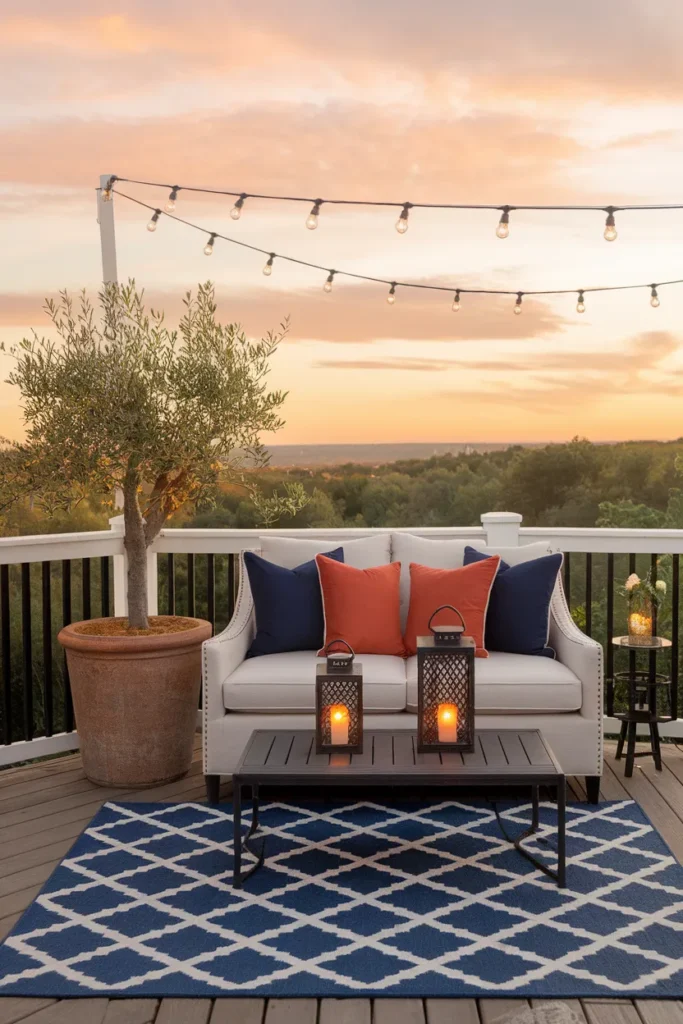
Now for the deck furniture ideas that make neighbors linger at the fence. Start under everything: an outdoor rug sized so the front legs of every seat land on it, which usually means 8×10 under a full conversation set. Polypropylene rugs from Walmart run $60 to $120 and rinse clean with a hose.
Color works two safe ways. Pick two saturated hues with the same brightness, say navy and terracotta, or run one hue in three tones from pale to deep. Keep the big pieces neutral and let pillows carry the color, since swapping a $20 pillow cover in September is easier than repainting a sofa in your head all winter. One more free trick: repeat your interior palette out the door, because the deck reads as an extension of whatever room it touches, and matching tones make both feel larger.
The glow finishes it. Brightech’s Ambience Pro solar string lights run around $40 a strand and survive winters outside, and the pro move is zigzagging them over the seating rather than tracing the perimeter, so the light lands on faces instead of railings. Add two lanterns with flameless candles from Target, a few dollars each, and your deck furniture ideas suddenly photograph like a magazine spread at 8 p.m.
Before the recap, here are the questions readers send us every single spring, answered fast.
Deck Furniture Questions, Answered
What is the best furniture for a wood deck?
The best deck furniture ideas for a wood deck are lightweight pieces with rubber or capped feet, so poly lumber and powder coated aluminum lead the list. Sweep underneath monthly and shift pieces a few inches each season so the boards weather evenly instead of in furniture shaped patches.
Can furniture damage a composite deck?
Yes, in two ways. Bare metal feet can scratch the cap layer, so add rubber caps or felt style outdoor pads, and never set a fire feature or grill directly on the boards. Your decking brand’s care sheet lists what its warranty tolerates.
How do I arrange deck furniture on a small deck?
Give one multitasking anchor the best corner, keep a 36 inch walking path to the door, and tape footprints before buying any of the deck furniture ideas above. Perimeter first placement with one floated chair almost always beats a centered cluster on anything under 10×12.
What deck furniture can stay outside all year?
Poly lumber, powder coated aluminum, and teak handle every zone from 5 through 9, snow included. Cushions are the weak point everywhere, so store them in a deck box between uses and bring them in for the off season.
What are cheap deck furniture ideas that still look good?
Run the $250 tier of the One-Room Rule: two folding Adirondacks, a thrifted side table, solar lights, and a 5×7 poly rug. A $6 can of exterior spray paint also rescues more curb find chairs than anyone admits.
How do I make a big deck feel cozy?
Break it into zones, one rug and one glow source per zone, with furniture backs acting as low walls between them. Leave 36 to 48 inch lanes connecting the zones and the space stops feeling like a stage. Big decks don’t need more pieces, they need edges.
Pull up a chair
Your deck was always meant to be a room, and now you’ve got a full deck furniture ideas system: four slots, honest measurements, materials that outlive the warranty, and glow that earns the last hour of the evening. Save this to your patio board, screenshot the One-Room Rule table, and come back with your tape measure numbers. The boards are ready when you are.