Japanese Container Garden Ideas for Calm Corners You Can Actually Build

A good japanese container garden is not really about the plants. It is about what you leave out. I learned that the expensive way, after crowding my first three pots so full of azalea, fern, and grass that the whole corner read like a garden center clearance rack. Pretty. Not calm. Calm is a different skill.
Here is what this guide gives you: real pot dimensions in inches, plants matched to your actual USDA zone, a three-pot arrangement rule you can copy in an afternoon, and honest price tiers so you know what a corner like this costs before you load the cart. If you are building out a whole small backyard oasis, treat this as the quiet corner inside it.
Let’s set the pots.
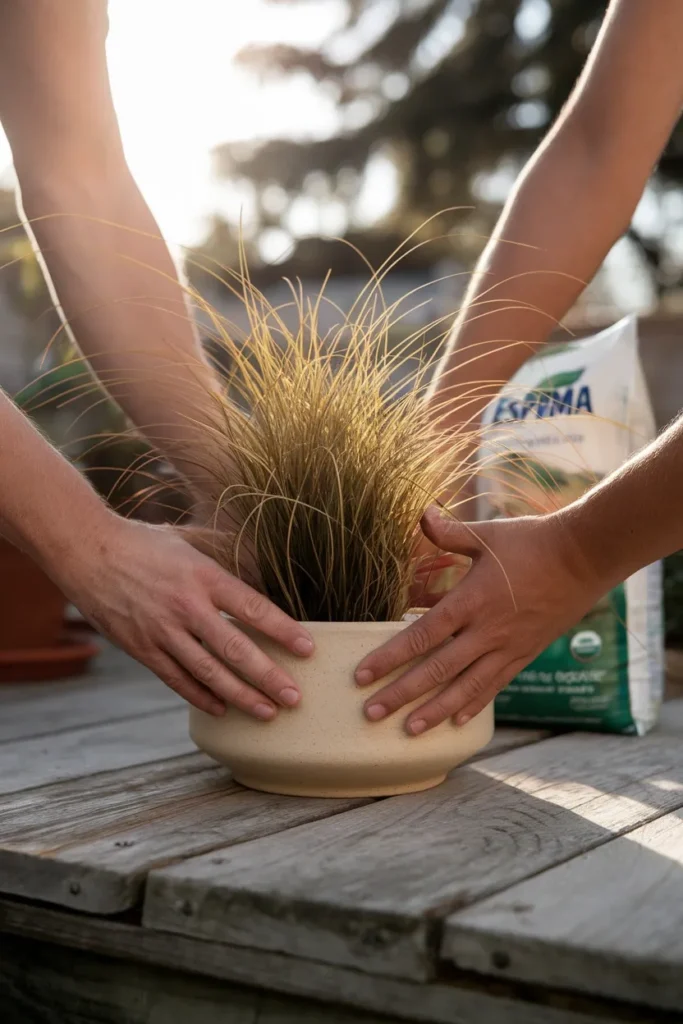
What Makes a Japanese Container Garden Feel Calm (It Is Not the Plants)
Walk through any real Japanese garden and count the empty space. There is more of it than you expect. Gravel, water, bare stone, and plain ground do most of the emotional work, while the planting sits at the edges as punctuation rather than as the sentence itself.
That principle scales down to pots beautifully.
Three habits separate a japanese container garden from a generic patio grouping. First, asymmetry: never center anything, and never match heights. Second, odd numbers: three pots read as composed, four read as inventory. Third, restraint in color, meaning greens and one accent, usually burgundy or black.
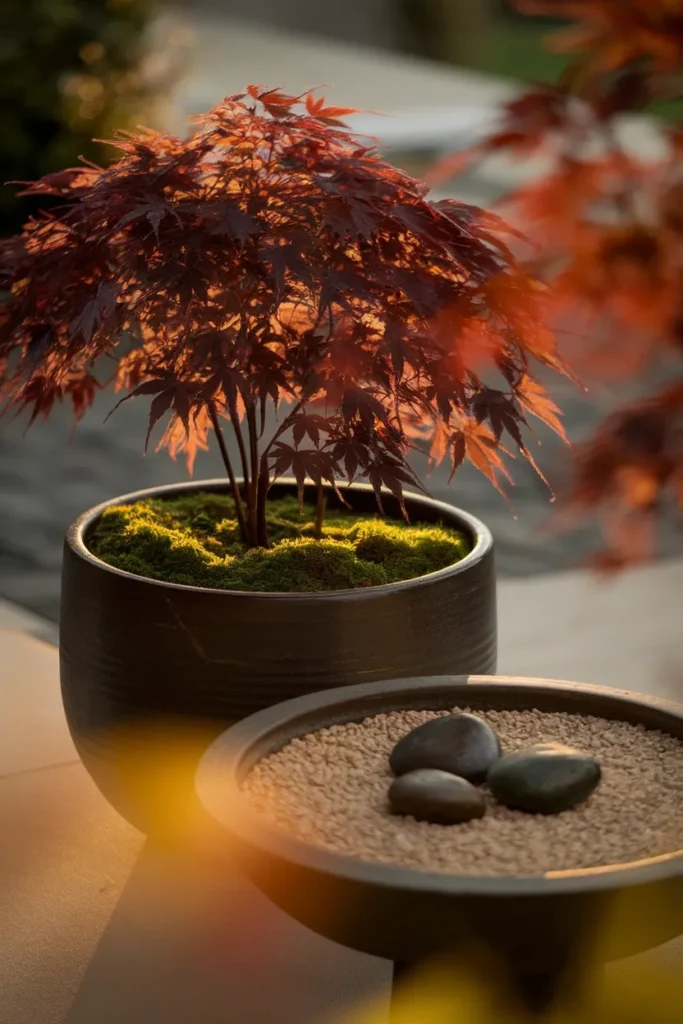
Texture carries the interest instead. A glossy maple leaf against matte moss against loose gravel gives your eye three completely different surfaces without a single flower involved.
The 3-Pot Stillness Rule
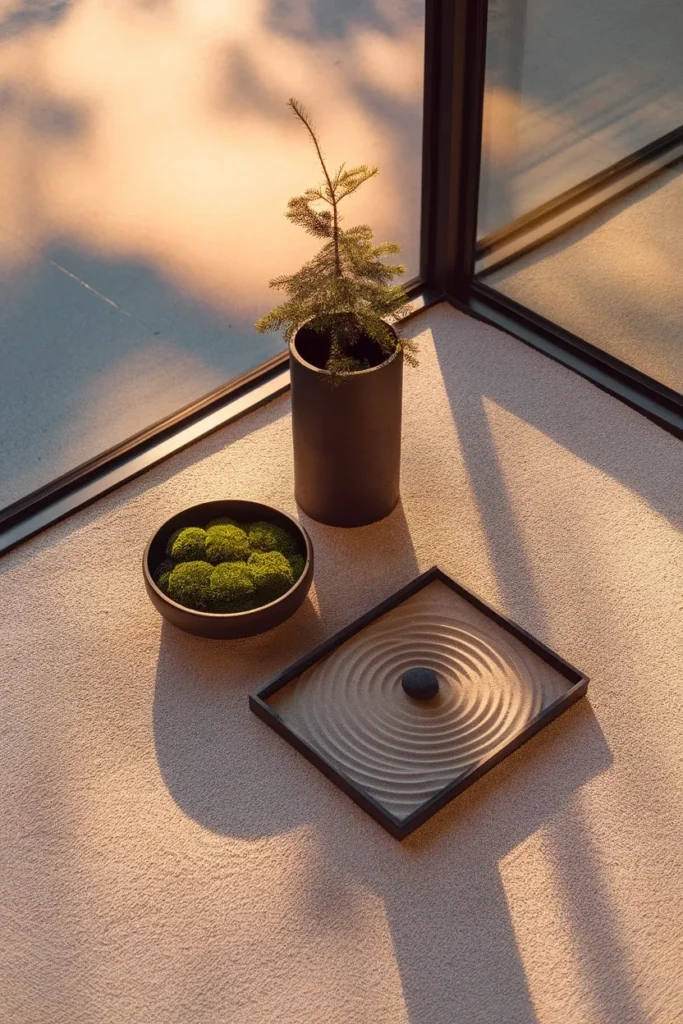
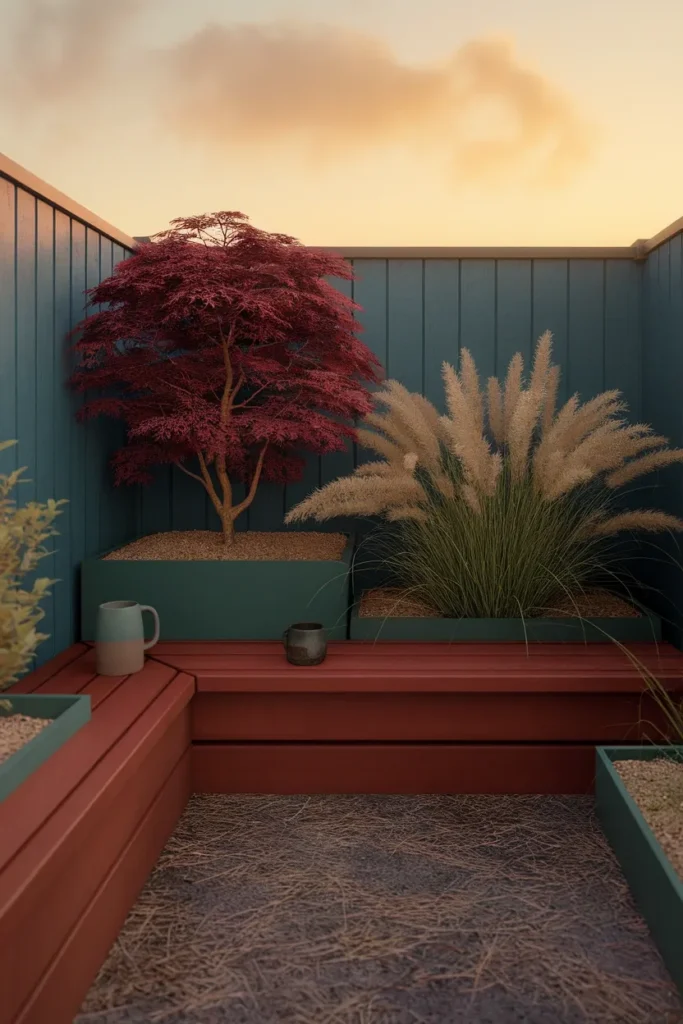
Every calm corner I have built since that overcrowded first attempt uses the same skeleton. I call it the 3-Pot Stillness Rule, and it says this: a japanese container garden needs exactly three vessels doing three different jobs, one vertical anchor, one low mound, and one flat plane. Miss any of the three and the grouping goes flat or busy.
The vertical anchor gives the corner its ceiling. The low mound softens the middle. The flat plane, which is the piece almost everyone skips, is what gives the eye somewhere to rest.
Sizes matter more than most guides admit, so here are the numbers.
| Pot job | Minimum size | What goes in it | Why this size |
|---|---|---|---|
| Vertical anchor | 18 to 24 in wide, 16 in deep | Dwarf Acer palmatum, clumping Fargesia bamboo | Woody roots need depth or they cook in summer and freeze in winter |
| Low mound | 12 to 16 in wide, 10 in deep | Hakonechloa, dwarf mugo pine, dwarf azalea | Enough soil volume to skip a day of watering in July |
| Flat plane | 14 to 20 in wide, 4 to 6 in deep | Gravel, black mondo grass, Irish moss, one stone | Shallow on purpose, so it reads as ground and not as a planter |
Screenshot that. It is the whole design in one block.
One more sizing note that saves money: buy the anchor pot roughly six inches wider than the nursery pot your tree came in, which is the standard step-up nurseries themselves use. Jumping straight to a giant pot leaves soggy soil the roots cannot reach.
Pick Pots That Read Japanese Without Costing a Fortune
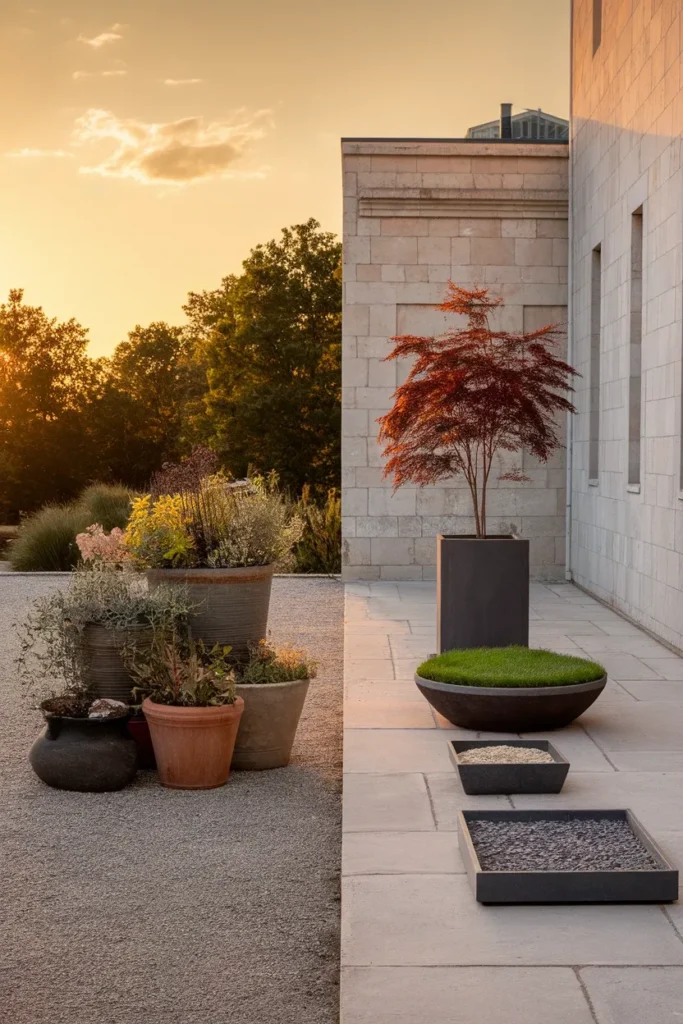
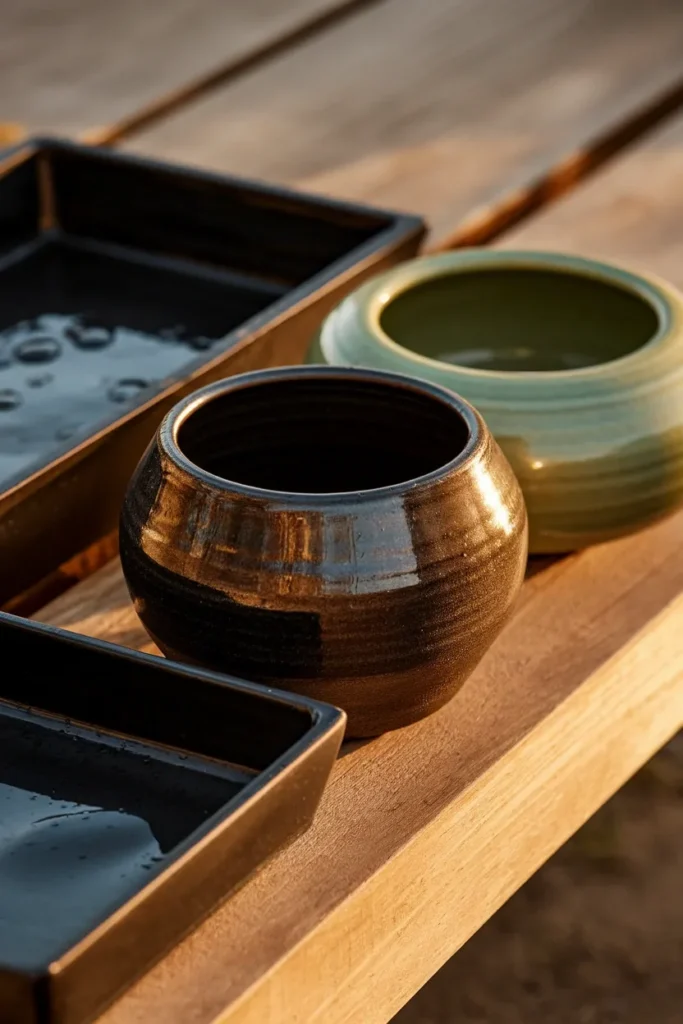
Material does more than shape here. Glazed ceramic in charcoal, celadon, oxblood, or a soft oatmeal cream is the fastest visual shortcut, and a large glazed round from the Emissary line at Lowe’s usually runs somewhere around $60 to $90 depending on size and sale timing.
Cheaper routes work. Veradek’s Kona planters at Target sit in roughly the $50 to $70 range and give you that tall clean cylinder shape. Bloem’s resin pots run under $25 and take a coat of flat black exterior spray paint without complaint, which is my standard trick for the flat-plane tray.
Now the part that costs people real money in February. Unglazed terracotta absorbs water, that water freezes, and the pot cracks from the inside, which is exactly why extension horticulturists advise against leaving unglazed ceramic outdoors through winter. Glazed, high-fired stoneware, fiberglass, and resin all survive. Cheap terracotta does not.
Whatever you buy, it needs drainage holes at least half an inch across. No exceptions, no gravel-in-the-bottom workaround. That old trick raises the saturated zone in the pot rather than lowering it.
The Best Plants for a Japanese Container Garden by Zone
Before you buy anything woody, check your USDA hardiness zone. The zone map was updated in 2023 and a surprising number of US addresses shifted half a zone warmer, which changes what survives in a pot.
Here is the shortlist that actually performs in containers:
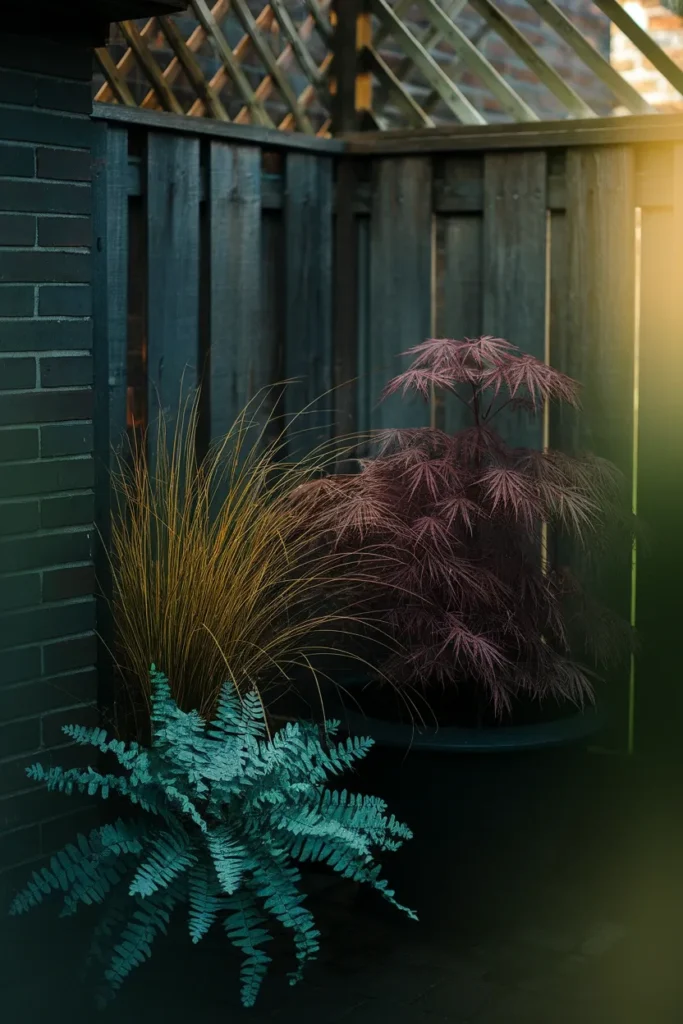
- Dwarf Japanese maple (Acer palmatum), Zones 5 to 8. The anchor plant. Look for compact cultivars like ‘Crimson Queen’ or ‘Shaina’ rather than a full-size tree that will outgrow the pot in three seasons. Expect roughly $60 to $150 for a healthy three-gallon plant from a nursery like Monrovia.
- Japanese forest grass (Hakonechloa macra), Zones 5 to 9. The best low mound in the group. It arches, it catches light, it asks for almost nothing.
- Dwarf mugo pine (Pinus mugo ‘Pumilio’), Zones 2 to 8. Bulletproof cold hardiness, evergreen structure, and it takes the cloud-pruned look well.
- Black mondo grass (Ophiopogon planiscapus ‘Nigrescens’), Zones 6 to 10. Near-black strappy foliage. Nothing else gives you that color.
- Japanese painted fern (Athyrium niponicum), Zones 4 to 9. Silver and burgundy fronds for the shady side.
- Clumping bamboo (Fargesia), Zones 5 to 9. Vertical screening without the horror stories, because clumping types do not run.
Most of this list wants part shade, which makes a japanese container garden a genuinely good fit for the north or east side of a house. If that describes your whole yard, our shade garden ideas guide pairs well with this one.
Skip the flowers, mostly. One azalea in spring is plenty of color for the entire season.
Gravel, Moss, and the Flat Layer Most People Skip
This is the difference between a nice pot grouping and something that stops people mid-conversation.
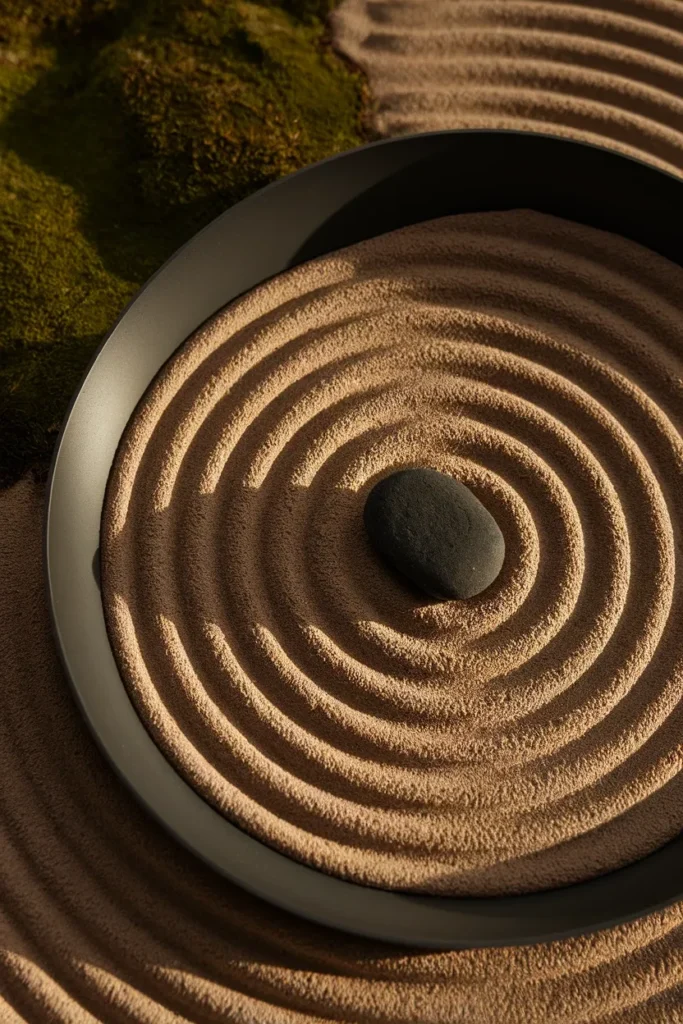
Your flat plane can be gravel, moss, or both. For gravel, small Mexican beach pebbles or a fine pale granite chip both work, and a half cubic foot bag at Home Depot generally lands around $20 to $30. Pour it two inches deep into the shallow tray, then rake it. A cheap plastic fork does the job if you are not buying a rake.
Moss is trickier and worth it. It needs shade, steady moisture, and no fertilizer at all, so keep it out of the maple pot and give it its own bowl.
Set one stone in the flat tray. One. Off center, sitting like it landed there rather than like it was placed. My first three attempts at this looked staged because I kept centering the rock, and centering is the fastest way to kill the effect.
Top-dress the planted pots too. A thin skim of the same gravel across the soil surface in every pot is what visually ties three separate containers into one composition.
Small Space Versions: Balcony, Steps, and a Single Pot
You do not need a yard. A japanese container garden works on eight square feet of balcony, which is exactly where the style earns its keep.
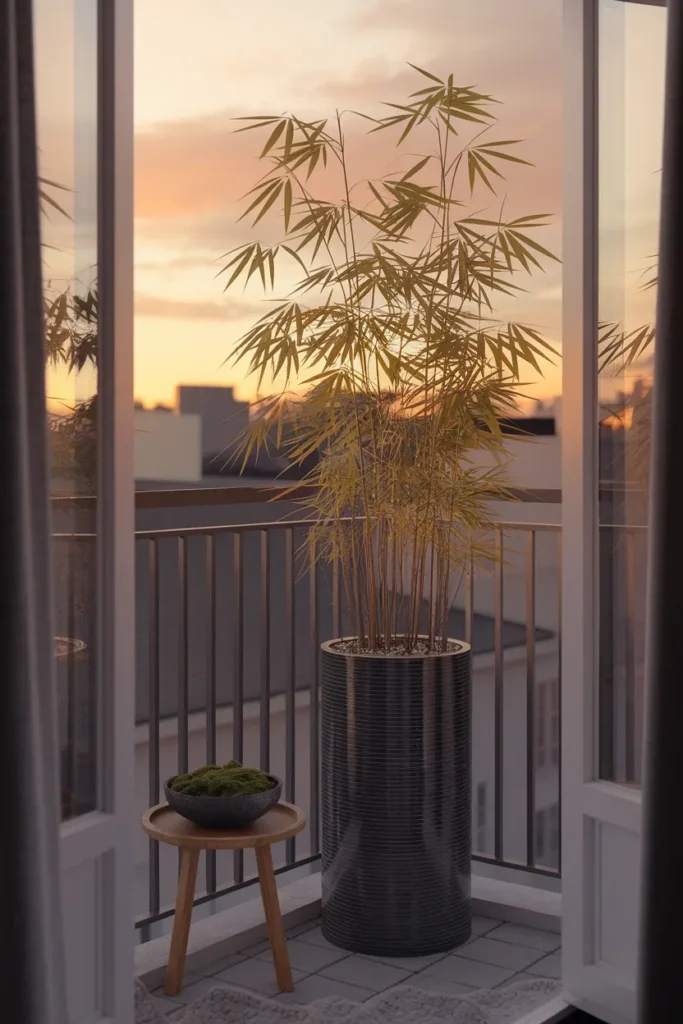
The balcony version. Swap the heavy stoneware anchor for a tall fiberglass or resin cylinder, because most balconies have weight limits and wet stoneware is brutally heavy. Fargesia bamboo in that cylinder gives you a privacy screen and movement in wind. Put the moss bowl and the gravel tray on a low bench beside it so the arrangement still has three heights.
The step version. Three pots on three stair treads, descending in size. Easiest possible take on the rule.
The single-pot version. One wide, low bowl with a dwarf mugo pine set off center, moss on one side, gravel raked on the other. That is a complete garden in a fourteen-inch bowl.
Renting? All of this leaves with you, which is why containers show up so often in a smart renter friendly backyard makeover. Nothing here touches the building.
Keeping It Alive: Soil, Water, and Winter in Zones 5 to 8
Skip garden soil entirely. It compacts in pots, holds too much water, and starves roots of oxygen, which is why nurseries use bark-based mixes instead. A bag of Espoma organic potting mix runs around $15 and Miracle-Gro potting mix sits closer to $12 to $18. Cut either one with about twenty percent perlite (a bag of Sta-Green perlite at Lowe’s is usually under $10) so the pot drains within two or three days of a deep soak.
Water deeply, less often. Containers in full summer sun may want water daily in August, and the same pot in October may go a week. Finger test at two inches down, every time.
Winter is where most people lose the maple, and here is the piece the other guides leave out. A pot sits above ground on all sides, so roots experience real air temperature instead of insulated soil. University of Illinois Extension’s guidance on overwintering potted plants outdoors is to choose plants rated two zones hardier than your own.
Run the math once. Garden in Zone 6? Then your potted plants should be rated to Zone 4 to reliably survive outdoors in a container. That is precisely why dwarf mugo pine (hardy to Zone 2) shrugs off winter in a pot while black mondo grass (Zone 6) usually does not.
If your plant does not clear the two-zone bar, you have three easy outs: group the pots against a north or east wall and mulch them heavily with straw or leaves, sink the pot into a garden bed for the season, or move it into an unheated garage held between about 20 and 45 degrees Fahrenheit. Keep watering through winter either way, because dormant roots still drink and moist media insulates better than dry.
In Zone 5, last frost typically lands around mid-May, and Zone 6 usually clears by mid-April, so plan your spring reset accordingly. Confirm your own dates against the USDA map or your county extension office, since micro-location swings these by weeks.
Five Calm Corner Setups to Copy This Weekend
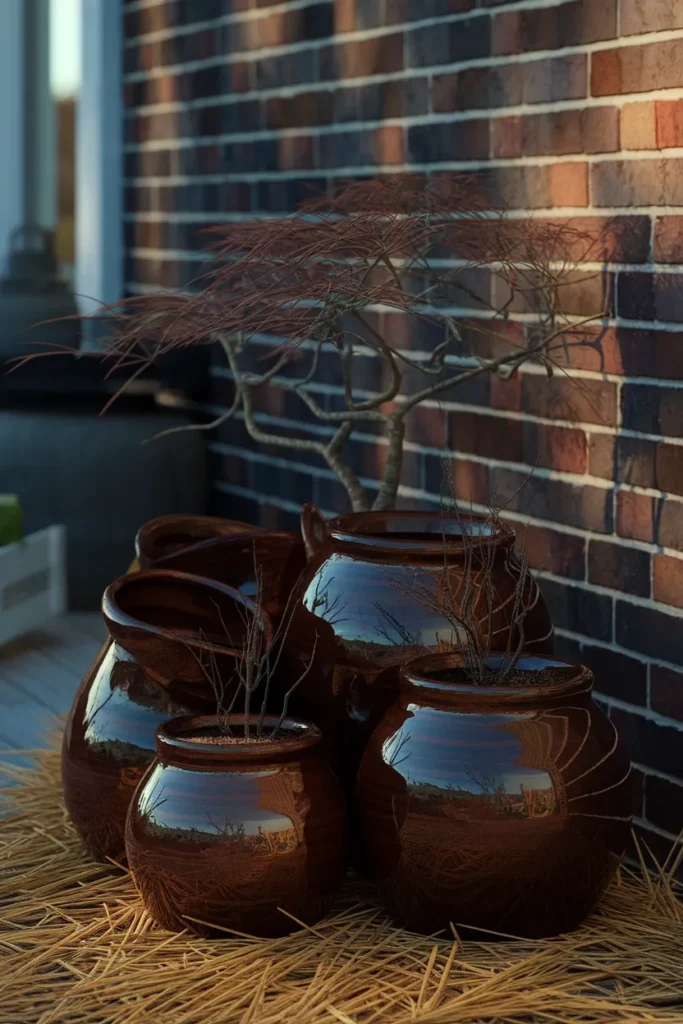
1. The classic trio, roughly $180 to $280. Charcoal glazed 20-inch round with a dwarf ‘Crimson Queen’ maple, celadon 14-inch bowl of Hakonechloa, matte black shallow tray with raked pale gravel and one stone.
2. The evergreen version, roughly $120 to $190. Dwarf mugo pine in the anchor pot, dwarf mondo grass in the mound, moss in the flat. Nothing drops leaves, so the corner looks the same in January as in June.
3. The shade corner, roughly $100 to $160. Japanese painted fern, Hakonechloa, and a moss bowl. No tree at all. Works under a deck or on a north-facing landing.
4. The dollar-conscious build, under $70. Three Bloem resin pots spray-painted flat black, one nursery mugo pine, a bag of pebbles, and small ceramic dishes from Dollar Tree at $1.25 each for the accent stones. Honestly, it photographs almost as well as the expensive one.
5. The one-pot balcony garden, roughly $50 to $85. A single 16-inch low bowl, one dwarf conifer set off center, moss on one side, raked gravel on the other.
Front-load your budget on the anchor pot and the tree. Everything else is gravel and patience.
Frequently Asked Questions
Can I create a Japanese container garden on a small balcony? Yes, and it is one of the best styles for a balcony because the whole design assumes limited space. Use lightweight fiberglass or resin pots instead of stoneware to respect weight limits, keep the arrangement to three vessels, and give the tallest one a wind-tolerant plant like clumping Fargesia bamboo.
What plants work best in a Japanese container garden? Dwarf Japanese maple, Japanese forest grass, dwarf mugo pine, black mondo grass, Japanese painted fern, and clumping bamboo cover almost every situation. Most prefer part shade. Pick one for height, one for mounding shape, and one groundcover, then stop.
What size pot does a Japanese maple need? Start about six inches wider than the nursery pot it arrived in, and give it at least 16 inches of depth. A mature dwarf cultivar is comfortable long term in an 18 to 24 inch container. Going too large too fast leaves wet soil the roots cannot use.
How do I stop bamboo from taking over my container? Buy clumping bamboo (Fargesia species) rather than running types like Phyllostachys. Clumping bamboo expands slowly from a central crown and stays put. In a sealed container, even running bamboo is contained, but it will root-bind fast and need dividing every two or three years.
Do Japanese container gardens need sun or shade? Part shade suits the classic plant list best, especially maples, ferns, and moss, all of which scorch in hot afternoon sun. Mugo pine and mondo grass tolerate more light. Morning sun with afternoon shade is the sweet spot.
Can I leave my Japanese container garden outside all winter? Only if the plants are rated roughly two hardiness zones colder than your own, since pots offer no soil insulation. Otherwise group and mulch the containers against a sheltered wall, sink them into a bed, or move them to an unheated garage. Skip unglazed terracotta outdoors, because trapped moisture freezes and cracks it.
How much does a Japanese container garden cost to start? A full three-pot setup with a dwarf maple generally runs $180 to $280. An evergreen version without the tree lands closer to $120 to $190, and a budget build using painted resin pots can come in under $70. Pot and tree are where the money goes.
The Corner Is the Point
Build one corner, not a whole yard. That is the honest lesson buried in every Japanese garden principle worth borrowing: a small space finished with restraint beats a large space filled with stuff, every single time.
Start with the three pots. Get the sizes right, leave the empty space alone, and set that one stone off center. Give it a season and the corner will start doing the thing you were hoping for, which is making you slow down on your way past it.
Which of the five setups fits your space? Save the one you are building and come back when the maple leafs out, because that first spring flush is the payoff.