Small Backyard Garden Design for Big Harvests

Most small backyard garden design advice starts in the wrong place. It shows you a photo of a gorgeous corner bed and tells you to add a trellis. It never mentions the one number that decides whether you eat anything: how many hours of direct sun that corner actually gets.
We are going to fix that order. You will measure light first, assign crops to that light second, and only then draw a layout. It takes about twenty extra minutes and it is the difference between a pretty garden and a productive one.
Here is the promise. Good small backyard garden design hands you four things: a sun-tested plan, real bed dimensions pulled from university extension research, a square-by-square planting map for a 4 by 8 footprint, and a cost you can budget for. All four are below.
Measure Your Sun Before You Measure Your Yard
Every small backyard garden design mistake we see traces back to one skipped step. People pick the spot that looks best from the kitchen window. Light never enters the conversation.
So grab your phone. Pick a clear day in late spring or summer. Photograph your yard at 8 a.m., 10 a.m., noon, 2 p.m., 4 p.m., and 6 p.m. Six photos. That is the whole exercise.
Now look at where the sun actually lands. Not where you assumed. Fences, a neighbor’s garage, and one mature maple will steal more light than you expect, and they steal it at different hours.
The reason this matters so much: sun hours are not a preference, they are a hard gate on what will produce. According to guidance from the UC Master Gardeners of Placer County, fruiting crops like tomatoes, peppers, eggplant, squash, and melons want 8 to 10 hours and are not recommended below 6. Root and flowering crops like beets, carrots, broccoli, and cauliflower are worth trying at 4 hours. Leafy greens will work with as little as 3.
That last number surprises people every time.
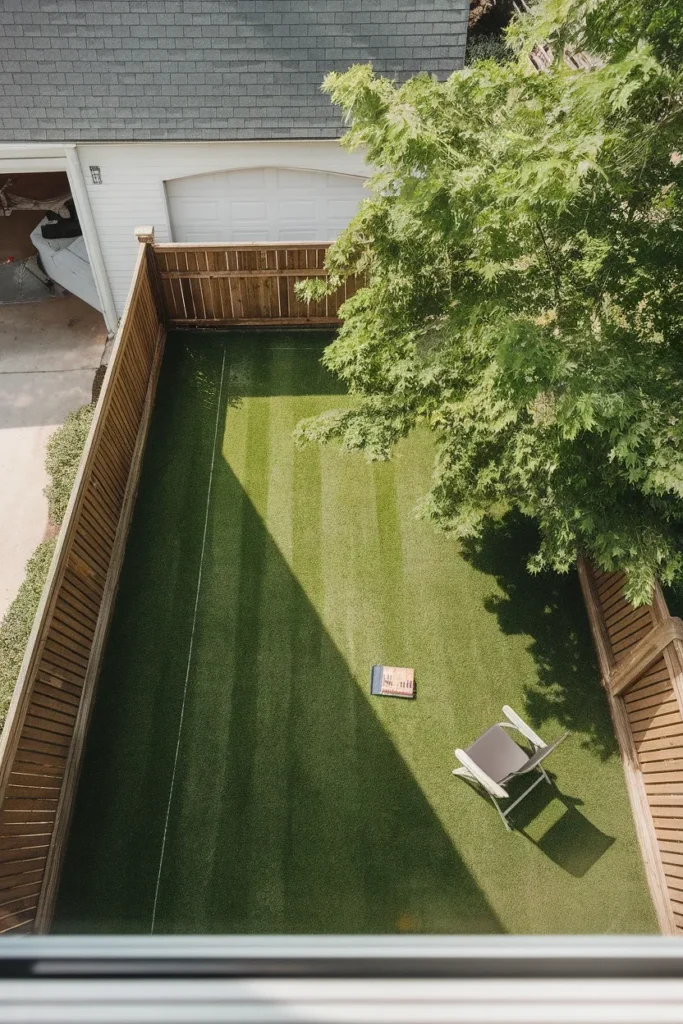
The Sun Ladder Method
This is the framework we build every small backyard garden design around. It is simple enough to sketch on the back of a seed packet.
The Sun Ladder Method treats your yard as a set of rungs rather than one uniform space. You do not ask “is this spot sunny.” You ask which rung it sits on, then plant the highest-value crop that rung can carry. Every square foot gets assigned, and nothing sits empty because it “wasn’t sunny enough.”
| Rung | Direct sun per day | What it will actually grow | Realistic expectation |
|---|---|---|---|
| Rung 1 (Leaf) | 3 to 4 hours | Lettuce, spinach, arugula, chard, kale, mustard greens | Thinner leaves, slower growth, less bolting in heat |
| Rung 2 (Root) | 4 to 6 hours | Beets, carrots, radishes, broccoli, cauliflower, Brussels sprouts | Smaller roots than full sun, still very usable |
| Rung 3 (Fruit) | 6 to 10 hours | Tomatoes, peppers, eggplant, squash, cucumbers, melons | Full production, the highest yield per square foot |
Screenshot that. Honestly, it replaces about four hours of forum reading.
One bonus nobody mentions: Rung 1 beds need less water and your lettuce will not bolt the second week of July. Partial shade is a feature in a hot yard, not a consolation prize. If most of your space sits on Rung 1, these shade garden ideas for low light yards will give you the ornamental layer to fill in around the greens.
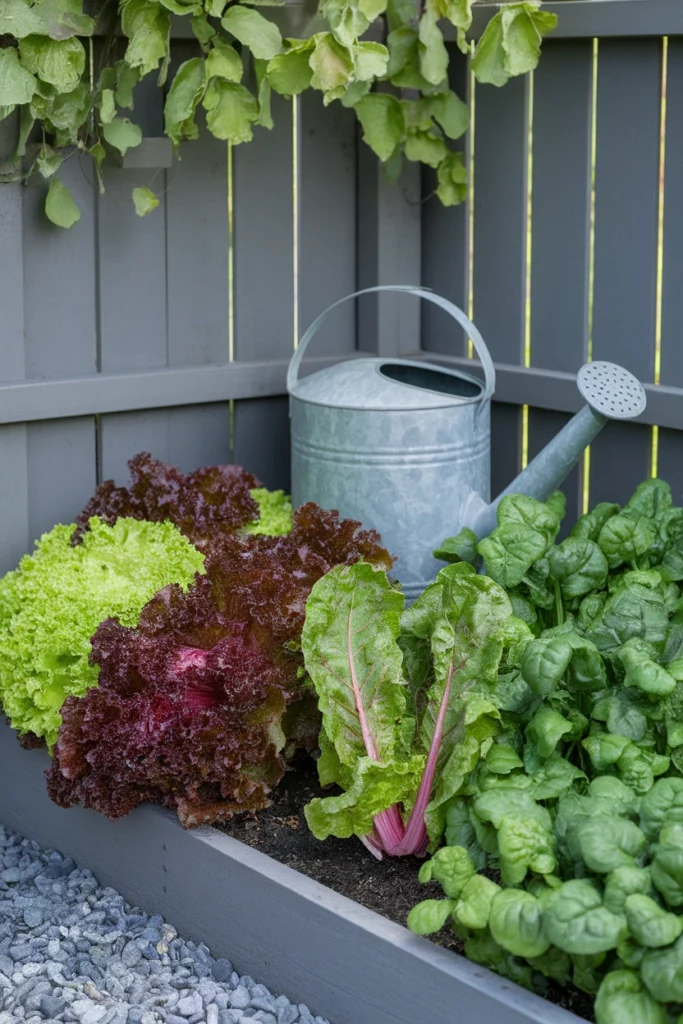
Small Backyard Garden Design Starts With the Path, Not the Bed
Here is the counterintuitive part, and the part almost every listicle gets backwards.
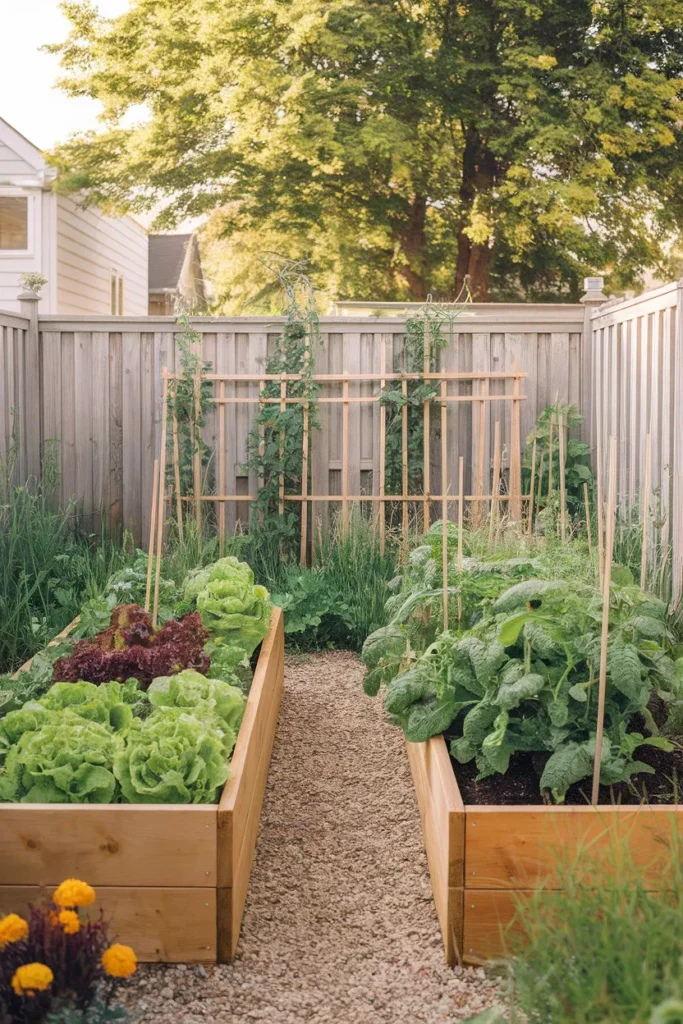
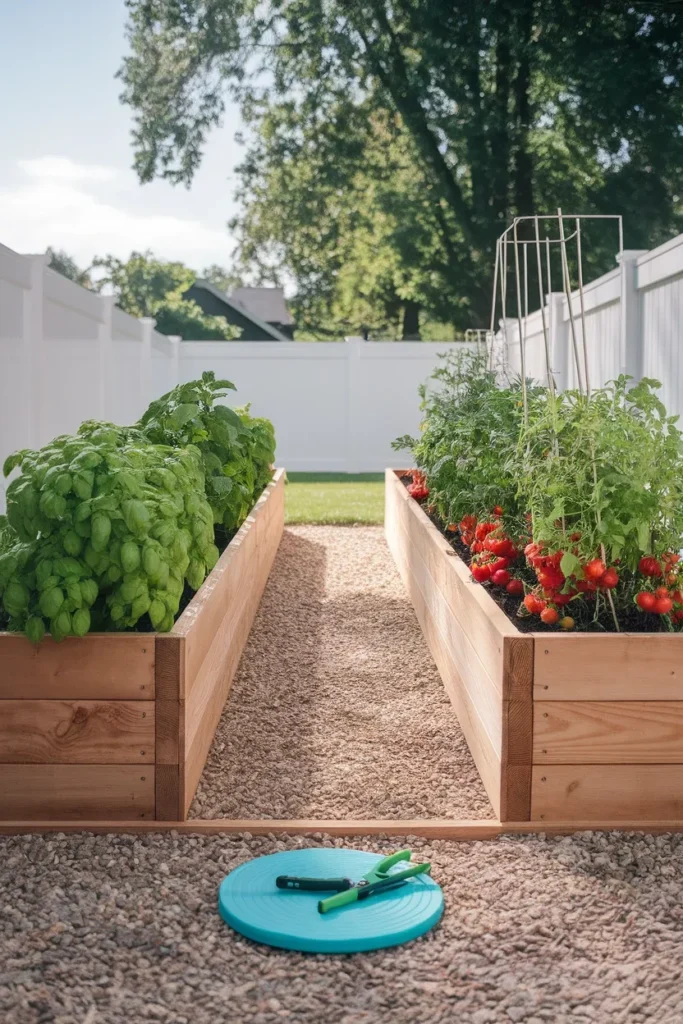
In a small yard, your paths are the design. Get them wrong and you compact your soil walking across beds, you cannot kneel comfortably, and you quietly stop harvesting because reaching the back row is annoying. A garden you avoid is a garden that fails.
Oregon State University Extension recommends walkways between beds at 14 to 16 inches wide as a common standard. That feels tight on paper. It works in practice, and in a yard where every foot counts it buys you real growing area.
The other number that comes straight from extension research: cap your bed width at 4 feet. Both Oregon State and University of Maryland Extension land in the same place, and the logic is your arm, not your aesthetic. You need to reach the center from either side without stepping in.
Longer than 6 feet? Oregon State notes those beds should be reinforced, because wet soil pushes hard against the middle of a long wall.
So a 4 foot by 8 foot bed with a 16 inch path around it is not an arbitrary internet number. It is the largest rectangle a person can fully tend from the outside.
Pick a Bed Depth That Matches What You Want to Eat
Depth is where small backyard garden design quietly loses half its potential harvest. It is a five minute decision, and you only make it once.
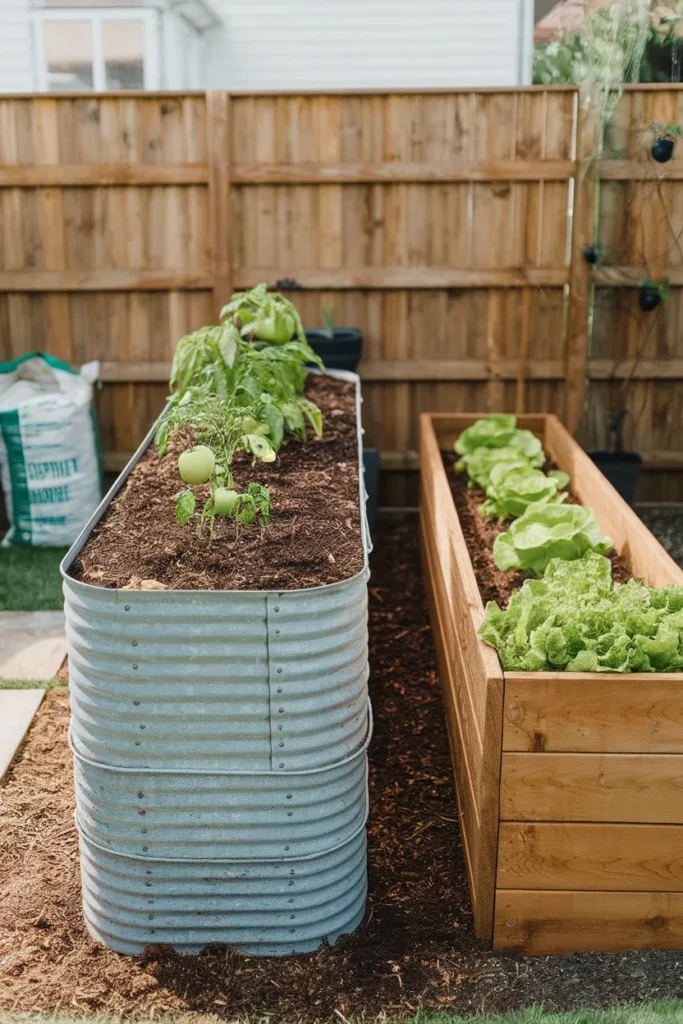
The University of Maryland Extension guidance on growing vegetables in raised beds splits it cleanly. Leafy greens, beans, and cucumbers need at least 8 inches of soil. Peppers, tomatoes, and squash want 12 to 24 inches.
Read that again if you are shopping for a kit right now. A lot of the cheap 6 inch beds on the shelf will grow you a beautiful salad and a disappointing tomato.
Maryland also gives a target for what goes in the bed: 25 percent to 50 percent organic matter by volume. For most of us that means a compost and topsoil blend, not straight bagged potting mix, which drains too fast and costs a fortune at this scale.
Our rule of thumb after filling more beds than we would like to admit: if you want tomatoes, buy the 17 inch bed and stop negotiating with yourself. The Vego Garden 48 by 96 by 17 inch galvanized bed holds 45 cubic feet. The Greenes Fence cedar bed at 96 by 48 by 10.5 inches holds 23. That is not a small difference, that is nearly double the root zone.
The Small Backyard Vegetable Garden Layout That Fits Almost Any Yard
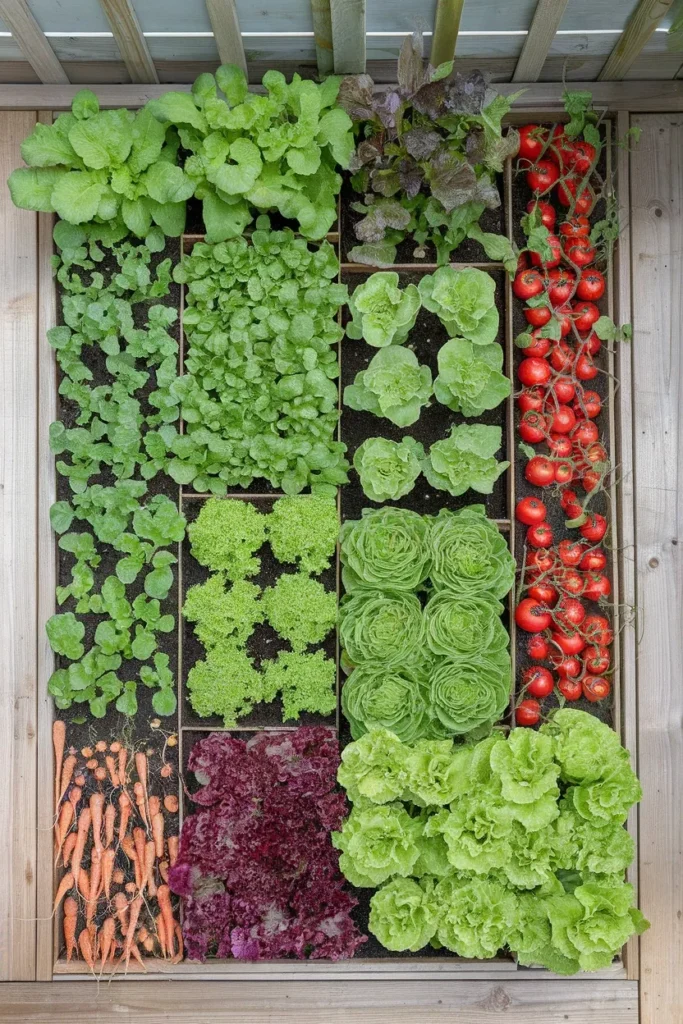
Now we plant it. A 4 by 8 bed gives you 32 square feet, and square foot spacing turns that into a surprisingly serious amount of food.
The Square Foot Gardening Foundation sorts crops into four spacing groups, and memorizing these four numbers is genuinely all the math you need:
- 1 per square: broccoli, Brussels sprouts, cabbage, cauliflower, collards, eggplant, kale, mustard greens, okra, peppers, sweet potatoes, vine tomatoes
- 4 per square: bok choy, celery, corn, leaf lettuce, parsnips, potatoes
- 9 per square: beets, bush beans, leeks, spinach, turnips
- 16 per square: carrots, chives, onions, small radishes
Here is a Rung 3 layout we come back to constantly for a single 4 by 8 bed. North side first so nothing shades anything else.
| Row (north to south) | Squares | Planting |
|---|---|---|
| Row 1 (back, trellised) | 4 | 4 vine tomatoes, 1 per square, caged or strung |
| Row 2 | 4 | 2 peppers, 2 basil |
| Row 3 | 8 | 4 squares bush beans (9 each), 4 squares beets (9 each) |
| Row 4 | 8 | 4 squares leaf lettuce (4 each), 4 squares carrots (16 each) |
| Row 5 (front edge) | 8 | 4 squares radishes (16 each), 4 squares chives and marigolds |
Count the front two rows and you get 64 carrots, 64 radishes, and 16 lettuce heads out of 16 square feet. That is the part that makes people rethink what “small” means.
Put tall crops on the north edge. Always. A single unstaked tomato in the wrong row will shade out an entire row of lettuce by mid-July, and you will not notice until the lettuce is already stunted.
Grow Up When You Cannot Grow Out
A 4 by 8 bed has 32 square feet of floor. It also has about 32 square feet of vertical face if you build a trellis on the north edge, and almost nobody uses it.
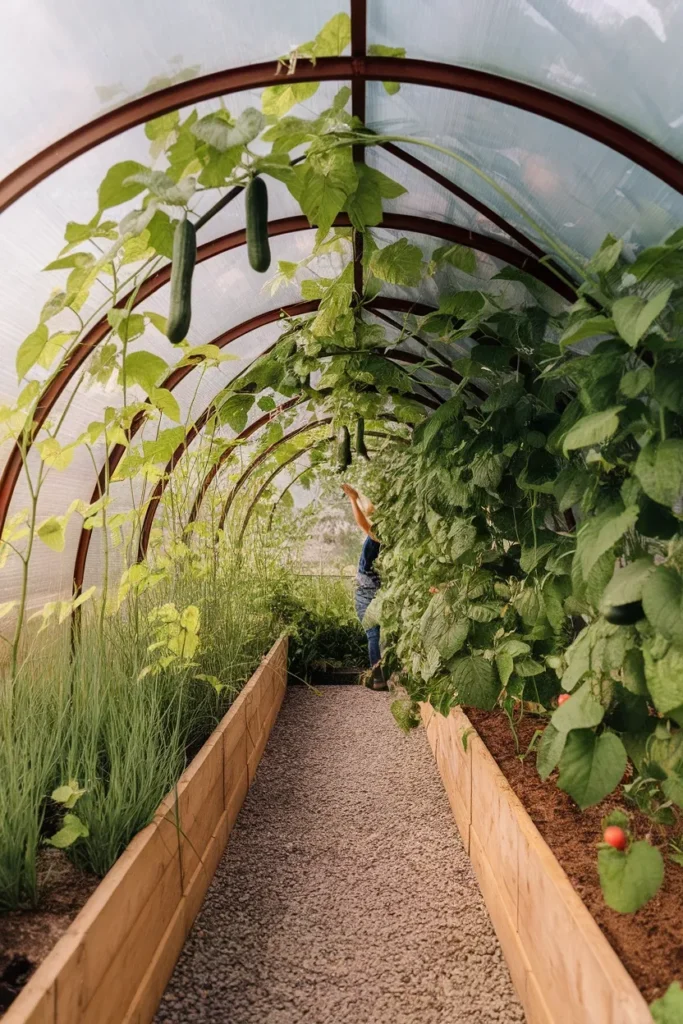
Vining crops are the obvious win. Pole beans, cucumbers, small melons, and indeterminate tomatoes will all climb. Climbing crops stay cleaner and get better airflow. They are also far easier to pick than the sprawling versions.
A cattle panel arched between two beds costs very little, lasts decades, and gives you a walk-through tunnel that looks intentional rather than improvised. That single move turned our narrowest side yard from dead space into the most photographed corner of the whole garden.
Fences do double duty too. Mounted rail planters, a pocket wall, or a simple ladder trellis all convert a flat boundary into growing area. If you are working with a boundary wall rather than a fence, these garden wall ideas that add real structure and privacy cover the build side of that properly.
One caution. Vertical structures cast shade, and shade is the currency you have been budgeting this whole time. Put trellises on the north or east edge, then check what rung the ground behind them just dropped to.
What a Small Backyard Garden Actually Costs
Nobody publishes small backyard garden design costs honestly. So here it is for one 4 by 8 bed.
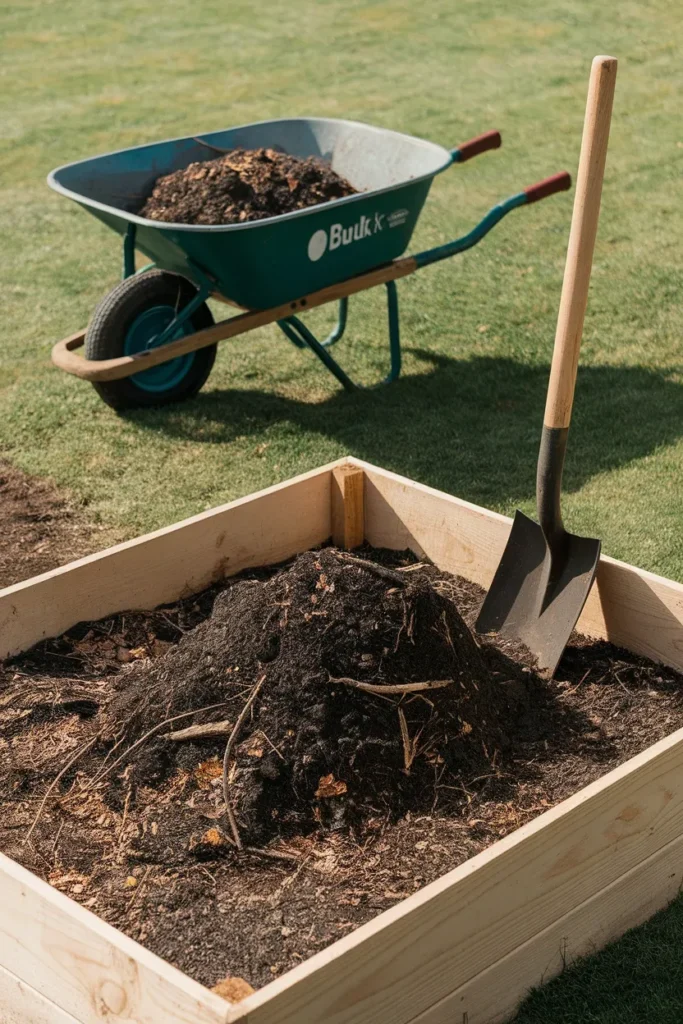
The Greenes Fence 4 foot by 8 foot by 10.5 inch original cedar raised bed runs $128.37 at Home Depot at the time of writing. Its listed soil capacity is 23 cubic feet. Bagged garden soil typically comes in 1.5 cubic foot bags, so filling it takes roughly 16 bags. At common shelf pricing, that soil often costs more than the bed itself. Almost everyone gets caught by that the first time.
Two ways to cut that soil bill down:
- Bulk beats bagged, every time. A local landscape supply yard selling compost and topsoil by the cubic yard usually lands well under half the bagged price. One cubic yard is 27 cubic feet, so a single yard nearly fills the Greenes bed on its own.
- Fill the bottom third with material that is not soil. Branches, small logs, and coarse leaf litter in the bottom of a deep bed break down slowly, hold water, and displace soil you would otherwise buy. On a 17 inch deep bed this can trim your soil purchase by close to a third.
Skip the raised bed entirely if the budget is tight. In-ground rows work. Amend the top layer with 2 to 4 inches of compost, which is exactly what Maryland Extension suggests for existing garden soil, and you will grow the same food for the price of the compost.
If you are building the surrounding space on a budget too, these budget backyard garden ideas that do not look cheap sequence the spending in a smart order.
Design Mistakes That Shrink Your Harvest
We have made most of these, which is the only reason we can spot them so fast.
Planting to the fence line. A bed pushed flush against a fence loses access on one side, traps humidity, and turns into a slug hotel. Leave 12 inches behind it. Minimum.
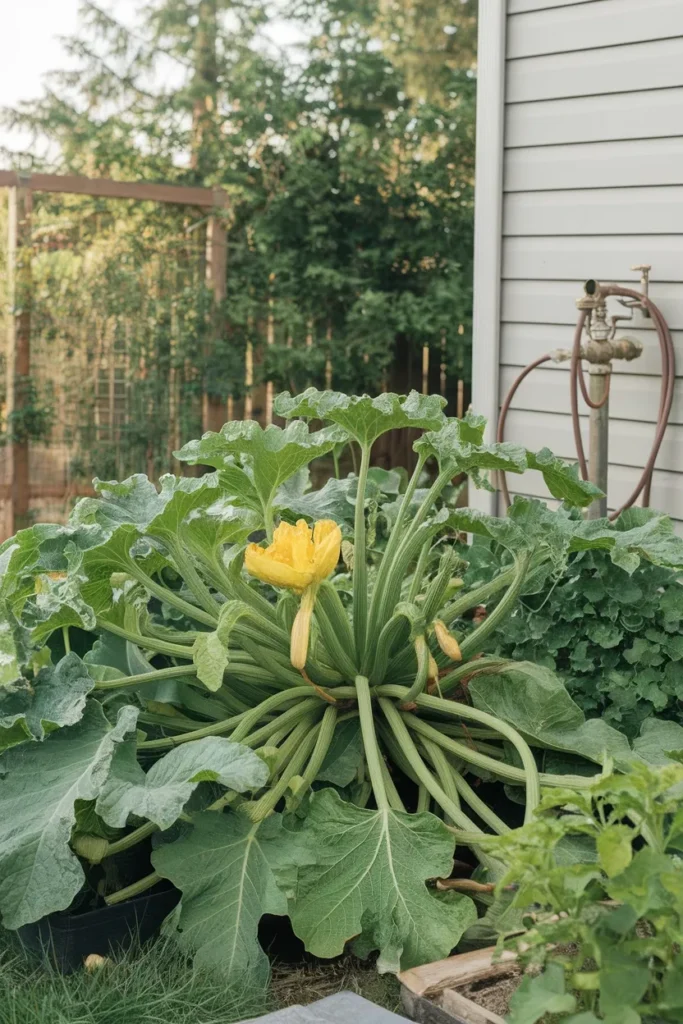
Buying by pot size instead of mature size. Everything at the garden center is four inches tall in April. That zucchini will claim a 3 foot circle by August. It will eat two neighbors alive.
Ignoring the hardiness zone on the tag. The USDA Plant Hardiness Zone Map was updated in 2023. It splits the country into 10 degree Fahrenheit zones, with 5 degree half zones inside those. Plenty of yards shifted a half zone in that update. Worth two minutes before you buy perennials or fruit.
Treating frost dates as fixed. Last frost is usually mid-April in Zone 6 and early May in Zone 5, but it moves year to year and micro-location matters more than the map suggests. Confirm against your local extension office before you commit tender transplants.
One giant bed instead of two smaller ones. Two 4 by 4 beds with a path between them give you more edge, more reach, and better rotation than one 4 by 8. In a truly tiny yard the split usually wins.
No water plan. A 32 square foot bed in July is thirsty. Decide where the hose lives on day one, or you will be hand carrying a watering can in August and resenting the whole project.
Make It Look Like a Garden, Not a Farm
Productive and pretty are not in conflict. A good small backyard garden layout does both at once. It hinges on one decision: repetition.
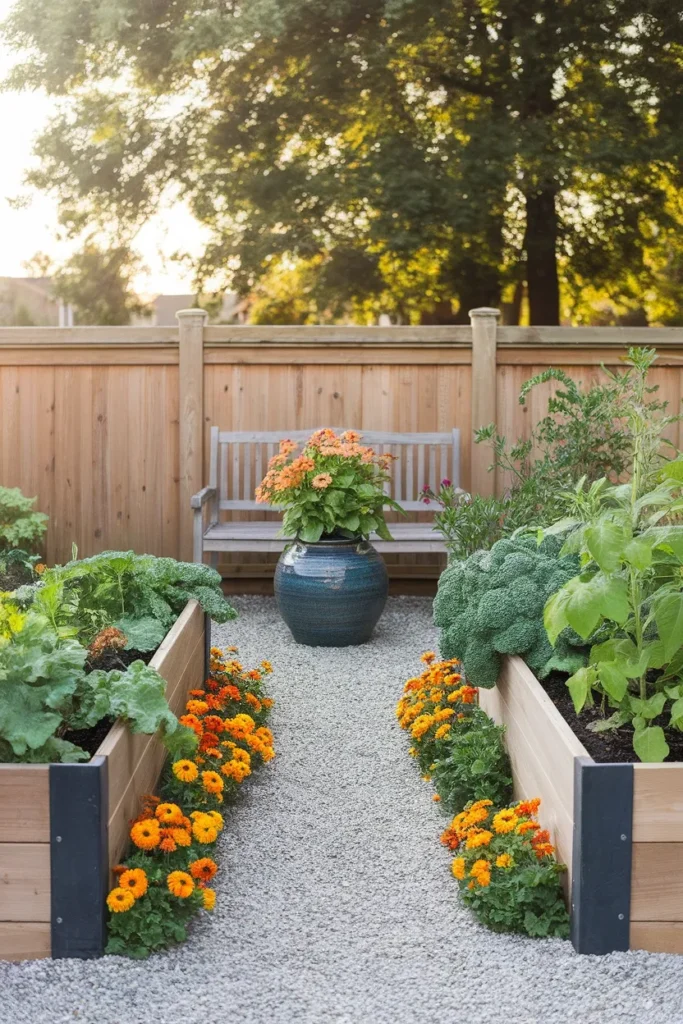
Pick three materials and repeat them everywhere. Cedar, gravel, and black steel. Or brick, terracotta, and green painted wood. When the same three show up in the beds, the path, the edging, and the containers, a small space reads as designed instead of accumulated.
Tuck flowers into the food. Marigolds along the front edge, nasturtiums spilling over a corner, zinnias in the gaps. They pull in pollinators, they hide the awkward bare patch where the spinach bolted, and they make the whole bed photograph beautifully.
Give the eye somewhere to land. A single bench, a birdbath, a large glazed pot at the end of the path. Small yards feel bigger with one clear destination and worse with six competing focal points.
And keep the edges crisp. A defined edge between bed and lawn does more visual work than any single plant you can buy. It costs almost nothing and it is the fastest upgrade available to a scrappy vegetable patch.
Frequently Asked Questions
How do I design a small backyard garden from scratch?
Map your sun first with six phone photos across one day, then assign each area to a rung on the Sun Ladder. Draw paths before beds, keep beds to 4 feet wide, and pick a bed depth that matches your crops. Layout comes last, not first.
How much sun does a small backyard garden really need?
It depends entirely on what you want to harvest. Leafy greens will produce with about 3 hours of direct sun, root and flowering crops want 4 or more, and fruiting crops like tomatoes and peppers want 6 to 10. A shady yard is not a dead yard, it is a salad yard.
What is the best size for a raised bed in a small yard?
Four feet wide is the ceiling, because that is the reach limit from both sides. Eight feet long is a practical maximum before reinforcement becomes a concern. Two 4 by 4 beds often beat one 4 by 8 in a very small space because you gain edge and access.
How deep should a raised bed be for vegetables?
At least 8 inches for leafy greens, beans, and cucumbers. Twelve to 24 inches for peppers, tomatoes, and squash. If tomatoes are the goal, do not compromise on depth to save money on soil.
Can I grow enough vegetables in a small backyard to matter?
Yes, more than most people expect. Sixteen square feet planted at square foot spacing holds 64 carrots, 64 radishes, and 16 heads of lettuce. Density plus vertical growing is what makes small footprints productive.
What should I plant in a small backyard garden for the biggest harvest?
Prioritize crops with a high yield per square foot and a long picking window. Leaf lettuce you cut repeatedly, pole beans, cherry tomatoes, and chard all keep producing for weeks. Single harvest crops like a full sized cabbage are a poor use of scarce space.
How much does a small backyard garden cost to start?
One 4 by 8 cedar bed runs around $128 at Home Depot, and filling it with roughly 23 cubic feet of soil frequently costs more than the bed. Buying compost in bulk by the cubic yard and filling the bottom third with branches will cut that soil bill substantially.
Start With Six Photos
That is the whole thing. Not a design degree, not a bigger yard, just six phone photos and an honest look at where the light lands.
Once you know your rungs, the rest of your small backyard garden design falls into place fast. Paths, then bed width, then depth, then the planting grid. Every decision after the sun map gets easier, because the hard constraint is already settled.
Take your six photos this week while the season is still generous. Then come back and sketch your rungs, and tell us in the comments what you found. We are always curious how many people discover they have more Rung 3 space than they thought, or that the corner they wrote off is a perfect salad bed.