Outdoor Pallet Furniture Ideas That Actually Look Good
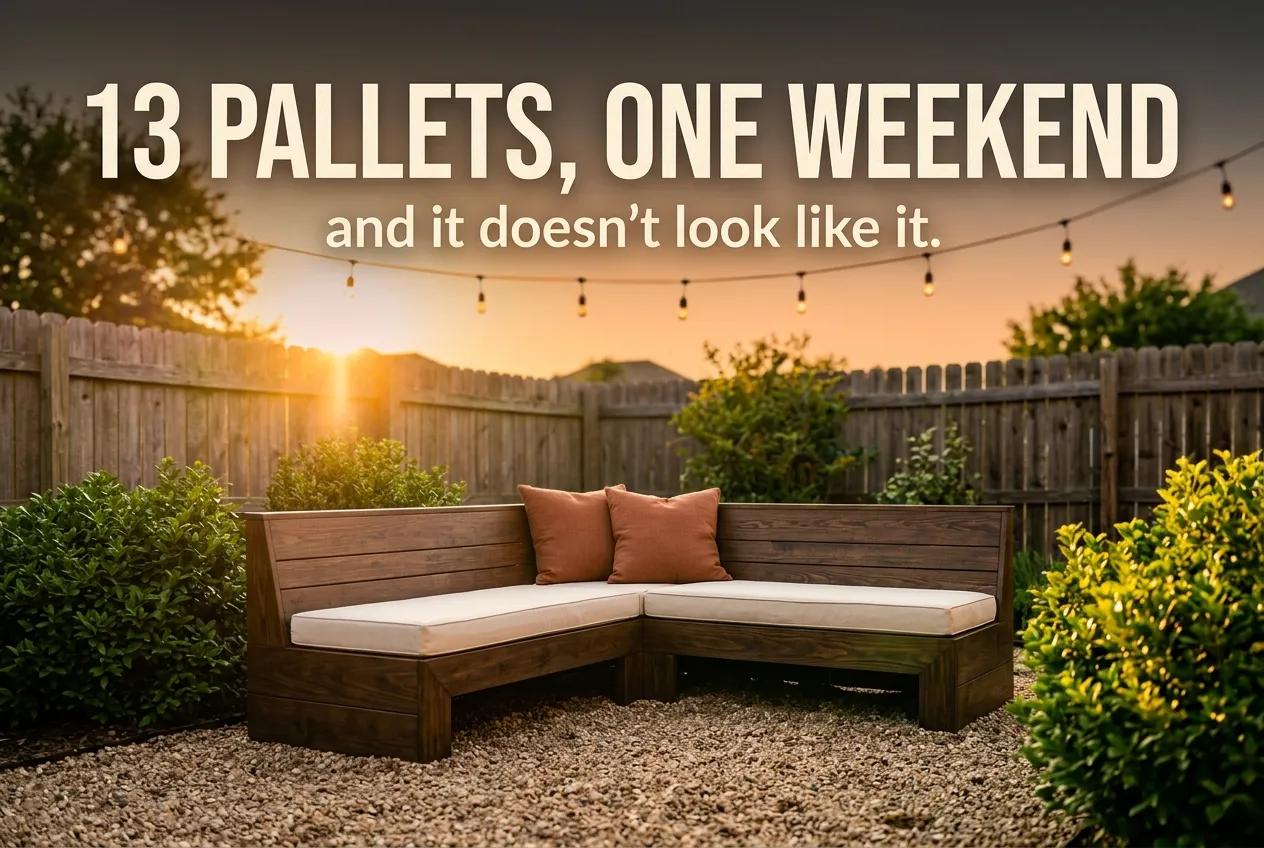
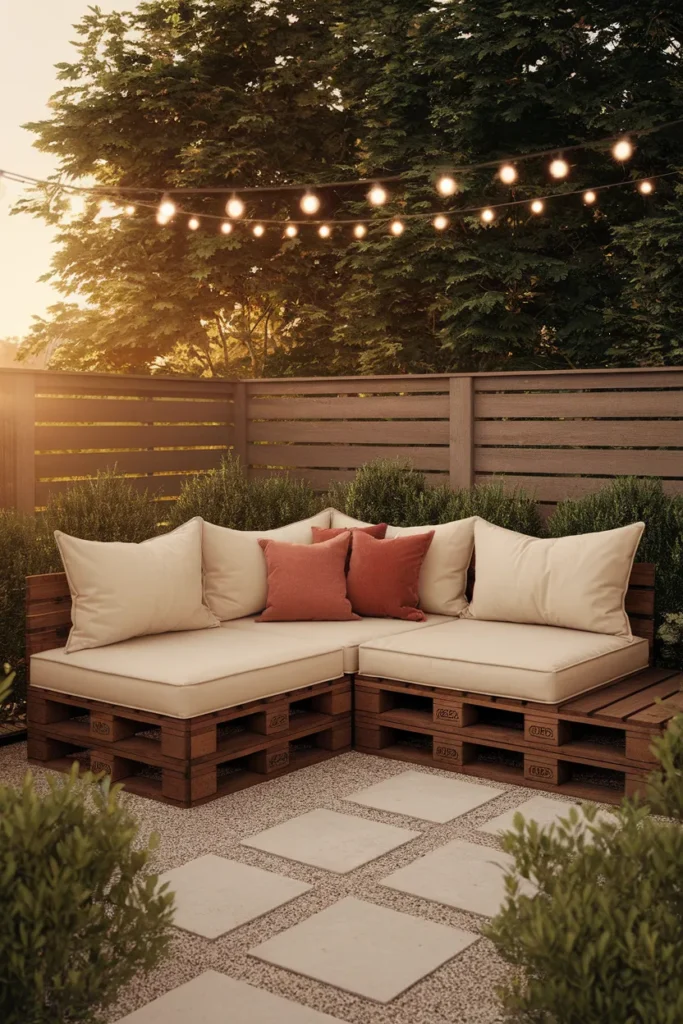
You have seen the pin. Low slouchy sofa, white cushions, string lights overhead, and somewhere under all of it, a stack of shipping pallets. Then you build one and it looks like a stack of shipping pallets.
That gap is not a skill problem. Outdoor pallet furniture fails visually for three specific reasons, and all three are fixable in an afternoon. Get them right and nobody asks what it is made of. Get them wrong and the cushions cannot save you.
Here is the promise: by the end of this you will know exactly which three details give the game away, what a build actually costs once you stop pretending the cushions are free, and six shapes that read as furniture instead of pallets with a mattress on top.
Why most outdoor pallet furniture looks cheap
Walk past a hundred pallet builds and the same three tells repeat. Not sometimes. Every time.
The wood stays raw and orange. The seat sits too low. And the whole thing floats in the middle of a lawn with nothing anchoring it.
None of those are about craftsmanship. A perfectly square, perfectly screwed sofa still looks like scrap if you leave the deck boards showing. Meanwhile a slightly wonky bench with a stained face and a proper cushion reads as intentional. Looks come first, joinery second. That order surprises people.
The Three-Tell Test
Before you build anything, run this. It takes about ten seconds per piece and it is the difference between furniture and firewood.
The Three-Tell Test asks whether a finished piece gives away its origin in three places: the face, the height, and the footprint. Kill all three tells and the material becomes invisible. Leave one and the eye finds it immediately.
Tell one, the face. Pallet blocks and stringer ends are the single loudest signal. A 1×4 or 1×6 board screwed across the front, mitered at the corners, hides them completely. Under twenty dollars of pine from Lowe’s or Menards. This one change does more than any other.
Tell two, the height. Two stacked pallets land near 11 inches. Real sofa seats sit at 16 to 18 inches. That five-inch gap is why pallet seating feels like sitting on the floor, and why it photographs badly. Add legs, add a third pallet, or build a simple 2×4 base underneath.
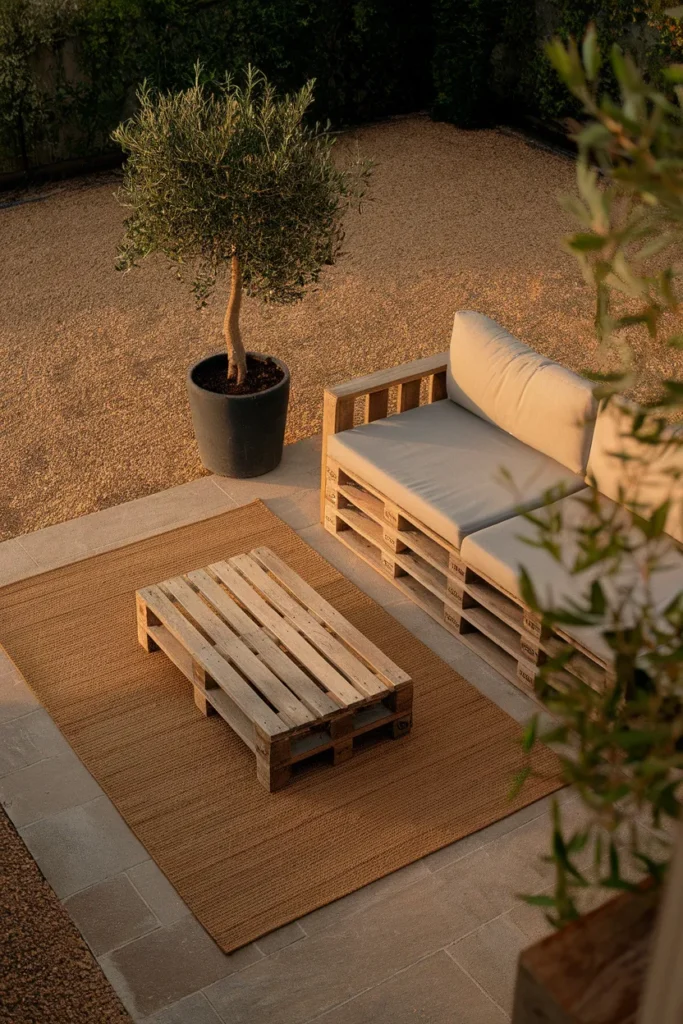
Tell three, the footprint. Furniture floating on grass reads as temporary. Furniture on gravel, pavers, or an outdoor rug reads as designed. This is the cheapest fix on the list and the one most people skip.
Screenshot that. Everything below is just execution.
Start with pallets that are safe to bring home
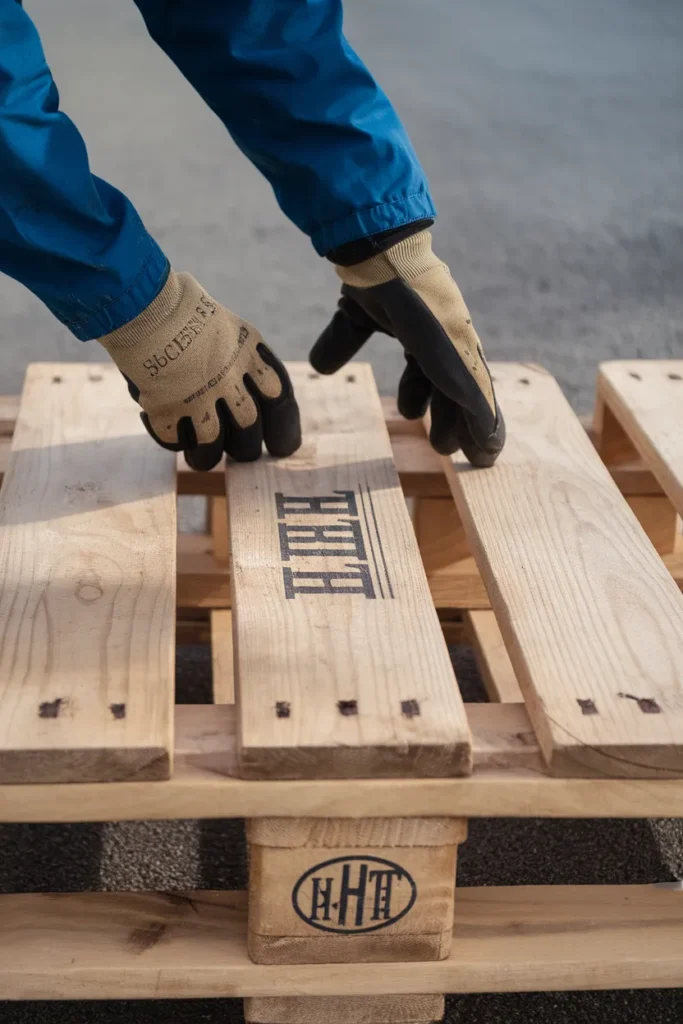
Not every pallet belongs in your yard. The stamp tells you which.
Look for HT, KD, DB, or EPAL. HT means heat treated, and under the federal heat-treatment standard for shipping pallets that means the wood core hit 56 degrees Celsius for at least 30 minutes. It is a pest control process, so no chemicals soaked into the grain.
Walk away from MB. That stands for methyl bromide, a fumigant, and there is no reliable way to sand it out. EUR-stamped pallets date from an era when MB treatment was common, so skip those too.
Skip anything with mystery staining, a chemical smell, mold bloom, or bore holes. Grocery and hardware distribution pallets are the safest hunting ground. Chemical plants and pesticide distributors are not.
One more thing worth knowing before you get ambitious: there are things you should never build from pallet wood no matter how clean the stamp looks, dining surfaces among them.
And free is less free than it sounds. Home Depot and Lowe’s typically sell pallets around twenty dollars each rather than giving them away, so the actual free supply comes from small businesses, Facebook Marketplace, and Craigslist. Ask first. Always ask first.
Six outdoor pallet furniture builds that read as designed
Every shape below passes all three tells. They are ordered by effort, easiest first.
The corner sectional
The workhorse. Nine to thirteen pallets depending on how long you want the run, arranged in an L against two fence lines. Stack two high, add the face board, cushion it, done in a weekend.
The reason it works visually is the corner itself. An L-shape defines a room. A single straight bench just sits there.
The floating coffee table
Two pallets, four casters, one stain coat. That is the entire build.
Casters do something sneaky here: they lift the piece off the ground and add a hardware detail, and hardware detail is what separates furniture from stacked lumber. Get heavy-duty ones with a locking brake.
The daybed
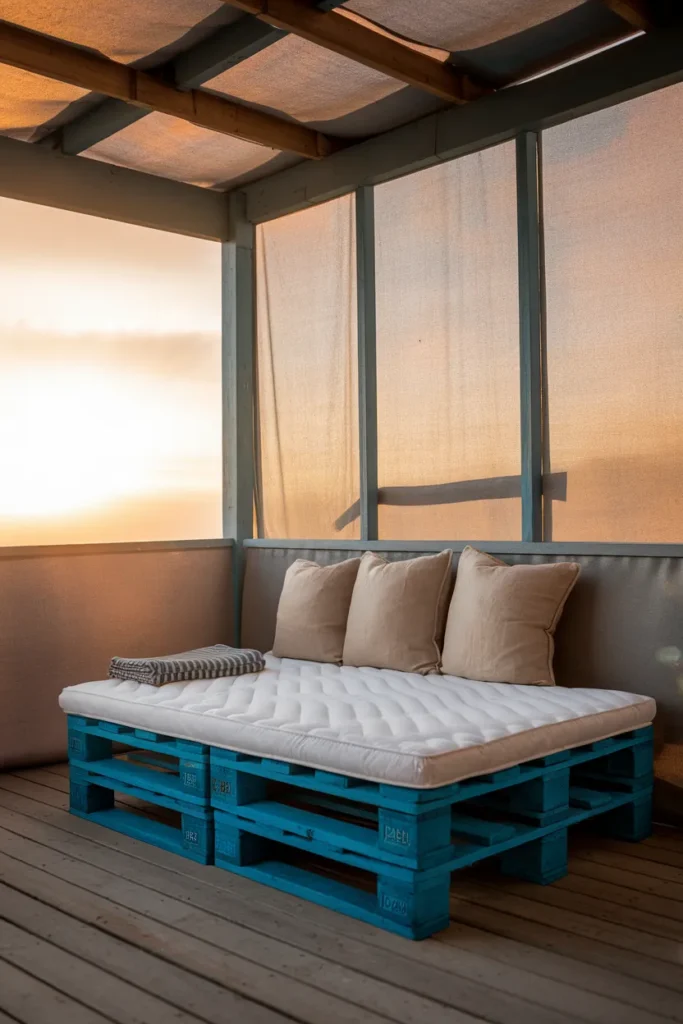
Four pallets in a two-by-two square, framed with a board skirt, topped with a crib mattress. Crib mattresses are the quiet trick of pallet building because they run about four inches thick, come waterproof, and land near thirty dollars.
Add a bolster along the back and it stops being a platform and becomes a piece.
The bar console
One pallet standing vertical, one cut in half for the sides, a plank top across. It reads as a built-in because it has a plinth and a countertop, which is exactly what built-ins have.
Set it against a fence rather than freestanding. Freestanding bars look like folding tables.
The planter bench
A bench with a pallet-built planter box at each end. The planters do double duty: they hide the raw end grain and they anchor the piece visually, which handles tell three without a rug.
Fill them with something structural. Boxwood, dwarf grasses, rosemary. Not annuals that go leggy by August.
The lounger
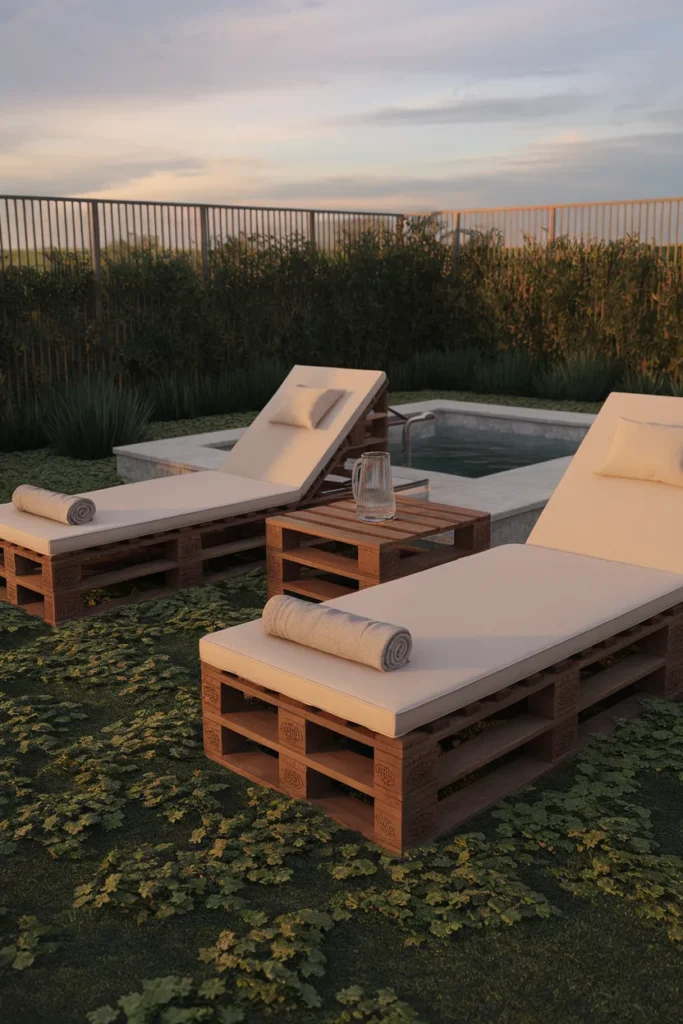
The hardest of the six and the most impressive. Half-cut pallets form the armrests, uncut pallets stack for the berth, one board angles up for the back at roughly 15 degrees.
Fifteen degrees matters. Steeper and it feels like a chair, shallower and you cannot get out of it.
Finish it like furniture, not like a fence
This is where the biggest visual jump happens, and where most builds quit early.
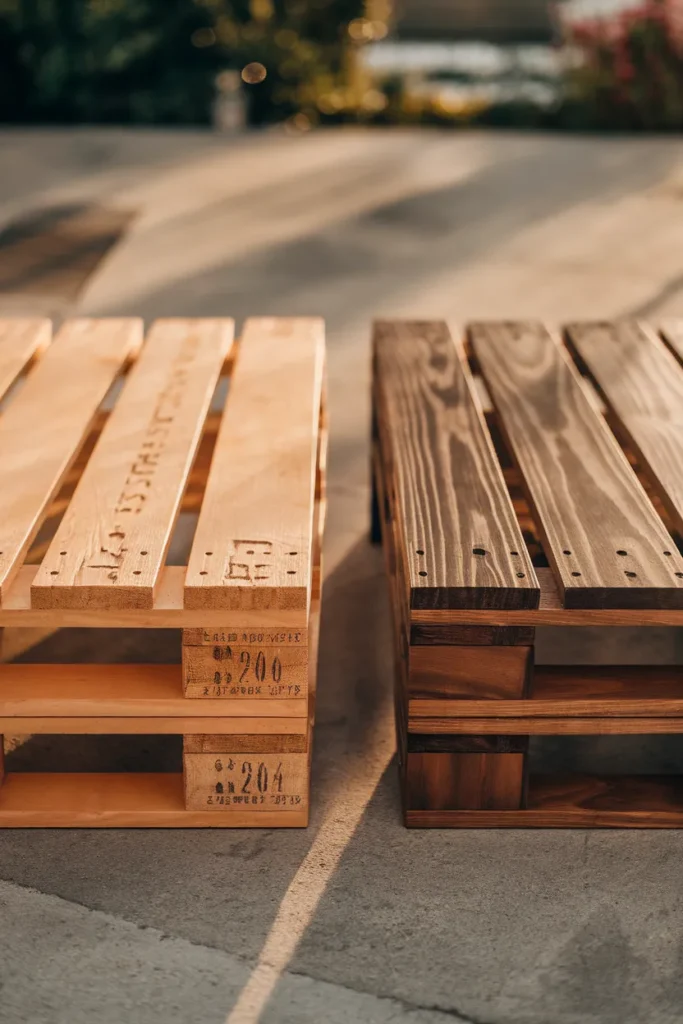
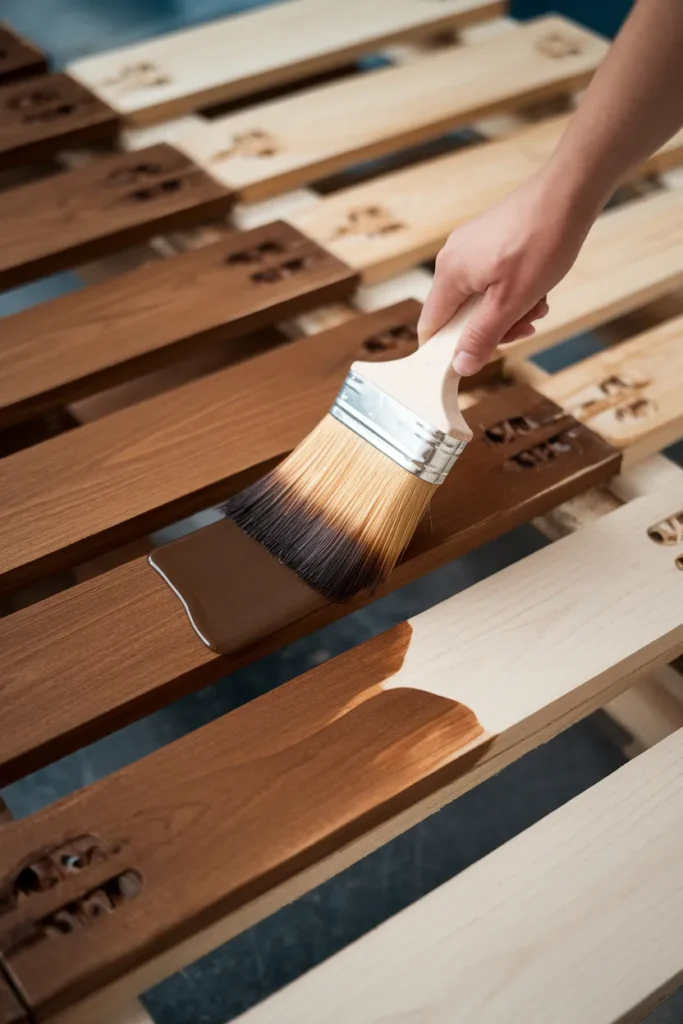
Raw pallet wood is pale, orange, and blotchy. Every one of those qualities screams cheap. Stain solves all three, and the color you choose does more work than the product you choose.
Go dark. Walnut, espresso, weathered gray. Dark tones hide the mismatched boards that make pallet wood look salvaged, because contrast between boards is what the eye reads as scrap. Light stains amplify it.
| Finish type | Looks like | Holds up | Recoat | Best for |
|---|---|---|---|---|
| Penetrating oil stain | Natural, matte, grain visible | Fades gradually, never peels | Yearly | Pieces that stay outside |
| Solid color stain | Painted, opaque, uniform | Longest life fully exposed | 2 to 3 years | Hiding rough mismatched boards |
| Spar urethane | Glossy, amber, sealed | Cracks and peels eventually | Strip and redo | Covered porches only |
| Exterior paint | Fully opaque, any color | Up to a decade | Spot repair | Bold color, farmhouse white |
Two coats minimum. Sand to 120 grit first, not finer, because too-smooth wood refuses to take stain evenly.
The honest timeline: untreated pallet wood left outside lasts only a few months before rot starts. Properly sealed, expect two to three years. Do the full sequence of clean, sand, preservative, then stain and sealer, and five to ten years is realistic. That sequence takes two or three days including dry time, which is the part nobody mentions.
We go deeper on sealing schedules and winter storage in our guide to pallet furniture that survives the season.
Cushions are where the money actually goes
Here is the part the free-furniture pins leave out.
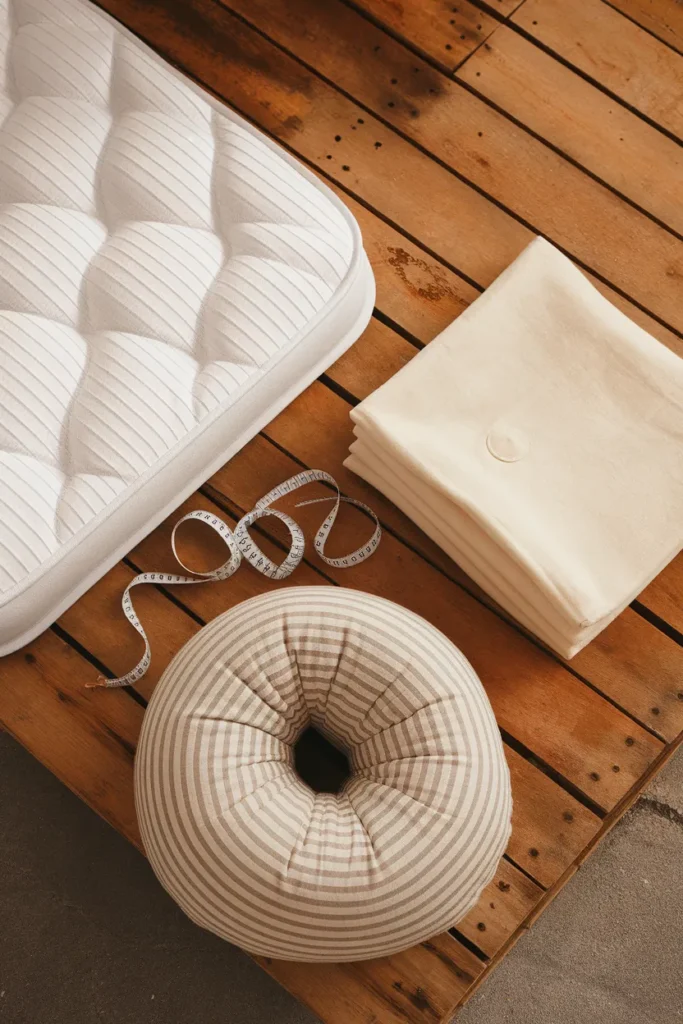
Pallets can be free. Cushions are not. A two-piece outdoor pallet cushion set from Home Depot runs around fifty-seven dollars, and a full sectional needs three or four of those. Suddenly your free sofa costs two hundred dollars in polyester.
Three ways around it, cheapest first. Crib mattresses at roughly thirty dollars each, waterproof and the right thickness. Standard twin mattress toppers cut down and covered in outdoor canvas. Or off-season clearance in September, when patio cushions drop hard at Target and Walmart.
Whatever you choose, buy removable washable covers. Outdoor fabric that cannot come off gets moldy, and moldy cushions undo every other thing you did right.
What it actually costs versus just buying a set
Nobody runs this math honestly, so here it is.
A realistic corner sectional: pallets free if you hunt or around twenty dollars each if you buy, face boards and screws near forty, a gallon of stain and sealer in the thirty to fifty range, cushions between one hundred and two hundred. Call it one hundred fifty to three hundred dollars all in, plus a full weekend of your time.
One builder documented an L-shaped outdoor couch finished for about a hundred dollars using free pallets and thirty-dollar crib mattresses. That is the floor, and it is achievable if the sourcing goes your way.
Entry-level bought sectionals start around four hundred. So you are saving real money, but not the ninety percent the pins imply, and you are spending twelve to sixteen hours to do it.
Build if you want the exact dimensions your space needs, or you enjoy the making. Buy if you need seating by Saturday. Both are correct answers. If budget is the whole constraint, our inexpensive patio ideas roundup covers cheaper wins than furniture.
Your climate decides how long it lasts
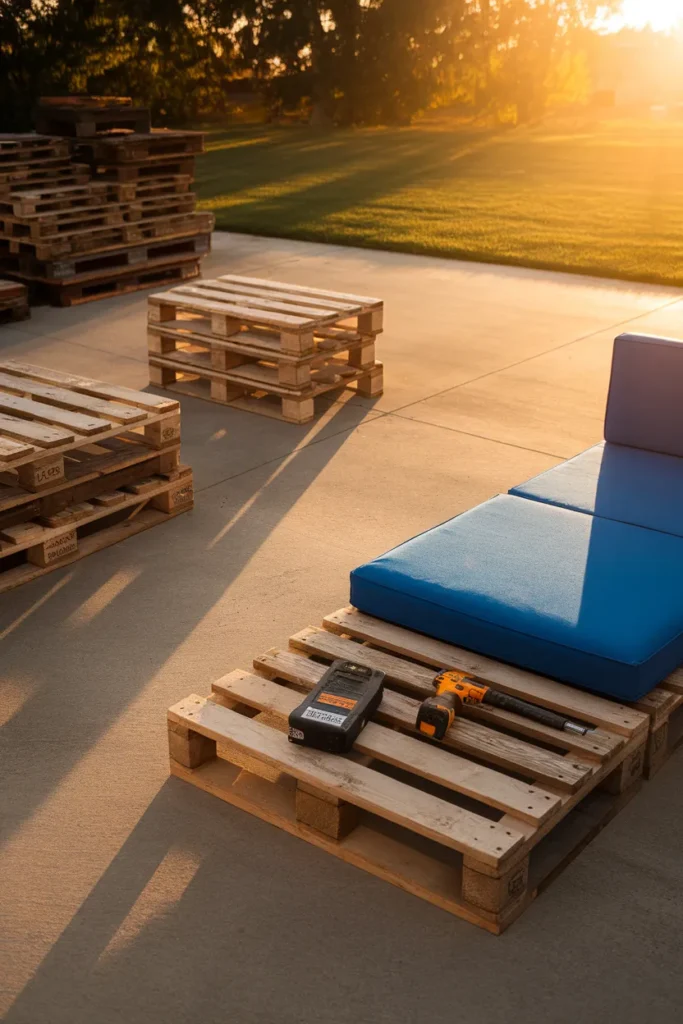
Every guide gives one answer about longevity. That answer is wrong in most of the country, because pallet pine fails differently depending on where you live.
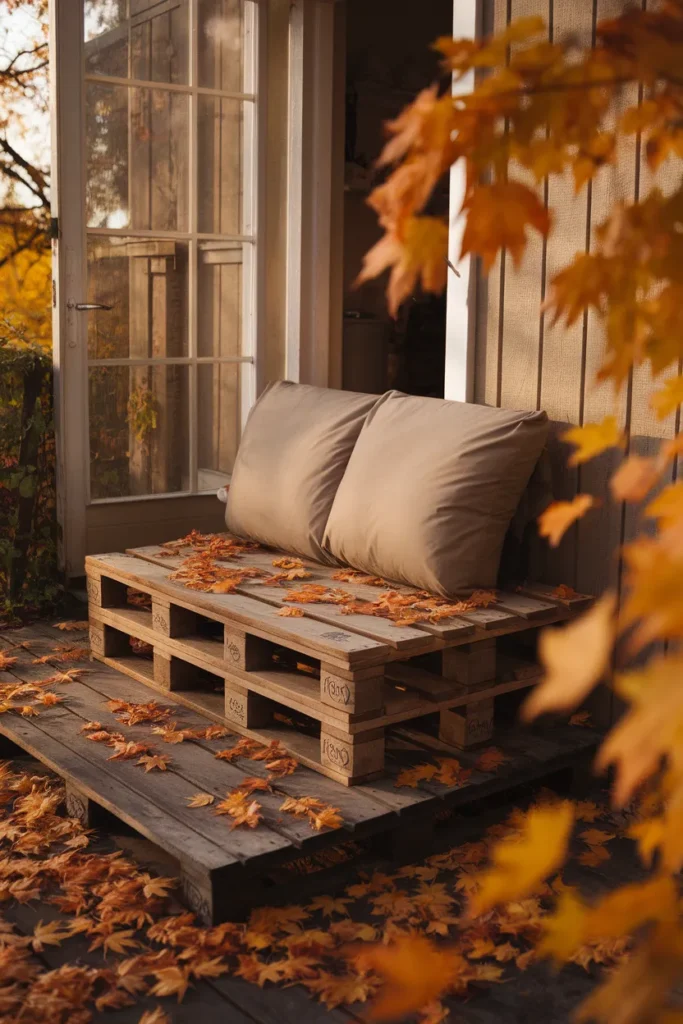
Freeze-thaw regions, roughly Zones 5 and 6 across the Midwest and Northeast, are the harshest. Moisture soaks into the grain, freezes, expands, and splits the boards from the inside. Nothing you brush on stops that. Store pieces in a garage or shed from late fall, and get cushions inside well before the first hard frost, which typically lands mid-October through early November depending on your exact spot. Check the USDA Plant Hardiness Zone Map or your county extension office for local dates.
High-UV dry regions, the Southwest and interior West, do the opposite. Almost no rot, but brutal sun that grays and cracks the surface. Pigment is your protection here. Solid color stain outlasts clear coats by years.
Humid regions, the Southeast and Gulf, punish you with mold and mildew rather than sun. Airflow underneath matters more than any finish. Raise the piece on feet or casters so it never sits in standing water, and use a finish with a mildewcide.
One rule holds everywhere. A mediocre finish maintained yearly beats a premium finish left alone.
Styling it so it stops looking like a project
Three finishing moves, and they cost almost nothing.
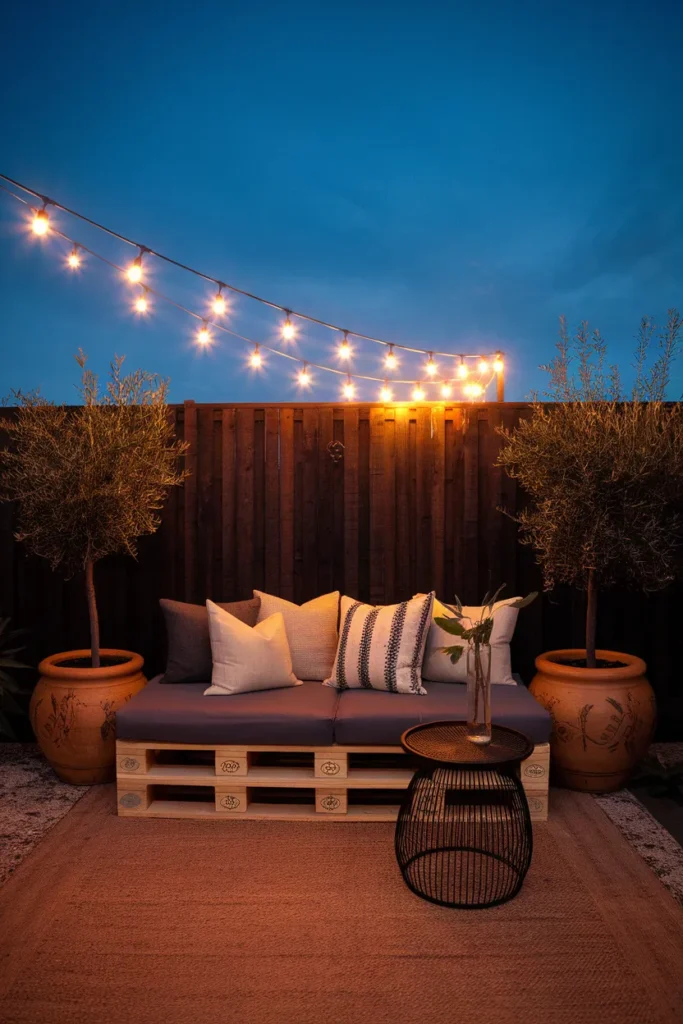
Layer the textures. Pallet wood is flat and matte, so it needs contrast beside it. A jute-look outdoor rug, a ceramic planter, a metal side table. Same-material sameness is what makes a setup read as homemade.
Light it from above. Bistro string lights across the seating zone change the whole read of a space after dark, and they are the single highest-impact thirty dollars in any backyard.
Give it a backdrop. Pallet furniture against a bare fence looks like storage. Against a trellis, a tall planter row, or a painted fence panel, it looks placed. If you are working with a tight footprint, the same principles in arranging small patio furniture apply directly here.
Honestly, the styling matters more than the build quality. That feels unfair after a weekend of drilling, but it is true.
Frequently asked questions
What pallets are safe to use for outdoor furniture? Look for HT, KD, DB, or EPAL stamps. HT means heat treated, a pest control process using temperature rather than chemicals. Avoid MB, which indicates methyl bromide fumigation, and avoid EUR-stamped pallets from the era when MB was standard. Skip anything stained, moldy, or chemical-smelling regardless of stamp.
Can outdoor pallet furniture be left outside year-round? In mild climates, yes, if it is sealed and raised off the ground. In freeze-thaw regions, no. Water in the grain expands when it freezes and splits boards from the inside. Cushions should come in everywhere, every winter, without exception.
How long does pallet wood last outdoors? Untreated, only a few months before rot begins. Sealed with stain and sealer, two to three years. With the full sequence of cleaning, sanding, wood preservative, then stain and sealer, five to ten years is realistic.
How many pallets do I need to build an outdoor couch? Nine to thirteen for a corner sectional, depending on length. A simple two-seater needs three. Buy two extra beyond your count, because you will find split boards and you will want matching wood for the face.
Is it cheaper to make pallet furniture than to buy patio furniture? Usually, but less dramatically than the internet suggests. A finished sectional runs one hundred fifty to three hundred dollars once cushions and finish are included, against roughly four hundred for an entry-level bought set. Factor in twelve to sixteen hours of labor.
Can I build pallet furniture without woodworking skills? Yes for stacked designs like the sectional, coffee table, and daybed, which need only a drill and screws. The lounger and bar console require cutting, so a circular saw or reciprocating saw becomes necessary.
What is the best finish for outdoor pallet furniture? A penetrating oil-based exterior stain for most builds, because it weathers gradually instead of peeling. Solid color stain if your boards are badly mismatched or you live somewhere with intense sun. Save spar urethane for covered porches, where it will not crack.
The short version
Outdoor pallet furniture is not a lesser material. It is an unfinished one, and almost everything separating a pin-worthy build from a pile of scrap happens after the last screw goes in.
Cover the blocks. Fix the height. Anchor the footprint. Stain it dark, cushion it properly, and light it from above. Do those six things and nobody will guess where the wood came from.
Start with the coffee table. Two pallets, four casters, one afternoon. If you like how it looks in your space, the sectional is the same skills at a bigger scale, and you will already know your stain color.
Which build are you starting with? The corner sectional gets pinned the most, but the daybed is the one people actually never leave.