Flagstone Patio Ideas That Look Custom, Not Cookie-Cutter
Most flagstone patio ideas online show you a finished picture and leave you guessing. This one shows you the small choices that make natural stone read as “custom” instead of “kit from the big-box store.” Stick around, because the difference usually comes down to two things almost nobody talks about: your joints and your edges.
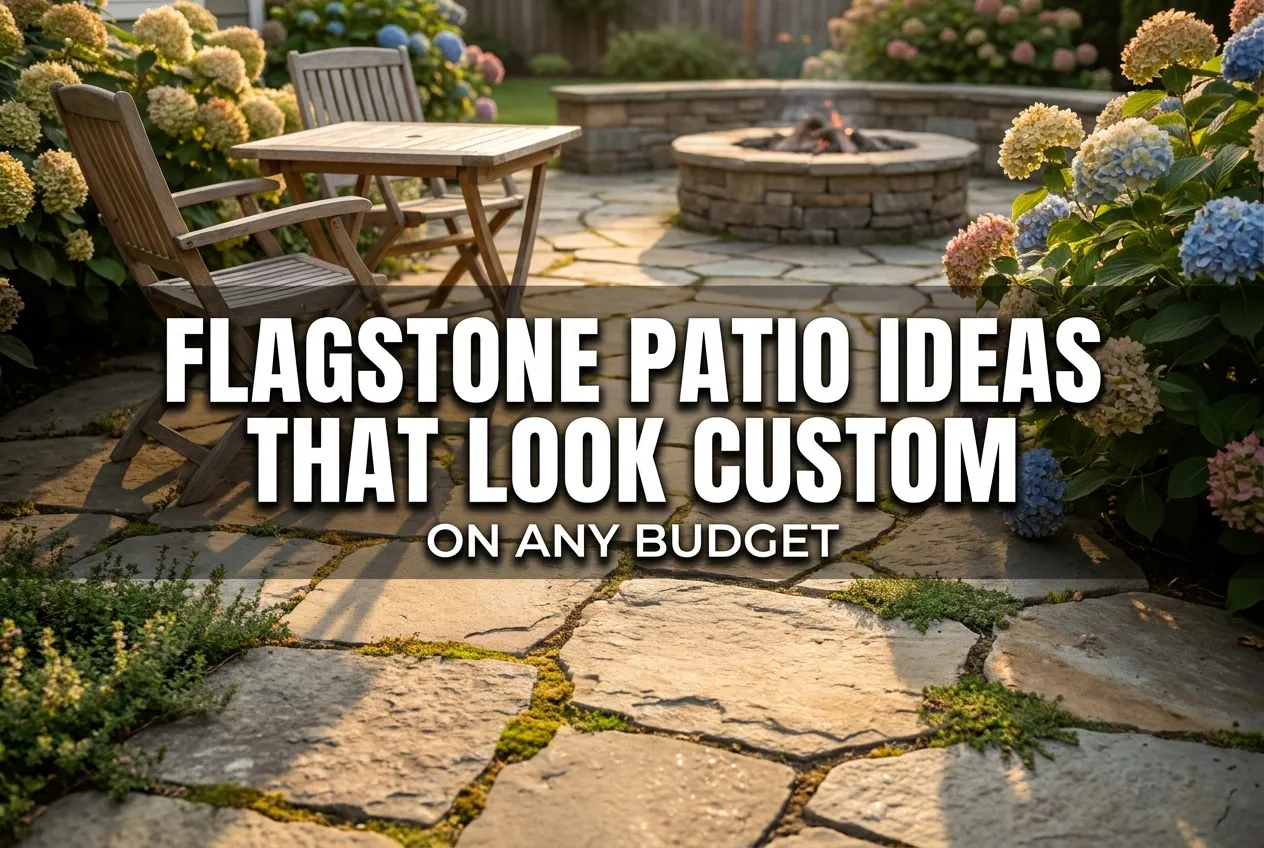
Here’s the honest part. Flagstone is one of the few hardscape materials that looks more expensive the more relaxed it is. Wonky shapes, mossy gaps, a slightly uneven color mix. That’s the good stuff. Fight it, and you get a stiff, tiled look. Lean into it, and a $2,000 patio can pass for a landscape-designer job.
We’ll walk through the layouts worth copying, the joint fillers that change everything, a simple cost plan, and the design combos (fire pit, pergola, dining) that Pinterest can’t stop saving. Let’s get into it.
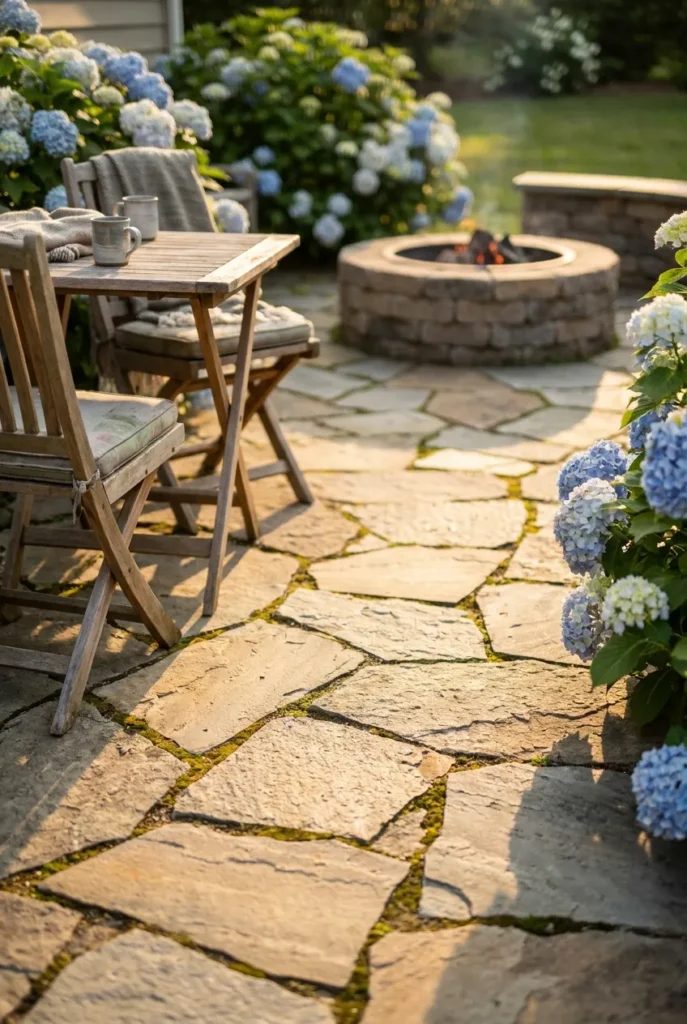
What Makes a Flagstone Patio Look Custom (Not Kit-Built)
A custom look isn’t about spending more. It’s about three levers you control.
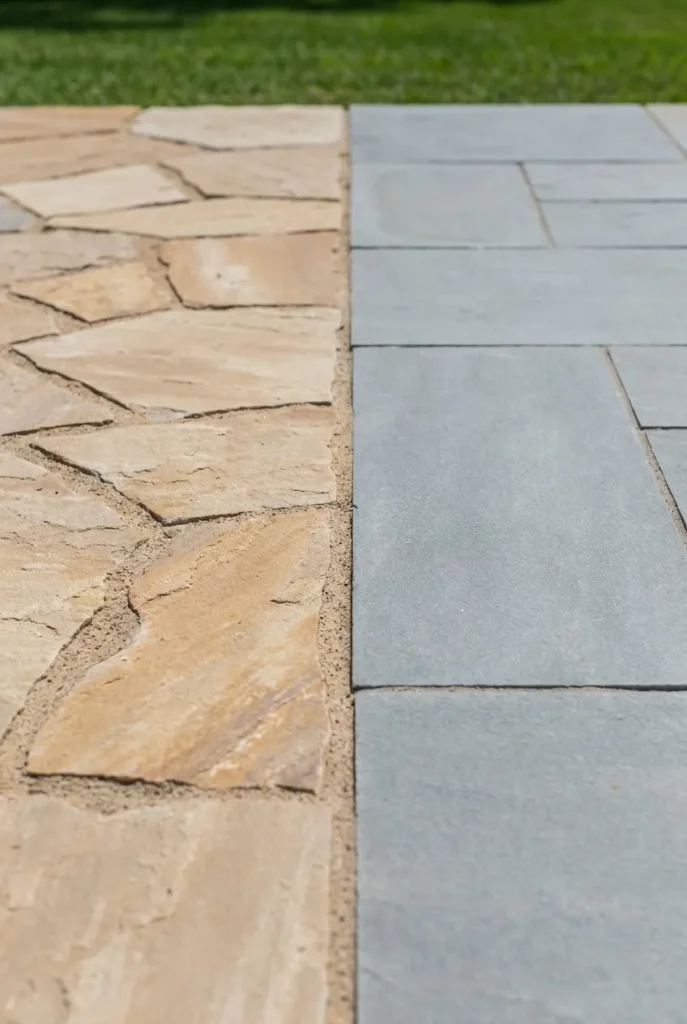
Shape variety comes first. Irregular flagstone, the kind with puzzle-piece edges, reads as hand-laid. Cut flagstone (clean rectangles) leans formal and modern. Neither is wrong. Irregular just hides mistakes better, which is a gift for a first-timer.
Then there’s the joint. The gap between stones is where a patio either sings or looks like a garage floor. We’ll spend real time here, because it’s the cheapest upgrade you can make.
Last is the edge. A patio that blurs into planting beds, gravel, or a lawn looks intentional. A hard, straight border with no transition looks like it was dropped from space.
The first time we laid stone, we obsessed over the perfect grid and it looked like a bathroom floor. Loosening the pattern the second time around fixed it.
The Joint Rule: The One Choice That Fakes a Designer Look
Ask “what is the best material to put between flagstones,” and you’ll get a dozen answers. Here’s the simple framework we use.
The 3-Filler Flagstone Joint Rule. Your joint filler does three jobs at once: it locks the stones, sheds water, and sets the mood. Pick the one that matches how much upkeep you want and how soft you want the look. That’s the whole decision.
Polymeric sand (clean and low-drama)
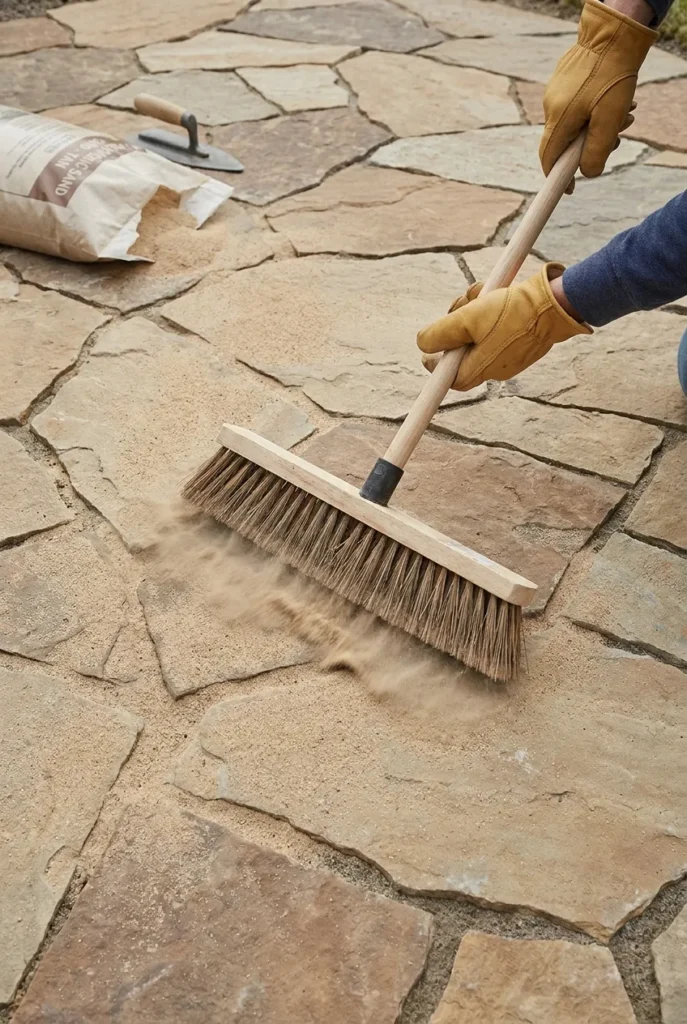
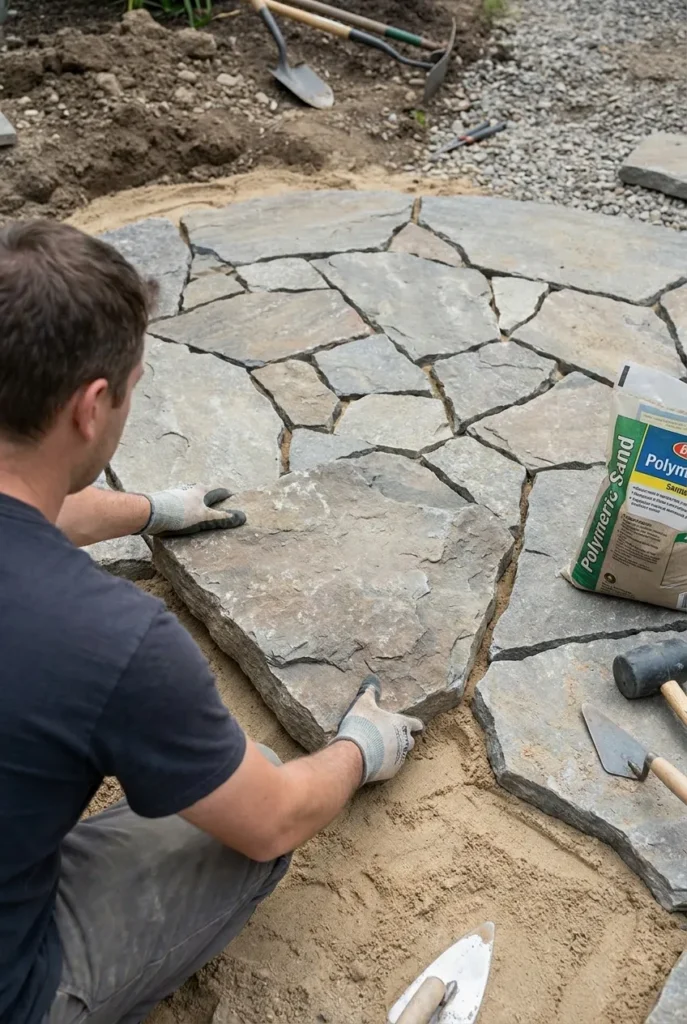
Polymeric sand hardens after you mist it, so weeds struggle and stones stay put. It gives you tidy, defined joints. Plan to re-sand every few years as it wears. Best for tighter, cut-stone layouts.
Pea gravel or decomposed granite (relaxed and forgiving)
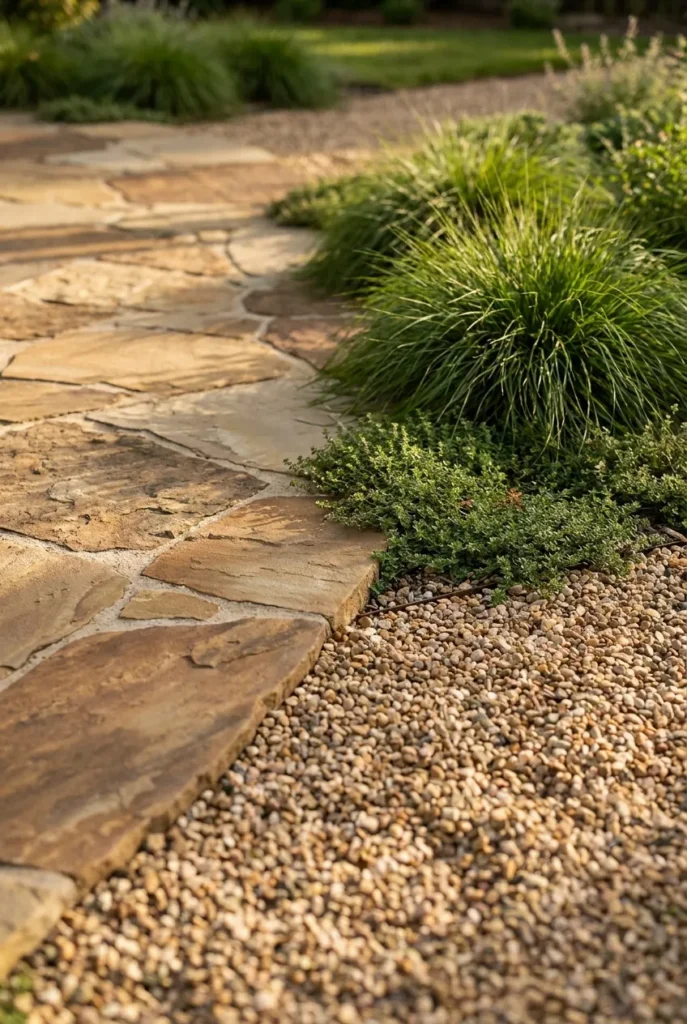
Loose gravel joints drain fast and hide uneven stone thickness, which is why so many budget builds use them. A flagstone-and-gravel mix is a genuinely gorgeous combo, and if you like that direction, our guide to pairing flagstone with a gravel patio breaks down the looks. Expect to sweep and top off gravel now and then.
Plants and moss (the high-end, garden-y look)
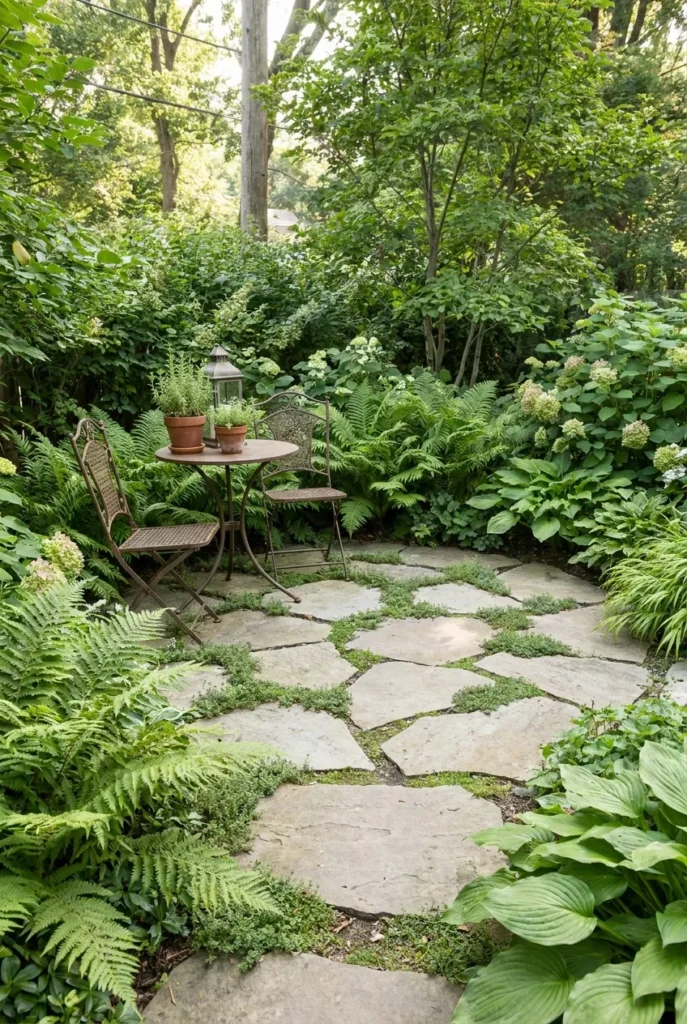
Creeping thyme, Irish moss, or dwarf mondo grass tucked between stones is the look that reads most “custom.” It’s the priciest to establish and the fussiest early on, but nothing else feels as settled.
We ran creeping thyme between our stones and honestly underestimated how much watering it needed the first summer.
Small Flagstone Patio Ideas for Tight Yards
You do not need a sprawling yard. Small flagstone patios often look better because the stone stays the star.
Float a compact patio in the middle of a planting bed and let greenery hug all four sides. Tuck a round layout into a back corner for a reading nook. Or run a narrow flagstone landing off a back door that steps down into gravel. A tight footprint also keeps material costs down, which pairs nicely with other budget-friendly backyard patio ideas if you’re piecing a yard together over a few weekends.
Keep furniture scaled down. A two-chair bistro set reads roomy on a small pad; a bulky sectional swallows it.
Flagstone Patio Ideas With a Fire Pit
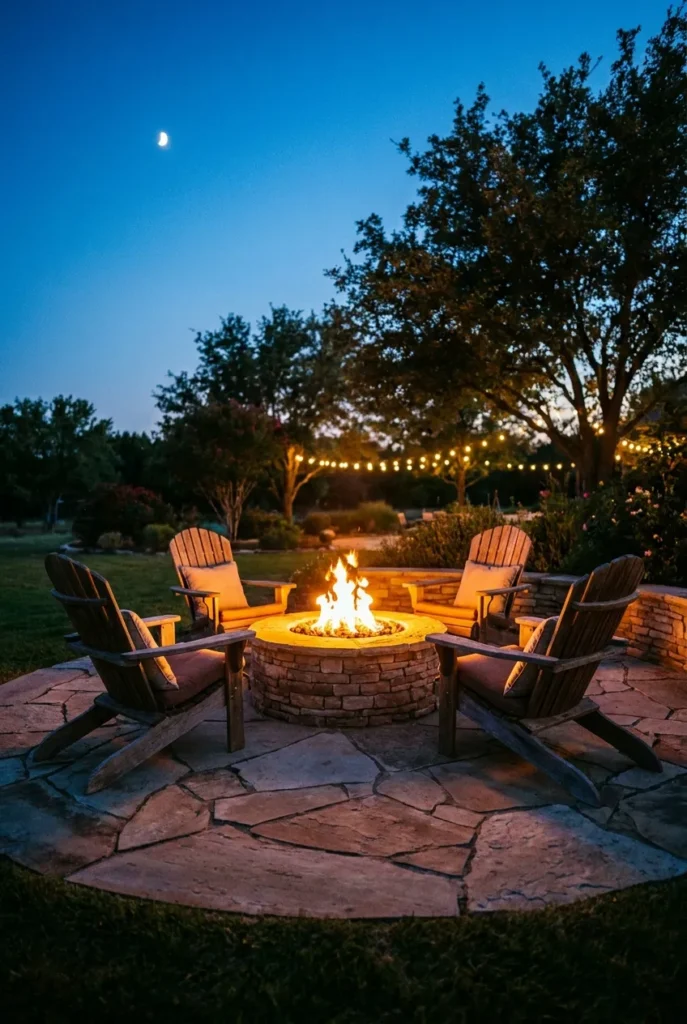
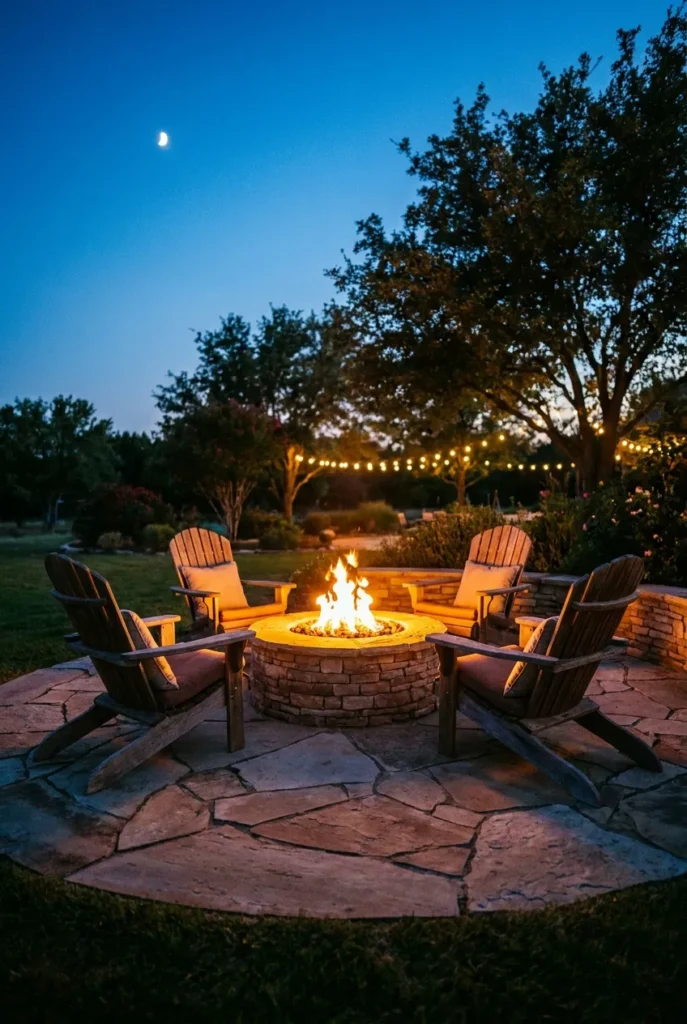
This is the combo Pinterest saves on repeat, and for good reason. A circle of flagstone around a fire pit feels like a destination.
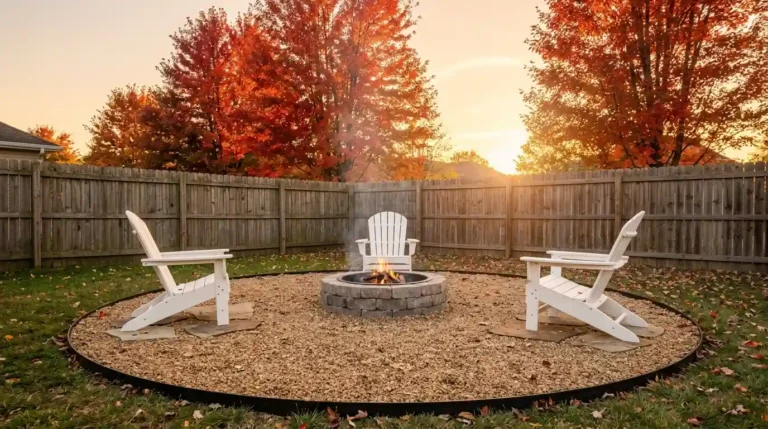
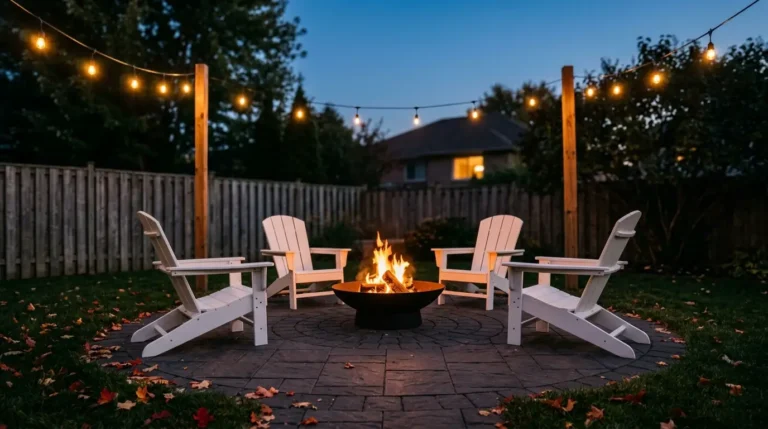
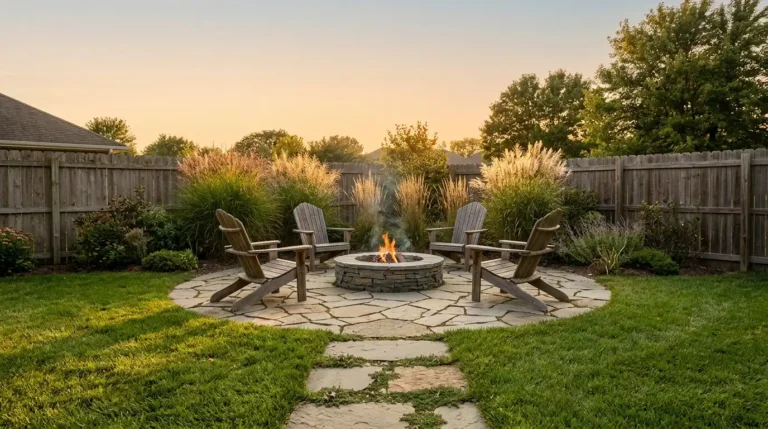
Set a round or organic-shaped flagstone pad, then center a low stacked-stone or metal fire bowl. Pull seating just outside the stone edge so chairs sit level. A word on safety: keep the fire feature well clear of the pergola, fence, and any low branches, and check local rules before you build. If your evenings run cool, the warmth stretches your patio season by weeks.
Match the fire pit’s stone tone to your flagstone for the pulled-together look, or contrast it on purpose for a modern edge.
Flagstone Patio Ideas With a Pergola or Shade
Overhead structure turns a patio into an outdoor room. A cedar pergola over flagstone gives you shade, a place to string lights, and a frame that makes the whole space feel designed.
You can go permanent with a post-set pergola or keep it flexible with a freestanding sail or a large cantilever umbrella. If your patio bakes in afternoon sun, prioritize west-side coverage.
The stone underfoot stays cool longer in shade, which honestly matters more than people expect in July.
Flagstone Patio Cost and How to Fake a Custom Look for Less
Straight talk on money. Installed flagstone runs roughly $15 to $45 per square foot depending on method, per multiple 2026 cost guides. Sand-set, DIY-friendly builds sit at the low end; mortar-set (wet-set) work over a concrete base lands high.
The $-Tier Custom-Look Plan. Here’s how to spend where it shows.
- Splurge: the joint treatment (moss or a quality gravel). It’s the detail people actually notice.
- Save: the layout. Irregular sand-set stone hides imperfections and skips the concrete pour.
- Skip: oversized coverage. A smaller, well-detailed patio beats a big plain slab.
If a full flagstone install stretches the budget, a mixed approach works beautifully. Some readers set a flagstone “island” and fill the rest with gravel, similar to these paver patio ideas on a budget where the pricey material is used only where it counts.
One climate note: if you’re in a cold-winter zone, frost heave can shift a poorly based patio. It’s worth a minute to check your local frost depth and zone so your base depth matches your ground. In colder bands (think Zones 5 and 6), a deeper, well-compacted gravel base pays off.
DIY Flagstone Patio: The Weekend-Reality Version
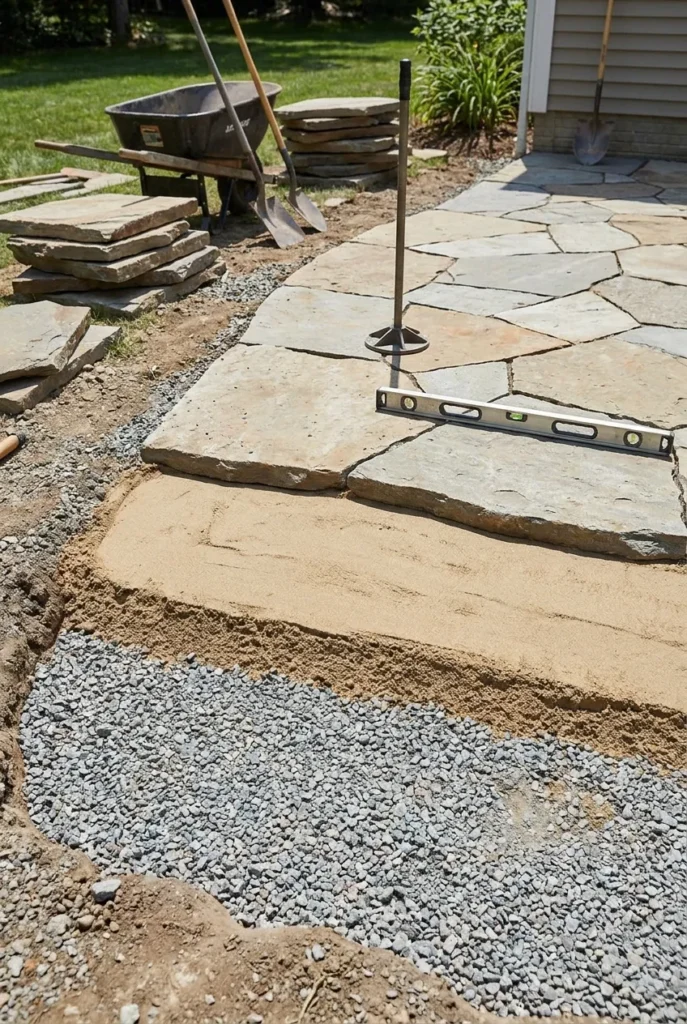
Can you do this yourself? For a sand-set patio on level ground, yes. Give it a couple of weekends and a strong back.
The short version: mark your shape, dig down several inches, compact a gravel base, add a leveling layer, set the stones like a puzzle, then fill your joints. For the details on getting the base right, the way pros set a stone base is worth reading before you dig.
A few honest cautions. Big flagstones are heavy, so lift smart. Rent a plate compactor rather than tamping by hand for anything bigger than a landing. And dry-fit the whole layout before you commit, because rearranging is free and regret is not.
We rented a plate compactor for about a half-day and it saved our arms; hand-tamping our first landing took twice as long for a worse result.
Flagstone Patio Design Styles Worth Copying
A few directions that consistently photograph well.
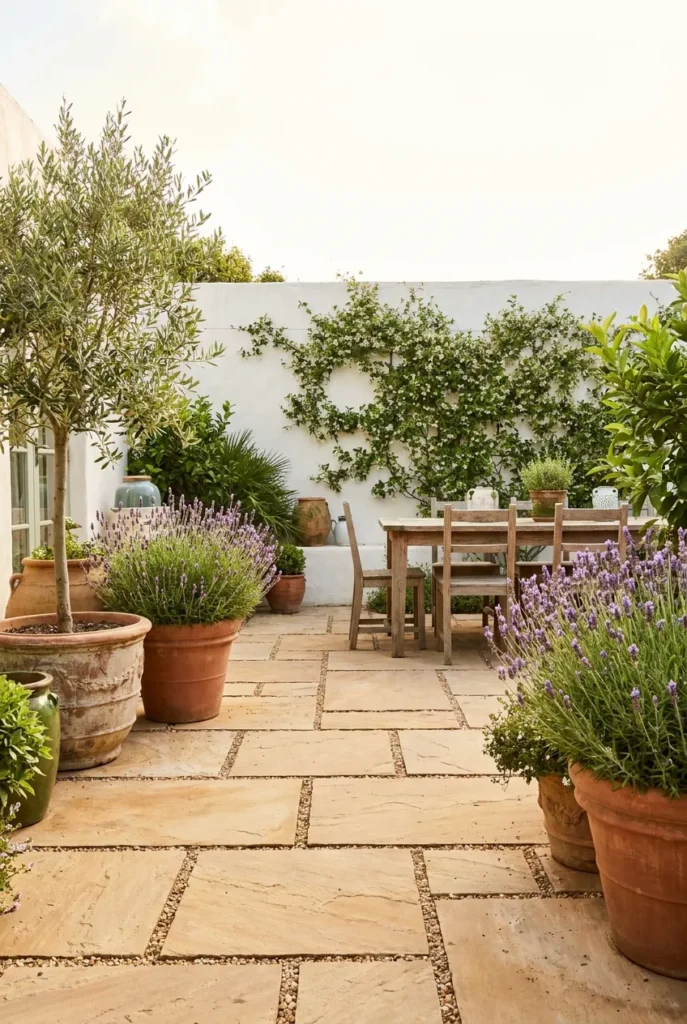
Mediterranean: warm tan sandstone, terracotta pots, gravel joints, olive or lavender nearby. Sun-soaked and relaxed.
Modern rustic: large gray bluestone in a loose grid, tight joints, clean-lined furniture. The contrast does the work.
Cottage garden: irregular stone with moss and creeping thyme, planting beds spilling over the edges, a slightly overgrown feel on purpose.
Pick one lane and commit. Mixing three styles is how patios end up looking busy.
Softening the Edges: Plants, Gravel, and Transitions
The border is the giveaway. A patio that dissolves into its surroundings looks custom every time.
Let low plants creep over the stone rim. Ring the patio with a band of pea gravel before the lawn starts. Or step the flagstone down into a planting bed so there’s no hard line at all. Ornamental grasses, creeping thyme, and mounding perennials all soften a raw edge fast.
Think of the edge as a fade, not a wall.
Seasonal Timing: When to Build Your Flagstone Patio
Spring and early fall are the sweet spots. The ground works easily, and you’re not laying stone in August heat or fighting frozen soil.
If you plan to plant moss or thyme in the joints, set those in spring (March through May in most of the country) so they root before summer stress. In colder zones, wrap up hardscape work before the first hard frost so your base settles properly.
Frequently Asked Questions
What is a flagstone patio?
It’s a patio surfaced with flat, natural sedimentary stone (like sandstone, bluestone, or limestone) split into slabs. The stones are set on a base of gravel and sand, or mortared over concrete, with the gaps filled by sand, gravel, or plants.
What is the best material to put between flagstones?
It depends on the look and upkeep you want. Polymeric sand gives clean, weed-resistant joints; pea gravel or decomposed granite drains fast and forgives uneven stone; creeping thyme or moss delivers the softest, most high-end appearance. Match the filler to your maintenance appetite.
How much does a 20×20 flagstone patio cost?
A 20×20 patio is 400 square feet. At roughly $15 to $45 per installed square foot, that lands in a wide range, with DIY sand-set builds near the bottom and professional mortar-set work near the top.
What are the disadvantages of flagstone?
Natural stone costs more per square foot than concrete, the irregular thickness makes installation slower, some stones can get slick when wet, and sand-filled joints need occasional refilling. In cold zones, a weak base can shift with frost heave.
Is flagstone slippery when wet?
Some smoother stones can be. Choosing a stone with a bit of natural cleft (texture) and keeping joints filled helps traction. It’s worth walking on a sample wet before you buy a pallet.
Can I lay flagstone over an existing concrete slab?
Yes. Mortar-setting flagstone over sound concrete (a wet-set install) is a common way to dress up a plain slab, though it costs more than a sand-set install on gravel.
Your Next Weekend Starts Here
The best flagstone patio ideas aren’t about buying the fanciest stone. They’re about the joints you choose, the edges you soften, and picking one style and committing. Do those three things and your patio will look like you hired someone, even if it was just you, a rented compactor, and a couple of Saturdays.
Save the images that match your yard, sketch your shape, and start with a small pad if you’re nervous. Which look are you leaning toward, the mossy cottage version or a clean modern grid? Either way, your future self is going to love sitting out there.