Desert Front Yard Ideas That Give You Real Arizona Curb Appeal
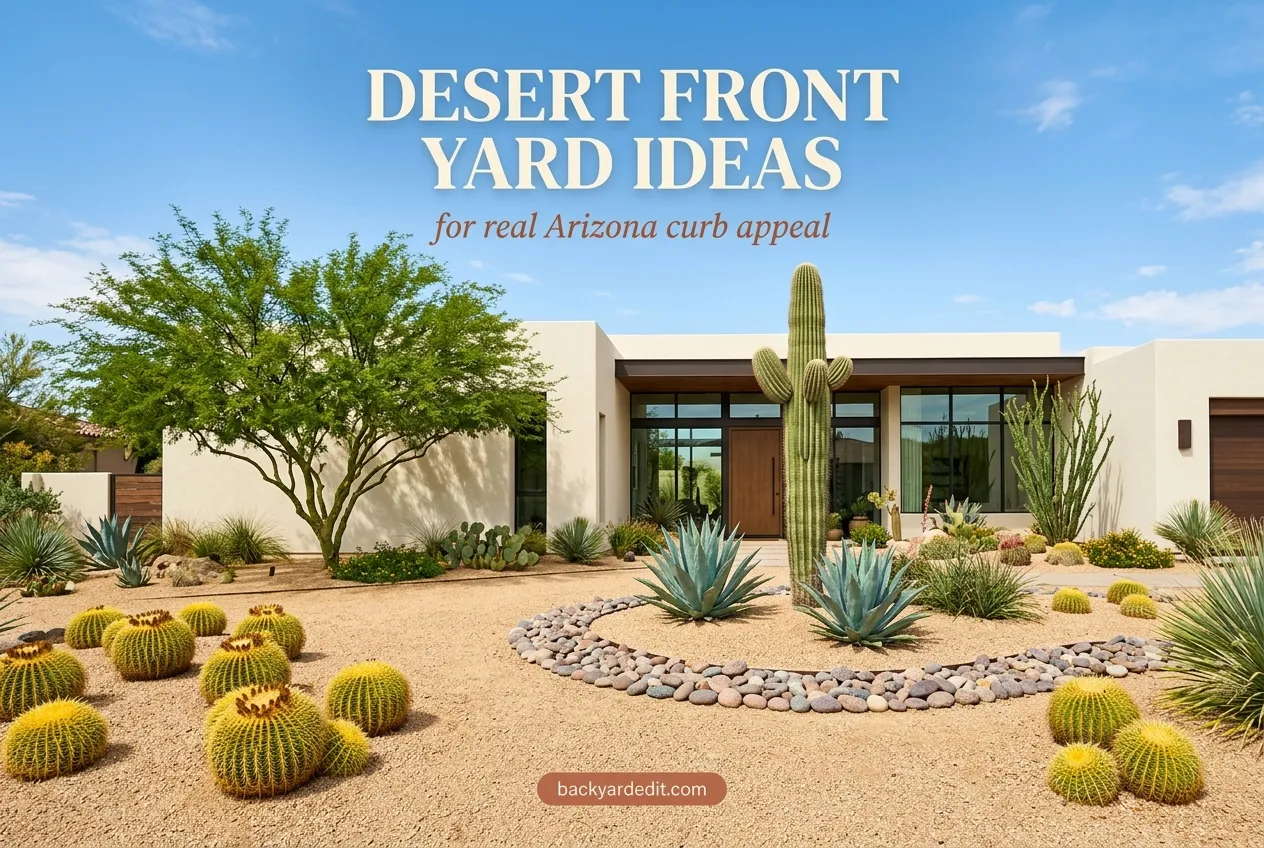
Your front yard is the first thing every neighbor, delivery driver, and potential buyer sees. In the desert, it can either look like a parched afterthought or a designed, water-wise showpiece. These desert front yard ideas lean fully into the second camp. We will show you how to trade thirsty grass for gravel, cactus, and clean lines that still feel warm and welcoming.
Here is the promise. You do not need a landscape architect or a five-figure budget to pull this off. You need a plan, the right plants for your zone, and a few smart material choices.
Most of these ideas work best in USDA Zones 9 and 10, which covers Phoenix (9b), Tucson, and most of Arizona’s low desert. We will flag anything that needs a cooler spot.
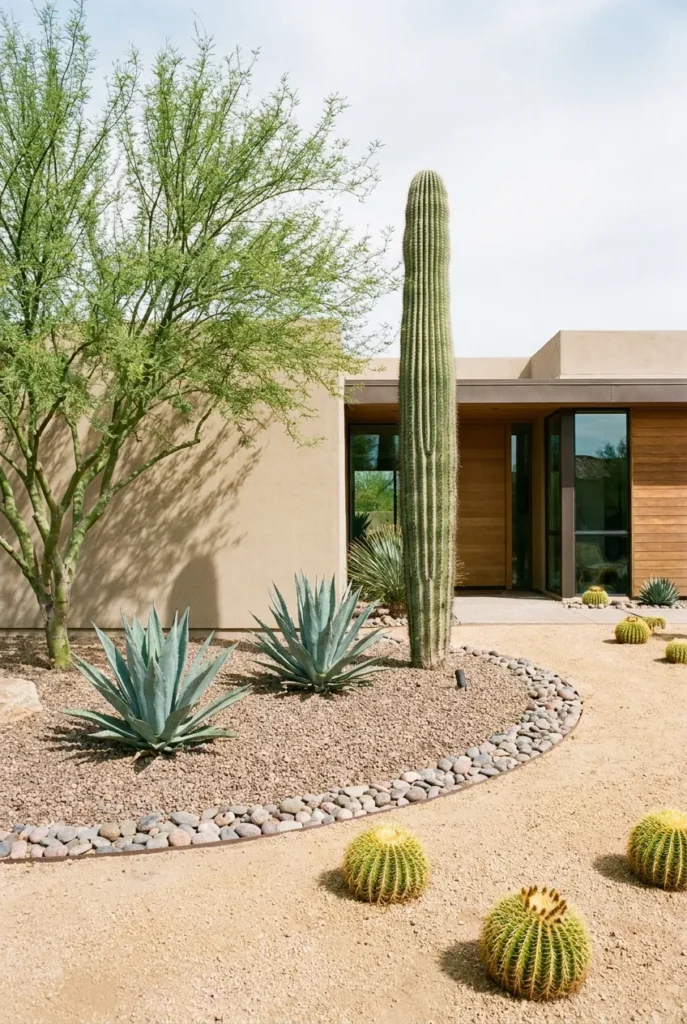
Start With the Desert Curb-Appeal Formula
Before you buy a single plant, sketch the yard. We use a simple system we call the 3-Layer Desert Curb Rule, and it keeps beginners from creating a spiky, chaotic mess.
Layer one is the ground: gravel, decomposed granite, or a mix, covering most of the space. Layer two is the structure: two or three sculptural plants (a cactus, an agave, a small tree) placed like furniture, not scattered. Layer three is the accents: boulders, a dry creek line, low color, and lighting.
That is it. Ground, structure, accents. When a desert yard looks “off,” one of these three layers is usually missing.
Here is a quick reference table you can screenshot before your first hardware run.
| Layer | What it does | Budget-friendly picks |
|---|---|---|
| Ground | Covers 60 to 80% of the yard | 1/2-inch decomposed granite, gold or brown gravel |
| Structure | 2 to 3 focal plants | Golden barrel cactus, blue agave, Palo Verde |
| Accents | Adds depth and warmth | Boulders, red yucca, path lights |
If you want the rock side of this done well, our full guide to front yard landscaping with rocks walks through gravel sizes and edging.
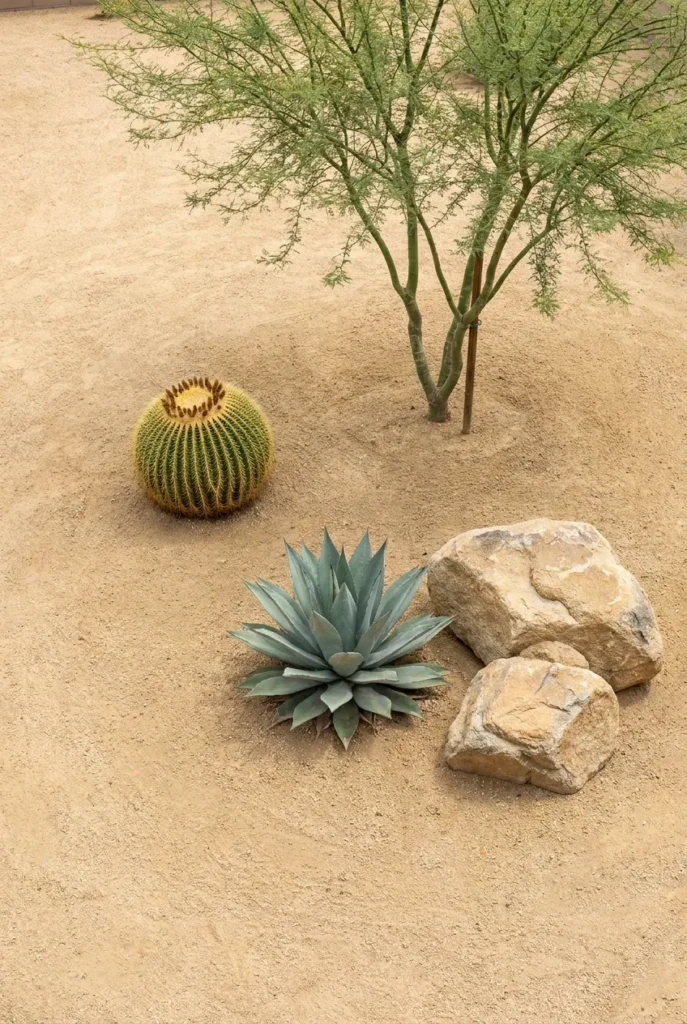
Swap the Lawn for Gravel and Decomposed Granite
Grass in the low desert is a losing battle. It drinks water, browns in July, and never really thrives. Pulling it is the single biggest upgrade you can make.
Decomposed granite (DG) is the desert default for good reason. It packs down into a firm, walkable surface, comes in warm gold and brown tones, and costs far less than pavers. A rougher 1/2-inch gravel works for beds and borders.
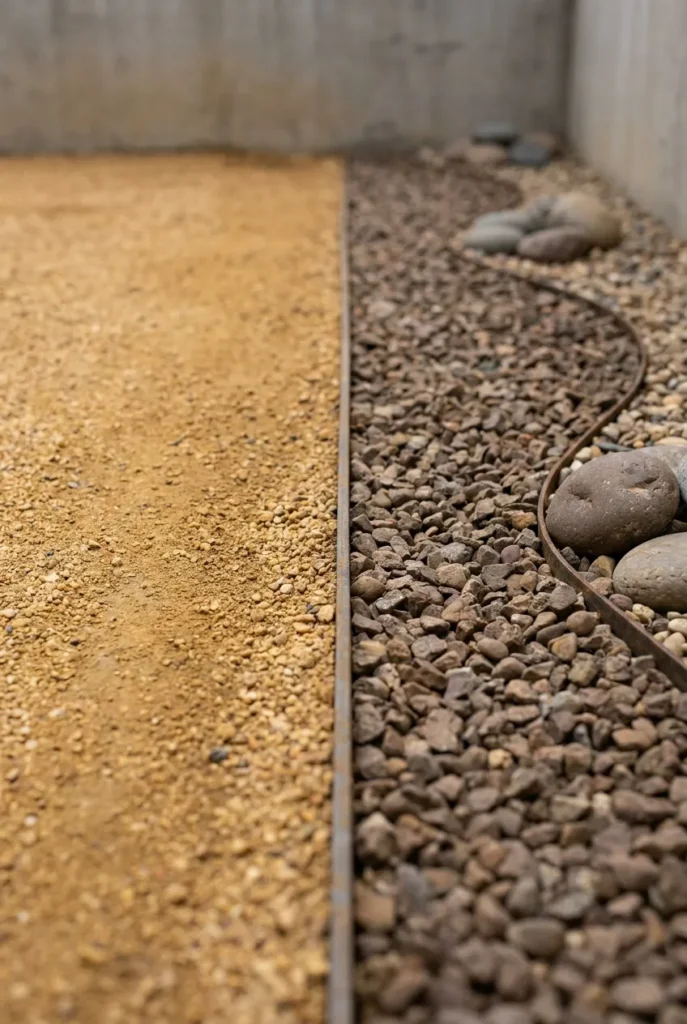
Mix two tones if you want the yard to read as “designed.” A gold DG base with a darker brown gravel dry creek running through it adds instant depth. Order a little extra; running short mid-project means a second delivery fee and a color that never quite matches.
Landscape fabric under the gravel is optional and a bit debated. It slows weeds early on but can trap organic matter later. We skip it in planting beds and use it only under pure-gravel zones.
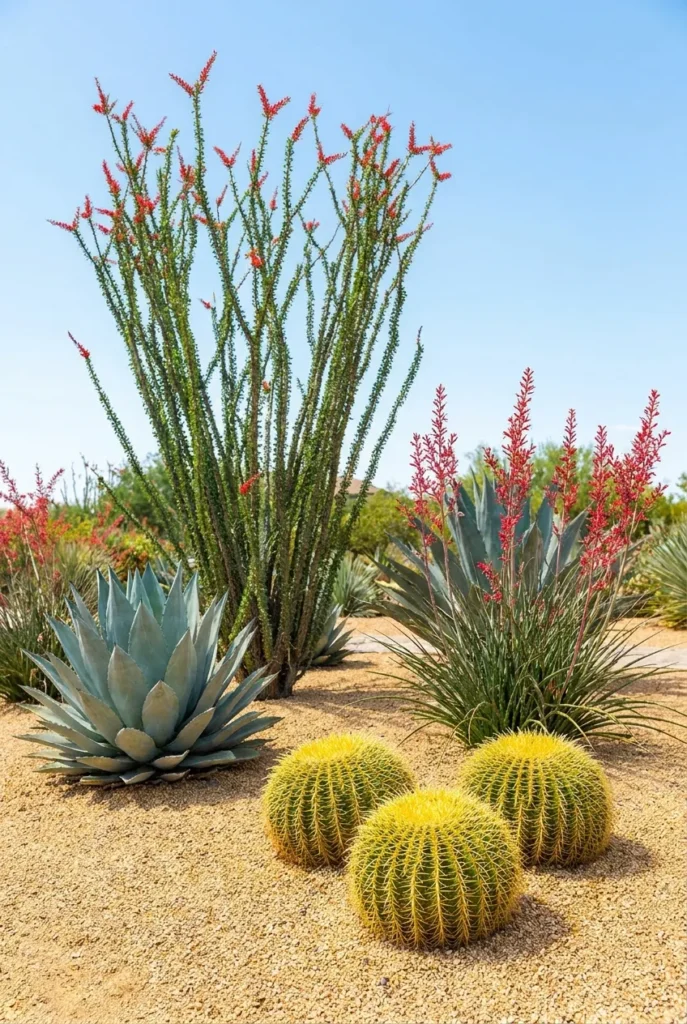
Choose Sculptural Plants That Thrive in Your Zone
The plants do the heavy lifting here. Pick a few strong shapes over many small ones. A desert yard wants sculpture, not clutter.
For Zone 9b yards like Phoenix, these are reliable, striking, and widely sold at Home Depot, Lowe’s, and local nurseries:
Golden barrel cactus for round, glowing structure. Blue agave for bold rosettes (give it room, it spreads). Ocotillo for tall, wild vertical lines. Red yucca for soft color and hummingbirds. Palo Verde as a green-barked shade tree that handles heat with ease.
Group plants in odd numbers and leave real space between them. New desert gardeners almost always plant too close, then fight a crowded look in two years.
Our red yucca bloomed nonstop from spring through fall its first year, while the agave took a full season to settle in.
Want to confirm exactly what survives your winter lows before you buy? Check your address on the USDA Plant Hardiness Zone Map and cross-reference plant tags.
Add Shade Without Blocking the View
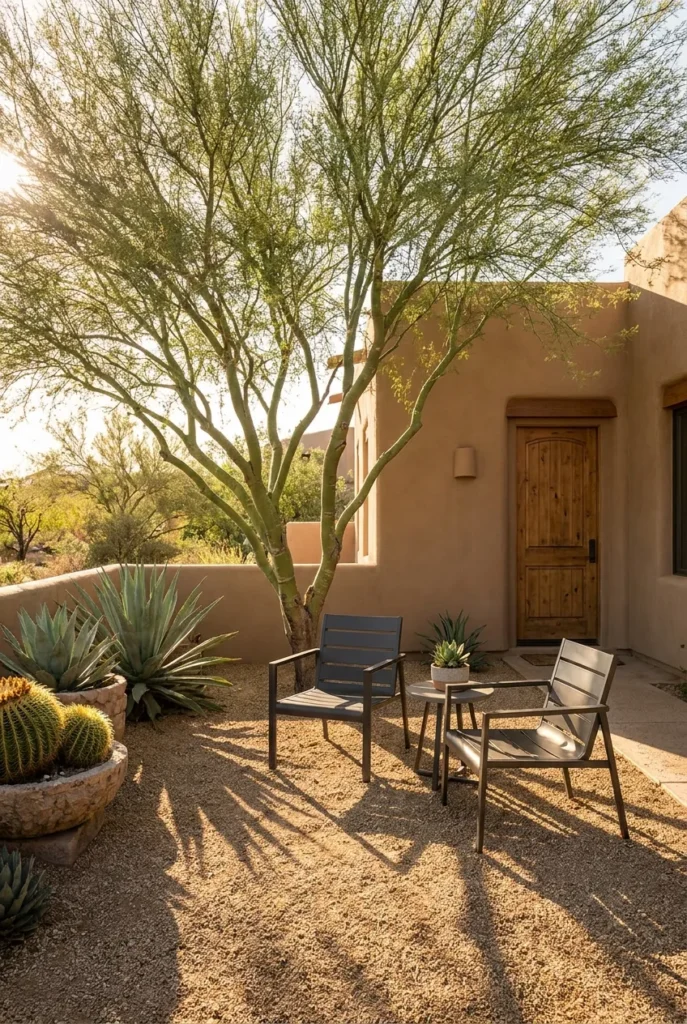
Shade is comfort in the desert, and the right tree changes how the whole yard feels. Palo Verde, mesquite, and desert willow all cast filtered shade while staying true to the look.
Plant a shade tree where it will cool your entry or a west-facing window by late afternoon. That placement does real work when summer temperatures climb past 100°F (38°C). The University of Arizona Cooperative Extension is a solid free resource for matching trees to your exact climate band.
Skip large lawns entirely and let the tree plus a shaded gravel seating nook become the cool zone. A pair of chairs under a Palo Verde reads more inviting than any patch of grass ever did.
Build a Dry Creek Bed for Instant Movement
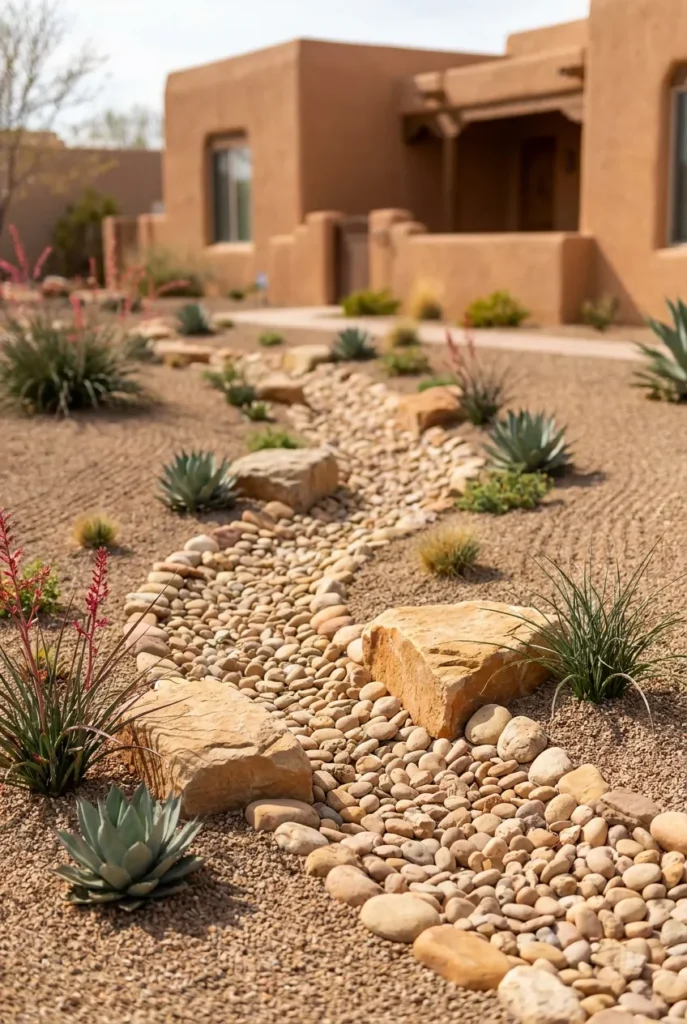
A dry creek bed is the cheapest way to make a flat desert yard look intentional. It mimics a natural wash, guides rainwater away from your foundation, and adds a river of texture through all that gravel.
Dig a shallow, winding trench. Line it with a base of small gravel, then set larger rounded river rock and a few bigger stones along the edges. Curves look natural; straight lines look like a ditch.
Tuck a couple of low plants along the banks so it feels alive. This one project, done in a weekend, is what most people notice first.
Use Boulders and Rock as Design Anchors
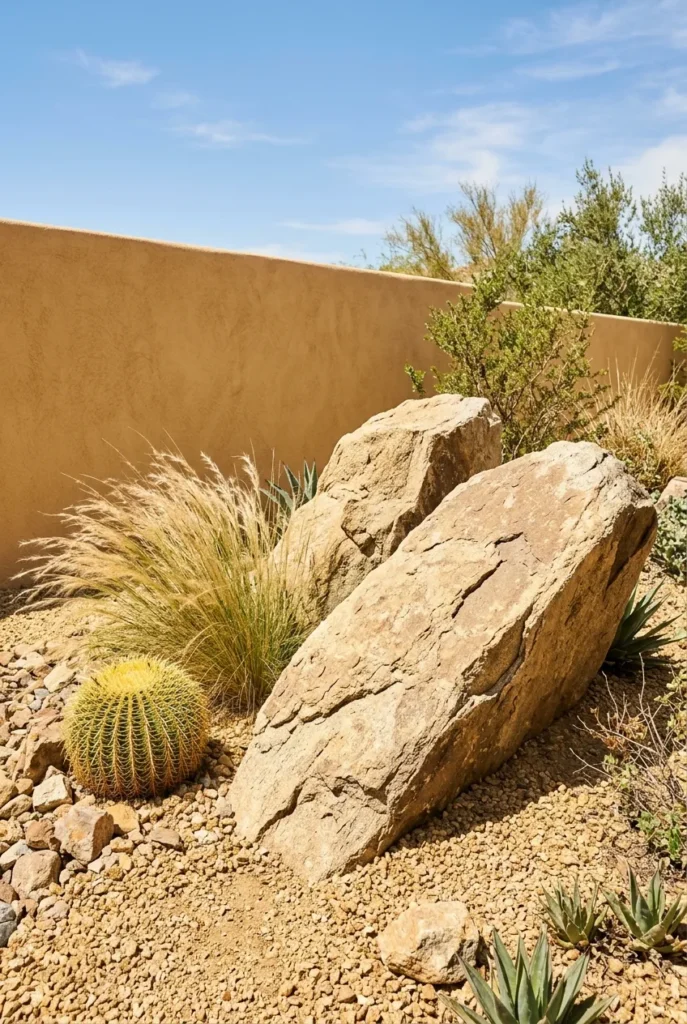
Boulders are the desert’s version of furniture. One large, well-placed rock grounds a whole bed and gives your plants something to play against.
Buy fewer, bigger stones rather than a pile of small ones. Bury the bottom third of each boulder so it looks like it grew there, not like it got dropped off a truck. Angle the flattest face toward the street.
Rounded river rock, crushed gravel, and a boulder or two together give you the layered look designers charge a fortune for. If you like the hardscape angle, our gravel patio ideas show how the same materials build a low-cost sitting area out back.
Layer in Warm Desert Color
Desert does not mean drab. The classic palette runs silver-blue, sage green, and warm gold, and you can push pops of red, coral, and purple through it without breaking the water budget.
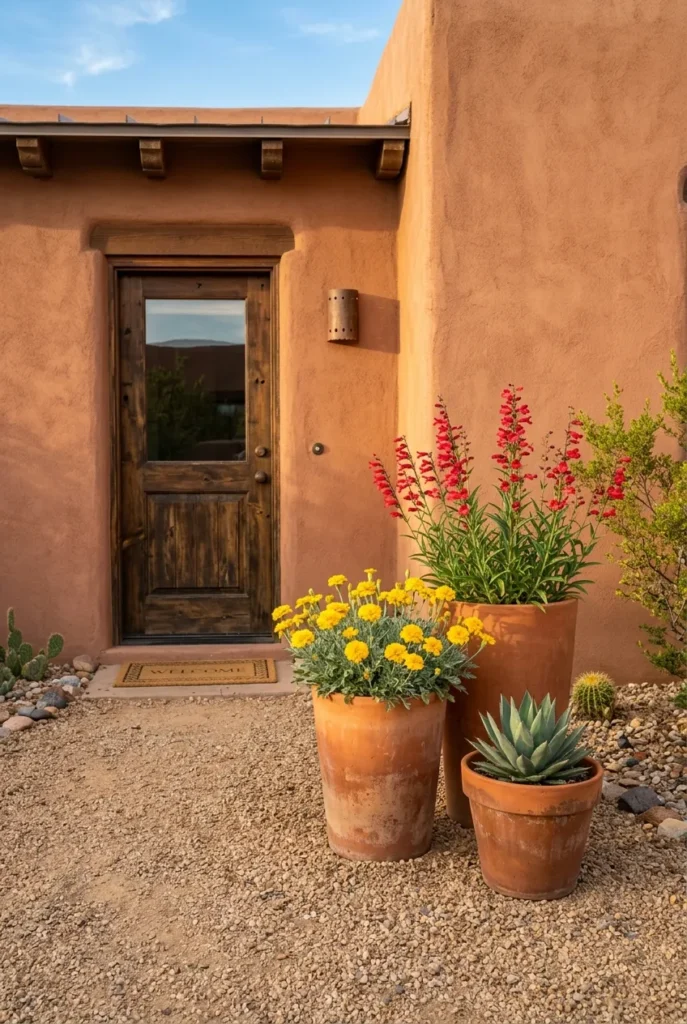
Red yucca, desert marigold, penstemon, and lantana all bring color while sipping water. Group one color in drifts rather than dotting single plants around; a mass of coral penstemon reads far richer than ten scattered singles.
Terracotta pots add color even before anything blooms. Cluster three clay pots of different heights near the door for a warm, lived-in welcome. Clay holds soil temperature better than metal, which bakes in the sun.
Consider Artificial Turf for One Small Green Patch
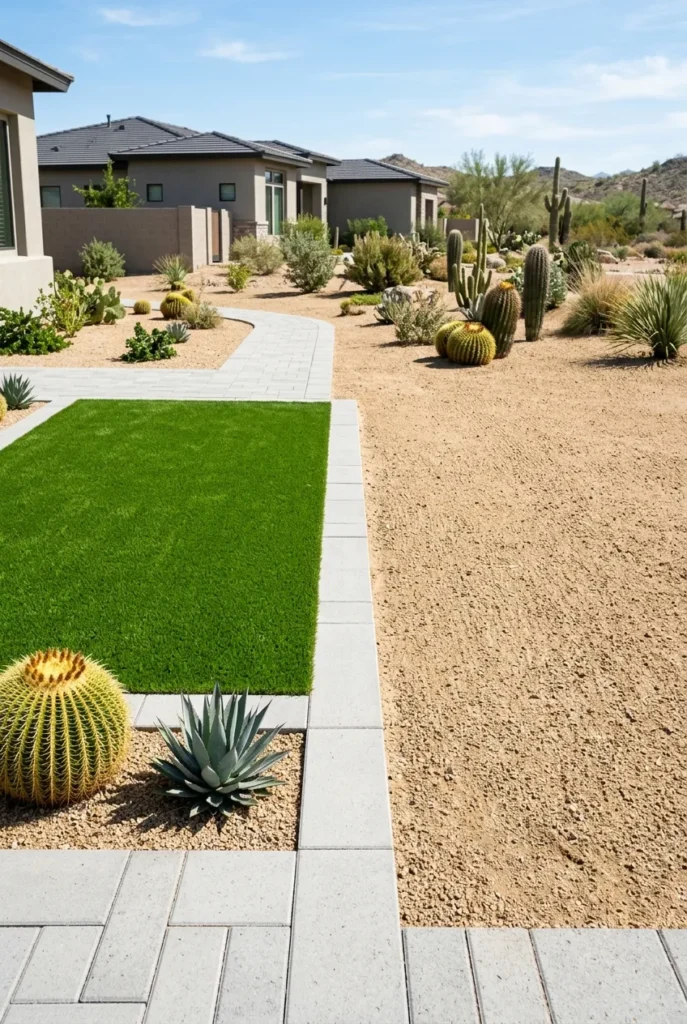
If you miss a touch of green, one tidy patch of artificial turf can sit inside all that gravel without the water bill. It works well as a small entry runner, a pet spot, or a soft square by the door.
Keep it small and framed with gravel or pavers so it reads as a design choice, not a fake lawn. A modest green rectangle against warm DG looks crisp; a full turf yard in the desert can look flat and out of place.
Good turf drains, resists fading, and lasts years. Skip the cheapest rolls, which flatten and shine in the Arizona sun.
Light It for a Warm Evening Glow
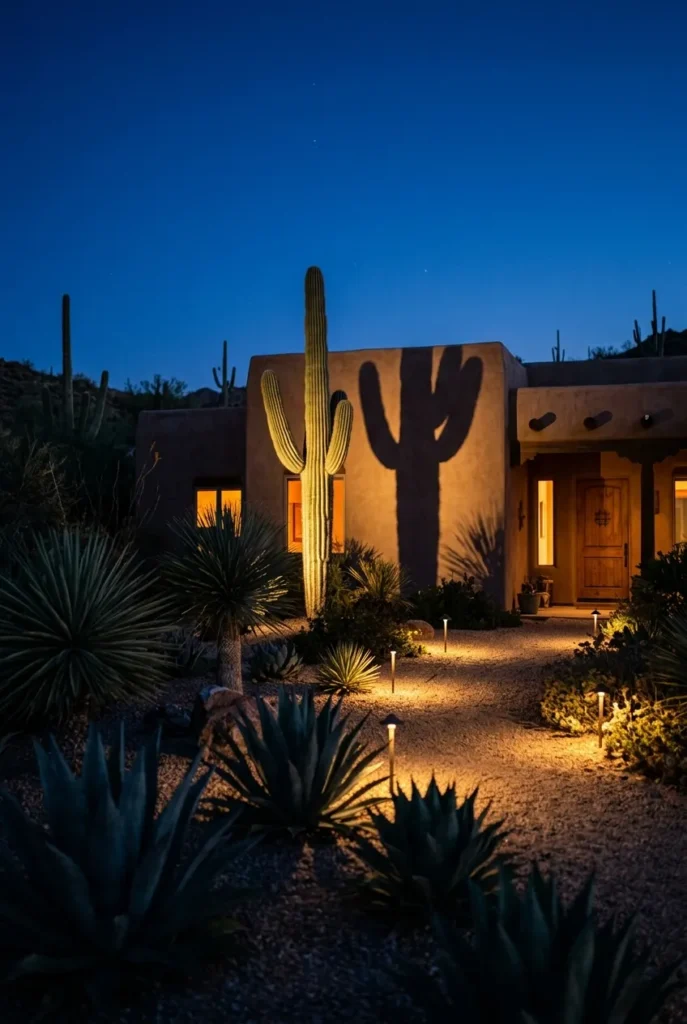
Good lighting turns a nice daytime yard into a magazine cover at dusk. It also adds safety along the path and highlights your best plants after dark.
Solar path lights are the easy entry point and need no wiring. For real drama, uplight a saguaro or a Palo Verde so it throws a sculptural shadow on the wall. Warm white bulbs (around 2700K) feel cozy; cool blue-white feels like a parking lot.
Keep it restrained. A few well-aimed lights beat a runway of them.
Pull It Together on a Budget
You can phase this. Start with the lawn removal and gravel base, add structure plants next, then finish with boulders, color, and lighting over a few weekends.
Rough tiers to plan around (confirm current local pricing before you buy): decomposed granite and gravel usually land in the affordable base-material range per project, a mature golden barrel cactus or agave runs in the mid tier, and solar path light sets stay budget-friendly.
For more low-cost curb-appeal moves that pair with this desert look, our budget front yard landscaping ideas give you a wider mix to borrow from.
Honestly, the yards that look most expensive are usually the simplest: lots of clean gravel, a few bold plants, and restraint everywhere else.
Frequently Asked Questions
What is another name for desert front yard landscaping?
It is often called xeriscaping. The prefix “xeri” means dry, and it describes low-water landscaping built around drought-tolerant plants and gravel instead of thirsty lawns.
What are the main features of a desert front yard?
Gravel or decomposed granite groundcover, sculptural cacti and succulents, a shade tree or two, boulders, a dry creek bed, and warm accent color from low-water plants like red yucca and penstemon.
How do I start planning a desert front yard?
Sketch the space first, decide where gravel goes versus planting beds, then place two or three focal plants suited to your USDA zone. Add boulders, color, and lighting last so the bones come first.
What plants work best for a Phoenix or Tucson front yard?
Golden barrel cactus, blue agave, ocotillo, red yucca, and Palo Verde all thrive in the low desert (roughly Zones 9 to 10). Always check the plant tag against your local winter lows.
Is desert landscaping actually low maintenance?
Yes, once established. You will do occasional weeding, refresh gravel every few years, and prune lightly, but there is no mowing and far less watering than a lawn.
How do I make a desert front yard look designed, not dusty?
Use lots of clean gravel, plant in odd-numbered groups with real space between them, bury your boulders partway, and keep the plant list short. Restraint is what reads as “designed.”
Your Turn to Dig In
A desert front yard rewards a little planning and almost no ongoing fuss. Pick one layer to start, gravel, plants, or a dry creek, and build from there over a few weekends. Save this guide, pin your favorite image above, and come back when you are ready for the next phase. Which idea are you trying first?