Brick Raised Garden Bed Ideas (Permanent & Pretty)
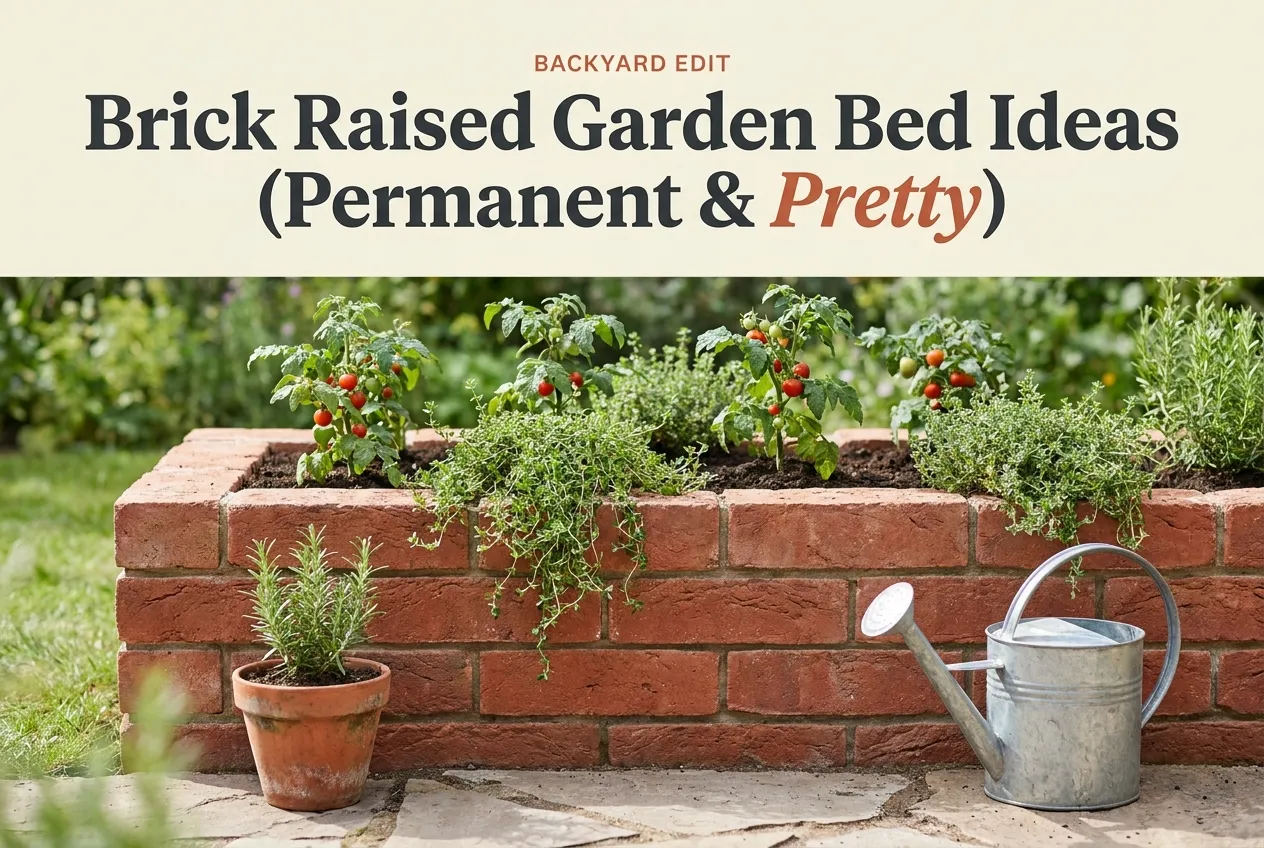
A brick raised garden bed is the only bed style we’ve never had to rebuild. Wood rots in 8 to 12 years. Metal dents and shows rust at the seams. Brick just sits there looking better every season, which is exactly why front yard brick beds are taking over Pinterest right now. This guide covers real costs, the dry stacked vs mortared decision nobody explains, recycled brick sourcing, and layout ideas for fences, slopes, and curves.
I tried the bargain $0.98 pavers from the big box once and three cracked the first frost, so everything below leans hard on materials that survive. And if you’re already wondering what goes inside, our full guide on what to fill a raised garden bed with covers the cheap layered method.
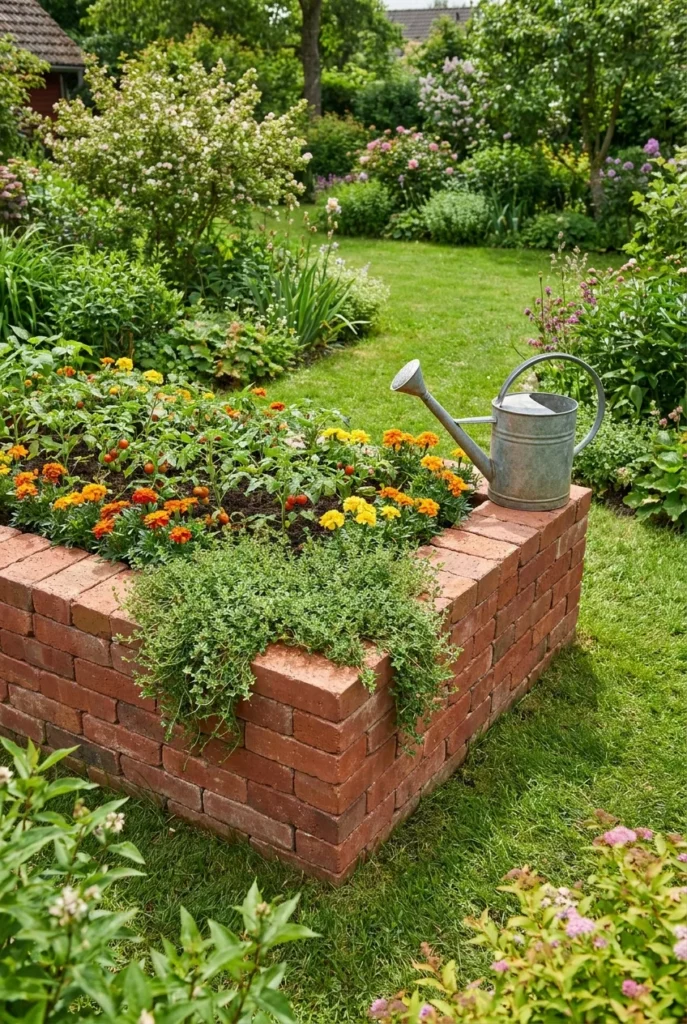
Why Brick Beats Wood and Metal (and Where It Doesn’t)
Brick wins on one number: lifespan. A well-built brick raised garden bed lasts 50 to 100 years. Compare that to a Greenes Fence cedar kit ($60 to $140 at Home Depot) that starts going soft at the soil line around year 8, or a Vego Garden 17 inch metal bed ($169 to $299) that holds up 20 years but dents the first time a wheelbarrow clips it.
Then there’s thermal mass, the underrated perk. Brick soaks up midday heat and releases it slowly into the soil overnight, which buys you roughly two extra weeks at each end of the growing season in Zones 5 to 7. Your March lettuce germinates faster. Your October peppers ripen instead of stalling.
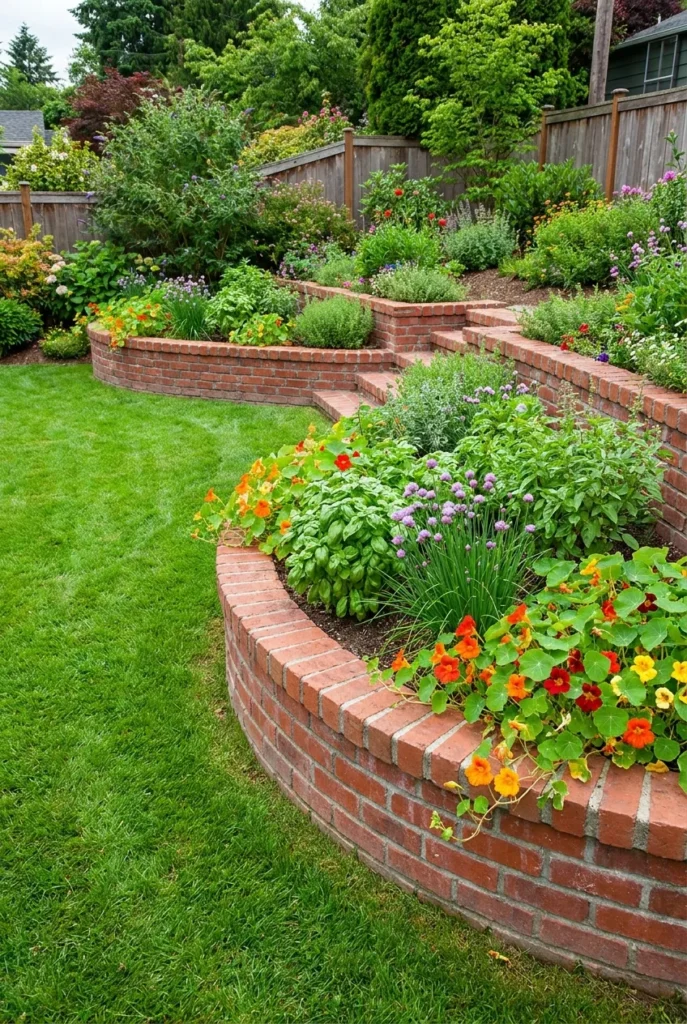
Looks matter too. A red brick bed reads as intentional and built-in, like it came with the house. That’s the whole “permanent and pretty” promise, and it’s why brick raised garden beds keep showing up in front yards, where a sagging wood box would drag down curb appeal.
The Honest Downsides
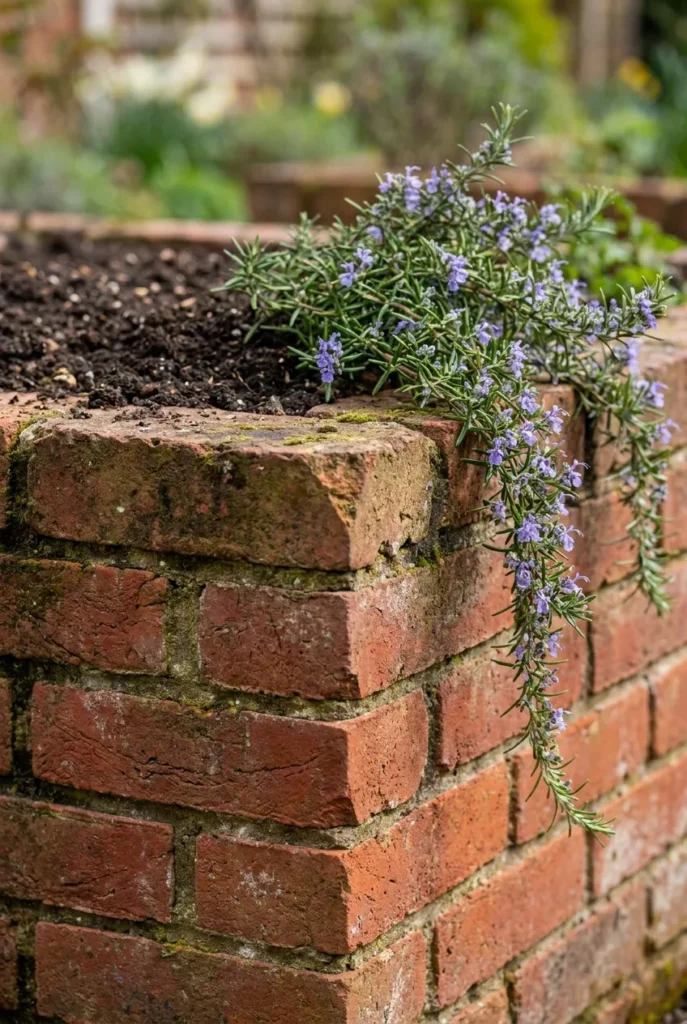
Brick is heavy, slow, and committed. A 4×8 bed at one foot tall needs around 180 bricks, which is close to 800 lbs of material you’ll move twice. Once a brick raised garden bed is built, it’s not sliding three feet left next spring. Budget more upfront than wood, expect a full weekend for a first build, and know that the south-facing edge can run hot enough in July to stress shallow-rooted herbs planted right against it.
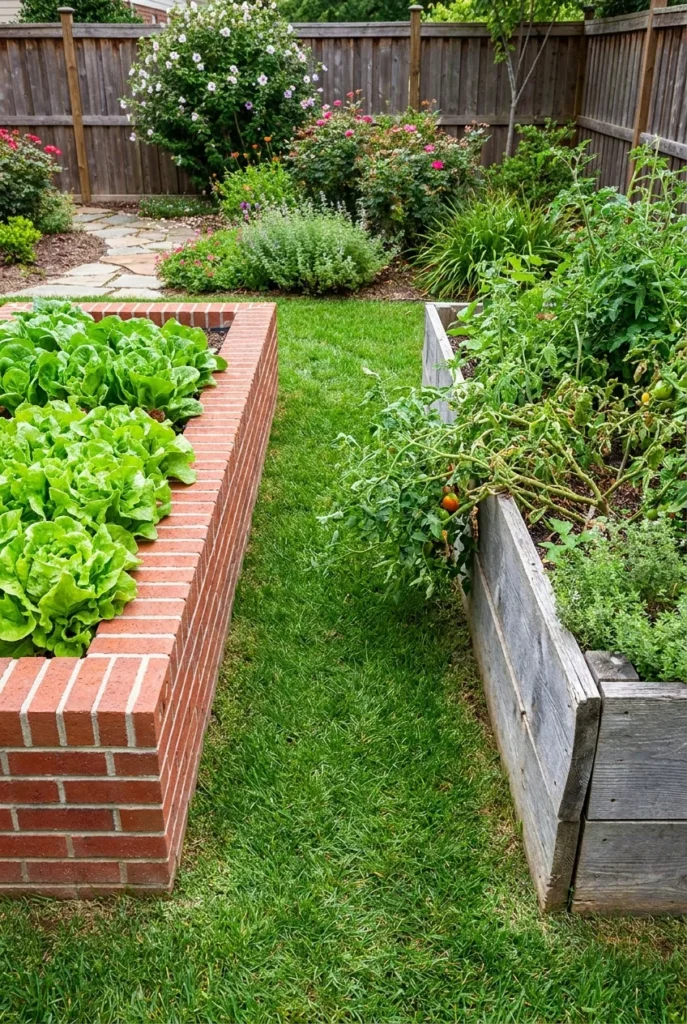
Dry Stacked vs Mortared Brick: The Decision Nobody Explains
Here’s the opinion that gets us emails: skip the mortar. Almost everyone assumes a permanent brick raised garden bed needs mortar, and almost everyone in Zones 3 to 6 regrets it. Mortared walls are rigid, and rigid loses to freeze-thaw. Unless you pour a footing below your frost line (30 to 60 inches deep in cold regions, which means renting a trencher and buying concrete), winter heave will crack your joints within a few seasons. A dry stacked brick raised bed flexes instead. A brick shifts, you lift it, you reset it, done in 20 minutes with zero demolition.
Check your band on the USDA Plant Hardiness Zone Map before you decide, because the colder your zone, the stronger the case for dry stacking. Warm-zone gardeners in 8 to 10 can mortar with far less risk.
Mortar still earns its keep in three cases: walls taller than 18 inches (three or more courses get wobbly without it), beds doubling as seat walls, and serious slopes where soil pressure pushes sideways. Below that height, stacking wins on cost, repairability, and the fact that a renter can take the whole bed apart and bring it to the next house.
Build Style Cheat Sheet (screenshot this)
| Build style | Upfront cost (4×8 bed) | Lifespan | Skill level | Best for |
|---|---|---|---|---|
| Dry stacked | ~$240 | 30 to 50 yrs (re-stack as needed) | Beginner | Beds up to 18 in tall, cold zones, renters |
| Mortared | ~$340 plus footing | 50 to 100 yrs | Intermediate | Beds 18 in and up, seat walls, steep slopes |
| Brick and wood hybrid | ~$160 | 15 to 25 yrs | Beginner | Budget builds, one-weekend projects |
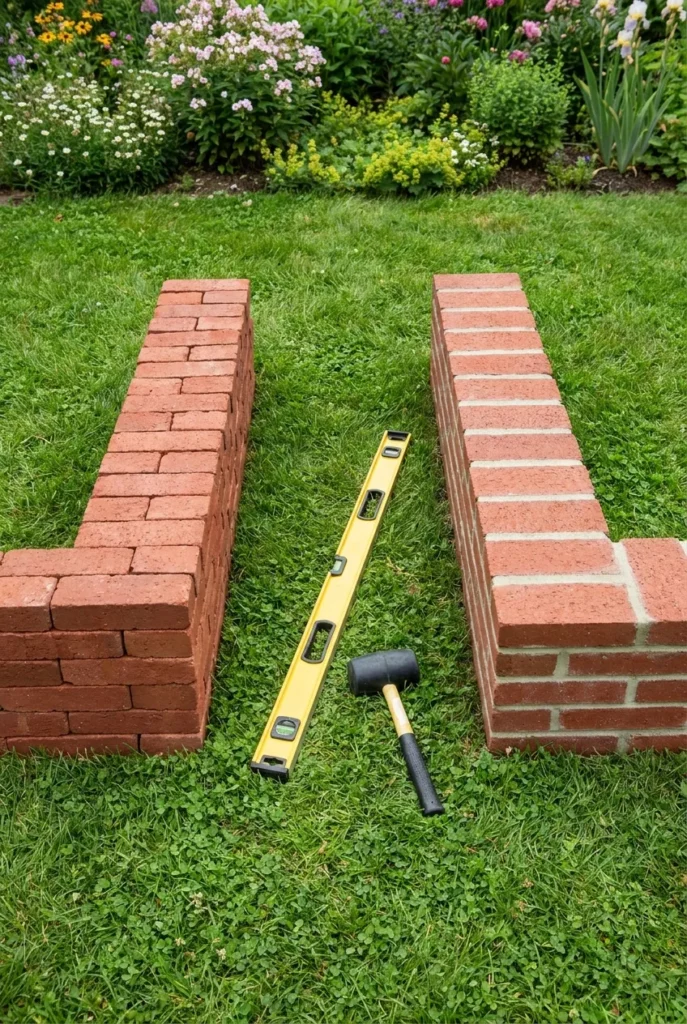
Recycled Brick vs New Brick (Red, White, and Where to Find Them)
New common red brick runs about $0.80 each at Home Depot, and closer to $0.65 in bulk from a local masonry yard. For 180 bricks, shopping the masonry yard saves you nearly $30 and the bricks usually match better.
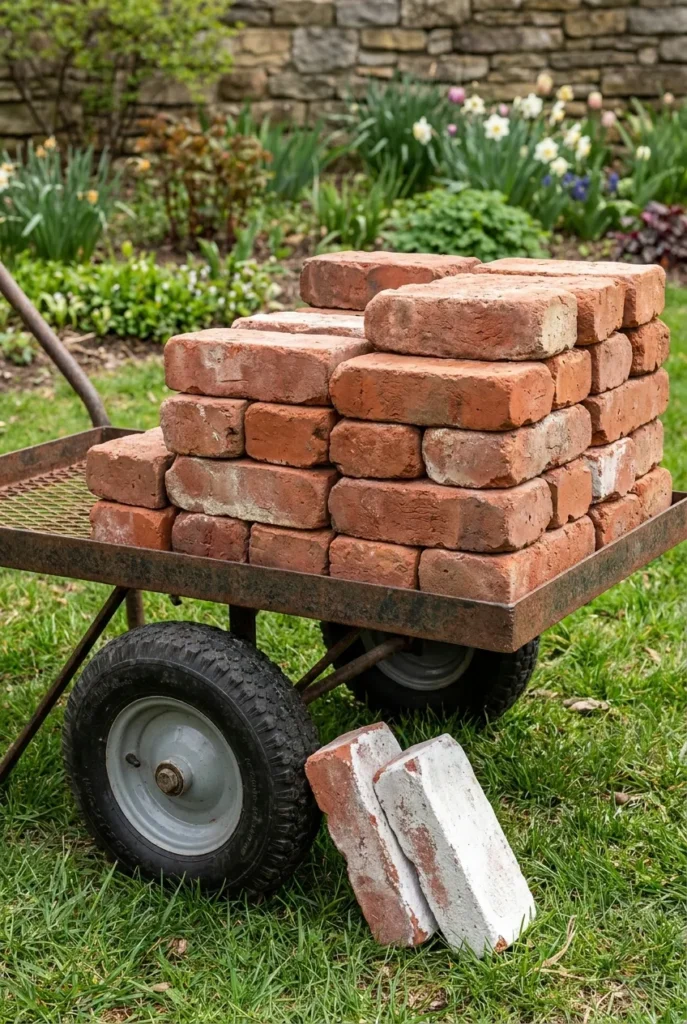
Recycled brick is the budget play and the character play at once. Facebook Marketplace listings go from free to $0.50 a brick, and demolition yards sell reclaimed pallets with that softened, sun-faded patina you can’t buy new. Two inspection rules before you load the truck.
First, check for spalling: flaking or crumbling faces mean the brick already lost its battle with frost and will keep crumbling in your garden. Second, skip painted brick from buildings older than 1978, since old paint often means lead, and lead has no business near a vegetable bed.
Want the white brick raised garden bed look filling Pinterest boards? Lime wash over new red brick gives you that chalky European finish for about $25 a gallon, and it weathers prettier than paint.
How to Build a DIY Brick Raised Garden Bed Without Mortar
A 4×8 bed needs about 36 bricks per course, and five courses gets you a foot of growing depth. Plan on 180 bricks and one focused weekend. A DIY brick raised garden bed without mortar is true beginner territory, since every mistake lifts right back out.
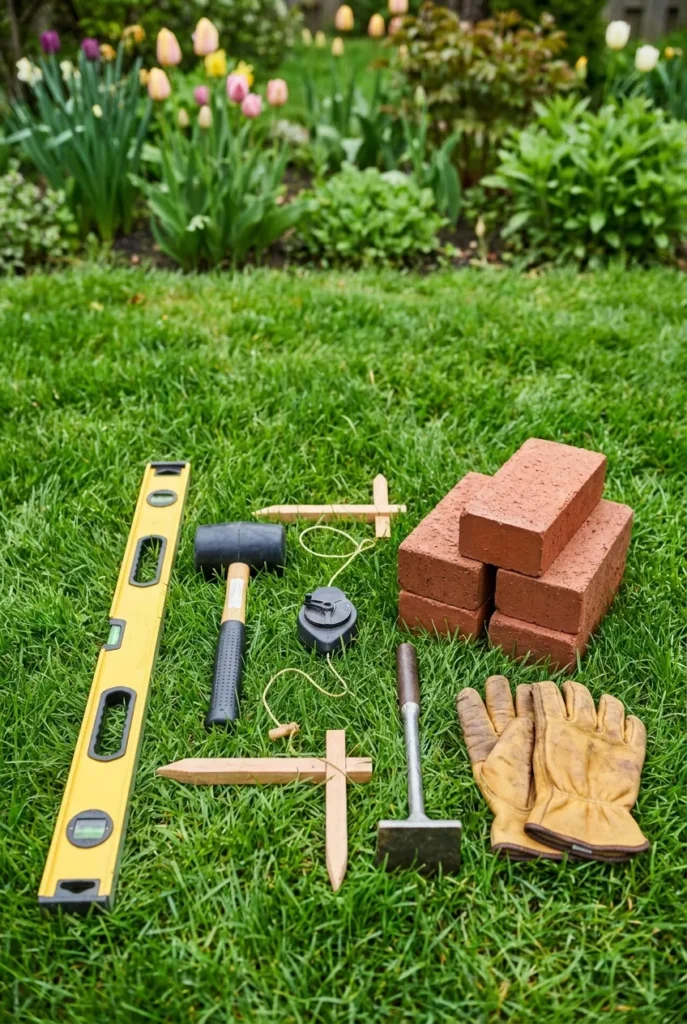
Tools You Actually Need
- 4 ft level (the non-negotiable one)
- Rubber mallet
- Flat shovel and hand tamper
- Mason’s line and four stakes
- Heavy gloves, because brick eats fingertips
The build, start to finish:
- Stake out your footprint with mason’s line and check the corners are square by measuring both diagonals.
- Dig a trench 6 inches deep and about 8 inches wide along the line.
- Fill the trench with 4 inches of paver base and tamp it hard. Skipping this step is why brick borders go wavy by year two.
- Add 1 inch of leveling sand and screed it flat with a board.
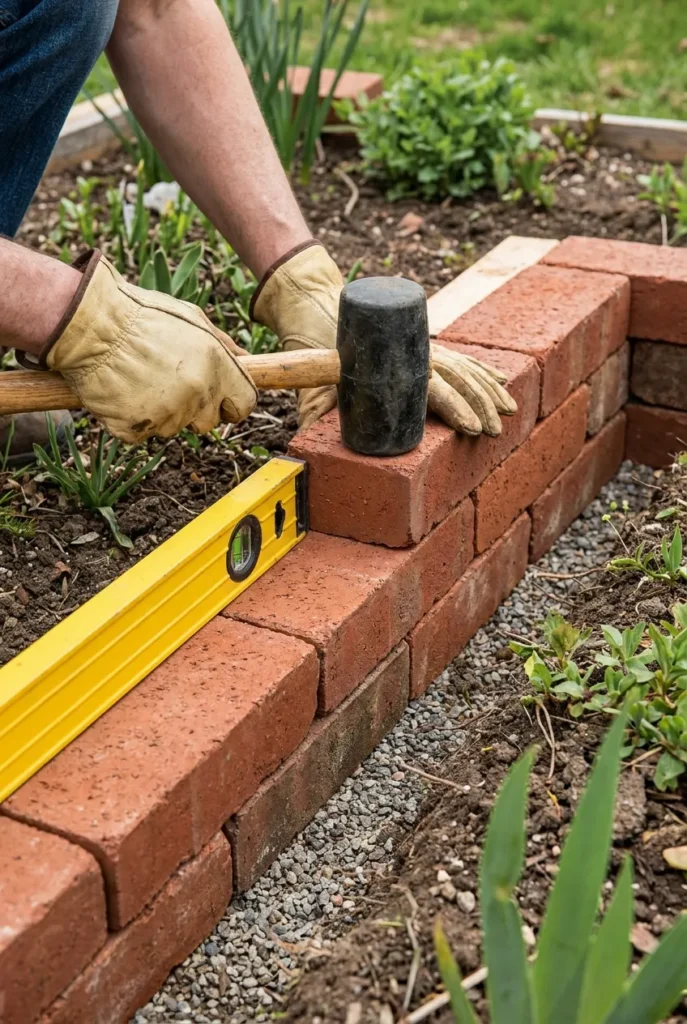
- Lay the first course and level every single brick with the mallet. Spend half your total build time right here, since every course above copies course one.
- Stack the next courses in a running bond, each brick centered over the joint below it.
- Step back after every course and sight down the wall for bulges.
- Line the inside walls with breathable landscape fabric ($12 a roll) if you used reclaimed brick, then fill, water, and plant.
Get course one right and the rest of the build feels almost meditative. Brick, tap, check, repeat.
Brick Raised Garden Bed Ideas for Every Spot in Your Yard
Placement changes everything about the design. These four layouts cover the spots people actually search for, and our raised garden bed layout ideas for small backyards post pairs well with all of them if your whole yard is under 400 sq ft.
Front Yard Brick Beds
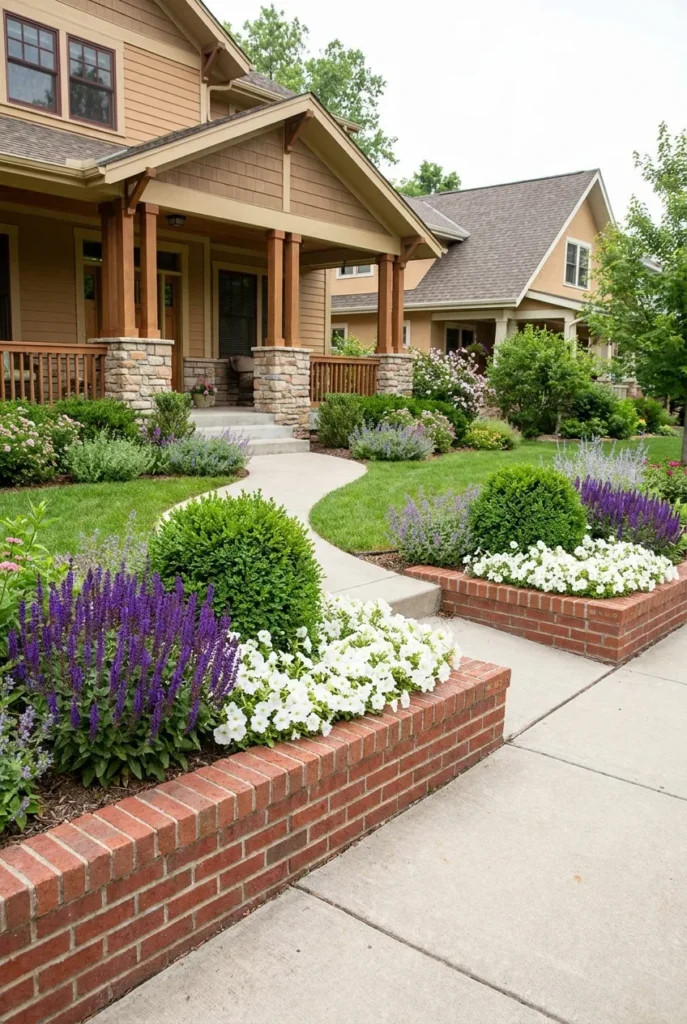
Match your house brick if you can source it, or contrast deliberately with a lime washed white bed against red house brick. Keep front yard beds low, two or three courses, and plant for four seasons: spring tulips, summer salvia, fall mums, and a dwarf boxwood anchor so January doesn’t look abandoned. A knee-high brick raised garden bed flanking the walkway adds more curb appeal per dollar than almost any other weekend project.
Along the Fence
A 2 ft wide single run along the fence line turns dead mowing-strip space into 30+ sq ft of growing room. Keep it 6 inches off the fence itself so wood pickets can dry after rain. This is the easiest first brick raised garden bed because the fence hides your learning-curve wall.
On a Slope
Terrace it. Build two or three short stepped beds across the slope rather than one long bed fighting it, dropping one course of height for every 8 inches of fall. Each tier holds level soil, catches water instead of shedding it, and dry stacked brick handles the minor ground movement slopes always deliver.
Curved and Circular Beds
Brick does curves better than any lumber ever will. Lay bricks in header orientation (short side facing out) and a gentle curve needs no cuts at all. A full circle bed around 5 ft across makes a stunning herb wheel, and a keyhole layout gives you a composting basket in the center with planting space wrapped around it.
How Deep to Build and What to Fill It With
Depth follows the crop. Lettuce and greens are happy at 6 inches. Tomatoes and peppers want 12. Root crops want more: the 18-inch-deep bed I built for carrots gave me the straightest harvest I have ever pulled. For a mixed brick raised garden bed, 12 inches (five courses) is the sweet spot between yield and brick budget.
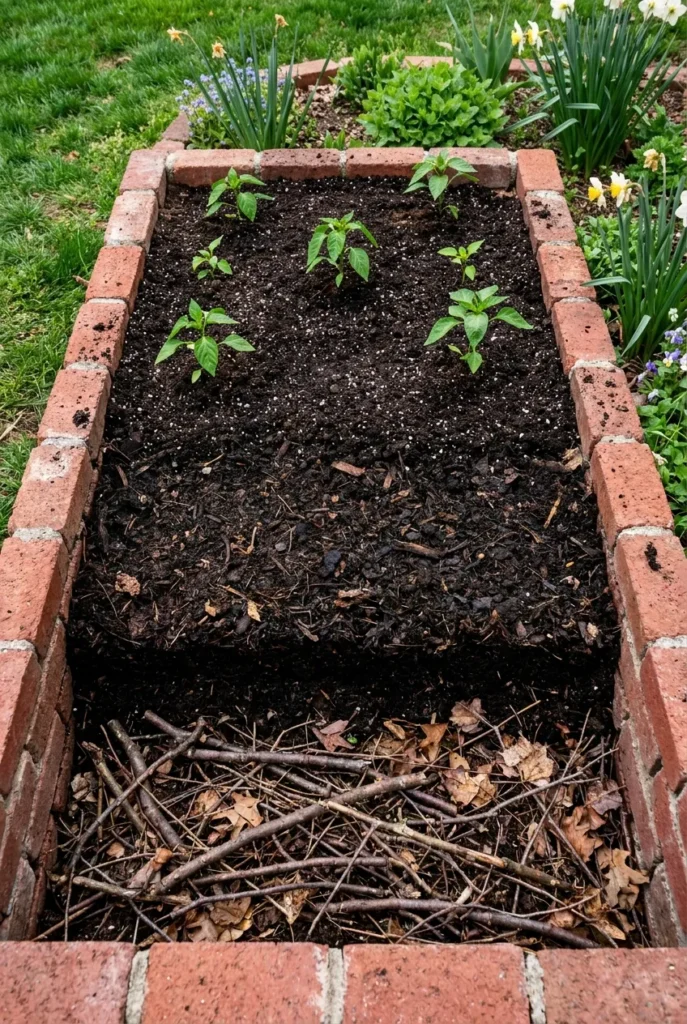
Don’t fill the whole thing with bagged soil. We tried the lasagna fill method in 2024 and watched the soil drop 6 inches the first winter, then topped it with $14 of compost in March and the bed was fine, so settling is a feature you plan for, never a failure. Bottom third gets branches, sticks, and fall leaves. Middle gets cheap compost.
Only the top 6 to 8 inches needs the good stuff: Miracle-Gro Performance Organics Raised Bed Mix runs $18 per 1.5 cu ft bag, and Coast of Maine Bumper Crop ($16 per cu ft) is the splurge layer your tomatoes will notice. Penn State Extension’s guidance on raised bed soil media backs the same ratio logic: structure below, fertility on top. Finish with a $4 bag of Scotts Nature Scapes mulch to slow evaporation against all that warm brick.
What a Brick Raised Garden Bed Really Costs
Here’s the honest receipt for a 4×8 dry stacked brick raised garden bed, one foot tall, all 2026 prices:
- 180 new common bricks at $0.80: $144 (or $50 to $90 reclaimed)
- Paver base and leveling sand: $37
- Landscape fabric: $12
- Layered fill (branches free, compost plus two bags of raised bed mix): about $70
- Total: roughly $263 new, or under $200 with reclaimed brick
Mortaring the same bed adds $75 to $100 in mortar and footing concrete, plus the trench labor. For context, that $263 sits between a cedar kit you’ll replace twice and a Vego metal bed, except the brick version outlives both and never asks for a refresh.
Brick Raised Garden Bed FAQ
Are bricks good for raised garden beds?
Yes, and they’re arguably the best long-term material. Brick outlasts wood by decades, holds heat that extends your growing season, and standard fired clay brick is inert, so it won’t leach anything into vegetable soil the way old treated lumber can.
How long do brick raised beds last?
A dry stacked brick raised garden bed lasts 30 to 50 years with the occasional 20-minute re-stack. A properly mortared bed on a real footing lasts 50 to 100 years. The bricks themselves often outlive the house.
Do you need to line a brick raised bed?
Lining is optional with new brick. Use breathable landscape fabric on the inside walls if you built with reclaimed brick of unknown history, or if you want to slow soil from sifting through dry stacked joints. Never line with solid plastic, since trapped water wrecks roots and accelerates frost damage in the brick.
Can you lay bricks directly on soil in the ground?
For a single decorative course, yes. For anything two courses or taller, no. Bare soil settles unevenly, and your wall will lean by the second season. Four inches of compacted paver base plus an inch of leveling sand keeps the bed straight for decades.
What’s the best soil mix for a brick raised bed?
Layer it: coarse organic matter in the bottom third, compost in the middle, and a quality raised bed mix in the top 6 to 8 inches. Brick’s thermal mass dries the outer soil edge faster than wood does, so mulch the surface and water the perimeter a little extra in July.
Can I put a brick raised bed on concrete?
Yes. Dry stack it at least 18 inches tall for root depth, skip the trench, and leave small unmortared gaps in the bottom course every few feet so water drains instead of pooling against the slab.
The Bottom Line
A brick raised garden bed costs more on day one and then never charges you again. Dry stack it if you’re in a freeze-thaw zone or might ever move it, mortar it only when you’re building tall or building seating, and put real effort into that first course. Everything pretty about the finished bed traces back to one level row of brick. When you’re ready to plan the rest of the garden around it without blowing the budget, our roundup of cheap raised garden bed ideas under $50 is the natural next read.