How to Hang Outdoor String Lights: A Beginner’s Outdoor Lighting Makeover

Most backyards do not need new furniture. They need one good light line. That is the whole secret behind the outdoor lighting makeover ideas saved by the thousand every night on Pinterest: a single run of warm bulbs overhead turns a flat square of grass into a room with a ceiling. The pretty part is easy. The part nobody photographs is the hardware, the height, and the moment you realize the plug ends up 40 feet from the only outlet you own.
So this is the version with the boring numbers left in. You get the height to hang at, the cable and clips that keep the sag from turning into a droop by August, what a 30-foot run actually costs, how many strands you can safely connect, and what to do if you rent and drilling into the siding is not on the table. Beginner pace, one weekend evening, no electrician required for the basic setup.
What This Makeover Costs Before You Buy Anything
Cost is the first thing people get wrong, usually by underbuying. A 48-foot commercial-grade LED set like the Brightech Ambience Pro carries 15 S14 sockets spaced 3 feet apart, and most plug-in sets in that class sit in the $40 to $80 range depending on length and sale timing. The cable, hooks, and clips are a second purchase people forget entirely, and that is what sends a $50 project to $90.
Three honest tiers, based on what a single patio-sized run takes:
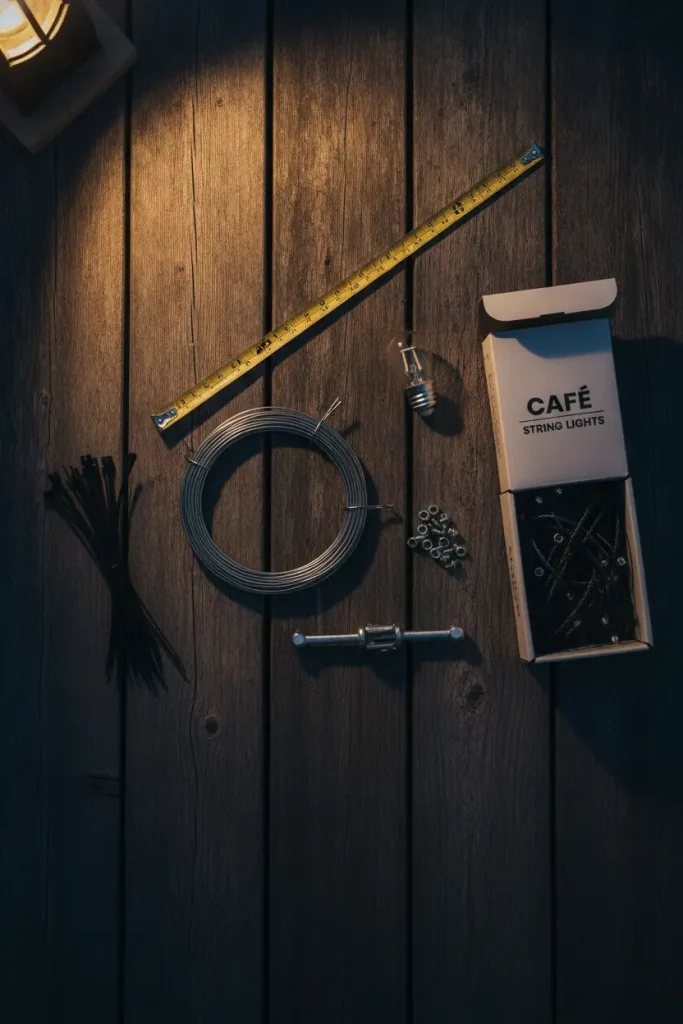
Here is the unpopular part. Solar sets look like the frugal choice and they are the wrong choice for your main overhead run. They dim as the panel discharges, they sulk after three cloudy days, and they cannot be dimmed on demand for a dinner. Keep solar for the edges, the fence line, the path, the pots. Plug-in carries the ceiling.
The Anchor Test: Three Questions Before You Drill Anything
Every bad string light install traces back to a skipped question. Run these three in order and the rest of the job stops being guesswork. Call it the Anchor Test.
Do I own two solid anchor points at least 9 feet up? House eave, garage fascia, pergola beam, mature trunk, 4×4 post. If yes, you are hanging tonight.
Am I allowed to put a screw in them? Vinyl siding, stucco, brick veneer, and any rental wall mean no. Build a post or clamp instead.
Where is my nearest outdoor outlet, and can the cord reach it along a wall rather than across the lawn? That answer decides which corner you start from.
Answer number one with a no and you are not stuck, you are just building your own anchors. A pair of posts set in 5-gallon buckets of concrete gives you two movable corners for well under $100, and the same logic covers hanging string lights in a backyard without trees when the yard offers nothing tall to grab.
What to Buy for a 30-Foot Run
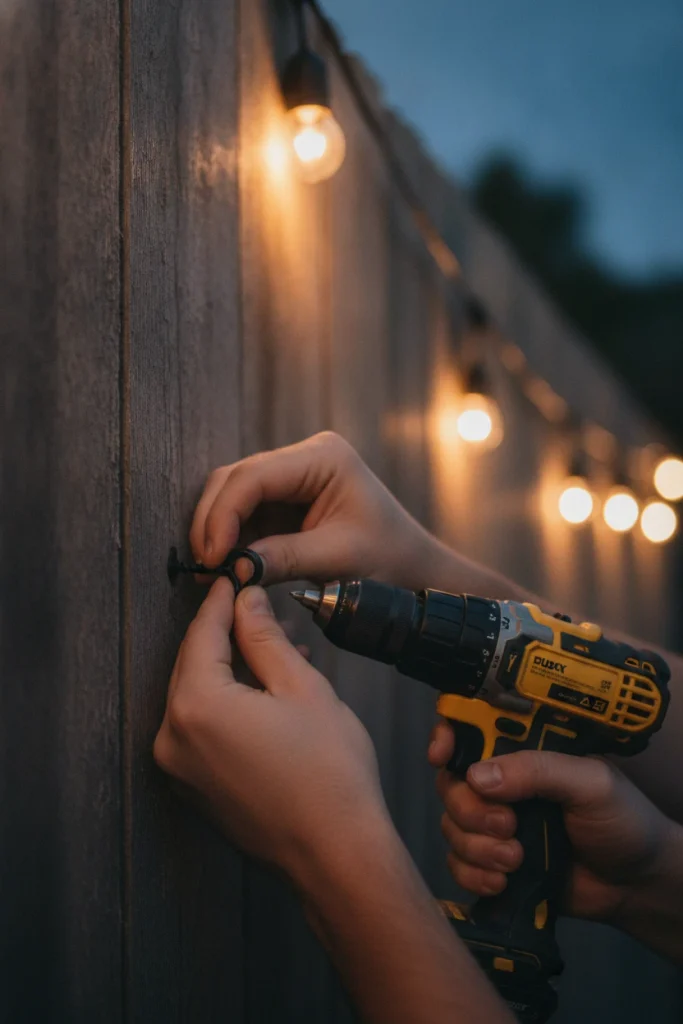
Buy for the span, not for the set. A 30-foot span needs roughly 31 feet of cable, since you lose about 12 inches looping back at the mounting points, and two cable clips per span to lock those loops.
The 30-foot shopping list
Black zip ties instead of white. Small thing, big difference: white ties read as a dotted line across the sky in every evening photo you take, and this is a project you will photograph.
Hang the Guide Wire First, Lights Second
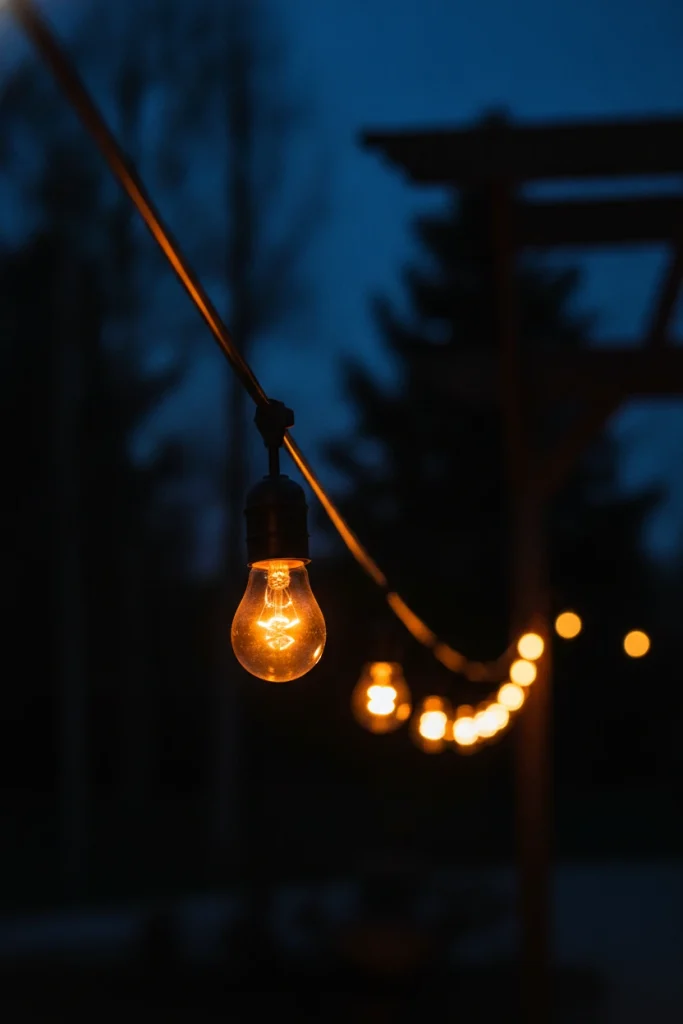
This is the step beginners skip, and it is the one that decides whether the run still looks good in September. String light cord is not structural. Hung alone across an open span it stretches, sags unevenly, and pulls sockets loose in the first storm. The cable carries the weight, the lights just ride along.
Work in this order:
- Set both screw eyes perpendicular to the direction the cable will run, so tension pulls across the eye rather than straight out of the wood.
- Loop the cable through the first eye, fold back about 6 inches, and lock it with two cable clips.
- Run the cable to the far eye, thread the turnbuckle, and take up the slack until the wire is taut with a slight curve left in it.
- Attach the light strand with a zip tie on each side of every socket, not through the socket loop alone.
- Snip the tie tails flush, then plug in and check the line at dusk before you commit the last few ties.
| Lights hung on a guide wire | Lights hung on the cord alone |
|---|---|
| Sag stays where you set it all season | Sag deepens week by week in heat |
| Wind load rides on steel | Wind load pulls on sockets and plugs |
| One strand can be swapped without redoing the span | A single failure means taking the whole run down |
| Adds roughly $25 to $45 to the project | Free now, replaced sooner |
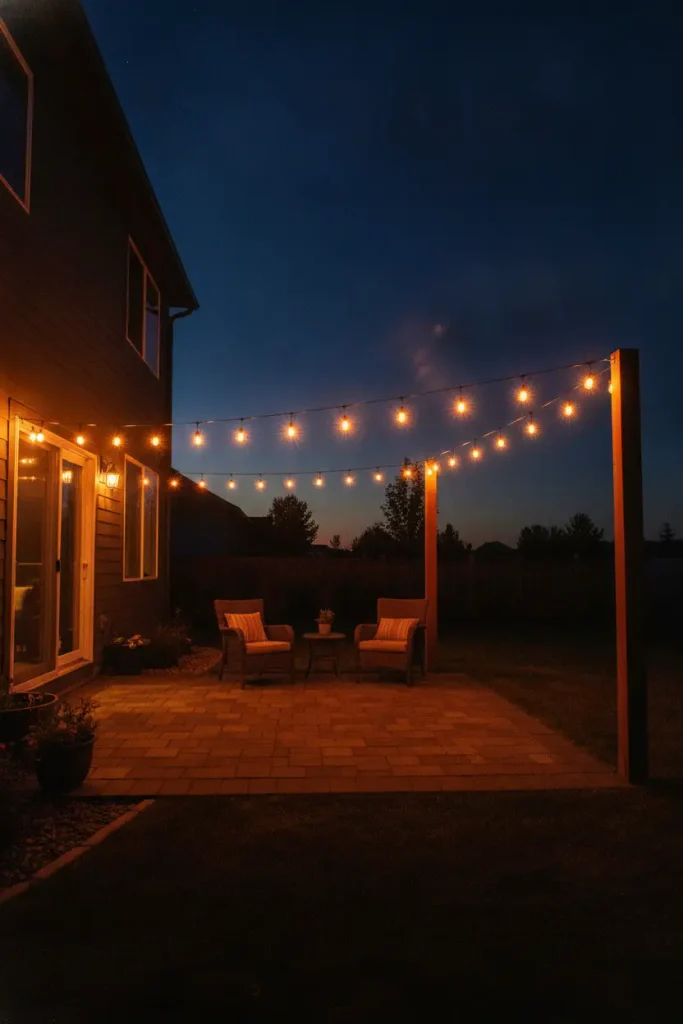
Height target: at least 9 feet at the anchor points, which leaves room for the drape to settle without anyone walking into a bulb. Over a dining table you can come down closer, since nobody stands there.
Power, Plugs, and How Many Strands You Can Connect
Two numbers float around online and they contradict each other, which is why people either overload an outlet or stop one strand short of the look they wanted.
Both numbers are correct. They describe different bulbs. The Department of Energy notes in its guidance on why LED holiday lights use less energy that up to 25 strings of LEDs can be connected end to end without overloading a wall socket, because LEDs use at least 75 percent less energy and release almost no heat. Incandescent sets are a different animal entirely, and the old three-set ceiling still applies to them.
Your set has its own limit printed on the tag near the plug. That number wins over anything you read anywhere, including here.
⚠️ Watch Out
Use outdoor-rated, UL-listed lights and cords on a GFCI outlet. Anything beyond plugging into an existing outlet is a job for a licensed electrician.
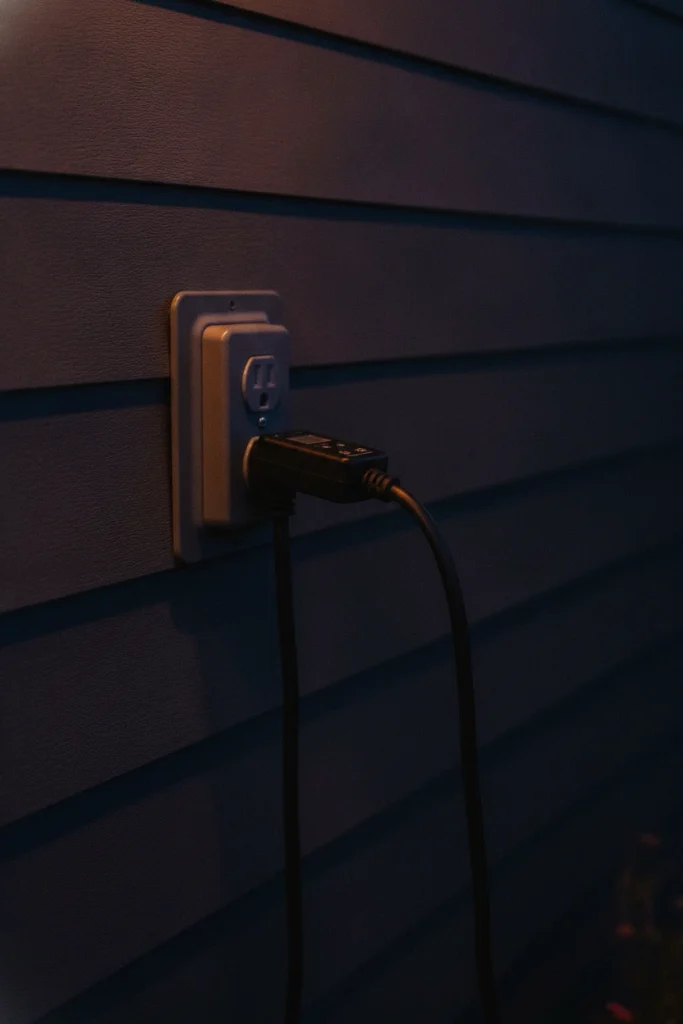
Run the cord along the wall or the fence base, never across a walkway or under a rug, and put the whole run on a timer or smart plug so the lights come on at dusk without anyone thinking about it. That single $15 to $30 upgrade is what makes the backyard feel staffed.
Outdoor Lighting Makeover Ideas That Build on the First Run
One run is a start. These are the moves that make a yard look designed rather than decorated, and each one stacks onto the cable you just hung.
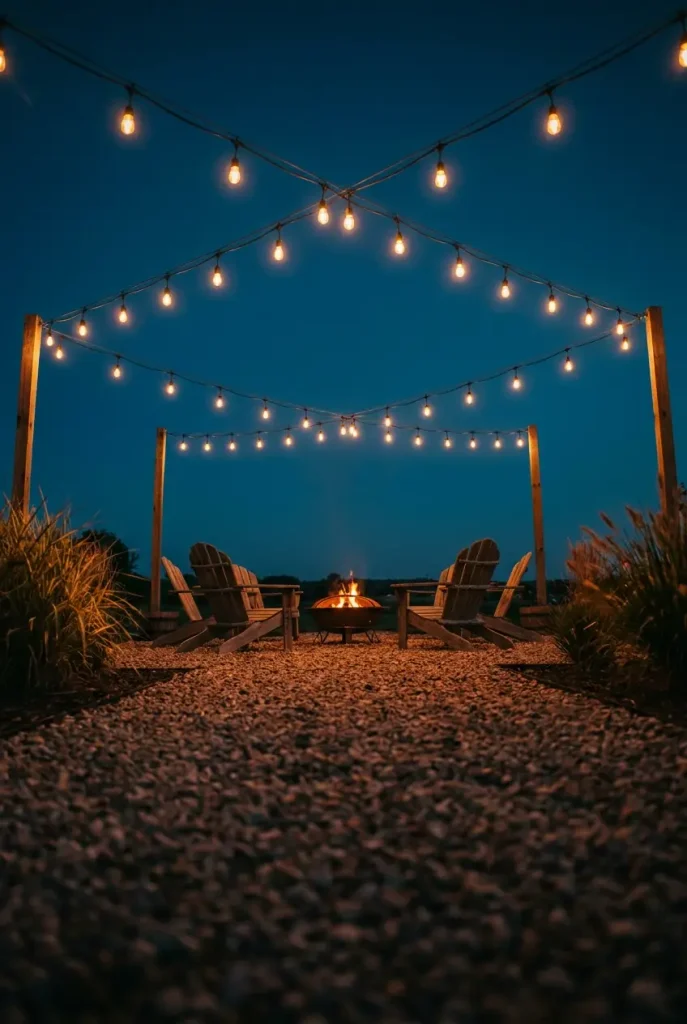
1. Zigzag instead of straight across. Three shorter spans crossing at angles read as a ceiling. One straight line reads as a clothesline.
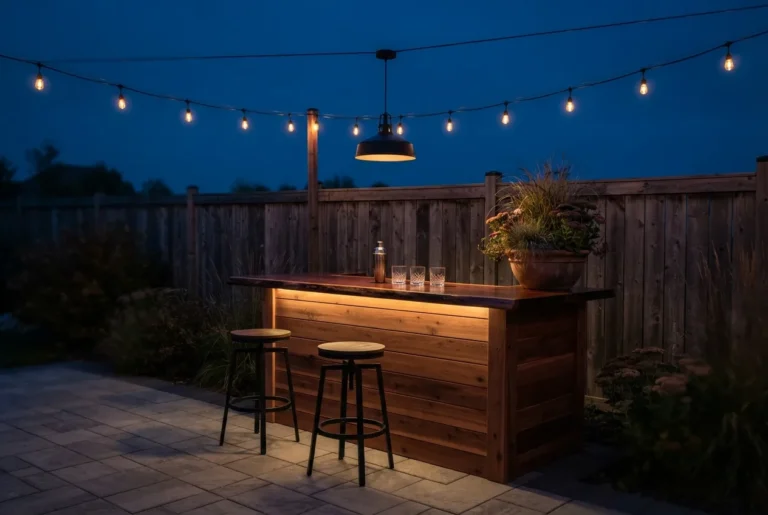
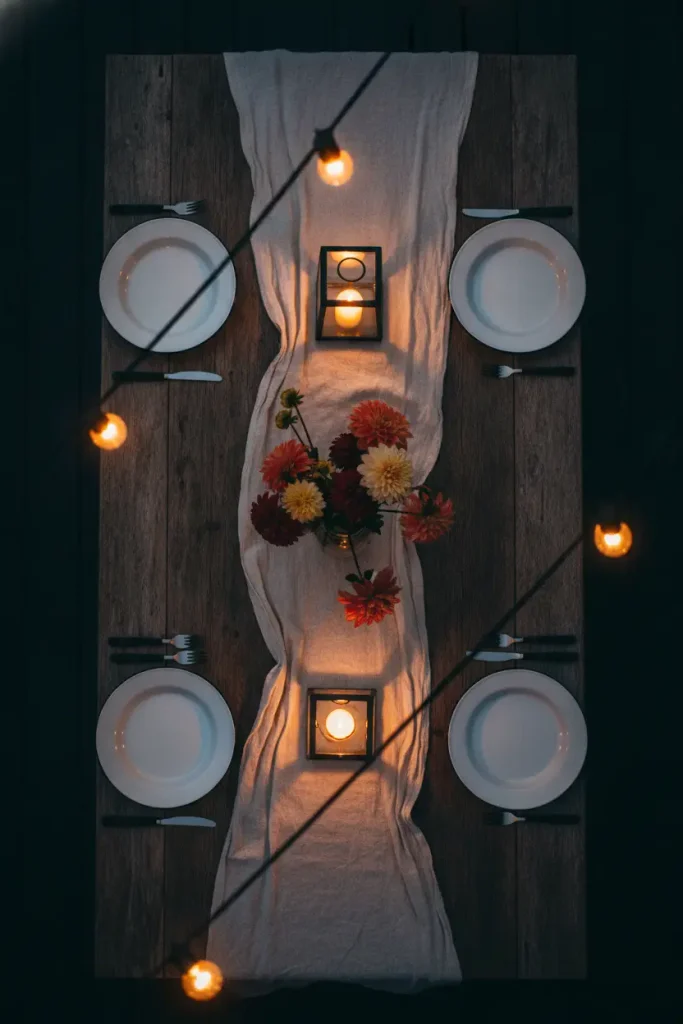
2. Drop the line low over the table only. Hanging closer above a fixed table creates a pocket of warm light that makes a $60 patio set look intentional. Pair it with backyard patio ideas on a budget if the surface underneath still needs work.
3. Wrap a trunk or a post from the base up. Vertical light gives the eye something to travel, and it fills the dead zone under a horizontal run.
4. Light the fence line, not the fence. Solar path stakes aimed up a fence panel at 18 inches out give you glow without a floodlit wall.
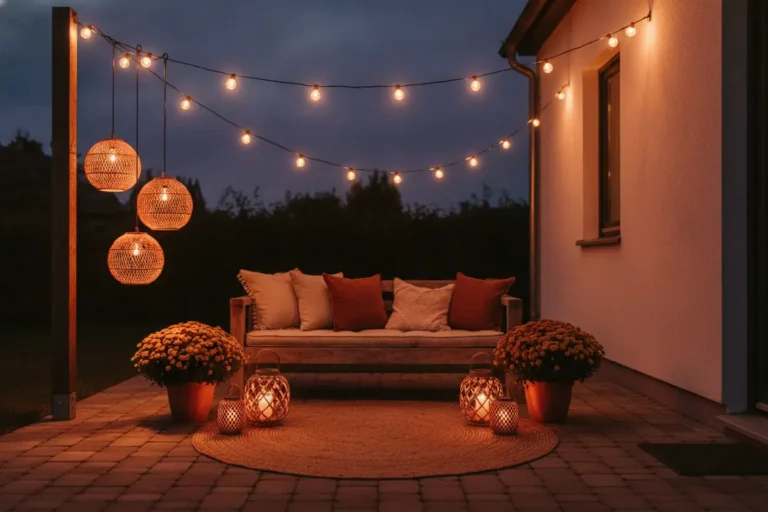
5. Add one flame source. A pair of TIKI torches or a couple of lanterns on the ground adds movement that LEDs cannot fake.
6. Dim everything by 30 percent. A dimmer on a warm 2700K set is the difference between a patio and a parking lot.
Layer three heights: overhead bulbs, table lanterns, ground-level stakes.
Keep every bulb in the same warm 2700K family so the yard reads as one room.
Mixing cool white solar stakes with warm bulbs, which turns the yard two colors.
Aiming a security floodlight at the seating area and calling it ambience.
Renting, Vinyl Siding, or No Trees at All
Nothing above requires a drill if you plan the anchors differently. Two posts, two clamps, or a pair of heavy planters can carry the same run and leave with you when the lease ends.
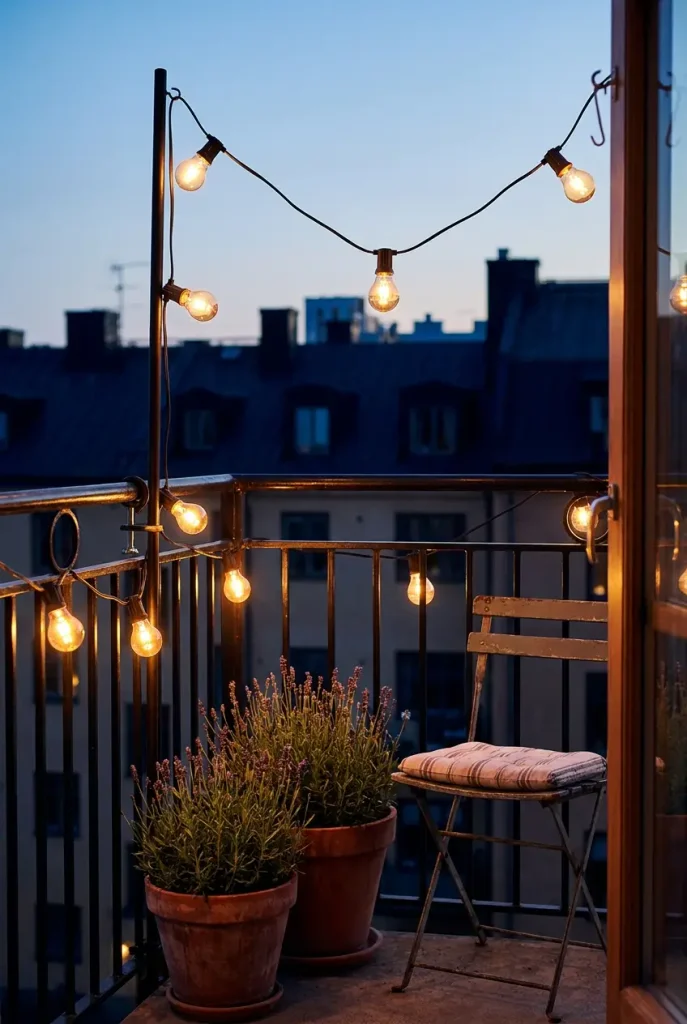
Railing clamps handle a balcony, umbrella-base posts handle a deck, and a 5-gallon bucket of concrete with a 4×4 in it handles open lawn. The full build for those is in our DIY string light pole ideas with no drilling, including how to hide the bucket in a planter.
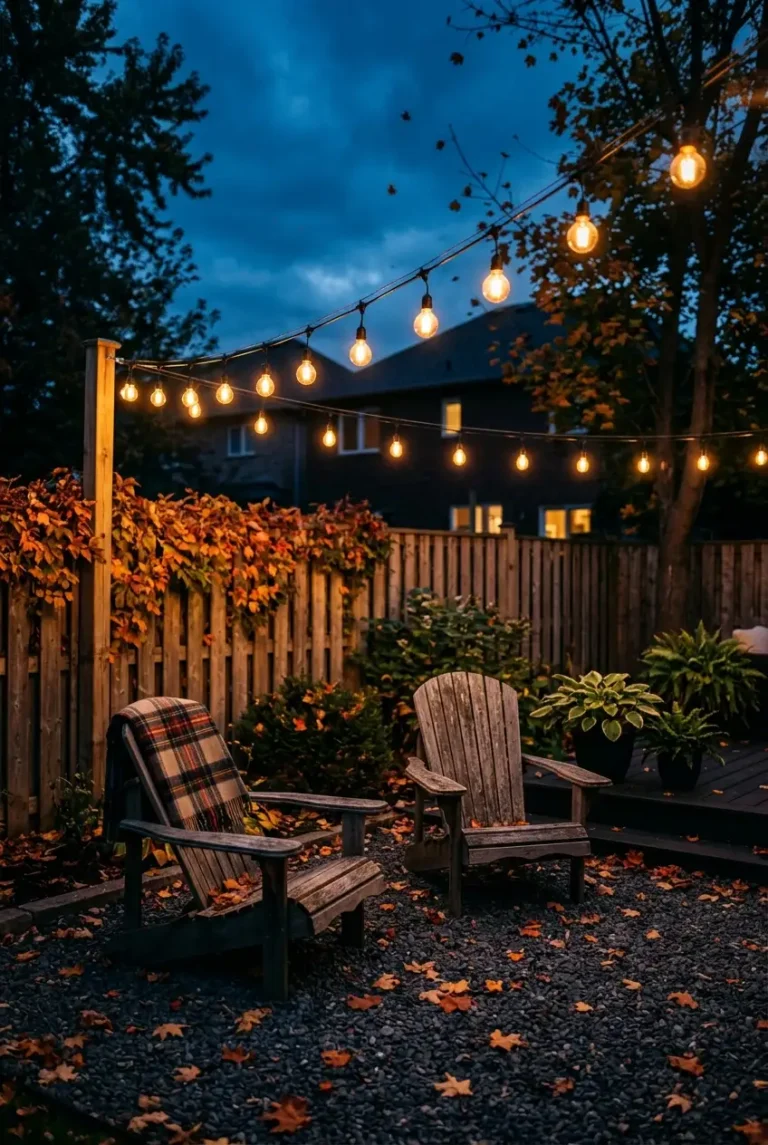
Keeping the Glow Through Fall and Winter
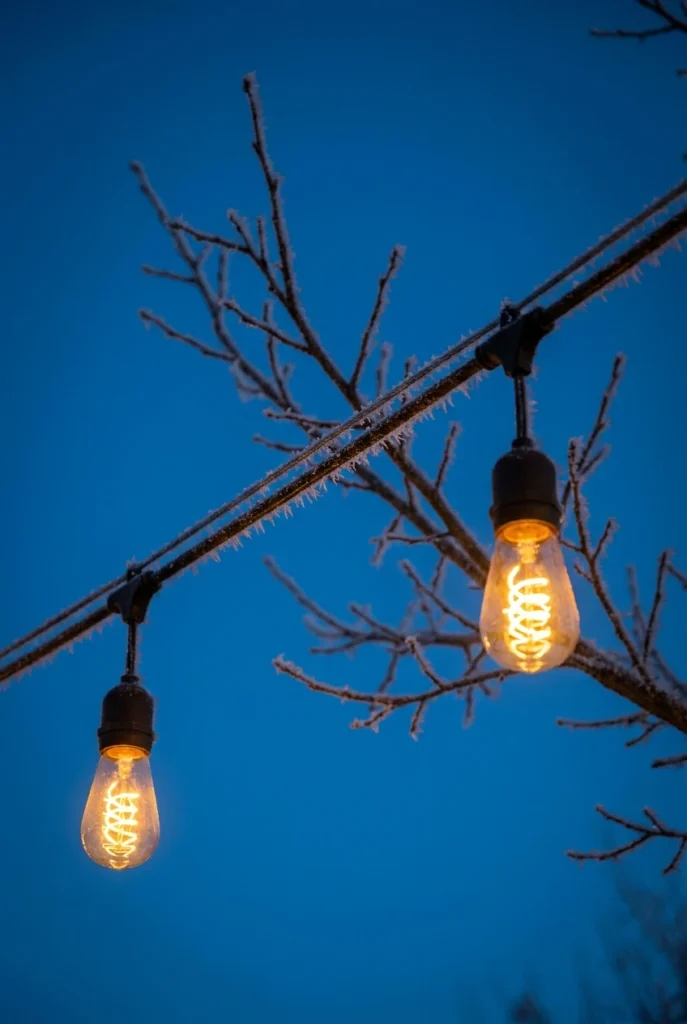
Outdoor-rated LED sets are built to stay up. They run cool, the lenses are epoxy rather than glass, and cold weather does not bother them the way it bothers an incandescent filament. In Zones 5 through 7, where the first hard frost usually lands somewhere between mid-October and mid-November, leaving the run in place through winter is normal and it is what keeps the yard usable on a clear cold night.
Two seasonal habits worth keeping. Loosen the turnbuckle a quarter turn before a deep freeze, since steel contracts and a fully tensioned line has nowhere to go. And check your plug connections after the first heavy storm, following the same basic holiday lighting safety guidance published by the CPSC, which still warns against overloading outlets no matter how many strands your set allows.
A light line gives a yard a ceiling. Once the eye has an edge to read, the space stops feeling like leftover lawn and starts feeling like a room you own.
Frequently Asked Questions
How high should outdoor string lights hang?
Aim for at least 9 feet at each anchor point. That leaves room for the natural drape to settle without anyone walking into a bulb, and it keeps the lights above the sight line when you are seated. Over a fixed dining table you can hang lower, closer to 7 or 8 feet, because nobody stands in that spot.
How many string light strands can you connect end to end?
It depends entirely on the bulb type. The Department of Energy says up to 25 LED strings can be connected without overloading a wall socket, while the old limit of three connected sets still applies to incandescent lights. Check the tag near your plug, since the manufacturer’s stated maximum always overrides a general rule.
Do you need a guide wire for outdoor string lights?
For any open span over about 15 feet, yes. Light cord is not structural, so it stretches in heat and pulls on sockets in wind. A stainless or galvanized cable carries the load and the lights ride on it with zip ties. Short runs under an eave or along a pergola beam can skip the wire.
Can you leave outdoor string lights up all year?
Outdoor-rated, UL-listed LED sets are made to stay up year round. They run cool, use shatterproof epoxy lenses, and handle cold well. Give the line a quarter turn of slack at the turnbuckle before a hard freeze, and inspect plugs and connections after big storms. Bring indoor-rated sets inside, always.
What type of lighting is best for outdoors?
Warm 2700K LED in an outdoor-rated, UL-listed fixture covers most backyard jobs. Use string lights overhead for the ceiling effect, low path or stake lights at ground level for safety, and lanterns or torches for movement. Keep every color temperature in the same warm family so the whole yard reads as one space.
How do I plan my yard lighting?
Start with the seating area, not the perimeter. Hang the overhead run first, live with it a week, then add ground-level light only where you actually walk after dark. Layering in that order stops you from overbuying, and it is why the outdoor lighting makeover ideas that last always start overhead. Most yards need one strong overhead line plus three or four small accents, nothing more.
Are solar string lights bright enough for a patio?
For accent work along a fence or a path, yes. For the main overhead run above seating, no. Solar output drops as the panel discharges through the evening, cloudy stretches cut it further, and you cannot dim solar on demand for a dinner. Use plug-in for the ceiling and save solar for the edges.
One Run, One Evening
Pick your two anchor points tonight and measure the span. Most outdoor lighting makeover ideas stall at the saved-pin stage because nobody ever measures. That single number decides your cable length, your strand count, and whether you are drilling or building a post, and everything else in this project follows from it. Most people finish the first run in an evening and then spend the next week finding excuses to eat outside. Save this one to your backyard board so the shopping list is there when you are standing in the hardware aisle, and start with one line before you plan the whole yard.