Outdoor Furniture Layout Ideas That Work on Any Patio
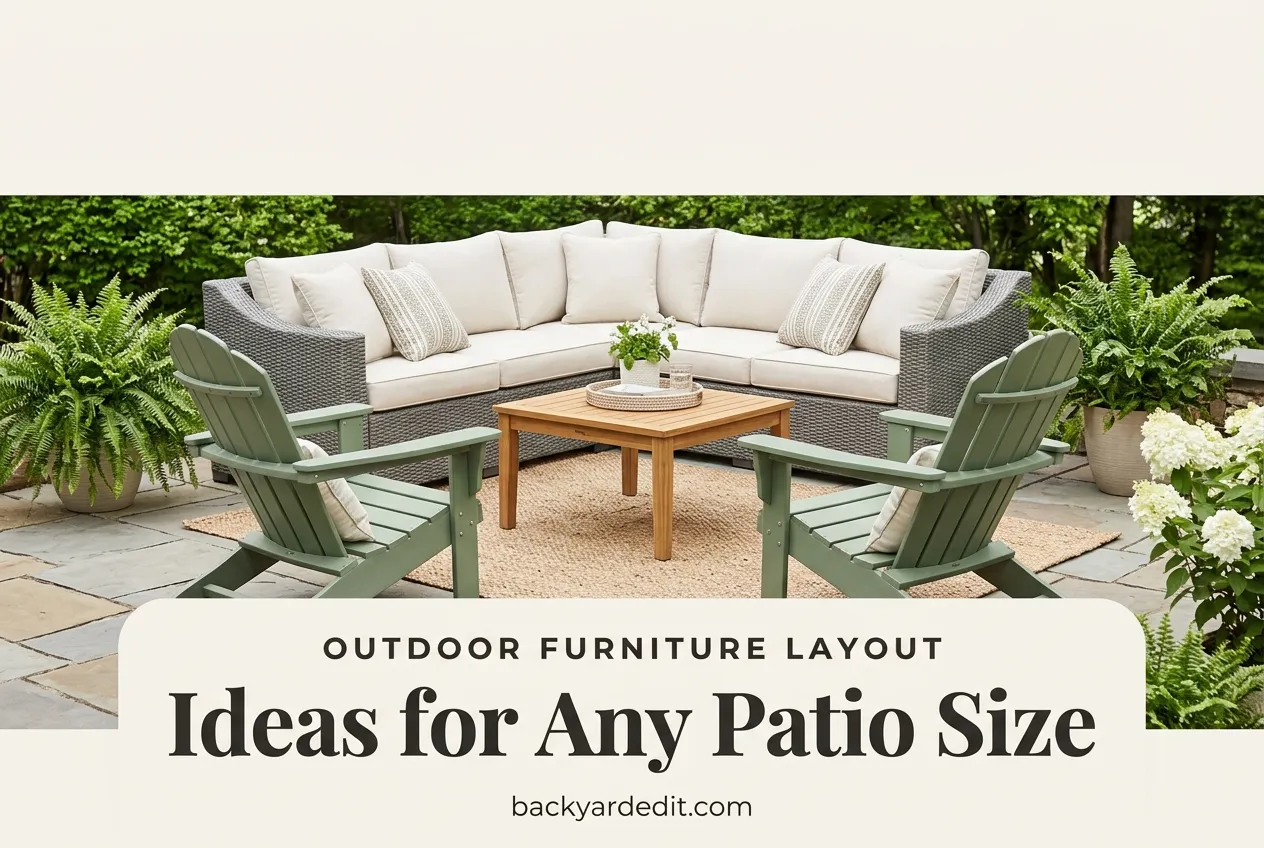
Your patio isn’t small. It’s arranged wrong. That’s the part almost nobody tells you about outdoor furniture layout: the same slab of concrete can feel cramped and awkward, or open and pull-up-a-chair roomy, and not one piece of furniture changed. Only the plan did.
We’ve styled tiny balconies, long skinny galley patios, and one genuinely huge deck that somehow still felt empty. The fix is almost always the same short list of moves. This outdoor furniture layout guide walks you through every one. You get a spacing rule you can measure with your own two feet, layouts sorted by patio size and shape, and the small finishing touches that make a space read as designed instead of dumped.
Grab a tape measure. Let’s go.
Start With Your Anchor, Not Your Sofa
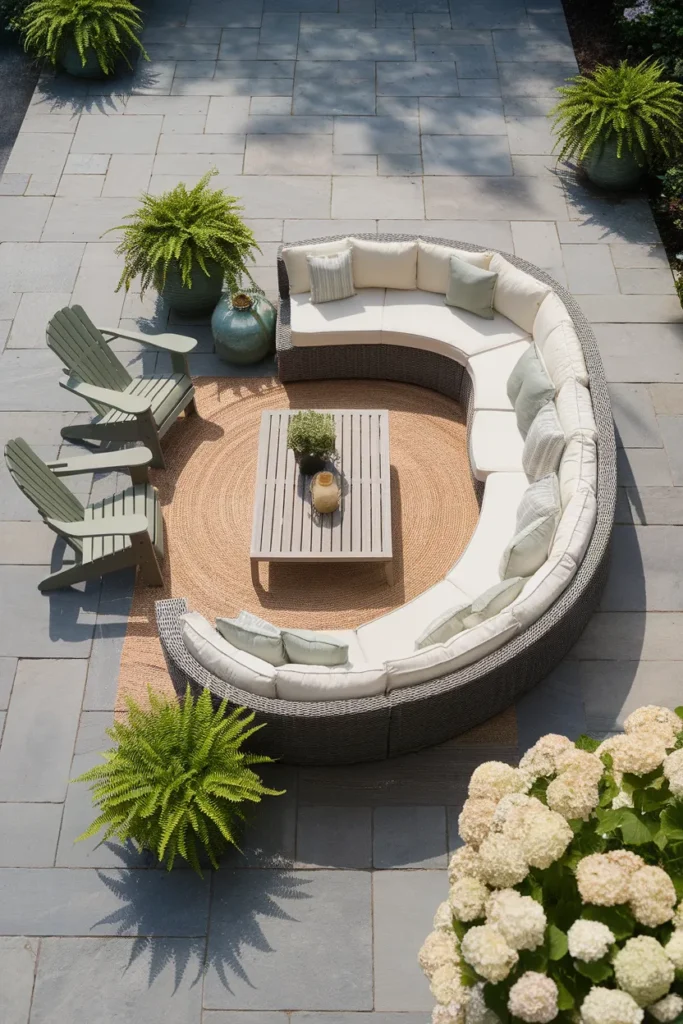
Every good outdoor furniture layout starts with one decision: what is this space actually for? Answer that first and the whole outdoor furniture layout falls into place. Skip it and you end up shoving a sofa against a wall and hoping.
Your anchor is the one thing the whole arrangement orbits. Sometimes it’s a view (the garden, the trees, the sunset). Sometimes it’s a feature you already own, like a fire pit or a big outdoor sectional. On a dining-first patio, the table is the anchor. On a lounge-first patio, it’s the sofa or the fire.
Pick the anchor, then aim the seating at it. Chairs face the fire. The sofa opens toward the yard. Everything points somewhere on purpose, and the eye finally has a place to land.
Here’s the move most people miss: pull the anchor off the wall. Even four inches of breathing room behind a sofa tricks the eye into reading the patio as bigger than it is. Furniture floating slightly free feels intentional. Furniture jammed against the fence feels like a waiting room.
The 3-2-1 Spacing Rule (Our One-Screenshot Cheat Sheet)
Most outdoor furniture layout guides tell you to “leave enough room” and then wander off. Not helpful. So we built a rule you can actually measure, and it anchors the whole outdoor furniture layout. Readers screenshot it more than anything else on our site. We call it the 3-2-1 Spacing Rule.
Three numbers. That’s the whole thing.
| Number | What it means | Why it works |
|---|---|---|
| 3 feet | Keep a 3-foot clear path around the outside of your seating | People walk around the conversation, never straight through it |
| 2 feet | Leave about 2 feet of open air between big pieces (sofa to chair, chair to chair) | Close enough to feel social, open enough that nobody’s knees touch |
| 1 arm’s length | Put a surface within about 18 inches (one arm) of every seat | Everybody has somewhere to set a drink, so nobody balances a glass on the ground |
Run those three checks and a layout that felt “off” usually snaps into place. Too tight and it feels like a doctor’s waiting room. Too spread out and you’re shouting across the patio. Two feet between seats and a coffee table roughly 16 to 18 inches off the sofa front is the sweet spot for real conversation.
For a proper conversation circle, aim for seats that sit within about 8 feet of each other across the group. Past that, people stop talking and start scrolling their phones. (We’ve watched it happen at our own cookouts.) Keep them close.
Map the Sun and Wind Before You Move a Thing
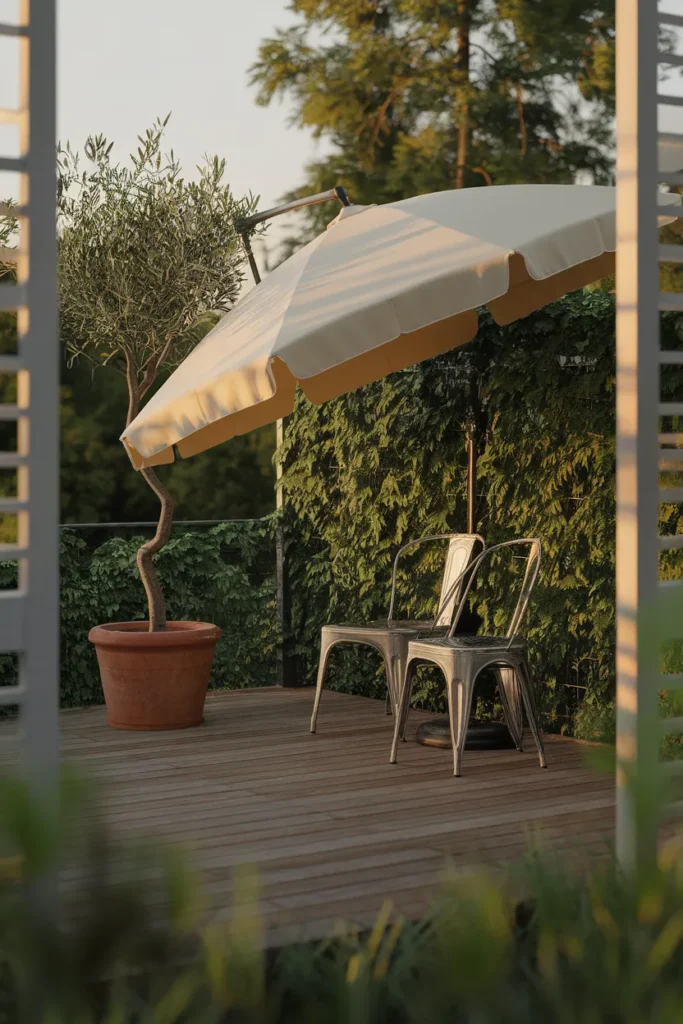
This is the step the big sites skip, and it’s the one that decides whether you actually use the space. Furniture that looks perfect at noon can be unusable at 6 p.m. when the sun swings low and blasts you right in the eyes. Smart outdoor furniture layout follows the shade, not the floor plan.
Spend one day watching your patio. Note where the shade sits at the hours you’re actually out there, usually late afternoon and evening. Then place your main seating where the shade lands then, not where it looks tidy on a floor plan. West-facing patios cook after 4 p.m., so you want lounge seating tucked under cover or aimed away from the glare.
Wind matters just as much. A patio umbrella is basically a sail, and a gust will launch it. Anchor umbrellas in a weighted base (40 pounds or more for a standard market umbrella) and tilt or close them when you leave. A gust doesn’t negotiate. This is also where a little design planning pays off, and the basic principles of good outdoor design from Penn State Extension line up neatly with what your yard is already telling you about sun, slope, and flow.
Lighter pieces (folding sling chairs, aluminum bistro sets) can migrate with the shade through the day. Heavier anchors (sectionals, dining tables) stay put, so give them the best all-day spot from the start.
Zone It: Turn One Patio Into Two or Three Little Rooms
A patio behaves like a house with the walls knocked out. Good outdoor furniture layout borrows the same trick a floor plan uses indoors: it carves the open space into zones, each with a job. One zone to lounge, one to eat, maybe a small corner to grill or read.
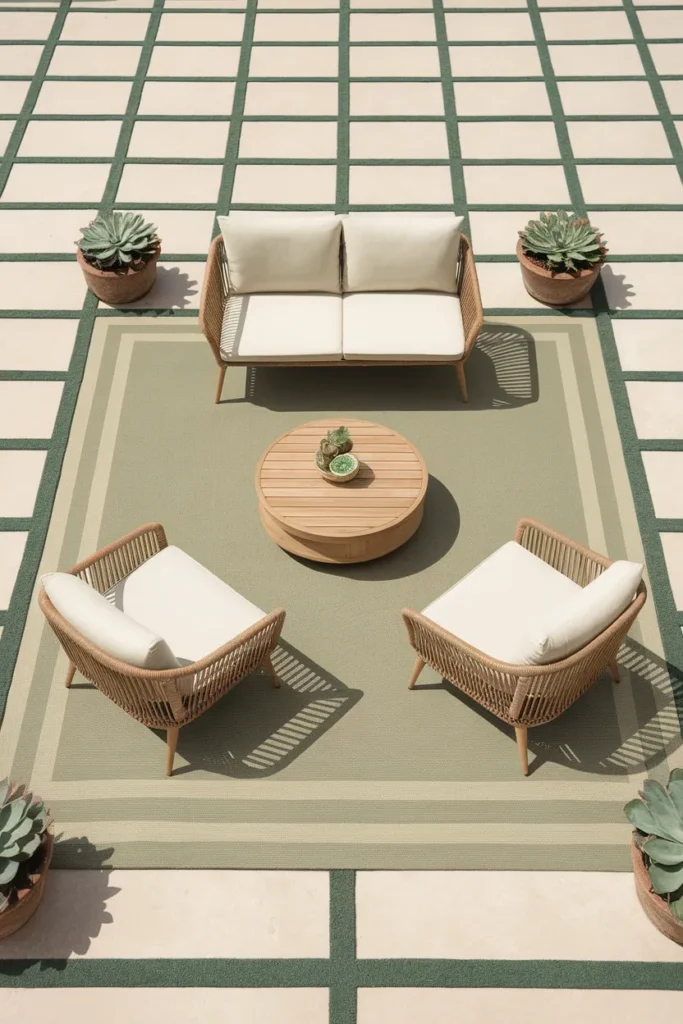
You don’t need much square footage to pull this off. An outdoor rug under the seating group instantly reads as “this is the living room.” A dining table with a pendant or a string light knot overhead becomes “this is the dining room.” Your brain fills in the walls.
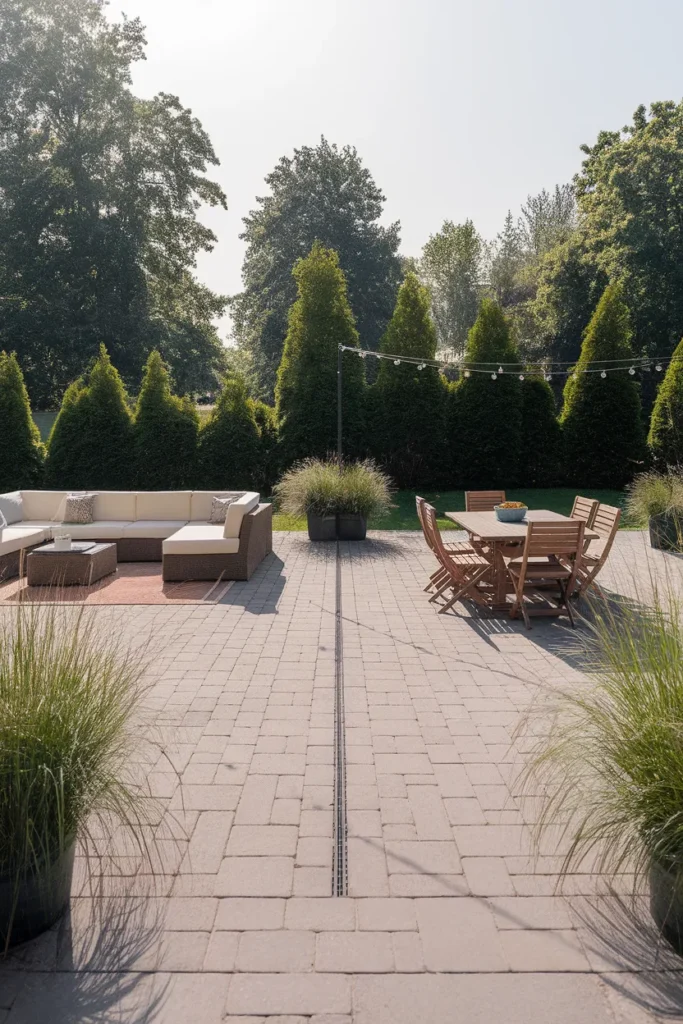
Keep a clear 3-foot lane between zones so traffic flows without anyone squeezing past the grill with a full plate. On a big patio, angle the two zones slightly instead of lining them up in a rigid row, which keeps the space from feeling like a furniture showroom. Plenty of the patio design ideas worth stealing from This Old House lean on exactly this zoning logic.
One contrarian take: bigger patios are often harder to lay out than small ones, not easier. All that open space tempts you to float everything in the dead center, which leaves a lonely furniture island marooned in a sea of pavers. Break it into zones and the emptiness disappears.
Small Patio, Balcony, or Narrow Deck? Arrange for Intimacy
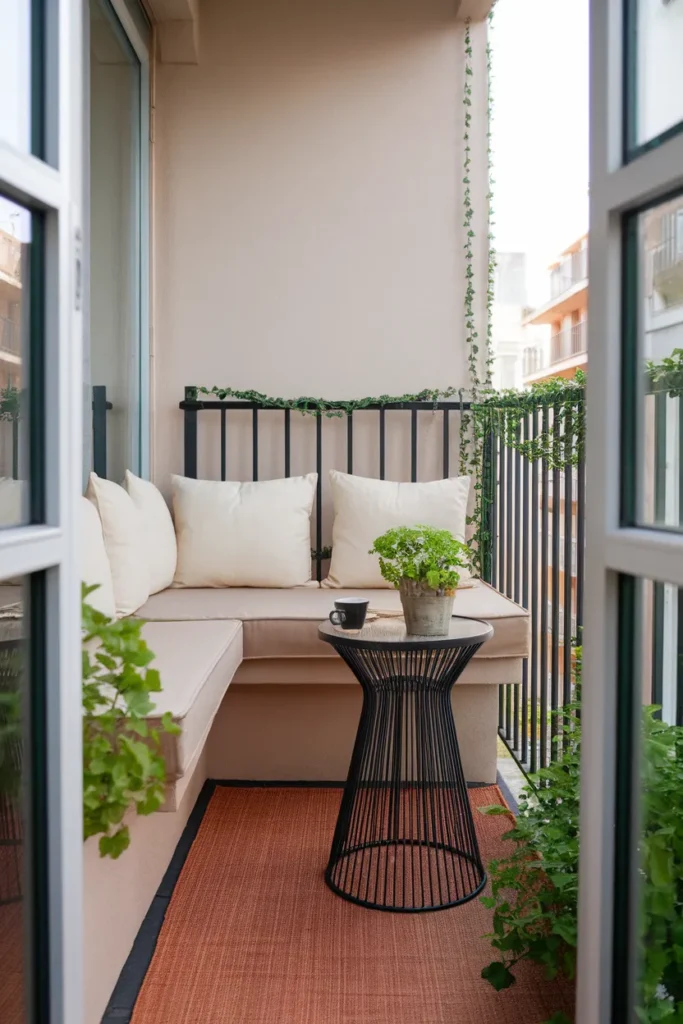
Tiny spaces don’t need less furniture. They need a smarter outdoor furniture layout. A 6×8 balcony can seat four comfortably if you stop fighting the footprint and start working with it.
Float the seating a few inches off the railing so the eye reads depth. Choose leggy pieces you can see the floor beneath, since visible ground tricks a small patio into feeling bigger. Skip the bulky coffee table and use a pair of nesting side tables or a slim bench that doubles as a surface and extra seating.
Corner layouts are your friend here. An L-shaped bench or a small corner sectional hugs two walls and frees up the center for a walkway. For the full walk-through, our guide to arranging furniture on a small patio breaks it down by exact patio size, from 6×6 up to 12×12.
Budget-wise, small-space seating is where you can win cheap. A Sunnydaze compact conversation set runs in the $300 to $600 range, and an IKEA outdoor rug in the $80 to $150 range will define the whole zone. You don’t need a designer budget to make eight feet of concrete feel like a room.
Pick Seating That Fits the Layout, Not the Other Way Around
People buy the furniture first, then try to cram it in. Flip that. Decide the outdoor furniture layout first, then choose seating that serves it.
If you love to entertain, a modular sectional is the workhorse. Pull it apart into separate chairs for a crowd, push it back together for a cozy two. An IKEA Bondholmen set runs in the $450 to $800 range and reconfigures a dozen ways. For a lounge-and-read patio, a pair of deep chairs beats a long sofa nobody stretches out on. Buy for how you sit.
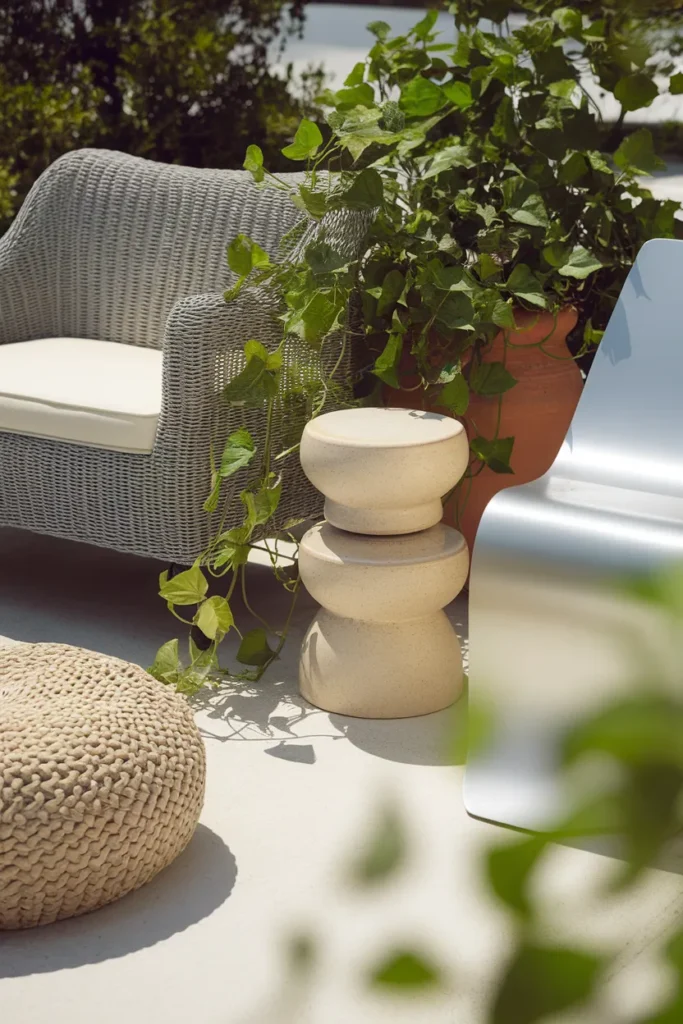
Material shapes the look, the upkeep, and how easily the outdoor furniture layout moves. All-weather wicker patio furniture reads soft and cottage-y and hides a rain shower well. Powder-coated aluminum feels crisp and modern and weighs almost nothing, which is handy for a layout you plan to reshuffle. Polywood Adirondacks (roughly $250 to $350 each) never rot and shrug off sun, so they earn the higher tier.
Mix seat heights on purpose. A tall dining chair, a mid lounge chair, and a low pouf at ankle height give the eye a rhythm to travel, and the group photographs beautifully, which your Pinterest pins will thank you for.
Layouts by Patio Shape and Size
Shape drives your outdoor furniture layout more than square footage does. Here’s the quick version for the four shapes we get asked about most.
Square patios love symmetry. Center the anchor and balance seating around it, two chairs facing a loveseat, or four chairs around a fire pit. Even, calm, easy.
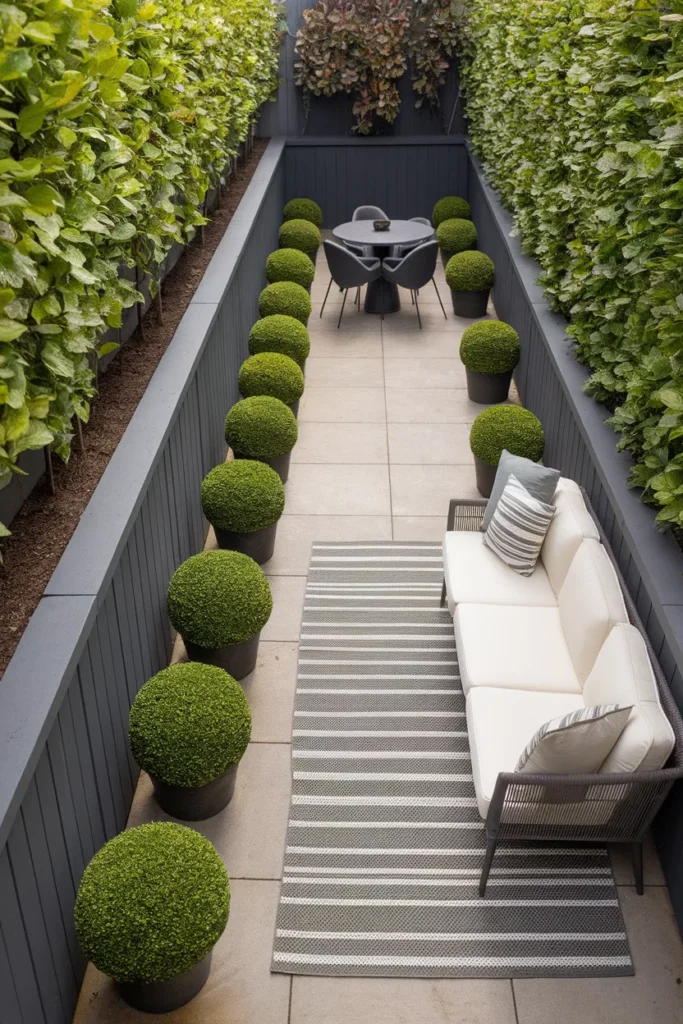
Rectangular and galley patios (long and narrow) fight you if you line everything up against the long walls, which leaves a bowling-alley lane down the middle. Break the run instead. Put a seating zone at one end and a dining zone at the other, or turn the sofa perpendicular to the long wall to cut the length visually.
L-shaped patios almost zone themselves. Let the corner hold the anchor and give each leg a purpose, lounge on one, dine on the other.
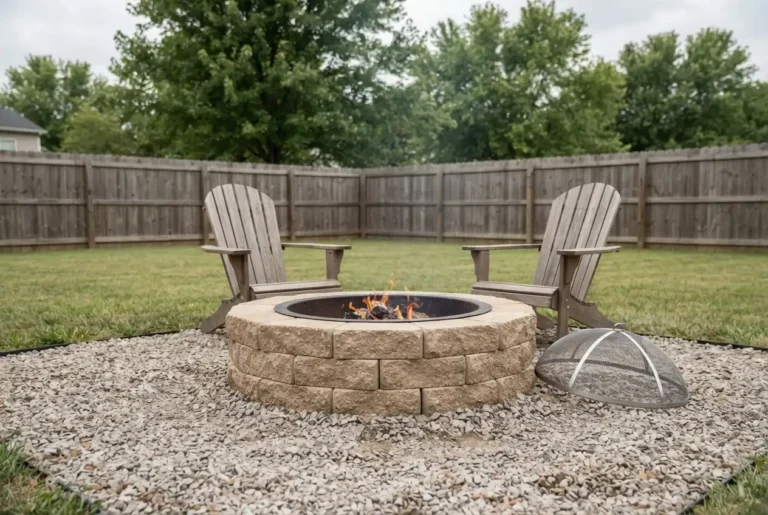
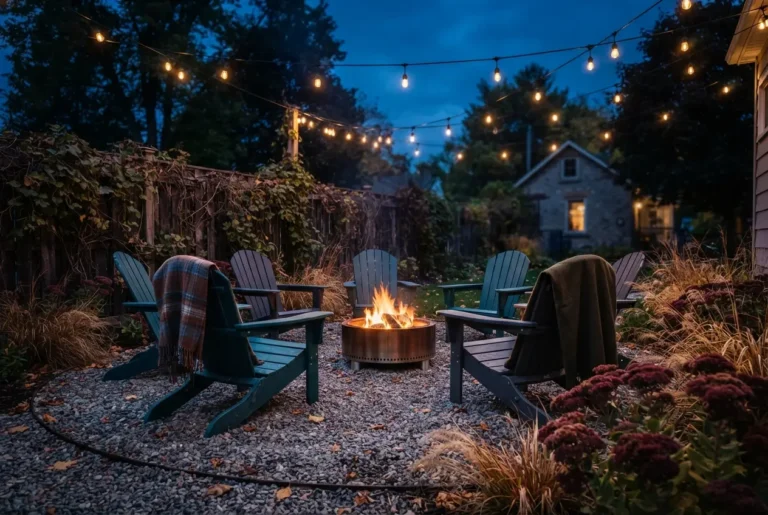
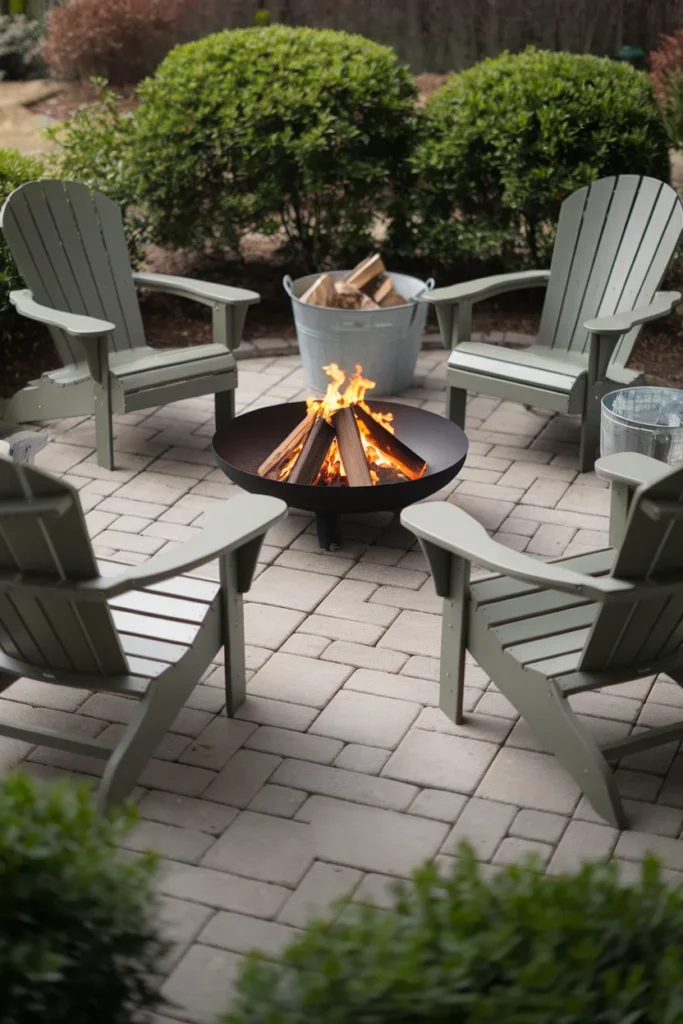
Round or free-form patios read best with curved or clustered seating that echoes the shape. A semicircle of chairs around a round fire pit feels custom, even when every piece came flat-packed.
The Reset-in-10-Minutes Layout (Renter-Friendly)
If you rent, or you just like to change things up, build an outdoor furniture layout you can pull apart fast with zero drilling and zero regret. This is the angle almost no layout guide bothers with, and renters make up a huge share of small-patio owners.
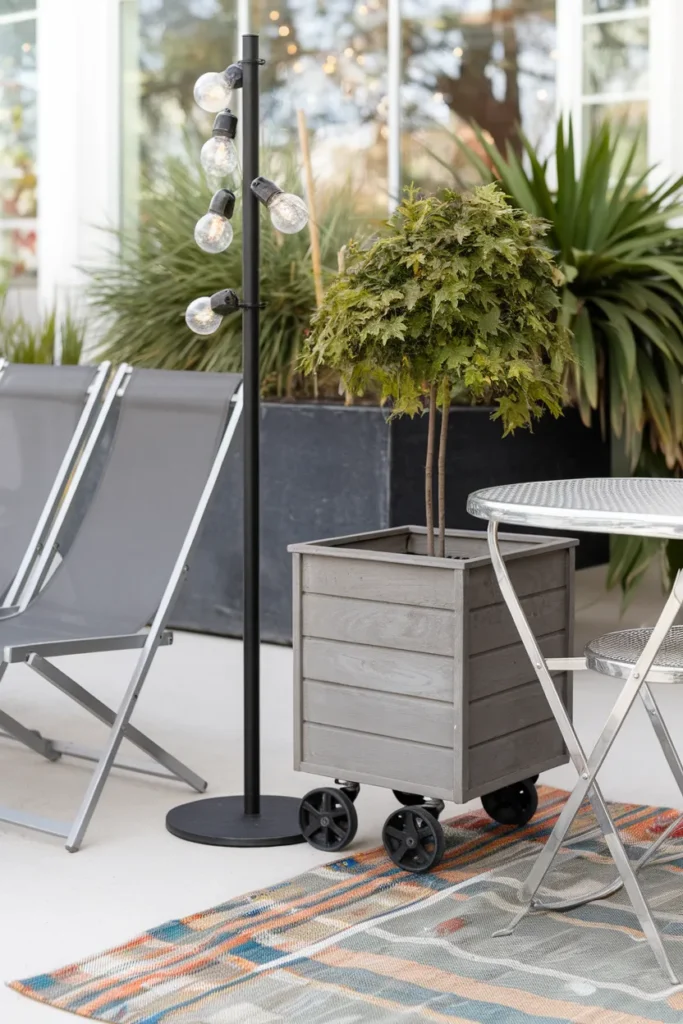
The rules of a reset-friendly outdoor furniture layout are simple. Nothing gets bolted down. Every anchor is heavy enough to stay put in wind but light enough for one person to slide. Lighting hangs from tension or freestanding poles instead of screws. Rugs define zones so you never need built-in edges.
Lean on movable weight instead of hardware. A water-fillable umbrella base, a planter on wheels, a fire pit that lifts with two hands. When the movers come, the whole patio breaks down in the time it takes to finish a coffee, and your deposit stays yours.
Seasonally, this pays off too. If you garden in a cooler band like Zones 5 to 6, you’re really only using the patio hard from about May through September, so a layout you can compress and cover for winter beats a fixed built-in you have to tarp over. Store the cushions, stack the lighter chairs, done.
Finishing Touches That Lock the Layout Together
An outdoor furniture layout isn’t finished when the furniture stops moving. The last 10 percent is what makes people say “who did your patio?”
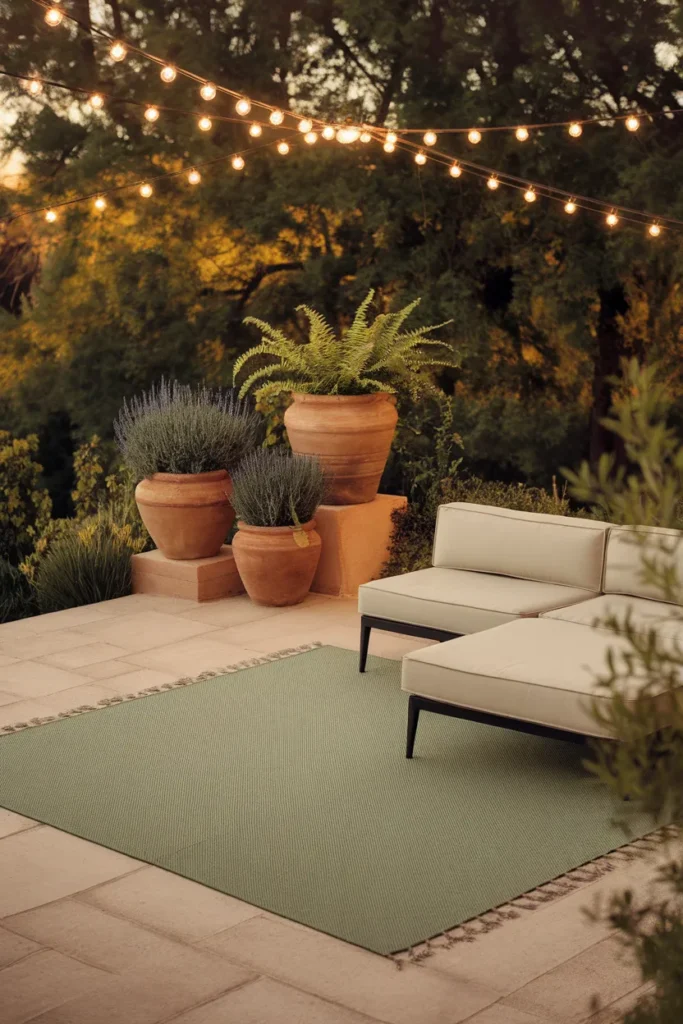
Start with a rug. An outdoor rug (Ruggable and IKEA both run roughly $80 to $200 for a big one) draws a visual boundary that pulls a floating group into a single room. Size it so at least the front legs of every seat sit on the rug, never a tiny mat marooned in the middle.
Then layer the light. Overhead is everything outdoors. A knot of string lights over a covered patio does more for the mood than any single lamp, and a run of Brightech Ambience Pro bulbs costs under $40 a strand. Hang them to draw a ceiling line across your seating zone and the whole space feels enclosed after dark.
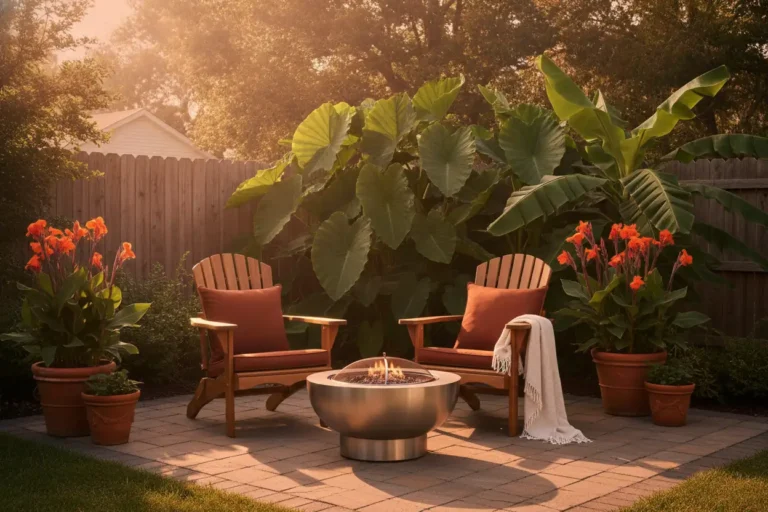
Finish with green. A few potted plants at the corners soften hard furniture edges and blur the line where the patio ends. Odd numbers look more natural than even. Cluster three pots of varying heights and stop fussing.
That’s the outdoor furniture layout, start to finish. Anchor, spacing, sun, zones, seating, shape, flexibility, polish.
Frequently Asked Questions
How far apart should patio chairs be for conversation? Aim for about 2 feet of open space between seats and keep everyone within roughly 8 feet across the group. Closer than that feels crowded, farther and people stop talking. A coffee table 16 to 18 inches off the seat fronts hits the sweet spot.
How do you arrange outdoor furniture on a small patio? Float leggy pieces a few inches off the walls, use corner or L-shaped seating to free the center, and swap a bulky coffee table for slim nesting side tables. Define the zone with a rug so eight feet of concrete reads as a real room.
Should all outdoor furniture face each other? Not dead-on, no. Angle seats slightly toward a shared anchor (the fire, the view) rather than lining them up in a strict face-off. A gentle U or semicircle feels social and relaxed instead of like an interview.
What size outdoor rug do I need for a patio seating area? Go big enough that at least the front legs of every piece sit on the rug. For a standard sofa-and-two-chairs group, an 8×10 works well. A rug that only floats under the coffee table shrinks the whole layout.
How do you create multiple seating areas on one patio? Zone it. A good outdoor furniture layout gives each area its own rug and its own job (lounge, dine, grill), and keep a clear 3-foot walkway between them. Angling the zones slightly instead of aligning them keeps the patio from feeling like a showroom.
What’s the best outdoor furniture layout for entertaining? A modular sectional you can break apart, arranged in a loose U around a coffee table or fire pit, with a separate dining zone nearby. Movable chairs let you expand for a crowd and contract for a quiet night.
How much space do I need around a patio dining table? Leave about 3 feet of clearance on every side so chairs pull out and people walk behind seated guests without turning sideways. Tight on space, a bench on one side tucks fully under the table and saves that clearance.
Your Patio Is One Weekend Away
Here’s the honest truth: you probably already own enough furniture. The magic was never in buying more. The best outdoor furniture layout uses what you already own. It’s in the anchor you choose, the 3 feet you leave for your feet, and the shade you aim for at 5 p.m.
Pick one section above and try it this weekend. Move the anchor off the wall, drop a rug, hang a strand of lights, and watch the same patio feel twice as big. Then save this outdoor furniture layout guide to your patio board so it’s there when you’re standing outside with a tape measure, and come tell us which layout you landed on.