Townhouse Patio Ideas That Make a Narrow City Space Feel Twice as Wide
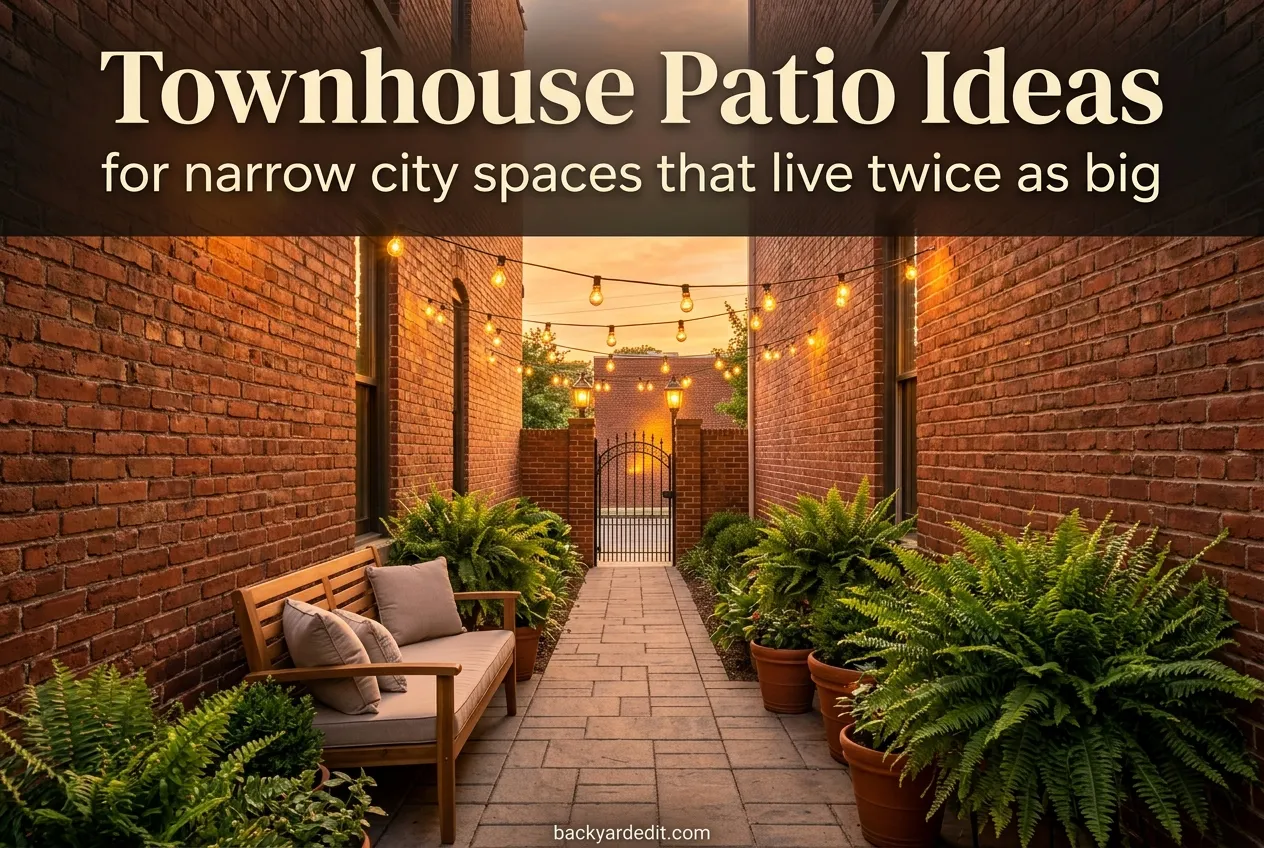
Our first June in this place, I wedged a four-piece conversation set onto a slab barely nine feet wide, and we spent the whole summer shuffling sideways past it like subway riders at rush hour. Sound familiar? The best townhouse patio ideas start with one honest admission: your outdoor space is a corridor, not a courtyard, and corridors follow different rules. The same thinking behind our favorite deck ideas for small yards applies here, just tighter. Below you’ll find the layout rule that fixed our skinny slab, plus privacy fixes, no-drill tricks for HOA and rental patios, and the under-deck move almost nobody writes about.
Start With the 36-Inch Corridor Rule
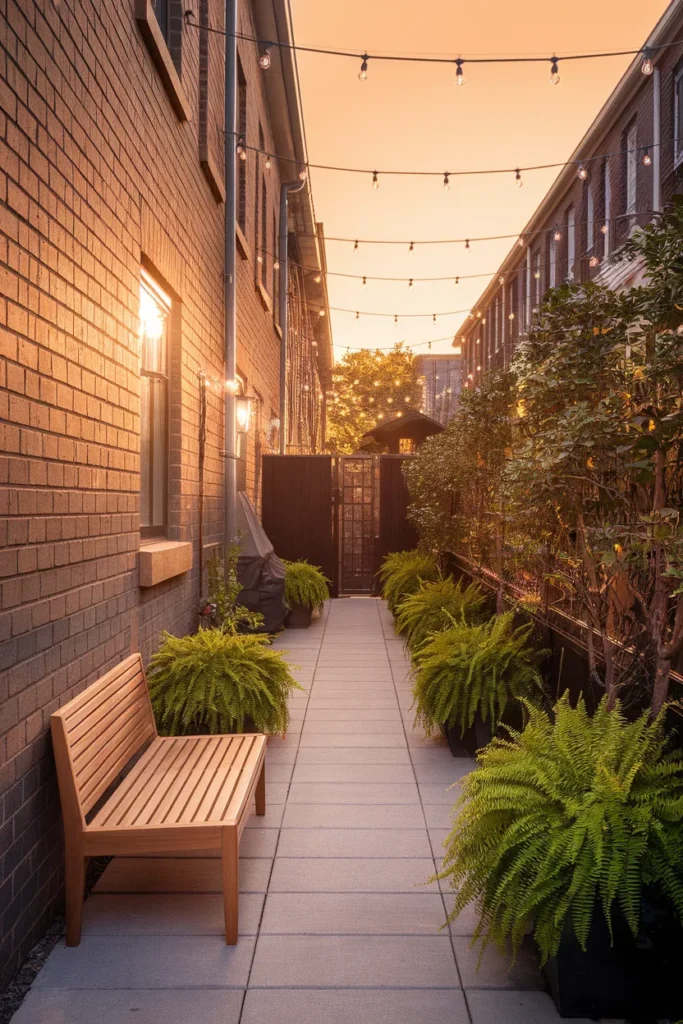
Here’s the framework we now use on every skinny space, and you’re welcome to screenshot it. The 36-Inch Corridor Rule: keep all furniture and large planters on one long side of the patio, and protect a clear 36-inch walkway from the back door to the far end. That’s it. Thirty-six inches is the width two people need to pass without turning, and once that lane exists, a narrow patio stops feeling cramped and starts feeling designed.
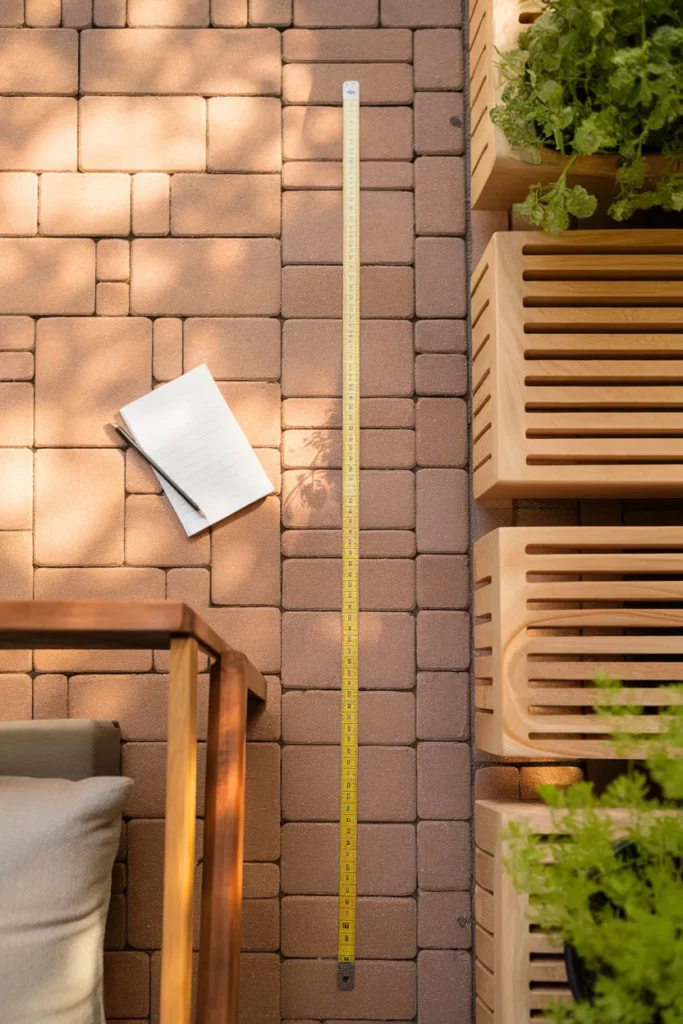
Measure before you shop. It takes five minutes.
| Piece | Typical depth | Works on a 9 ft wide slab? |
|---|---|---|
| Bistro set | 24 to 28 in | Yes, easily |
| Outdoor loveseat | 30 to 32 in | Yes, one wall only |
| Slim console or plant bench | 12 to 14 in | Yes, even opposite the seating |
| 4-piece conversation set | 60 in and up | No, and I learned that the hard way |
Everything else in this article hangs off that one lane. Zones, lighting, planters, all of it.
Zone It Like a Railroad Apartment
City renters have solved long skinny rooms for a century: one function per stretch, in the order you use them. Do the same outside. Put the coffee-and-bistro zone nearest the door, the lounge zone in the middle where the loveseat lives, and a green destination zone at the far end so your eye travels the full length.
A destination matters more than people think. When the far end holds something worth walking to (a glowing lantern, a small water bowl fountain, one dramatic olive tree in a 20-inch pot), the whole patio reads longer. An outdoor rug under each zone marks the boundaries without eating a single inch of that 36-inch lane, and a flatweave from Target’s Threshold line usually lands under $100.
Keep the zones to three. Four gets choppy on anything under 20 feet.
Privacy Without Building a Fortress
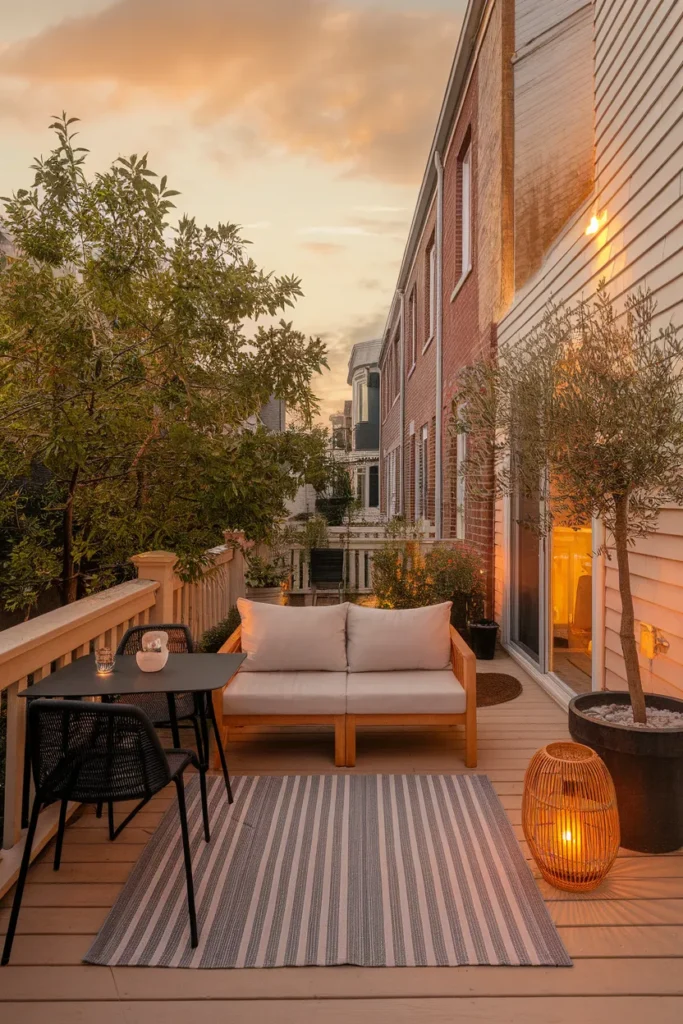
Privacy tops every townhouse wish list because the neighbor’s chair might sit four feet from yours. You have three layers to work with, and they stack.
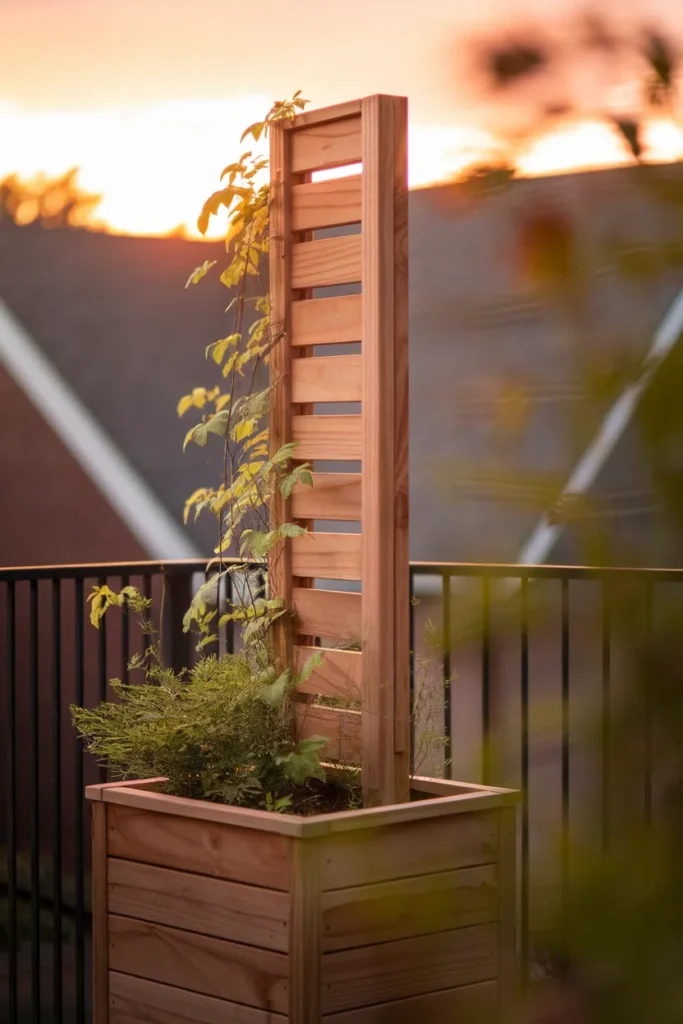
Layer one is green. A row of three tall planters with upright arborvitae or clumping bamboo builds a living screen that most HOAs never blink at, since nothing attaches to the shared fence. Layer two is structure: a freestanding cedar slat screen anchored in a planter box, or a laser-cut metal panel in the $150 to $300 range at Wayfair, softens sightlines exactly where you sit. Layer three is height, meaning a vine like star jasmine trained up whatever you placed in layer two.
Honestly, you rarely need all three. Screen the sitting zone and let the rest breathe.
The No-Drill Playbook for HOA and Rental Patios
Plenty of townhouse rules forbid drilling into shared fences, brick, or siding, and renters can’t anyway. So work freestanding. Weighted umbrella bases hold shade sails on poles. Vinyl siding hooks hang string lights with zero holes. Tension rods fit between fence posts for outdoor curtains. Planter-box screens replace fence-mounted lattice entirely. Every idea in this article can be executed without one drill hole, which also means every idea leaves with you if you move.
Go Vertical, Because Your Walls Are Free Real Estate
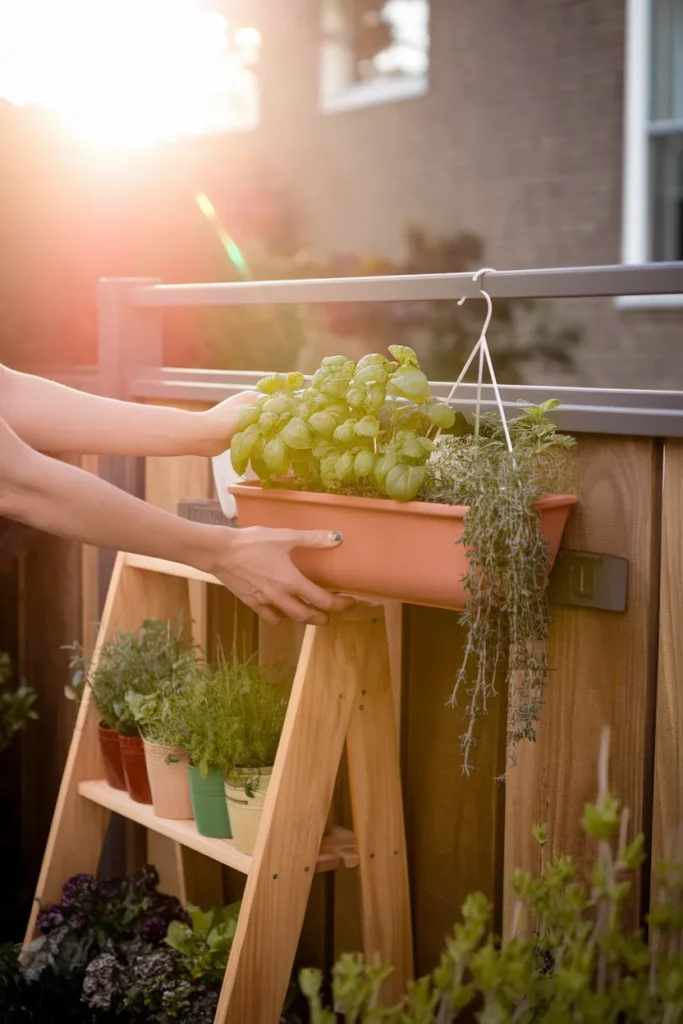
Ground space is the scarce resource on a narrow patio. Walls aren’t. A three-tier rail planter, a ladder shelf of herbs, or a grid trellis with climbing pots pulls the eye upward and makes low ceilings of sky feel taller. Bloem’s rail and deck planters run under $25 apiece and their self-watering Ariana pots hold a reservoir in the base, which matters on concrete that bakes all afternoon.
One confession from our own wall. I drowned two lavender plants by the Fourth of July in a gorgeous ceramic pot that had no drainage hole, because I liked the glaze more than I liked the physics. Drill the hole first or buy pots that come ready. The University of Minnesota Extension has a genuinely useful primer on container gardening for small spaces if you want the full watering and drainage rundown from actual horticulturists.
A Skinny-Space Plant Palette for Zones 5 to 9
Most townhouse patios sit in partial shade for half the day, walled in by the house and the fence. Pick plants that like it. Boxwood, ferns, hostas, and heuchera handle the shady end; rosemary, lavender, and dwarf ornamental grasses take the sunny stretch by the door. In Zones 5 to 7, wait to set out tender annuals until after the last frost, which usually lands somewhere between mid-April and mid-May depending on where you sit, and confirm your exact band on the USDA Plant Hardiness Zone Map before you buy anything perennial.
Here’s the counterintuitive part: buy fewer, bigger pots. A cluster of ten small pots reads as clutter in a corridor and dries out daily, while three 18 to 20 inch containers read as intention, hold moisture through a July weekend, and give roots room to actually perform. Miracle-Gro potting mix in a big pot beats premium soil in a tiny one every time.

Light It for the 9 PM Version of Your Patio
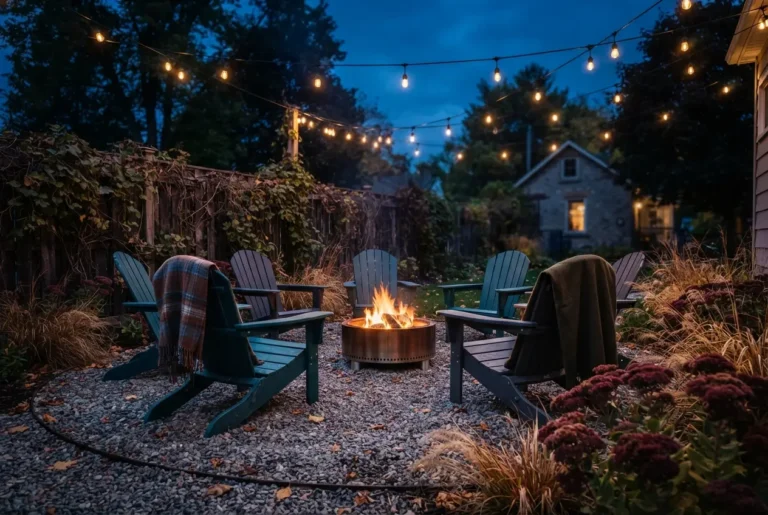
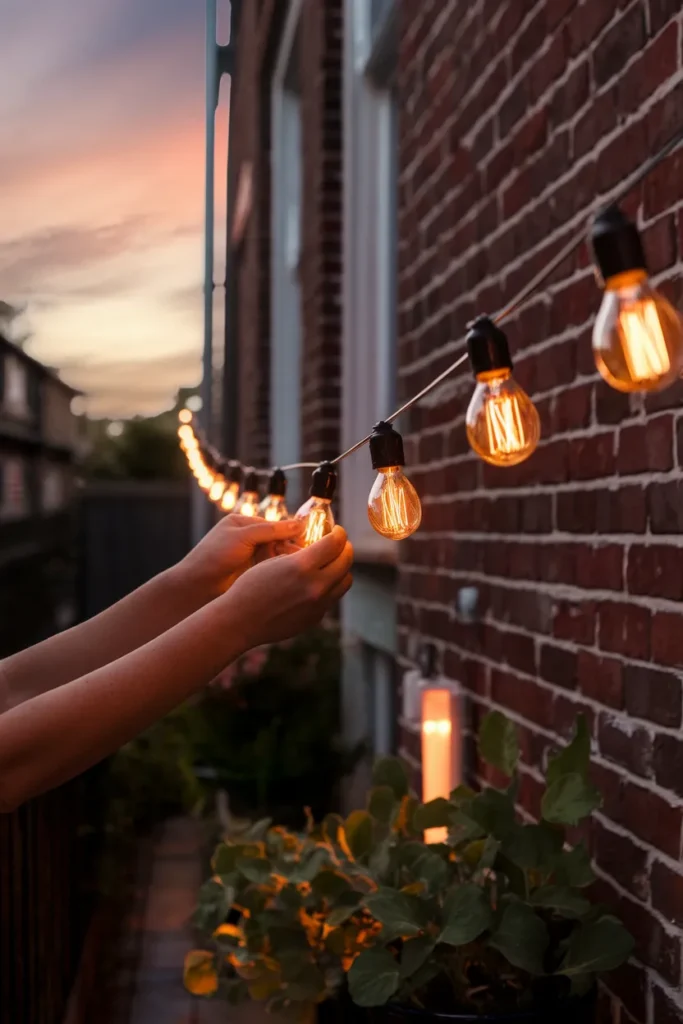
A narrow patio earns its keep after dinner. String lights are the fastest win: one 48-foot strand of Brightech Ambience Pro cafe bulbs, in the $30 to $50 range, zigzagged high along the long wall, doubles the perceived width because the glow washes both surfaces. Hang them from a galvanized guide wire, not the cord.
I skipped the guide wire on our first strand. It sagged to forehead height within a week, and ten dollars of hardware from Ace in October fixed what looked like a hundred-dollar problem. Below the string layer, add two or three warm solar lanterns from Dollar Tree or Target at ground level so the light stacks in layers, high, middle, low. Skip anything cool-toned. Warm white, 2700K or lower, is the whole mood.
Claim the Under-Deck Dead Zone
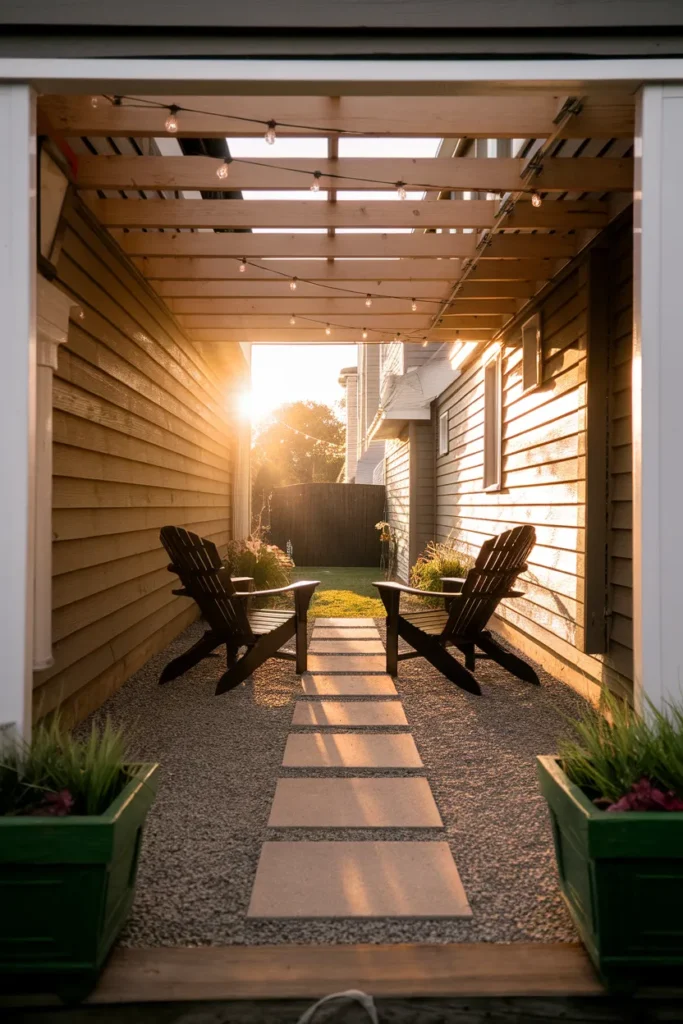
If your townhouse has a raised deck off the second level, you own a shaded room you’re probably using for spider storage. Pinterest search demand for under deck patios in townhouses is real and rising, and it’s the single most overlooked square footage in row-home living. Level the ground with landscape fabric and pea gravel for well under $200 in materials, hang string lights between the joists, and park two Polywood folding Adirondacks (each in the $200 to $300 range, and they shrug off drips) facing out toward the yard.
The ceiling drips in rain, so treat it as a fair-weather room unless you finish it. We walked through the full fix, gutters and all, in our guide to under deck ideas, and it’s a weekend job, not a contractor job.
Where the Budget Actually Goes
Townhouse patio ideas fail most often from spending in the wrong order, so here’s the order that works. Spend first on one comfortable seat, because a patio nobody sits on is decor, not living space; IKEA’s Bondholmen pieces mostly land under $300 and take a cushion upgrade well. Spend second on lighting, since $50 of warm bulbs changes the space more than $500 of accessories.
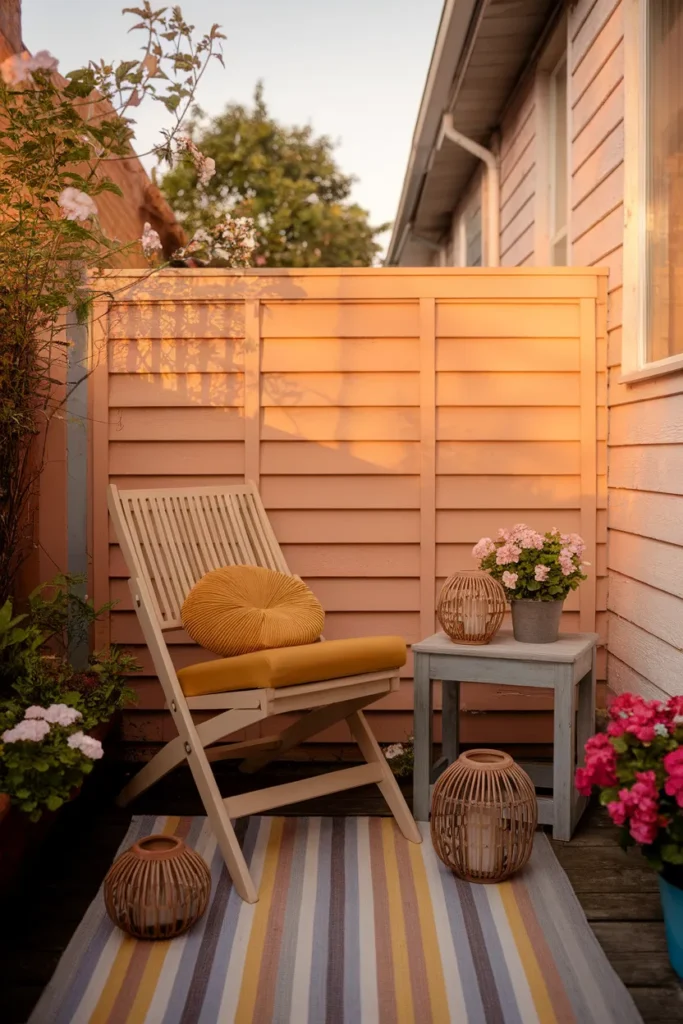
Spend third on three big planters. Everything after that (pillows, lanterns, the citronella candle, the galvanized drink bucket) can come from Dollar Tree, HomeGoods, and the thrift store for pocket change, and honestly the thrifted stuff usually has more character.
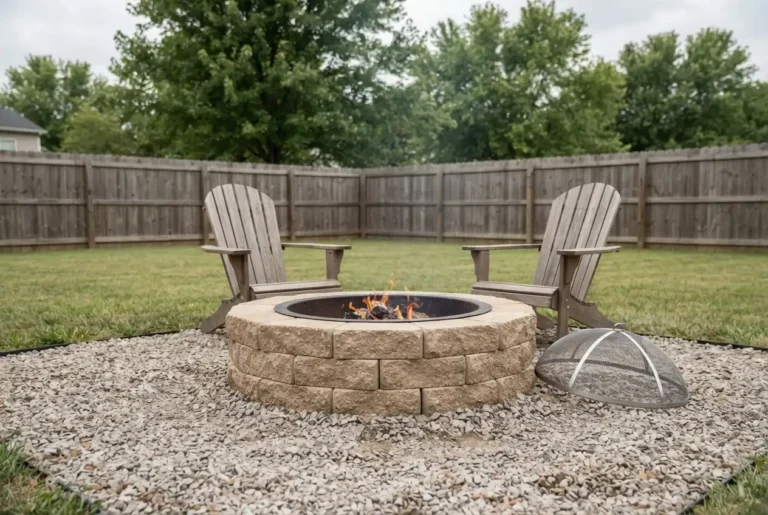
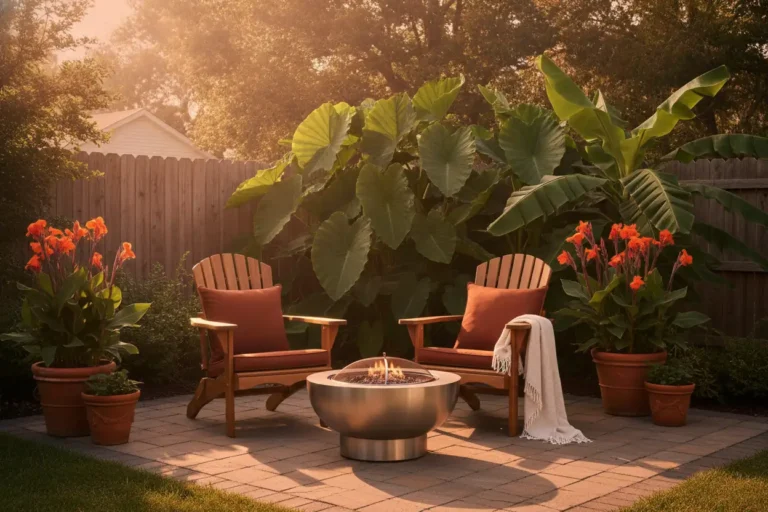
A tabletop fire bowl like the Solo Stove Mesa, usually under $100, is the one splurge-adjacent add we’d defend for fall evenings. Small flame, small footprint, big effect.
Townhouse Patio Questions, Answered
How do I make my townhouse patio more private?
Stack freestanding layers instead of building up the fence: tall planters with arborvitae or bamboo, a cedar or metal screen anchored in a planter box, and a climbing vine for height. None of it touches the shared fence, so HOA rules and rental leases stay happy.
How do you decorate a long, narrow patio?
Treat it like a railroad apartment. Keep furniture on one long wall, protect a 36-inch walkway, split the length into three zones, and place something glowing or green at the far end so the eye travels the full distance.
How can I make a small townhouse patio look bigger?
Use one large rug per zone instead of scattered small ones, choose three big planters over ten little pots, and wash the long wall with warm string light at night. Clear floor plus lit walls reads wide.
What can I do with a townhouse patio on a budget?
Follow the spend order: one good seat, then warm lighting, then three oversized planters. Fill in with Dollar Tree lanterns, thrifted tables, and clearance pillows. Most of the townhouse patio ideas in this guide land under a few hundred dollars total.
What should I do with the space under my townhouse deck?
Level it with landscape fabric and pea gravel, string lights between the joists, and add two weather-tough chairs. It becomes the shadiest, coziest room you own, and it costs less than most furniture sets.
What plants work best on a shady townhouse patio?
Boxwood, ferns, hostas, and heuchera thrive in the walled-in shade typical of Zones 5 to 9 row homes. Check your exact zone before buying perennials, and hold tender annuals until after your area’s usual last frost.
Make the Narrow Patio the Best Room in the House
A townhouse patio is small enough to finish in one determined weekend, and that’s its superpower. Protect the 36-inch lane, screen the seat, light the long wall warm, and let three big pots do the gardening. Start with whichever section made you nod hardest, and if your slab connects to a raised deck, our deck ideas off the back of the house pick up exactly where this guide leaves off. Save the ideas you’ll use, and go claim your corridor.