Patio Roof Ideas for Year-Round Shade
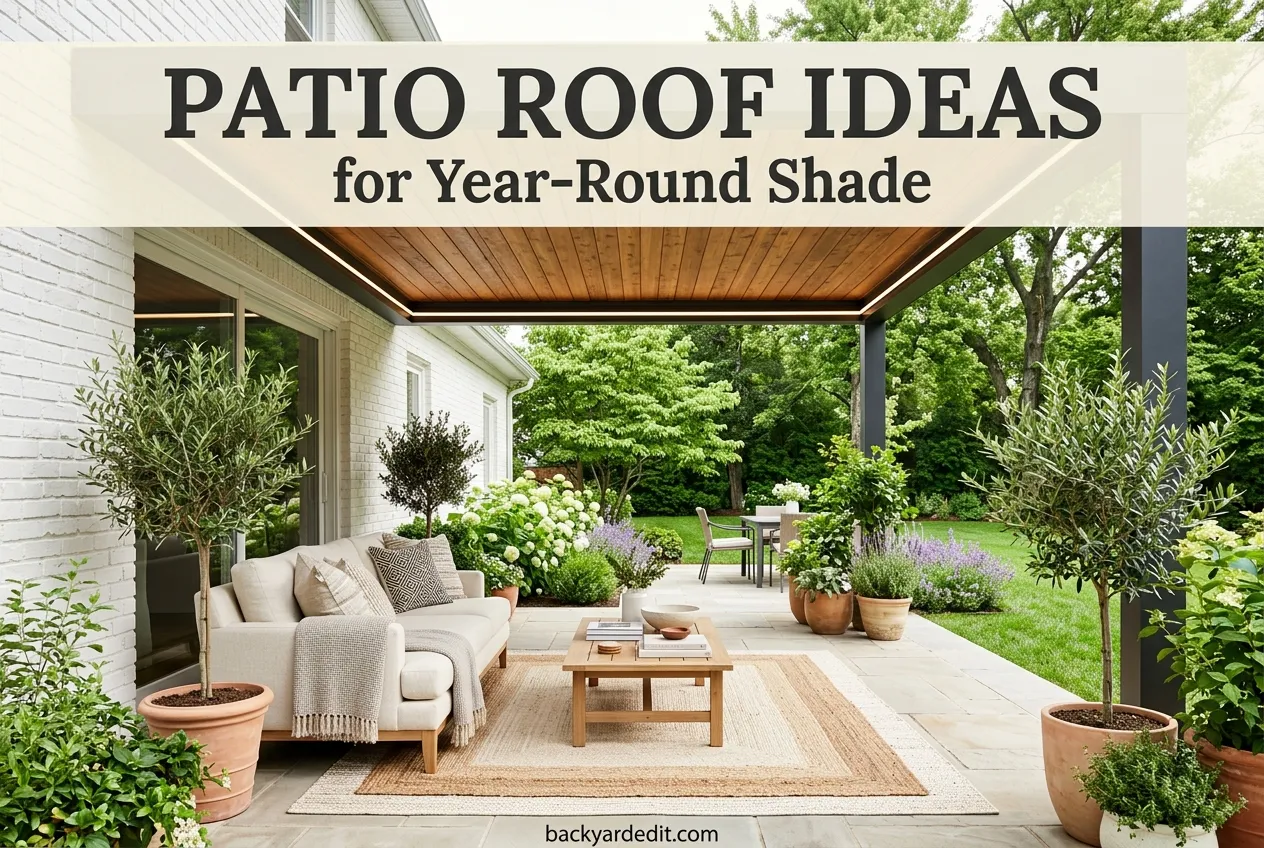
Your patio has a scheduling problem. From noon to four it bakes, the first drizzle clears it out, and by late October the furniture is stacked in the garage. The right patio roof ideas fix all three at once, and you do not need a five-figure addition to get there. This guide walks through solid covers, louvered pergolas, vine-draped lattice, and budget builds under $200, with real prices we checked this week and the permit thresholds nobody warns you about.
If your outdoor space sits on a raised deck rather than a slab, our covered deck ideas off the back of the house pair perfectly with everything below. Grab a tape measure. We are turning that sun-scorched slab into the room you use in January.
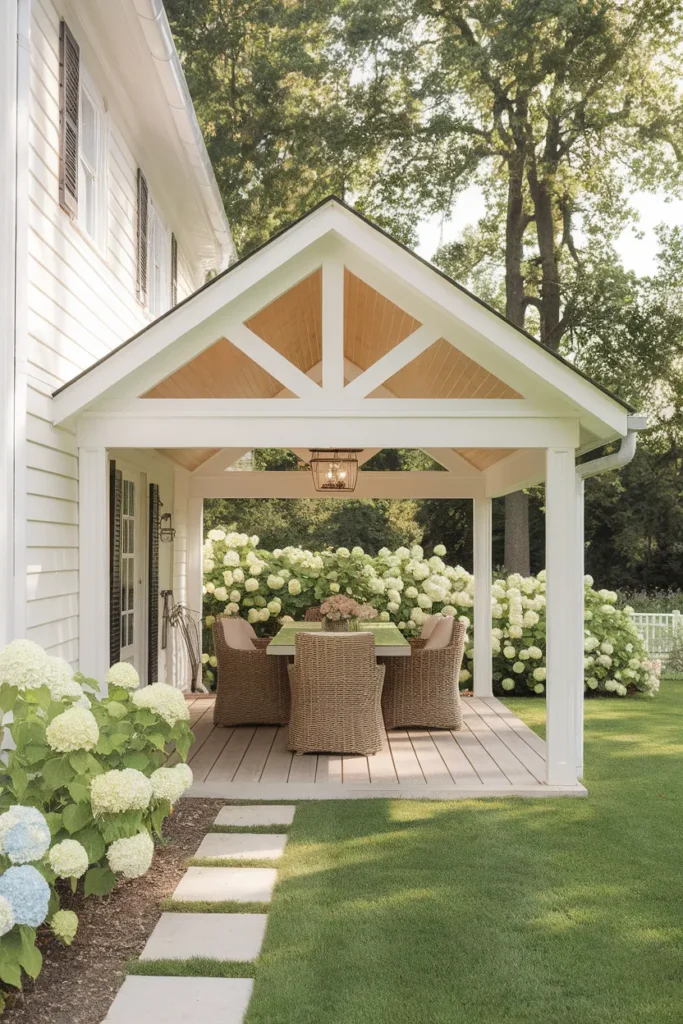
Start With the Four-Question Shade Test
Before you fall for a single pergola photo, run your space through what we call the Four-Question Shade Test. It is a quick decision filter that matches your patio to the right roof category in under five minutes, and we will come back to it throughout this guide. Answer honestly. The test saves you from buying shade you cannot legally build or will not actually use.
| Question | If YES | If NO |
|---|---|---|
| 1. Do you need shelter in all four seasons? | Solid roof or hardtop | Fabric, sail, or open pergola works |
| 2. Will it attach to the house? | Expect a permit almost everywhere | More freedom, check size rules |
| 3. Is the footprint over 200 square feet? | Permit likely even freestanding | Many areas let it slide |
| 4. Is rain a bigger enemy than sun? | Waterproof panels or metal | Filtered shade is enough |
That 200 square foot line is not a random number. Multiple permitting guides we compared put it right at the common threshold where freestanding structures start needing city sign-off, and attached covers almost universally require a permit regardless of size. Screenshot the table. It is the backbone of every decision below.
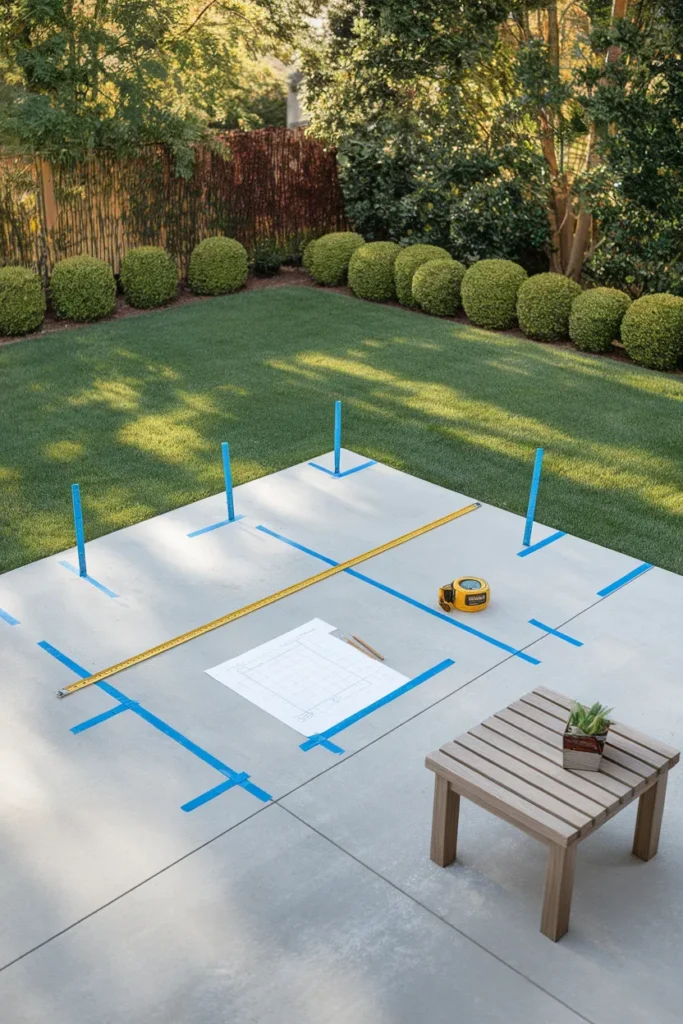
Solid Roof Patio Covers That Earn Their Keep All Year
If you answered yes to question one, start here. A solid roof is the only patio cover that laughs at a downpour, and it comes in more price tiers than most people expect. The classic move is extending your home’s existing roofline over the slab in a gable or shed profile, which reads as original architecture and shelters you from July sun and February sleet alike.
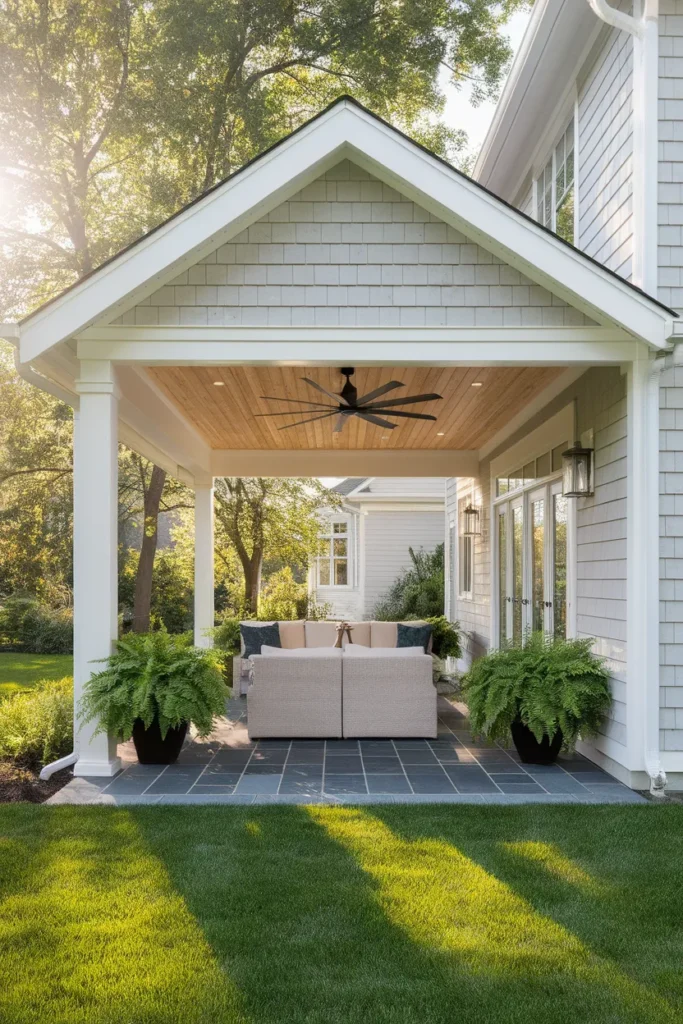
You do not have to frame one from scratch, though. When we priced hardtop covers at Home Depot this week, a 14 by 10 foot lean-to style cover with a galvanized steel roof came in just under $700, while the aluminum version of the same footprint ran about $1,100 and shrugs off snow load and UV without repainting. Aluminum earns its premium in maintenance too. An occasional wash with mild detergent is genuinely the whole care routine.
Insulated panel covers cost more, in the $150 to $300 per linear foot range installed, but they block heat transfer so the space under them stays noticeably cooler in August. One more solid-roof shortcut hides in plain sight: if you have a second-story deck, the dry ceiling you want may already exist above you. Our under deck ceiling ideas show how a drainage layer turns that drippy space into a finished covered patio for a fraction of new construction.
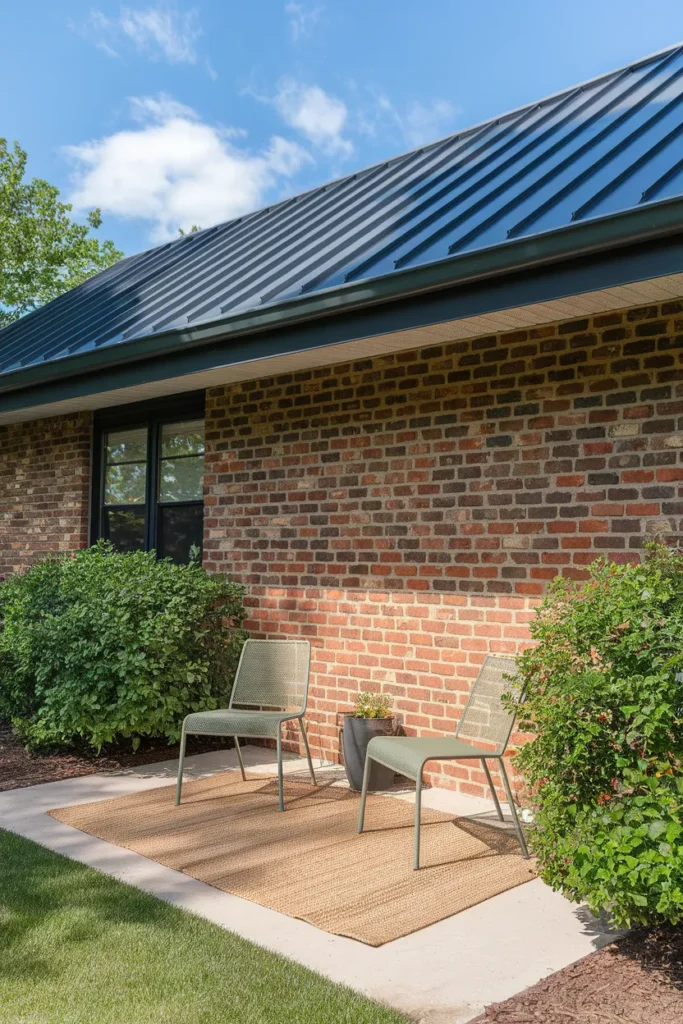
Louvered Pergola Roofs: Shade That Changes Its Mind
Louvered roofs are the answer for people who refuse to choose between sun and shelter. Aluminum slats rotate open for breeze and light, then seal into a rain-shedding roof at the press of a button or the turn of a crank. Live pricing puts an entry manual-adjust 12 by 12 aluminum louvered pergola around $1,600, while big motorized systems with integrated LED lighting and side screens climb past $6,000, and premium installed setups can reach the $20,000 range.
Here is our contrarian take, and it will save some of you real money: a fully solid roof is not automatically the upgrade over louvers or filtered shade. A permanent solid cover can darken the interior room behind it, trap heat on still days, and turn a bright kitchen window into a cave view. If your patio faces north or your summers are humid rather than scorching, adjustable or filtered shade often makes the space more usable, not less. Question four of the Shade Test exists for exactly this reason.
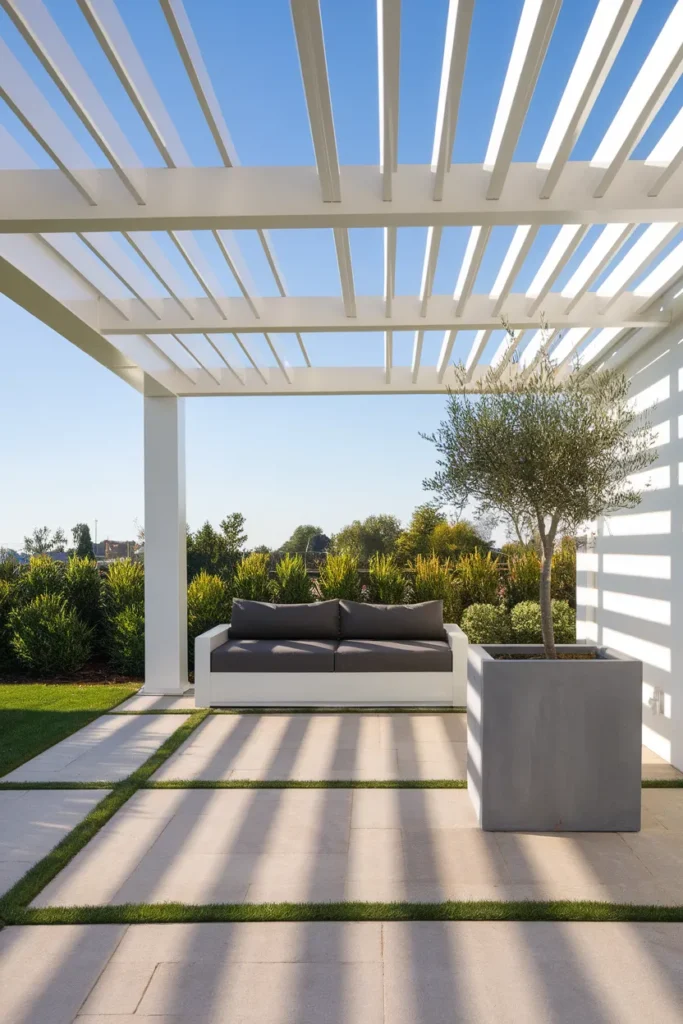
Pergolas, Lattice, and Vines: Shade You Can Grow
A wood pergola is still the best-loved patio roof idea on Pinterest, and the formula has not changed since people wore tunics: posts, beams, spaced rafters, filtered light. Rafter spacing controls how much sun gets through. Set rafters close for deep shade or wide for a brighter, airier feel, then let plants finish the job.
Training vines over the top turns a pergola into a living roof that gets better every season. Wisteria, jasmine, grape vines, and climbing roses are the classic picks, and wisteria in particular thrives across the typical Zone 5 to 9 band that covers most US backyards. The payoff is measurable, honestly. According to the Department of Energy’s landscaping for shade guide, plant shading and evapotranspiration can cut nearby air temperatures by up to 6 degrees Fahrenheit, and shaded ground can sit dramatically cooler than sunbaked hardscape a few feet away.
Cedar lattice panels deliver a similar dappled effect without the three-year wait for vines to fill in. A lattice roof throws shifting diamond shadows across the patio floor, and it pairs beautifully with question four of the Shade Test: gorgeous against sun, useless against rain. Know which enemy you are fighting.
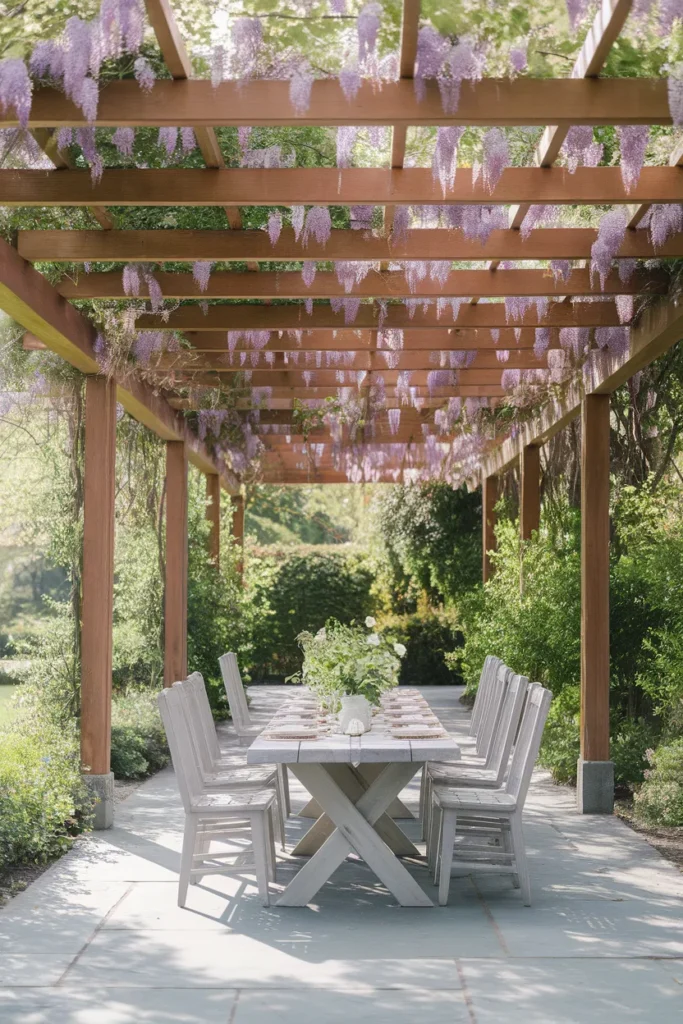
Budget Patio Roof Ideas Under $200
No permit money, no problem. This tier is where renters, first-timers, and the impatient win, and the very first idea is the highest-value move in this entire guide: a shade sail. For well under $100 you get sculptural, cantilevered shade that survives wind by design, installs in an afternoon with three or four anchor points, and comes down in November in ten minutes. Brands like Coolaroo sell UV-blocking sails at Home Depot and Lowe’s in a dozen shapes.
Three more budget builds that punch above their price:
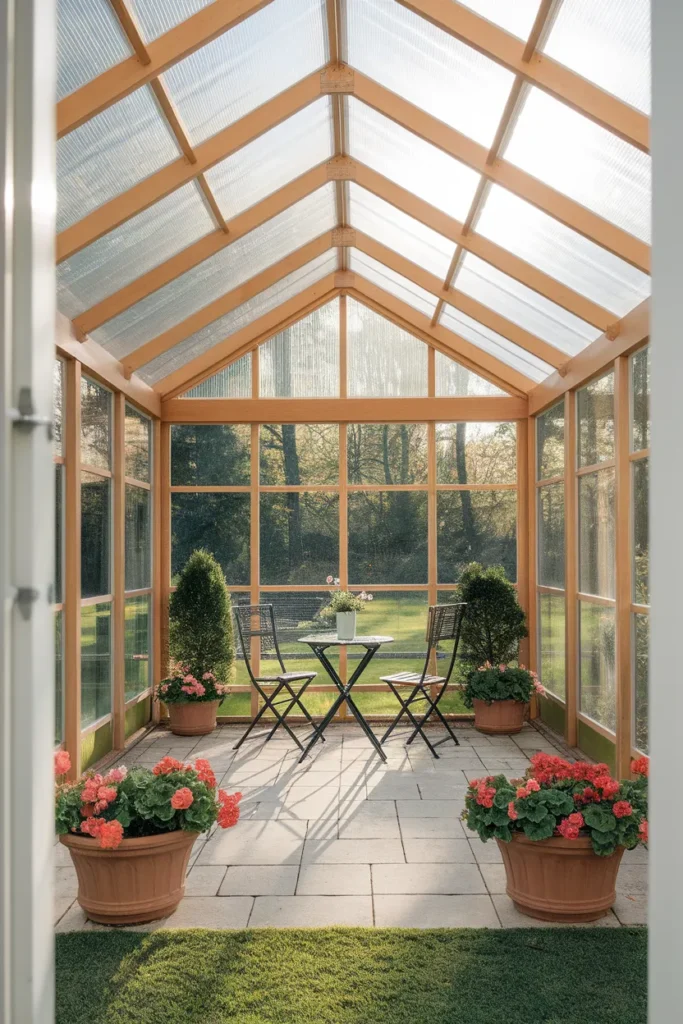
- Corrugated polycarbonate roof on a simple wood frame. Clear or tinted panels run under $100 each online, resist leaks, and often carry long manufacturer warranties. Overlap panels per the spec sheet and screw into the purlins, and you have a rain-proof glow-through roof for a couple hundred dollars.
- A carport canopy, repurposed. A 12 by 20 foot freestanding canopy covers a family-size patio for less than a single custom beam, and because nothing touches the house, it usually skips the permit conversation entirely.
- A replacement pergola canopy. Already own a bare pergola frame? Retractable fabric canopies made to fit standard frames sell for under $100 and slide open or closed on wire guides.
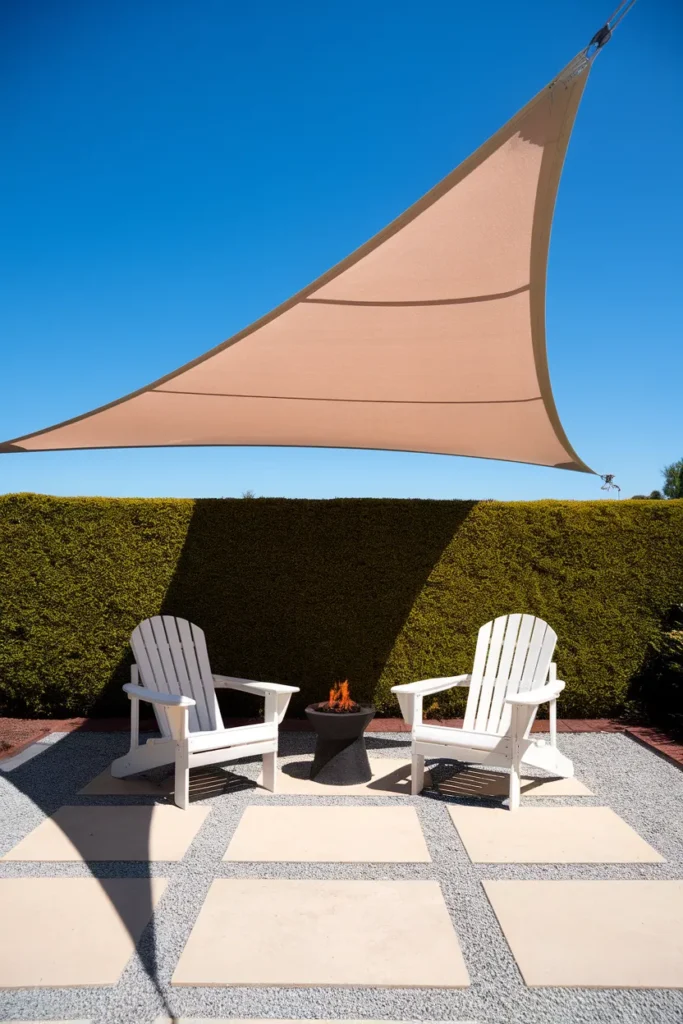
Cheap does not mean flimsy if you buy once. A $15 tarp will shred in one good storm. A UV-stabilized sail or polycarbonate panel will not.
Renter-Friendly and No-Permit Patio Roof Ideas
Nobody on page one sorts patio roof ideas by whether you can legally build them, which is wild, because the permit question kills more projects than budget does.
We compared permit pages from three different states while researching this guide and the rules refuse to agree: Phoenix wants a permit for any attached cover plus freestanding units over 200 square feet, while San Diego lets freestanding structures under 300 square feet skip it. The pattern underneath is consistent though. Freestanding, under the local size threshold, nothing bolted to the house: that is the low-friction lane.
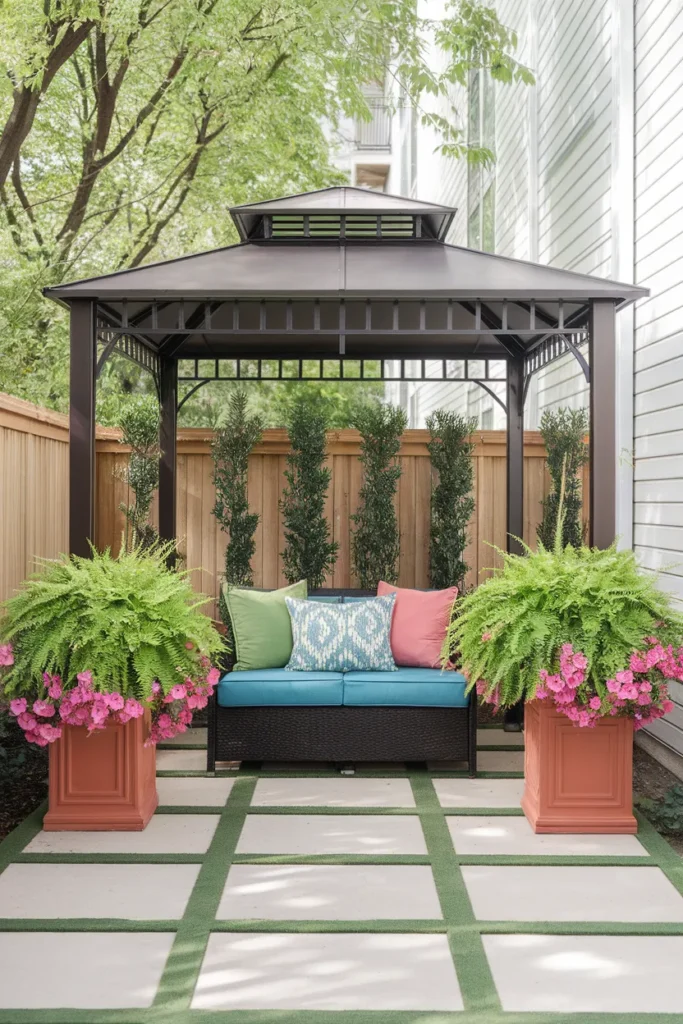
Living in that lane, you still have great options. A hardtop gazebo (Sunjoy’s cedar-frame models with ventilated two-tier steel roofs are a popular pick) delivers real rain protection and moves out when your lease does. A cantilever umbrella swings shade wherever the afternoon sun lands. A retractable awning mounts with minimal drama, rolls away in high wind, and the fabric on most models lasts about 15 years by Family Handyman’s estimate.
Renters, put down the drill. Freestanding beats mounted every single time your security deposit is involved.
The Year-Round Comfort Layer: One Roof, Four Seasons
Here is the gap almost every competitor leaves open: they hand you a roof and stop. A roof is season one. The comfort layer is seasons two through four, and it works on nearly every structure above.
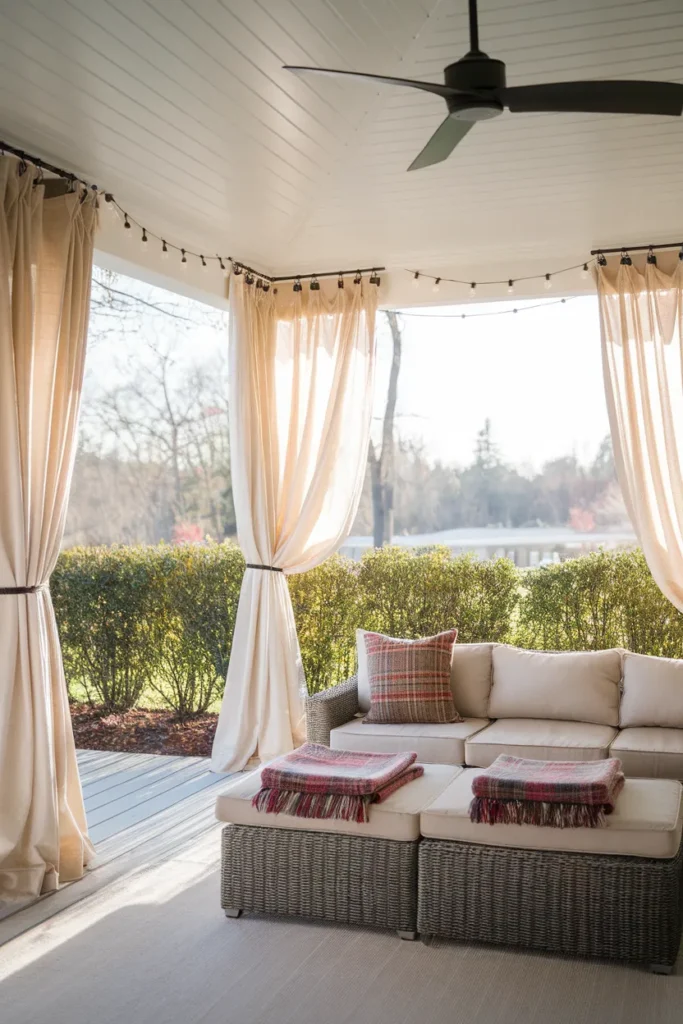
Summer wants airflow. A damp-rated ceiling fan under a solid cover drops the felt temperature several degrees and chases off mosquitoes as a bonus. Fall wants wind control, which is where floor-length outdoor curtains earn their keep, sliding closed against a cold gust and framing the view the rest of the time.
Winter wants light and a reason to walk outside. Clear polycarbonate or acrylic panels keep precious low-angle sun pouring in while rain slides off, and warm bulbs finish the argument. While pulling the live Pinterest data for this article, we kept seeing the same trio on the most-saved covered patios: simple roof, warm string lights, something soft to sit on. Steal the trio. Our guide to covered patio string lights shows nine ways to hang them without drilling a single hole in your new roof.
Want to go further? Screening in an existing covered patio converts it to true three-season space, and Family Handyman’s screened-in patio build pegs the average return on that investment at north of 80 percent. Check your roof’s snow load rating before winter regardless of climate zone. Common code guidance calls for patio covers to handle at least 10 pounds per square foot, with a minimum 7 foot ceiling for headroom.
FAQ: Patio Roof Ideas
What is the cheapest way to put a roof over a patio? A shade sail or large cantilever umbrella, both typically under $100. For a rain-proof roof on a budget, corrugated polycarbonate panels on a basic lumber frame deliver full coverage for a couple hundred dollars in materials.
Do I need a permit to build a patio roof? Usually yes if it attaches to your house, and often yes for freestanding structures over roughly 200 square feet, though thresholds vary widely by city. Call your local building department before you buy lumber. It is a ten-minute call that can save a teardown order.
Can you attach a patio roof to your existing roofline? Yes. Extending the home’s roofline in a gable, hip, or shed profile is the most cohesive-looking option, and riser brackets can mount a new cover above the existing roof plane to preserve airflow and interior light. This route almost always needs a permit and, frequently, an engineer’s sign-off.
What is the best material for a patio roof? Aluminum wins for low maintenance and weather resistance, polycarbonate wins for budget rain protection with natural light, and wood wins for warmth and looks in exchange for upkeep. Match the material to your climate’s worst habit, not its best day.
Does a covered patio add value to your home? Generally yes when it is permitted and well built. Family Handyman reports the average return on a screened patio conversion lands above 80 percent, and a covered outdoor room extends usable square footage in buyers’ eyes.
How tall should a patio roof be? Plan on a 7 foot minimum ceiling for comfortable headroom, with 8 to 10 feet feeling far more open. Many codes also cap attached covers around 12 feet for single-story homes.
Build the Shade, Keep the Seasons
Run the Four-Question Shade Test, pick your lane, and start small if you need to. A $90 sail this weekend does not stop you from framing the gable extension next spring, and every idea here stacks with the comfort layer that keeps you outside past the first frost. When your new roof is up, come back and tell us which patio roof ideas made the cut, then browse the rest of our patio and deck edits while the sealant dries. Your January coffee spot is waiting.