Shade Container Garden Ideas That Actually Thrive on a Low-Light Patio
Some patios never see the sun. Ours barely gets two hours before a fence swallows the light, and for a long time that felt like a dead end for pots. It isn’t. A shade container garden can be fuller, moodier, and honestly lower-fuss than anything you’d bake in full sun, because the plants that love low light also happen to be some of the most dramatic foliage plants around.
Here’s the promise: by the end of this, you’ll know exactly which plants match your specific shade, how to combine them so a pot looks finished instead of thin, and how to keep them alive without babysitting. No guessing. No sad, leggy impatiens.
Shade gets a bad reputation it doesn’t deserve. Cool, even light is gentle on leaves. Pots in shade dry out slower, so you water less. And the color range (silver, lime, burgundy, cream) reads richer in soft light than it ever does under harsh midday sun.
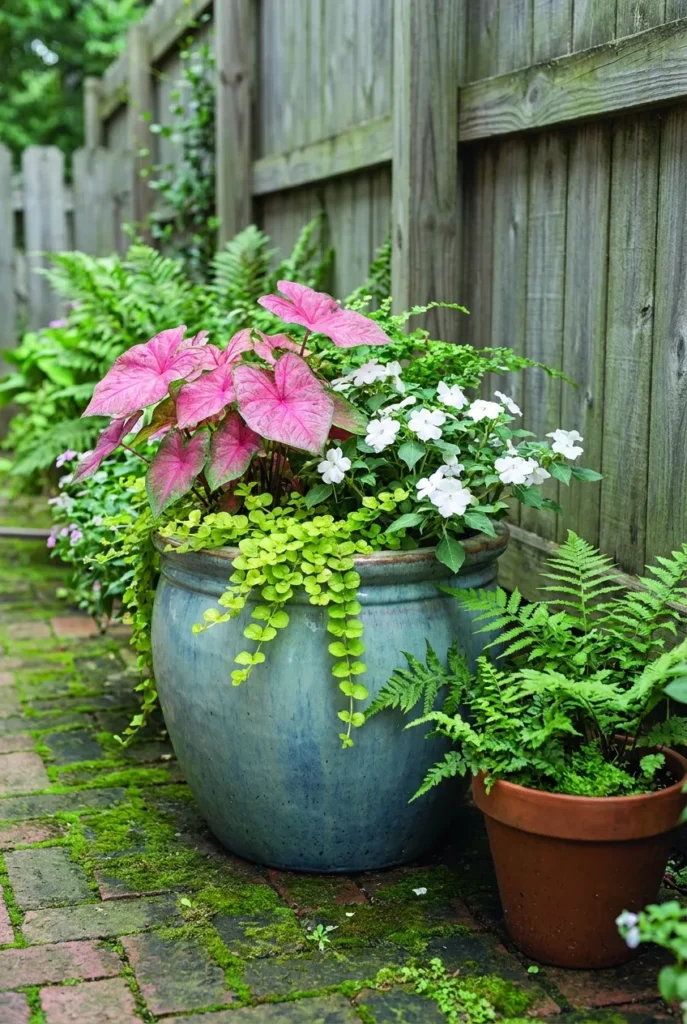
First, Read Your Light (The 60-Second Shade Test)
Before you buy a single plant, figure out what kind of shade you actually have. Most container fails trace back to this one skipped step. “Shade” is not one thing.
Watch your space across a full day and count direct-sun hours. Full shade means under 3 hours of direct sun, often reflected or filtered light only. Part shade (or part sun) means roughly 3 to 6 hours, usually morning sun and afternoon relief. Dappled shade is that shifting, broken light you get under a tree canopy.
North-facing porches and walls tend toward full shade. East-facing spots give you gentle morning sun, which most shade plants love. West-facing can be deceptively hot in late afternoon, so treat it as part shade at best.
Here’s the honest part: your plant tags will tell you this in plain language. Match the tag to your count and you’re most of the way there.
The Light-Match Rule (my simple framework): Count your direct-sun hours first, shop the plant tag second, and never buy a plant whose tag asks for more sun than your spot gives. Break that rule and no amount of fertilizer fixes it.
[YOUR EXPERIENCE: drop in a real detail here, e.g. how many direct-sun hours your patio actually gets and which direction it faces. This is where a true first-hand line makes the post trustworthy, so write what’s real for you rather than a generic claim.]
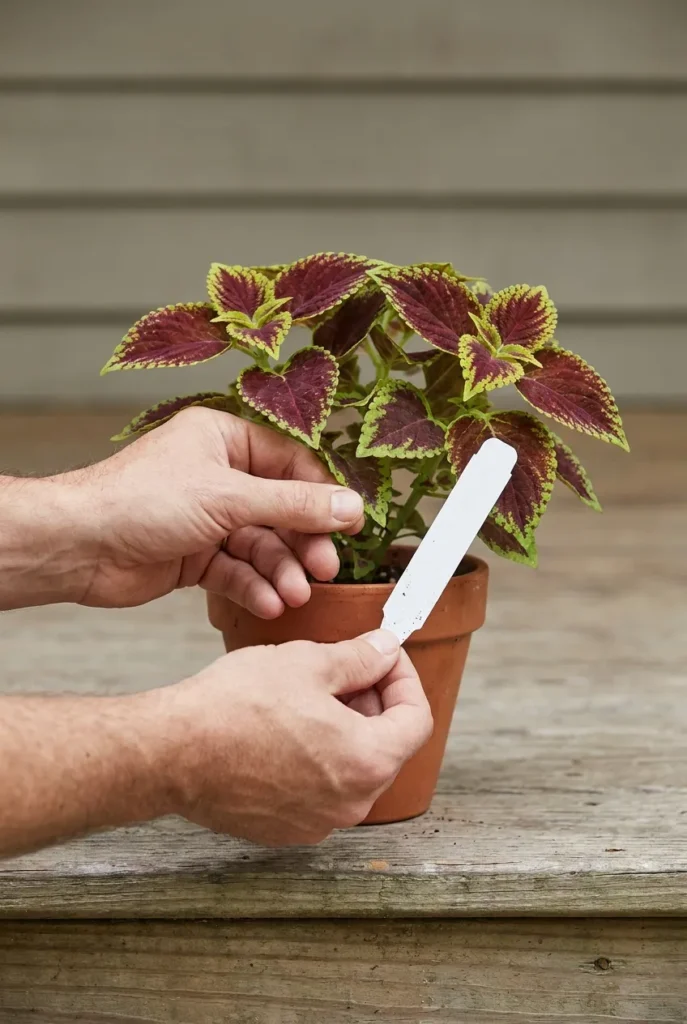
Best Plants for a Full Shade Container Garden
Full shade is where foliage does the heavy lifting. You lean on leaf shape, texture, and color instead of nonstop flowers, and the result looks more designed anyway.
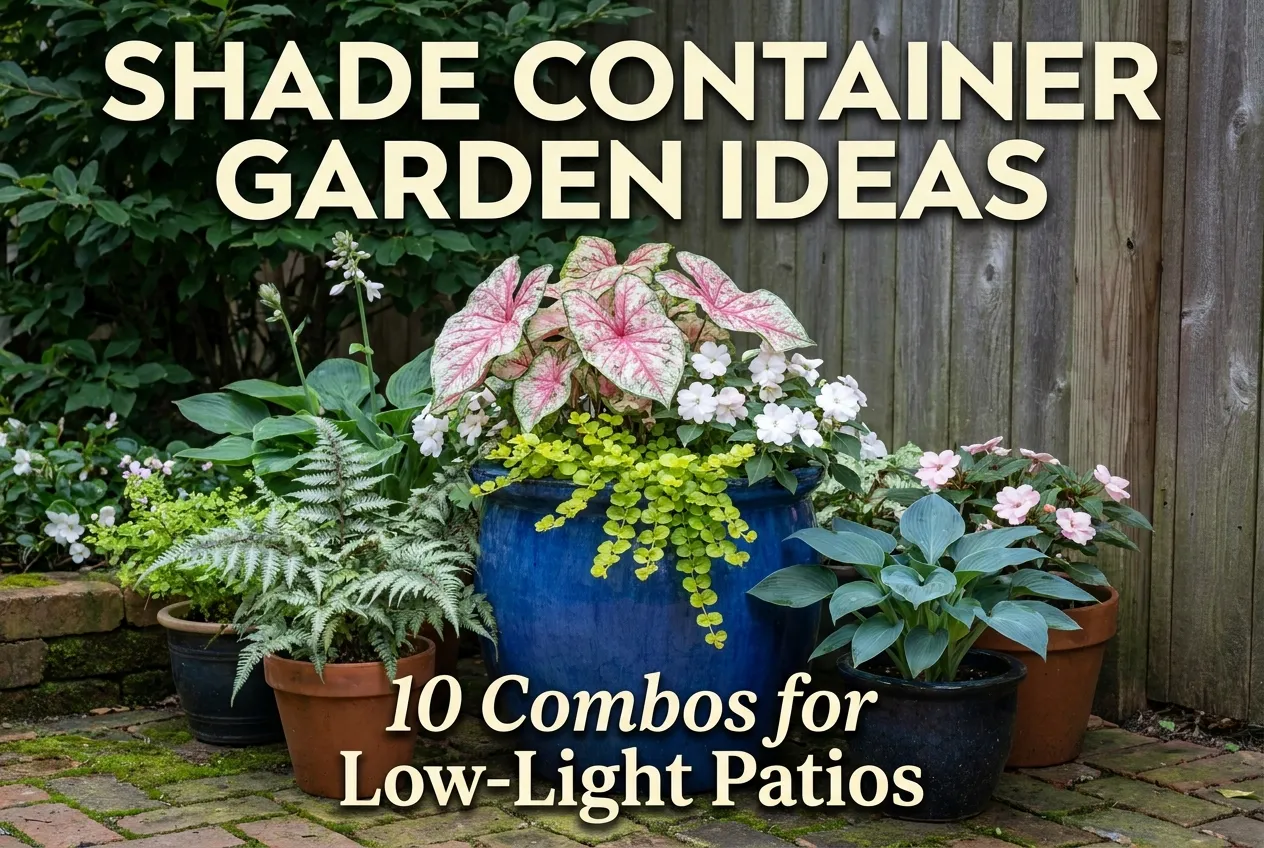
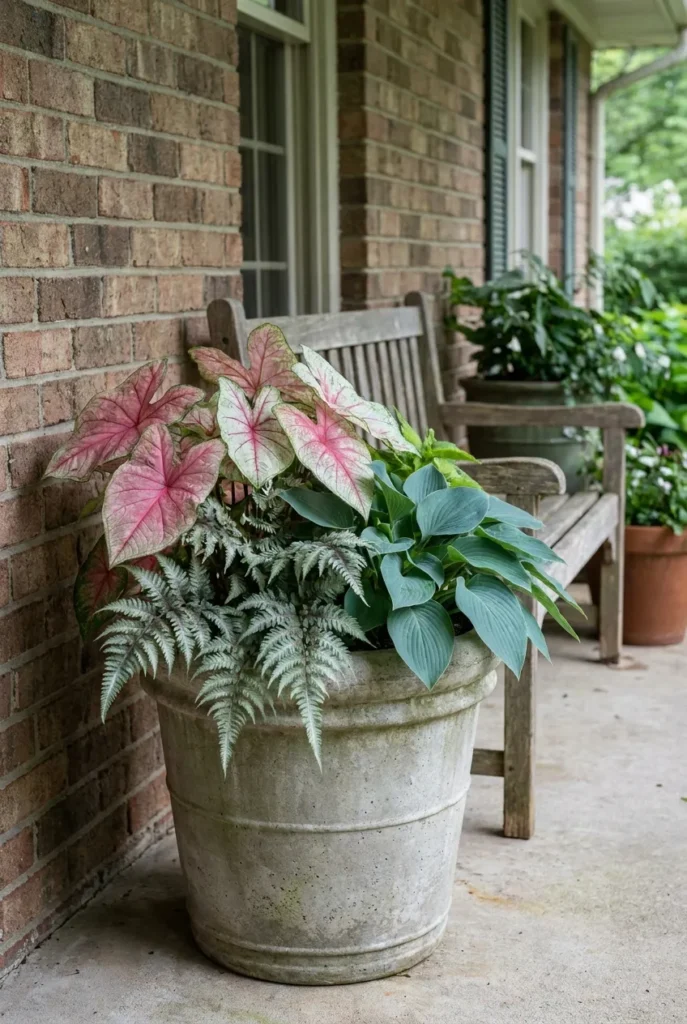
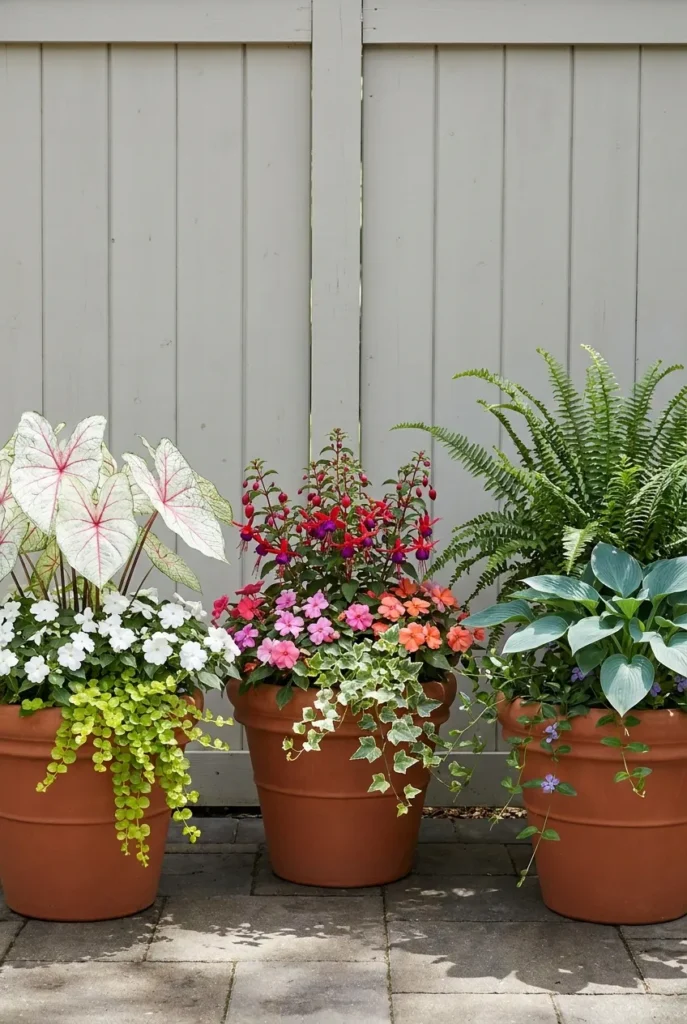
Caladiums are the star. Their heart-shaped leaves come in pink, white, red, and green marbling, they want partial to full shade, and they need consistent moisture without staying soggy. Bonnie Plants and garden-center caladium bulbs are widely stocked in spring.
Ferns bring the soft, feathery contrast. Autumn fern and Japanese painted fern both handle low light and add that woodland texture caladiums can’t. Hostas work in pots too, especially the blue and variegated types, and they read as instant lushness.
For a little color, look at rex begonias (grown for their swirled, jewel-toned leaves) and lungwort with its silver-spotted foliage. These are the quiet workhorses of a full shade container garden.
If you’re brand new to pots, start with the fundamentals in this guide to container gardening basics for beginners before you go deep on plant collecting. It’ll save you a few rookie mistakes.
Best Plants for Part Shade Container Garden Ideas
Give a pot 3 to 6 hours of gentle sun and your flower options open up fast. This is the sweet spot for color.
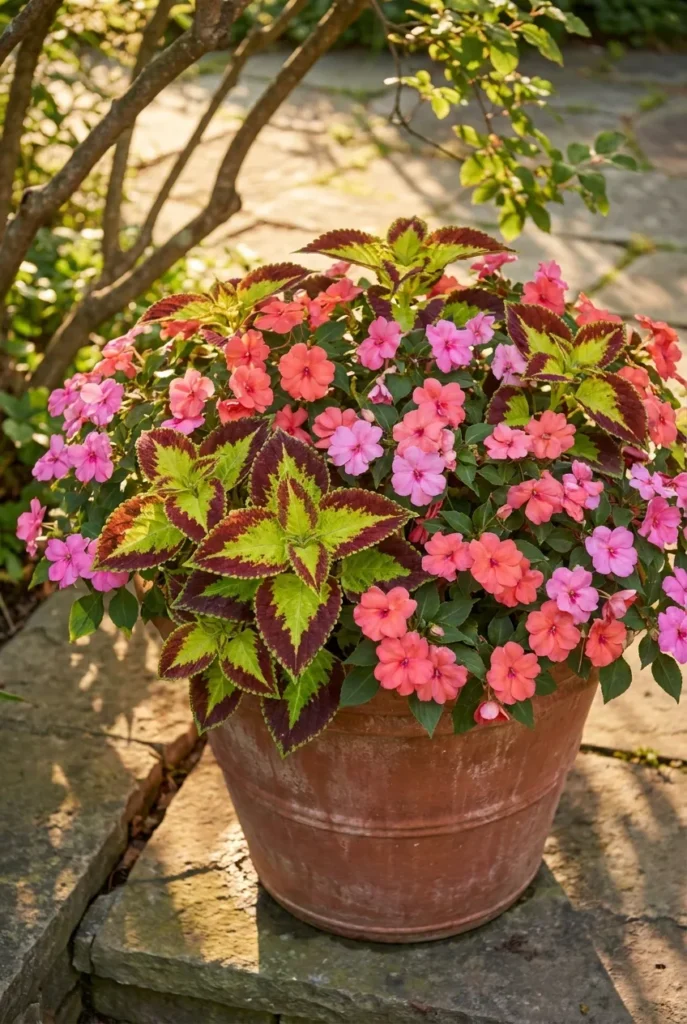
Impatiens are the classic here. They bloom all summer in soft light, they’re inexpensive, and they’ll fill a pot faster than almost anything, just keep them out of harsh afternoon sun, which scorches the leaves. Pair them with foliage for contrast.
Coleus is the other must-have, and it’s shockingly versatile. The burgundy, lime, and rose-splashed leaves handle part shade beautifully, and there are sun-tolerant varieties too. Fuchsia (especially the upright kinds) and browallia add cool-toned blooms that pop against green.
For flower ideas beyond the shade context, this roundup of flowers that do well in pots pairs nicely with what you’re planting here.
Shade Container Combos That Look Full (Thriller, Filler, Spiller)
A single-plant pot can look thin. The old thriller-filler-spiller formula fixes that, and it works even better in shade because the foliage textures do so much of the work.
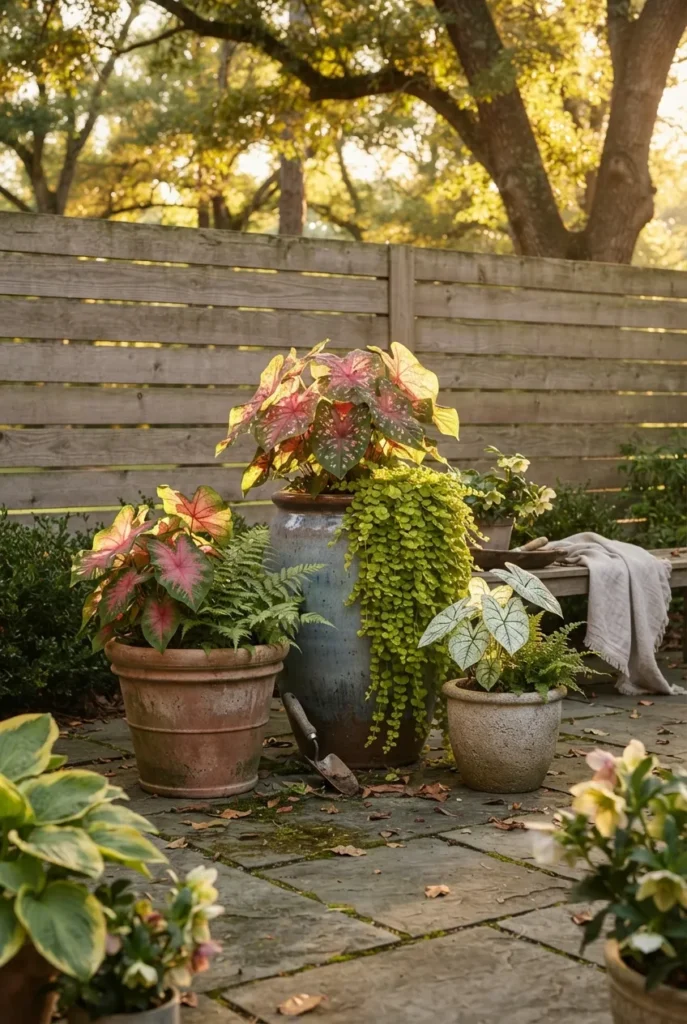
The thriller is your tall centerpiece. In shade, that’s a big caladium, an upright fuchsia, or a dramatic fern. The filler is the mid-height mounding mass: impatiens, coleus, or begonias. The spiller trails over the edge: creeping jenny (that electric lime is unbeatable in low light), ivy, or trailing vinca.
Here’s a screenshot-worthy starter chart you can build a pot from today.
The Shade Pot Trio Cheat Sheet:
- Full shade combo: caladium (thriller) + rex begonia (filler) + creeping jenny (spiller)
- Part shade combo: upright fuchsia (thriller) + impatiens (filler) + trailing ivy (spiller)
- All-foliage combo: Japanese painted fern (thriller) + hosta (filler) + variegated ivy (spiller)
Pick one row, buy those three, done. That’s the whole trick most listicles bury under 30 plant entries.
If you’re working with a tiny footprint, these small space container garden ideas show how to layer pots so a narrow shady corner still feels abundant.
Choosing Pots and Potting Mix for Shade
The container matters more in shade than people think, mostly because of moisture. Shaded soil dries slowly, so drainage becomes your priority.
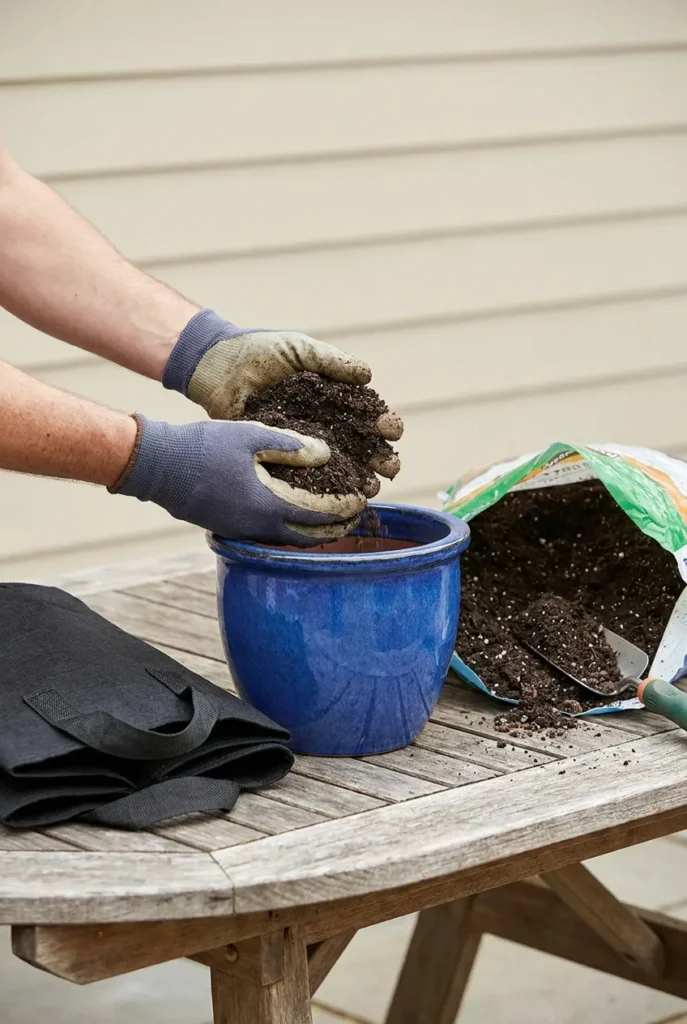
Every pot needs drainage holes, no exceptions. A glazed ceramic or thick resin pot holds moisture well, which is usually a plus in shade, while unglazed terracotta dries faster and can help if your spot stays damp. Fabric grow bags (Root Pouch and similar) breathe nicely and resist waterlogging.
Skip garden soil. Use a quality bagged potting mix like Miracle-Gro or Espoma so roots get air and water moves through instead of pooling. That single swap prevents most rot problems in low-light pots.
Watering and Care Without the Guesswork
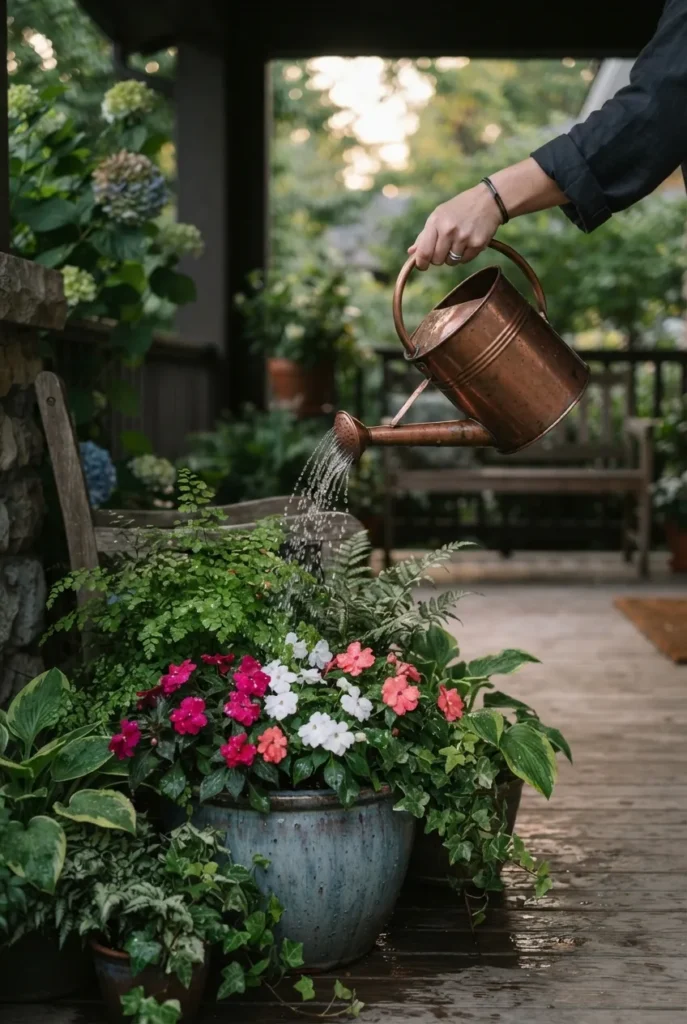
Good news: shade pots are lower-maintenance than sun pots. They dry out slower, so you water less often. The mistake is watering on a schedule instead of checking.
Stick a finger an inch or two into the mix. Dry at the fingertip means water; still damp means wait. Most shade containers in summer need a drink every 2 to 3 days, sometimes less, versus daily for sun pots. Caladiums in particular want even moisture but hate sitting in water.
Feed lightly. A diluted liquid fertilizer every couple of weeks keeps foliage vivid without pushing weak growth. Pinch back leggy coleus and deadhead spent impatiens to keep things bushy.
[YOUR EXPERIENCE: add a real watering observation here if you have one, e.g. how often your shaded pots actually needed water last summer and any plant that surprised you. A specific true detail here is what separates this post from the generic ones.]
Shade Containers for Renters, Balconies, and North-Facing Spots
Rented balcony? North wall that never sees sun? This is where a shade container garden genuinely shines, because you’re not fighting the space.
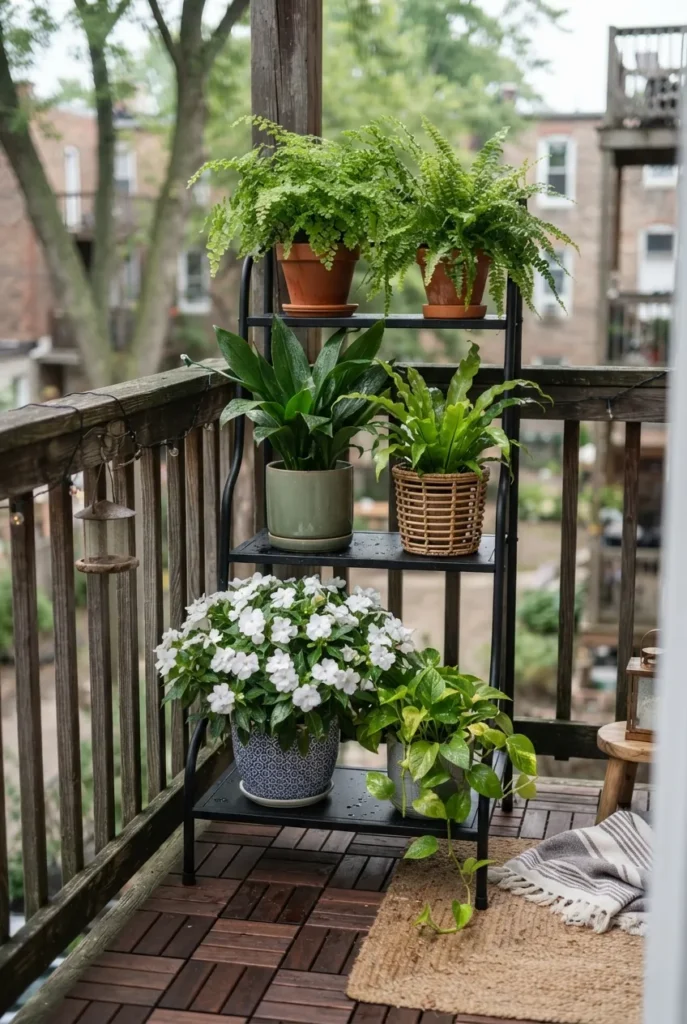
Go vertical to grab what light exists. A tiered plant stand or a railing planter lifts foliage toward the brightest zone. Lightweight resin and fabric pots move easily, which matters when you can’t drill into anything and might take it all with you when you move.
For deep-shade balconies, lean almost entirely on foliage: ferns, cast iron plant (nearly indestructible), and caladiums. Add one pot of impatiens for a color hit near whatever edge catches the most light.
Matching Plants to Your Zone and Season
Annuals like impatiens and coleus don’t care about your zone since you replant them yearly. But if you want perennials that return (hostas, ferns, brunnera, lungwort), the zone matters.
Most classic shade perennials are happy in USDA zones 3 through 8 or 9, though pots run a little colder than the ground in winter, so treat your container as one zone colder than your map says. If you’re unsure where you fall, check your USDA hardiness zone before buying perennials.
Season-wise: plant tender shade lovers like caladium after your last frost when soil has warmed, since they sulk in cold. For region-specific timing, university extension guidance on container plants is the reliable source.
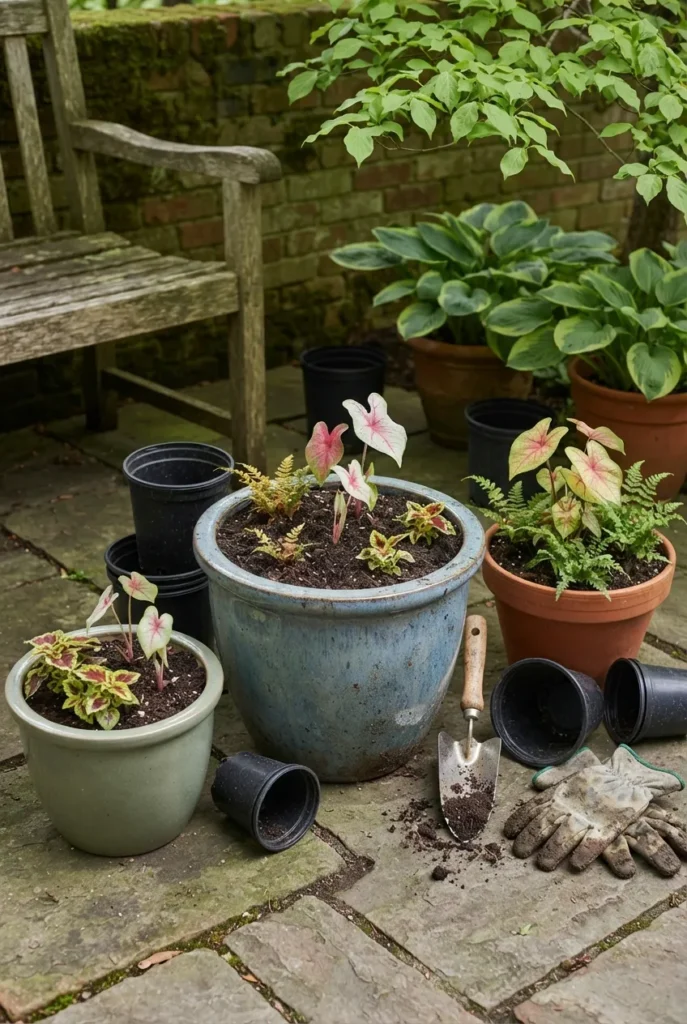
Styling Your Shade Containers for a Finished Look
Plants make the pot; styling makes the corner. A few small moves turn a couple of containers into a scene.
Cluster in odd numbers and vary the heights, tall pot, medium pot, low trailing pot, so the eye moves. Repeat one color (a single leaf tone or bloom color) across the grouping to tie it together. And give it a backdrop: a plain wall, a section of fence, or a simple trellis makes the greenery read intentional.
Keep the palette calm in shade. Silvers, limes, creams, and one accent color look elegant in soft light, where a rainbow can look busy.
Frequently Asked Questions
What are the best potted plants for a shaded porch?
For a shaded porch, lean on impatiens, coleus, caladiums, ferns, begonias, and hostas. Impatiens give steady color in part shade, while caladiums and ferns carry a full-shade porch on foliage alone.
What flowers grow in full shade containers?
True full shade is tough on flowers, but impatiens, begonias, and browallia bloom in low light better than most. In the deepest shade, expect foliage plants to do the visual work and treat flowers as accents.
Are there tall container plants for shade?
Yes. Upright fuchsia, larger caladiums, cast iron plant, and taller ferns all add height. Use one as the “thriller” centerpiece and surround it with mounding fillers.
Can perennials live in shade containers?
They can. Hostas, ferns, brunnera, and lungwort return year after year, but pots get colder in winter than the ground, so choose perennials rated at least one zone hardier than your area.
How often should I water a shade container garden?
Less than you’d think. Shaded pots dry slowly, so many need water only every 2 to 3 days in summer. Check the top inch of soil and water when it feels dry, not on a fixed schedule.
What are low-maintenance shade container plants?
Cast iron plant, ferns, hostas, and coleus are about as easy as it gets. They tolerate low light, forgive occasional missed watering, and need little more than the odd trim.
Bringing It All Together
A shady patio isn’t a limitation, it’s a different palette. Once you match plants to your real light, lean on foliage for drama, and let a simple thriller-filler-spiller combo do the composing, low light becomes the easy-mode version of container gardening. Slower watering, softer color, less scorch.
Pick one combo from the cheat sheet, grab a pot with drainage, and start with three plants this weekend. Then come back and tell us which shade combo you tried, we always love seeing how a dim corner turns lush.