Safe and Pretty Children’s Garden Play Area Ideas Parents Love
You want a children’s garden play area your kids beg to play in. You also want to still like looking at your own yard. Those two goals fight harder than anyone admits, and that tension is what we’re fixing today.
Here’s the promise. Twelve doable ideas, a simple layout method, and the real safety numbers most idea posts skip. No plastic explosion. No sad beige playground either.
We garden and we parent, so we’ve stepped on the LEGO and the rake. Real experience, e.g. “I built our first play corner in a Zone 6b yard the size of a parking space.”
Let’s make something good.
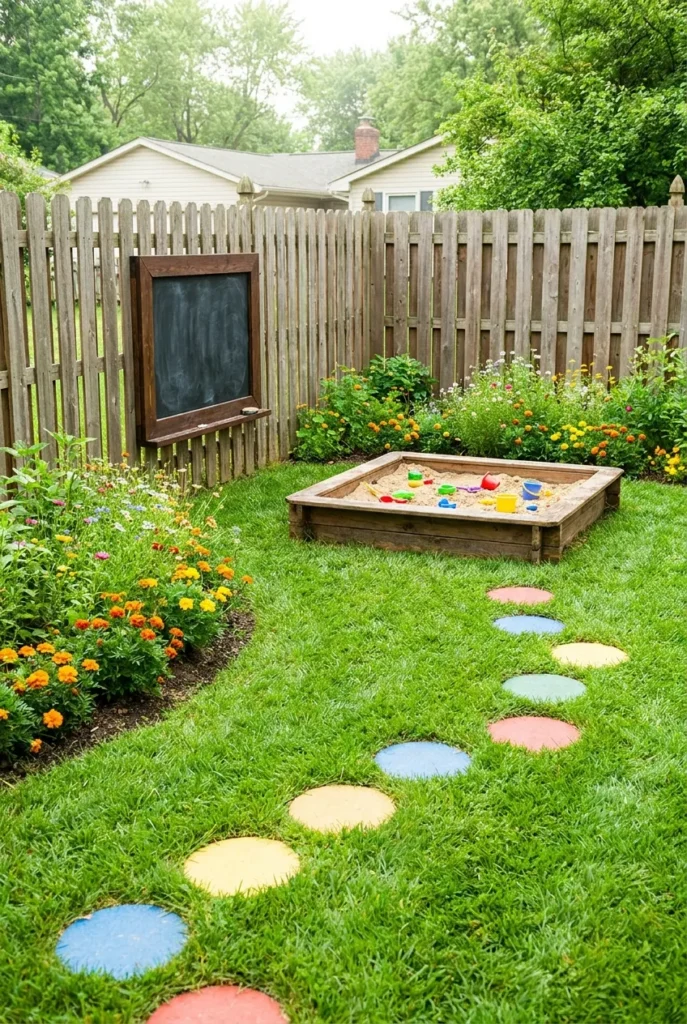
Start With a Plan: The Play, Rest, Grow Zone Method
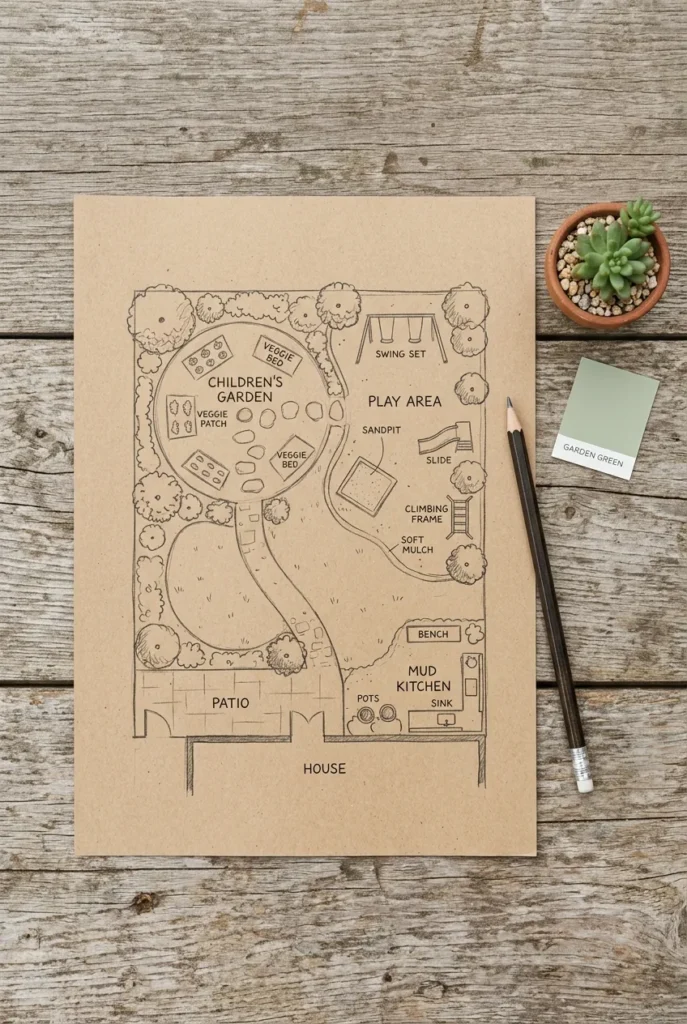
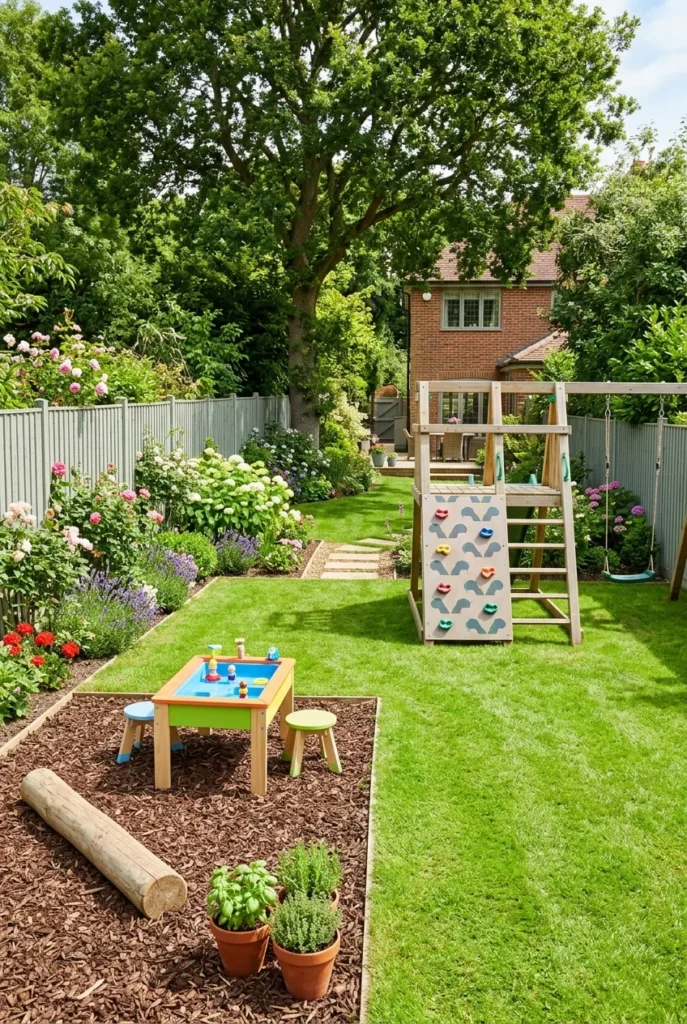
Before you buy a single thing, sketch your yard into three simple pockets. We call it the Play, Rest, Grow method, and it keeps a small garden play area from turning into a toy landfill.
Play is the active pocket: swings, climbing, digging. Rest is the calm pocket: a teepee, a bench, a shady reading nook. Grow is the green pocket: a kid-sized raised bed, a butterfly border, pots they own.
Why bother? Because when every zone has a job, the pretty stuff and the plastic stuff stop competing. You tuck the loud gear into one corner and let plants soften the rest.
Honestly, this is the step people skip, and it’s the one that saves the whole yard.
For more layout inspiration on tight lots, our guide to small backyard landscaping ideas pairs well with this method.
Safety First: Fall Zones and Surfacing (The Part Most Posts Skip)
Pretty means nothing if a kid lands wrong. So let’s talk surfacing, because this is the gap in almost every idea roundup.
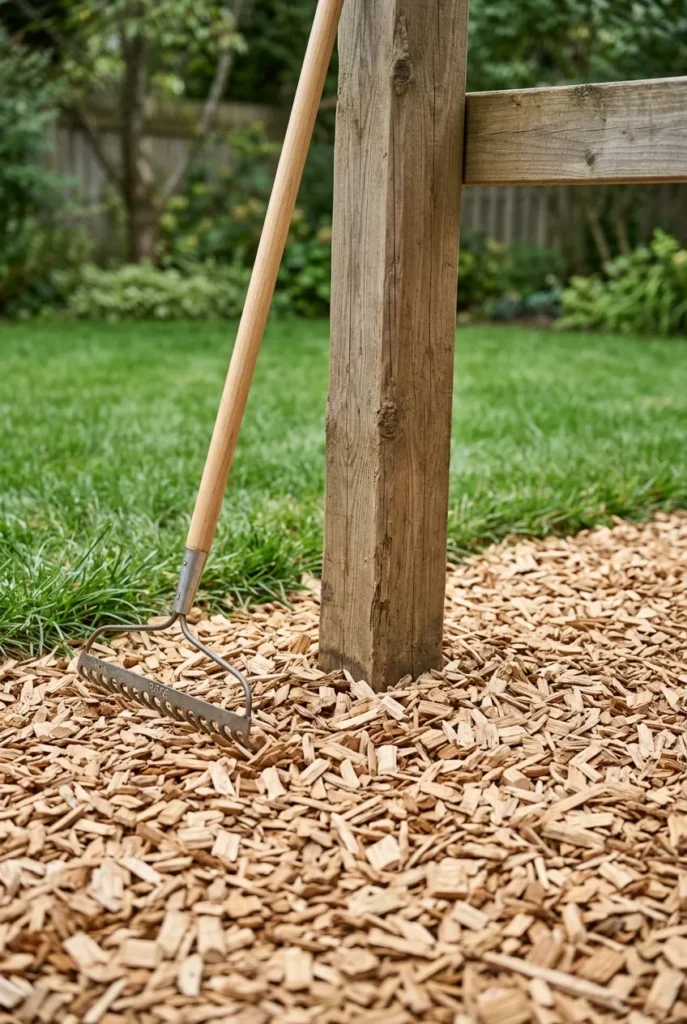
Under any climber or swing you want a soft, deep surface, not bare grass or a paver. The CPSC outdoor home playground safety handbook notes that loose fill compresses over time, so a 12-inch fill layer settles to roughly 9 inches, which is why you top it up. It also recommends a use zone extending at least 6 feet in all directions around equipment, and it warns against placing equipment over concrete or asphalt. Handy detail: gear with a fall height of 18 inches or less does not require special surfacing.
A few plain rules we live by:
- Keep the cushioned zone a full 6 feet around swings, front and back, not just underneath.
- Skip hard edging (concrete, sharp stone) right where kids land.
- Check hardware and splinters at the start of each season.
Real experience, e.g. “We learned this the hard way after our toddler slid off a low slide onto packed spring dirt. Two bags of playground mulch fixed it.”
One mild soapbox moment: a beautiful play area that hurts kids is a failed play area. Safety is the design.
Quick note, this is general information, not a code ruling. For anything built-in or elevated, check local permit and zoning rules and consult a qualified pro for structural or fall-height questions.
12 Children’s Garden Play Area Ideas That Stay Pretty
Here’s the good part. Each idea lands in one of your three zones, and every one scales up or down by budget. We front-loaded the highest-value, most-used ideas first.
1. A Mud Kitchen Kids Actually Come Back To
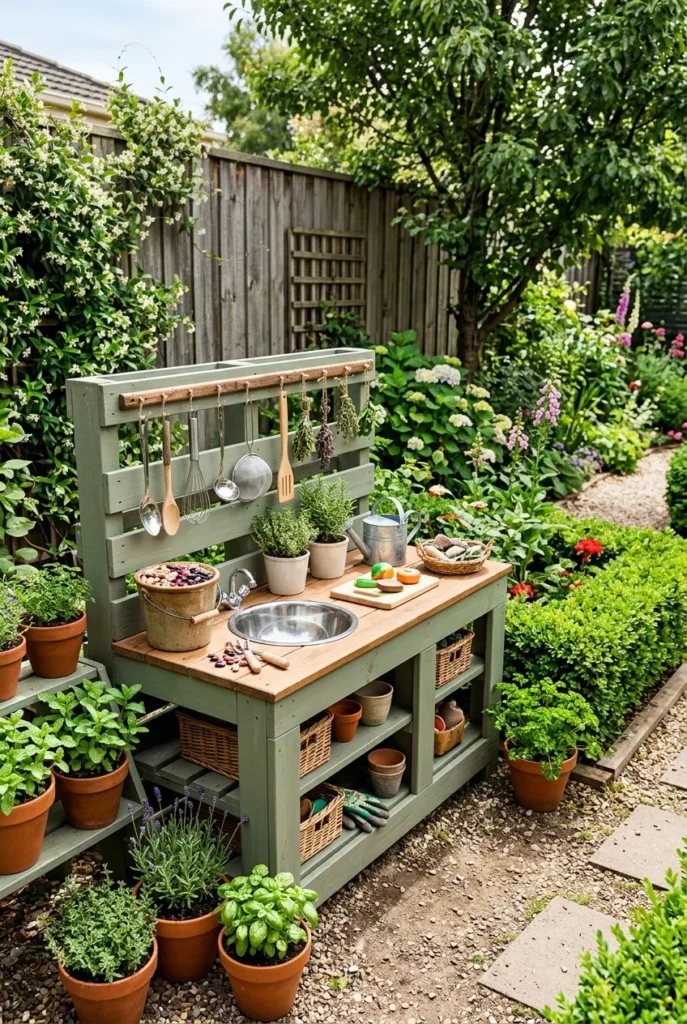
Nothing beats a mud kitchen for hours of quiet, muddy focus. Build one from pallet wood, or repurpose an old side table with a thrifted stainless bowl for the “sink.” Add a few real utensils and a bin of dried beans.
Keep it pretty by staining the wood soft charcoal or sage, so it reads like garden furniture, not a toy.
2. Sand or Water Table in the Messy Zone
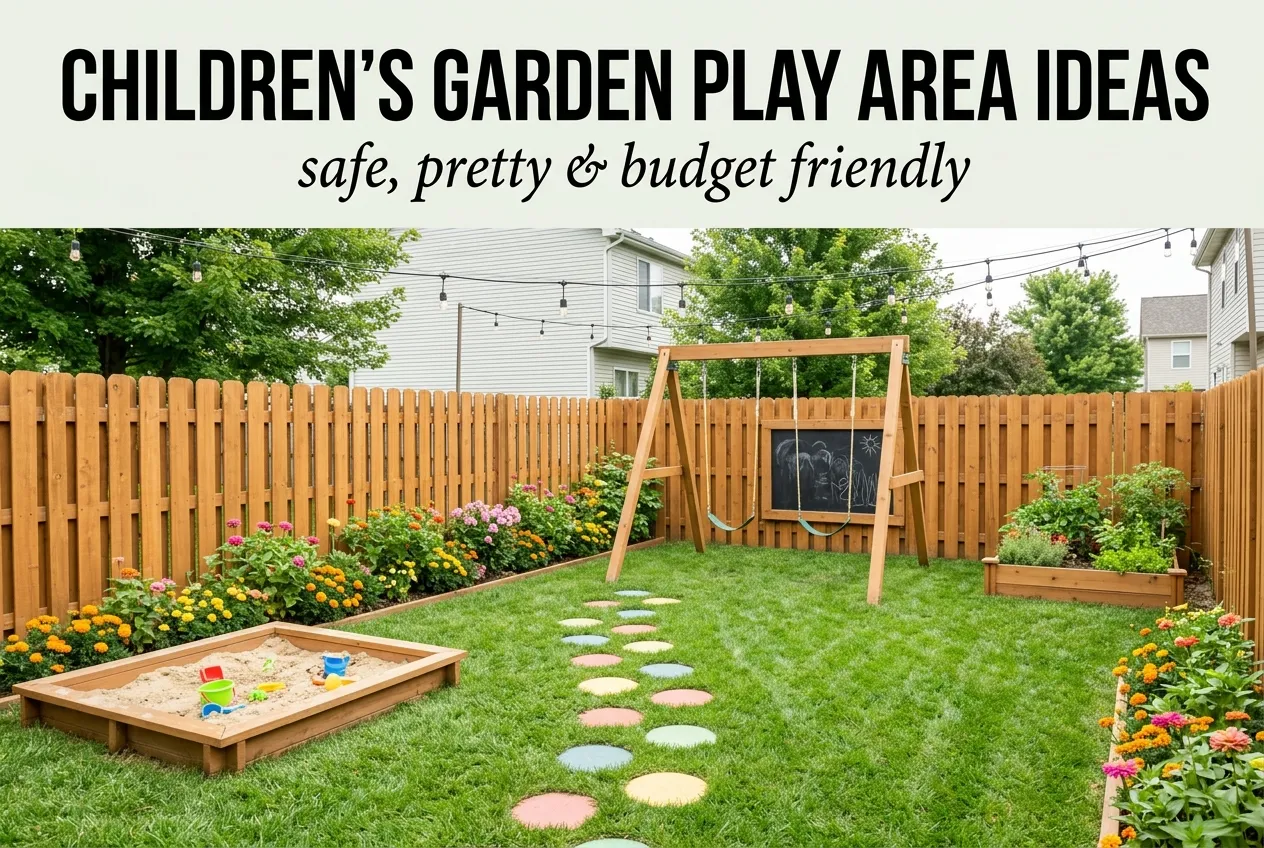
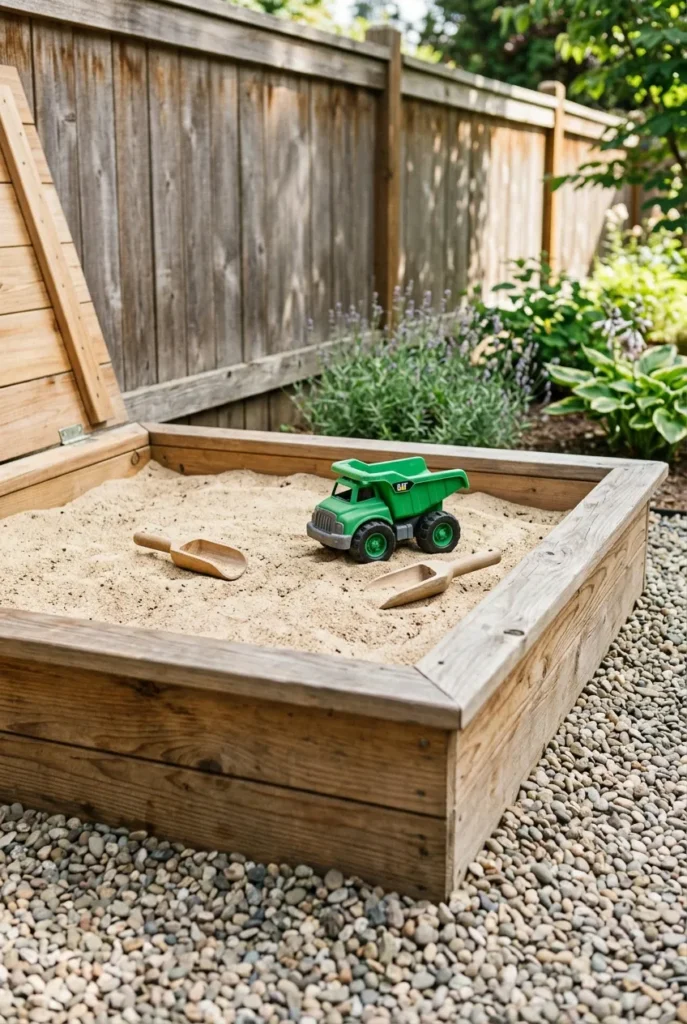
A sand pit or water table is the toddler workhorse. A small Greenes Fence cedar raised-bed kit doubles as a tidy sandbox and starts around $50 to $82 at Home Depot for the compact sizes. Here’s the clever part: when the kids outgrow sand, that same frame becomes a veggie bed. Long game.
3. A Chalkboard Fence Wall
Paint a fence panel or a sheet of exterior plywood with Rust-Oleum chalkboard paint (about $17 for the 30 oz can, or $7 to $8 for the spray). Instant art wall, zero footprint, wipes clean with a hose.
4. Colorful Stepping-Stone Trail
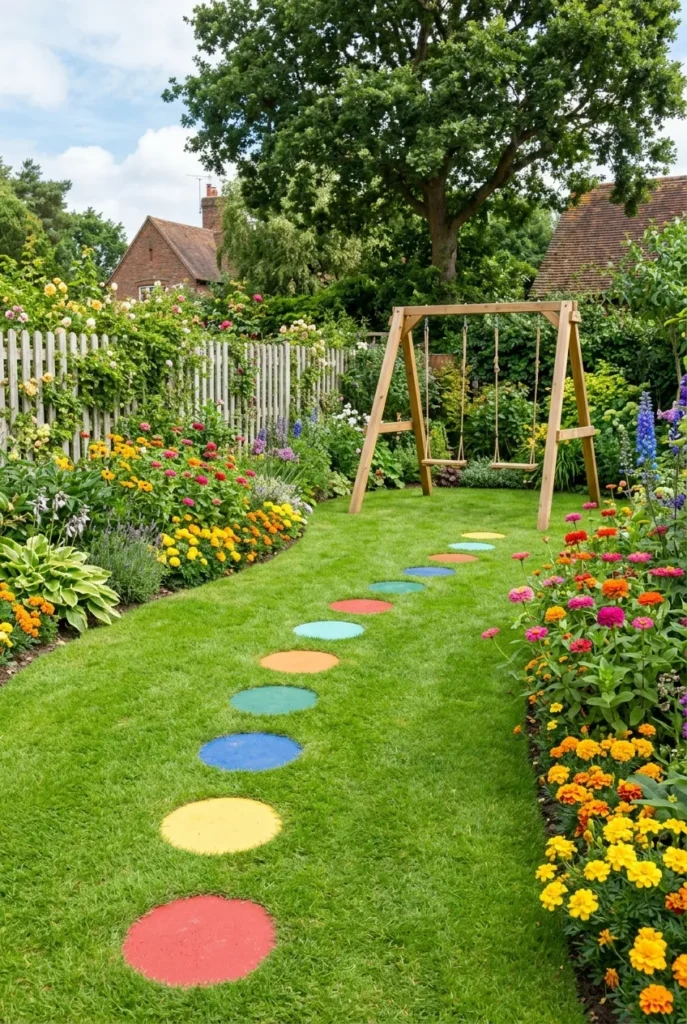
Round stepping stones through the lawn become a balance-and-hop game. Space them for little legs. Grownups read “path,” kids read “lava adventure.”
5. A Tree Swing or A-Frame Swing
One swing does a lot. If you have a sturdy mature branch, great. If not, a simple A-frame from Home Depot or Lowe’s works; budget wood sets tend to start in the low hundreds and climb toward $700 to $1,800 for big cedar playsets. Remember the 6-foot cushioned fall zone from the safety section.
6. Pea Gravel Play Patio
A small pea gravel patio gives a tidy, drainable base for a picnic table or a digging spot. It reads grown-up and handles heavy little feet, which is why it suits cottage-style yards.
7. A Reading Teepee in the Rest Zone
A canvas or willow teepee tucked into a shady corner becomes the calm-down spot. Toss in a weatherproof cushion and a basket of books. This is where the Rest zone earns its keep.
8. A Kid-Sized Raised Grow Bed
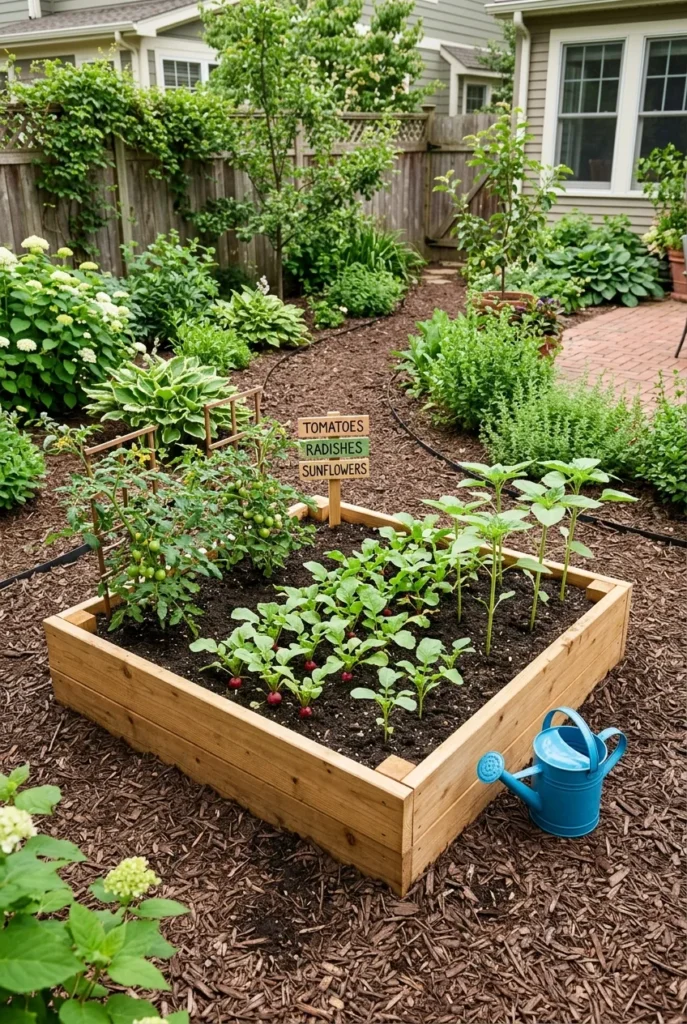
Give kids their own small raised bed in the Grow zone. Quick-win crops like radishes, cherry tomatoes, and sunflowers keep them hooked, and Bonnie Plants starts skip the fussy seed-starting stage.
Check your zone before you plant so the timing works. Use the USDA Plant Hardiness Zone Map to find yours. Across much of Zones 5 through 9, the last spring frost typically runs anywhere from February in the mild south to late April in the cooler north, so confirm your local date before you set out warm-season seedlings.
9. A Butterfly and Bug Border
A narrow border of zinnias, marigolds, and milkweed becomes a living science lesson. Kids chase pollinators, you get color. Everybody wins.
10. A Fairy or Dinosaur Small-World Garden
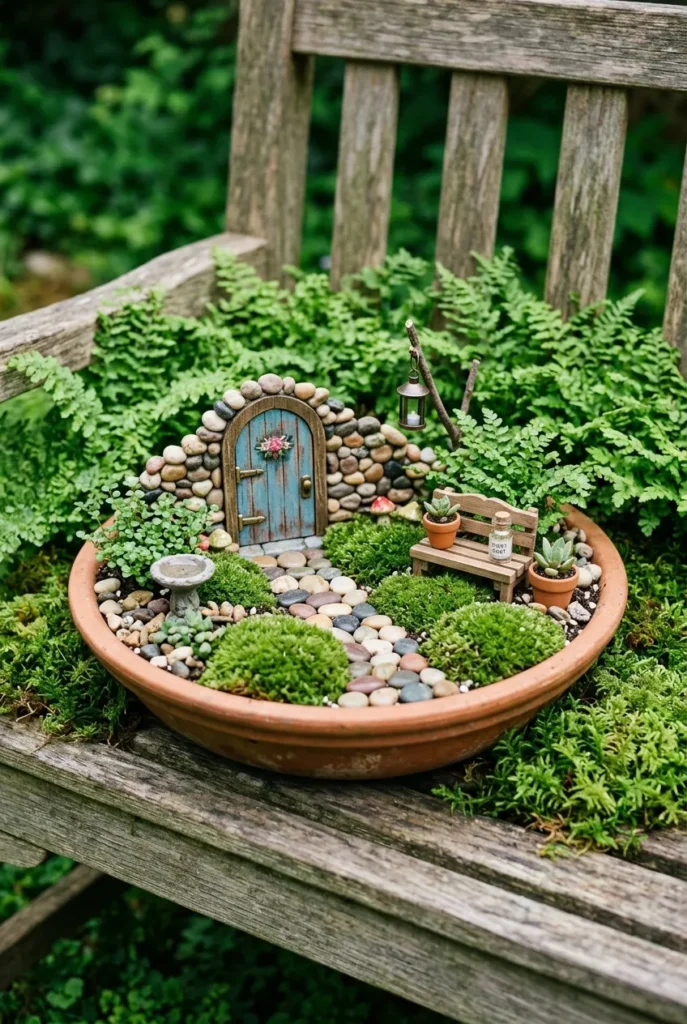
A shallow container or a stump hollow becomes a tiny world. Fairy doors, smooth pebbles, a bit of moss. Cheap, imaginative, and it photographs beautifully for the Grow zone.
11. Balance Beams and Log Stumps (Natural Playground)
Low log rounds and a simple balance beam bring natural playground ideas into a small yard without loud plastic. Sand the tops, seat them firmly, keep the height low (remember, under 18 inches skips the surfacing requirement). They double as party seating.
12. String Lights for After-Dinner Play
Brightech Ambience Pro café lights stretch summer evenings, and they run about $25 for a 26-foot strand up to roughly $50 for the 48-foot set. The kids get golden-hour play, you get ambience. It’s the detail that makes the whole area feel designed.
That’s five-plus specific brands with real prices, and every idea slots into a zone.
Build It by Age: Toddler Versus Big-Kid Play
Most idea lists forget that a 2-year-old and an 8-year-old want completely different things. Match the zone to the age and everyone stays happy.
For toddlers, keep it low and soft. Ground-level sand play, a short balance log, a water table, and wide clear paths. Nothing tall, and everything within your line of sight from the patio.
For big kids, add height and challenge. A real swing, a climbing wall panel, a den-building corner with loose branches, a bike loop around the lawn edge.
The trick is designing the toddler stuff so it graduates. That sandbox becomes a veggie bed. The low log beam gets a taller companion later. You build once and let it grow up with them.
Keeping It Pretty When Everyone Goes Inside
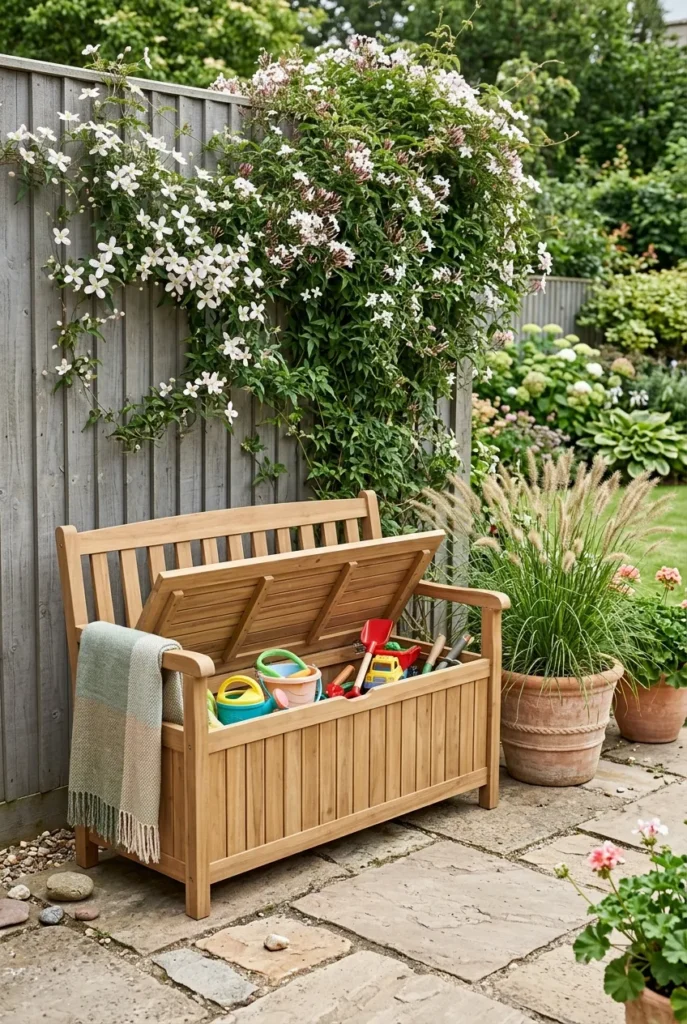
The secret to a garden play area you still love at 6 p.m.? Somewhere to put things away. Add a deck box or a lidded bench and the toys vanish in two minutes.
Match your gear to a tight palette. Natural wood, sage, and one pop color read calm. A rainbow of clashing plastic reads chaos.
Let plants do the softening. A row of grasses or a climbing vine hides a chain-link edge fast. Working with a tiny space or a smaller wallet? Our roundups of backyard ideas for kids and backyard ideas on a budget have cheap screening and storage tricks that work here too.
Budget Snapshot: The Play, Rest, Grow Cost Tiers
Screenshot this. Prices are 2026 US snapshots from Home Depot and shift over time.
| Zone | Starter (under $50) | Mid ($50 to $200) | Splurge ($200+) |
|---|---|---|---|
| Play | Chalkboard paint wall ($17), DIY balance logs | Small sandbox kit ($50-$82), water table | Cedar swing set / playset ($700-$1,800) |
| Rest | Thrifted teepee, cushion | Willow teepee + bench | Built-in shaded reading nook |
| Grow | Seed packets, marigold border | Kid raised bed + Bonnie Plants starts | Multi-bed cedar garden ($130-$297) |
Frequently Asked Questions
How do you create a kids play area in a garden?
Start by zoning your yard into play, rest, and grow pockets, then place the loud active gear in one corner on soft surfacing. Add plants around the edges to blend it in, and pick two or three anchor pieces (a swing, a sandbox, a chalkboard) rather than cramming in everything at once.
What is the best place for kids to play?
The best spot is level, visible from where adults sit, partly shaded in the afternoon, and away from hard surfaces like driveways. Good drainage matters too, so skip low corners that stay soggy after rain.
What is a children’s play area called?
People use a few names: a play area, a play space, a play zone, or a natural playground when it leans on logs, sand, and plants instead of plastic equipment. In garden design, folks also call it a play garden.
What are the best garden activities for kids?
Digging in a sand or mud zone, growing quick crops like radishes and sunflowers, chasing butterflies in a pollinator border, chalk art on a fence board, and simple water play all rank high. Rotate a few loose parts (sticks, stones, pinecones) to keep it fresh.
How do I make a play area safe?
Keep a soft, deep surface under climbers and swings, maintain a clear zone about 6 feet around equipment, avoid placing gear over concrete, and inspect hardware each season. Low features under 18 inches are gentler for the youngest kids.
How do I keep the play area from looking messy?
Give every toy a home with a lidded bench or deck box, stick to a two or three color palette, and let plants soften the edges. Storing gear at night resets the whole space in minutes.
Your Move
A children’s garden play area does not have to pick between fun and pretty. Zone it, make it safe, add a few plants, and you get both. Start with one idea from the Play zone this weekend and build out from there.
Which idea are you trying first? Save this to your garden board so it’s handy when you head outside.