Cottage Garden Yard Ideas for a Dreamy Front and Back Yard (Zone Cheat Sheet Inside)

Most cottage garden yard ideas you save on Pinterest were photographed in someone’s front yard, in June, in perfect light, and then quietly never explained. Here’s the part those pins skip: a real cottage garden is a layered, slightly messy, repeat-blooming plan you can build in a weekend and grow into over two seasons.
We’re going to do the front yard for curb appeal and then carry the whole look into the back yard where you actually sit. I planted my first scrappy cottage border along a 12 ft fence line in Zone 6 with $60 of Bonnie Plants and three Knock Out roses, and by the second July it looked like I’d hired someone. I hadn’t.
What Actually Makes a Garden a Cottage Garden
A cottage garden is not a plant list. It’s a feeling, and the feeling comes from three habits. You plant densely so there’s almost no bare soil. You mix heights so the eye travels from low edging up to tall spires. And you repeat a few key plants instead of buying one of everything. That last one is the mistake every beginner makes. One of this, one of that, and the bed looks like a garden center clearance shelf.
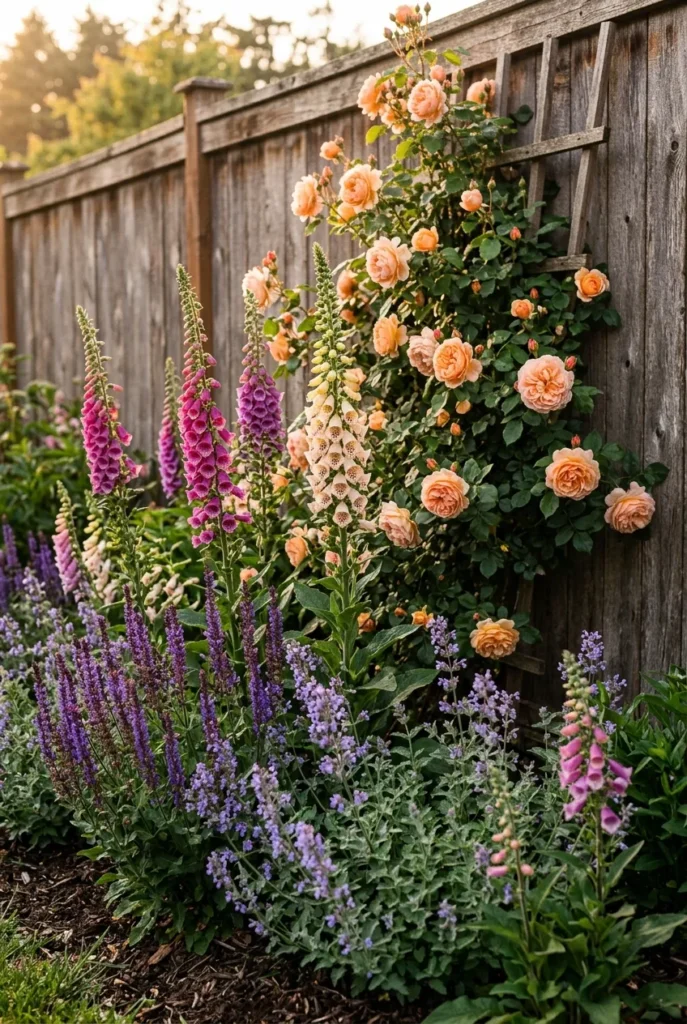
Density is the secret. Cottage gardens hide their soil on purpose. Self-seeding plants like foxglove and larkspur fill the gaps for free the next year, which is why this style gets cheaper over time, not more expensive. If you want the full mood-board version of this aesthetic, our roundup of trending garden inspiration ideas for 2026 shows the cottage look beside Mediterranean and Nancy Meyers styles so you can pick a lane before you buy a single plant.
Color is loose, not coordinated. Pinks, purples, soft yellows, and white anchor most cottage palettes. Skip the matched-set look. The charm lives in the slight chaos.
Front Yard Cottage Garden Ideas (Where Curb Appeal Lives)
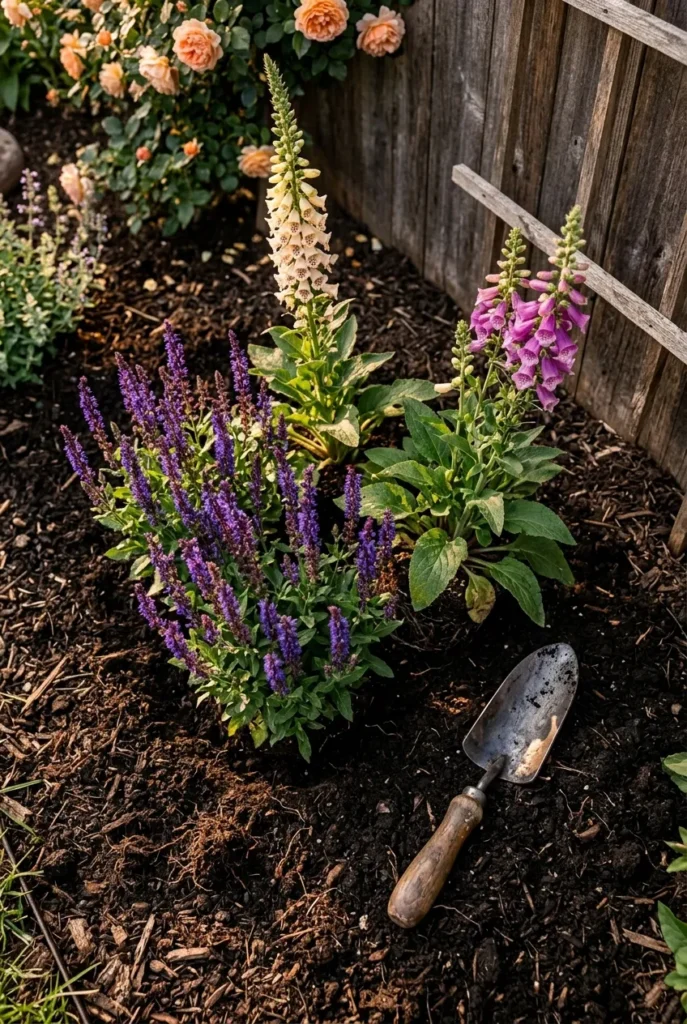
Start at the sidewalk and work back to the house. This is exactly how the front yard reads to anyone walking by, so build it in that order. Lay a soft path first, then frame it, then fill it.
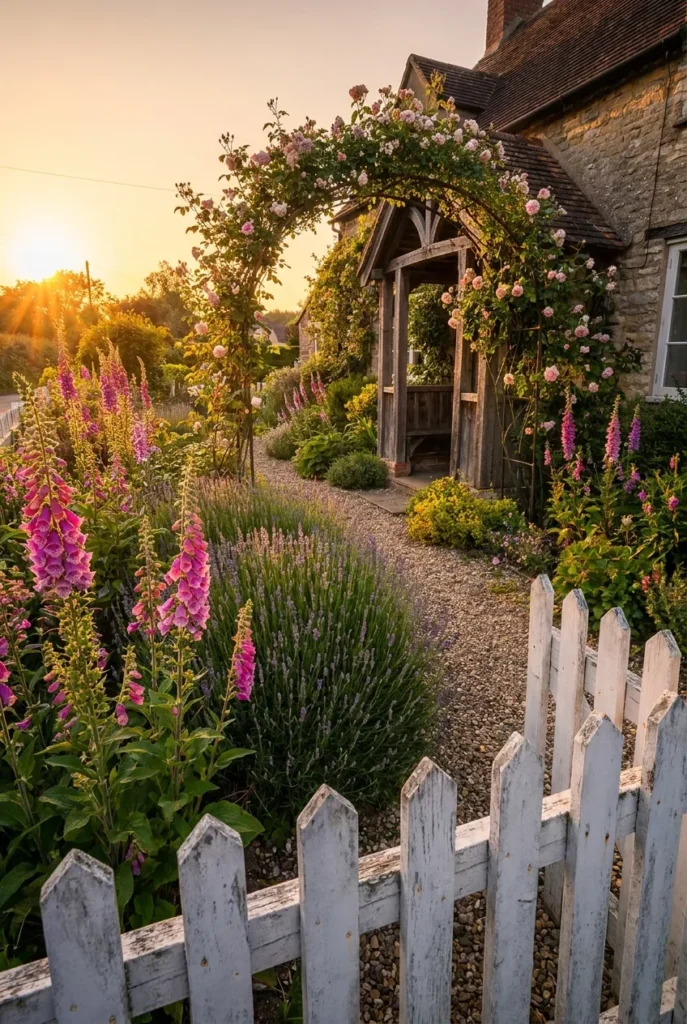
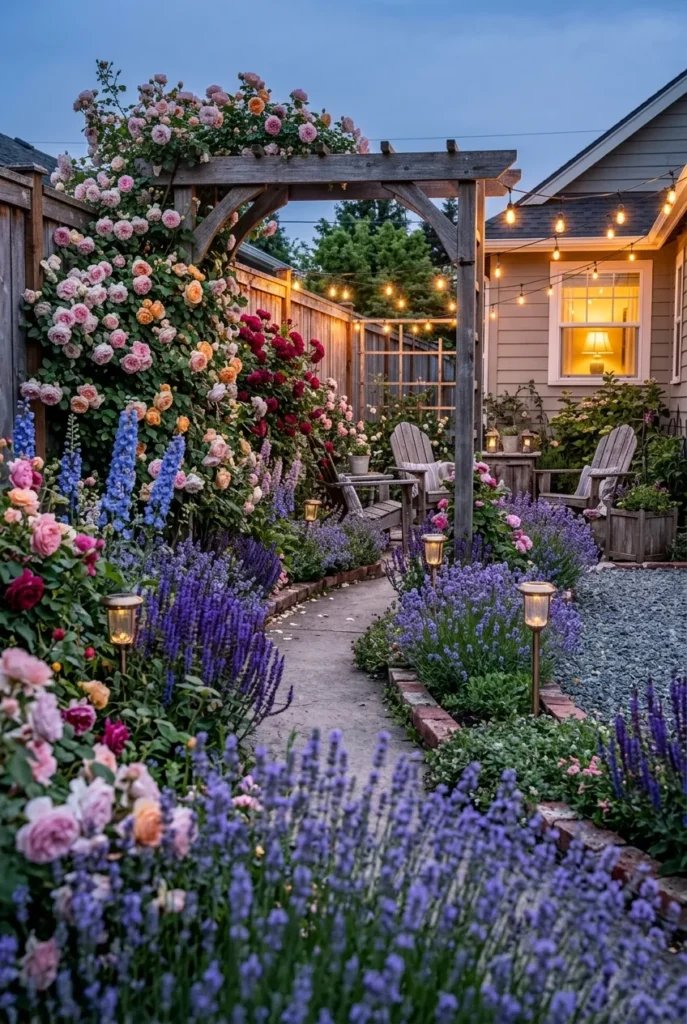
A gravel path does more cottage work than any single plant. Pea gravel or decomposed granite, 3 ft wide, gently curved instead of arrow-straight. The curve is what sells it. I edged my first path with reclaimed brick laid on its side, $0 because they were stacked behind the garage from a 2021 patio teardown, and that one detail made the whole bed look intentional.
Anchor With a Fence, Trellis, or Arch
Cottage gardens lean on a vertical anchor. A white picket fence is the cliché for a reason: it gives all that loose planting a clean line to rebel against. No budget for a fence? A single cedar arch over the path with a climbing rose or clematis does the same job for around $90 at Home Depot. Vertical structure is what stops a flower bed from reading as just a flower bed.
Plant the 70/30 Way
Here’s the rule that quietly fixes most beginner cottage gardens. The 70/30 rule means roughly 70 percent of your plants are perennials that come back every year and give the garden its backbone, and 30 percent are annuals you swap for color and fun. The idea traces back to designer Piet Oudolf, and it’s the difference between a garden that looks good for three weeks and one that carries from spring through fall. Put your delphiniums, salvia, catmint, and roses in the 70. Save the 30 for zinnias, cosmos, and whatever caught your eye at the Walmart Garden Center in May.
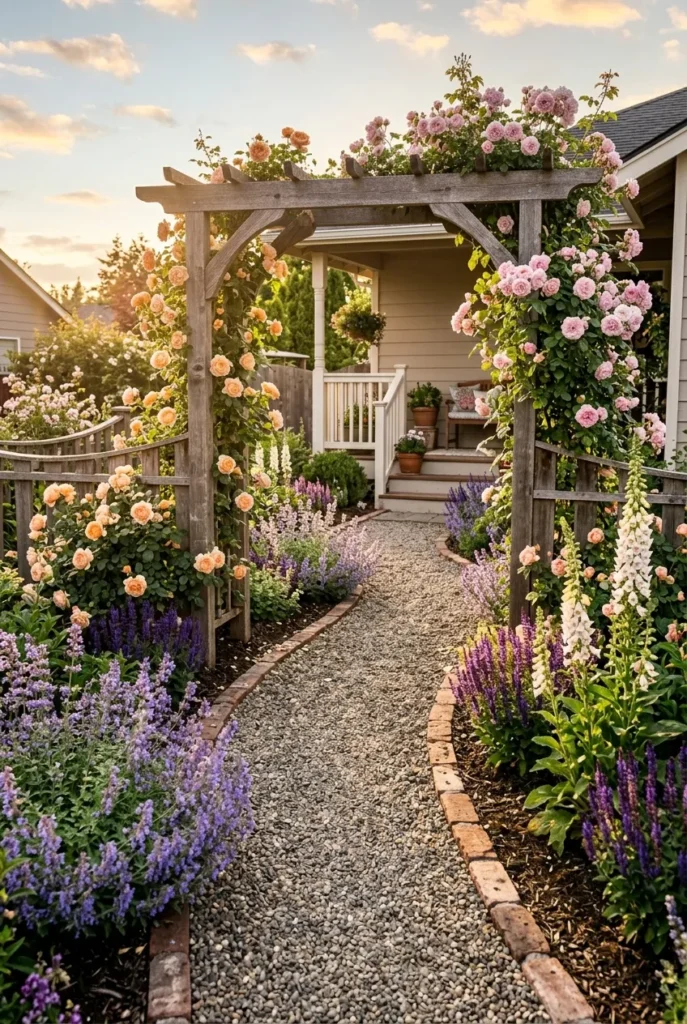
For a small or narrow front yard, scale down the path to 2 ft and lean harder on vertical layers. The mirror trick, repeating the same three plants on both sides of the walk, makes a tight space feel composed instead of cramped. Our guide to small backyard landscaping ideas covers the same zoning logic if your lot is on the tiny side.
A Cottage Garden Plant Cheat Sheet by USDA Zone
Generic plant lists are why so many cottage gardens flop. A delphinium that thrives in Zone 5 will melt in a Houston Zone 9 July. So before you buy, find your zone on the USDA Plant Hardiness Zone Map, then match your plants to it. Default coverage below runs Zone 4 through 10, which covers most of the country.
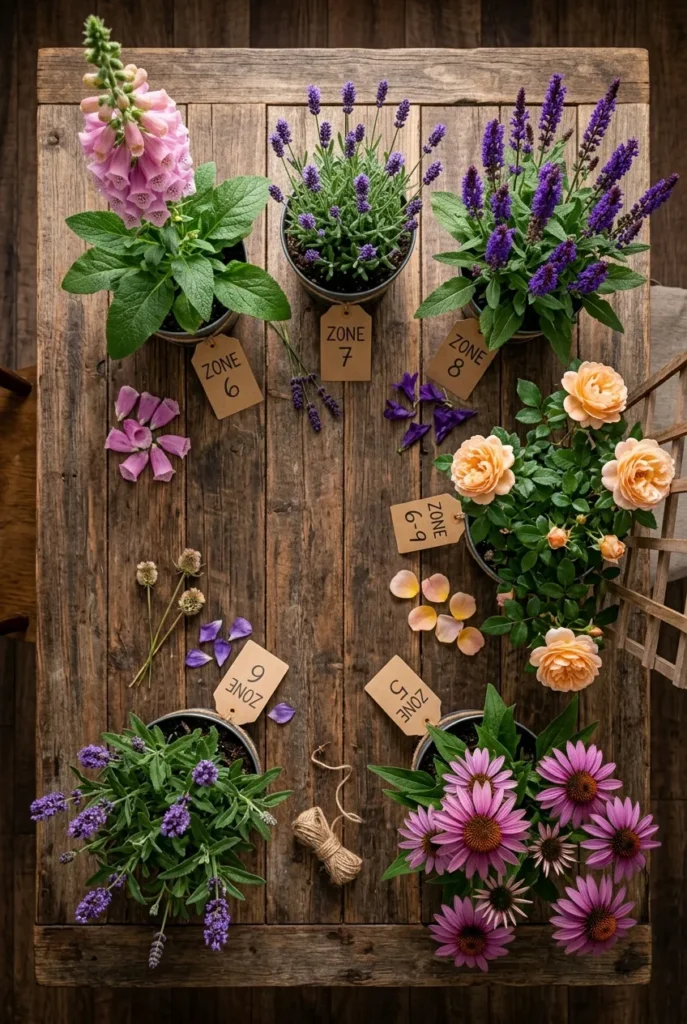
The USDA Zone Cottage Plant Match (screenshot this):
| Zone Band | 5 Reliable Cottage Plants | Avoid These |
|---|---|---|
| Zone 4 to 5 (Chicago, Boston, Denver) | Peony, delphinium, catmint, Shasta daisy, Knock Out rose | Lavender in wet clay, gardenia |
| Zone 6 to 7 (Nashville, DC, Kansas City) | Foxglove, salvia, coneflower, phlox, climbing rose | English delphinium in full summer heat |
| Zone 8 (Dallas, Atlanta, Seattle) | Hollyhock, Russian sage, daylily, lamb’s ear, lavender | Peony (often too warm to chill) |
| Zone 9 to 10 (Houston, central Florida, SoCal) | Salvia, lantana, gaura, rosemary, antique roses | Foxglove, peony, delphinium |
A quick reality check from the Old Farmer’s Almanac frost-date logic: plant your tender annuals only after your last frost. That’s mid-April in Zone 5, early April in Zone 7, and as early as late January in Zone 9. Get the timing wrong and even the right plant sulks.
One contrarian take, because someone needs to say it. Lavender is the most over-recommended cottage plant on Pinterest and it fails constantly in humid, clay-heavy yards. I killed two rosemary plants and one lavender in terra cotta before I figured out the unglazed clay was wicking water away from the roots. If your soil holds water, give lavender a gravel-amended raised mound or skip it for Russian sage, which gives the same silvery haze without the drama.
Cottage Garden Back Yard Ideas (Where You Actually Live)
The front yard is for the neighbors. The back yard is for you, and this is where every competitor article quits. Carrying the cottage look into the back is mostly about adding a place to sit inside the planting, not beside it.
Tuck a weathered bench or a pair of vintage metal chairs into a pocket of the border so the plants brush your shoulders when you sit. A $14 indoor-outdoor rug from HomeGoods under a bistro set instantly cozies up a hard patio. Add a few Dollar Tree solar lanterns ($1.25 each) staked into the beds and the whole space glows at dusk for under $10.
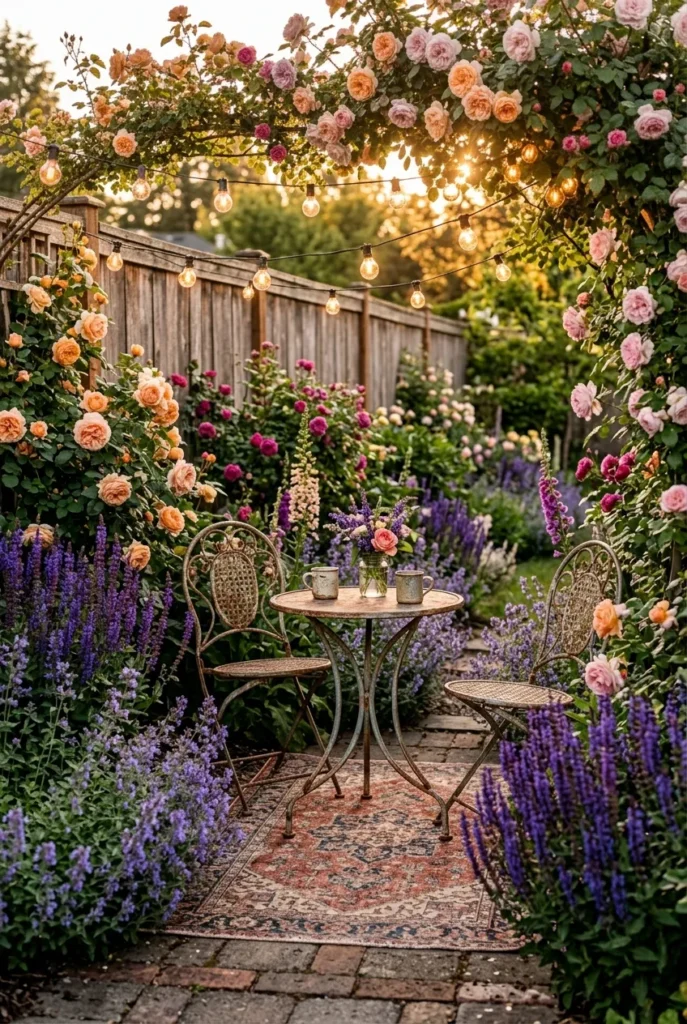
Add Privacy the Cottage Way
Nobody relaxes while feeling watched. The cottage answer to privacy is green, not a tall blank fence. A row of climbing roses on a wire trellis, a hydrangea hedge, or a clump of tall ornamental grasses screens sightlines while staying soft. For renters and budget yards, our backyard privacy ideas on a budget covers no-drill screens that pair perfectly with a cottage border in front of them.
Let It Self-Seed
The laziest, best cottage move in the back yard is to stop deadheading everything in fall. Let foxglove, larkspur, and poppies drop seed. Next spring they come up free, in slightly random spots, which is the exact billowing look the expensive pins are selling. Free plants and a better aesthetic. That’s the whole pitch.
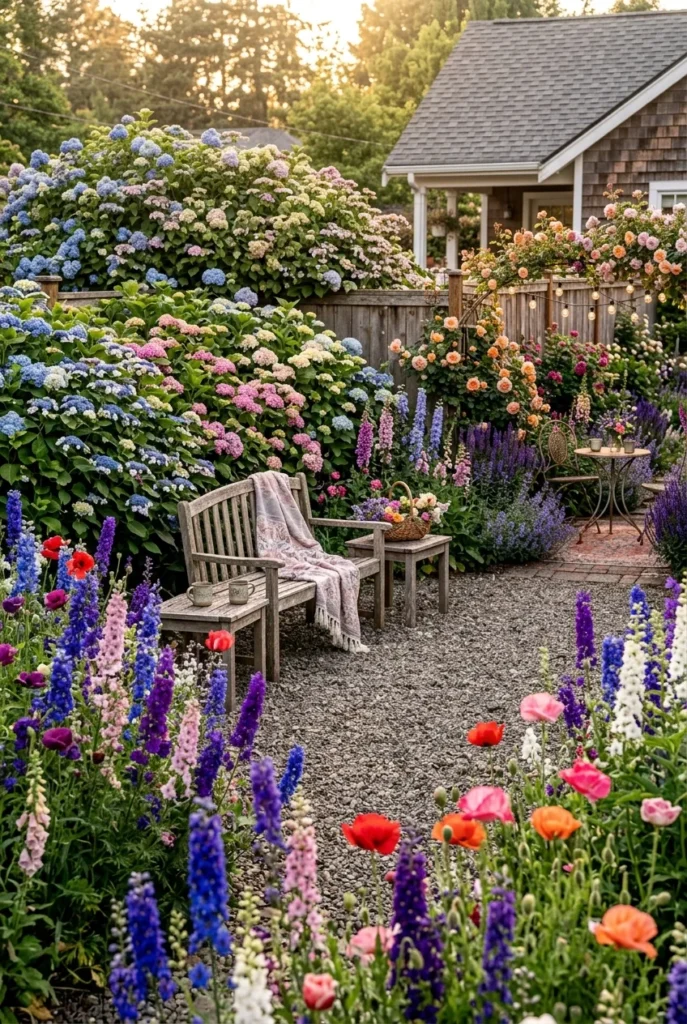
Small and Side Yard Cottage Garden Ideas
Don’t sleep on the side yard. That skinny strip between the house and the fence is the most wasted real estate in American yards, and it’s perfect cottage territory. A 3 ft gravel path, a single line of mixed perennials against the sunnier wall, and a string of solar lights turns a dead corridor into a secret garden you walk through to reach the back.
For a genuinely small front yard, three moves carry the look:
- One vertical anchor (arch, obelisk, or a single trellis panel) for instant height
- The mirror trick, three repeating plants on each side of the path, so a tight space reads as designed
- A tight palette of two colors plus white, because too many colors in a small space looks busy fast
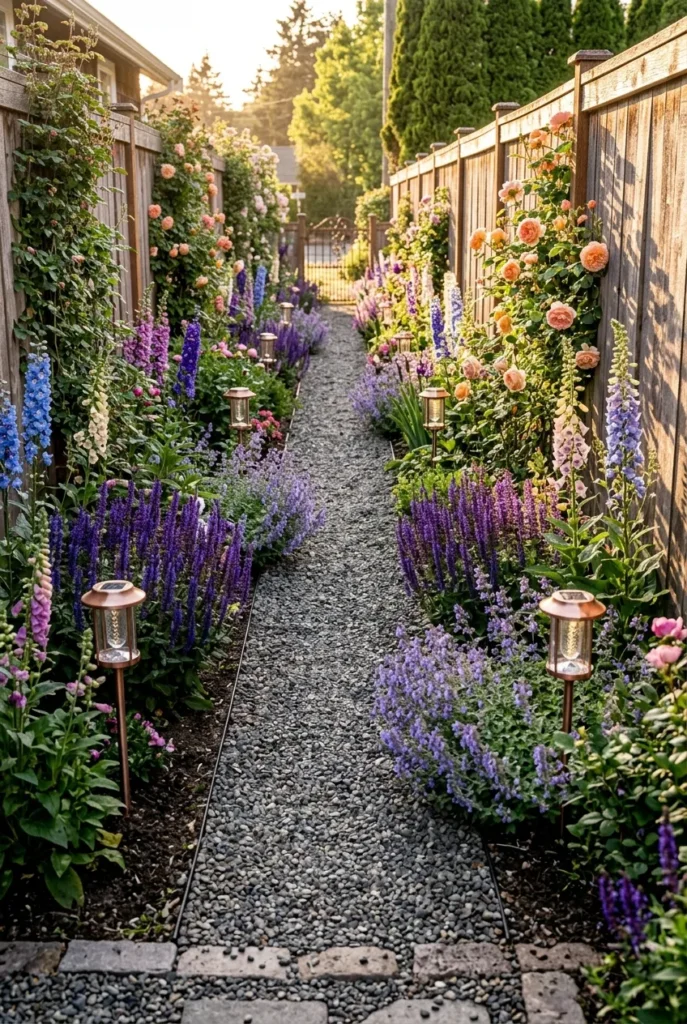
Cottage Garden Ideas on a Budget
A cottage garden is the cheapest dreamy yard you can build, because density and self-seeding do the heavy lifting over time. My first cottage border broke down to about $60: $42 in Bonnie Plants perennials from Lowe’s, three Knock Out roses on a spring sale, and a free brick edge from the garage pile. Year two cost almost nothing because the foxglove and larkspur reseeded themselves.
Budget tricks that actually hold up:
- Buy perennials in 4-inch pots, not gallon pots, and let them size up over one season
- Split clumps of catmint, daylily, and salvia from a friend’s yard in spring for free plants
- Use Dollar Tree mini terra cotta pots ($1.25) for a vintage potted cluster by the door
- Edge paths with reclaimed brick, fieldstone, or whatever the previous owner left behind
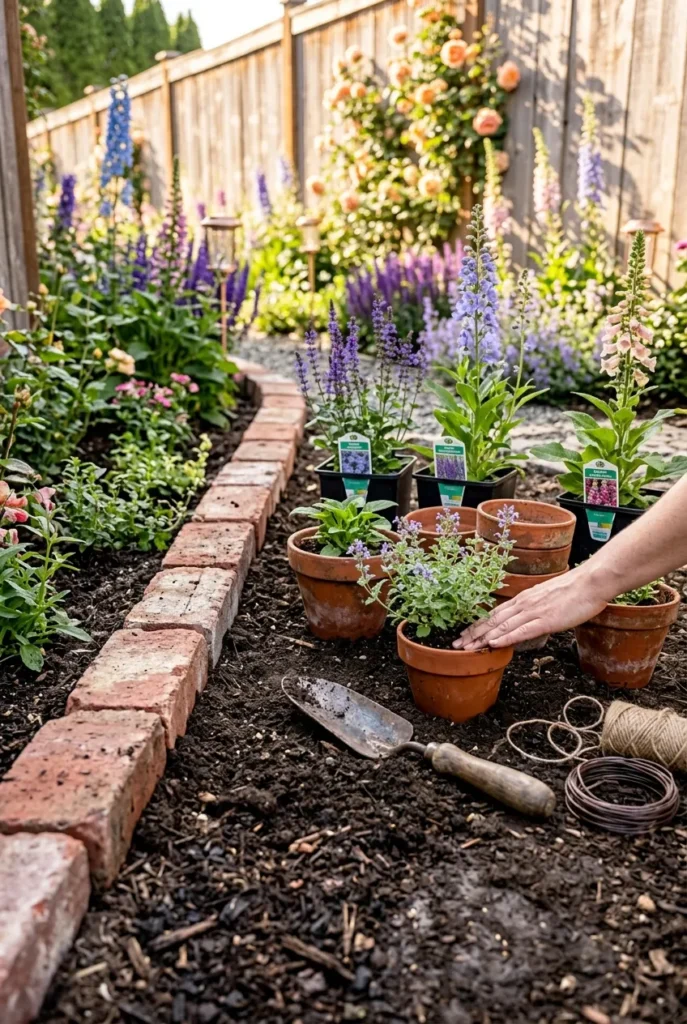
How to Turn Your Yard Into a Cottage Garden This Weekend
Here’s the honest order of operations. Don’t plant first. Lay the bones, then fill.
Friday evening, mark your path and bed shapes with a garden hose laid on the grass so you can see the curves. Saturday morning, cut the beds and lay the gravel path. Saturday afternoon, set your vertical anchor (arch or trellis) and plant your 70 percent perennials in dense clusters of three and five. Sunday, tuck in the 30 percent annuals, water deeply, and mulch the bare spots with Scotts Nature Scapes ($4 a bag). Done. It will look thin for three weeks and full by midsummer.
Frequently Asked Questions
How do I turn my yard into a cottage garden?
Start with the bones, not the flowers. Lay a curved gravel path, add one vertical anchor like an arch or picket fence, then plant densely using the 70/30 rule (70 percent returning perennials, 30 percent annuals). Repeat a few key plants instead of buying one of everything, and let some plants self-seed so the garden fills in over two seasons.
What is the 70/30 rule for gardening?
It means roughly 70 percent of your plants should be perennials that come back every year and give the garden its structure, while 30 percent are annuals you swap out for seasonal color and experimentation. The concept is linked to designer Piet Oudolf and keeps a garden looking good across multiple seasons instead of one short bloom window.
What plants look good in cottage gardens?
Classic cottage plants include foxglove, delphinium, salvia, catmint, coneflower, peony, hollyhock, and climbing roses. Match them to your USDA zone first. Lavender and peony struggle in hot, humid southern zones, while foxglove and delphinium dislike Zone 9 and 10 summers.
What makes a garden a cottage garden?
Three habits: dense planting that hides bare soil, mixed heights from low edging up to tall spires, and a loose, informal color palette of pinks, purples, soft yellows, and white. The slightly wild, layered, self-seeding look is the whole point.
What are good low-maintenance cottage garden ideas?
Lean on tough perennials like Knock Out roses, Russian sage, daylily, catmint, and coneflower that need almost no deadheading. Mulch heavily to cut watering and weeds, and let plants self-seed instead of replanting every year.
Can I make a small front yard cottage garden?
Yes. Scale the path to 2 ft, use one vertical anchor for height, repeat three plants on each side of the walk (the mirror trick), and keep the palette to two colors plus white so a tight space still reads as designed.
Bringing It All Together
A cottage garden yard rewards the impatient and the frugal at the same time, which is rare. Lay the bones this weekend, plant the 70/30 way, match your plants to your zone, and let the whole thing get prettier and cheaper every year as it self-seeds. Front yard for the neighbors, back yard for you, side yard as the secret passage between. If you want more of this cozy, lived-in look across your whole space, the 25 trending garden inspiration ideas for 2026 post is the natural next read.