Best Patio Tomato Container Setup (Variety + Pot Guide)

The first time we grew a patio tomato container, we used a 10 inch terra cotta pot, a $4 Bonnie Plants seedling, and a fistful of hope. By July the leaves were yellow, the fruit was the size of a marble, and the soil was bone dry by 2 p.m. every single day. Round two, we switched to a 15 gallon fabric grow bag, FoxFarm Ocean Forest mix, and a Celebrity variety. The same patio produced 38 pounds of slicers by Labor Day.
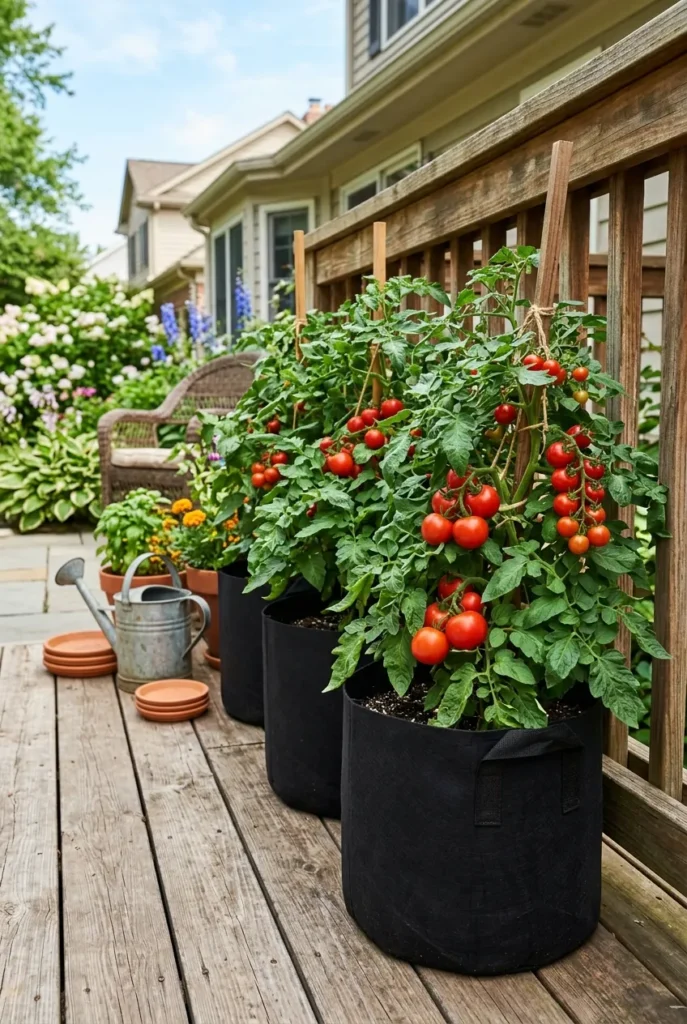
A patio tomato container only works when three things line up: the pot is big enough, the variety actually wants to live in a pot, and the soil holds water without drowning the roots. Get those three right and your patio out-yields most in-ground rows. Get one wrong and you spend the summer watching leaves curl. This is the setup we wish someone had handed us in year one, broken down by pot size, variety, climate, and dollar tier so you can match it to your deck instead of guessing.
If you are still figuring out the bigger picture, our container gardening for beginners walkthrough covers the soil and watering basics before you plant a single tomato.
Pick the Variety Before You Pick the Pot
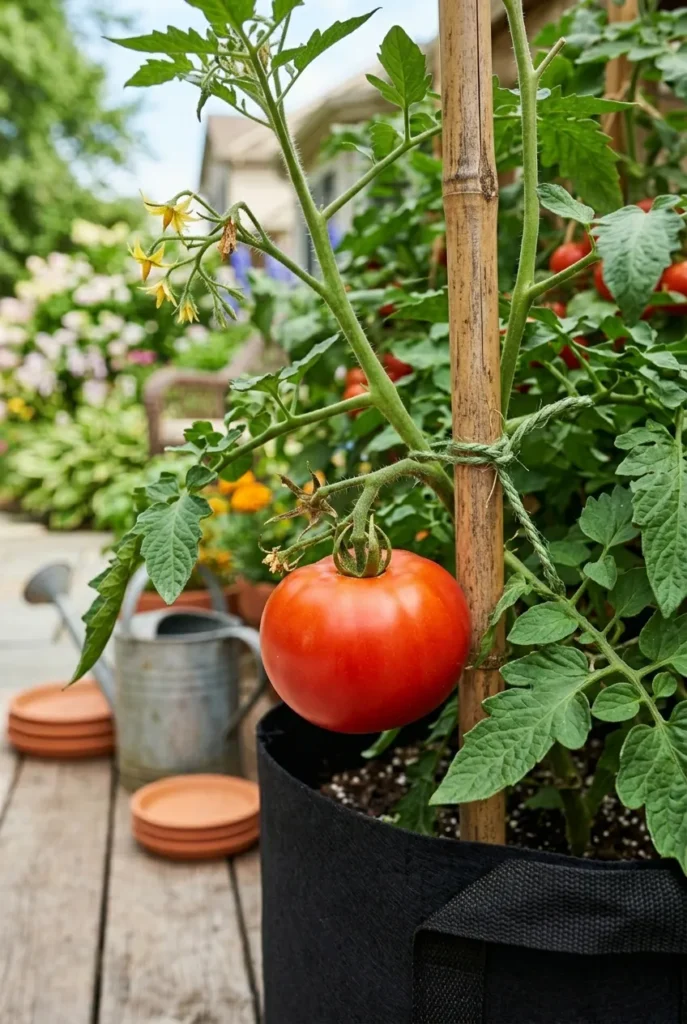
Most patio tomato container failures start with the variety, not the pot. Bag a 75-day indeterminate beefsteak into a 10 inch container and you have built a recipe for a leggy, root-bound disaster by mid-July. Tomato varieties fall into two big buckets: determinate (compact, bushy, set fruit in one big wave, then quit) and indeterminate (vining, keep growing and fruiting until frost). For containers, you want determinate or compact-indeterminate varieties bred for restricted roots.
Here are the workhorse picks we keep coming back to.
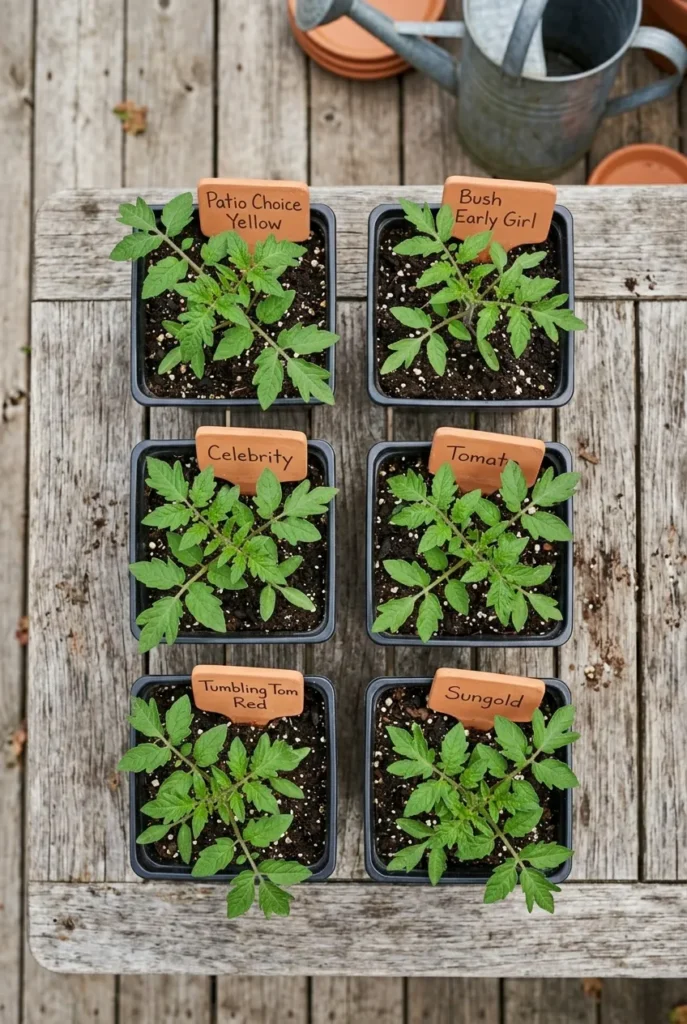
- Patio Choice Yellow (determinate, cherry, 45 days) — bred for 2 gallon hanging baskets, but happier in 5 gallons.
- Bush Early Girl (determinate, slicer, 54 days) — a dwarf rewrite of the classic Early Girl. Yields a clean 20 pounds per plant in a 10 gallon pot.
- Celebrity (semi-determinate, slicer, 70 days) — disease resistant, holds up in humidity, our personal favorite.
- Tumbling Tom Red or Yellow (determinate, cherry, 70 days) — cascades over the rim, perfect for railing planters.
- Sungold (indeterminate, cherry, 57 days) — the candy of the tomato world. Needs a tall cage and a 15 gallon pot, but the flavor pays the rent.
Skip these in a container: Brandywine, Cherokee Purple, Mortgage Lifter, and any 80+ day indeterminate beefsteak. They want 5 feet of root run and they will throw a tantrum in a pot.
The Pot Size Rule Nobody Wants to Hear
Here is the rule that costs people the most money to ignore: a single patio tomato plant needs a minimum of 10 gallons of soil volume, and ideally 15 to 20 gallons for an indeterminate. That is roughly a pot 16 inches across and 16 inches deep at the absolute floor. The 12 inch terra cotta you saw at Walmart for $14 is too small. So is the 5 gallon orange bucket from Home Depot unless you are growing a true dwarf like Patio Choice.
Three pot styles consistently work for patio tomato containers.
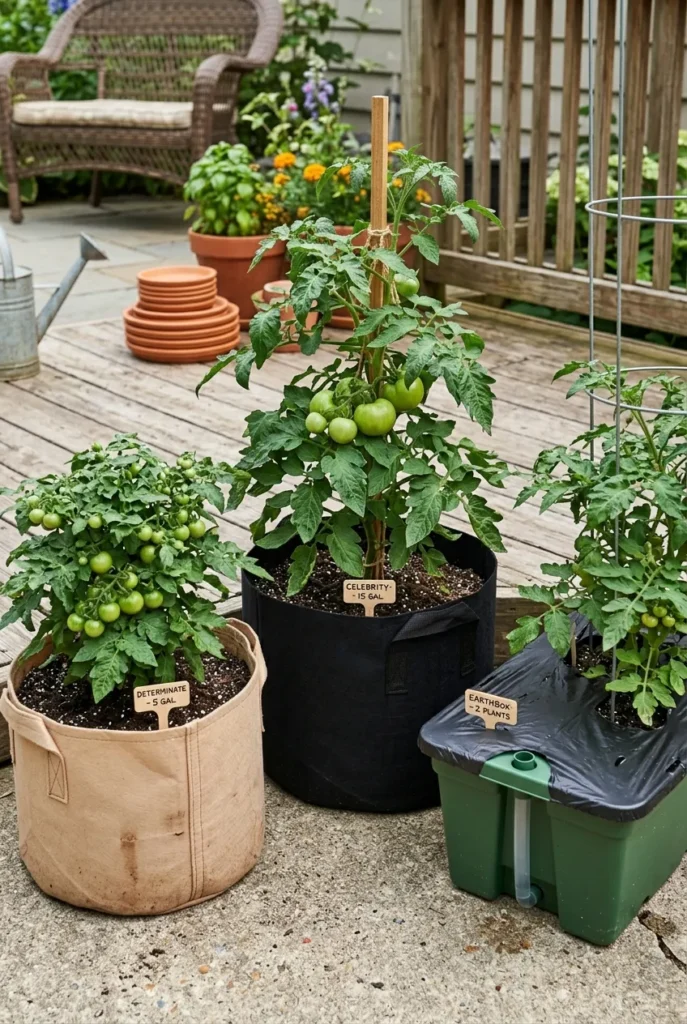
- Fabric grow bags (5 to 20 gallons, $3 to $12 each in bulk). Air-prune roots, never circle, drain instantly. Our top pick for hot patios because they breathe.
- Self-watering containers like the EarthBox ($45). A water reservoir under a perforated platform feeds roots from below. Cut watering from twice daily to twice a week.
- Glazed ceramic or food-grade plastic at 16 inches or wider. Heavier, prettier, retain moisture better than terra cotta. Unglazed terra cotta wicks water away from the roots and bakes the soil in full sun. We learned that the hard way after killing two rosemary plants and one cherry tomato in matching 12 inch terra cotta pots on a south-facing wall.
A quick container size to plant ratio reference, because this comes up in every reader email.
- Dwarf determinate (Patio Choice, Tumbling Tom): 5 gallon minimum
- Standard determinate (Bush Early Girl, Roma): 10 gallon minimum
- Semi-determinate (Celebrity): 15 gallon minimum
- Indeterminate (Sungold, Sweet 100): 20 gallon minimum + tall support
Soil and Drainage Make or Break the Crop
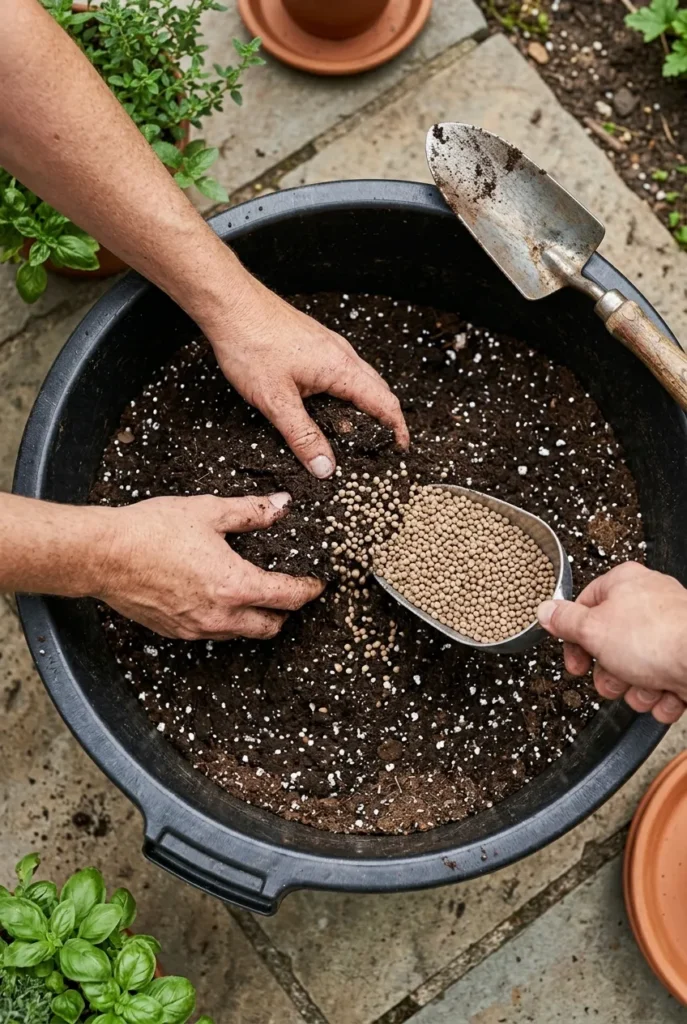
Garden soil from a bag, or worse, from the yard, will compact into a brick inside a container by July. You need a container-specific potting mix that drains fast and holds moisture at the same time. We rotate between three based on budget.
- Kellogg Garden Patio Plus potting mix ($12 per 1.5 cubic feet at Lowe’s). Budget-friendly, includes a starter charge of nutrients.
- Miracle-Gro Performance Organics Raised Bed Mix ($18 per 1.5 cubic feet). Heavier on compost, works great if you blend 50-50 with a perlite-heavy mix.
- FoxFarm Ocean Forest ($25 per 1.5 cubic feet). Premium, fish emulsion and bat guano in the blend, the one we splurge on for indeterminate Sungolds.
Mix in a tablespoon of Espoma Tomato-tone organic fertilizer per gallon of soil before planting, then side-dress with another tablespoon every three weeks once flowers appear. This single move stops 80% of blossom end rot calls.
Drainage matters as much as soil. Every container needs at least four 1/2 inch drainage holes in the base, and fabric grow bags handle this automatically. Skip the gravel-at-the-bottom myth. Research from Penn State Extension’s container vegetable guide confirms gravel actually raises the water table inside the pot and worsens root rot. Use a paper coffee filter over the holes instead.
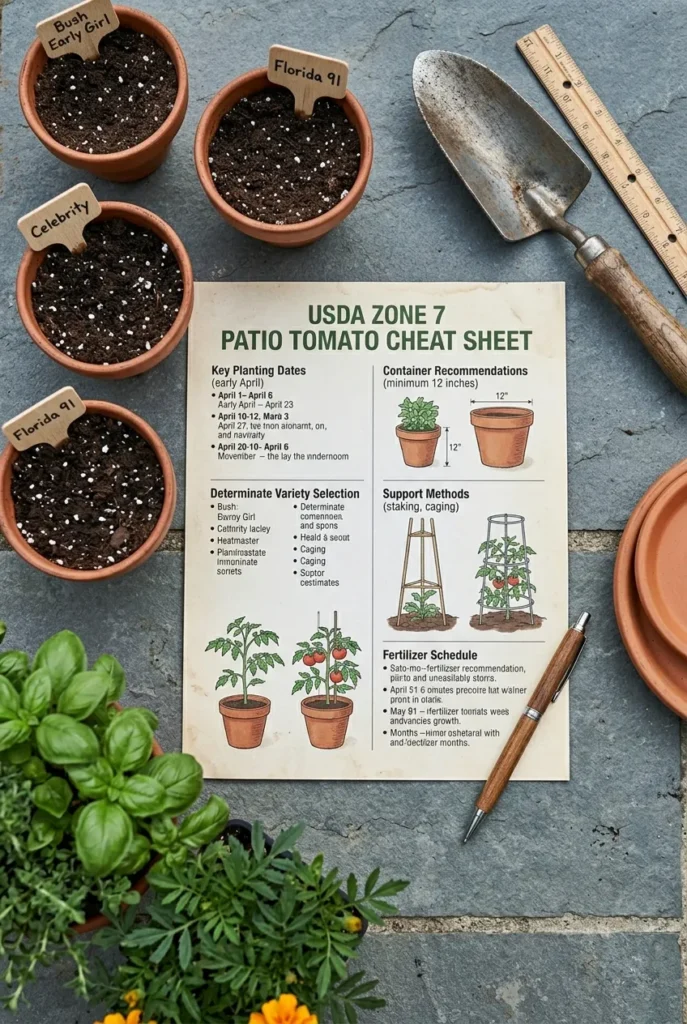
Match Your Setup to Your Climate (The Zone Cheat Sheet Nobody Else Made)
The biggest gap in every patio tomato container guide we have read is that they treat a Minneapolis deck and a Houston balcony the same. They are not. Zone 5 readers fight a short season. Zone 9 Texas readers fight 105°F afternoons that cook a black pot like a kiln. Florida readers in Zone 10 fight humidity that breeds fungal disease.
Patio Tomato Setup by USDA Zone
| Zone Band | Best Variety Pick | Pot Choice | Mulch Color | Watering Cadence |
|---|---|---|---|---|
| Zone 3–5 (MN, ND, Chicago, Boston) | Bush Early Girl, Patio Choice | Black fabric grow bag (absorbs heat) | Dark mulch | Every 2 days |
| Zone 6–7 (DC, Nashville, Atlanta) | Celebrity, Sungold | 15 gal fabric bag or EarthBox | Cedar bark | Daily in July |
| Zone 8–9 (Houston, Phoenix, Dallas) | Heatmaster, Solar Fire, Sun Sugar | Light-colored fabric bag or glazed ceramic | White or straw | Twice daily in peak summer |
| Zone 10 (S. Florida, S. California) | Everglades, Florida 91, Solar Fire | EarthBox under partial afternoon shade | White stone | Daily, watch for fungal spotting |
This single chart is the most-screenshotted asset we publish, because it answers the “I live in Phoenix, why is my Celebrity bolting?” question in one glance. Heat-stressed tomatoes drop flowers above 90°F nighttime temps. Match the variety to the climate, or you will fight your patio all summer.
A USDA-zone reality check: the USDA Plant Hardiness Zone Map was updated in 2023 and many readers shifted up half a zone without realizing it. Check yours before you order seeds. Northern Mississippi is now Zone 8a, not 7b, which changes the calendar by three weeks.
Watering Without Killing the Plant
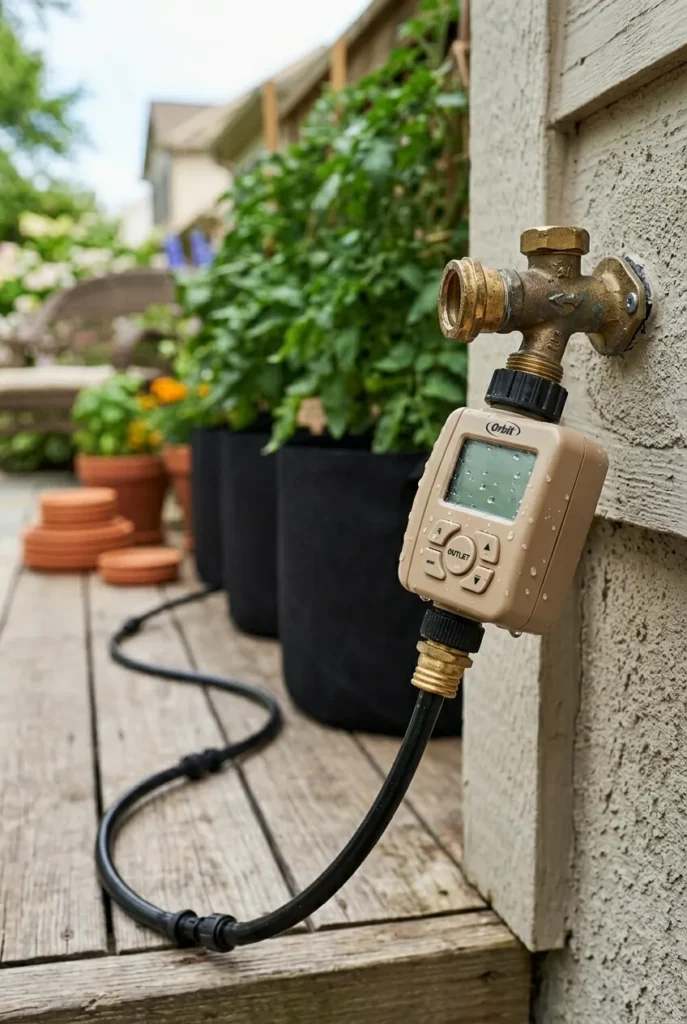
A patio tomato container in July, in full sun, in a 15 gallon fabric bag, drinks roughly 0.75 to 1 gallon of water per day per plant. EarthBoxes cut that nearly in half because the reservoir holds 3 gallons. Terra cotta in direct sun nearly doubles it.
The single biggest cause of blossom end rot is inconsistent watering. Soil dries out, calcium uptake stalls, fruit develops a black sunken spot on the bottom. The fix is not more calcium. The fix is a steady moisture floor. We use a $25 Orbit single-outlet hose timer wired to a $14 drip kit from Home Depot. Twenty minutes at sunrise and ten at sunset on the hottest days. Container watering dropped from 30 minutes a day to zero.
Three signs your patio tomato container needs more water right now: leaves drooping at noon and not recovering by sunset, pot is noticeably lighter when tilted, top inch of soil is dry and pulling away from the rim. If any two are true, soak until water runs out the bottom.
Support, Pruning, and Trellis Tricks for Container Tomatoes
Even a determinate plant flops once it sets fruit. Skip the flimsy tomato cages from the dollar bin. They buckle by August. Three support methods that hold up in a container.
- Single bamboo stake (5 to 6 ft, $2 each). Drive 8 inches into the soil at planting, tie loosely with garden twine every 8 inches. Best for determinates.
- Heavy-gauge tomato cage with a stake driven through one leg into the soil. The stake stops the cage from tipping when the plant grows top-heavy.
- Florida weave with two stakes in a long planter or two pots side by side. Run twine in a figure-eight between stakes. Best for cherry indeterminates.
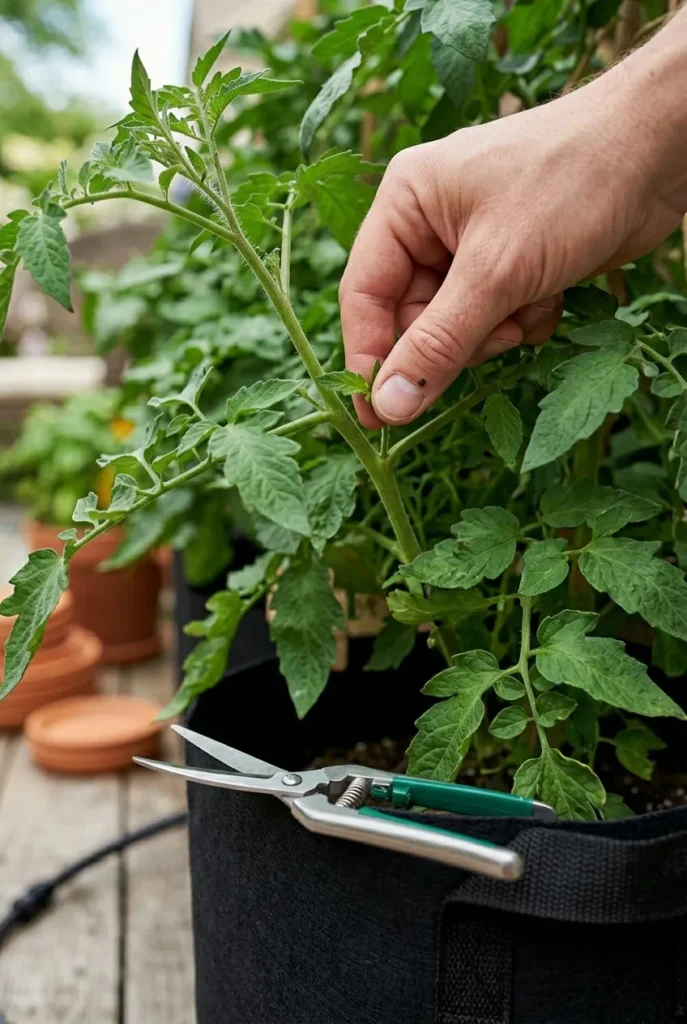
Pruning rules differ by variety type. Never prune a determinate. You will cut off your fruit. For semi-indeterminates and indeterminates, pinch off suckers (the shoots that grow in the V between the main stem and a branch) below the first flower cluster. Stop pruning above that cluster.
For more support ideas that work in tight quarters, the small-space container garden ideas roundup shows trellis and railing planter tricks we use on a 4 by 8 foot patio.
The Real Dollar Patio Tomato Setup (3 Budget Tiers)
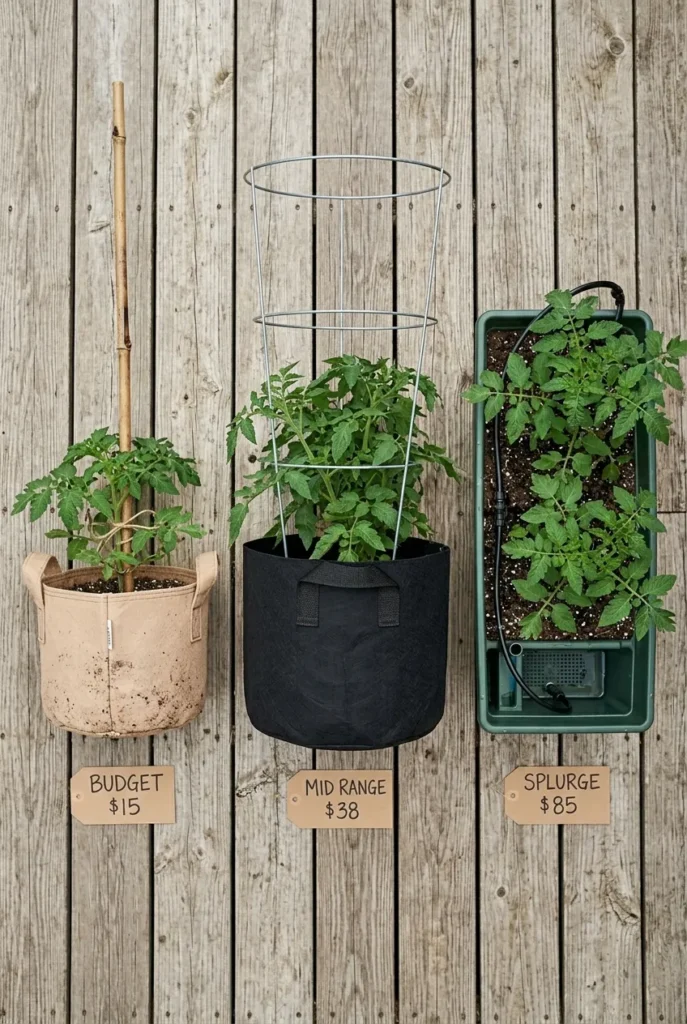
Here is the breakdown competitors leave out. Same plant, same patio, three price points. Every line item is current US retail.
Bare Bones ($28 total, one plant, one season)
- Bush Early Girl seedling from Bonnie Plants ($4, Home Depot)
- 5 gallon fabric grow bag ($3, Amazon multi-pack)
- Kellogg Garden Patio Plus potting mix, half bag ($6)
- Espoma Tomato-tone, smallest box ($8)
- Bamboo stake and twine ($2)
- Coffee filter for drainage ($0, kitchen)
- Tap water ($5 estimated for the season)
Expected yield: 8 to 12 pounds of slicers.
Mid Range ($95 total, two plants, full setup)
- Two Celebrity seedlings ($8)
- Two 15 gallon black fabric grow bags ($14)
- FoxFarm Ocean Forest, two bags ($50)
- Espoma Tomato-tone, large bag ($14)
- Two 6 ft bamboo stakes plus twine ($6)
- Orbit single-outlet timer ($25, splurge for next year, optional)
Expected yield: 35 to 50 pounds of slicers across both plants.
Splurge ($245 total, two plants, set-and-forget)
- Two Celebrity or Sungold seedlings ($8)
- One EarthBox self-watering planter ($45)
- One 20 gallon fabric grow bag ($12)
- FoxFarm Ocean Forest, two bags ($50)
- Espoma Tomato-tone, large bag ($14)
- Heavy-gauge cage and stake set ($35)
- Orbit drip kit with timer ($55)
- Cedar mulch ($8)
- Quality glazed ceramic saucer ($18)
Expected yield: 50 to 80 pounds, less daily labor.
The math nobody talks about: at $5 a pound for grocery store heirlooms, even the Bare Bones tier earns back in a single weekend of harvest. The Splurge tier pays for itself in season one and lasts six years (the EarthBox alone has carried our patio through five summers).
For more low-cost setups that quietly look high-end, the Dollar Tree backyard decor ideas that look expensive post covers the planter dressing and accents we layer around the grow bags.
Companion Plants and What to Skip
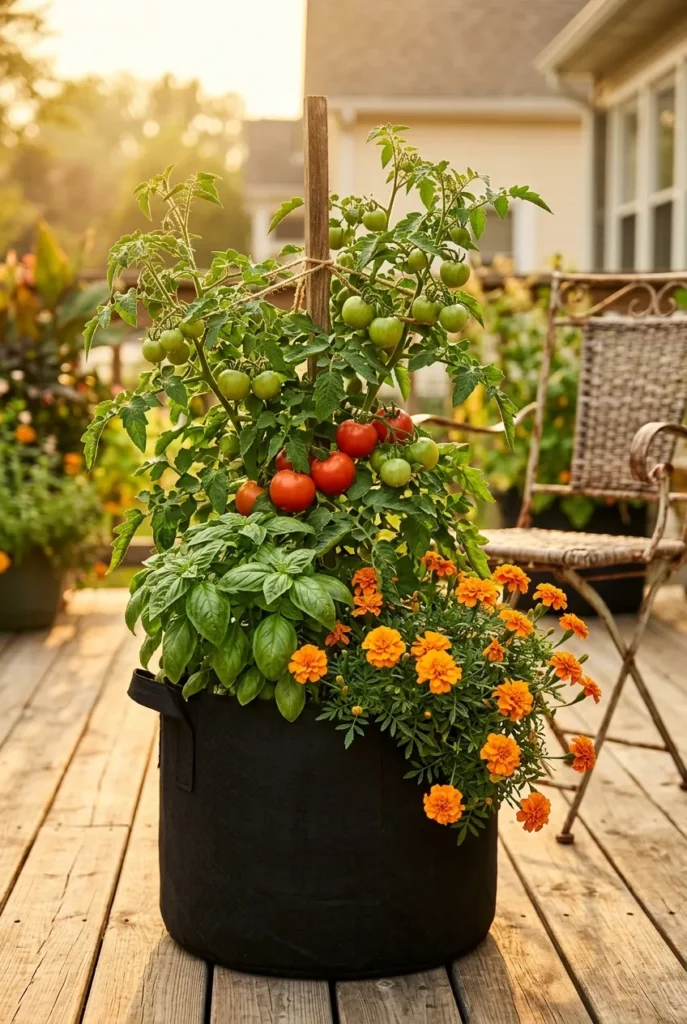
The companion plant question shows up in nearly every Pinterest pin description, so it earns a real answer. Basil and parsley in the same pot or next to the tomato pot work beautifully. Both like the same water and feeding rhythm, and basil seems to genuinely improve tomato flavor (the science is mixed, the lived experience is not). Marigolds in the corner of a fabric bag deter aphids. Chives repel certain beetles.
Avoid planting brassicas (kale, cabbage, broccoli), fennel, and corn anywhere near patio tomato containers. Fennel actively inhibits tomato growth, and the others compete hard for the same nutrients.
A tight rule of thumb: one tomato plus one basil plus one trailing marigold fits beautifully in a 20 gallon fabric grow bag. That is our standard formula for a single “feature” patio container.
End-of-Season Cleanup and Reusing the Setup
A patio tomato container is not a one-and-done expense. The fabric bag lasts 3 to 5 seasons. The EarthBox lasts 10+. The potting mix can be reused with one rule: never plant tomatoes in the same mix two years in a row. Soil-borne disease (verticillium, fusarium wilt) builds up fast in a closed pot. Rotate the spent mix to a non-nightshade crop next season (peppers also count as nightshades, so they are out too). Lettuce, herbs, or marigolds work.
In late September or first frost, pull the plant, cut the roots into the soil, and store the bag dry. Refresh the mix in spring with a third of fresh compost and a fresh dose of Tomato-tone. Done.
FAQ: Patio Tomato Containers
How big of a pot do patio tomatoes need? A 10 gallon pot is the floor for a determinate variety and 15 to 20 gallons is the sweet spot for a semi-indeterminate or indeterminate. Anything smaller than 10 gallons leads to root binding, daily wilting, and tiny fruit.
Do container tomato plants need drainage holes? Yes, every container needs at least four 1/2 inch drainage holes. Fabric grow bags drain through the entire fabric and skip this question entirely. Skip the gravel-at-the-bottom myth, it actually worsens drainage.
What is the best soil for patio tomato containers? A container-specific potting mix, never garden soil. FoxFarm Ocean Forest, Kellogg Patio Plus, and Miracle-Gro Performance Organics Raised Bed Mix all work. Blend a tablespoon of Espoma Tomato-tone per gallon at planting.
How often should I water a patio tomato container in summer? Plan on once a day in mid-summer for a 15 gallon fabric bag in full sun, twice a day during a Texas or Arizona heat wave, and every two days for an EarthBox. Inconsistent watering causes blossom end rot.
What are the best patio tomato varieties for hot climates like Texas or Florida? Heatmaster, Solar Fire, Sun Sugar, and Florida 91 are bred to set fruit above 90°F nighttime temps. Celebrity and Sungold work in mild summers but drop blossoms in extreme heat.
Can I reuse the potting mix next year? Yes, but rotate the crop. Never plant tomatoes (or peppers, eggplant, potatoes) in the same mix two years in a row. Refresh with a third fresh compost and a new dose of Tomato-tone in spring.
Do I need to prune a patio tomato plant? Never prune determinate varieties like Bush Early Girl or Patio Choice, you will cut your fruit. Prune suckers below the first flower cluster on indeterminates like Sungold to focus energy on fruit.
The Setup That Actually Works
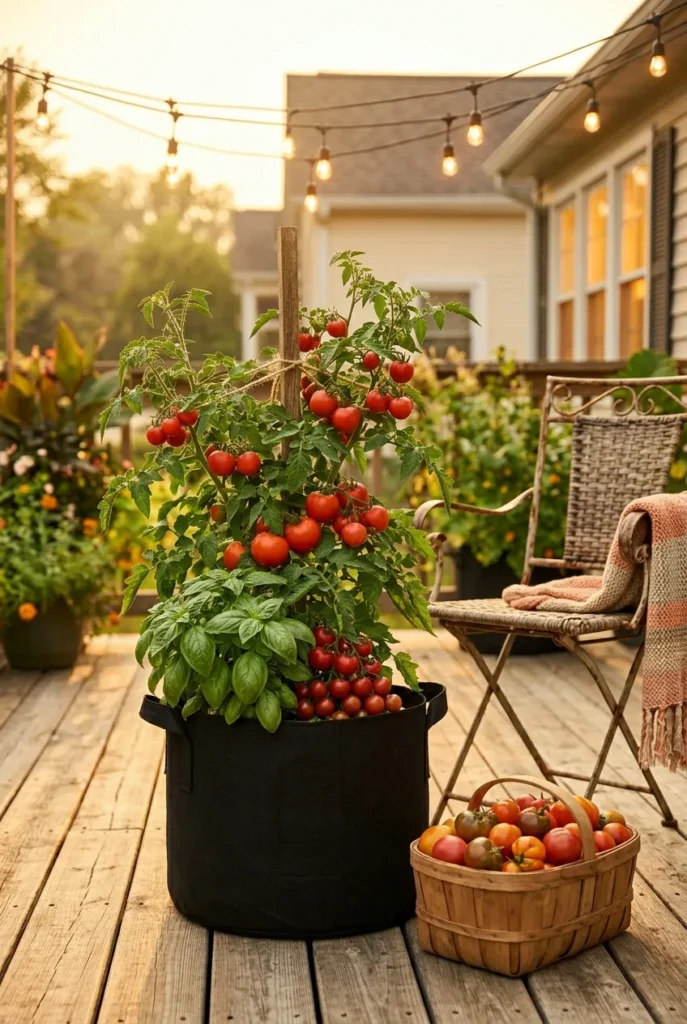
The best patio tomato container setup is not the prettiest planter at the garden center. It is the right variety in a big enough pot with consistent water and a soil mix that drains. A $14 fabric grow bag with a Celebrity seedling and a bamboo stake will out-yield a $90 ceramic urn with a Brandywine inside every single summer. Match your variety to your USDA zone, size your pot to the plant, water with a rhythm, and you will be carrying baskets of fruit to the kitchen by July. If you are ready to add a few more crops alongside the tomatoes, our container gardening vegetables guide is the next stop.