Container Vegetable Garden for Beginners: 9 No-Fail Picks That Actually Feed You

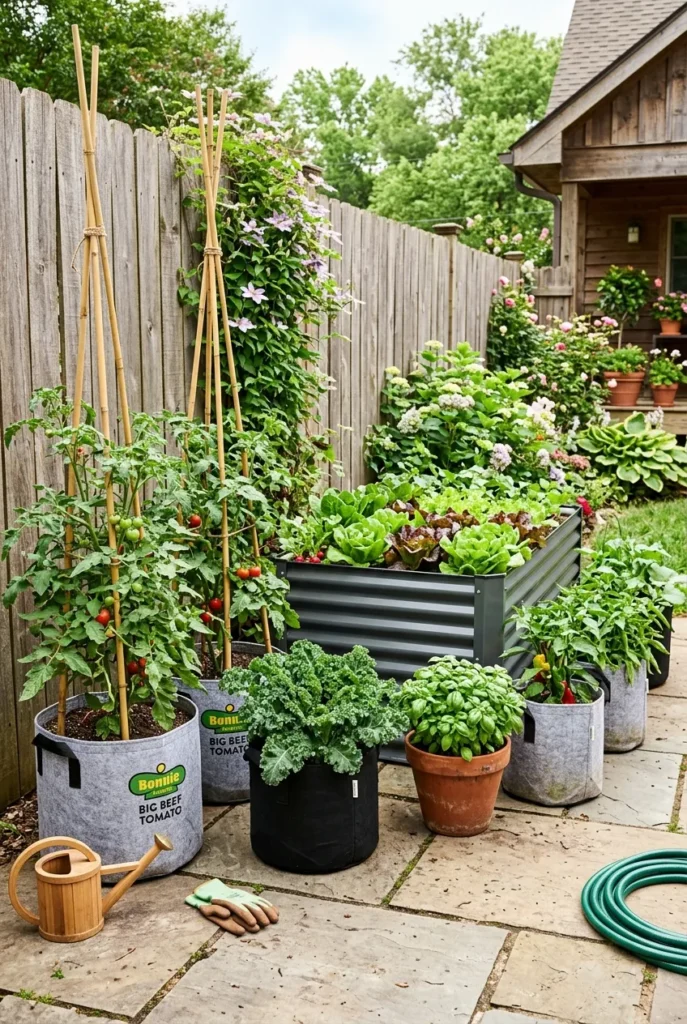
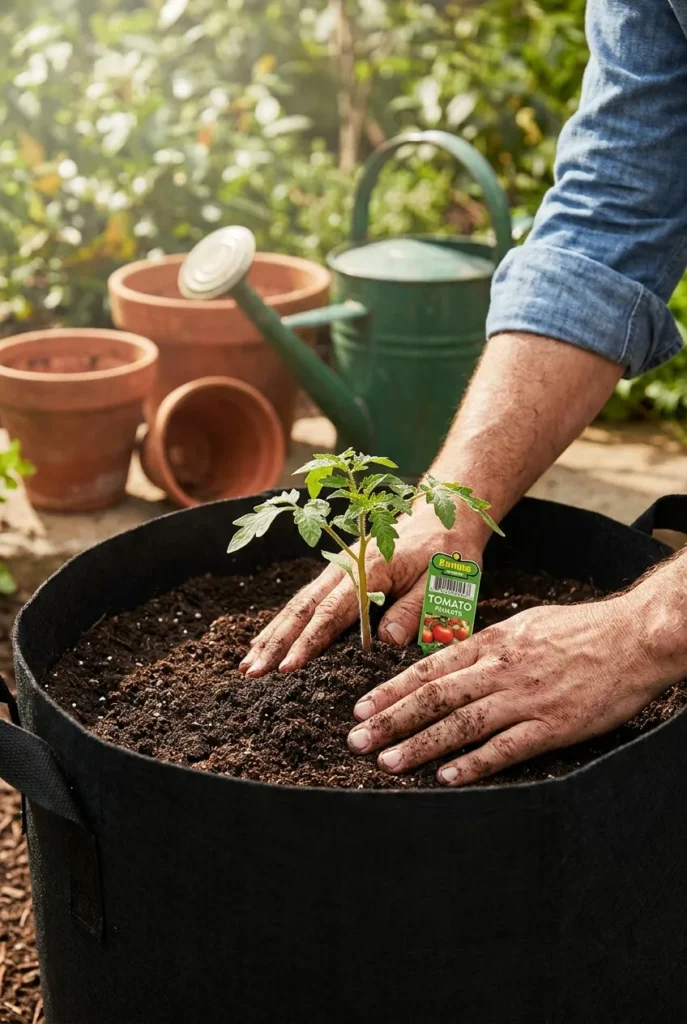
A container vegetable garden is the cheapest, lowest-stakes way to grow real food in 2026, and you do not need a yard to make it work. My first one lived on a 6×10 ft rental balcony in Zone 7. Three 15 gallon fabric grow bags, $42 in Bonnie Plants seedlings, and one bag of Miracle-Gro Performance Organics Raised Bed Mix. By August I was hauling in more cherry tomatoes than my fridge could hold.
That first season I also killed two basil plants in unglazed terra cotta before figuring out the clay was wicking water away from the roots faster than I could pour it back in. So this guide is the one I wish I had read. Real picks, real pot sizes, real prices, and the mistakes I already made for you.
If you are brand new to growing food in pots, our step by step container gardening for beginners guide is the foundation. This post zooms in on the vegetable side: what to plant, what to plant it in, and how to keep it alive past July.
Why a Container Vegetable Garden Works When a Big Garden Does Not
In-ground beds are wonderful and also a commitment. A container vegetable garden takes one weekend and zero permission from a landlord. You control the soil completely, which means no clay drainage problems, no buried tree roots stealing your nutrients, and no quack grass creeping in from the neighbor’s lawn.
Pots also let you chase the sun. My south-facing balcony got 8 hours of direct sun by 11 a.m. and a brutal afternoon bake. I scooted the basil into morning sun and the peppers into the worst of the heat. Try doing that with a raised bed.
A container vegetable garden is the only honest answer for renters, sloped lots, balconies, and anyone with HOA rules. For more inspiration on tiny footprints, our small space container garden ideas roundup is full of layouts that fit on a 4×6 ft balcony.
The 9 No-Fail Vegetables for Containers
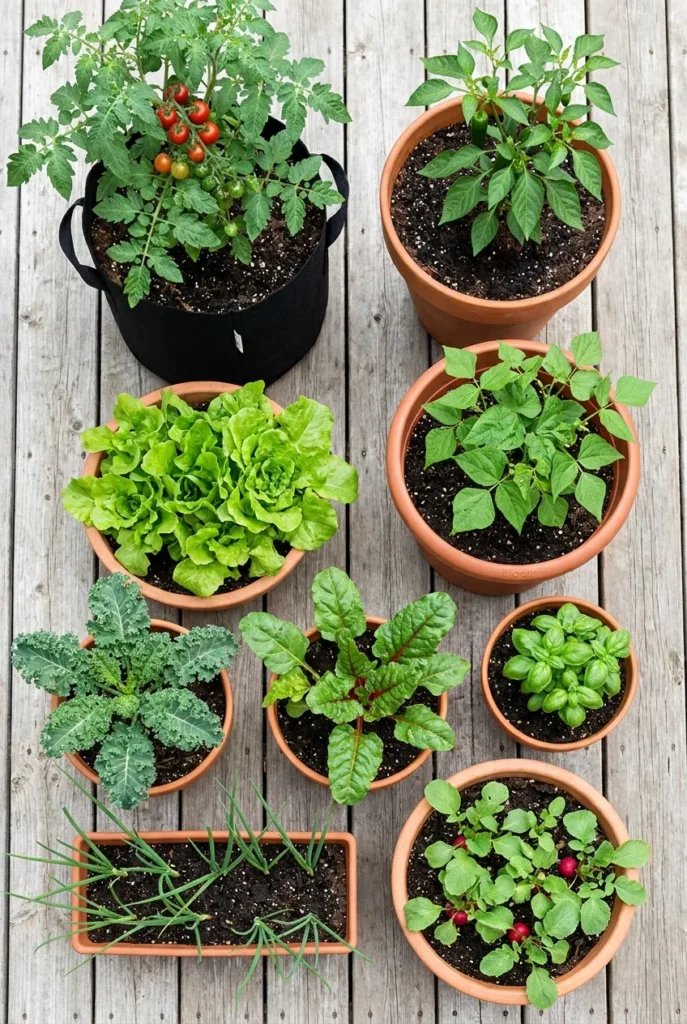
I have grown all nine of these in pots over the last 5 years across Zones 6 and 7. These are the ones that produce hard and forgive beginner mistakes.
Tomatoes (Determinate or Patio Varieties Only)
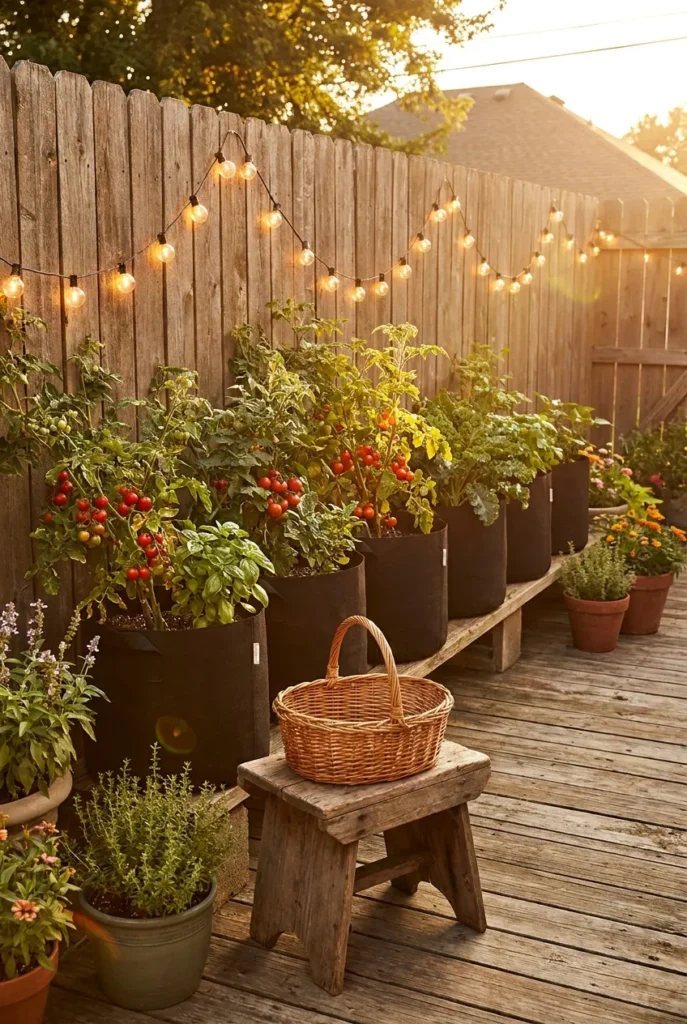
Skip the giant indeterminate beefsteaks for your first year. Go with Bush Early Girl, Patio Princess, or Bonnie Plants Big Beef Bush. These cap out around 3 to 4 ft, fruit heavily, and do not need a 6 ft trellis. Minimum pot size is 10 gallons. Bigger is always better.
Peppers (Both Sweet and Hot)
Peppers love container life because they love hot roots. A 5 gallon Bloem Terra pot in full sun outproduces a 5 gallon in-ground pepper plant in my experience. Jalapeno, shishito, and Lunchbox sweet peppers are the most reliable.
Leaf Lettuce
The fastest win in your container vegetable garden. Sow seeds directly into a shallow wide planter (6 inches deep is plenty), cut leaves at 4 inches, and the plant keeps producing for 6 to 8 weeks. A $2 seed packet from Burpee yields more than you can eat.
Bush Beans
Not pole beans. Bush beans like Provider or Contender stay 18 to 24 inches tall and do not need staking. One 5 gallon pot fits 4 to 6 plants and produces beans for 3 weeks straight.
Curly Kale
Kale is borderline immortal. One Bonnie Plants seedling in a 5 gallon pot fed my smoothies from May through November in Zone 7. It tolerates partial shade, light frost, and bad watering days.
Swiss Chard
The Pinterest plant. Bright lights chard with red, yellow, and orange stems looks like a flower bed and tastes like spinach. 5 gallon pot, partial sun to full sun, cut outer leaves all season.
Basil
The patio classic, but with a catch. Basil scorches in unglazed terra cotta on a south wall. Use a glazed pot or 10 inch fabric grow bag and water every single morning in July.
Scallions and Bunching Onions
Stick the white root ends of grocery store scallions in a 4 inch deep tray of soil. They regrow within 10 days. Free salad topping forever.
Radishes
The fastest no-fail vegetable on this list. 28 days from seed to harvest in a shallow wide planter. Perfect for impatient kids and impatient adults.
Container Sizes That Actually Match the Plant
The single biggest mistake in container gardening is planting a tomato in a 1 gallon pot and wondering why it dies. Match the pot to the root depth or accept a sad harvest.
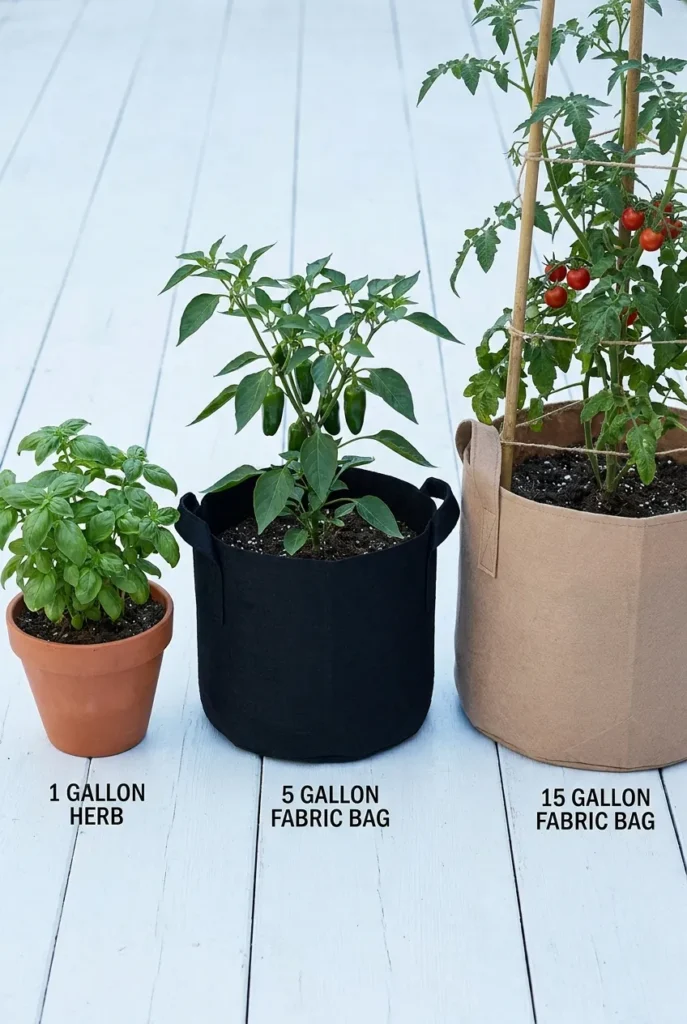
According to UMass Extension’s research on container vegetable depth requirements, pot size has a stronger impact on yield than soil quality, fertilizer, or watering schedule. Translation: buy the bigger pot.
Container Size to Plant Cheat Sheet
| Vegetable | Minimum Pot Size | Better |
|---|---|---|
| Tomato (determinate) | 10 gallons | 15 gallons |
| Pepper | 3 gallons | 5 gallons |
| Bush bean | 3 gallons | 5 gallons |
| Kale | 3 gallons | 5 gallons |
| Swiss chard | 2 gallons | 3 gallons |
| Basil | 1 gallon | 2 gallons |
| Lettuce | 6 inches deep | 8 inches deep |
| Scallion | 4 inches deep | 6 inches deep |
| Radish | 6 inches deep | 8 inches deep |
Screenshot that table. It will save you more money than any other piece of gardening advice on the internet.
What Kind of Container Should You Actually Buy
Five materials, five trade-offs. Here is the honest version after testing all of them.
Fabric Grow Bags
The winner for most beginners. A 5 gallon grow bag costs about $3 in bulk, lasts 3 to 5 seasons, and the breathable sides air-prune the roots so the plant never gets root-bound. Self-watering EarthBox tomatoes outproduced my in-ground row 2 to 1 the summer of 2025, but my fabric bag tomatoes were close behind for one tenth the cost.
Glazed Ceramic Pots
Heavy, gorgeous, and they hold water properly. Use these where you want the patio to look like a magazine cover. Watch the weight on a balcony.
Plastic Planters
Cheapest, lightest, and they get hot in full sun. A Bloem Terra 16 inch pot costs $12 at Walmart and works perfectly for peppers. Avoid black plastic on a south facing concrete slab. Roots cook above 95°F.
Unglazed Terra Cotta
Beautiful, breathable, brutal in summer. Terra cotta wicks moisture out of the soil through the clay walls. Great for rosemary and lavender that hate wet feet. Terrible for basil and lettuce that want consistent moisture.
Self-Watering Containers
A $45 EarthBox or DIY 5 gallon bucket with a reservoir. Best for the vacation traveler or anyone who forgets to water. They cut watering frequency by half in July.
The $25, $100, and $250 Container Vegetable Garden Startup Plan
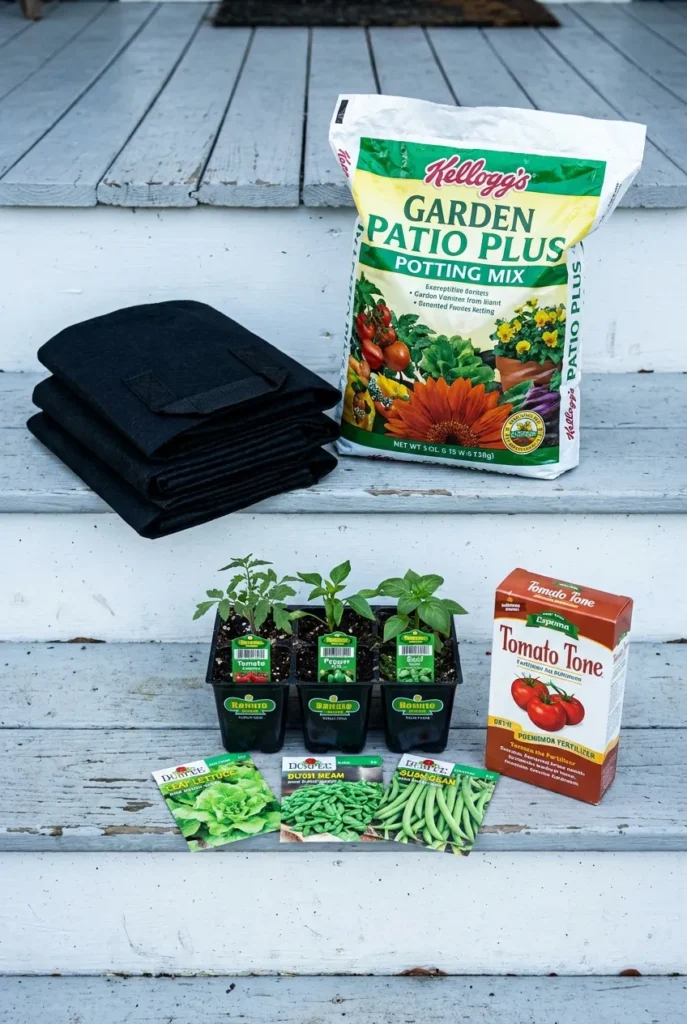
Nobody else on the first page of Google breaks down what this actually costs. Here is the real math, by tier, in 2026 US dollars.
Bare Bones Tier ($25 total)
- 3 x 5 gallon fabric grow bags from Amazon, $9
- 1 bag Kellogg Garden Patio Plus potting mix, $12
- 1 Burpee leaf lettuce seed packet, $2
- 1 Burpee bush bean seed packet, $2
Yields a real harvest of lettuce, beans, and one bonus crop from scrap regrowth (scallions or celery base from your fridge). Best for renters testing the waters.
Mid Range Tier ($100 total)
- 5 x 10 gallon fabric grow bags, $25
- 2 bags Kellogg Garden Patio Plus, $24
- 3 Bonnie Plants tomato, pepper, and basil seedlings, $18
- 2 Burpee seed packets (lettuce, radish), $4
- Espoma Tomato Tone organic fertilizer, $9
- 1 bamboo stake set, $8
- 1 watering can, $12
Feeds a household of 2 to 3 from June through October.
Splurge Tier ($250 total)
- 1 Vego Garden 17 inch metal raised bed, $169
- 2 x 15 gallon fabric grow bags, $14
- 2 bags Miracle-Gro Performance Organics Raised Bed Mix, $36
- 5 Bonnie Plants seedlings, $30
The “Pinterest pin in your own backyard” tier. This is also the best ROI long term because the metal bed lasts 15+ years.
Soil, Water, and the One Rule That Actually Matters
Garden soil from a bag is not the same as potting mix. Potting mix is light, fluffy, and engineered for drainage in a pot. Garden soil compacts into concrete by July. Buy potting mix.
Kellogg Garden Patio Plus at $12 per 1.5 cu ft is my standard. For tomatoes and peppers that need extra power, FoxFarm Ocean Forest at $25 per 1.5 cu ft is worth the upgrade.
The 70/30 Watering Rule
The 70/30 rule beginners ask about is simple: roughly 70% of your container’s soil should stay consistently moist, and 30% should dry out between waterings to let oxygen reach the roots. Stick your finger 2 inches into the soil. If it is dry at the second knuckle, water deeply until it runs out the drainage holes. If it is still damp, walk away.
Fertilizing Without Overthinking It
Container vegetables eat fast because every watering flushes nutrients out the drainage holes. Top dress with Espoma Tomato Tone once a month from June through August. That is the whole program.
Sun, Shade, and Where to Actually Put Your Pots
Most vegetables want 6 to 8 hours of direct sun. Tomatoes, peppers, beans, and basil are the sun gluttons. Lettuce, kale, chard, and scallions tolerate 4 to 6 hours, which makes them the only veggies worth planting on a north or east facing balcony.
Reference the USDA Plant Hardiness Zone Map to find your zone, then check the Old Farmer’s Almanac frost date calculator for your zip code. In Zone 5, do not transplant tomatoes outdoors before mid May. In Zone 7, mid April is safe. In Zone 9, you can start in February.
Common Mistakes That Kill First Year Container Gardens
The single most common container plant mistake is underwatering in July, not overwatering. Containers dry out 3 to 4 times faster than ground beds. By mid summer, a 5 gallon pot in full sun needs water every single morning.
The second mistake is using garden soil instead of potting mix. The third is planting a tomato in a 3 gallon pot. The fourth is forgetting to fertilize because the bag of potting mix said “feeds for 6 months.” In a leaky container, that promise lasts 4 weeks.
If you want to see what a real budget makeover looks like with these same principles applied at backyard scale, our backyard ideas on a budget guide walks through a full $487 transformation.
Vegetables That Just Do Not Work in Containers
Some vegetables are stubborn in pots. Corn needs a community of 12+ plants to pollinate. Pumpkins and watermelons sprawl 15+ ft and break under their own weight. Asparagus is a 20 year in-ground commitment. Full-size sweet potatoes will technically grow in a giant pot but yield a disappointing harvest for the effort.
Stick to the 9 no-fail picks above for year one. Branch out in year two once you know what your sun and your schedule actually support. For deeper plant-specific guidance, our container gardening vegetables deep dive covers each vegetable’s quirks individually.
A Realistic Weekend Setup Plan
Friday evening: order or buy 3 fabric grow bags, 1 bag potting mix, and 3 Bonnie Plants seedlings. Total time, 45 minutes.
Saturday morning: place the bags in their final sunny spot, fill with potting mix (leave 2 inches of headroom at the top), water the soil thoroughly the day before planting. Total time, 30 minutes.
Saturday afternoon: transplant seedlings, water again, stake the tomato. Sprinkle Espoma Tomato Tone around the base. Total time, 20 minutes.
Sunday: do nothing. Watch them sit there. That is the whole project.
Frequently Asked Questions
What is the easiest vegetable to grow in a container?
Leaf lettuce, hands down. A $2 Burpee seed packet, a 6 inch deep planter, and 4 hours of sun will produce salad in 30 days. Radishes come in second at 28 days from seed. Both are nearly impossible to kill if you remember to water.
What is the most common mistake made with container plants?
Underwatering in summer. Containers dry out 3 to 4 times faster than in-ground beds, especially anything under 5 gallons sitting in direct sun. A close second is using bagged garden soil instead of potting mix. Garden soil compacts in a pot and suffocates the roots by July.
What is the 70/30 rule in gardening?
Roughly 70% of your container’s soil should stay consistently moist, and 30% should dry out between waterings so oxygen can reach the roots. The finger test works: stick your finger 2 inches into the soil, water if dry at the second knuckle, wait if still damp.
What vegetables cannot be grown in containers?
Corn, full-size pumpkins, watermelons, and asparagus are the four to skip. Corn needs 12+ plants for pollination, pumpkins and watermelons sprawl too far and grow too heavy, and asparagus is a multi-year in-ground crop that hates being moved.
How often should you water a container vegetable garden in summer?
Once a day in July and August for anything under 5 gallons in full sun. Twice a day during heat waves above 95°F. Larger 10 to 15 gallon containers can stretch to every other day. Always water in the morning, never at night.
Can I reuse potting soil from last year?
Yes, but refresh it. Dump the old mix into a wheelbarrow, mix in one third fresh Kellogg or Miracle-Gro potting mix, add a handful of Espoma Garden Tone, and reuse it. Diseased plants from the prior year are the only reason to toss soil completely.
Do container vegetables need full sun?
Most do. Tomatoes, peppers, beans, and basil want 6 to 8 hours of direct sun. Lettuce, kale, chard, scallions, and radishes will produce on 4 to 6 hours, which is the only honest answer for shaded balconies.
The Bottom Line
A container vegetable garden does not require a backyard, a tiller, or any prior experience. It requires the right pot size, the right potting mix, water in the morning, and 9 forgiving vegetables to pick from. Start with $25 and 3 grow bags. Add a Vego bed in year two if you fall in love.
If you want more inspiration once your first harvest comes in, the container gardening for beginners walkthrough covers herbs and flowers next.