The Raised Garden Bed Spacing Guide That Finally Makes Sense

Raised garden bed spacing is the single difference between a bed that feeds your family from May through October and a tangle of plants competing for light, water, and root space. Most gardeners either crowd everything in or space so cautiously they waste half the bed. Neither works. Get the numbers right once and you’ll produce more food from a 4×8 footprint than most people pull from a 200-square-foot in-ground plot.
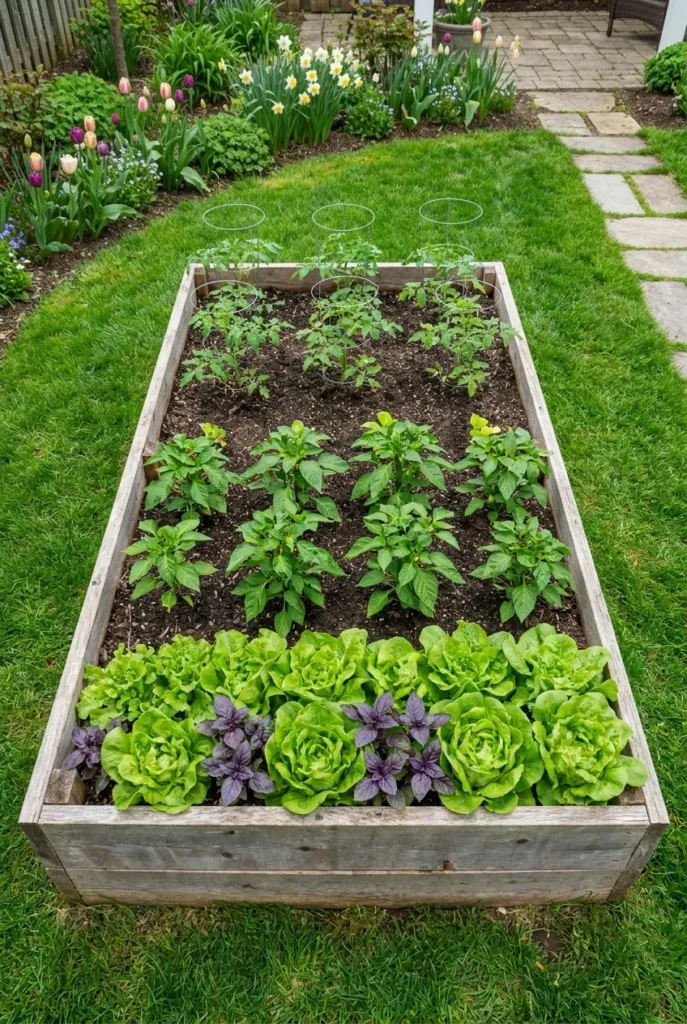
I overpacked my first 4×8 Greenes Fence cedar kit so badly that the zucchini shaded out every pepper plant in the front row by June. Zero peppers that summer. Spacing felt like guesswork until I started sketching each bed on graph paper before a single transplant went in. That one habit changed everything.
Whether you’re designing your first bed or rethinking a layout that hasn’t delivered, our raised garden bed layout ideas for small backyards covers the visual planning side of this in full detail. Here, we’re going deep on the numbers.
Why Spacing in Raised Beds Works Differently Than In-Ground Rows
Row gardening was engineered around tractors and tillers. Raised beds run on completely different logic.
When you build and fill a raised bed with quality amended soil, roots travel downward into loose, rich earth instead of fighting compacted clay or hardpan. That vertical root run changes how close plants can grow. The row gaps in field farming exist for walking lanes, tiller access, and drainage between berms. In a raised bed you reach in from the side. No walking between plants. No tiller. Those gaps are wasted space you get to reclaim.
Seed packets almost always list row spacing: something like “plant 18 inches apart in rows 36 inches apart.” That 36-inch gap is for field production. In a raised bed, following it wastes the best real estate you own. According to Penn State Extension’s research on intensive vegetable production in raised beds, raised-bed systems allow spacing to shrink to a plant’s mature canopy diameter measured diagonally between neighbors, which can fit 2 to 4 times more plants in the same footprint compared to conventional row planting.
Soil quality is what makes this possible. Start with Miracle-Gro Performance Organics Raised Bed Mix ($18 per 1.5 cu ft) or Kellogg Garden Patio Plus ($12 per 1.5 cu ft, available at Lowe’s) and your roots find nutrients without elbowing anything out. Cheap soil collapses that spacing advantage fast.
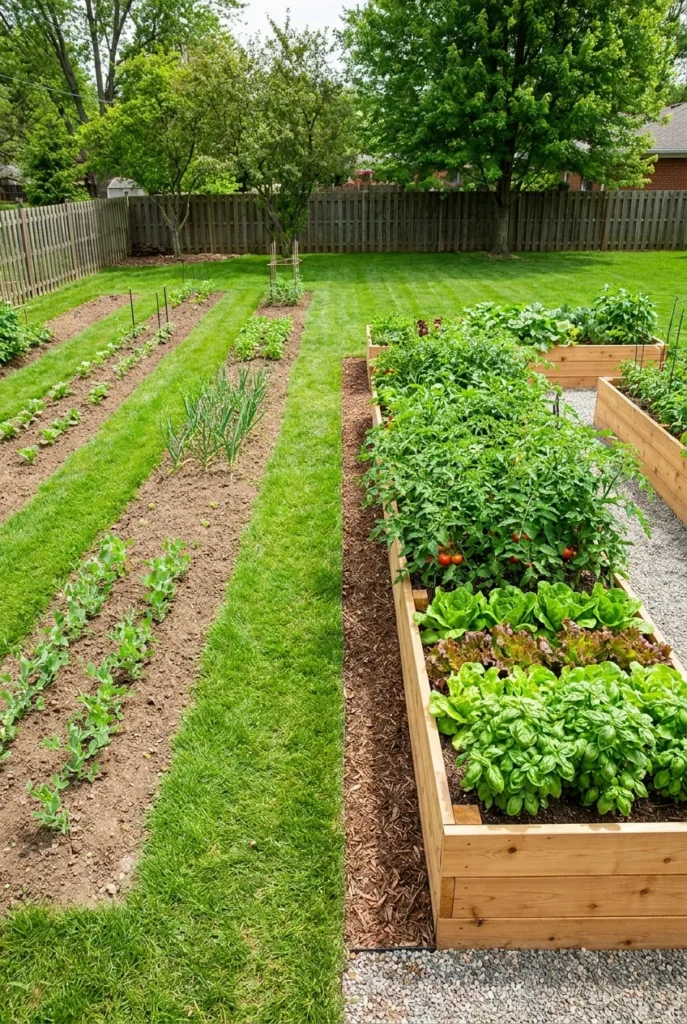
The Raised Garden Bed Spacing Cheat Sheet (Screenshot This)
These numbers reflect intensive raised-bed spacing, not row-garden packet directions. Everything below is sized for the plant’s mature canopy, so leave this open on your phone when you’re planting.
Vegetables: Spacing and Minimum Bed Depth
| Vegetable | Spacing (inches) | Min Bed Depth (inches) | Notes |
|---|---|---|---|
| Tomatoes (determinate) | 18-24 | 12 | 1 plant per 4 sq ft |
| Tomatoes (indeterminate) | 24-36 | 12 | Trellis vertically to save footprint |
| Peppers | 12 | 12 | 4 plants fit a 4×4 bed cleanly |
| Zucchini | 24-36 | 12 | Max 1 plant per 4×4 bed |
| Cucumbers (trellised) | 12 | 10 | Grow up, reclaim the ground |
| Bush beans | 6 | 8 | Great candidate for dense planting |
| Pole beans (trellised) | 4-6 | 8 | Very productive per square foot |
| Lettuce | 6-8 | 6 | Cut-and-come-again extends the season |
| Spinach | 3-4 | 6 | Succession sow every 2 weeks |
| Kale | 12-18 | 8 | Dwarf varieties closer to 12 |
| Carrots | 3 | 18 | Depth matters more than spacing here |
| Radishes | 2-3 | 6 | Fast turnover, great gap filler |
| Onions | 4-6 | 6 | Plant sets 4 inches apart |
| Garlic | 6 | 8 | Cloves pointed up, flat end down |
| Beets | 4-6 | 8 | Thin aggressively after sprouting |
| Broccoli | 18 | 10 | One plant per square foot |
| Eggplant | 18 | 12 | Full sun, rich soil required |
Herbs: Spacing in a Raised Bed or Border
| Herb | Spacing (inches) | Notes |
|---|---|---|
| Basil | 10-12 | Pinch flowers to extend season |
| Cilantro | 4-6 | Succession sow every 3 weeks |
| Parsley | 8-10 | Slow to establish, worth the wait |
| Mint | 12-18 | Bury in a pot inside the bed or it takes over |
| Chives | 6 | Foolproof in Zones 3 through 9 |
| Thyme | 12 | Low-growing, great bed-edge plant |
| Rosemary | 18-24 | Hardy to Zone 6, pot it in Zone 5 |
| Dill | 12 | Keep away from fennel |
| Oregano | 12-18 | Spreads hard, plan room for it |
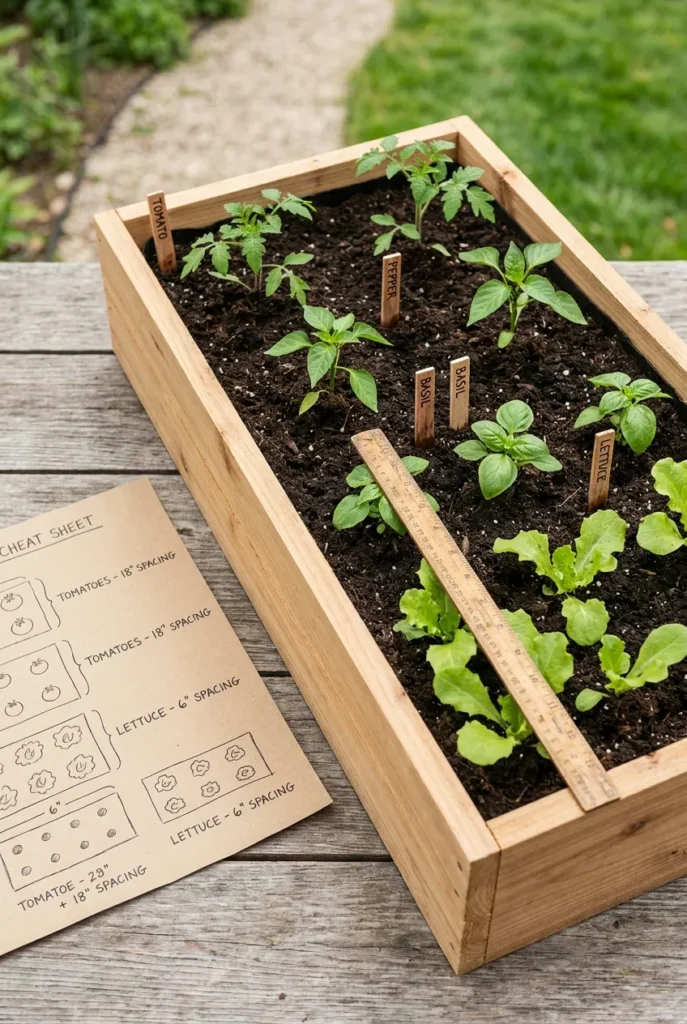
How to Space Plants Based on Your Raised Bed Size
Spacing numbers only work if you’re thinking about bed dimensions first. A 4×4 bed and a 4×8 bed call for completely different strategies, and this is the gap almost every spacing guide skips.
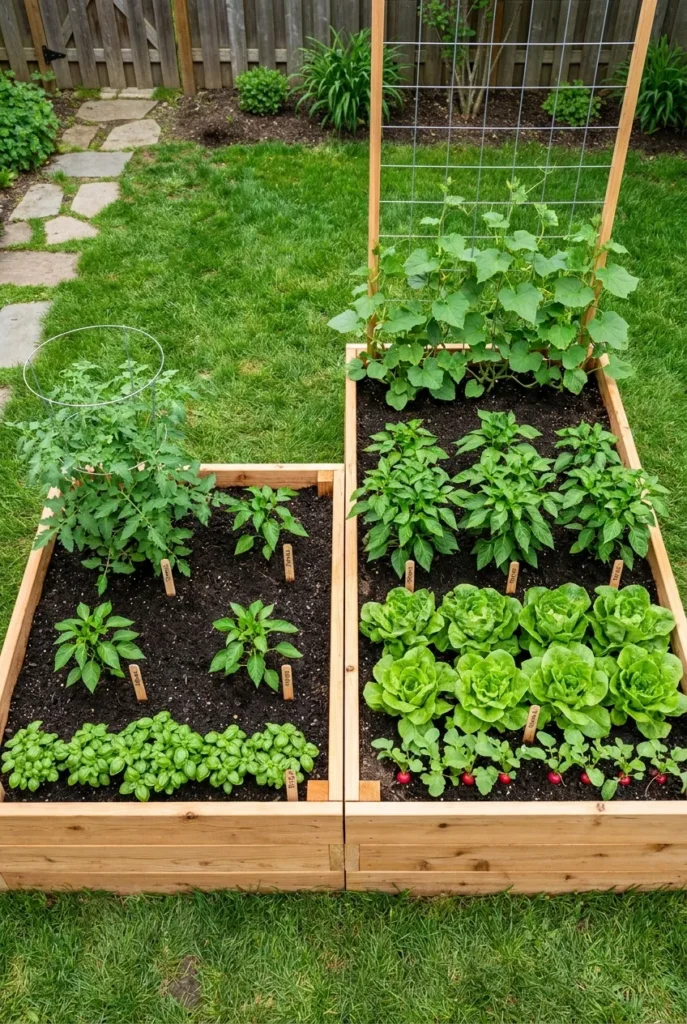
Planning a 4×4 Raised Bed
Sixteen square feet is enough for a genuinely productive small garden. It rewards a focused planting approach:
- Back center: 1 indeterminate tomato with a cage or trellis (takes 4 square feet of footprint at maturity)
- Mid zone: 4 pepper plants at 12 inches each
- Front edge: basil at 10-inch spacing as a companion row
That fills a 4×4 without a single overcrowded plant. The most common beginner mistake is trying to fit a zucchini in a 4×4. One plant spreads to 3 or 4 square feet of canopy by midsummer. It will shade every other plant you put near it. Save zucchini for the 4×8 or give it a dedicated bed of its own.
Planning a 4×8 Raised Bed
A 4×8 gives you 32 square feet and real flexibility. Here’s a layout that produces from late spring through first frost:
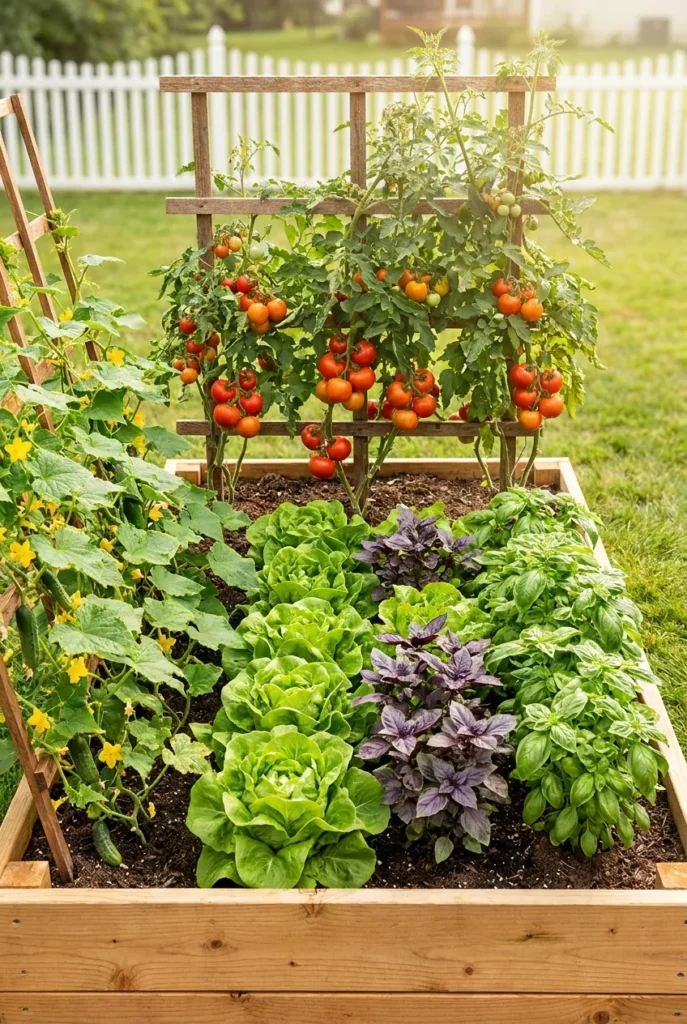
- Tall zone (back row): 2 trellised cucumbers at 12 inches, or 1 indeterminate tomato with a full cage
- Mid zone: 6 peppers at 12 inches, or 8 bush beans at 6 inches
- Front zone: lettuce at 6 to 8 inches, radishes at 2 to 3 inches, succession planted every two weeks
The soil inside that bed matters as much as the spacing plan on paper. Our full breakdown of what to fill a raised garden bed with covers the exact mix ratios that make tight intensive spacing actually deliver. Loose, deeply amended soil is the entire reason these numbers work.
Square Foot Gardening vs. Intensive Spacing: The Honest Answer
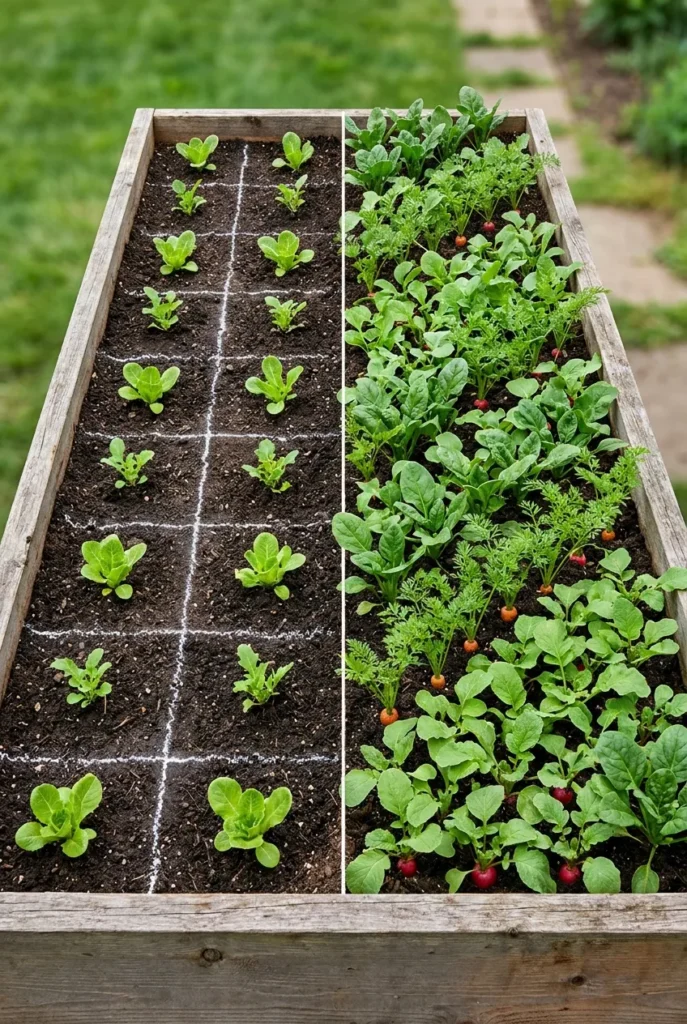
Square foot gardening (SFG), popularized by Mel Bartholomew, divides your bed into 1-foot squares and assigns a plant count to each square. It’s clean, visual, and easy to explain to a beginner. It also causes more anxiety than it solves once you start scaling up.
Here’s the thing: the square foot method is a training wheel, not a permanent system. Plants don’t grow in squares. A tomato plant doesn’t care if its roots cross a chalk line. Real intensive spacing places plants diagonally to their neighbors, which fits more plants in the same bed area than a rigid grid ever could.
Per the Old Farmer’s Almanac’s guidelines on intensive gardening, diagonal spacing fits roughly 14% to 20% more plants per square foot compared to the SFG grid. For a full 4×8 bed of lettuce at 8-inch spacing, that’s 3 to 4 extra plants per crop cycle. Across a full growing season of succession planting, those extra plants add up to real harvest.
Use the SFG plant counts as a starting floor. Go tighter when your soil is genuinely rich, well-draining, and has been building organic matter for at least one season. The grid is a guideline. The plant’s mature canopy diameter is the actual rule.
The 70/30 Rule and the 80/20 Rule, Finally Explained
Both gardening rules appear constantly in search results. Almost nobody writes a clear definition of either one in the same article.
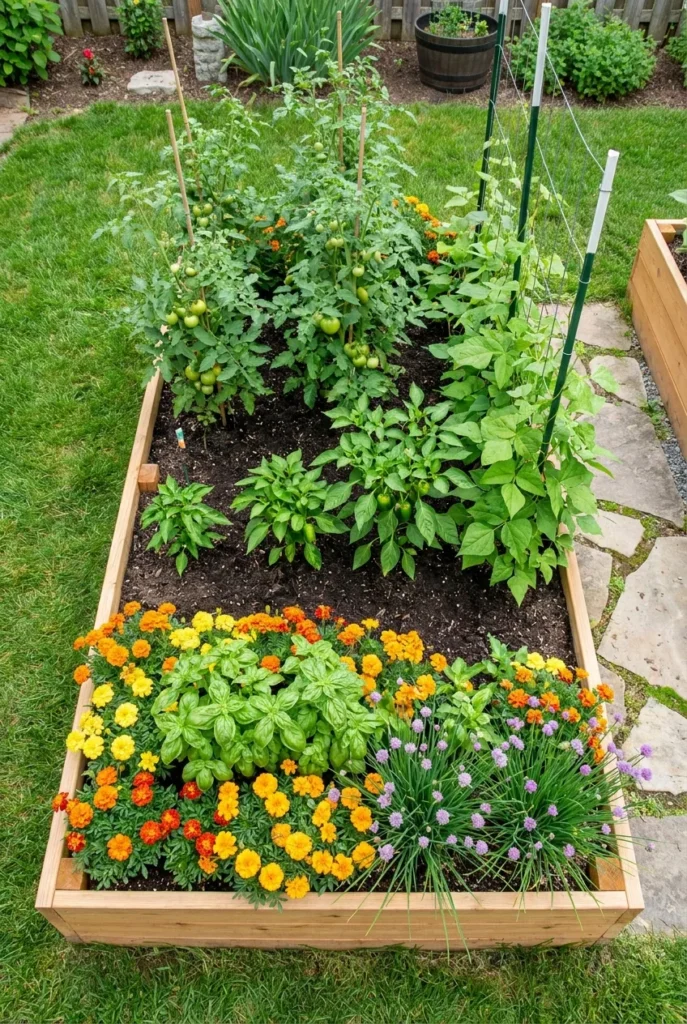
The 70/30 rule in gardening refers to the balance between high-yield crops and support plants in a productive bed. About 70% of your bed space goes to crops that deliver the most food per square foot: tomatoes, peppers, beans, kale, leafy greens. The remaining 30% goes to companion plants, herbs, and edible flowers that support the ecosystem. Marigolds tucked in to deter aphids, basil at the border to improve tomato flavor, chives to confuse pest insects. It’s a planner’s rule of thumb, not a scientific formula, and it works well as a bed-allocation guide when you’re deciding what goes where before planting day.
The 80/20 rule in gardening maps onto the classic Pareto principle. About 80% of your harvest comes from 20% of your plants. In most home gardens, that high-producing 20% is tomatoes, zucchini, and beans. They’re the crops that keep refilling the basket all summer without replanting.
The practical spacing implication: give those three categories the most generous square footage in the bed. Let them spread to full mature-size spacing. Fill the remaining space with fast-turnover, tight-spacing crops like radishes, spinach, and lettuce that cycle out quickly and handle close planting without complaint.
Both rules together form a simple framework. Prioritize heavy hitters. Support them with companions. Fill every open edge with quick crops. Then space each plant category according to the cheat sheet above.
Transplant Spacing vs. Seed Spacing: They’re Not the Same Number
This one trips up new gardeners every spring, and it matters more than most guides let on.
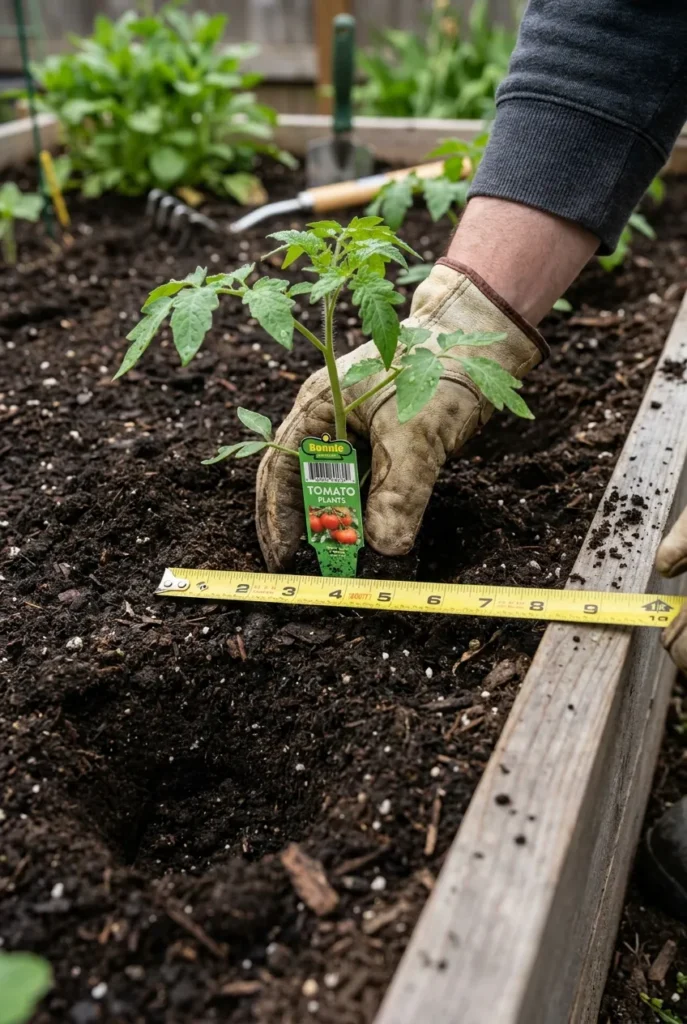
Transplants, the starter plants you pull off the Bonnie Plants rack at Home Depot or Lowe’s for $3.98 to $6.98 each, go into the bed at their mature spacing from day one. A tomato transplant gets 18 to 24 inches immediately, because that’s what it will grow into. It’s already several weeks old and on its way.
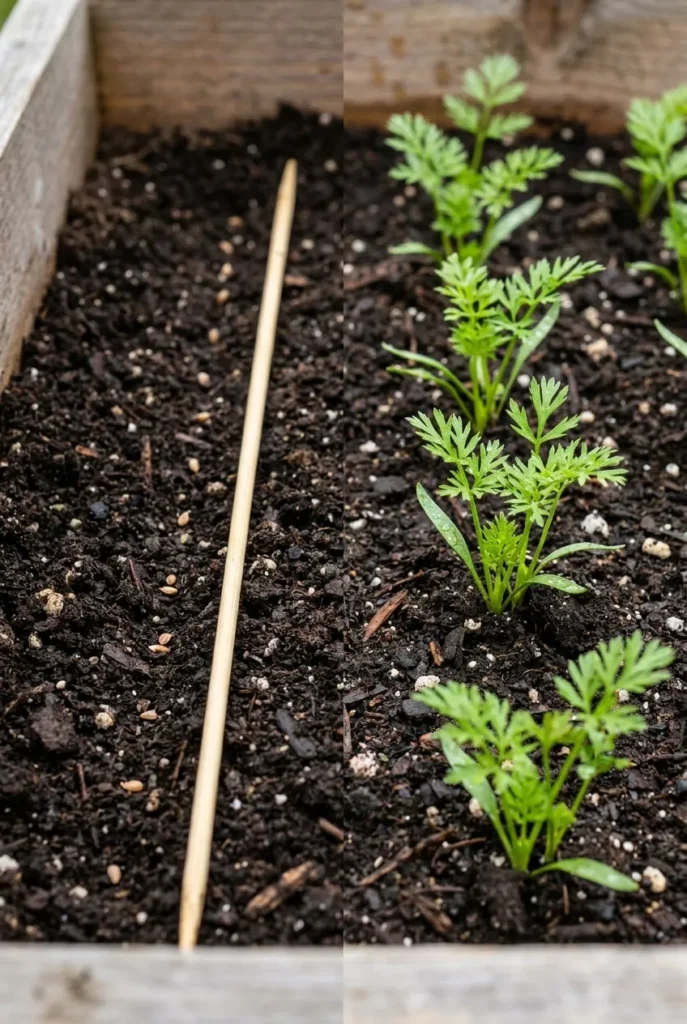
Seeds need thinning. Sow carrot seeds at 1/2-inch intervals and thin to 3-inch spacing once they sprout and reach 2 inches tall. Beet seeds are actually multi-germ seed clusters containing 2 or 3 seedlings per pellet. They need aggressive thinning to 4 to 6 inches or the roots choke each other and stay small.
My worst beet harvest came the summer I skipped thinning in my 4×8 Greenes Fence cedar bed. Every root came out the size of a golf ball. Thinning feels cruel when the seedlings look healthy, but it’s the only path to full-size vegetables from seed.
Quick rules:
- Transplants: plant at final mature spacing from day one
- Seeds: sow at the smallest packet interval, thin to final spacing after germination
- Beets and carrots specifically: thin ruthlessly or the harvest will disappoint every time
Timing by zone matters too. According to the USDA Plant Hardiness Zone Map, direct sowing dates shift significantly across the country. In Zone 5 (Chicago, Denver, Boston), the last frost falls around mid-April, so cool-season seeds like spinach and carrots go in as early as late March. In Zone 9 (Houston, central California), direct sowing starts as early as late January for spring crops.
Three Raised Bed Spacing Mistakes That Cost You Harvest
These three patterns show up in almost every first-year raised bed. Every one of them is fixable before the season even starts.
Mistake 1: Using seed packet row spacing. Packets are written for in-ground field farming. A cucumber packet might say “plant 48 inches apart in rows 5 feet apart.” That spacing is for a production field with a tiller path between every row. In a 4×8 raised bed, trellised cucumbers go in at 12 inches. Cut the row spacing roughly in half as your starting baseline, then use the intensive chart above.
Mistake 2: Underestimating mature plant size. A zucchini seedling at planting looks modest and polite. By late July it has turned into a full canopy. One plant spreads to 3 or 4 square feet at peak. Broccoli heads up fast and takes more horizontal room than beginners expect. Plan for what the plant becomes by August, not what it looks like the day you plant it in May.
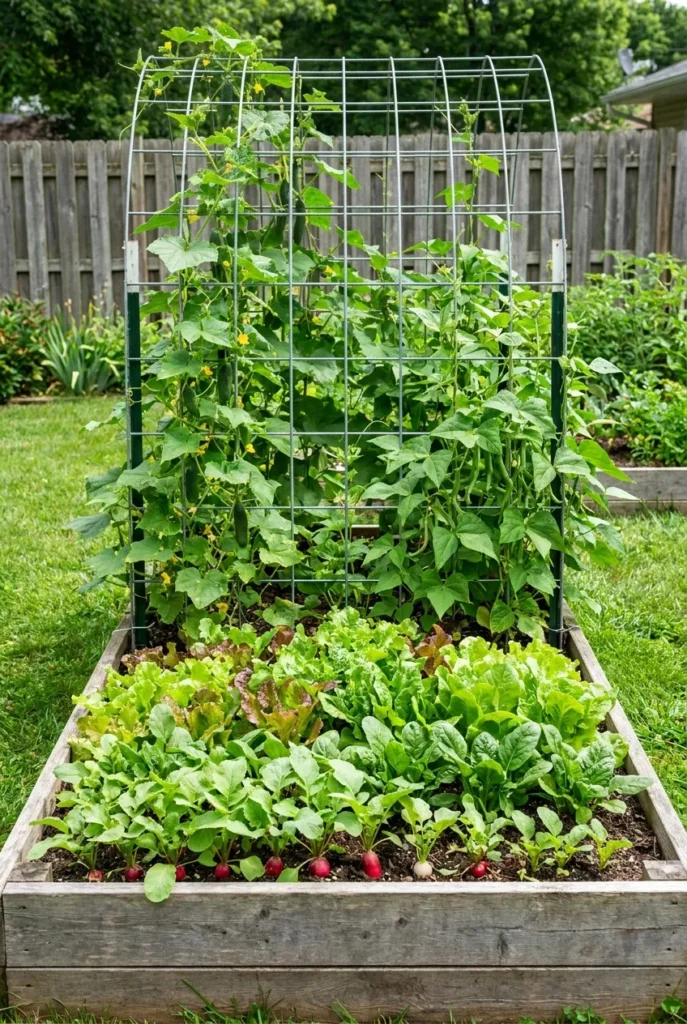
Mistake 3: Ignoring vertical space. Cucumbers, pole beans, and indeterminate tomatoes should grow up, not out. A trellised cucumber at 12-inch spacing occupies one-third the bed footprint of a sprawling bush type. A 6-foot cattle panel from Tractor Supply ($22 to $28) anchored to the back of a 4×8 bed turns those sprawlers into a wall of production that barely touches the planting area at ground level.
If your bed fills up before you’ve fit everything in, container vegetable gardening is how you extend the season into pots without losing harvest. Some seasons my 5-gallon fabric pot tomatoes genuinely outperformed the bed.
Frequently Asked Questions: Raised Garden Bed Spacing
What is the best spacing between raised garden beds?
Leave at least 18 inches between beds if you work from one side only. Go 24 to 36 inches if you need to walk between them or move a wheelbarrow through. Wider paths, 36 inches or more, are worth the lost planting area if you use a garden cart regularly. Narrower paths work fine if you can reach every plant from the bed’s edge without stepping in.
What is the 70/30 rule in gardening?
The 70/30 rule means roughly 70% of your bed space goes to high-yield food crops (tomatoes, beans, peppers, leafy greens) and 30% to companions, herbs, and edible flowers that support the bed ecosystem. It keeps a mixed planting productive without letting any one category crowd the main crops out of the sun.
What is the 80/20 rule in gardening?
In a home garden, about 80% of your total harvest typically comes from 20% of your plants. That 20% is almost always tomatoes, zucchini, and beans. The practical takeaway: give those crops the most square footage and the richest soil position in the bed, and fill the rest with fast-turnover plants.
What are three mistakes to avoid with raised bed gardening?
Following seed-packet row spacing (it’s written for field production, not raised beds), underestimating how large plants grow by midsummer (especially zucchini and broccoli), and skipping vertical growing structures. A single cattle panel trellis triples what you can fit in a 4×8 bed.
How far apart should I plant carrots in a raised bed?
Sow carrot seeds at 1/2-inch intervals, then thin to 3-inch spacing once seedlings hit 2 inches tall. A minimum 18-inch bed depth gives them room to grow long and straight. Loose, well-drained soil matters more here than spacing alone. Sandy-amended raised bed mix and consistent moisture are the two factors that produce straight carrots.
Can I use the square foot gardening spacing chart for a raised bed?
Yes, as a reliable starting point. The SFG grid was designed specifically for raised beds and works well for beginners planning their first season. Diagonal intensive spacing fits 14% to 20% more plants in the same area and scales better as your soil builds up organic matter, but SFG numbers are accurate enough to start from.
Do raised garden beds need drainage holes?
Open-bottom beds drain naturally into the ground below. Closed-bottom beds sitting on concrete or a deck need drainage holes every 12 to 18 inches to prevent waterlogging at the root zone. Skip the gravel layer at the bottom regardless. Gravel creates a perched water table that actually holds moisture longer, the opposite of what you want. Fill the base with coarse compost or rough wood chips instead.
One Thing to Do Before You Plant Anything
Thirty minutes of planning in March prevents a full summer of disappointment. Sketch your bed to scale on graph paper. Mark your heavy hitters first, the 20% of plants that will give you 80% of your harvest. Fill every open gap with fast-turnover crops. Add at least one vertical structure.
I filled my first 4×8 cedar bed with bagged Miracle-Gro Performance Organics Raised Bed Mix alone and watched the soil level drop 6 inches the first winter. A $16 bag of Coast of Maine Bumper Crop mixed into the top 3 inches each spring since has kept the bed at intensive-spacing depth and productivity season after season. Loose, rich soil is the multiplier. The spacing chart is the blueprint. You need both.
Start with one bed, one season, and the chart above. For more ideas on stretching your outdoor space and budget together, our collection of budget backyard ideas pairs naturally with a productive raised bed setup from the ground up.