Japanese Balcony Garden Aesthetic: 15 Ideas to Copy
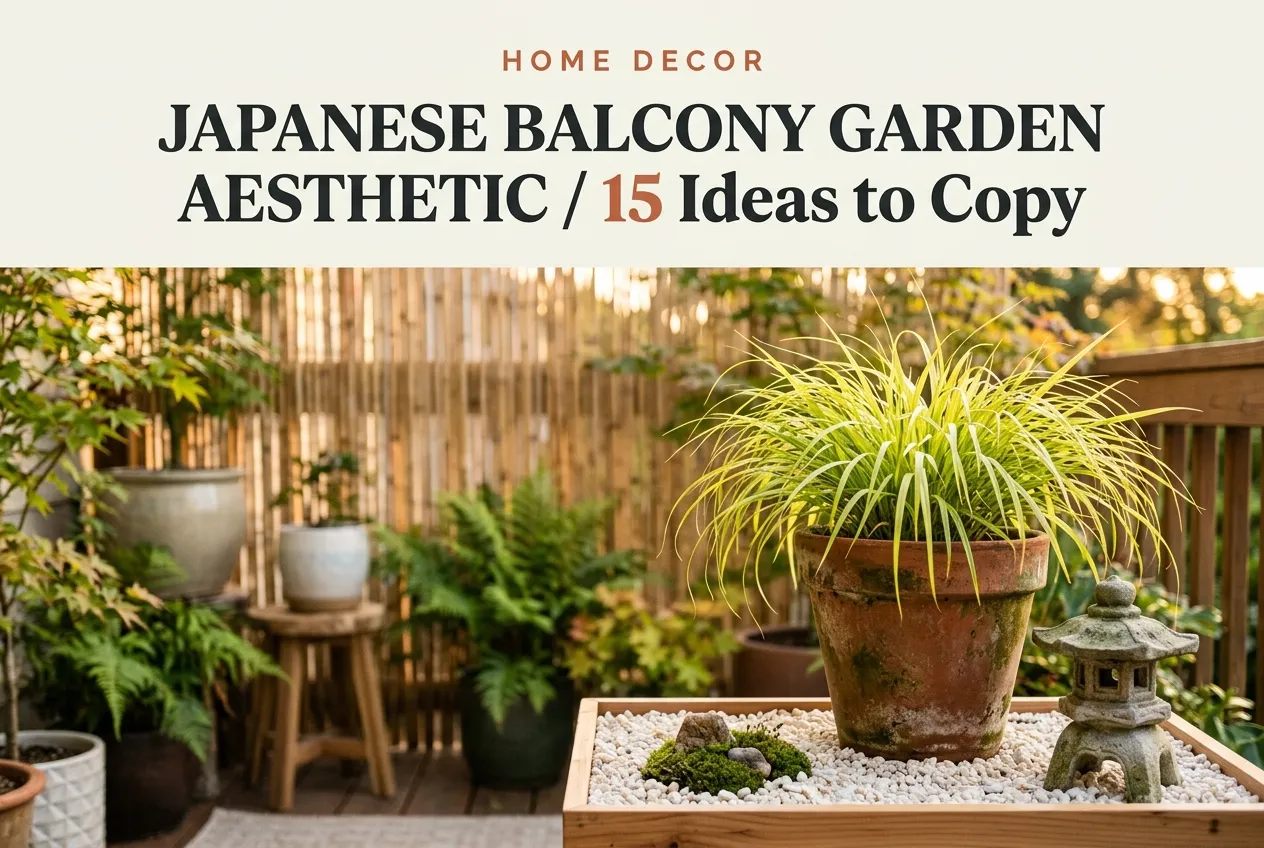
A japanese balcony garden can turn 40 square feet of bare concrete into somewhere you actually want to be. The logic behind it is almost opposite to how most Americans approach outdoor decorating: instead of filling every inch, you clear it. Instead of buying more, you choose one thing and let it breathe. Our apartment balcony garden guide covers the broader principles, but this article is specifically for the Japanese aesthetic, which is its own thing entirely.
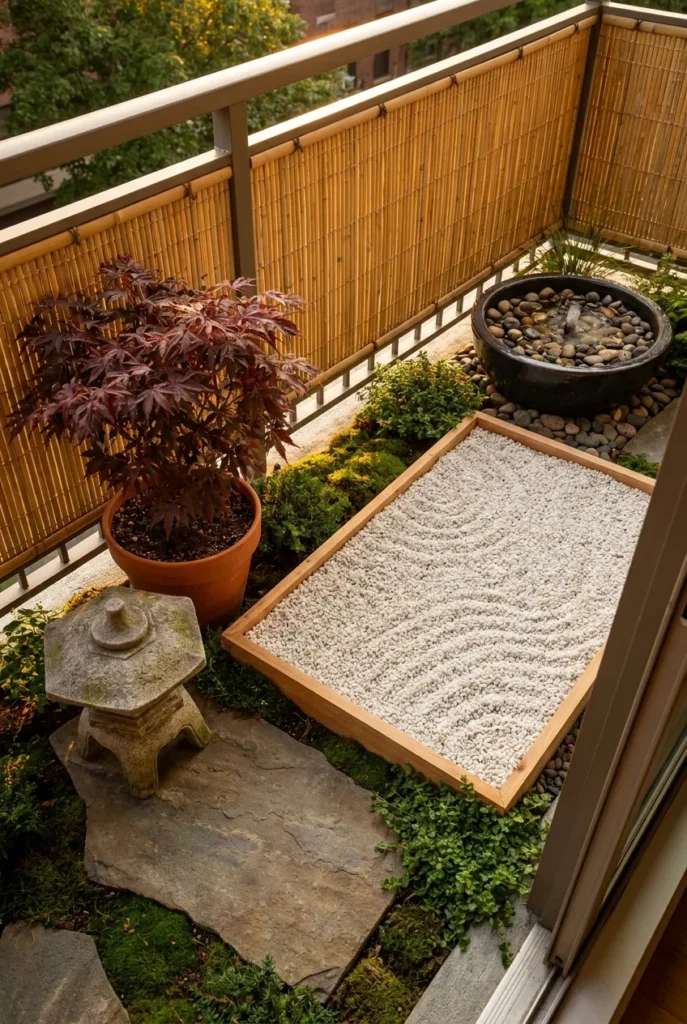
My north-facing balcony got 4 hours of morning sun max, and that single fact rewrote my entire plant list before I spent a dollar. That’s also where I first understood why Japanese garden design works so well for small apartment spaces: it doesn’t fight the limitations. It’s built around them.
These 15 ideas pull from the three layers every zen balcony uses: ground texture, vertical structure, and mood. Work through all of them or pick the three that fit your current space and budget. Either way, the result looks intentional, stays renter-safe, and gets pinned constantly.
What Makes a Japanese Balcony Garden Different From Just a Balcony With Plants
Most balcony gardens are containers plus wishful thinking. A japanese balcony garden starts from a different question: what can I remove, and what one thing deserves the most attention? Three principles run the whole system.
The Three Design Principles You Need to Know
Wabi-sabi is the acceptance of imperfection and natural weathering. An aged, mossy terra cotta pot with a hairline crack reads as beautiful here, not like something you forgot to replace. Worn stone, weathered wood, patchy moss — all of it belongs.
Ma is negative space treated as a deliberate design choice. The empty stretch of raked gravel between two stones isn’t empty. It’s held space. On a balcony, that means leaving some floor visible, leaving some railing bare. The restraint is the design.
Michi (the path) creates a sense of journey even in a 6×8 ft space. Two or three flat stepping stones laid in a diagonal line from the door to a single specimen plant give the eye something to follow.
Here’s the contrarian truth most balcony content ignores: the most-saved Japanese balcony gardens on Pinterest have fewer than five plants total. The scarcity is intentional. More plants means more visual noise, and visual noise is the opposite of what you’re building here.
According to the USDA Plant Hardiness Zone Map, most US gardeners fall in Zones 5–9. Every plant recommendation in this article covers that band, whether you’re in Boston (Zone 6), Nashville (Zone 7), or central California (Zone 9).
Ideas 1–5: Build the Ground Layer First
Ground texture is the element every top-performing japanese balcony garden pin has in common. It’s also the cheapest starting point. Before you buy a plant or hang a light, define what’s underfoot.
Five Ground Layer Ideas (All Portable, All Deposit-Safe)
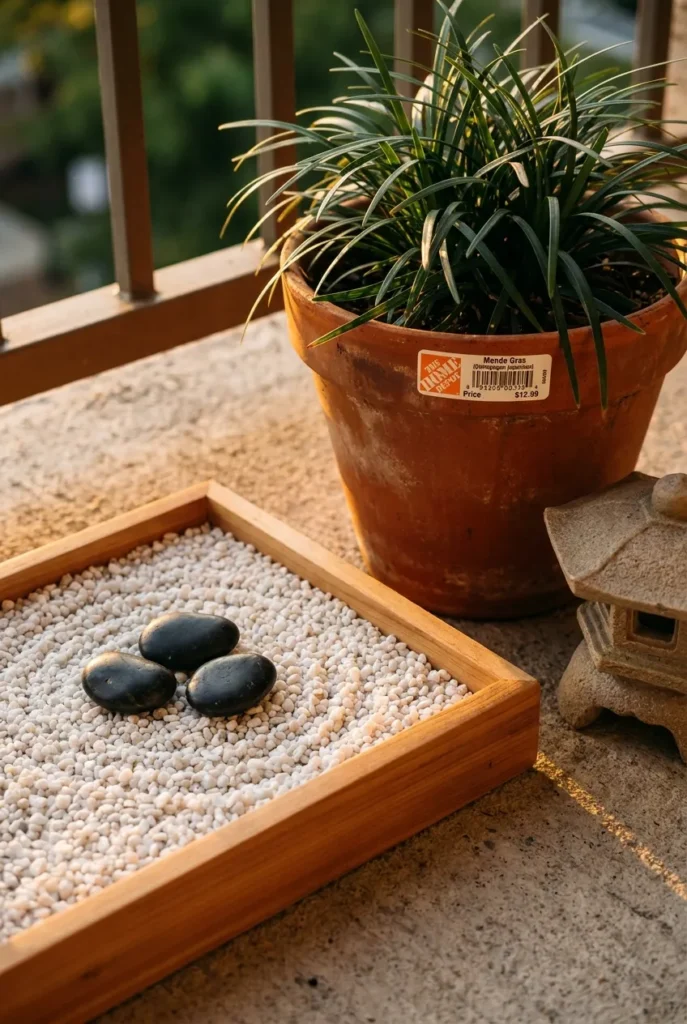
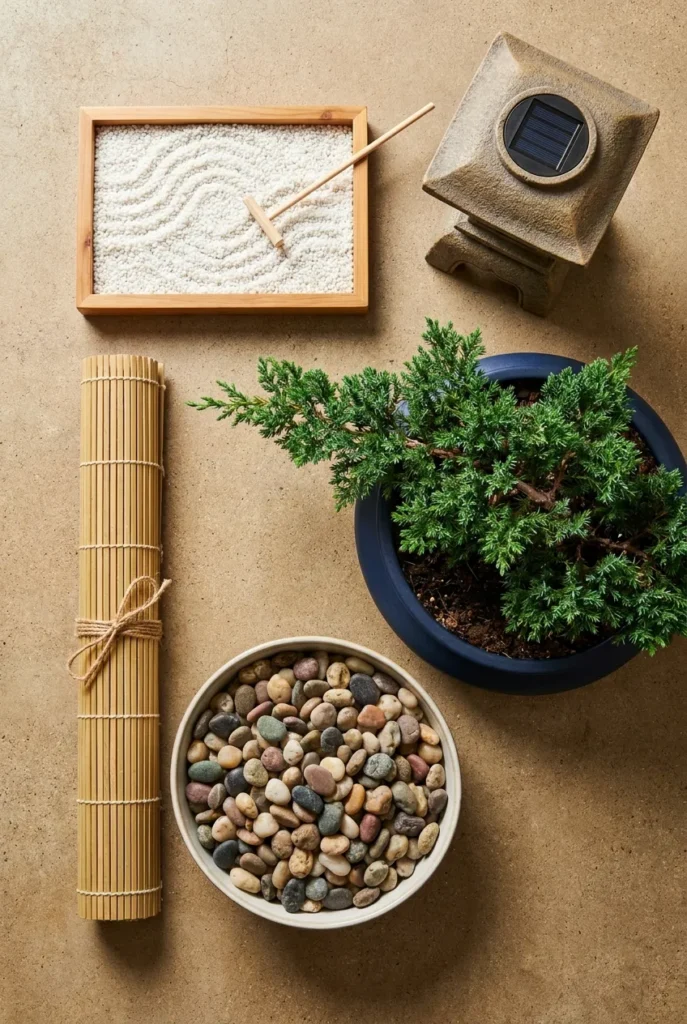
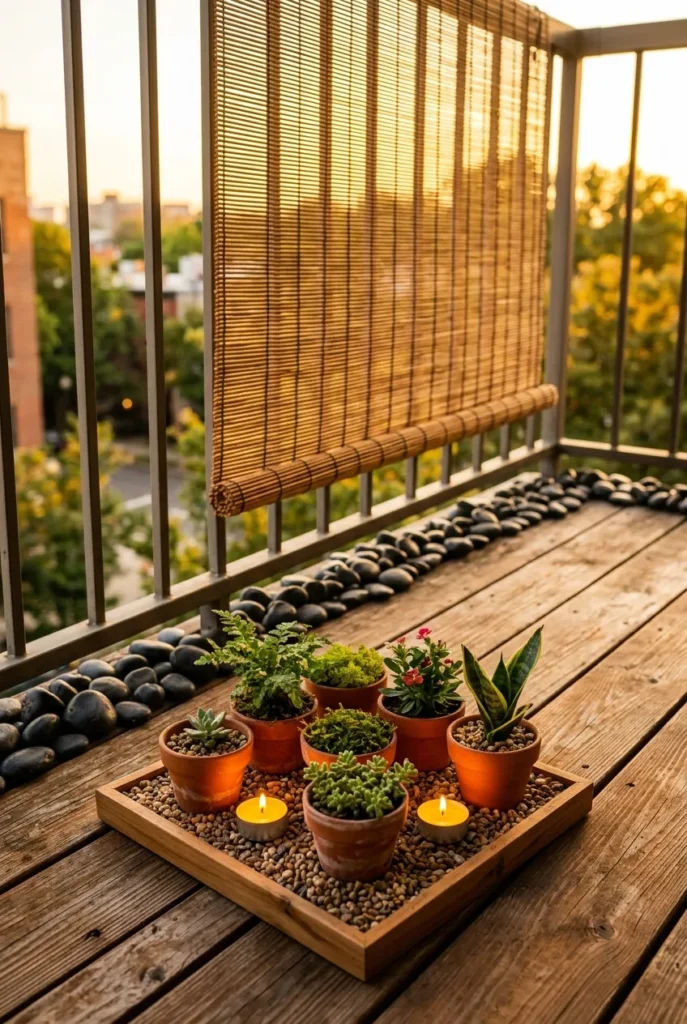
- White pea gravel in a shallow cedar tray. A 24×18-inch cedar tray from Home Depot, filled with 20 lbs of white marble pea gravel ($8 at Lowe’s), gives you a portable karesansui you can rake with a wooden fork. Pick up an $8 wooden rake at any garden center. Total: under $22. The whole setup lifts off the floor on moving day.
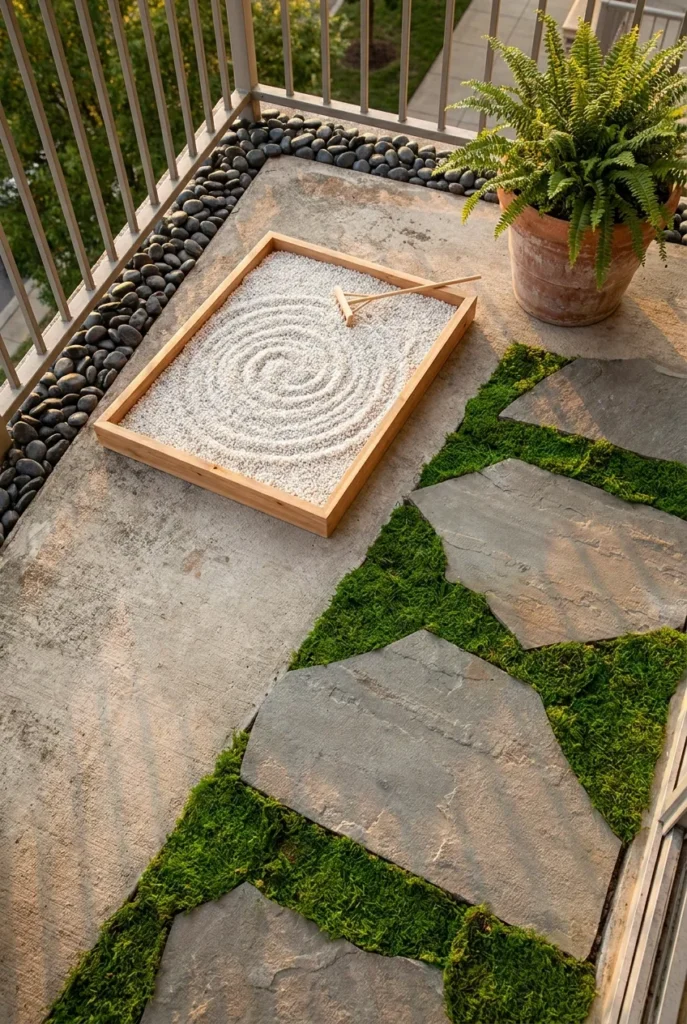
- Black river rock as a perimeter border. Run a 3-inch-wide line of polished black river rocks along the interior of your railing. Polished black stones cost around $6 per 10 lbs at Walmart. It frames the balcony floor the way a museum frames a painting.
- Preserved sheet moss between stepping stones. Preserved sheet moss ($12 for a 4-square-foot sheet on Amazon) needs no water and no sun. Lay two or three flat bluestone pavers in a diagonal path and tuck the moss between them. It reads as a roji path even on concrete.
- Miniature sand tray on a bistro table. A 12×8-inch wooden sand garden tray with three smooth stones and a wooden rake fits on any side table. Under $18 total. It’s the most space-efficient version of the karesansui principle, and it works on balconies as small as 4×6 ft.
- Black lava rock mulch around pot bases. Swap plastic saucers for a 2-inch collar of black lava rock from Tractor Supply ($5 per bag). Set pots directly in it. The result looks like a deliberate ground plane, not a forgotten afterthought.
Our trending garden inspiration roundup covers how to build on ground texture layers with architectural plants if you want to take the aesthetic further.
Ideas 6–10: Go Vertical With Bamboo, Screens, and Trained Plants
Ground layer set. Now add height. Vertical structure defines the walls and the visual skyline of your small zen balcony space. These five ideas add structure without adding weight loads that would stress most apartment railings.
No-Drill Vertical Options for Renters
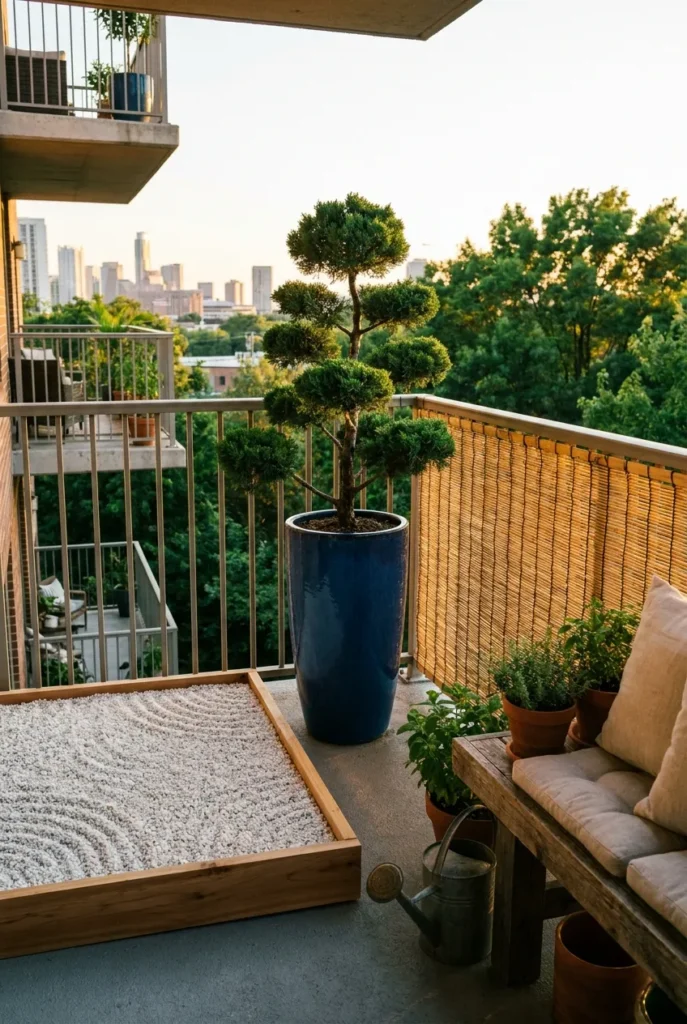
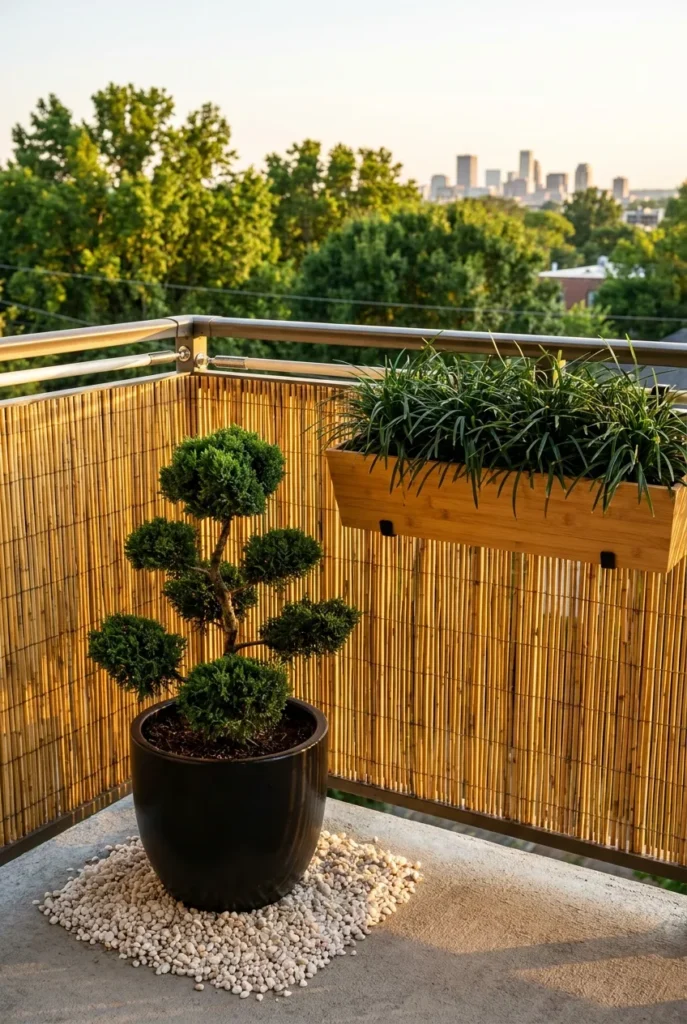
- Natural bamboo roll screen on a tension-rod system. A bamboo roll fence panel (about $25 for a 6×6 ft section at Home Depot) mounts on spring-tension rods placed between railing posts. Zero drilling, zero wall anchors. The panel blocks the neighboring-unit sightline and turns any metal railing into a clean natural wall. Family Handyman’s guide to tension-mount renter privacy screens shows the exact rod sizing for standard railing gaps.
- Bamboo trellis with climbing small-leaf jasmine. A 24-inch bamboo trellis stood upright in a 5-gallon grow bag ($3 each in bulk), planted with Trachelospermum asiaticum (Asian star jasmine), fills in over one full growing season in Zones 7–9. It adds fragrance at nose level and vertical softness at the same time.
- Niwaki-style cloud-pruned juniper in a glazed ceramic pot. Cloud pruning sounds intimidating. It’s just snipping juniper branch tips into rounded pads each spring. Buy a pre-shaped juniper topiary from your local garden center ($25–$40 range), pot it in a 12-inch matte black or deep navy glazed ceramic container, and it reads as living sculpture. Hardy to Zone 4.
- Railing-mounted bamboo-finish planter box. Clip-mount bamboo-finish window boxes (about $18 per 24-inch box at Walmart) to the interior face of the railing. Fill with mondo grass, sweet flag, or liriope. No drilling. The clips release in under a minute.
- Woven willow or bamboo fence panel as a backdrop wall. A 6×3 ft woven willow screen panel ($35 at Tractor Supply or Amazon), leaned against the exterior wall or secured to it with removable command strips at the top, creates an instant kekkai-style garden fence. No tool required.
Ideas 11–15: The Mood Layer That Ties It All Together
Ground layer done. Vertical structure placed. Now you add the elements that stop someone mid-scroll. Mood is built from light, sound, water, and one seat worth staying in.
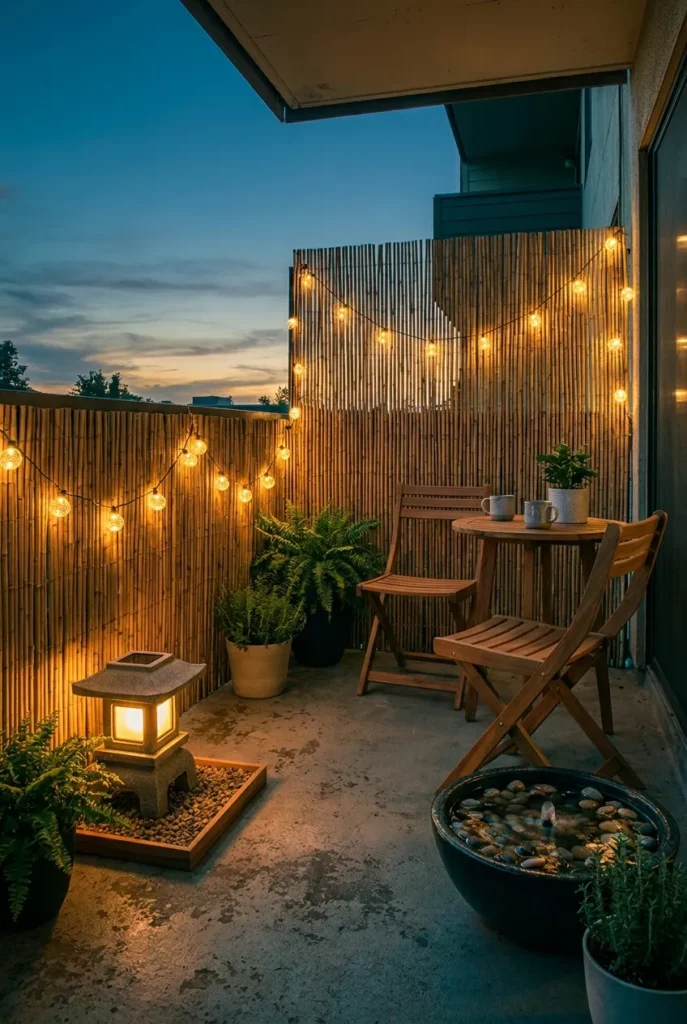
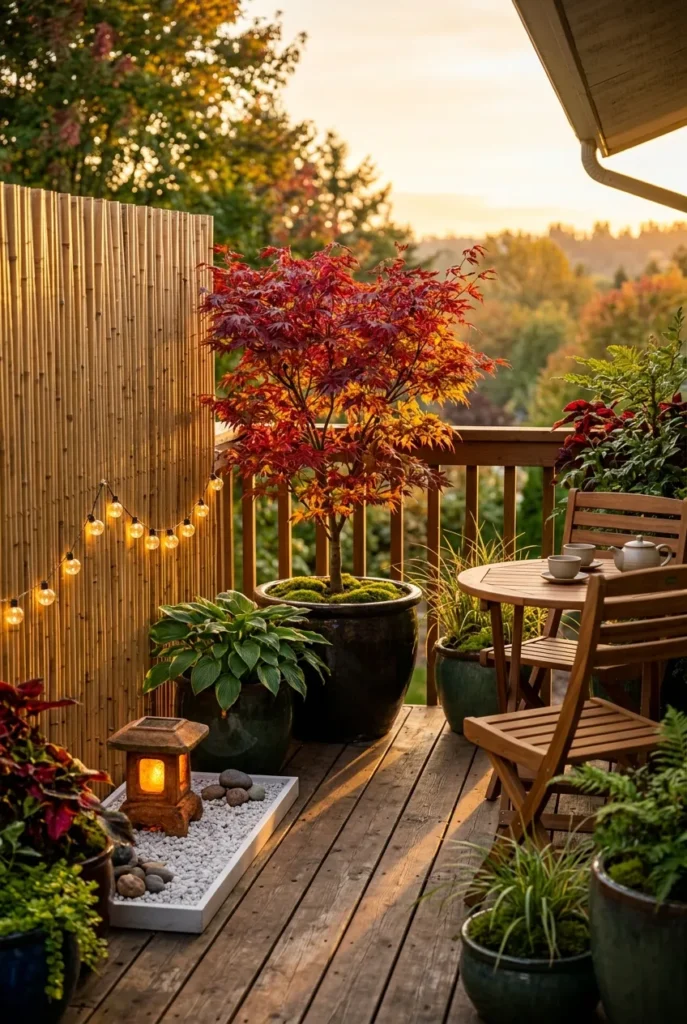
- Solar stone lantern (faux ishidoro). A cast-resin stone lantern with a built-in solar LED ($28 at Home Depot or Amazon) mimics a traditional ishidoro at about 1/40th the weight. Set it on a flat stepping stone or directly on the gravel tray. It glows soft amber from dusk until midnight on a full charge, and uses zero electricity from your apartment outlet.
- Ceramic bowl water feature with a submersible pump. Fill a 14-inch ceramic planter bowl with 2 inches of smooth river pebbles, add water to just below the top of the rocks, and drop in a USB-powered submersible pump ($12 on Amazon). The sound of slowly moving water on a balcony is disproportionately calming. Full setup under $35. Refill the bowl every few days.
- Hollow bamboo wind chime. A real hollow bamboo wind chime with a natural rope hanger costs $10–$16 at World Market or Amazon. The tone is lower and warmer than metal chimes. That lower pitch sits exactly in the sound range of a traditional Japanese garden furin bell, and it doesn’t wake the neighbors.
- Teak or acacia bistro set as the meditation corner. The IKEA Bondholmen acacia bistro set ($499) folds completely flat against the wall when the wind picks up. Worth every dollar. Two chairs and a 24-inch round table occupy just 9 square feet when open, fitting a 40 sq ft balcony without blocking the view of the lantern or plants.
- Warm white micro-globe string lights along the bamboo screen. One strand of warm white 2700K micro-globe lights (20 ft, about $15 at Target) draped low across the bamboo screen creates the exact dusk glow that makes a balcony look like a garden instead of a storage area. Use adhesive cable clips pressed onto the bamboo panel itself, not the wall. Renter-friendly no-drill privacy panels saved my $300 security deposit and added 6 feet of green wall the year I first tried this, so I can confirm: clips on the screen hold fine through a full summer.
The Japanese Balcony Garden 5-Element Cheat Sheet
Use this table before you buy anything. It tells you what each element costs, whether it survives a lease, and where to find it in the US.
| Element | Approx. Cost | Renter-Safe | US Source |
|---|---|---|---|
| Pea gravel in cedar tray | $20–$28 | Yes (fully portable) | Lowe’s / Home Depot |
| Bamboo roll screen panel | $20–$35 | Yes (tension rod mount) | Home Depot / Amazon |
| Solar stone lantern | $25–$40 | Yes (freestanding, no wiring) | Amazon / Home Depot |
| Cloud-pruned juniper in glazed pot | $35–$55 | Yes (movable container) | Local garden center |
| Ceramic bowl water feature + pump | $30–$45 | Yes (no plumbing, USB pump) | Amazon / Walmart |
Every item on this list is deposit-safe and moves out with you. Nothing drills into a wall, nothing pours into the floor drain, and nothing leaves a burn ring or stain in the concrete.
The total to build all five elements: $130–$203. That’s a complete japanese zen garden balcony setup for less than one patio chair from a big-box furniture store.
The Best Plants for a Japanese Balcony Garden in the US
Every plant in a japanese balcony garden earns its place. Nothing filler. Nothing loud. According to the Old Farmer’s Almanac’s container gardening guidance, the most reliable container gardens begin by matching the plant to the actual microclimate, not to the aesthetic you have in mind. In a Japanese context, that means choosing plants that read as restrained and architectural: one specimen that draws the eye, one low ground-plane filler, nothing competing for attention.
The species below all perform across Zones 5–9 in containers. Most are available from Bonnie Plants or at any Lowe’s or Home Depot garden center starting in March.
Full Sun Balconies (4+ Hours of Direct Light, Zones 6–9)
- Dwarf Japanese maple (Acer palmatum ‘Shaina’): Rich burgundy-red leaves in a 10-gallon container. Hardy to Zone 5 in the ground, but container specimens need Zone 6 minimum for winter survival outdoors. Move inside a garage during hard freezes if you’re in Zone 5 or 6.
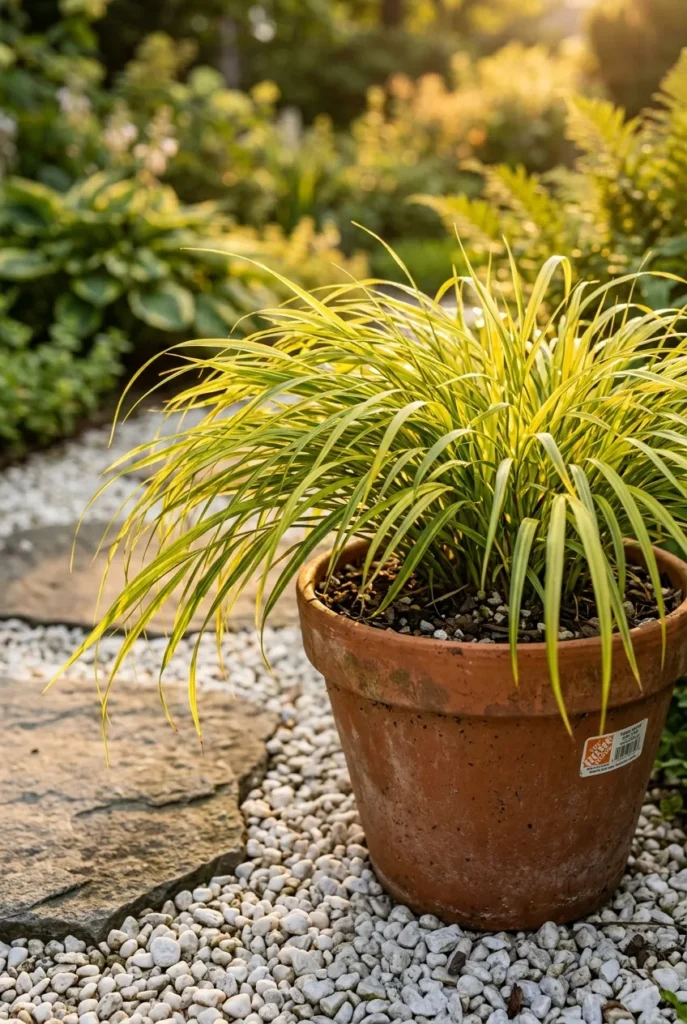
- Japanese forest grass (Hakonechloa macra ‘Aureola’): Gold-green arching blades that move in the lightest breeze. Absolutely stunning in a 10-inch classic terra cotta pot ($8, Home Depot) on a white gravel tray.
- Nandina (heavenly bamboo ‘Gulf Stream’): Compact upright form, red winter berries, Zones 6–9. Clean architectural shape in a 5-gallon grow bag ($3 each in bulk). Not a true bamboo, so it won’t spread aggressively in a container.
Shaded Balconies (2–4 Hours of Indirect Light, Zones 5–8)
- Mondo grass (Ophiopogon japonicus ‘Nigrescens’): Nearly black foliage. Thrives in deep shade. Works beautifully as a low ground-plane fill around the base of a larger specimen container.
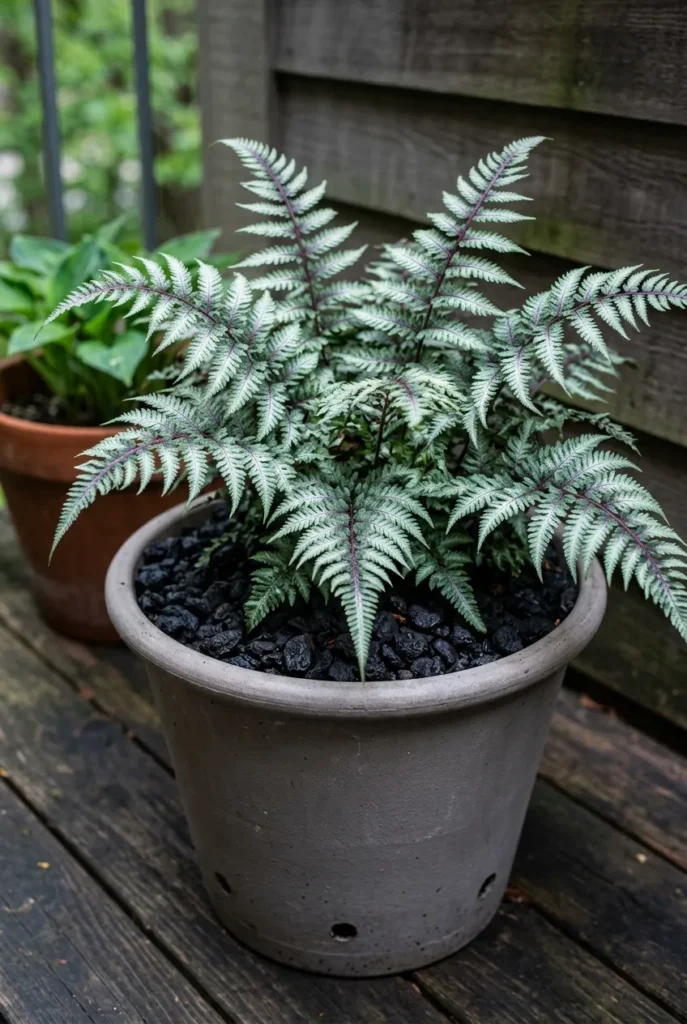
- Japanese painted fern (Athyrium niponicum ‘Pictum’): Silver and green fronds that look like they were designed by someone with a very good eye. Pot in Kellogg Garden Patio Plus potting mix ($12 / 1.5 cu ft, Lowe’s) for drainage that keeps roots from rotting in a shaded, slower-drying container.
- Dwarf sweet flag (Acorus gramineus ‘Ogon’): Bright gold-green grass-like foliage, Zones 5–9. Loves part shade and consistently moist soil. Pairs beautifully with the black mondo grass for a two-tone low ground planting.
All three shade-tolerant plants do well in a Bloem Terra 16-inch pot ($12, Walmart) filled with Espoma Organic Potting Mix ($15 / 8 qt). Finish the top with a 1-inch collar of black lava rock mulch for the clean, considered aesthetic that makes a japanese garden photo work.
Setting Up a Japanese Balcony Garden Without Spending a Lot
The full 5-element setup described in the cheat sheet above costs $130–$203. Start with just the gravel tray, one plant, and the solar lantern and you’re at $55. That’s the minimum viable japanese balcony garden. It works.
The IKEA Bondholmen acacia bistro set folds completely flat against the wall when wind picks up. Worth every dollar of its $499 price tag, but it’s the last thing to buy. Furniture is finishing, not foundation.
Dollar Tree mini terra cotta pots at $1.25 each hold small mondo grass divisions or dwarf sweet flag starts perfectly. Buy six, arrange them in a tight cluster on the gravel tray, and the effect is instant. Dollar General citronella tea lights at $3 for a 12-pack set inside the cluster add the kind of flickering light at floor level that makes the lantern feel intentional. Eighteen dollars total. Looks like it cost ten times that.
If you’re working through the full apartment setup at the same time, our guide to small apartment patio decorating for renters runs through the same deposit-safe, portable-first approach across furniture, rugs, and lighting, and pairs directly with what you’re building here.
FAQ
How do you make a Japanese garden on a balcony?
Start with three layers in order: ground texture first (a cedar gravel tray or flat stepping stones with preserved moss), then vertical structure (bamboo roll screen on tension rods, or one cloud-pruned juniper in a glazed pot), then the mood layer (solar stone lantern, ceramic water bowl, and one strand of warm white string lights). The full 5-element setup described in the cheat sheet above comes together in an afternoon for $130–$200, entirely renter-safe.
What are the four types of Japanese gardens?
The four main styles are tsukiyama (sculpted hill gardens with topography), karesansui (dry rock and ravel gardens), chaniwa (tea ceremony gardens centered on a roji walking path), and tsubo-niwa (small enclosed courtyard gardens). For apartment balconies, karesansui and tsubo-niwa are the most practical references because both were designed for compact, defined spaces.
What is a Japanese courtyard garden called?
A small Japanese courtyard garden is called a tsubo-niwa. It’s the style that maps most directly onto a balcony: minimal floor area, maximum intentionality, typically featuring one specimen plant, a ground plane of gravel or moss, and a stone lantern. The word tsubo referred historically to a very small unit of land area, roughly 36 square feet, which is about the size of a standard apartment balcony.
What are the five elements of a Japanese garden?
The five classic elements are stone (hard structural mass), water (real or implied through gravel), plants (seasonal, restrained, architectural), lantern (light source and human presence), and negative space (what is deliberately left empty and unplanted). Every one of these translates directly onto a balcony using the 15 ideas in this article.
What plants grow best on a shaded balcony for a Japanese aesthetic?
Mondo grass (Ophiopogon japonicus ‘Nigrescens’), Japanese painted fern (Athyrium niponicum ‘Pictum’), and dwarf sweet flag (Acorus gramineus ‘Ogon’) all perform in 2–4 hours of indirect light across Zones 5–8. All three read as clean and architectural, none of them require full sun, and all three look intentional in a simple terra cotta or glazed ceramic pot on a gravel tray.
How do I add privacy to my balcony without drilling?
A natural bamboo roll screen panel ($25–$35 at Home Depot) mounted on spring-tension rods between railing posts installs in under 20 minutes and leaves zero marks. Size the tension rods to the interior width of your railing span. The panel can also lean against an exterior wall for a freestanding kekkai garden fence effect with no mounting at all.
Conclusion
A complete japanese balcony garden doesn’t need a big budget, a green thumb, or a lot of square footage. It needs a clear starting point: one gravel tray, one plant, one light source. Build outward from that anchor.
The 15 ideas above are layered on purpose. Do all five ground ideas and the space already reads as zen. Add two or three vertical elements and it starts looking like a photo. Drop in the mood layer and it becomes the balcony everyone in your building asks about.
If you’re also thinking through furniture and seating for the space you’re building, our guide on renter-friendly outdoor furniture ideas for small spaces covers exactly which pieces fit a Japanese minimalist look without breaking the budget or the lease agreement.